Deb and I did both arrive safely on San Cristóbal Island in the Galapagos archipelago this morning, though my trip was less stressful than Deb’s. She had a seven-hour delay in Fort Lauderdale yesterday, but we had built enough buffer into our schedule to absorb that, thank goodness.
Once we arrived, we got right to work on seeing who we could find, and this little darling, a mangrove yellow warbler (Setophaga petechia), didn’t even wait until we had finished our lunch before starting the show. I’ve seen them before, in Belize, but I don’t believe I’ve had a picture to show you until now, so ta da!


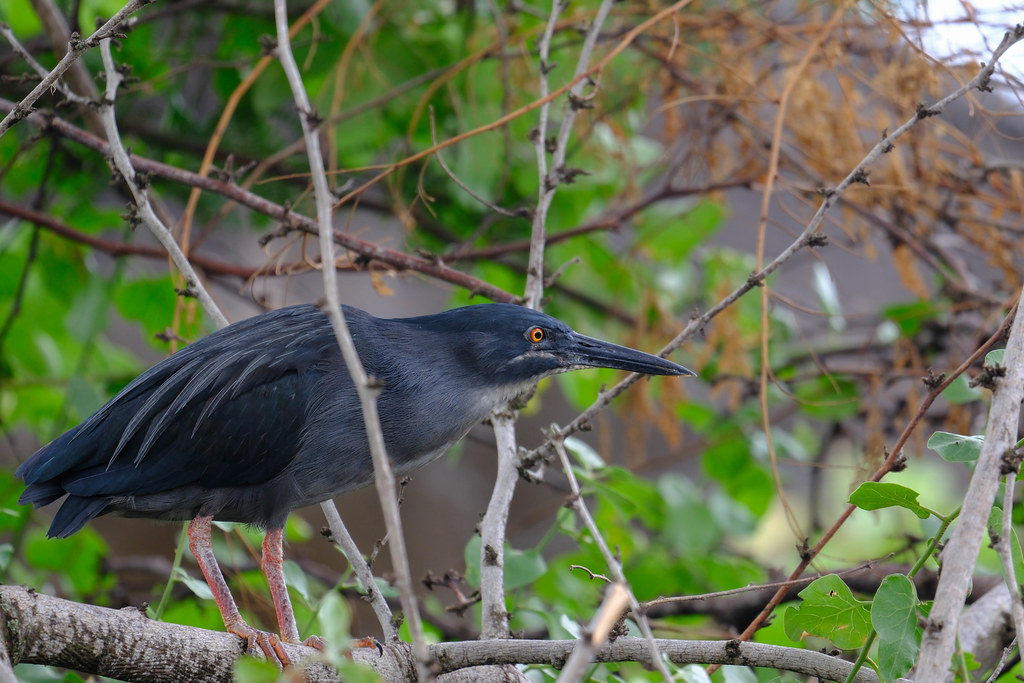
This next bird looks just like the green herons we see in Estabrook, but just a lot darker, and that makes it our very first lava heron (Butorides sundevalli), whose range does not extend beyond these islands. Wow!

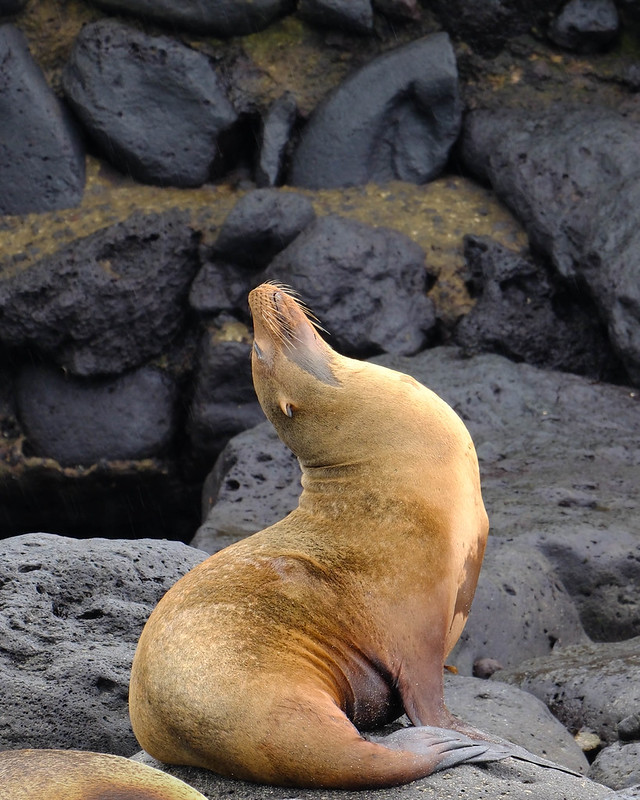
There are sea lions everywhere, on the beach, on the rocks, on the sidewalk, and even on the park benches. It is really wild. Here’s one on the beach who stayed in this pose long enough to make me think it was sleeping that way.

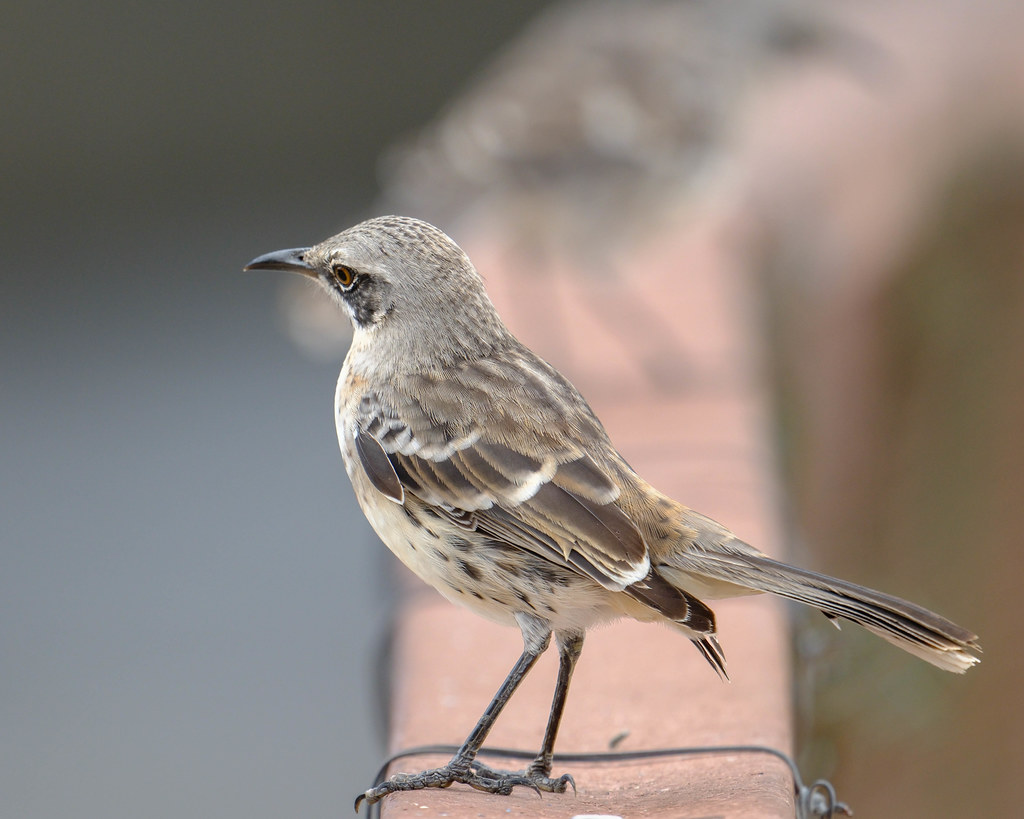
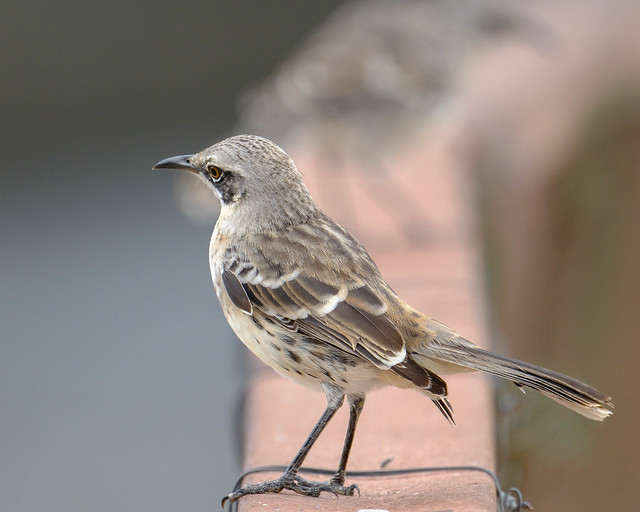
The sea lions and their pups make quite a racket, too, and they sound like goats and lambs, which really gives the place a barnyard or even petting zoo vibe. The noisiest bird, however, was this San Cristobal Mockingbird (Mimus melanotis). It is “endemic to Galápagos, [and] found only on San Cristóbal Island.” Yikes! That has got to be the smallest range of any bird I’ve ever seen.
Finally, I did see a couple of dragon flies and a couple of small blue butterflies, but none of them would sit for a picture. Happily, the rocks along the water were literally crawling with crabs, and some of them were this remarkably colored Sally Lightfoot crab (Grapsus grapsus), “one of the most common crabs along the western coast of the Americas.” Talk about extremes, eh?


I’ve got more to show, but it’s late already, and who knows what, if anything, we’ll see tomorrow, so I’ll just keep those in reserve for now.

