Today, finally, is an R&R day with no scheduled activities, so I got to have a nap this afternoon and write this post while it’s still light outside. Woo hoo! Deb and I took the morning to visit a beach on the south side of the island and a few miles from town: Playa Loberia. There we saw a few shorebirds and a few frigatebirds, but the more interesting sights came another thousand yards down the coast, where the ground rises up to form a cliff over the water: Acantilado La Loberia.
In addition to a few blue-footed boobies resting on ledges, there were a dozen or more swallow-tailed gulls, which we first saw just yesterday. We did get to see some fly this time, so now we know what their swallowtails look like, but the salt spray from the waves crashing below and the stiff onshore breeze really put a damper on my ability to capture that on film. Sorry. Instead, here’s a pair canoodling right at the top so I could get out of the spray and breeze to capture a nice image for you. Aren’t they just adorable?


I still have a few pictures from yesterday that I was too tired to include in yesterday’s post, so here are a pair of Nazca boobies fending off a hungry magnificent frigatebird. I just read today that frigatebirds “are referred to as kleptoparasites as they occasionally rob other seabirds for food, and are known to snatch seabird chicks from the nest.” Yikes!


Here’s a Galapagos shearwater (Puffinus subalaris), also from yesterday and which I read get their name from using “a ‘shearing’ flight technique (flying very close to the water and seemingly or actually cutting or ‘shearing’ the waves with the tips of their wings) to move across wave fronts with the minimum of active flight.” Deb and I had glimpsed them racing over the water between the boats once or twice during our morning survey of the harbor, but I didn’t have a presentable image until this one.


On the hike to the last snorkeling site yesterday, Deb spotted this handsome Hudsonian whimbrel skulking around the water’s edge. I last showed you one on Caye Caulker, and I read that they “[breed] on the Arctic tundra and [winter] on coastlines as far south as Tierra del Fuego,” so they sure do get around.


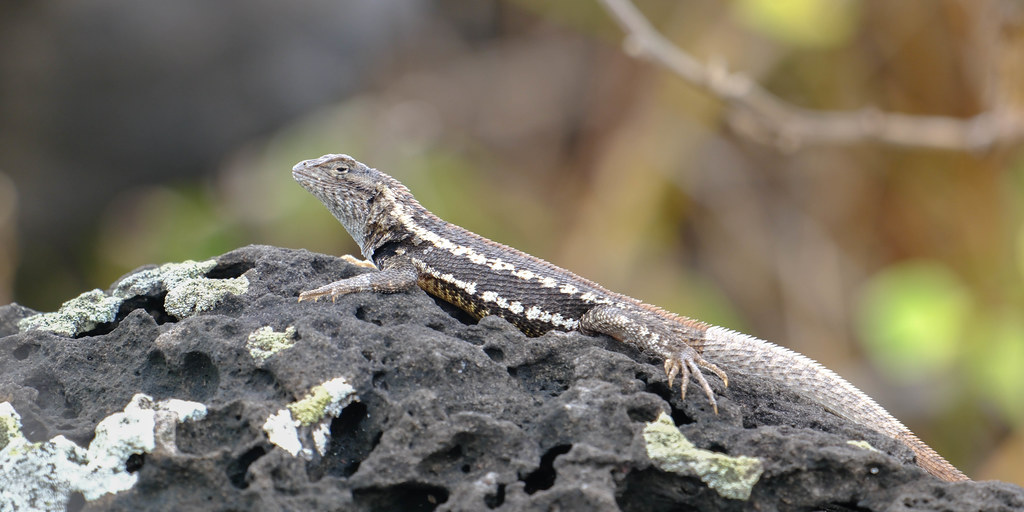
Finally, in addition to the enormous marine iguanas I’ve alread shown you, we saw several San Cristóbal lava lizards (Microlophus bivittatus) on our hike today, and here’s a male. They’re endemic to San Cristóbal and currently under threat by invasive cats on the island, so I appreciate the free spay and neuter clinic that WorldVets put on this week.

Deb and I start our treks home tomorrow with a flight back to the mainland, where I have a hope of one more chance to see some wildlife in Guayaquil before the final leg back to the States. For the score keepers at home, it appears as though we will have seen 30 species of birds on San Cristóbal, of which 15 are brand new to me, and 8 are endemic to these islands, including 5 that even have “lava”, “Galapágos”, or “San Cristóbal” in their names. Not too bad for a “work trip,” in my humble opinion.


Brilliant photos! Well done.
LikeLiked by 1 person