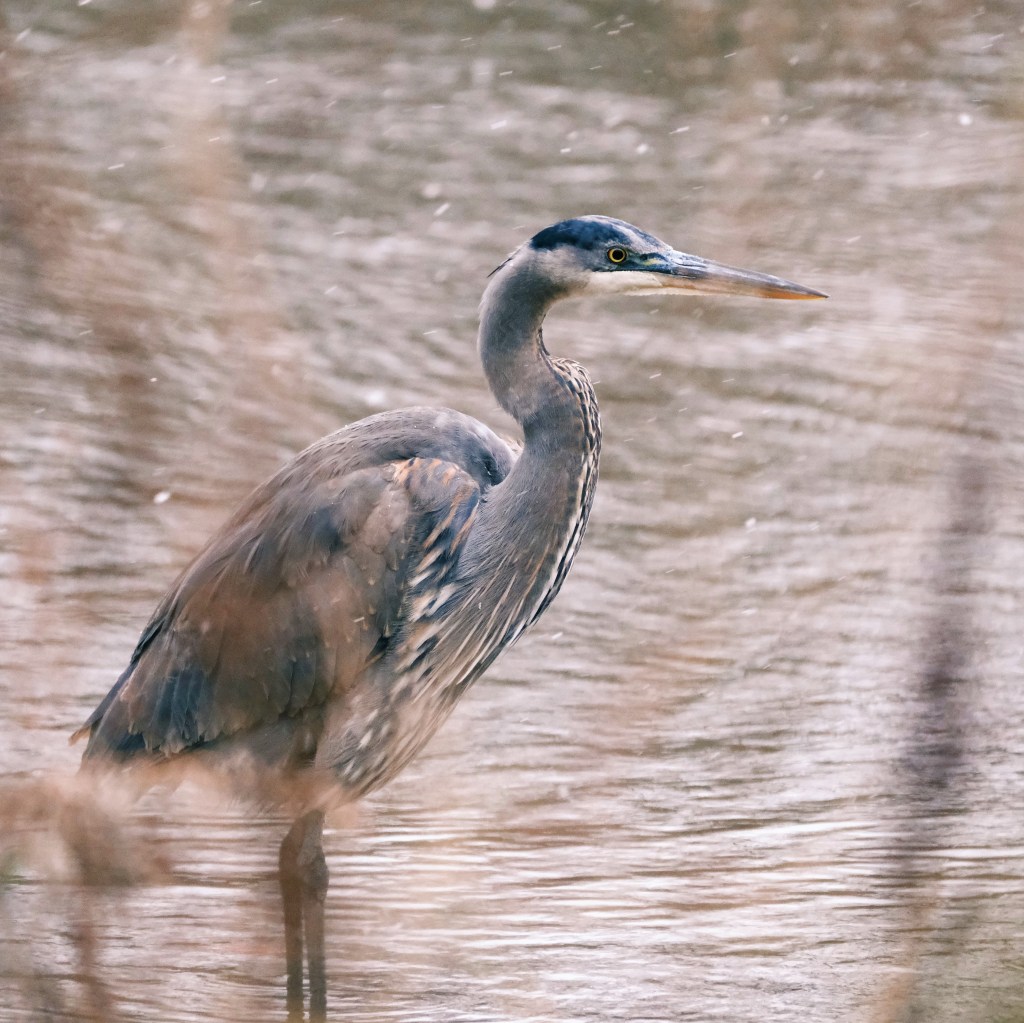
Here’s a sight I don’t get to see everyday, even though they are year-round residents, a great blue heron in the snow.
Signs of Life in Estabrook Park
A look at the wildlife living in, on, and beside the Milwaukee River in Shorewood, WI
Here’s a sight I don’t get to see everyday, even though they are year-round residents, a great blue heron in the snow.
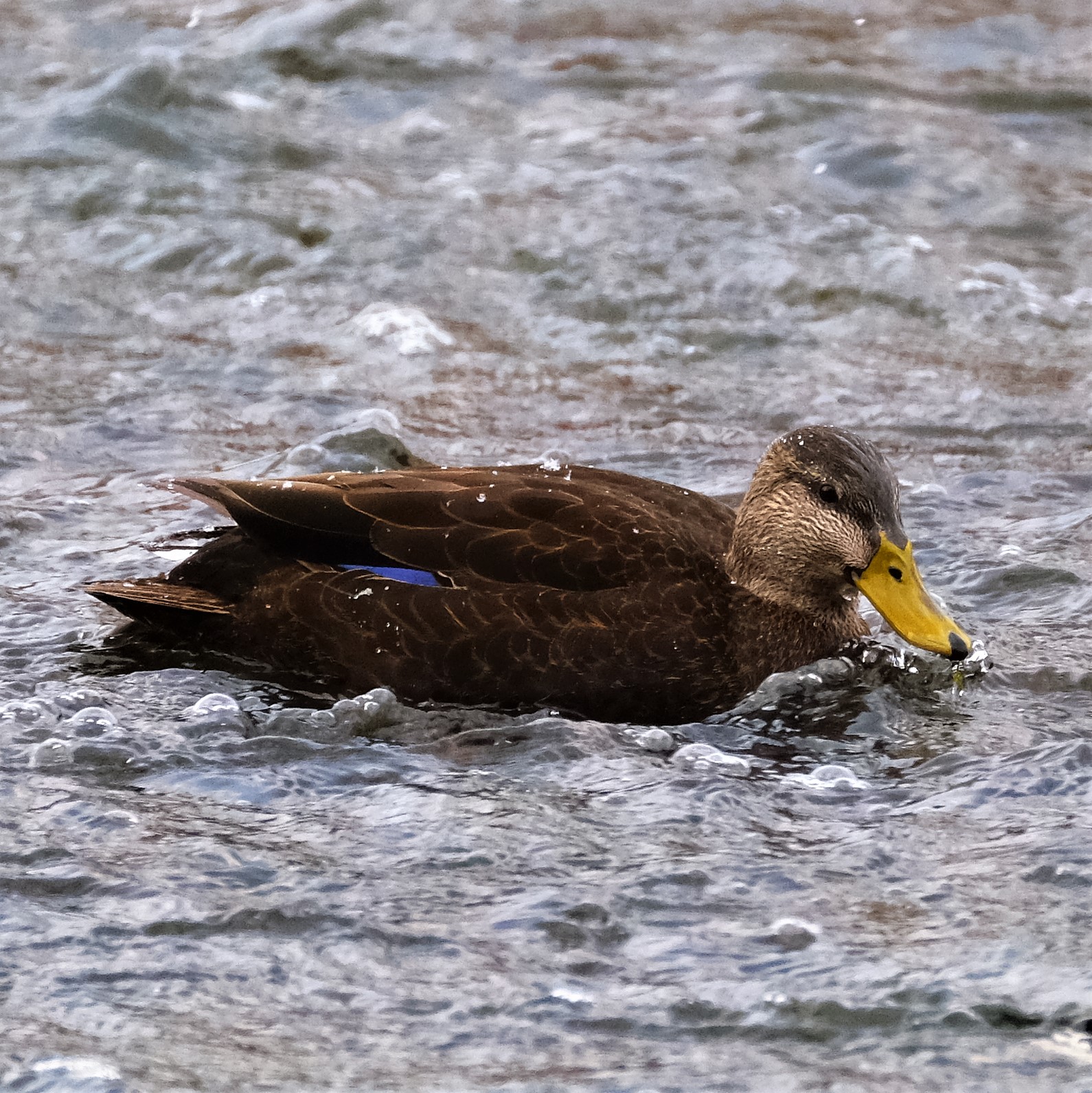
Here an interesting one, if you haven’t seen it before, an American black duck, a drake by the looks of that yellow bill, hiding amongst the mallards.
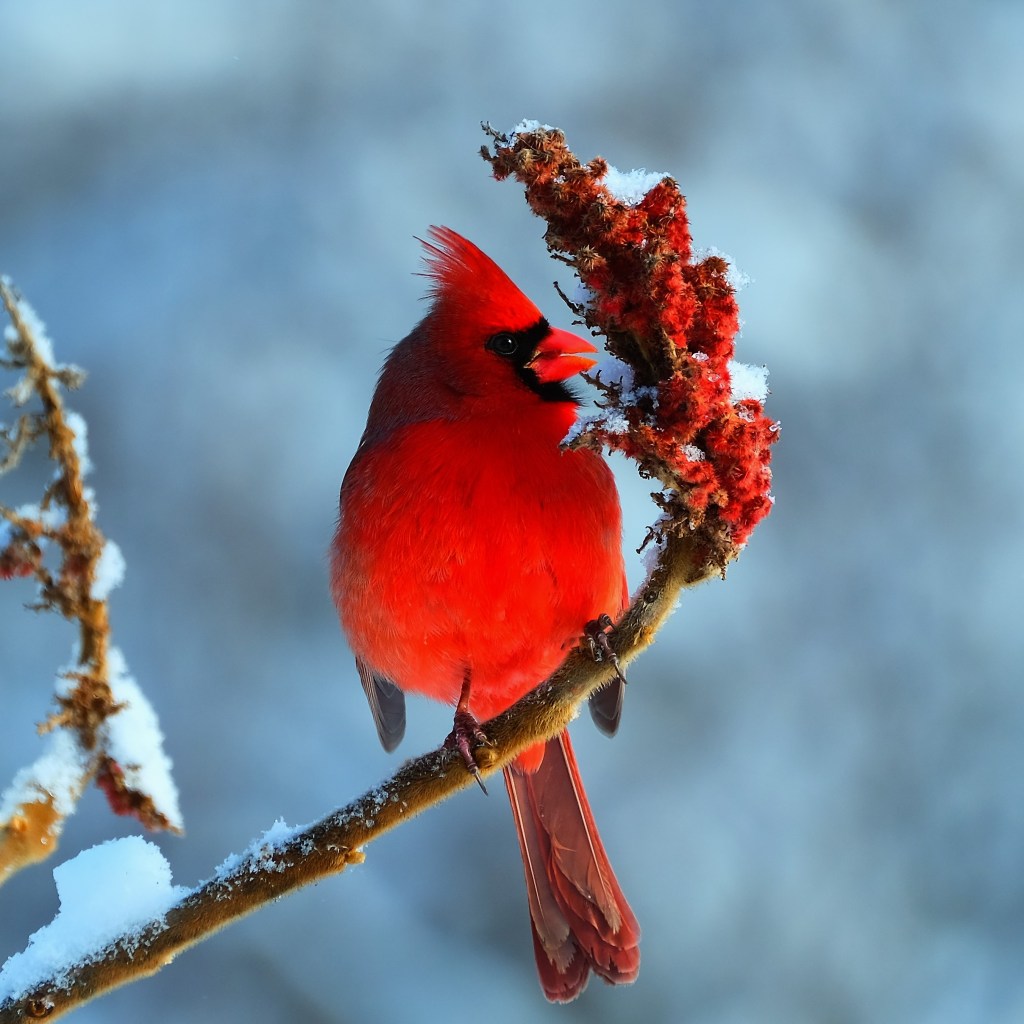
One of my favorite parts of winter is the snow because it makes everything look nice. Here are a few of our year-round critters looking especially nice in the snow.
A male northern cardinal.
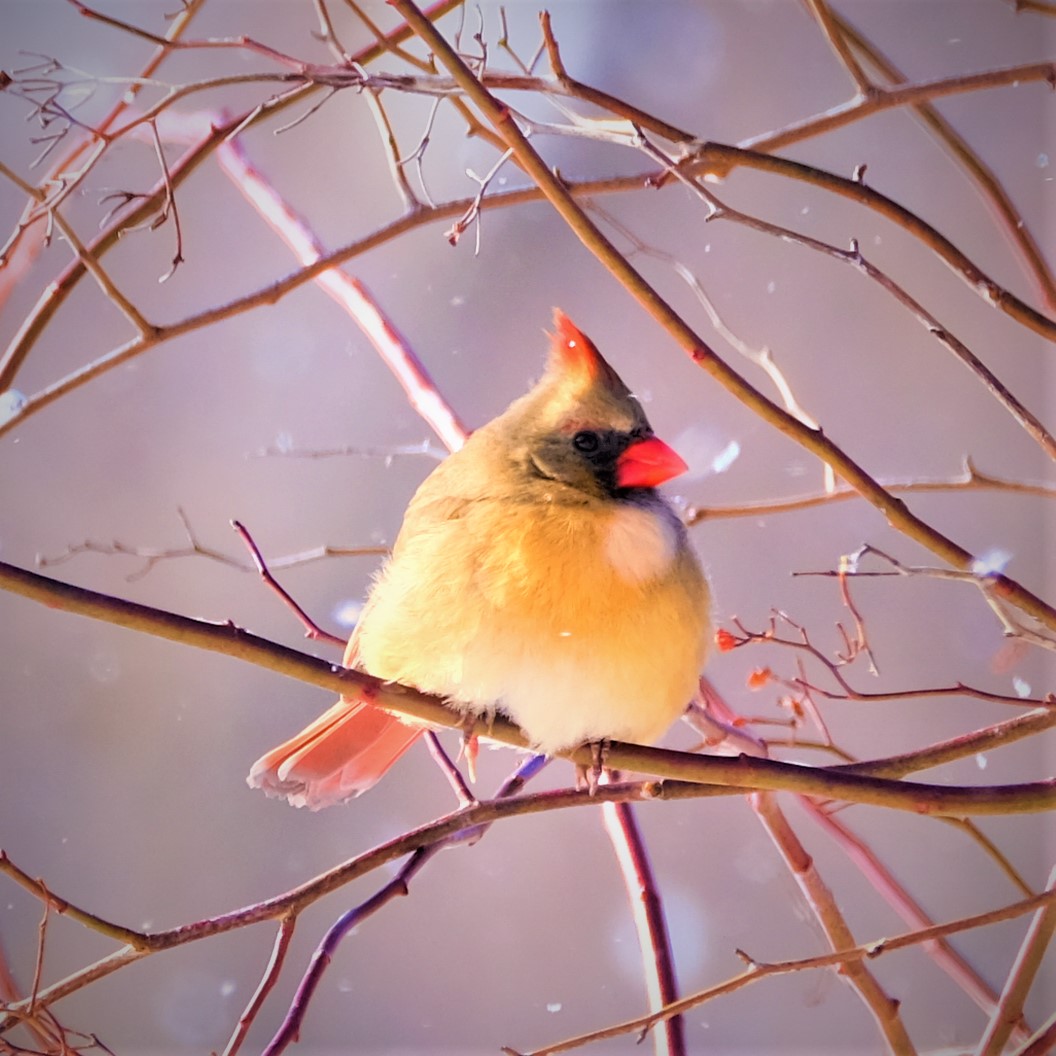
A female northern cardinal.
A mourning dove

And a red-tailed hawk
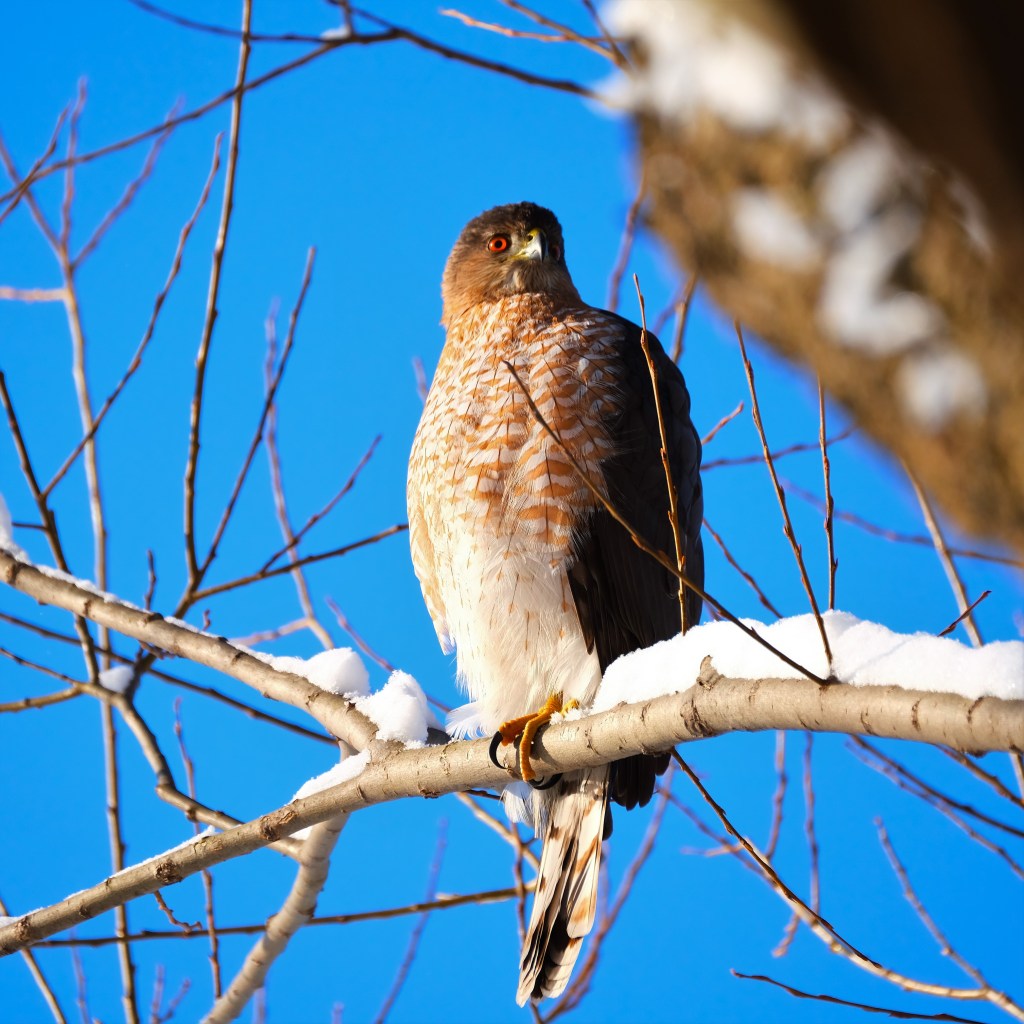
Buffleheads and hooded mergansers are nice, but how about this goldeneye drake? I can’t wait to see them again.
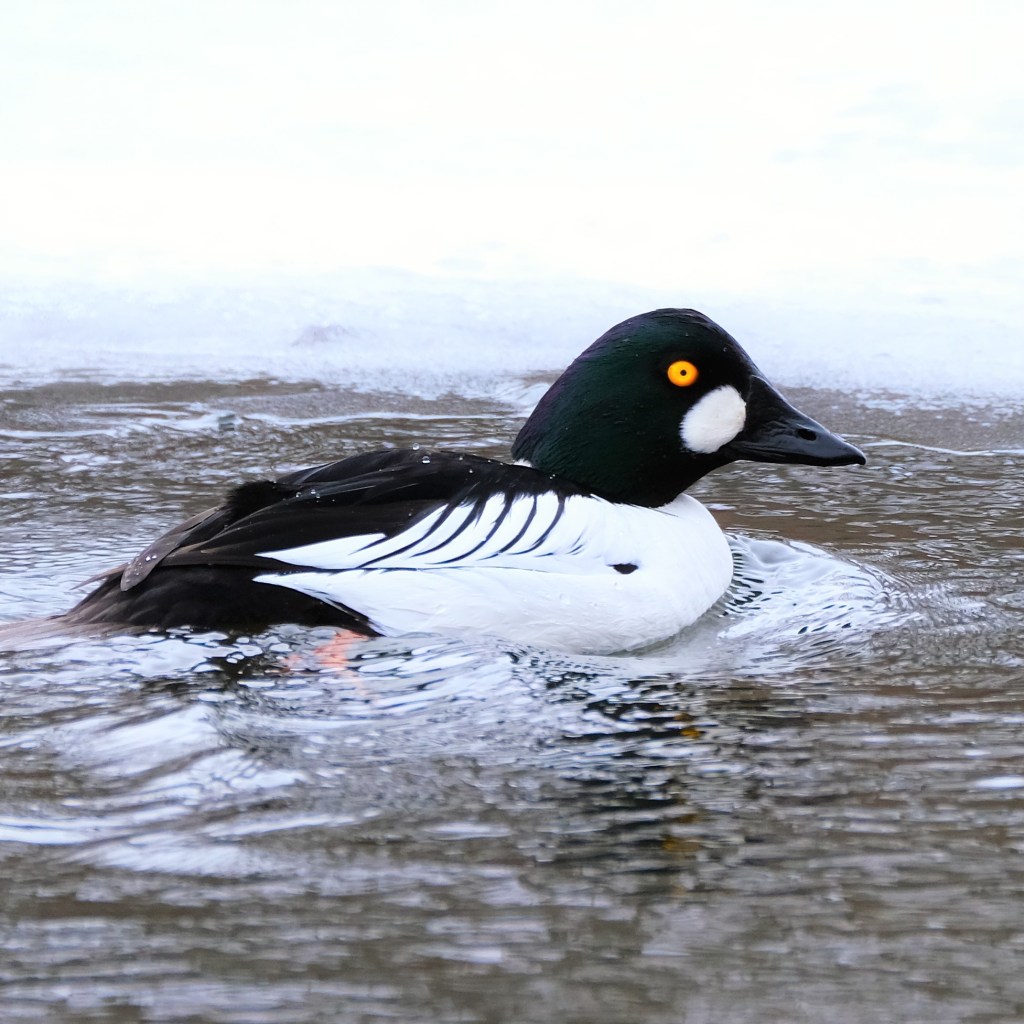
While I’m on the road, here’s another treat we might expect this coming winter. Sure, we see hooded mergansers from time to time, but we don’t often get to see them parked on the ice.
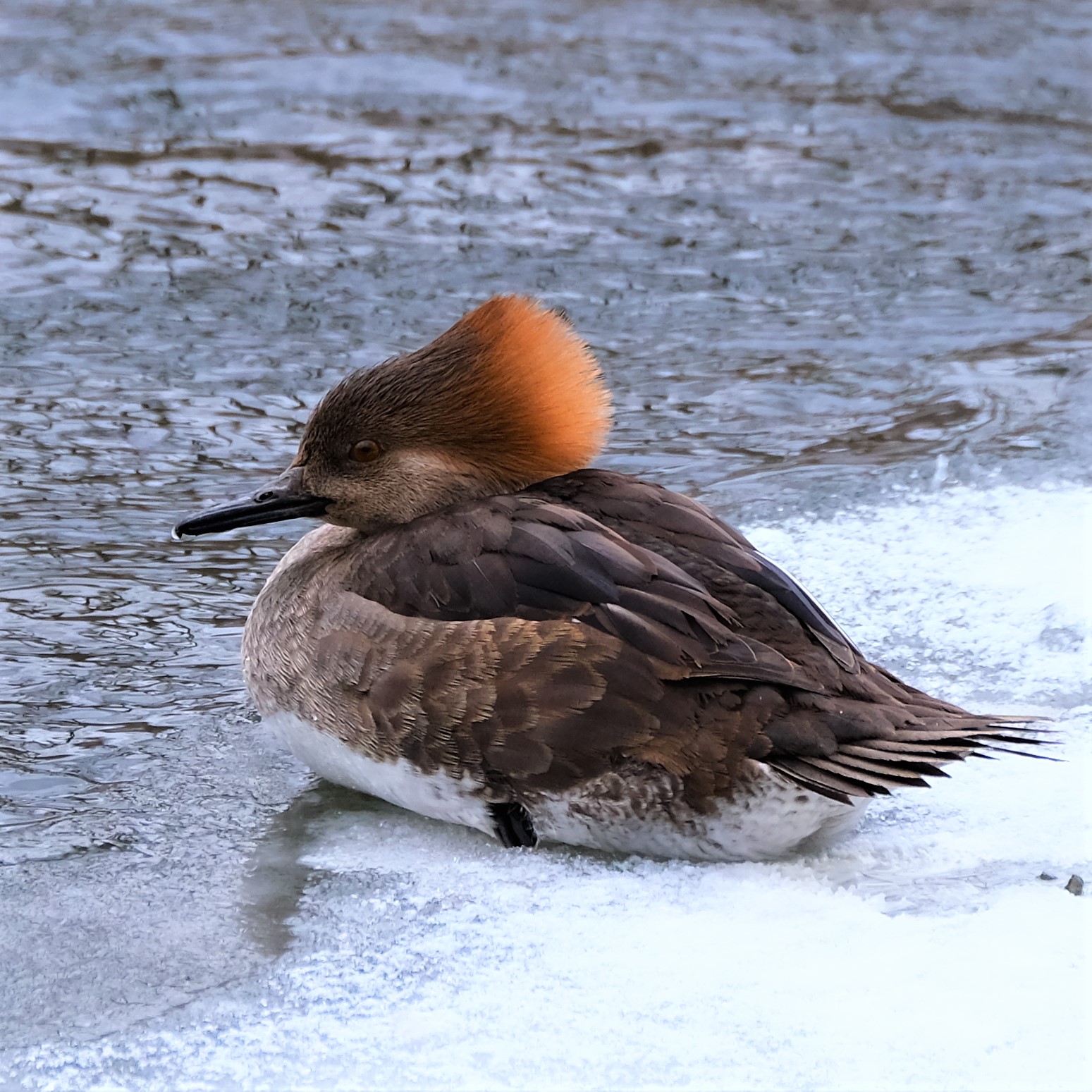
Welp, I already tipped my had last evening when I accidentally sent out “Travel Day 9” ahead of schedule. Anyway, as you have probably surmised by now, Anne and I are on the road again, and I’ve got my camera with me, but I don’t expect to have sufficient internet for a while, so I’ve scheduled the following posts to appear automagically while I’m gone. This time, I’m featuring the critters we might expect to see this winter.
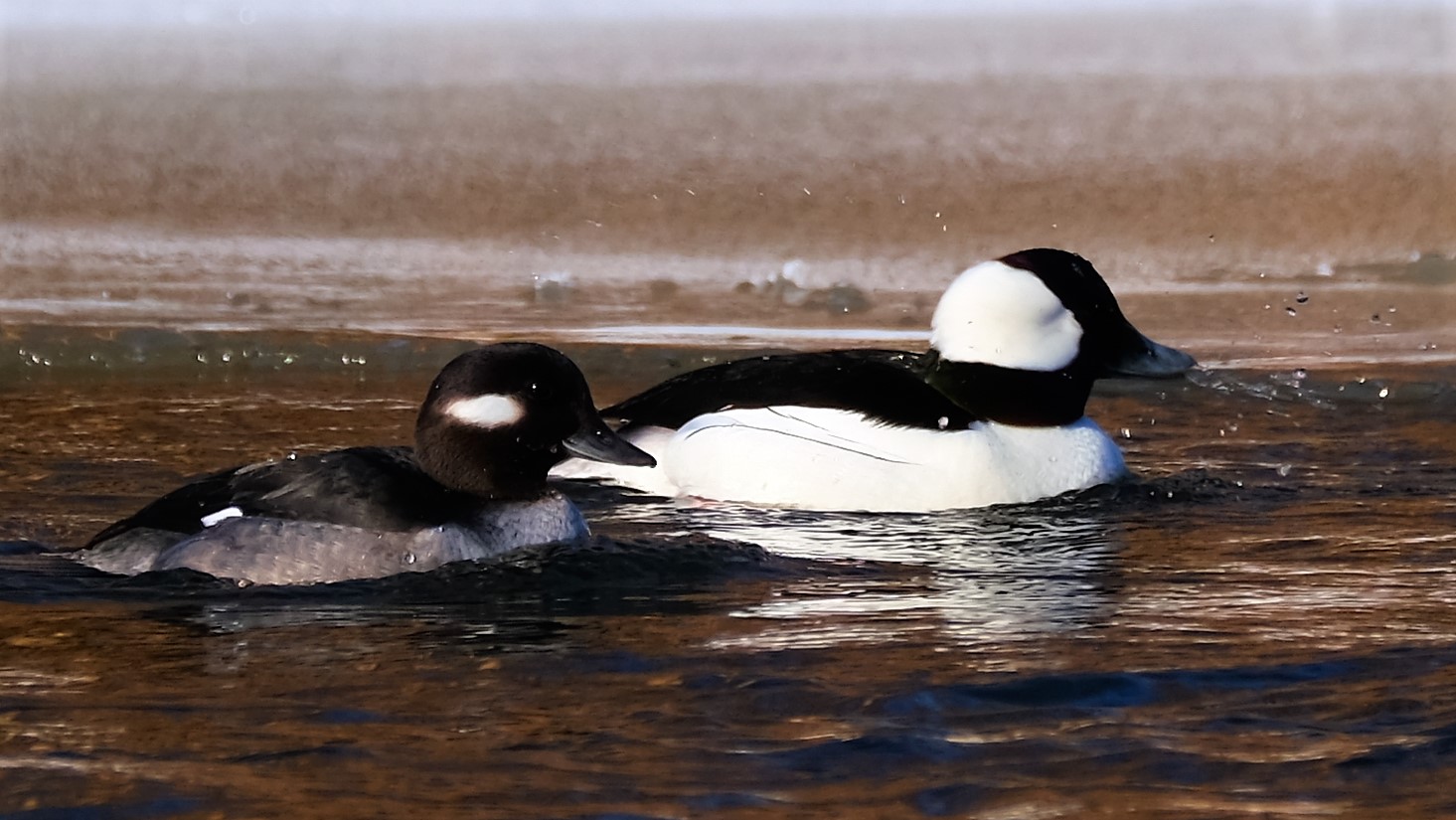
First up, is this amazing buttlehead pair from February 23, 2022
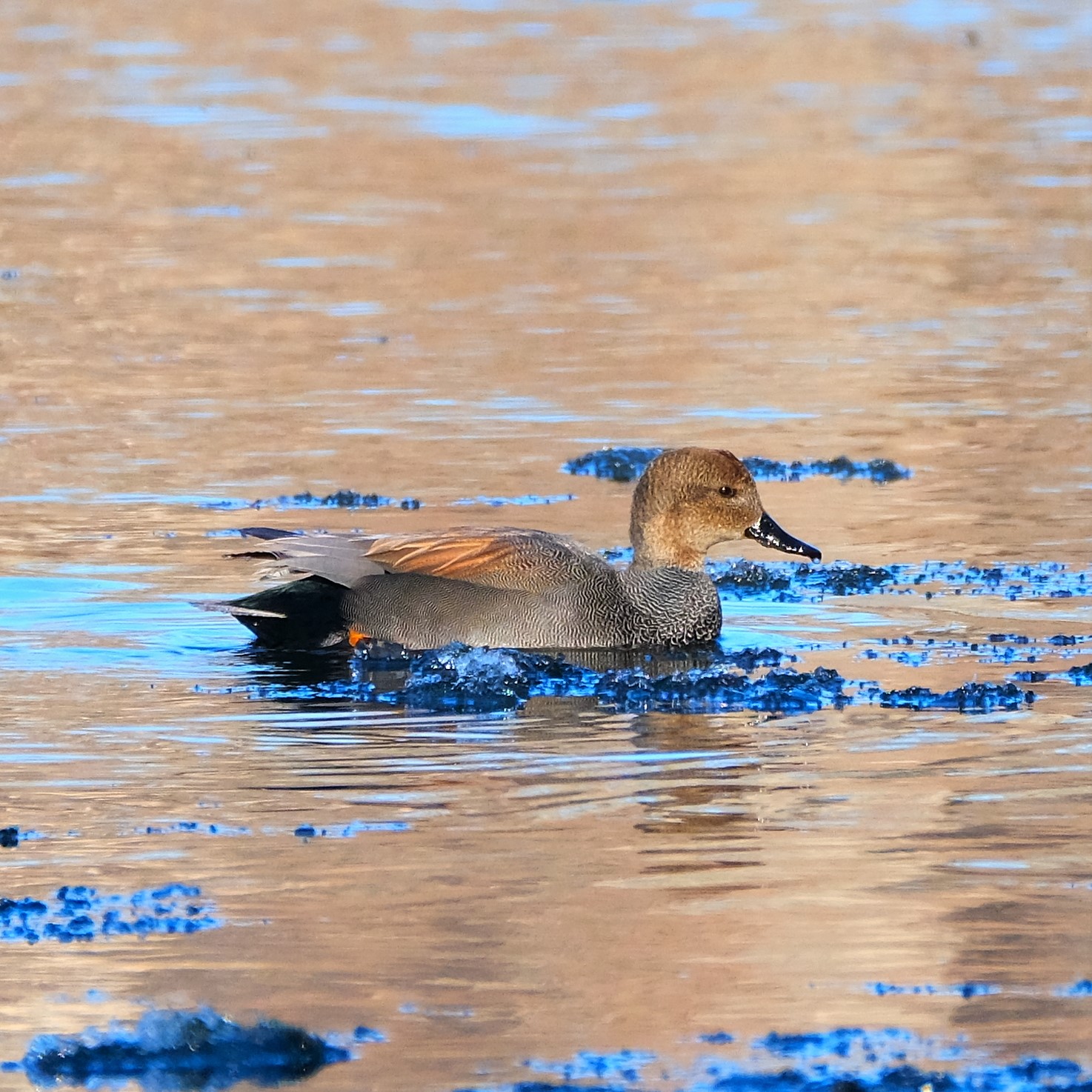
If we get lucky, we might even get to see a gadwall drake again
Holy Mackerel! What a morning. There were a few clouds messing with my light now and then, but the good weather is mostly holding. The huge news, however, is that Estabrook Park has been swamped by new birds since yesterday morning. Right off the bat, there were dozens of dark-eyed juncos frantically foraging in the grass at the edge of the paved path beside the soccer fields. Here’s one so hungry that it let me take this picture. Until today, I had only glimpsed one so far this fall.

And here’s my best attempt at a shot that might give you a sense for the density of birds.

Juncos weren’t even the only new arrivals. I also counted dozens of yellow-rumped warblers, instead of the usual two or three, and here’s one of them.

I only saw one black-and-white warbler, but I haven’t seen any in quite a while, so this was also a treat.

There were about eight wood ducks on the pond, but this great blue heron put on a better show.

As I headed farther north along the river, I spooked a green heron by accident, and here it is still looking a bit startled.

At the north end, there were many more yellow-rumped warblers, a killdeer, and a couple of spotted sandpipers, in addition to the usual dozens of mallards and geese, but the big surprise was getting another shot at a Wilson’s snipe portrait. This time it was already across the water, so I didn’t spook it, but this stretch of water was nice and narrow, and the light wasn’t too bad at the moment.

Mixed in with all the yellow-rumps, there were also a few palm warblers, and here’s one foraging for bugs down on the exposed river rocks.

Also foraging on the river bottom was the first rusty blackbird I’ve seen this season.

There were even three great egrets, instead of the usual two or sometimes one, and I managed to catch two of them in the same tree at the same time.

But wait, there’s more! I’ve seen a few ruby-crowned kinglets already this fall, but no golden-crowns until this morning, and I even managed to get a picture of one.

There are still a few more pictures, if you can believe it, but I’d better stop here and keep a couple in my back pocket for the inevitable rainy days ahead.
Well, it was great while it lasted, but the beautiful weather has drifted east, and we were greeted by clouds and a breeze in Estabrook Park this morning.
As I made my way north along the path, I could hear a couple of chipmunks calling, but one sounded pretty close, so I took a look, and this is who I found.

At the pond, there were sixteen (16!) wood ducks today, but that wasn’t even the biggest surprise. Instead, the real shocker was a mink swimming straight across the middle of the pond, and here’s the best picture of the little rascal I could manage with the light I had. It is facing to the right, and you can just make out its little nose, one eye and one or two little ears.

At the river, there was a raptor in the raptor tree that we haven’t seen in a while, this red-tailed hawk.

Meanwhile, down on the water, there was a traffic jam as an egret strode through the line of mallards and geese dabbling upstream.

Back in the raptor tree, the red-tailed had moved on, and a merlin appeared to take its place. That tree has been worth every penny I put into it.

As I was just about to head back south, the sun broke through for a moment, so I ran back to the water to capture this egret posing against some autumn color. And then the sun was gone, just as suddenly as it had emerged.

As I was aiming up, white-throated sparrows in a small flock nearby were paying more attention to each other than to me, for a change, and that is often my best chance to sneak a portrait.

Farther south, I came across this grey squirrel right at eye level, and it really seemed like it didn’t want to budge, so I took its picture, too.

Finally, back at the south end, I couldn’t find our juvenile red-headed woodpecker, but this juvie yellow-bellied sapsucker did its best to fill in. “Thanks, Champ!”

The beautiful weather continues, and it was another glorious morning in Estabrook Park. The first surprise came at the pond where I didn’t find a single wood duck for the first time since I don’t know when. Instead, I found about a dozen on the river around the northern island, and here are two hens parked on a log and catching some rays.

The next surprise was spotting a green heron, which have become scarce lately. This one was in the shade when I first saw it, but I didn’t have to wait too long for the sun to come around and light it up for us.

This next sight isn’t really a surprise, because of how many warblers we’ve been seeing lately, but it is still always nice to spot them, and I believe this little darling happens to be a female/immature magnolia warbler, based on the full eyering, grey head, pair of wingbars, and faint dark striping on a yellow belly.

I have seen far fewer river deer this year compared to previous years, but here’s another island deer hiding in the bushes.

Finally, more mushrooms! My best guess, with which you should definitely not trust your life, is that these are elm oyster mushrooms (Hypsizygus ulmarius), which “commonly grows on tree species like … box elder” and “in the wounds or scars of the host tree,” as are both the case here.

And that’s it for today, I’m afraid. I did see the red-headed woodpecker, a yellow-bellied sapsucker, and a Cooper’s hawk again, but despite the nice weather, few critters were just hanging out enjoying it. Perhaps they’ve heard the forecast for a high of 56°F on Saturday and are just too busy getting ready.
Have a WordPress.com account? Log in now.

