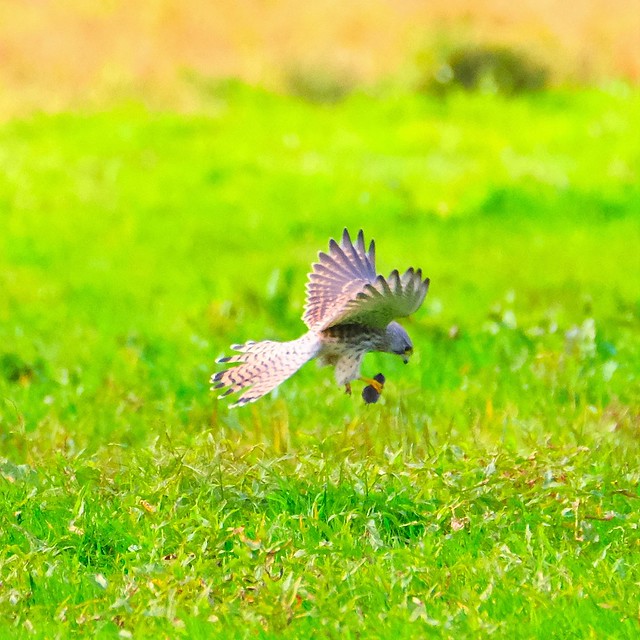
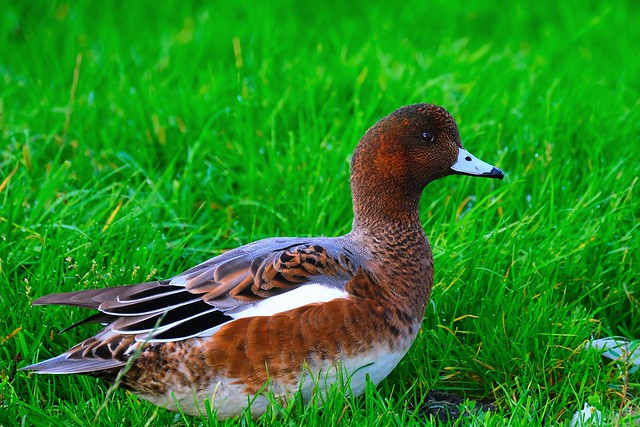
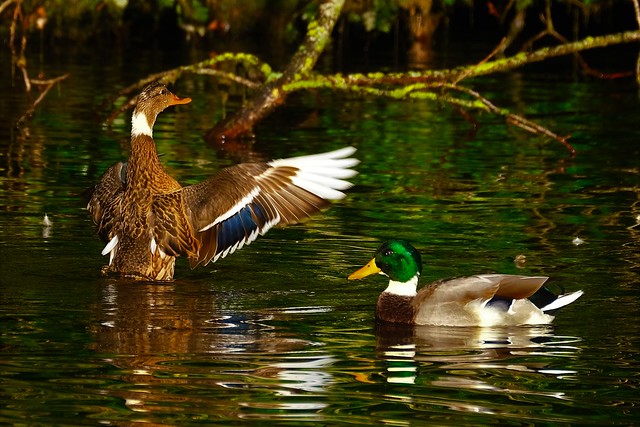
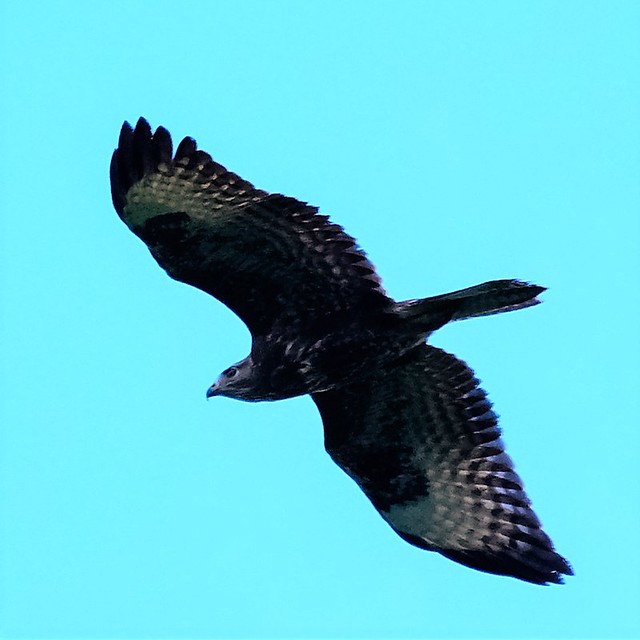
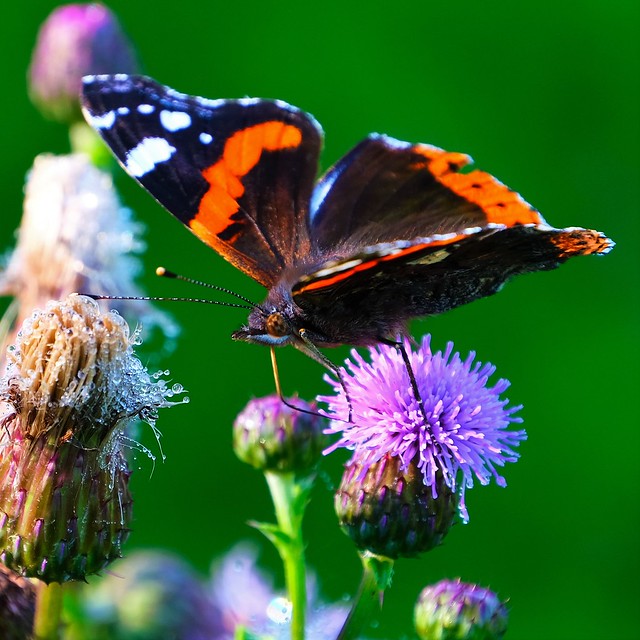
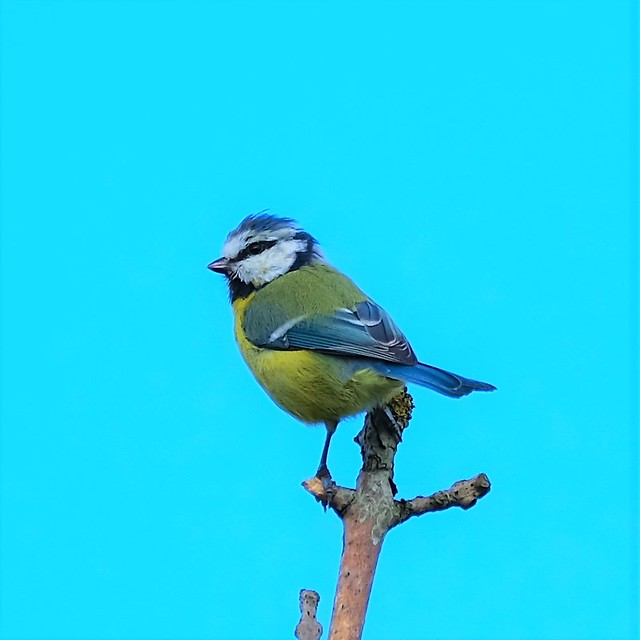
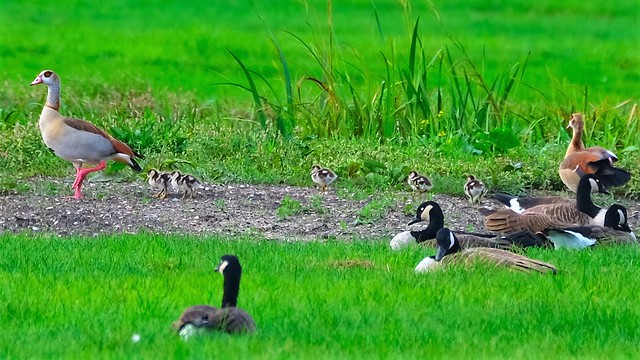
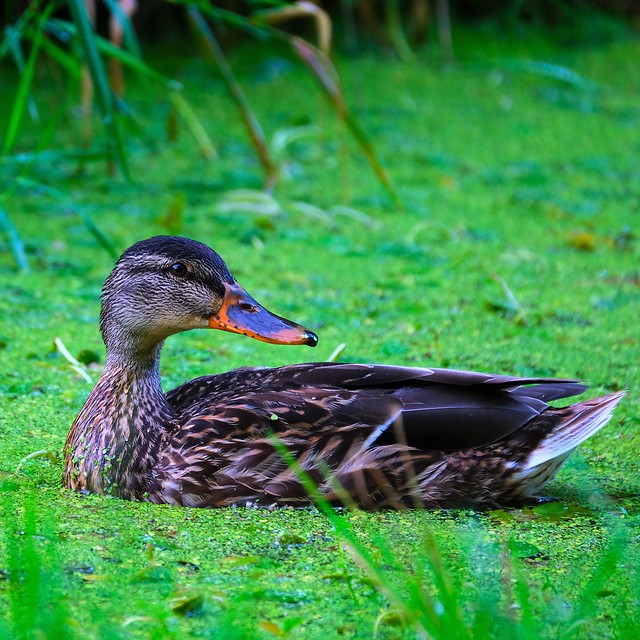
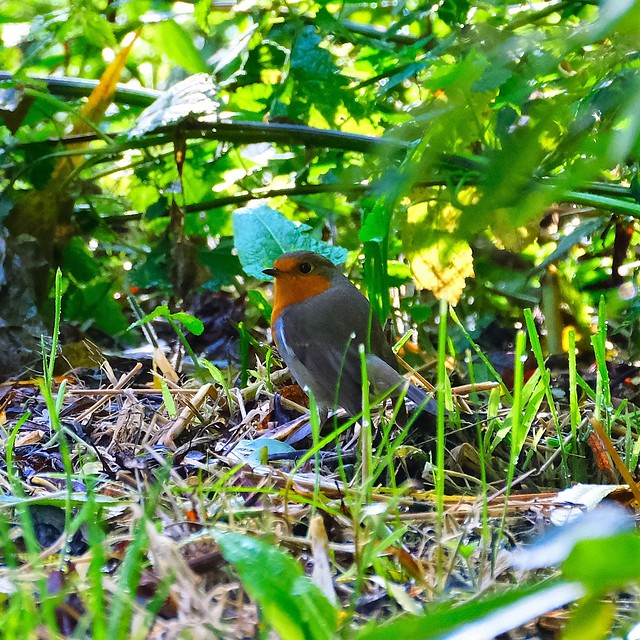
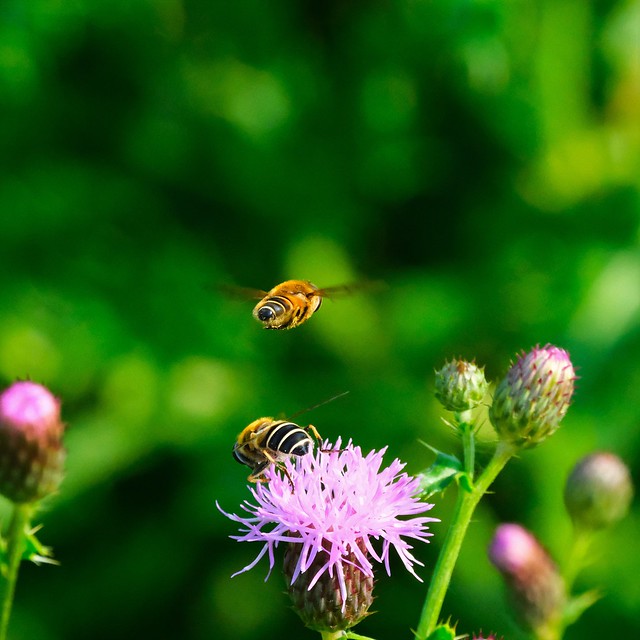
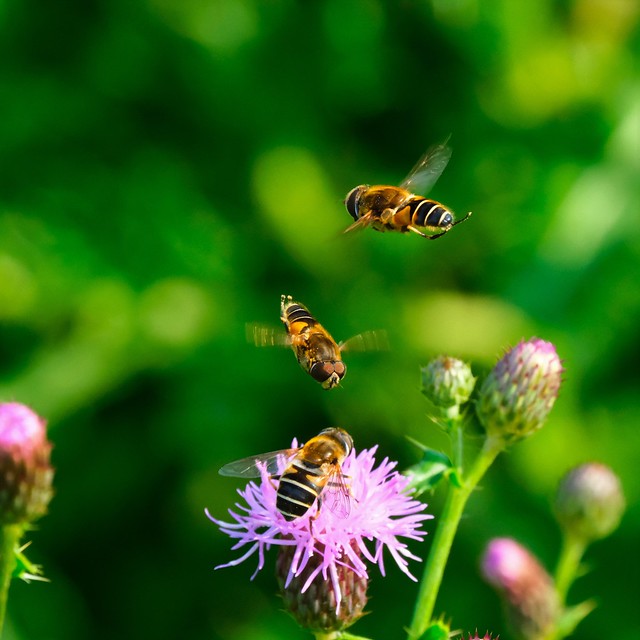
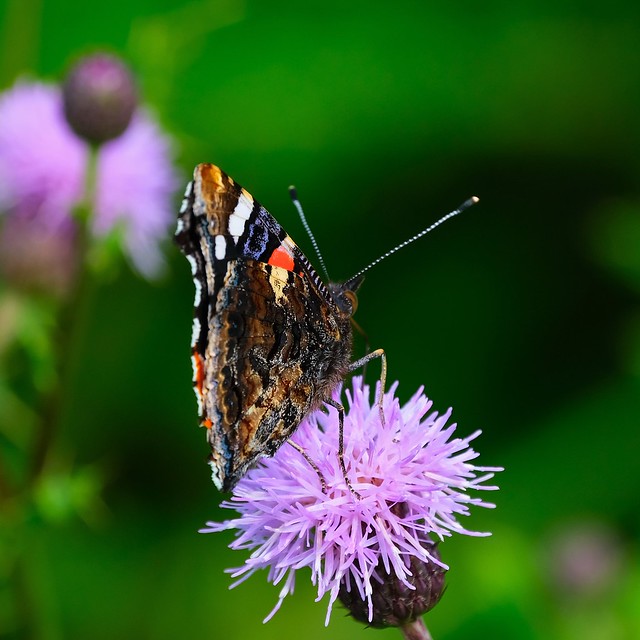
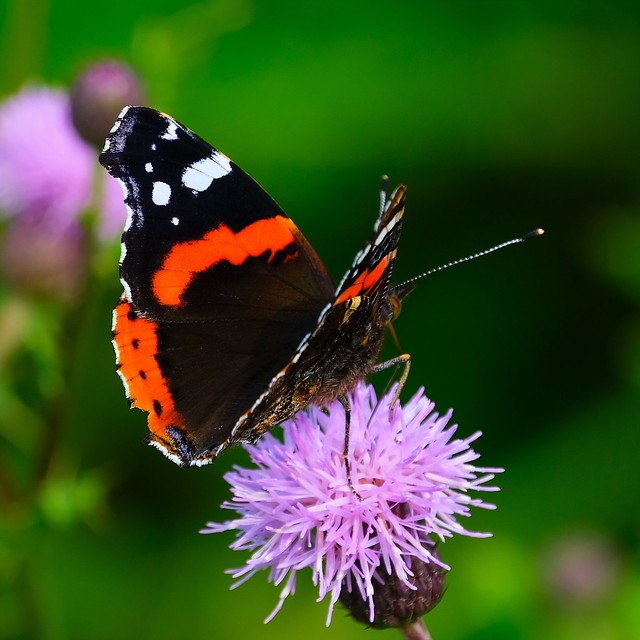
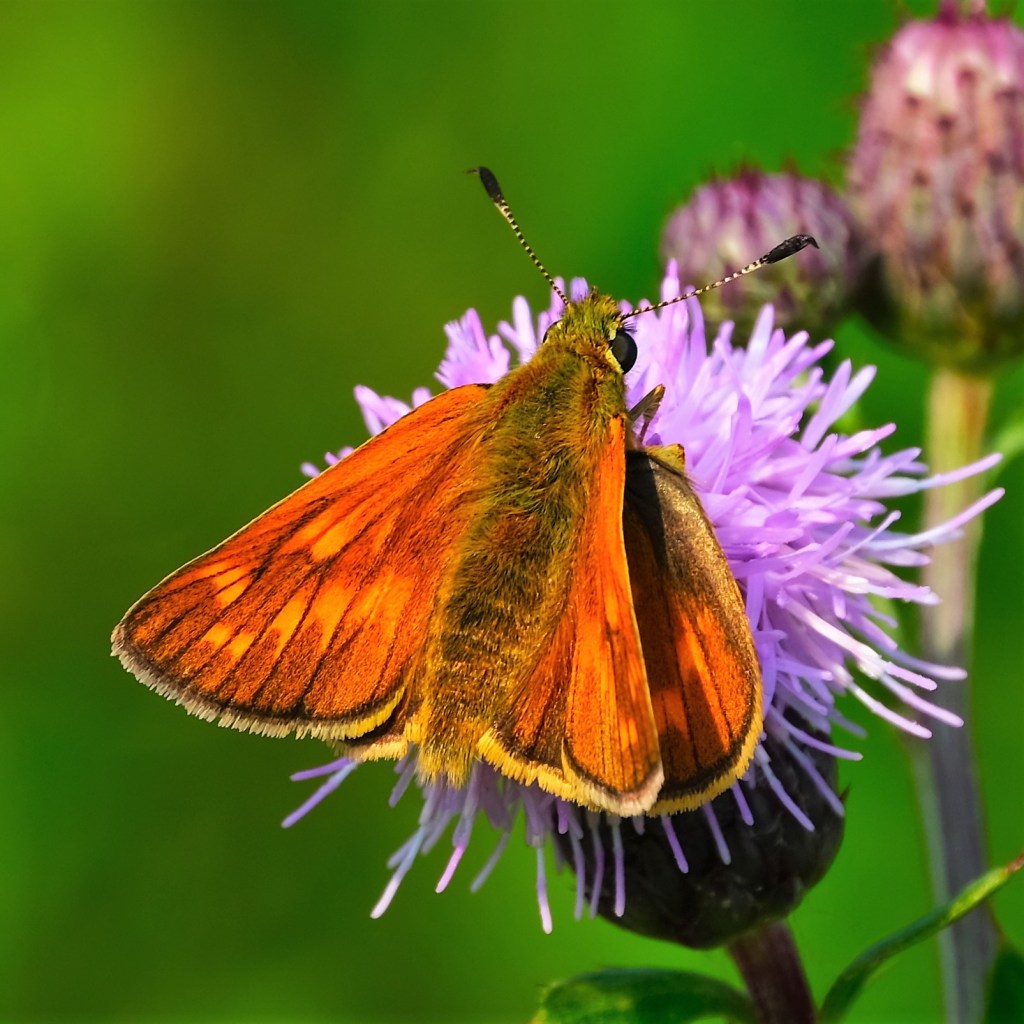
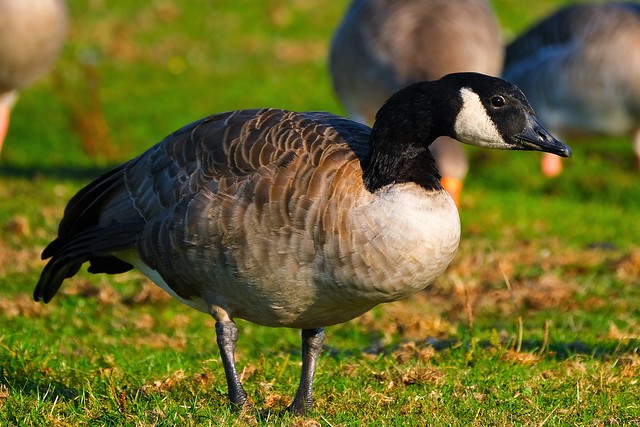
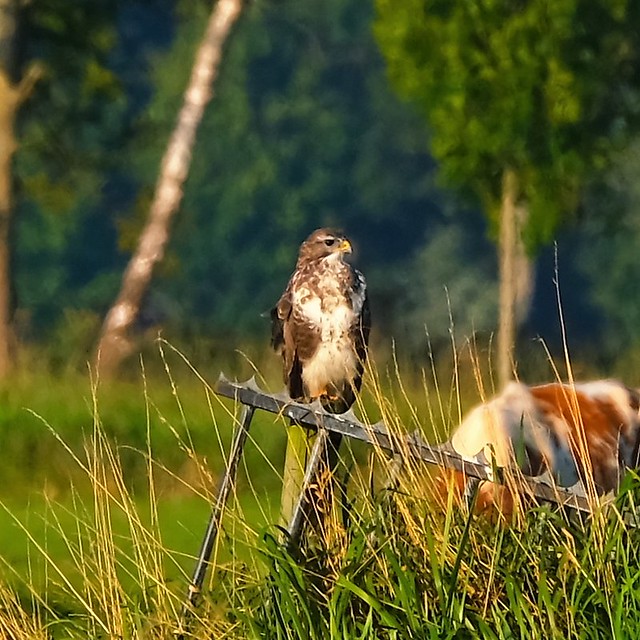
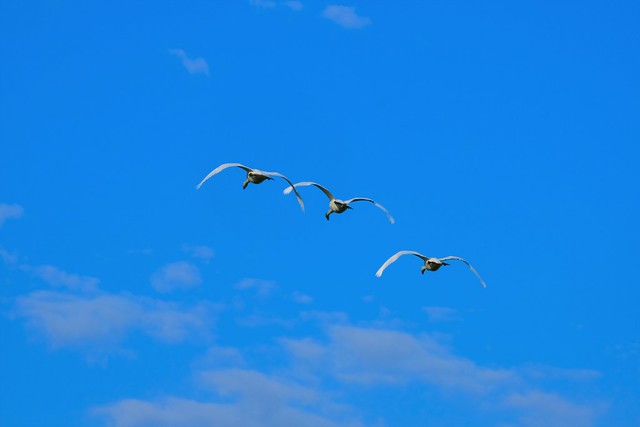
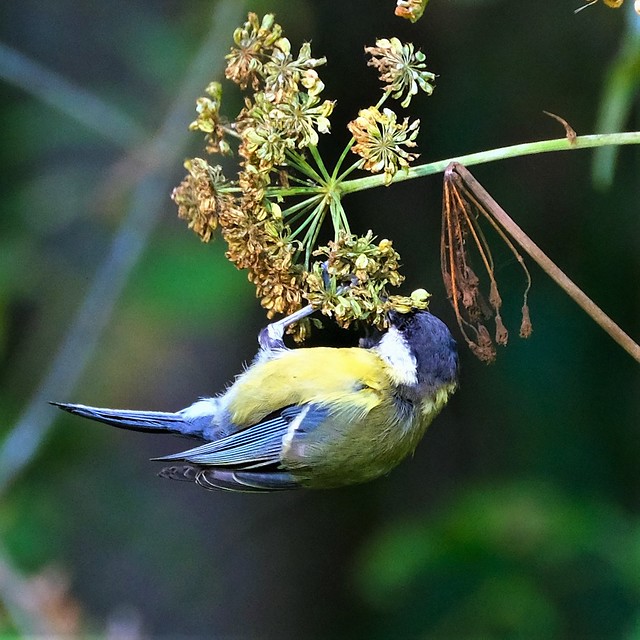
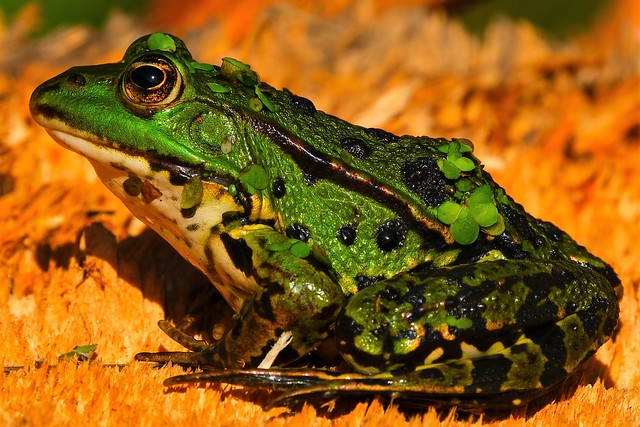
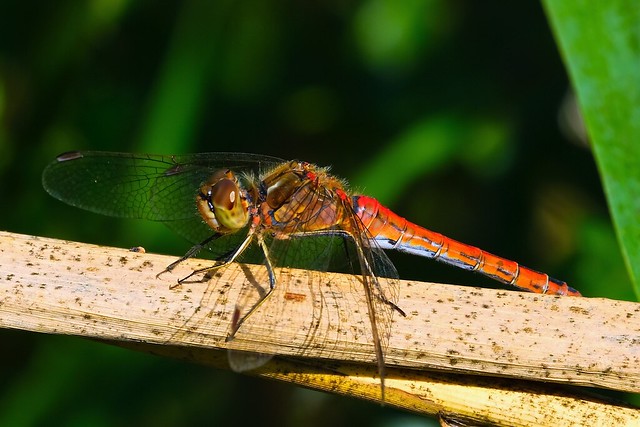
Scenes from the Dutch countryside.

I’ve had to work this week, if you can believe it, and so I haven’t gotten to go looking for wildlife. On the commute, however, from Rotterdam, where my boss and his wife are graciously putting me up until I can find my own place, to Delft, where we work, I was seeing some amazing creatures. Therefore, on Wednesday, when my boss was going to work from home for a bit in the morning, I set out on my own and brought my camera along with.

Just about as soon as I got out of Rotterdam and into the countryside, I spotted this Eurasian oystercatcher (Haematopus ostralegus) hunting for tidbits in a newly mown field. It is about the size of a big crow, but with a bright red beak at least twice as long, and I don’t think it’s gonna find any oysters there.

Soon after the oystercatcher, this Northern lapwing (Vanellus vanellus) caught my eye in another mown field. I read that they are in the same family as the killdeer in Estabrook, and I only looked that up because their beaks are so similar.

Finally, just around the corner from the lapwing was this godwit (Limosa) hiding in the tall grass, but I can’t tell if it is a bar-tailed or black-tailed godwit. Maybe next time it will forage in a mown field and let us get a better look.

Those are the pictures from Wednesday, and today I went out even earlier to see if I could find something new. This is what I’ve got to show for it.

First is this handsome black-headed gull (Chroicocephalus ridibundus) perched on a rooftop.

Next is a pair of common shelducks (Tadorna tadorna) who are dabblers, like mallards, and they kept their bodies on the surface, but they held their heads under water a long time, like diving ducks.

Finally, I will thrilled to spot this ring-necked pheasant (Phasianus colchicus) hiding on the other side of a thicket and glowing in the early morning light.

I read on the Pedia of Wik that “It is native to Asia and parts of Europe like the northern foothills of the Caucasus and the Balkans. It has been widely introduced elsewhere as a game bird. In parts of its range, namely in places where none of its relatives occur such as in Europe, where it is naturalized, it is simply known as the “pheasant“. Ring-necked pheasant is both the name used for the species as a whole in North America and also the collective name for a number of subspecies and their intergrades that have white neck rings.”

I also saw a few little birds, but I have yet to identify them, so they will just have to wait for the next report.

A rainy day in South Holland

It rained on and off all morning, so I didn’t get out until the afternoon, and then I just went to the canal behind my friends’ apartment, called “boerengat” on google maps, instead of going to the plas.

The first new bird for today is a common wood-pigeon (Columba palumbus), which looks a lot like a rock pigeon, the variety that you might see on the streets of most cities, but noticeably larger and with a distinctive white patch on the side of its neck.

The second new bird is a Eurasian magpie or common magpie (Pica pica), which I read “is one of the most intelligent birds, and it is believed to be one of the most intelligent of all non-human animals. It is the only bird known to pass the mirror test, along with very few other non-avian species.” How fun is that?

The third new bird, in the water this time, is a great cormorant (Phalacrocorax carbo), who sure looks like the double-crested cormorants we’ve seen in Estabrook Park but can’t be because I’m now a few thousand miles out of their range.

There was also a grey heron along the canal, which we’ve seen at the plas, …

And this Egyptian goose, who was kind enough, or tired enough, to let us get a better look at those pretty feathers it sports.

Lastly, there was another family of great crested grebes with one chick.

That’s it for today, and I don’t know if I’ll have any pictures for you tomorrow because I’m going to campus early in hopes of getting some logistics sorted out. Wish me luck!

Dutch Detour Day 2

The jet lag has been mercifully mild so far this trip, and I even managed to stay up late with my gracious hosts last evening, so I didn’t make it to Kralingse Plas this morning until about 11. Happily, the birds appear to have waited up for me, because they were even more plentiful than yesterday.

On my walk north towards the plas, I finally got a glimpse of this cute little singer with a curious song I’d been hearing, a common chiffchaff (Phylloscopus collybita).

At the plas, I got a presentable image this time of the tufted duck hen (Aythya fuligula) and her bright-eyed drake (on the left).

Closer to shore, this mallard hen was dabbling with her one duckling.

Just beyond the mallards a big tree branch reached down into the water, and both coots and grebes were using it to anchor their floating nests.

Here’s the grebe repositioning herself on her one egg.

As her drake floated nearby

Meanwhile, not 3 feet away, a coot chick rests on its nest as a parent stands nearby. You can just make out the blurry grebe in the background on the far right.

Here’s a better look at the incubating great crested grebe.

And of the coot chick.

Farther out on the water, here’s another grebe with two chicks well beyond their egg stage.

And here’s a coot feeding a chick grown up enough to lose all its crazy red “hair”.

Just across the way, a pair of grey herons (Ardea cinerea) were resting, and here’s the better posed one.

Lastly, here’s the image of a mute swan (Cygnus olor) that I promised you.

Finally, Lou Miller, who has enjoyed some birdwatching on this side of the world recently, wrote in to say that the bird I showed you yesterday, which I thought might be a raven, instead “looks like a carrion crow (Corvus corone), [which are] quite abundant in Europe. Compared to a raven their bill is smaller and they don’t have as rough of neck feathers.” Thanks, Lou!

Oh, before I forget, it turns out that stinging nettles are quite common here, and I really should be wearing long pants to do this. Good thing I packed some, and I only wish Lou had warned me!

“The Bicycle of the Future” – Day 1

I made it to Holland in one piece, and after I arrived at my bosses place, I was able to reassemble my bicycle back into one piece, too. We even went out for a test ride yesterday afternoon, and there were so many birds on the water, that I could hardly wait to get out with my camera this morning. We’re in Rotterdam, home of the largest harbor in Europe, and there’s a nice little lake, called Kralingse Plas, a short walk from the apartment, so that’s where I went.

The first bird I came across was a Eurasian coot (Fulica atra), and they bear a striking resemblance to our American coots, but without the black ring near the end of their beak.

Here’s a hen with what must be one of the most unusual-looking chicks I have ever seen. I read that the bright colors are intended to help parents “work out which ones are the youngest and the most likely to need their help.”

Here are a pair of great crested grebes (Podiceps cristatus) showing a little PDA, but I didn’t get to see the whole dance yet.

Here’s a duck that looks for all the world like a mallard hen, but with a white patch low on her neck, and I have no further information at this time.

Here’s a healthy-looking gaggle of graylag geese (Anser anser) that appears to comprise two adults (foreground and background) and thirteen goslings. They seem to be about as plentiful as Canada geese in Estabrook, or even more so.

Here’s an Egyptian goose (Alopochen aegyptiaca) with one gosling.

Not all the birds were waterfowl, of course, and here’s a great spotted woodpecker (Dendrocopos major) hard at work.

Here’s a female Eurasian blackbird (Turdus merula) who looks a lot like a sooty American robin, and her mate sings just like them. John Gurda would be so happy.

The most common bird on the ground this morning, however, was the Eurasian jackdaw (Corvus monedula), who looks like a slightly-smaller and slightly-more-colorful crow.

Finally, there doesn’t appear to be an equivalent to the plain-black American crow, so my best guess is that this is a common raven (Corvus corax) instead.

There were plenty of other birds, too, including swans, tufted ducks, herons, and even parrots, but I’d better pace myself.

Later today, while my gracious hosts, Jason and Umi, ride up to Delft for errands, I’m gonna try to open a bank account. Wish me luck!

“The Bicycle of the Future” – Day 0

Today is the day I ship out for Delft, so I won’t make it to Estabrook Park this morning. Sorry.

Packing for a year away while being too cheap to pay for extra baggage has been an adventure. I hemmed and hawed about bringing one of my own bikes because the last time I was there, they were pretty pricy, and that was before the whole recent, pandemic-induced, supply-chain fiasco. KLM wants $150 to ship a bike, however, and if I figure both ways, because why would I leave a bike behind that was good enough to ride for a year, that would make a $300 budget for me to buy something used there. That’s maybe enough, but hard to tell for sure.

Then Anne made a great suggestion, as she often does. “Why don’t you bring one of those fancy folding bikes you bought, and we’ve only used once or twice?” When she’s right, she’s right, which is pretty much all the time.

So here it is in the biggest roller bag I could find at Goodwill yesterday afternoon and carefully padded by all my clothing. Some extra disassembly was required. I measure the bag to be 12x17x25 inches on the outside, which isn’t all that big, but I ain’t paying no stinking “bike fee”! (I hope.)

Anyway, the weight limits are a whole other issue. With my checked bag full of aluminum and steel, so that it bumped right up against the 50.5 lb (23 kg) limit, I had to put all my camera gear and my laptop into my carry-on bag, which has a 26 lb (12 kg) limit. All that glass ain’t light!
If you see a guy this morning at the KLM check-in counter stuffing his pockets full of toiletries, chargers, tools, and a surprisingly-dense Berlitz book on Dutch, that’ll be me trying to compensate for my bathroom scale being a little off on the low side.

A fine “Tot ziens!”

It was another fine morning in Estabrook park, a bit cloudy at first, but nice and sunny soon enough. Plus, the air was nice and still, so the bugs were up, and the birds were after them.

I had received two hot tips yesterday about recent mink sightings, so I hit those spots first, but the little stinkers have eluded me yet again, so I still have no new mink pictures for you. Instead, this little rascal, a young-looking red squirrel, was keeping two eyes on me as I searched in vain for the mink, so here you go.

I stopped by the pond, in hopes that maybe some ducklings would have arrived, now that the goslings have all moved on, but I didn’t see any yet. There were several wood ducks, however, and I thought it would be fitting to take a final wood duck picture, seeing as how that’s what set this whole thing off in the first place. The sun was shining by then, and I did get some nice poses from the drakes, but I like this candid moment between a hen and her drake better.

On my way to the river, I spotted this Canada warbler rustling up some breakfast.

And while we’re looking at warblers, here’s a blackburnian warbler from yesterday.

And a red-eyed vireo from yesterday.

Out on the river, I did see two sets of goslings but no ducklings today. Instead, here’s a green heron from this morning.

And another from yesterday.

The other big surprise from the river yesterday, besides all the ducklings, was this yellowlegs foraging with the sandpipers on the recently re-exposed rocks and gravel. I’ve only ever seen them once before and not nearly this close.

Here it is again being photobombed by a blue-winged teal drake. See if you can spot the culprit.

Here’s the teal all by himself in a better pose.

Finally, there’s one last surprise from yesterday, if you can believe it. As I was on my way home, with a huge smile on my face from the ducklings, the baby raccoons, etc., I could not believe my luck to spot this handsome devil out in the open in broad daylight and closer than I’ve ever been allowed before.

And, lest you think that’s a menacing look, and I was in grave danger, here’s what it did next, once I sat down.

This, I will sorely miss.

If I’m too panicked about preparing to ship out on Wednesday to visit Estabrook again tomorrow, I’ll drop you a line when I arrive “across the pond“.

 Babies-a-Poppin’!

Sorry about the radio silence, but I had a couple of final exams to write, proctor, and grade as soon as I got back to Shorewood, so I took a couple of cloudy days off. The sun was out this morning, however, and my grading is done, so I went to see what’s new in Estabrook.

Besides all the leaves on the trees, which weren’t there when I left, another big difference you may have noticed recently is the complete lack of geese on the pond. It appears that while I was a way, Mom and Dad decided it was time to hike their brood down to the river, which they’ve done on almost the same day every year I’ve been observing them. All that was left was a couple of mallards, a few wood ducks, some turtles, and a whole lot of red-winged blackbirds.

I headed to the river myself, and soon found at least two families of Canada geese. Perhaps one of them is our family of cuties from the pond.

A bit north of the geese, I could hear a bunch of little birds peeping incessantly, but I couldn’t spot them until I looked down to find this fresh-looking brood of mallard ducklings all by their lonesome!

I am sure you will be as relieved as I was to learn that Mom was just down river a bit, perhaps to take care of some unfinished business, and once they spotted her, they made a beeline.

Here’s the happy reunion, although one duckling looks maybe a little miffed about the whole affair.

Anyway, as I was watching that heart-warming scene unfold, another mom came paddling over with her ducklings safely in tow, and here she is with one of them.

I had hardly gone another 100 yards when I heard a different kind of baby cry. This time, they were raccoons, and there was an adult with at least two little ones, probably three, scattered from the treetops, …

through eye-level, …

to the ground. Maybe a little one fell out of the tree and had to be retrieved.

Whoever is in charge of this bunch has sure got their paws full.

Lastly, all that toad action we saw almost three weeks ago has already paid off!

There were too many pollywogs to count!

Finally, these aren’t strictly baby pictures, but they’re closely related, so here you go.

First, here’s a pair of tree swallows working on making more. It took him a few tries, but he finally stuck the landing.

Here’s a pair of Baltimore orioles collecting nesting materials. Well, at least she is. Maybe he’s keeping watch.

And here’s a great blue heron who just couldn’t seem to decide on which stick to keep. This short, crooked one?

Or maybe this long, straight one.

I took a bunch of other pictures, too, but this post is already too long, and they’ll just have to wait for a rainy day…

Just a few more pictures from CT.

The weather was perfect for my last morning out east; 46°F, dry, still, and sunny; and this time my sister and I tried the Farmington Canal Heritage Trail in Cheshire to see who we could find.

There is a big, shallow pond beside the stretch we sampled, and I was sure we’d find a heron of some kind fishing in there somewhere, but it took my sister’s keen eye to find this great blue heron at the edge of a low island in the middle.

We are certainly in the range of green herons, too, but we couldn’t find one today. Instead, back on land, this magnificent creature was crossing the path from the pond to the swamp on the other side.

I would say it is smaller than the giant in the pond at Estabrook, but bigger than the one I saw at the Milwaukee River last summer. It does have the same pretty eyes, however.

Snapping turtles weren’t the only critters with pretty eyes on the trail this morning, and here’s an eastern cottontail doing its best statue imitation in the golden, early morning light.

There were plenty of other birds about, as well, and many were making a racket, but the trees are pretty leafed-out here already, and so we couldn’t get a clear view of most of them. This eastern phoebe, however, perched perfectly on a bare branch over the remains of the old Farmington Canal.

And that’s a wrap for my east-coast tour. With any luck, I’ll be back in Estabrook tomorrow.

Back along the water…

I’m still out east, and this morning my sister took me hiking on the Quinnipiac River Gorge Trail from the Cheshire town line to Hanover Pond in Meriden. What a great outing. I’ve probably been there a half dozen times before over the years, but I don’t recall ever seeing a bird on the river. Today, however, we first spotted a few mallards, and here’s the one hen. She’s even got a ankle bracelet, which we last saw on an eagle in Estabrook.

Then there was a pair of common mergansers.

When we got to Hanover Pond, we were greeted by a Canada goose on land, and this double-crested cormorant in the water.

Across the water, we could make out a great egret and eight swans, probably mute, but they were all too far away for pictures. Sorry. Instead, as we started back up the trail along the river, this family of Canada geese came with us.

Further up the trail, a Cooper’s hawk, whom we had probably seen earlier, seemed to be more concerned with breakfast than with us.

All along the trail, we could hear red-bellied woodpeckers, and here’s one that showed himself just outside his nesting cavity.

There were a lot of catbirds, too, and here’s one more focused on continuing his song than on us.

Along the way, we also saw a female ruby-throated hummingbird sipping water from the side of a siltstone cliff, but the light was to low for me to have any change of an image.

Finally, as we neared the end of the trail, the feathers on this grackle caught the sunlight just right.

And that’s my report from the Quinnipiac River Gorge Trail. Check it out if you get the chance.

Update from the east coast.

I’m visiting my folks in Connecticut this weekend, and my sister’s son and his wife suggested that we go hiking in Talcott Mountain State Park this afternoon, and boy, oh boy, did that turn out to be a great idea. We could hear a lot of favorites on the hike up the mountain, scarlet tanagers, red-eyed vireos, blue-gray gnatcatchers, and more, but we couldn’t find them in the treetops. After hiking through a brief shower, we reached the summit, and we finally found someone willing to come down to our level, this darling eastern phoebe drying itself out.

As we started back down, we came across a bunch of these amazing native orchids in blossom: pink lady’s slippers (Cypripedium acaule Ait.).

Soon after that, my nephew spotted my first Connecticut mourning cloak butterfly, and this time I had more than just my phone.

Finally, halfway back down the mountain, my sister spotted an odd, black tube lying on a log. As we looked closer, it began to move. It turns out that she had spotted a giant, eastern ratsnake (Pantherophis alleghaniensis), the “largest snake found in Connecticut.”

Lastly, once I got back to my folk’s house, their new favorite visitor, this handsome tom turkey stopped by.

And that’s my update from the east coast so far.