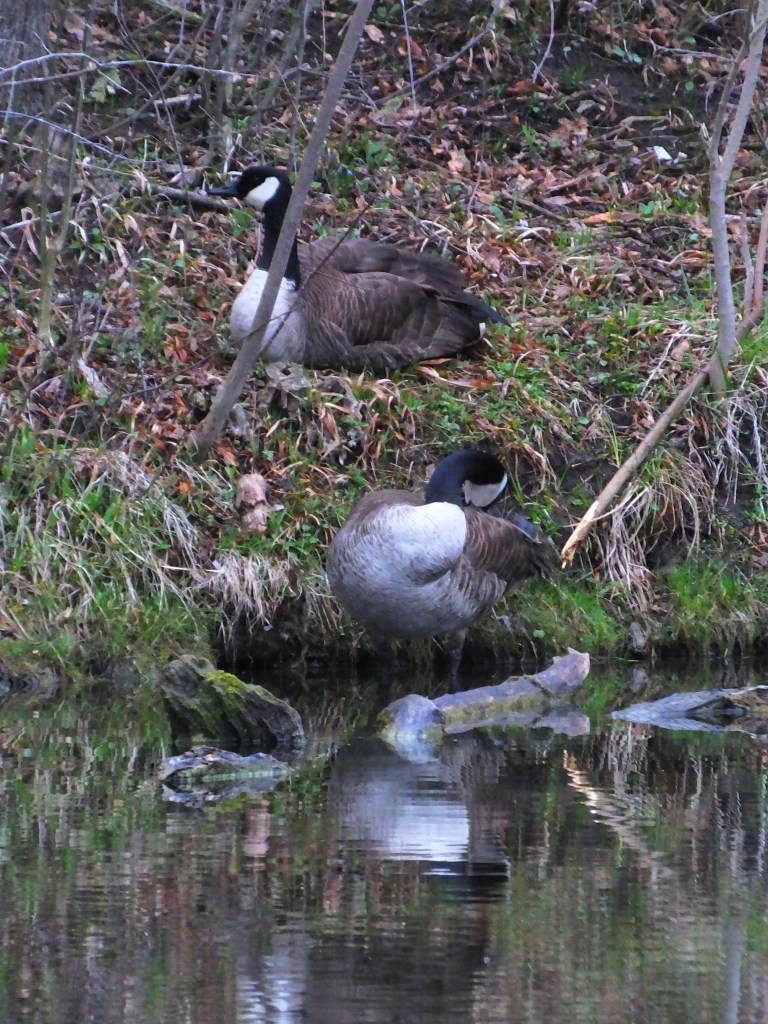
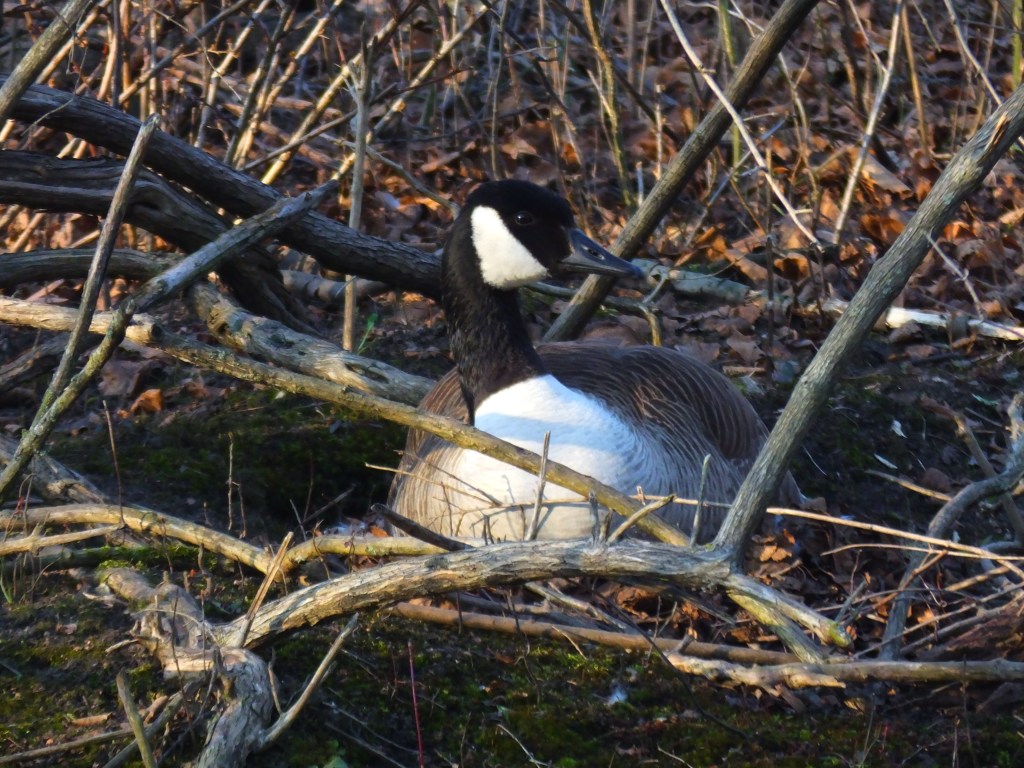
The big news from Estabrook this morning is that it appears as though a third pair of geese might have finally found a nesting site. She was off it again by the time I left, and it’s not on the island, so we’ll have to see if they can make a go of it there, but best of luck to them!
Meanwhile, I am pleased to report that the incubation continues on both the northern and southern tips of the island.
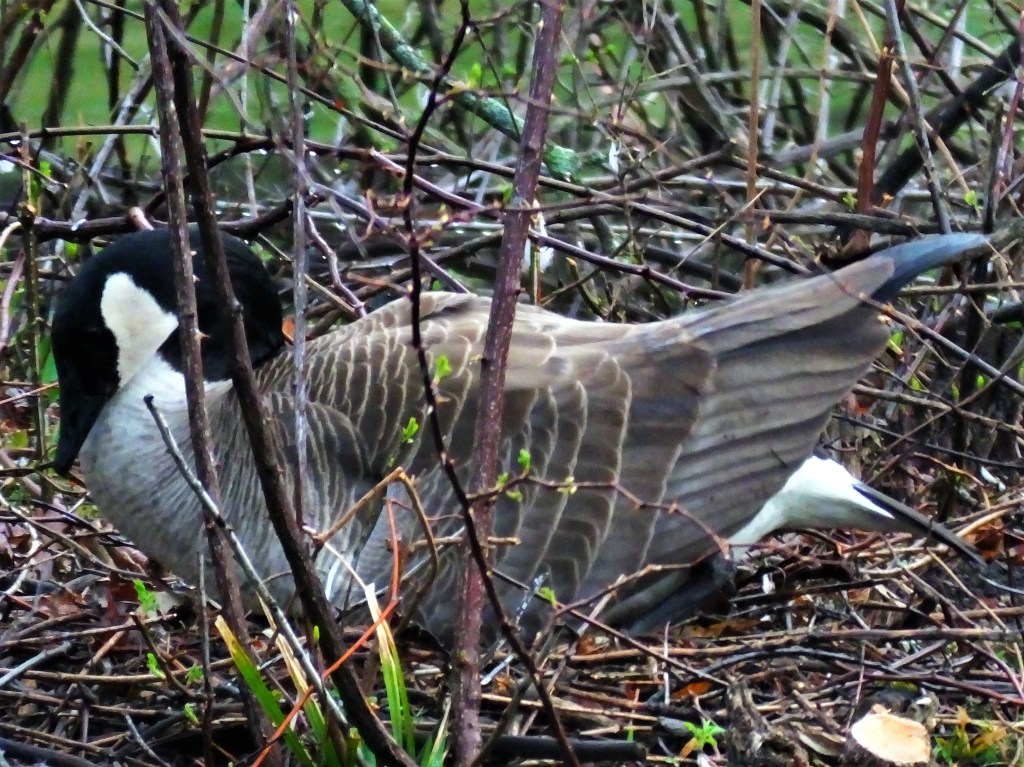
At the river, I found another robin nesting in a spot that seems far too obvious, so I hope that works out, too. The one we saw a couple of days ago was on the nest again as I walked past. Fingers crossed for both of them. Sorry about the blurry picture, but I’m trying to be as unobtrusive as I can so they don’t abandon.
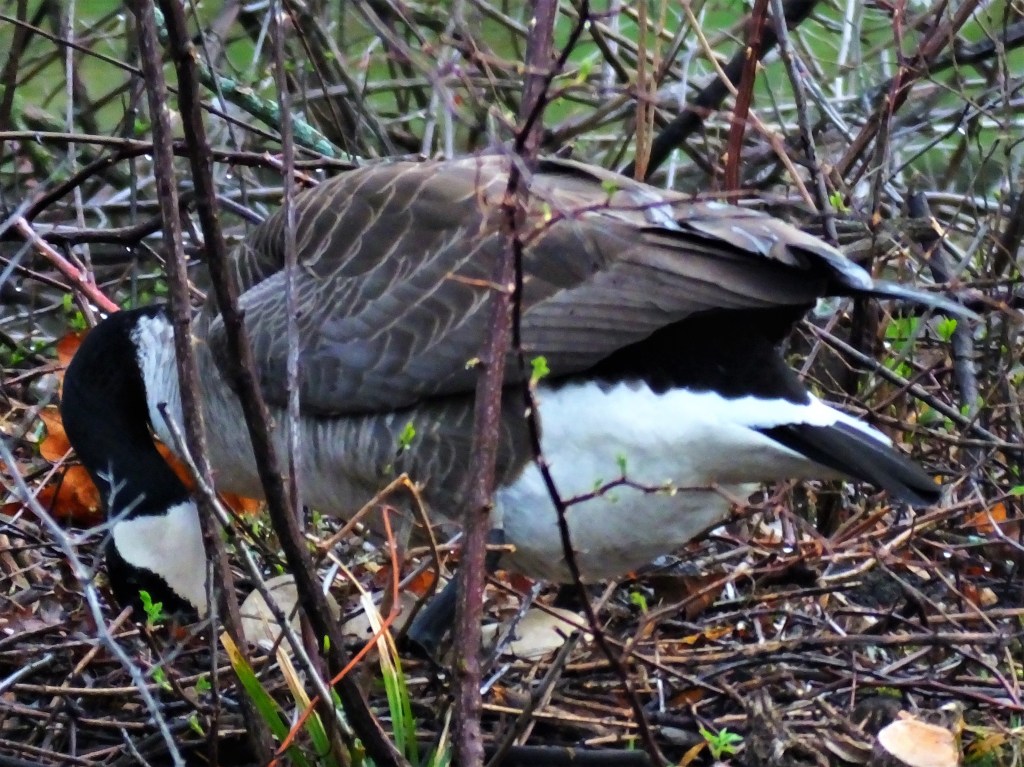
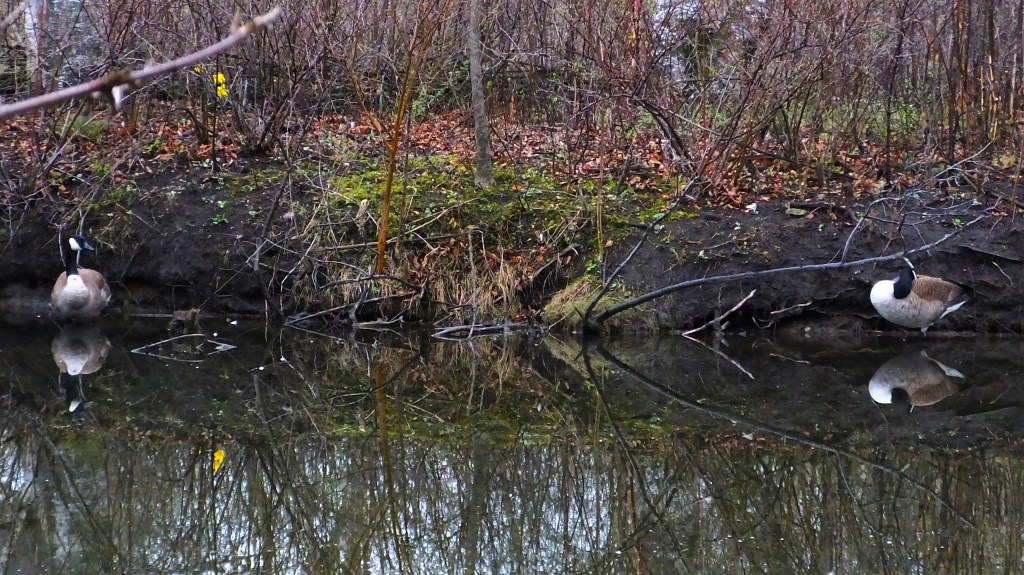
Just a bit north of there, was another pair of geese making all the appearances of hoping desperately to find a nesting site of their own, literally looking high and low, but nothing in that vicinity looked promising to me. Oof, that’s gotta be an awful feeling.
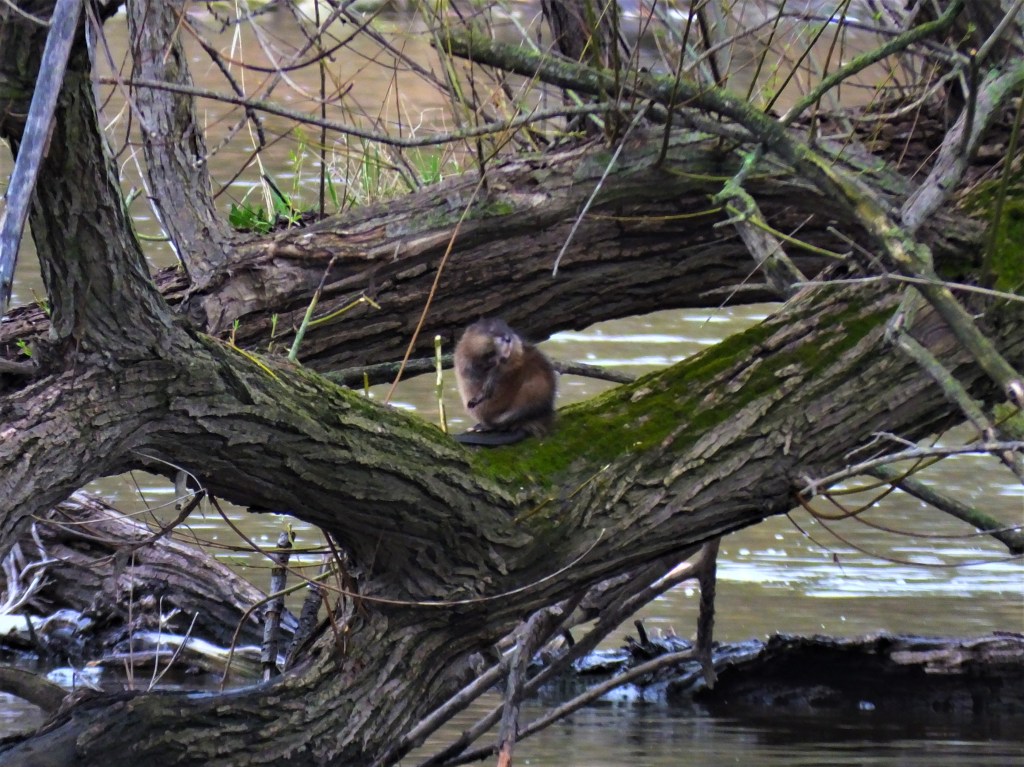
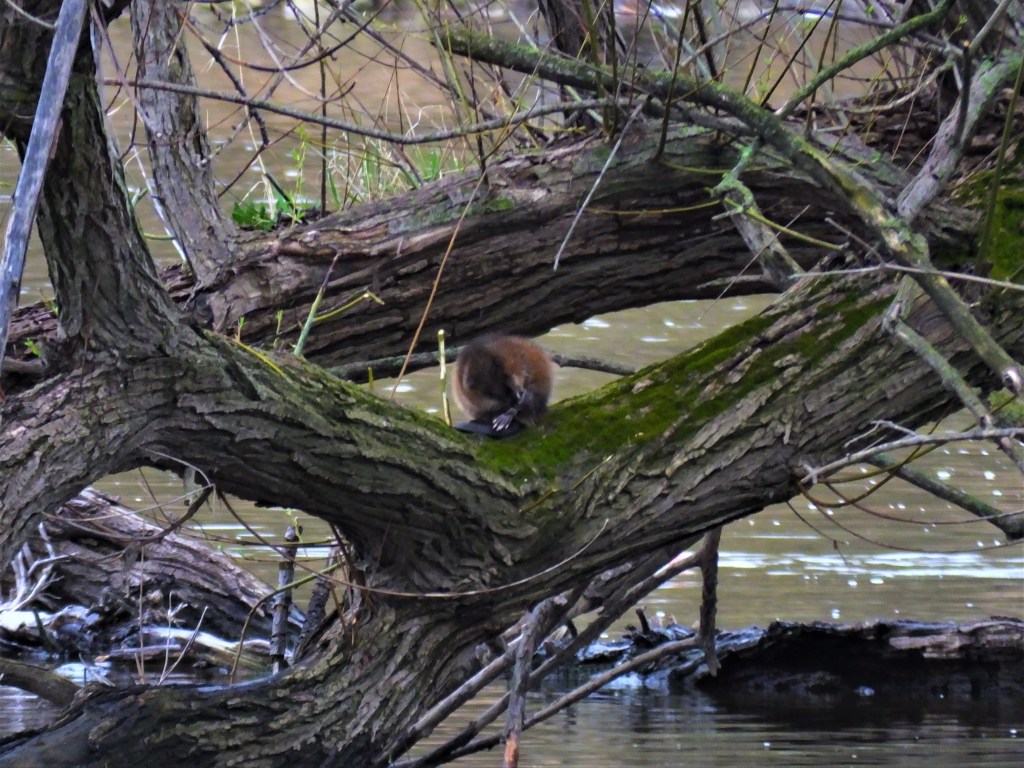
At the north end, I spotted one of our furry little aquatic friends again, a muskrat this time.
On my way back south, I found this cute pair of mourning doves foraging beside the little stream that runs from the pond down to the river. All winter, they were surprisingly shy, so I was very surprise to see how unperturbed they appeared to be today.
Lastly, I spotted this little clutch of eggs on the back side of a small tree trunk, and I wonder what they’ll hatch into.
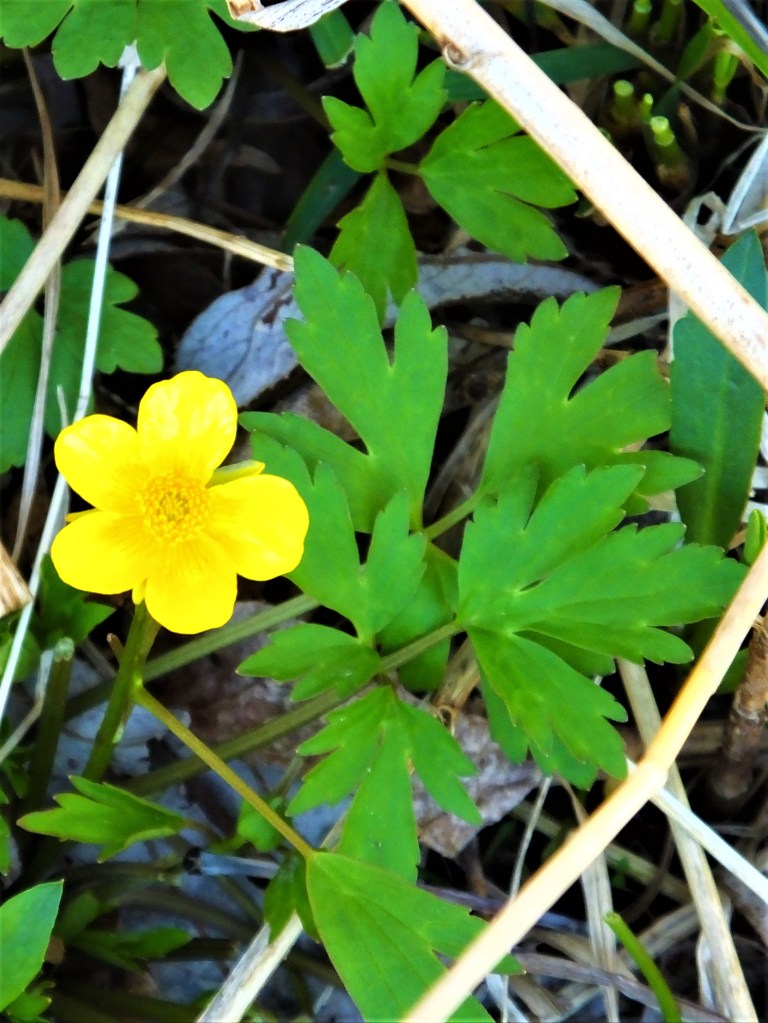
Finally, there are a couple of new splashes of color in the park. At the south end, beside the river, I found this specimen, about the size of a quarter that Pl@ntNet assures me with 97.7% confidence is Bristly buttercup (Ranunculus hispidus)
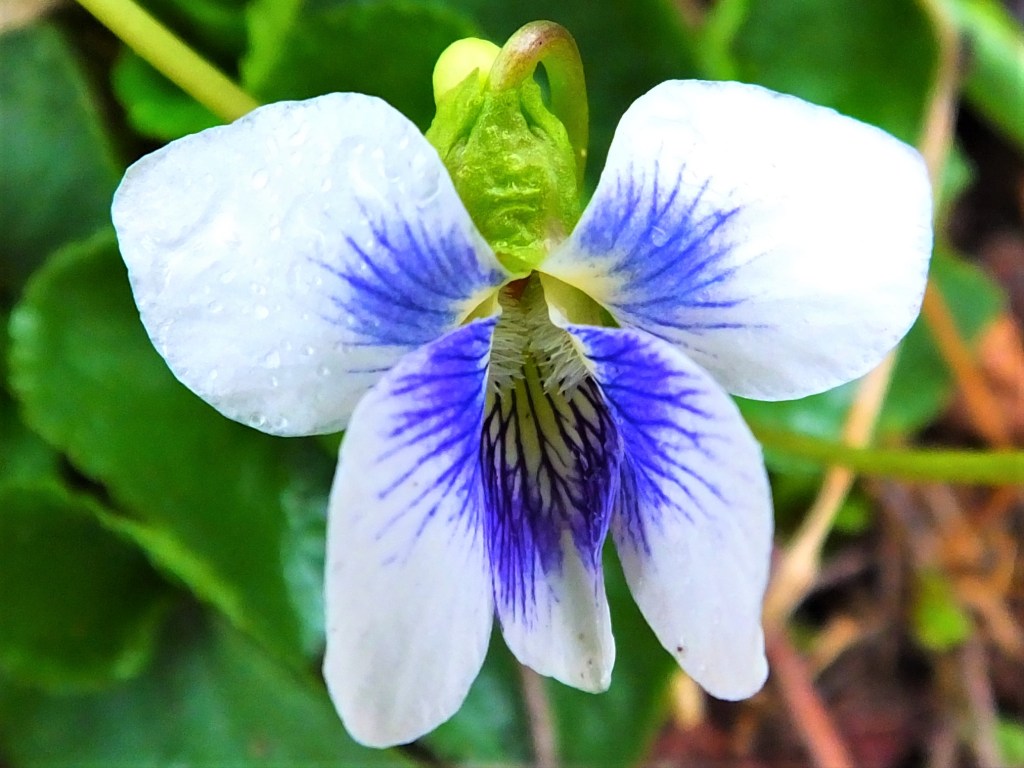
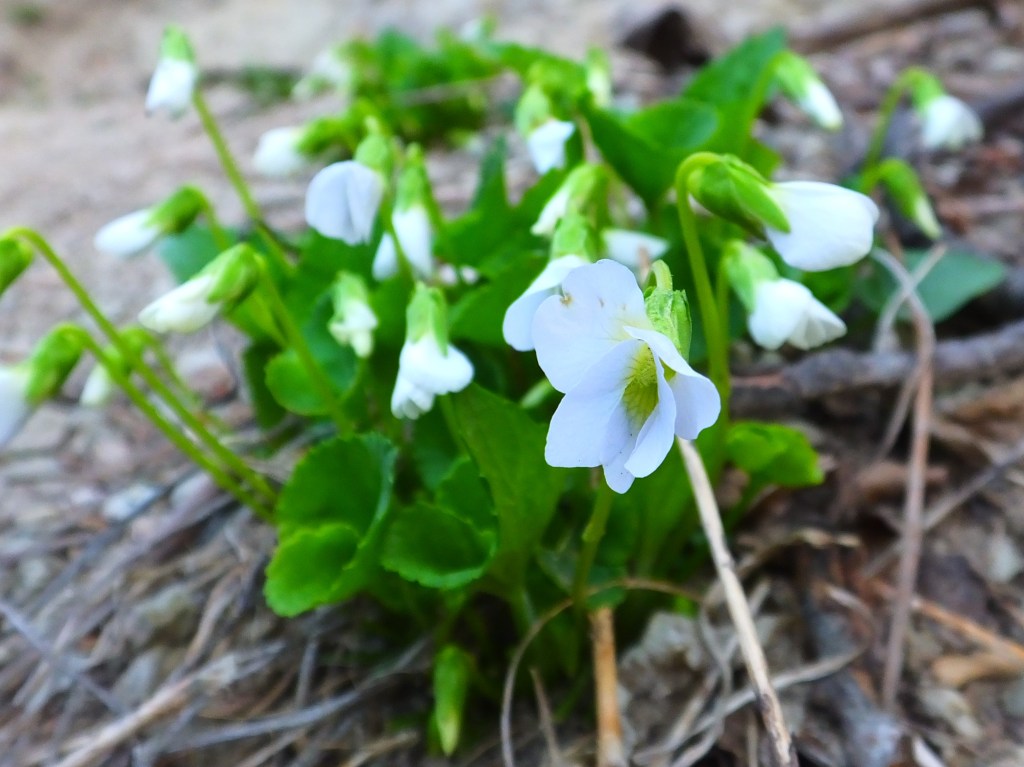
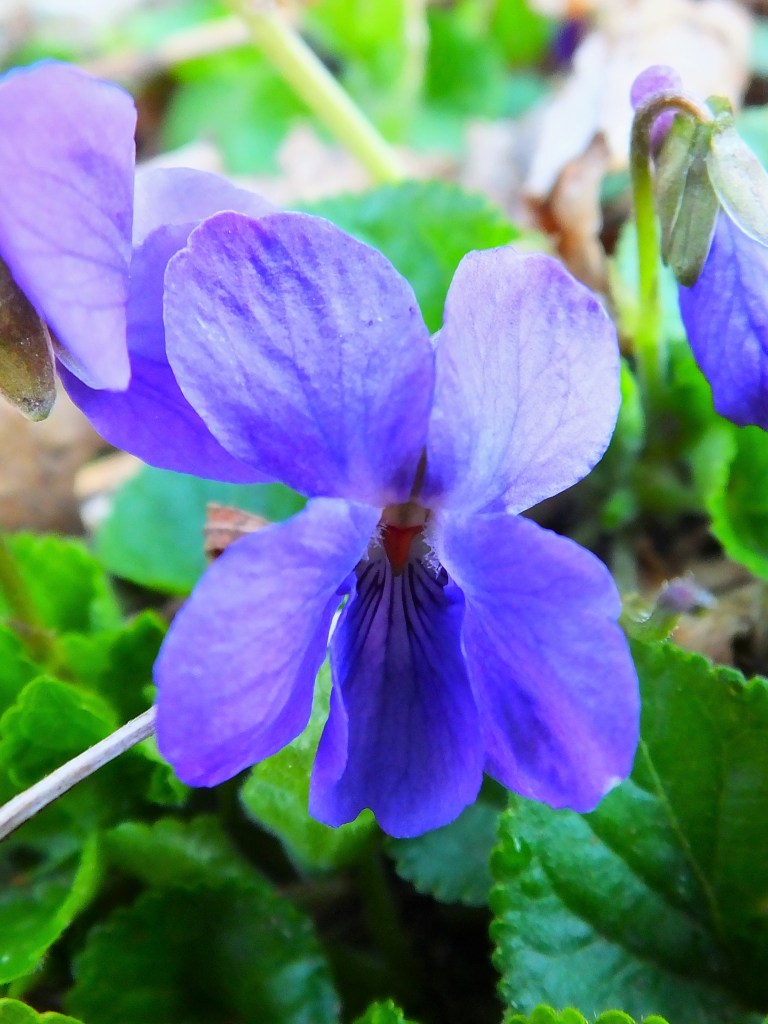
At the north end, also beside the river, are these pretty white and blue violets, apparently a hybrid (Viola melissifolia).
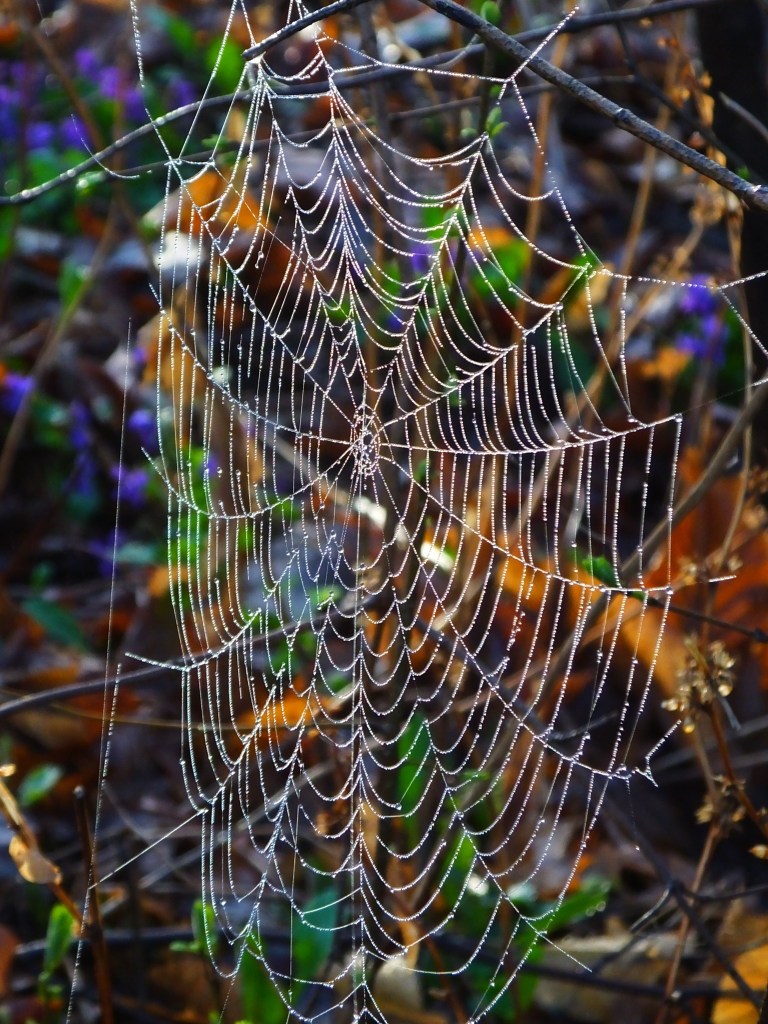
The orb-weavers (Araneidae) are back, and with the sun coming out this morning after the rain and heavy fog last night, their artistry looked amazing! I didn’t see any of the actual spiders themselves, but their work was unmistakable.
She was calling, too, and maybe to this handsome devil across the pond.
Also at the pond, the goose on the southern tip of the island was off her nest again, but I could clearly see 4 eggs in it now. They say that she won’t incubate until she’s laid all her eggs so that they hatch at about the same time, and maybe she’s still got one or two left in the hopper.
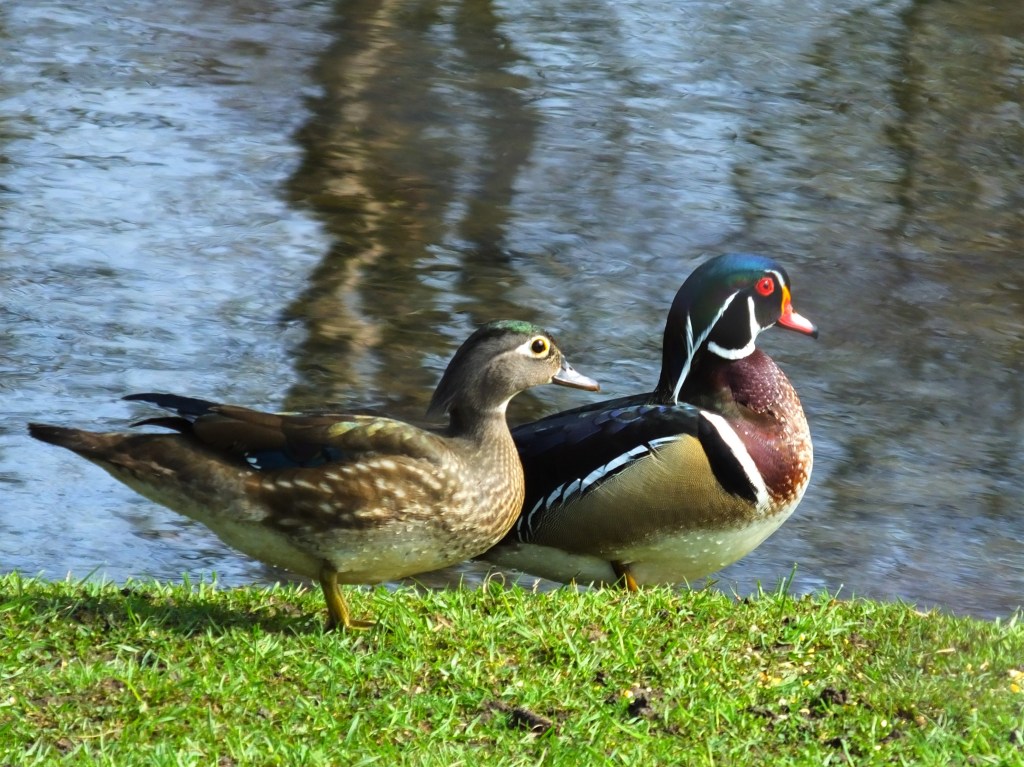
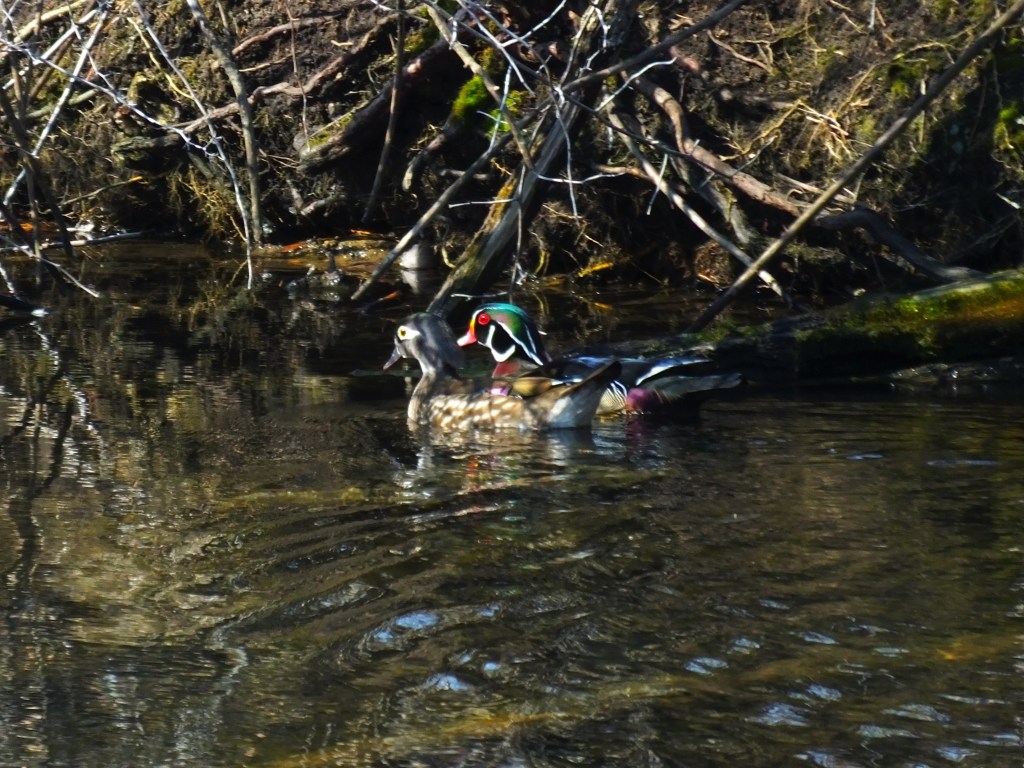
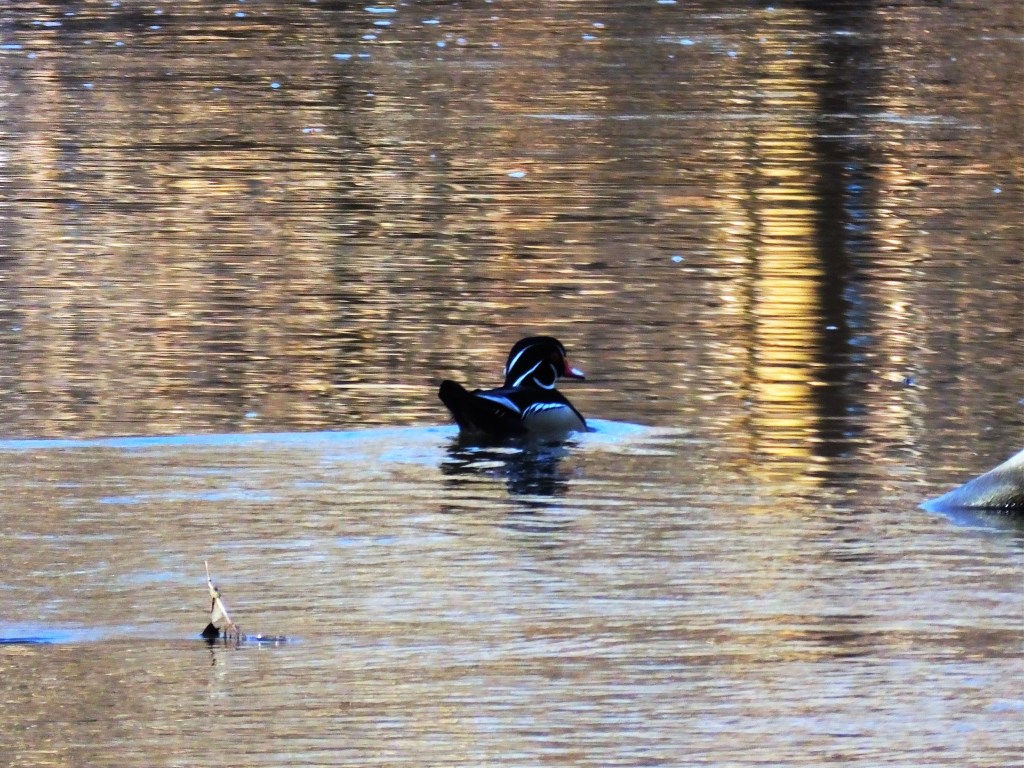
A few wood ducks were also there this morning. Here’s the hen with her current pretty boy checking out the lawn will the other two drakes were on the island plotting their schemes.
The morning sun also brought out the turtles, who’ve been laying low, literally under water, while we got our April showers.
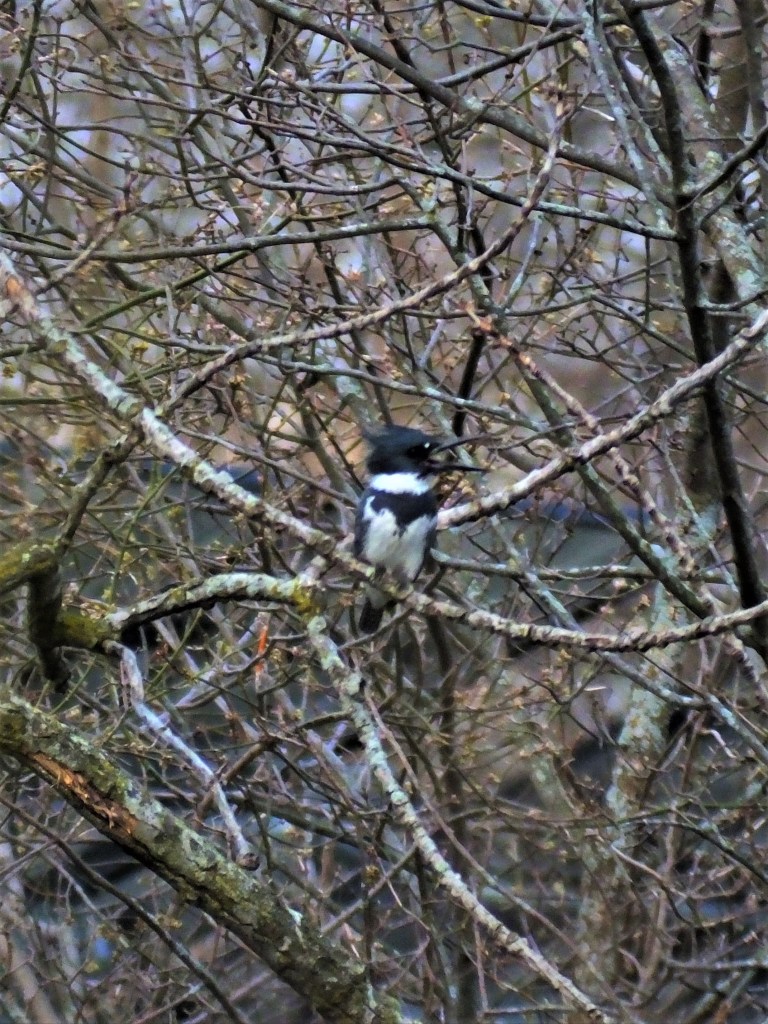
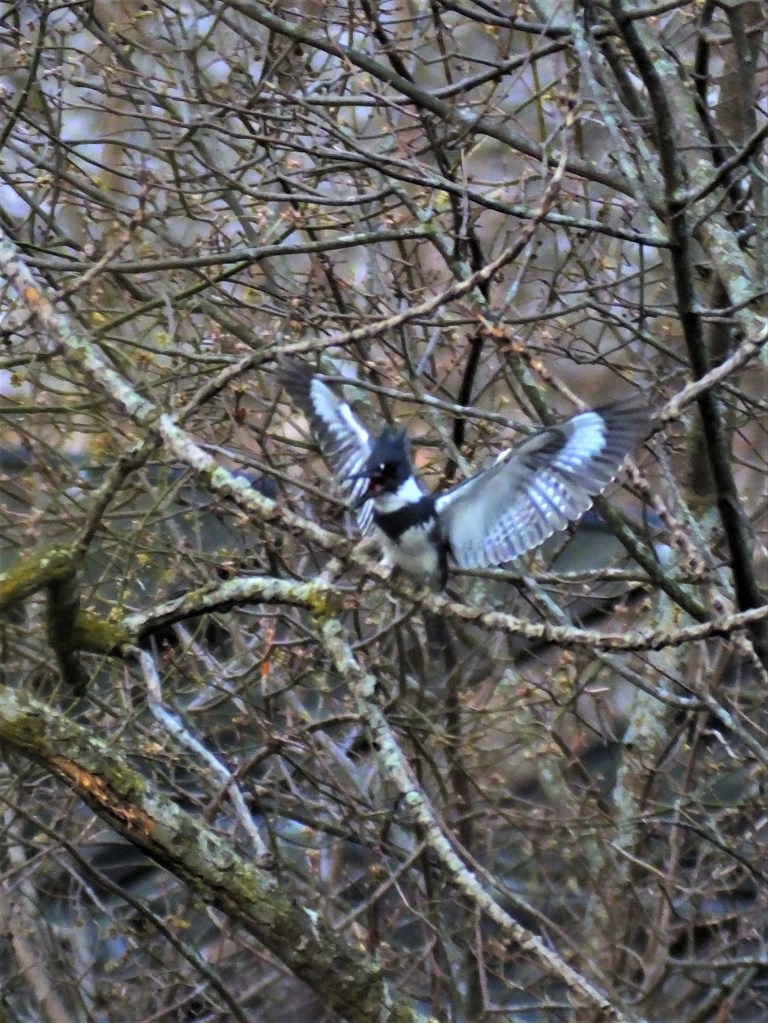
Finally, a kingfisher came by the pond for the first time this season that I’ve seen, and he perched perfectly at the top of a dead birch tree on the island against a bright blue sky. Magic! I hustled around to the other side to get the sun at my back. I was approaching as carefully as I knew how, because they are so skittish, but just before I got to a clear shot through the brush and trees, the geese got into an argument, again, and she was out of there. This is what I was left with. Dang.
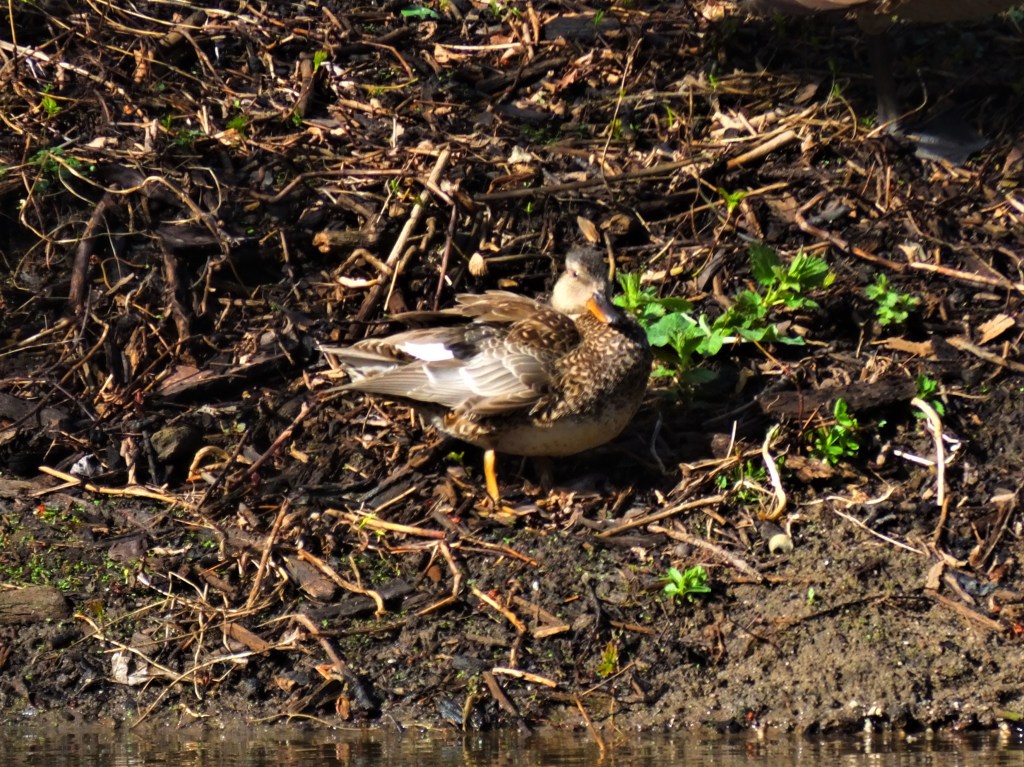
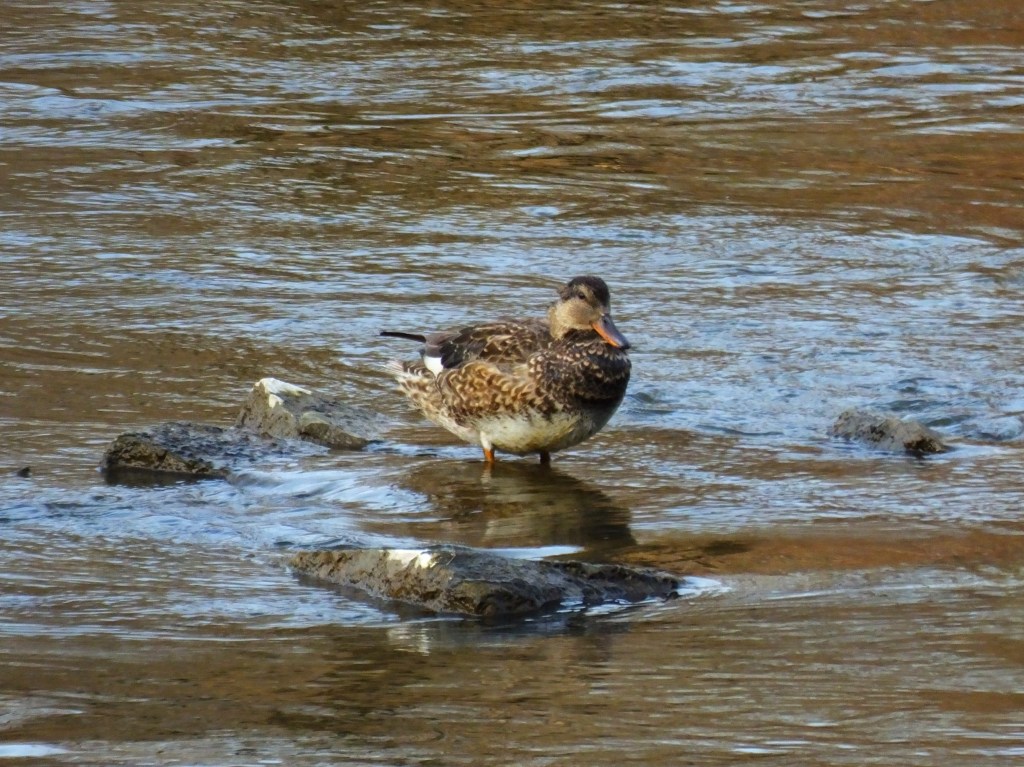
Oh well. On to the river, where I was surprised to find Mrs. Gadwall is still kicking around. At first I thought she was a mallard, but when she high-tailed it for the far shore as soon as she saw me, I should have realized who she was. Luckily, the far shore happened to be closer that its ever been, so here you go. Plus, she couldn’t have been to bothered by my presence too much because she immediately went about preening herself, and this is one of the few shots I got in which she’s actually looking our way.
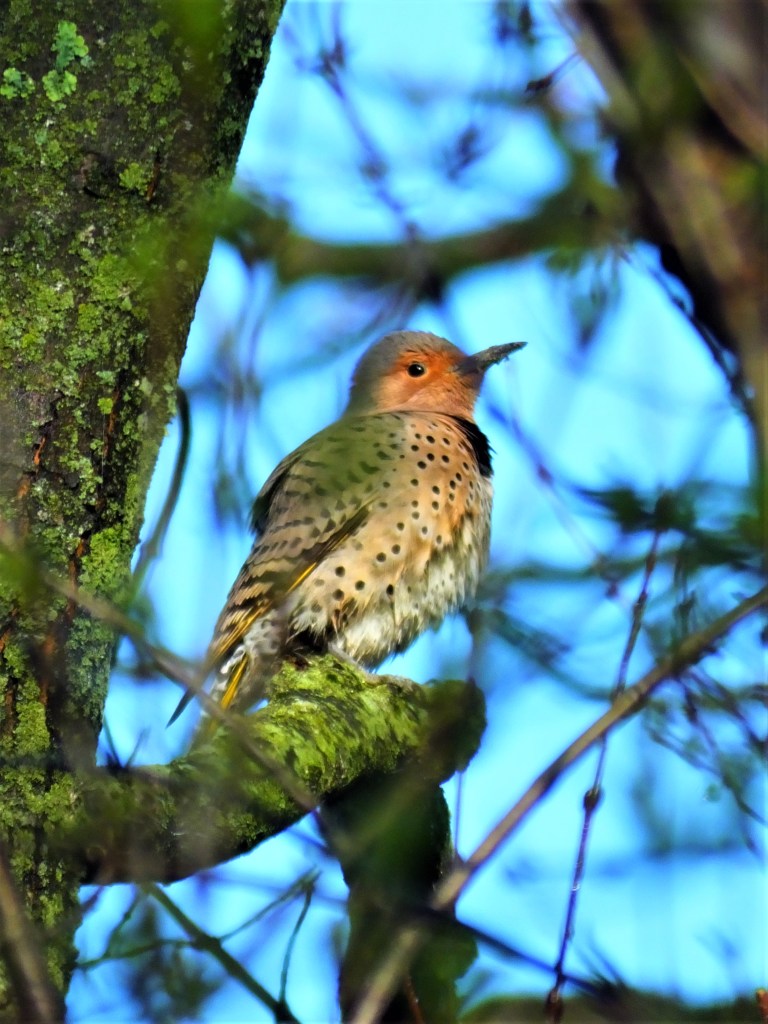
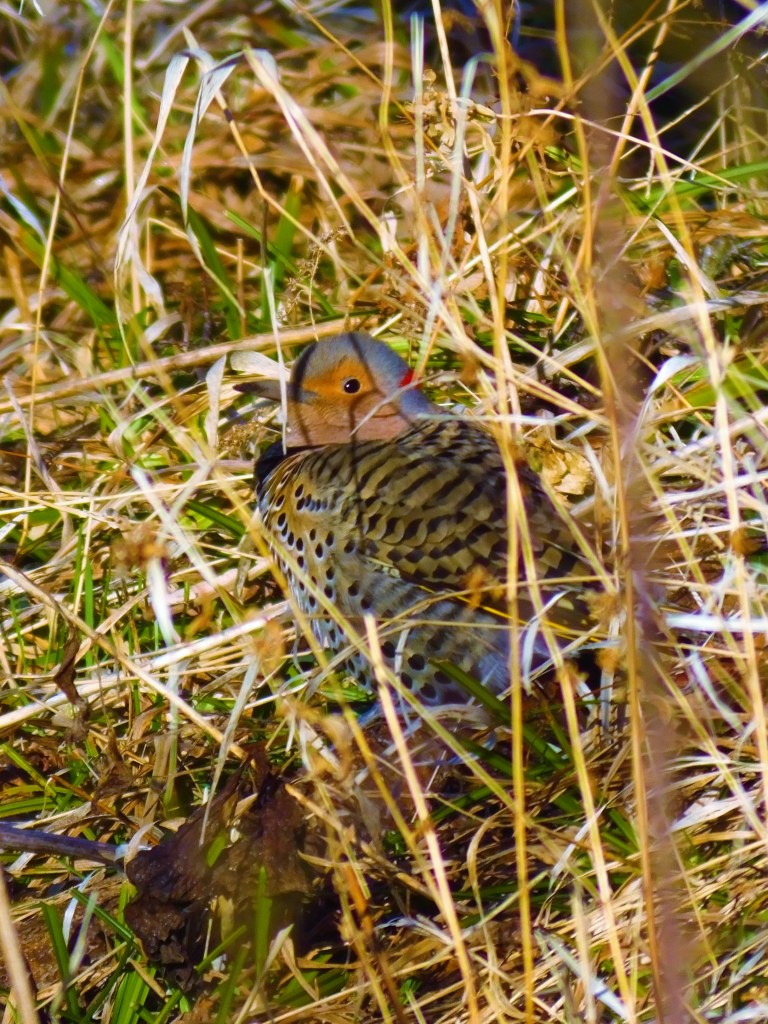
The northern flickers are still plentiful and shy as ever.
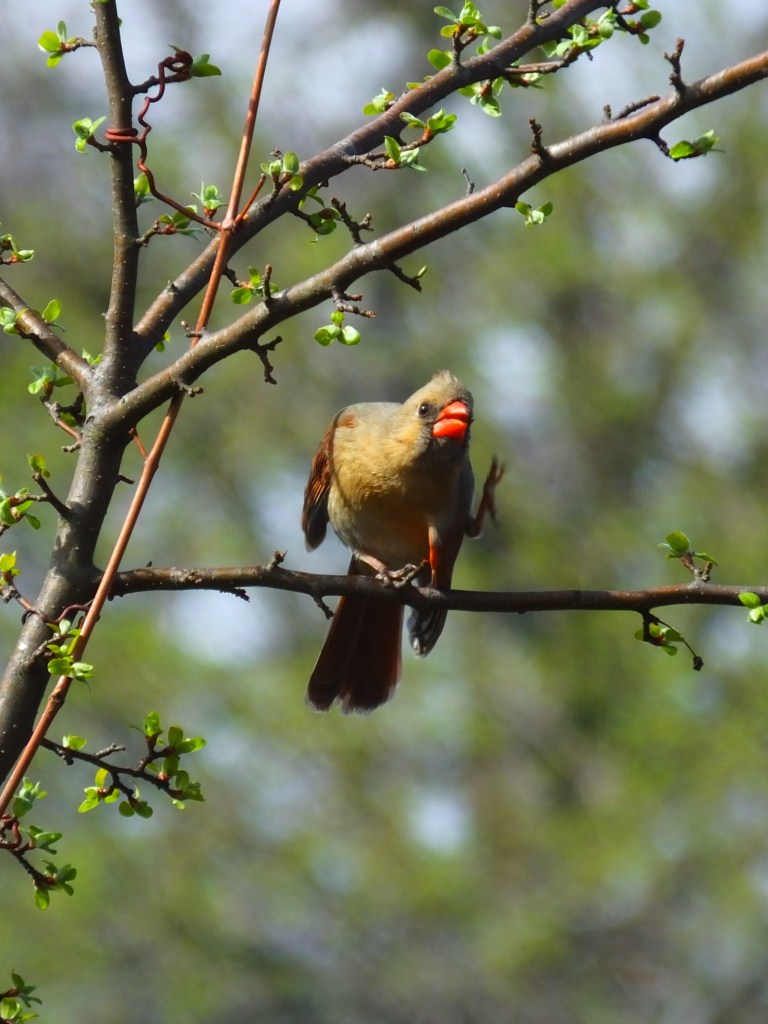
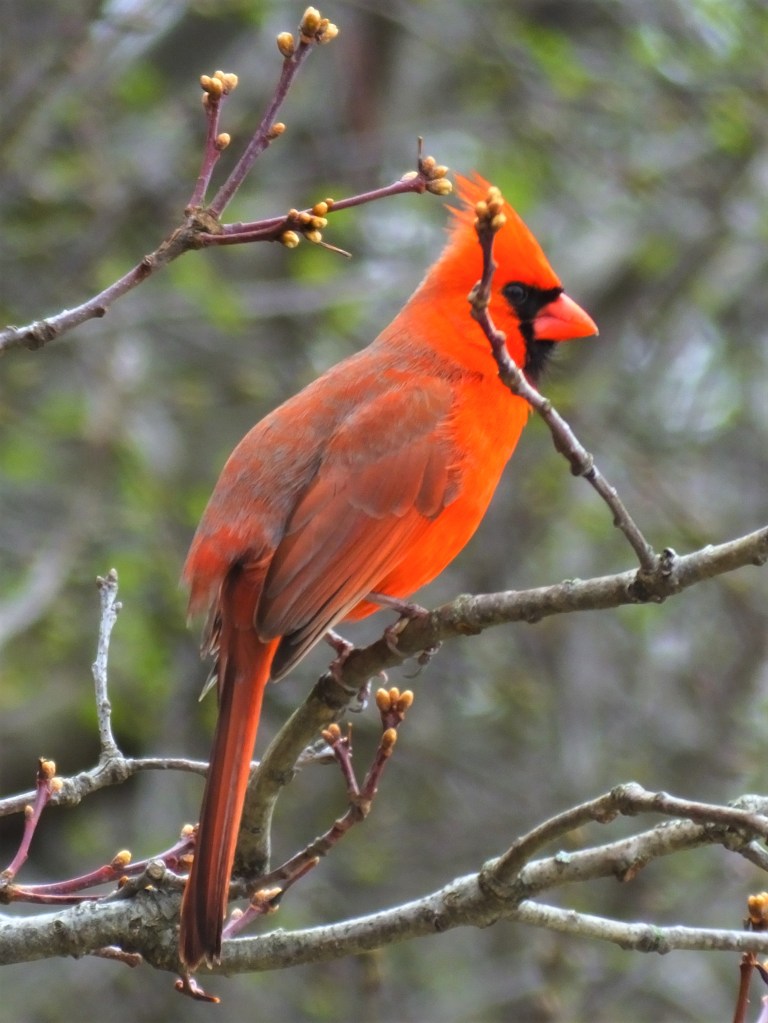
As are the cardinals northern cardinals, but less shy.
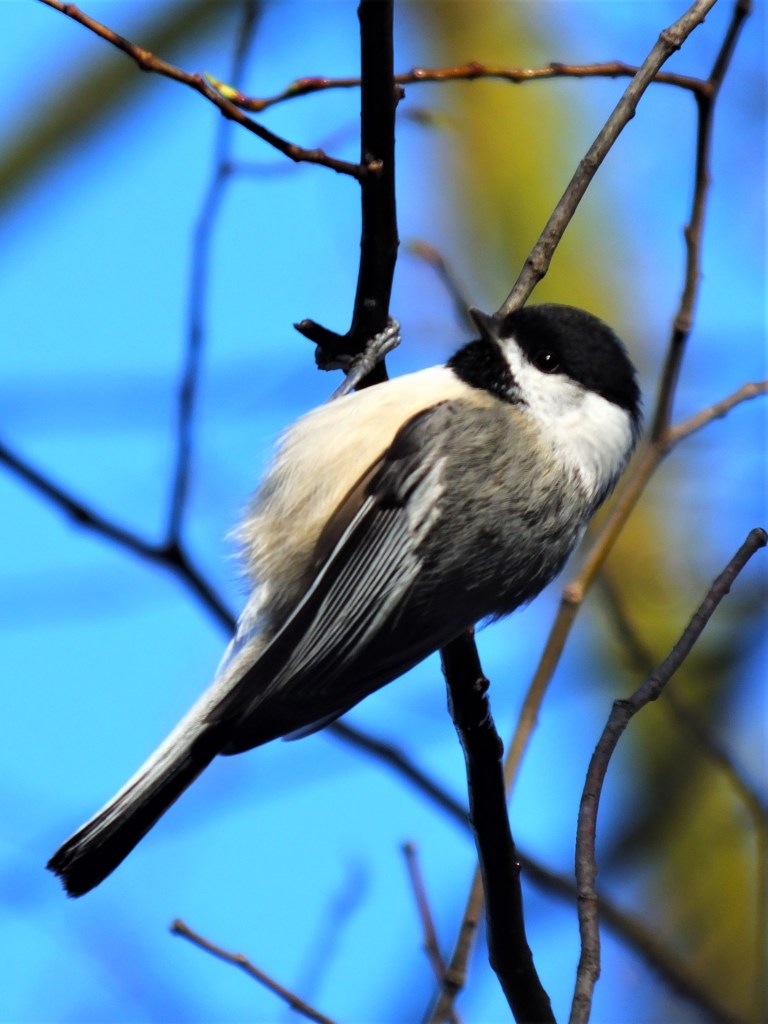
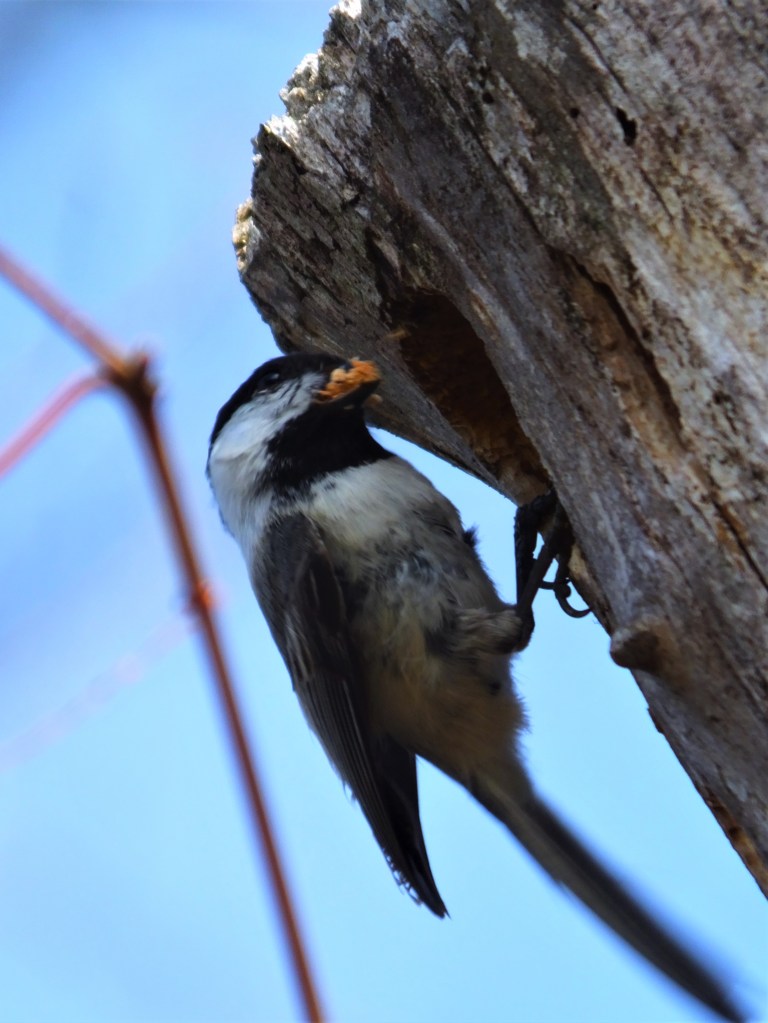
For some reason, the black-capped chickadees were especially photogenic this morning.
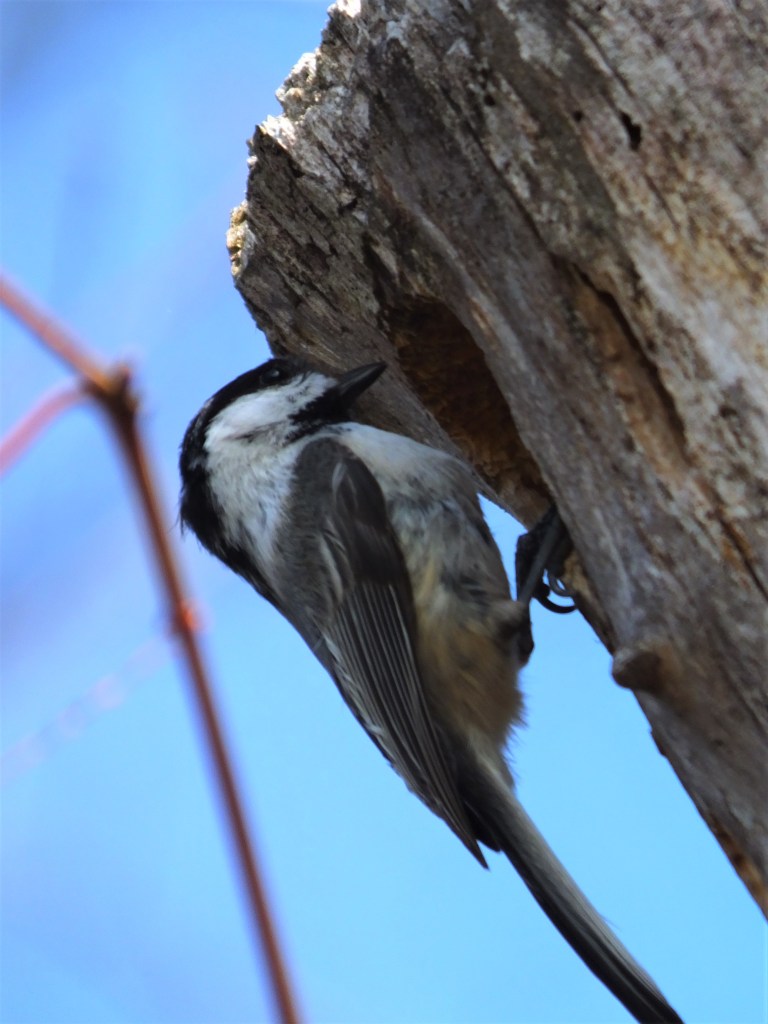
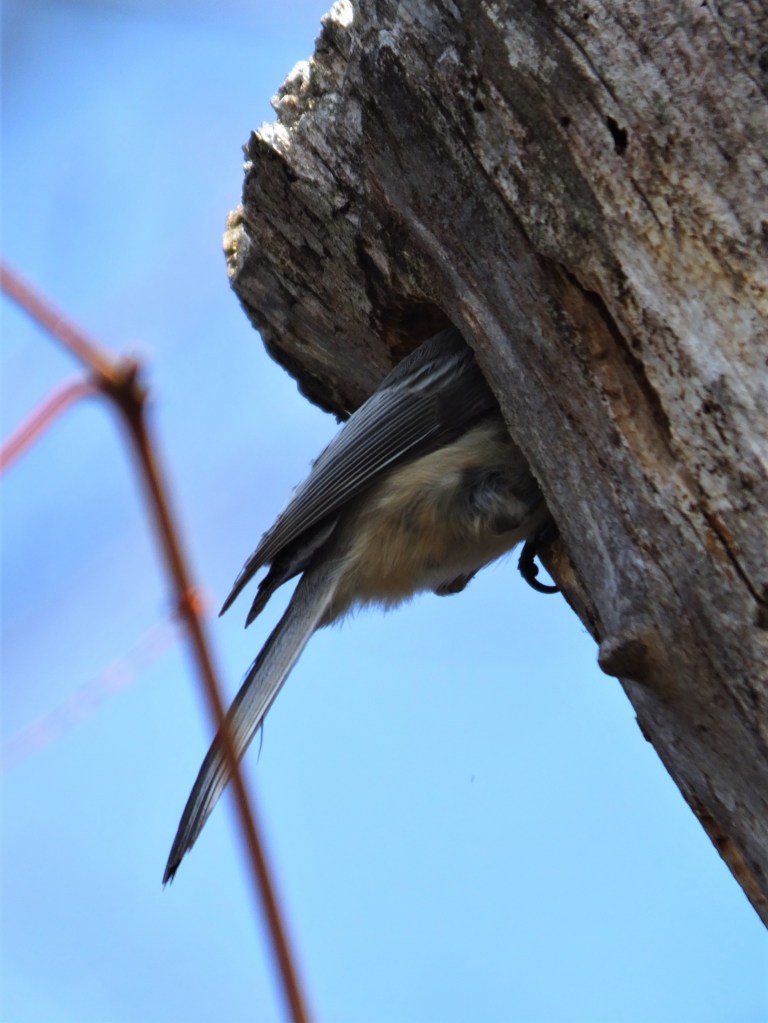
Plus, I spotted a couple working on their nest. It first I thought they were finding something to eat in the top of a dead tree trunk, but as I worked my way around to the back side, I found that they were actively excavating a nesting hole. I had no idea.
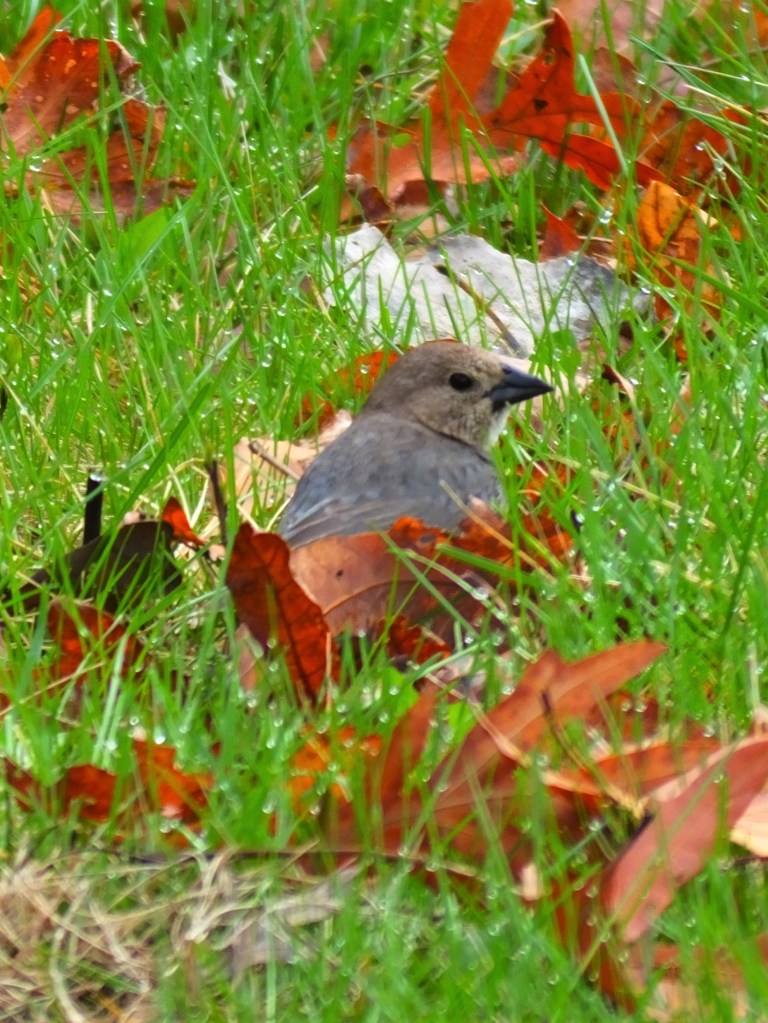
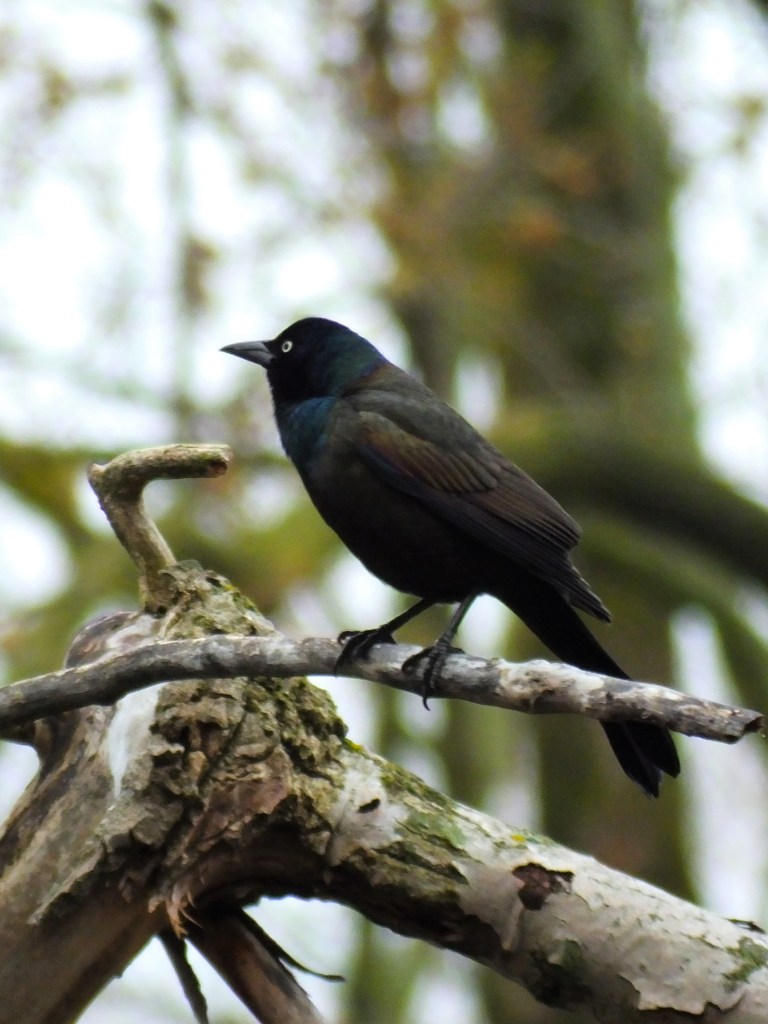
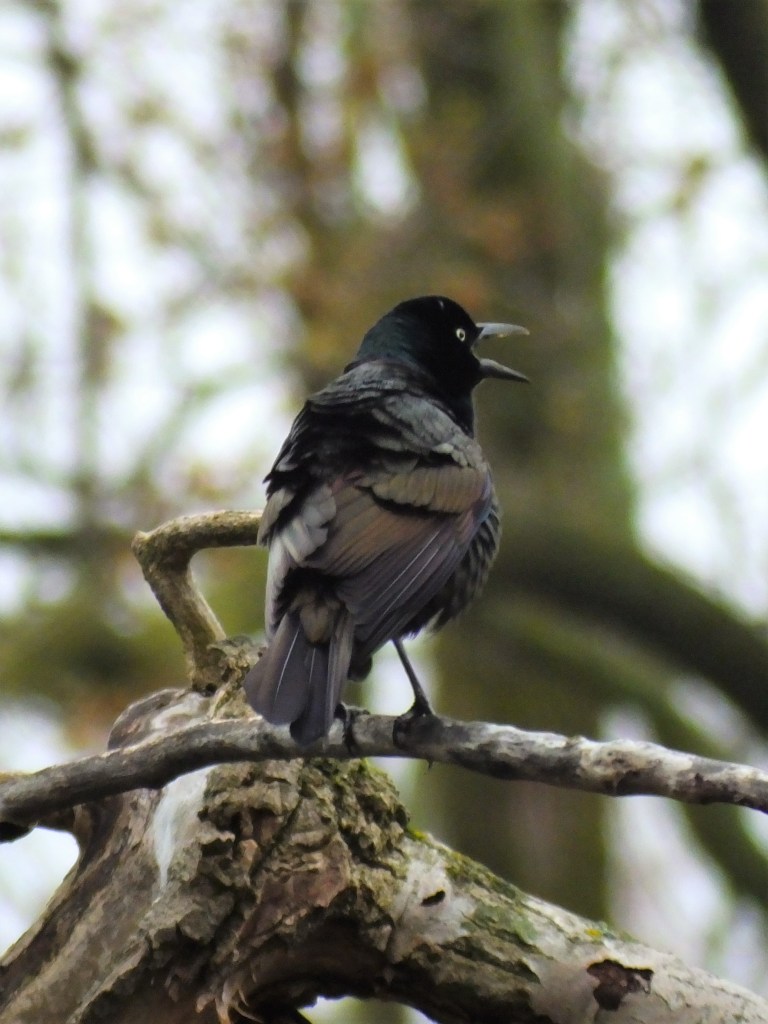
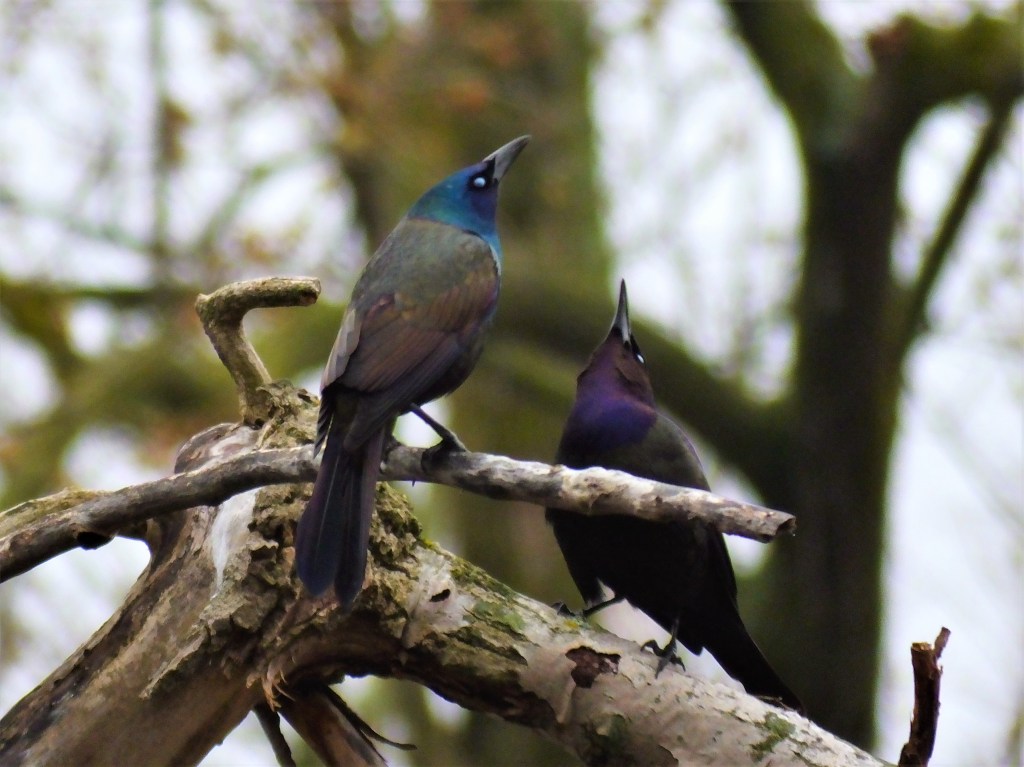
Finally, the cowbirds have just arrived, too, and here’s a female rustling up some breakfast.
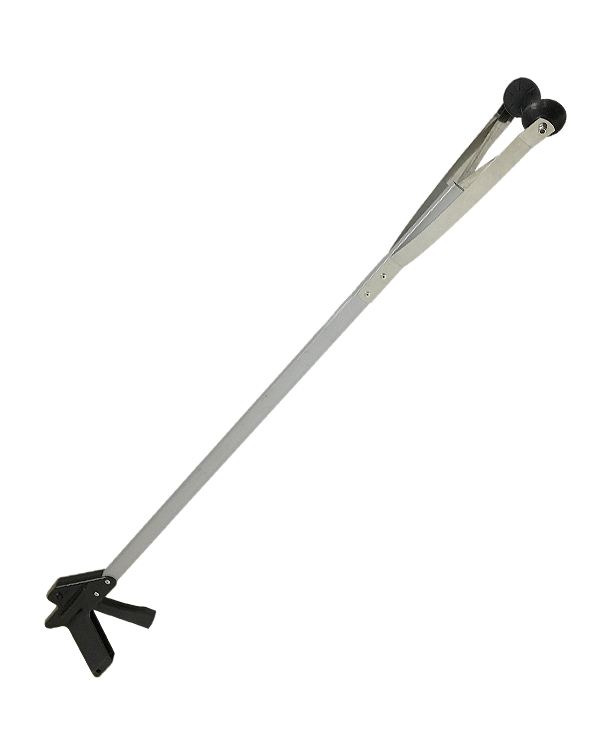
PS. I finally scored a reach extender that somebody left behind in the park last week, and I thought I’d never use one, but I discovered that they sure come in handy when I’m trying to fish some litter out of the water. This morning, I finally tied my old camera strap to it so I could sling it over my shoulder, like Dead Pool, and that thing was handy as heck. Who could have known?
I know. I know. That’s redundant, but I just mean to distinguish from all the other things moms get to, such as eating, sleeping, and drinking the Chardonnay.
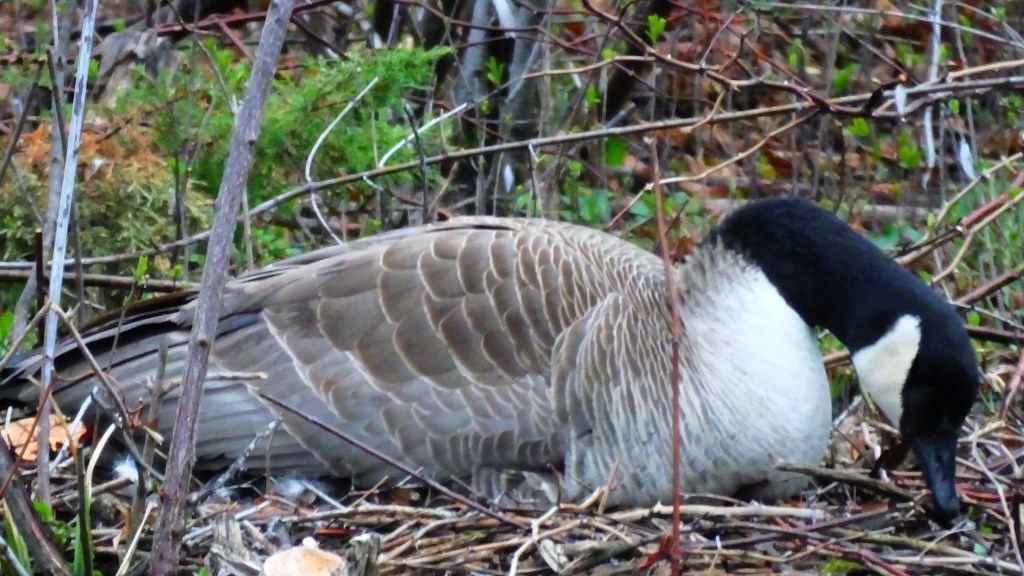
Anyway, the exciting news is that the goose who lost her eggs is trying again, this time on a new nest that is shallow enough for us to see the eggs, and I can count three of them! Oh happy day! and fingers crossed, everybody.
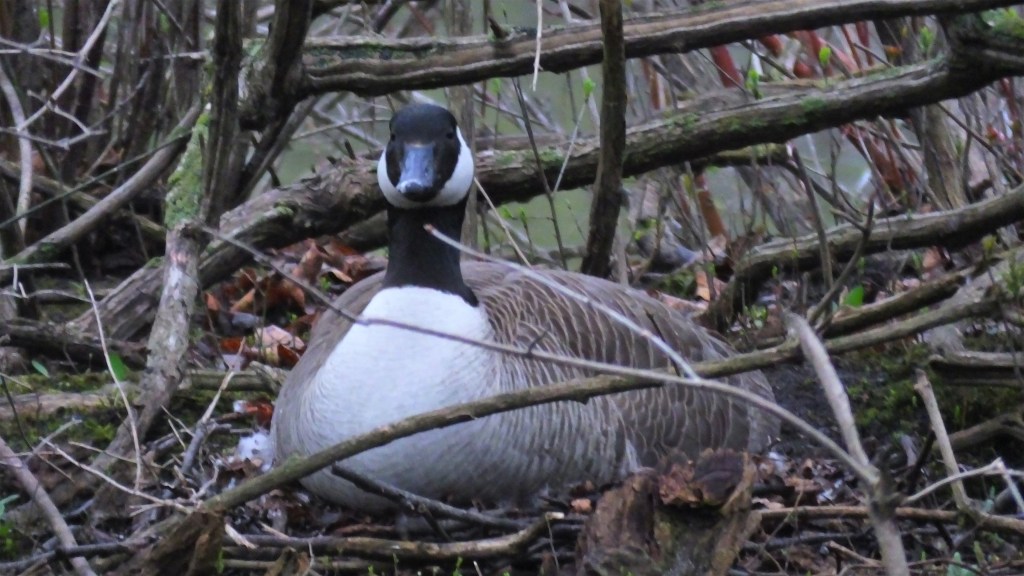
Meanwhile, the goose on the northern tip of the island is still on her nest.
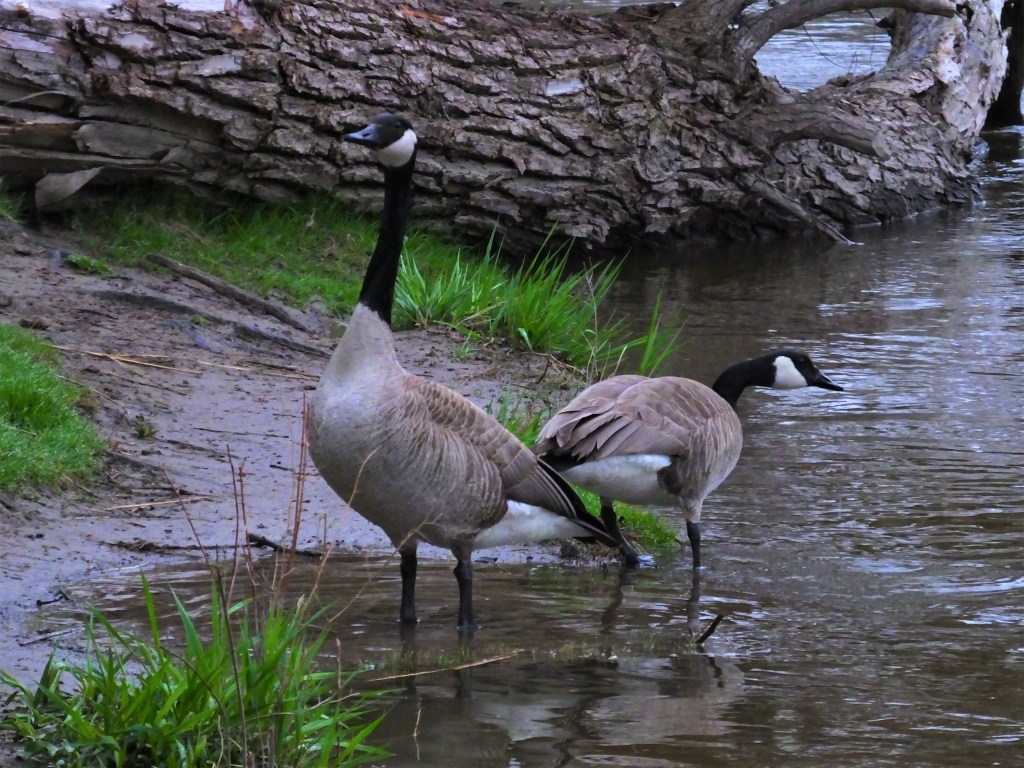
Finally, here are the two ganders making dang sure nobody crosses the line separating the north end of the island from the south end.
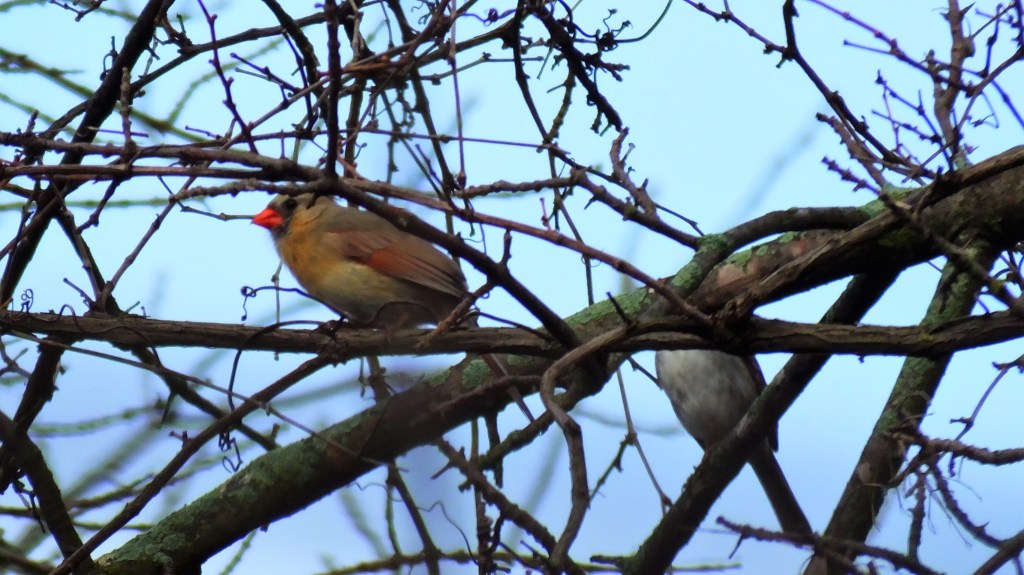
While I was checking on the geese, I spotted these two birds on a branch, and wondered what they were up to. From afar, I thought maybe there were waxwings, whom I often see in pairs.
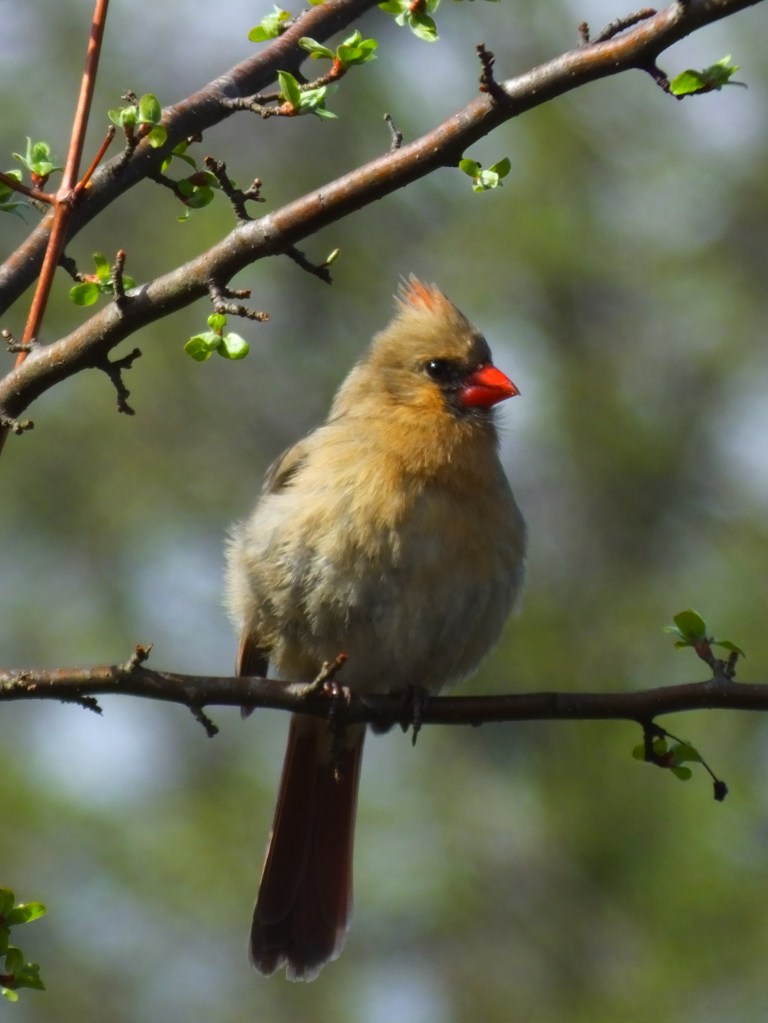
Well, it turns out that was is a female cardinal, which you can probably tell from the picture above, and she’s got some nesting material in her beak.
And the other one is a white-throated Sparrow (Zonotrichia albicollis), also with nesting material. In this species, the males and females do not have different plumage, so let’s just say she’s a female for the sake of today’s narrative. I’ve been hearing their call for the last week or so, which I now read is pronounced “Oh-sweet-canada,” and I was wondering when I’d finally spot one.
I still wonder what they were doing up their together, though. Maybe just exchanging knowing glances.
Anyway, down on the river, here’s a mallard hen looking for something up high in a tree, although they are said to nest on the ground, so I don’t know what she’s after. I didn’t even know they went up into trees at all until I saw her fly up there this morning.
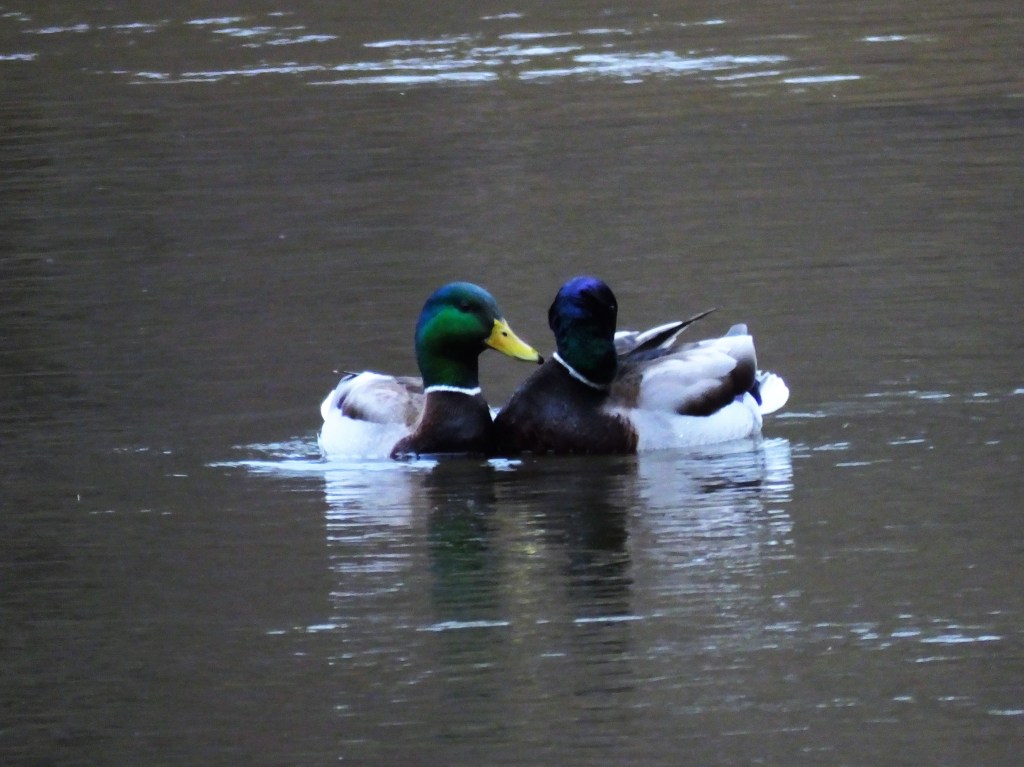
Meanwhile, here’s a couple of drakes lazily drifting down the river together below her like a couple of bros having a swell time.
Right above them was this wood duck hen on a branch, perhaps scoping out nesting sites, which indeed are up in trees.
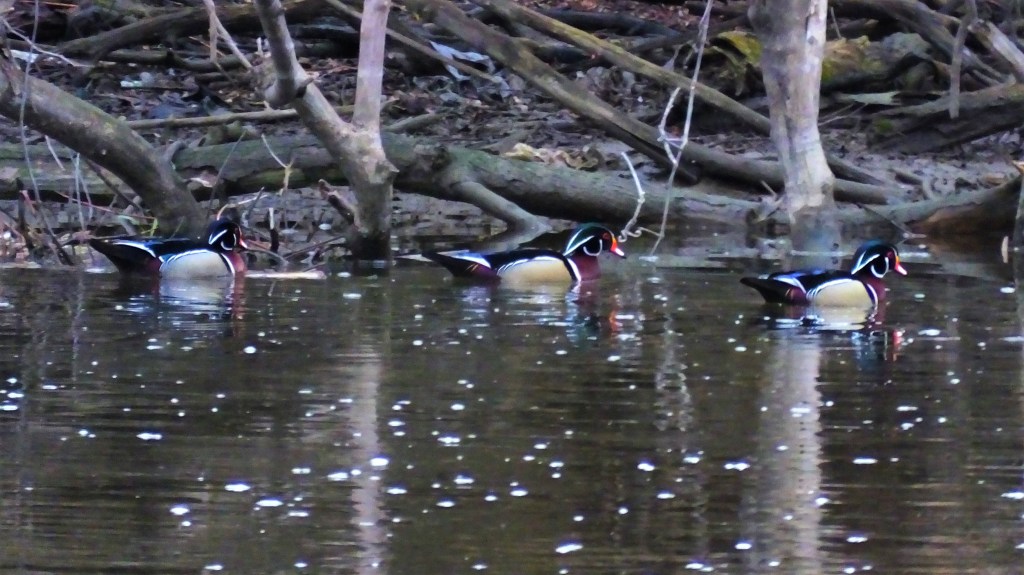
As these three amigos paddle up river along the far shore.
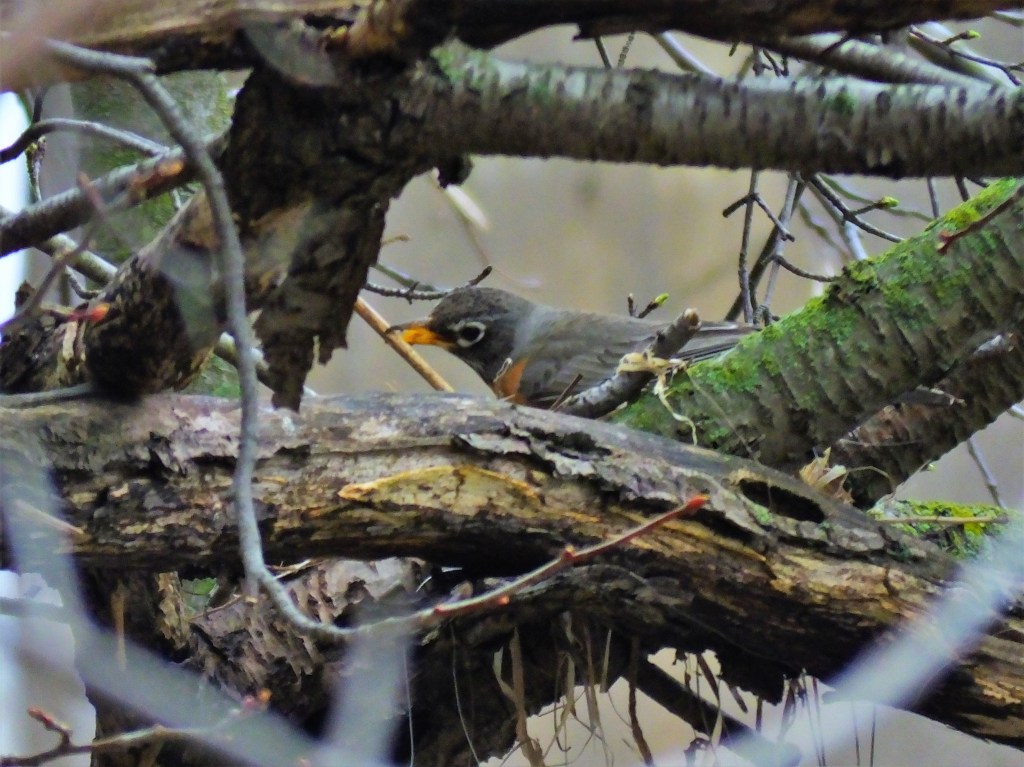
Lastly, here’s a robin wrestling a piece of straw into her nest just over the river trial.
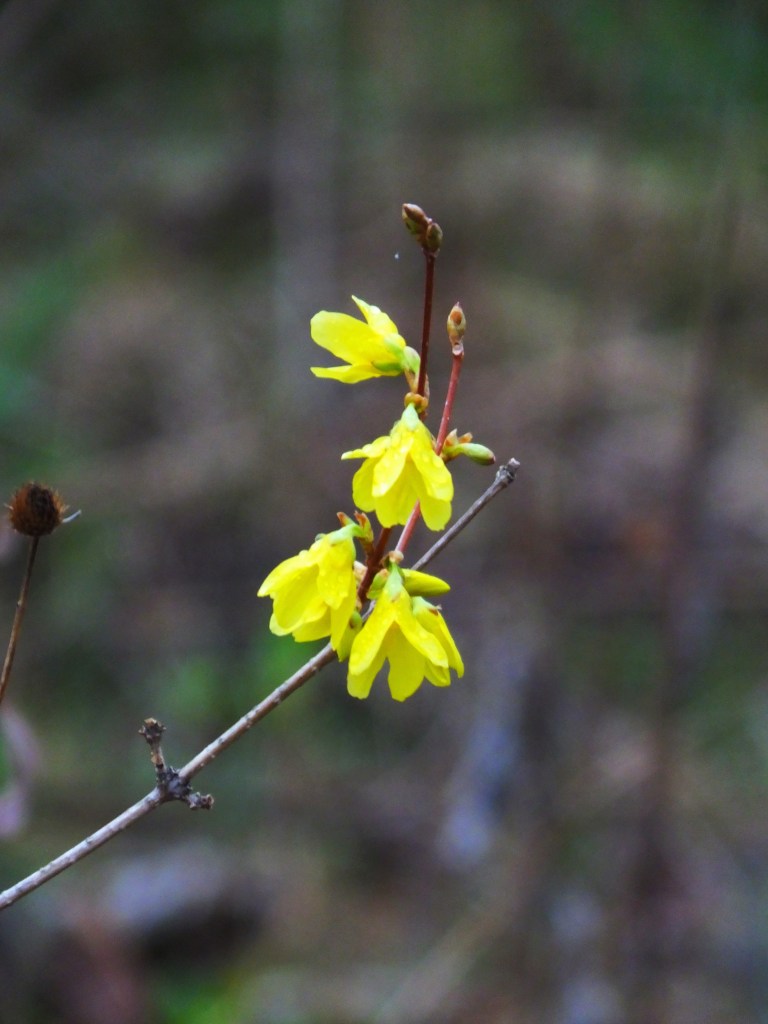
PS. Here’s you splash of color, after all those browns, greens, and greys, a scraggly forsythia growing wild on the slope below the beer garden.
It was a super quiet morning in the park, with hardly any people and hardly any critters. The most exciting new find is by my colleague, Mike from Riverwest, who posts his pictures on instagram under “ByThePushOfAButton“. We met for the first time yesterday afternoon as I made my way south on the east side and he was coming north on the west side. I think he recognized my funny-shaped head and called across the water to say “hi”.
Anyway, he didn’t let on at the time, sly devil, but he had just taken a couple of pictures of an American coot (Fulica americana). Please follow this link to see his amazing pictures and be sure to click on the little heart symbol to give him some encouragement. I tried in vain to find it again this morning, and even ran into Mike again, who hadn’t seen it either. Dang.
Between class and the rain, I’m not sure if I’ll make it to the park today, but as previously advertised, yesterday was such an amazing day, I’ve got some pictures left over for just such an occasion.
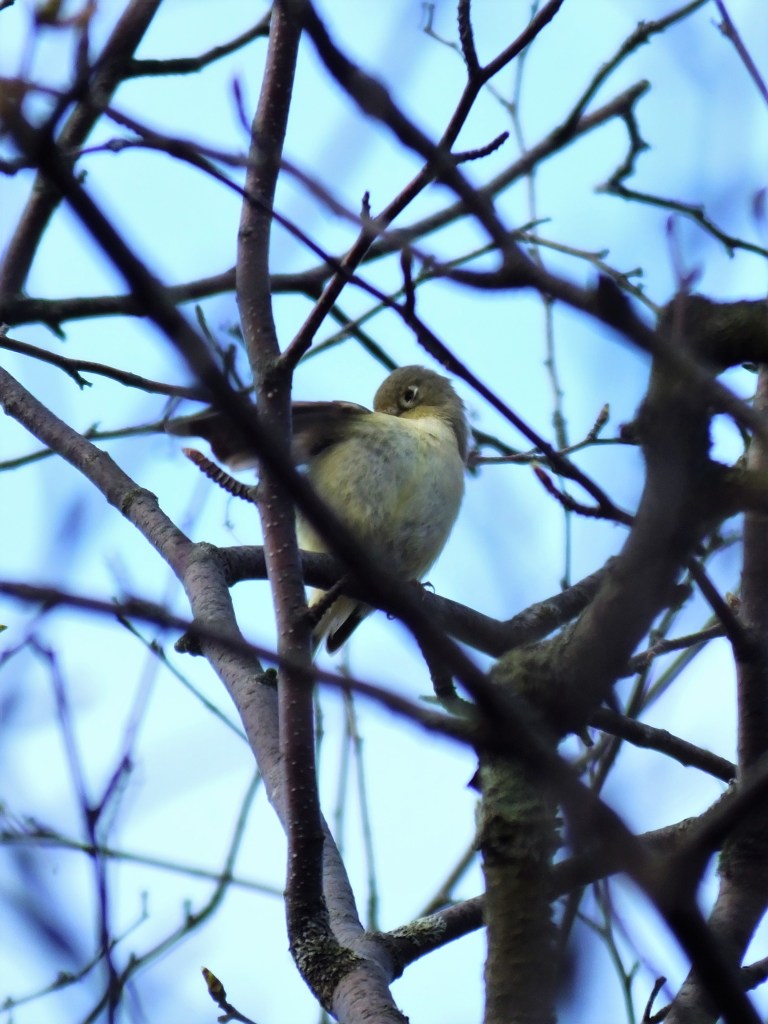
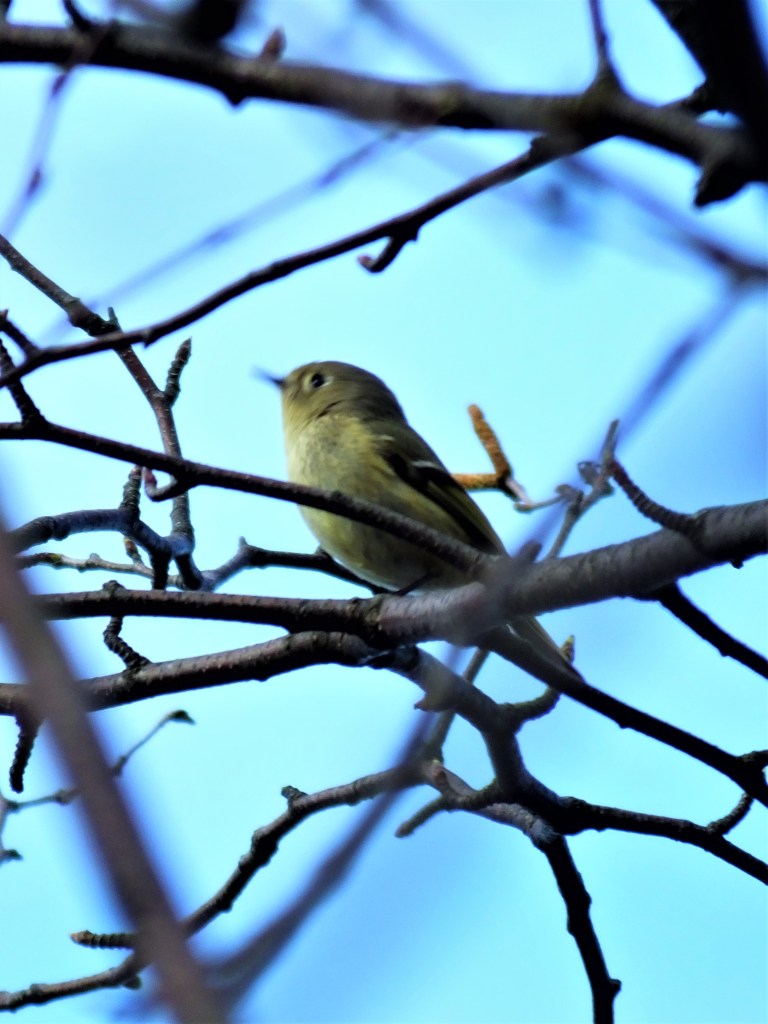
First up is this cute little ruby-crowned kinglet (Regulus calendula) grooming itself beside the pond. Thanks to a helpful tip from Charles, I knew to look for the white eyeliner if I couldn’t see the crown color, which I read “is usually concealed”, to distinguish it from its golden-crowned cousin.
Robins are as plentiful as ever throughout the park, and the particular one is keeping an eye on me as it makes for a promising pile of leaves on the ground between us.
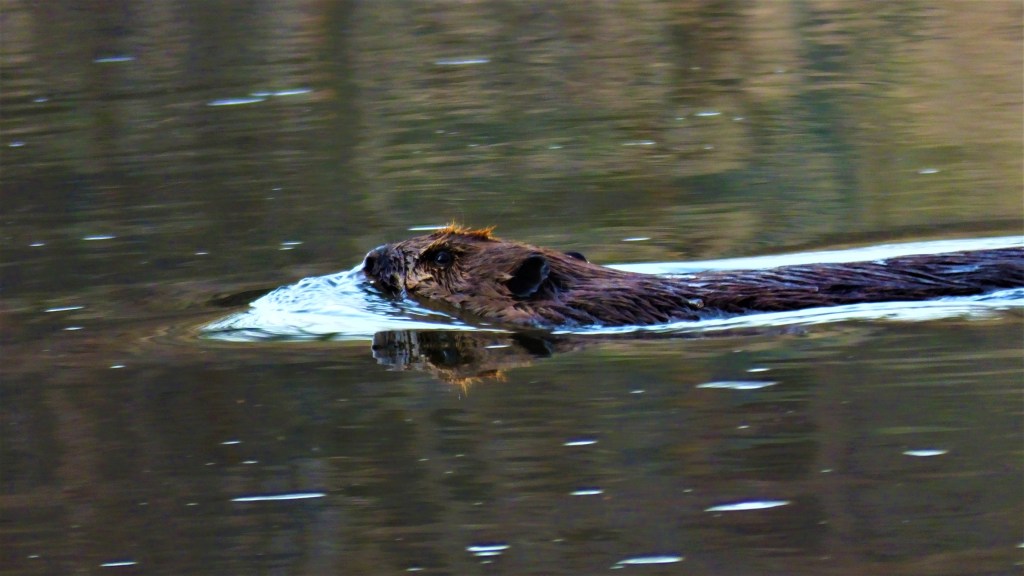
Like picture of mammals, especially our elusive beaver? Here you go! There were two of them, swimming south from the old bridge abutment, and I flubbed the picture of the first one, but this second one politely waited until I was all set before it swam past.
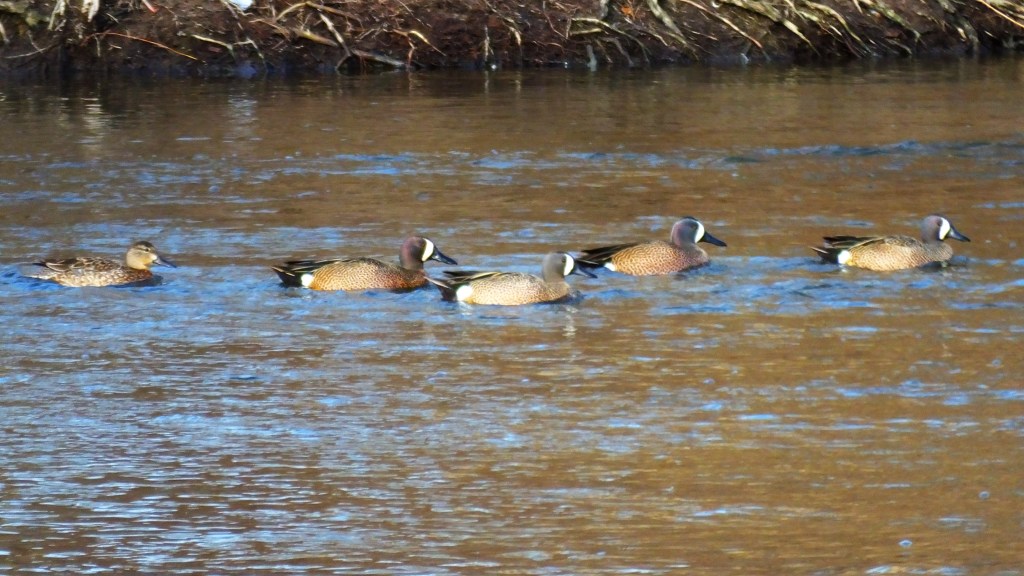
Like picture of exotic-looking water fowl? Here you go! I spotted these blue-winged teals (Spatula discors) off the southern tip of the northern island.
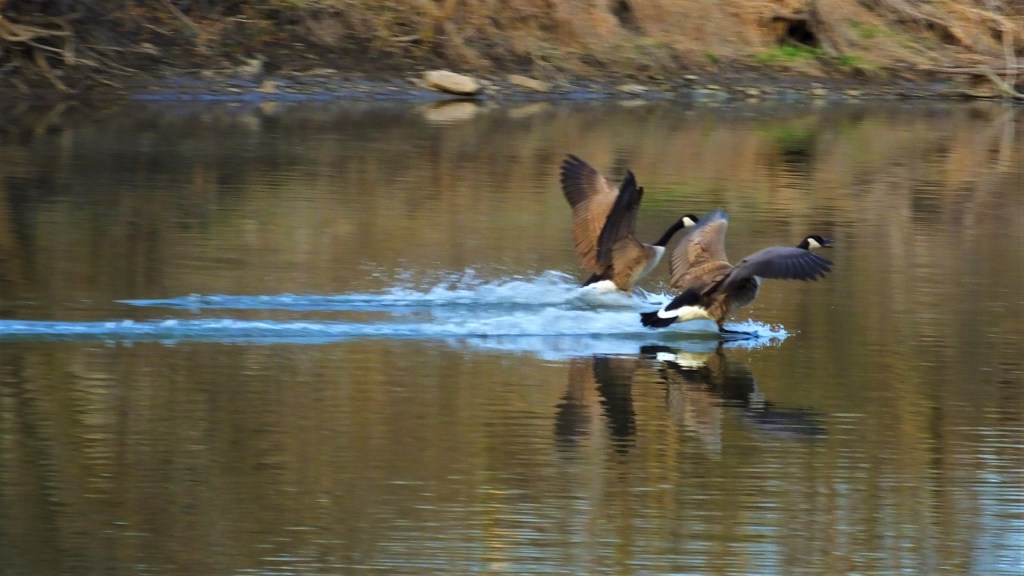
Like action shots? Here you go! As I was hoping the second beaver would swim past, these two came gliding in because why not. Right?
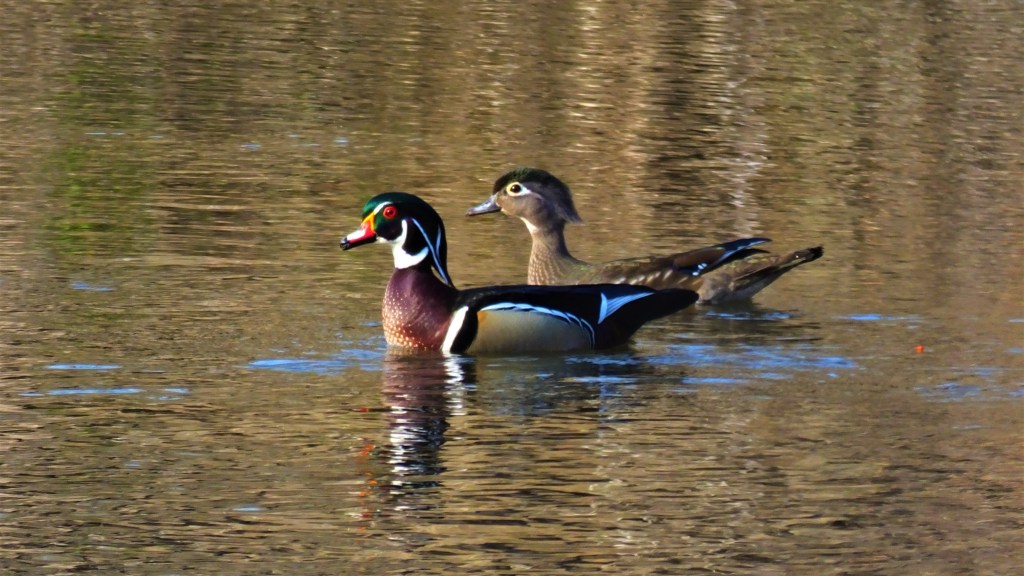
Think teals and geese and wrens are fine, but just can’t get enough of those wood ducks? Here you go! I spotted him first beside the southern island, and then heard her calling him to come down to the southern tip, and so of course he did.
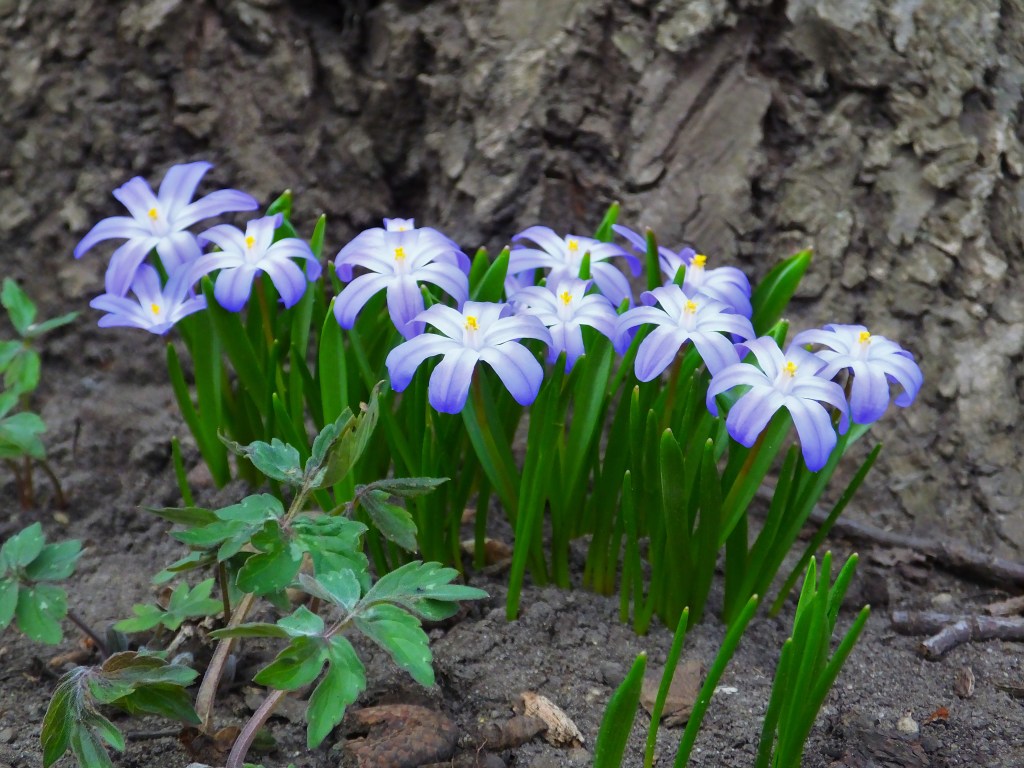
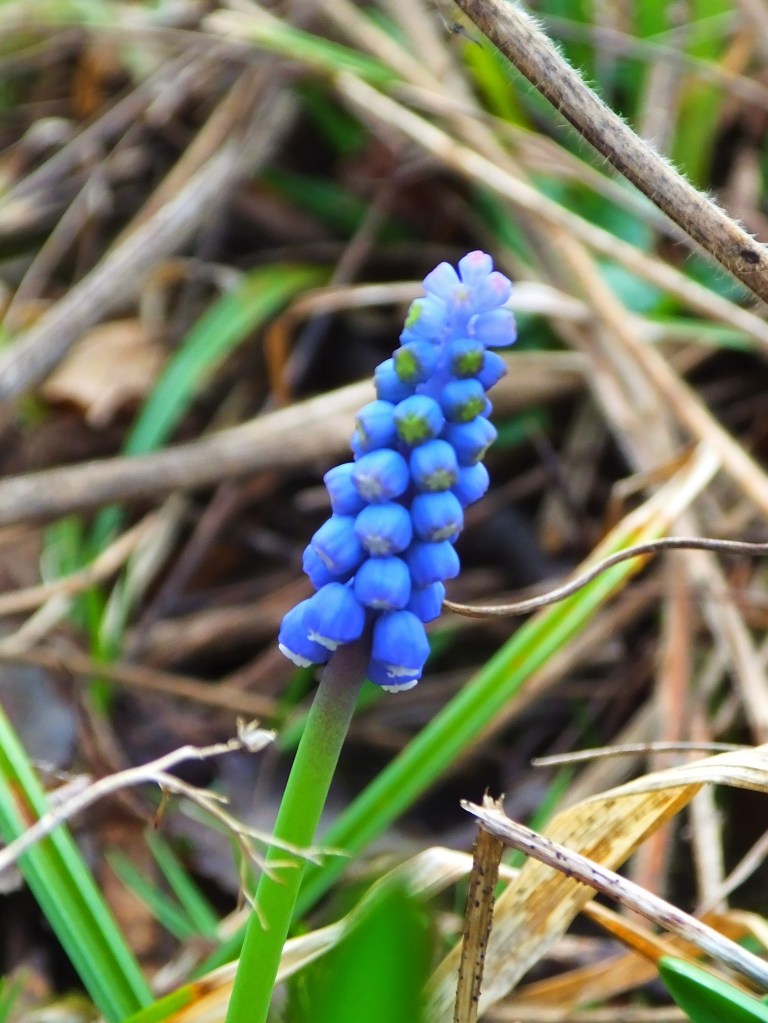
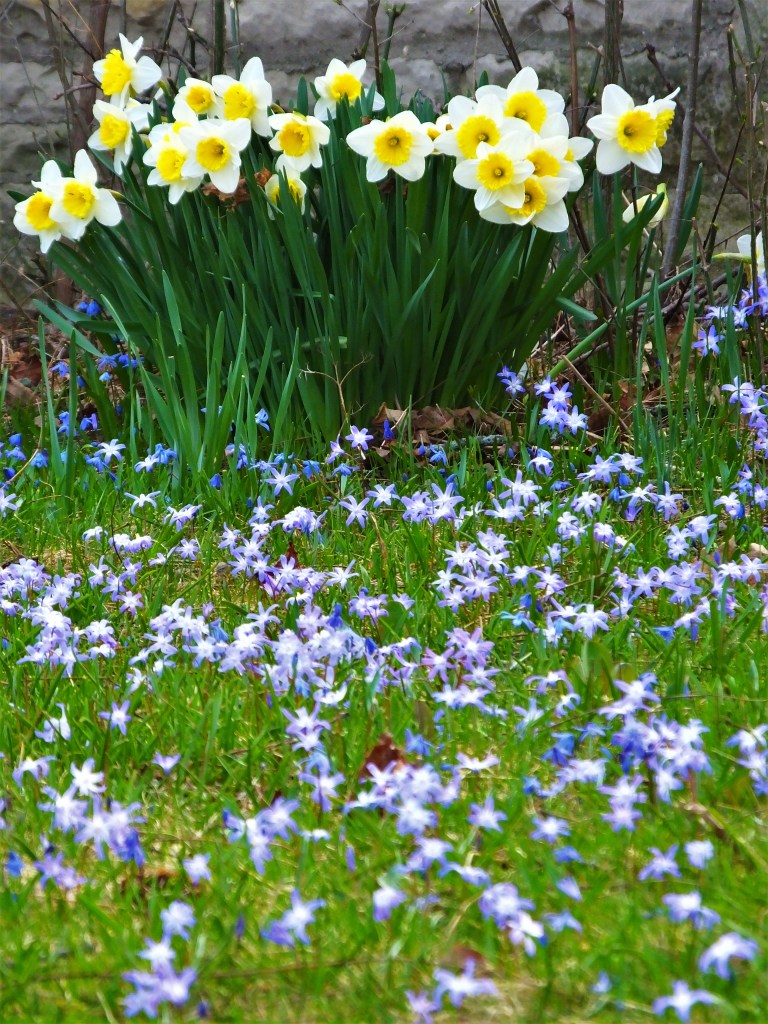
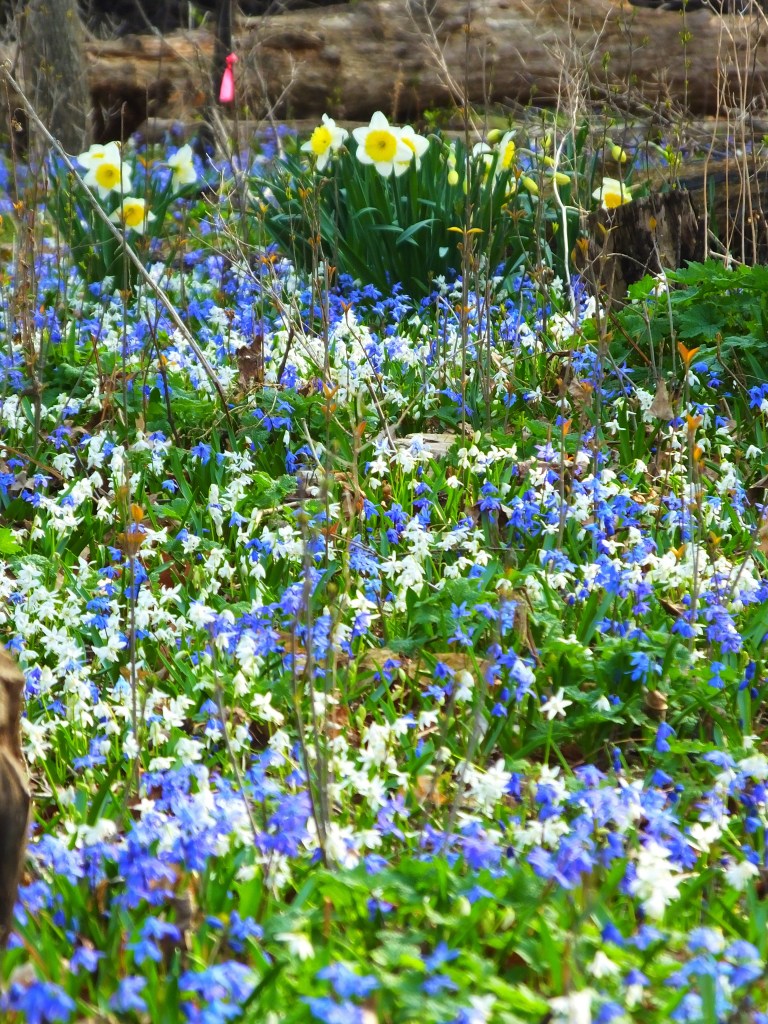
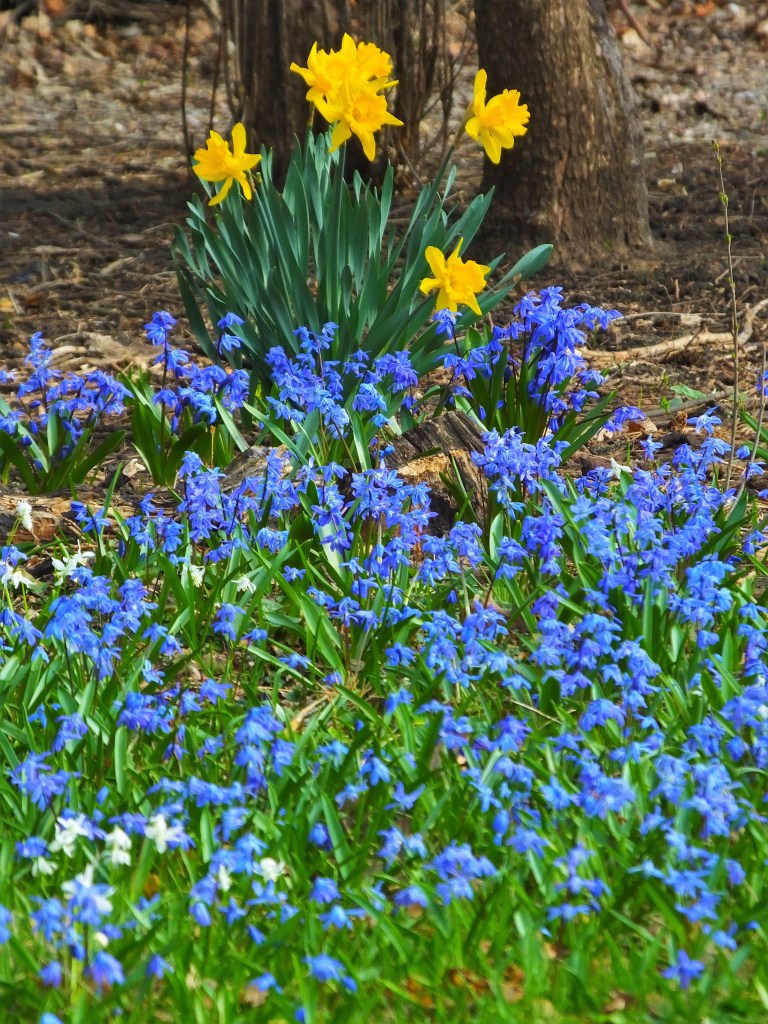
Think “enough with all the animals, and where are the pretty flowers? Here you go! The squills and snow glories are making amazing carpets dotted with clumps of various daffodil varieties on the lawn and in the woods near the pond.
There’s even more, if you can believe it, but I’ve gotta get ready for office hours so I’ll finally take some of Anne’s sage advice and keep a couple for a rainy day.
Wow! It sure felt like summer out this morning, and the critters in the park didn’t seem to mind, but sometimes I find them inscrutable, so who knows?
Anyway, the belted kingfishers are out in force now, and this guy got super excited when he spotted another kingfisher. I don’t know if this display means “Come and get it!” or “This river is all mine!”, but he was sure loud and adamant about it.
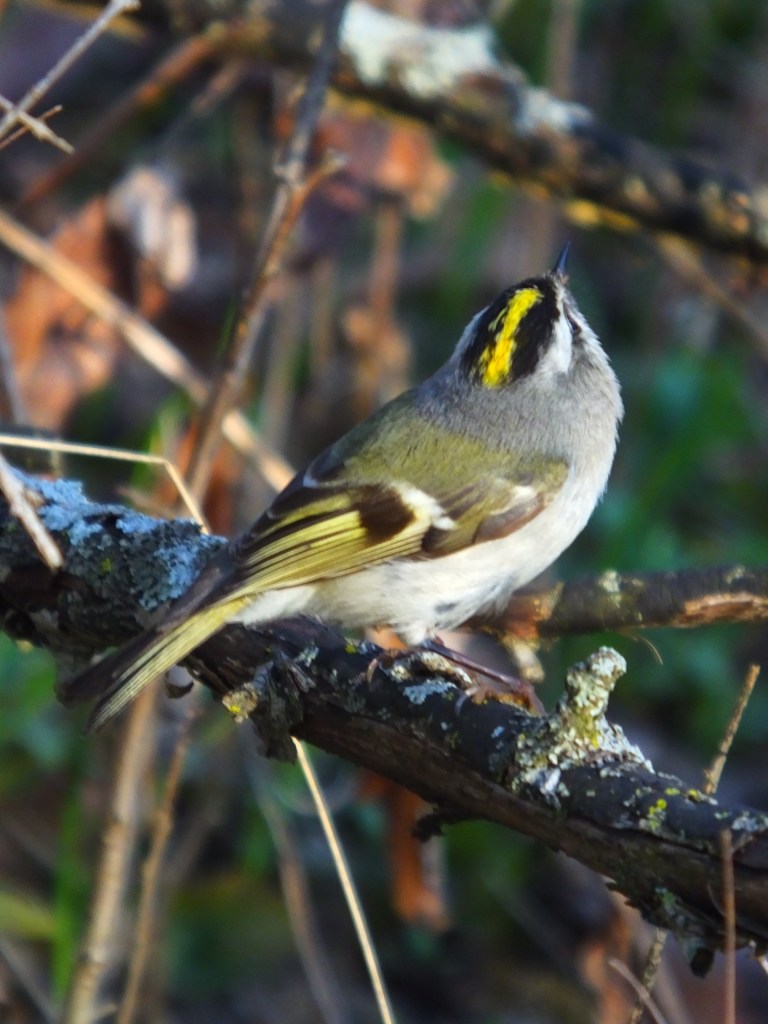
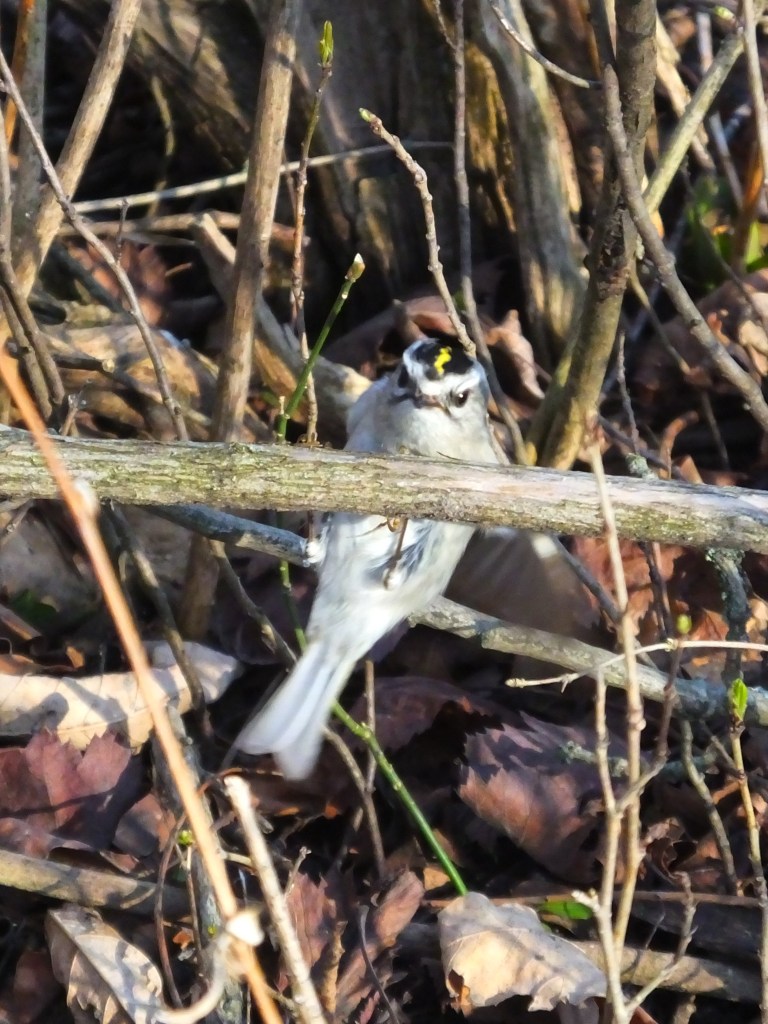
Some small fly has emerged from the pond already, and the golden-crowned kinglets are hunting them in the bushes like crazy. I’m keeping my eyes peeled for a ruby-crown, but none yet.
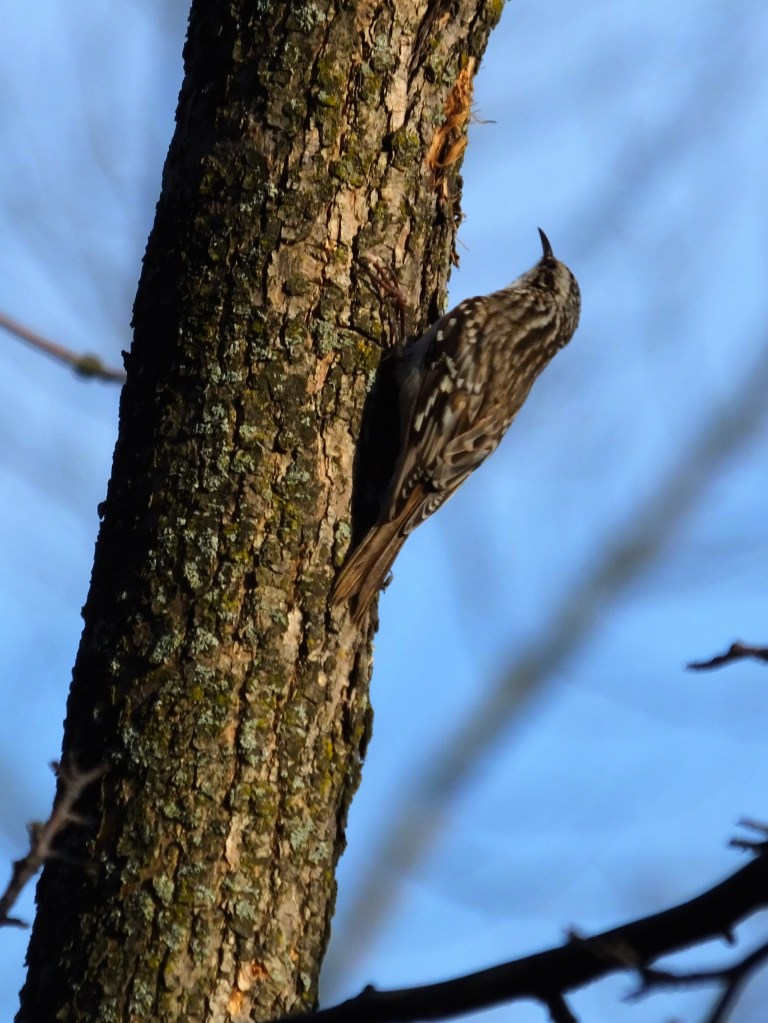
The brown creepers are even getting into the action.
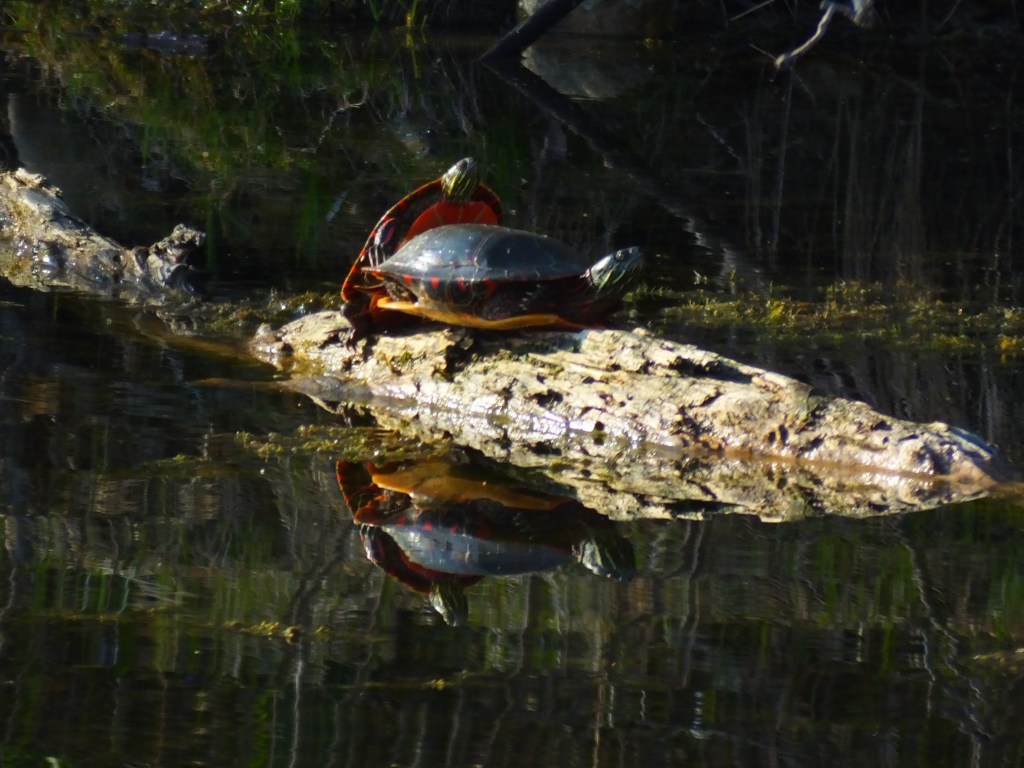
The turtles are up on logs almost every time I visit the pond, even at 7 this morning.
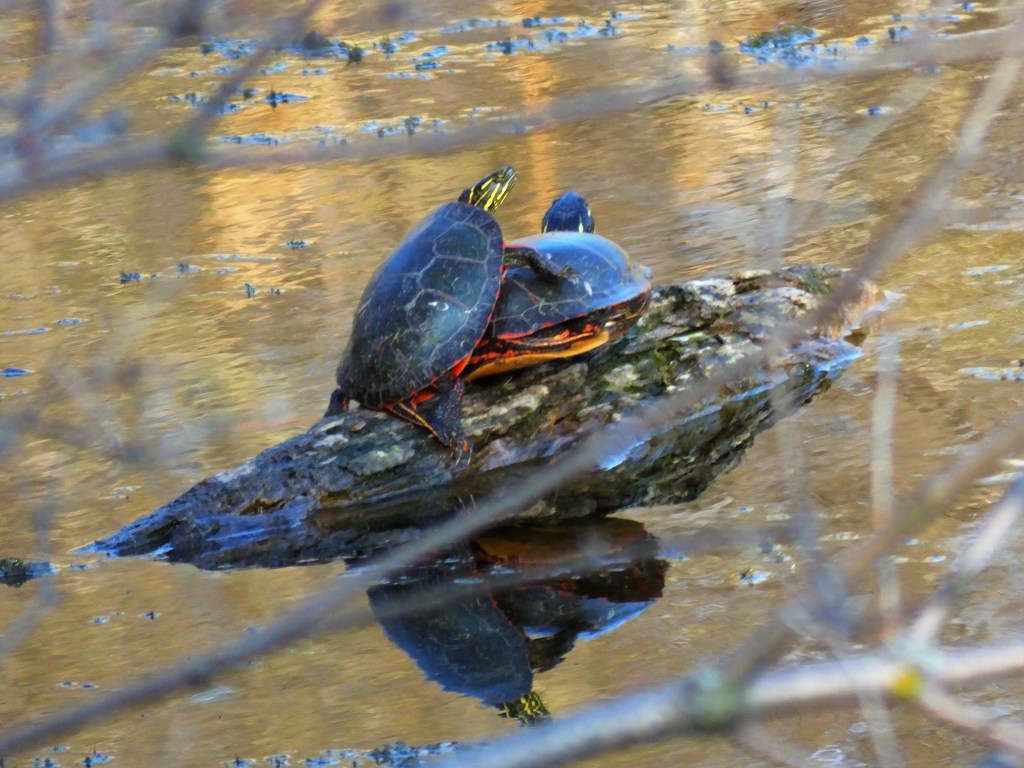
These two looked like they were up to something yesterday afternoon, but upon closer inspection, not that I can tell. No sign of any red-eared sliders yet, though. Soon, I hope.
One goose is still incubating, on the north end of the island, as of this morning, and at least three pair of wood ducks where there as well.
I’ve even seen some little mammal, probably a muskrat, swimming in the pond a couple of times already, but no pictures yet.
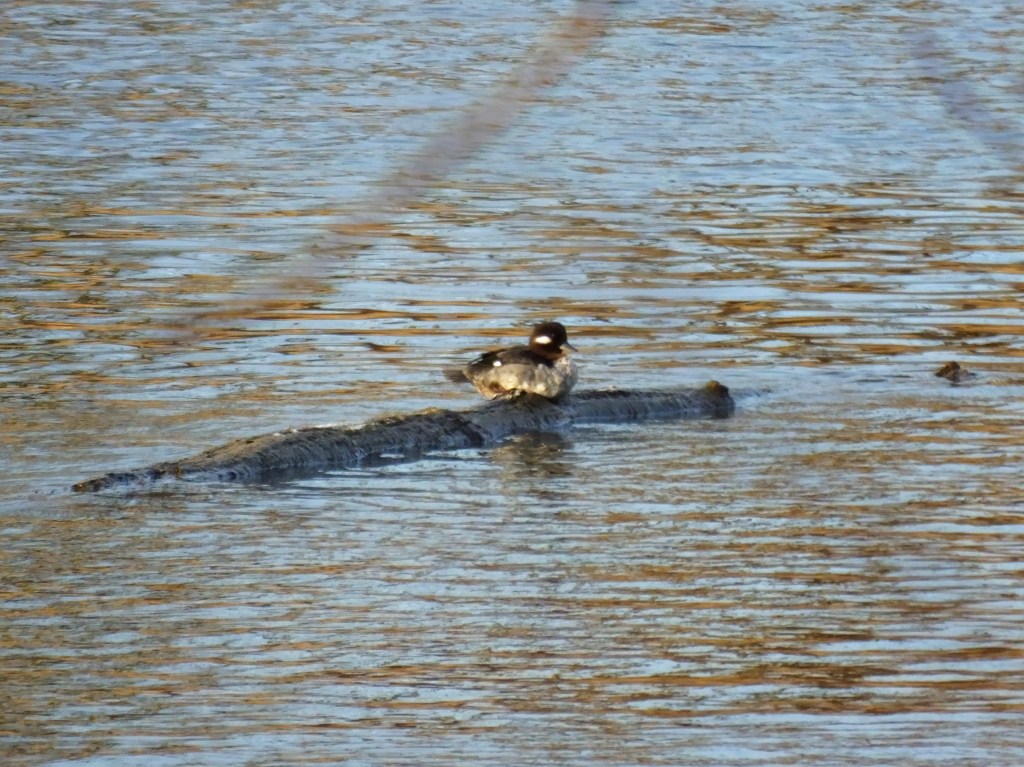
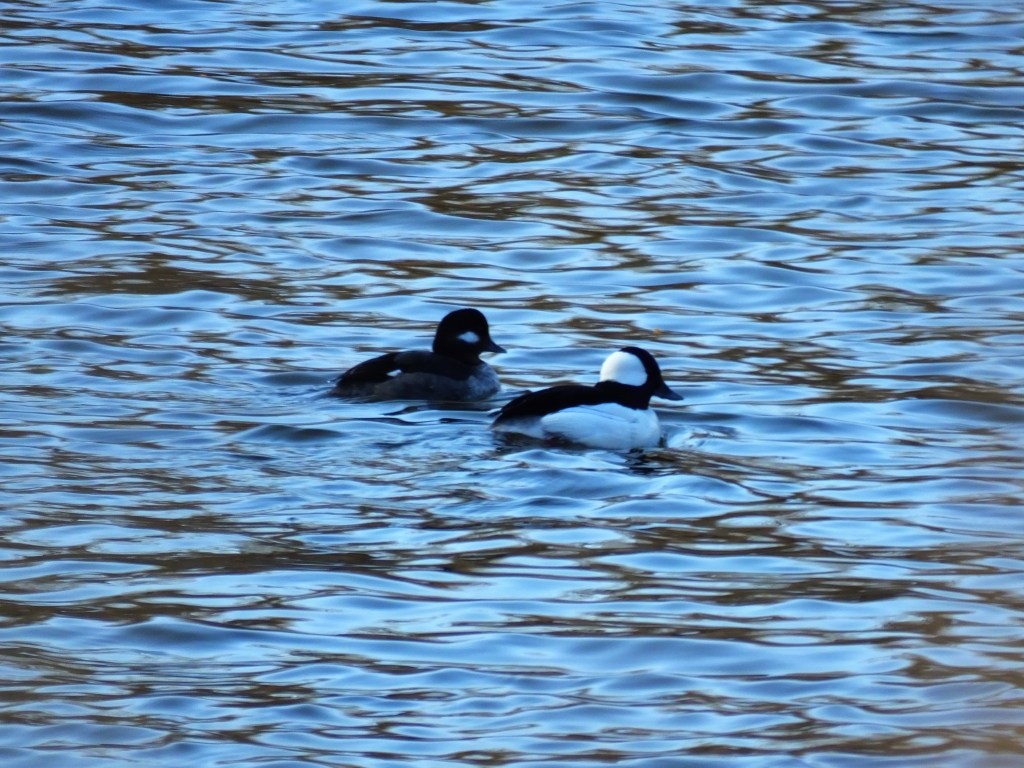
Meanwhile, Mrs. Gadwall and the buffleheads are still on the river, although the buffleheads were farther apart this morning than I’ve ever seen them. I hope that’s not a sign of trouble.
Mrs. GadwallMrs. Bufflehead
Further south, I bumped into Blondie and Dagwood again, and I look forward to seeing the ducklings, if and when they arrive.
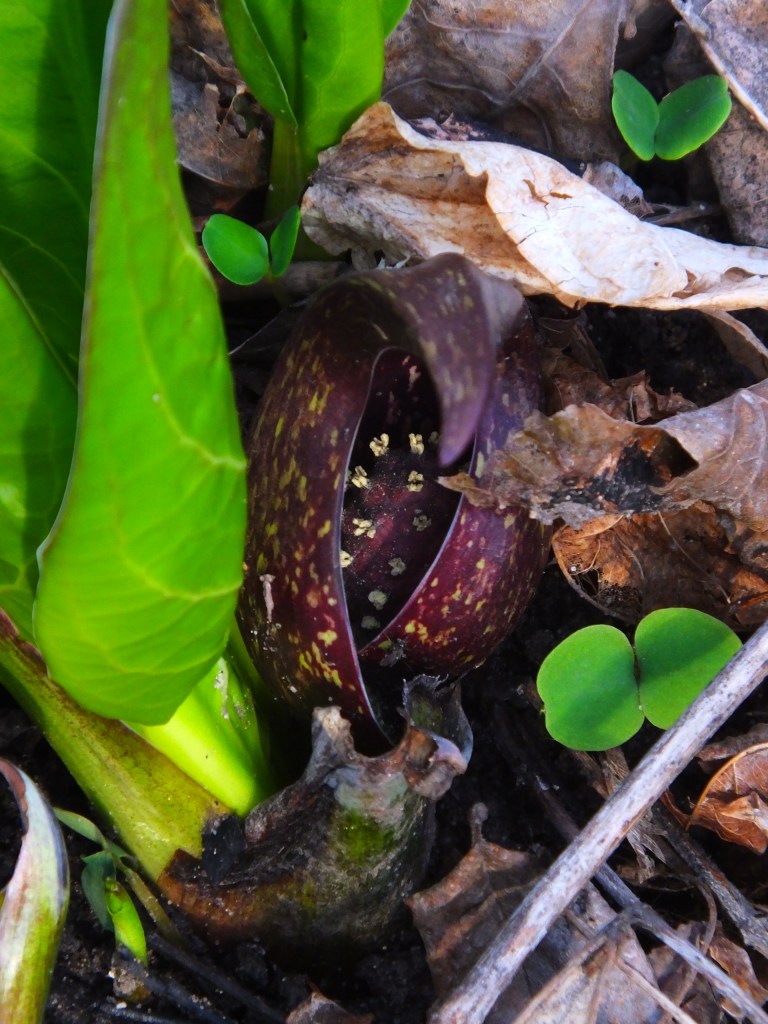
The skunk cabbage is still in “bloom”, if that’s what you wanna call it, and some bloodroots are already up along the Oak Leaf Trail.
Finally, I scored yet another Park Beer, and this one looks fancy. Woo hoo! That’s my 2nd of the year already and 3rd total. It’s cooling in the fridge right now as I sit here and type this.
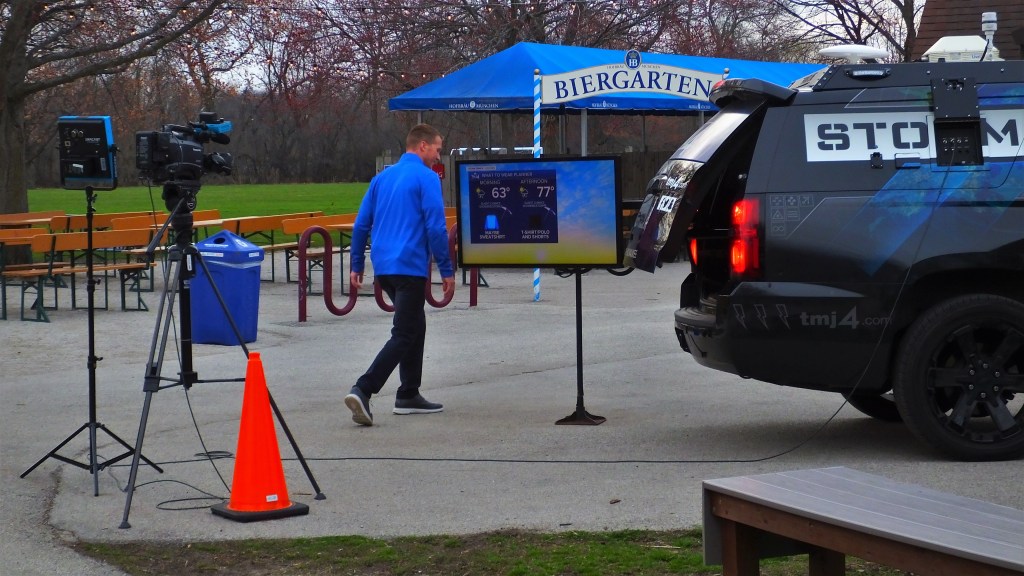
Lastly, Brian Niznansky and the TMJ4 Stormchaser were broadcasting the weather report this morning from in front of the Estabrook Park Beer Garden, which appears to be just about to open, so that was fun to see. There was also a delivery truck there earlier this morning, which is a very encouraging sign. That way if you can’t find your own Park Beer beside the trail, or you prefer to acquire yours pre-chilled, you can always get one here.
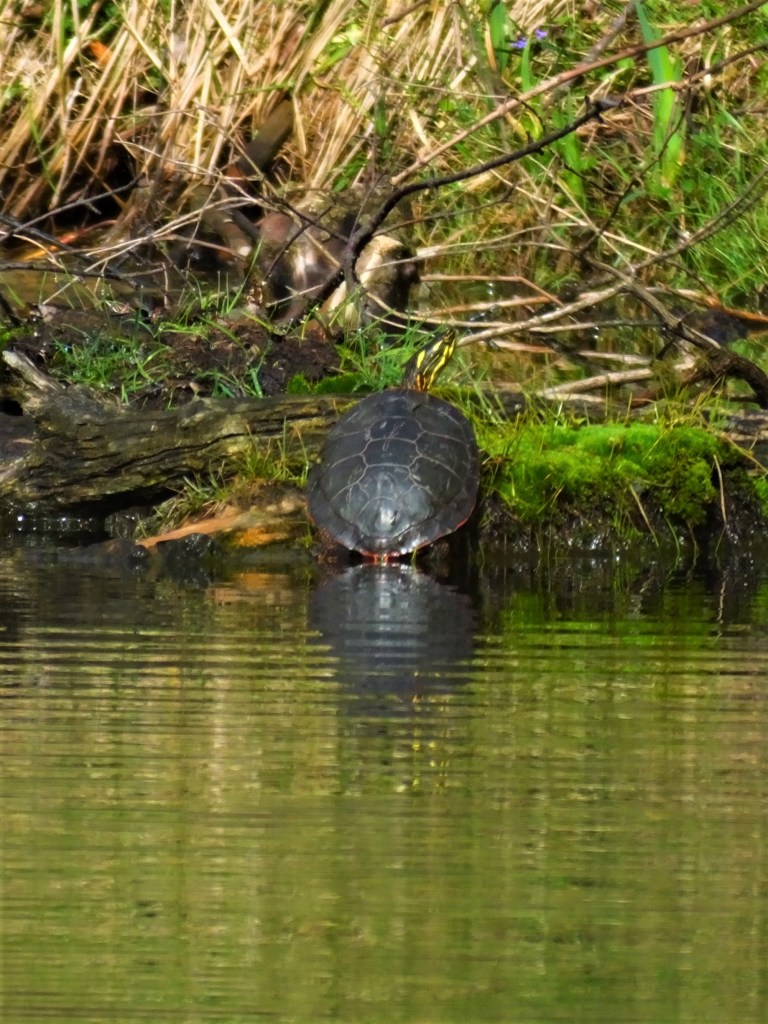
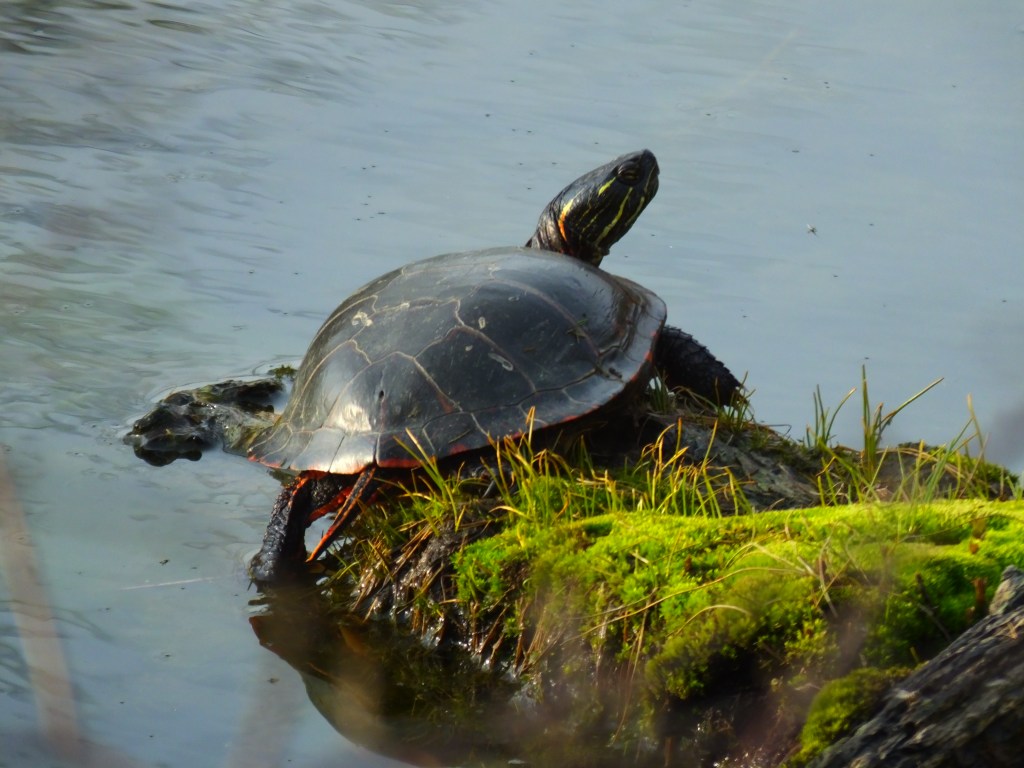
If that weren’t special enough, wait till you see this next one. The weather was so gorgeous yesterday afternoon, that I took another quick swing by the pond, and look how I found there. Our first painted turtle (Chrysemys picta) of 2021, just 3 days earlier than last year.
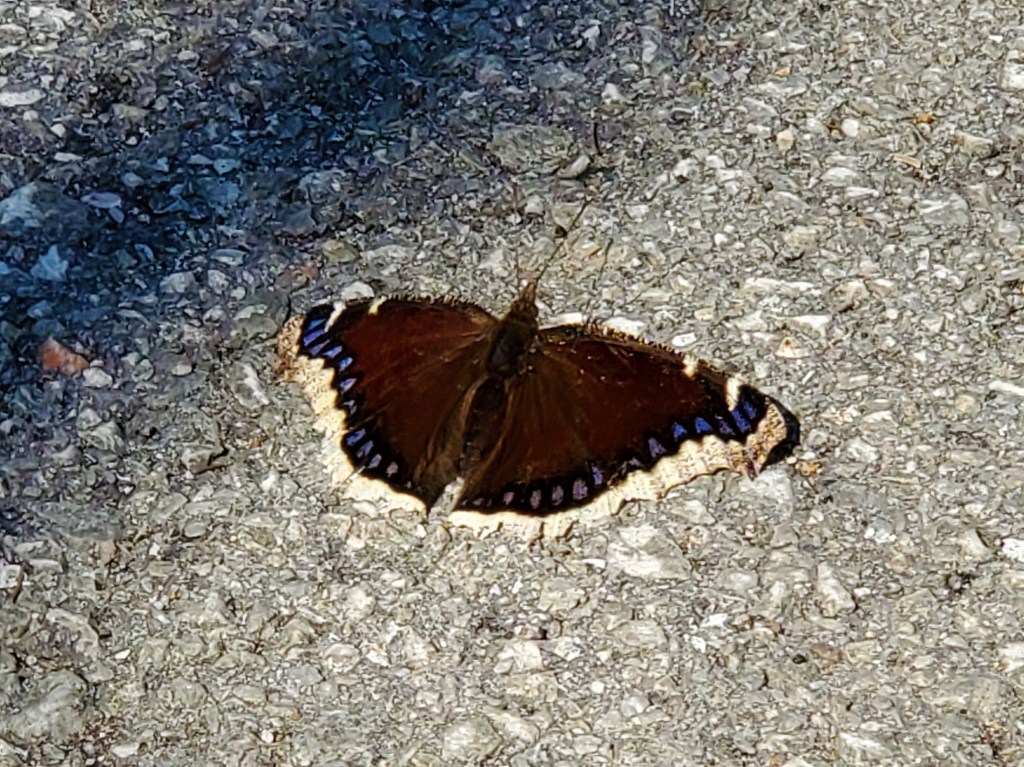
And if you thought that was amazing, hold onto your hats, because here comes the first butterfly of 2021, a mourning cloak (Nymphalis antiopa) freshly up from its long winter’s nap and trying to soak a little sun on the pavement of the Oak Leaf Trail. I read that they “have a lifespan of 11 to 12 months, one of the longest lifespans for any butterfly,” and that “the adult butterflies hibernate during the winter months … making it one of the first butterflies to take wing in the spring!”
Almost as amazing as seeing this beautiful creature, to me, is the crazy confluence of events that lead to me getting this picture. It starts last fall, if you can believe it, is when I first spotted one as I rode by on my bicycle, and I was so surprised to see a butterfly so late in the season that I immediately looked up what it might have been when I got home. That’s when I learned that they hibernate instead of migrating.
Fast forward 6 months, and when Anne got home from her bike ride yesterday, she said she saw a black butterfly. The image of a mourning cloak popped right into my head, and I had no hope of going out to find it for myself, but I went for a bike ride anyway. Sure enough, it jumped off the pavement just as I approached, and I hopped of my bike to try to get a picture with my phone, but had no luck. I think it got stuck to the shirt of a rider going the other way and I couldn’t find it.
So I continued my ride, and on my return, there it was again, a bit further south. This time, I hopped of my bike, whipped out my phone, chased right after it, and it soon settled down on the pavement one more time. Finally, I was on my hands and knees in the middle of the path taking this picture, when a couple sped past and startled it yet again. I couldn’t find it after that, but I did have a picture, and I absolutely cannot believe my luck.
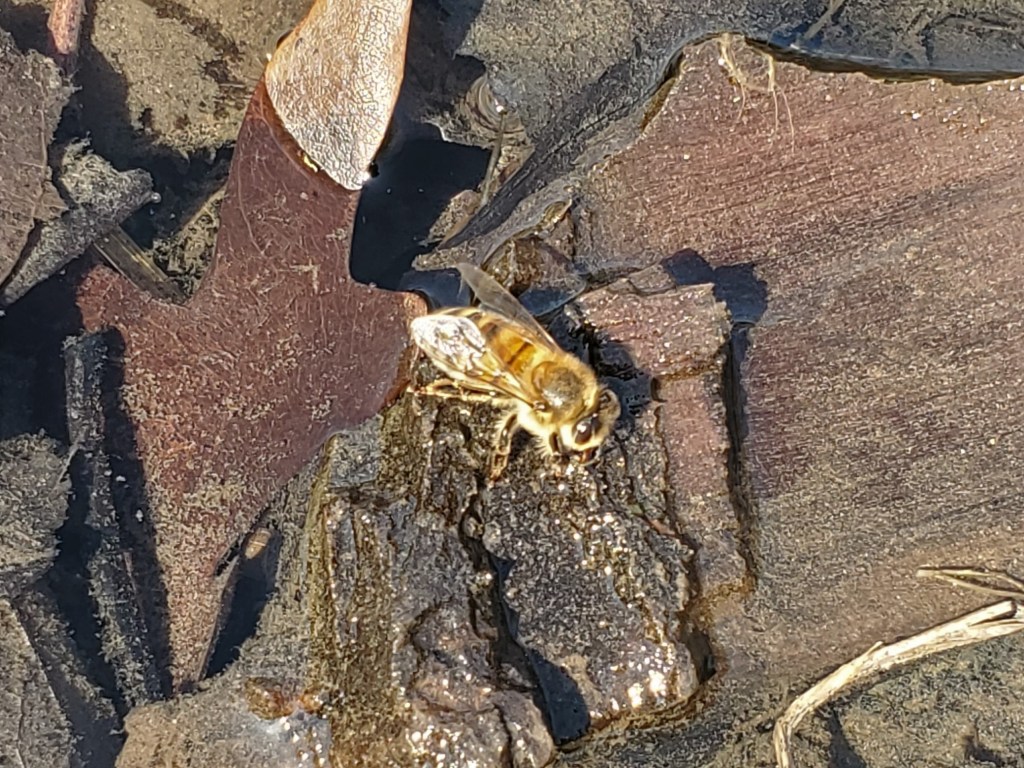
Back to the pictures! Here’s our first bee of 2021.
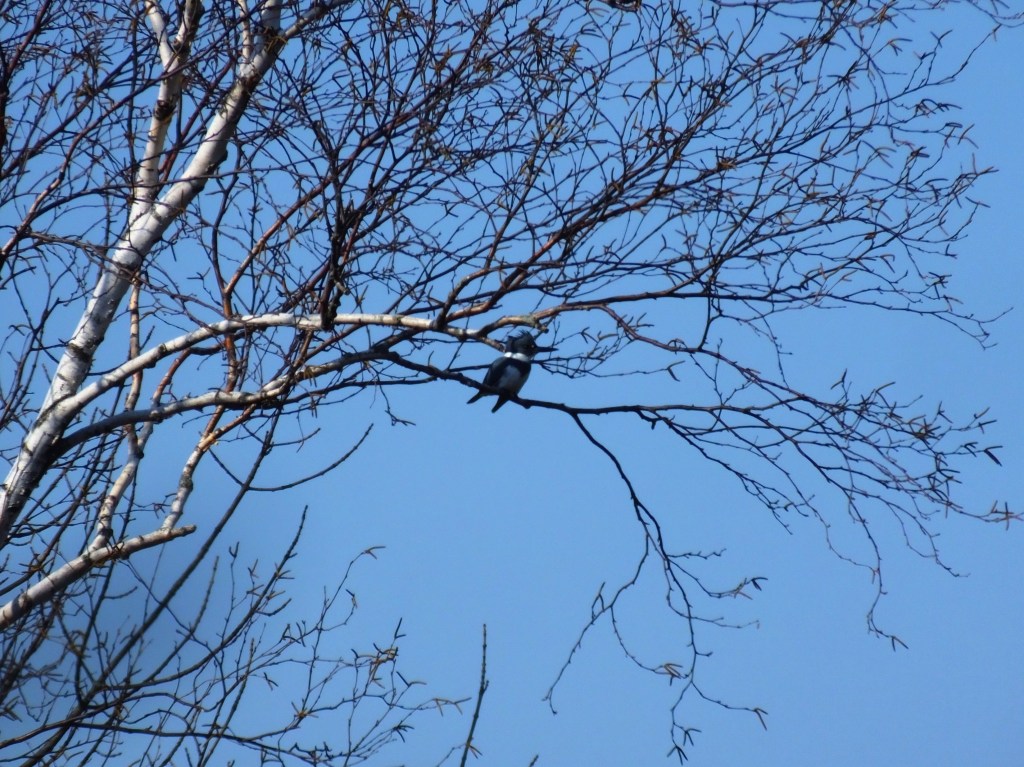
Here’s our first belted kingfisher (Megaceryle alcyon) who appeared finally to be trying to get down to fishing from this birch tree over the river and not just rocketing past me on the wing.
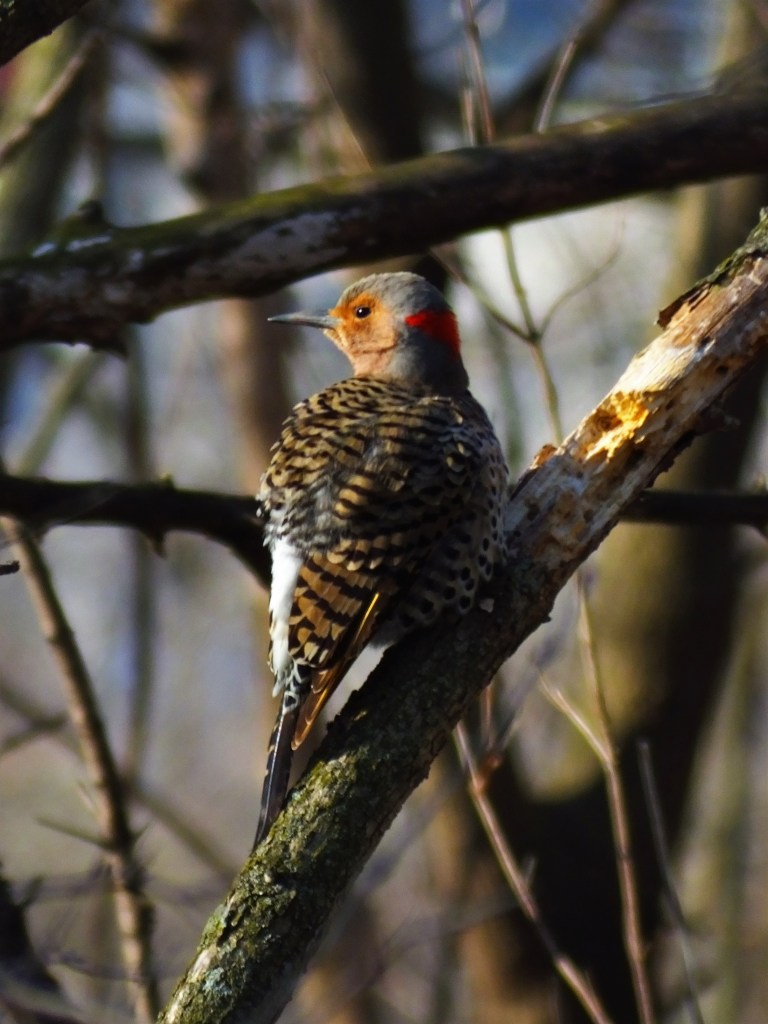
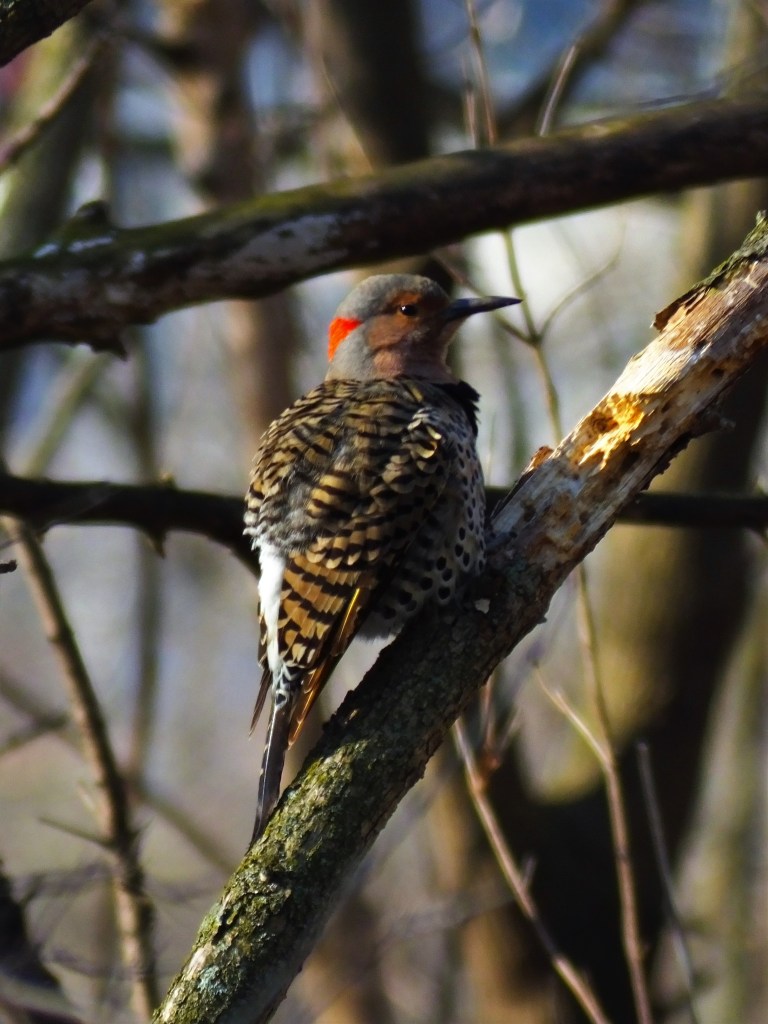
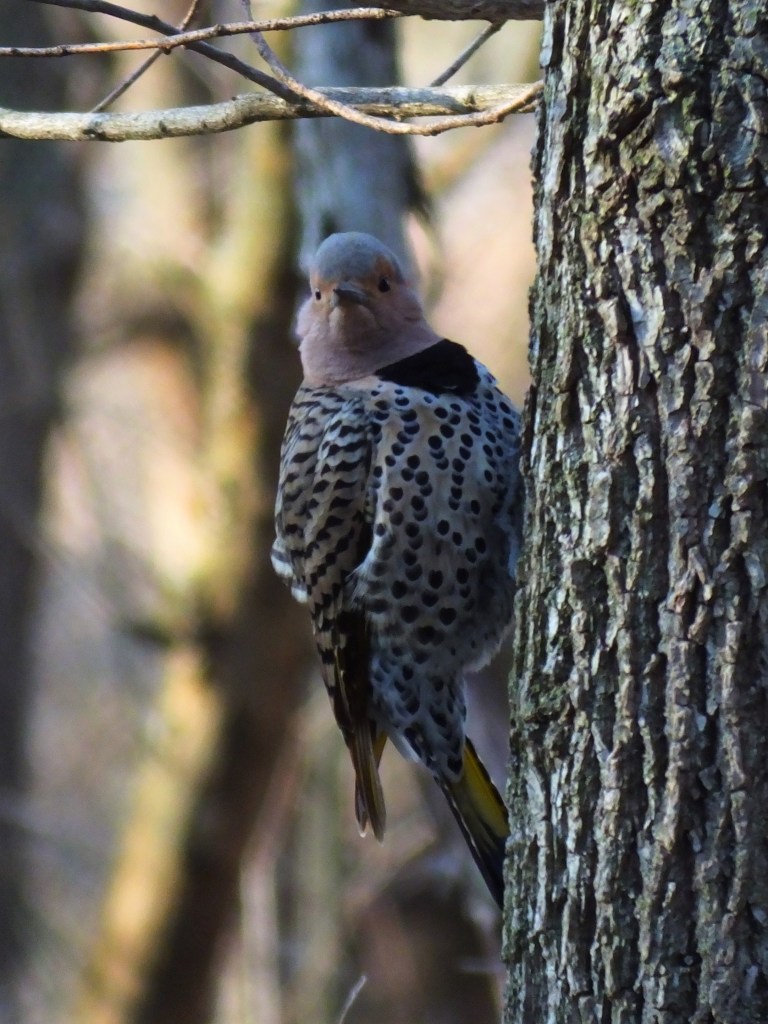
Here are a couple of new shots of a female northern flicker from this morning.
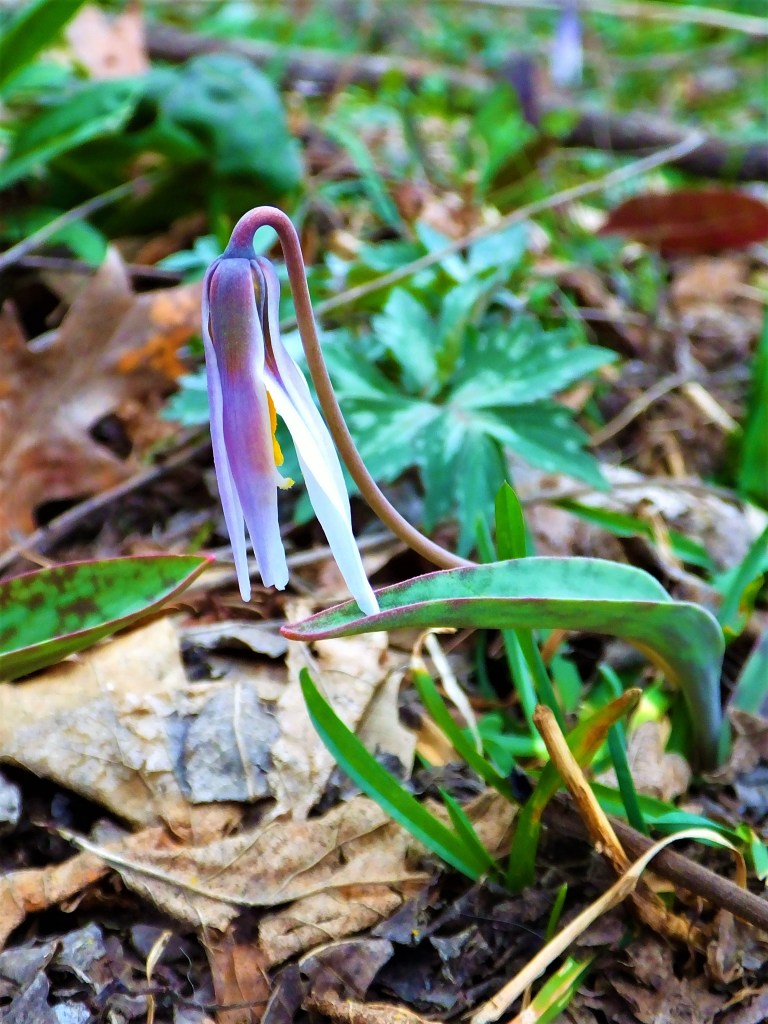
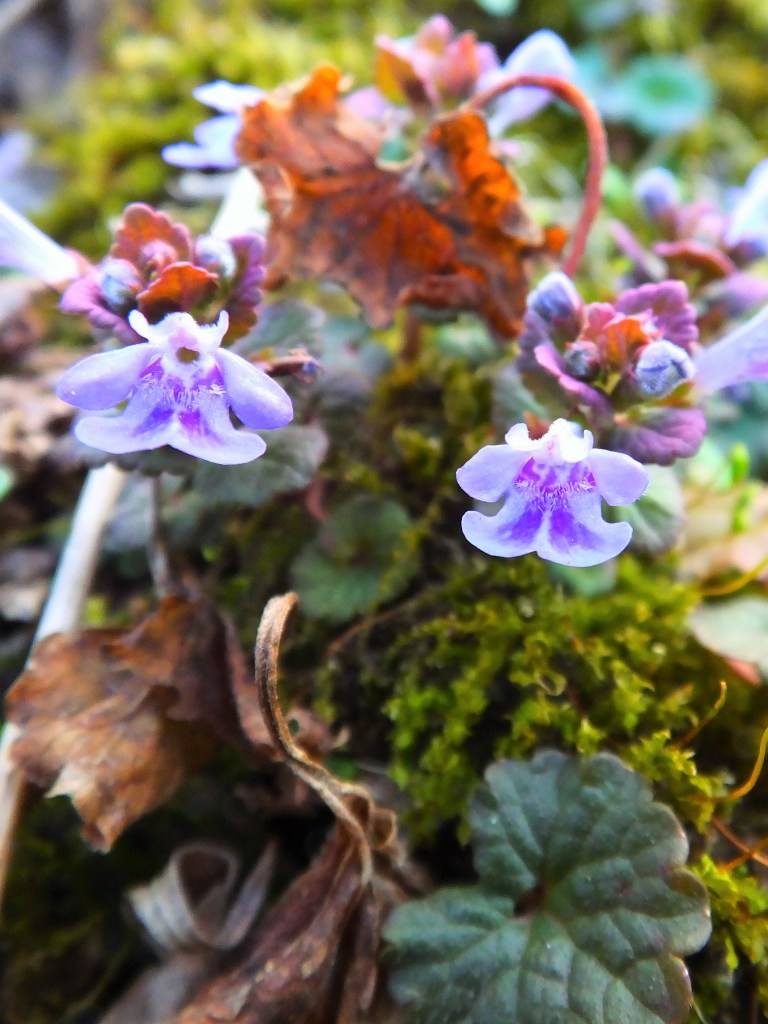
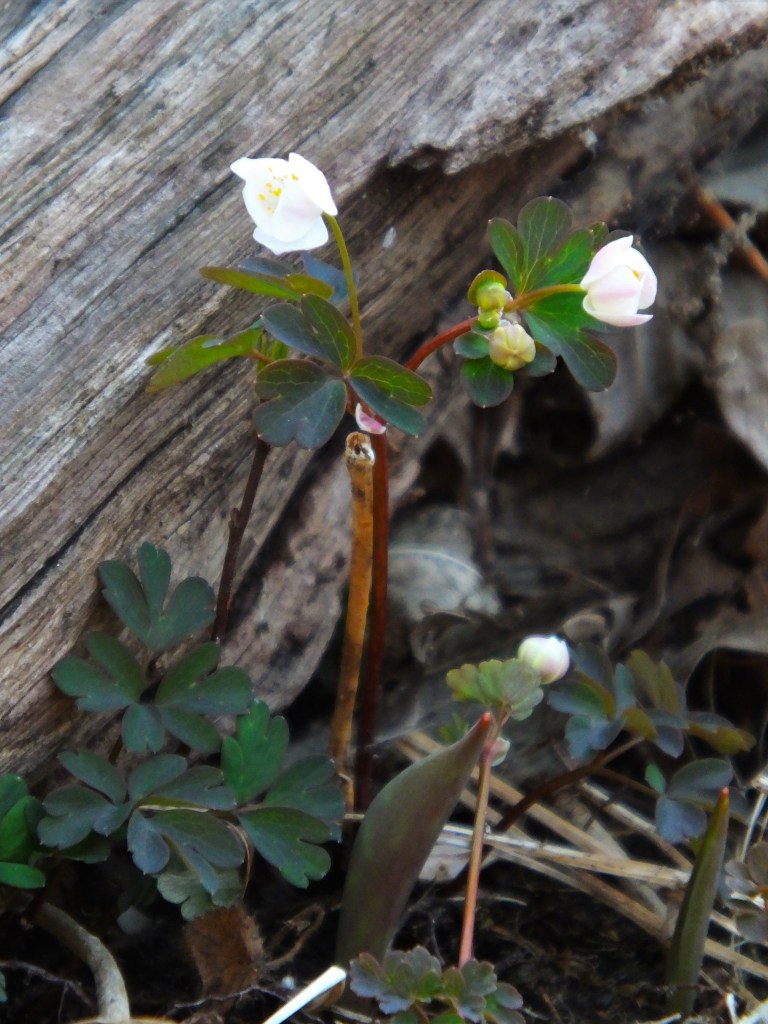
Here’s another nice violet and another new blossom just up in the forest along the river, which my sources tell me is Rue Anemone (Isopyrum thalictroides)
Finally, I am sad to report that our heroes on the southern tip of the island in the pond appear to have stopped incubating. She was off her nest yesterday afternoon, and I wasn’t too worried because it was a nice warm day to cover her eggs and take a quick break. She was off her nest again this morning, however, and just snoozing on the west lawn, so that’s not a good sign.
One was the best of sites. One was the worst of sites. That’s as far as the wordplay goes.
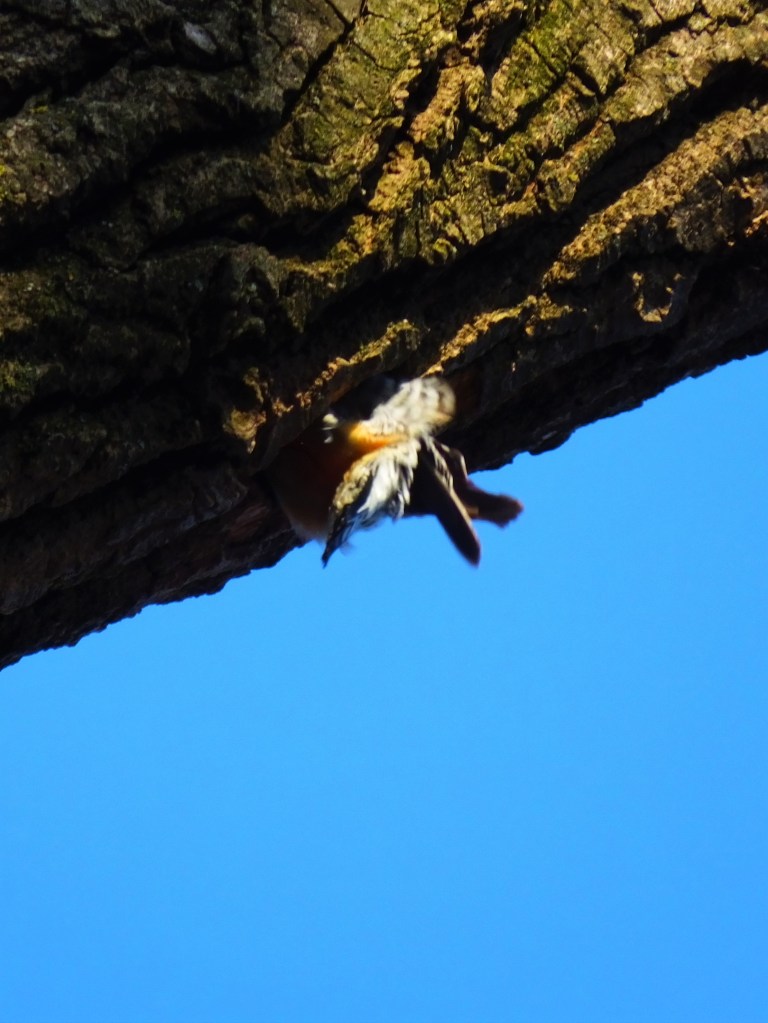
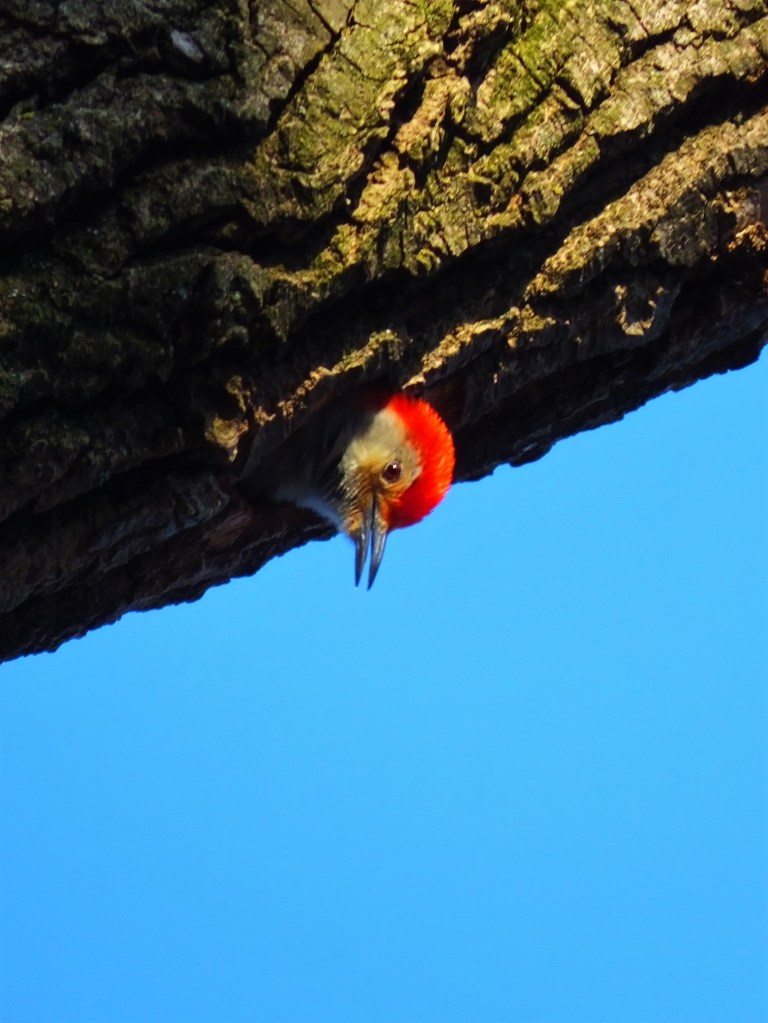
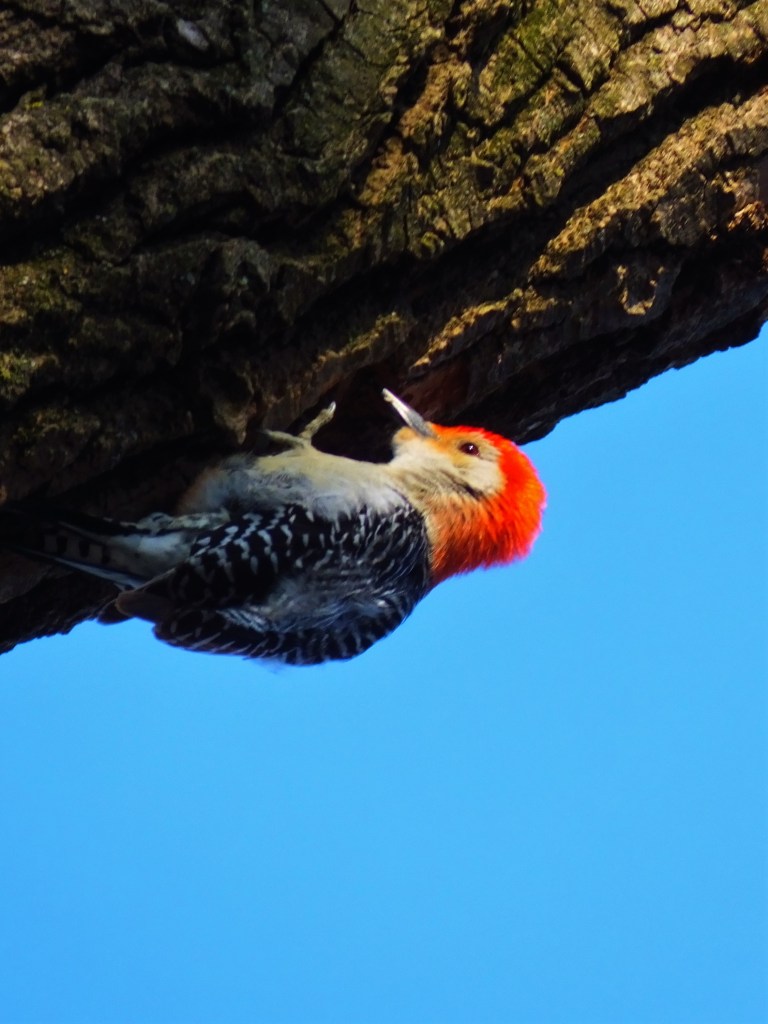
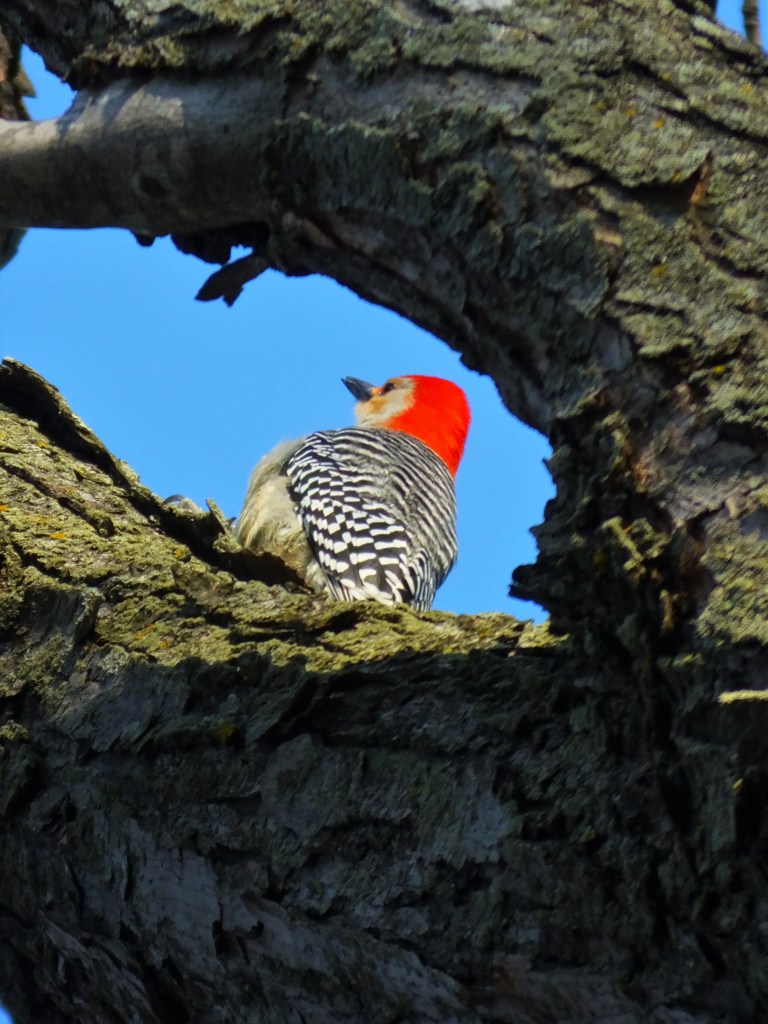
Here’s a male red-bellied woodpecker showing off his fine nesting site in hopes of attracting a mate. He made it look very easy-in, easy-out, and note how the hole faces downward so that it is sheltered from the elements. Very nice, and ready for immediate occupancy, although it is probably not yet furnished.
Easy-in
Good view
Easy out
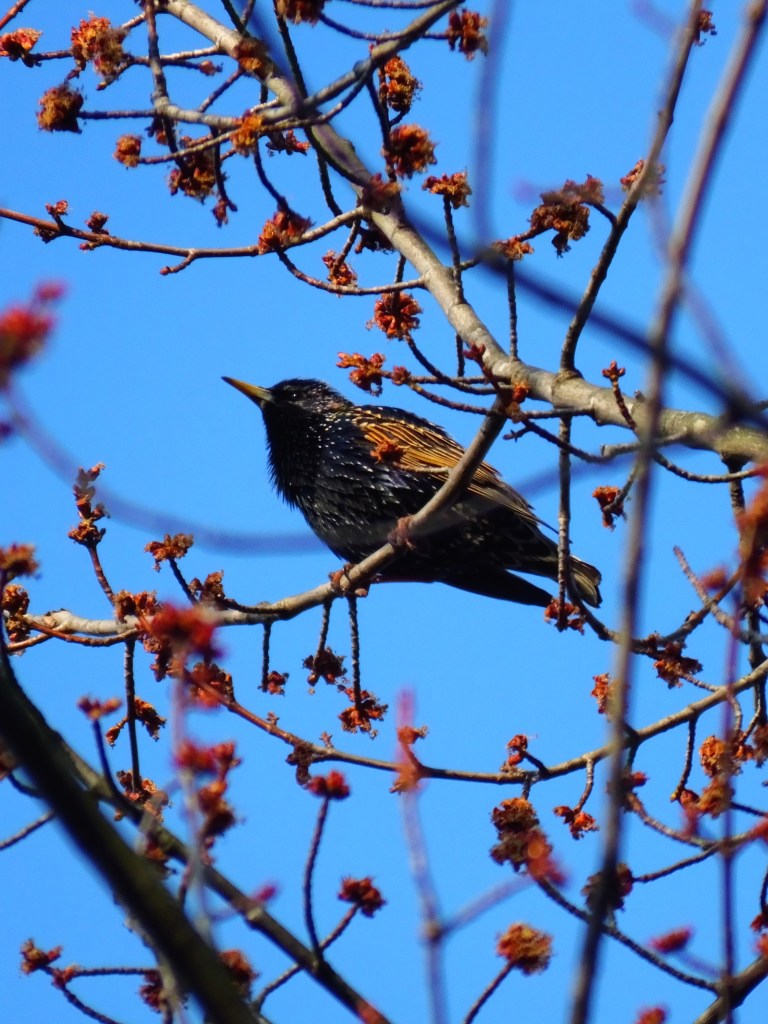
Here’s a less-fortunate red-bellied woodpecker fending off a starling that had the gall to show up with nesting material in its beak! At first, I was just trying to get a decent picture of a starling, but then when the woodpecker dove in and messed up my shot. I noticed, however, that neither were taking off, so I continued to try for a picture, and I finally realized what was going on. Starlings are known for stealing nesting holes that woodpeckers make, and this hapless chap chose a spot that starlings like. I hear they are relentless, and I hope he has better luck next time.
Starling with sticks in beak
Woodpecker defending
Starling dropped its sticks
Phew! After all those acrobatics, let’s see what else was going on.
Our heroes are still incubating on the southern tip of the island in the pond, a second goose was either laying another egg or finally incubating on the northern tip, and the carp are back in school at last, despite the apparent die-off over the winter! Thanks to my buddy Dan for spotting the carp for me.
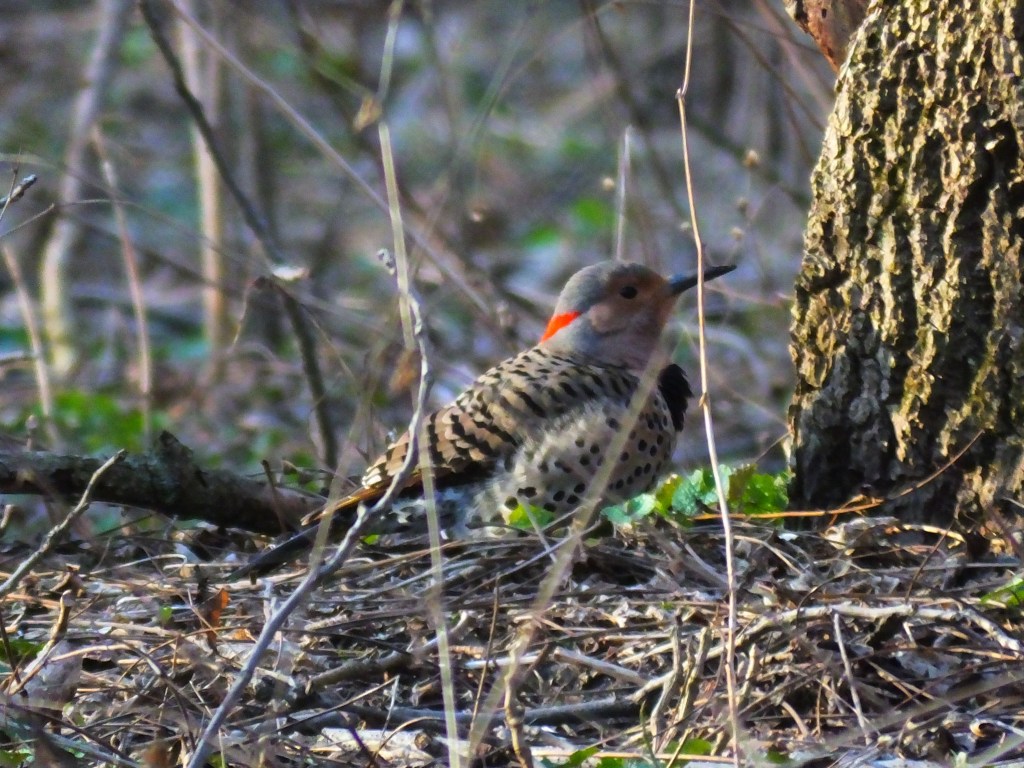
The northern flickers are seemingly everywhere now, and here are a couple more of shots of a female again.
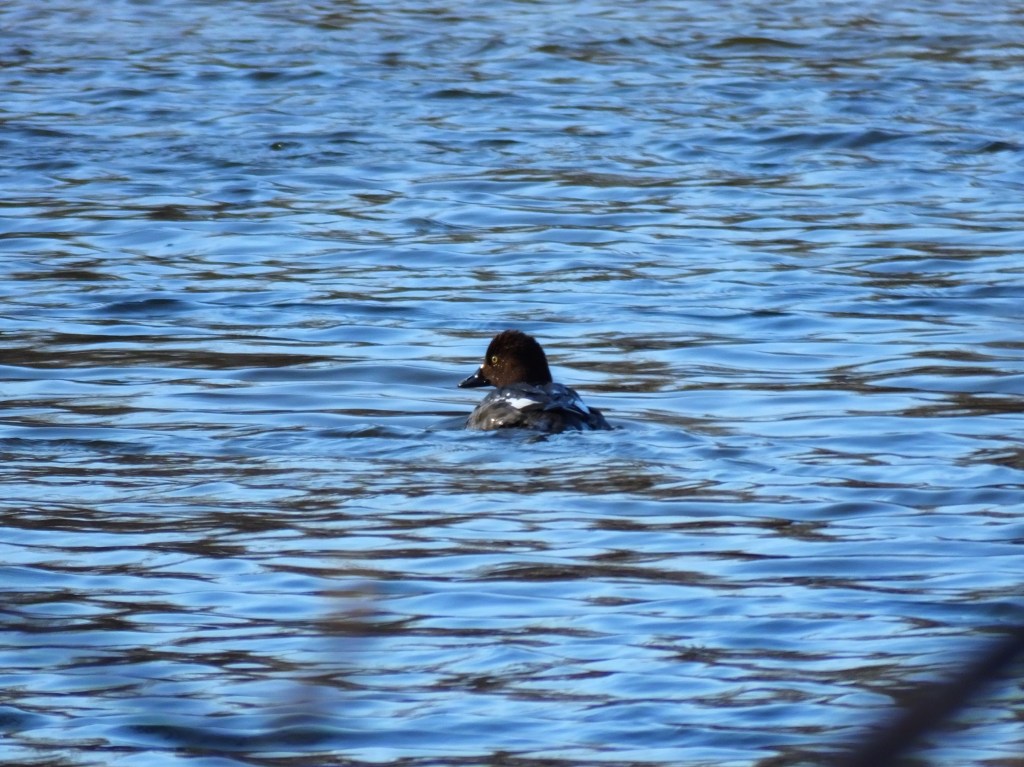
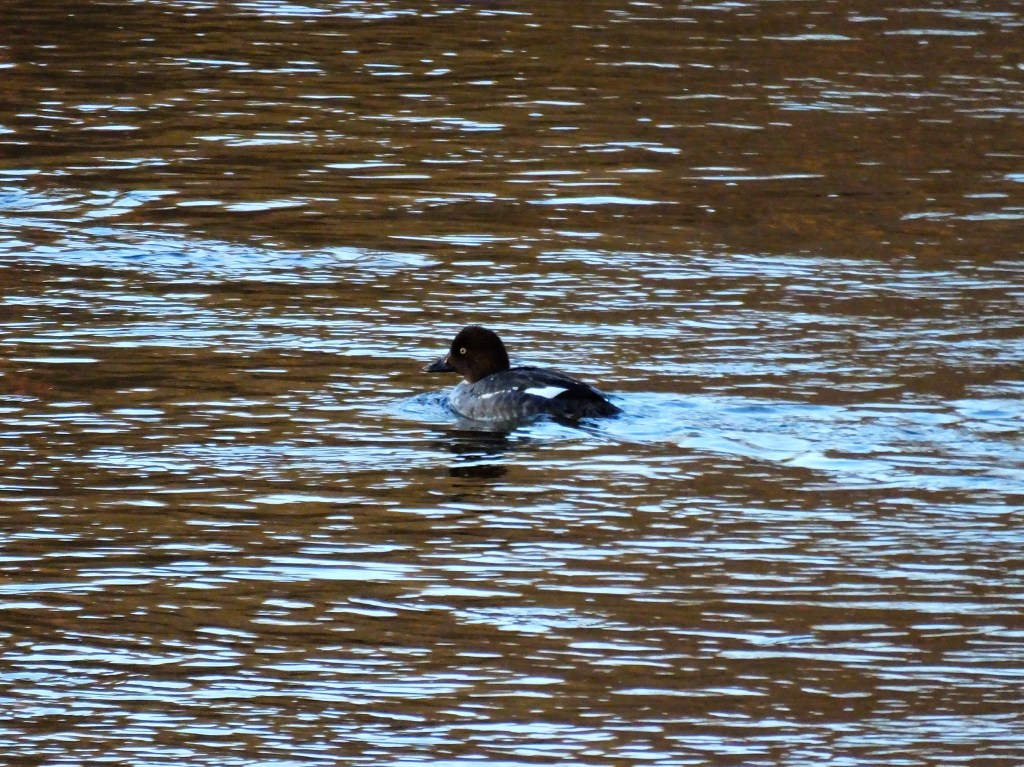
The geese and mallards are as plentiful on the river as ever, and the buffleheads and one goldeneye are still around.
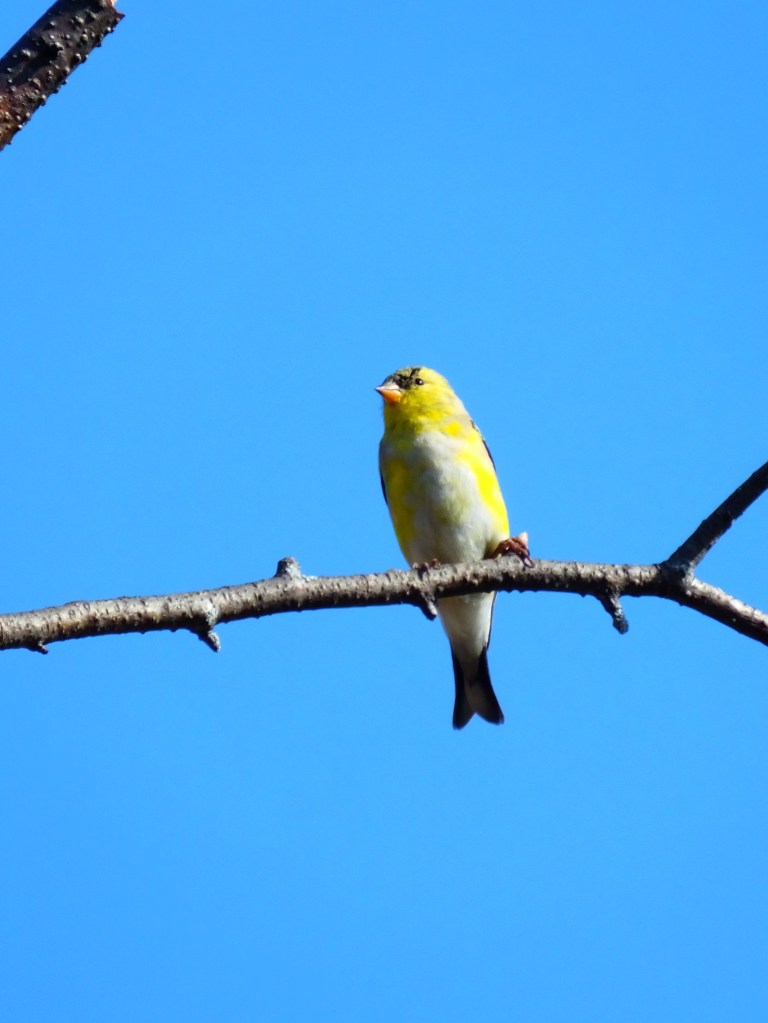
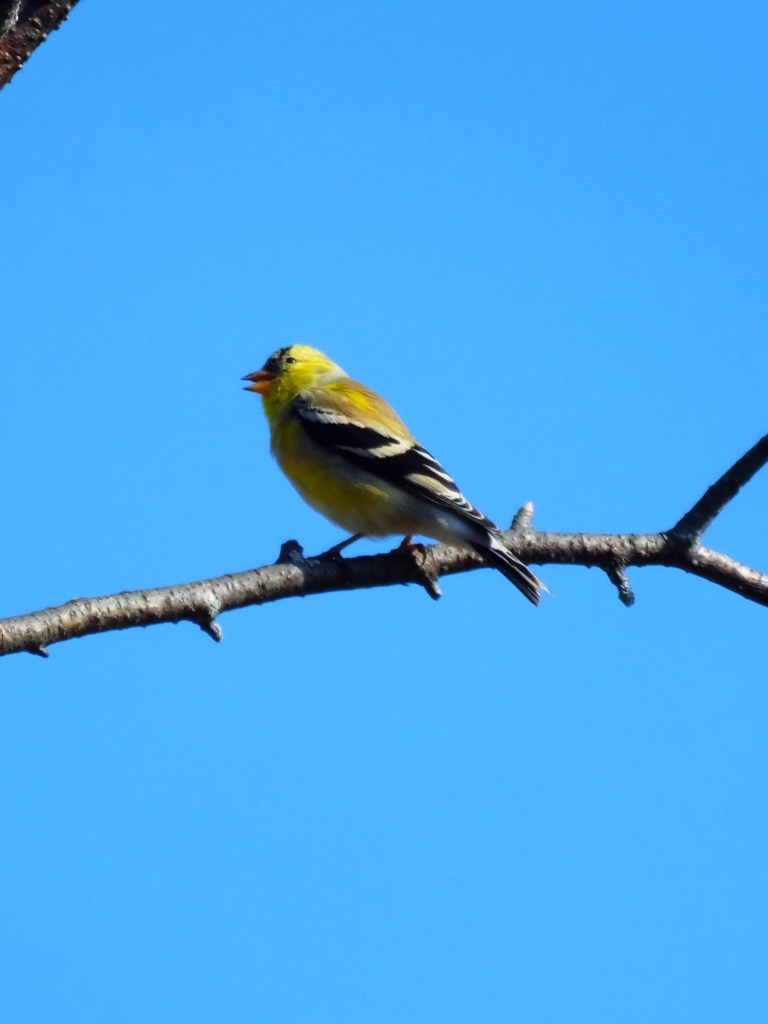
I finally got a more-appropriately-colorful picture of a goldfinch singing the most cheerful song and on its way to becoming bright yellow.
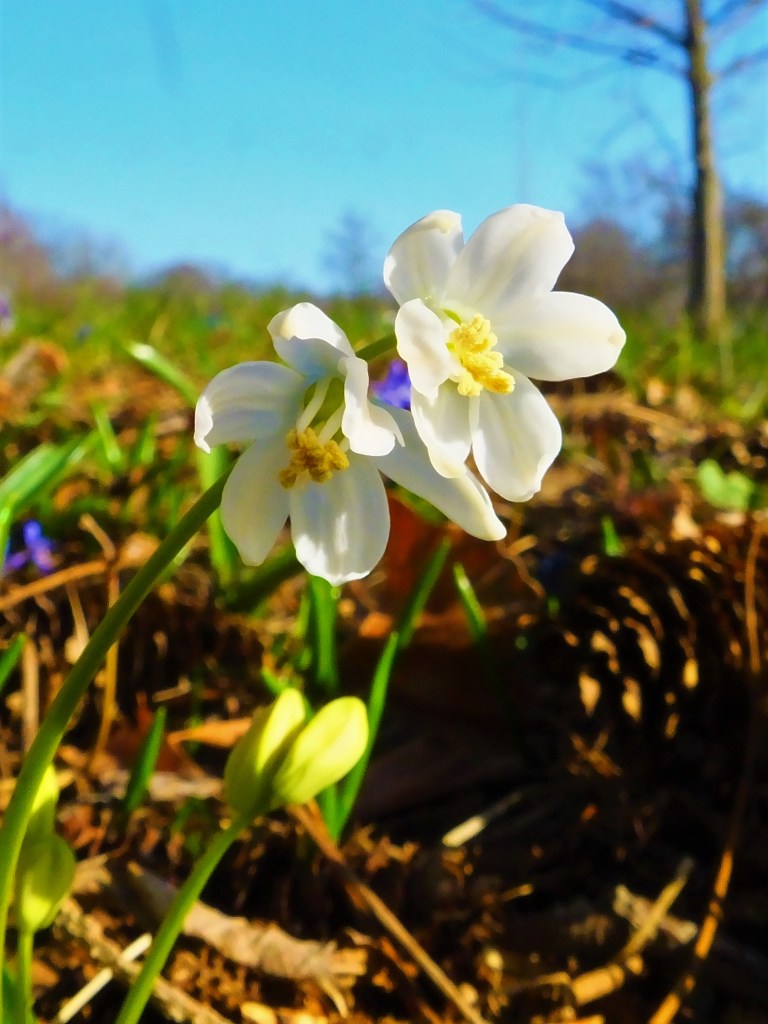
Lastly, another new blossom is up beside the maintenance building south of the pond, but what it is called is still a mystery to me. They’re not snow drops (Galanthus) because they don’t hang down. They’re not spring snowflakes (Leucojum vernum) because they don’t hang down and they don’t have little green spots on the petals. I don’t think they’re musli (Chlorophytum tuberosum) because the petals aren’t pointed at the ends. If you can identify this pretty little flower, please let us all know!
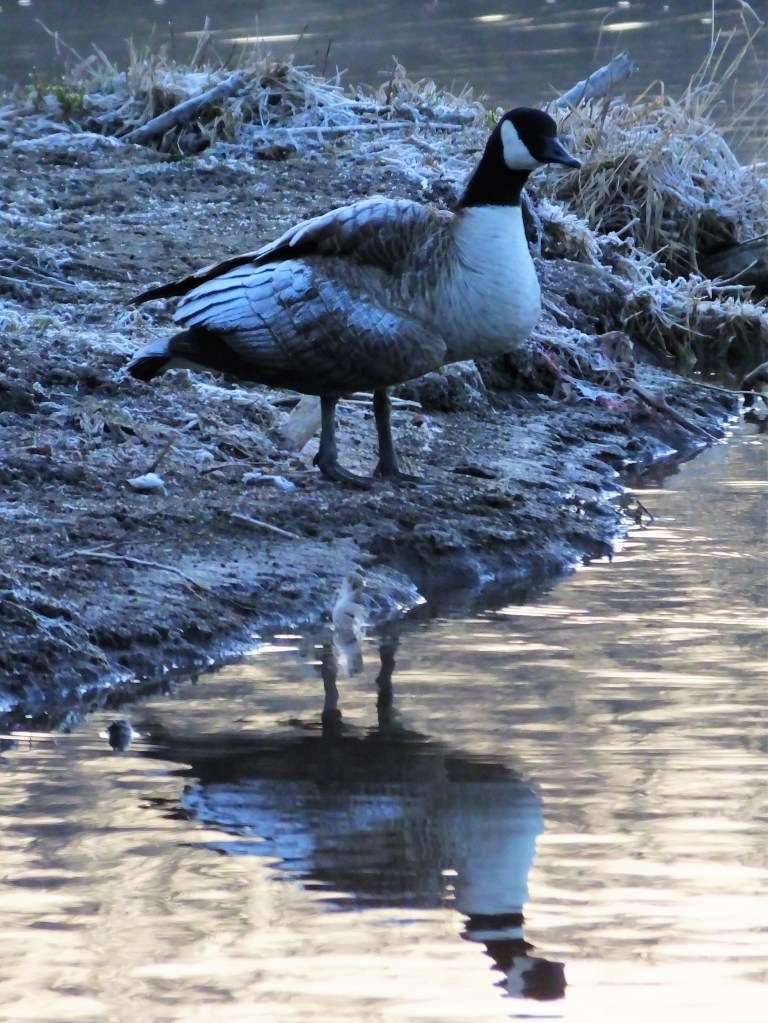
Yikes, it was cold out this morning. I wish I had worn my good winter mittens. The soil was quite crunchy with needle ice in places, and this goose, who appears to have spent the night snoozing on the mudflats by the river, had a nice heavy coating of frost on its back and wing feathers.
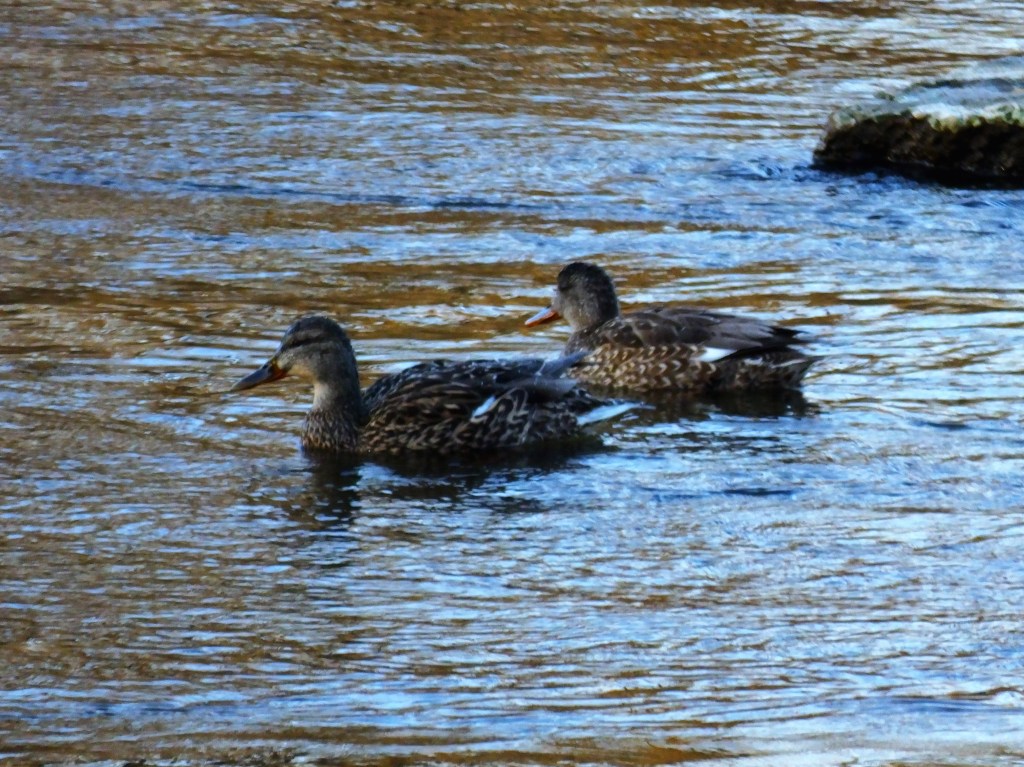
Also on the river were the young goldeneye, Mrs. Gadwall, one wood duck drake, several mallards, and a slew of geese. In the picture below with the two hens, can you tell which is the gadwall and which is the mallard? They don’t make it easy.
Mrs. Gadwall and Mrs. Mallard, but which is which, and who is who?
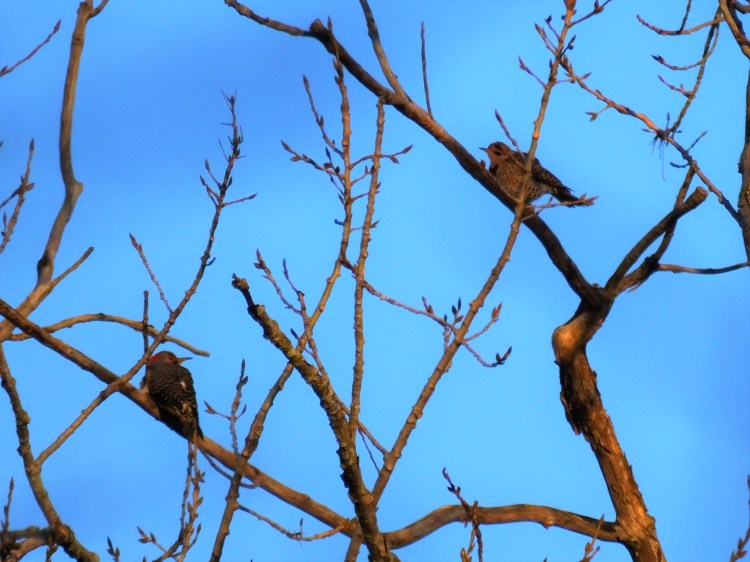
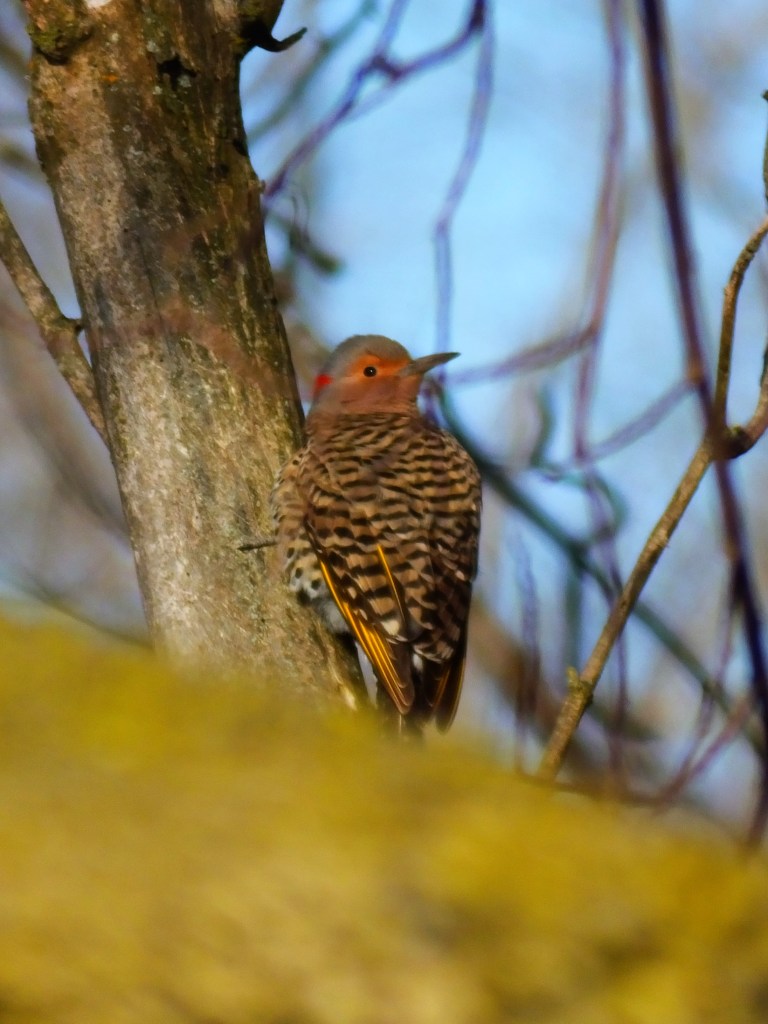
A pair of northern flickers in a tree top across the river, so there is more than one!Female, yellow-shafted, northern flicker Female, yellow-shafted, northern flicker trying to rustle up some breakfast


























.png)