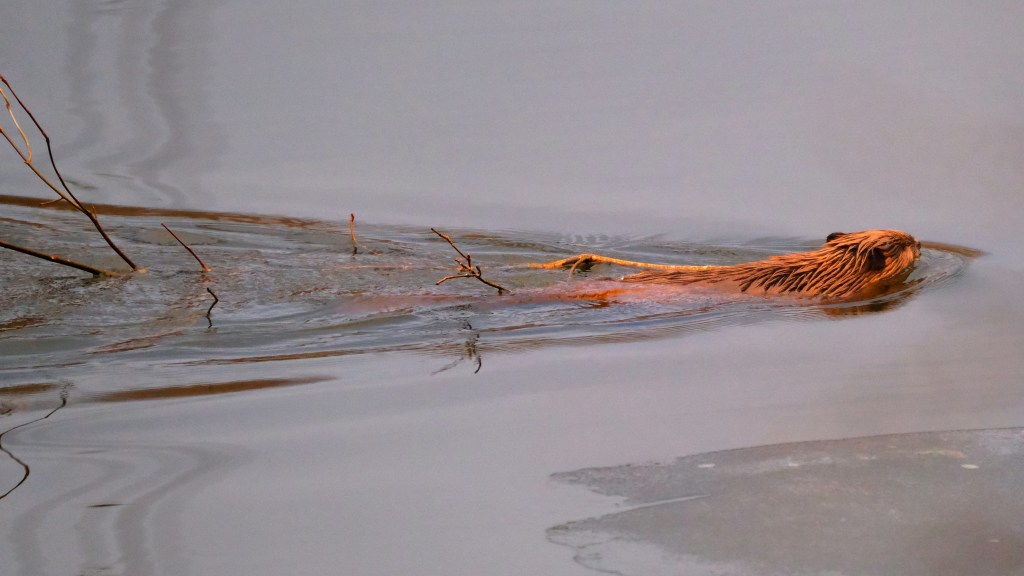
Look who I spotted hustling home this morning with the beaver equivalent of a vegan holiday feast. Fresh willow bark, and just in time, baby, just in time!
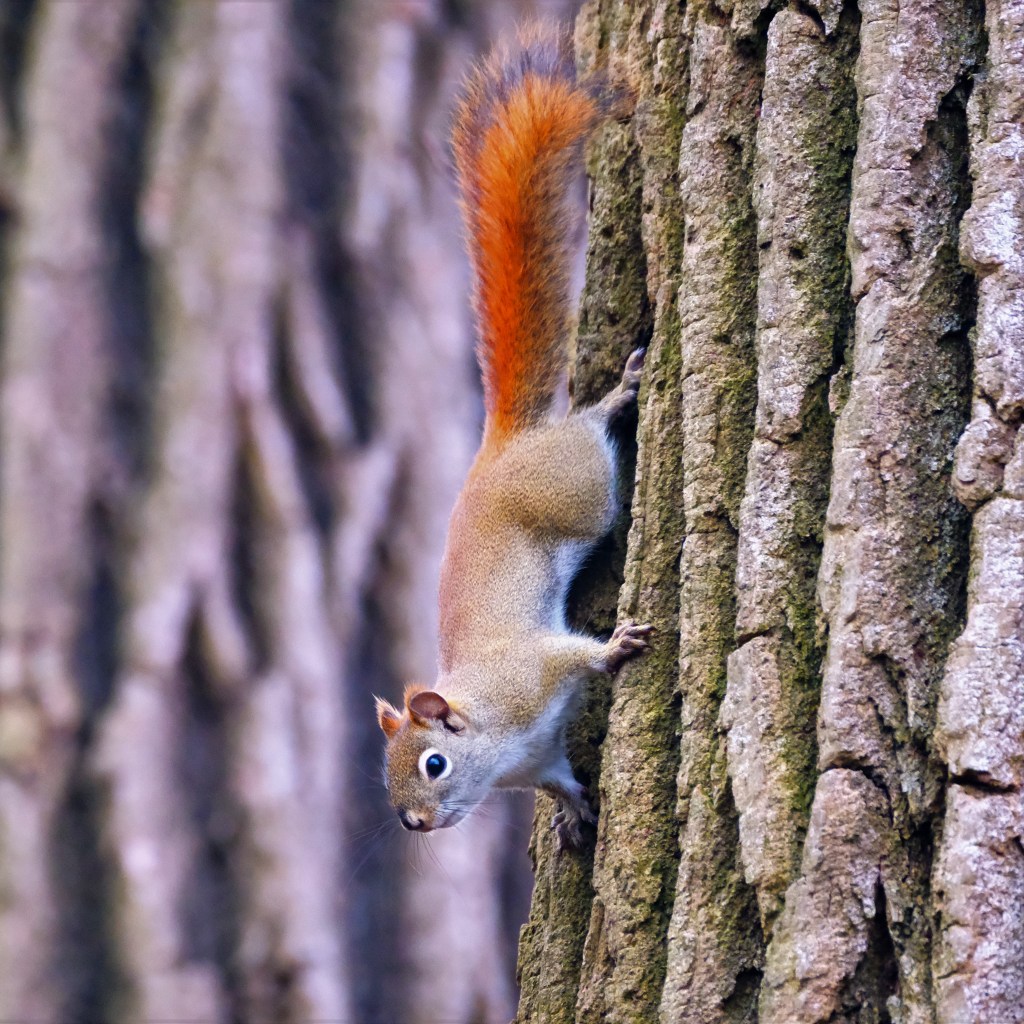
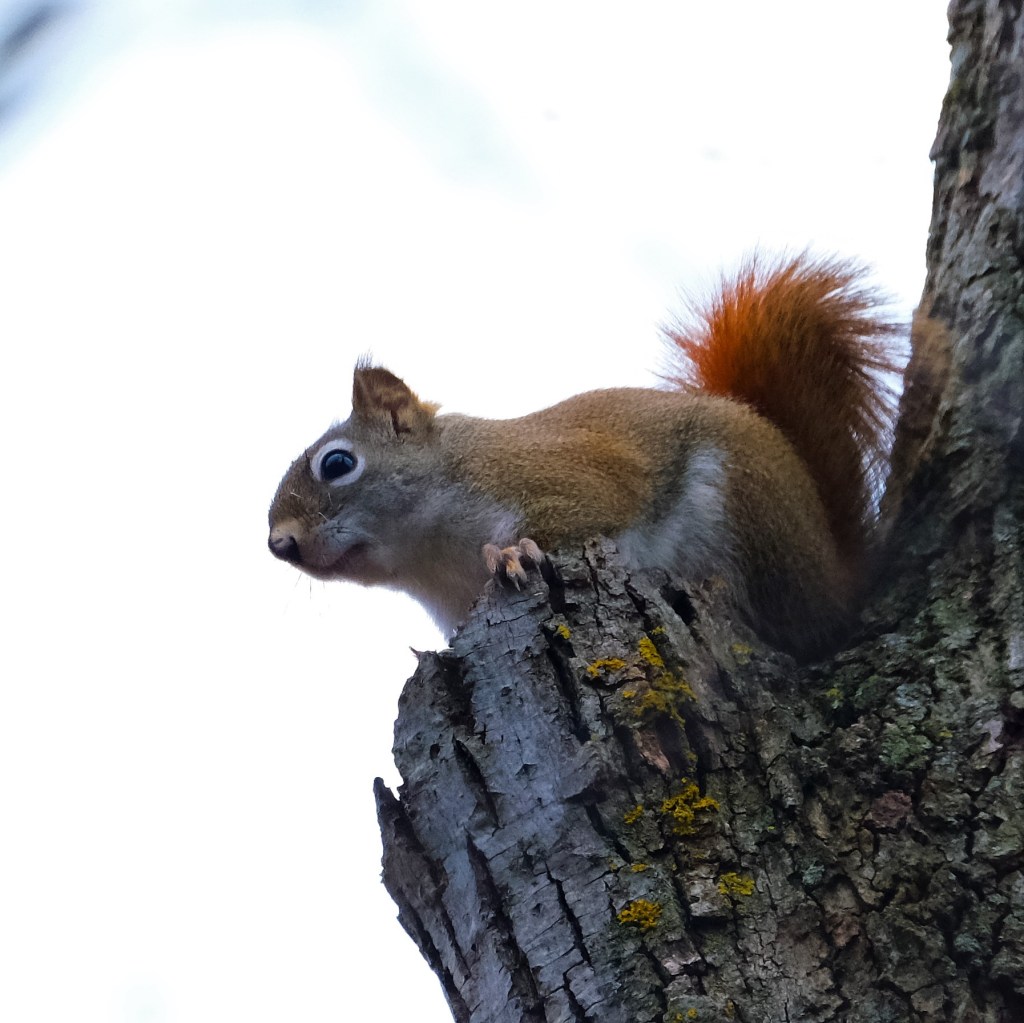
Finally, one of the little red squirrels was wondering what the heck I’m still doing in the park this morning. Don’t worry, little guy, I’m on my way home for brunch right now.
The grey skies and mild temperatures continued this morning, and we even had some fog for icing on the cake, but I had my rounds to make, so off to the park I went.
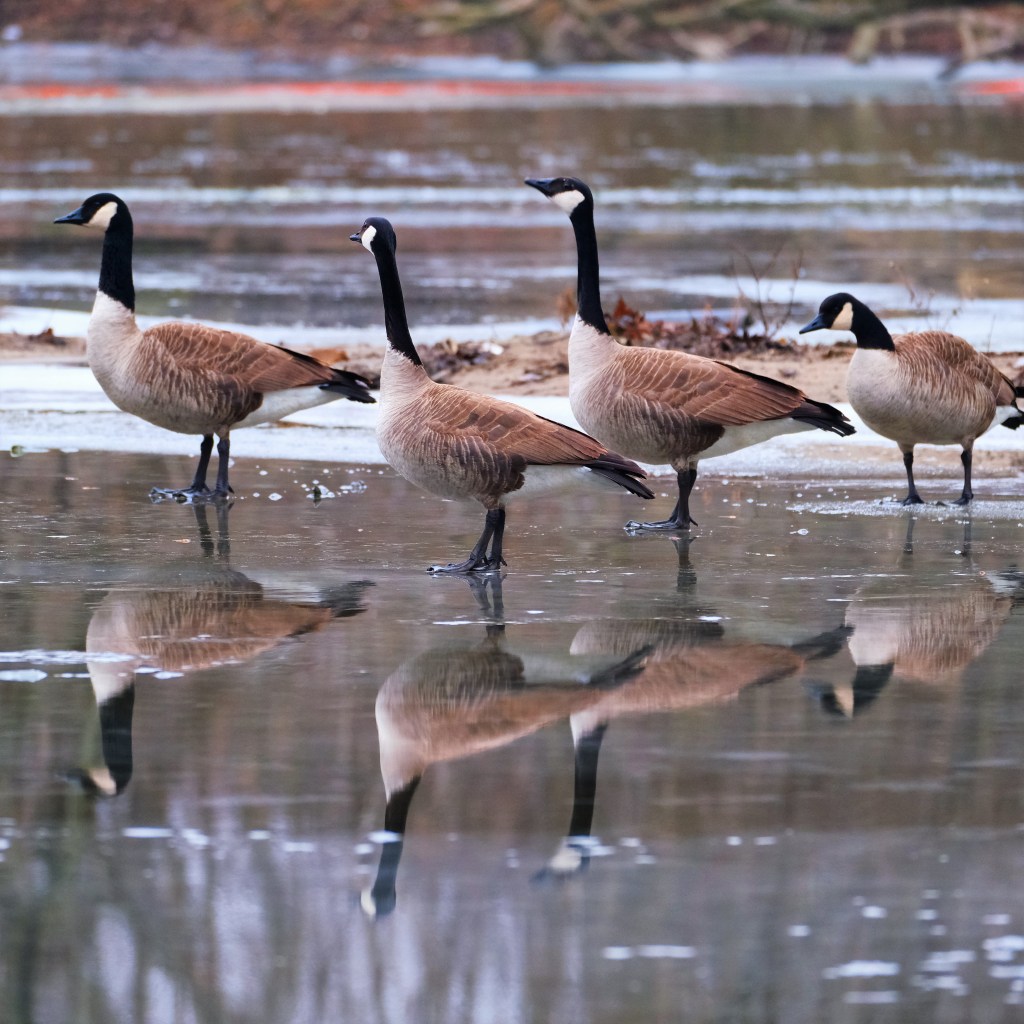
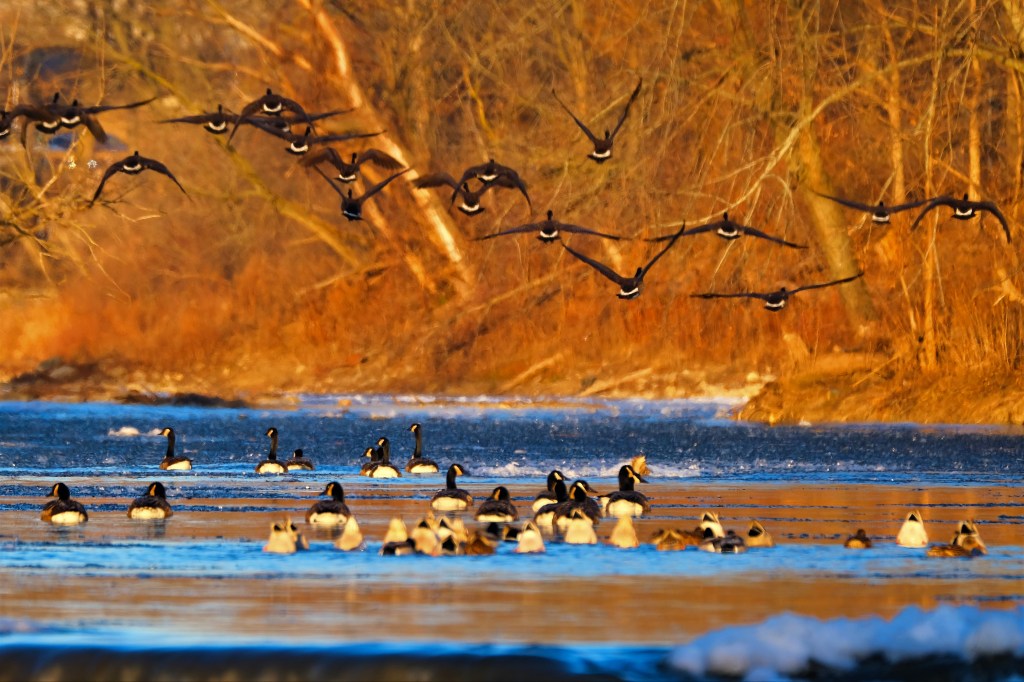
I didn’t see much more than mallards along the river until I reached the falls, where the slow and wide water just above them was full of Canada geese. Here’s a quartet standing on the ice just below the southern island.
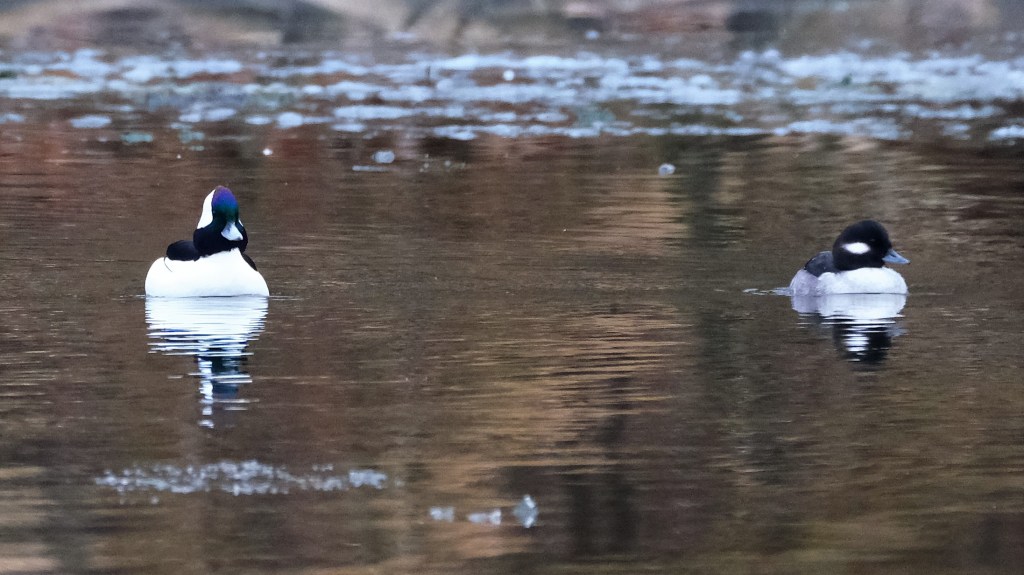
There were easily 4 dozen birds out there, and I figured I should give them a scan to see if anyone was hiding among them. Sure enough, look who finally decided to grace us with his magnificent presence: a bufflehead drake, at long last! Ha!
I have no way to know if the hen with him is the same one we’ve been seeing for weeks, but we can certainly hope she is, and that her patience has been finally rewarded, right?
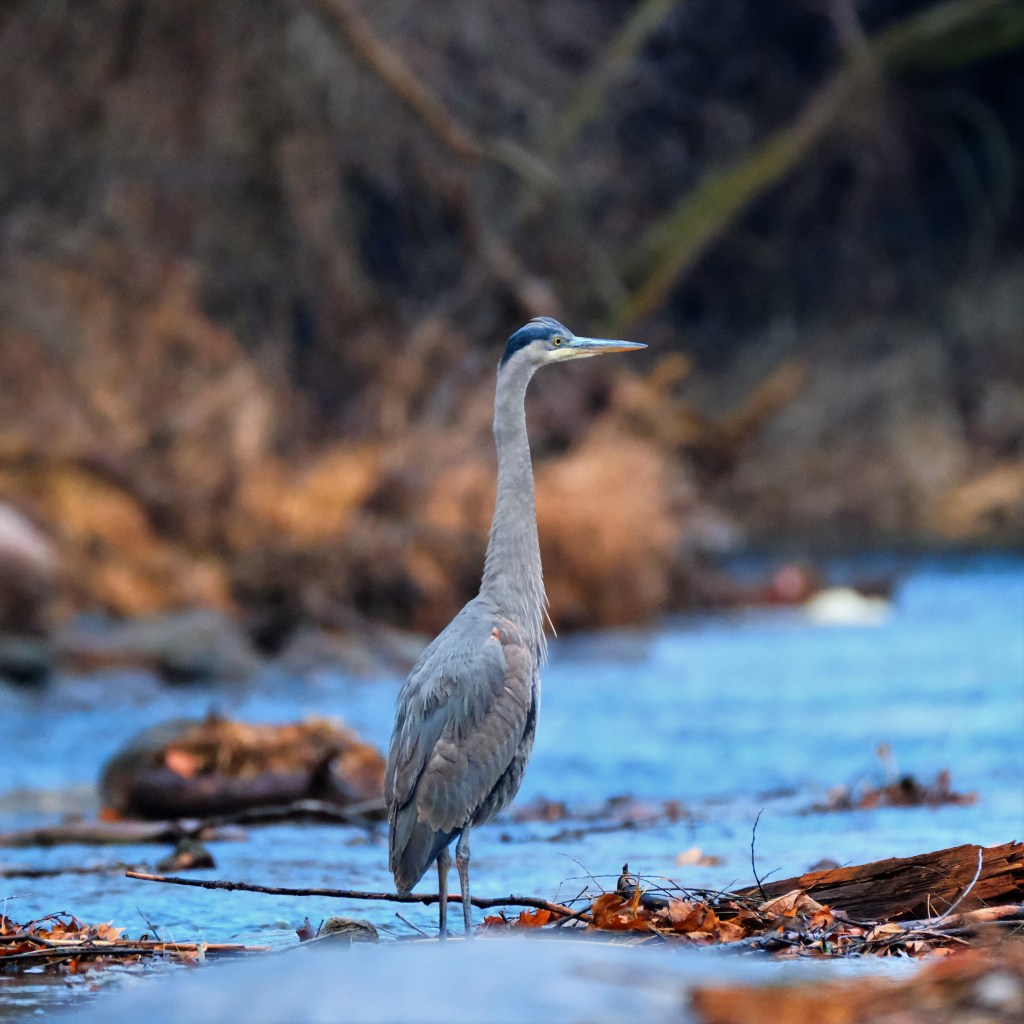
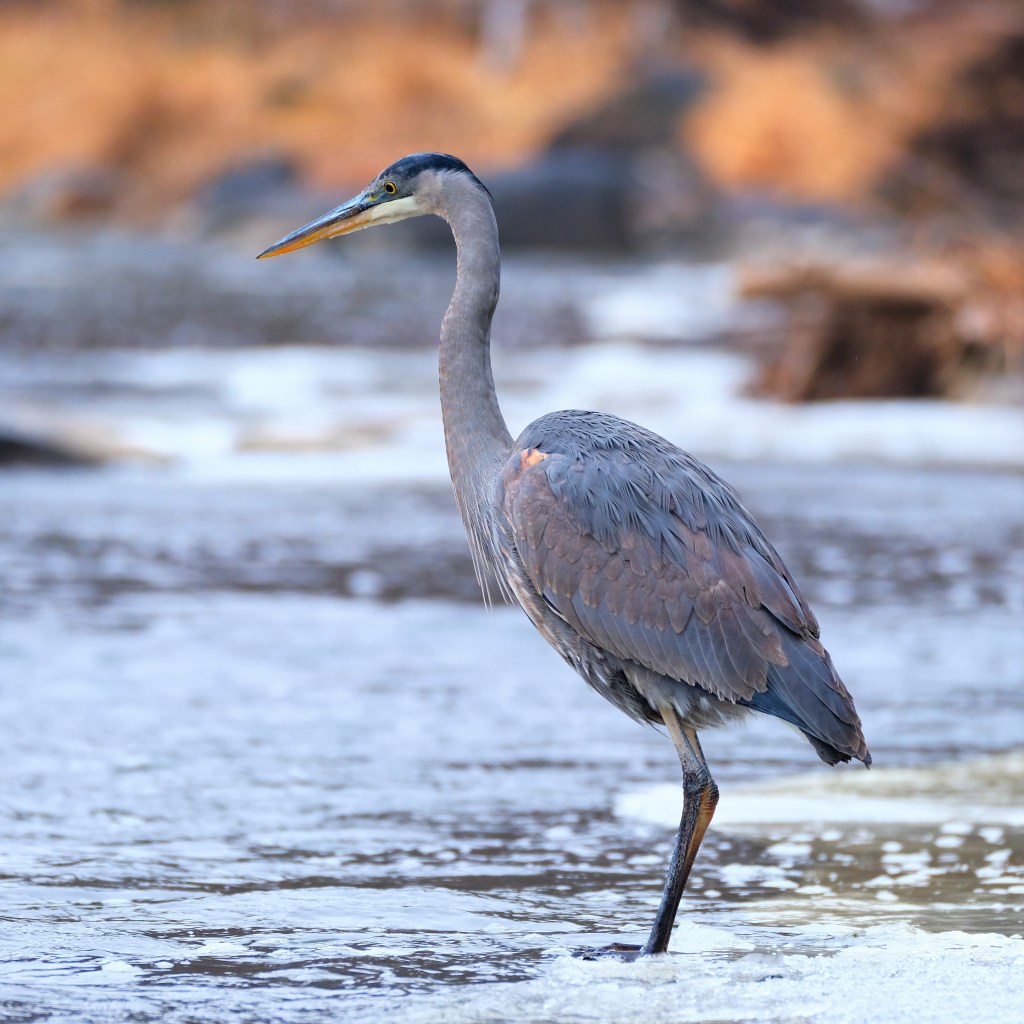
I didn’t see anything else remarkable at the north-end, and on my way south, I opted to hug the river again just because, and here’s my reward. Beside the mild rapids after the river turns to flow south again, our favorite blue heron was back to fishing.
I even watched it catch a fish, when I was still on its north side and shooting through a gap in some sticks. It had to jump into the water to get it, unfortunately, and ended up no longer lined up with that gap, so my autofocus couldn’t deal, and all the pictures of that exciting scene are blurry. Darn.
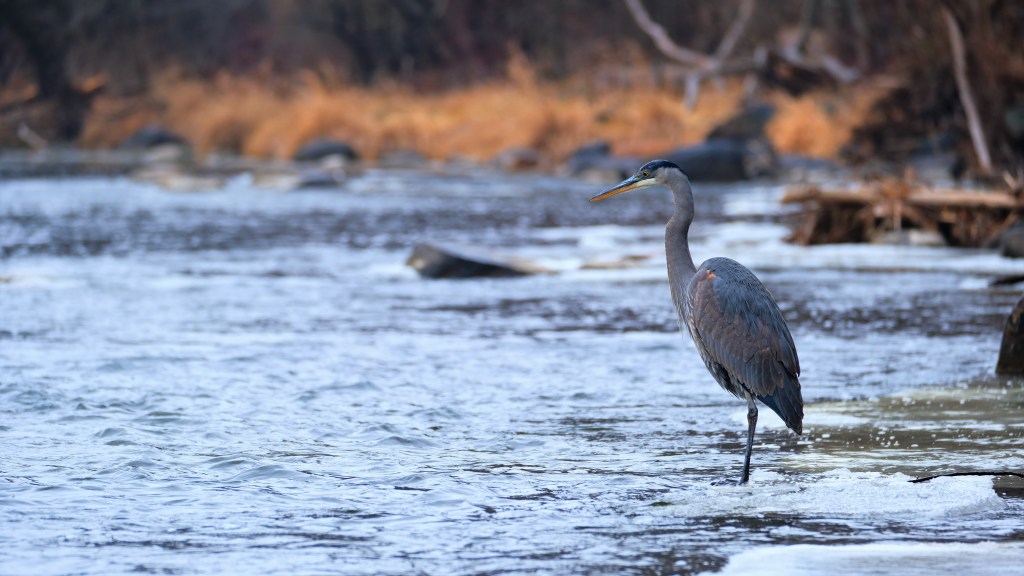
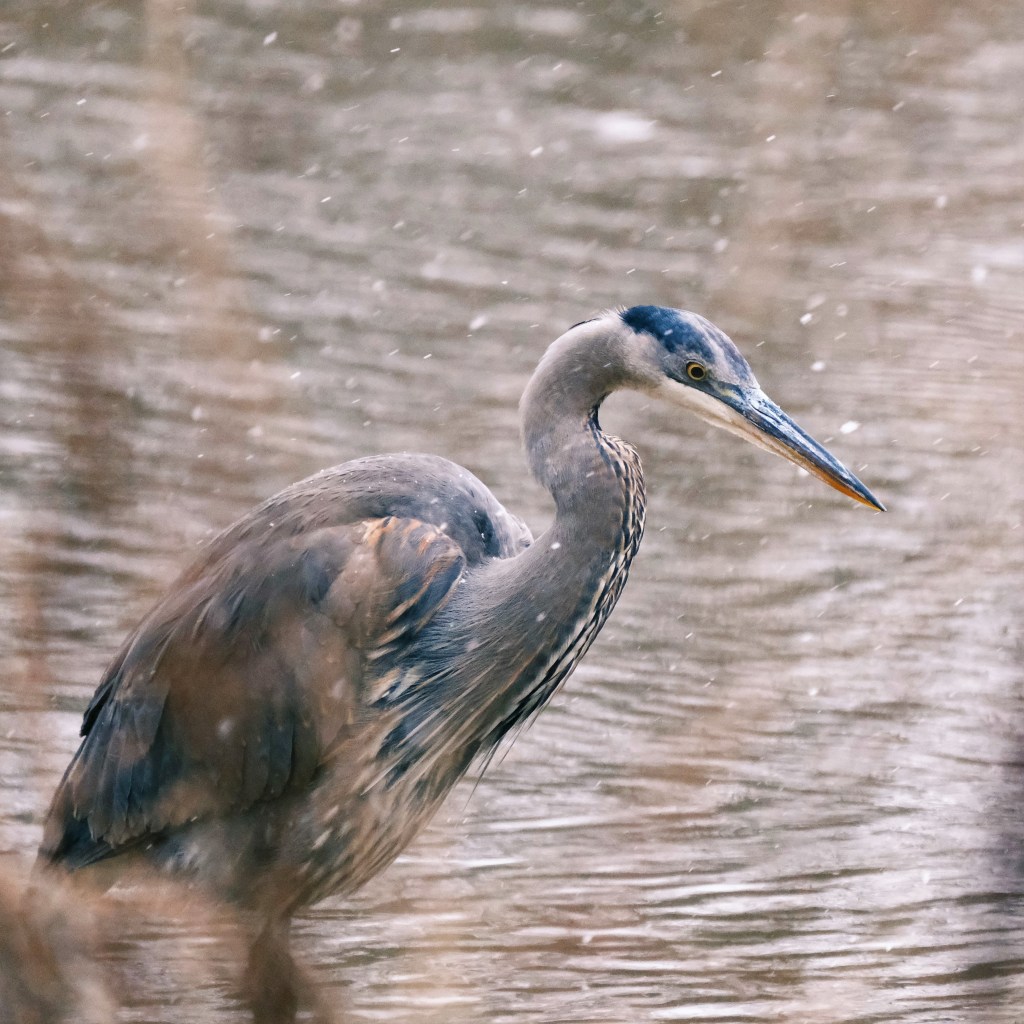
Instead, here’s a tranquil look upstream as it resumed fishing from the edge of the iceshelf.
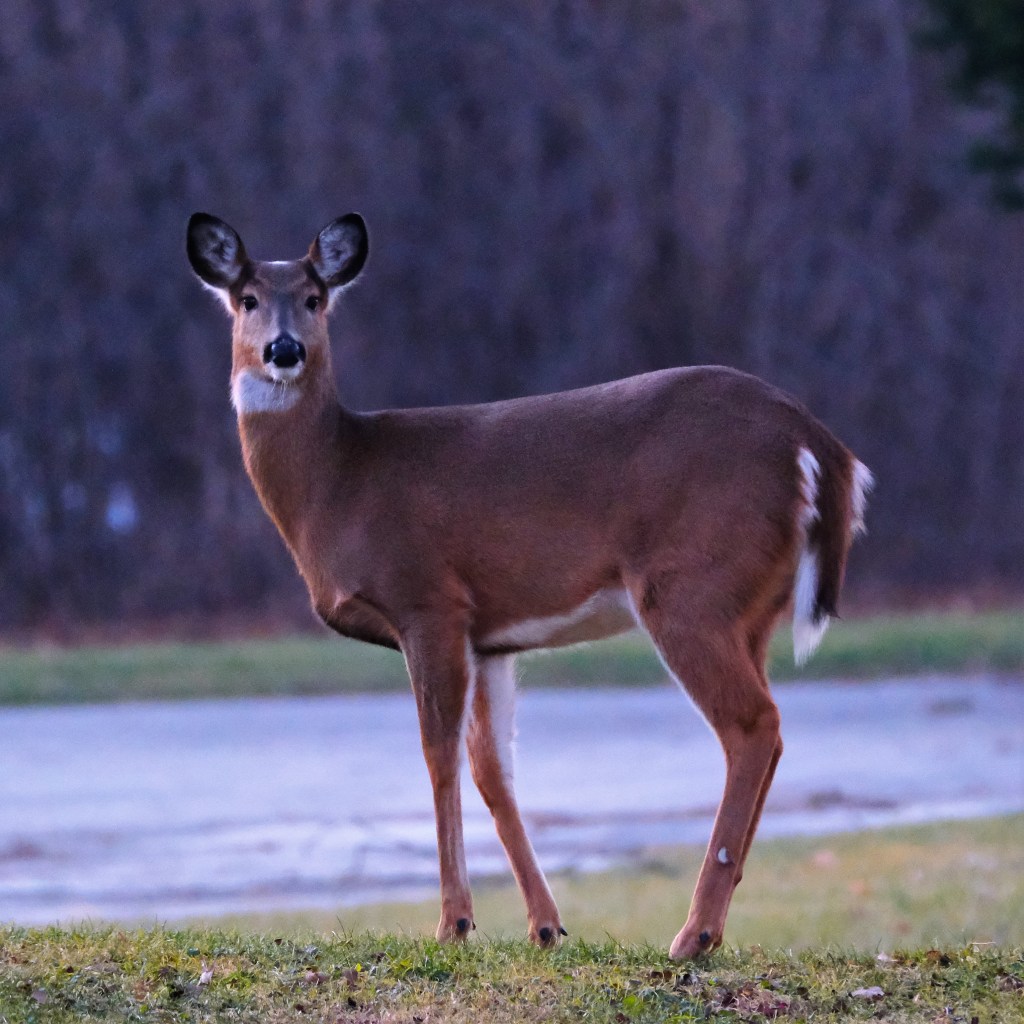
The cloud cover was back, and warmer air came with it. I saw the trio of deer again, but it was still too dark for my camera to work this morning. Instead, here’s another picture from yesterday morning when there was a little bit more light.
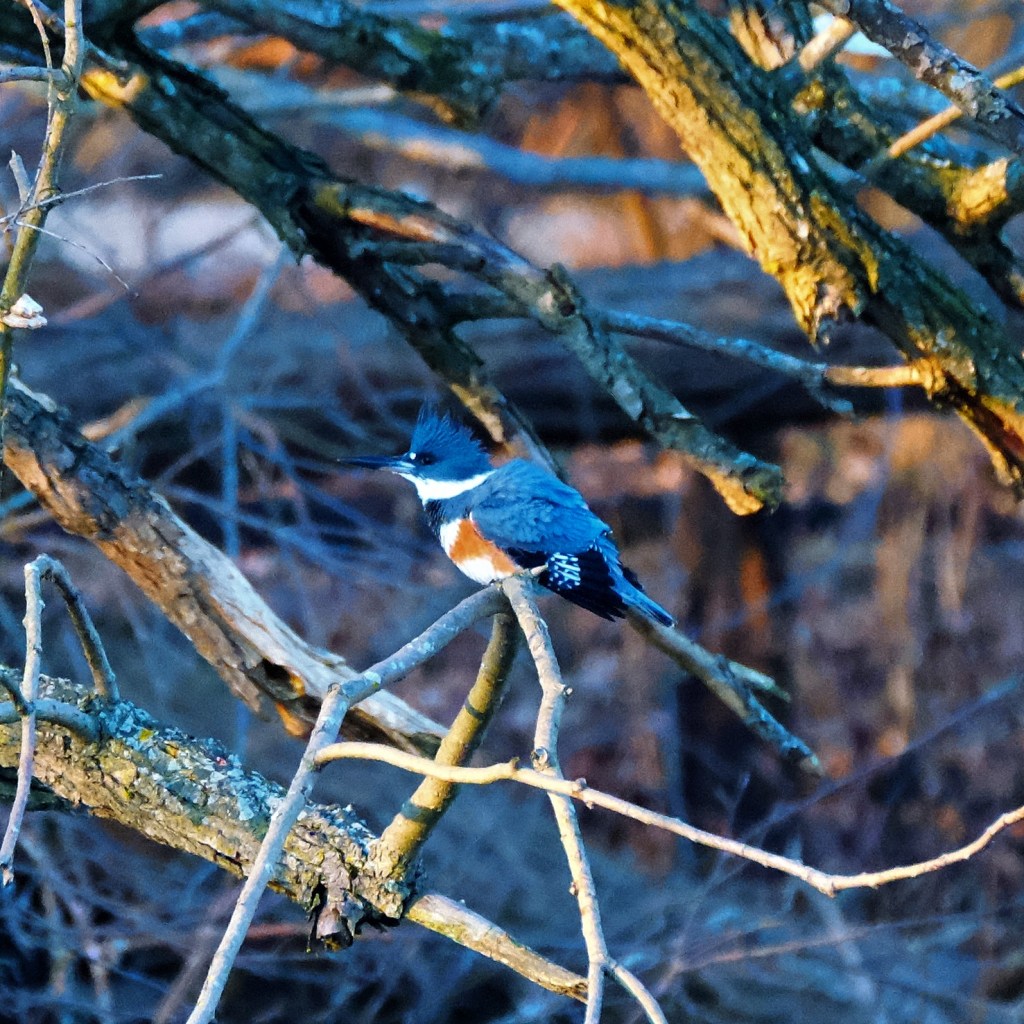
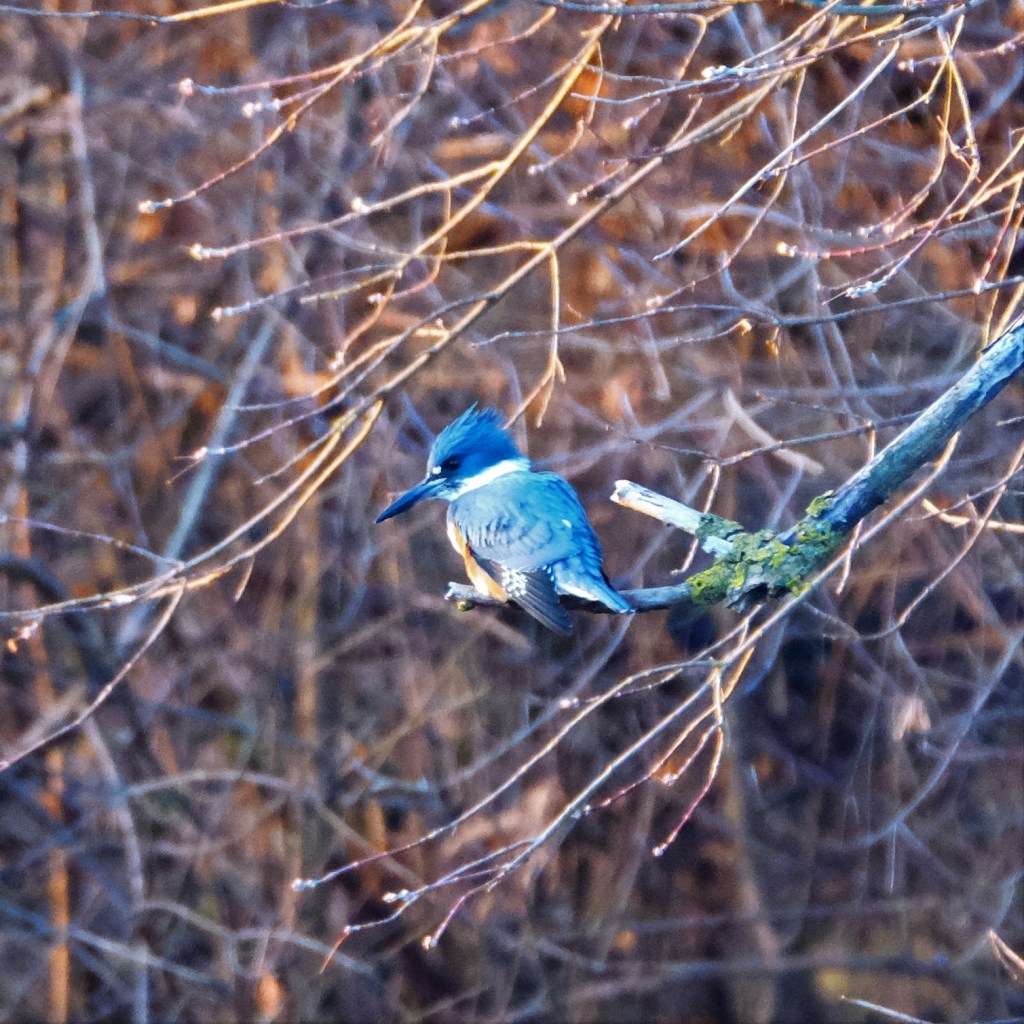
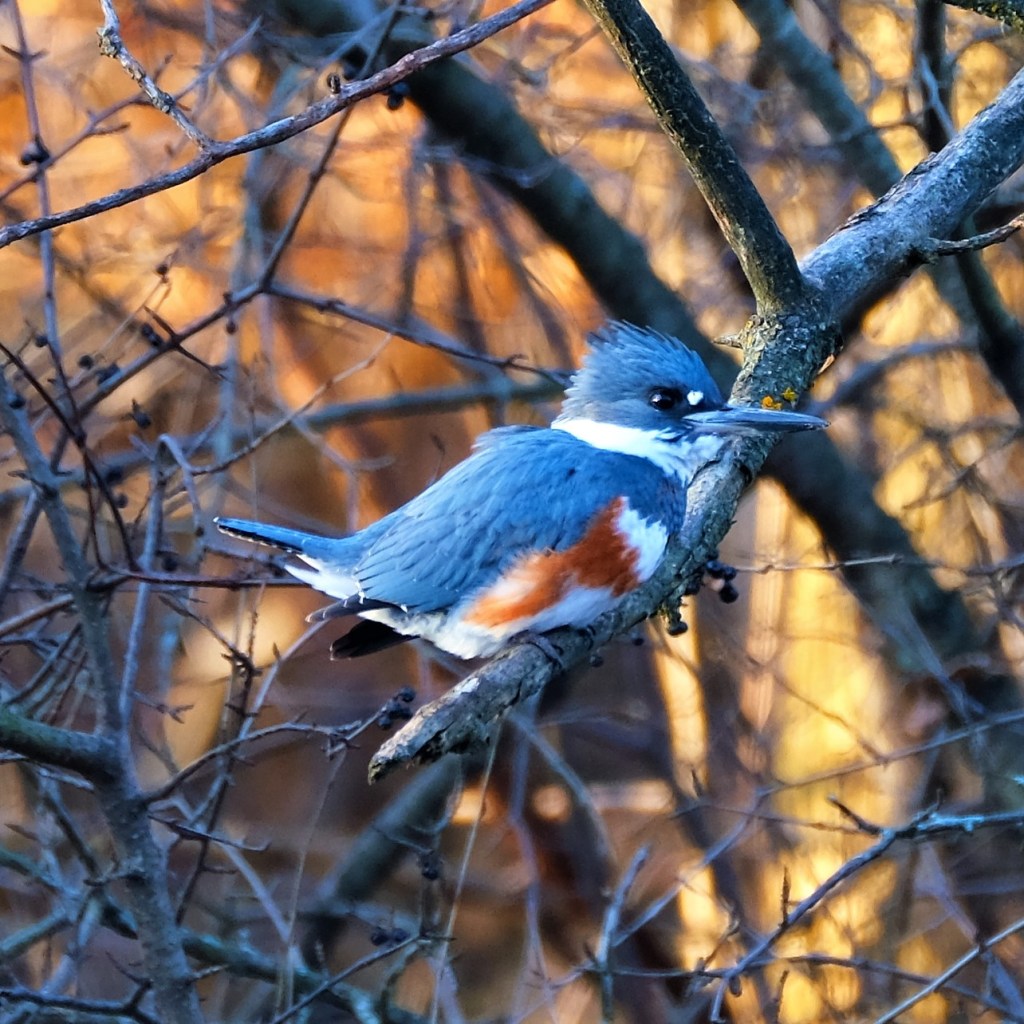
Along the river, I heard the kingfisher again, but I couldn’t get a good picture, so here’s a better one from yesterday. She had just come out of the water after a dive that appeared to bear no fruit. Recall that the air was 19°F at the time. She’s one tough little bird, eh?
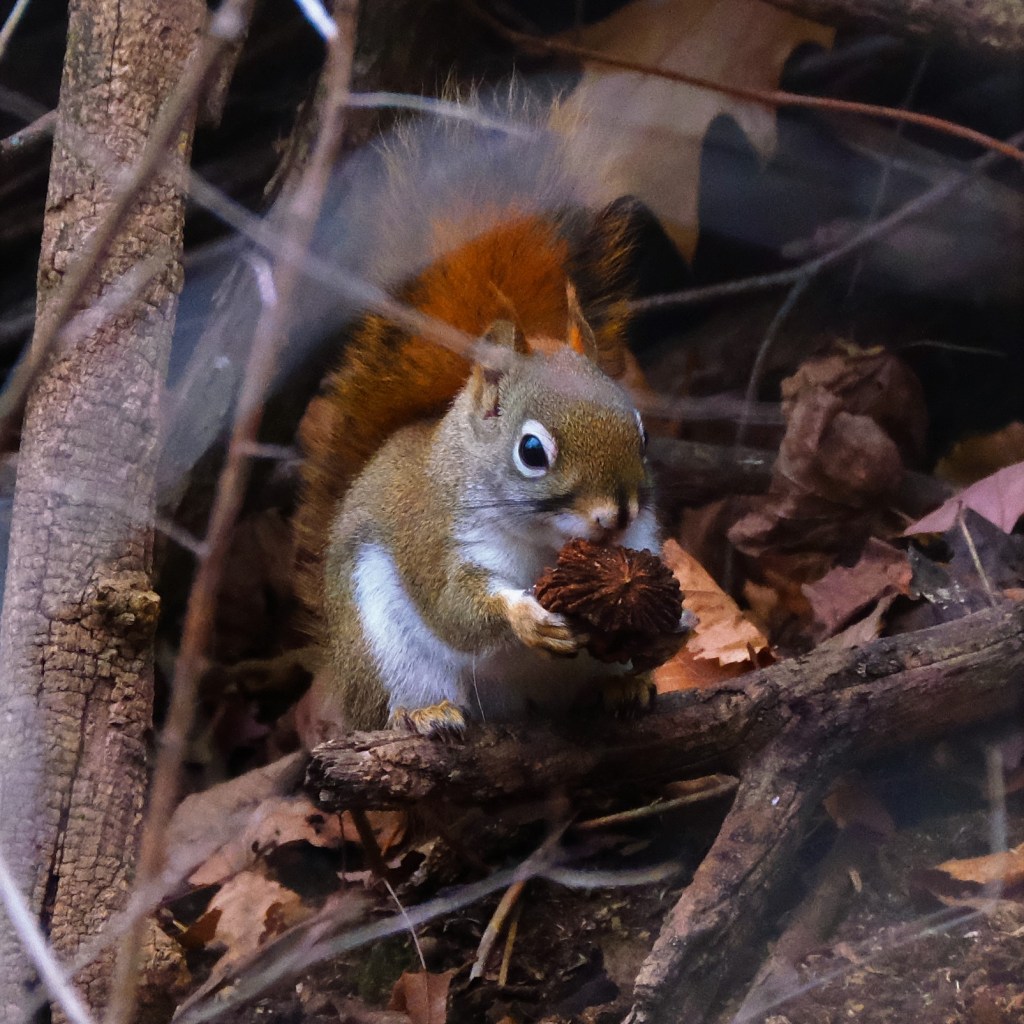
I found this little red squirrel munching on a walnut just like his big grey cousins do, which is something I haven’t seen before. By that time, there was enough light, so this really is a picture from this morning.
Here he is again suggesting that I keep moving on up the trail. They’re small but feisty!
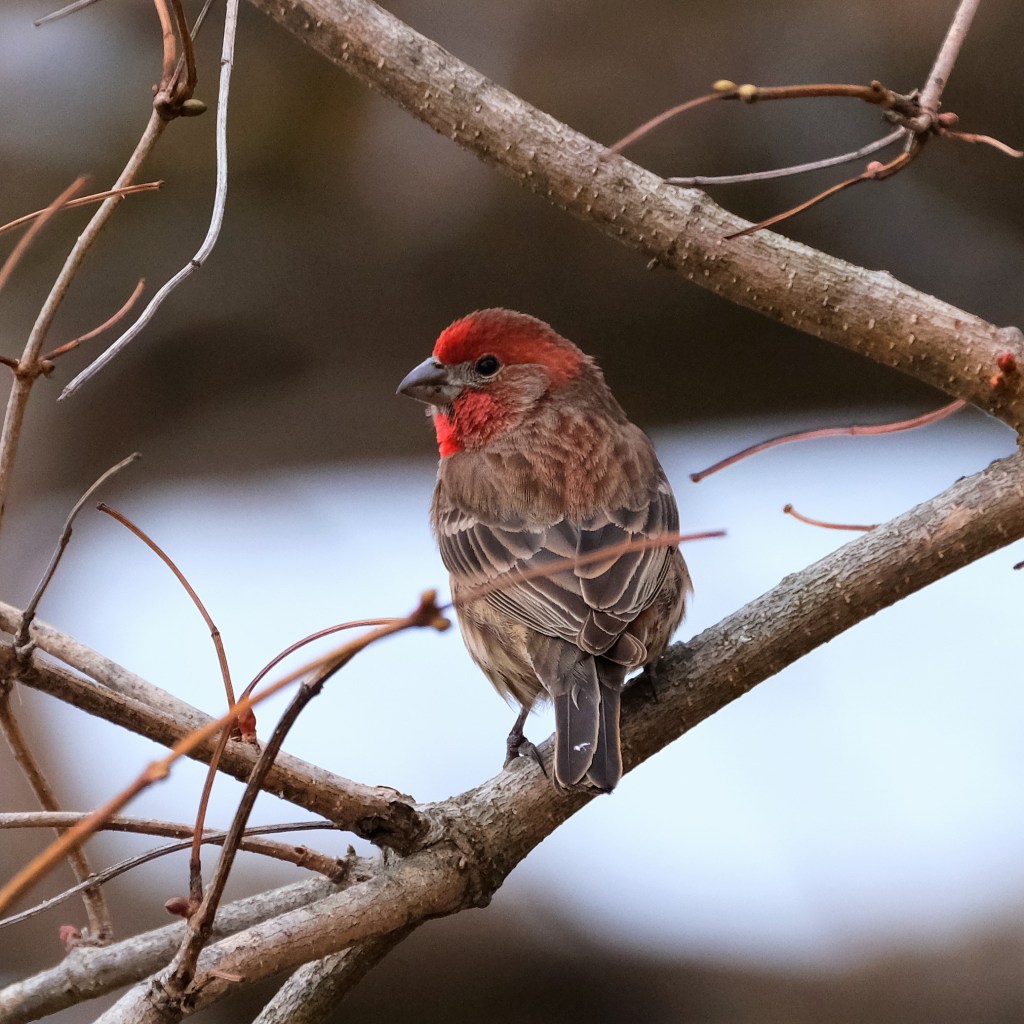
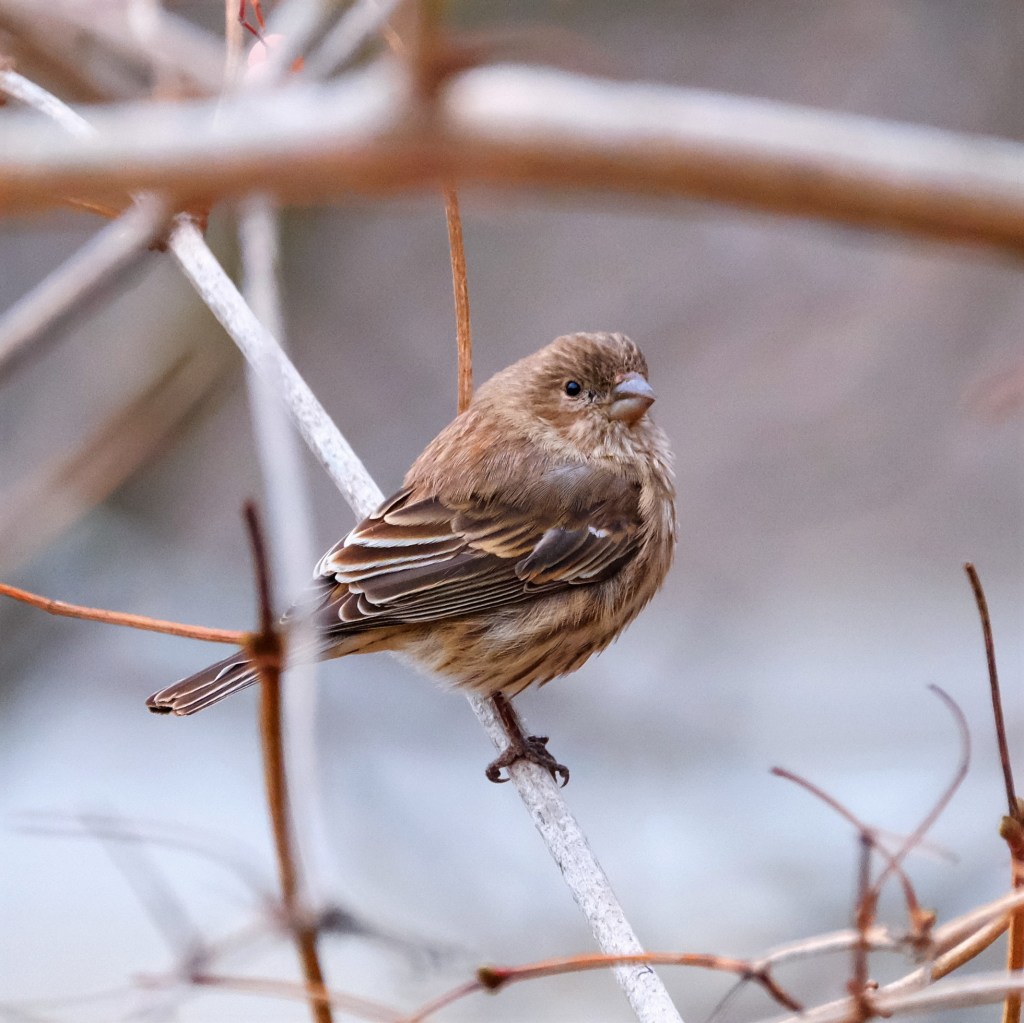
I didn’t see anything else worth a picture until the north end, where there were a bunch of house finches in the bushes at the water’s edge. Here’s a male, …
There were also a couple of golden-crowned kinglets, but they never hopped out of the bushes enough for me to get a shot. Instead, this junco was much more obliging.
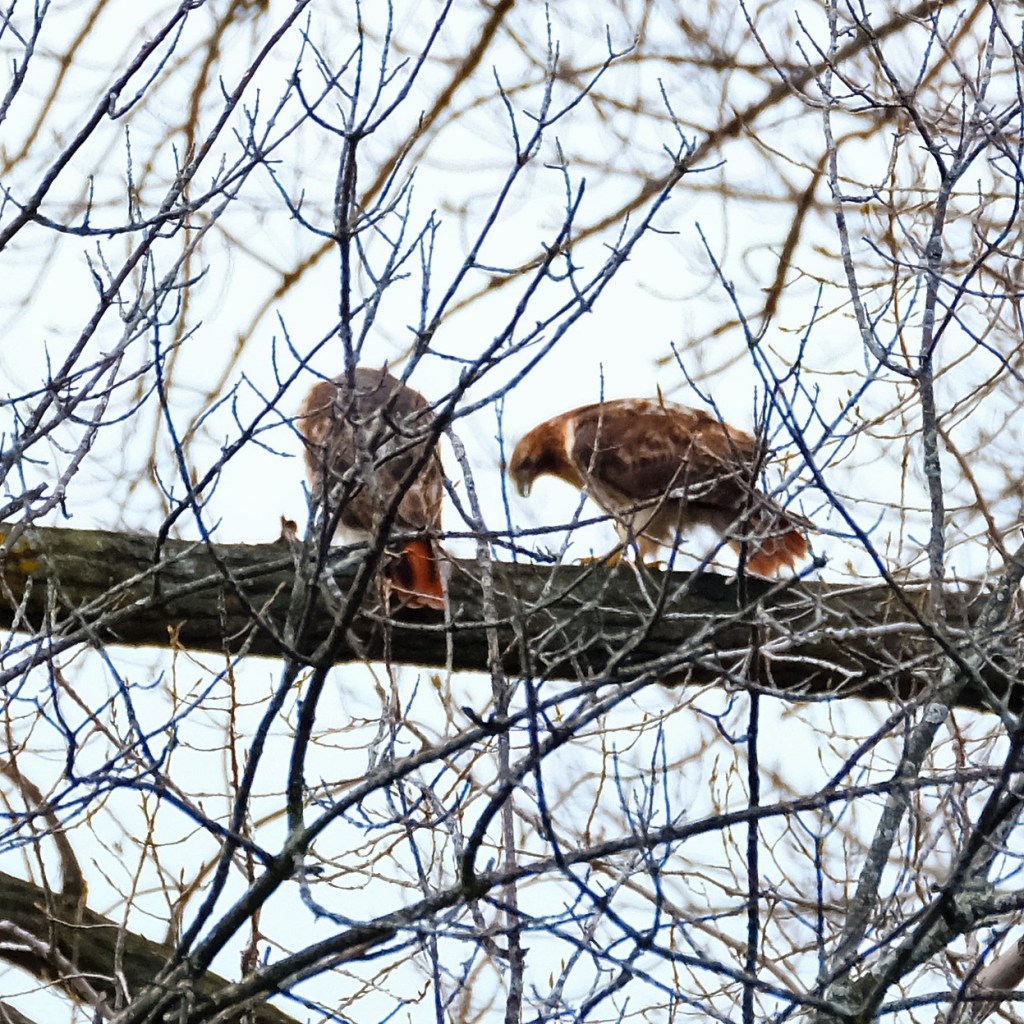
The surprise for me, though, was that while I was trying to focus on all these little birds at my feet, a pair of red-tailed hawks were having an animated conversation in the tall trees across the river. They never came out in the clear, and they didn’t give me a lot of time, so this is all I managed, but it was fun to see two of them together like that. Another new sight for me.
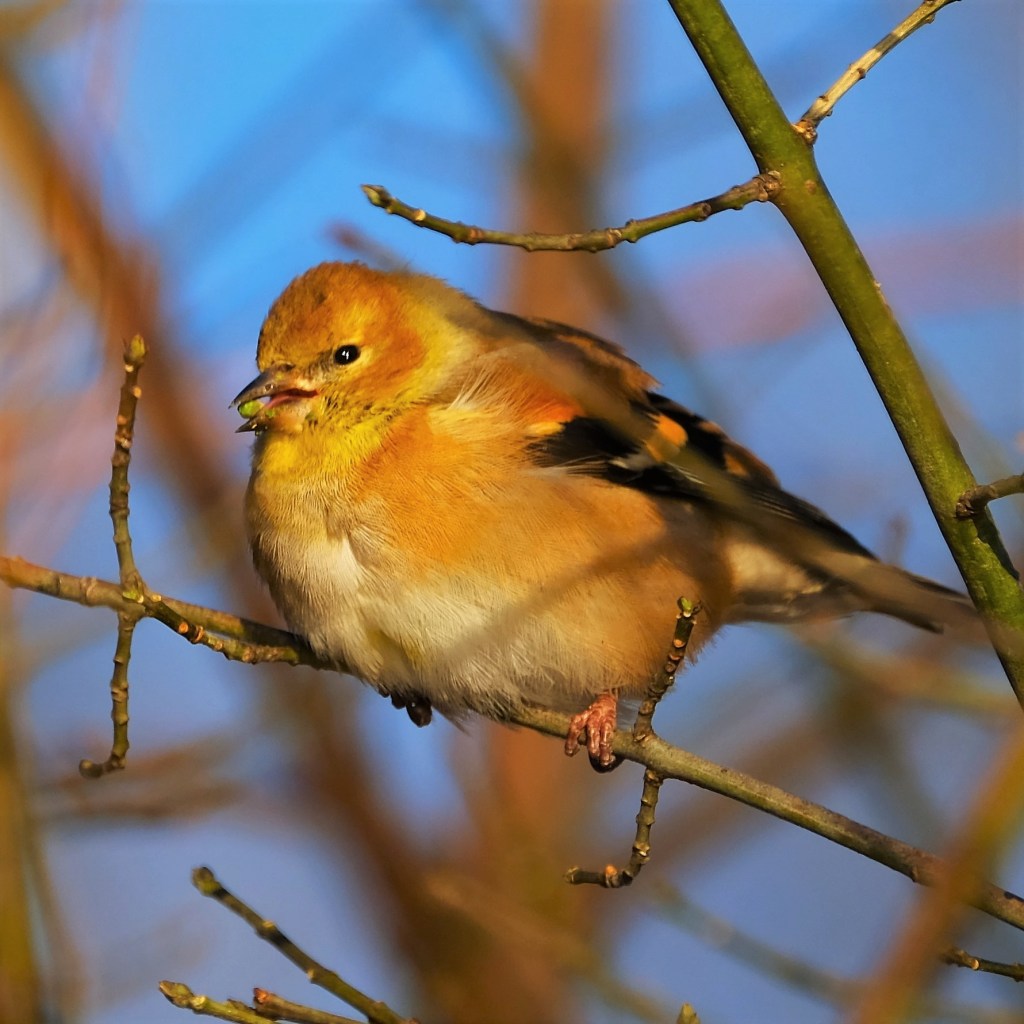
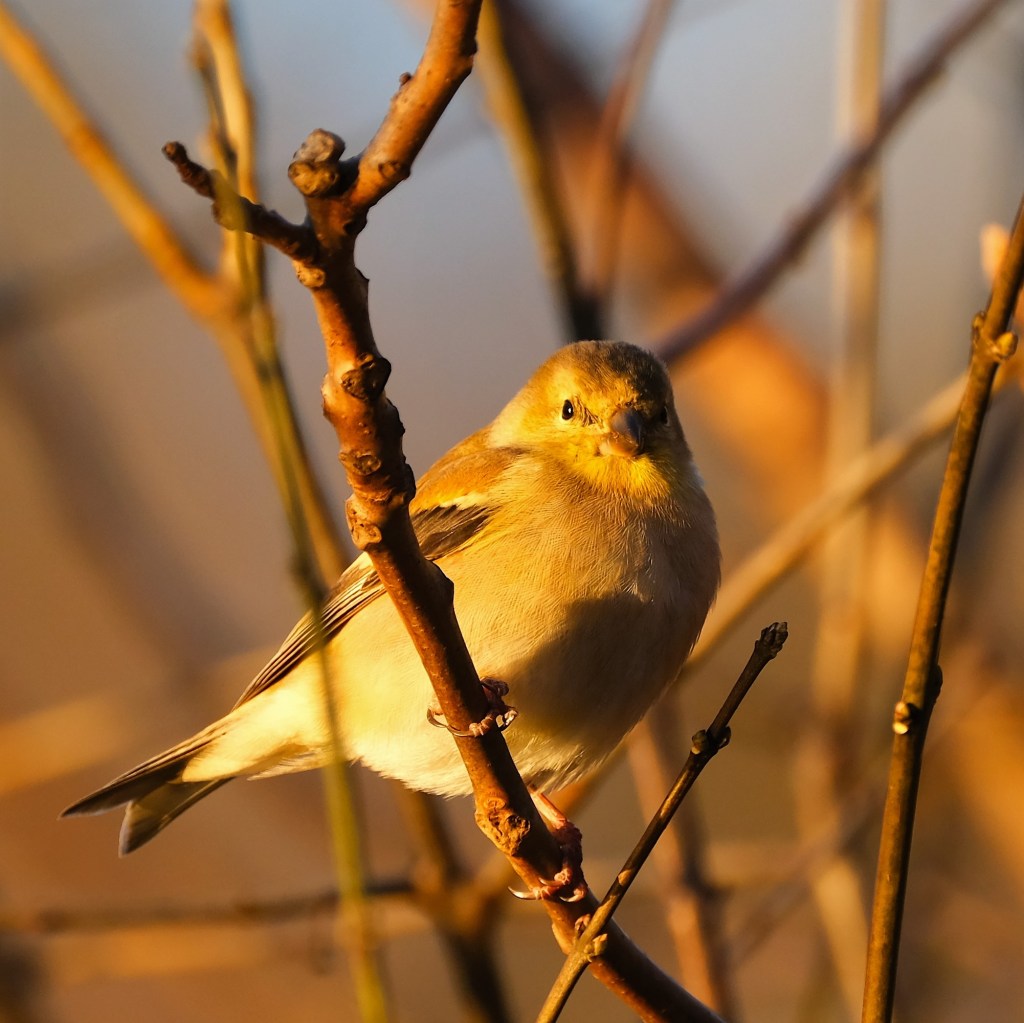
Lastly, on a more-colorful note, here’s a goldfinch from yesterday who appears to be eating the tiny leaf buds off the little tree it is perched on.
This morning the sun rose on crystal-clear skies, bracingly-cold air, and a stiff breeze out of the west-northwest. This could make for some nice pictures, if anyone came out to play, and I am happy to report that many did.
I had barely crossed the Oak Leaf Trail to enter the park when I spotted three deer, perhaps the trio from Saturday, crossing the path up ahead, so I did my best to hurry up while making it look like I wasn’t moving. By the time I got them in sight again, it appears that I could have taken my time because two of them were busy tending to their tarsal glands.
Once they got that taken care of, they went to work cleaning up the fallen crabapples littering the grass.
Along the river, I could still feel the breeze, and even the chickadees were keeping close to the ground.
By the time I approached the falls, the sun was finally shining down into the river valley, and the open water above the falls was chock full o’ geese and mallards.
With the sun finally warming things up a bit, the woodpeckers were out in force, and here’s a diminutive female downy,…
a comparatively hulking male hairy, who managed to blink for the camera, …
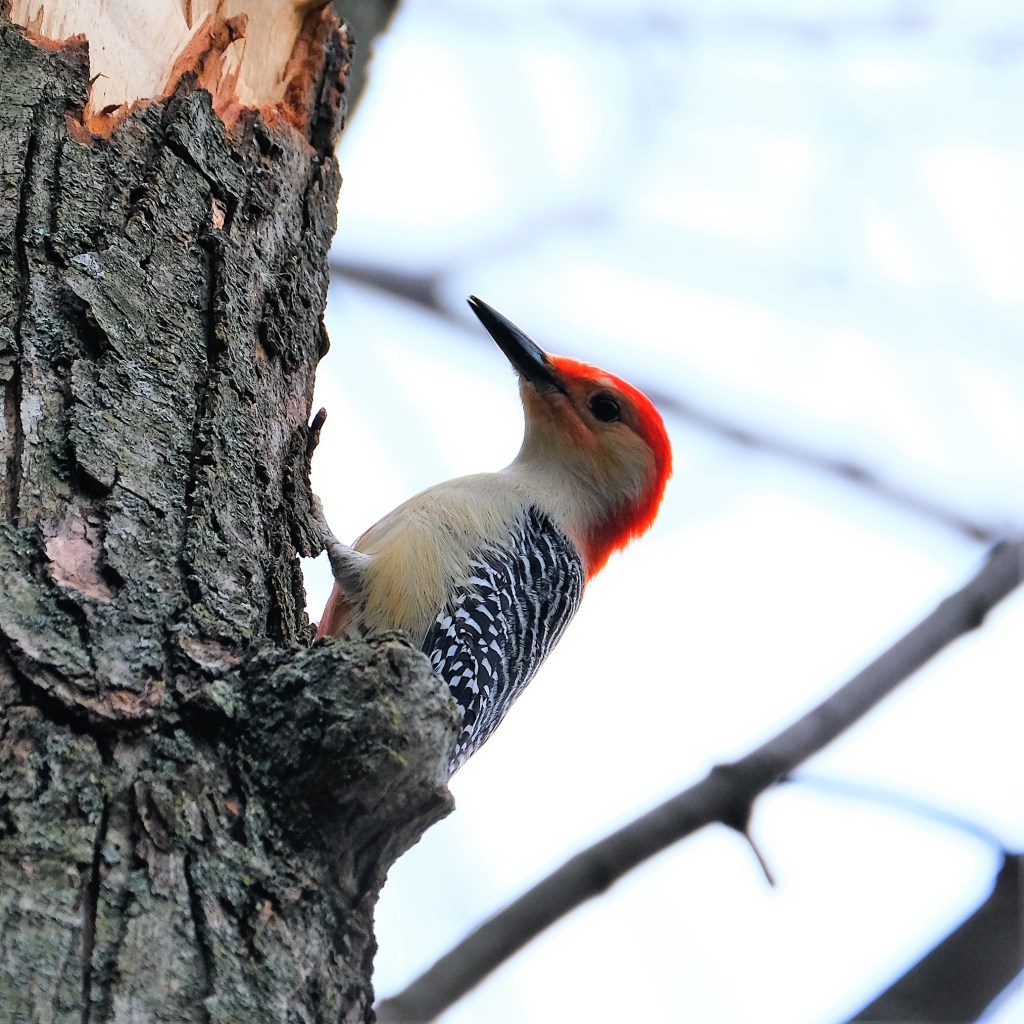
and a just-right-sized female red-bellied.
Finally, just as I was crossing back over the Oak Leaf Trail on my way out of the park, I spotted this nuthatch to square up the foursome.
You know the old saying, “life is what happens while you were busy making other plans,” right? Well, my plan to enjoy a nice walk in the park this morning is taking a back seat to far more important things, unfortunately, but I had such a bounty of pictures yesterday that I’ve still got some to show you today.
Our favorite kingfisher was out bright and early and I spotted her farther south on the river than I believe I ever have. From her perch on the west bank, she probably could see the Capitol Drive bridge.
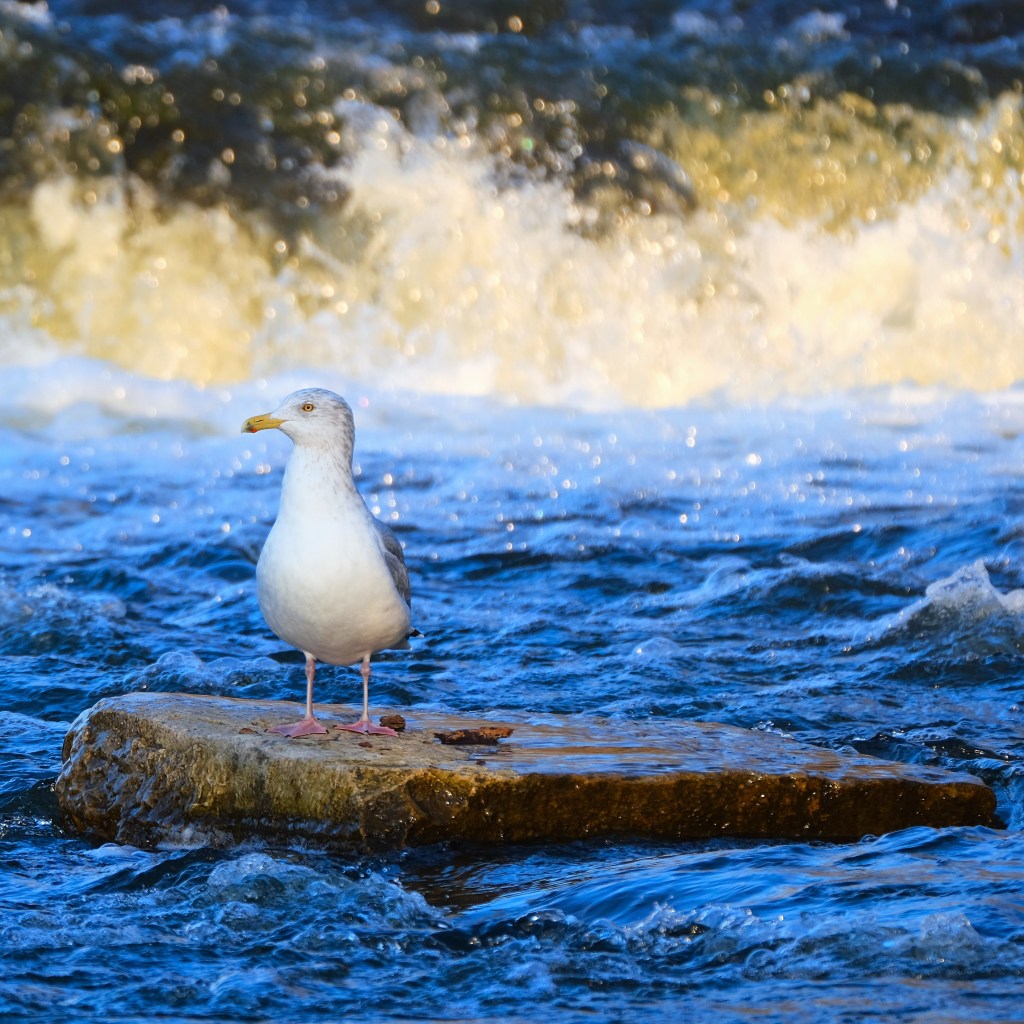
I did see one handsome character at the falls as I approached, this herring gull, perhaps taking a break from fishing.
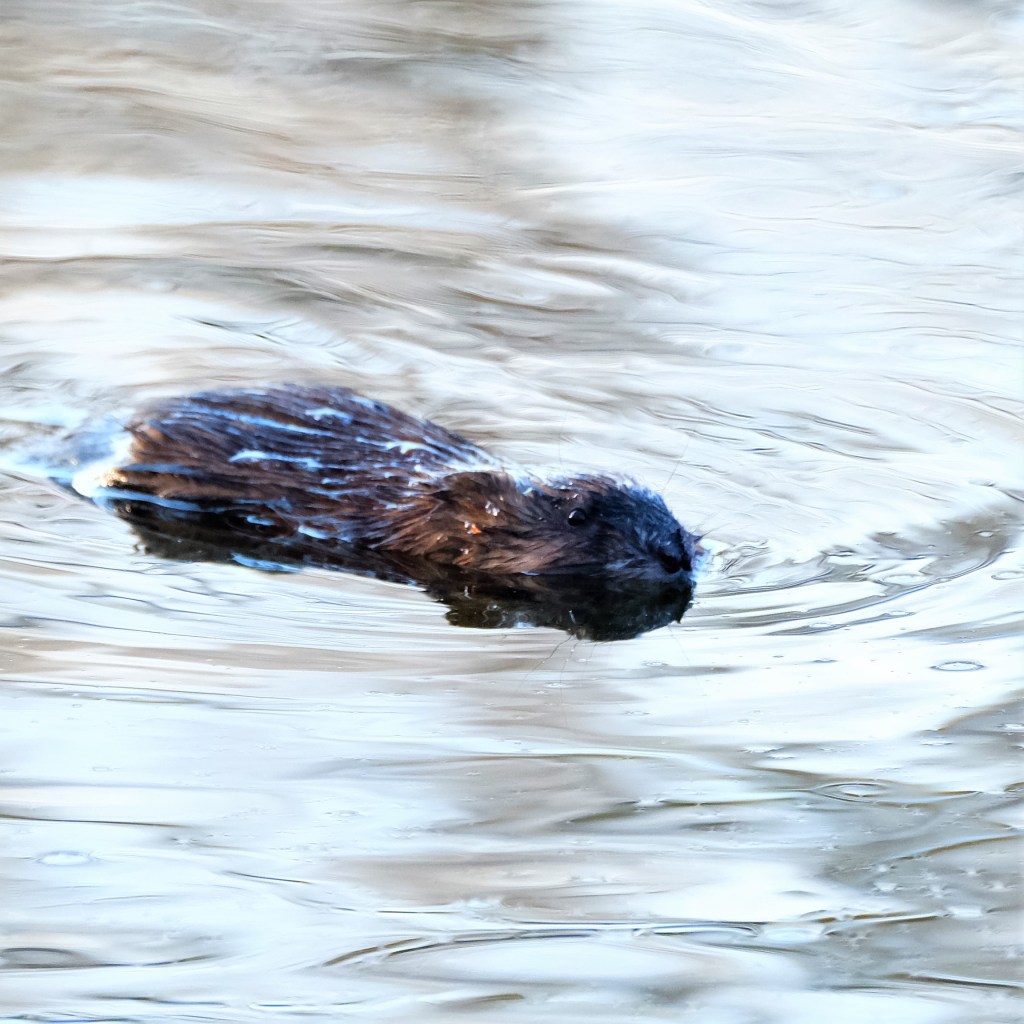
When I first spotted the bufflehead, I had no idea, of course, that I’d have better opportunities, so I did try to take a few pictures. When I was done crouching down and got up to continue north, look who was swimming up river behind me. Sure enough, a little muskrat who was as surprised by our meeting as I was.
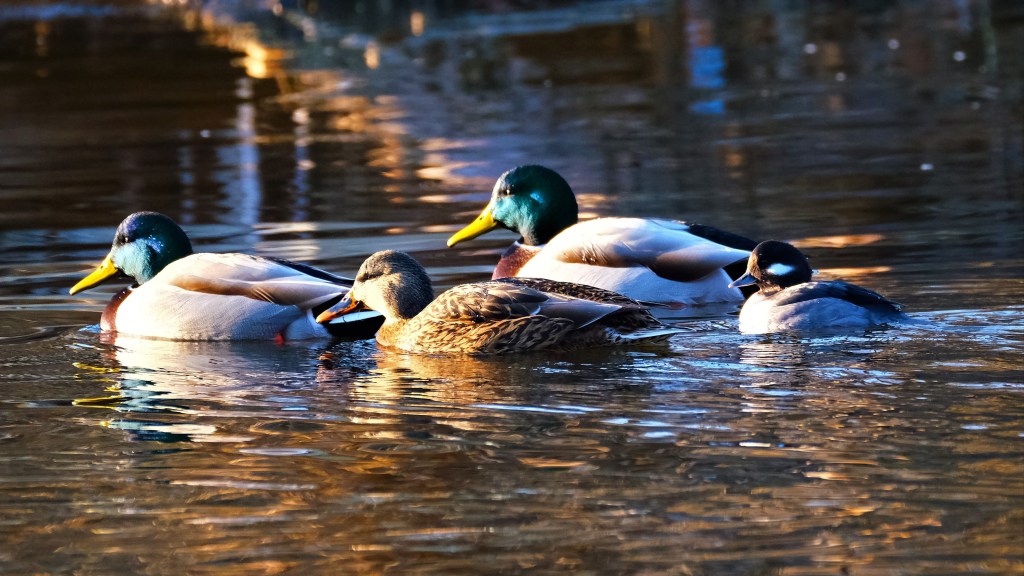
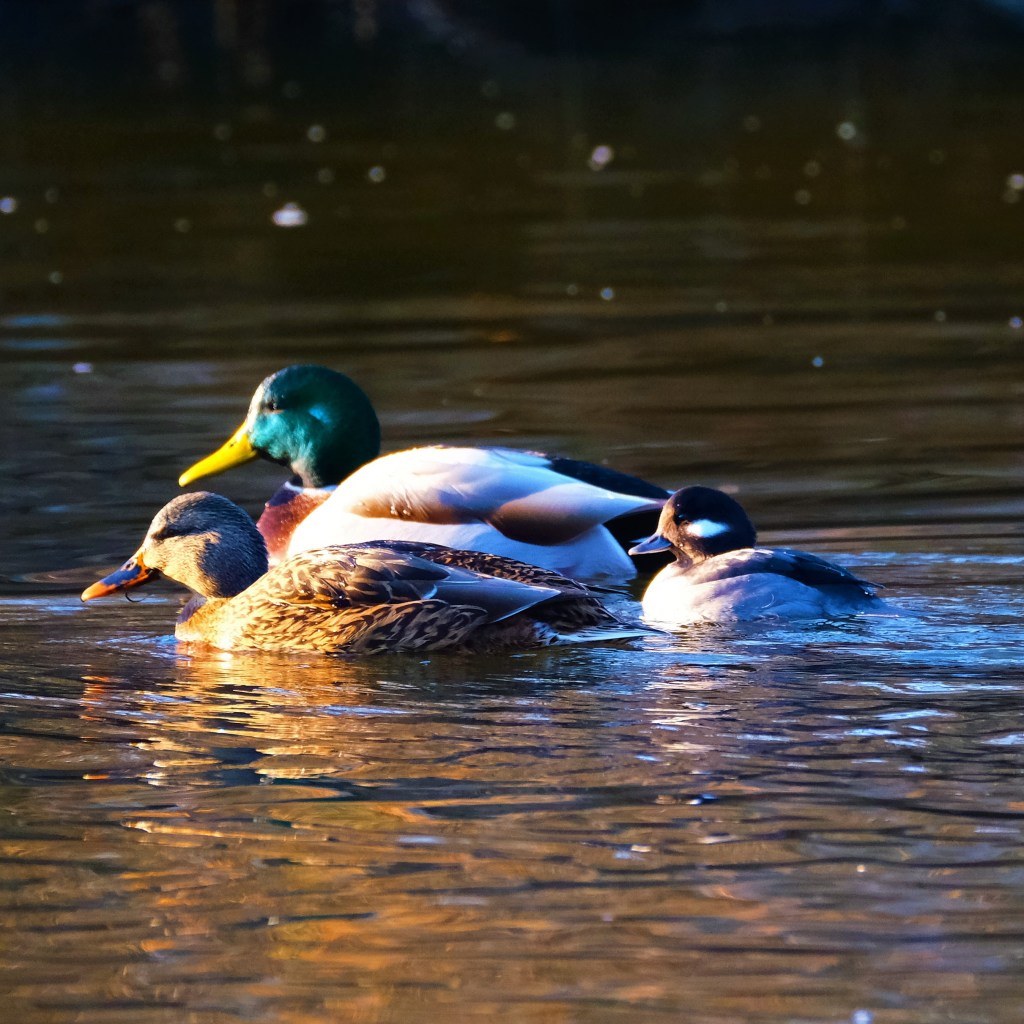
As you already know, I did get better opportunities to photograph the bufflehead, and here it is again with the mallards….
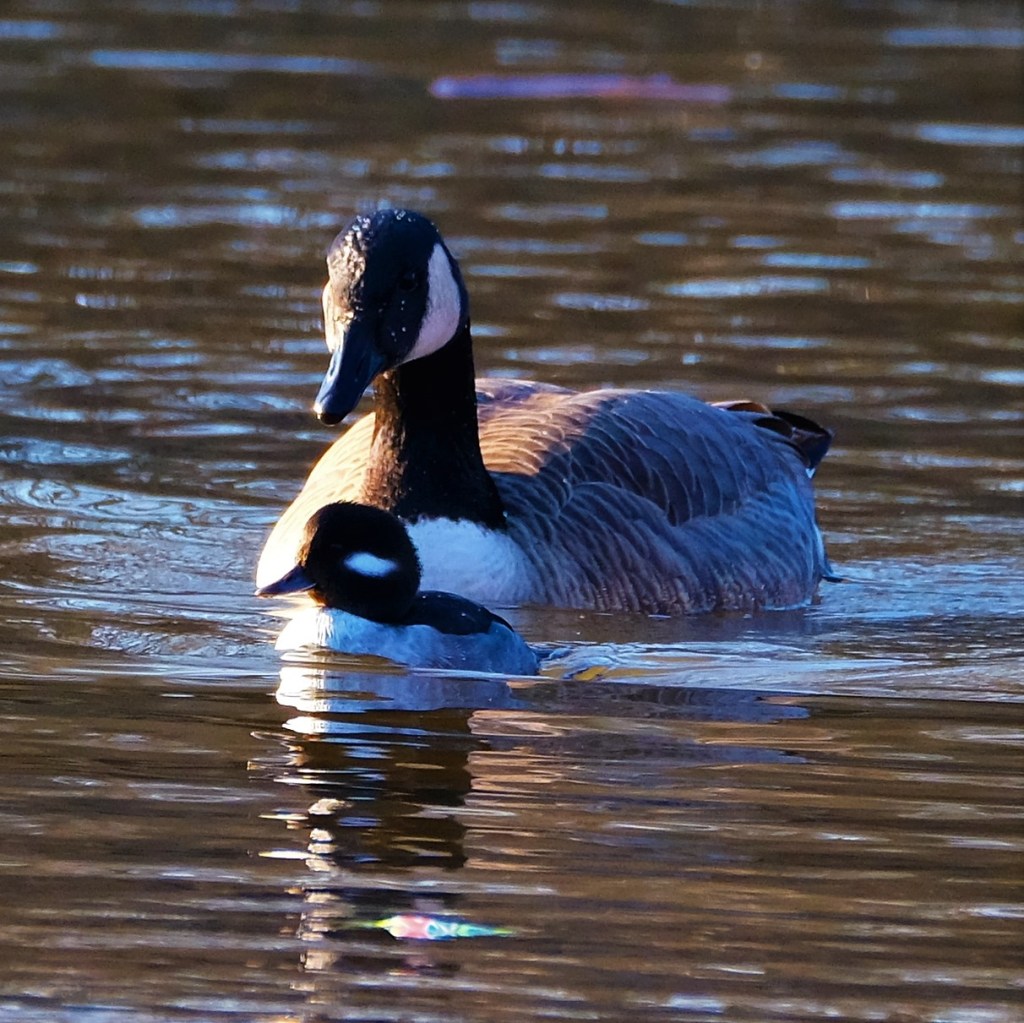
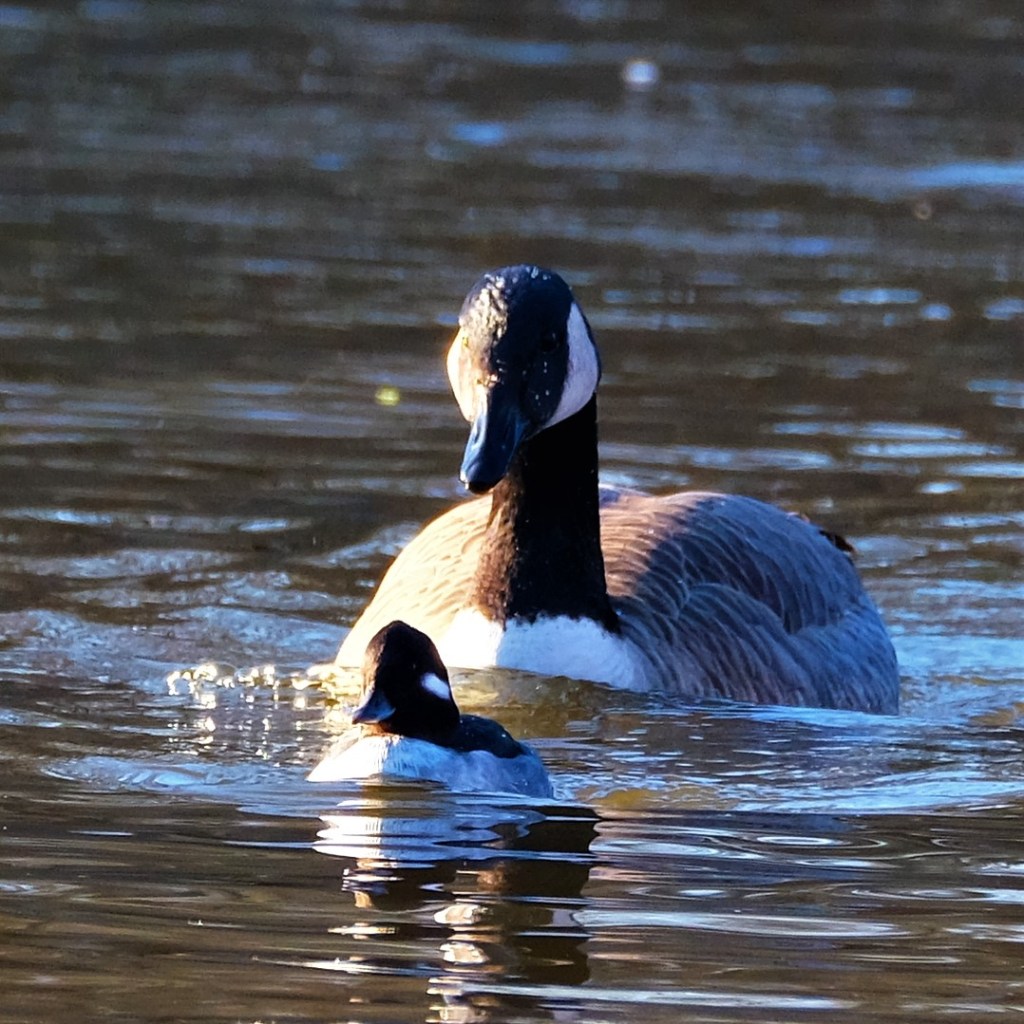
…and the geese.
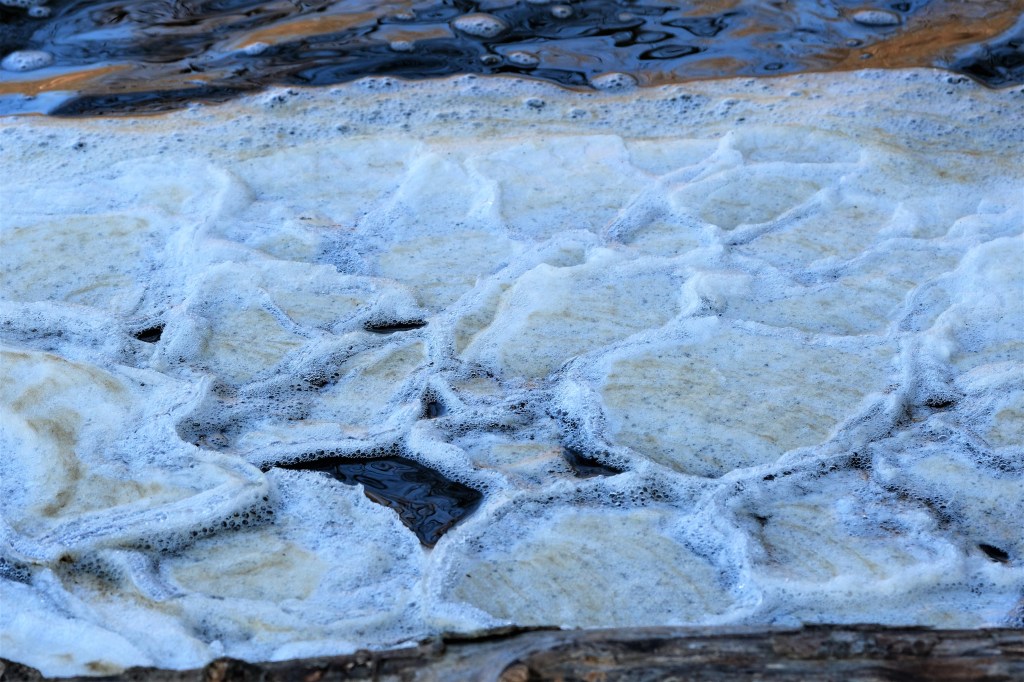
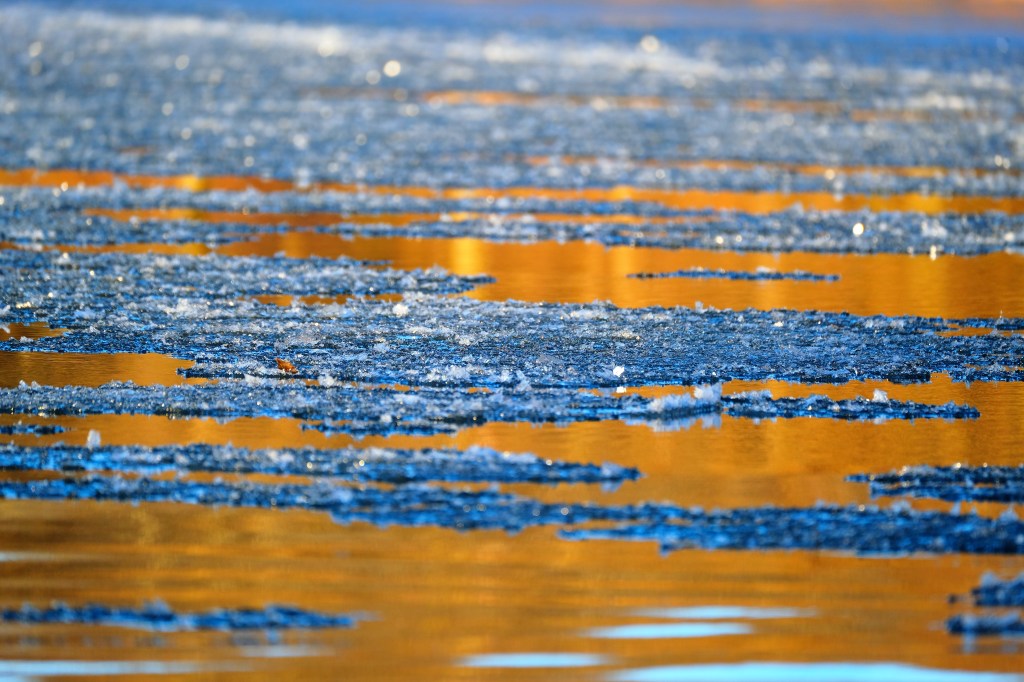
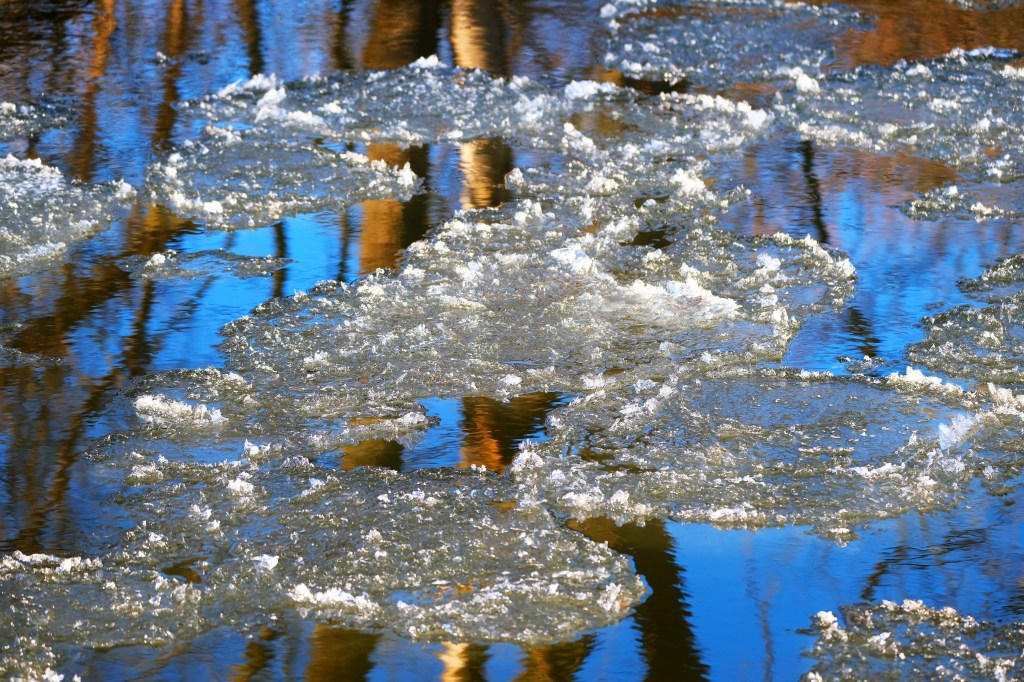
Lastly, here’s another ice formation, this time foam that had accumulated and then froze into these fascinating shapes.
The sun came out at dawn, for a change, and so did the denizens of Estabrook Park! Hallelujah! Plus, most of the working stiffs probably had to go back to work, and thank goodness someone is making the economy go, right? So, I finally had a little bit of one-on-one time with some of our favorite cuties.
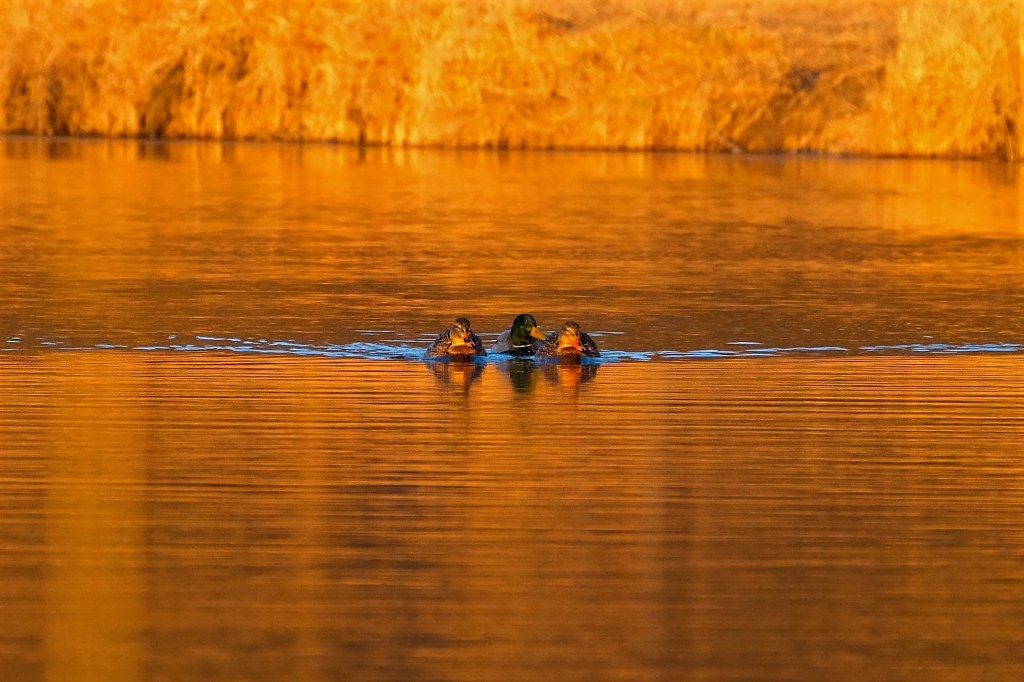
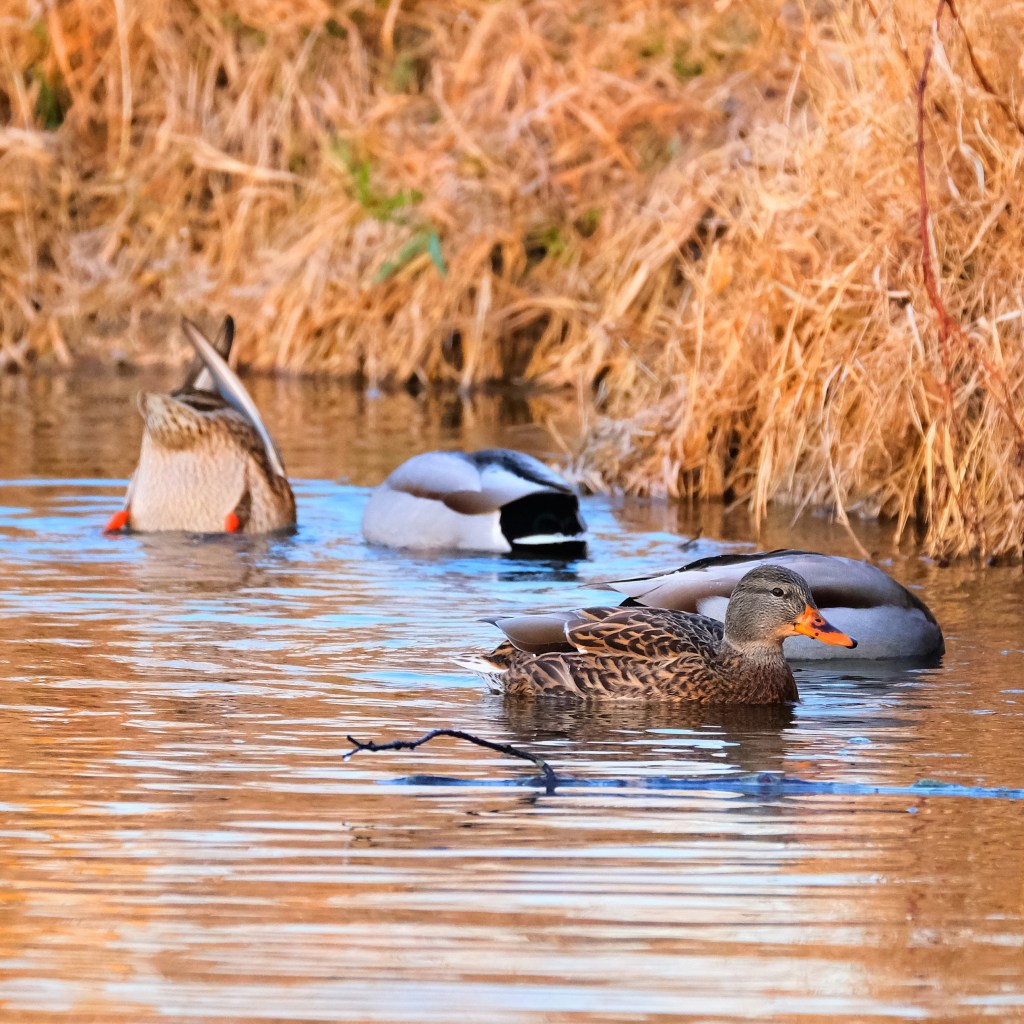
These first characters, a trio of mallards, have been around all along, of course, but doesn’t everything just look better in that golden morning light reflecting off of that hay in the background?
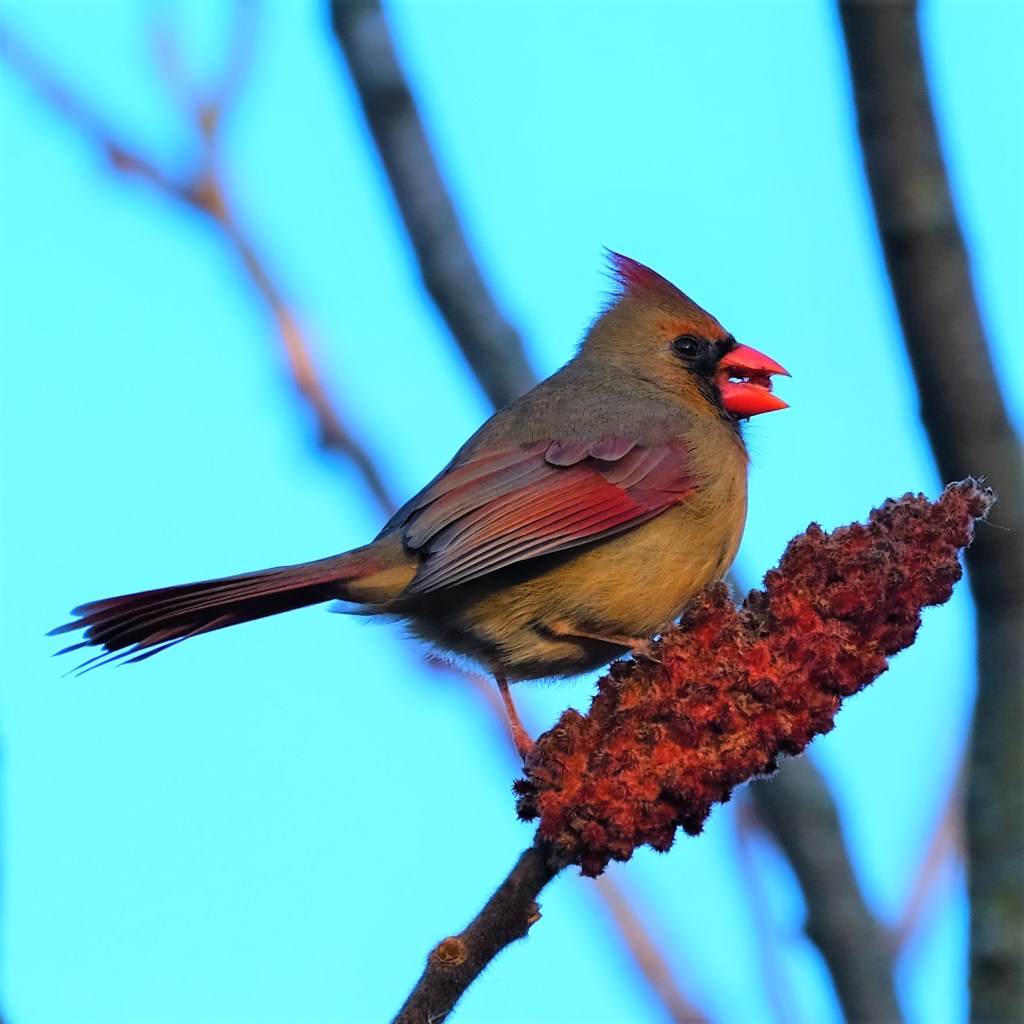
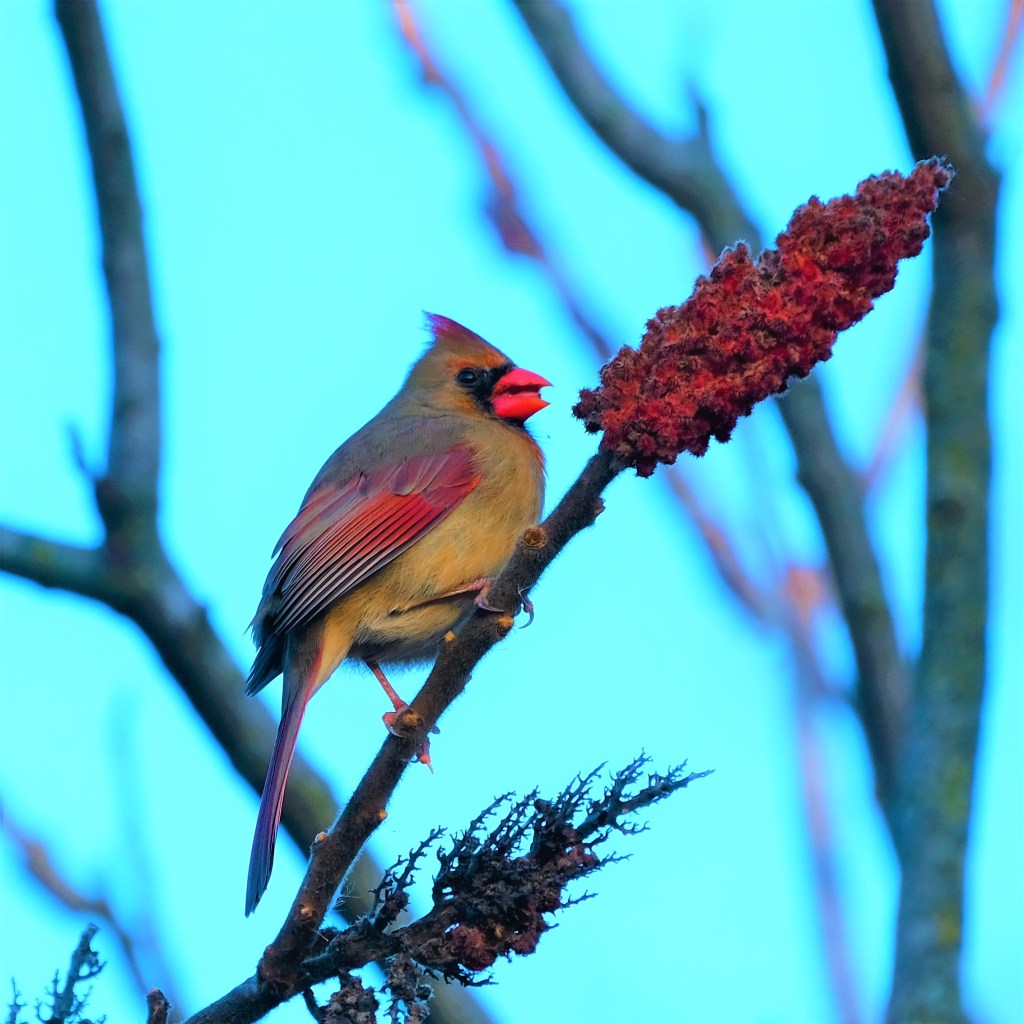
Here’s a female cardinal snacking on the sumac seeds below the beer garden against a nice blue sky.
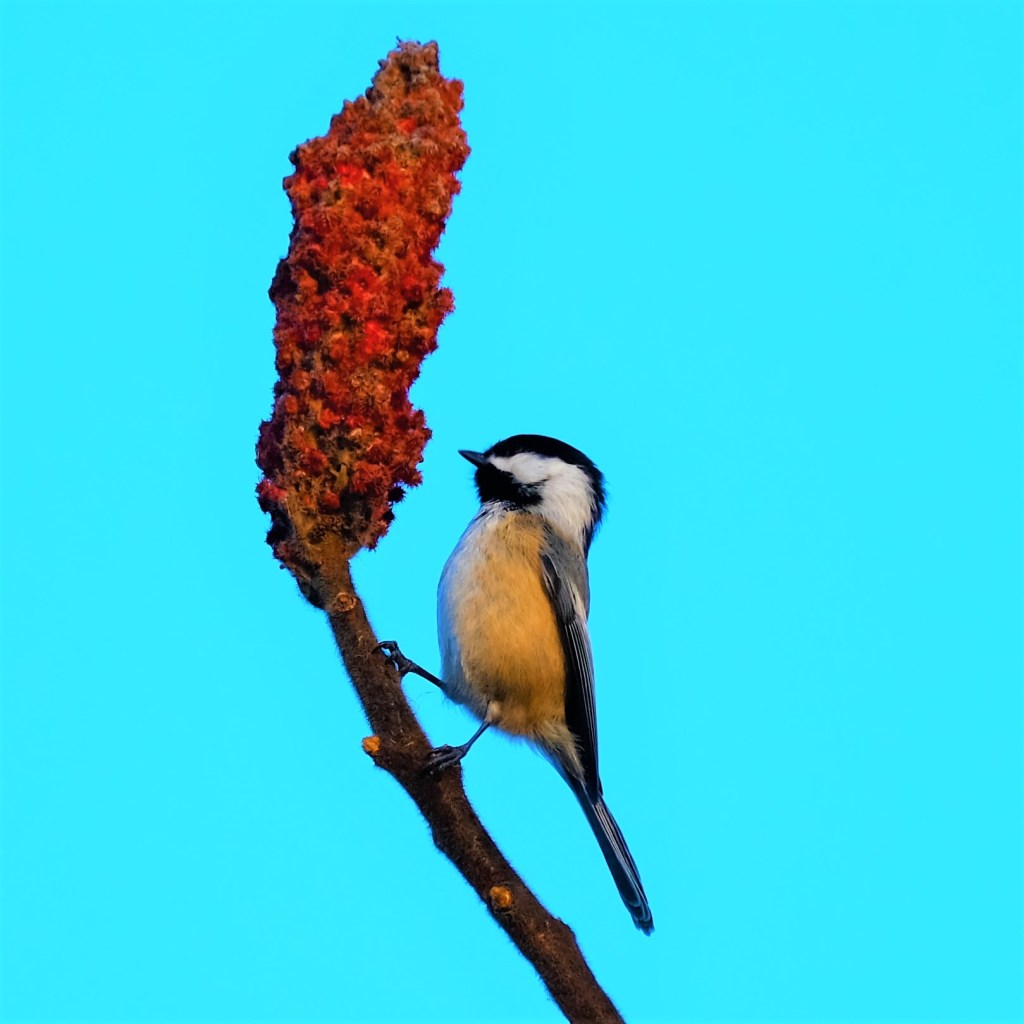
Even the chickadees were getting in on that action.
Above the falls, I spotted our bufflehead in-residence between the southern island and the east bank, where the river is pretty narrow, but it was still pretty far upstream for a good picture, and I didn’t have much hope of getting a lot closer without spooking it. Well, I had to go north anyway so I stayed on the trail to give it some space and look who came cruising south just in time to save the day. Yup, more mallards, who were completely fine with me where I was, and our little hero hopped right on that train. I love it when that happens.
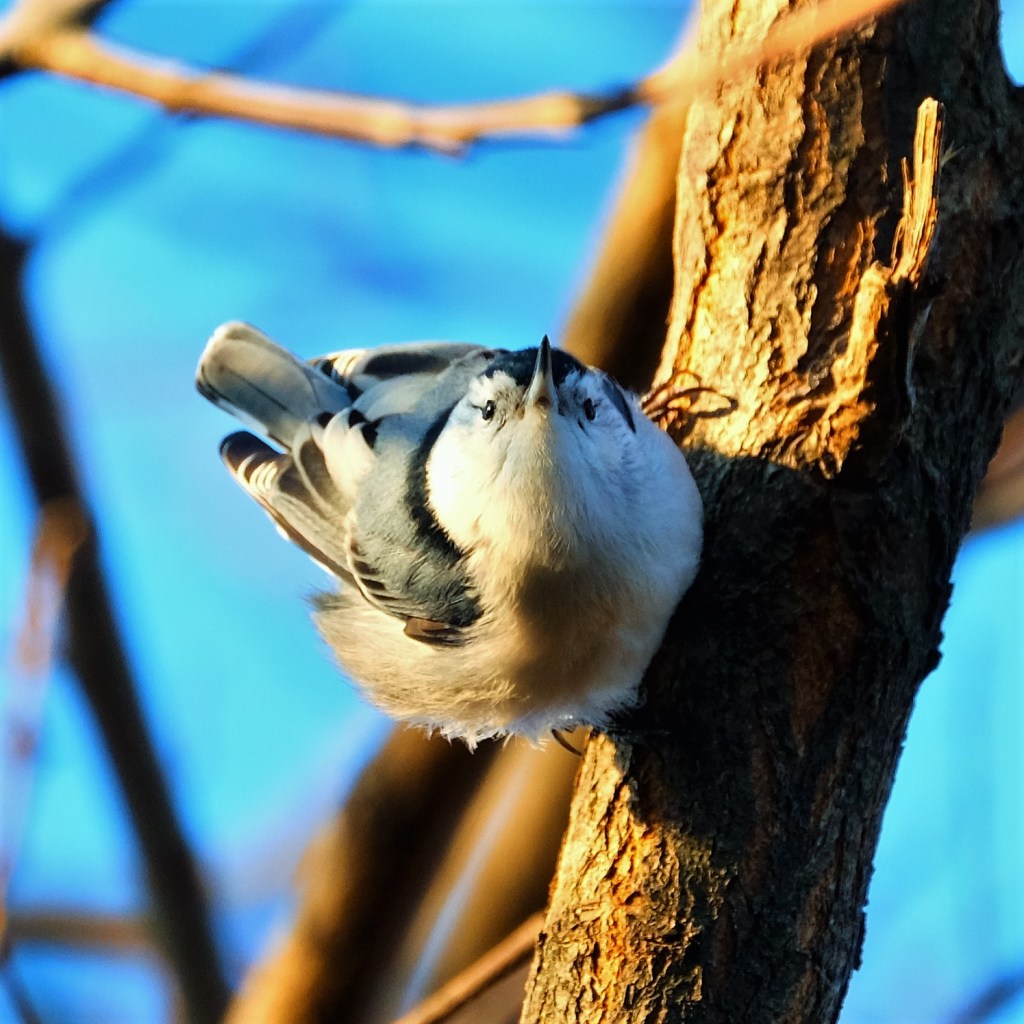
After that fun, I did continue to the north end, where there were only more mallards and a bunch of gulls out on the water, but a trio of nuthatches were busy foraging together on shore. They’re darn quick, and having multiple targets often makes things worse instead of better, but I did manage to get this one presentable picture.
On my way back south, I spotted the bufflehead again off the southern tip of the southern island, and I hoped I might get a nice solo portrait when fate intervened again. This time, several geese came steaming down the west side of the island, and this time our little hero found itself on the other end of the train.
You’ll be happy to learn, no doubt, that they were able to avoid a collision.
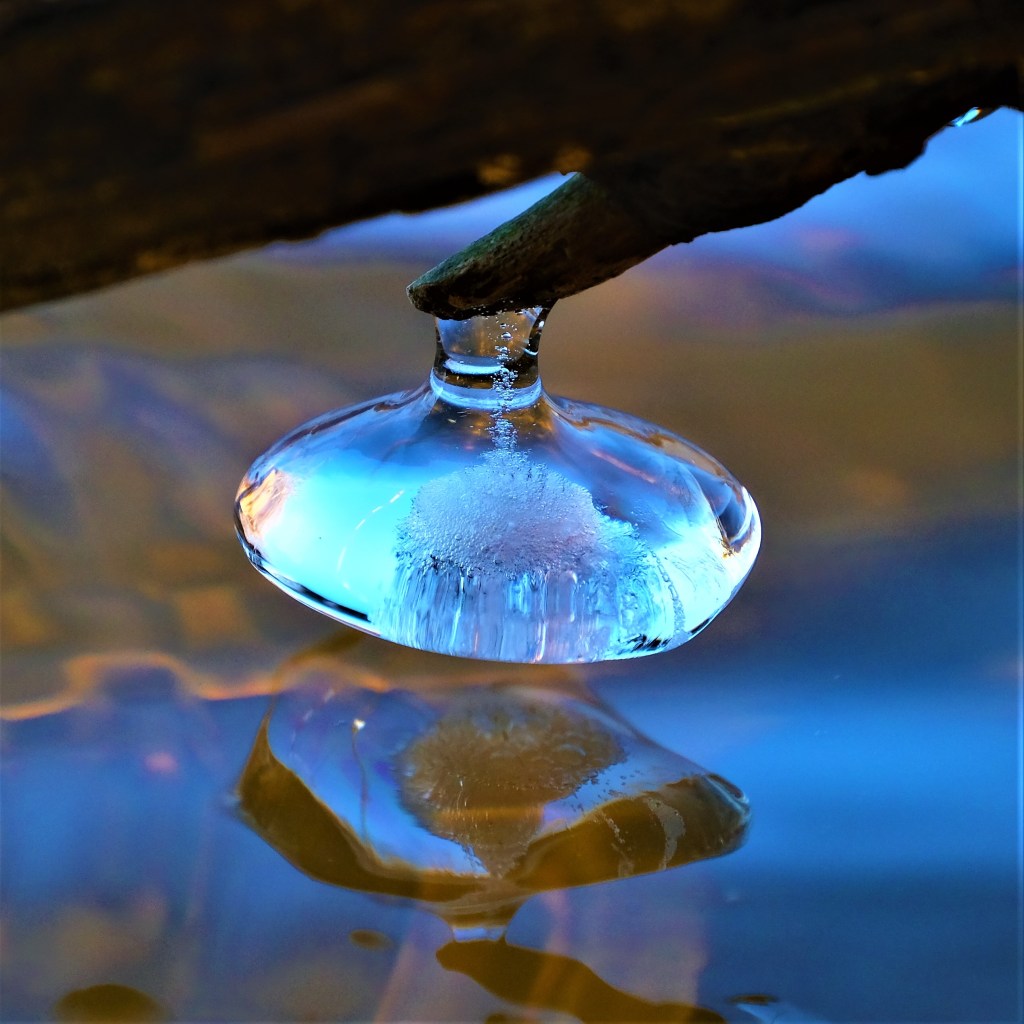
Finally, it was just cold enough overnight for some ice to form, and here’s a fascinating little formation I found hanging below a log over the water. My best guess is that it started as a small icicle hanging from that old stump of a branch, but interaction with the continually rising a lowering river water has flattened it into this pretty pendant about the size of a quarter.
The forecast suggest that the clear skies will stick around for a bit, and we’re getting a bit of a cold snap, so maybe I’ll have some more ice pictures for you tomorrow. I can dream, right?
Well, it did clear up this morning, but not as early as promised. Worse, most of our favorite critters were nowhere to be found. At least nowhere I could find them. Sure, mallards were still on the river with a few gulls and even some geese, but nobody had a cute pose for us today. Meanwhile, I didn’t see any raptors, beaver, herons, deer, fishers, coyotes, etc. Sheesh!
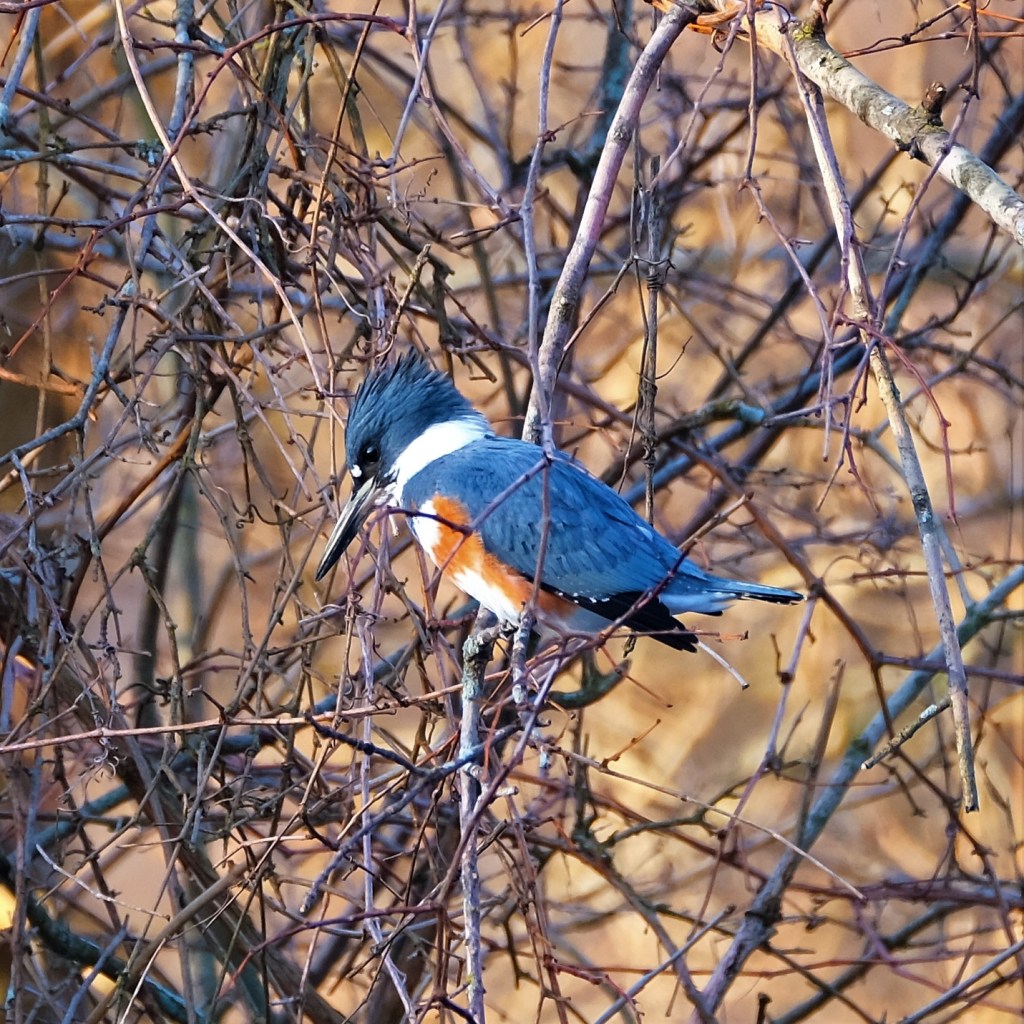
Thus, I find myself forced to resort to old pictures I haven’t shown you yet, and the first one is of the belted kingfisher we saw on the 17th. She was kind enough to face both ways on that branch.
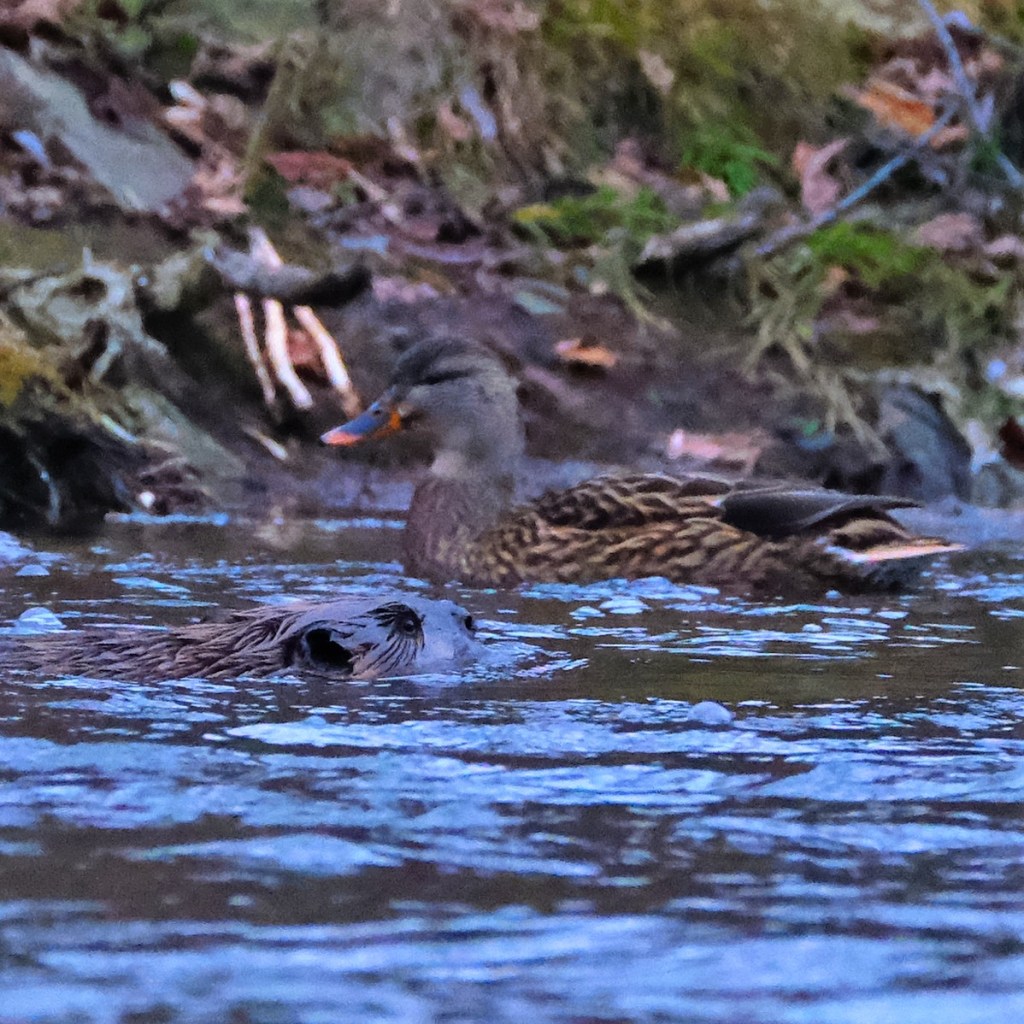
Here’s another shot of the beaver from yesterday as it passed a mallard hen who seemed completely unperturbed.
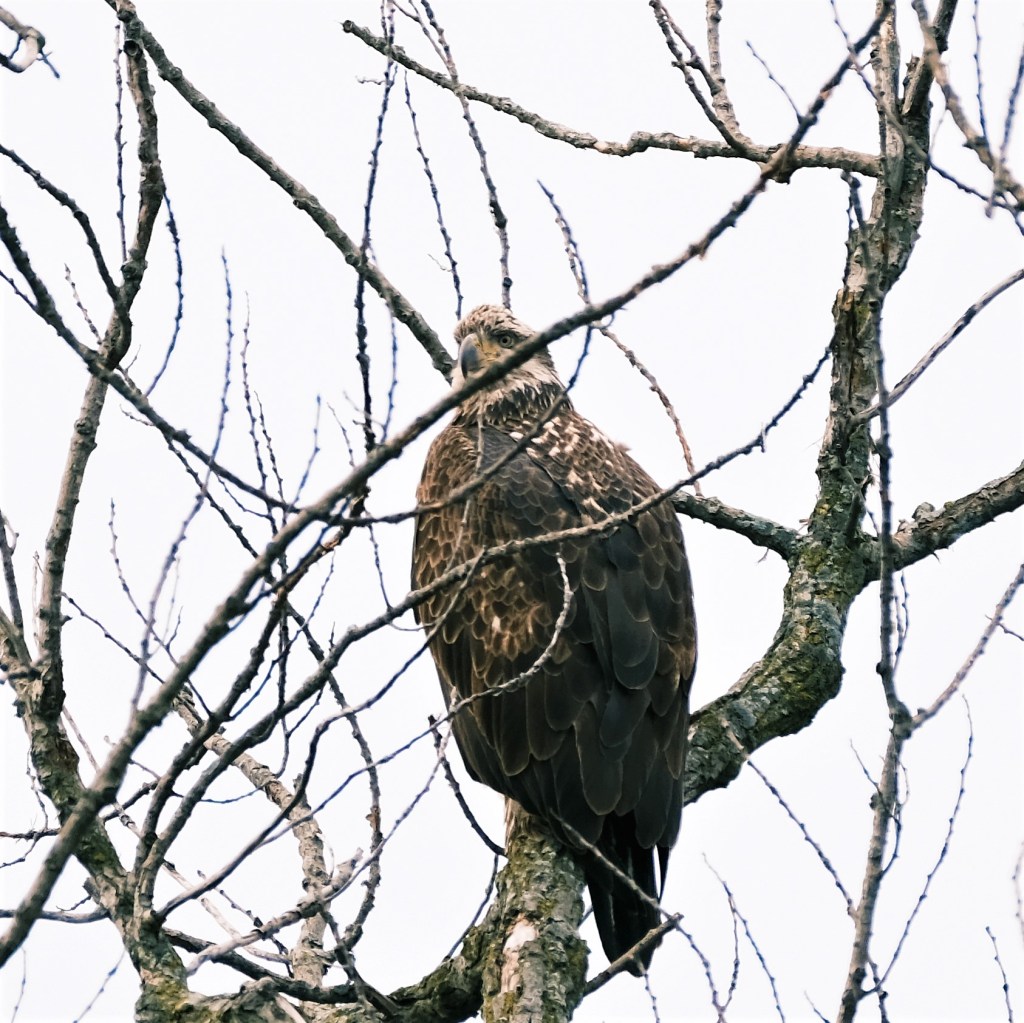
Finally, the young eagle from yesterday had its head on a swivel as it perched up there, and it kept me in the rotation, all the way across the water on the far shore, I suppose to make sure I was staying put.
Hopefully, that’ll tide you over until tomorrow morning when we might get lucky, and everyone will have had plenty of rest and will want to come back out to play. All we can do is hope, right?
Oh sure, the sun is trying to peak through now, but it was still pretty dark at 8 am, when I figured I had as much light as I was going to get, and so off to the park I went. Despite the darkness, or perhaps because of it, depending on who you ask, plus the mild temperature and light breeze, there was quite a crowd this morning. People wise, there were multiple packs of runners, a group of birders, and all the usual dog walkers and anglers.
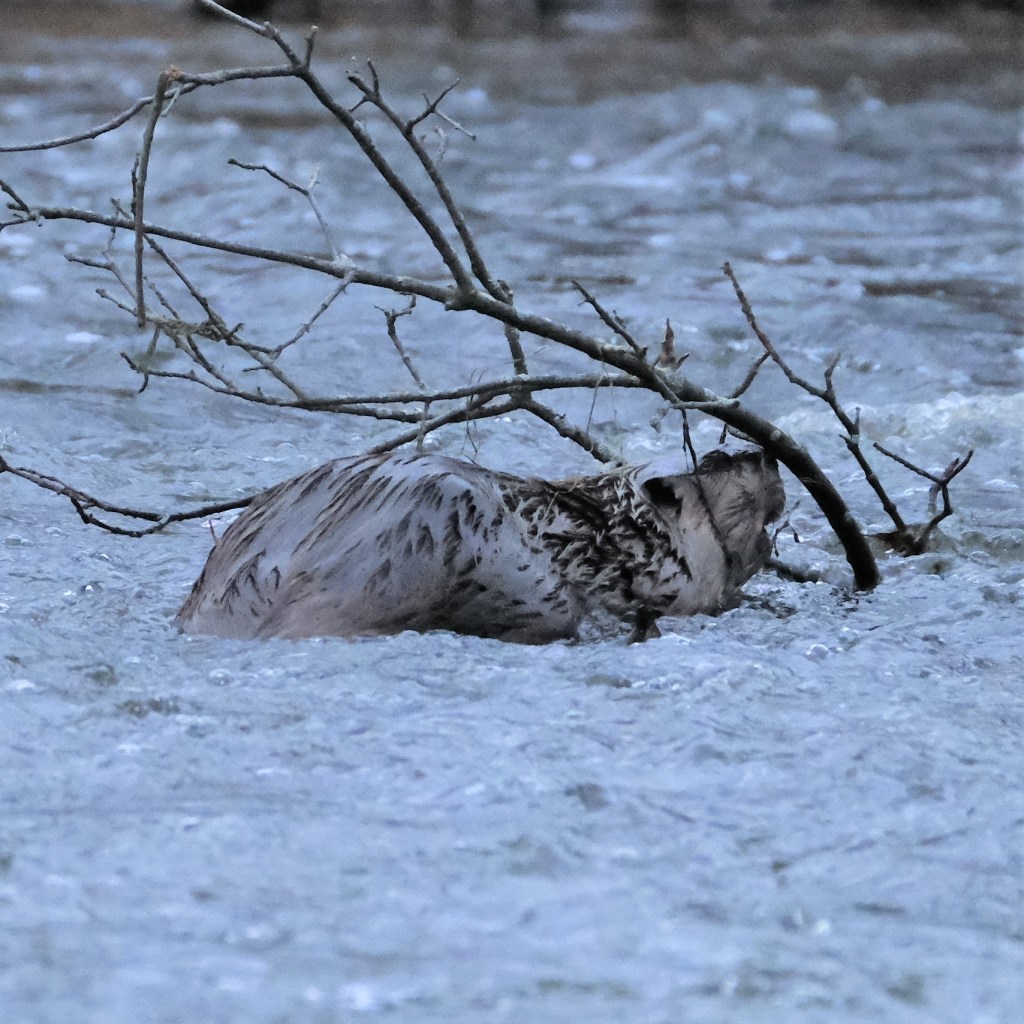
Happily, the critters were out too, and here’s a beaver stopping to check out a branch on its commute back upriver and home to its burrow for a good day’s sleep. “Sweet dreams!”
I was quite surprised to see deer finally, three of them, on the mudflats. I’ve seen their tracks there many times before, but this is the first time I’ve seen them there in the flesh, and here’s the most-obliging one of the bunch.
I also spotted our wily coyote again, but just briefly, and it avoided my best efforts to get a picture this time. “I’ll get you next time, Wile E!”
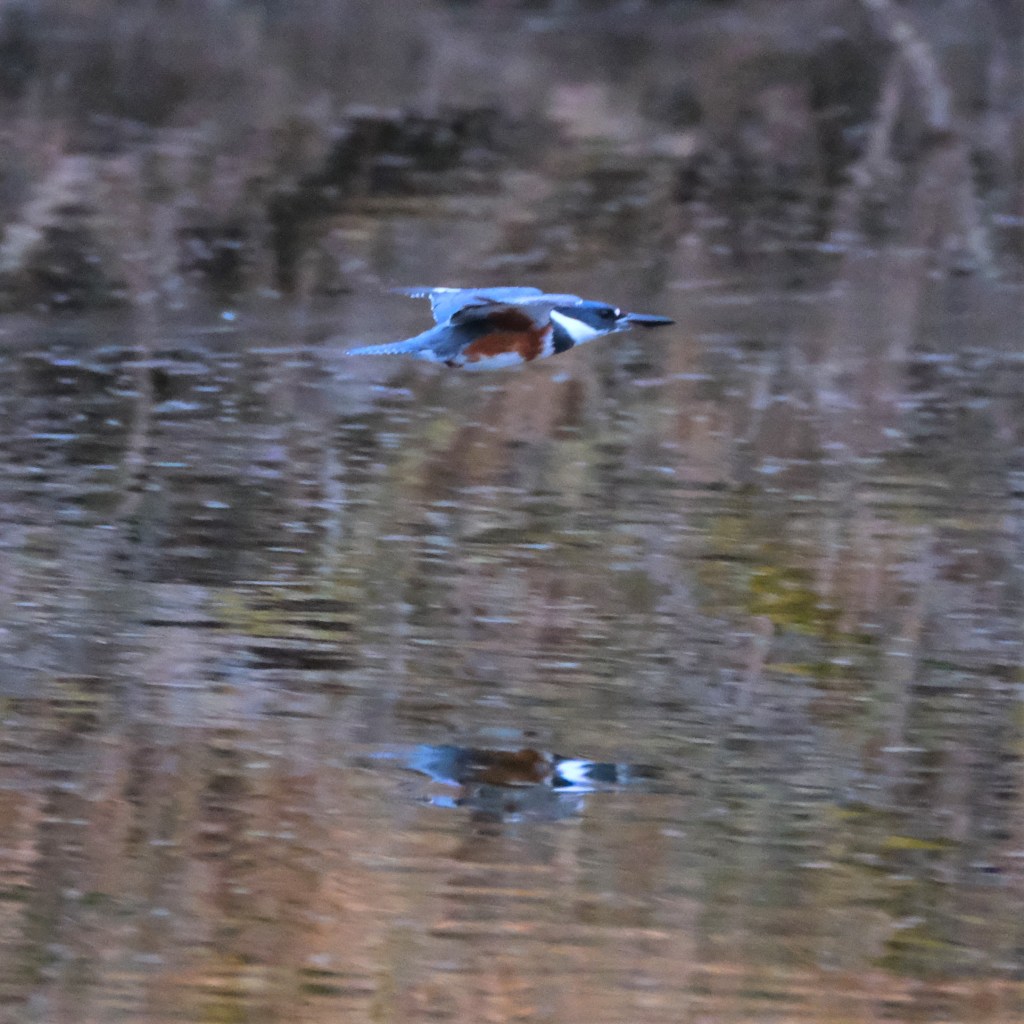
Also back again was our kingfisher, and since I’ve gotten a few good images of her recently, this time I tried to set up for getting a picture of her diving into the river. Instead, she just shot up stream, and this is all I got. She sure looks fast, doesn’t she?
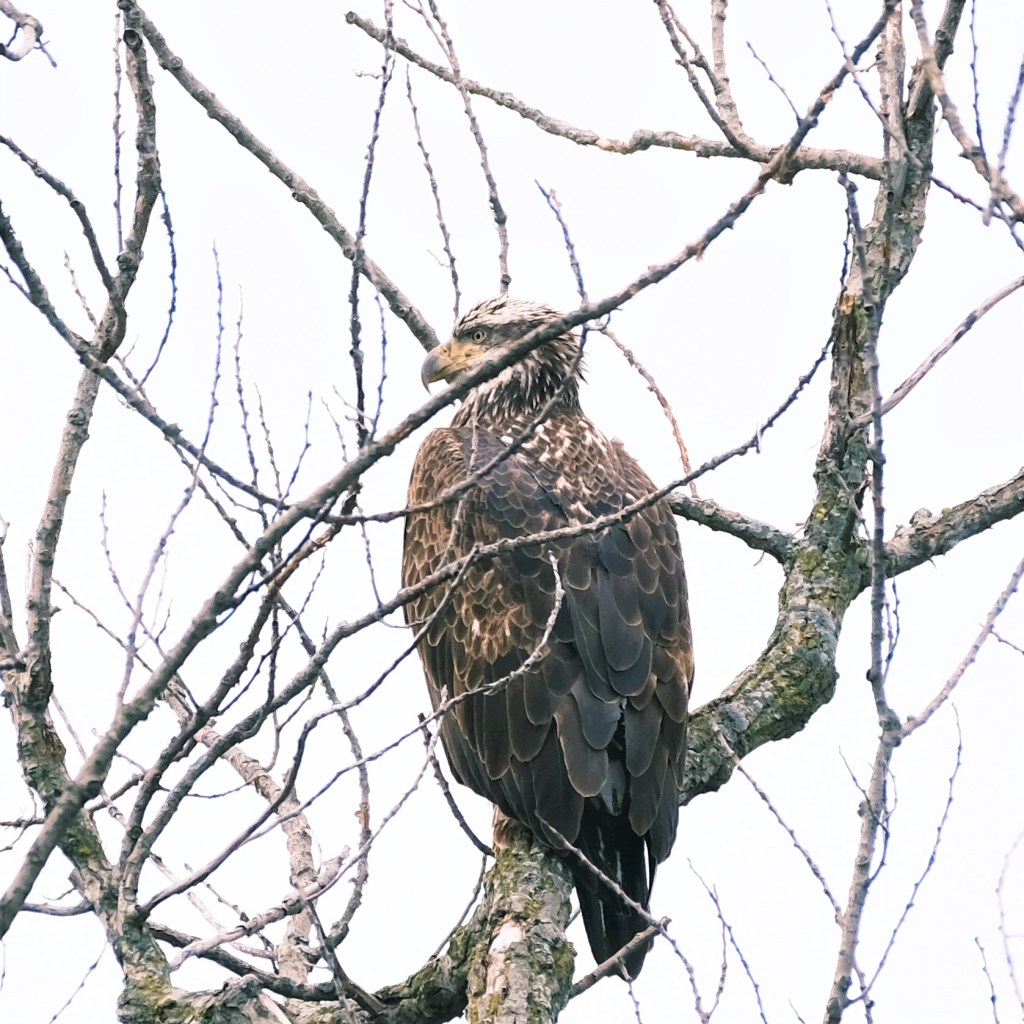
On my way past the falls, I thought I saw a big bird over the islands far ahead, maybe a blue heron, but only for a moment, and then I lost sight of it. As good luck would have it, look who I found waiting for me on the northern island when I finally got there. Yup, a young bald eagle.
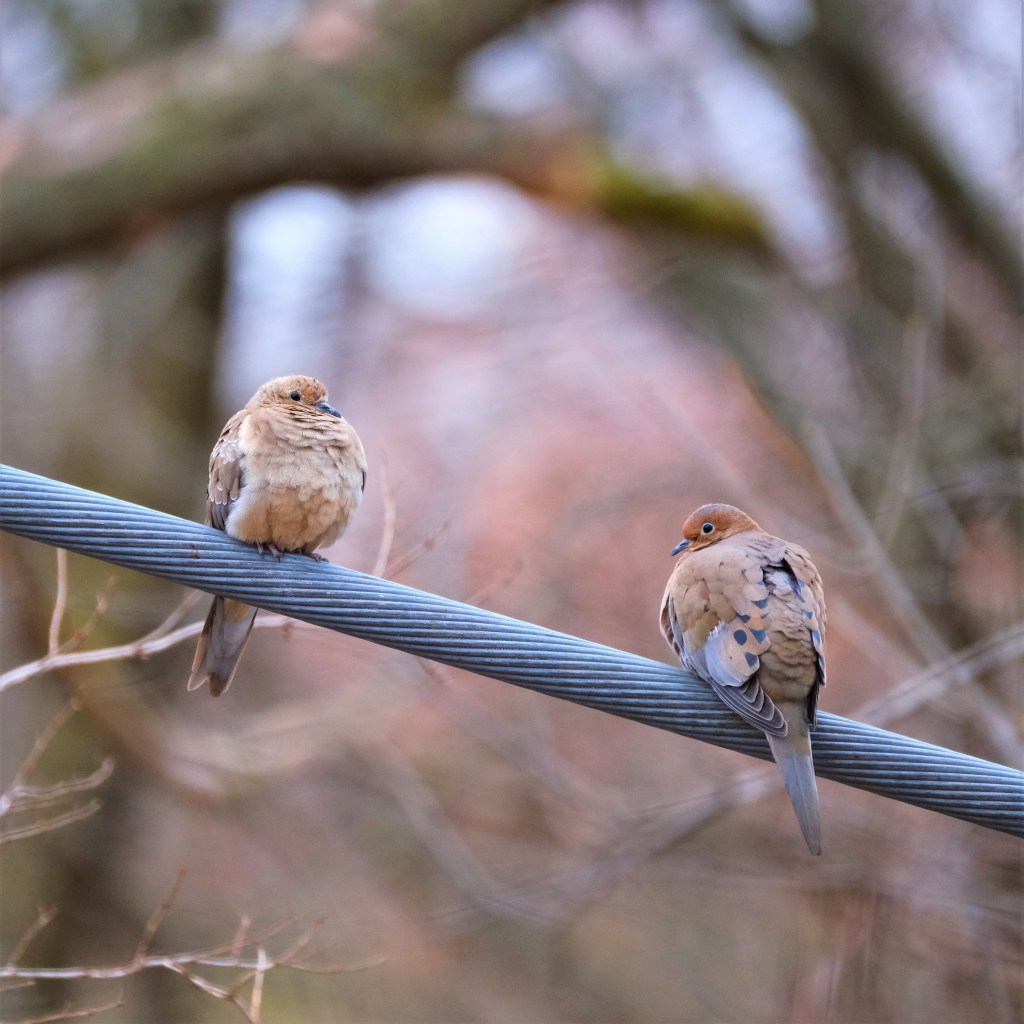
On my way back south, I found this cute pair of mourning doves just chillin’ on one of the guy-wires from a tower across the river.
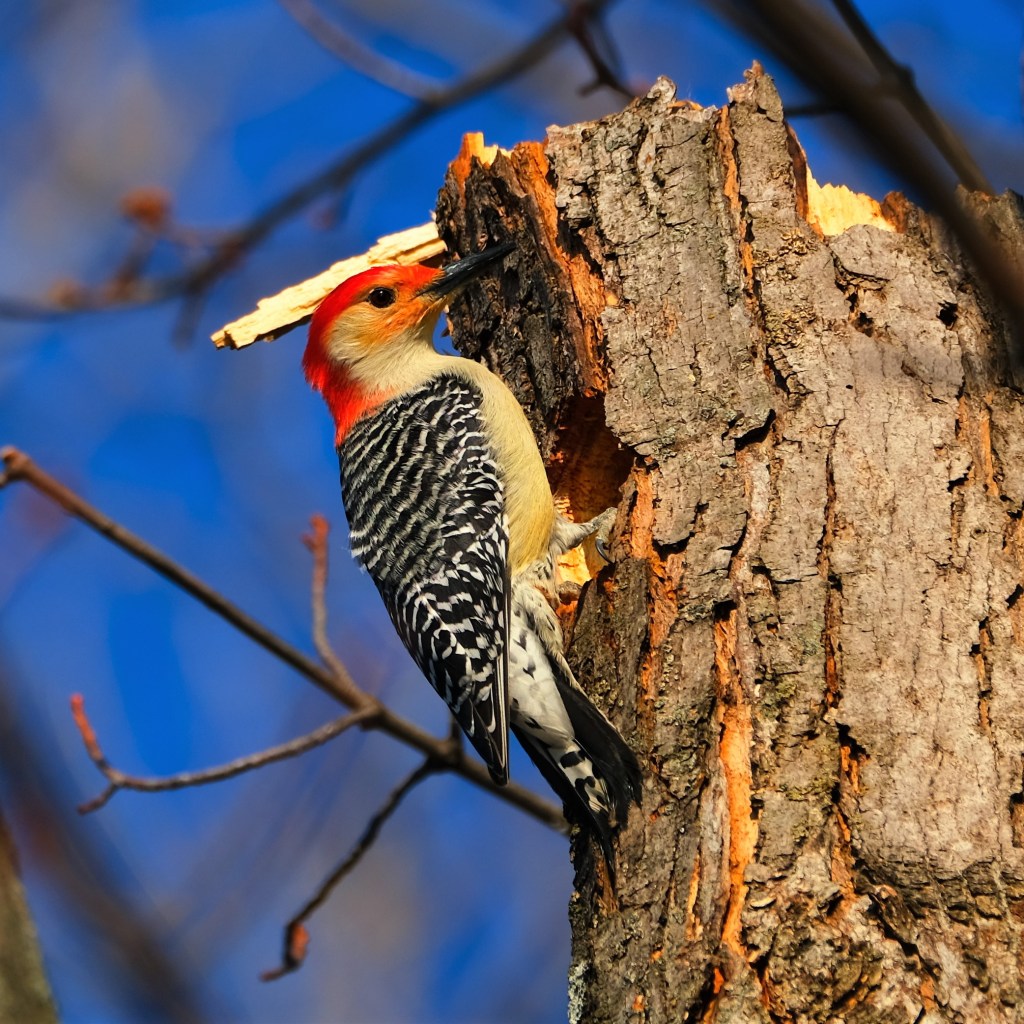
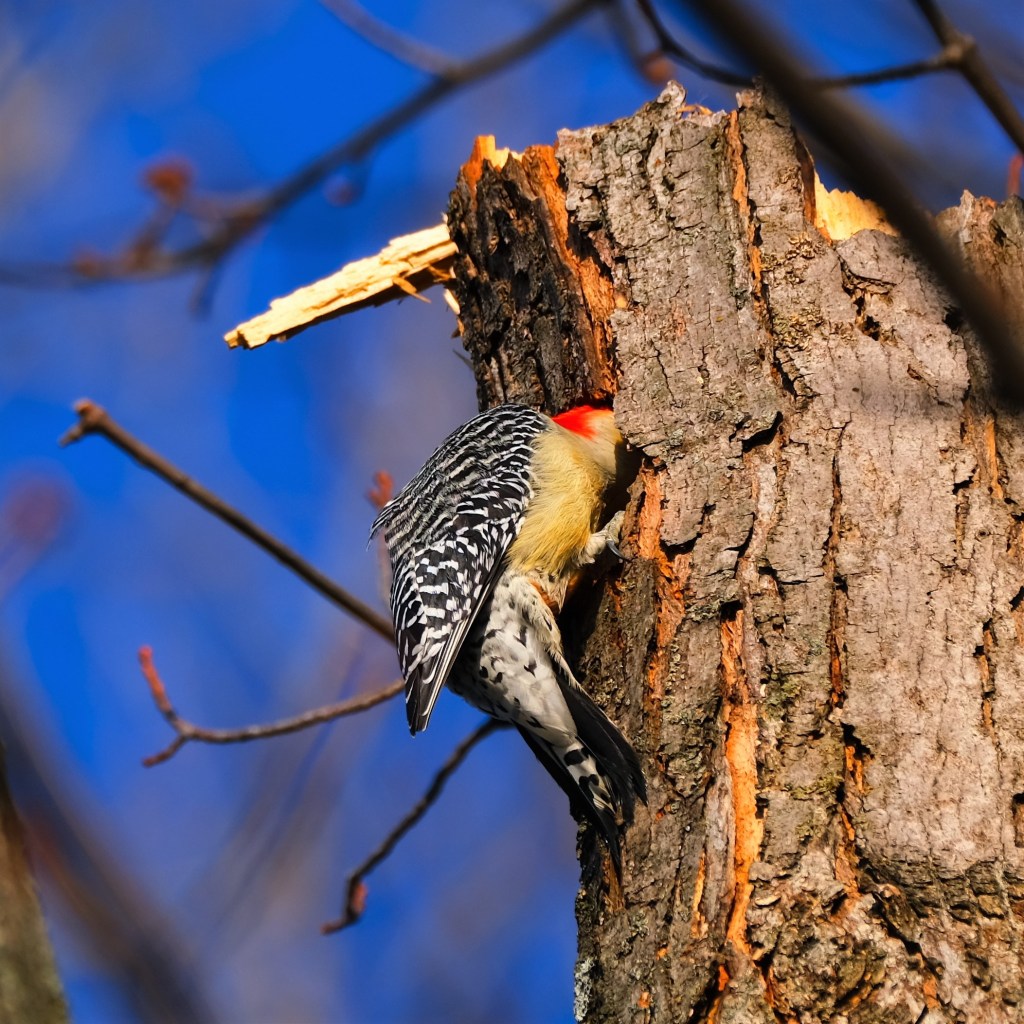
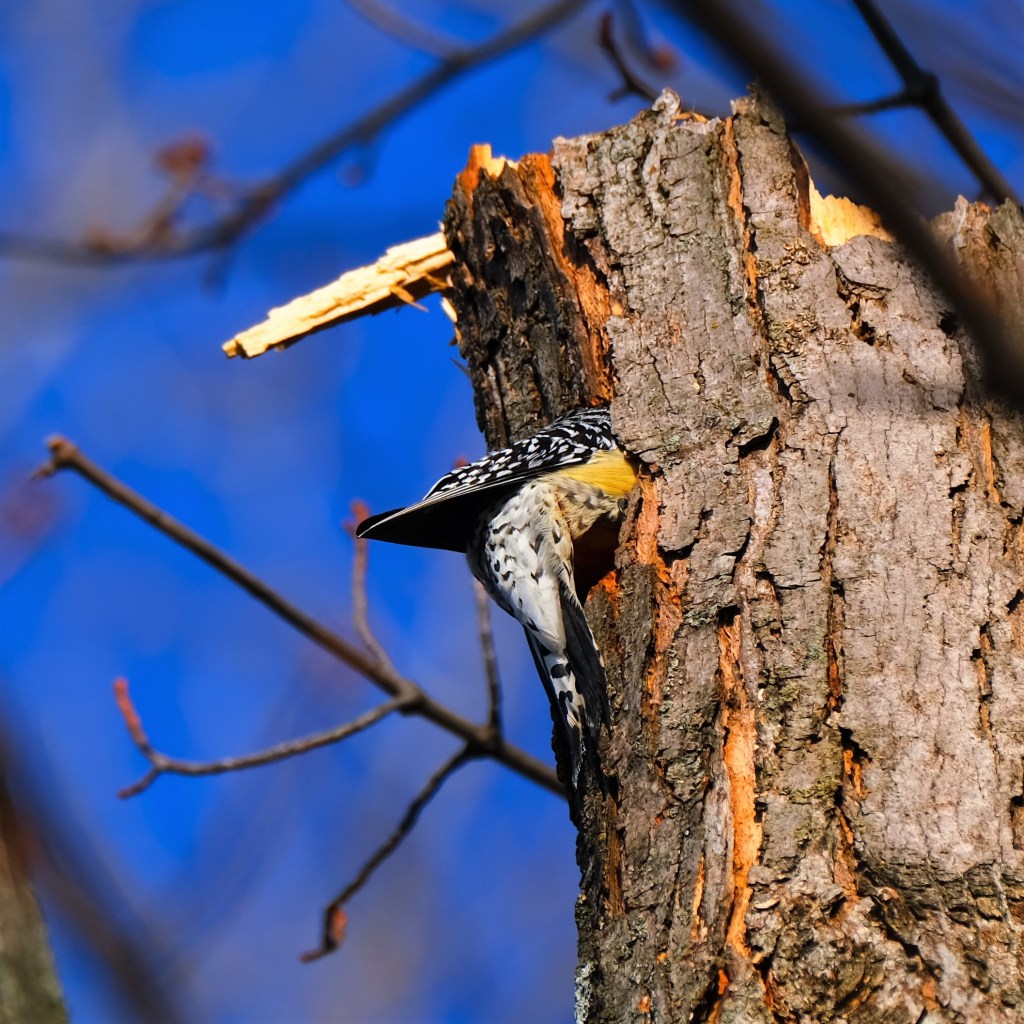
Finally, back near the south end, it seemed that this male, red-bellied woodpecker was doing its best to promote his newest nesting cavity. It’s got a beautiful river view, so I hope he finds someone to share it with him.
Lastly, I see the forecast is for clear skies and temps in the low twenties for tomorrow morning, so let’s hope at least some critters come back for more pictures with pretty backgrounds this time, eh?
The crazy weather has finally subsided, at least in the park for the moment, and it was a gorgeous morning with blue skies, light winds, and seasonably cool temperatures, for a change. In fact, it was cold enough overnight to freeze up all the muddy trails along the river. Yay!
Many of the little birds, who were probably doing their best to avoid being blown clear across Lake Michigan over the past two days, were out and making up for lost time at the buffet.
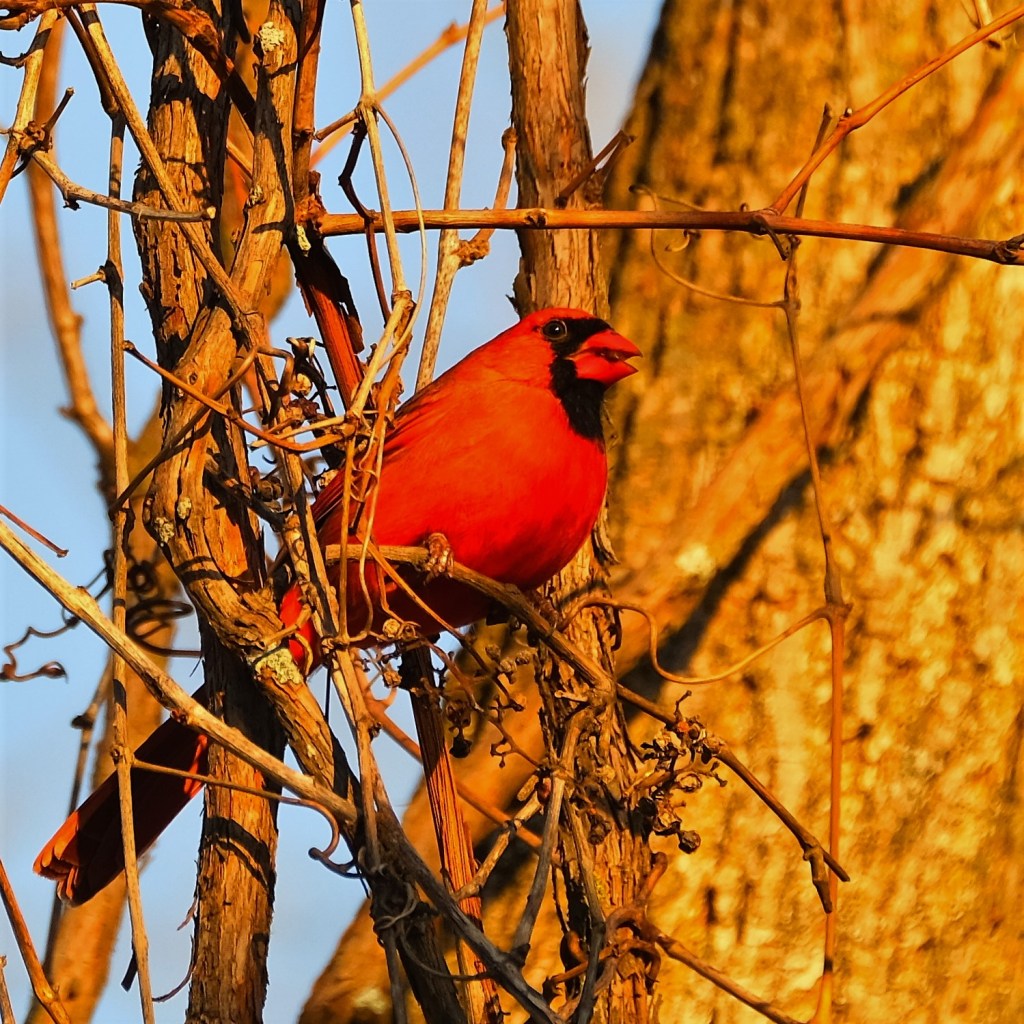
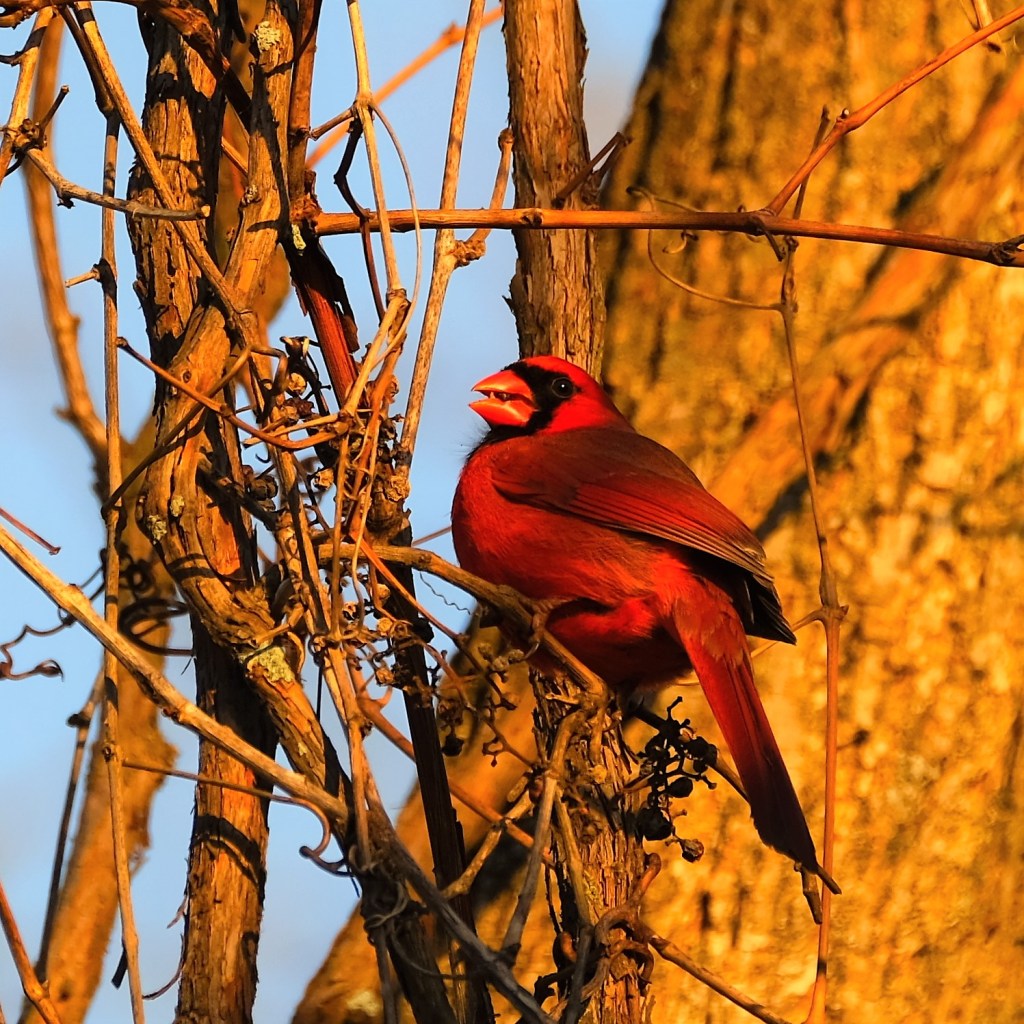
Here’s a male northern cardinal picking something off a climbing vine, maybe little desiccated wild grapes. Yum!
A goldfinch was keeping closer to the ground, and I couldn’t see what it might be finding, but I’m sure it was something good. The fine folks in Ithaca report that “goldfinches are among the strictest vegetarians in the bird world, selecting an entirely vegetable diet and only inadvertently swallowing an occasional insect.”
Right after I took the shot below, she dove about 10 feet straight down into the water, reemerged with some good-sized looking tidbit, and took off to find a perch where she could scarf it down in peace.
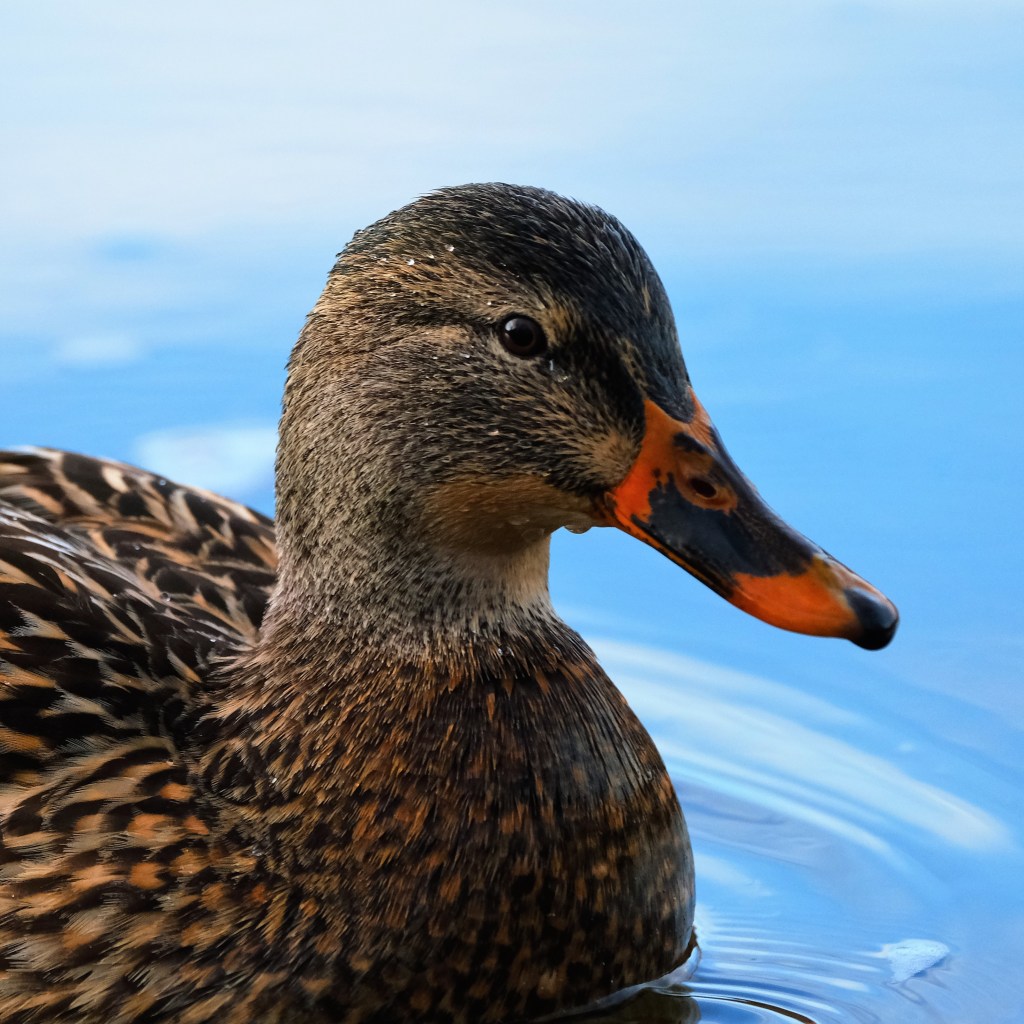
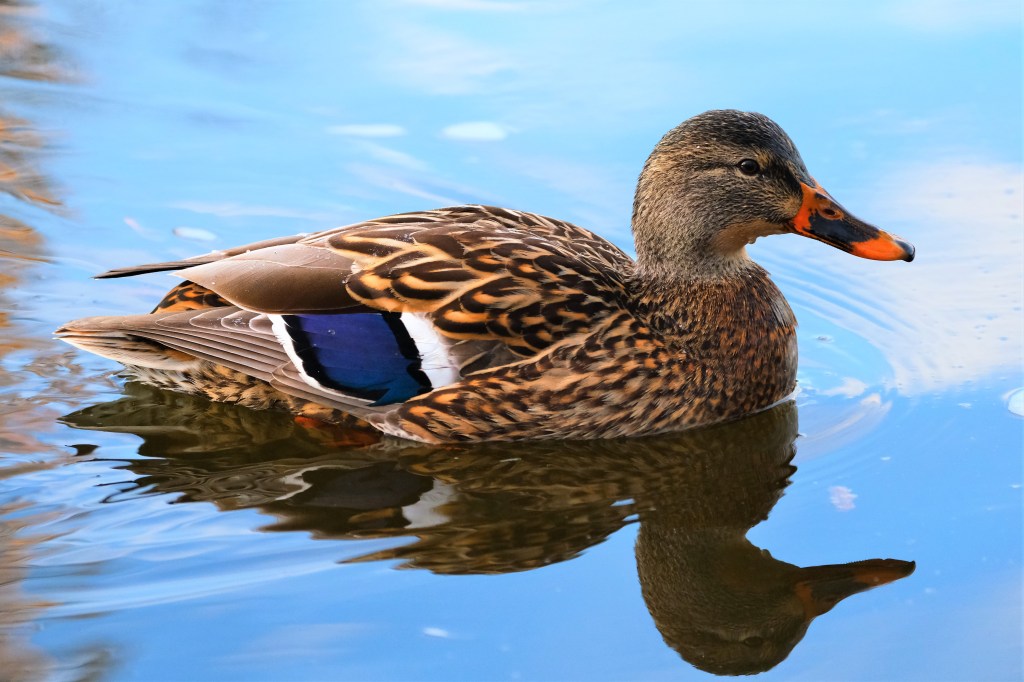
While I was collecting some litter from the riverbank that the wind blew in, this mallard hen, who perhaps mistook me for some other old guy with a plastic bag full of tasty treats, paddled right over to see what I had to offer. Well, by now you know the drill. “Sorry sweety. I’ve got nothing for you, and even if I did, it probably wouldn’t be good for you.”
She must have understood me just fine, unlike the goose a couple of weeks ago, and soon paddled back over to join her foursome at the salad bar.
Finally, as I approached the north end, this little cutie seemed quite less than thrilled to see me coming up the trail, as though I was interrupting something important. “Don’t worry, little buddy, I’m just passing through, and I’ll let you get right back to work as soon as I take this picture.”
Despite the grey skies, fog coming off the cold water, and threat of rain, I did go to the park this morning, but I didn’t expect much, and that’s what I got. The good news is that I had plenty of time to collect a lot of the litter deposited along the riverbank by the recent high water. The bad news is I don’t have much to show you.
Other than that, I did see a few mallards, a couple of gulls, one bufflehead, a few juncos, and a couple of chickadees. I also heard a nuthatch, a cardinal, a red-bellied woodpecker, and a kingfisher, but that’s it. Plus, with all the grey on grey, nothing looked pretty.
Thus, I plan to distract you with some pretty pictures I took in the past few days instead.











 Signs of Life in Estabrook Park