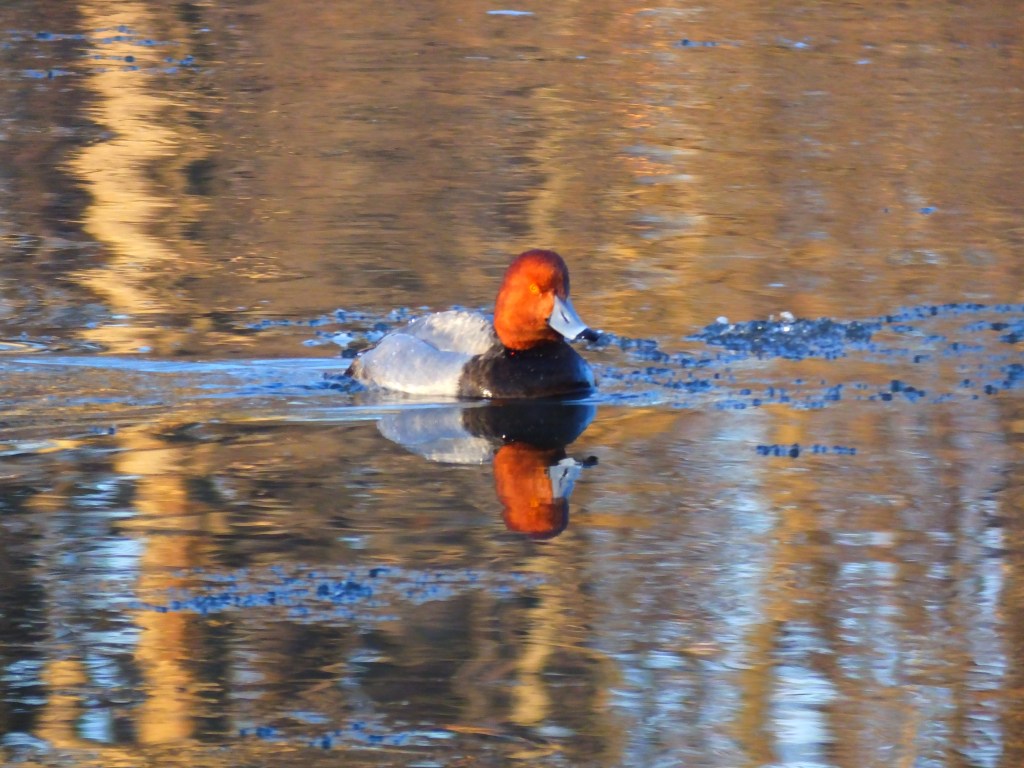
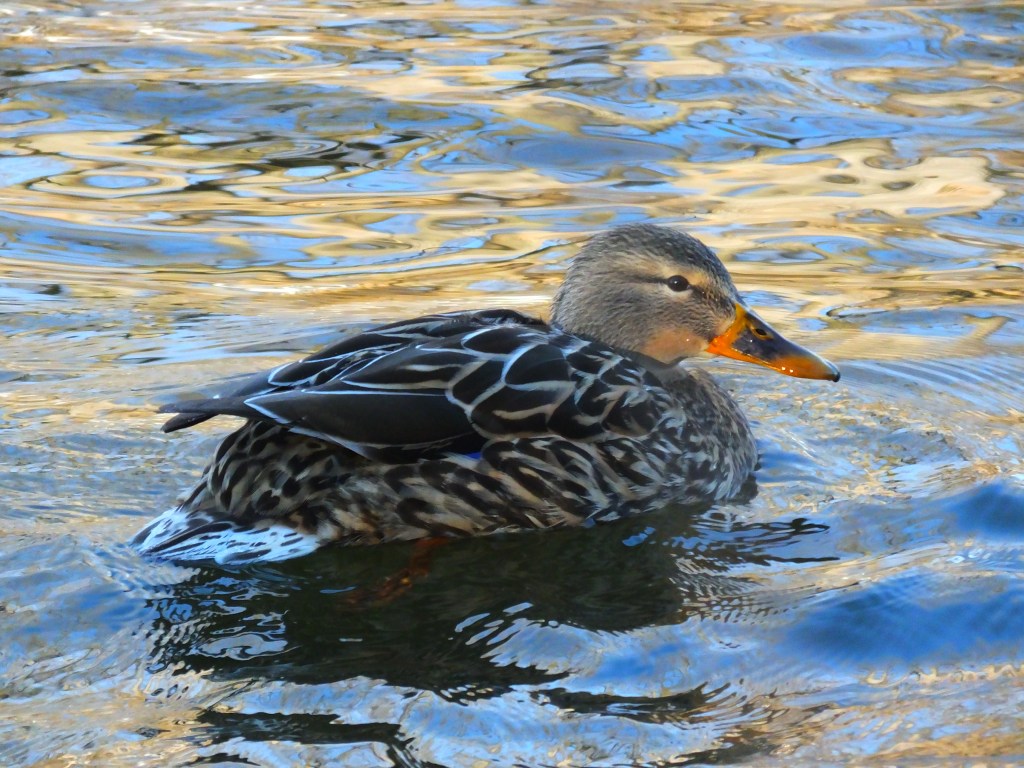
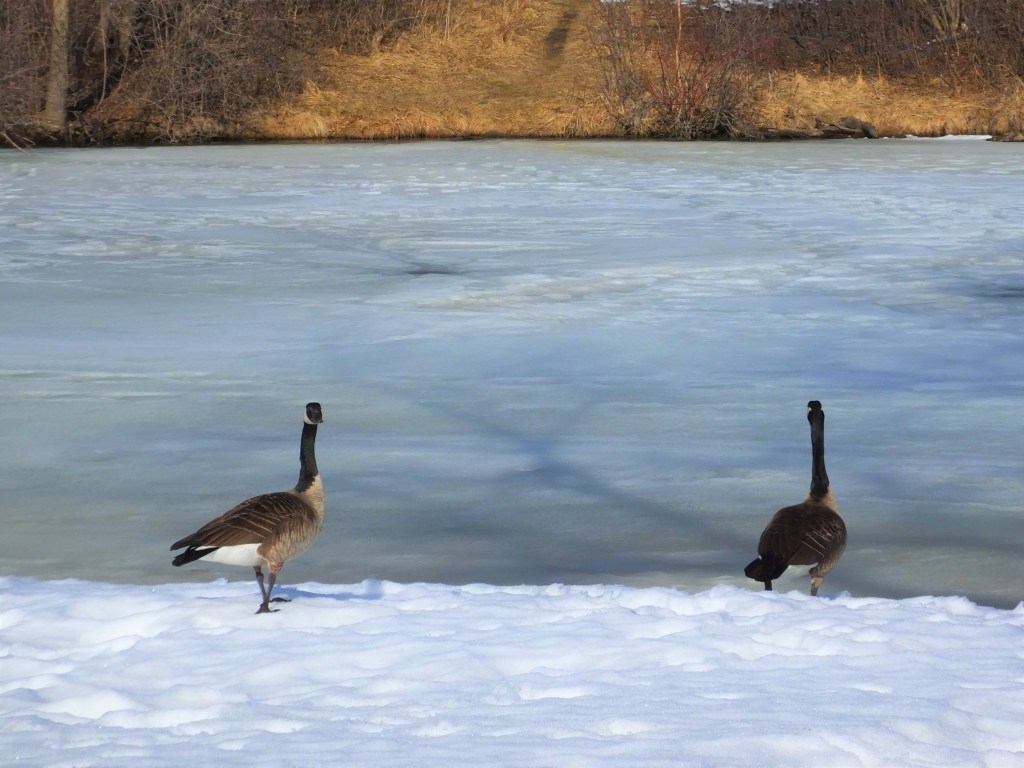
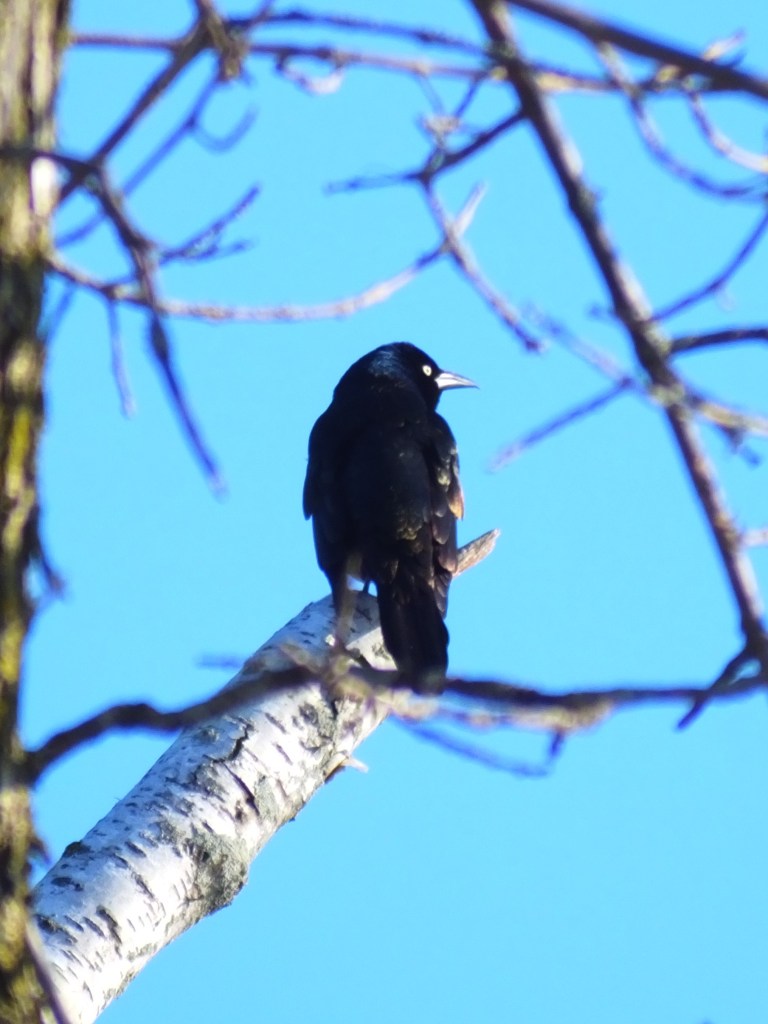
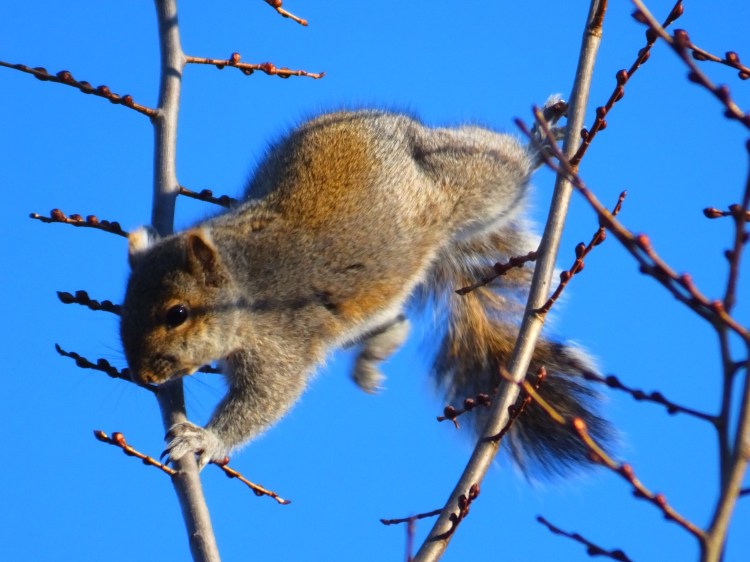
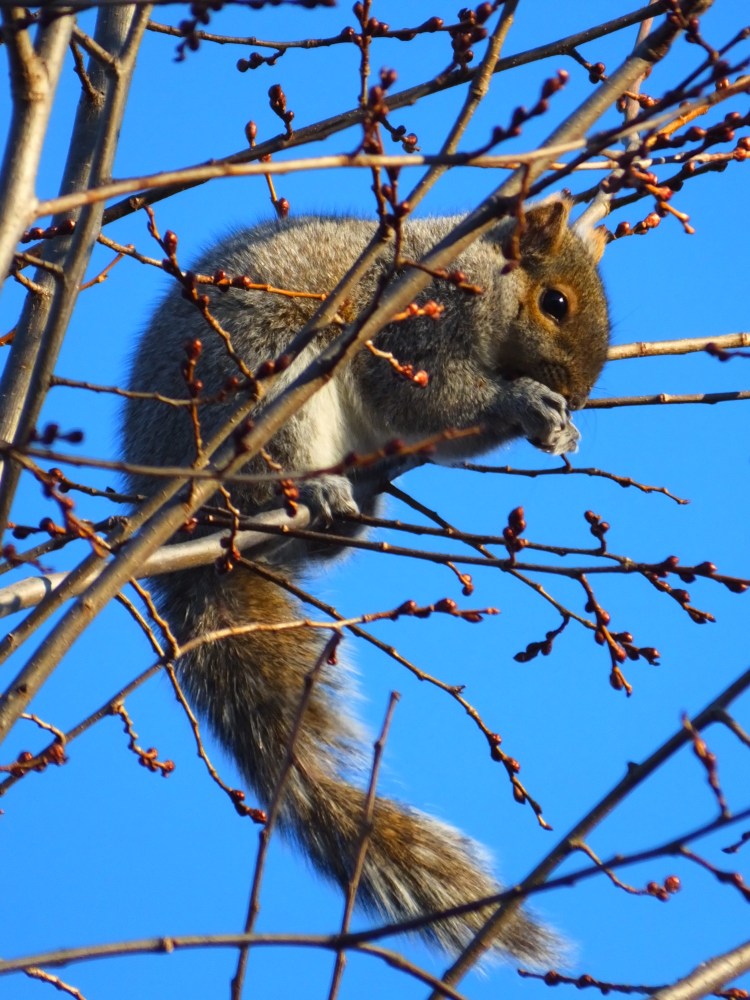
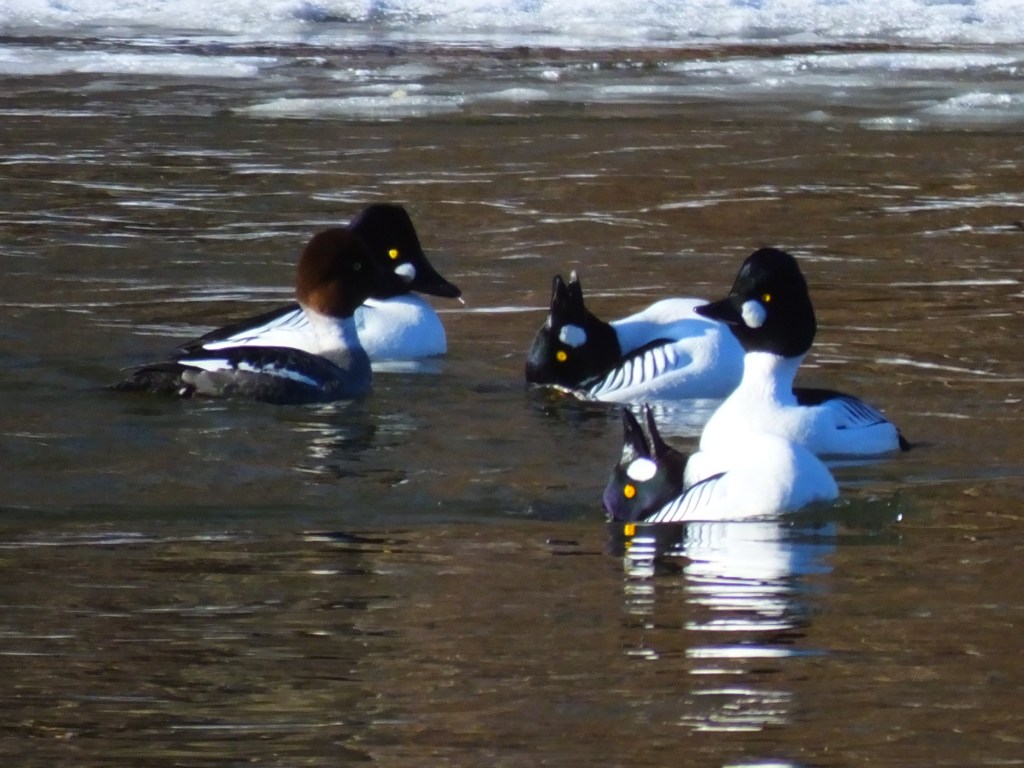
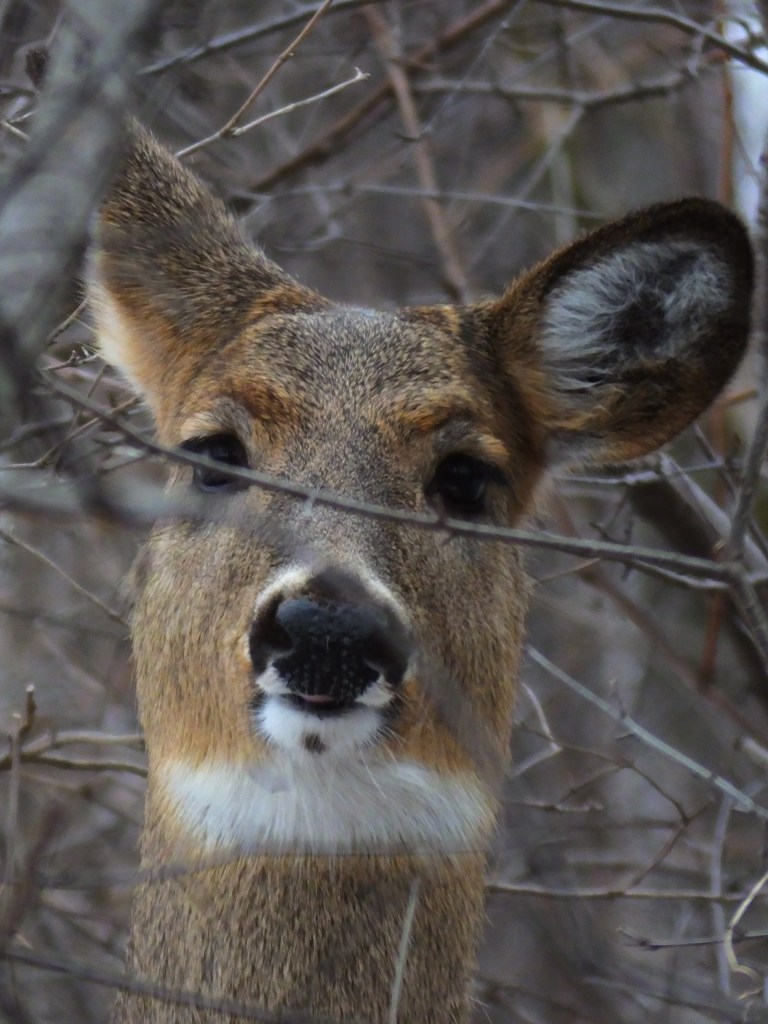
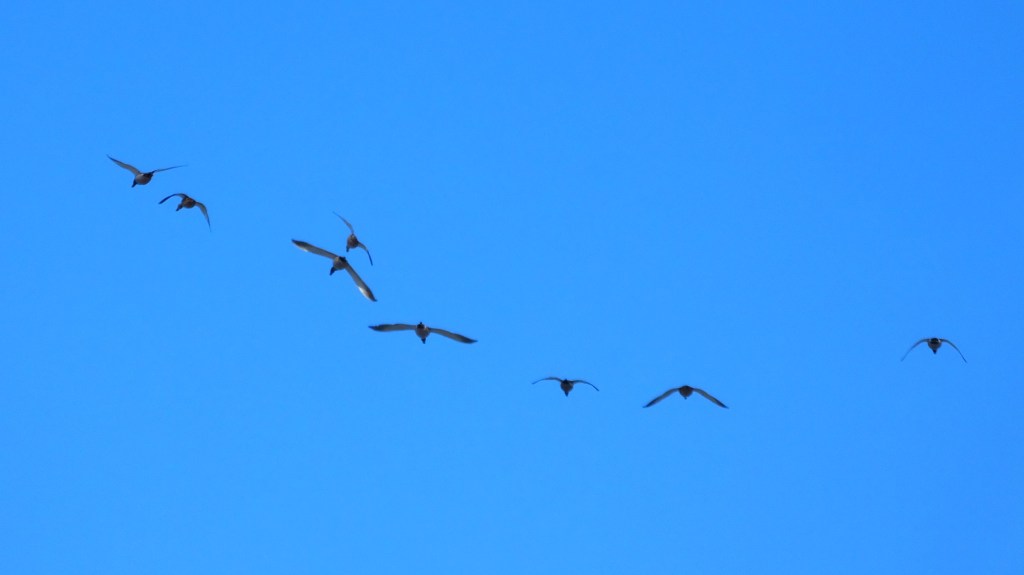
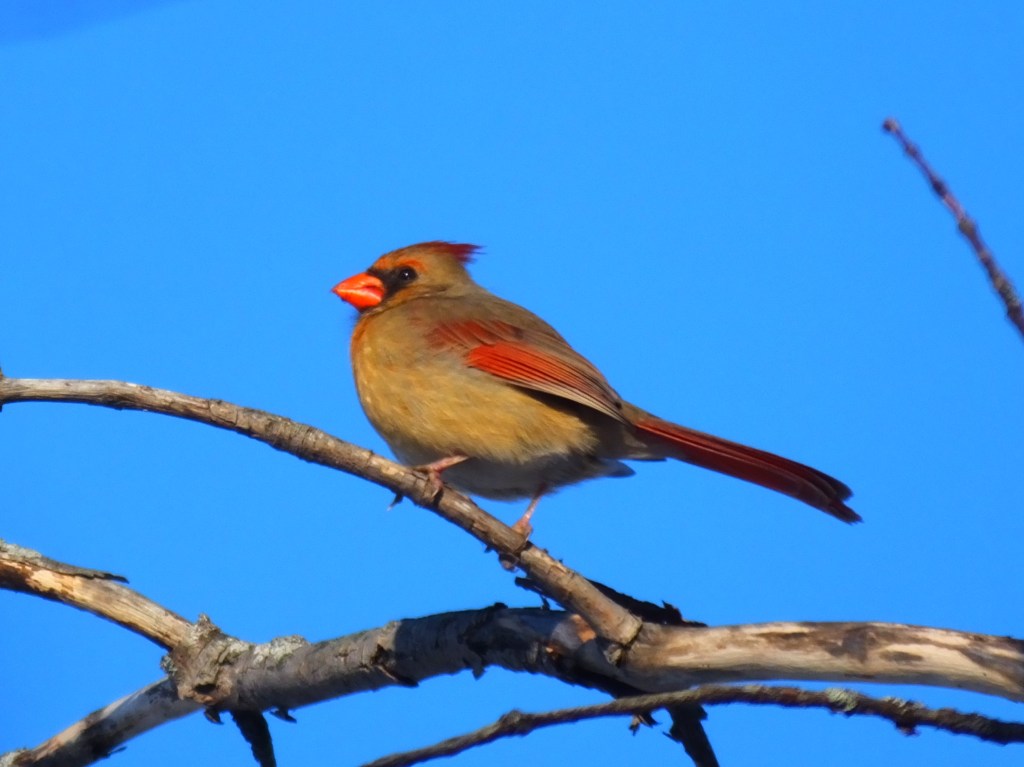
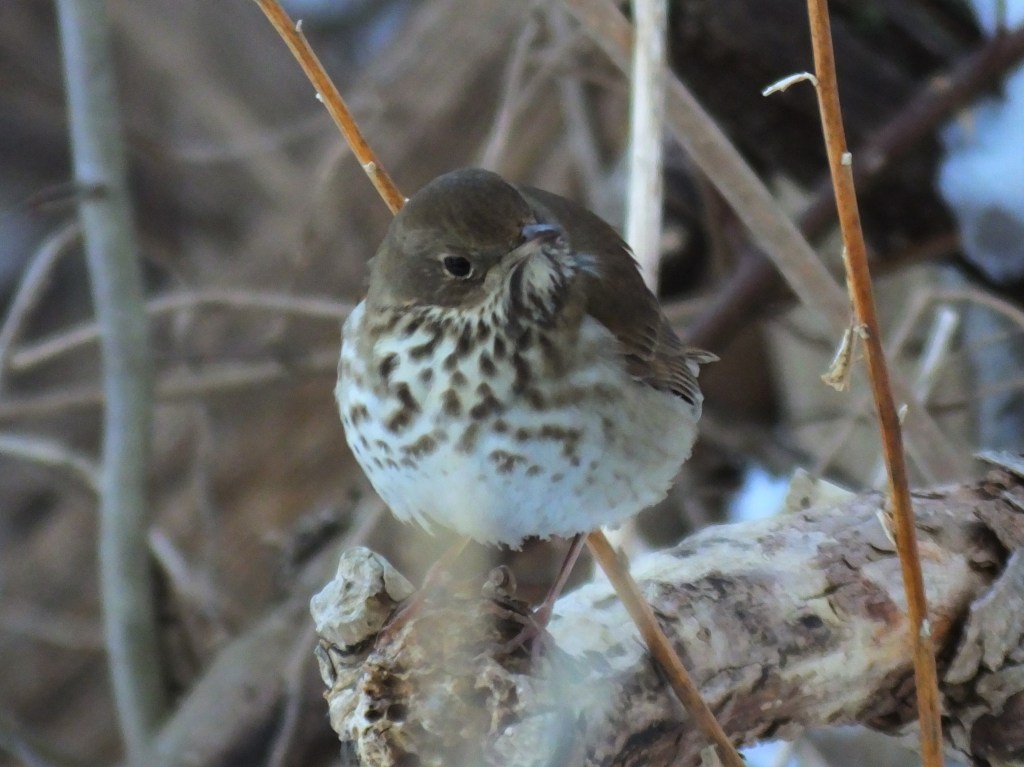
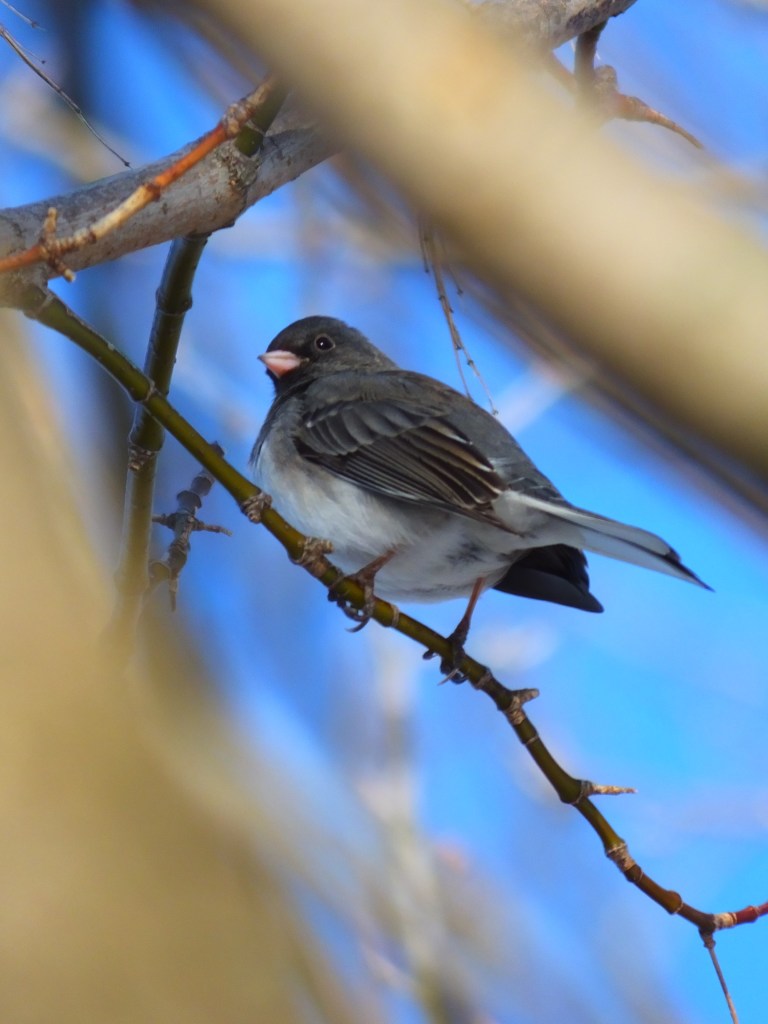
Lots of wings and legs today.

What a beautiful morning it was: not too hot, not too cool, and very still. Many of the birds are starting to quiet down, especially the grackles and red-winged blackbirds, so the few that are still singing, wrens and buntings, really stand out. Happily, there are still plenty of creatures, old and new, willing to let me take their picture.

First up is everyone’s favorite, the woolly bear caterpillar (Pyrrharctia isabella) crawling beside the parkway. I read in the Pedia of Wik that if the “brown band is wide, winter weather will be mild, and if the brown band is narrow, the winter will be severe,” and the brown band on this guy looks to be nicely not too wide and not too narrow. Yay! Right?

Next is another pretty little ‘summer’ spring azure or just summer azure (Celastrina ladon neglecta) posing on some white sweet clover (Melilotus albus). We first saw an azure back in June, and the white sweet clover started to bloom a couple of weeks after the yellow sweet clover.

Here’s a handsome little Peck’s skipper (Polites peckius), which I don’t believe we’ve seen before, in the same butterfly family, Hesperiidae, as our old friend, the silver-spotted skipper.

Here’s a regular in these reports, a slightly roughed-up pink-edged sulphur (Colias interior), but posing on a new blossom at the south end of the park, the striking Prairie Ironweed (Vernonia fasciculata), glowing in yesterday’s late afternoon sun.

Here’s a pair of new sulphurs, clouded sulphurs (Colias philodice), with a distinct row of dark spots on theirs wings that the pink-edged sulphur lacks, and seen here in the process of making more sulphurs. Good thing the wings offer some privacy so we can keep this operation rated PG, eh?

While we’re at the ironweed, check out the wear and tear on this male monarch. Holy moly does he look like he’s been through the wringer. He’s one tough old “bird”, though, and still flying nevertheless!

On the other hand, here appears to be a spanking new female black swallowtail (Papilio polyxenes) in the meadow at the north end of the park. She was either too cold or too wet from dew this morning to worry about me clumsily trying to line up this shot.

Finally, our old friend the indigo bunting was also in the meadow this morning and singing his song from amongst the Queen Anne’s lace this time.

That’ll do it for today, and how there are still new critters to see in the park after all this time sure is a mystery to me, but let’s enjoy it while we can.

Not done yet!

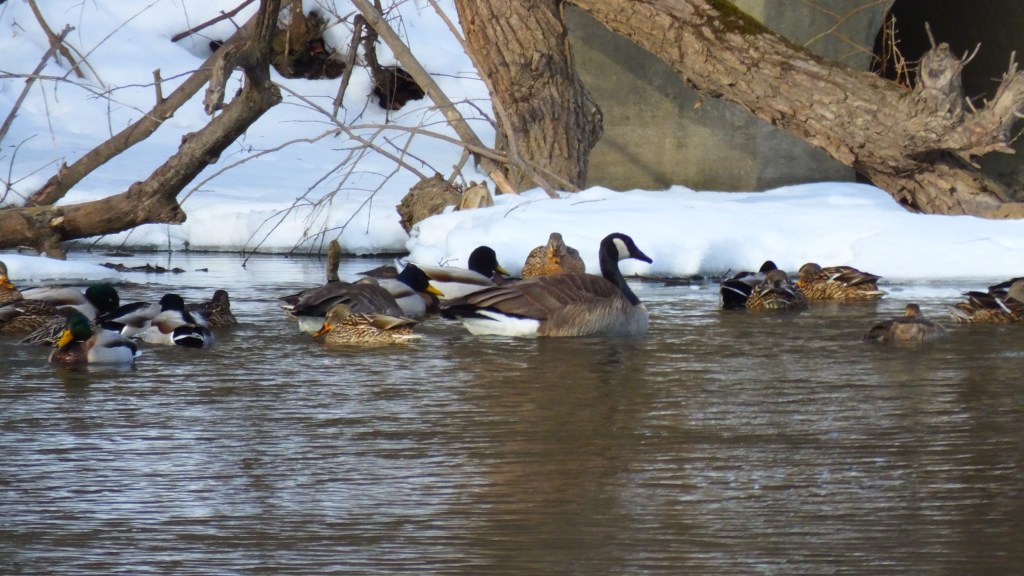
Ha! As soon as I say we haven’t seen ducklings in days, look who shows up on the river.

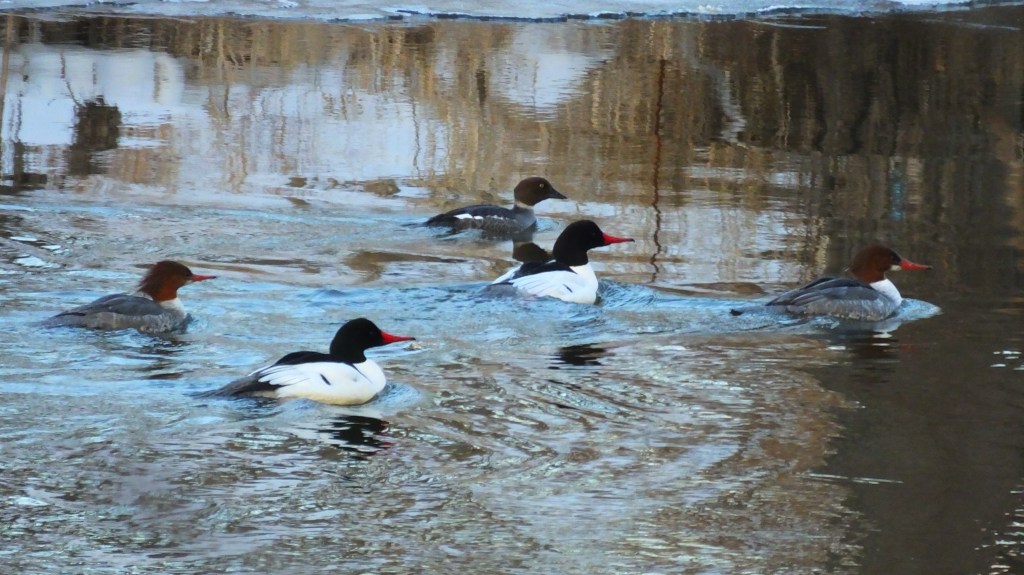
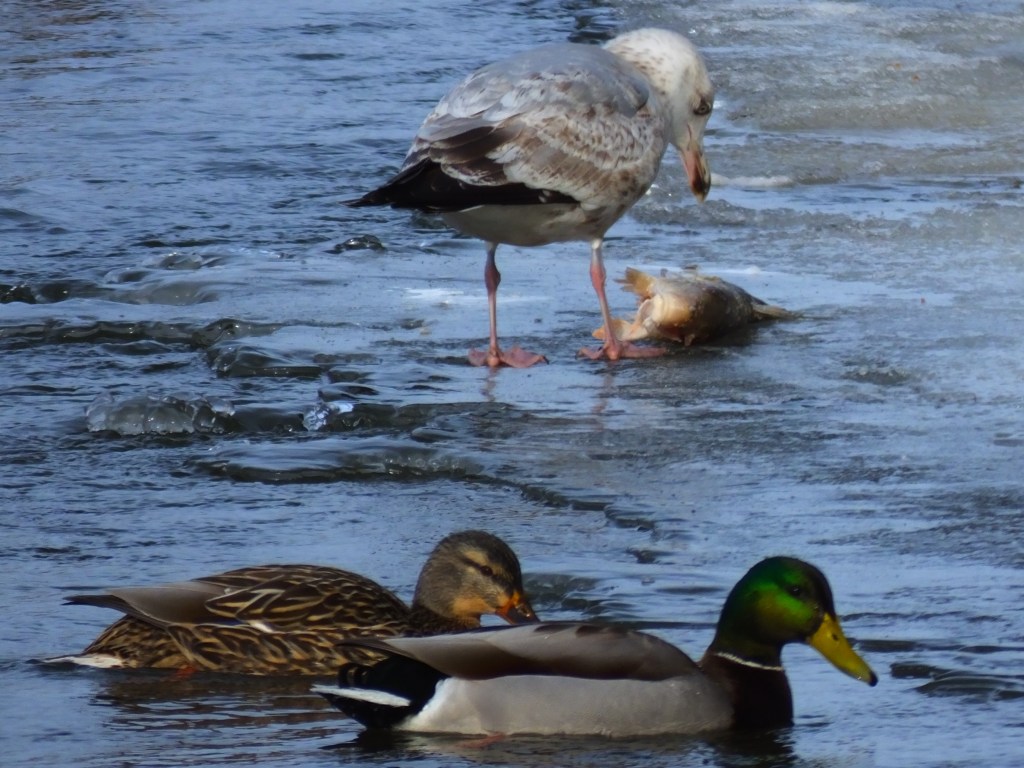
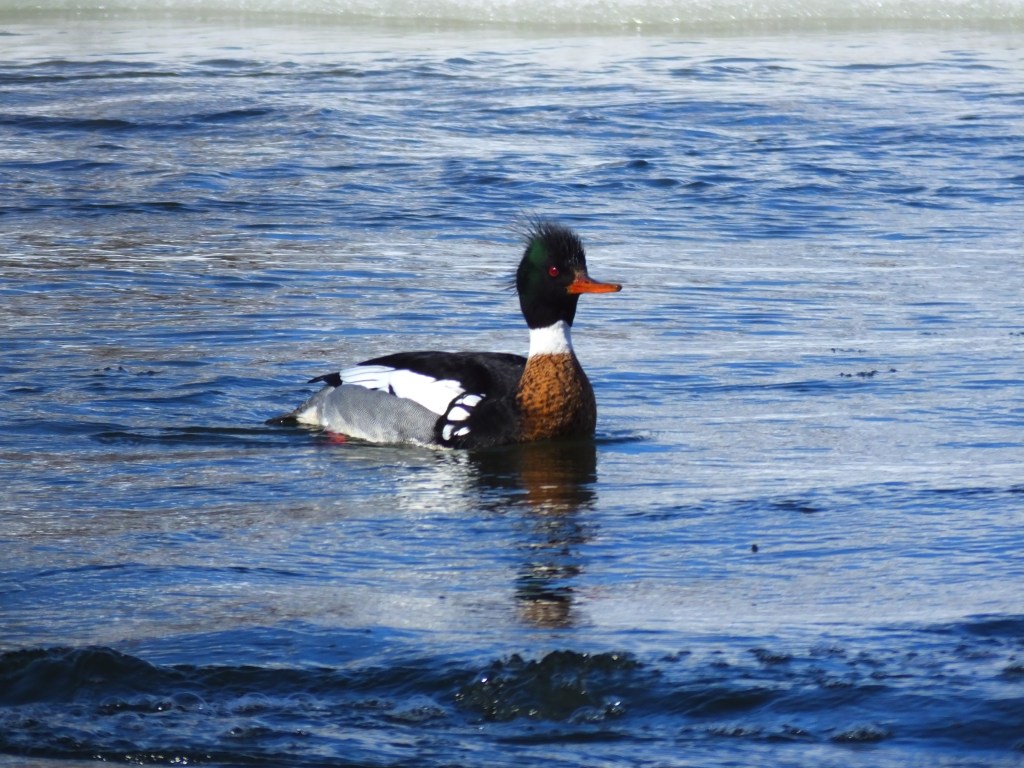
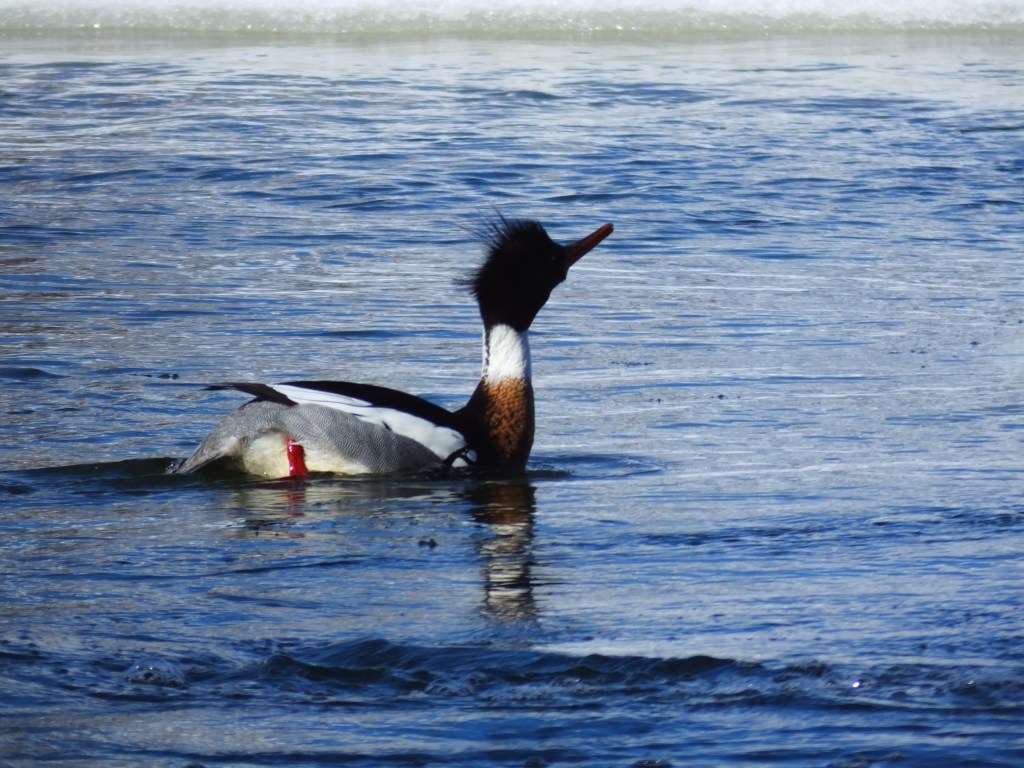
And just to keep things interesting, a female or juvenile common merganser (Mergus merganser), which I don’t believe we’ve seen in the park before, was heading down river this morning. After I caught just enough of a glimpse with my binoculars to know it was something special, I had to drop everything and sprint down the river trail to get along side of it for even this not-too-great image. Yay! Something new.

I also saw three blue herons fly by and was lucky enough to stumble across one pausing to get a bite and who appears to be a juvenile, which we haven’t seen before, either.

Wow. That’s a lot of waterfowl all of a sudden. Happily, there were some bugs out and about to mix things up a bit. First up is our old buddy, the silver-spotted skipper (Epargyreus clarus). This morning he chose Queen Anne’s Lace to pose on and got photobombed by a bee.

And here’s a pink-edged sulphur (Colias interior), which we just saw a couple of days ago, but who could say no to this image?

Finally, we’ve go one more newcomer, and according to Identifying Hairy Caterpillars, it is either a Cream-spot Tiger Moth, a White Ermine Moth, or a The Ruby Tiger Moth, all of whom are stunners, eh?

Oh, and I collected my winnings from MKEBrewHero this morning. I don’t have any pictures, but they took some, and I’ll include a link if and when they post them.

Slowing down

As we approach the dog days of summer, with the heliacal rising of the dog star, Sirius, scheduled for August 15, things seem to be slowing down in the park.

I haven’t seen a duckling in days, and I hope, as I know you do too, that they merely moved on to fresher water, but I definitely don’t mean “to a pond upstate.” The river is getting pretty low, and the oxbow pond must be getting pretty stale now that it is isolated from the river, so let’s all suppose the ducklings are just out exploring new parts of the river that I can’t get to.

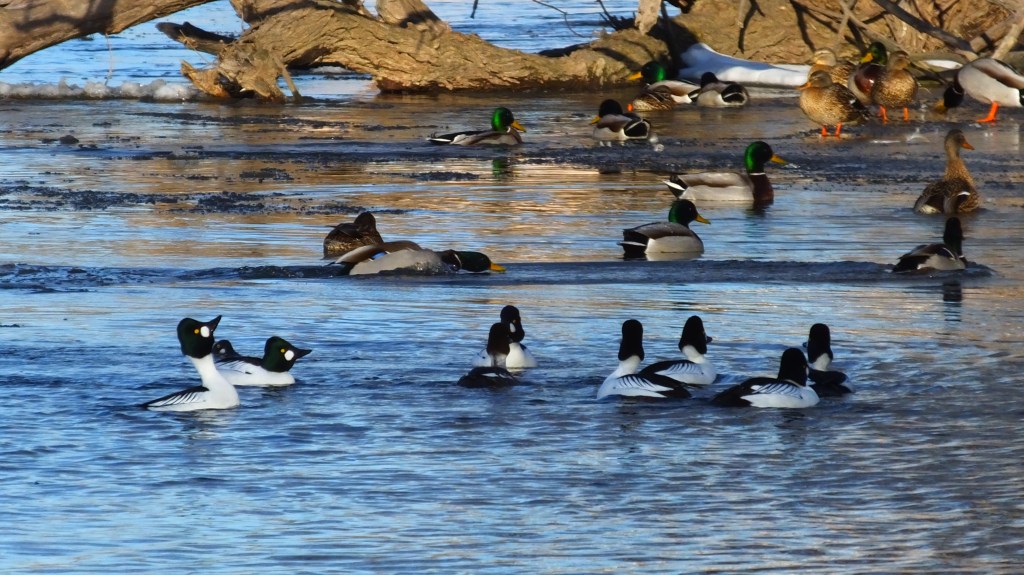
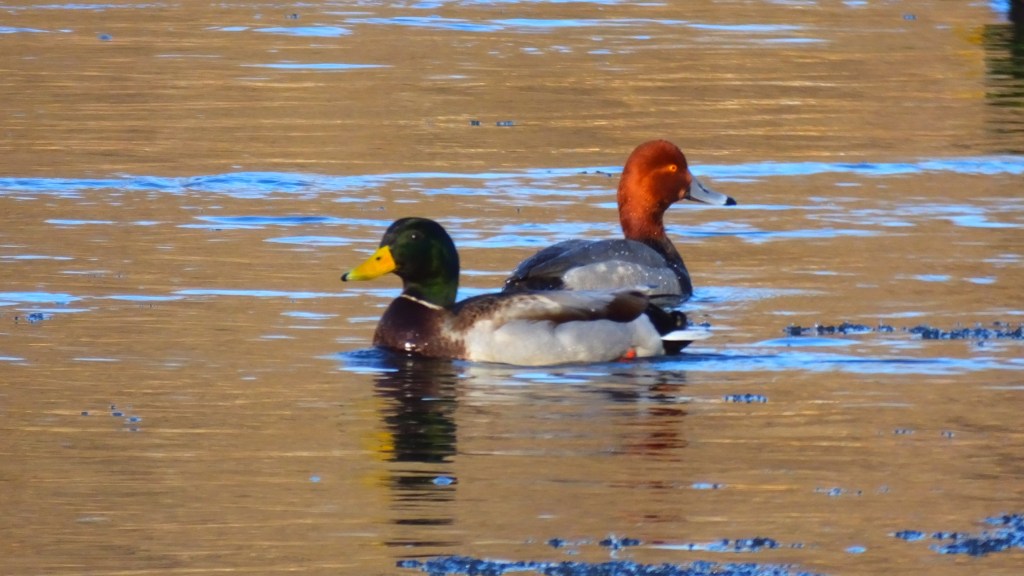
I did see one wood duck hen on the pond and a couple of mallard hens on a sandbar in the river this morning.

The most exciting sighting today was another red squirrel, this time by the pond. He seemed quite upset about something, and here he is asking me if I’m talking to him.

Also, the juvenile sandpiper appears to be getting more comfortable in front of the camera, and here he is practicing his crane kick.

Generation 3 or 4 monarch caterpillars are busy munching on milkweed, both common milkweed by the pond and swamp milkweed by the river.

Finally, the stinging nettle blossoms have really opened up since we last saw them, and don’t ask me how I know.

And that’s the news from Estabrook Park this morning that I saw fit to photograph and write about.

One fun side note is that Milwaukee County Parks started a program to encourage people to pick up litter a while back, and two readers immediately emailed me about it when they saw the announcement. Anyway, to play the game, you post pictures that somehow depict your delittering efforts on Instagram with the tag #mkebrewhero.

Since I was already picking up litter and taking pictures, I figured starting to post some on Instagram wasn’t that much more of a hurdle. Okay, okay, now the fun part, at least for me. They have drawings to see who gets some swag, and you’ll never guess who was the winner of the “FIRST official drawing for the Brew Hero program at Milwaukee County Parks!”

Yours truly. Ha!

Just bugs

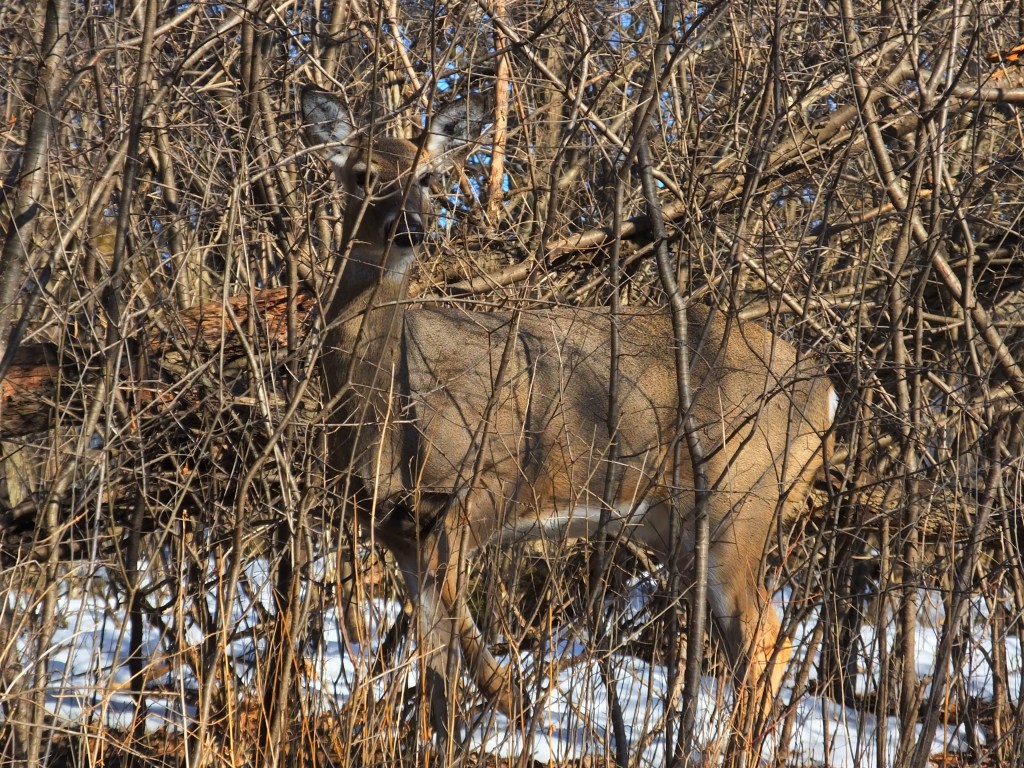
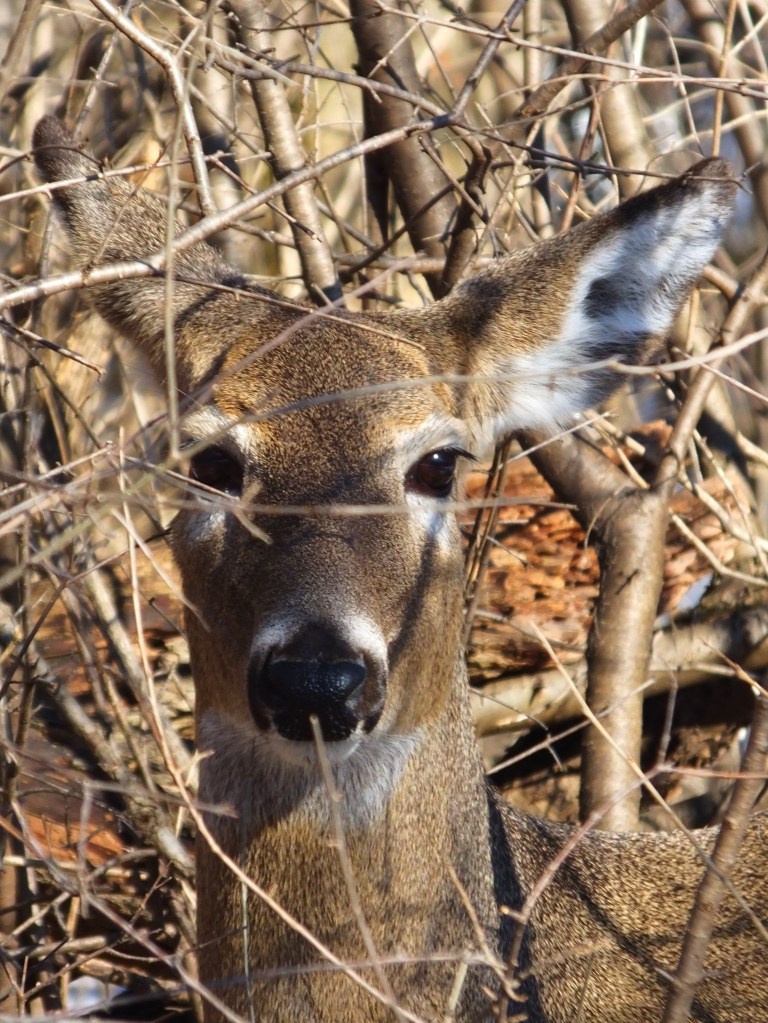
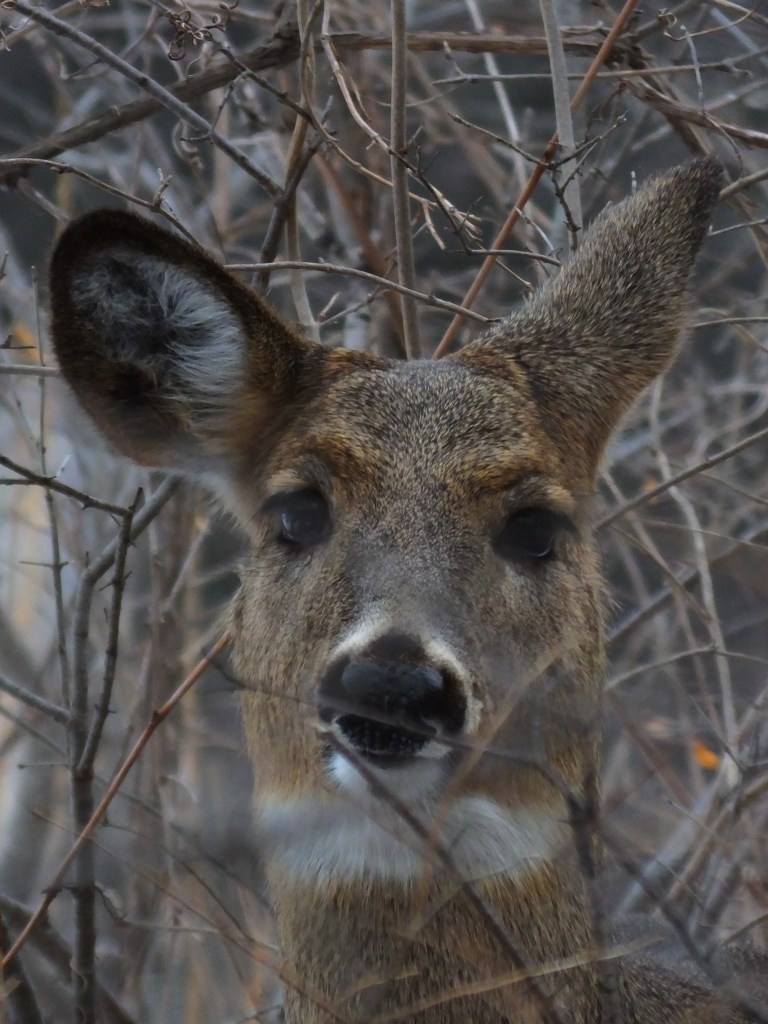
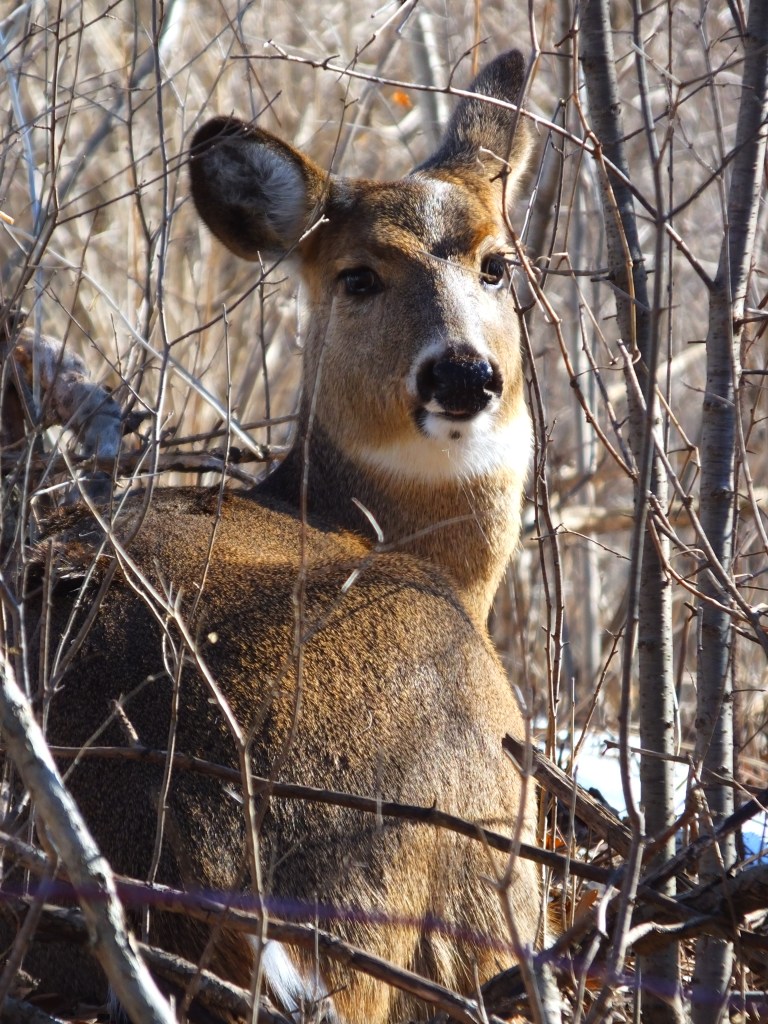
I did see the doe and fawn again today, but they were in the brush, and neither were in the mood for hanging out, so no pictures. Instead, all I’ve got for you is bugs.

The first bug is this red admiral (Vanessa atalanta), which we first saw back in June, on a eastern purple coneflower (Echinacea purpurea) on the slope between the falls and the beer garden. The flower was kind of low and in the weeds, so my angles were limited, and this little stinker took its sweet time working its way around to this side for its photo op.

Next is a little pink-edged sulphur (Colias interior), which we also first saw back in June, on a purple coneflower by the boat launch at the north end of the park.

Next is another female eastern black swallowtail (Papilio polyxenes), like the one we just saw yesterday, on a purple coneflower by the boat launch.

Finally, a male eastern black swallowtail (Papilio polyxenes), which we first saw on the same day in June as the red admiral above, on a purple coneflower in the little garden by Capital Drive at the very south end of the park.

Man, when there are two butterflies of the same species, either male and male, or male and female, good luck having anyone sit still long enough for a picture. Instead, all I got was endless hyjinx like this.

And there you have it. Nothing but butterflies on purple coneflowers today. Maybe tomorrow I’ll find something brown or grey for you.

The Wanderer

Here’s Red, the red-eared slider (Trachemys scripta elegans) I met this morning in the grass by the parkway north of the Benjamin Church House.

Red was on a mission, but I think maybe the landscape has changed since he last came this way, and he was not going to like what he found. Therefore, with the Farmers Market imminent, I violated the Prime Directive once again, and brought Red back to a better spot on the river, where I have seen several other turtles before. Happily, Anne just happened to be nearby and recorded my transgression.

Red was pretty funny. He’d just hang out, looking around, as I hiked along the trail until he could hear or see water. Then his claws went wild, and I had to hold on tight. As we neared the big mudflats I had in mind, we crossed yet one more stream, and he really let me have it. I didn’t actually drop him, but if I didn’t set him down right away, I might have. I grabbed my camera in hopes of getting a goodbye shot, maybe with him looking over his shoulder at me with a tear in his eye, but he was not having it. I thought maybe I’d done enough damage for today, and I just let him go.

Here’s hoping that he likes the new spot on the river better than the one he left and can now stay put until next time. I’m pretty sure he’s not going to find what he’s looking for east of the parkway.

Anyway, the monarchs sure seemed to be in a photogenic mood this morning because they were posing everywhere. Here they are on purple coneflower, on swamp milkweed, and on bull thistle.

Maybe it was the weather because they weren’t the only ones so inclined. Here’s a stunning female eastern black swallowtail (Papilio polyxenes) on red clover and a pretty little banded hairstreak (Satyrium calanus) on Queen Anne’s lace.

And that’s a wrap. Till next time, stay cool out there.

An Enchanted Morning.

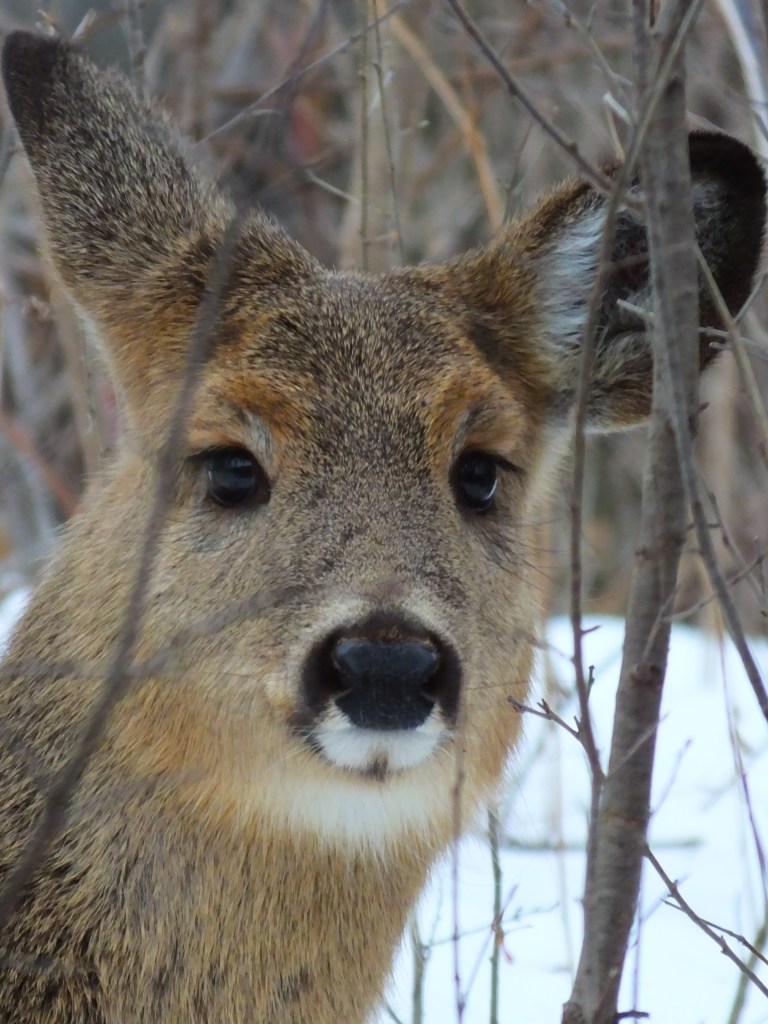
It was another fabulous morning in Estabrook Park, and I was just walking up the middle of the parkway, which has been close to car traffic since Memorial Day weekend, and I was approaching the middle parking lot, when this young deer, still sporting spots, simply could not figure out what to make of me. I’m gonna guess he’s a male, based on what look to be two pedicles on the top of his head.

His mom came out once, early on, to check out the situation, but seemed less than thrilled, and quickly headed back into the brush. It happens. Our young hero, on the other hand, seemed to be having the time of his life and pranced out twice to give me a closer look, coming all the way to the curb one time. I did my best to act like this was just a normal thing and nothing to get excited about.

What an adventure he looked to be having, and what an absolute treat he was for me to watch.

His was not the only debut this morning, either. Here are two more striking new blossoms on the slope up from the falls to the beer garden. On the top/left appears to be Royal catchfly (Silene regia), which is supposed to be “pollinated by the ruby-throated hummingbird“, so we’ll have to keep our eyes peeled for that; and bottom/left is a mystery that I cannot yet solve. Drop me a line if you have a good guess.

Meanwhile, two other beauties continue to dazzle on the same slope. Top/left might be small-head blazing star (Liatris microcephala), a not-very-dense dense blazing star (Liatris spicata), or even prairie blazing star (Liatris pycnostachya); and bottom/right is fairy wand, blazing-star, devil’s bit, false unicorn, or helonias (Chamaelirium luteum).

Finally, long-time-reader Gary commented on yesterday’s report that “an avid fisherman friend of mine verified that although that school of tiny fish you keep seeing are technically a type of catfish, they are actually baby bullheads. And darn cute bullheads they are. Much cuter now than when they grow up.”

I read about bullheads, specifically black bullhead catfish (Ameiurus melas), that they have “a squared tail fin, which is strikingly different from the forked tail of channel and blue catfish,” and sure enough, that’s the tail on our river fish from yesterday and on the ones in the pond a couple of weeks ago. Just look at all those square little tail fins. Thanks, Gary!

Let’s call that our report for today and take a break from the bugs and mushrooms for a change, eh?

Pick your poison…

It was another gorgeous morning in the park with cool air, calm winds, and sunny skies. Most of the critters were laying low, it seems, and I didn’t see a single duck. There were at least 3 belted kingfishers, however, on the same branch as yesterday, but the pictures aren’t even as good, so I’ll spare you.

Instead, here’s yet another monarch butterfly, a female based on her lack of dark spots males have, on the northern parking lot soaking in a little morning sun to warm her bones. Ha ha. Just kidding. Butterflies are insects, and so have exoskeletons, not bones. They do, however, have muscles, which they need to warm up after a cool night for optimal performance. Monarchs also happen to be “foul tasting and poisonous due to the presence of cardenolides in their bodies, which the caterpillars ingest as they feed on milkweed.”

Okay, onto our first new arrival of the day. Say hello to spotted water hemlock, spotted parsley, spotted cowbane, or what the Iroquois call suicide root (Cicuta maculata), “a highly poisonous species of flowering plant in the carrot family” growing down by the river.

Next up is the relatively nondescript common nettle or stinging nettle (Urtica dioica), also growing by the river, which I only noticed after I rubbed up against it. The Pedia of Wik reports that it has “many hollow stinging hairs called trichomes on the leaves and stems, which act like hypodermic needles, injecting histamine and other chemicals that produce a stinging sensation upon contact (“contact urticaria”, a form of contact dermatitis).” A couple hours later and after a shower, I can still feel the sting along my left arm and leg. Yowza!

In keeping with the poison theme, the bald-faced hornets are adding to their nest by the pond, a bumblebee is feasting on a bee balm blossom, and a great black wasp is feasting on some Virginia or common mountain-mint. According to John Bartram, (March 23, 1699 – September 22, 1777) an early American botanisthorticulturist and explorer, “the sting of this wasp is painful.” Thanks, John, good to know.

Less poisonous, but equally striking are a grasshopper, perhaps an adjutant wainscot moth (Leucania adjuta) feeding on a purple coneflower, and a pile of lethargic millipedes, “characterized by having two pairs of jointed legs on most body segments.”

One more new plant growing along the river, which is also non-poisonous, is the joe-pyeweed, either spotted (Eutrochium maculatum) or hollow (Eutrochium fistulosum), both of which are a “larval host to the Clymene motheupatorium borer mothruby tiger moth, and the three-lined flower moth.”

Finally, I spotted another school of catfish, this time in the river.

Oh, before I forget, Anne and I went out for what might be our last look at comet Neowise last evening, and on the way were thrilled to see the aerial acrobatics of several bats for the first time this year. With the binoculars, we did see the comet, although it has dimmed, and also picked out a couple of Jupiter’s moons. All-in-all, it was a great night for observations.

Till next time…

A cool day in July…

It was a nice cool morning and a good thing that I could wear long pants and sleeves because man-o-man the mosquitos are getting thick out there! I sprayed insect repellent straight on my face after getting bit in my eyebrow! Luckily, I thought to close my eyes first. At least I stayed out of the water this time.

The light was better than yesterday, which helped me get a little better picture by the boat launch of the juvenile spotted sandpiper we saw yesterday.

After doing my best with the sandpiper, I heard the call of a belted kingfisher down stream, and I took a look just in time to catch this scene. That’s a male (upper left without a “chestnut belly band”) delivering a nice, big, fresh fish to a young female (lower right with a “chestnut belly band”). That’s a sweet father-daughter moment, eh?

I watched him deliver fish twice, and then I tried to move down river myself for a better shot. He called once in a while, but he never came back before I gave up. I did have a much better shot, but she seemed just as tired of waiting as I was. You know how teenagers get when waiting for food, right?

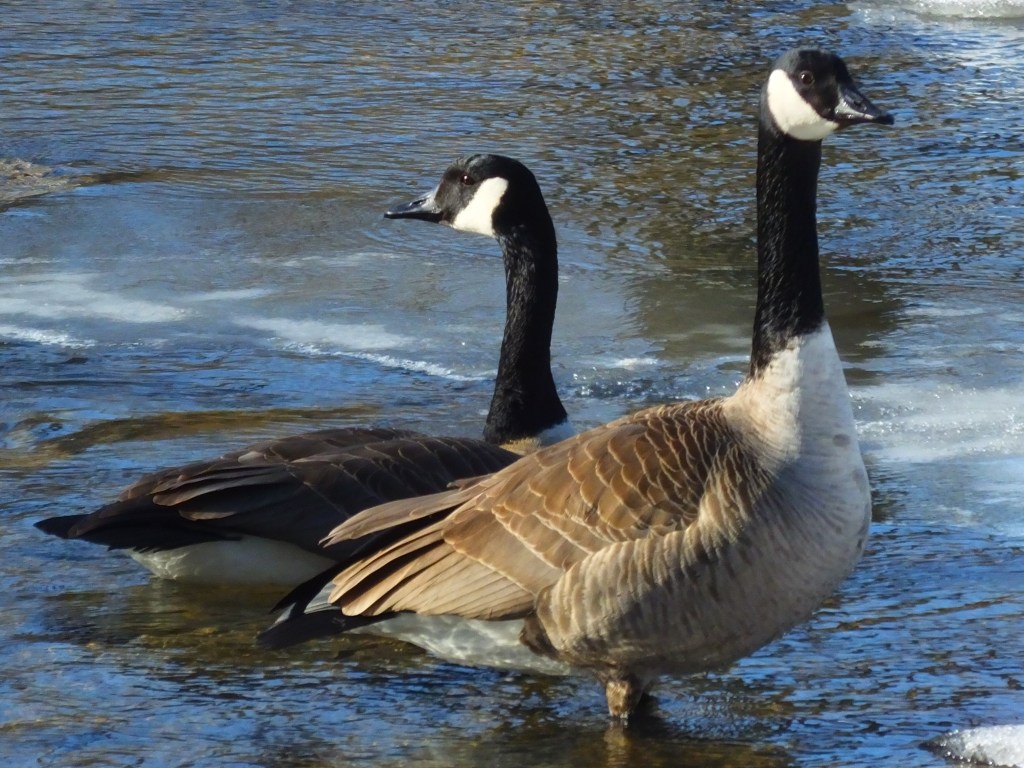
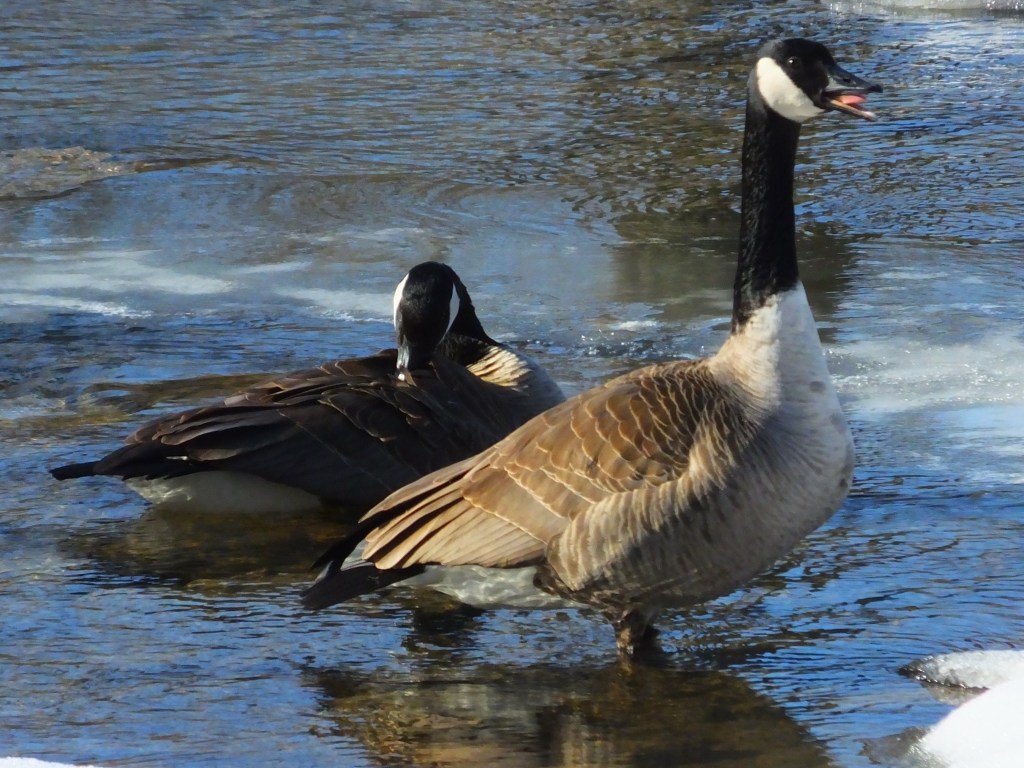
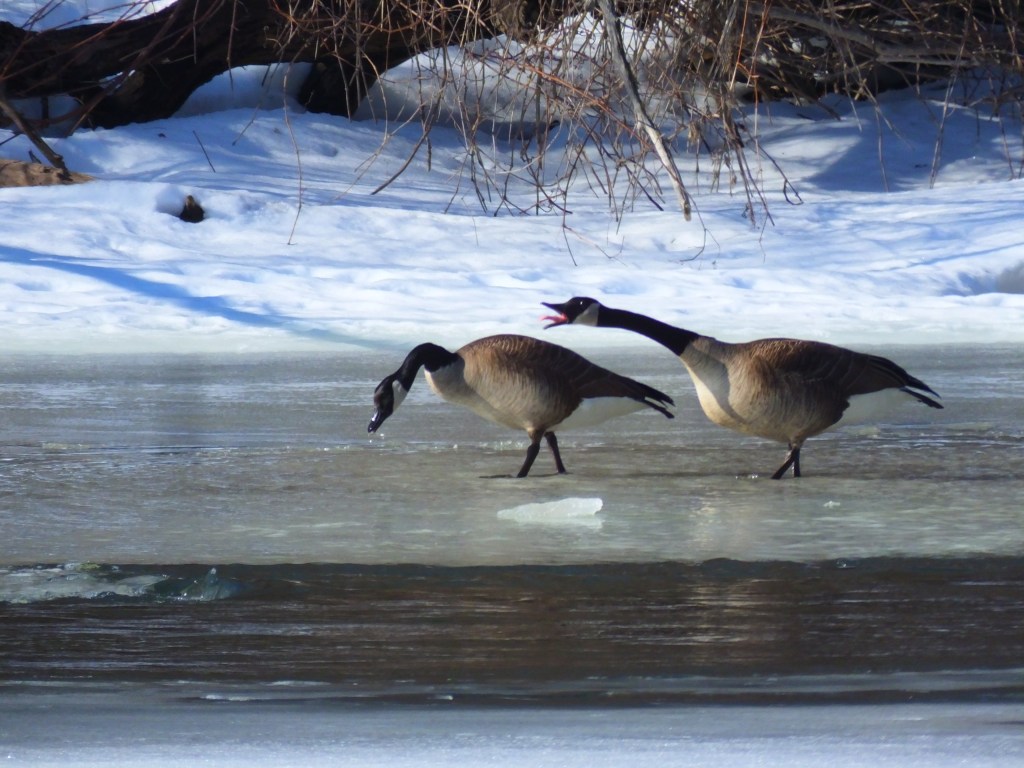
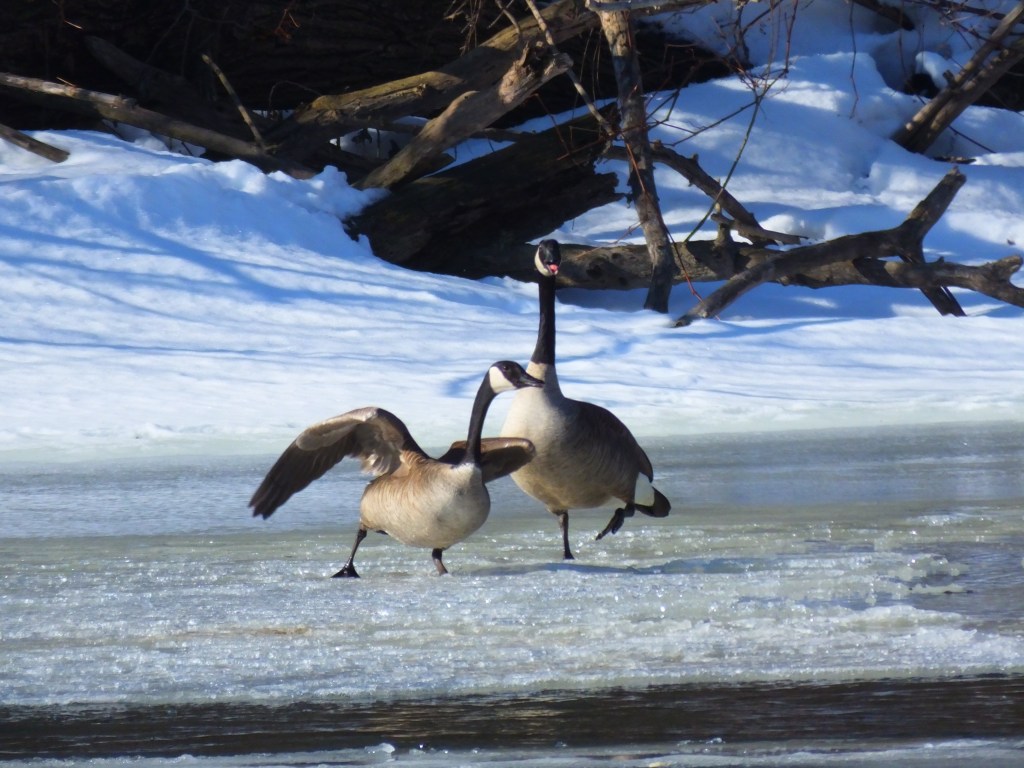
The good news is that I was treated to this spectacle for my troubles. Canada geese! Remember them?

Meanwhile, back on shore, the parade of blossoms continues. From left/top to right/bottom, we’ve got what appears to be fairy wand, blazing-star, devil’s bit, false unicorn, or helonias (Chamaelirium luteum) below the beer garden; and wild teasel (Dipsacus fullonum) by the boat launch, similar to but pinker than the cutleaf teasel (Dipsacus laciniatus) the we saw last week.

Common evening-primrose (Oenothera biennis) is blooming in several places, especially along the Oak Leaf trail; and tall hairy agrimony (Agrimonia gryposepala) is blooming along the river south of the falls.
Finally, these bees are really digging this sow thistle in bloom by the southern entrance from Wilson Drive.

Enjoy this break in the heat, because I hear it will be returning soon.

A morning of ups and downs in Estabrook

I’ll spare you the suspense and report that the biggest down was me falling into the river. Don’t worry! The camera is fine, and I’ll dry out. I did manage to get this picture, however, of the mallard hen with her two nearly-grown ducklings before I went in. We’ve seen them a few times before at the big mud flats down the bank from the southern playground.

I cleaned up as best I could and continued north until I came upon this pair of spotted sandpipers (Actitis macularius) on our side of the river for a change. On the left/top, without spots, appears to be a juvenile, and on the right/bottom, with spots, appears to be a breeding adult.

As I’m trying to get shots of these skittish birds, which we’ve been after for weeks, guess who shows up.

That’s right! The three mallards that watched me fall in just 10 minutes before. I guess they figure I must be completely harmless after that stunt.

Better yet, they marched right up onto the path and into the weeds on the east side. I eventually gave up on continuing north and backtracked to go around them. Little stinkers are getting bold!

Here’s mom keeping an eye on me while her kids have their second breakfast.

After the detour, I got back down to the river and spotted these pretty new flowers below the beer garden. On the right/top might be small-head blazing star (Liatris microcephala), a not-very-dense dense blazing star (Liatris spicata), or even prairie blazing star (Liatris pycnostachya); and on the left/bottom might be Virginia or common mountain-mint (Pycnanthemum virginianum).

I finally reached the oxbow pond north of the falls and found our mallard family with the yellow duckling, and this morning mom and all five ducklings are back together! Woo Hoo! Maybe junior just felt off and was self-quarantining for the day, eh?

Once they see me, well, then it’s bath time, of course, and after their bath, they march right up the bank, which is pretty steep at this point, and onto the path! What the heck did I step in this morning, besides the river, right?

Here’s the second mom this morning suggesting that I go around! What the heck is growing on the east side of the path today? Ducknip?

And there you have it. I sure am as glad as you all must be to see those five siblings back together again. Yay!

It seems some kids might not be alright…

First, the good news. A monarch butterfly seemed to really enjoy that eastern purple coneflower (Echinacea purpurea) on which we saw a green inchworm just yesterday.
A few birds seem much more willing to pose for a picture recently. From top/left to bottom/right, we’ve got an American goldfinch, who we last saw on some Canada thistle; what appears to be an juvenile eastern phoebe, whose elders I’ve never seen sit still for so long; and our new best buddy, the indigo bunting, showing off his blue wings this time so we know for sure he’s not a blue grosbeak.

Those  dryad’s saddle, aka pheasant’s back (Cerioporus squamosus) that were “in the “pig nose” stagejust three days ago sure have grown!

Finally, the sad news. The wood duck hen was by herself on the pond again this morning, and of the five mallard ducklings, including the yellow one, only four remain. 😢

So it goes, I guess. Perhaps that the price for having minks.