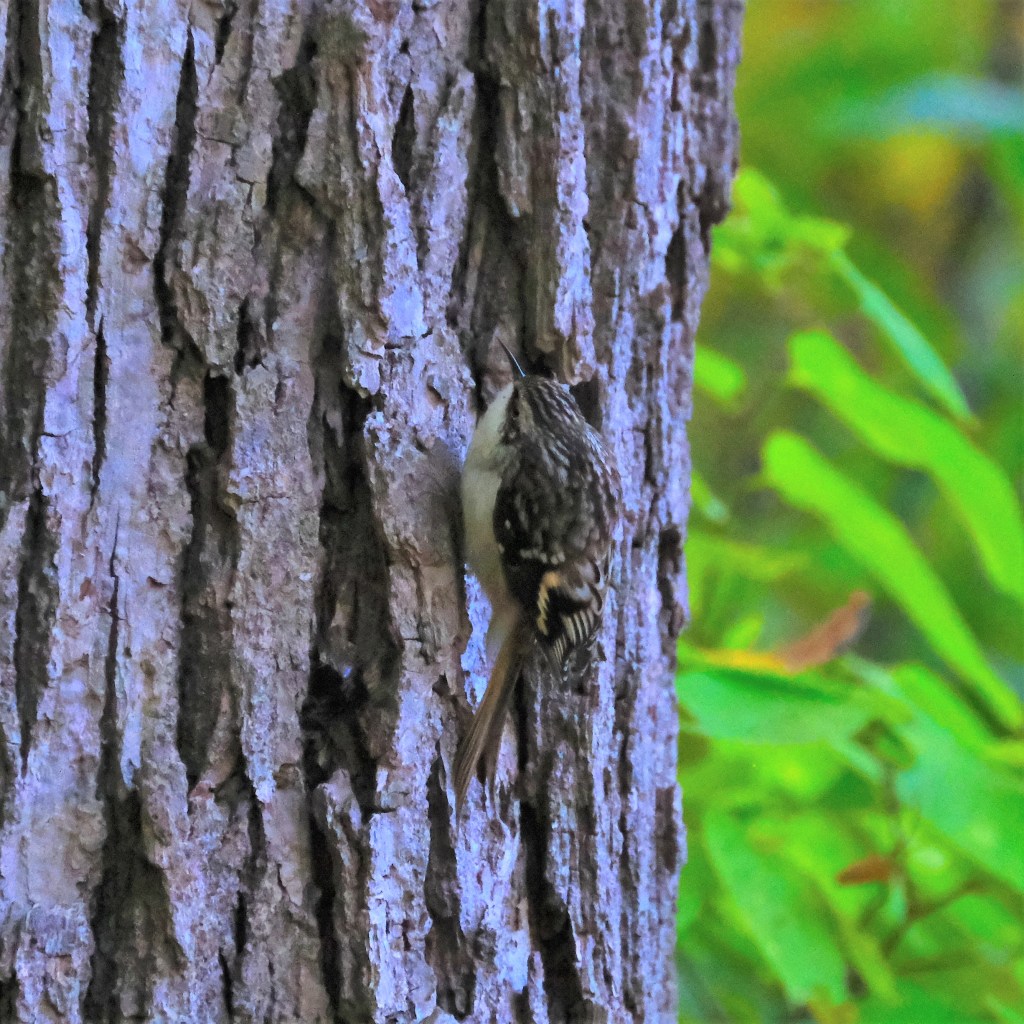
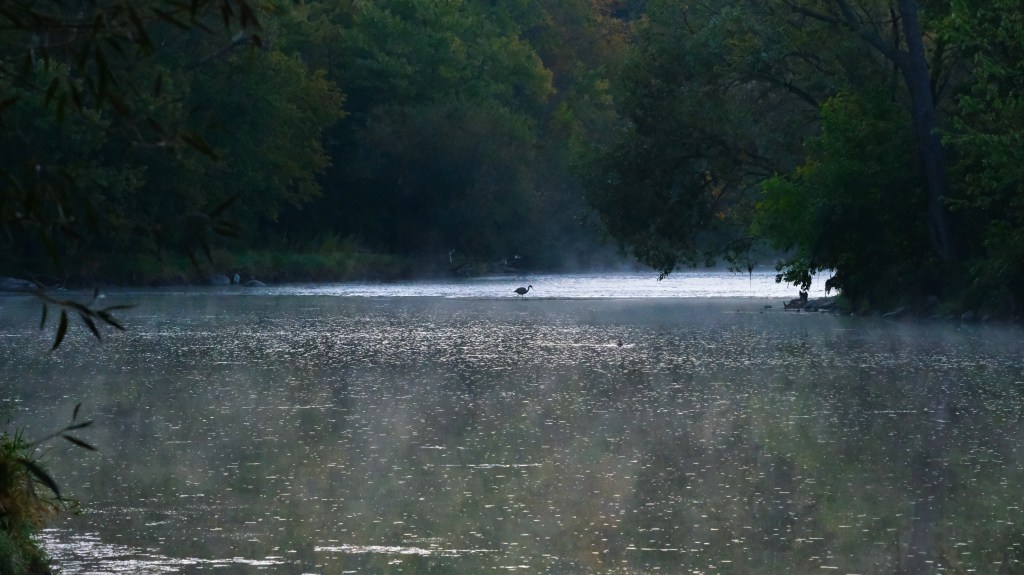
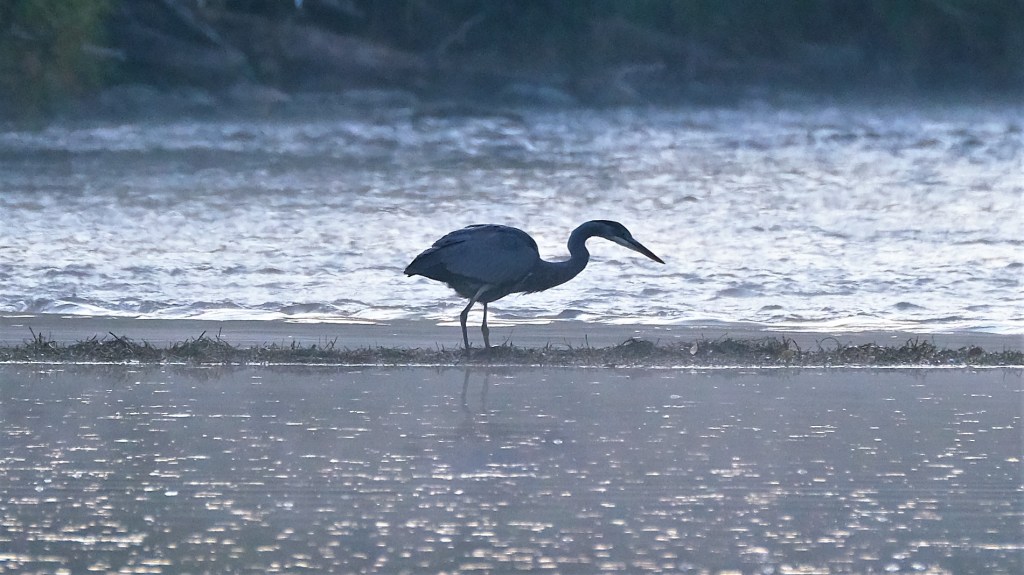
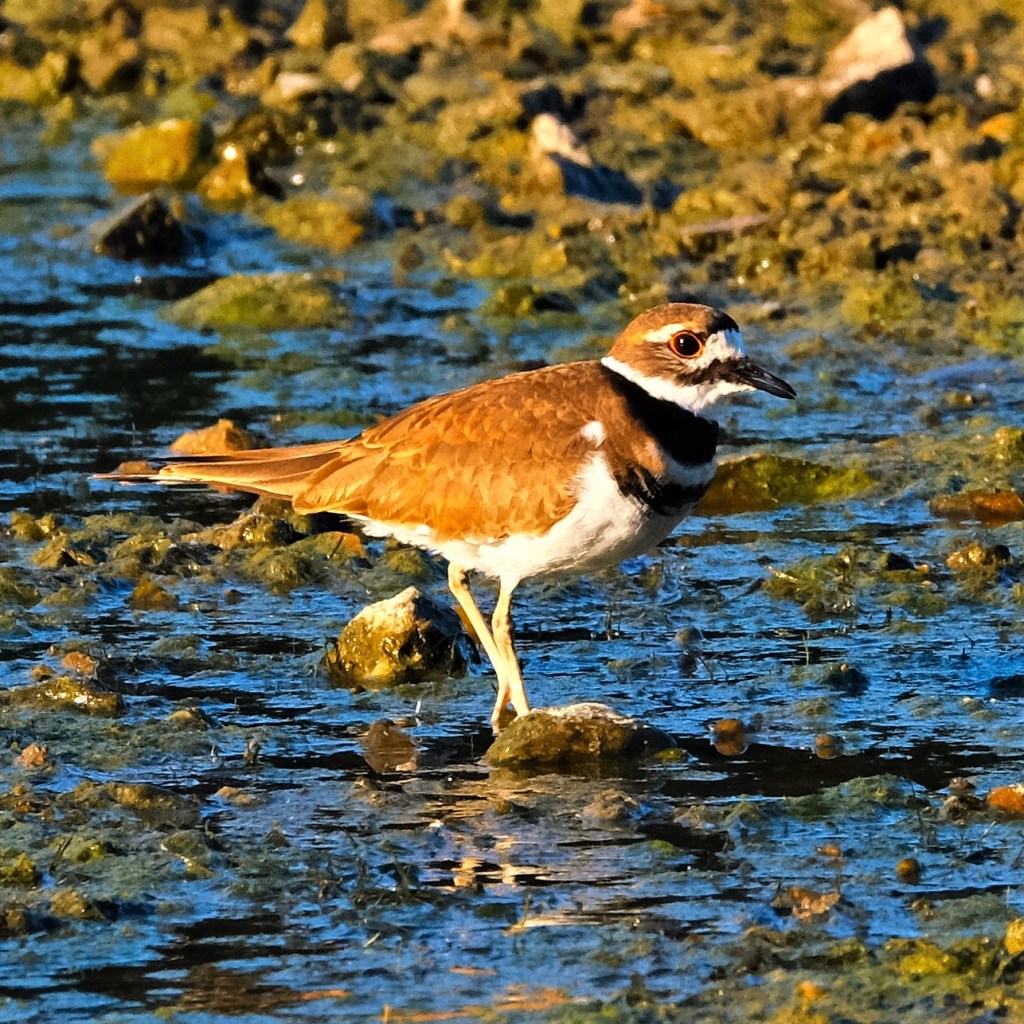
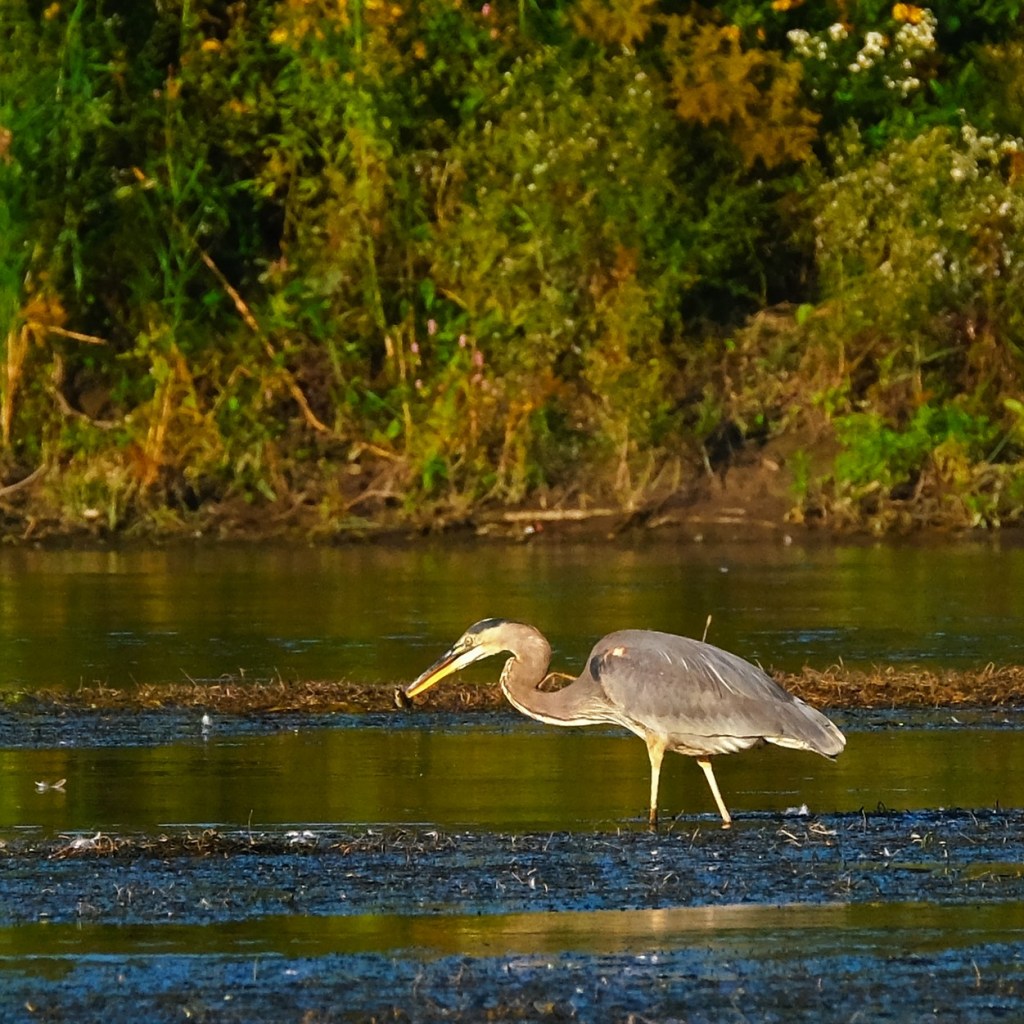
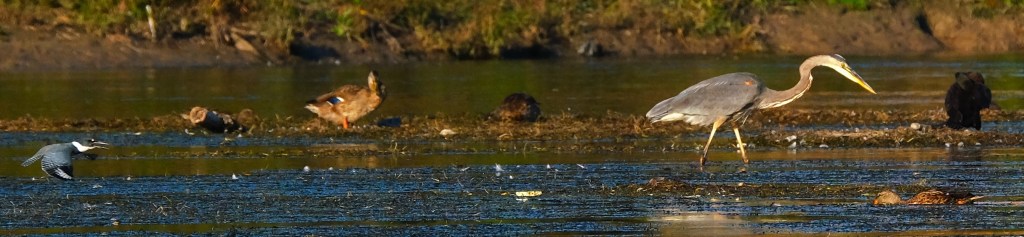
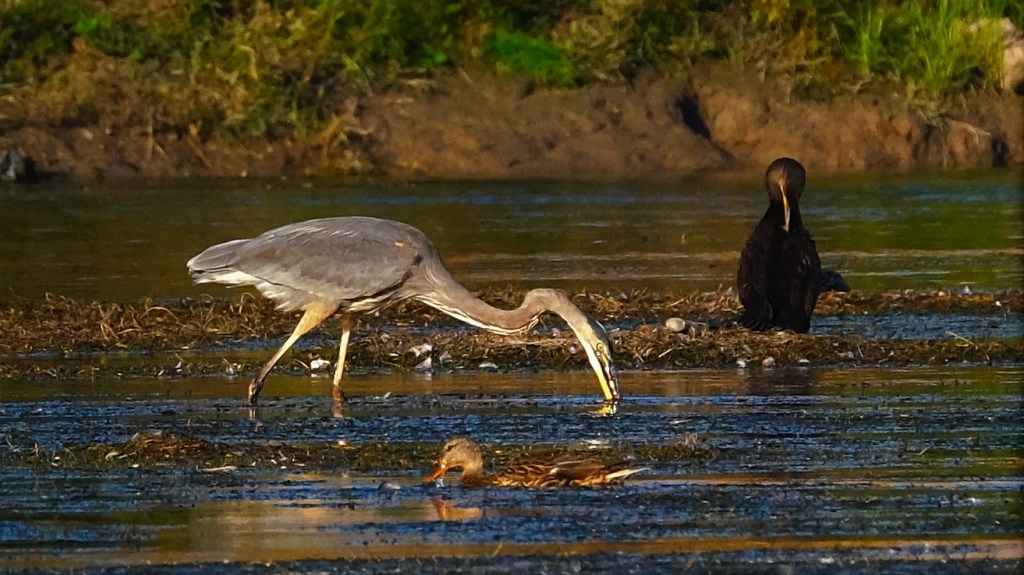
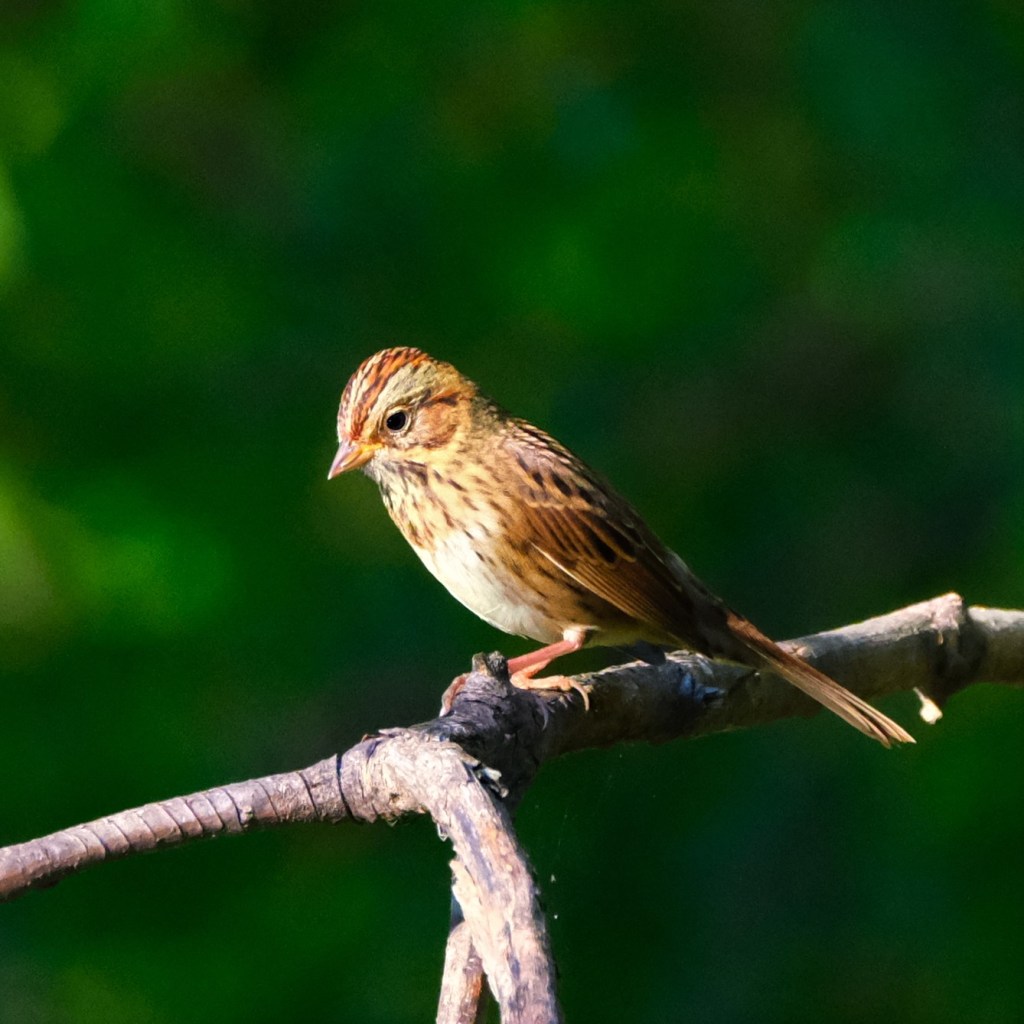
All kinds of critters about today…

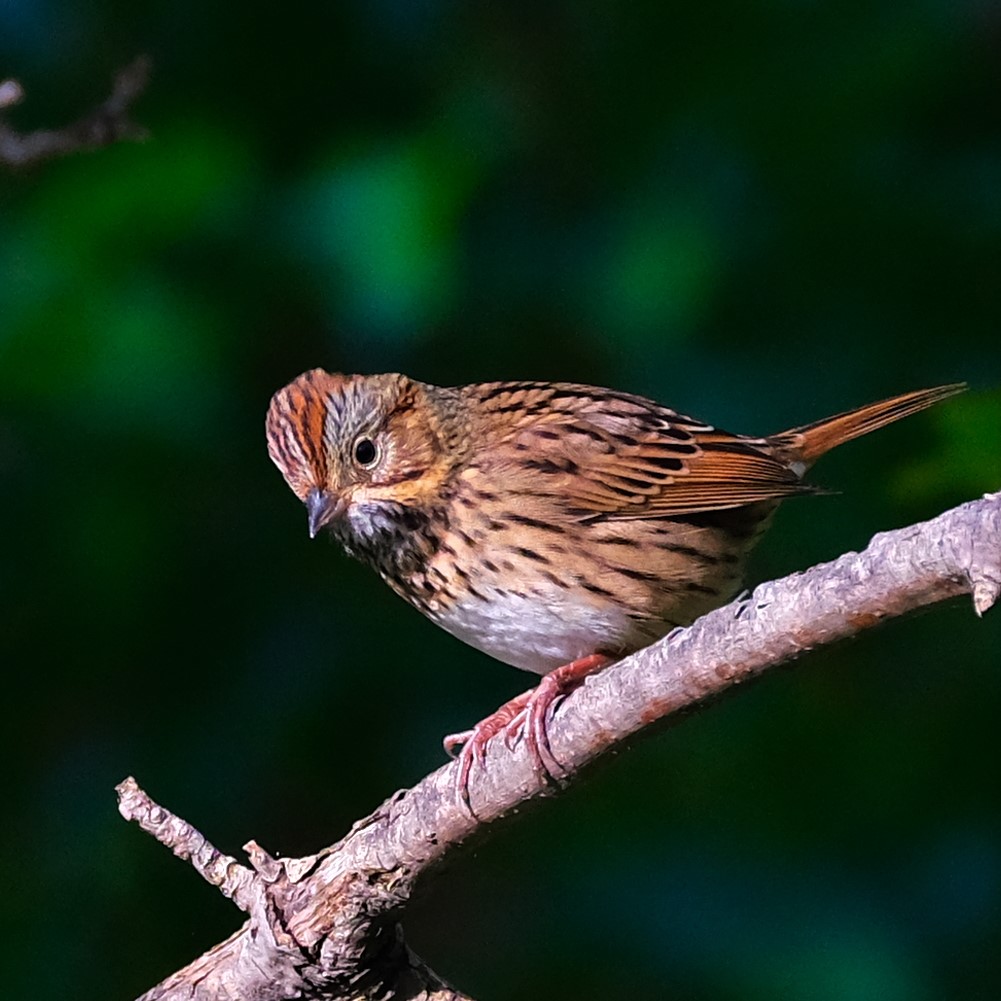
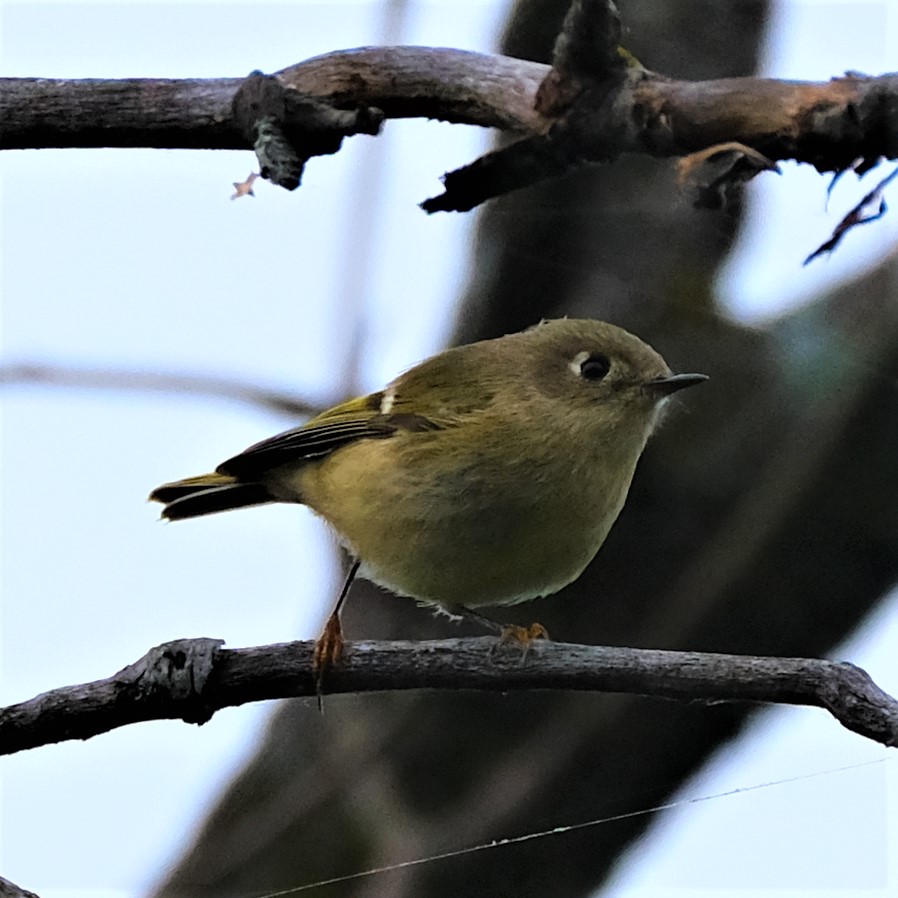
The big news in Estabrook today is that the Parks Department has closed the parkway to through traffic for the summer again as part of the Milwaukee County Active Streets Program, and it is glorious! I walked the length and just enjoyed listening to the birds. As I approached the north end of the closure, I spotted this little guy in the grass beside one of the old fruit trees there. The shades of grey on its head make me think it might be a young grey catbird.
I took that picture, and as I turned to leave it in peace, it flew up and tried to land in or on my camera case! Happily, it was content to perch on my finger instead, and I was able to return it to a branch up in the tree. Best of luck, little buddy.
I didn’t linger, in hopes that Mom would come by, and continued on to the pond, where I bumped into long-time reader, Sheila B, who wondered how I find all this stuff. I head a green heron overhead and spotted three on the wing, but they kept going and so did I.

At the river, as I bent down to pick up a Styrofoam™ cup, I got close enough to the water to notice this spectacle. The shallow water was teeming with tadpoles, and given the date of Toad-a-palooza this year and that toad eggs “can hatch in 2–14 days“, plus their “skinny tails in relation to the size of their black bodies“, I’m gonna guess they are American toad tadpoles. Fantastic!

Just a bit north of there, I stepped off the path and bent down to retrieve a Lunchables® wrapper and spotted this guy just floating in the water right by the shore. He or she did swim around just a bit, and slapped the water with their tail once, but they didn’t swim away, and after a few pictures, I backed away and continued my journey.

I’d barely taken 10 steps before I saw this little rascal, who didn’t seen to know what to make of me. It slow-hopped up the path a bit and then turned around and came back even closer that it was at the start. It finally ambled onto a side path and let me pass.

At the far north end, I didn’t see our ducklings, but I did spot our fifth butterfly of the season, this time a beautiful eastern black swallowtail (Papilio polyxenes asterius), fresh out of its overwintering chrysalis and soaking up some morning sun.

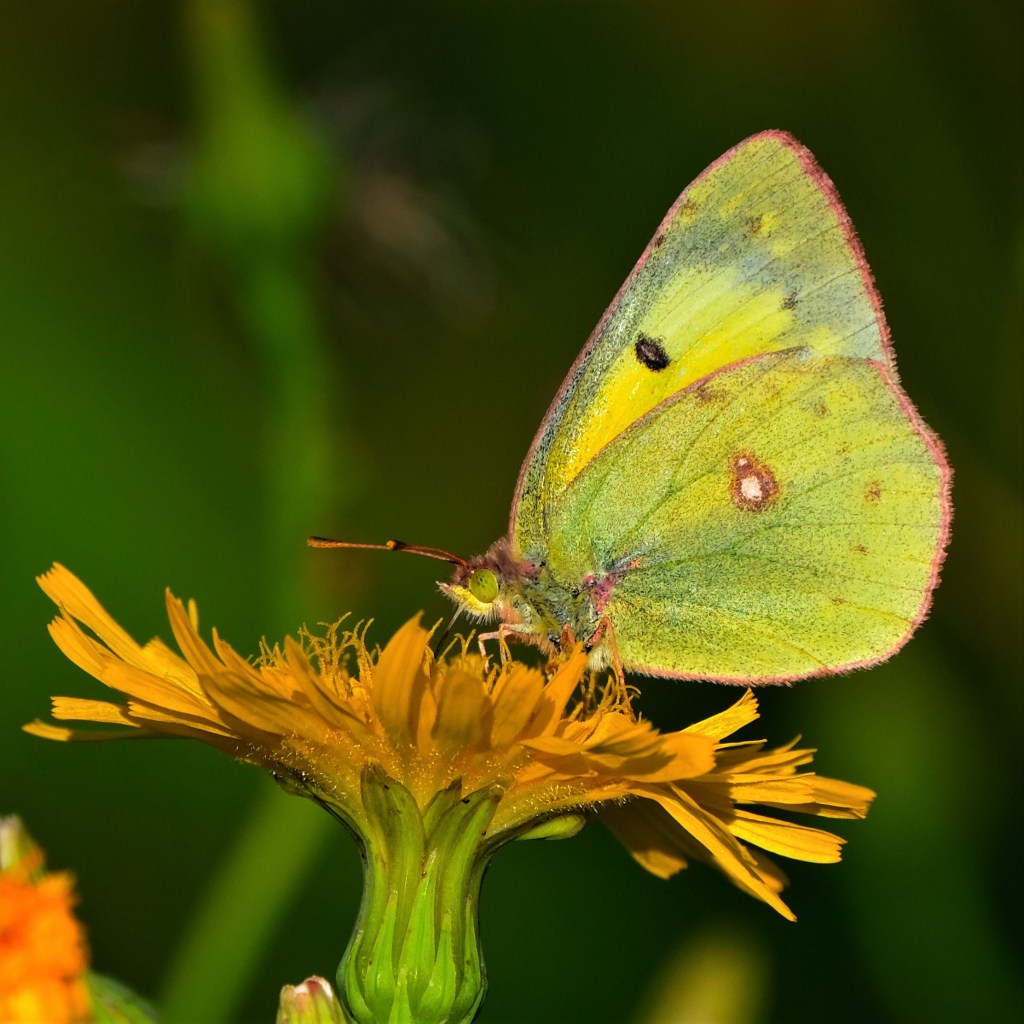
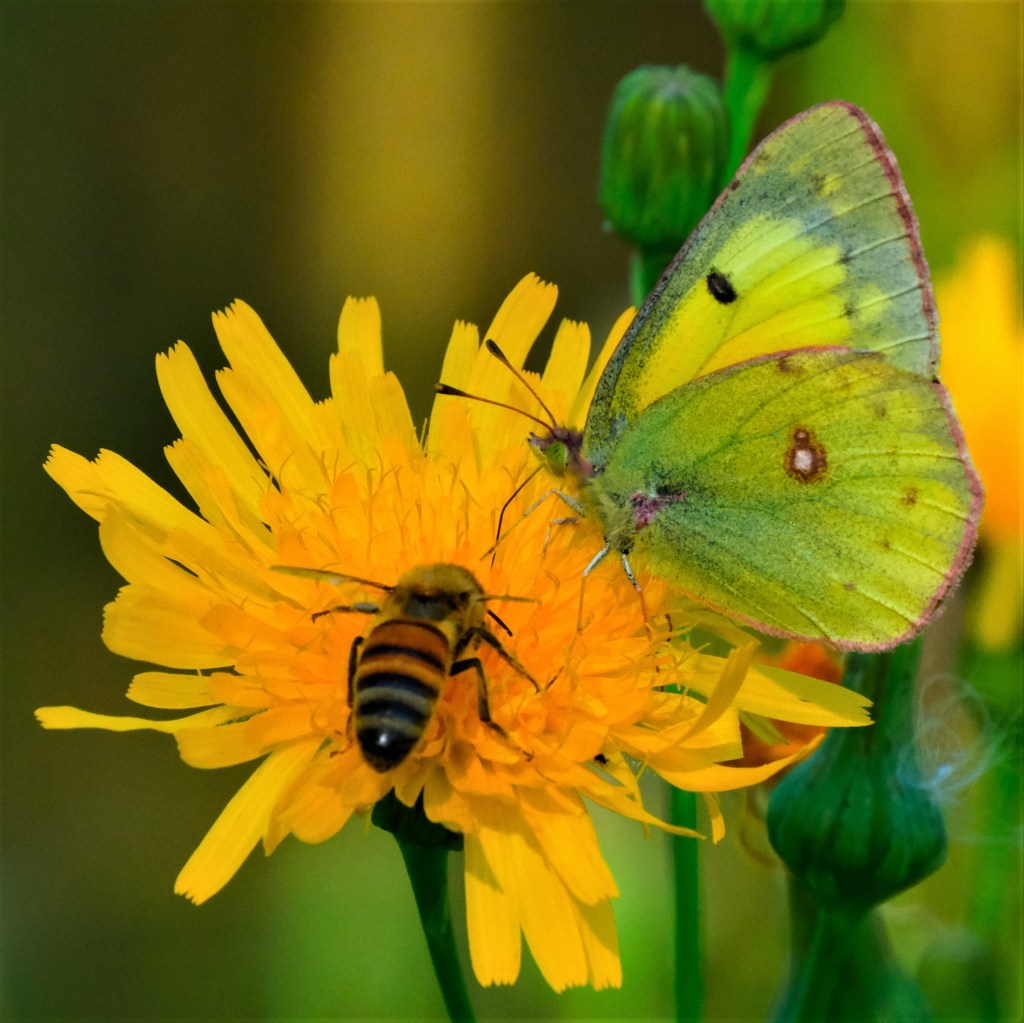
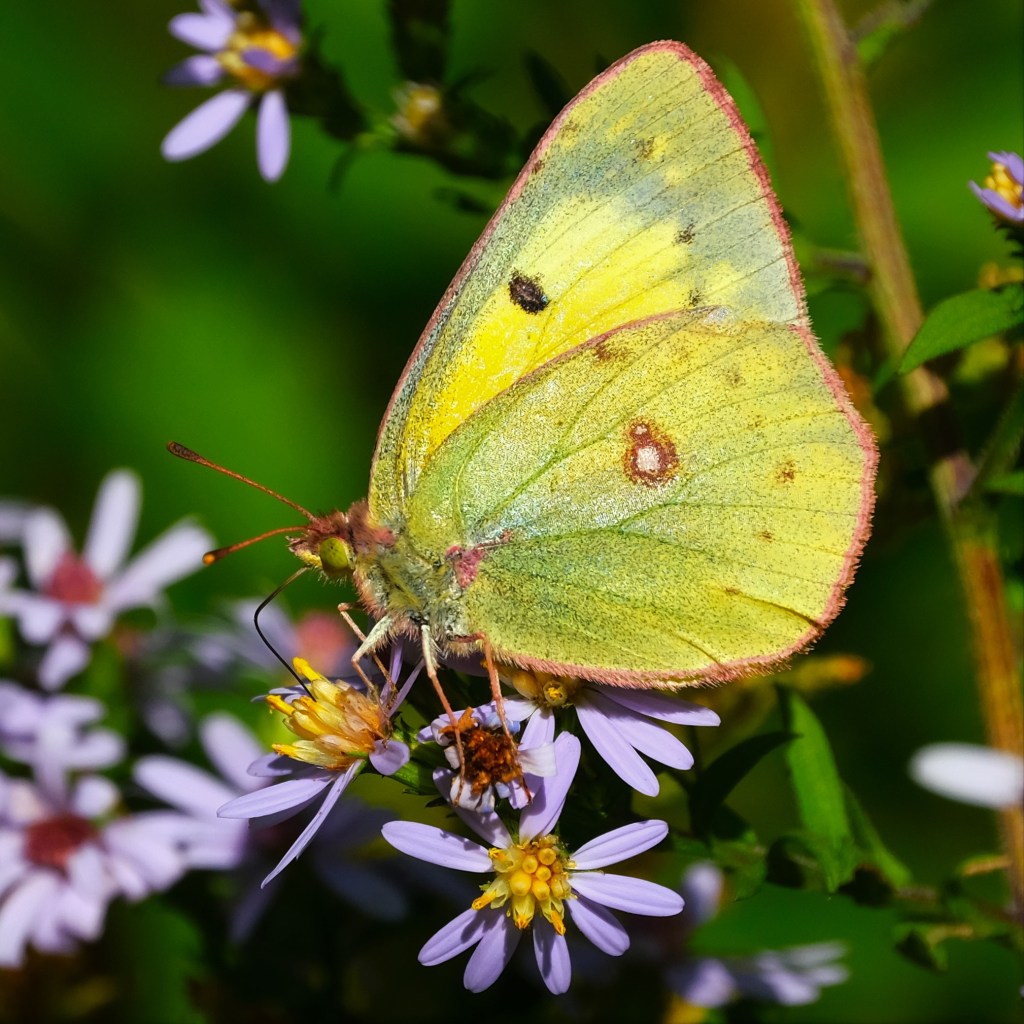
On the clover nearby was this little sulfur, who does have a pretty clear pink edge, so I’m gonna go with pink-edged sulphur (Colias interior).

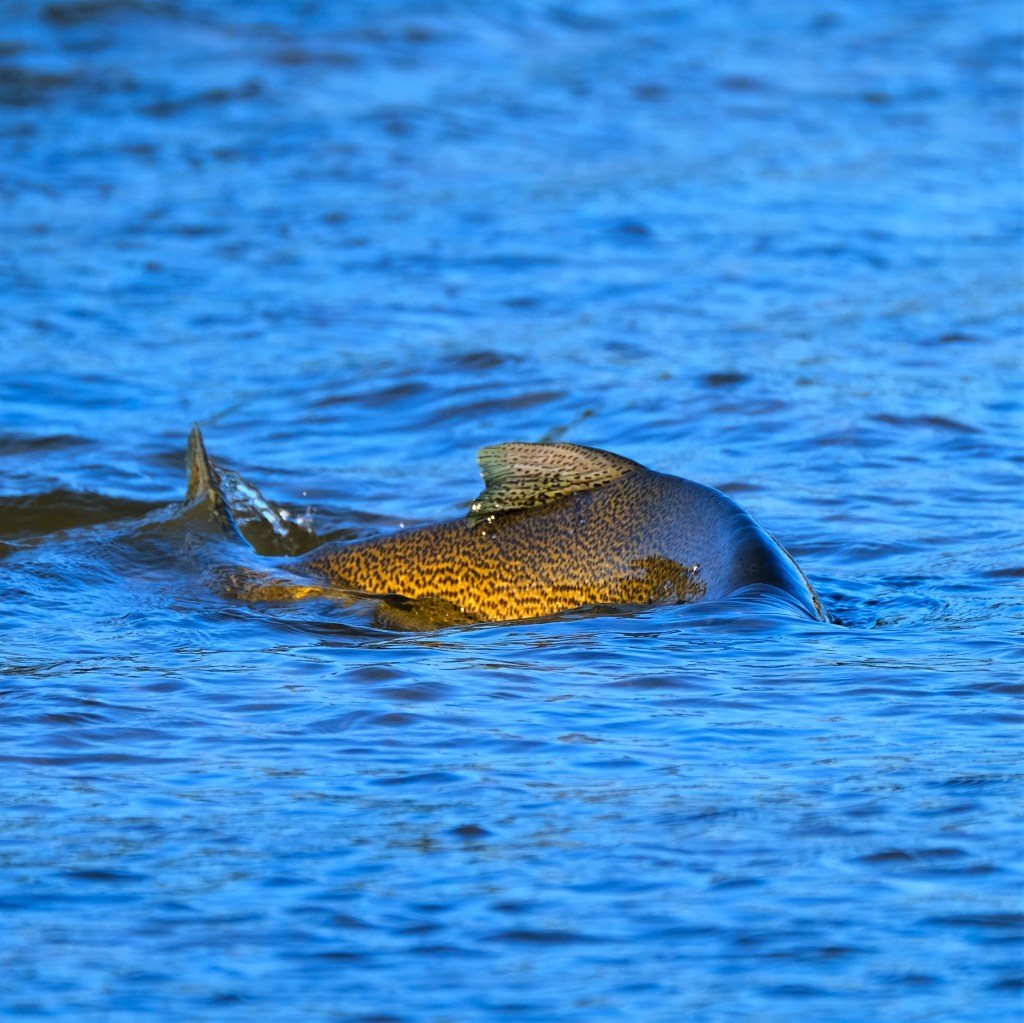
While there, I glanced at the river and was greeted by yet another spectacle in the shallow water between the east shore and the northern island. It went on for a while and even chased away a pair of geese!

If I had to guess, I’d go with “fish spawning in the shallows”, and if you really pressed me, I’d go with smallmouth bass (Micropterus dolomieu), based on this fishing report I found online, but don’t quote me.

On my walk home, a cute little red squirrel posed for this slightly blurry picture through the sticks…

I noticed that the false Solomon’s seal (Maianthemum racemosum) is starting to open…

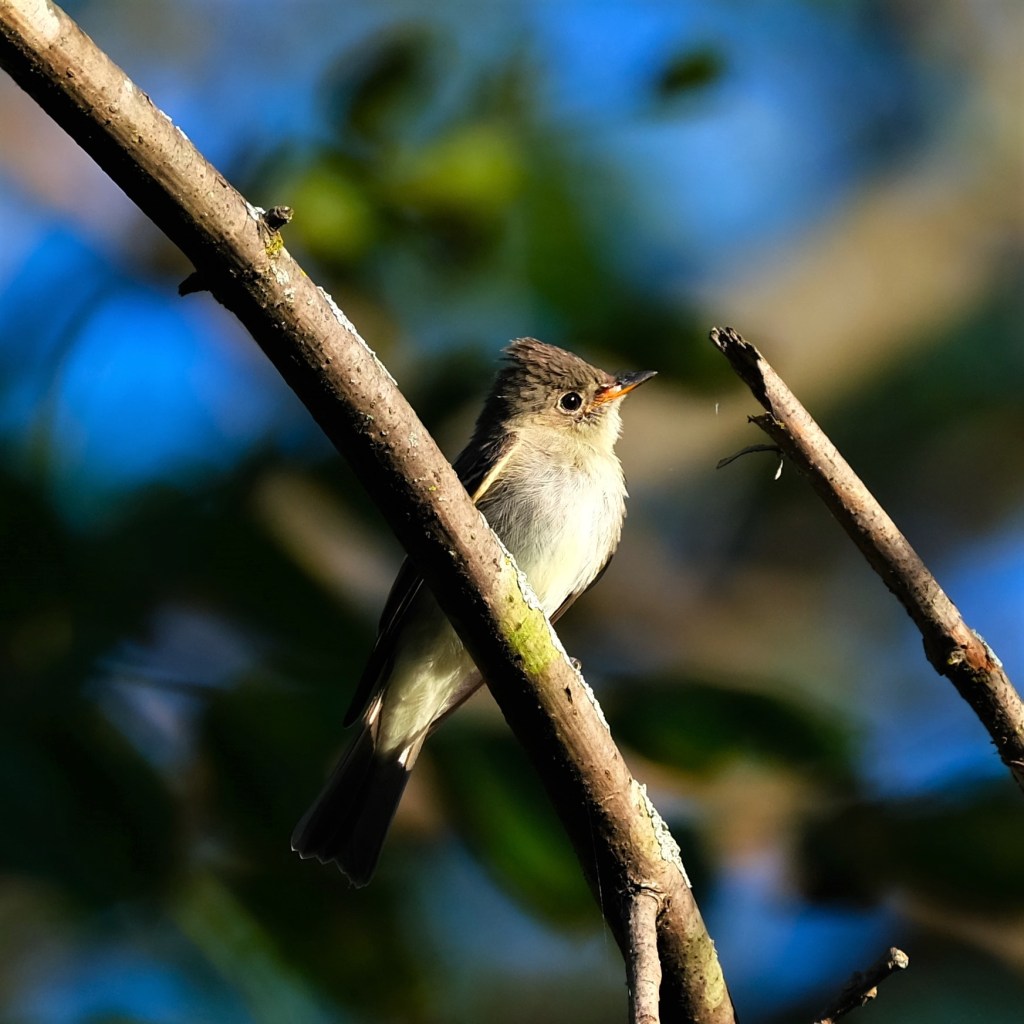
And, finally, this little great crested flycatcher struck a pose that I just couldn’t ignore.

More signs of new life in Estabrook Park…

Mom was pretty shy this morning, and I didn’t want to push things, so that’s all I’ve got so far, but the little tyke can already scamper pretty well.

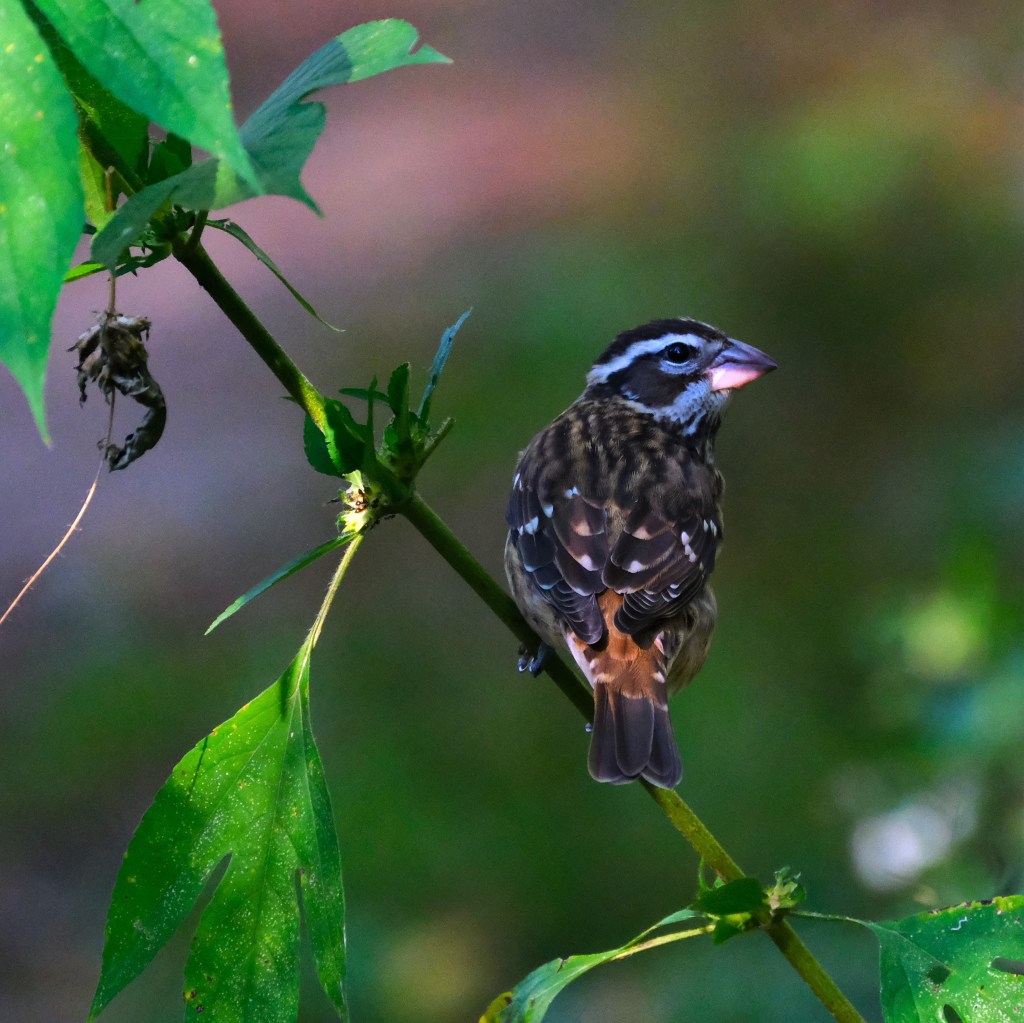
Meanwhile, here’s a male rose-breasted grosbeak calling for the female we spotted yesterday. He might want to clean up that beak before she sees it, but maybe he’s got other qualities.

Closer to the ground, we’ve got several new blossoms in the park, including Canada columbine, eastern red columbine, or just plain wild columbine (Aquilegia canadensis);

Canada anemone, round-headed anemone, round-leaf thimbleweed, meadow anemone, windflower, or even crowfoot (Anemonastrum canadensis); and

Virginia waterleaf or eastern waterleaf (Hydrophyllum virginianum), which is often pale and scraggly, especially after the rain, but if you look long enough, you can find a presentable clump of blossoms.

Finally, cast your eyes upon this gorgeous scene captured by my colleague Mike Betette, which looks for all the world like a composition by a Dutch master, doesn’t it. He posted it on Instagram last evening, and I begged him to send me a copy that I could share with you.

The gosling between the two adults sure looks smaller than the rest, doesn’t it? Maybe they’re the ones we saw yesterday, too. Ha!

A morning of many firsts…

I should go out an buy lottery tickets for lunch because I can’t believe the string of luck I’ve had this morning. The air was cool, but not cold, humid, and calm, and so perfect for bugs and therefore perfect for birds. I hardly got into the park before I happened upon this little ray of sunshine: a Blackburnian warbler (Setophaga fusca), whom I’m pretty sure I’ve never seen before, and who must have missed the flight from South American that got in yesterday.

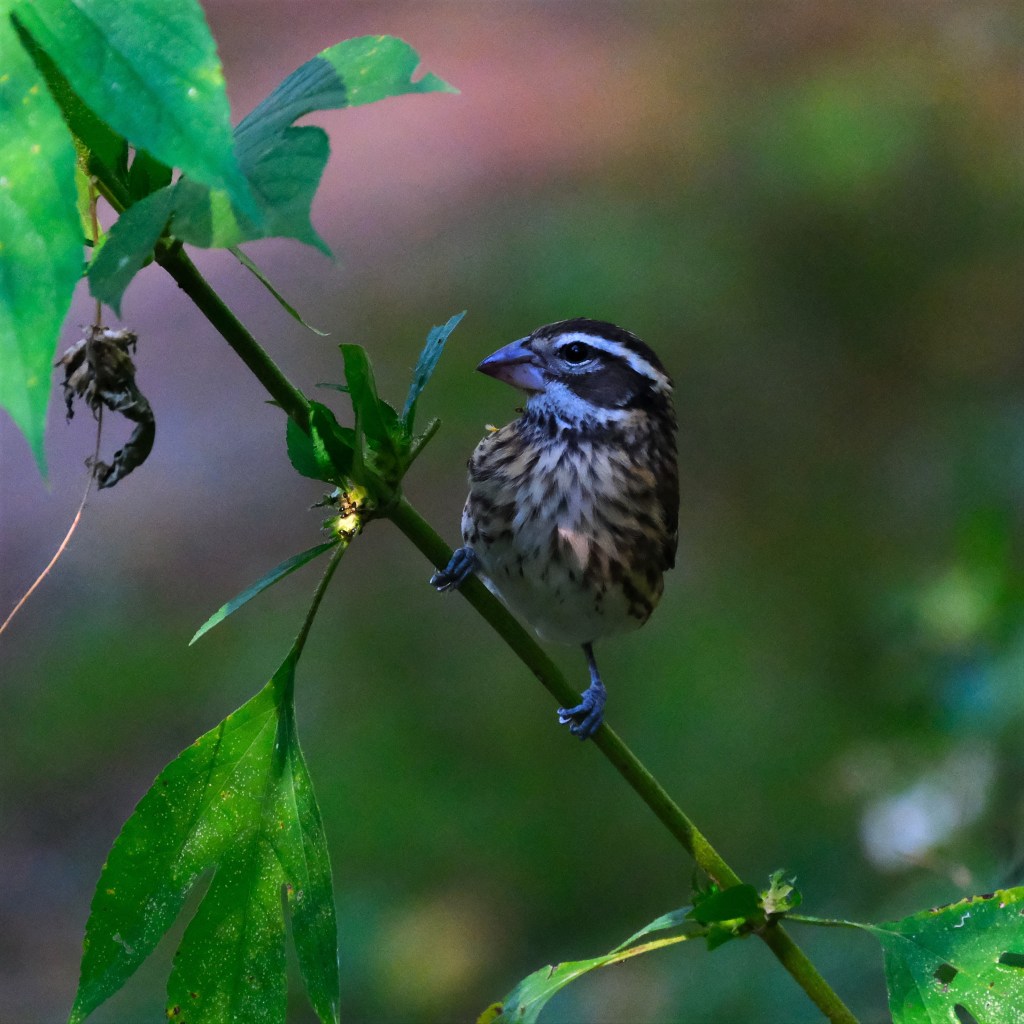
The tree he was in, right beside the southern parking lot, was loaded with birds, and when he hopped out of range, I turned my attention to this understated cutie, a female rose-breasted grosbeak to go with the male we saw just a couple of weeks ago, but whom I don’t believe I’ve seen before.

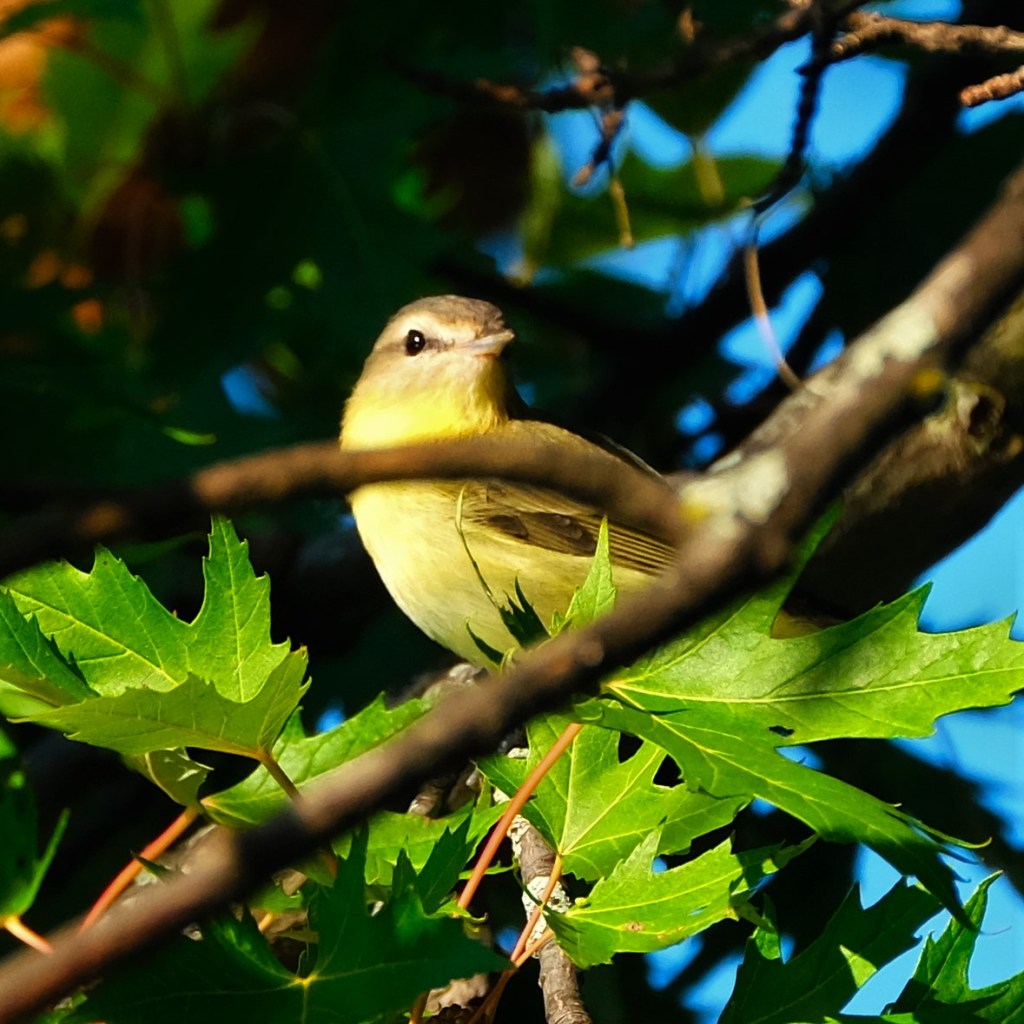
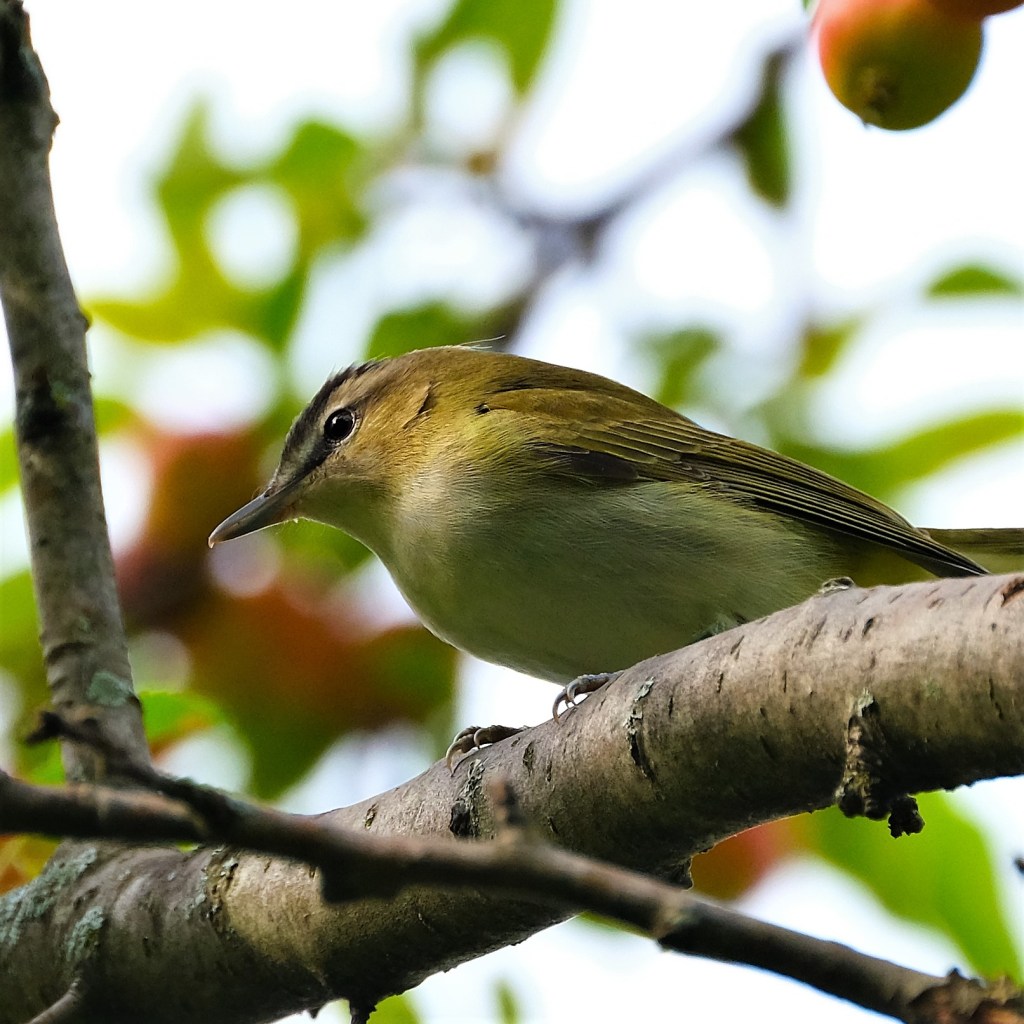
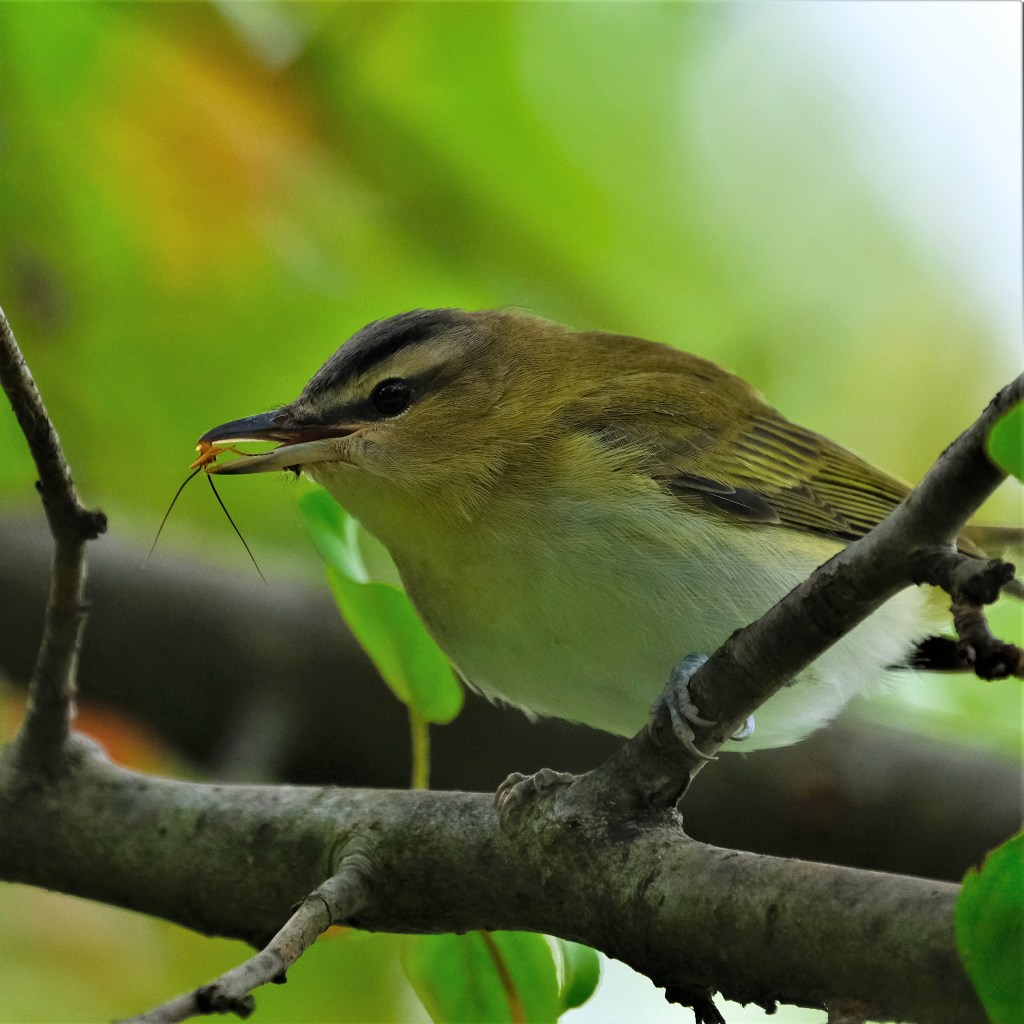
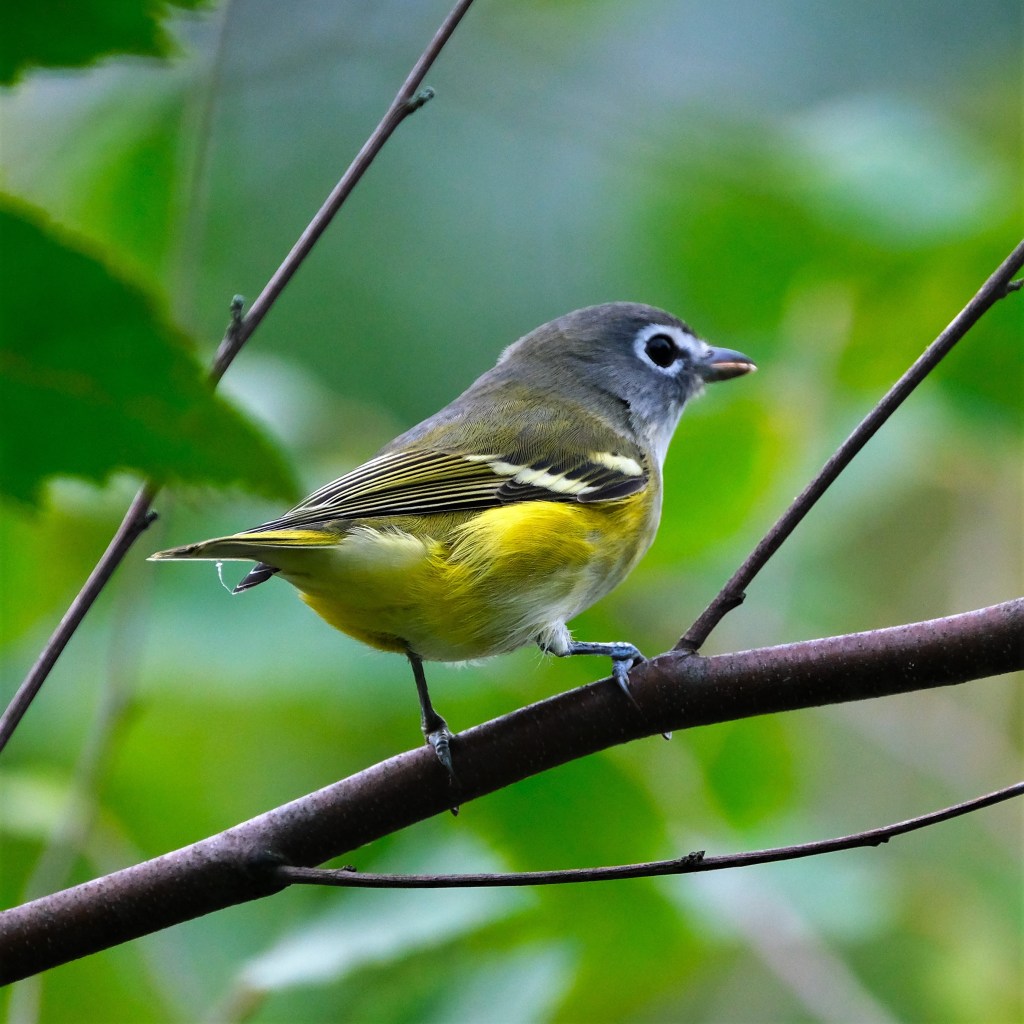
I didn’t see anybody new at the pond, and on my way to the river, I spotted yet another new arrival, a yellow-throated vireo (Vireo flavifrons), just in from Central America and dispatching a pretty big bug, right behind the branch in the second image.

At the river I headed north and didn’t see anything noteworthy until I reached the north end, where lo and behold, look who is taking their maiden swim, as far as we know. If you’re not sure, yup, that’s a mallard hen with her ducklings, and we’ve seen plenty before, but not yet this season.

They made a beeline for the exposed mudflat beside the northern island, and the little ones, I count 10 of them, acted like they’ve never eaten before in their entire lives.

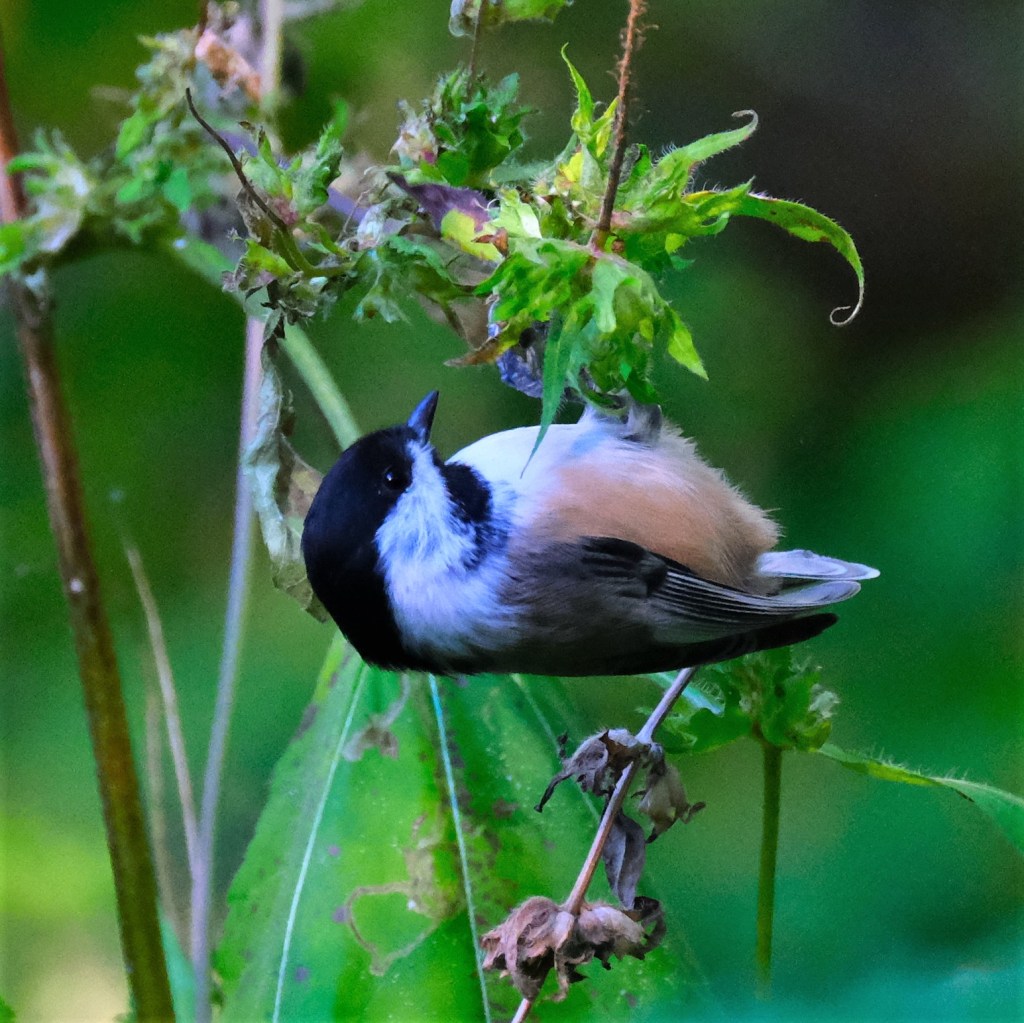
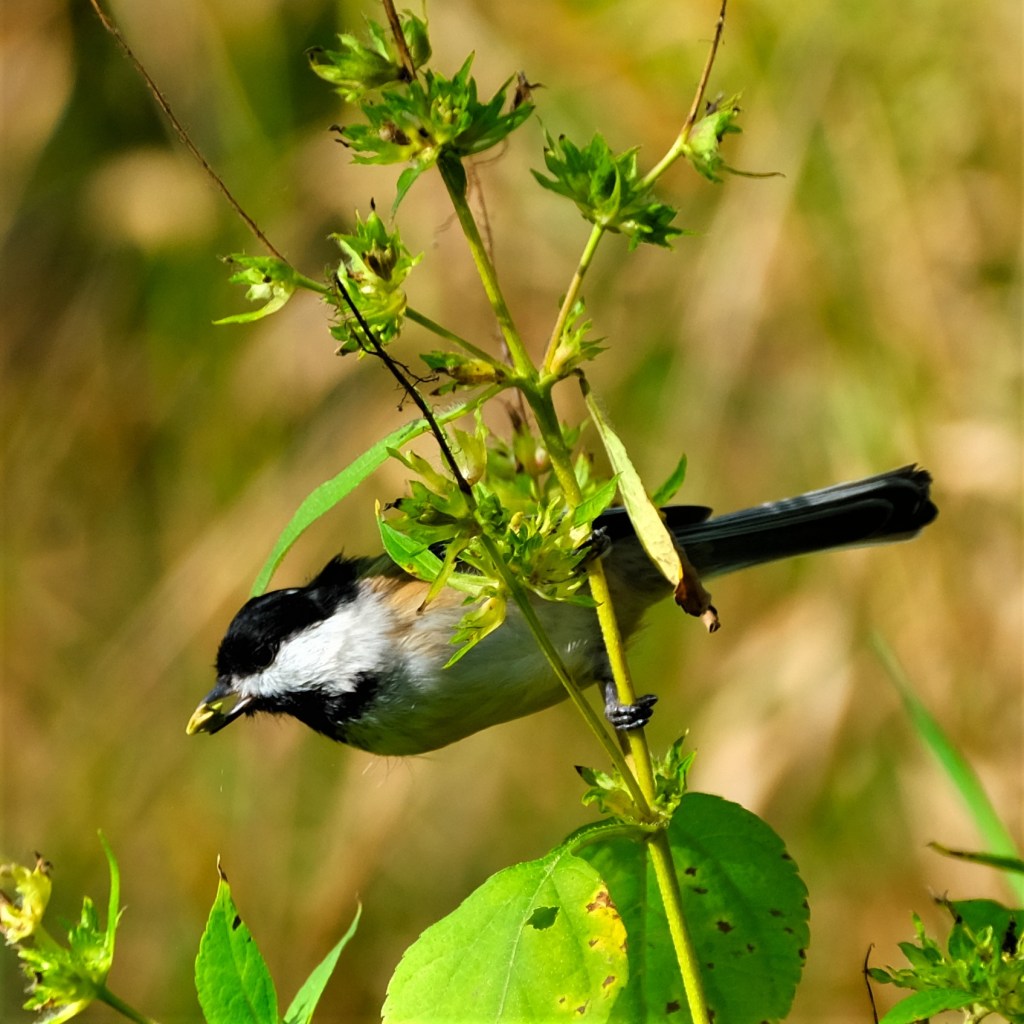
For the umpteenth time, I started floating home on cloud nine, but had to stop for this picture of a chickadee mining an old tree trunk for a beakfull of fluffy fibers.

A bit further south, I came across this curious sight that I hoped it might be indian pipe, but with more color than I remember. Well, it turns out it does have the same species name as indian pipe, uniflora, and it is parasitic like indian pipe, but it’s not in the same genus or even family, and it doesn’t have such a quaint name. Instead, this delicate little flower is described by The New York Times as “The Flower That Must Not Be Named, or if you want to play it safe, just Orobanche uniflora.

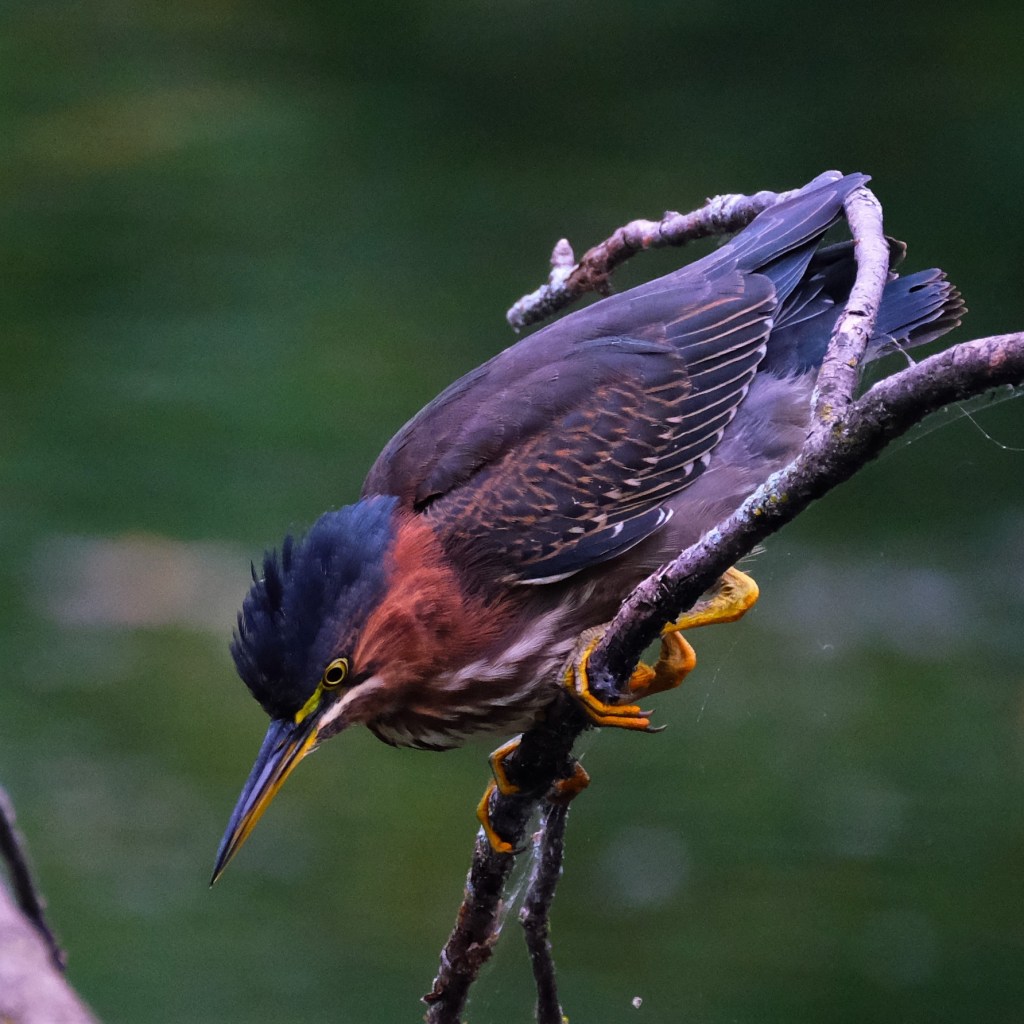
Continuing south, I head a green heron calling and finally spotted it up high up in a tree across the river absolutely rocking it’s Gru imitation.

Finally, I came across two families of geese, both of which appear to have one gosling smaller than the rest. Perhaps such adoptions are more common than I realized.

A quick trip between the rain drops…

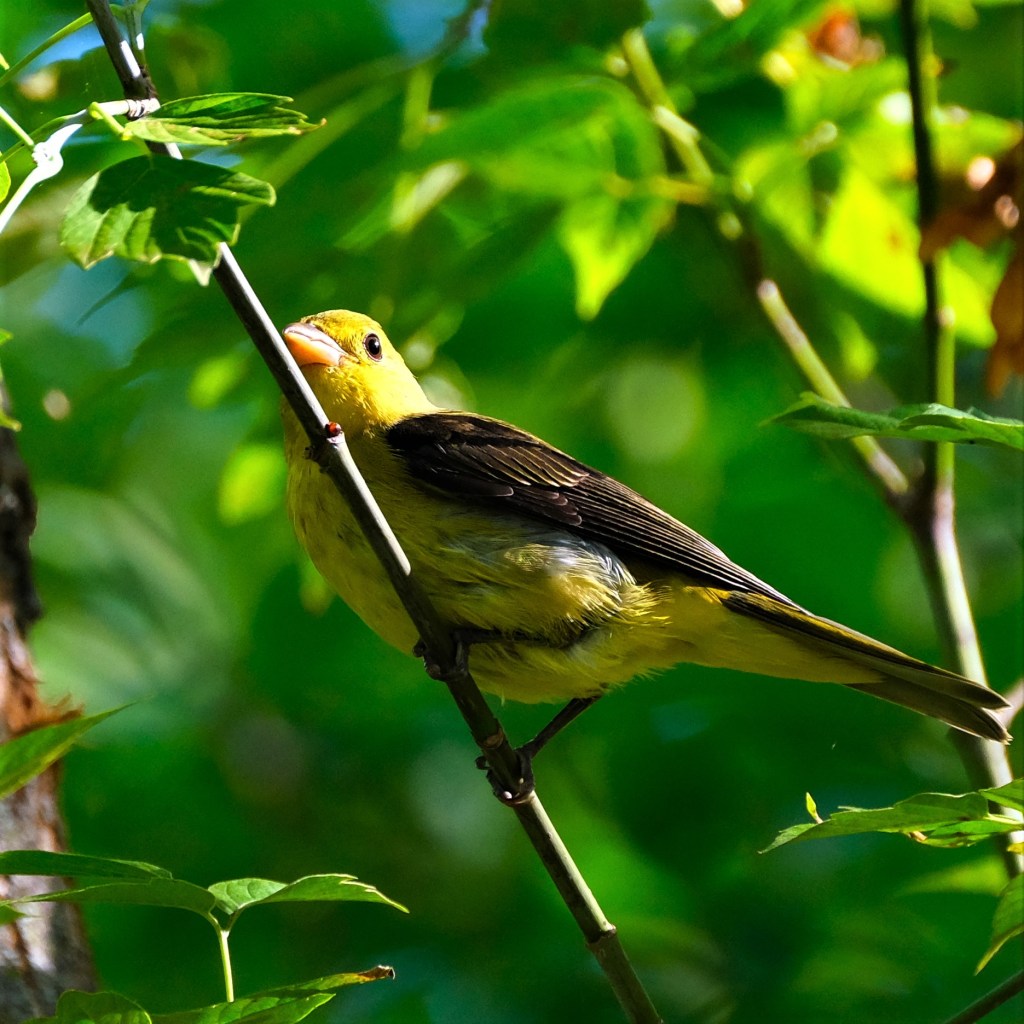
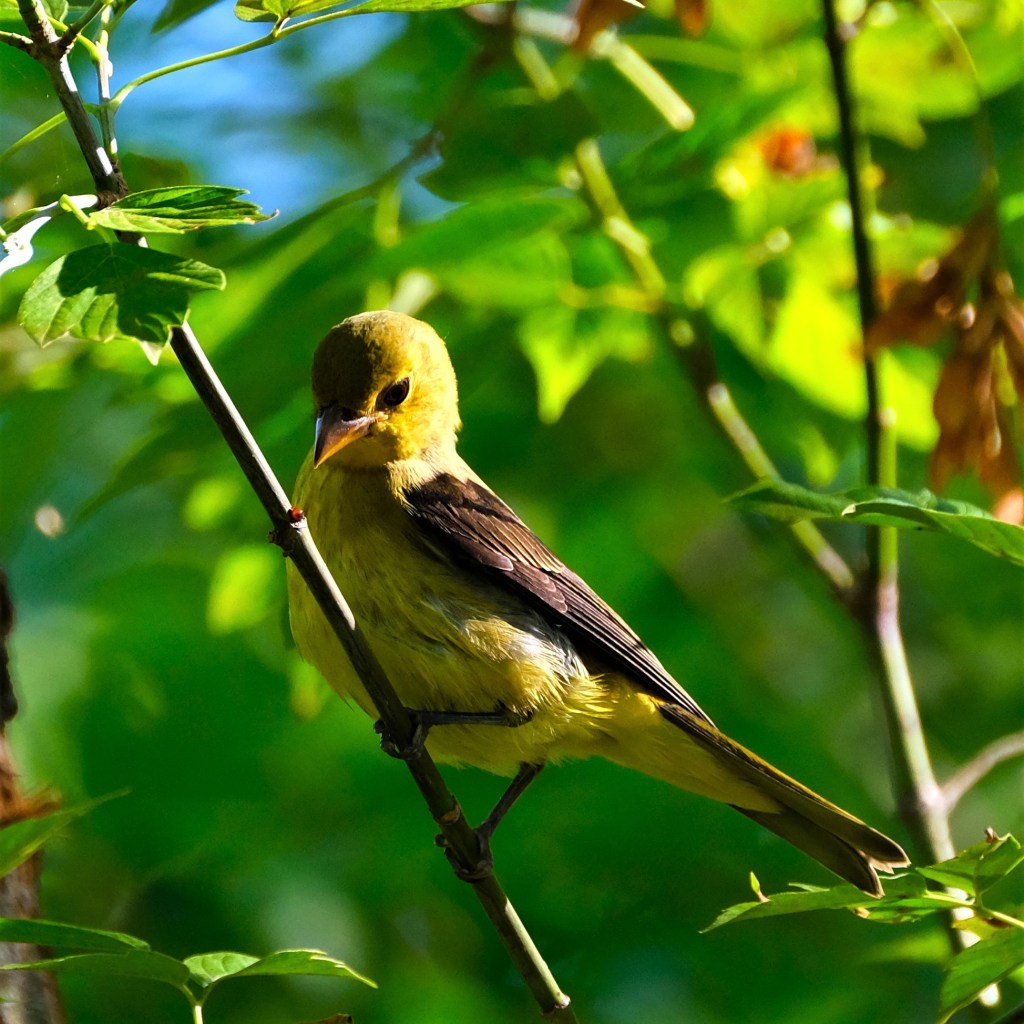
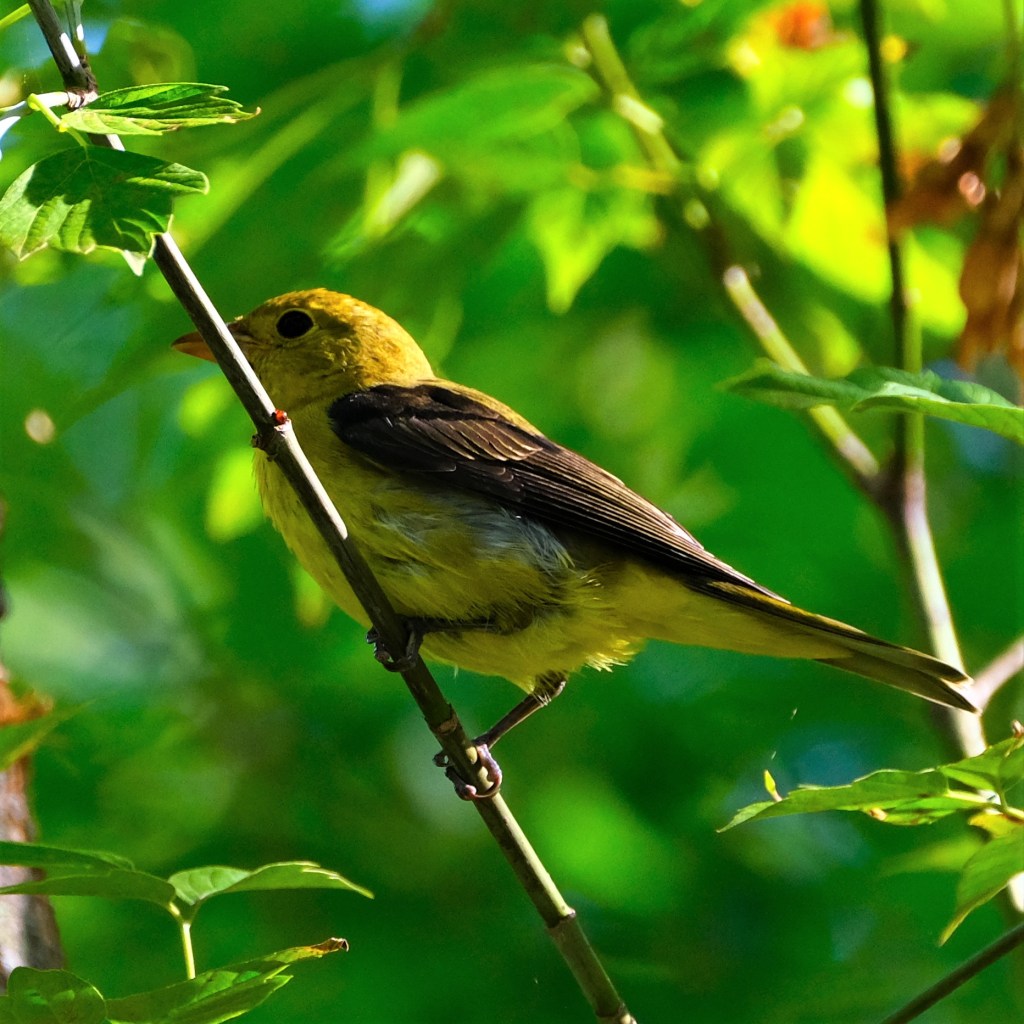
I managed to sneak into Estabrook between the warm morning rain and the cold afternoon rain, and I’m sure glad I did because I hardly got wet at all and I spotted at least two, maybe more, stunning scarlet tanagers (Piranga olivacea) in one of the big oak trees just north of the Kilbourntown House, and this one took a break from hopping all over the tree.

He’s yet another arrival from northwestern South America, whom we spotted only once last year on almost exactly the same day. I did not see a female tanager in that tree, but I did see this olive-sided fly catcher, posing right behind the tanager, and who might even have come in on the same flight.

Here they are together, and maybe they got to chatting on the long trip, but now it’s that awkward part where they walk through the airport together wondering if they’ll keep in touch and looking for an excuse to go their separate ways.

In the soccer field beside that oak tree, I spotted our fourth butterfly of the season, which is definitely one of the sulfurs, but I can’t tell if it’s pink-edged or clouded. Can you?

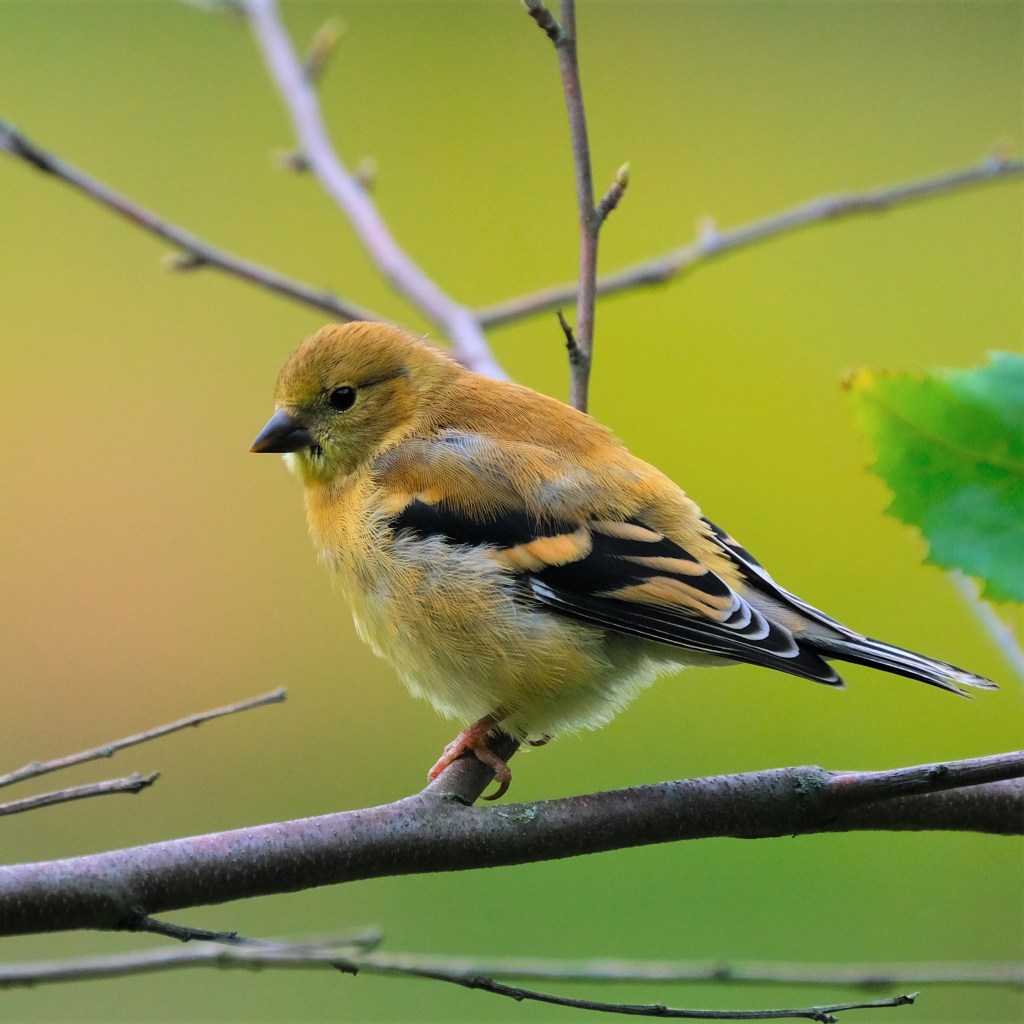
On the west edge of the soccer fields there are the remains of some of last year’s burdock still standing near some trees, and the goldfinches like to come there to feed. This little guy posed for me in his full summer finery in both the burdock and in the trees, but the tree shot came out prettier.

On my way to the pond, I spotted a new blue flower up where all the Virginia bluebells stood in front of the maintenance building last month, and this one appears to be Spanish bluebell (Hyacinthoides hispanica). Oddly enough, despite the similar names and appearance of their blossoms, they are not even in the same family. Virginia bluebells are in the forget-me-not family (Boraginaceae) along with forget-me-nots, hounds tongues, and lungworts, while the Spanish bluebells are in the asparagus (Asparagaceae) family along with asparagus, hyacinths, and squills.

Finally, at the pond, this bullfrog found it warm enough to climb up out of the water onto this floating log for the first time I’ve seen this season.

Then the cold front rolled though, the temperature when from 75 to 55, and I, who had gone out in shorts and a t-shirt, hustled back home.

The End.

We’re gonna need a bigger banner…

Holy smokes, was it ever a great morning in the park, and we’ve got several new arrivals to report! First up is the “uncommon and elusive” black-billed cuckoo (Coccyzus erythropthalmus), just in from northwestern South America and looking for your tent caterpillars.

Charles tipped me off yesterday, yes that Charles, that Ken had spotted one by the pond, and when I suggested that I might mosey on over there, he explained that he once ran the entire length of Estabrook Park just in hopes of glimpsing one. So I hustled over to the pond, instead, and had no luck yesterday, but this morning was the charm.

I didn’t see anything else new at the pond and so headed down to the river where I happened upon this amazing spectacle. I count 20 goslings, and the Pedia of Wik explains that Canada geese form crèches, in which adults will “care of another’s offspring,” and that is what I expect we have here.

Speaking of care, they were heading for the falls so I followed along to see how that would go, and they got out just in time to portage around on the Milwaukee Urban Water Trail.

Mom went over the log across the trail, and a few followed, but then one discovered that they could sneak under it instead, and that’s what all the rest did, including Dad. Ha!

There were still a couple of eastern kingbirds fishing over the same spot on the river as yesterday.

The catbirds were in the sumac again between the river and the beer garden.

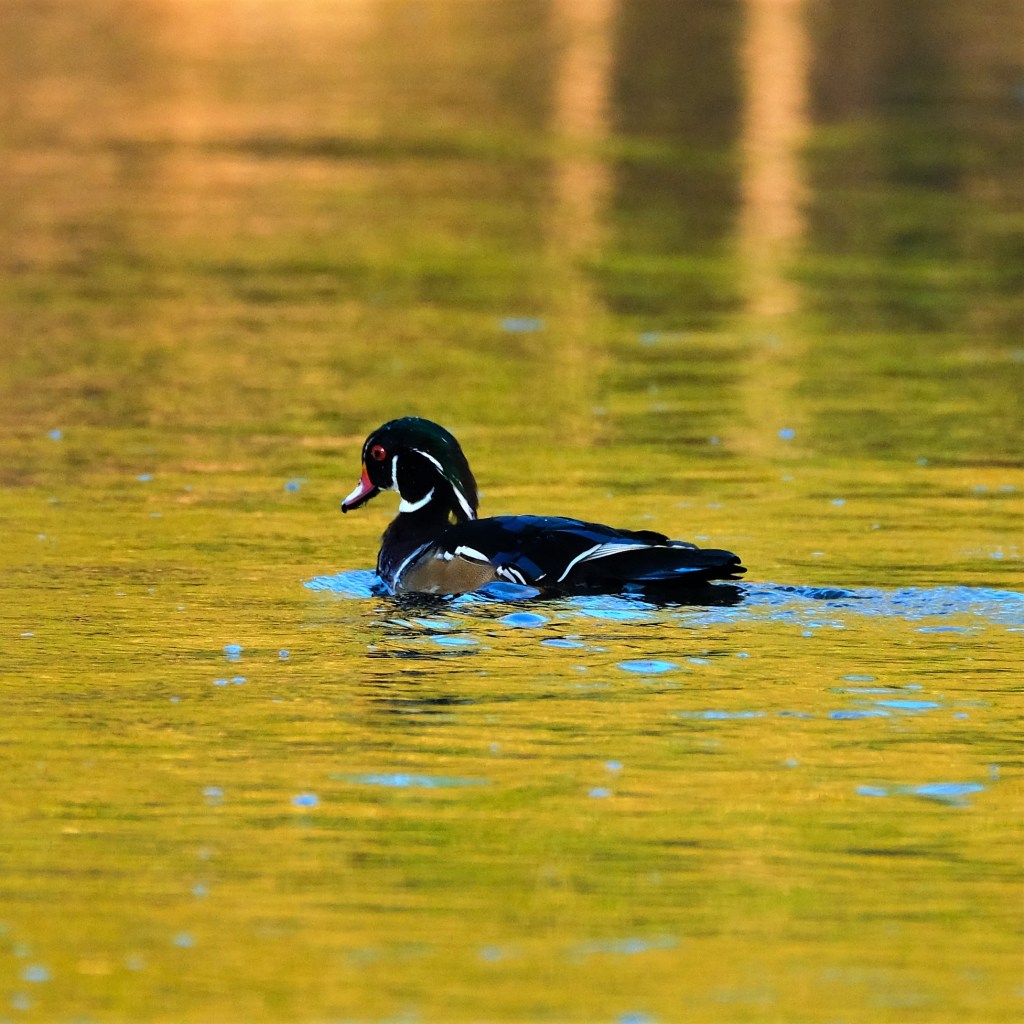
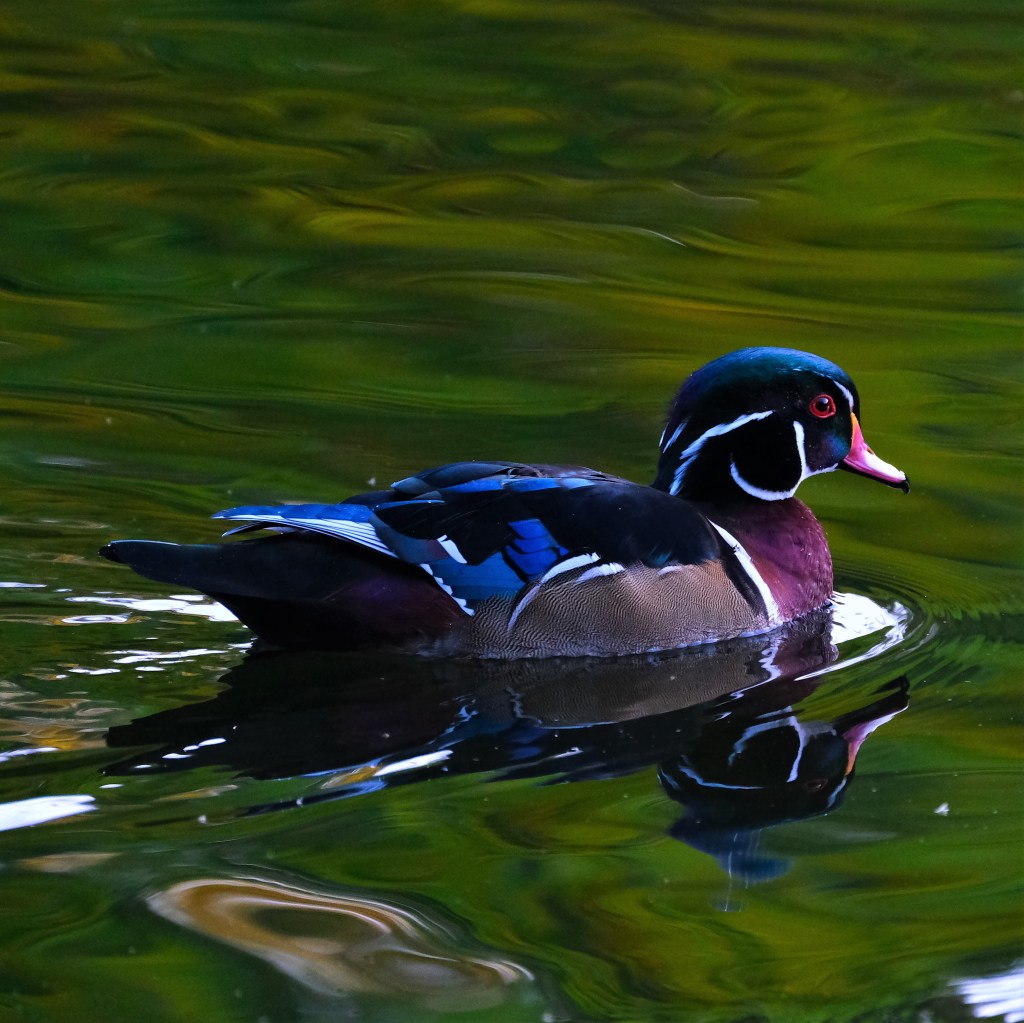
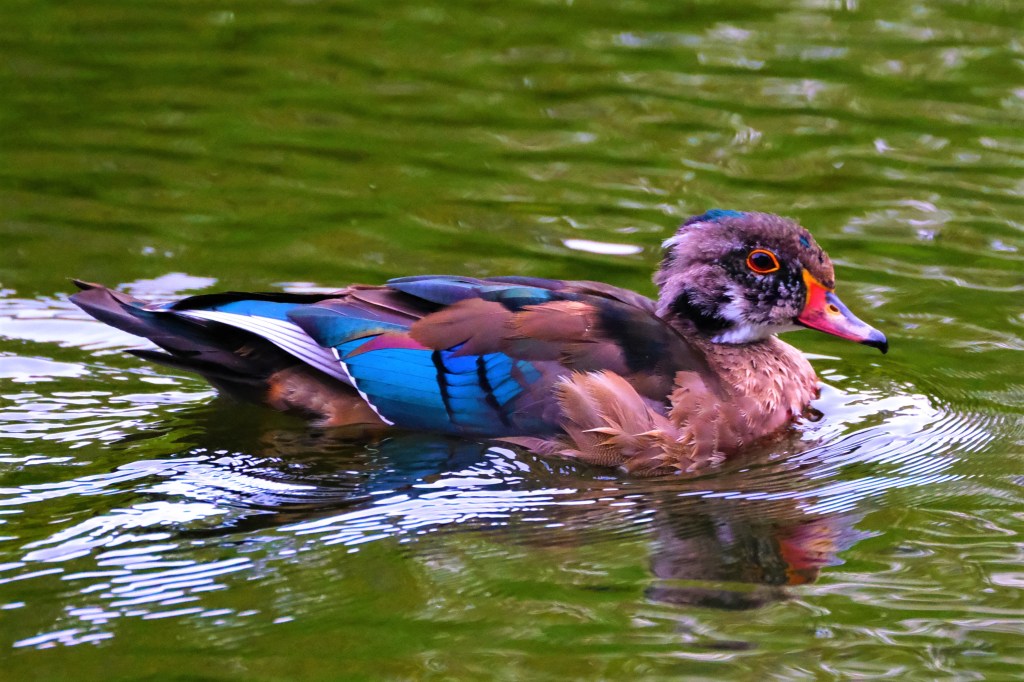
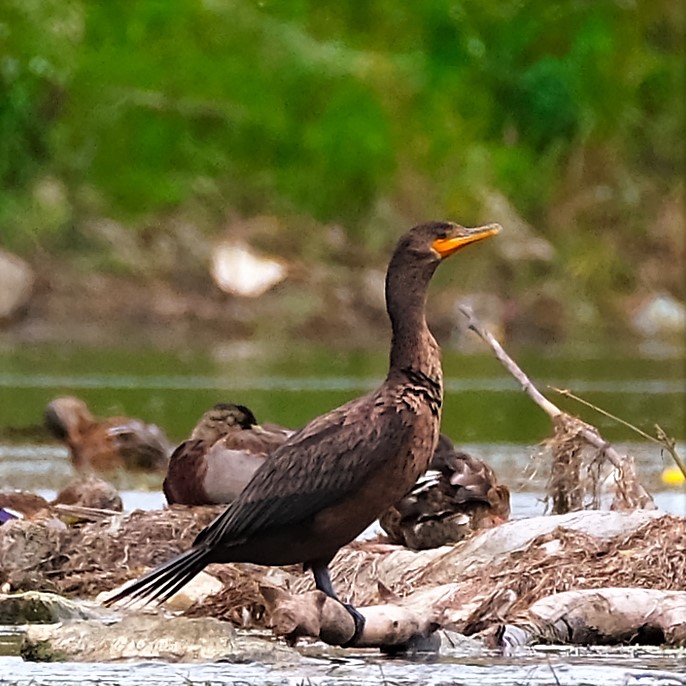
And at the north end, I spotted this menagerie on one of the sandbars exposed by the low water. We’ve got a goose and three goslings (another goose ended up on the editing room floor), a mallard drake, a wood duck drake, and one spotted sandpiper, for good measure.

At the far north end, I finally encountered a blue jay that was more interested in chasing something in that tree, which I couldn’t quite see, than worrying about me for a change. For such brazen feeder raiders, they sure are shy in the wild.

Since the sun was coming out, and the day was really warming up, I swung back by the pond on my way south, and look who decided to show its face. Yup, the bullfrogs are finally up from their winter slumber.

Also up are the yellow iris (Iris pseudacorus) along the northeast shore of the pond.

And if all of that wasn’t enough of a sign that summer is finally here, look who just flew in from the mountains of central Mexico. Last year I didn’t spot my first one until June.

There were at least two of them and maybe more, and they did not want to settle down, so my pictures merely serve as proof-of-life so far.

Lastly, we’ve got a reader photo of the week sent in by frequent park walker and professional videographer, Armonie of Prime Time Visuals. He spotted this little cutie on one of the paved paths in the park, so watch your step!

And then there were none…

Just like last year, almost to the day, all the geese and goslings were suddenly gone from the pond this morning. I felt just like Chuckie in the final scene of Good Will Hunting, a mix of hope and bittersweet. There were some likely looking candidates down on the river, so just like last year, let’s hope they all hiked down the nice little path from the pond in the night and are making their way to Hubbard Park right now.

A gaggle of goslings, seen here explaining to Mom and Dad that they don’t want to go swimming now.

Happily, the stream of new arrivals continues in the park, and we’ve got a couple of handsome ones today. First, there were at least four of these dapper-lookig eastern kingbirds (Tyrannus tyrannus), fresh in from “winter along the Amazon” and hunting flying insects over the river.

Speaking of hunting flying insects, there were these sharp-dressed great crested flycatchers (Myiarchus crinitus) almost everywhere I looked in Estabrook and fresh in from the Yucatan Peninsula.

As luck would have it, Charles, yes the famous expert Charles, claims that the non-breeding female/immature bay-breasted warbler from yesterday is actually a great crested flycatcher, and he might be correct, but I’m pressing him for details. I’ll keep you posted as this developing story unfolds.

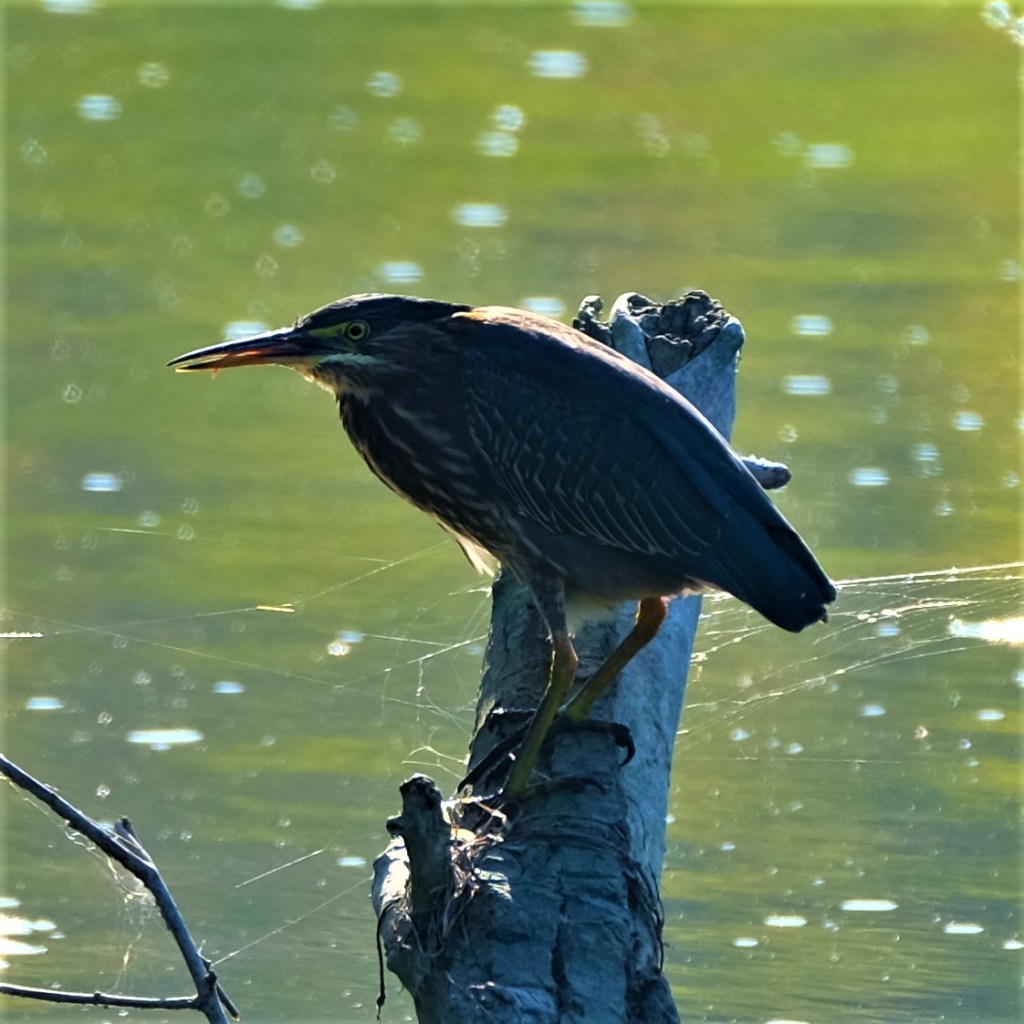
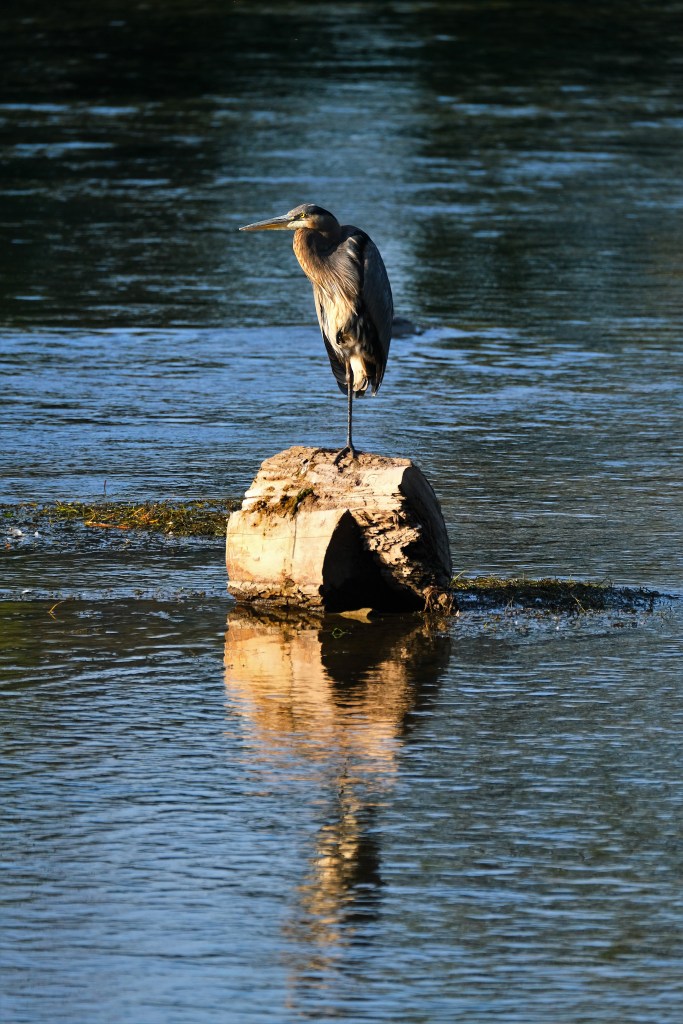
Okay, back to positive IDs. After the display of fishing prowess by the great blue hearing yesterday, this green heron on the river wanted to show me how it’s done.

Okay, so they’re pretty tiny fish, compared to the whales Ol’ Blue was hauling in, but Gru made it look like he caught a dozen of them. They’re actually so small, it’s a little hard to tell when he caught one and when he just missed.

He even had his eye on a flying insect at one point, but never did pull the trigger.

Speaking of flying insects, the dragonflies are back, and maybe that’s the signal the geese use to know when checkout is. Anyway, there is a particular big blue and green dragonfly that seemingly never lands and that I seemingly spent forever last summer trying in vain to capture. Well, well, well, look who was too preoccupied to avoid my lens this morning. “A complex, precisely choreographed process” indeed. Ha!

It’s not the greatest picture for a positive ID, but I’m gonna go with common green darner (Anax junius), which I read means “Lord of June”. The bug lady explains that they are “a genuine, though tentative, sign of spring,” and I have been spotting them on warm days for weeks. The Pedia of Wik reports that they are “well known for [their] great migration distance from the northern United States south into Texas and Mexico.” Yup. They migrate from Mexico just like the monarch butterflies and the great crested flycatchers. Ha!

Well, that’s it for the critters, but I do have a couple pretty flowers to show you. First, the forget-me-nots are opening everywhere now, and this one shows the buds for a pretty little curl.

Lastly, this is a blossom that I don’t believe I noticed last summer, the striking garden star-of-Bethlehem, grass lily, nap-at-noon, or even eleven-o’clock lady (Ornithogalum umbellatum) from “the asparagus family (Asparagaceae),” if you can believe it!

Well that’s it for today, and who knows what tomorrow will bring. Seriously, who knows, and if you do, give me a heads-up, would you?

A banner day in the park!

Yikes! I thought yesterday morning was good for birds, but I hadn’t seen nothing yet! Let’s start with the new ones, shall we?

These two, a pair of bay-breasted warblers (Setophaga castanea), really made me work for it.

Breeding male
Non breeding female/immature

An olive-sided flycatcher (Contopus cooperi) is new to me and very similar to the eastern wood-pewee, who has a smaller beak, and the great crested flycatcher, who has a brown coat, yellow belly, and white throat, and whom we have seen before.

An eastern phoebe (Sayornis phoebe), whom we’ve seen before, even already this season, was also hunting flies over the river.

We’ve seen one indigo bunting already this season, but now there is a slew of them around the wildflower meadow at the north end, and this guy was willing to sit for a portrait today between takes of his pretty song.

Also at the meadow, and new for this season, is this handsome red-eyed vireo (Vireo olivaceus) who was singing up a storm, and who has a more-pronounced face pattern than the warbling vireo we saw last week.

A bit south of the meadow, a Baltimore oriole was also belting out his song in a nicely photogenic spot.

Speaking of singing on the river, the toads are back at congregating and making a racket, so if you missed it a couple weeks ago, now’s your second chance! It must be a temperature thing.

Speaking of making rackets. At one point, I was trying to decide which of three singing birds to concentrate on, with the toads singing in the background, when some squirrels started wrestling on a nearby tree. I almost wanted to shout and tell everyone to pipe down for just a second. Luckily, I kept my thoughts to myself and glanced at the squirrels anyway. It turns out they were red squirrels, who tend to be much shyer than their larger, grey cousins, and this little cutie just kept striking a pose, each one cuter than the next.

How can I not take those pictures?

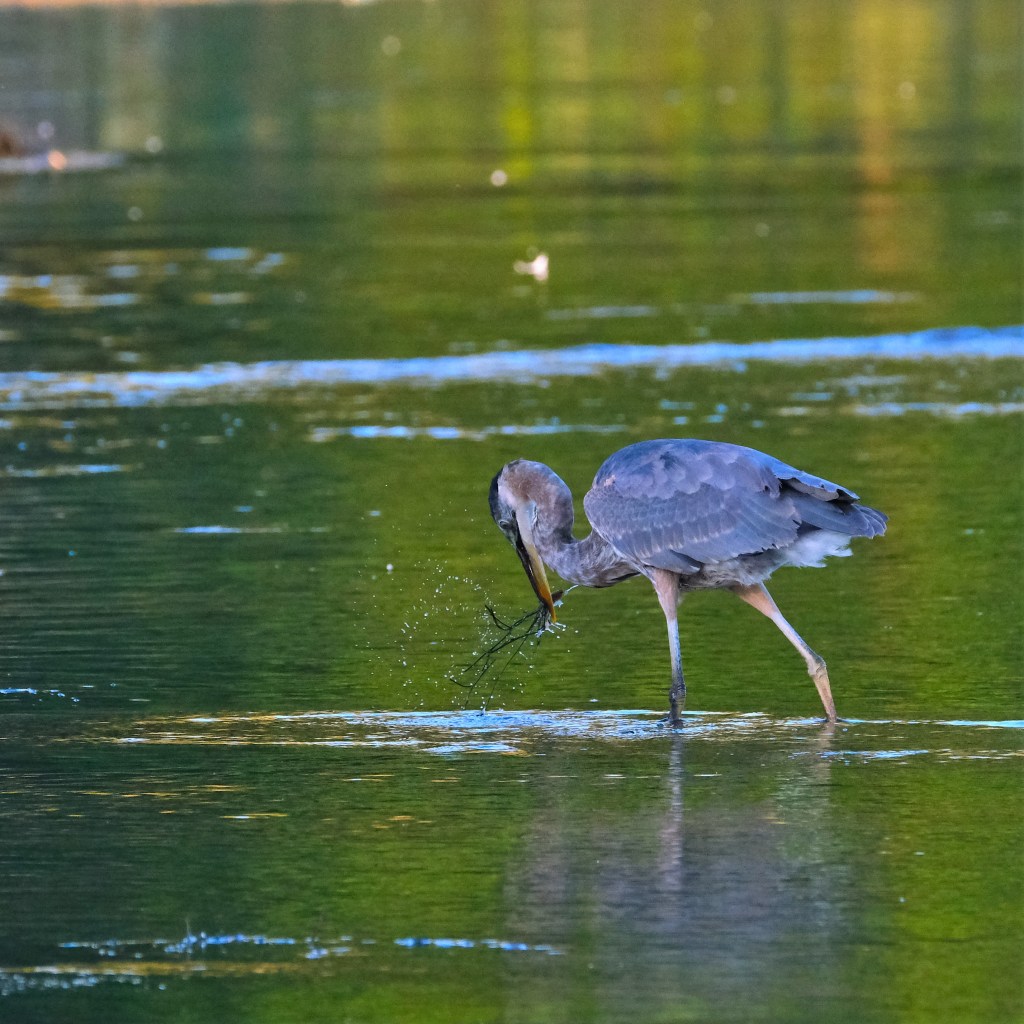
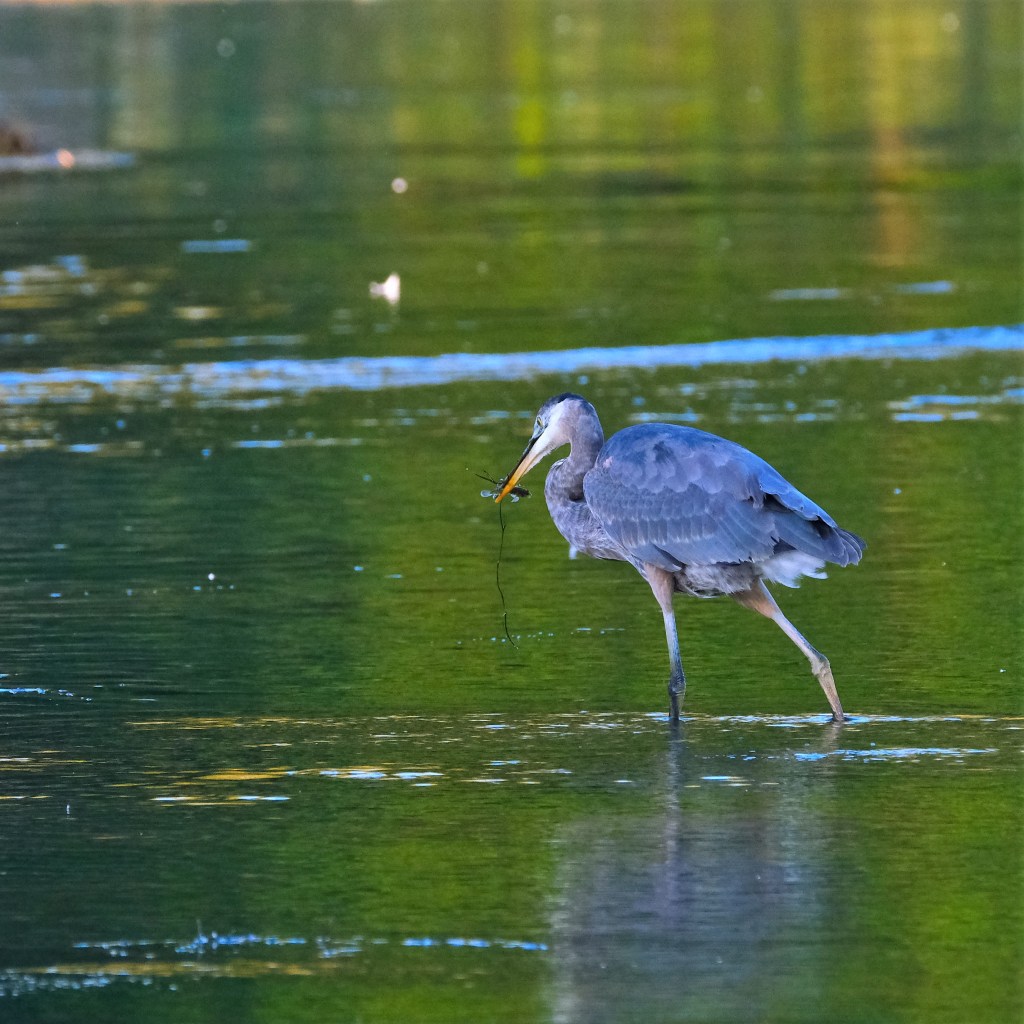
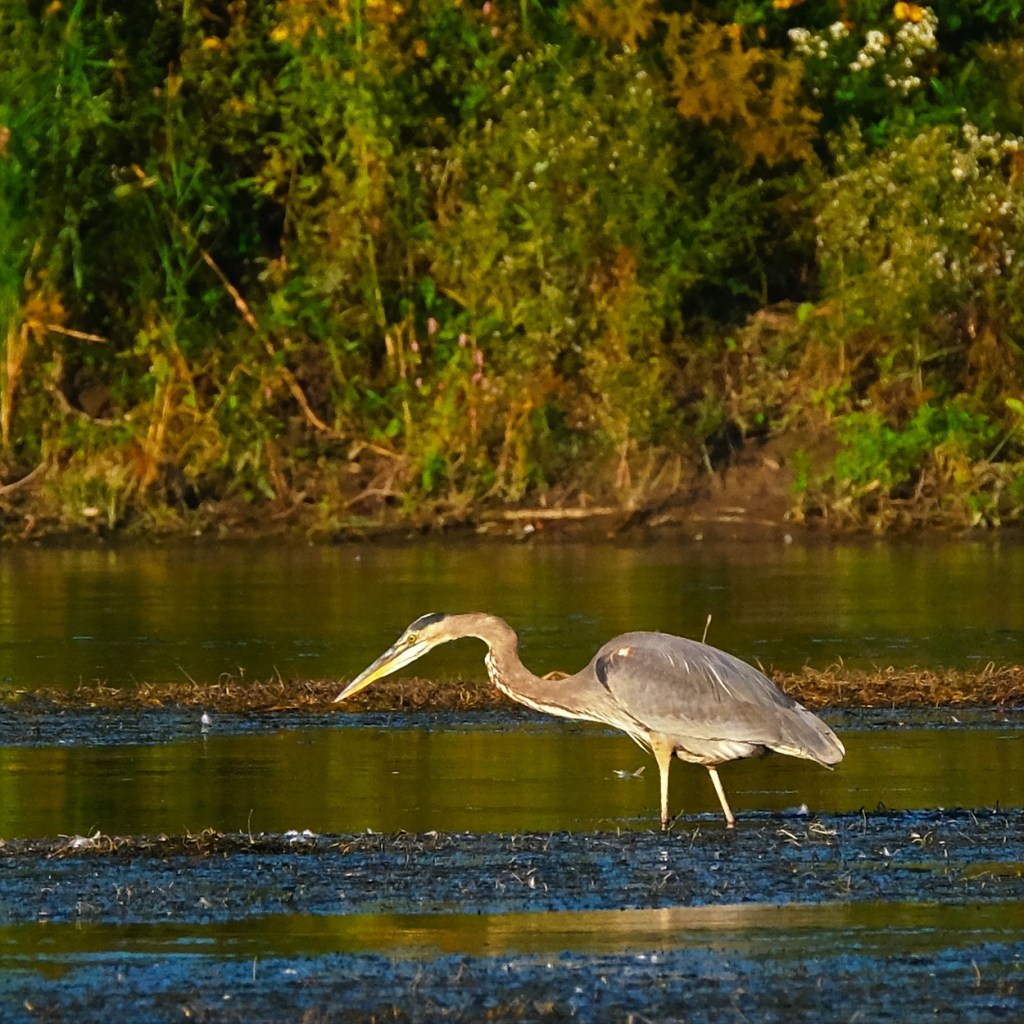
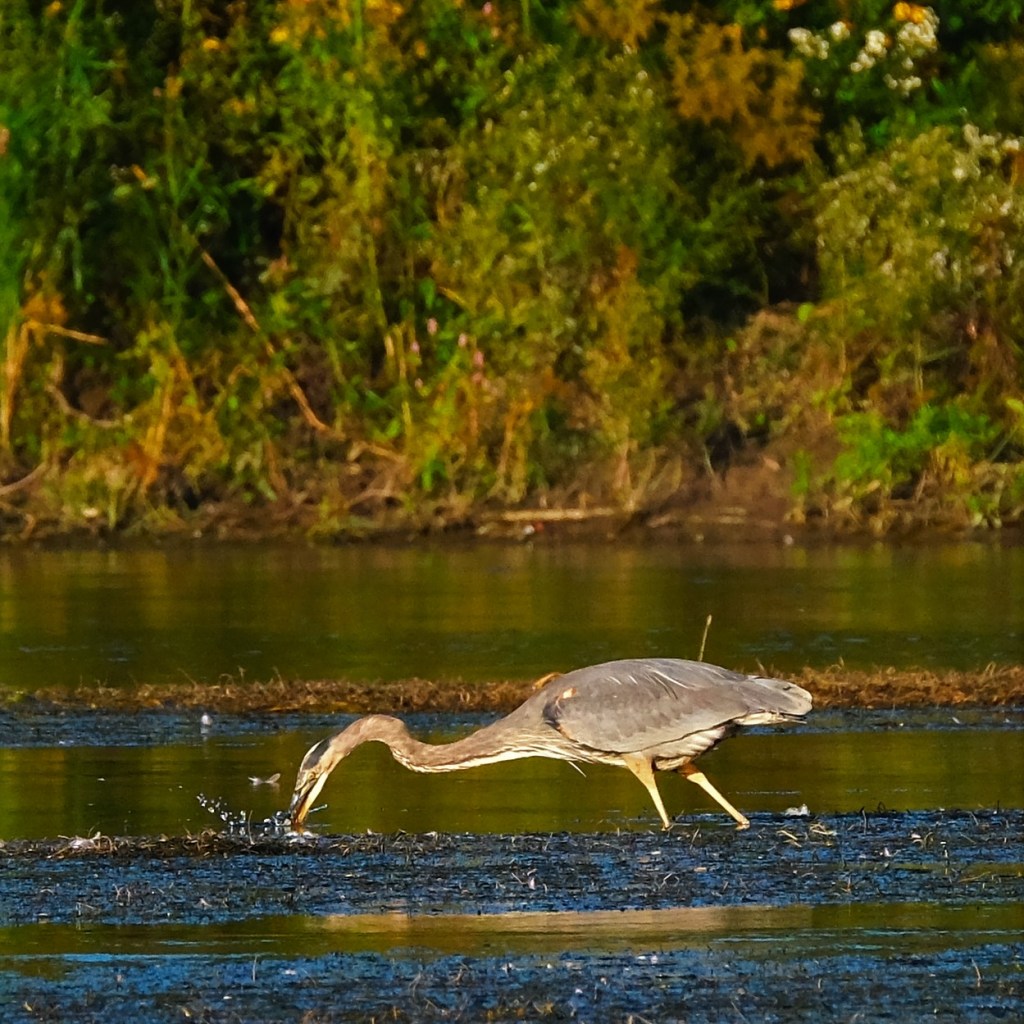
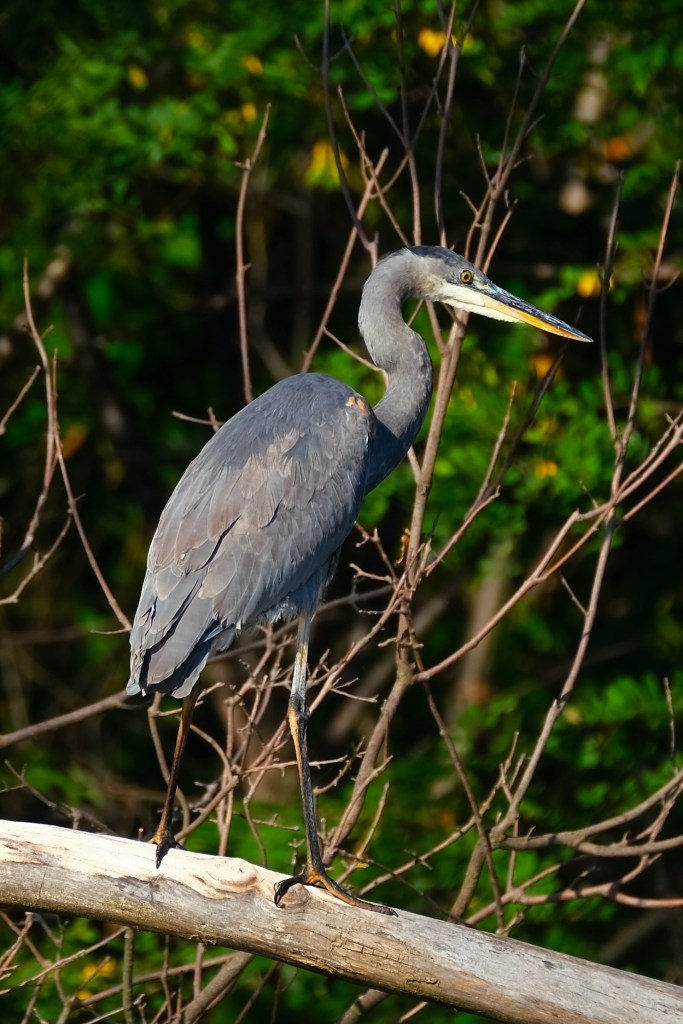
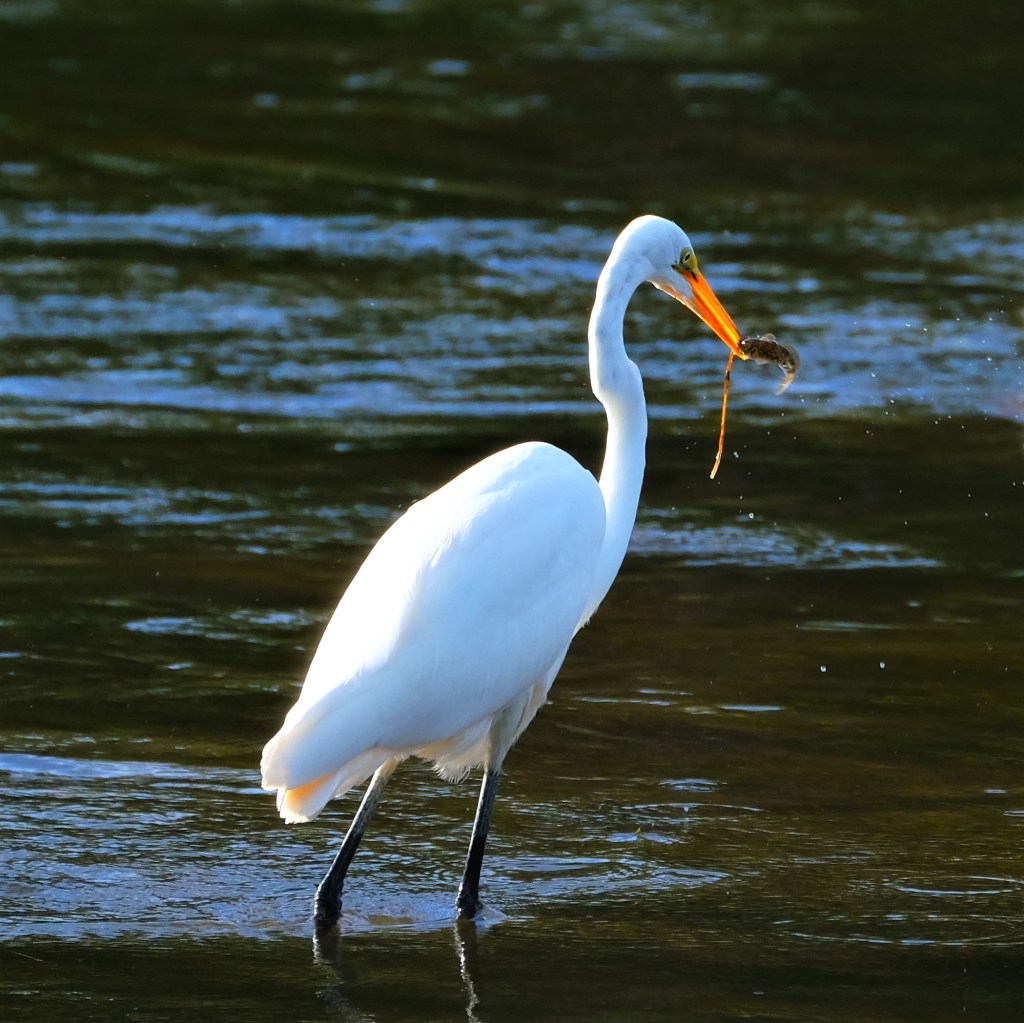
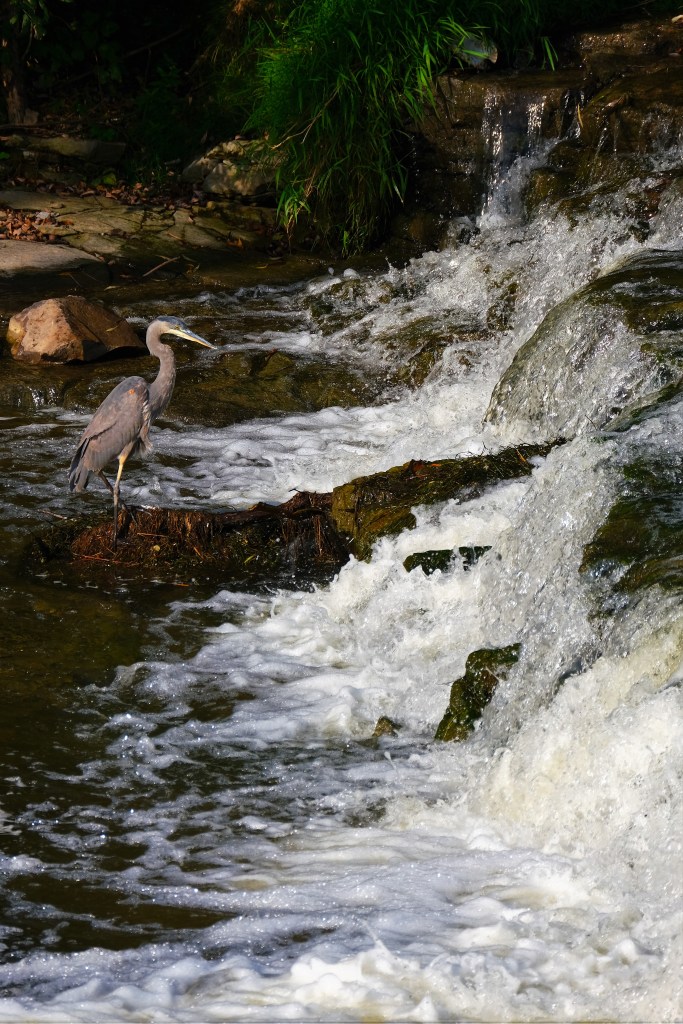
Okay. I think that’s finally it for the river. On to the pond! A great blue heron was there again this morning, and this one was a prolific hunter. It had downed two goldfish before I could even get clear of the bushes to get a clean shot. I can’t quite make out what is the green fish it has, but that was its third catch in less than five minutes!

Then it heard someone mucking around on that far shore, and off to the river it went.

After all that excitement, I checked on the goslings, and the new little one seems to be making the move the the neighbors permanent. I can’t tell for sure who is who, but there is a third pair of adults handing around, and if they are the folks, I hope the are just relieved.

The half-pint is right in the middle, surrounded by the much-bigger neighbor kids.

Okay, okay, enough already, but just one more. The wild geraniums are thick as thieves in spots along the river, and I just couldn’t help but take another picture. Funny thing is, there are at least 3 photobombers in it that I couldn’t see until I got home.

A perfect morning for the birds

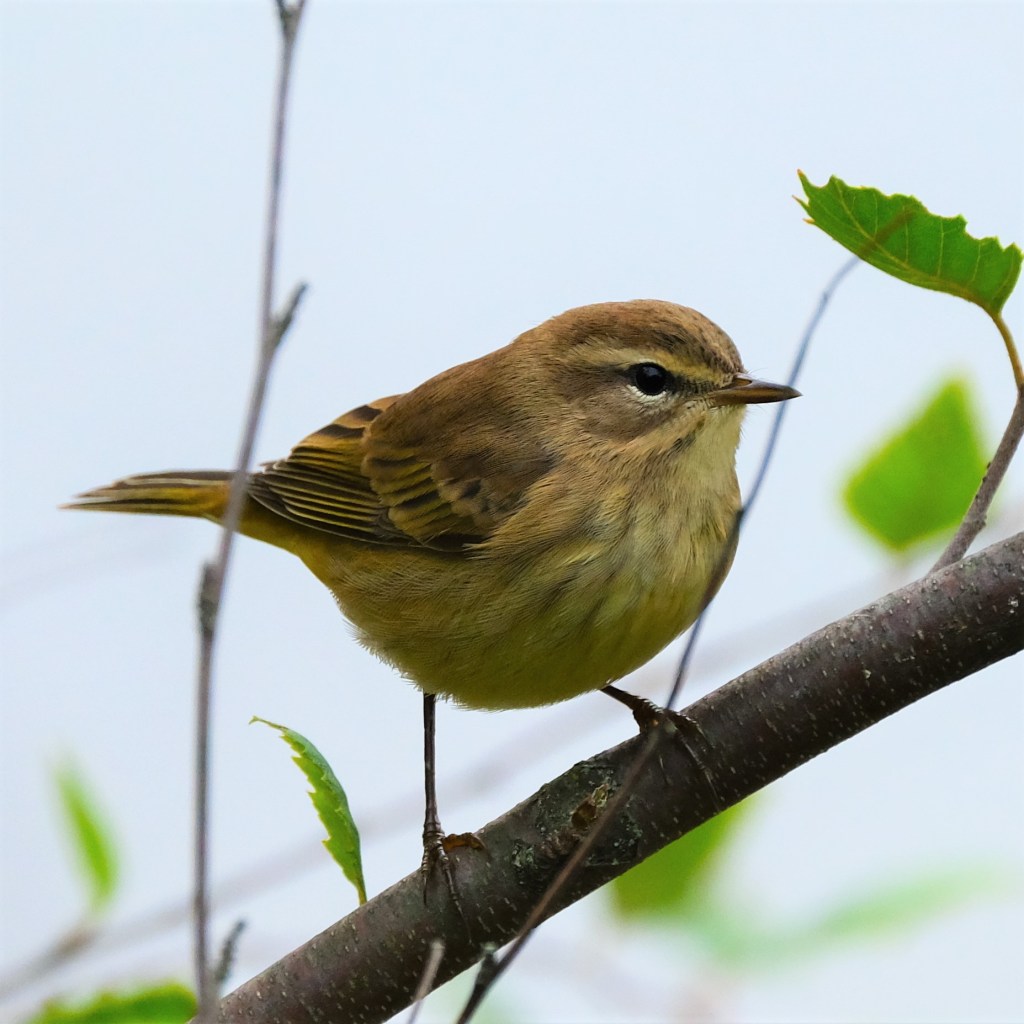
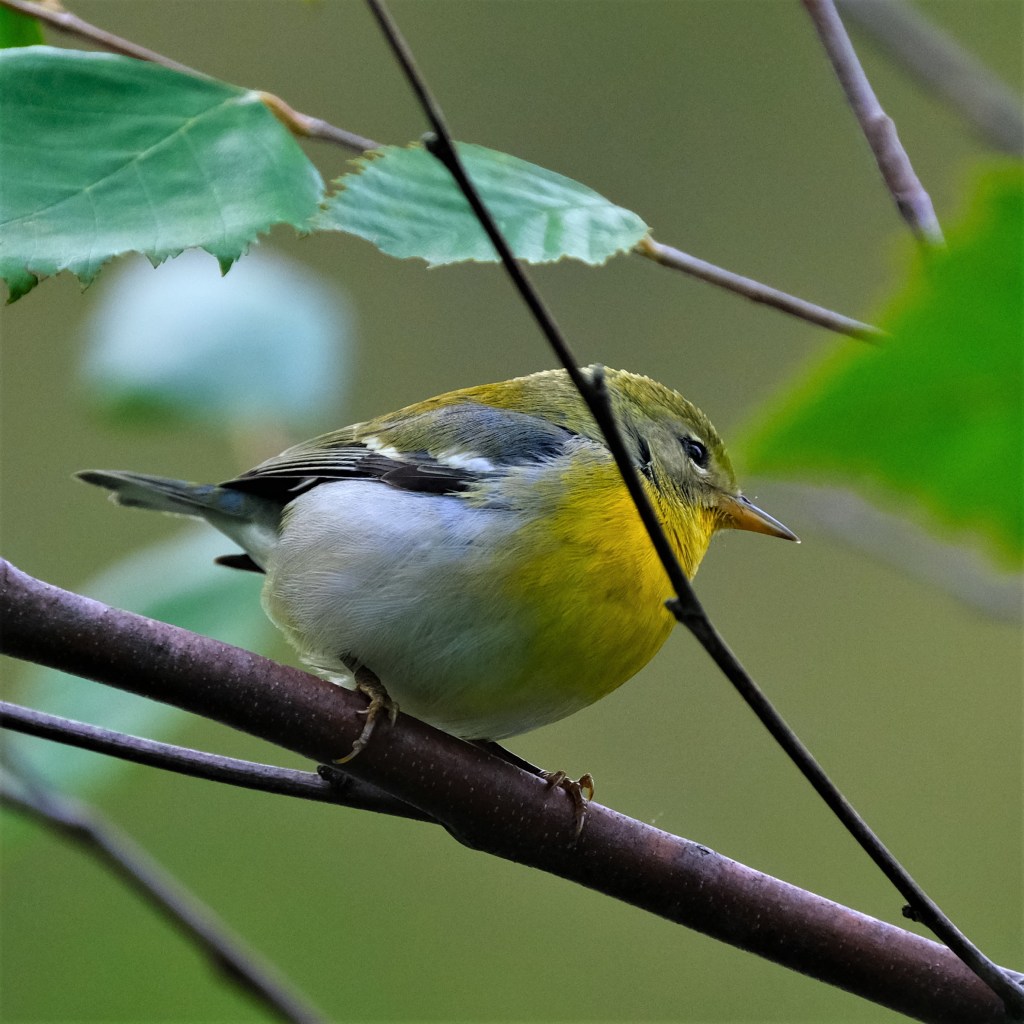
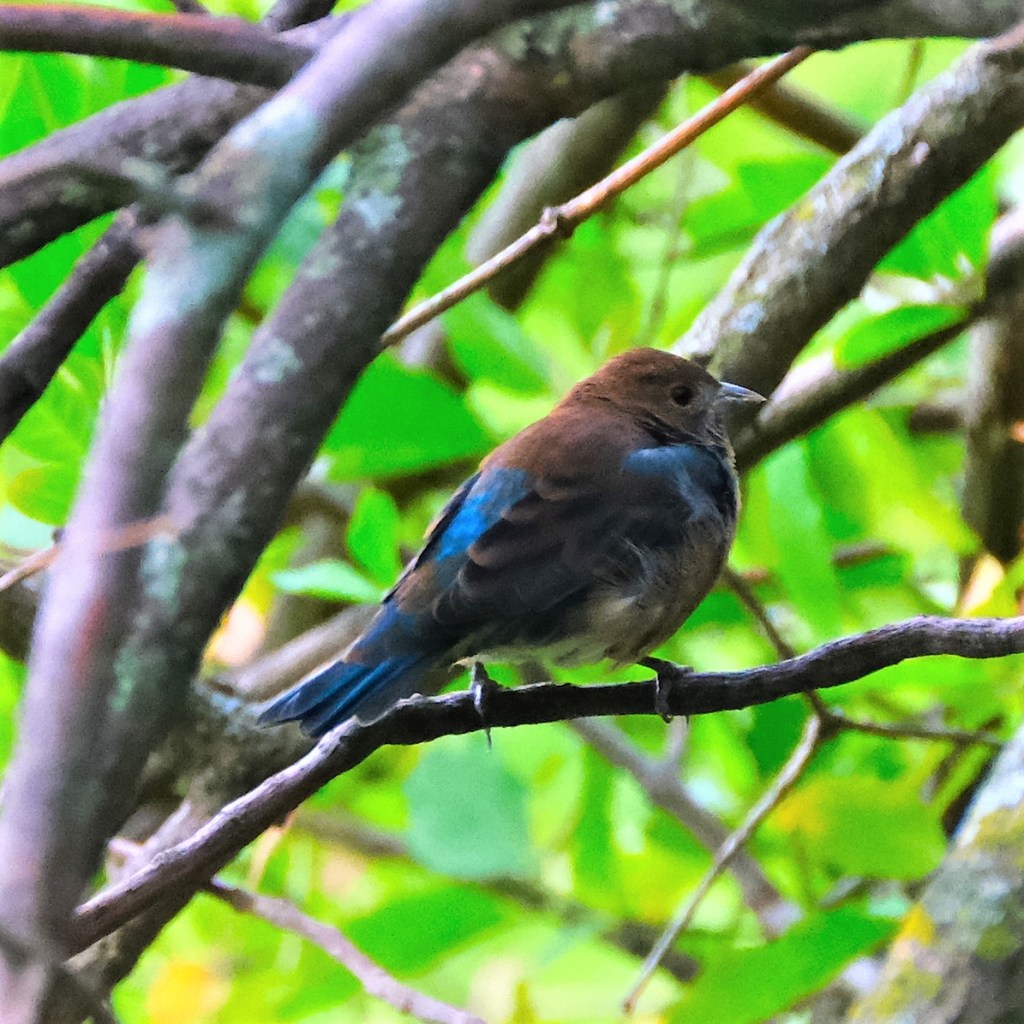
The air was cool, damp, and still, so filled with bugs, which appears to be just the way birds like it because they were everywhere this morning. The only problem is that the trees are pretty leafed out now, so there are a lot more places for the little devils to hide, but I managed to get some pictures anyway.

Here’s a Wilson’s warbler (Cardellina pusilla) partially hiding behind one of those new leaves and new to these pages.

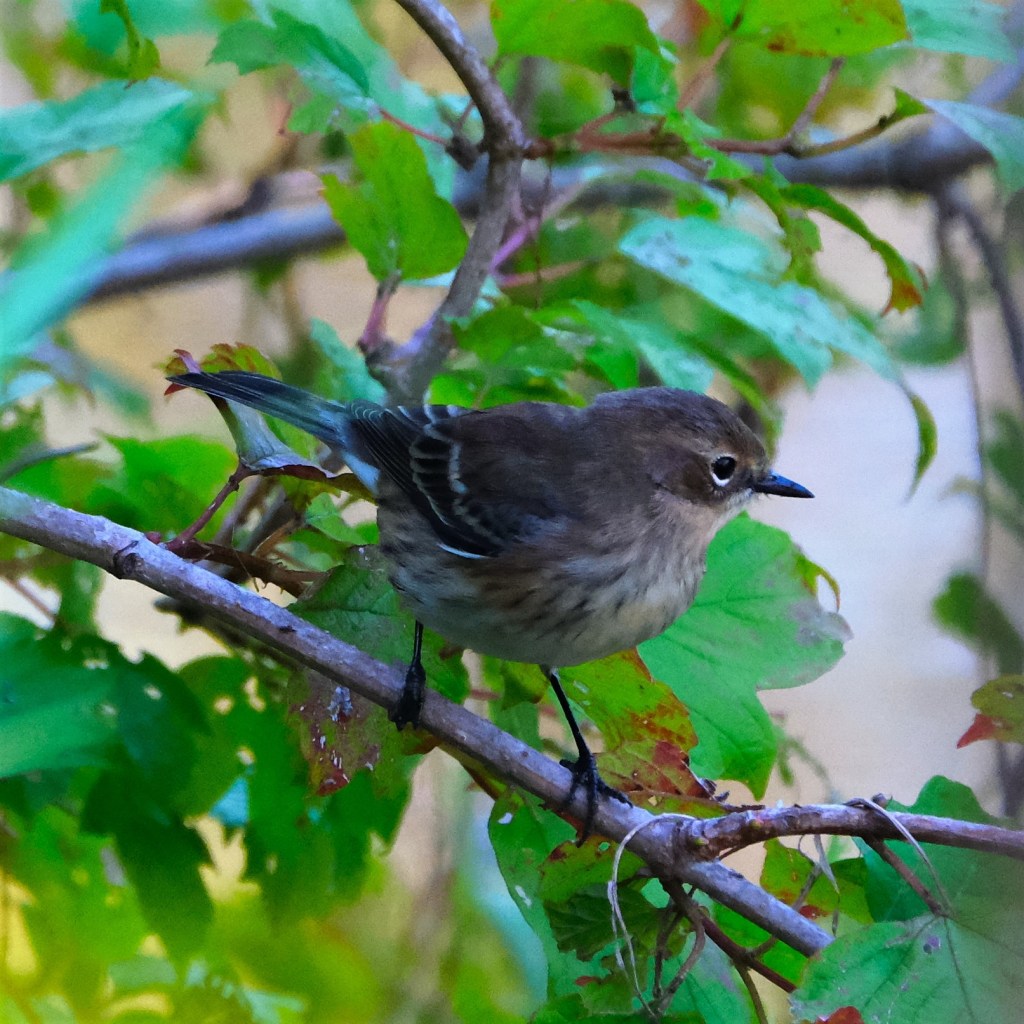
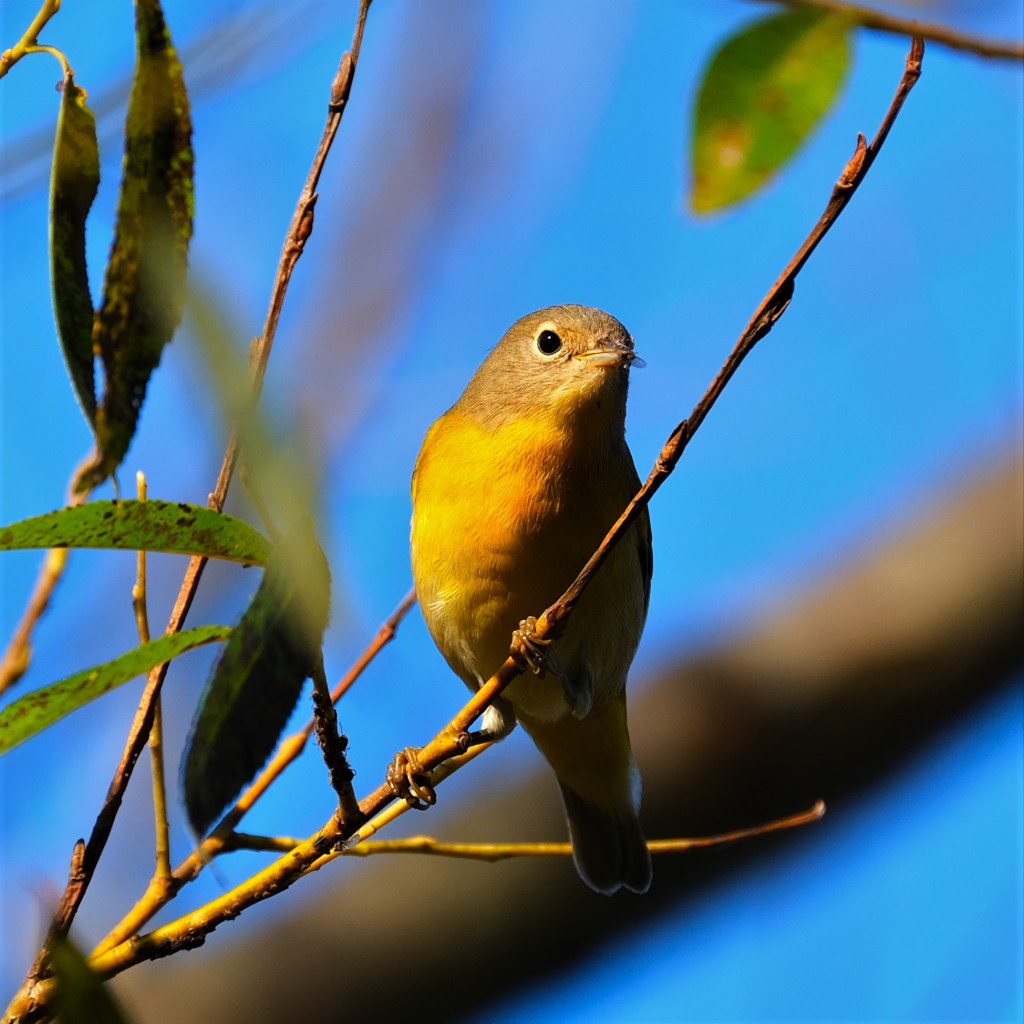
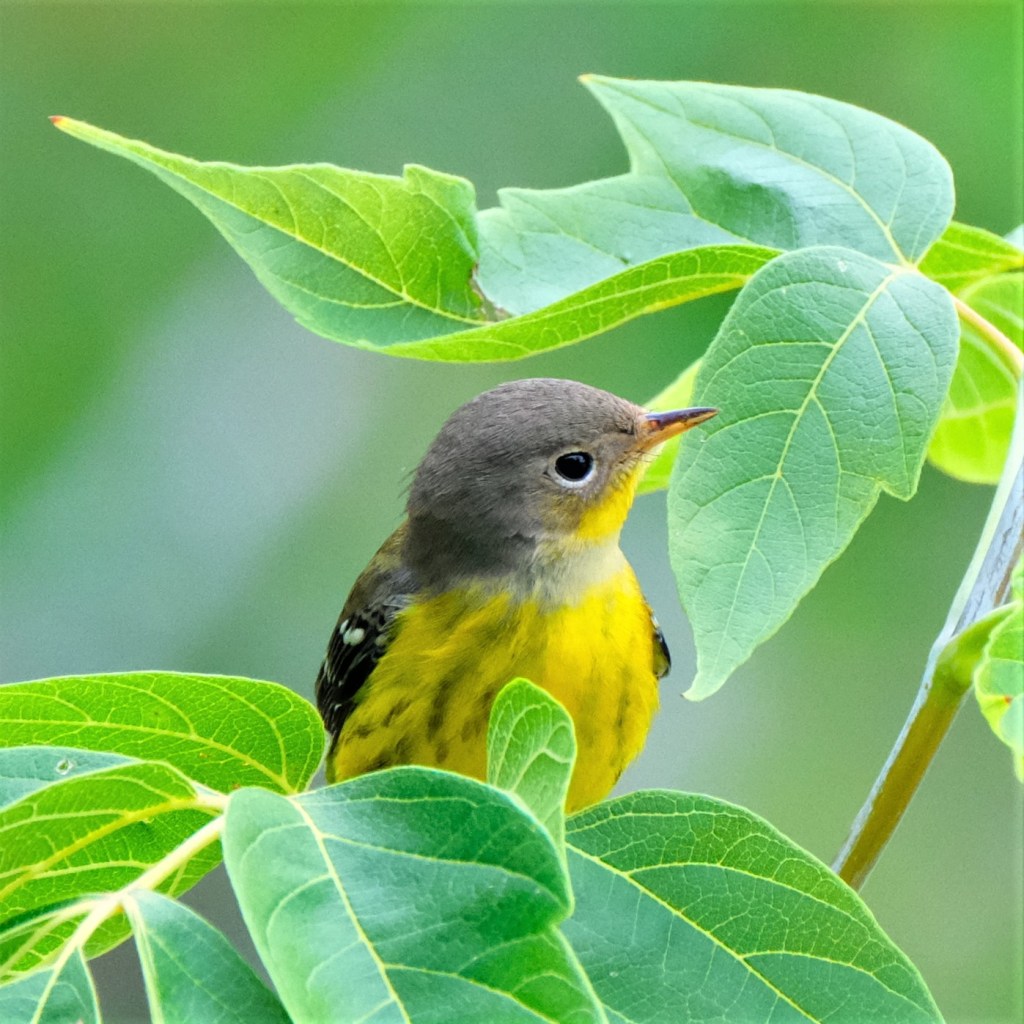
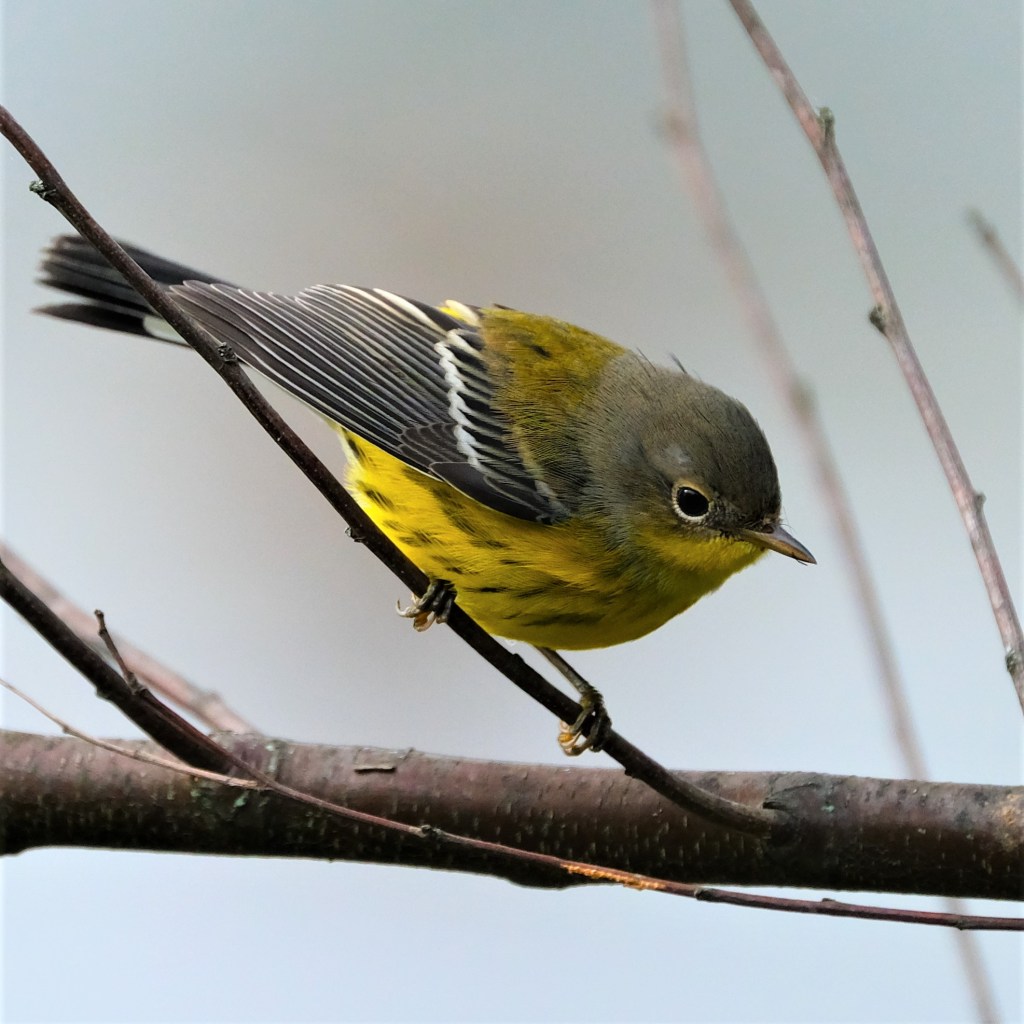
A magnolia warbler, whom we’ve seen already this spring.

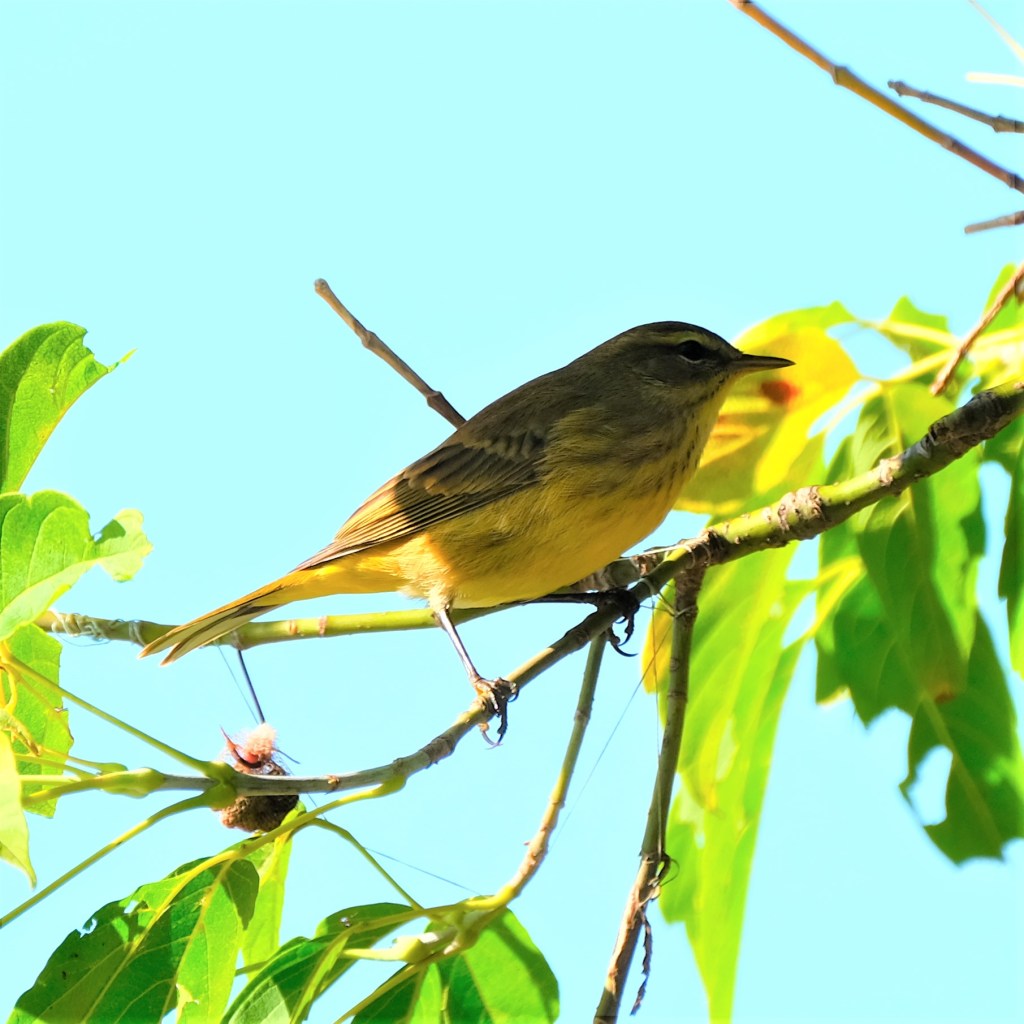
And a common yellowthroat not making it any easier than last time.

So there are still some warblers around, and I also found a robin’s nest with a robin still in it, although the rain might make it wish it had fledged already.

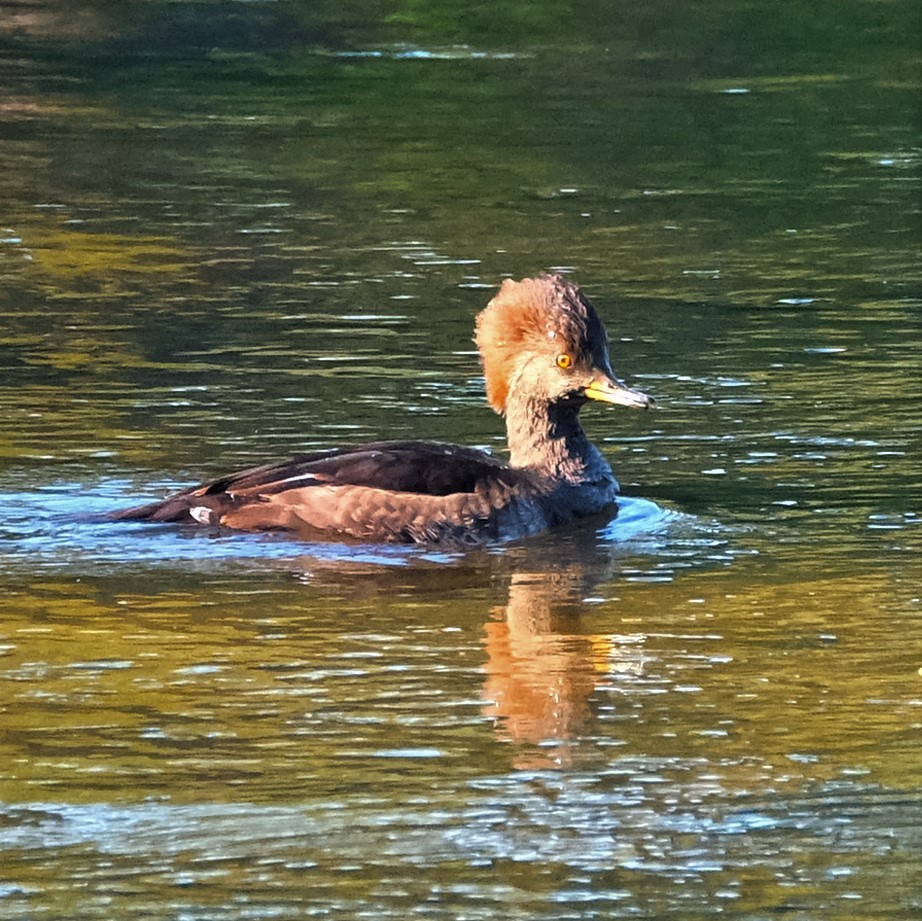
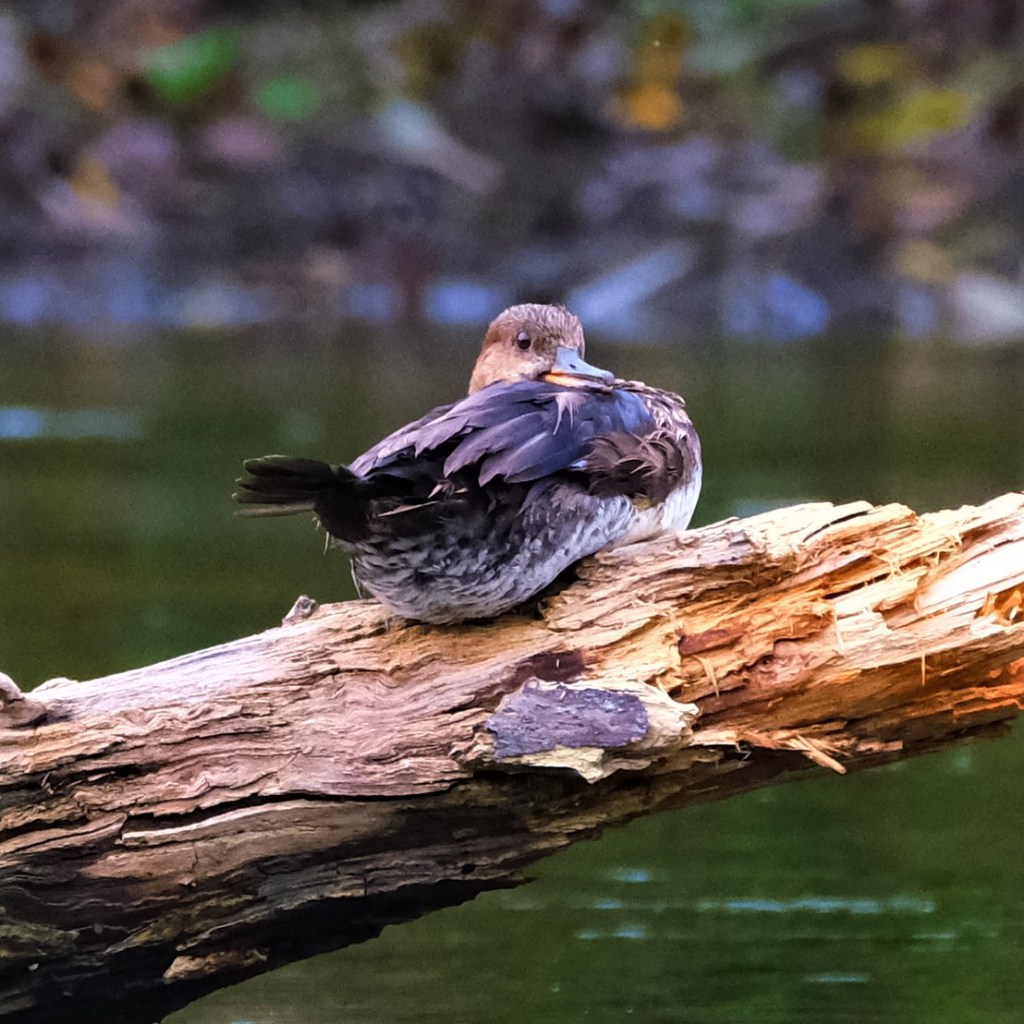
Here someone else I’m not sure we’ve seen before, a female hooded merganser, by the look of her dark eyes. We’ve seen males on the river and the pond and a non-breeding male on the river, by the look of his yellow eyes, but I don’t think we’ve seen a female before. She’s a good fisher and twice I watched her come up with a crayfish.

Also on the river today I finally got a picture of a ring-billed gull. You may have noticed that I included them in the index of species, for a while, but recently conceded that I just couldn’t find a picture of one and removed them. Well, there were four of them fishing at the falls today, along with the much-larger herring gull, so I finally realized what I was seeing. Turns out, the gull picture from yesterday is a ring-bill, too.

Ring-billed gulls, with yellow legs and black rings on their beaks
Larger herring gull, with pink legs and no black ring around the tip of its beak.

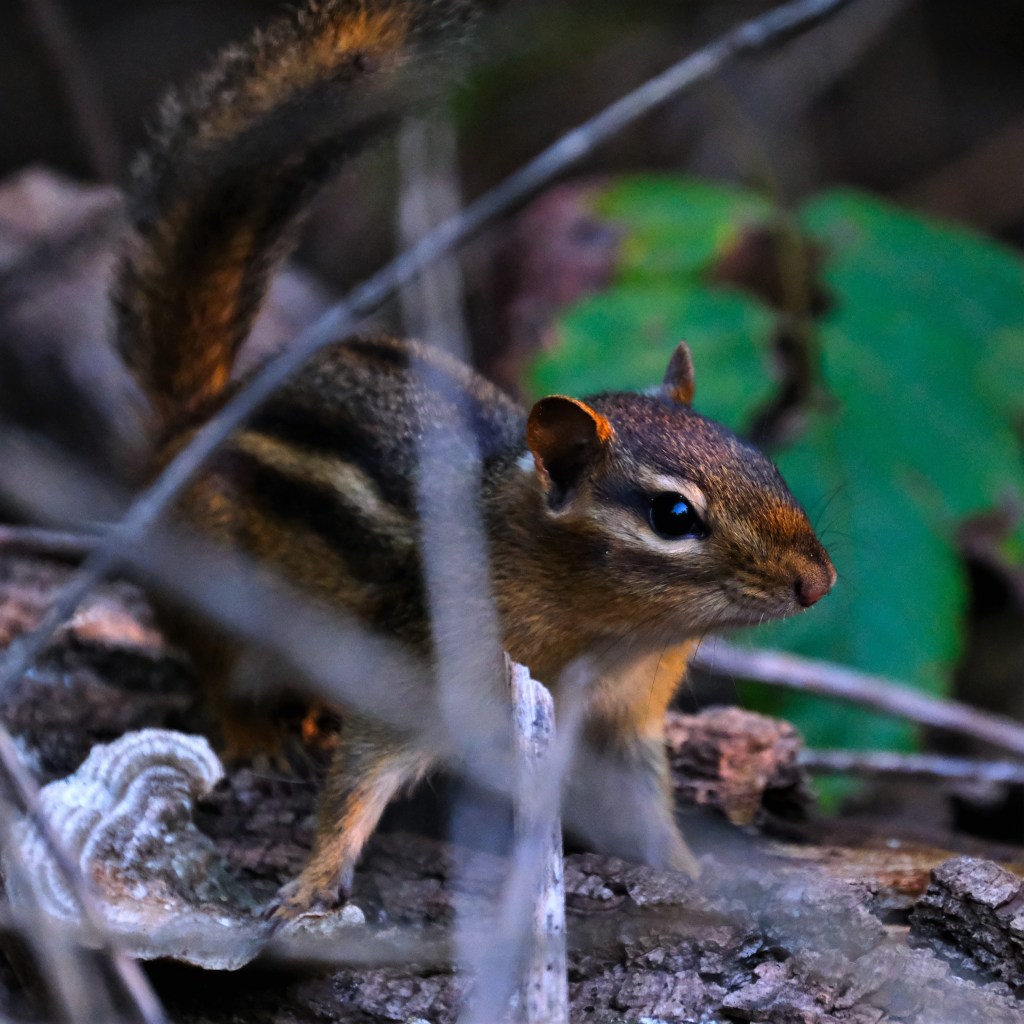
And I managed to capture and image of one of the chipmunks I’ve been seeing along the river from time to time.

Meanwhile, at the pond, the painted turtles were up trying to capture some of the meager sun.

And the goslings keep turning grass into bigger goslings, and the new one is still hanging out with the neighbors kids.

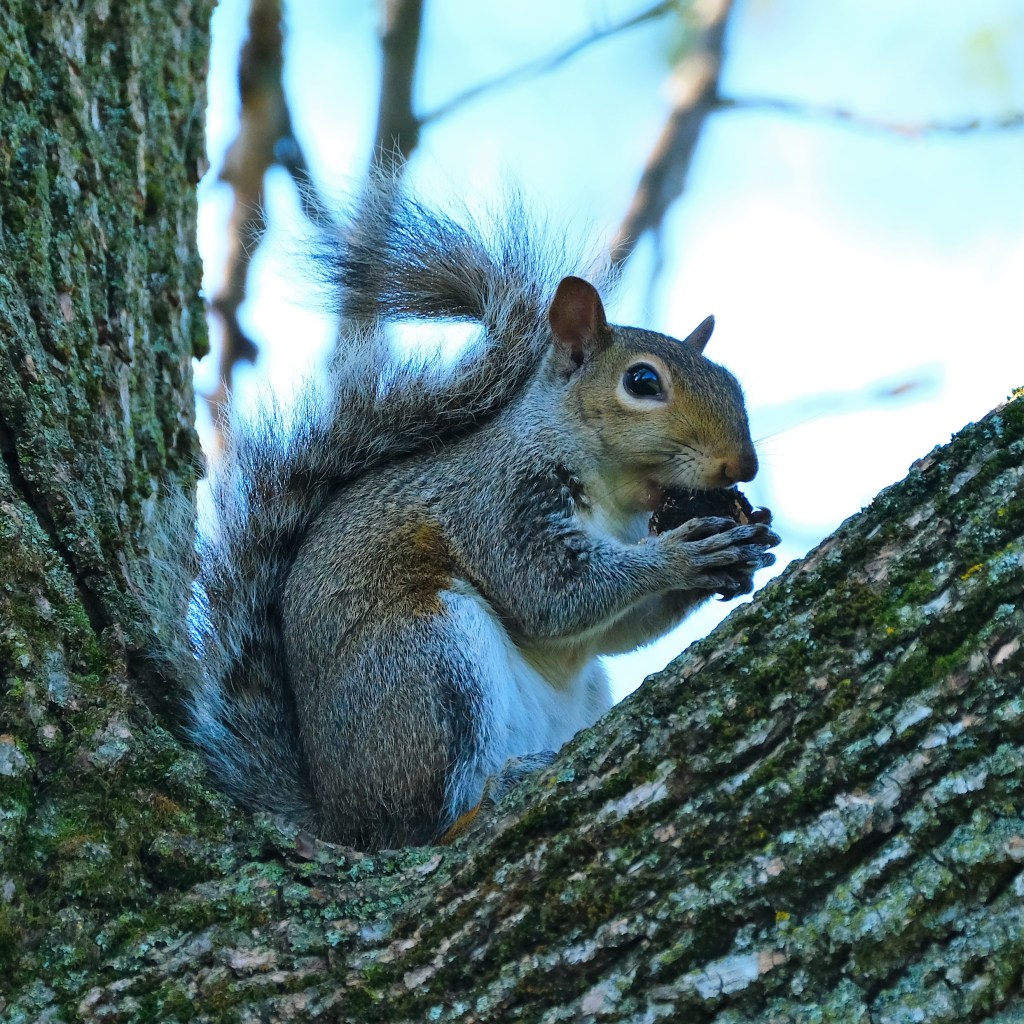
On my way home, I spotted three squirrels who looked a little small, but they were definitely no red, so probably just young. While two were playing, this one was focused on getting bigger.

Lastly, among the many new flowers blooming throughout the park, the mayapples are also in full bloom.

Even more goslings!

Man! You go away for just five days, and everything changes.

The main story, I suppose, is that the third set of goslings on the pond, the ones incubated on the southern tip of the island, have finally hatched, and there appears to be only one for all that effort. When I arrived, Mom and Dad were taking a well-deserved break on the lawn, and Junior was over with the neighbors already for breakfast.

See the little one in the middle, about half the size of the other five?

Meanwhile, the third family, the ones who hiked up from the river, are getting huge!

Meanwhile, at the river, it appears that all our robin chicks have fledged already! Both nests were empty, and I hardly saw a robin this morning. Perhaps some are gearing up for that second brood that John Gurda dreads.

There was also a pretty young looking brood of goslings out for a swim with their folks.

Further north, I spotted a hearing herring ring-billed gull fishing over the falls. It even caught something on the third pass, but I missed that shot. Sorry. Out of practice I guess.

A house wren posed in the sun

And I finally got a glimpse of who does all that incessent soft chirping from a hole in a tree as the adult male hairy woodpecker scolds me for getting too close.

Finally, there are a few new blossoms open in the park, including the horse chestnut trees (Aesculus hippocastanum) at the south end,

The tatarian honeysuckle (Lonicera tatarica) throughout the park,

The chokecherry (Prunus virginiana),

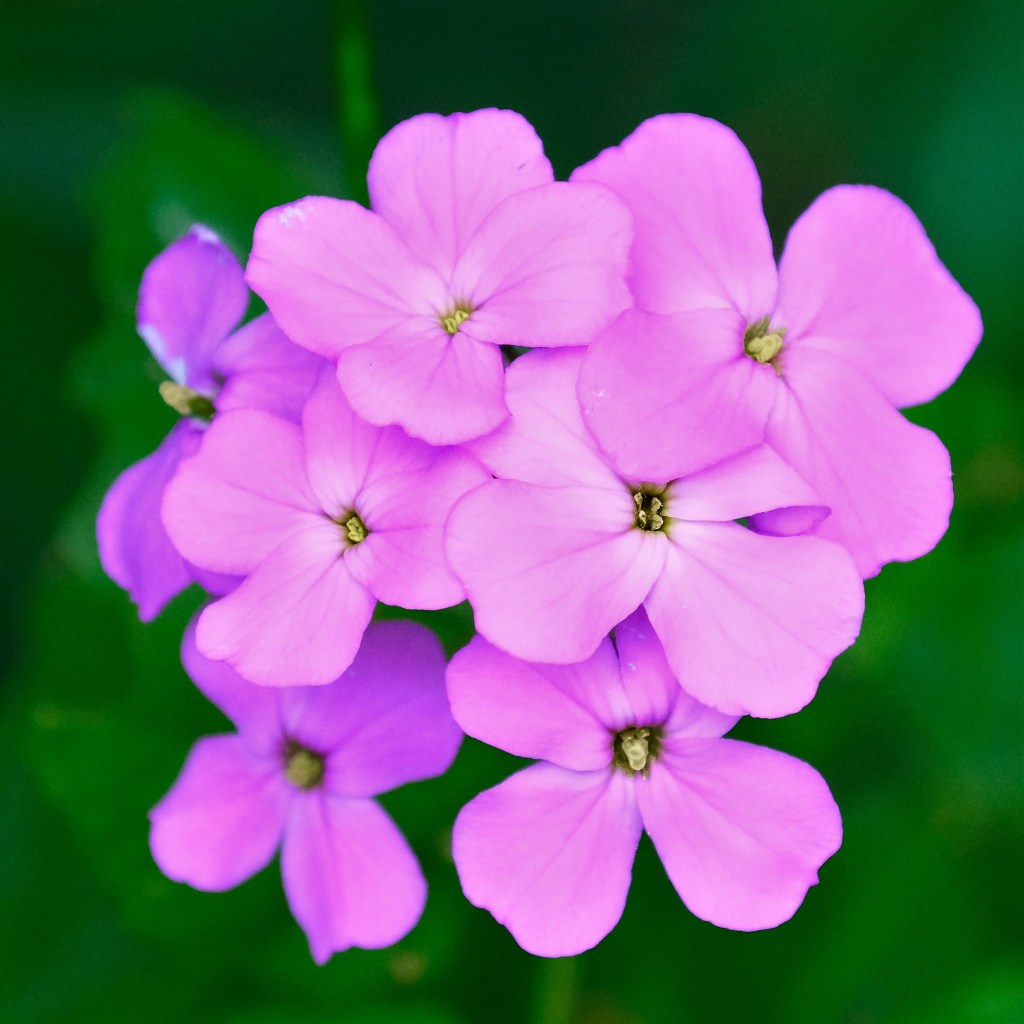
And the dame’s rocket (Hesperis matronalis)

Lastly, I did spot a couple of fun things out east. First is this handsome garter snake warming up in the morning sun in the woods beside the Sheraton in Rocky Hill were we stayed after the reception. I’ve been searching for them high and low in Estabrook since last spring, and I find this one on a 10-minute stroll with nothing but my mobile phone. Ha!

Second is this pretty, native pink azalea (Rhododendron periclymenoides) growing wild in Sleeping Giant State Park.

There was also a nice tiger swallowtail on my mom’s azalea, but it’s image is still on my sister’s camera back in CT. Don’t worry. We’ll have our own here soon enough.

PS. I found my fourth park beer, but this one’s a bud light, so I’ll drink it only for scientific purposes, and I won’t enjoy it.

Everyone comes out for a perfect morning…

I had been wondering when we’d see a rose-breasted grosbeak (Pheucticus ludovicianus) in the park, and I just figured that they were all still over at Bonnie and Gary’s feeder. Well, they couldn’t have picked a more-beautiful morning to finally come visit Estabrook.

I first spotted a pair at the top of the bluff by the river but couldn’t get a good shot before they bugged out for the other side. Then, when I circled back to the pond, I could hear a song like a robin’s, but better, and remembered that was the sign of a grosbeak I read about last year. Sure enough, high up in a tree, in the warm morning sun and against a perfect blue sky, I found this handsome devil serenading the world.

Here he is taking a breather.

Also at the pond, the warm sun had brought out the turtles again.

Finally, the goslings were on the western lawn stopping traffic on the parkway again.

A sad detail is that the families are down to 5 and 7 from the original 6 and 8, and I suppose we can hope that someone, perhaps a hawk or owl, had mouths of its own to feed, right?

On my way to the river, I had the great fortune to encounter six (yes 6!) deer crossing the path right in front of me as though I wasn’t even there. Among them I counted three sporting antlers in various stages of development. That’s a first for me in the park, and here’s the best image I captured.

At the river, the robin chicks continue to turn worms into feathers, and here’s a shot of mom pausing to reflect on the plight of poor John Gurda.

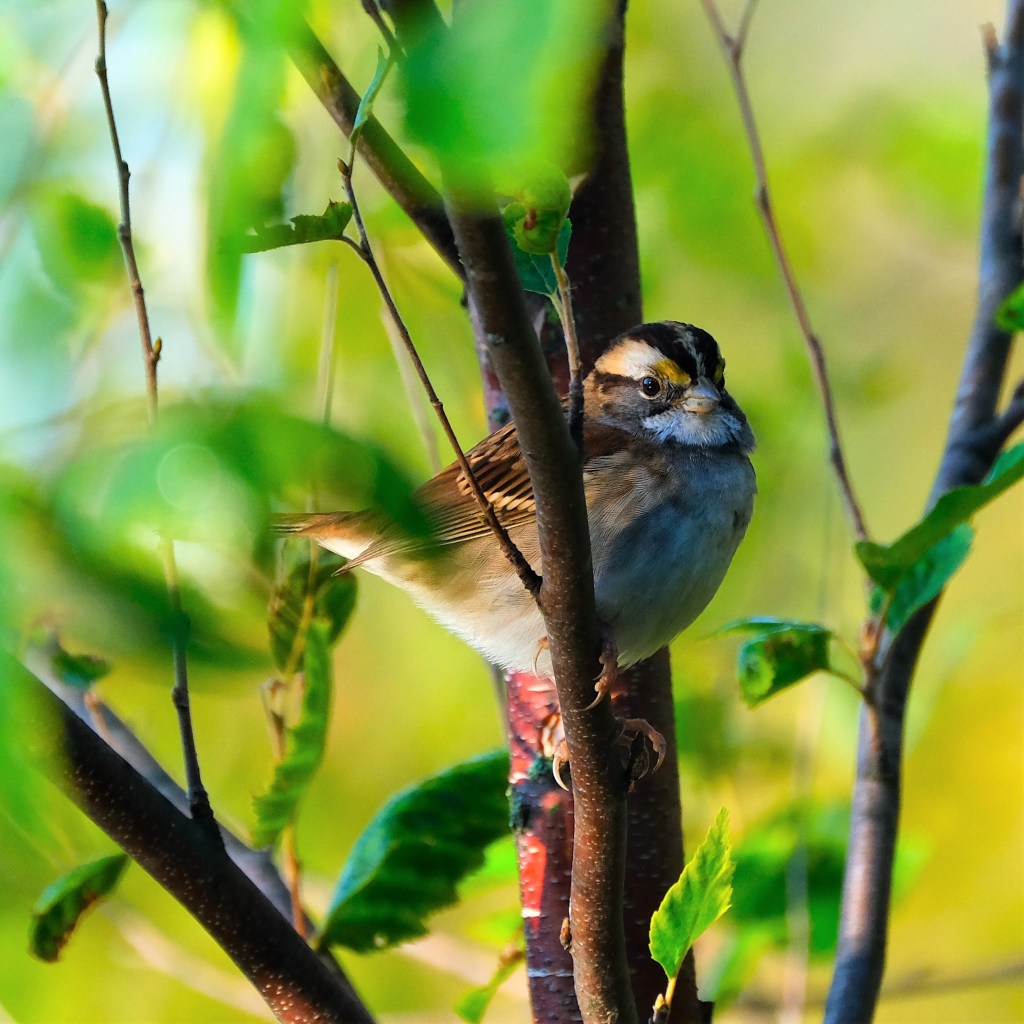
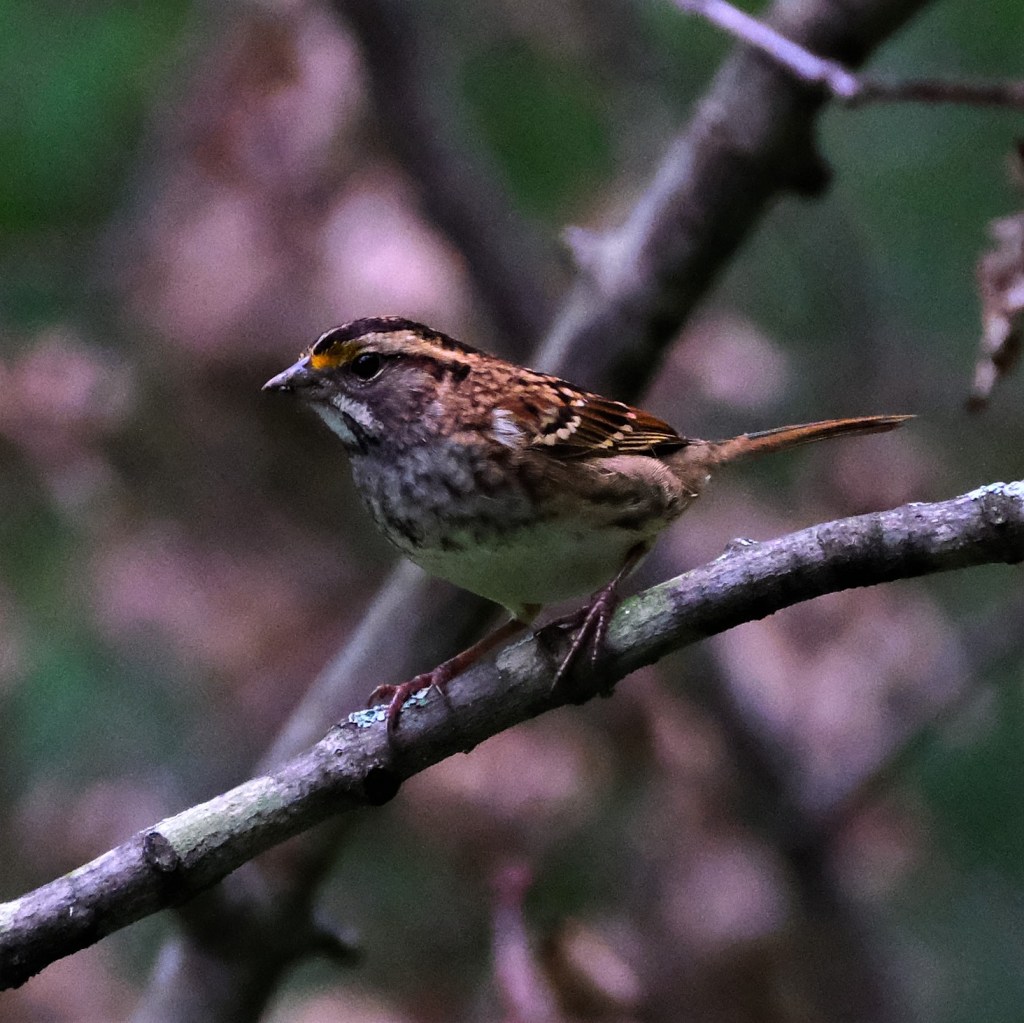
Also at the river I spotted this striking white-throated sparrow sporting the “tan-striped” form. Wait till Fox News hears about this!

Finally, the the American white water-lilies (Nymphaea odorata) are starting to appear on the water, and if last year is any guide, blossoms are just over a month away.

On my way home, I hear a ruckus in the woods and spotted a whole brood of squirrels chasing each other around a tree. One kept coming back to hide in this hole.

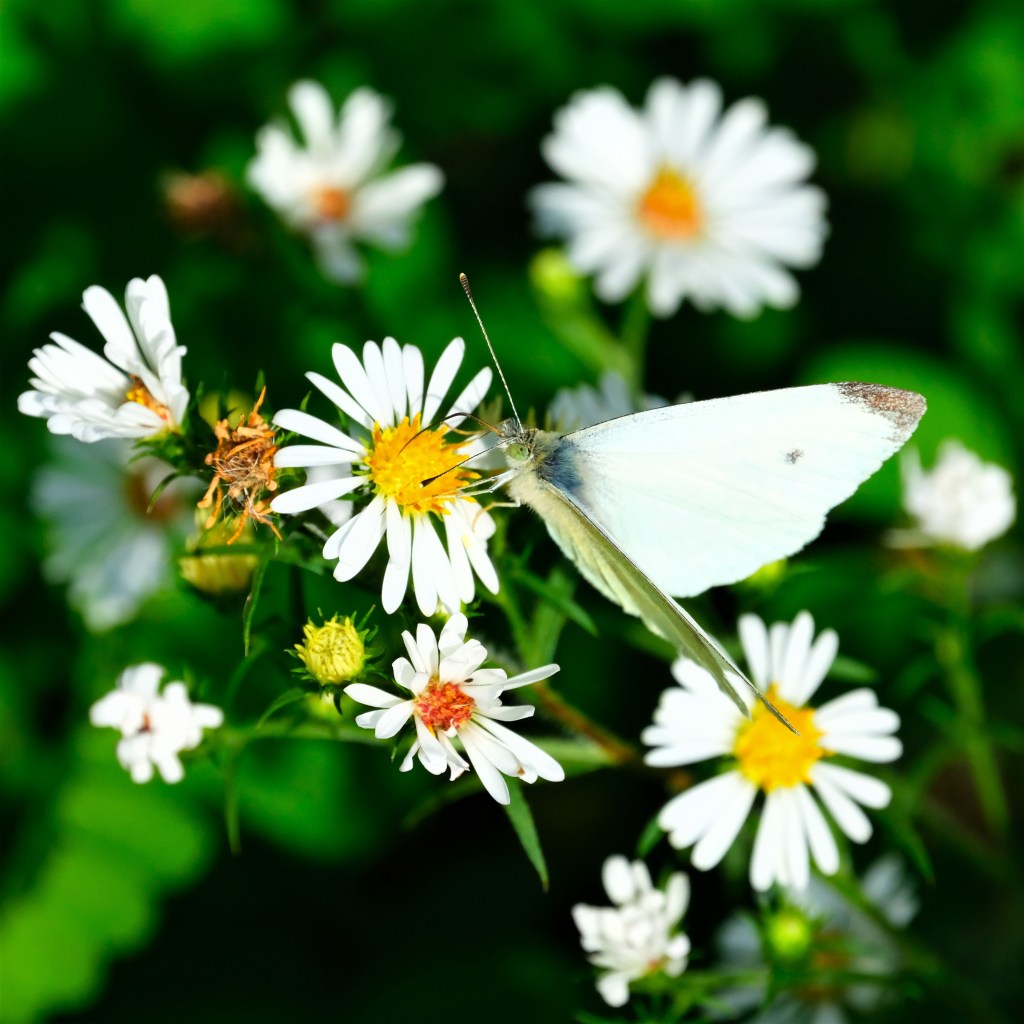
Lastly, when I reached the southern soccer fields, I finally got a chance to photograph one of the cabbage white butterflies (Pieris rapae) I’ve been seeing intermittently for the past couple of weeks.

I read on the Pedia of Wik that “they overwinter as pupa,” which probably explains how they can appear so early in the season. The monarchs probably haven’t even cleared customs at the board yet. I figure they’re still about two weeks away.

PS. I may be off the air for a few days. Anne and I are going to my niece’s wedding out east this weekend, and it will be my longest absence from the park since this whole operation began. Wish us luck, and if I see anything good out there, I’ll be sure to tell you about it.