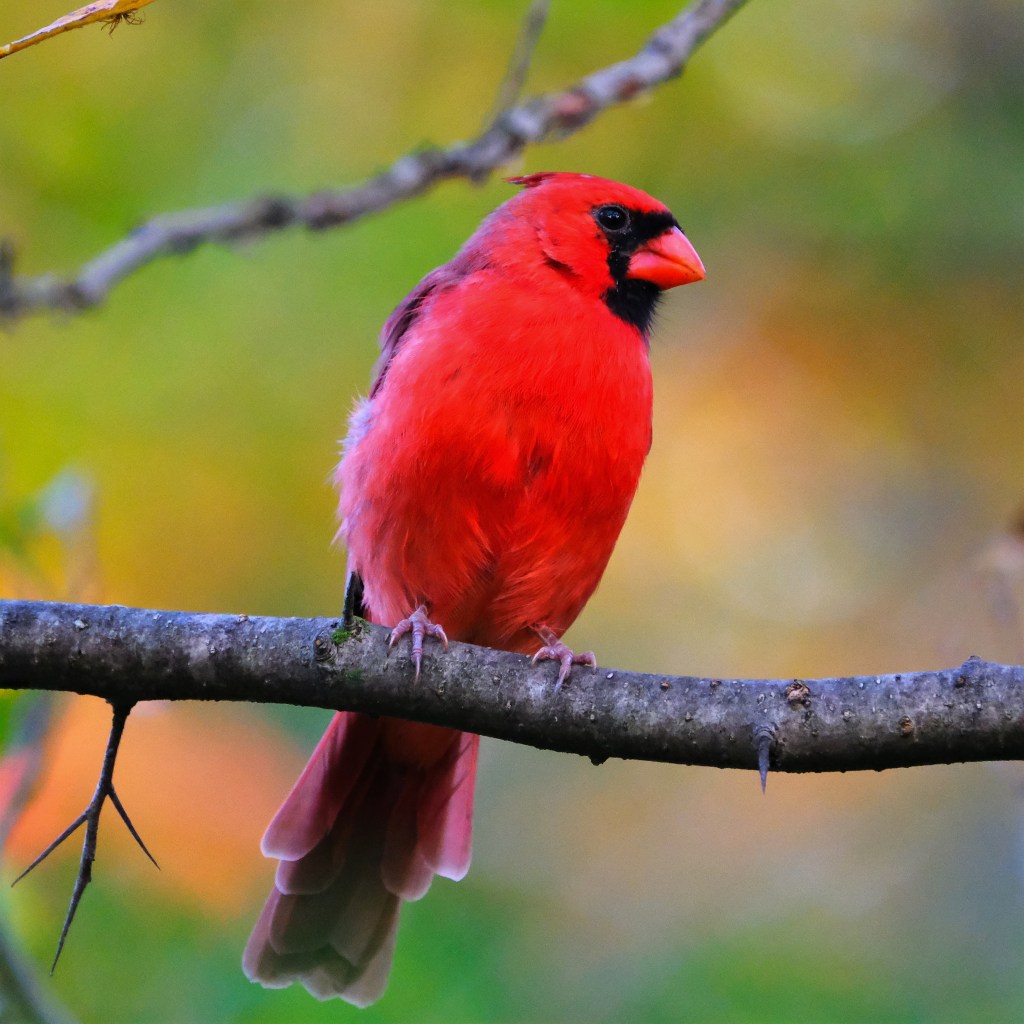
It was dark until 7am, and then, as if someone flipped a switch, it became light out, so here we go. It’s a short one, though, because the front edge of a thunderstorm started dripping on us by 9am already.
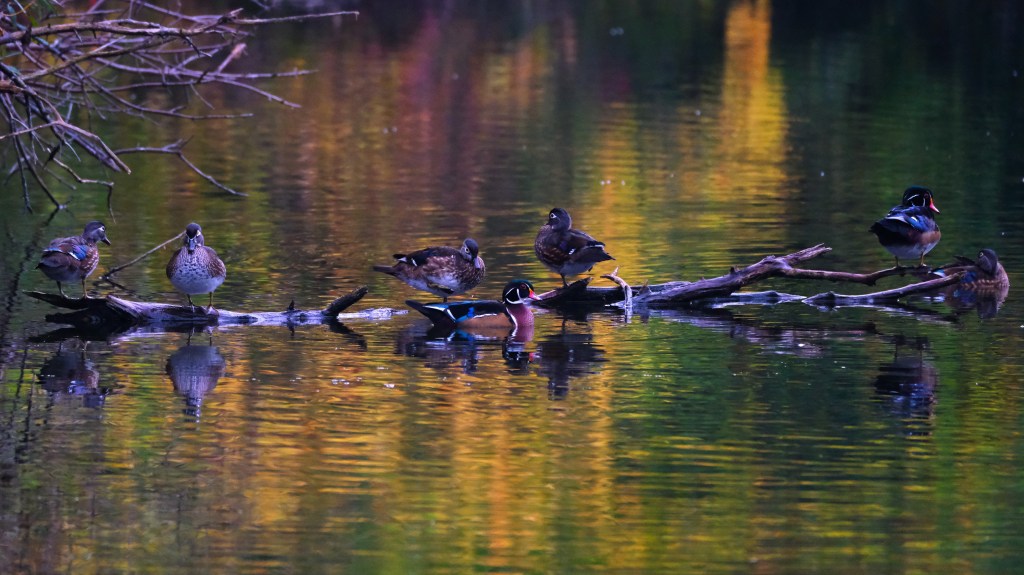
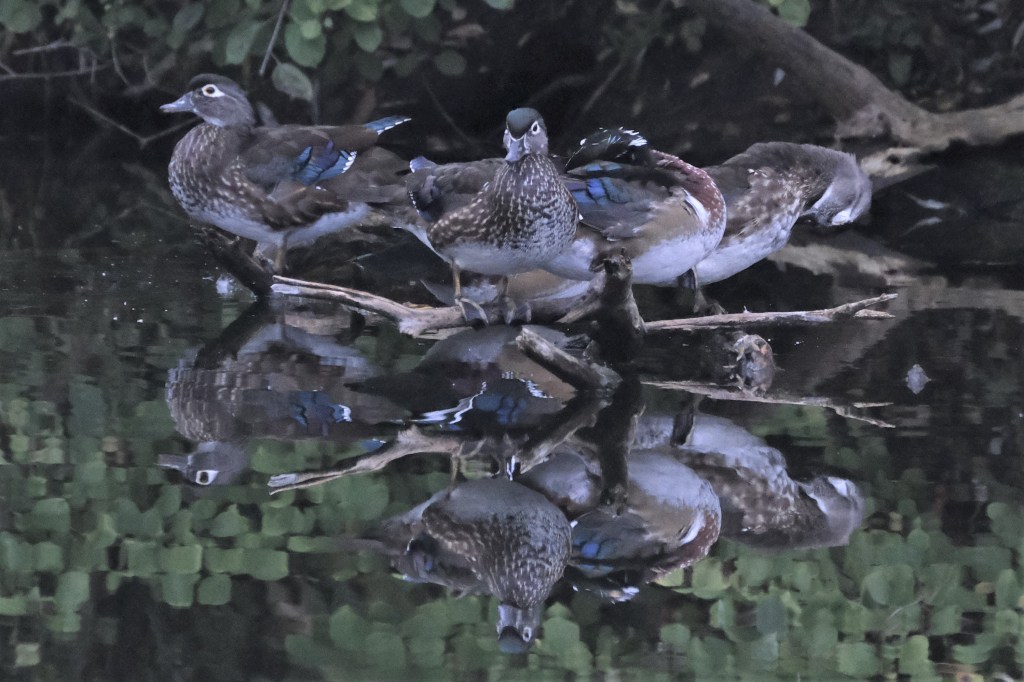
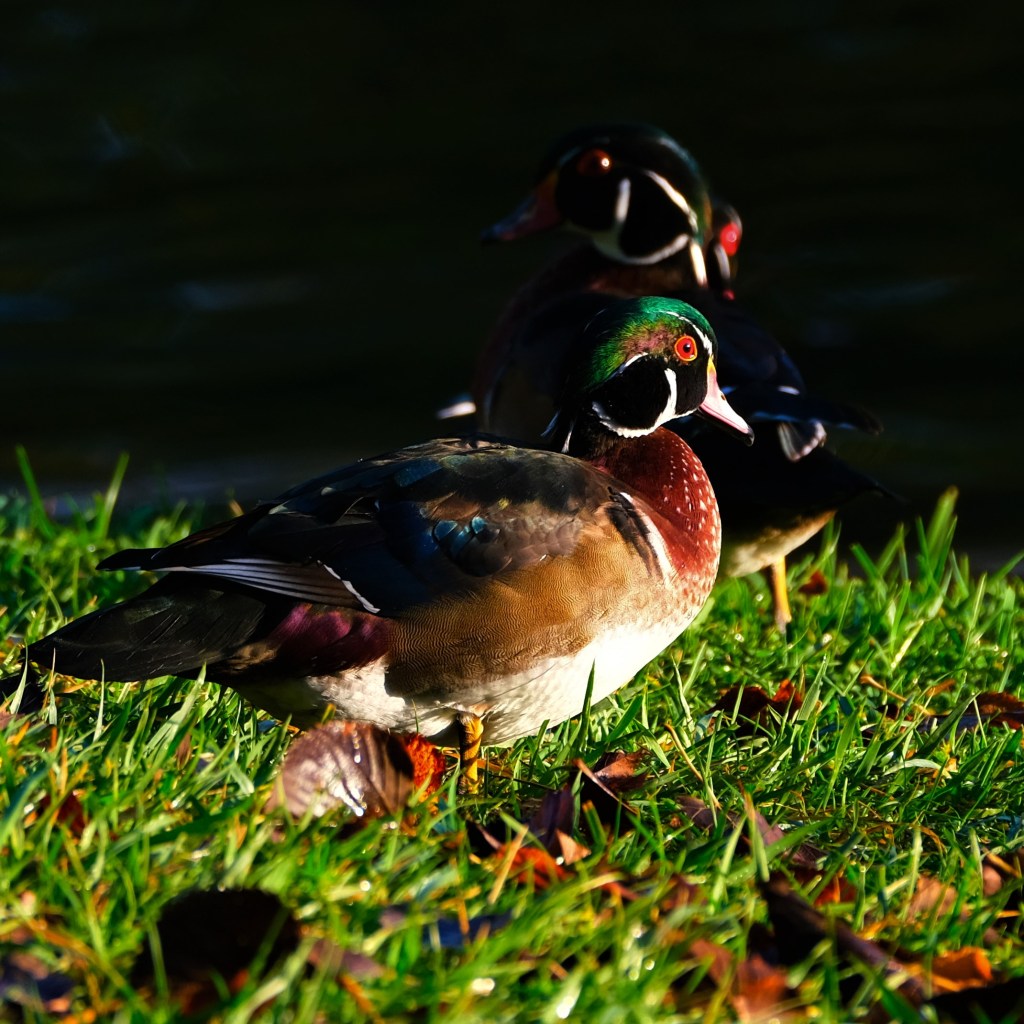
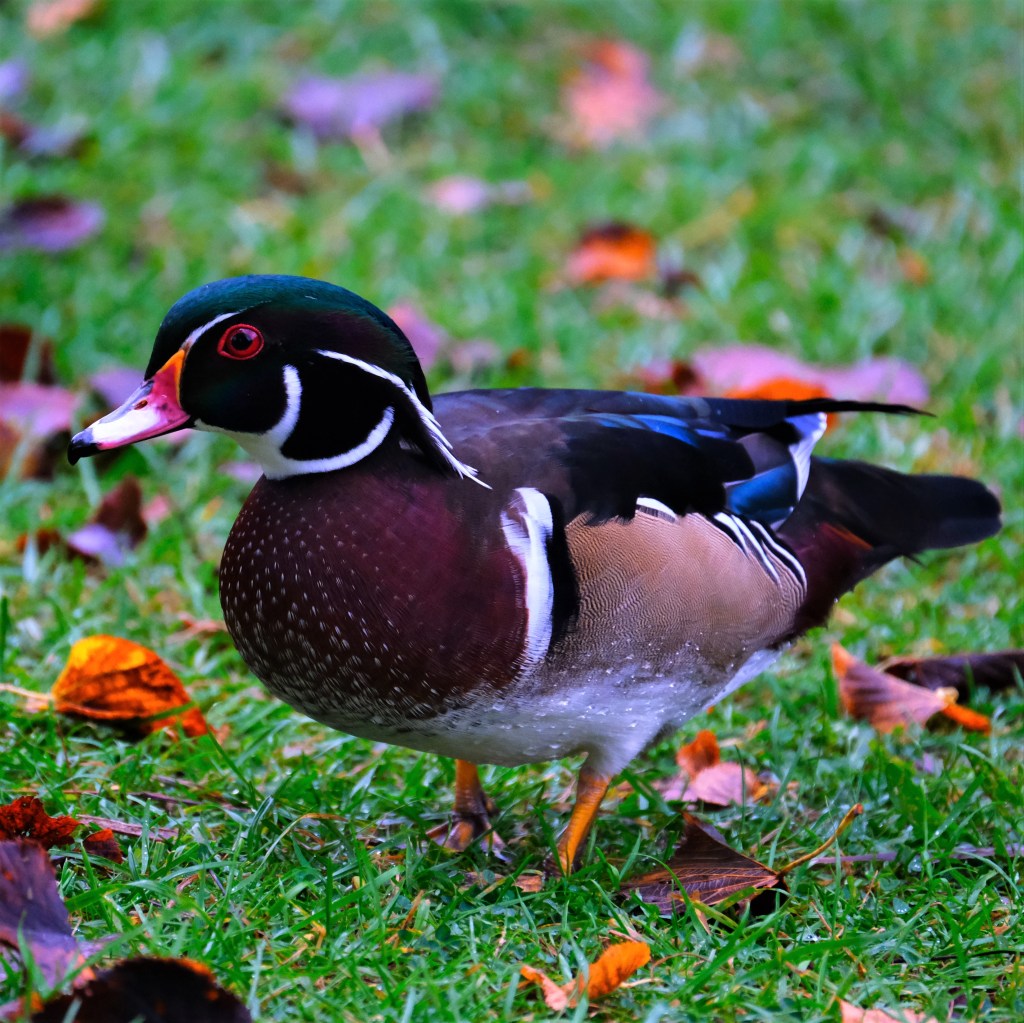
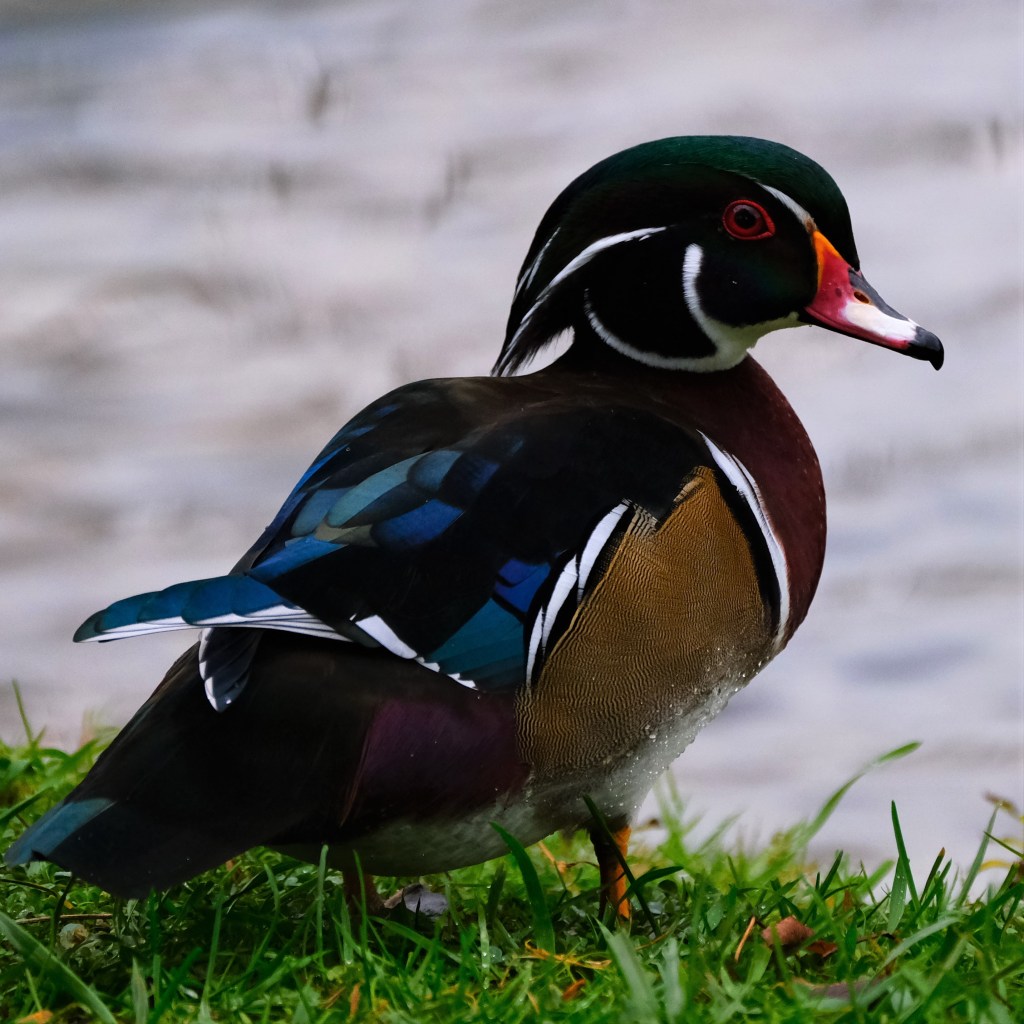
The pond was chock full of wood ducks, I counted 18, and they were all excited about something. There was a lot of calling, little groups forming, and swimming around. It was fun to watch, and here are a couple of the prettier pictures.
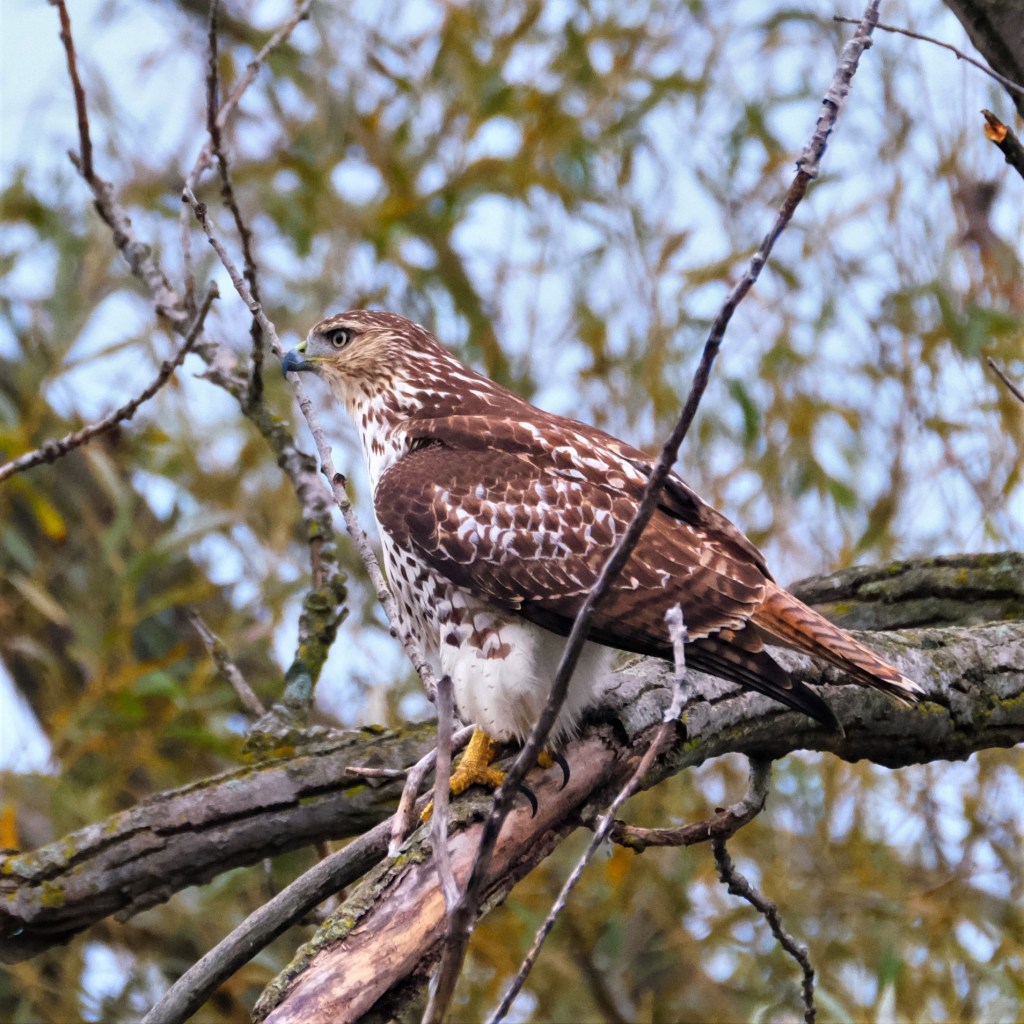
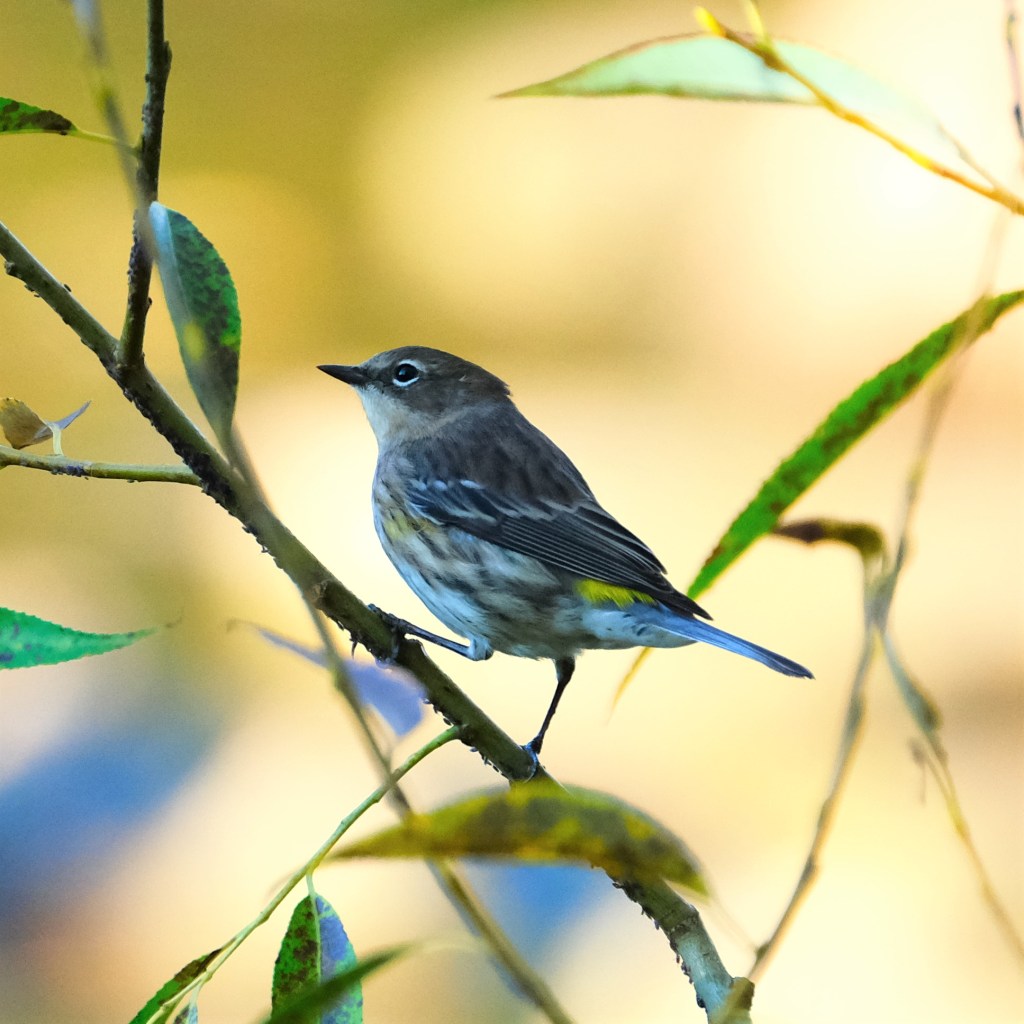
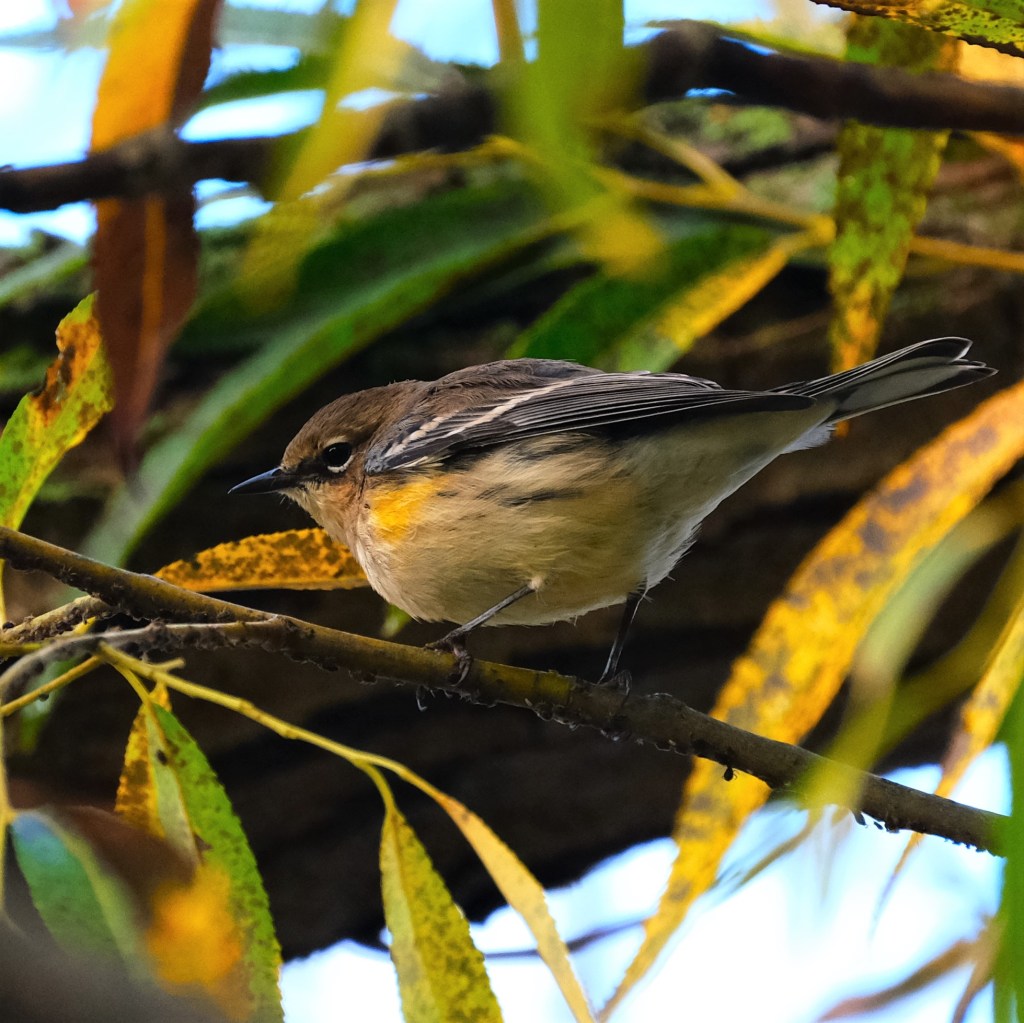
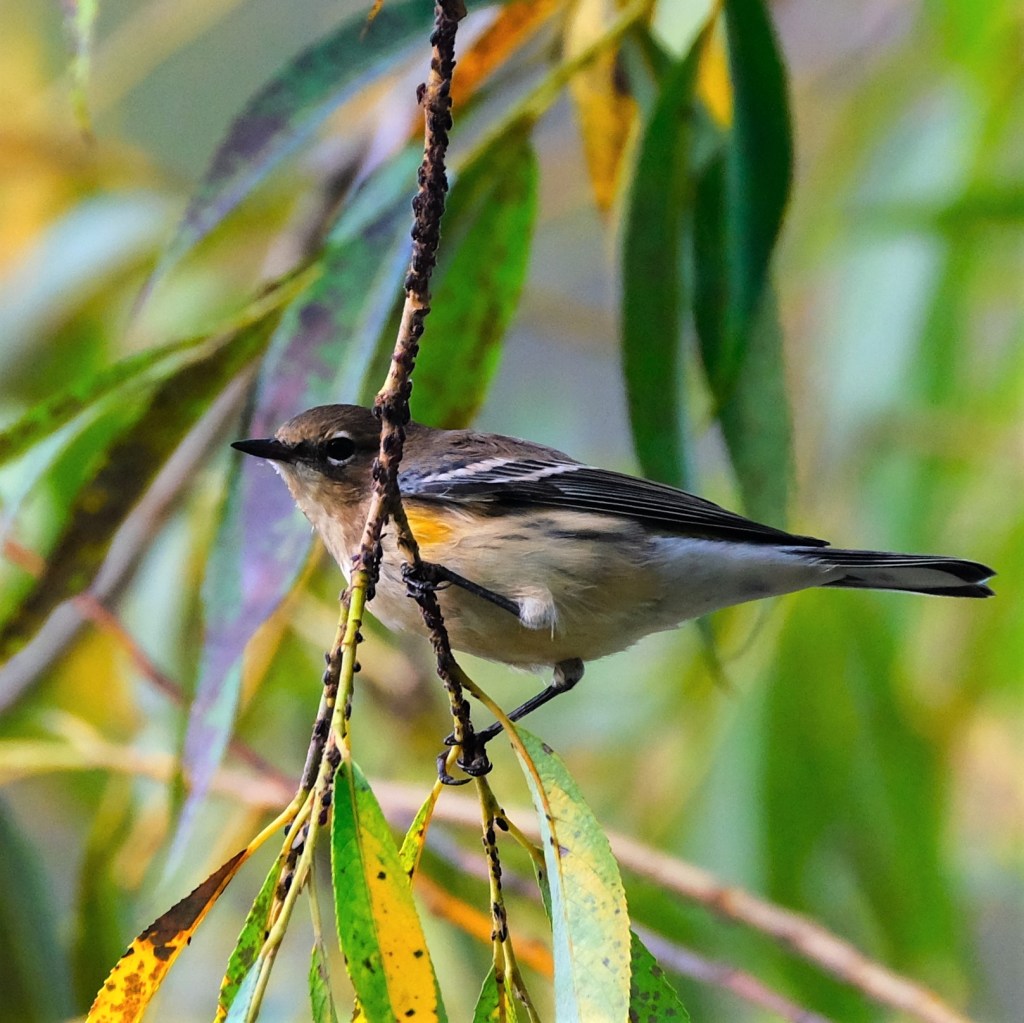
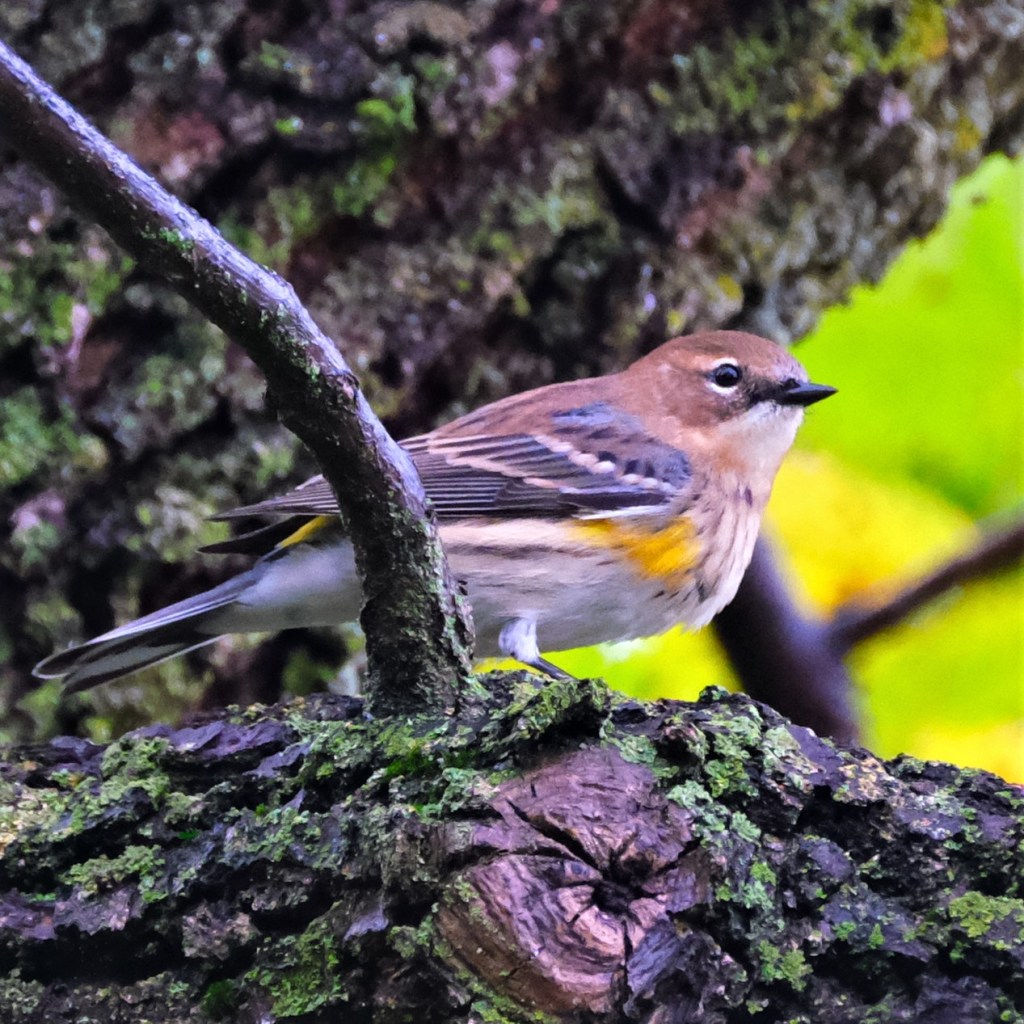
It kept swooping from tree to tree, and I eventually lost sight of it, so I turned my attention to the other birds. Here’s a yellow-rumped warbler in a willow tree over the river.
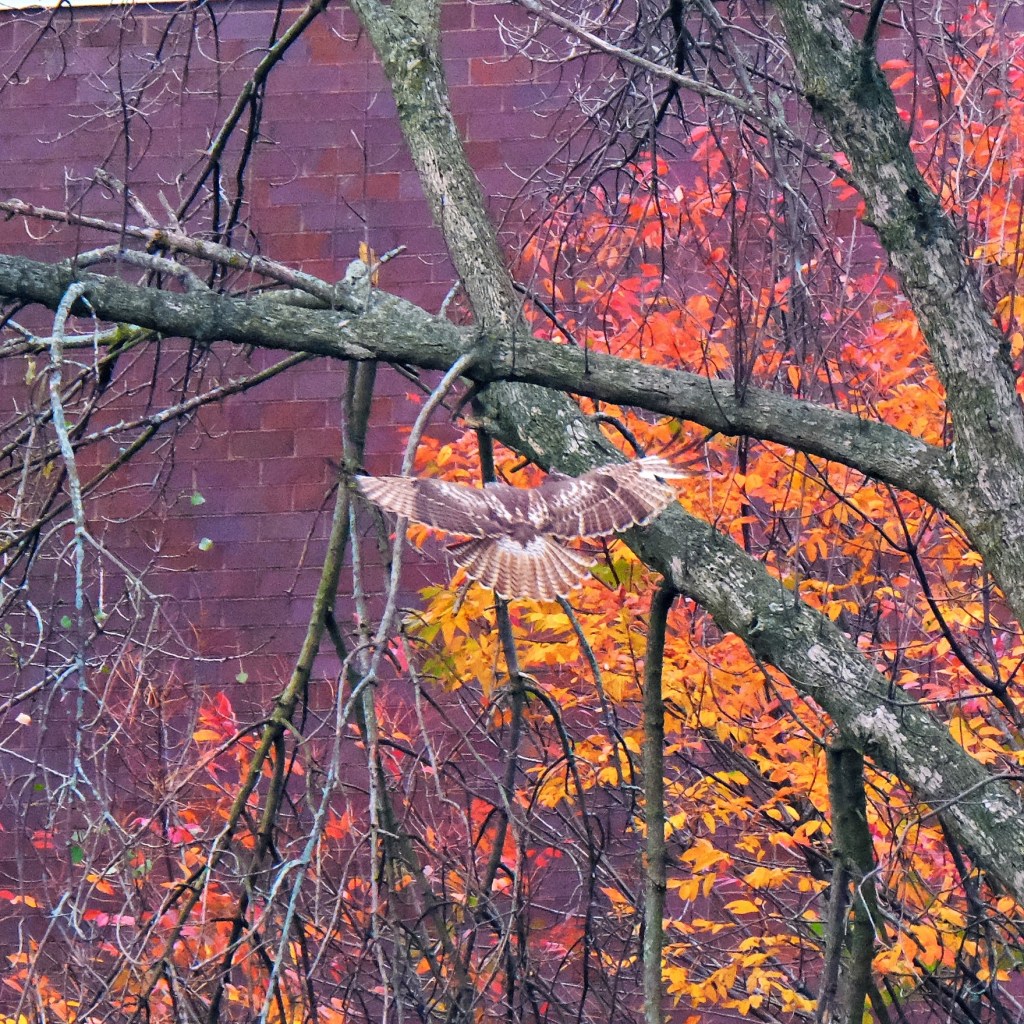
Then a bunch of crows on the far shore all started calling, and I had a hunch what that meant. Sure enough, after a bit, the hawk finally relented took off for another perch with a couple of crows in hot pursuit. There was nowhere near enough light to capture that action, but this one image, where the hawk is slowing down to land, at least gives an impression of the scene.
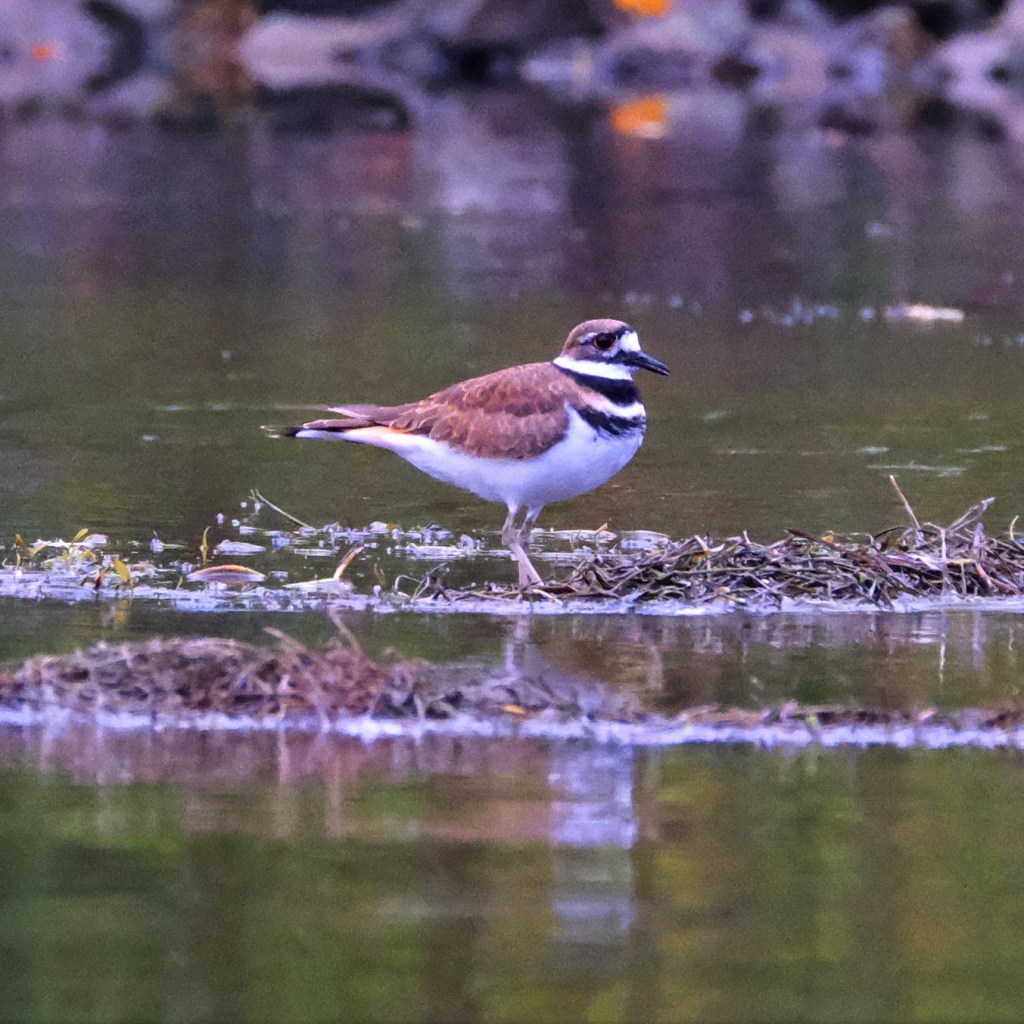
By then, I could hear rumbles of thunder, so I high-tailed it back home, but this little cutie was worth a quick pause.
And that, typos and all, is all I’ve got time for this morning. Let’s all hope for better weather and more light tomorrow.
It was still quite dark at sunrise under thick cloud cover. Then the fog rolled in, and I’m surprised any of my pictures came out at all. Here are the ones that seem presentable.
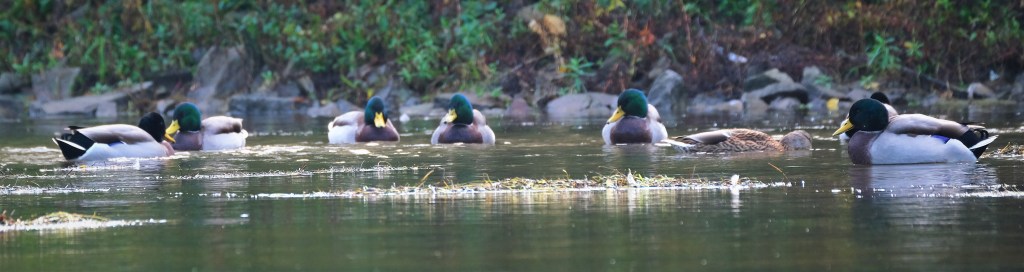
There was no sign of the huge snapping turtle at the pond, but a handful of wood ducks are still around, and here are four of them just off the far shore.
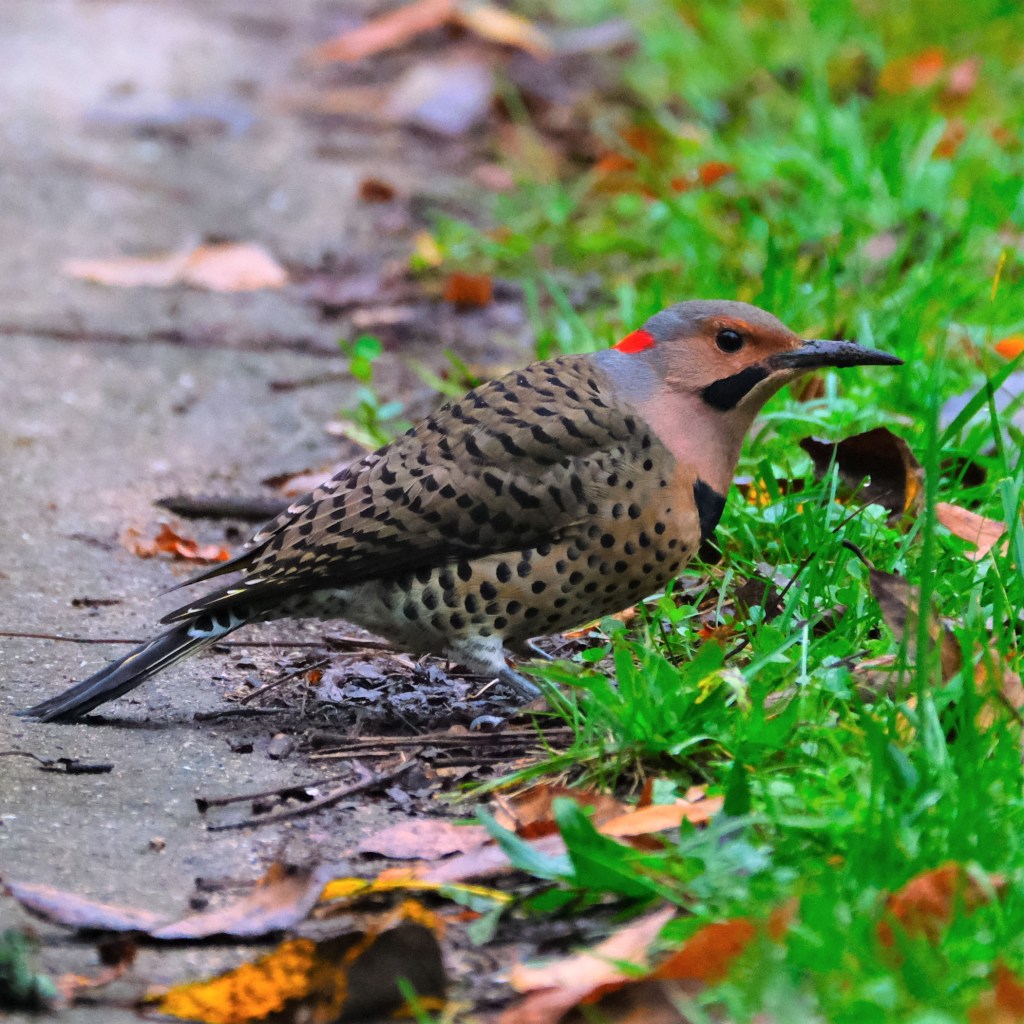
As I continued to the north end of the pond, in search of that turtle, this northern flicker really did not want to quit mining the ant nest it must have found beside the path.
Once I got past the flicker, this chipmunk made me stop again.
When I finally reached the north end of the pond, the four wood ducks were still on their branch, but with a prettier background.
I heard a kingfisher but couldn’t see it or anyone else around, so I pressed ahead to the river. I couldn’t find any pintails, teals, mergansers, shovelers, or cormorants today, but there were plenty of mallards, a few geese, some wood ducks, and this one blue heron.
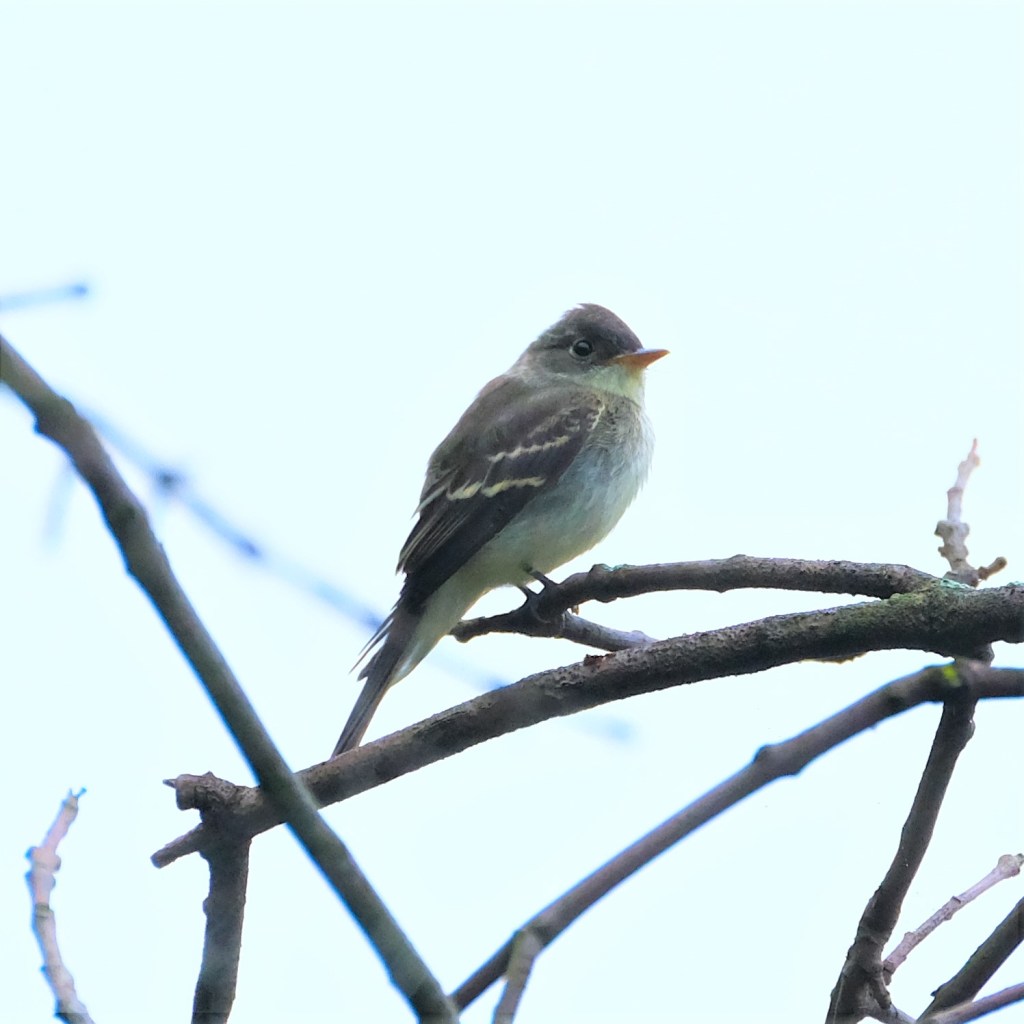
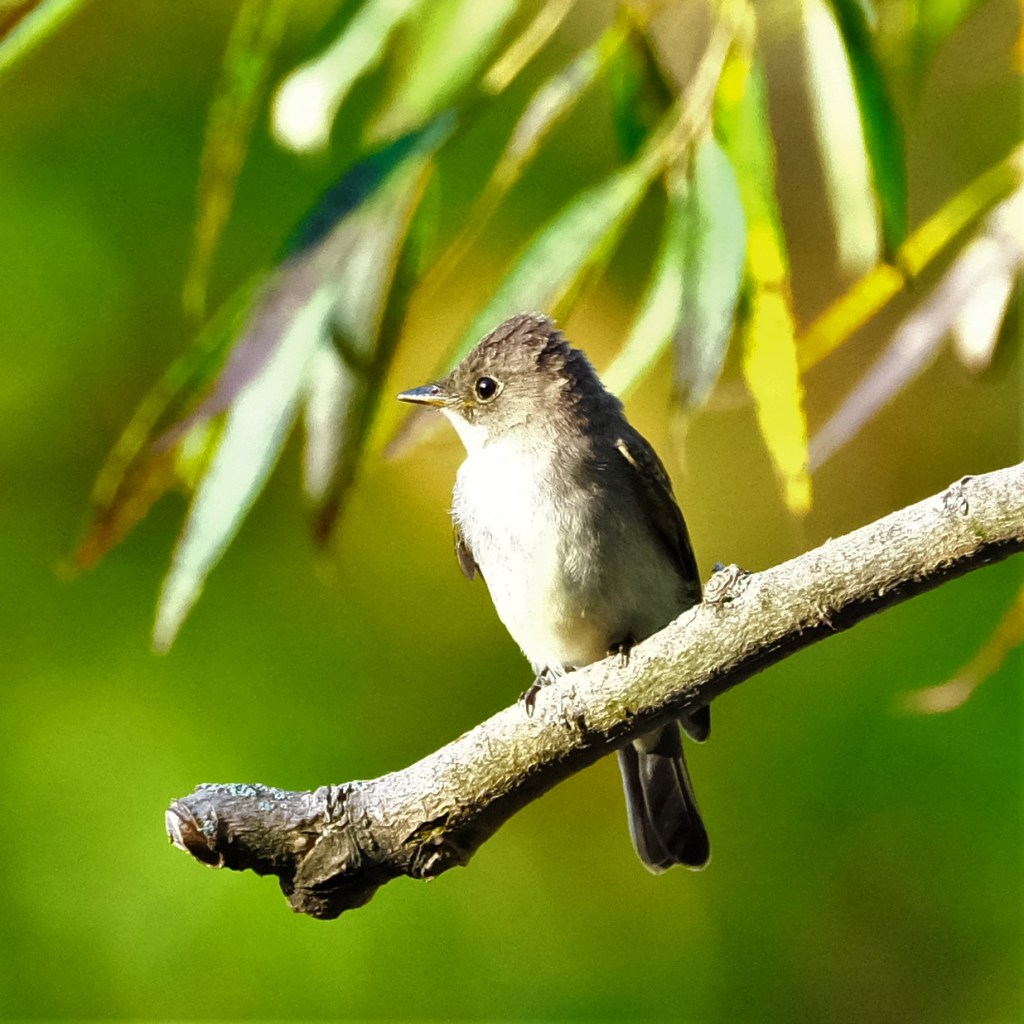
On shore, a flycatcher, looks like an eastern wood-pewee, was perhaps waiting for enough visibility to spot flies.
A bit lower, a white-throated sparrow was taking a break from foraging in the tall flower stalks.
Lower still, I was surprised to find a purple cornflower still in bloom, and this one had a lethargic bumblebee resting on it, perhaps waiting to dry out and warm up.
On my way back south, I was super surprised to spot one more green heron on the far shore. I haven’t seen one in a while and thought they had all flown south already.
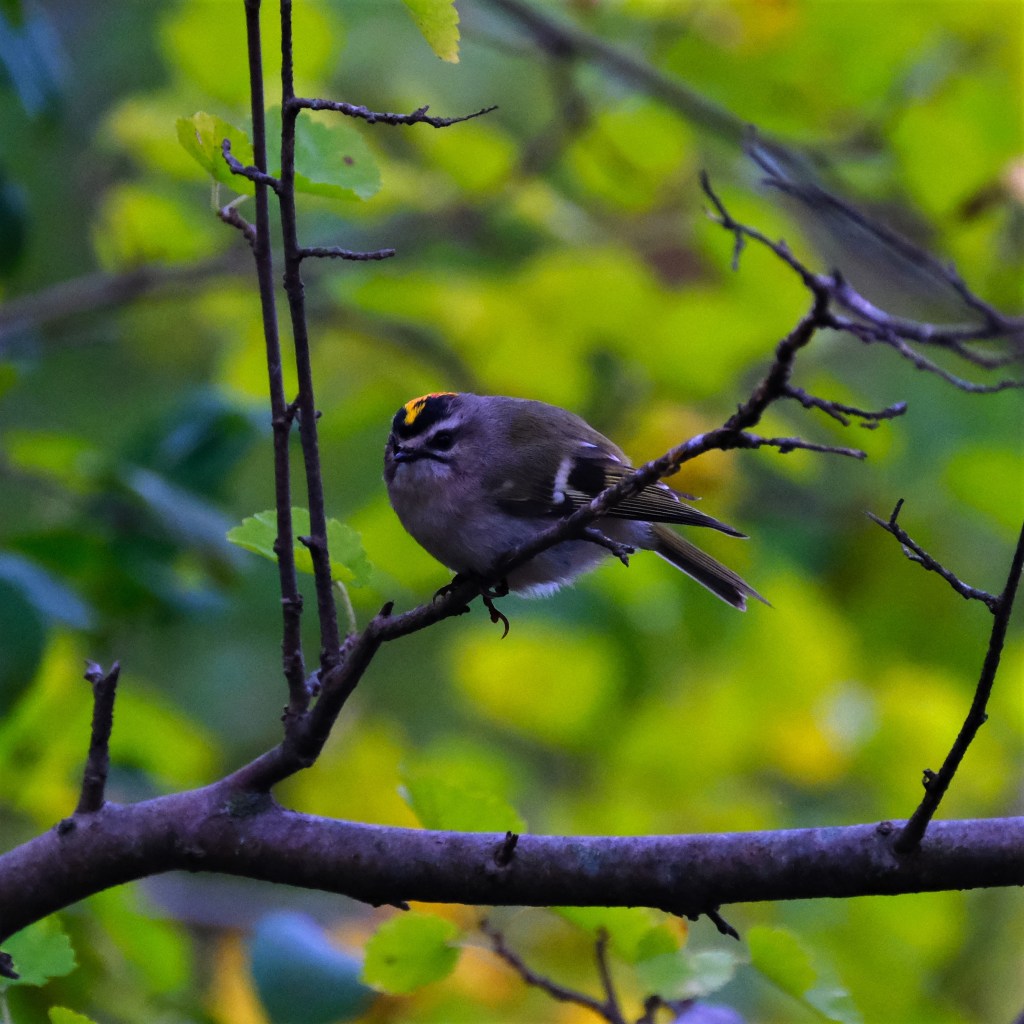
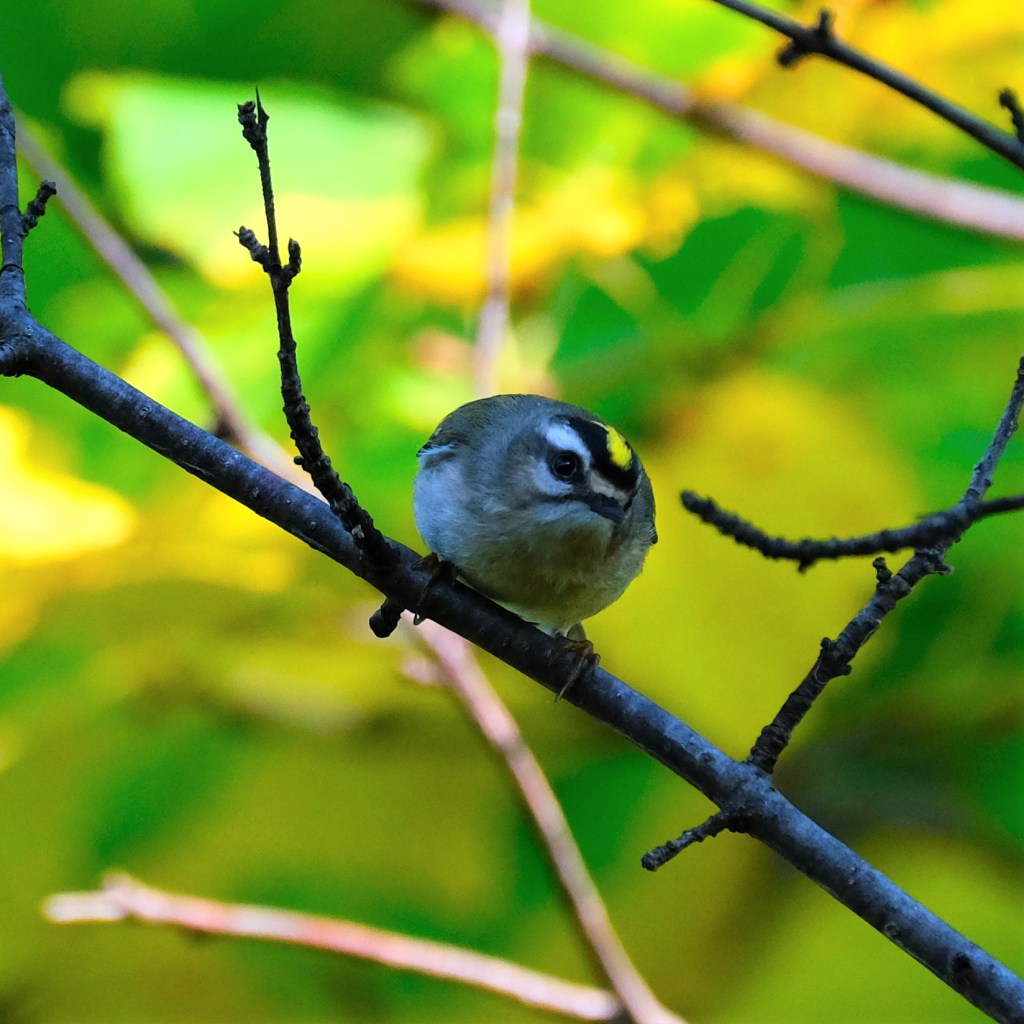
South of the falls, a golden-crowned kinglet was kind enough to tilt its head our way for an instant.
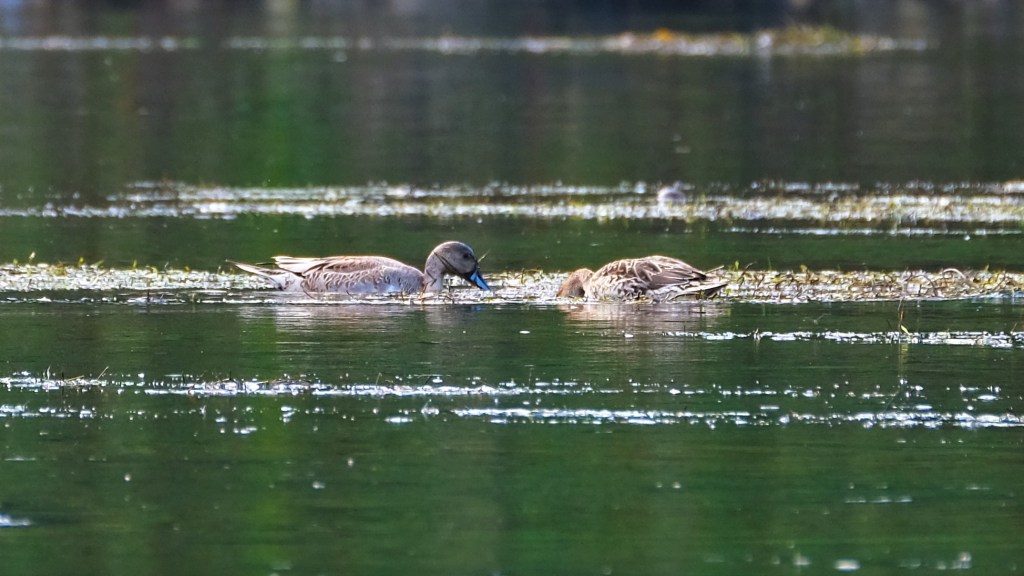
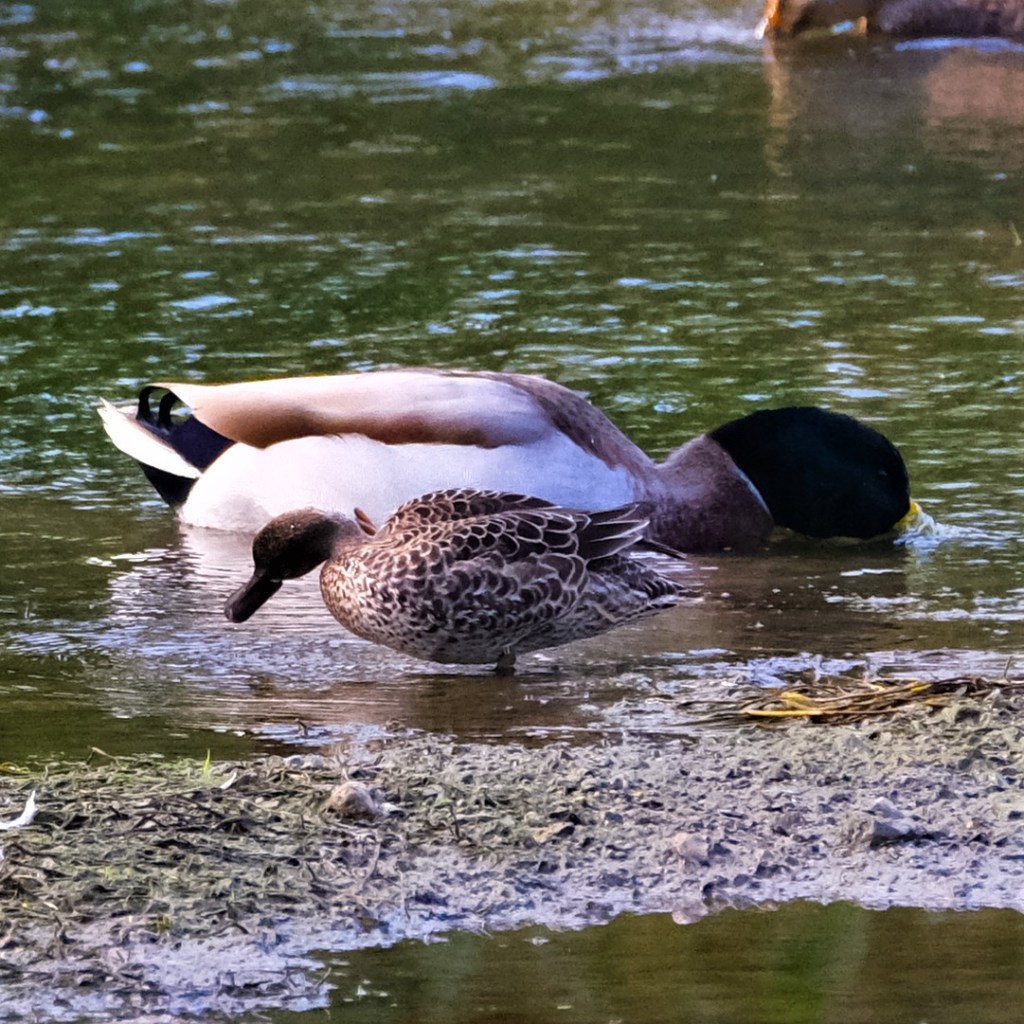
When I got to where the stream from the pond empties into the river, there were two more surprises waiting for me. First, this odd couple, a wood duck drake and mallard hen foraging together.
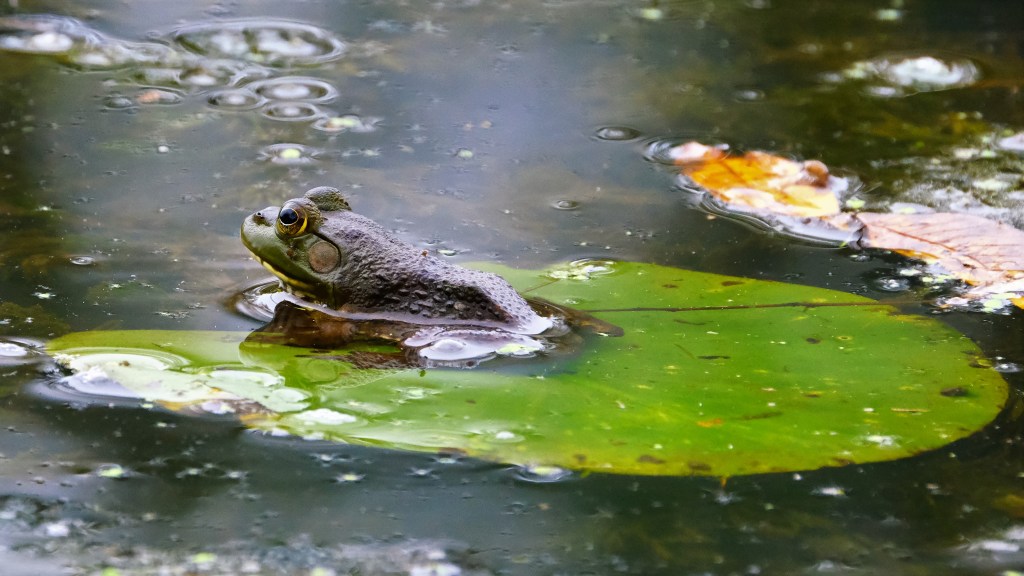
Second, this bullfrog on a lily pad reminded me that we haven’t seen the last of them for the season either.
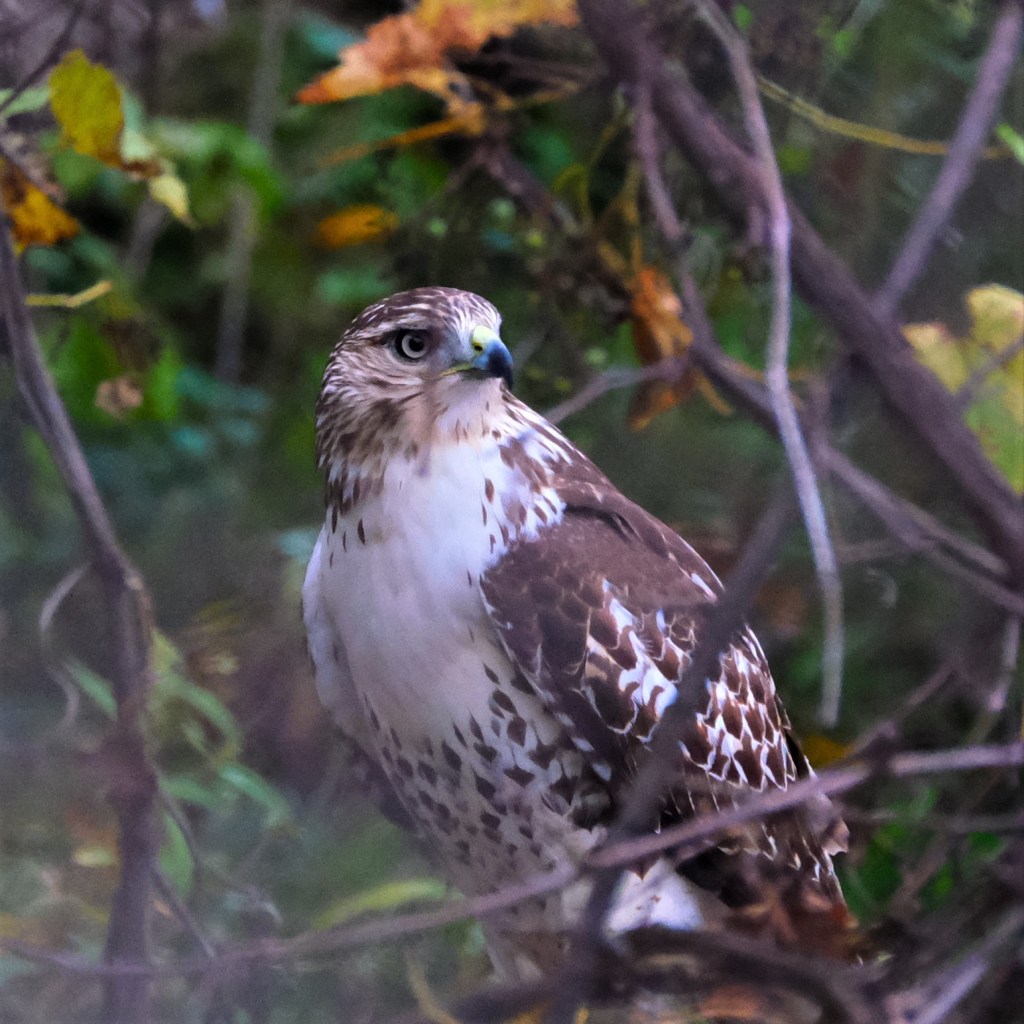
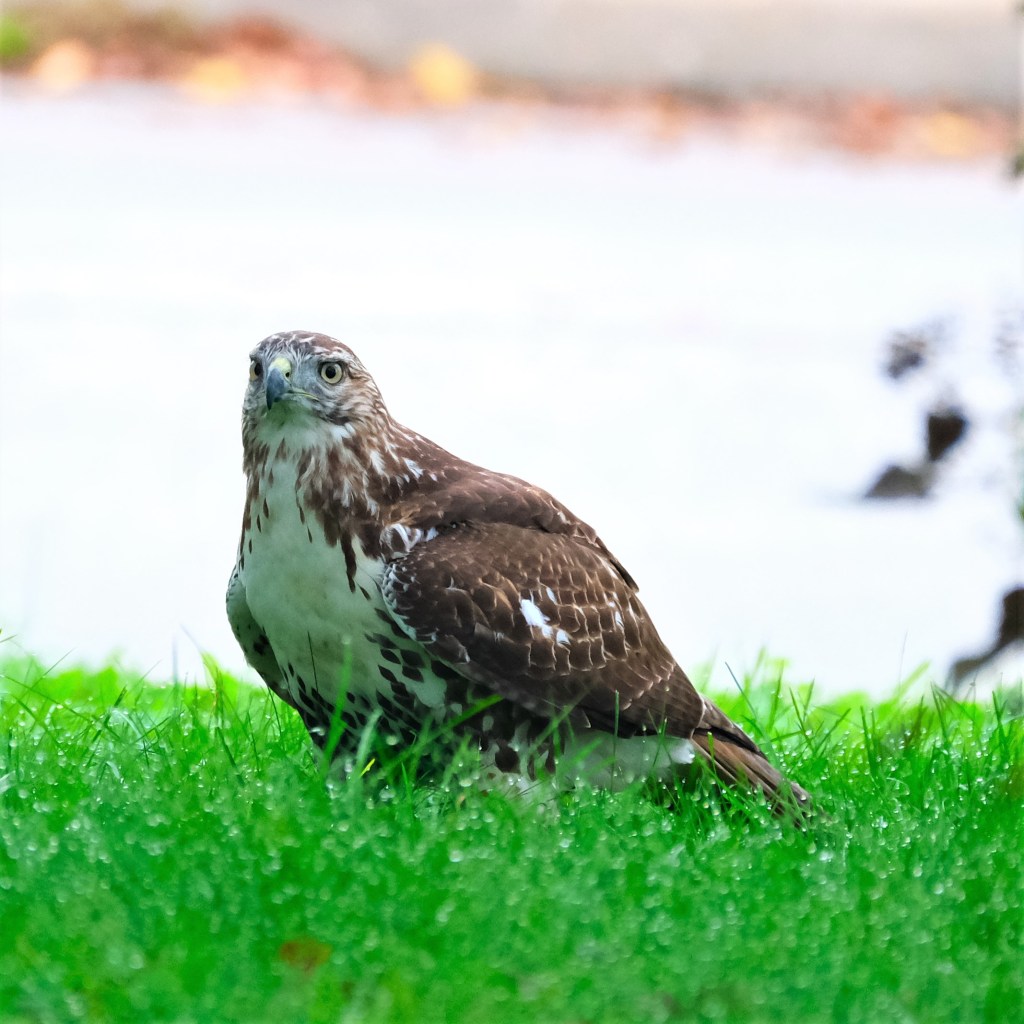
Anyway, as we were chatting, this magnificent red-tailed hawk made a try for a squirrel but missed and ended up on the lawn, not 30 feet away, right by the parkway. For a moment, it appeared to be torn between trying for the squirrel again, who was just right up there…
or fleeing from all the people standing around in the parking lot looking at it, and it eventually opted for the latter and took off. Better luck next time, buddy!
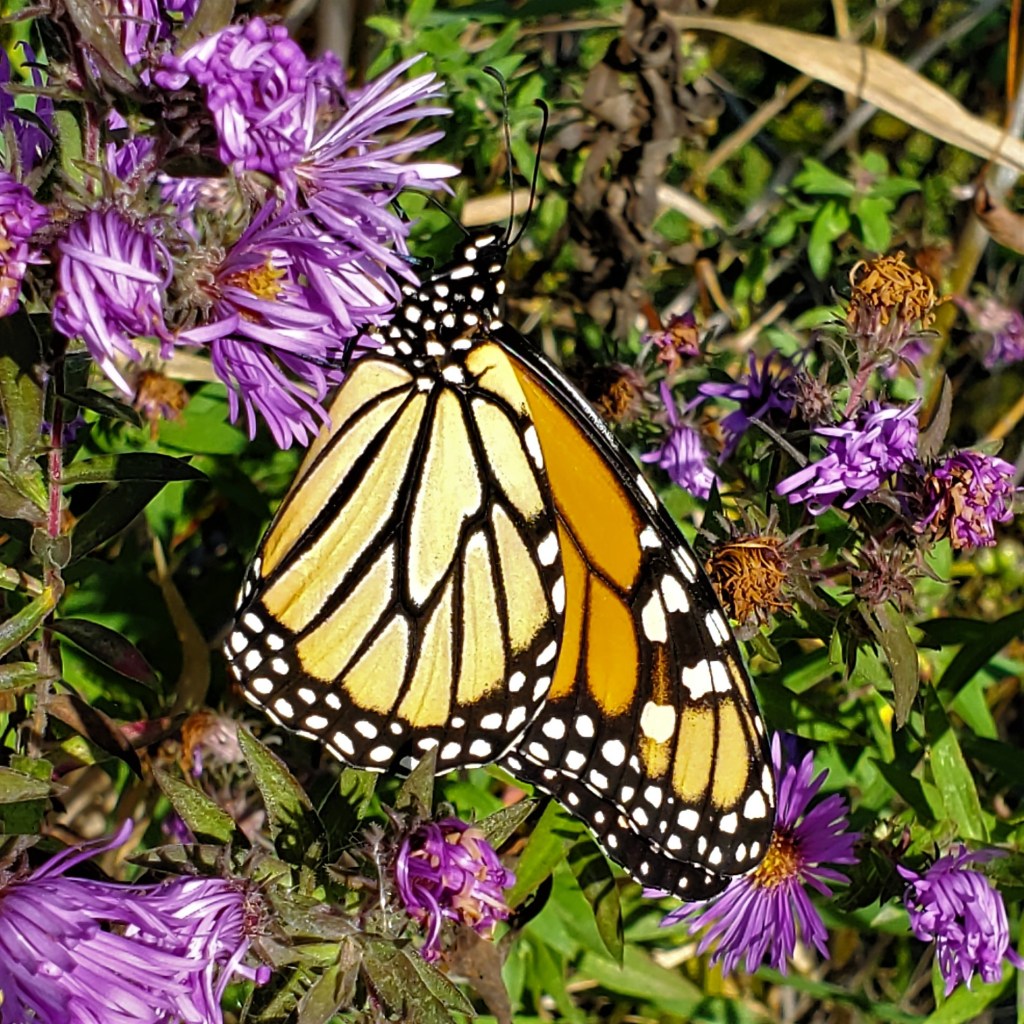
Lastly, I rode my bike down the Oak Leaf Trail yesterday afternoon to stop by campus, and look who I spotted on the New England aster by the Urban Ecology Center. Yup, one last monarch who hasn’t made its way to Mexico yet.
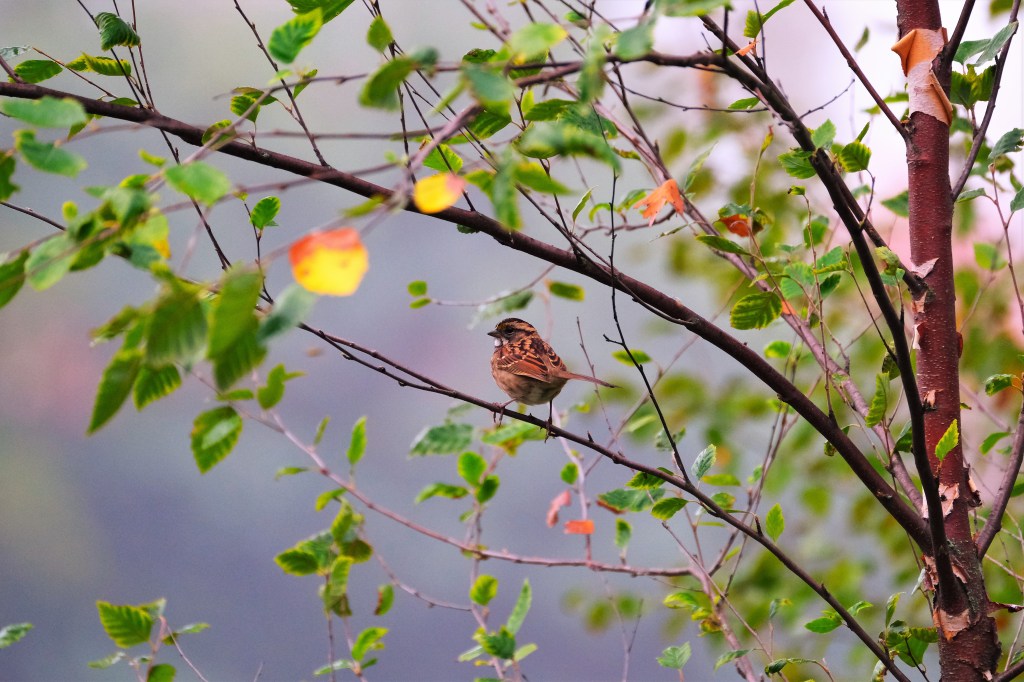
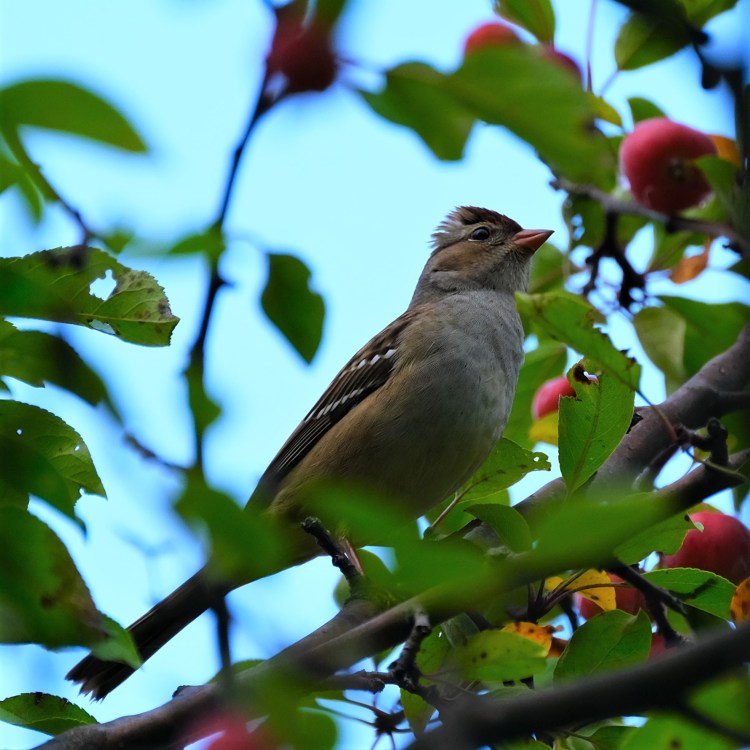
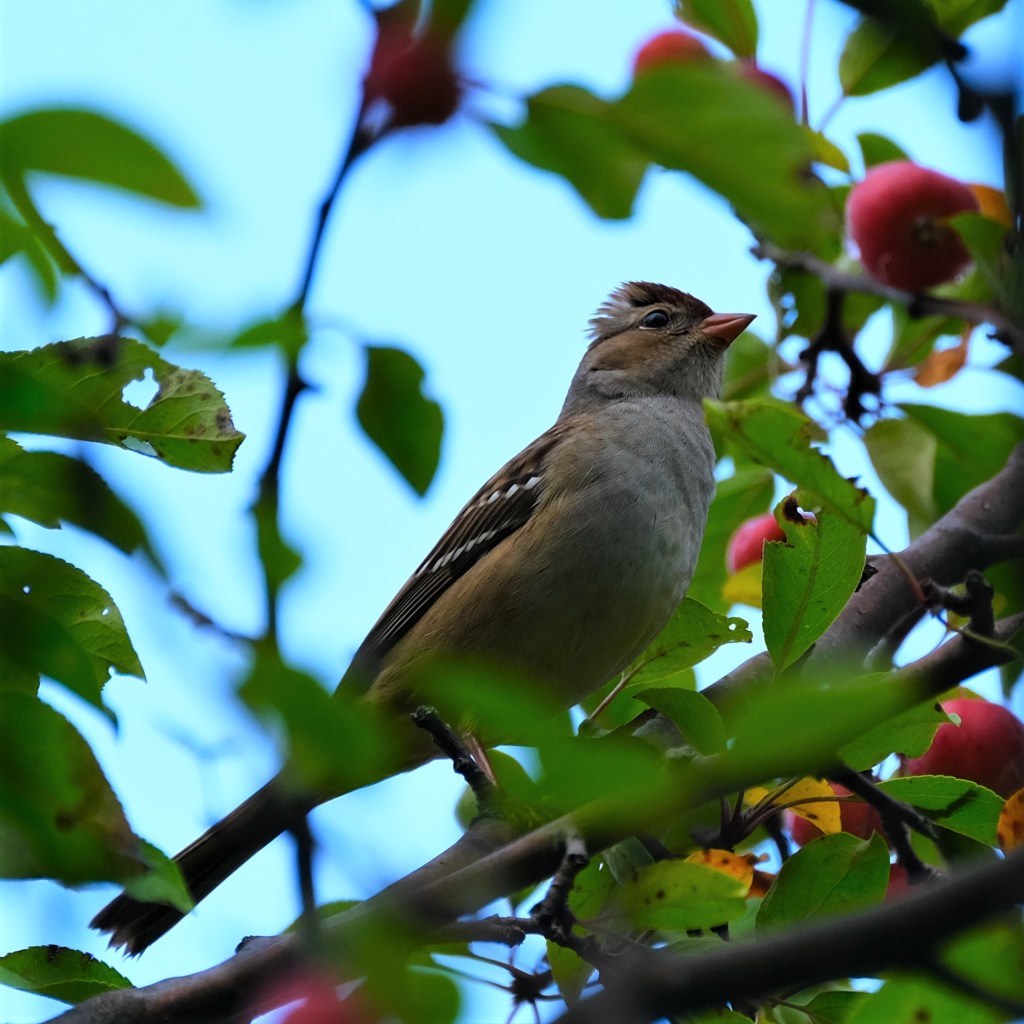
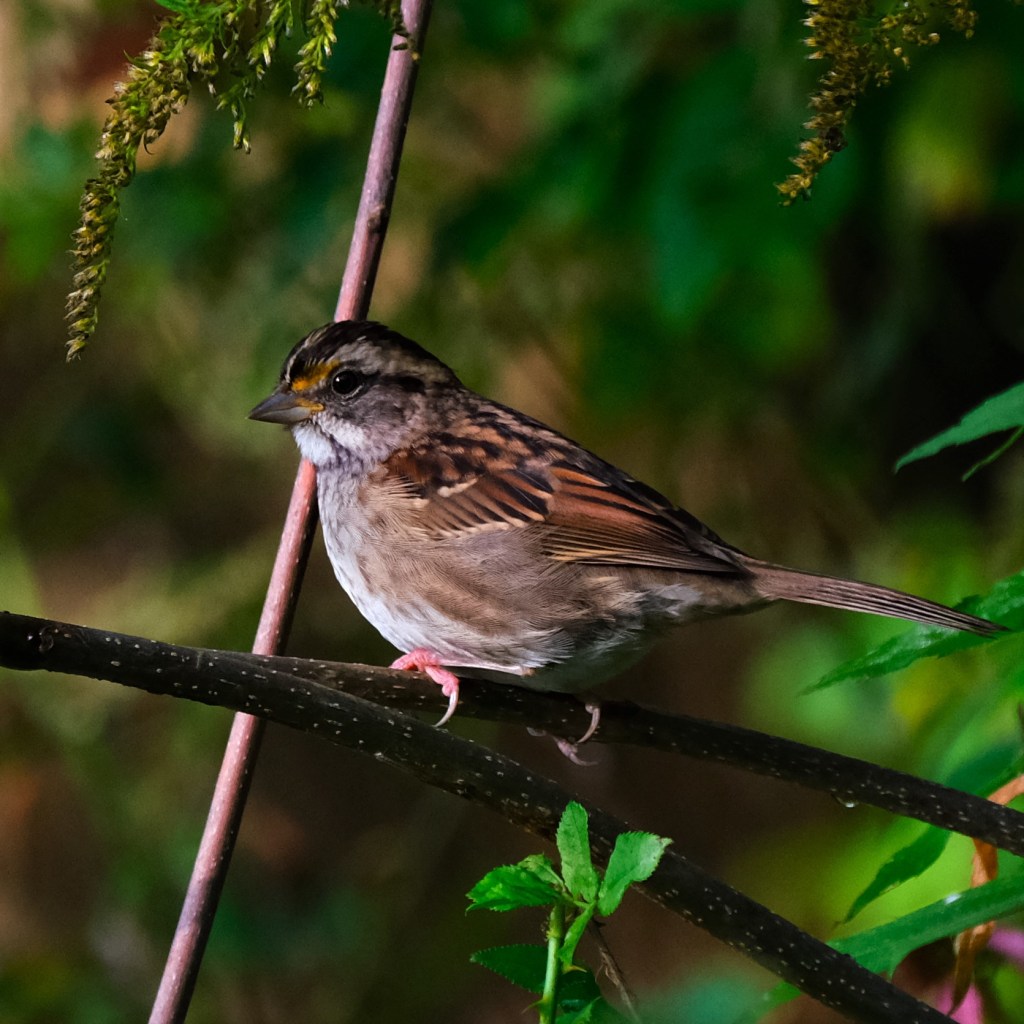
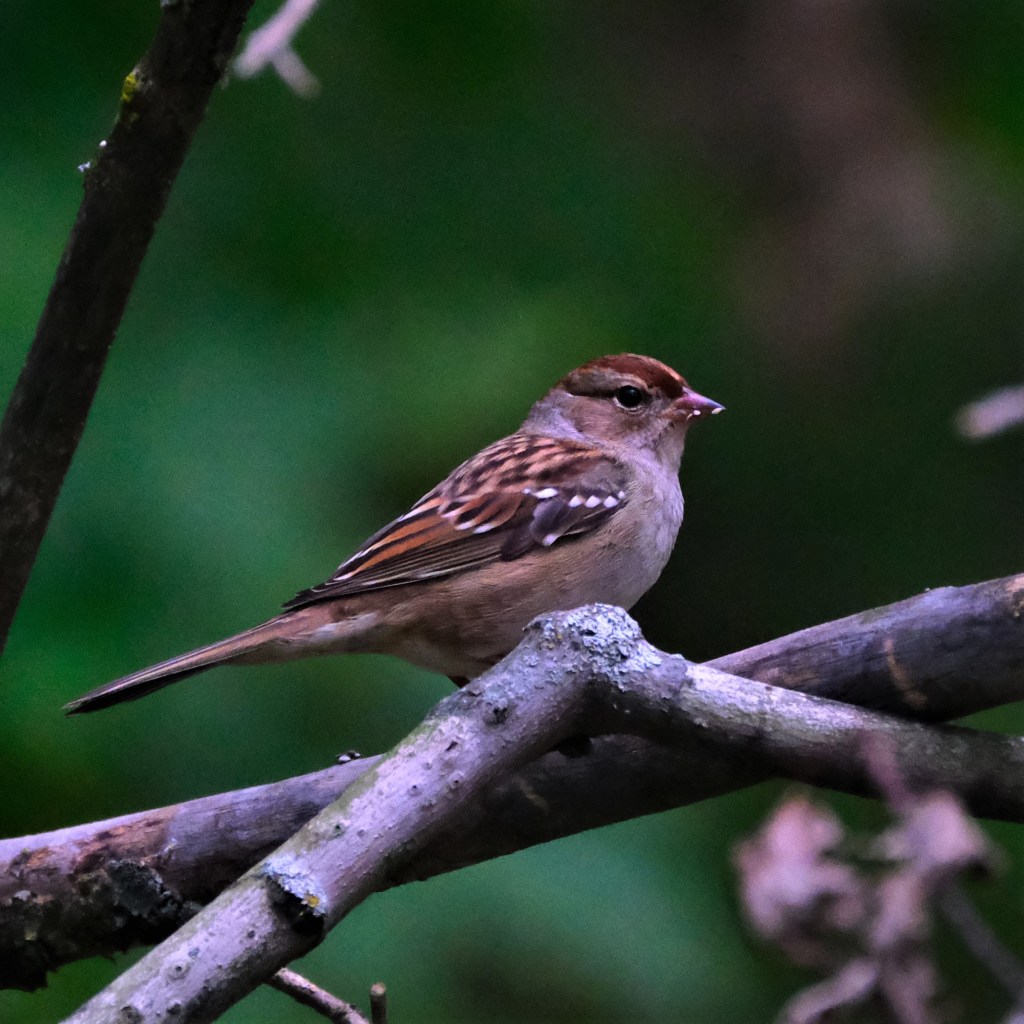
PS. I’ve gotten two comments about that mystery bird from yesterday. Pam suggests it’s a grey bunting, but she might be joking because they’re only found in Asia. Sorry, Pam. And Alex suggests it’s a “immature white-crowned sparrow”, which does look about right with a sparrow’s beak, a brown crest, a dark eye stripe, and two white wing bars, so that’s what I’m going to go with. Thanks, Alex!
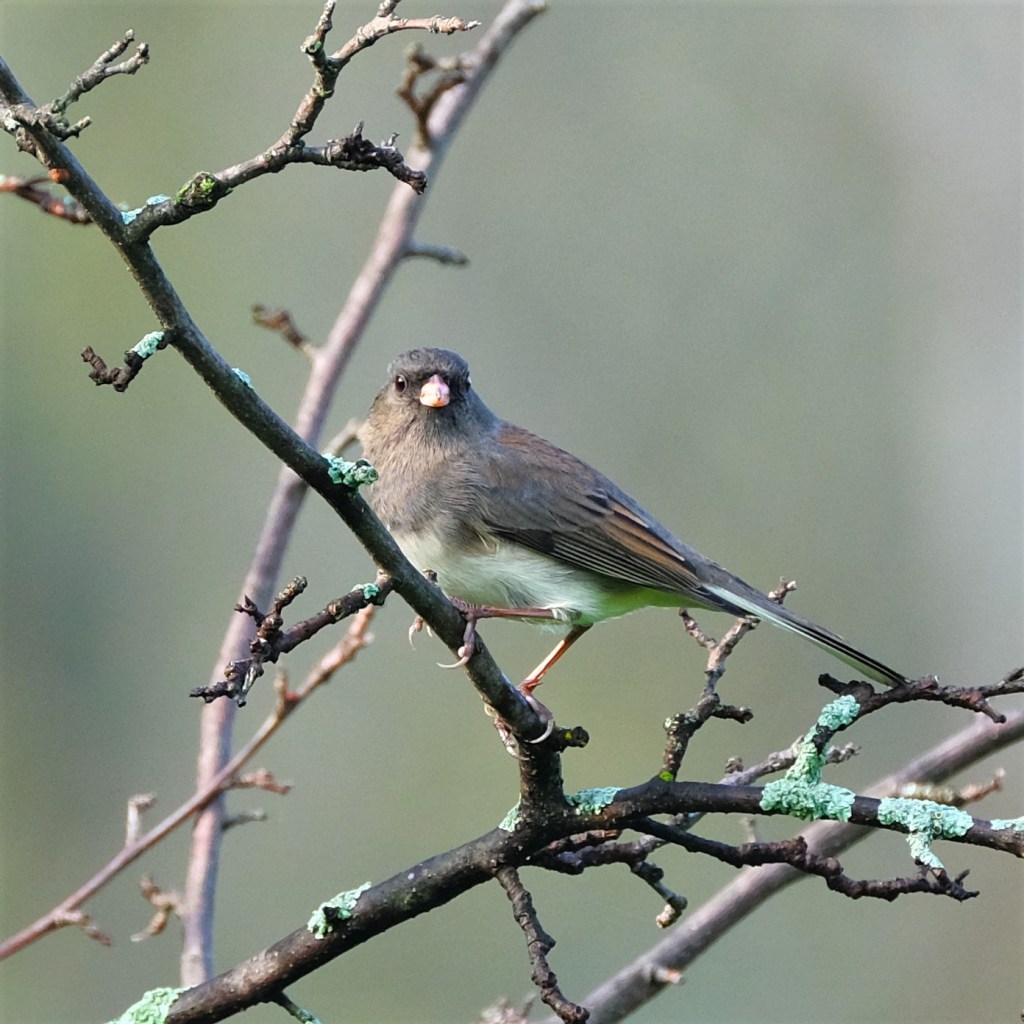
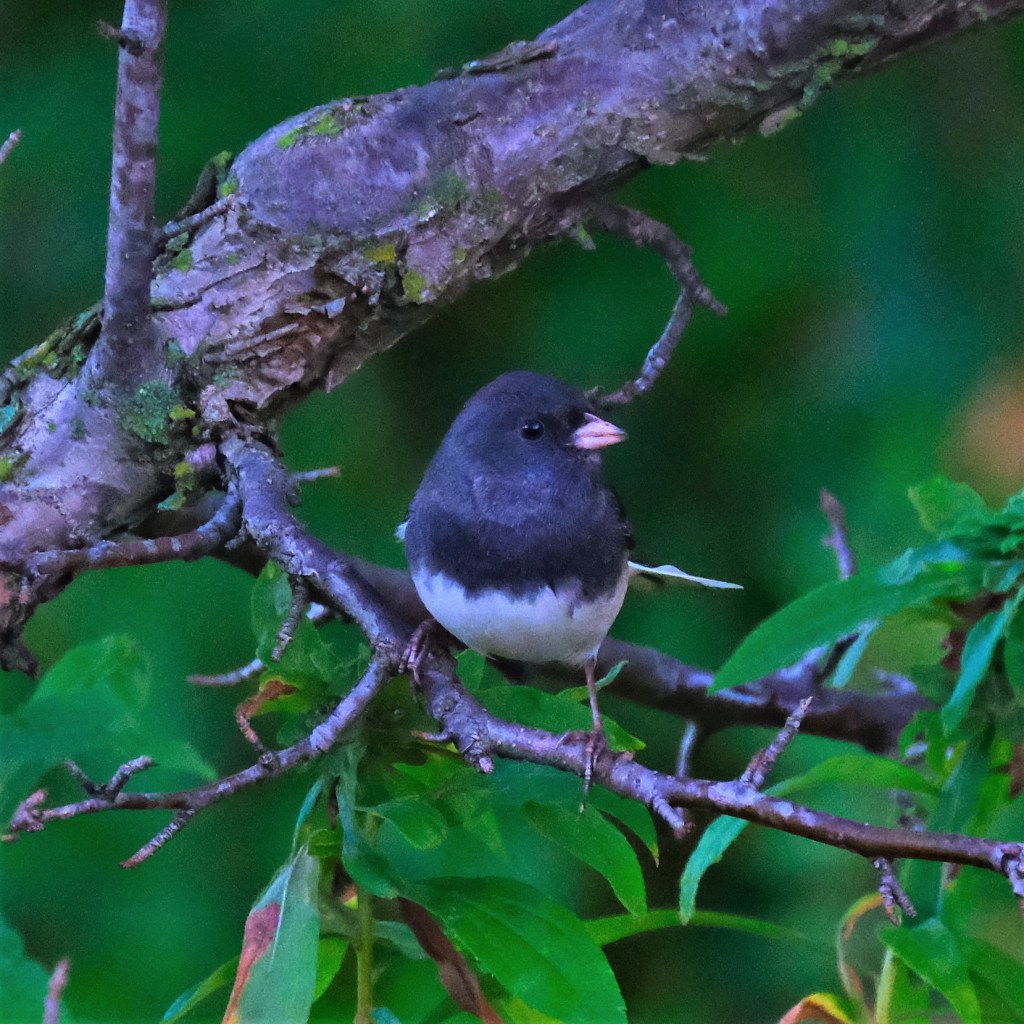
It was dark and wet at sunrise, so I waited a bit for the forecast “partly cloudy”, and by 9 o’clock, it came. Yay! I hustled out the door and was soon greeted by another batch of juncos foraging on the lawn together. As I walked up the parkway, they retired to a small tree, and I finally captured an image of one with enough light to come out nice and sharp.
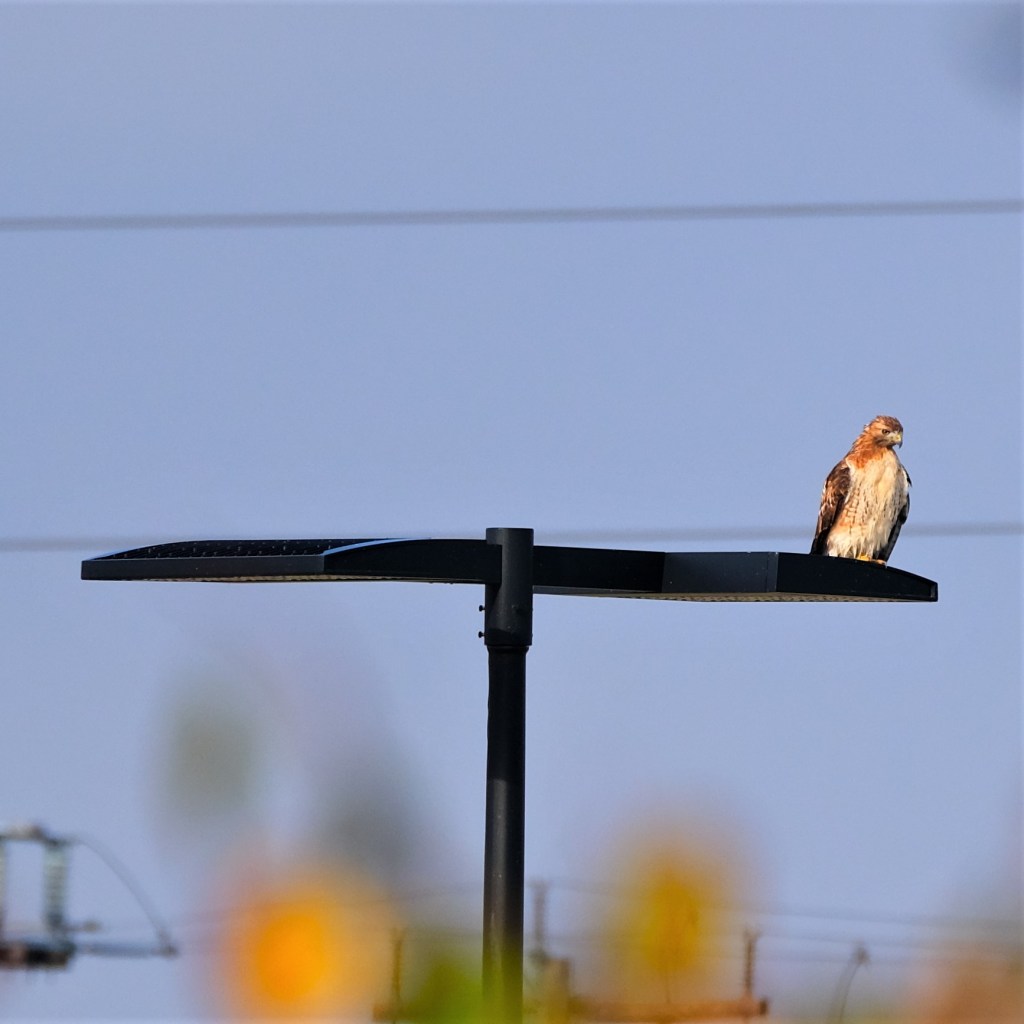
A little further up the parkway, by where the park narrows and they put up a guardrail, I could see across to the parking lot above the west side of the river and spotted this bedraggled looking red-tailed hawk trying to dry out on a lamp post. Cheer up, buddy. It’s supposed to be a beautiful weekend.
At the pond, a photographer was already deep into a session with the wood ducks on the west lawn, so I continued around to the north side to see if anyone else was home. Well, well, well, look who finally came out to see the light of day!
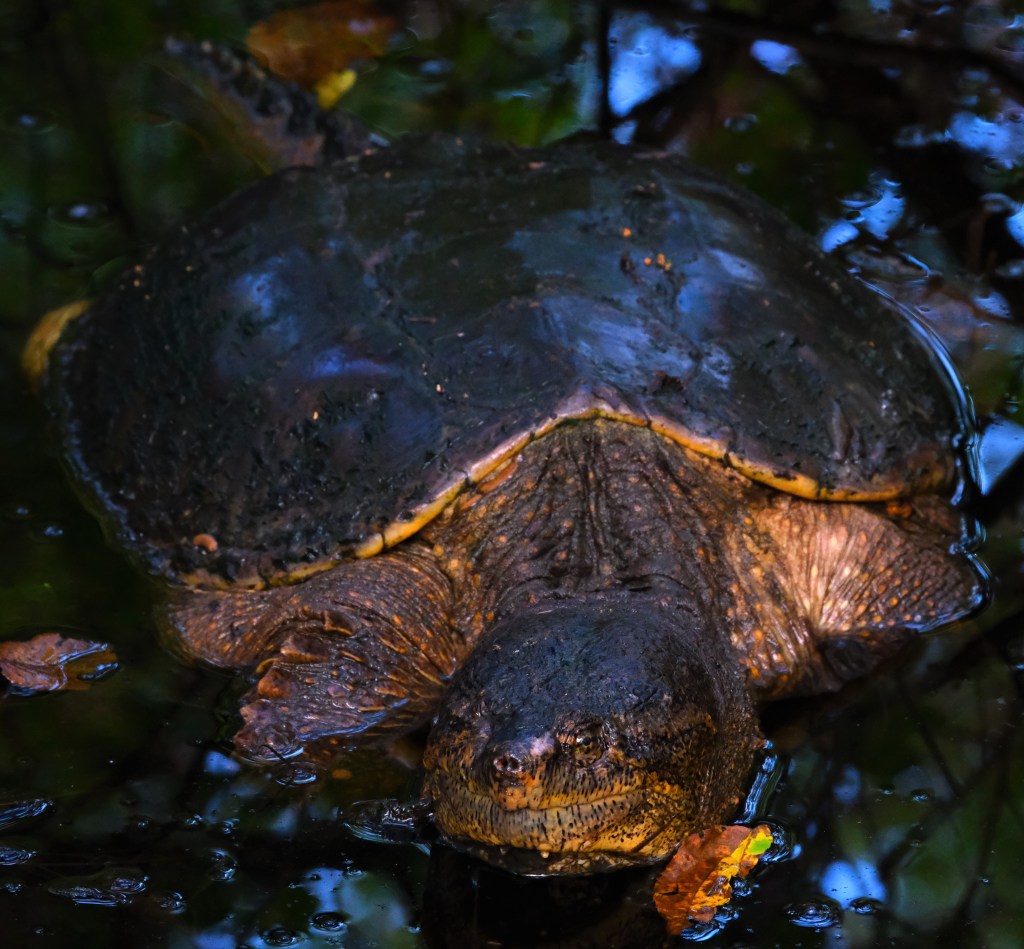
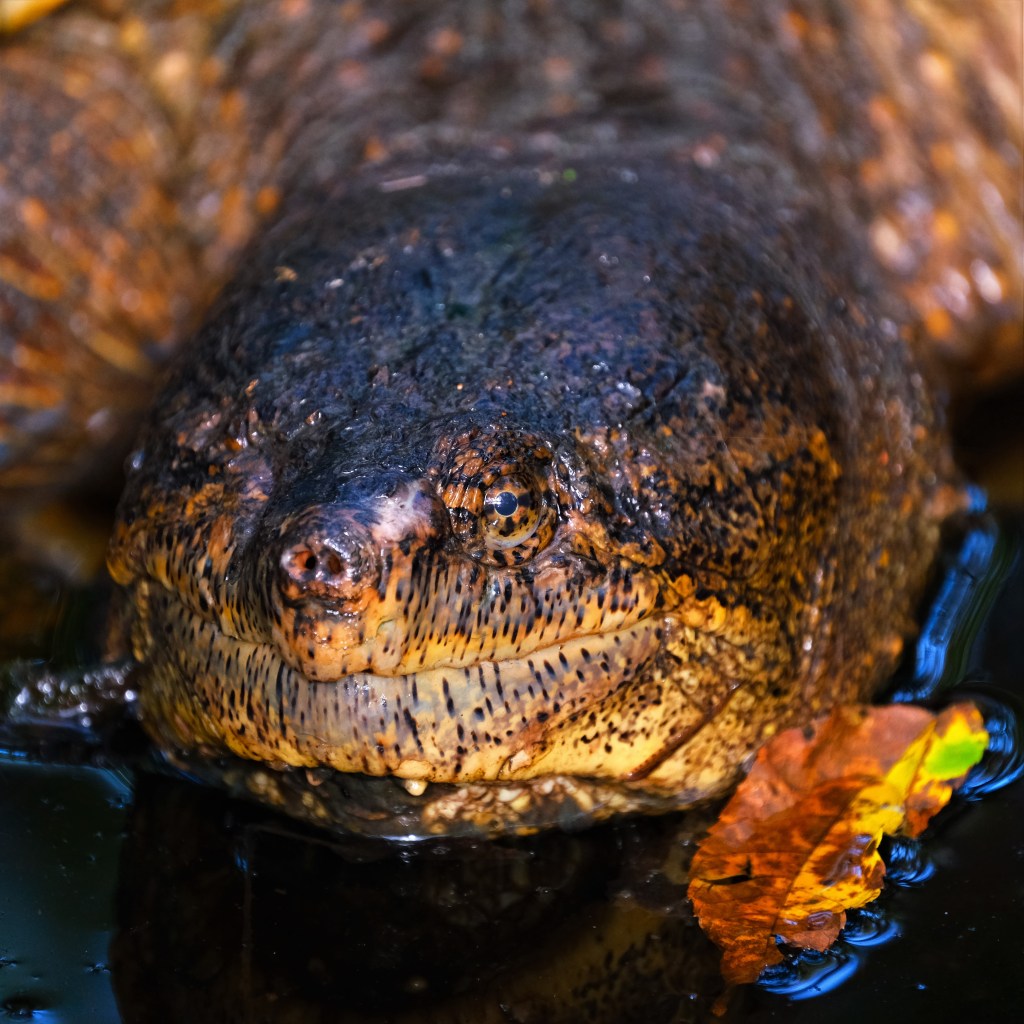
A giant, one-eyed, snapping turtle was coming south in the little stream that flows under the bridge and into the pond. The shell was at least a foot wide and maybe 18 inches long. From the top, the head was about the size and shape of the back of my full hand. I sure would not wanna mess with this one.
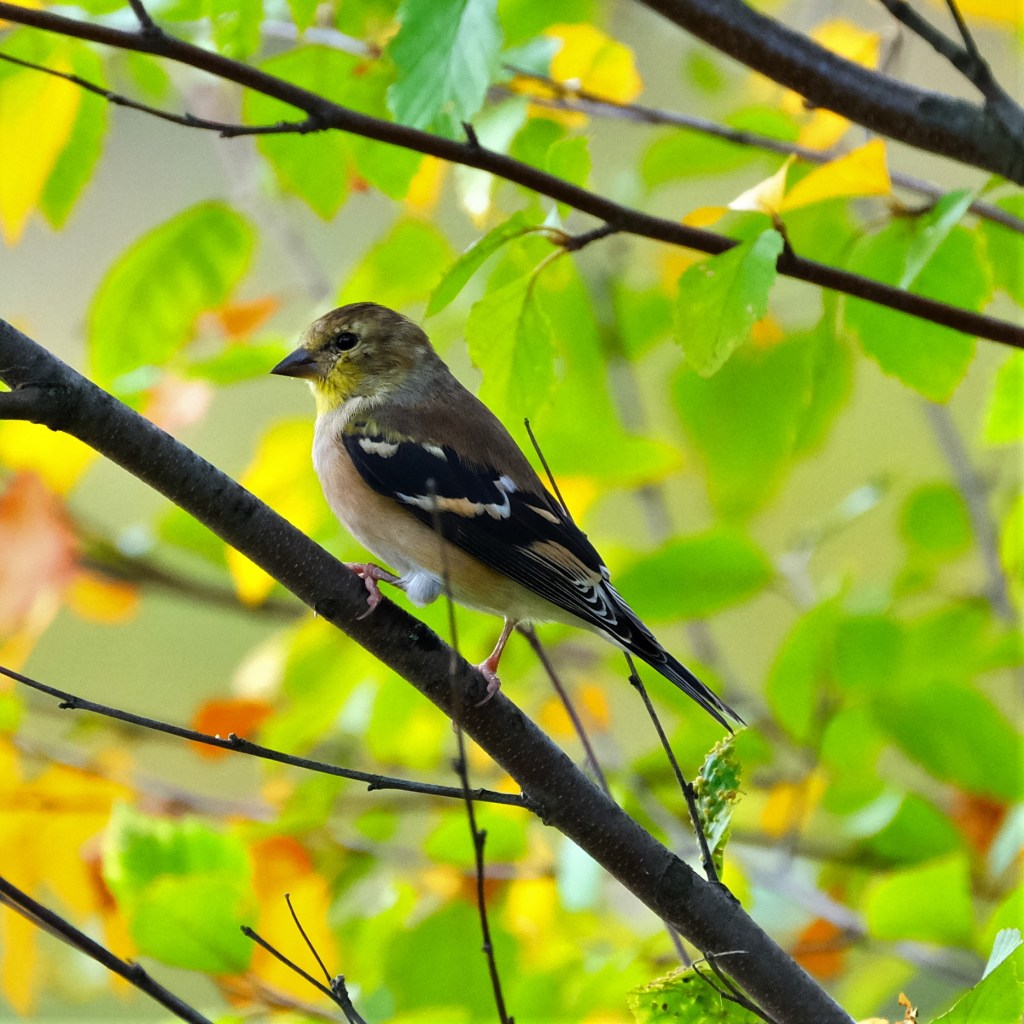
I didn’t expect to have a lot of time before the skies clouded back up, so I moved on to the river, where I spotted this dapper-looking little bird in a crab apple tree who identity escapes me. Its beak is stout, like a finch or a sparrow, but not as big as a cardinal or a grosbeak. It’s all greyish brown except for two, thin white wing bars and a dark stripe across the eye. If you have any information that could lead to the identity of this bird, please leave a comment!
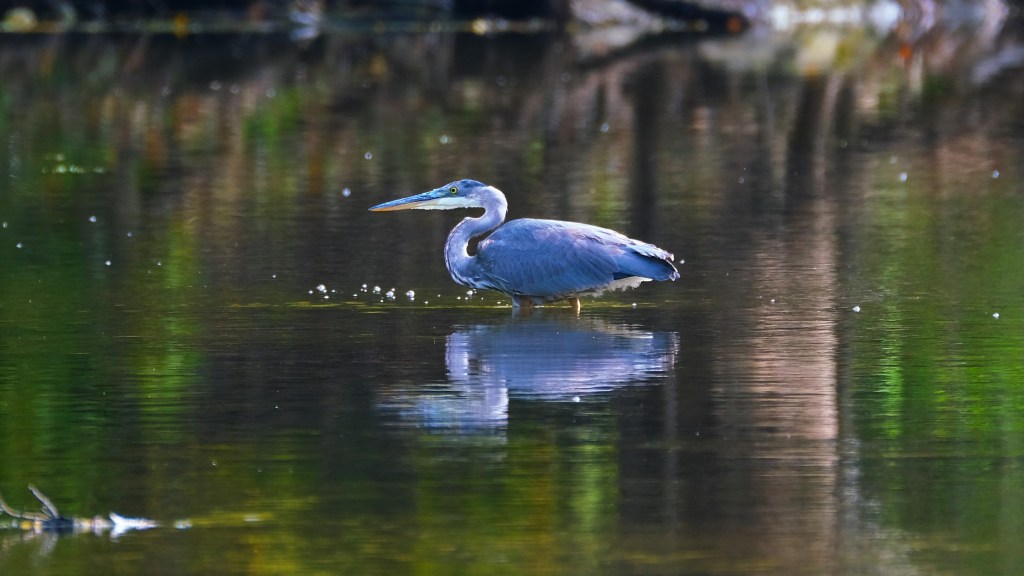
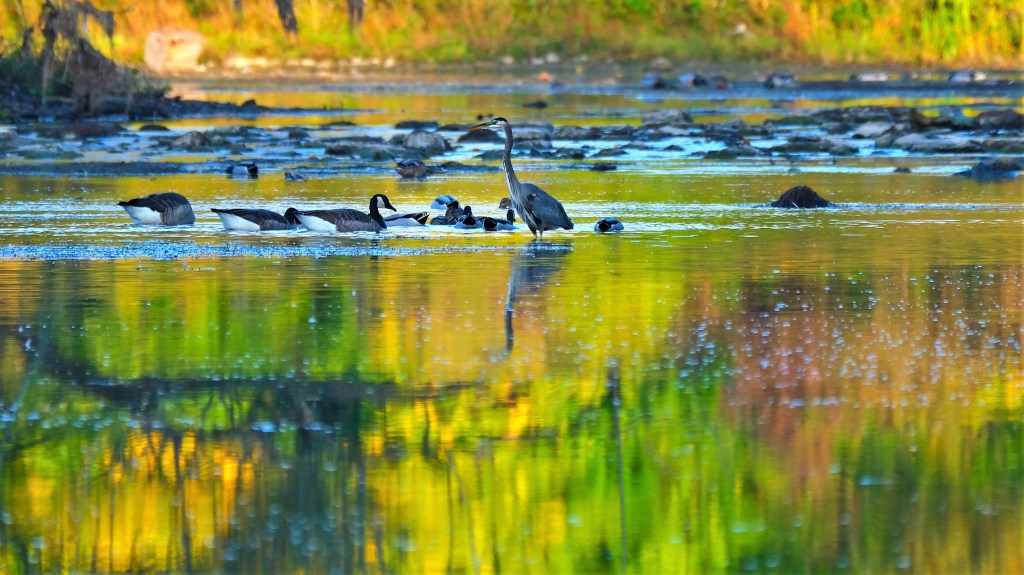
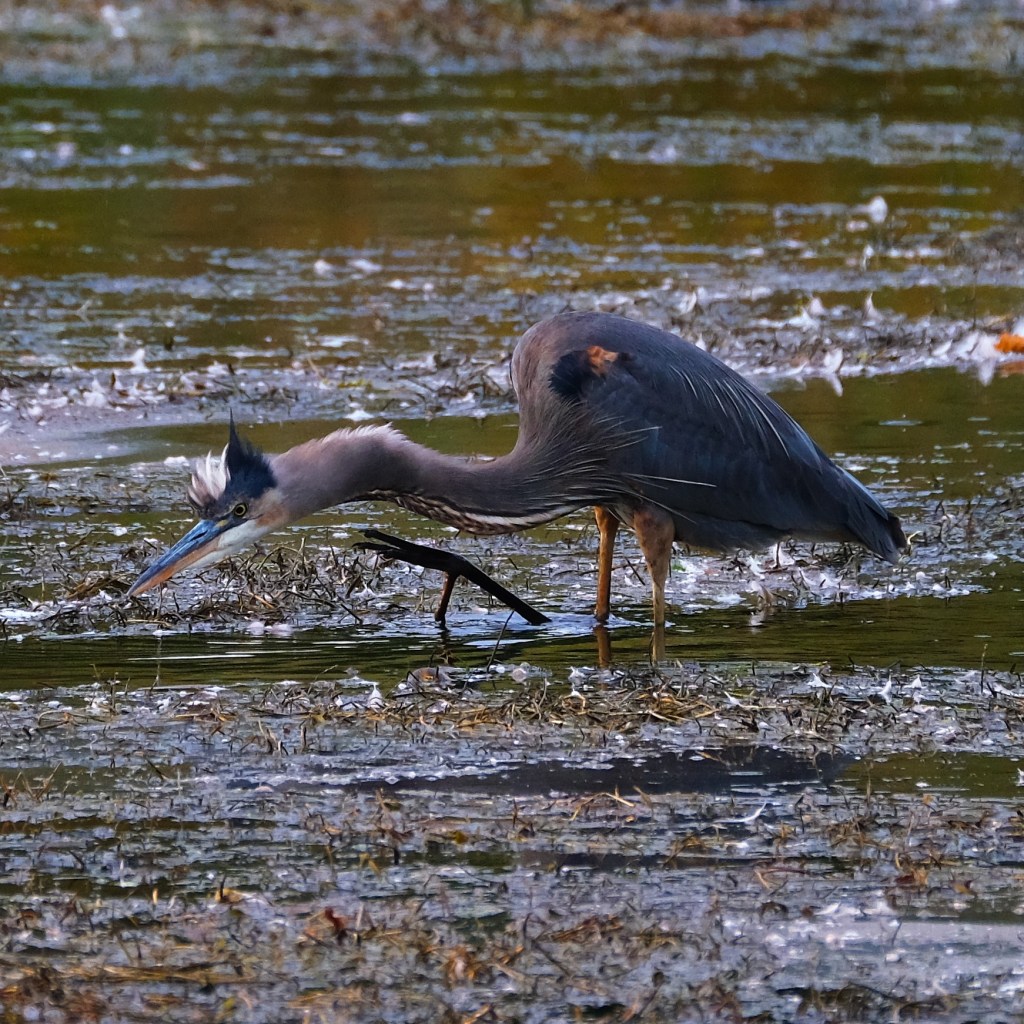
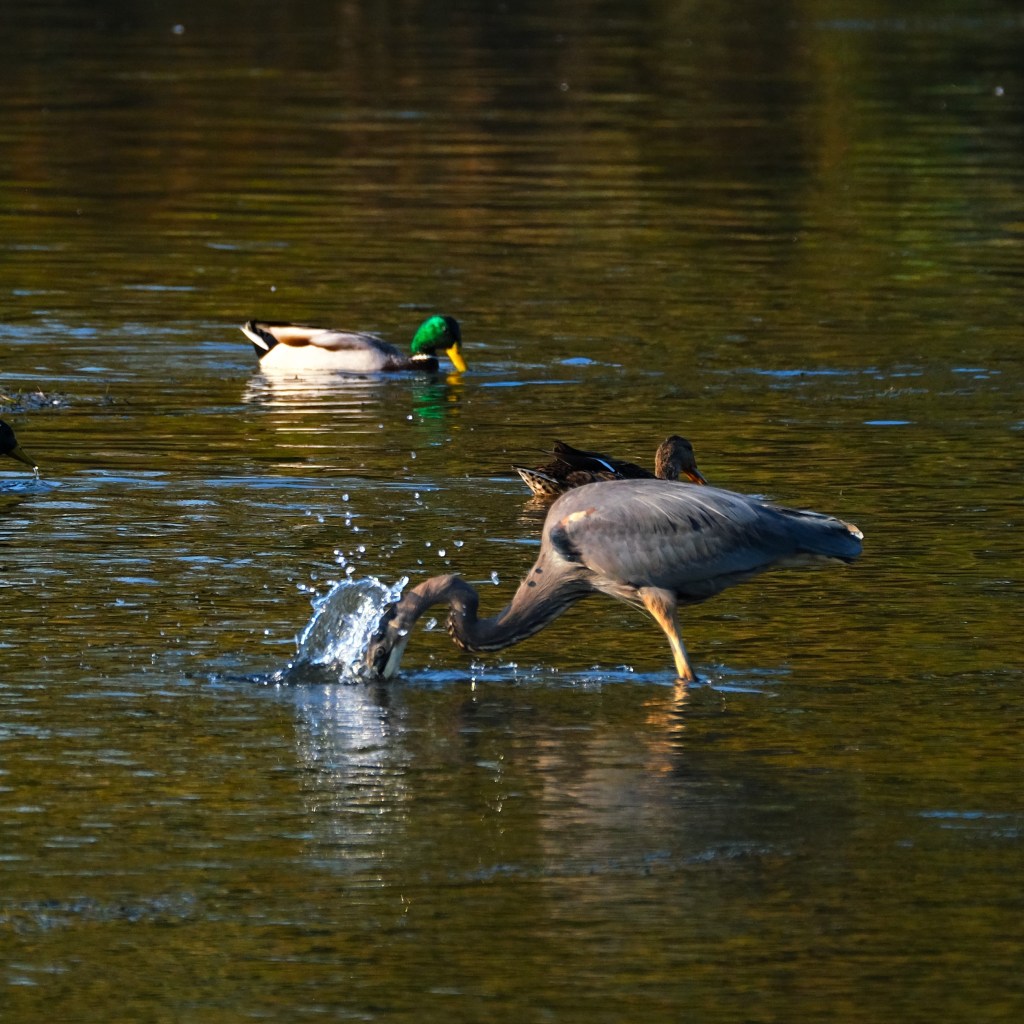
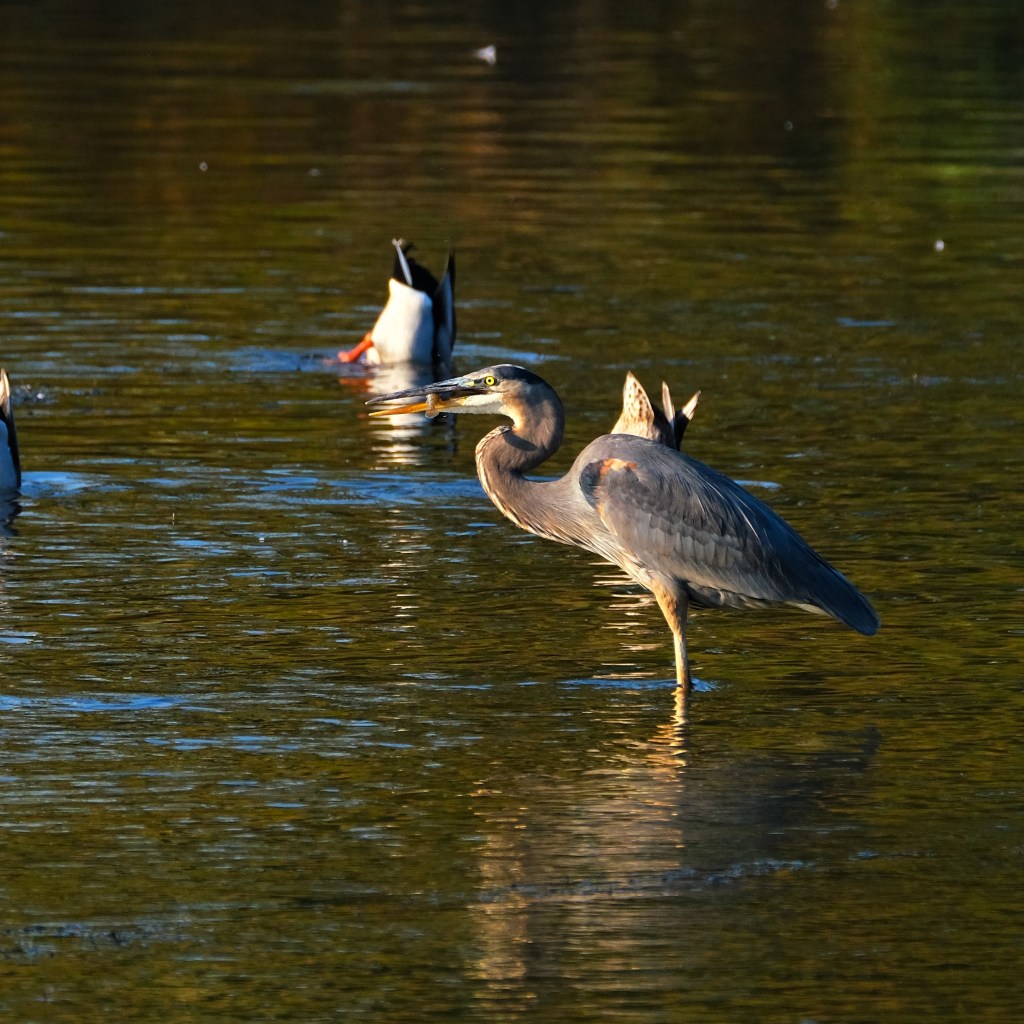
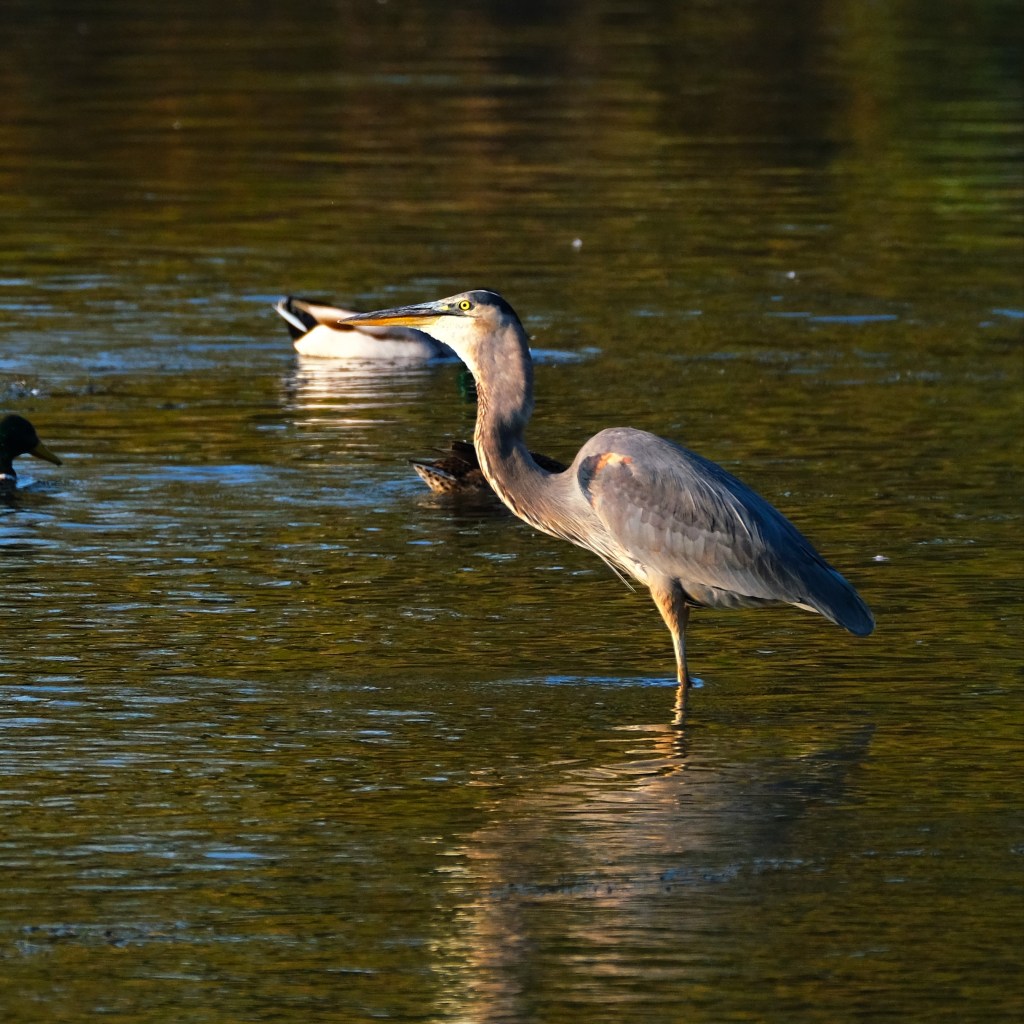
Meanwhile, out on the river, the water was up a bit from all that rain, and a blue heron was just tall enough to keep its feathers dry.
I couldn’t tell what this bunch of mallard drakes was up to, but it sounded like trouble.
The pair of pintails were still dabbling out in their usual spot.
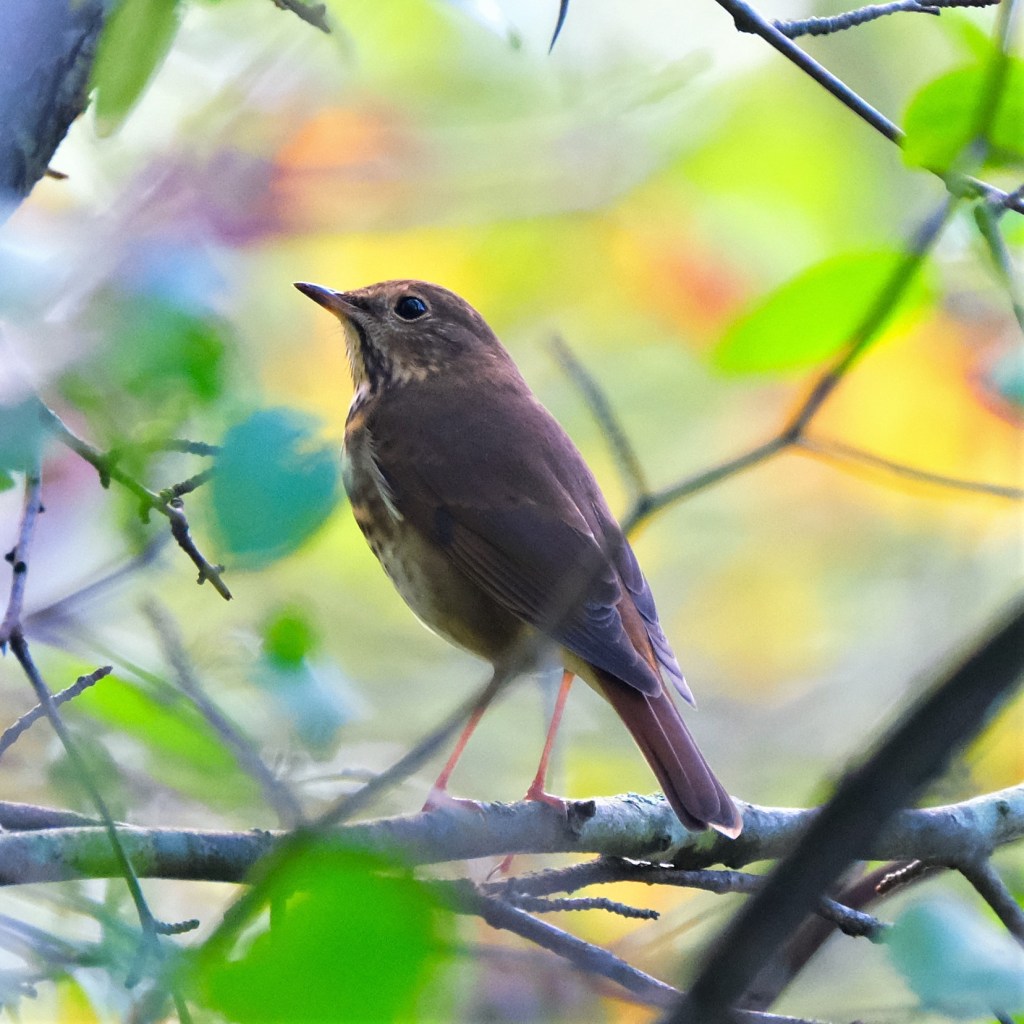
They sky was starting to cloud back over, so I turned to head home, and on my way back south, a thrush paused to say “hi”.
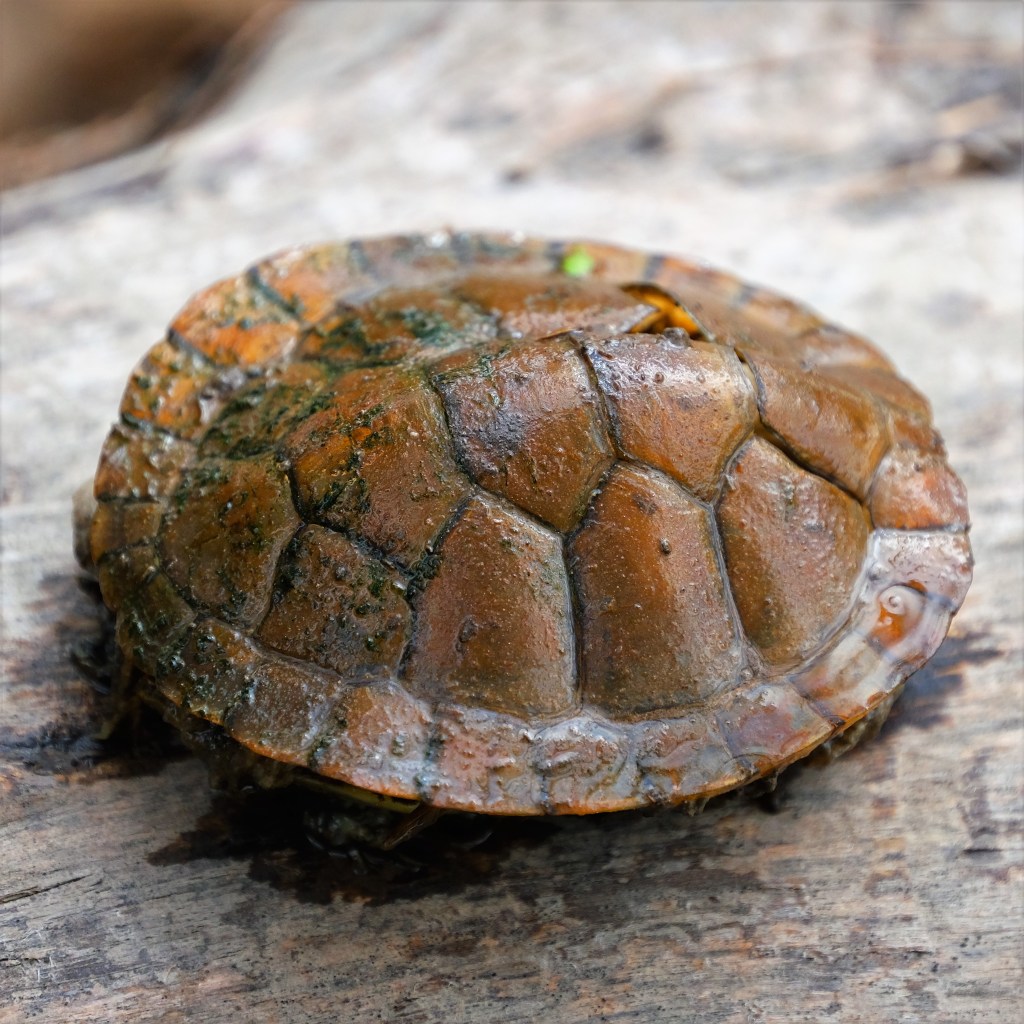
And just before I turned to climb the bluff, I spotted this empty little turtle shell in about an inch of water. I couldn’t tell there was no turtle inside until I picked it up. It’s only about 2 inches long.
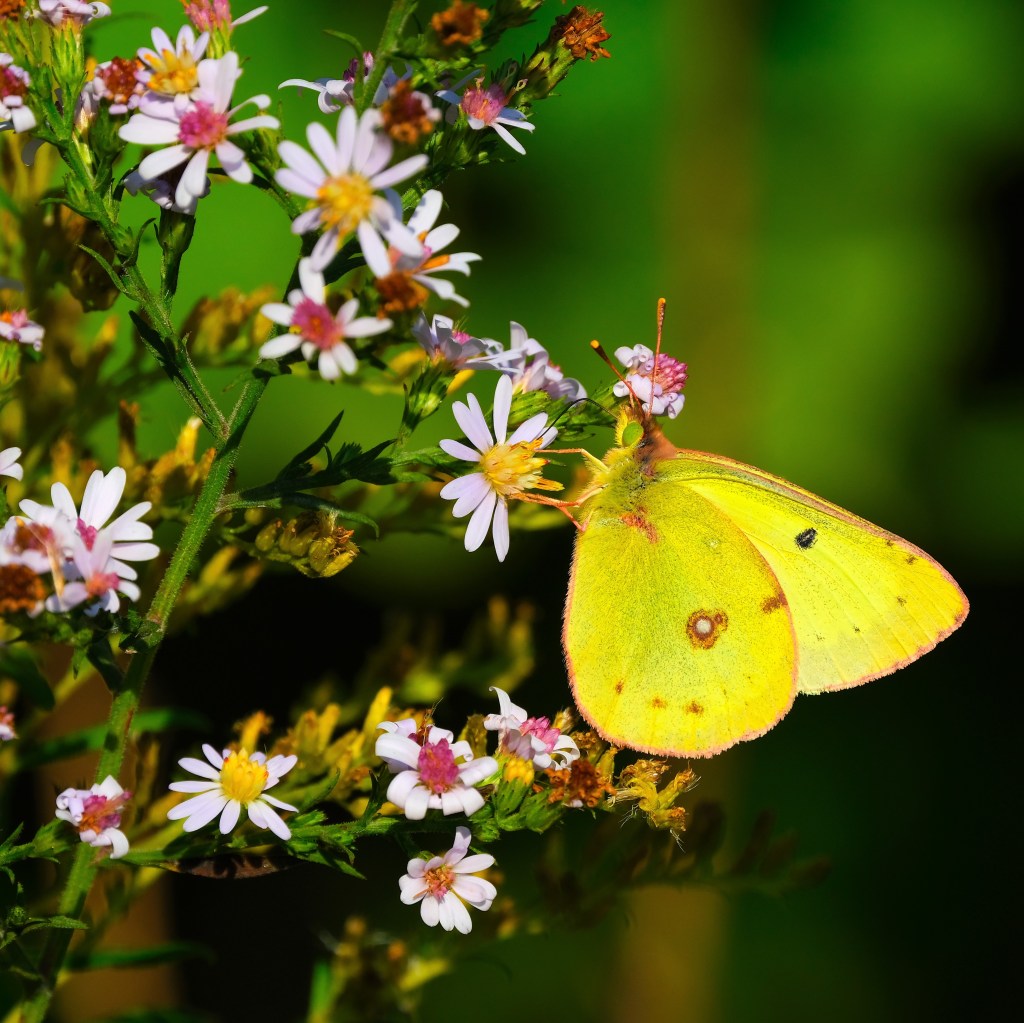
Finally, I stopped by the patch of asters along the Oak Leaf Trail, but they looked about as bedraggled as the hawk, and nobody was visiting them. Instead, here’s another shot of that thirsty sulphur from Wednesday.
That turned out better than I expected, give the soggy start.
It seems like it has rained all day, so thank goodness I saved some pictures from yesterday.
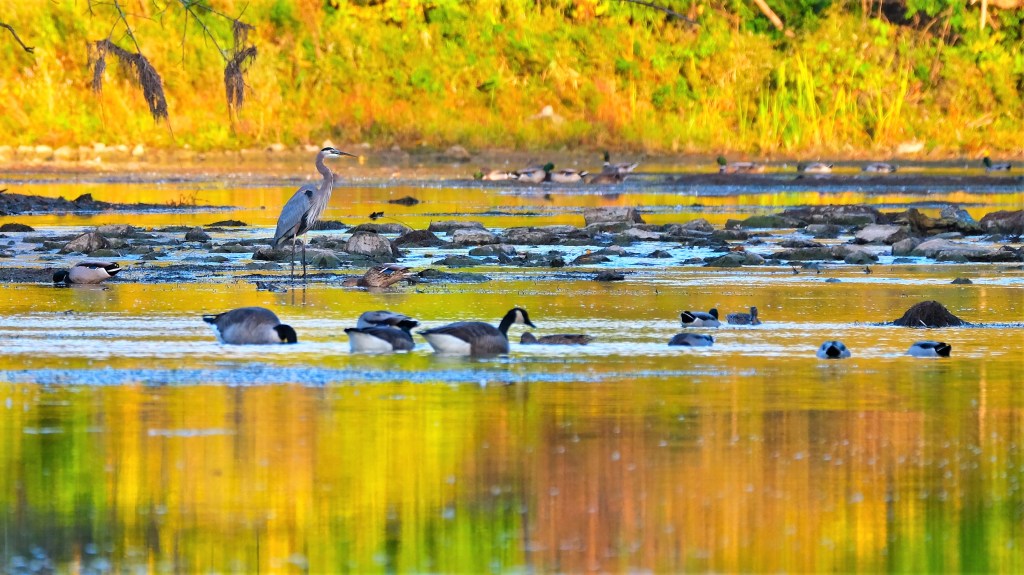
As I was trying to capture that shot of the reflection off the river of the foliage glowing in the morning sun, I climbed down the bank onto some rocks in the water for a better angle. From at least 200 yards way, that darn heron said “oh no, you don’t”, and flew further upstream. Here that stinker in its new spot. Notice that geese and ducks haven’t moved.
After I scrambled back up onto the bank and continued north along the path, this handsome character gave me an inquisitive look.
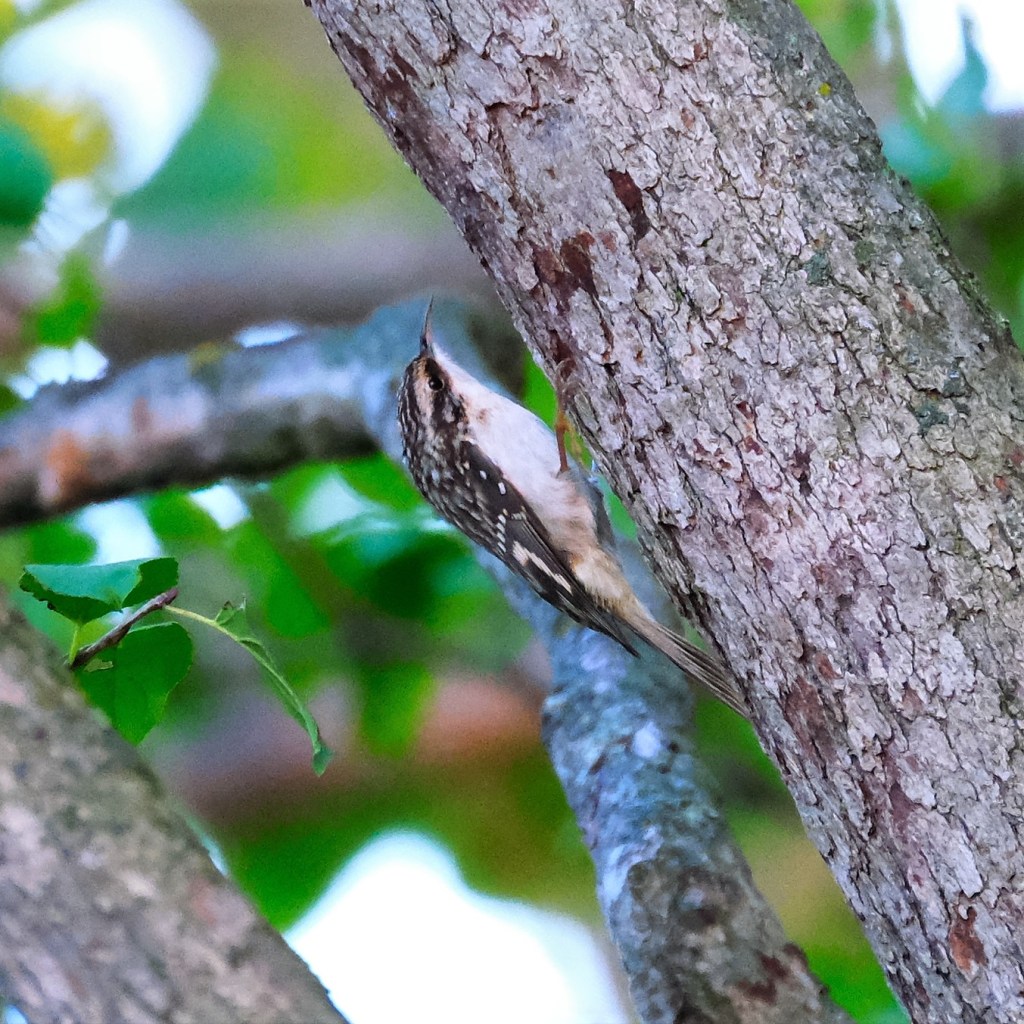
But, this brown creeper seemed to ignore me completely, as always.
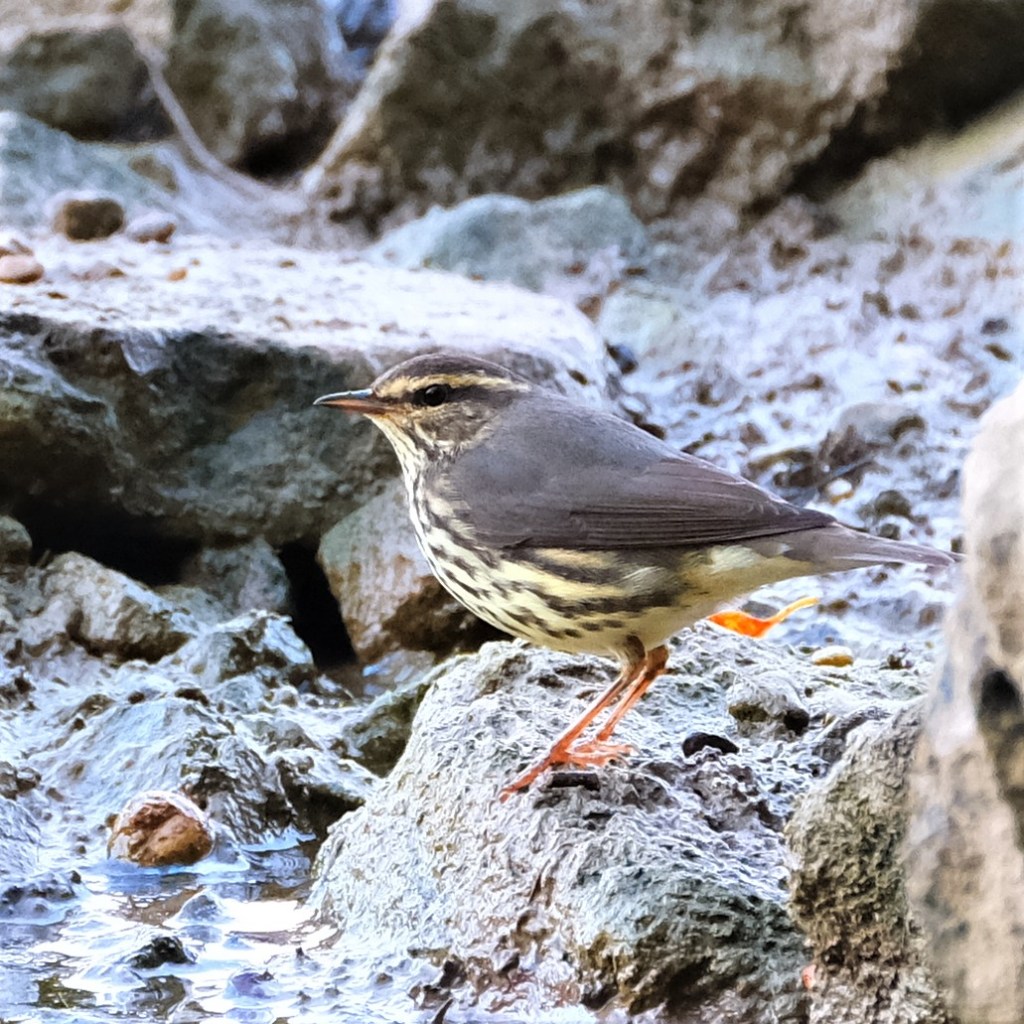
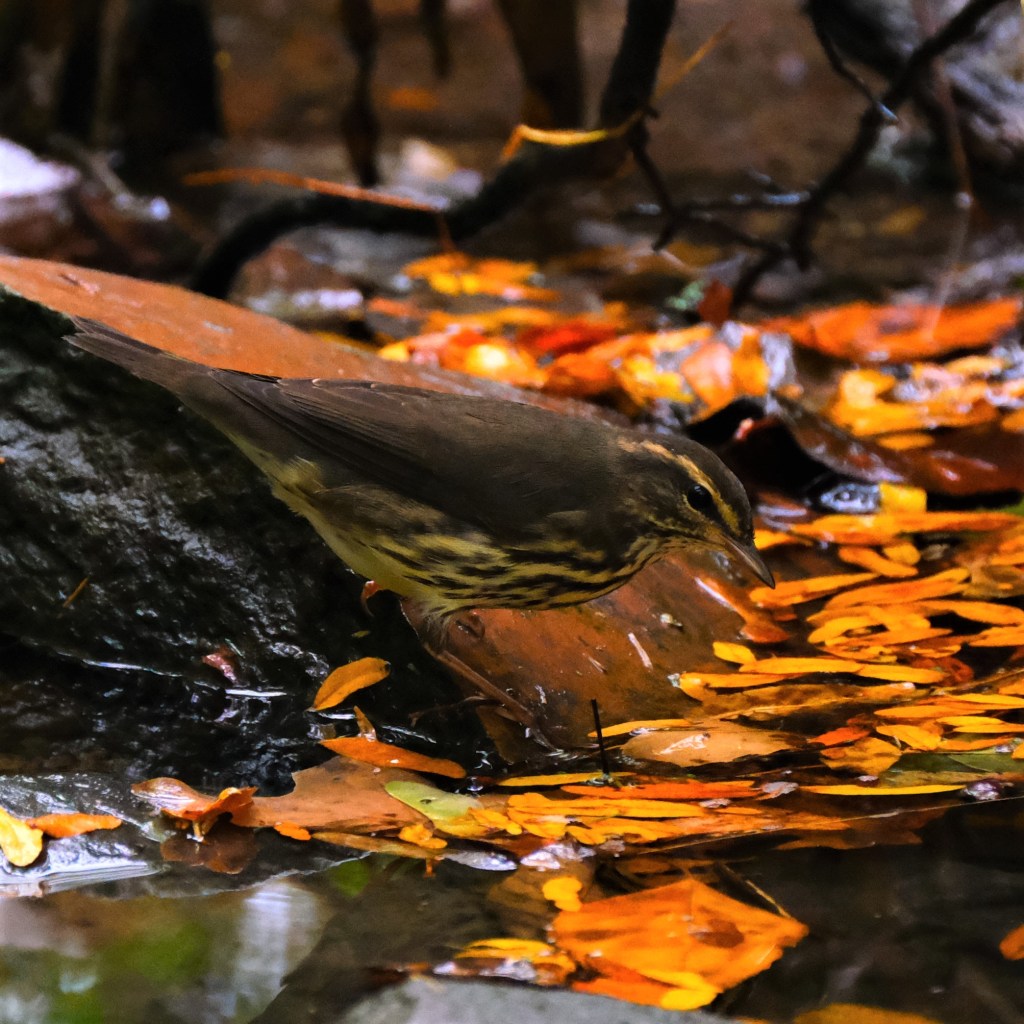
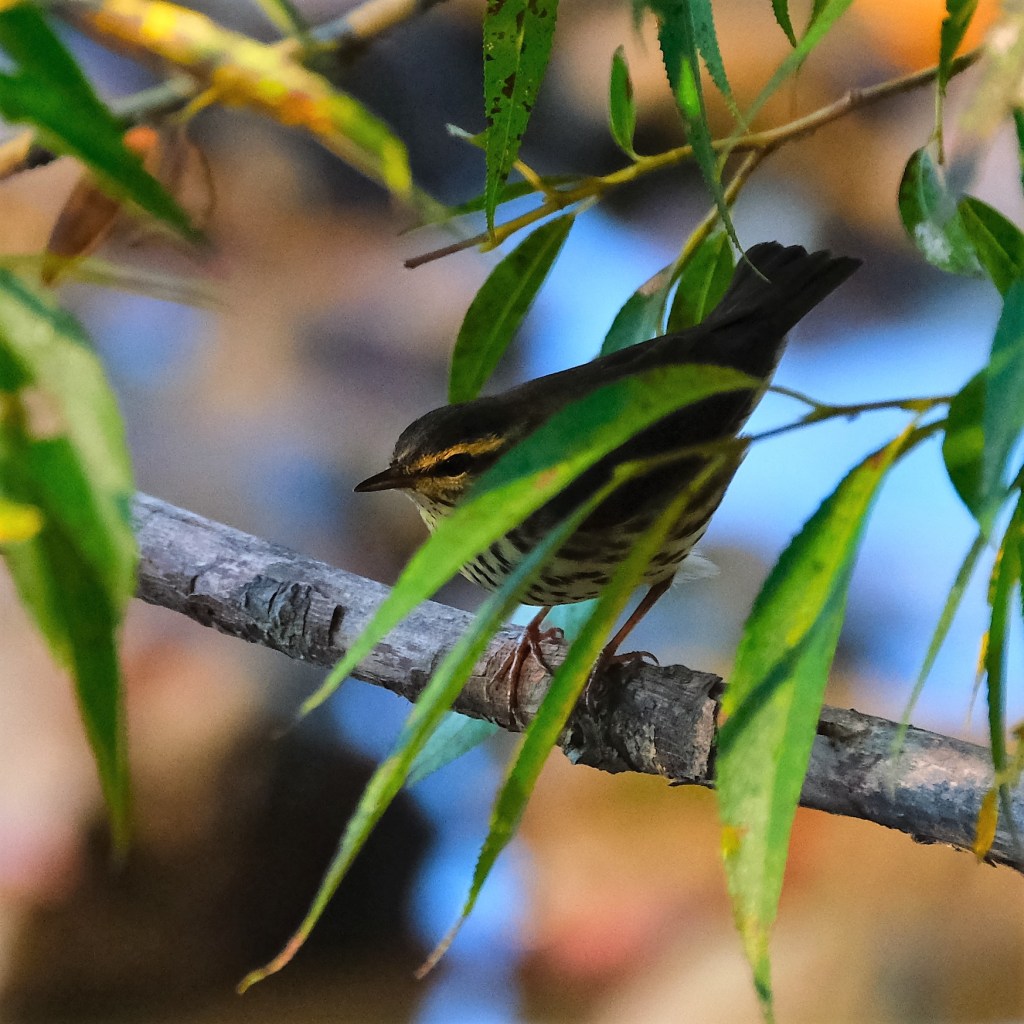
When I finally got to the north end, I found that the waterthrushes haven’t all flown off yet.
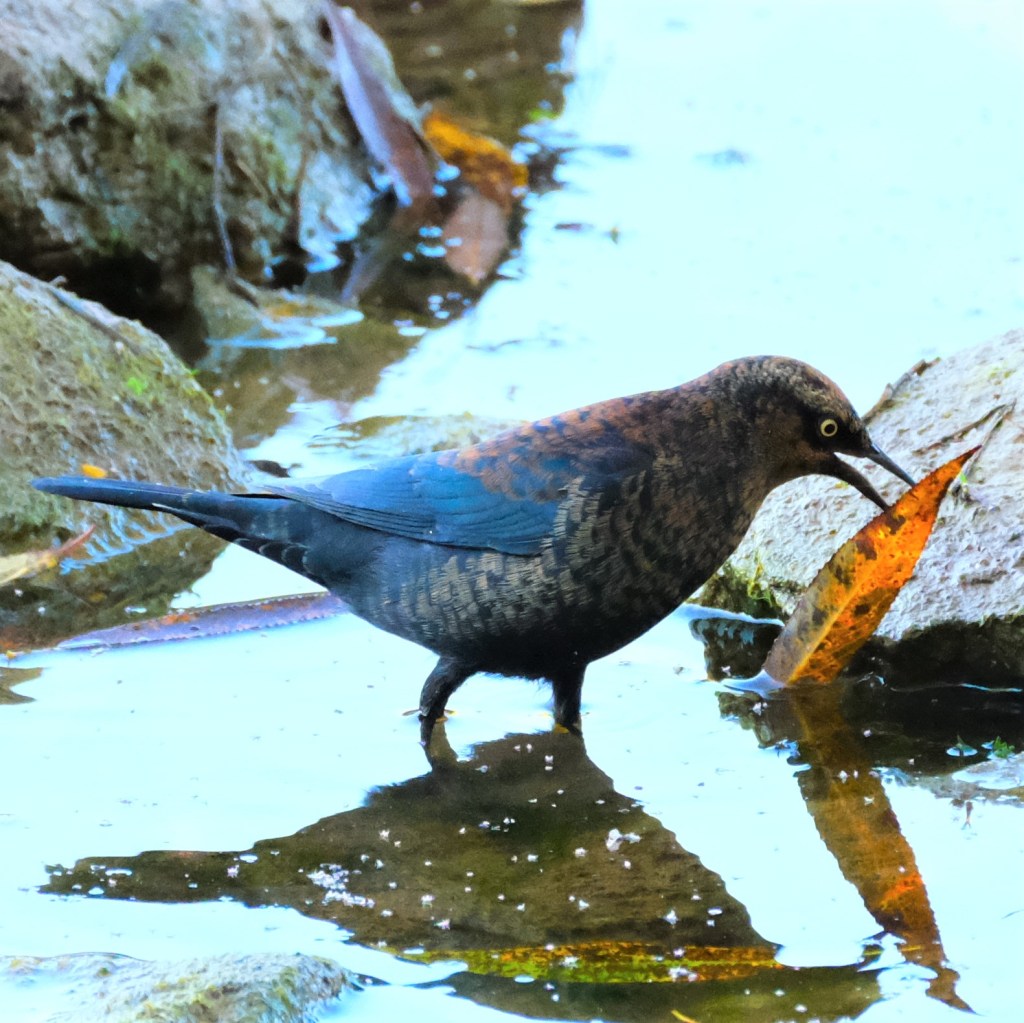
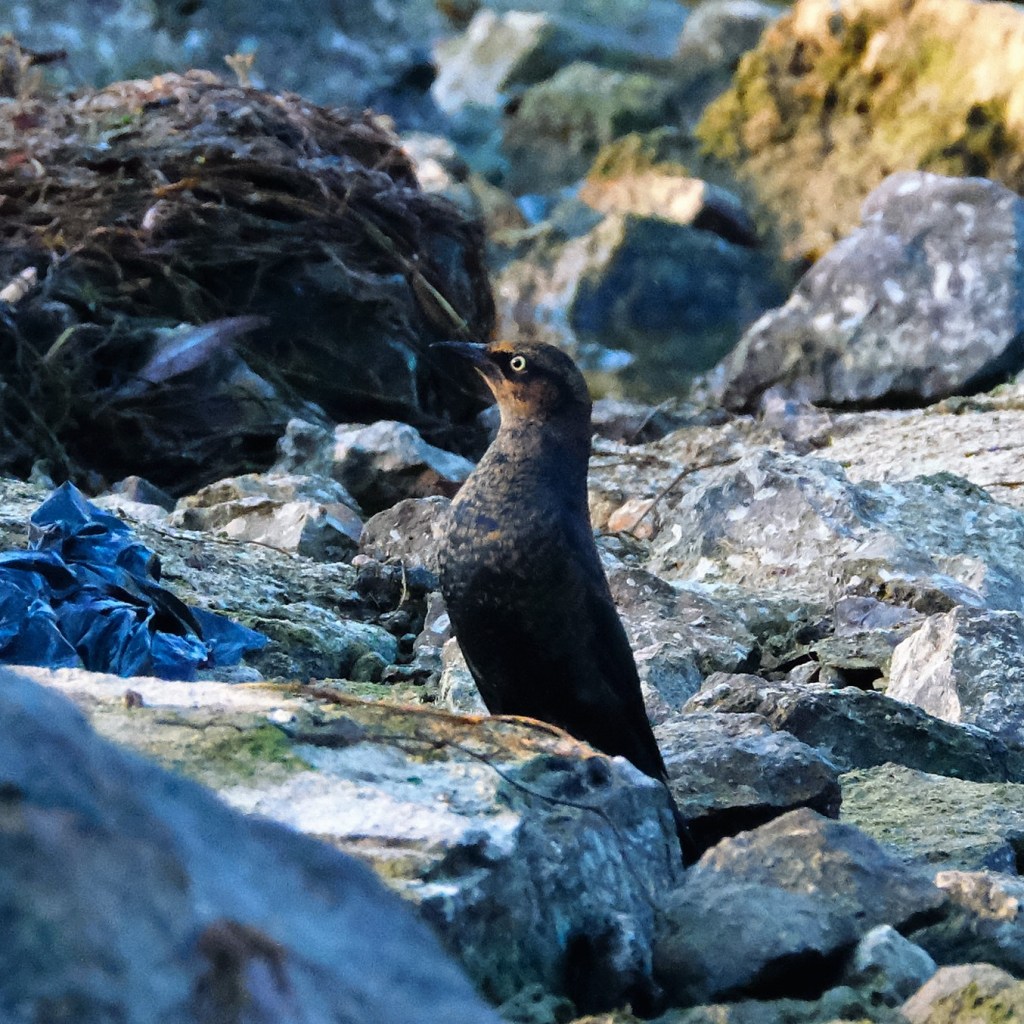
And here’s a rusty blackbird male, who was foraging with the female I showed you yesterday and demonstrating how they were methodically flipping over the fallen willow tree leaves to see if anything tasty was hiding underneath. I found it mesmerizing to watch.
Well, the forecast is for more rain tomorrow, so we’ll have to wait and see just how bad it is. Maybe I’ll be able to sneak into the park between the raindrops. Wish me luck!
Gadzooks! When I hoped that “partly cloudy” would give us a little bit of sun this morning, I never imagined that we would get so much. What a beautiful morning it was, and I made it to the park before the streetlights shut off.
Before I even got to the pond, I was greeted by a little batch of juncos foraging on the lawn, and I got a few pictures of them there, but then this little one hopped up onto this branch to make the best shot. It’s a little grainy, but so were all of them because it was still so dark, and you can’t beat that pose.
The wood ducks were still on the pond, but I haven’t seen that little yellow duckling in a couple of days. Maybe someone came to collect it. In any case, nothing looked particularly photogenic so off to the river I went.
As I approached the north end, the sun was finally coming over the trees and lighting up the island, which made for this pretty scene.
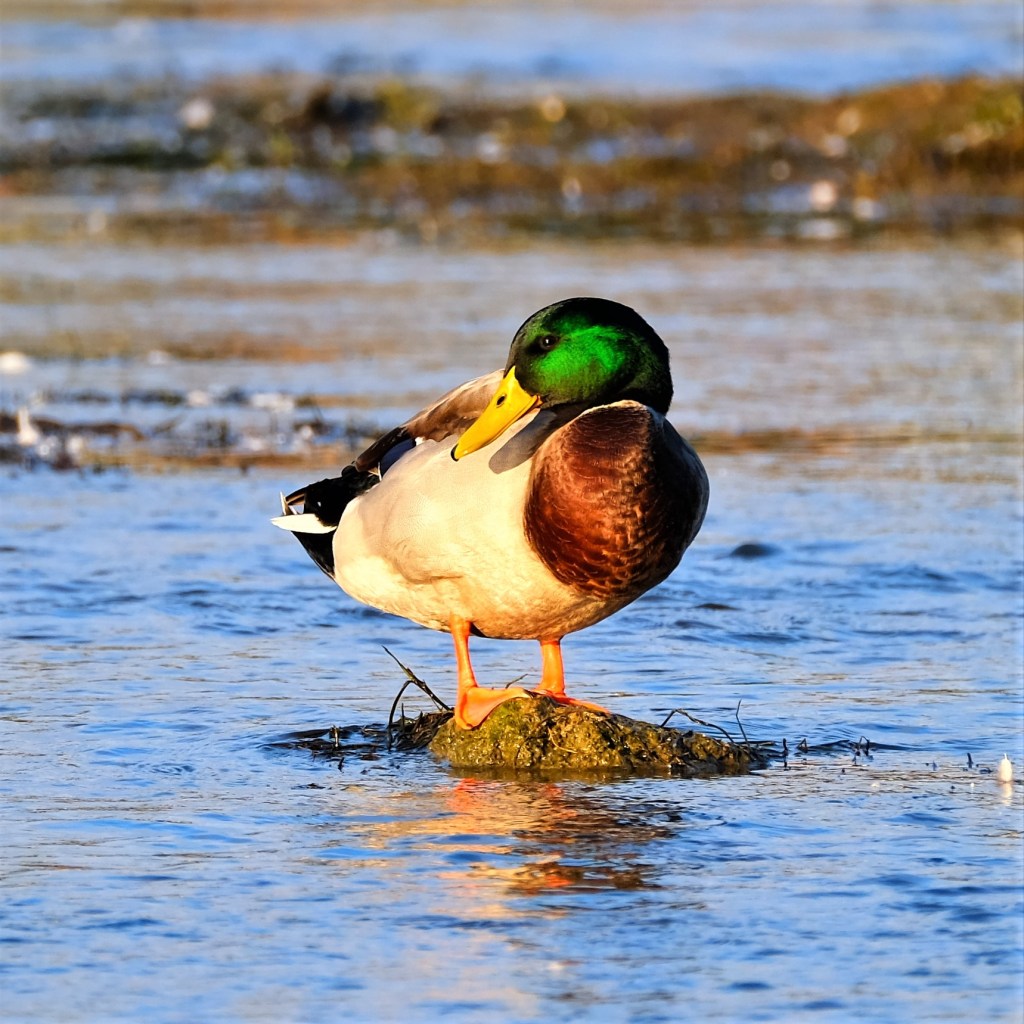
On the far side, I could see a cormorant and the pintails again, I believe, but they were too far away for decent pictures. Instead, it appears that all the mallard drakes are now in their full breeding plumage, and this one was lit up by the morning sun right in front of me.
Three of the killdeer were back, and this one was probably too busy foraging to even notice its own reflection.
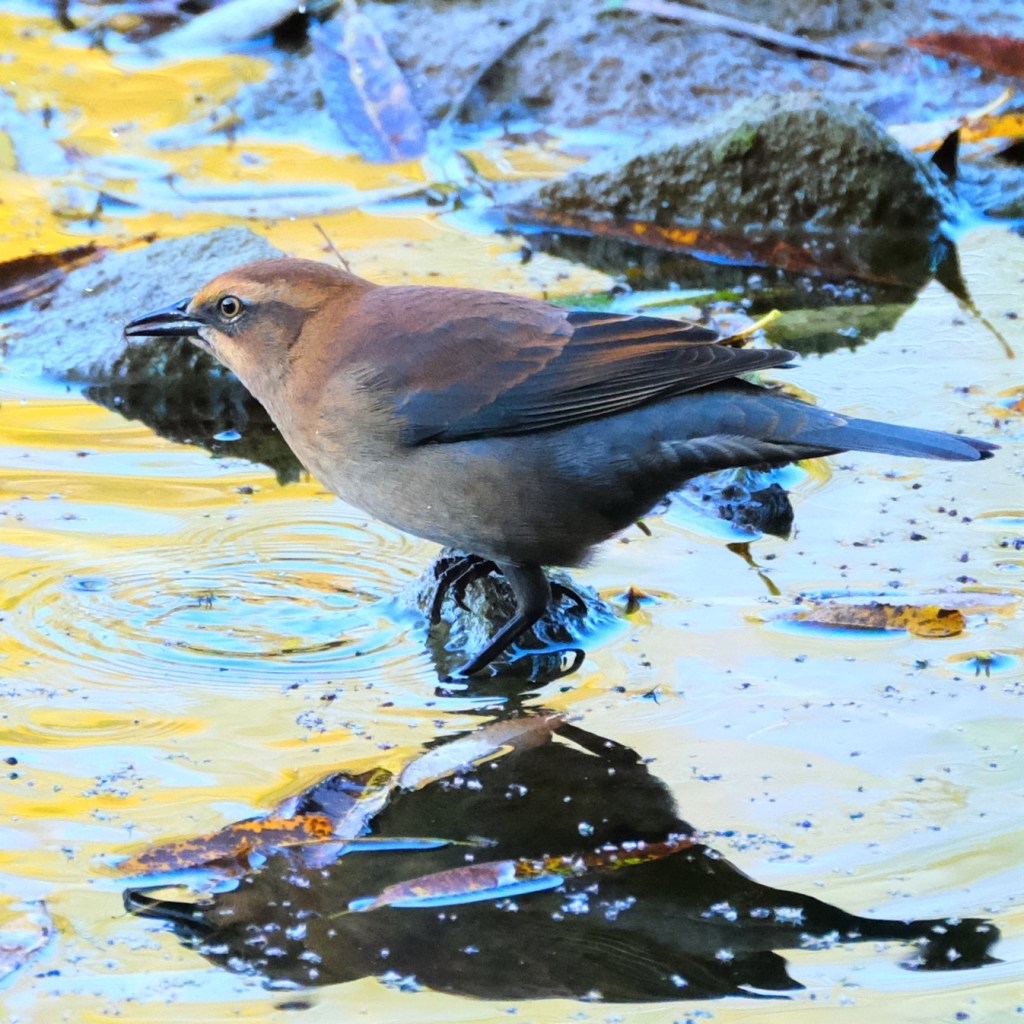
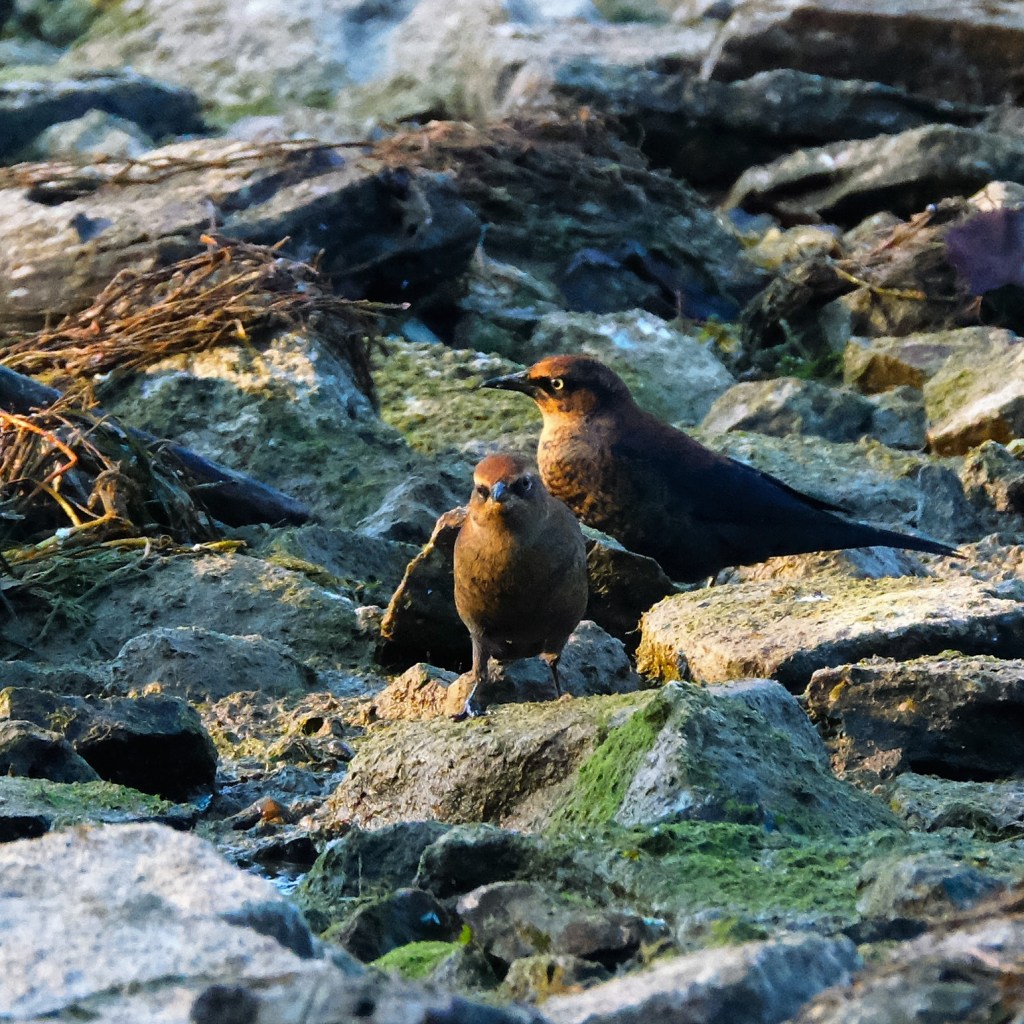
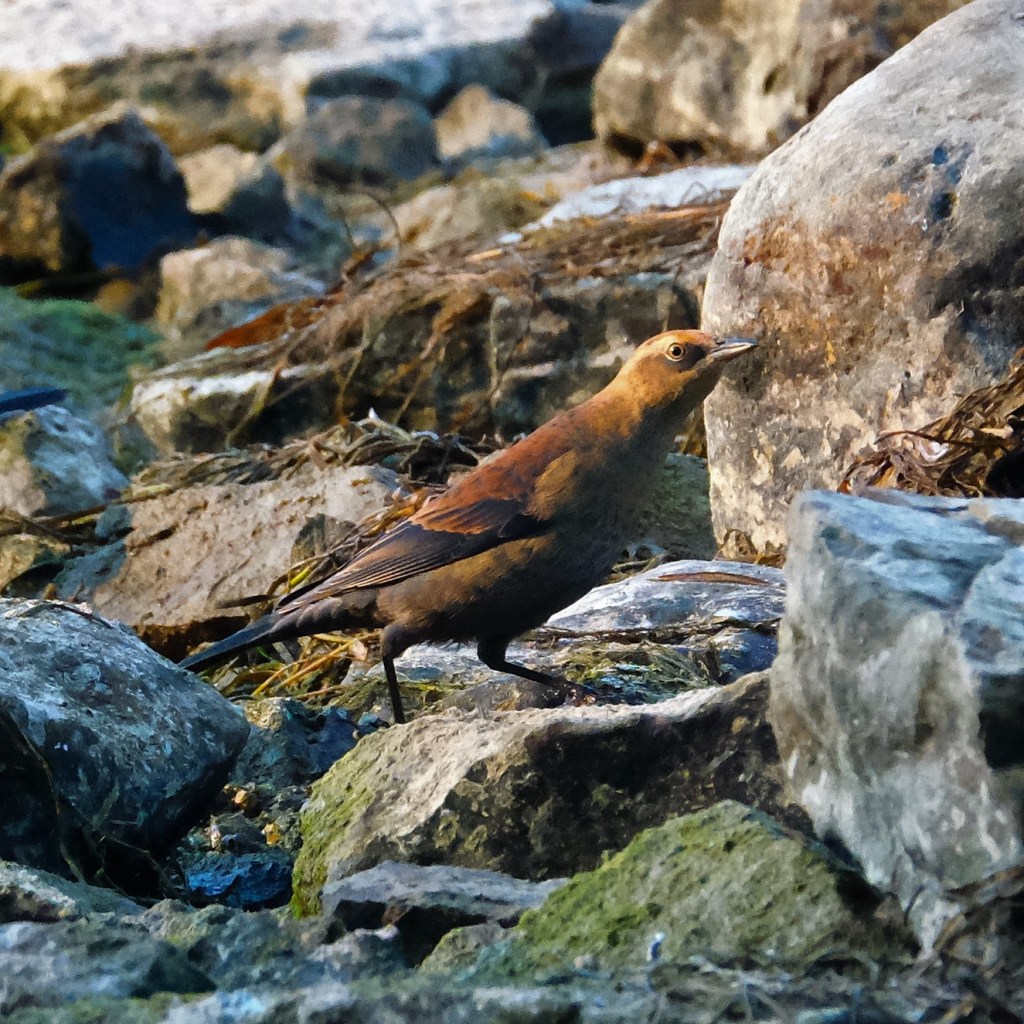
Some rusty blackbirds were back, also foraging on the exposed rocks, and the morning sun really brings out the colors on this female.
Meanwhile, the trees above the river were full of activity, too. Here’s a wren foraging.
Here’s a flycatcher, perhaps an eastern wood-pewee, pausing between sorties out over the water.
Here’s one more yellow-rumped warbler looking for treats on the willow leaves and branches.
Here’s yet another warbler, and this one looks like a Nashville warbler.
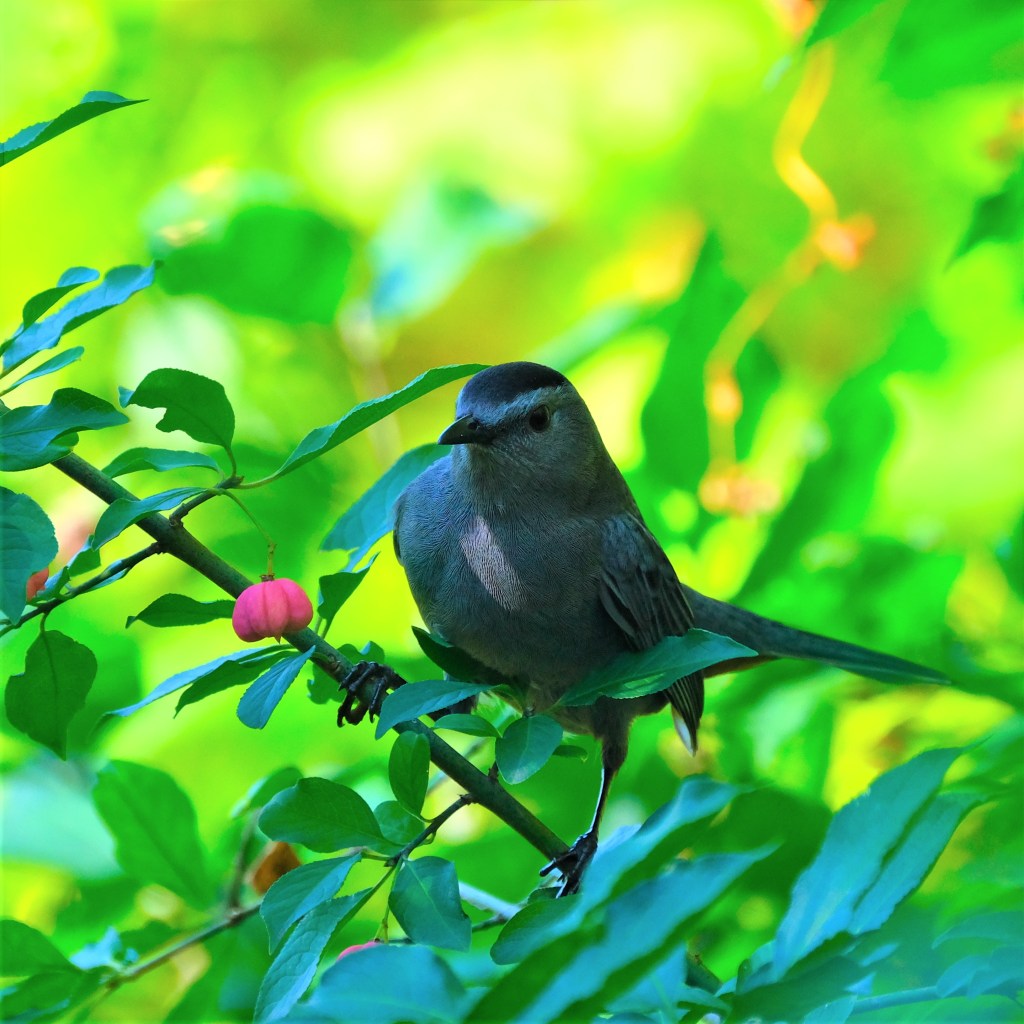
I finally had to drag myself away and head home, but on the way, I found another catbird picking berries.
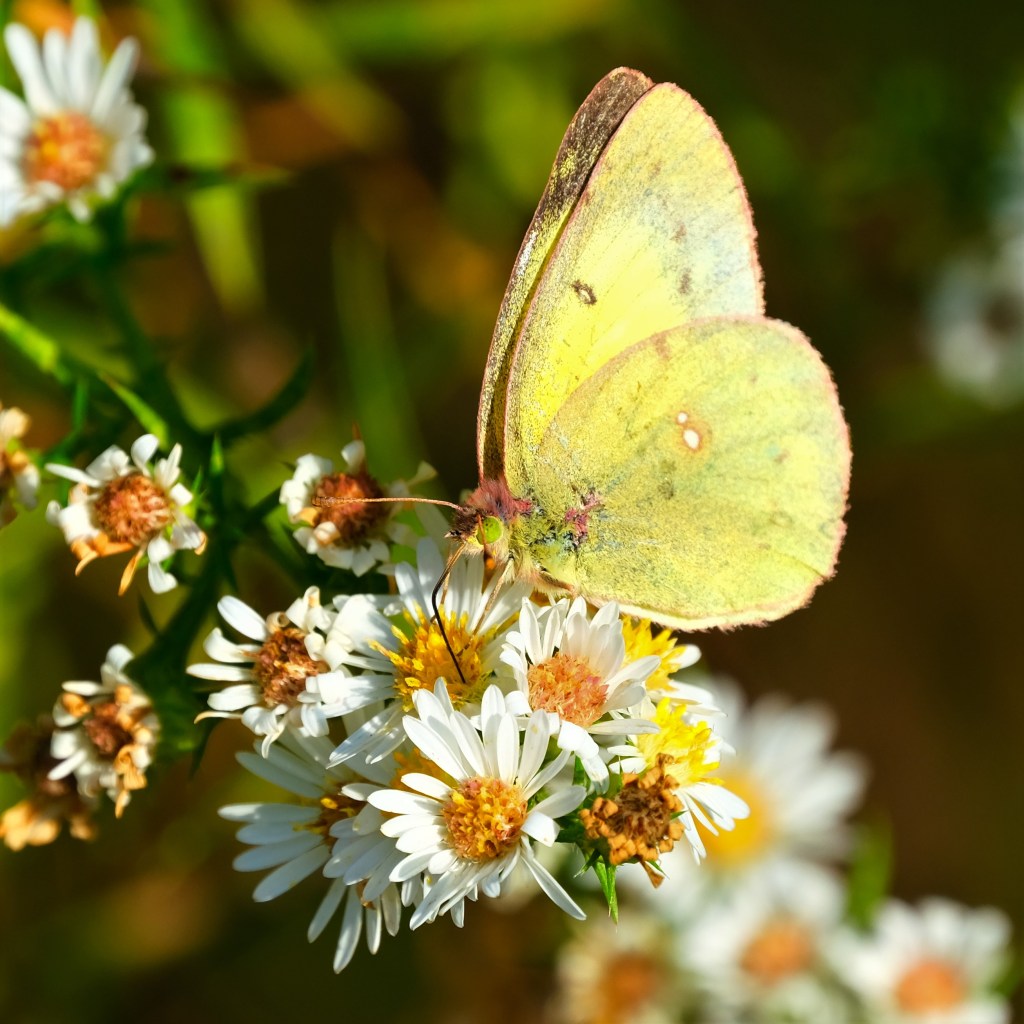
Lastly, I checked the patch of asters on the Oak Leaf Trail and found one more sulphur butterfly enjoying the nectar while it lasts.
Well, by now you probably know the drill. I’ve gotta go to school tomorrow morning, so no time for a visit to the park, but I did my best to save some nice pictures from today to show you tomorrow. See you then.
As promised, here are the rest of the pictures from yesterday’s magical Monday morning.
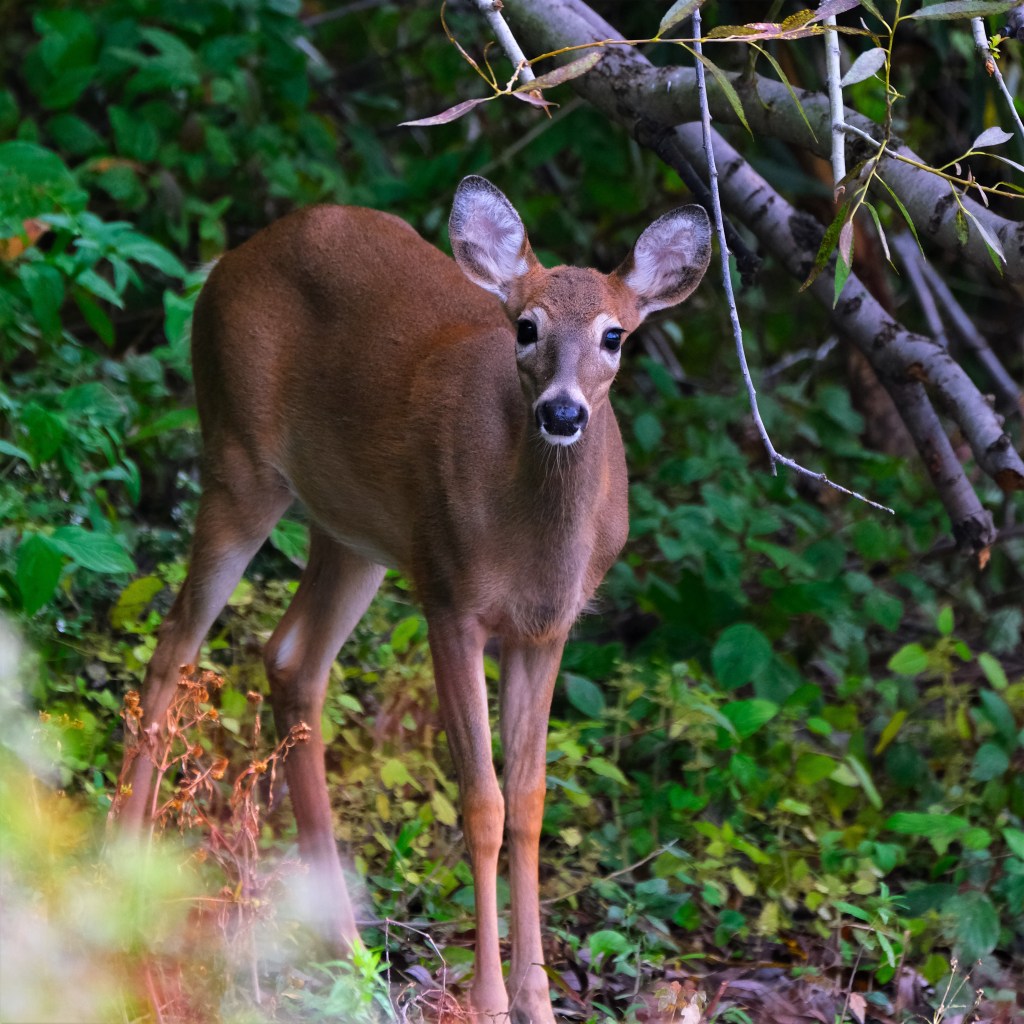
First up, a bit after the four deer strode up onto the island and disappeared in the brush, this young one came back out seemingly to see what that weird old guy on the far shore was up to.
“What is he doing there?”
“What does he want?”
“A mystery for the ages, I guess, but I hope he finds what he’s looking for.”
I sure did, Kiddo, and thanks.
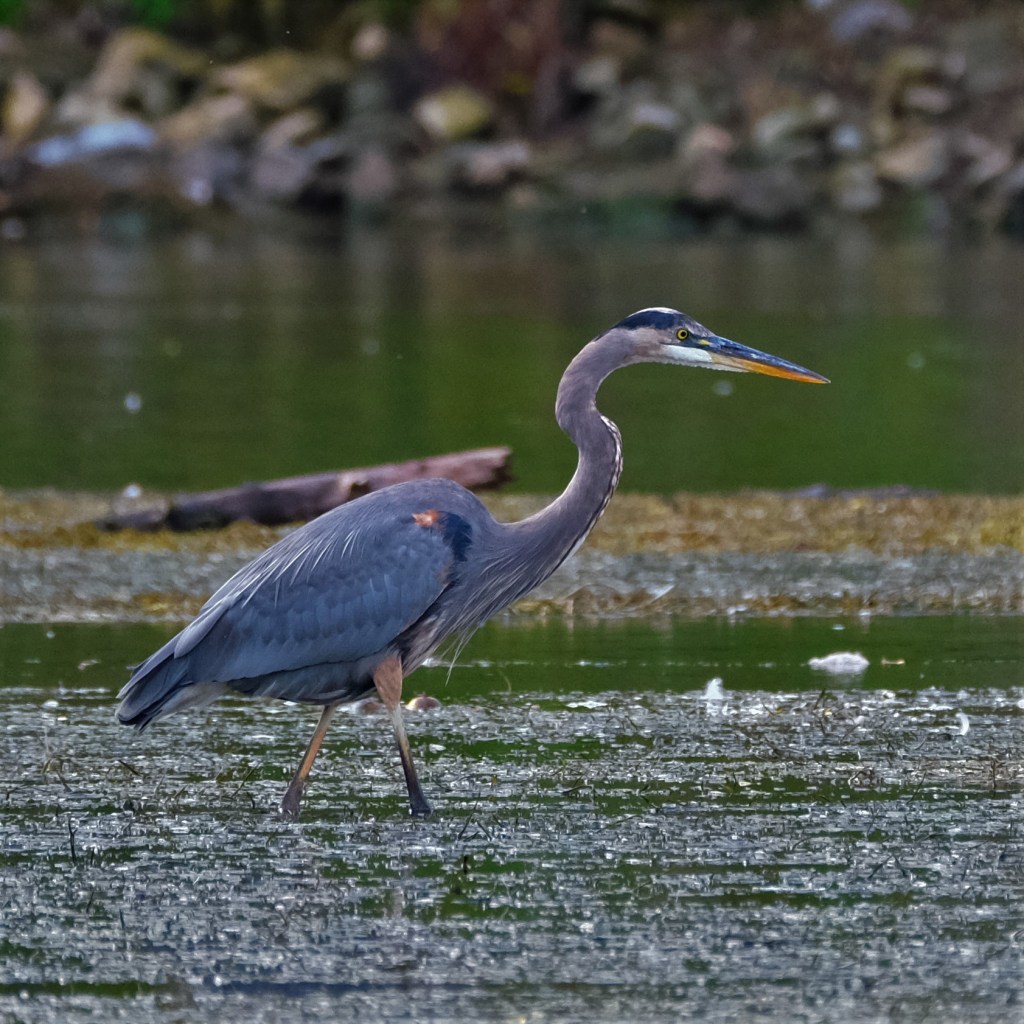
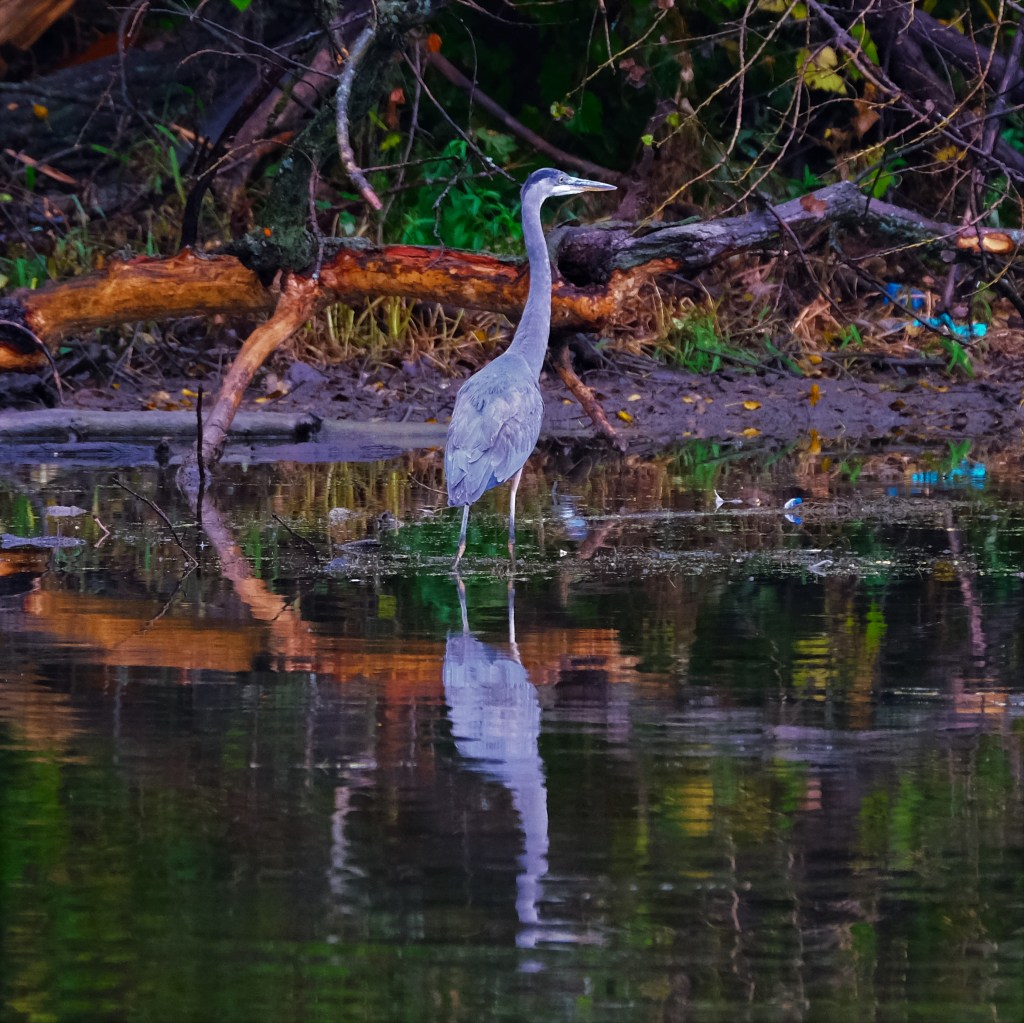
Meanwhile, a great blue heron was too busy fishing to pay any attention to that nonsense.
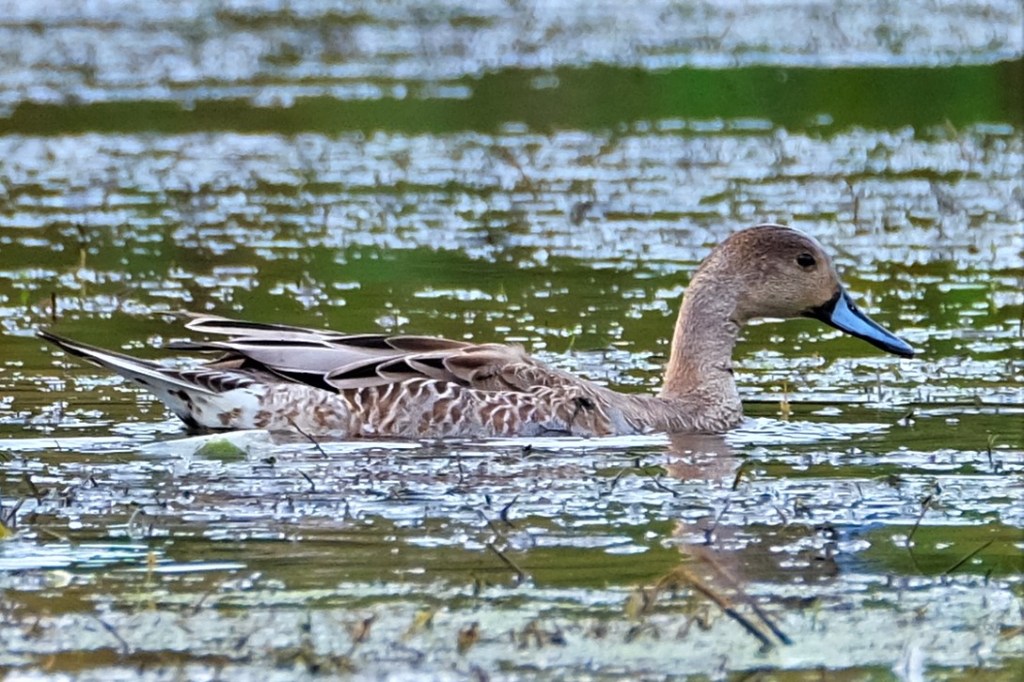
And our newest visitor, the pintail, seemed oblivious to it all.
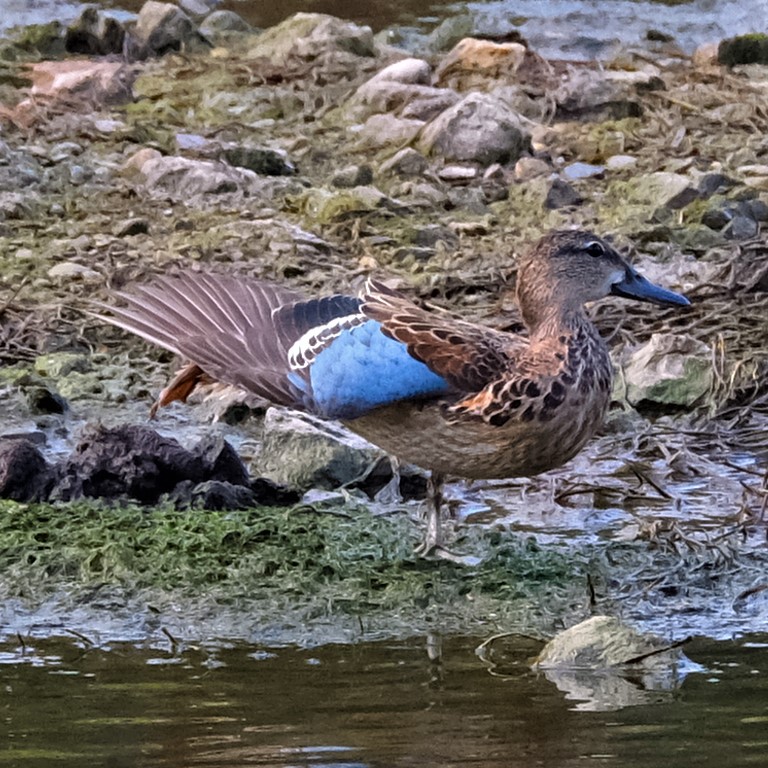
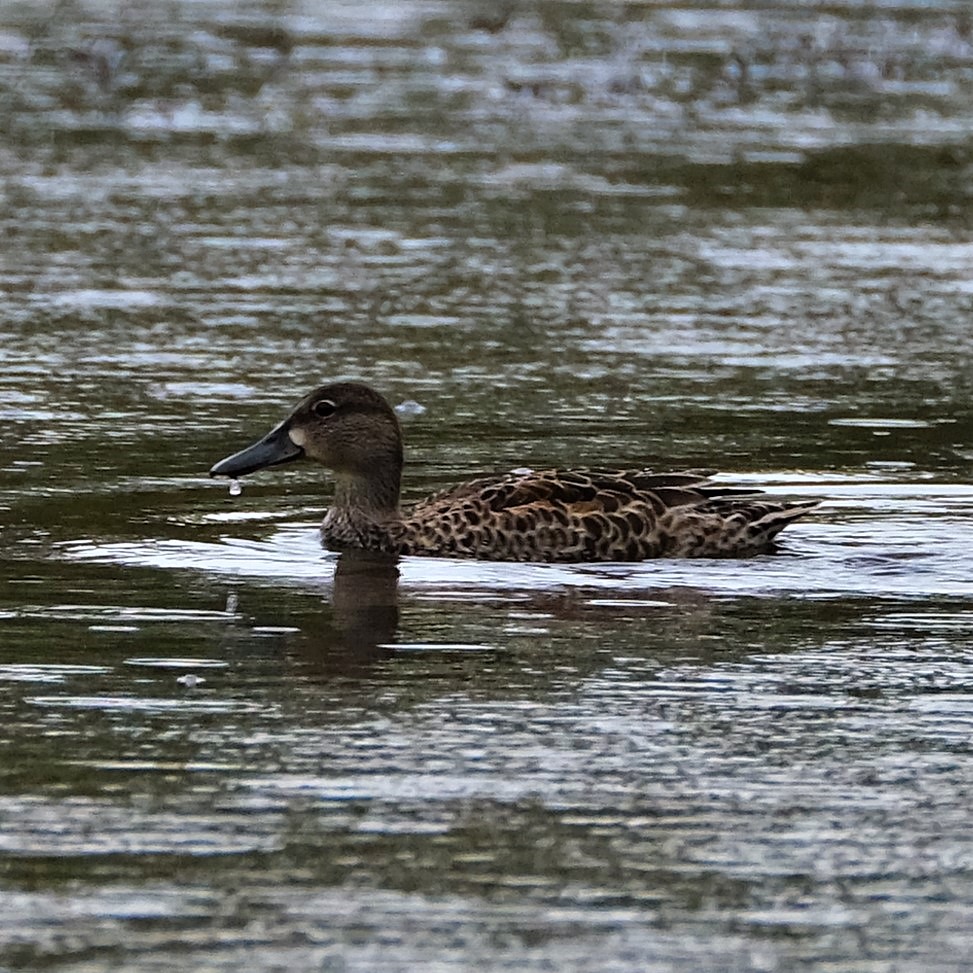
I did finally will one of the blue-winged teals to line up with a mallard so I could show you just how tiny they are.
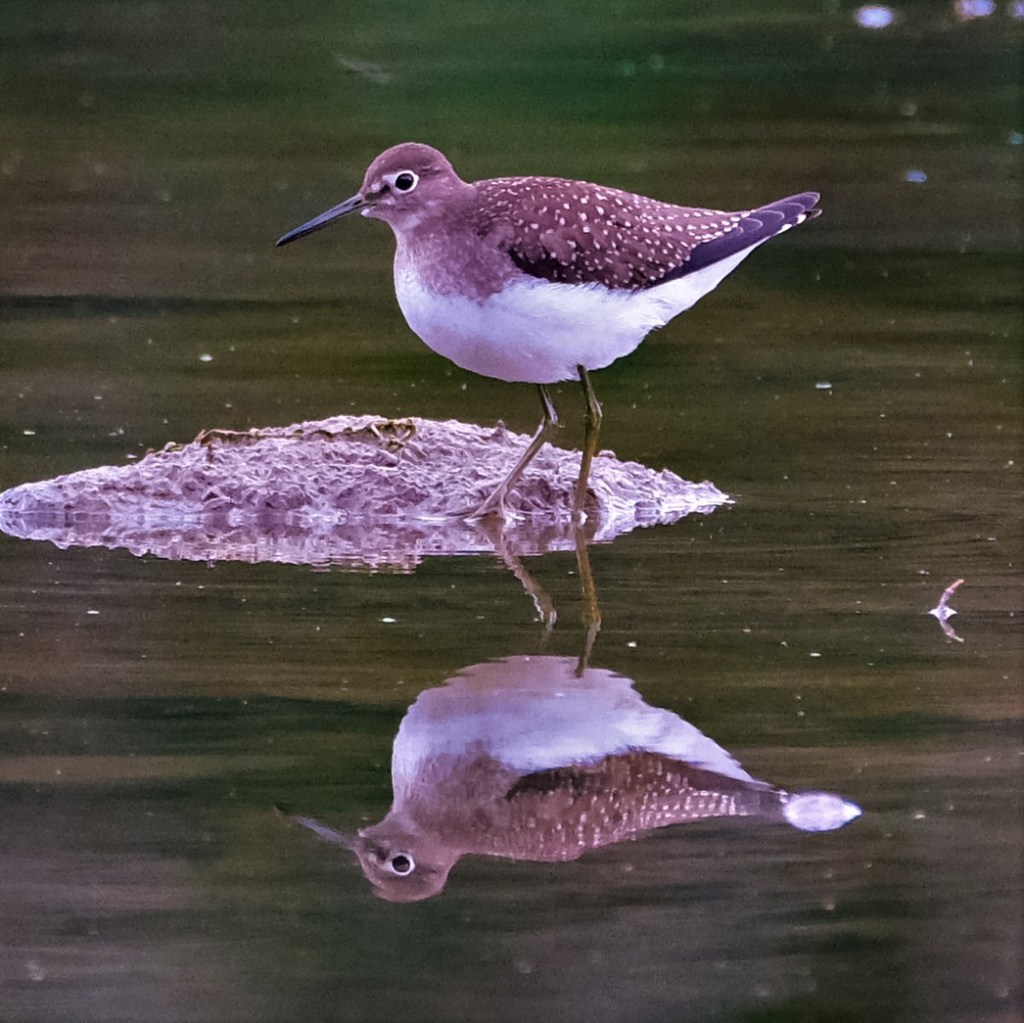
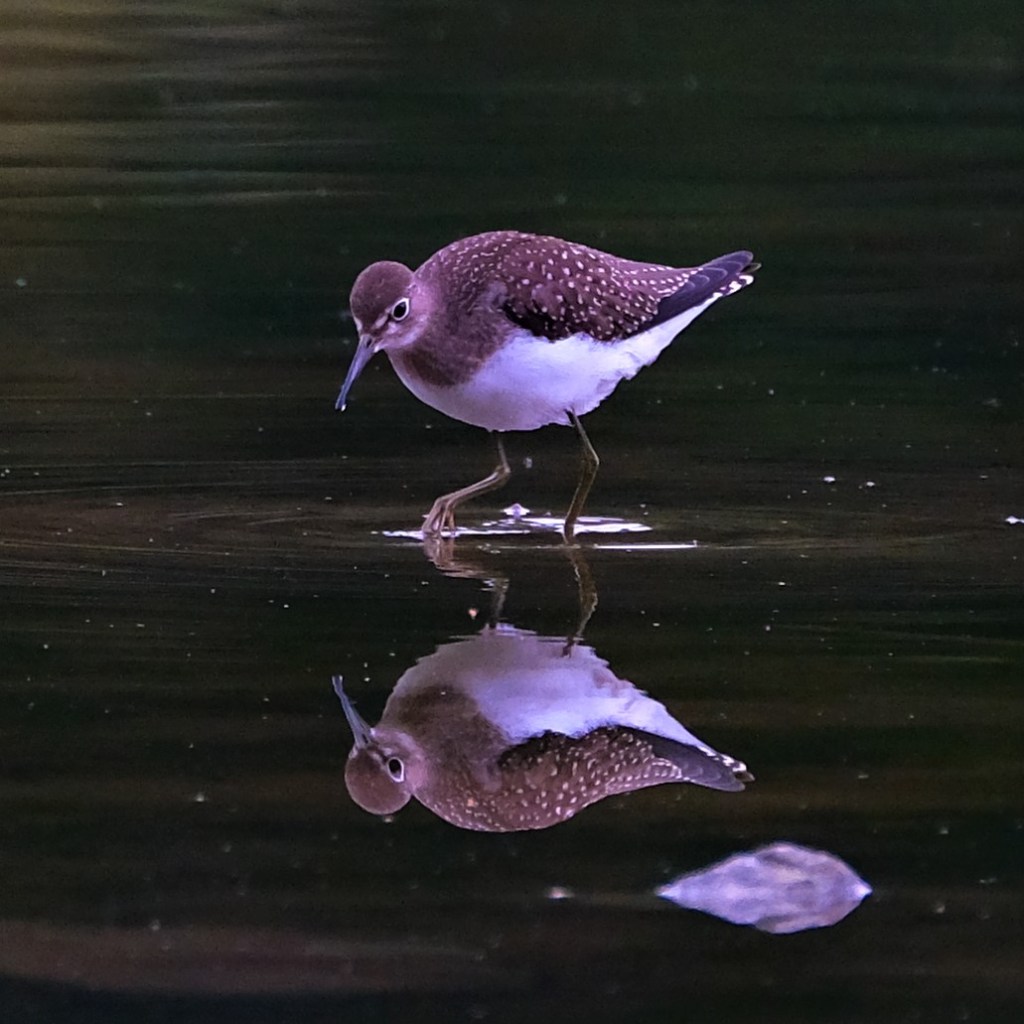
On my way back south, I was happy to find that the solitary sandpiper hasn’t taken off yet.
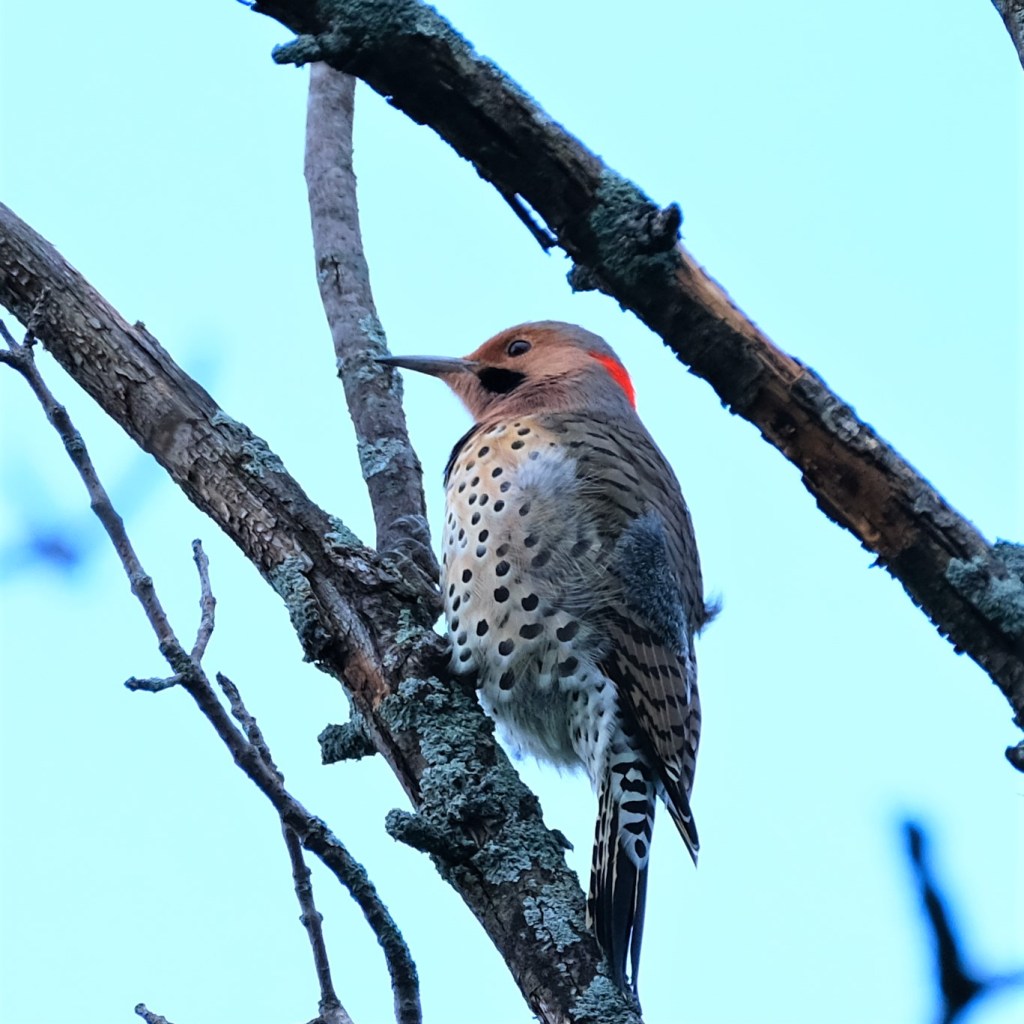
A male northern flicker was uncharacteristically still and visible.
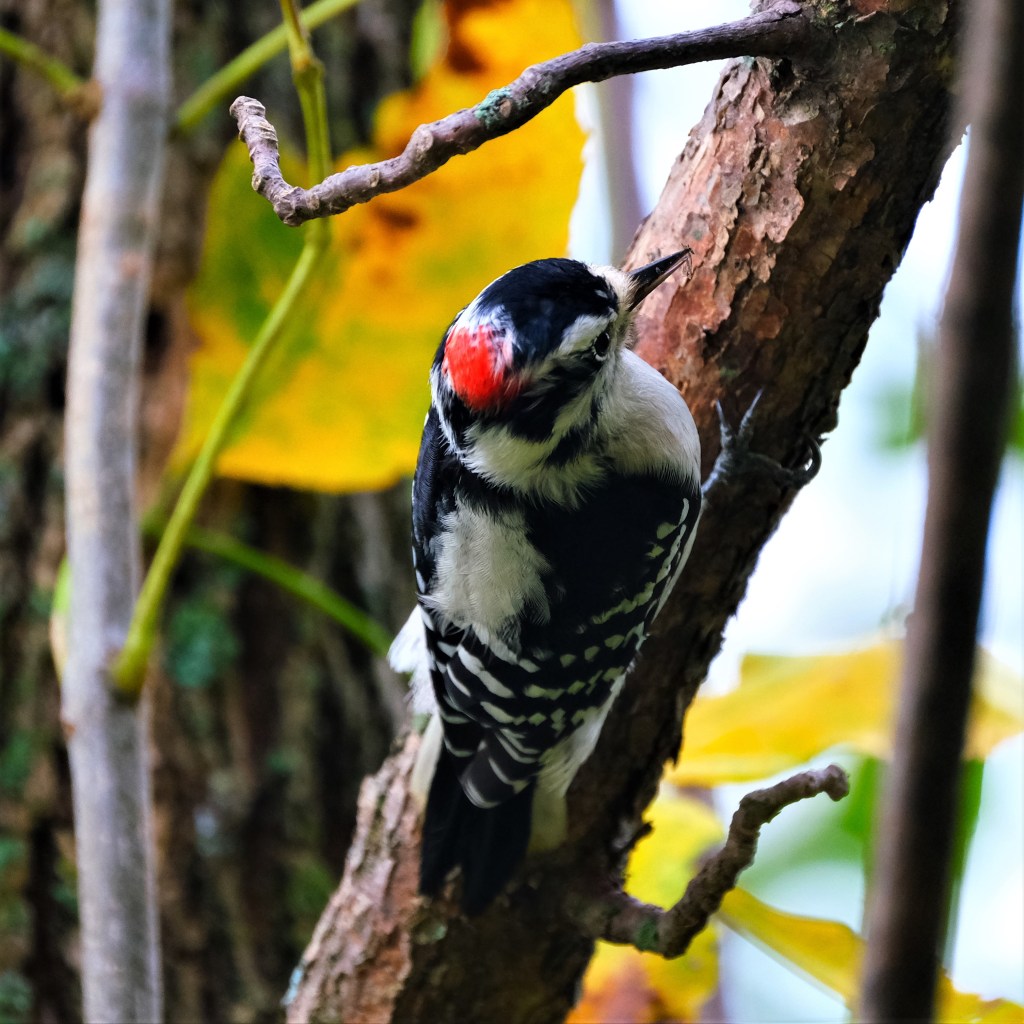
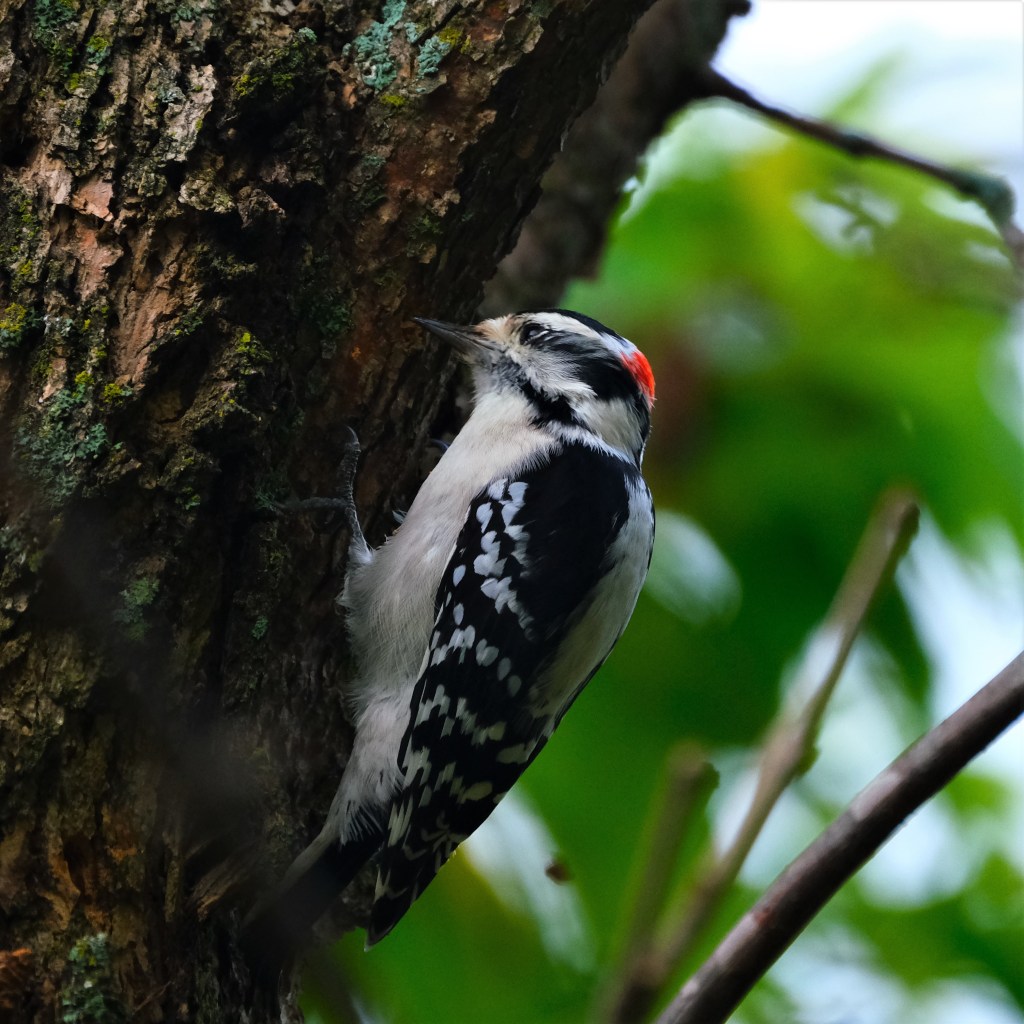
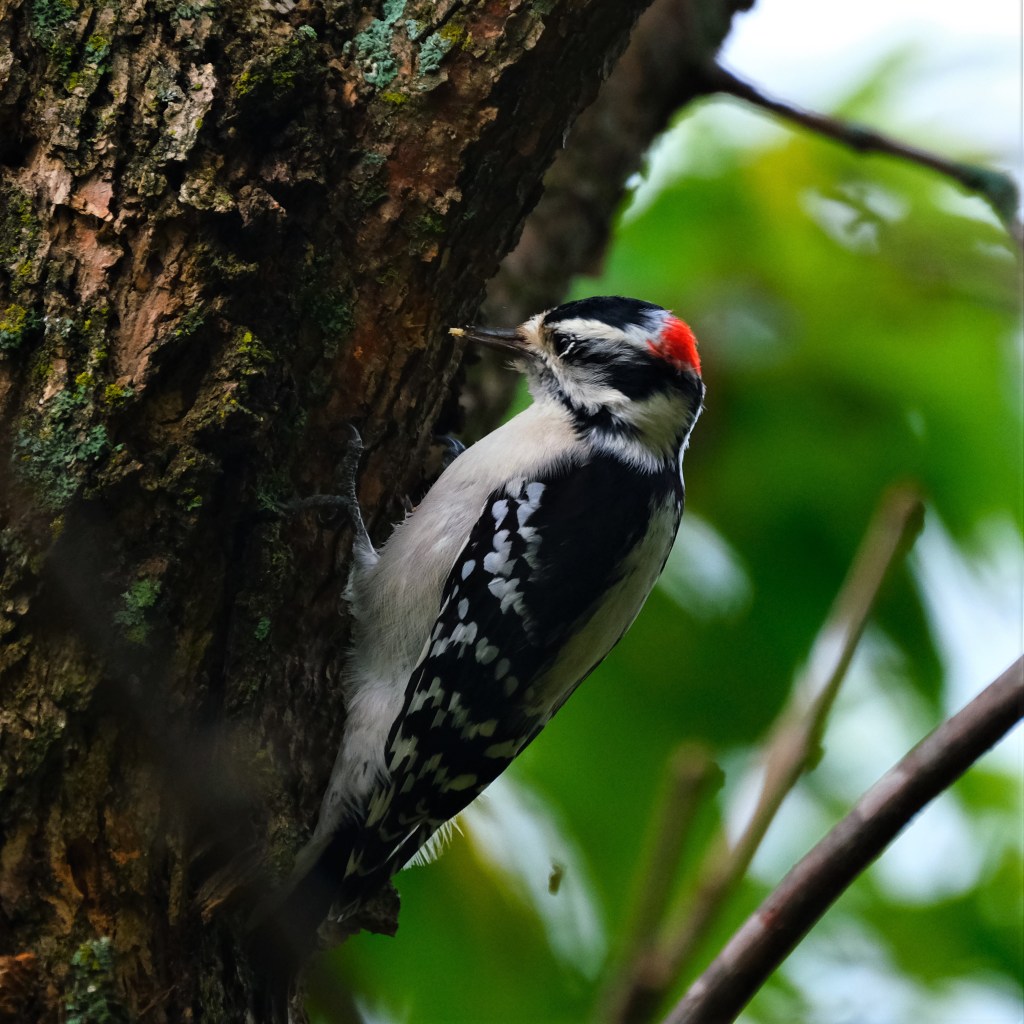
And the male downy woodpecker gave us a nice view of his red spot.
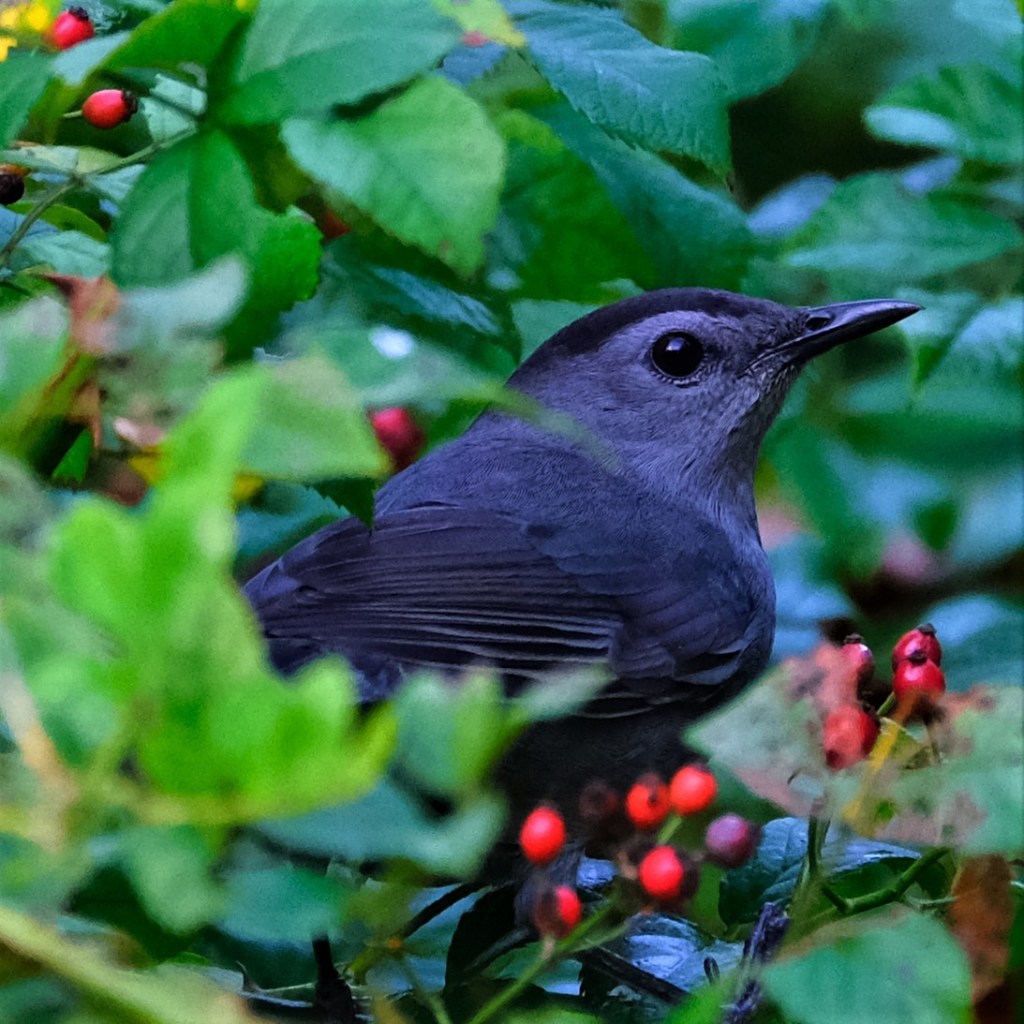
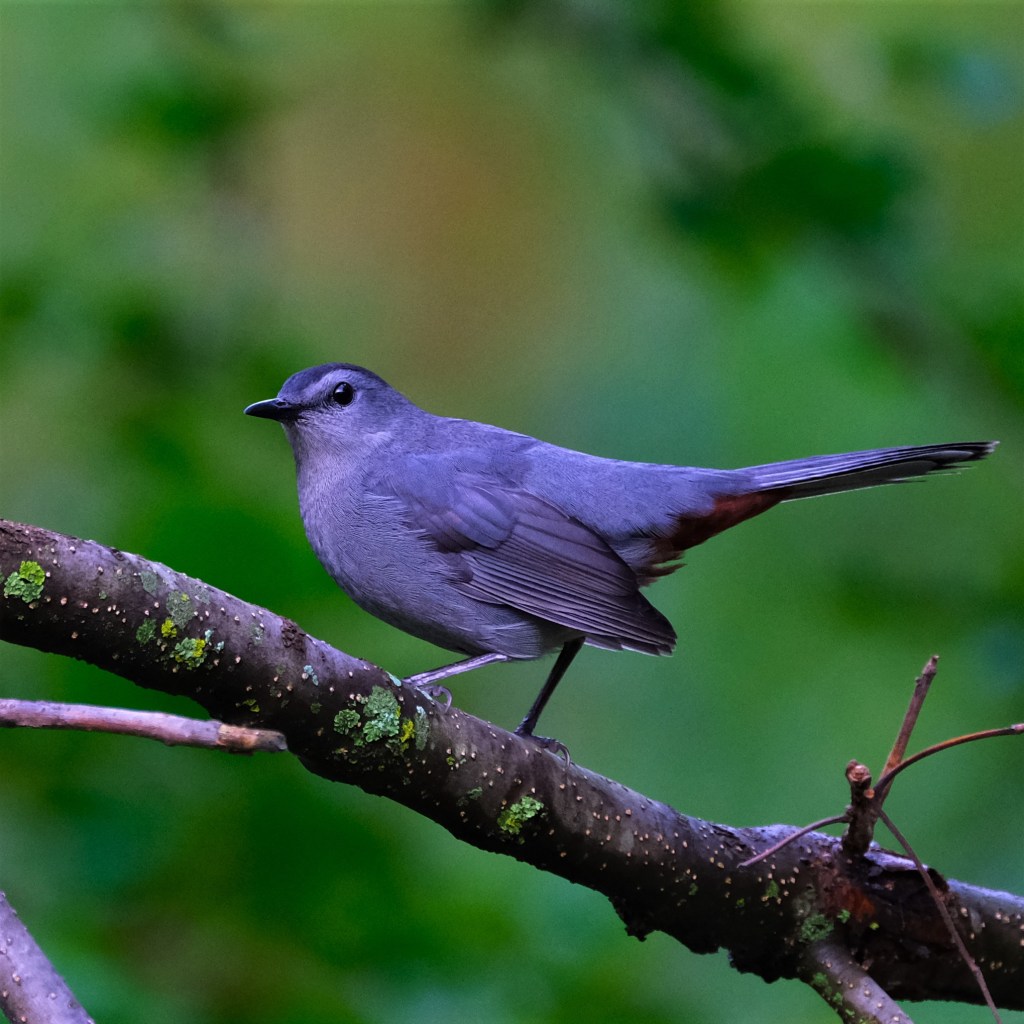
This grey catbird was after the berries you can see in the foreground, and every time it turned to grab one, my autofocus couldn’t follow, so all I got was a blur, but at least this one still image came out.
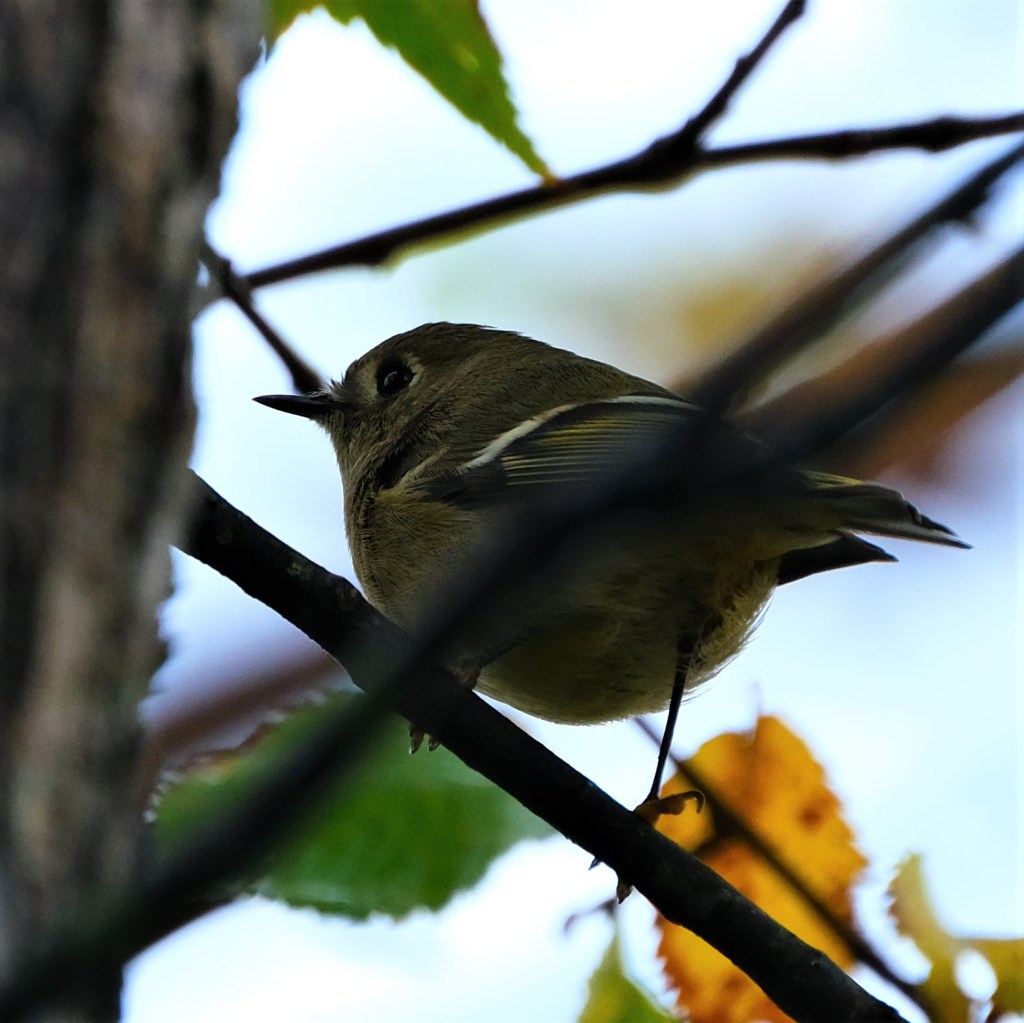
Finally, the yellow-rumped warbler was really in a posing mood, so we get one more look.
The forecast for Wednesday is for “partly cloudy” so let’s hope we get another nice little batch of morning sun and blue sky to make the pictures pretty.
This morning was supposed to be dark and grey, again, so I lolled in bed till 6:30, and the reward for my sloth was about an hour of warm morning sun and even a bit of bright blue sky. Do not get me thinking that sloth might pay!
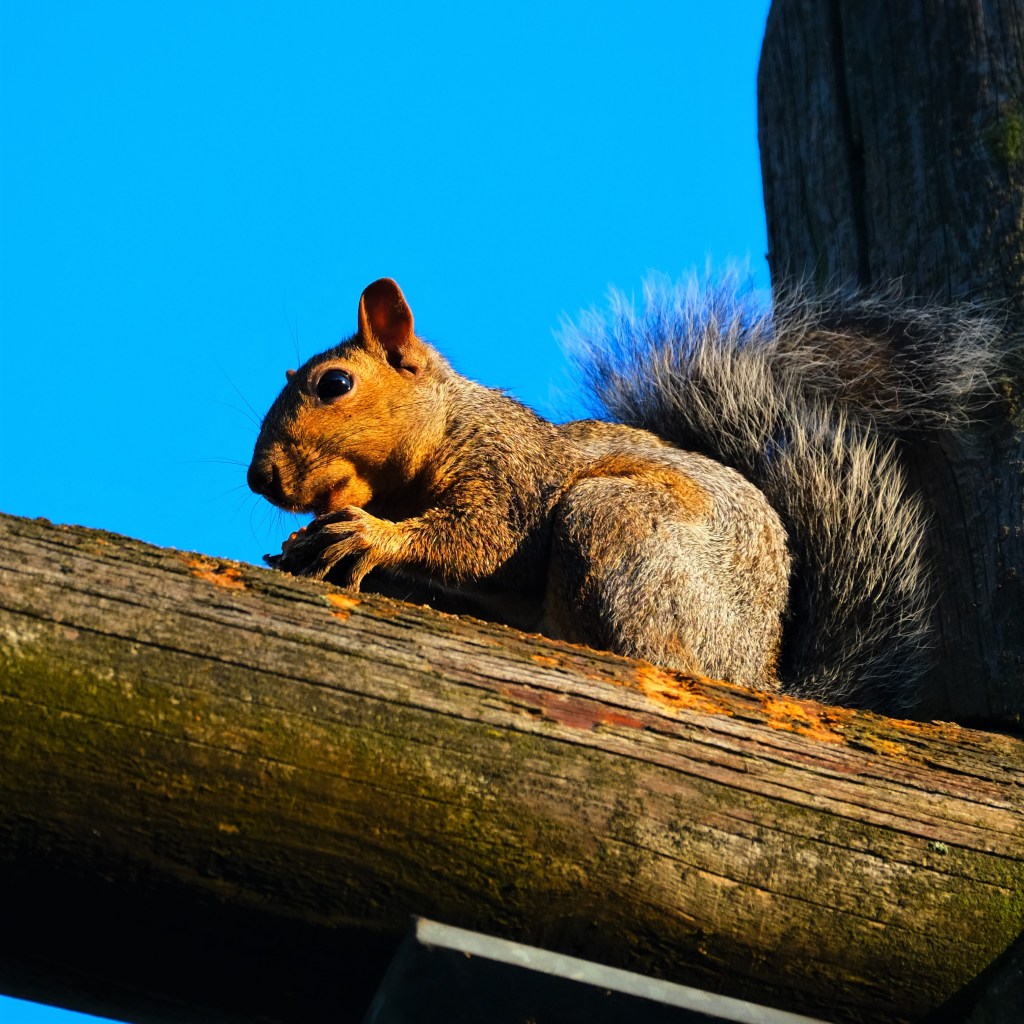
Anyway, by the time I managed to stroll up the parkway, this grey squirrel was also enjoying the morning sun and blue sky with a tasty looking nut in a comfortable looking perch on top of a lamp post.
At the pond, another photographer was deep into a session with the wood ducks on the west lawn, so I just captured a quick image over his shoulder and made a bee line for the river.
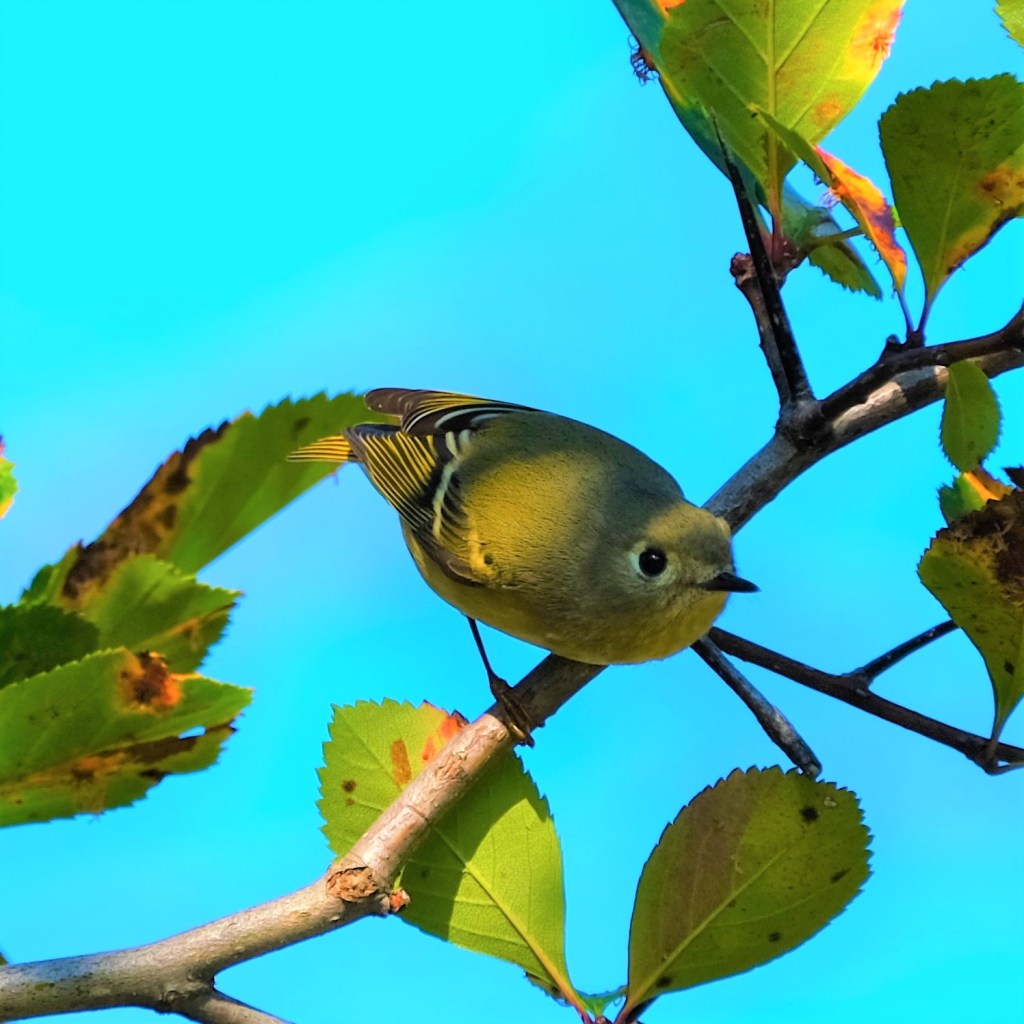
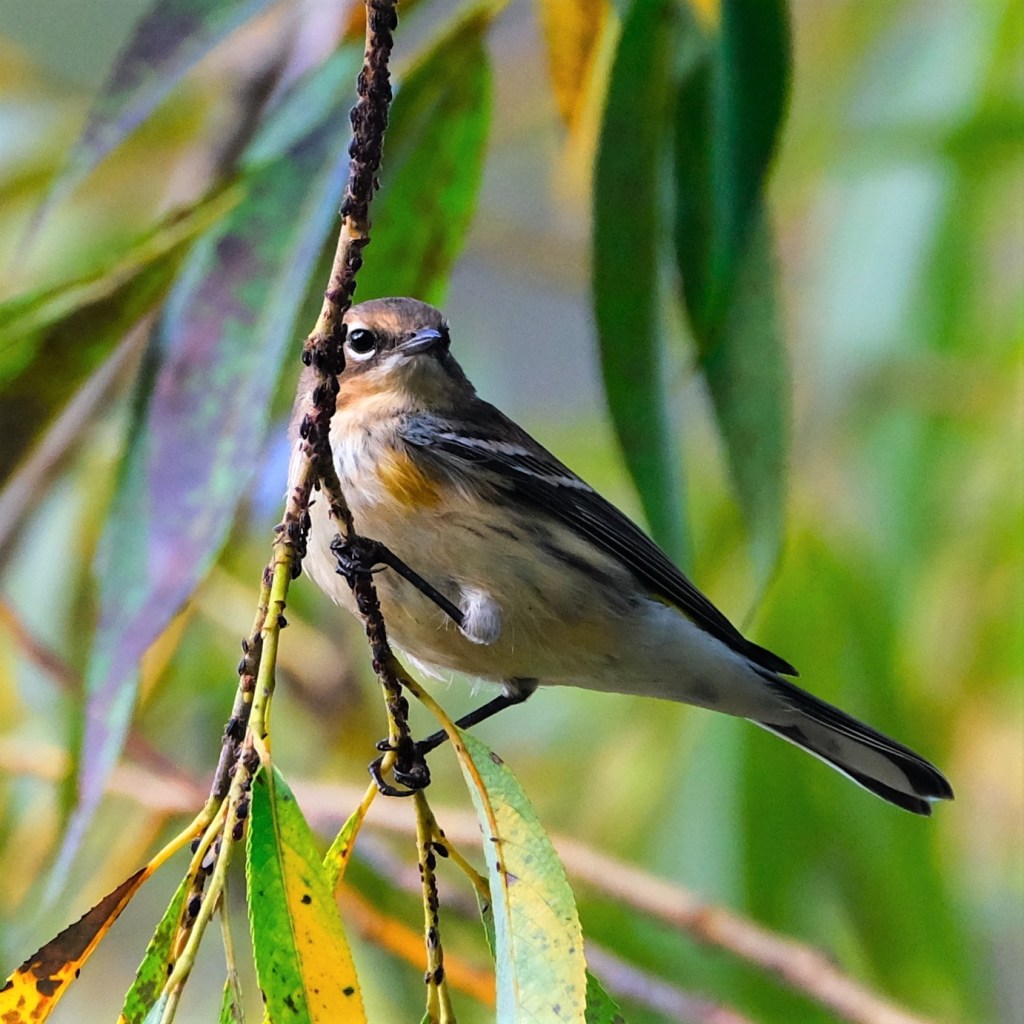
Happily, I made it to the river just in time to capture one more, well-lit glimpse of a yellow-rumped warbler before the clouds rolled back in.
“That’s right, little cutie, I’m looking at you, and thanks for sitting still for a millisecond.”
They will eventually all bug out to Illinois or further, for the winter, so we gotta enjoy them while we can.
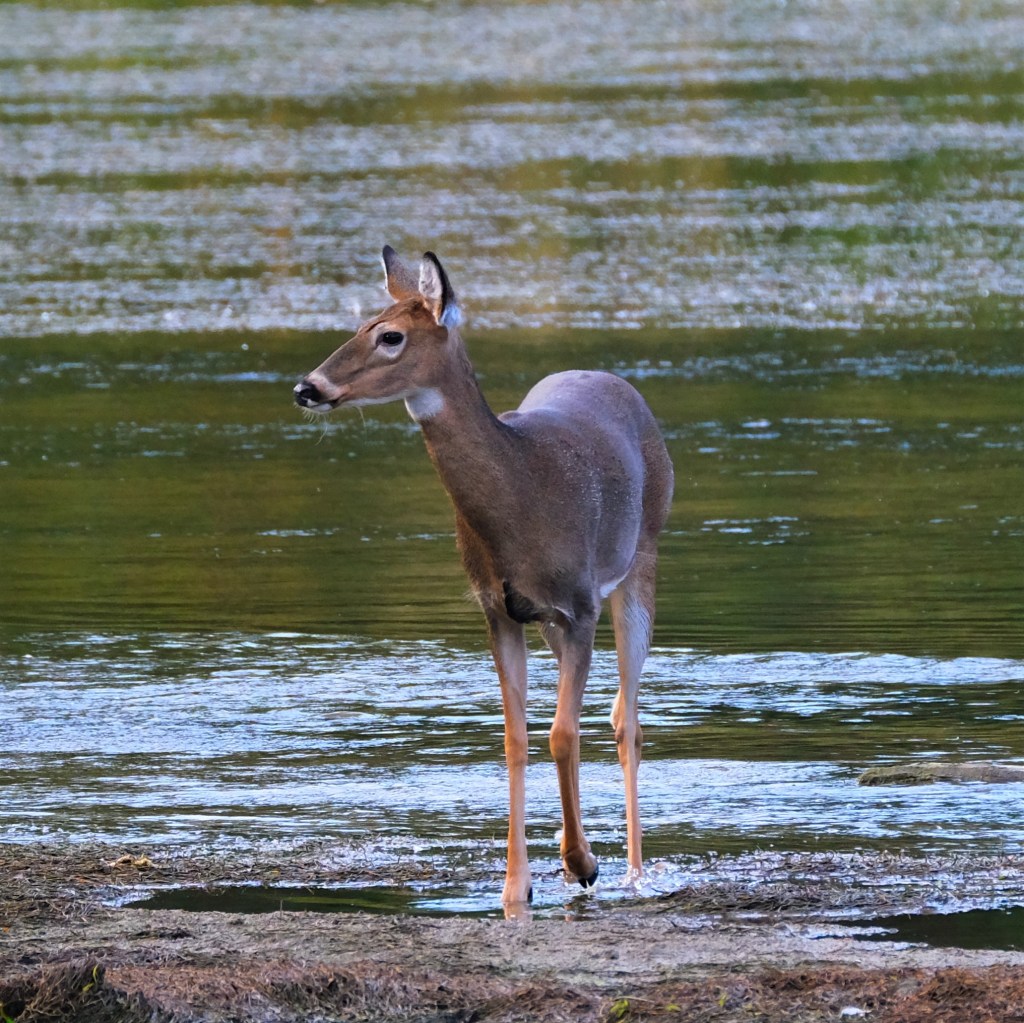
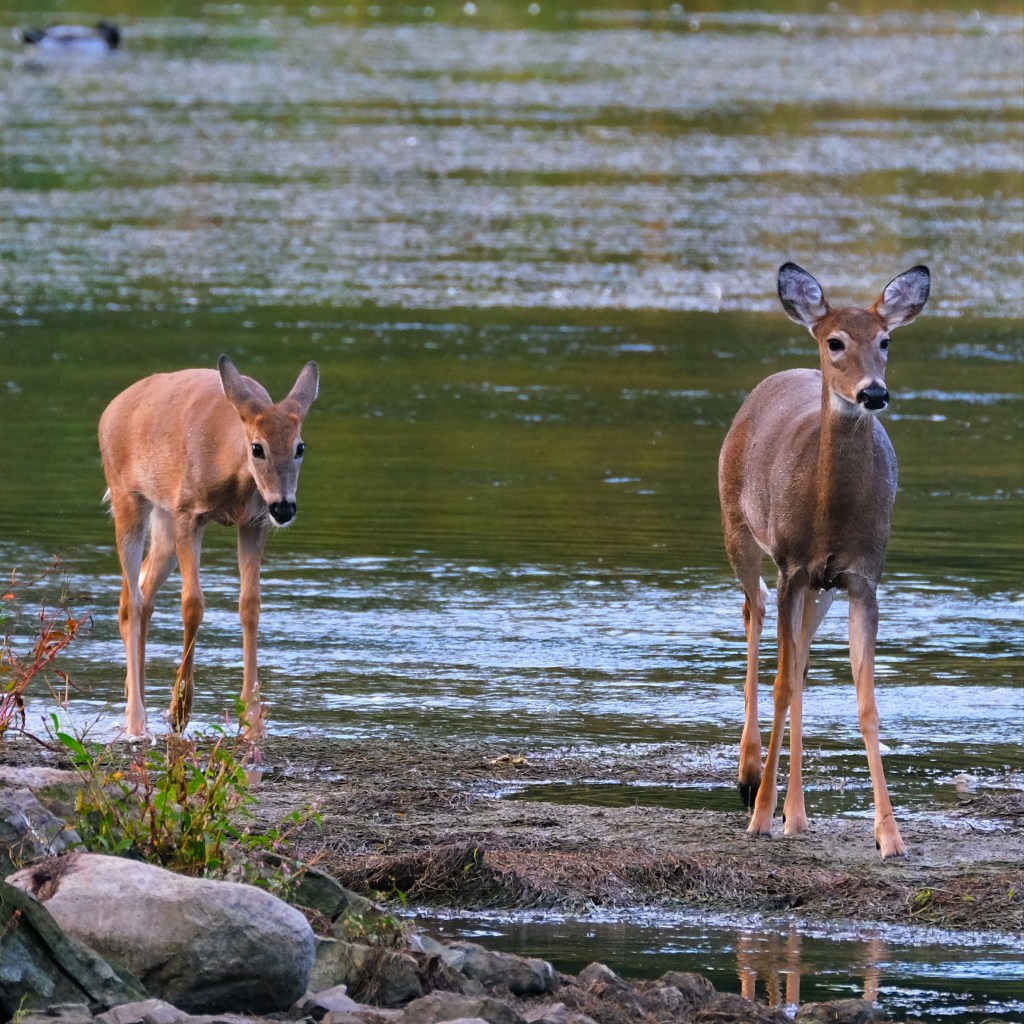
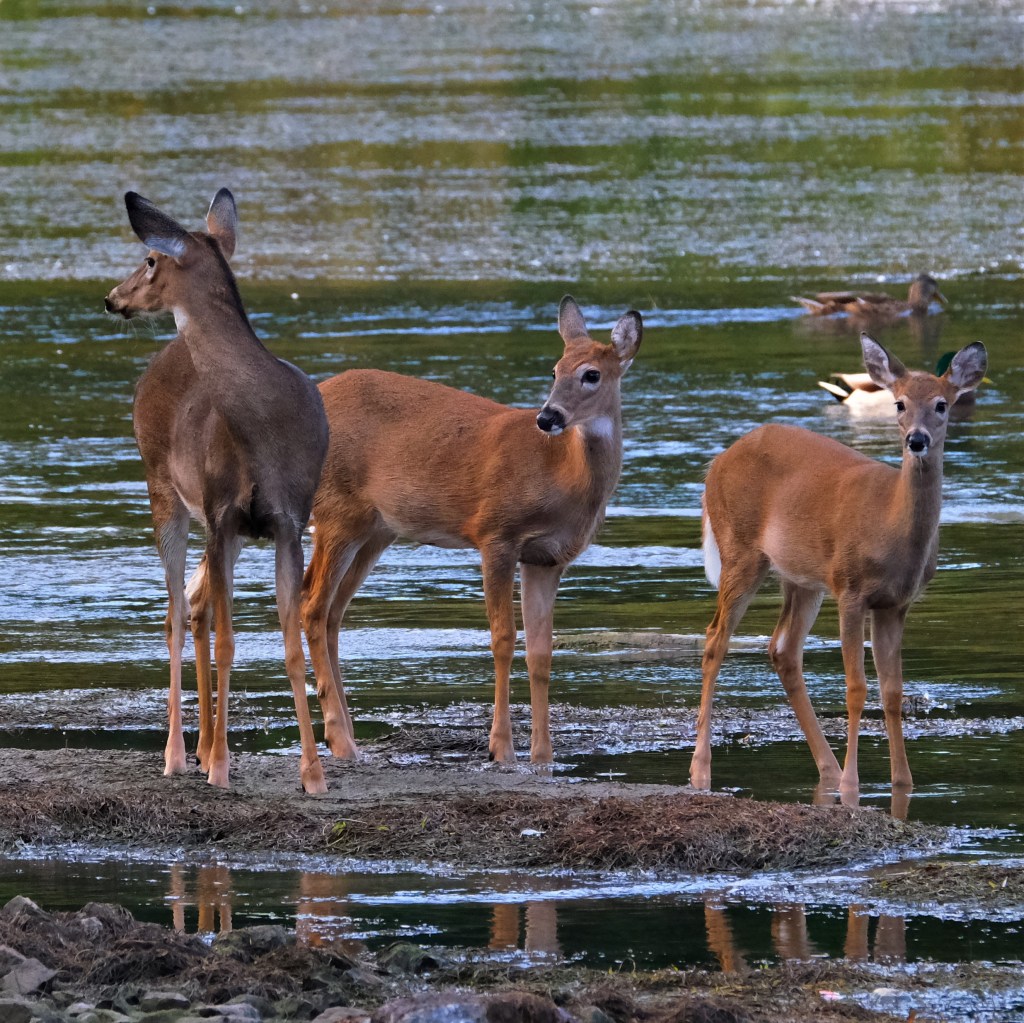
After I captured what I figured was going to be as good a warbler image as I was going to get, I turned my gaze to the river, and you will not believe what I saw. First one…
then Two…
then THREE…
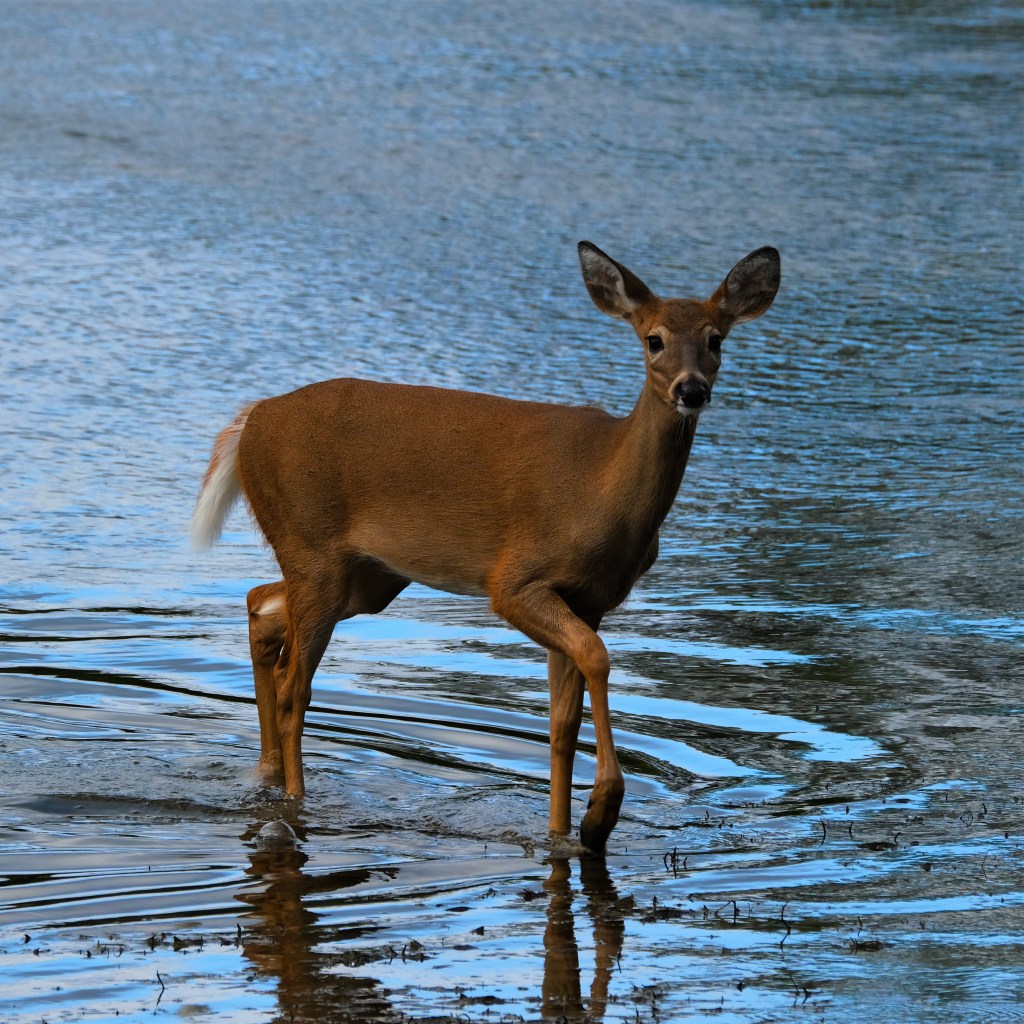
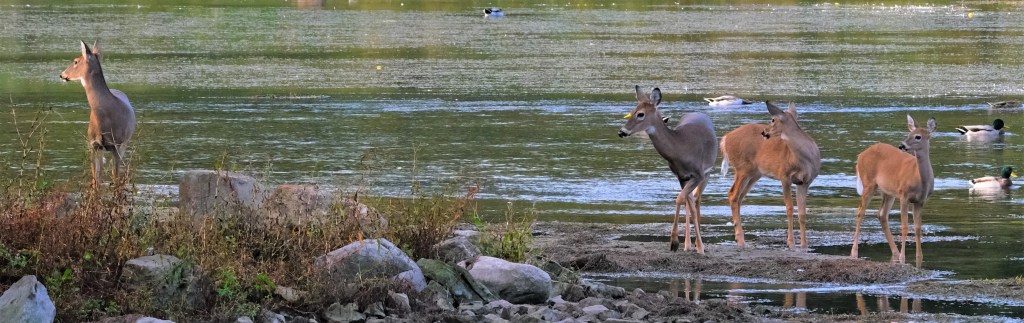
THEN FOUR, YES FOUR, RIVER DEER!
(Disclaimer: “River deer” are not a “thing”, of course, and I just get a kick out of calling them that. Instead, for those of you just joining our show already in progress, these are white-tailed deer (Odocoileus virginianus), the only deer we have, and who just happen to be taking advantage of the low water to cross the river to graze on the island for a change. Maybe I’d better call them island deer.)
I can’t tell if that’s a tasty morsel or just a wood chip, but let’s hope for the former, eh?
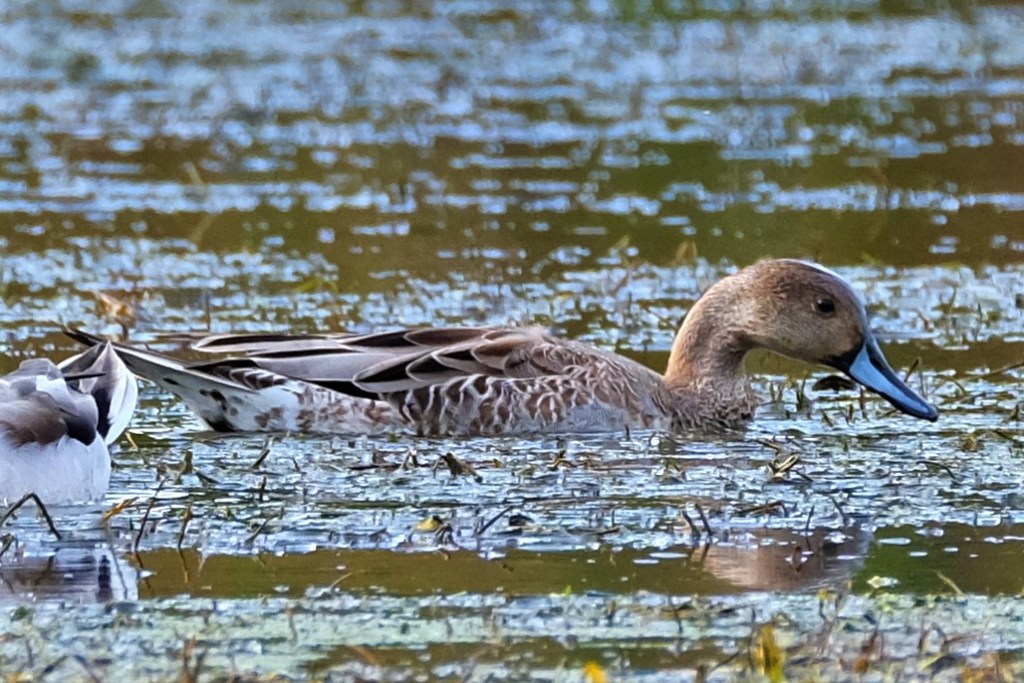
Finally, I made one more scan of the mallards out on the water, and looky who I found. That black bill, grey face, and long neck makes me think we’ve got ourselves a female pintail. How about that?!?!? She’s only got to fly the length of Illinois to her wintering grounds, so perhaps she’ll stick around a while and let us have another chance at a better look.
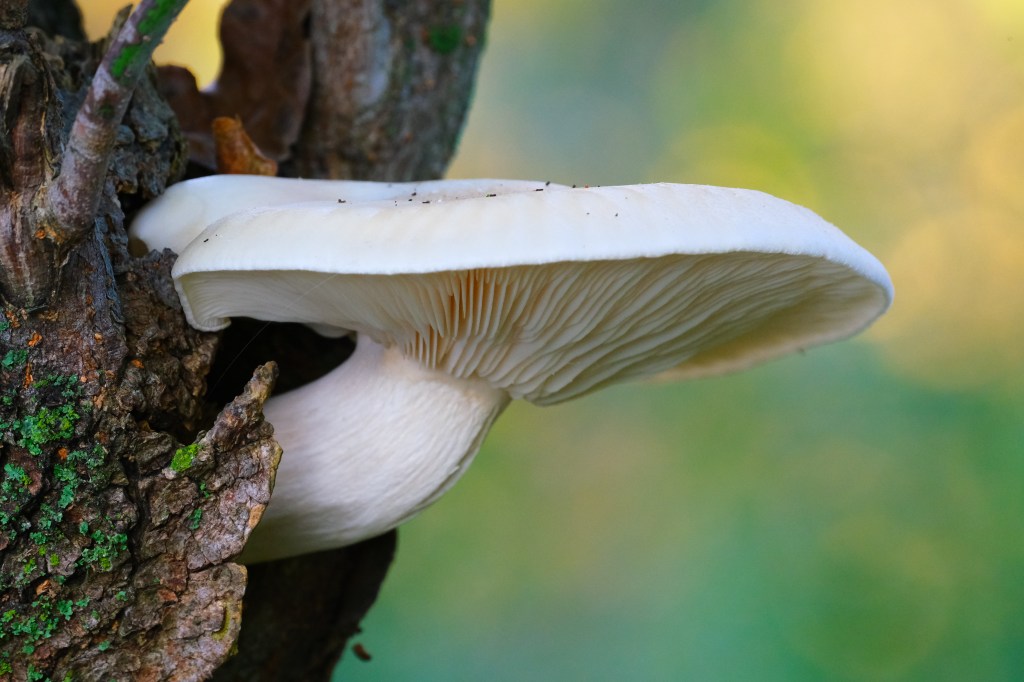
Whew! After all that action, let’s bring it down a notch with this serene looking mushroom growing peacefully right out of a box elder knot.
Stay tuned to find out tomorrow what pictures I kept in my pocket to show you while I go to school.
It was a wet and dreary morning in Estabrook, but before we get into that, let me say “thanks” to all the folks who stopped by the Friends of Estabrook Park booth yesterday at the Fish & Feather Festival. We sure had nice weather in Hubbard Park for the event. There are too many names to type here, and even if I did, you can safely bet that I would somehow leave one out, so let me avoid that mistake and thanks again for stopping by to say “hi.” You know who you are.
Now, back to this morning. I woke to the sound of rain, so I didn’t bother hurrying out of bed. Eventually though, there appeared to be a big gap between the showers on the radar, so I put on my raincoat and headed out.
The wood ducks at the pond were nice and friendly this morning, and here are a couple of males looking especially resplendent.
This morning was turning out way better than I expected, but it started to sprinkle pretty good, so I headed back south and spotted our obligatory blue heron on the far shore right in front of a log that looks as though beaver have been working on it.
Just south of the falls, I finally started seeing the little birds in the trees, and here’s another golden-crowned kinglet.
At the clearing by where the stream from the pond empties into the river, I got to see the male downy woodpecker to go with the female from yesterday.
A yellow-rumped warbler was busy foraging in the tree above it.
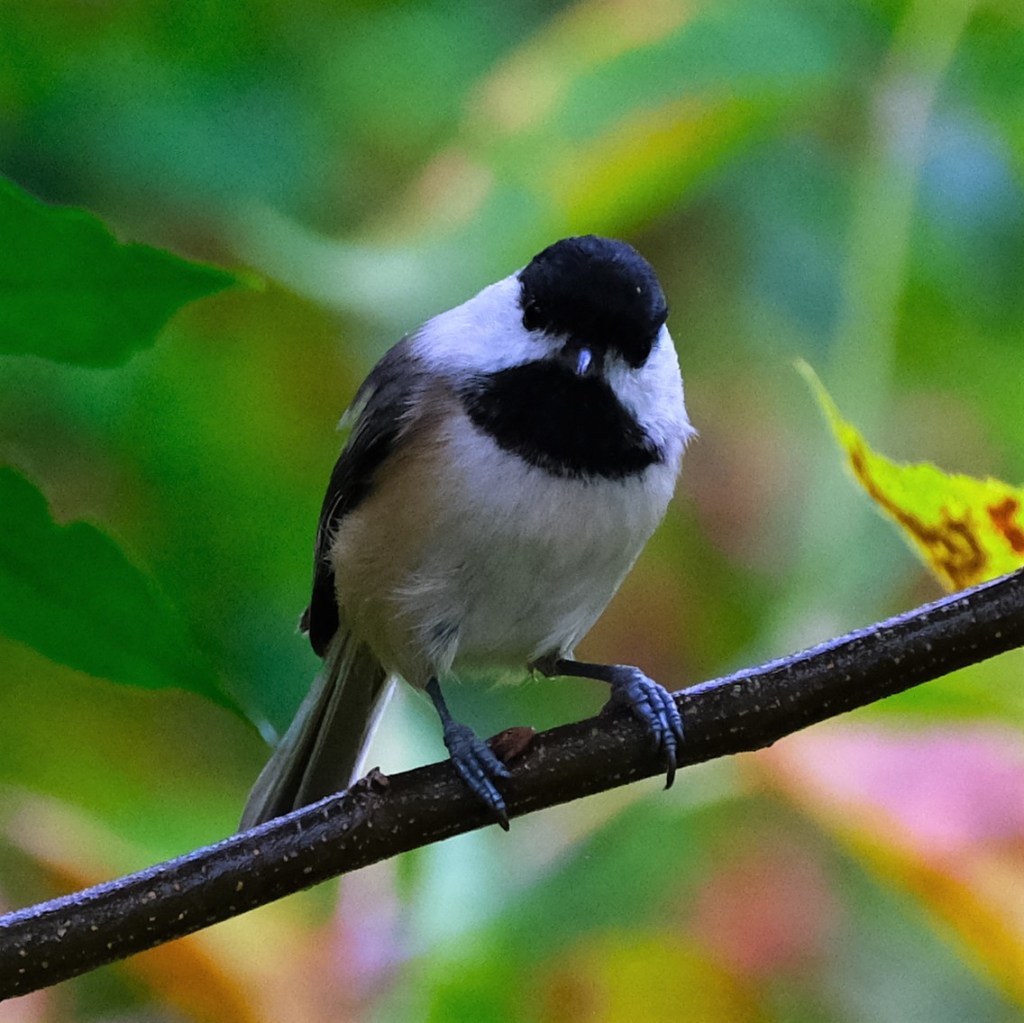
The chickadees are still mining the cutleaf coneflower, and here’s one working on a seed it has carried way and wedged between its foot and the branch.
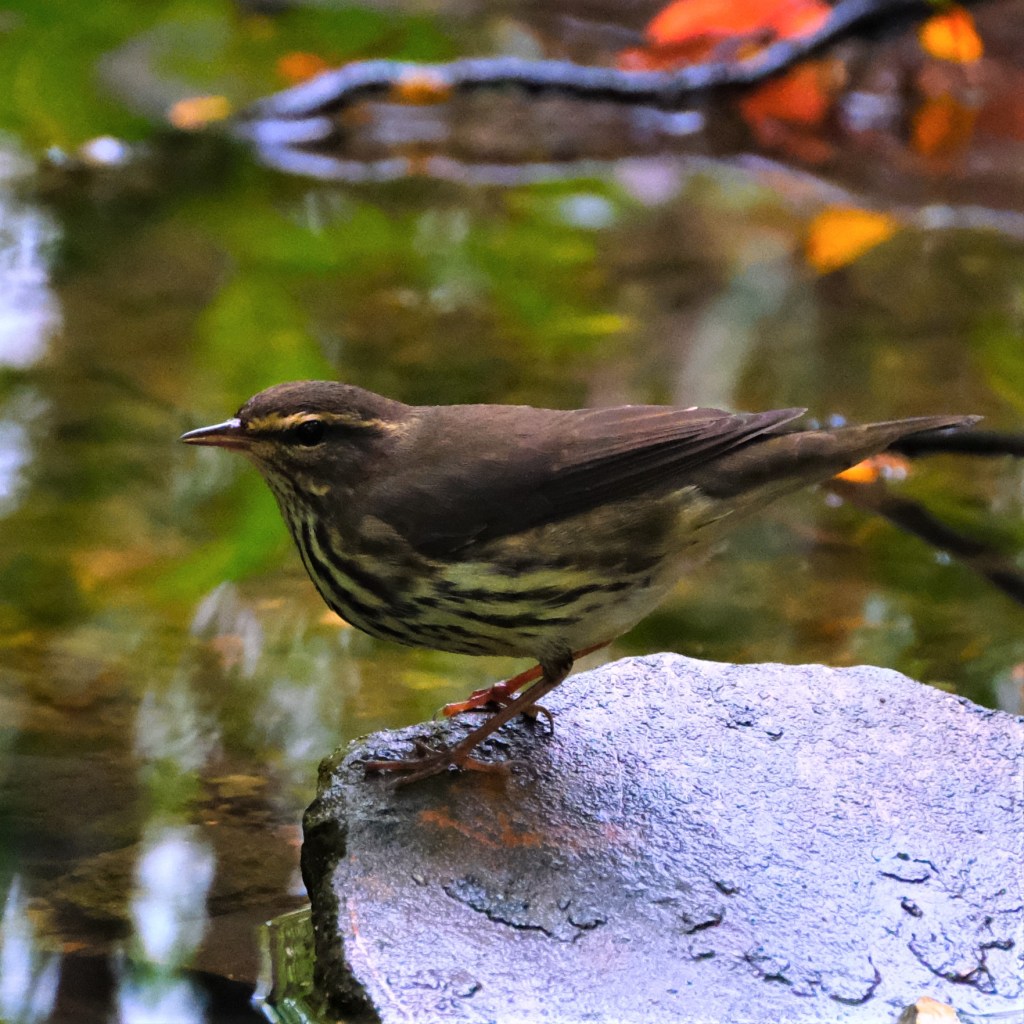
A stayed along the river to avoid the farmers market crowds and meet this dashing little waterthrush instead.
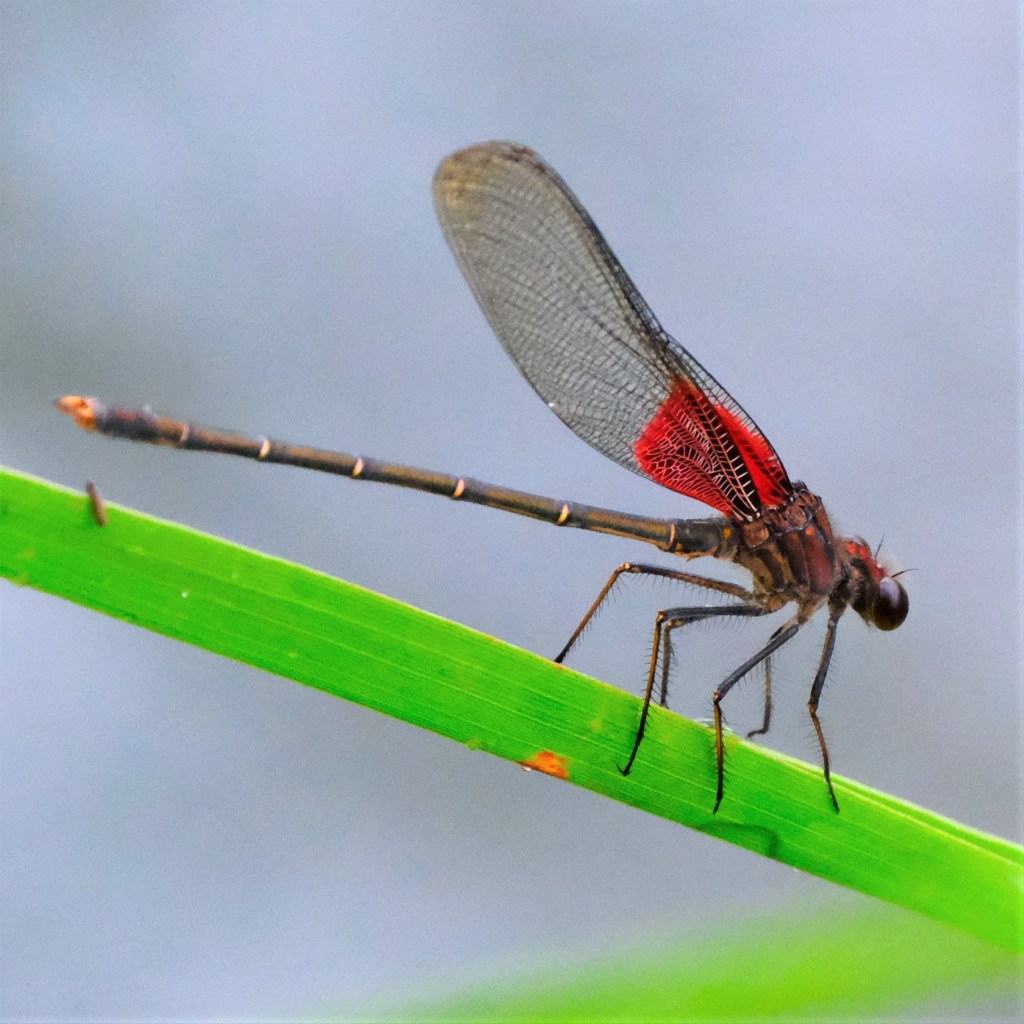
Finally, right behind the waterthrush, there were still damselfies clinging to the long blades of grass bending over the river, and as best as I can tell, this one is a male American rubyspot (Hetaerina americana)
Lastly, I keep forgetting to include this picture of what might be the last monarch butterfly of the season, which I took Saturday afternoon after whining about not finding monarchs any more.
Between the dark skies and falling rain, it was a short trip this morning. I glanced at the pond, didn’t see anything new, and kept right on truckin’ to the river at the north end. There, I did see a youngish blue heron again, but this time it scratched an itch instead of caught a fish.
While I was trying to line up a shot of the killdeer again, I saw a kingfisher fly north over the river, quieter and slower than usual, and then swoop up to its usual spot in the tall trees on the island. Just as I turned back to the killdeer, the kingfisher started squawking like mad, made an instant u-turn and fled for its life from a little raptor that had been waiting for it in that tree.
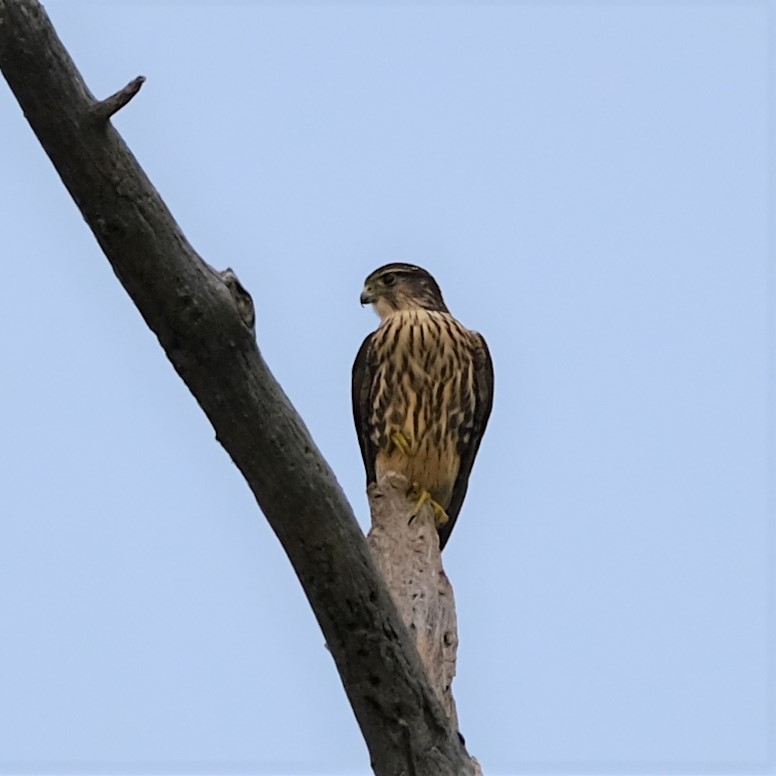
Well, the kingfisher managed to get away, and the raptor returned to the tree top so we could get a good look at it. It sure looks like a merlin, which we saw back in January and again in March, not the young peregrine falcon, whose parent, perhaps, we last saw on the TV tower back in July. Love to see it. Welcome back to Estabrook!
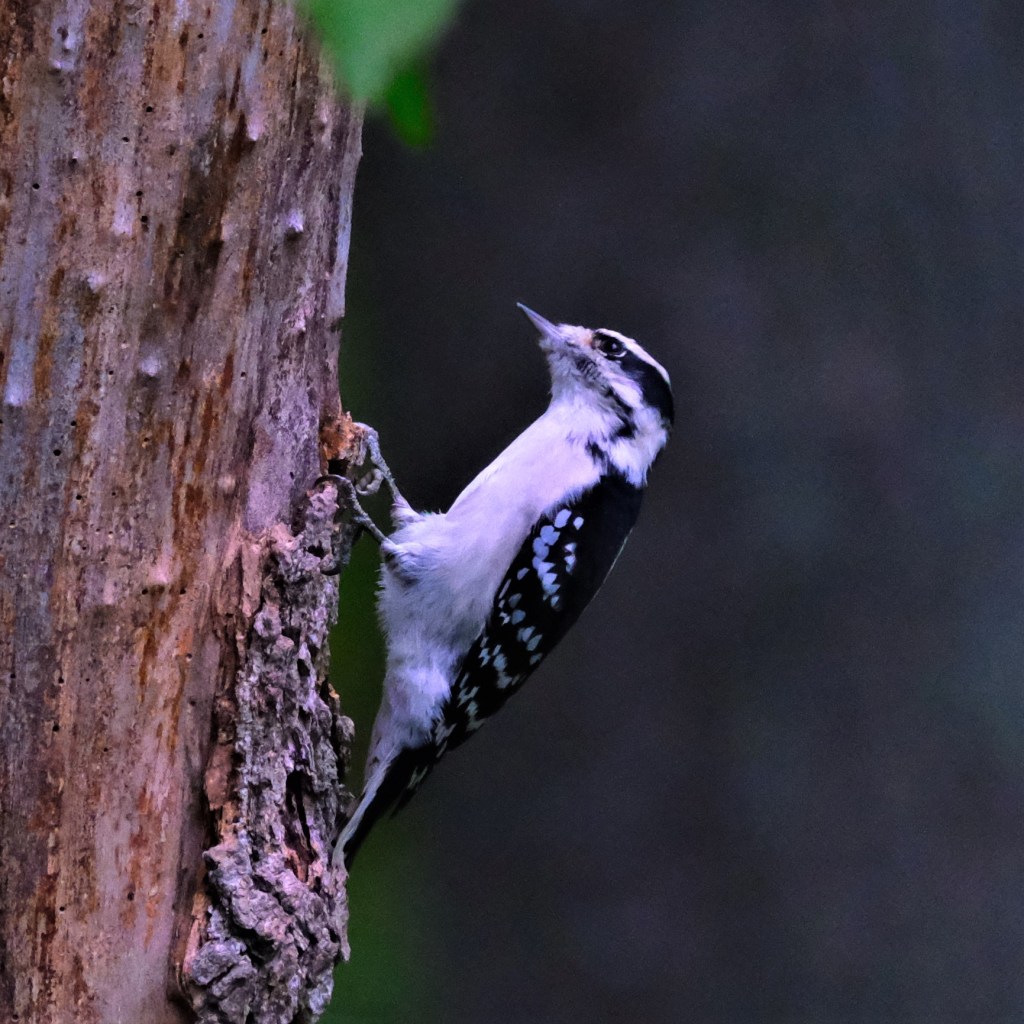
At the same spot, a female downy woodpecker was busy foraging for breakfast.
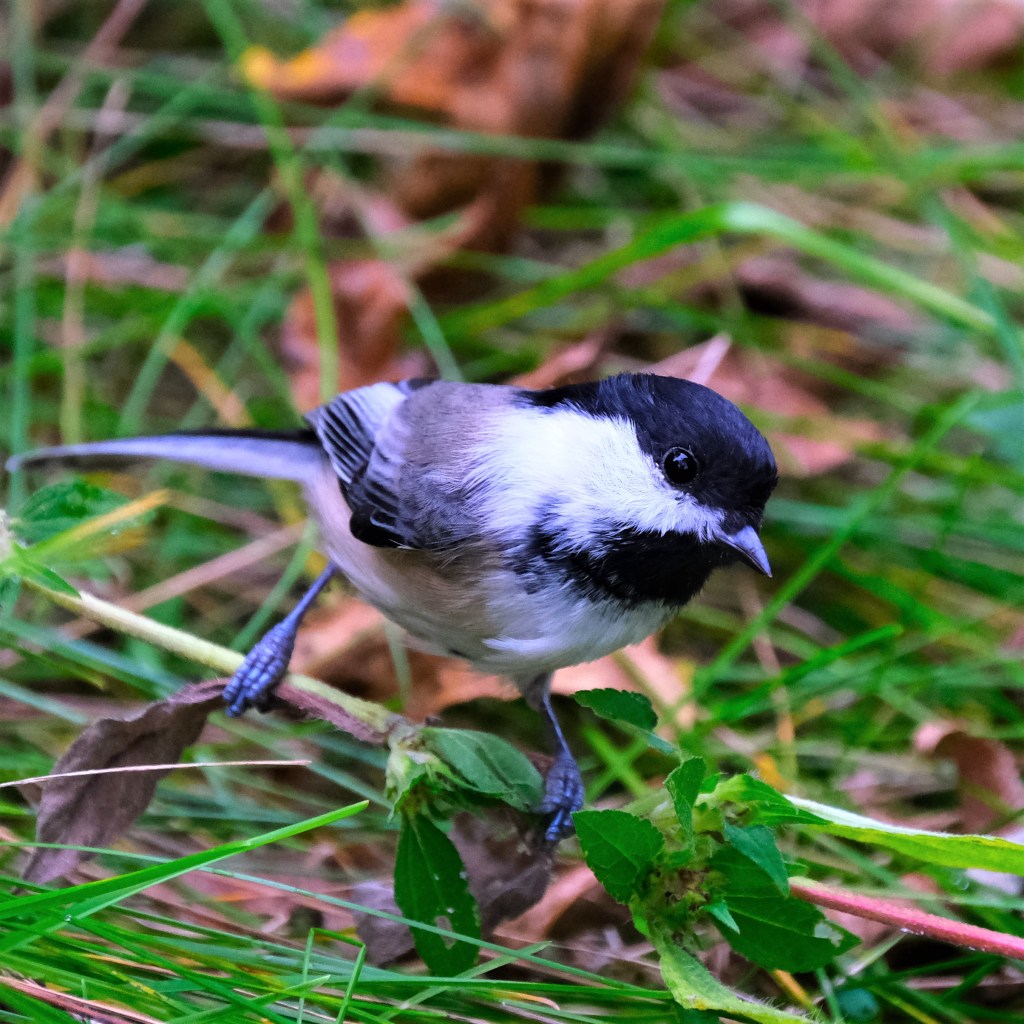
By the stream that comes down from the pond, the chickadees were hard at work on the cutleaf coneflower again.
This one almost seems to be saying, “take a picture. It’ll last longer.” Ouch!
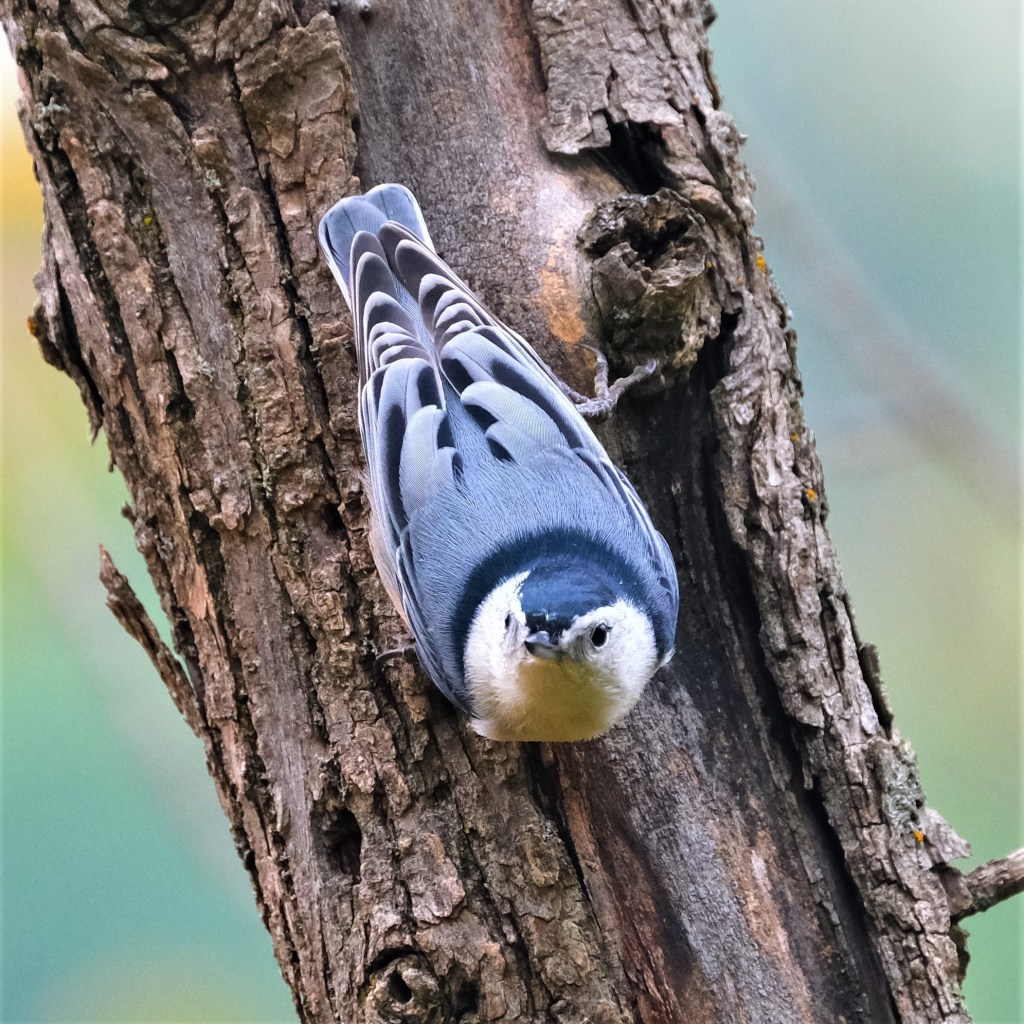
Finally, as I walked along the parkway to get home, I could here several nuthatches, and when I looked, I found four of them foraging noisily together right beside the walkway.
“What the chickadee said.”
Lastly, I gotta go setup for the Fish and Feather Festival in Hubbard Park, so I apologize in advance for the inevitable typos. Now the forecast is for less than a 25% chance of rain until 3pm, so I have a hope of staying dry, and I’d love to see you there.
Wowza! That high pressure system parked over Michigan just keeps delivering the hits. What a morning it was in Estabrook, and if I were to ask for perfect weather, I don’t know what I would change.
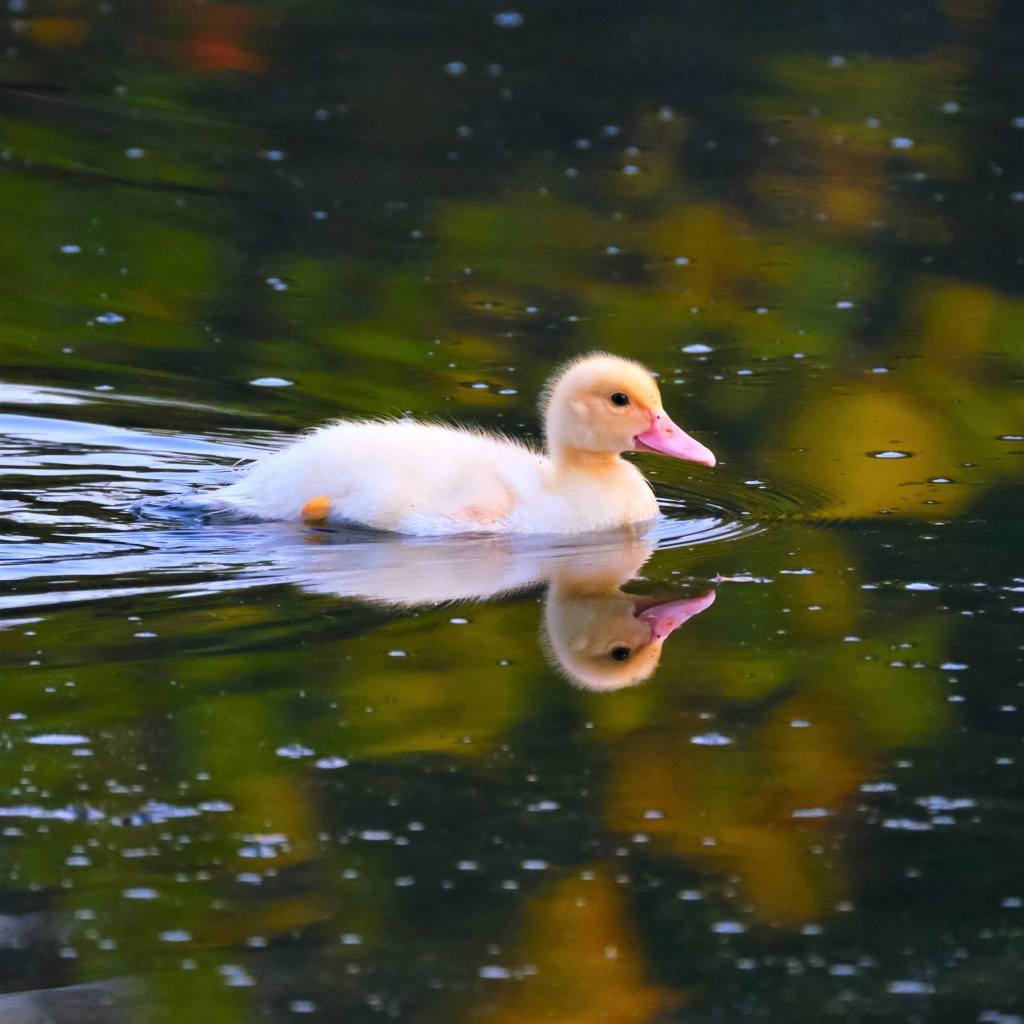
Life on the pond continues with the new normal: a slew of wood ducks, one bright yellow duckling, and no herons, grebes, or mergansers.
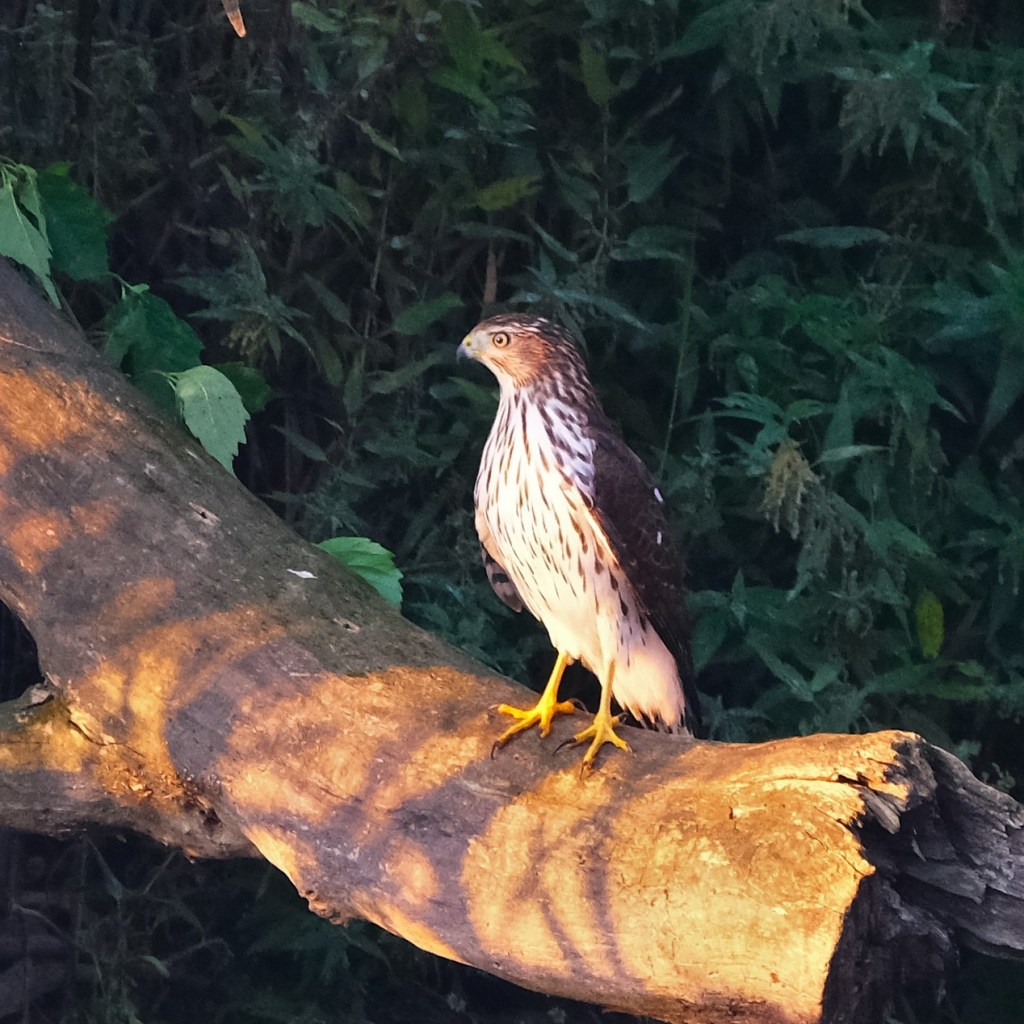
The first sight to greet me at the river was this handsome red-tailed hawkCooper’s hawk on a big log jutting out just over the water, and maybe it had been getting something to drink as I walked up.
Well, there were three or four of them back in the same spot today, and here is a male and female together,
Just a male,
And just a female.
A bit further on shore was another white-throated sparrow, and this one seemed to say, “that’s enough with the grey rocks, mud, and dead grass, already. How about including some pretty foliage in the background for a change? It’s autumn for crying out loud!”
Meanwhile, out on the water, a youngish-looking great blue heron had bigger fish to fry.
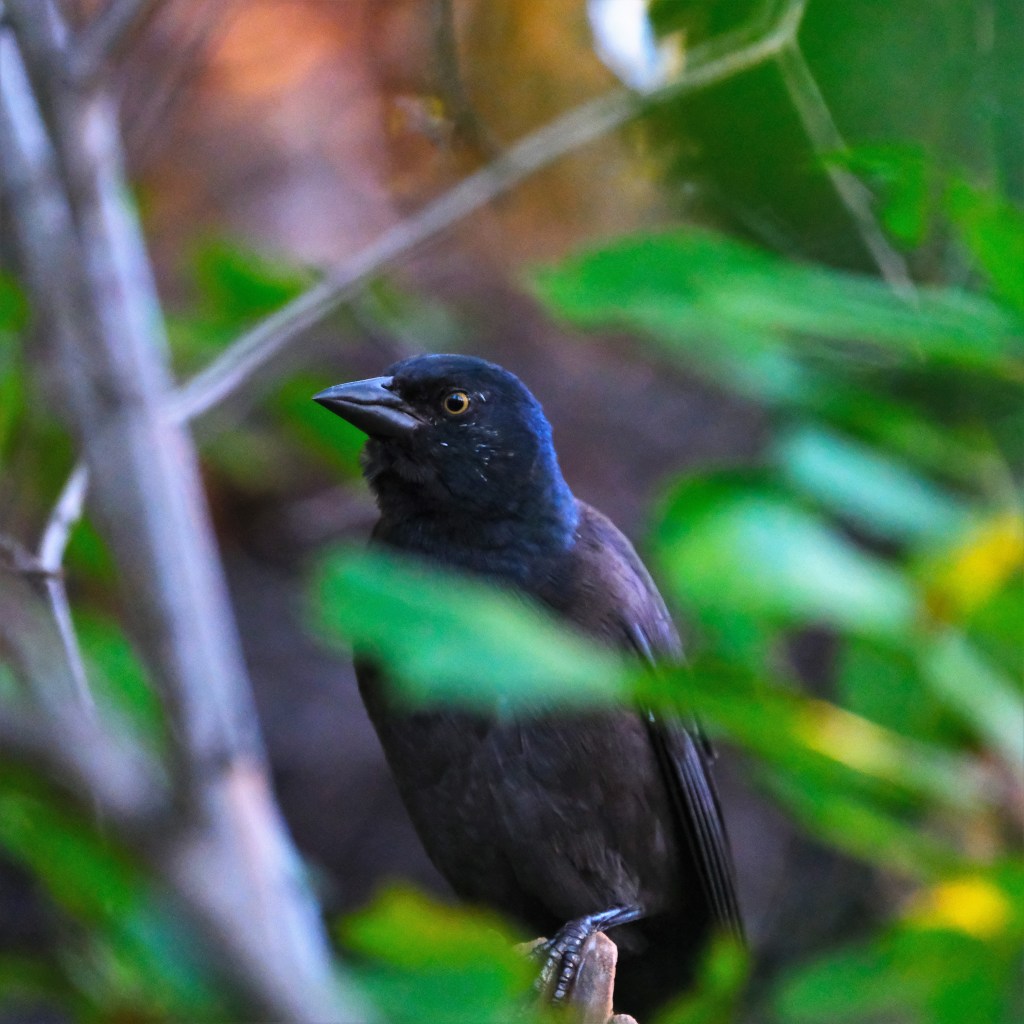
On my way south, there were a group of grackles foraging in the woods above the trail, and this one somehow didn’t notice that I was taking its picture.
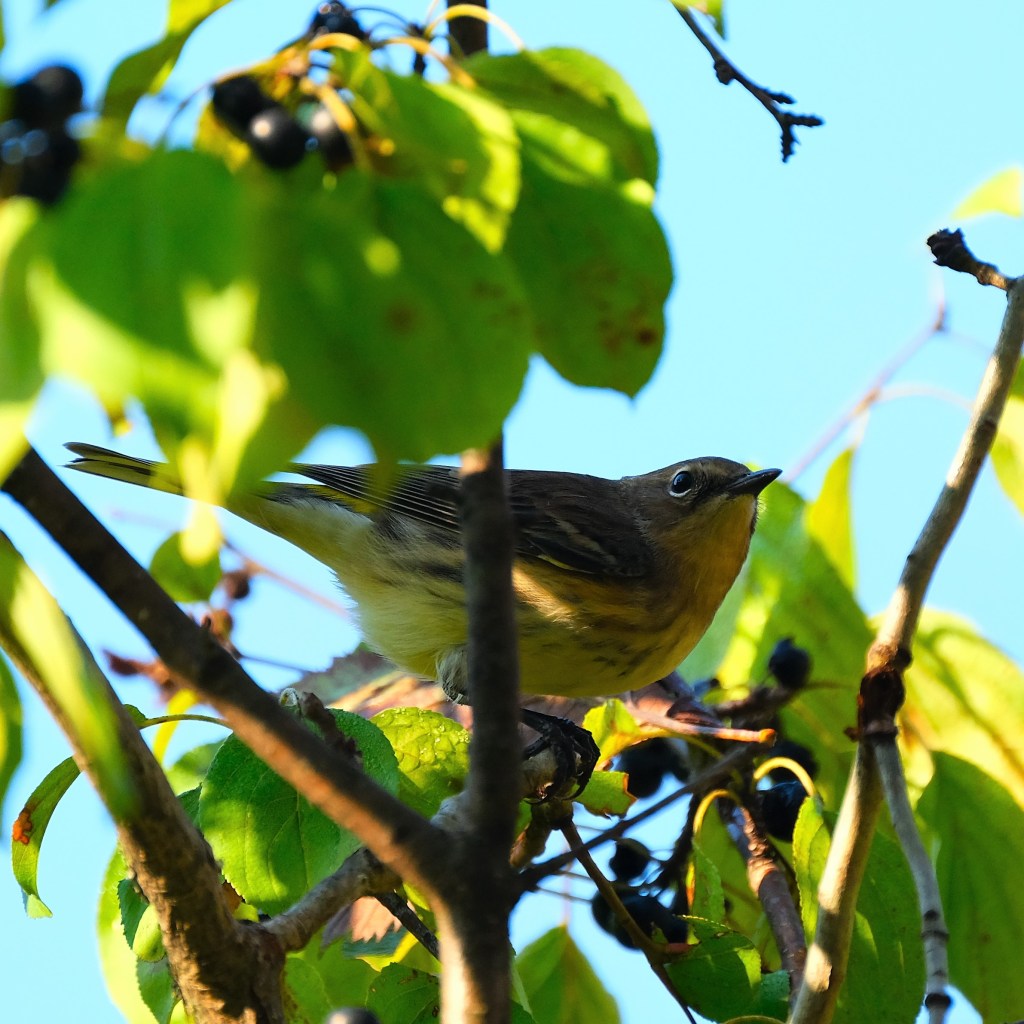
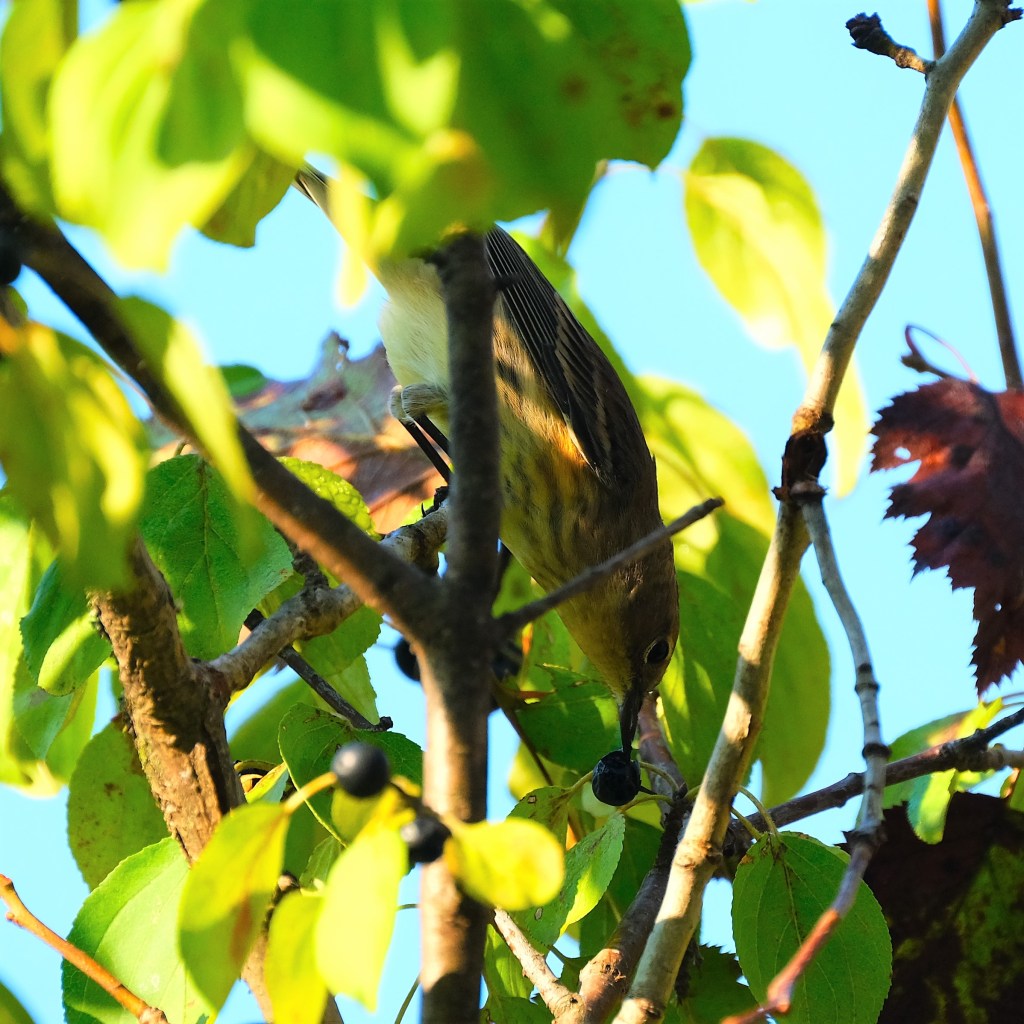
I had begun to think that we had seen our last warbler, not counting the waterthrush, of course, but look who I saw sampling the buckthorn berries just south of the falls. You can just make out the tell-tail yellow patch on its lower back that makes it a yellow-rumped warbler.
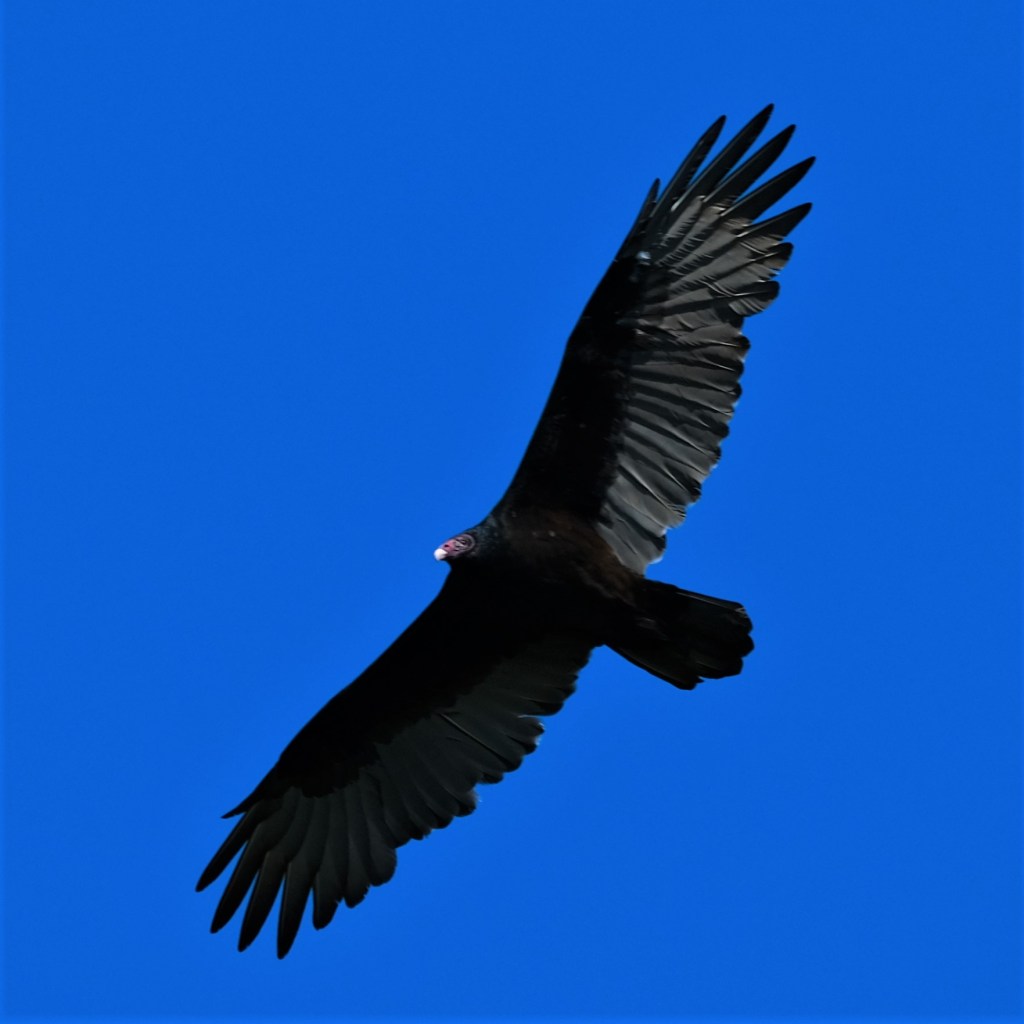
Finally, when I went out looking for butterflies Wednesday afternoon, I didn’t come home completely empty handed. Here’s a turkey vulture who was circling over the meadow by the river at the north end.
Lastly, when nature only gives us cabbage whites and sulphurs, I guess I’d better take pictures of cabbage whites and sulphurs, eh? Well, in that case, here’s a sulphur from this morning sipping nectar from the pretty little light-purple asters beside the Oak Leaf Trail.
PS. The hourly forecast for the Shorewood Fish & Feather Festival tomorrow is now “mostly cloudy” from 11-12, so if you’re planning on stopping by to say “hi”, and I sure hope you do, you might want to come earlier rather than later, but I’ll be there rain or shine.