A real mystery in Mostar…

As I mentioned yesterday, today we drove into Bosnia and Herzegovina to visit historic Mostar and see its famous 16th-century Ottoman bridge over the Neretva River. It “was commissioned by Suleiman the Magnificent in 1557,” destroyed in 1993 by shelling during the Croat–Bosniak War, and reconstructed “with Ottoman construction techniques” from 2001 to 2004.

We found the bridge quite impressive, and after I crossed it, I was able to get a closer look at the black birds I had been watching soar over the city. I first thought they were crows, but the only crows there are supposed to be hooded, and these didn’t have the light band across the breast and back of hooded crows. Then I thought they were jackdaws, but I couldn’t make out the band of light grey that jackdaws have around their cheeks, nape and neck.

Thus, I was forced to dig out some of the glass I was carrying in my backpack. My first glance with the binoculars revealed that they had bright yellow beaks. “What the heck? Are they some kind of myna bird that I haven’t heard of yet?” At that point, I had to get out my camera and long lens for a better look.

At first, they kept their distance, and I wasn’t even sure I would be able to use the pictures I could get for a positive identification. But finally, one relented and perched on the facade of a building nearby. It really did look like a smallish crow with a bright yellow beak.

DSCF7165

Then, it went after what it came for, and I was impressed to see such a big bird cling to an old masonry wall with just its claws, as a woodpecker does to a tree trunk.

DSCF7167

Next, it actually dug a bit of aggregate out of the old mortar with its beak. Ha! I did not see that coming.

DSCF7168

With that “morsel” in its gullet, it moved to another spot and dug out another nugget. Wild! How’s that for a building maintenance headache?

DSCF7173

Anyway, once I got to the restaurant that Anne and the others had chosen for lunch, I was able to jump on their wifi and discover that there is such a bird as the alpine chough, aka yellow-billed chough (Pyrrhocorax graculus). I read that it is pronounced “chuff”, they are in the crow family, along with jays and magpies, they “breed in high mountains from Spain eastwards through southern Europe and North Africa to Central Asia and Nepal, and [they] may nest at a higher altitude than any other bird.” In fact, they have been observed nesting as high as 6,500 m (21,300 ft), and their eggs are viable at this altitude because they “have fewer pores than those of lowland species, reducing loss of water by evaporation at the low atmospheric pressure.”

Oddly enough, Mostar has an elevation of only 60 m (200 ft), though we did drive over some mountains to get there, and Bosnia and Herzegovina has a maximum elevation of 2,306 m (7566 ft), so I feel pretty lucky to have gotten to see them at all. What a treat!

Critters of Dubrovnik

After the dunnock got me all excited yesterday, we drove farther up the coast to the picturesque little old port town of Dubrovnik in Croatia. Anne and I had been here before, so after a quick stroll and lunch, I excused myself from the group to go visit a nearby park, while they endeavored to hike the town perimeter atop the city walls.

I was still just getting my bearings, and I hadn’t even gotten my camera out, when this gorgeous creature, a red admiral, landed right in front of me to soak up some of that sun we all haven’t seen in a while. Thankfully, it was in no hurry, and it waited patiently while I got all the pieces out of their respective padded bags and assembled in time to capture this sight. Sure, it’s a little roughed up, but it’s a butterfly in January, and we’re farther north than Chicago! We could see snow on some of the peaks we drove by today!

DSCF7114

For reasons I don’t understand yet, the black redstarts were thick here, and here’s another male sporting his dashing little black mask and playing coy with me.

DSCF7116

Meanwhile, here’s a female, letting me get a nice portrait, but with an expression on her face that seems to ask, “what am I, chopped liver?”

DSCF7119

Here’s a female Eurasian blackbird who also has a look on her face and appears to be wondering “doesn’t she look fancy enough for you?”

DSCF7137

I was relieved to find this yellow-legged gull with a pretty blank expression on its face.

DSCF7129

Finally, before I could get back to the group, one more female black redstart really gave me a good stare, as if to say “seriously, dude, what’s wrong with you?”

DSCF7144

Anyway, we’re off to an early start this morning to go see that old bridge in Mostar, so I’m not sure if and when I’ll get any more pictures for you, but who knows, right?

More little birds of Budva…

Sorry about not posting yesterday. I did go out, but the winds in Budva were 20 mph and gusting to 40! The only picture I managed to get is a bad one of a chaffinch. Happily, the winds had subsided a bit by this morning and were only gusting to 20, plus there were no clouds in the sky, so I had much better luck today.

Here’s a gray wagtail, and it might even be the same one I saw in the river with the white wagtail on Sunday, but I can’t say for sure. It sure was about as jumpy, though.

DSCF7067

This might also be the same European robin that I showed you then, but I had more light this morning, so I like this picture better.

DSCF7074

Here’s my best image yet of a male western black redstart, and it finally shows the black mask they can have.

DSCF7075

Here’s my first Eurasian wren of this trip, who really, really didn’t want to be in any pictures.

DSCF7103

Finally, I didn’t recognize this last bird, and I was all excited by the possibility of it being a new species for us, but it turns out to be a dunnock, whom we have seen before in South Holland, but whom I never got to see as clearly as this.

DSCF7100

Some Birds of Budva, Montenegro

We drove up the Adriatic coast from Shkodër, Albania to the picture-postcard town sea-side of Budva, Montenegro yesterday, and I set out early this morning to see who I could see. There hasn’t been much sun yet this trip, and today definitely did not break that trend.

One of the first birds I spotted, way before there was enough light for my camera, was this bold, curious, or oblivious European robin, who posed nice and still for me. “Good morning, Cutie!”

DSCF6965

There were a bunch of common chaffinches foraging in a lawn, and they were far too busy to stand still for a second, but I must have lucked out and caught this one right between hops.

DSCF6979

I got all excited when I saw this black-and-white mystery bird, which I was sure I had never seen before. Things got even more exciting when google image search suggested that it was a Nilgiri flycatcher, which has “a very restricted range in the hills of southern India,” or a White-sided Flowerpiercer, which is found only in the Andes of South America. In reality, however, it has turned out just to be the first black redstart of the western male persuasion that I’ve seen. Thus, it appears that all the black redstarts I’ve seen so far have been female. Oh well. Live and learn, eh?

DSCF6966

Speaking of female black redstarts, look who gave me one of the nicest poses yet. “Thanks, Sweetie!”

DSCF6988

Finally, there’s a little stream that runs through town, and I found both a grey wagtail, which we just saw in Vienna, and the first white wagtail of the trip.

DSCF6998

Tomorrow is forecast to be just as cloudy as today, but at least the precipitation should wrap up before dawn, and we’re getting a late start to sight-seeing, so I hope to get another crack at this. Wish me luck!

Pershendetje from Shkodër, Albania!

After Vienna, my next opportunity to take pictures of the local fauna came this morning in Shkodër, “the fifth-most-populous city” of Albania. The sky was dark and rainy this morning, but the air was a heck of a lot warmer than in Estabrook Park, or so I hear, and the Ebu Beker Mosque, across the street from our hotel, is surrounded by nice, garden-like grounds.

My first treat of the morning was getting my best picture yet of a black redstart (Phoenicurus ochruros), which we first saw last summer in Vilnius. You can really see its red “start”, and its behavior reminded me of the bluebirds I see in Estabrook Park: perching in a tree to look for morsels to eat and then swooping down to the ground to grab them.

DSCF6929

The Eurasian blackcaps (Sylvia atricapilla), which we already saw in Delft three summers ago, were a lot more shy, and that’s just how I remember them.

DSCF6948

Finally the trees were full of Eurasian collared-doves (Streptopelia decaocto), which we first saw on the outskirts of Delft three autumns ago, and here are a pair squinching their heads down so that you can just barely make out their black collars.

DSCF6935

The Albania leg of our trip, combined with the weather, didn’t leave a lot of time for taking pictures, but I did get to see my first ever Dalmatian pelicans (Pelecanus crispus) soaring over Rozafa Castle from Lake Shkodër yesterday. Now we are in Budva, Montenegro, on the Adriatic coast for a couple of days, and if the weather cooperates, I should have many more opportunities. I’ll keep you posted.

Greetings from Wien!

We made is safely to Austria and took a train into town during our layover. After lunch, when our group broke up to visit various museums, I slipped away to visit Wiener Stadtpark, were I found all kinds of pretty birds.

Here’s an elusive Eurasian blue tit, who just wouldn’t let me get a clear shot.

DSCF6821

Here’s a great tit, who wasn’t much more obliging.

DSCF6888

There’s a small river, the Wienfluss, that flows right beside the park through town, and here’s a our very first gray wagtail (Motacilla cinerea), who was foraging and wagging its tail along the water’s edge.

DSCF6841

There were several Eurasian blackbirds lurking in the bushes, but this one was quite bold and stuck all sorts of interesting poses between picking berries.

DSCF6851

There’s a little pond in the park, similar in size and even shape to the pond in Estabrook Park, and here’s a gray heron perched atop an ornamental tree beside the pond to avoid the fray of park goers feeding mallards and gulls on the water below.

DSCF6871

Here’s one of the gulls, a diminutive black-headed gull, in its non-breeding plumage and holding its own in that fray.

DSCF6875

Finally, here’s a great cormorant also perched above the pond.

DSCF6912

If everything goes right, my next post should be from Montenegro, so wish me luck!

Travel Day Number 2

As I mentioned yesterday, Anne and I are off to the Balkans, and she got us a nice long layover in Vienna along the way, but I probably won’t have an opportunity to write a post again today, so let me show you a few more critters that I have a hope of seeing on this trip.

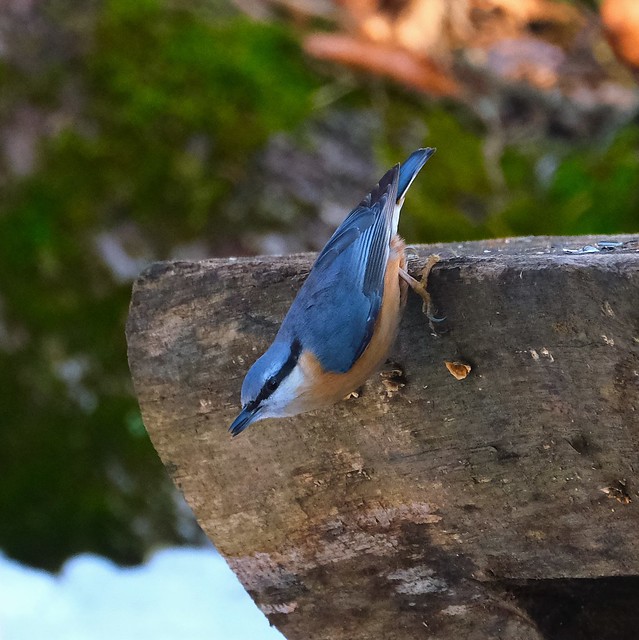
They have nuthatches there, and they look a bit like our red-breasted nuthatches, but they call them “Eurasian nuthatches” instead.

Eurasian nuthatch

They also have treecreepers, who receive the same treatment.

Eurasian treecreeper

And they have siskins, who are a bit more colorful than ours.

Eurasian siskin

Finally, on the water, they have shelducks, which we do get to see in Wisconsin, but only about as often as we get to see wagtails.

Common shelducks

With any luck, we’ll finally arrive at a hotel with wifi tomorrow, so I have a hope of showing you what I’ve found so far. Wish me luck!

Travel Day Number 1

As I mentioned yesterday, Anne and I are off to the Balkans today. I do have time for a quick visit to Estabrook this morning before we go, but I probably won’t have time to write up what I found, so let me give you a little taste of some of the critters I can hope to see on the trip.

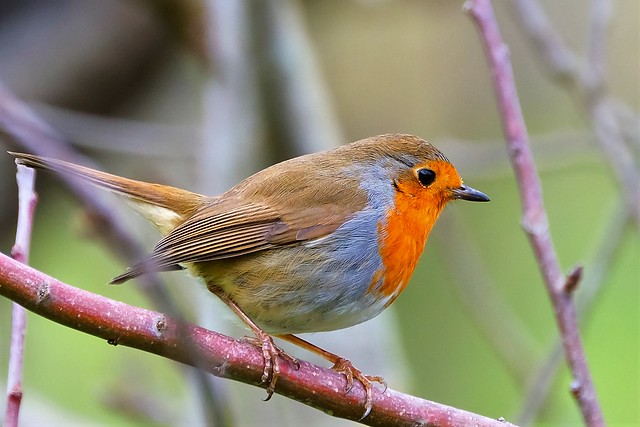
They have robins there, the original “robin”, in fact, but they are not closely related to the ones we have here, not even in the same family, and sized and shaped a lot more like the warblers we have here, so we call them “European robins” to avoid confusion.

European robin

They have wagtails, just like the rare visitor causing a stir up in Sturgeon Bay this winter, but not nearly as hard to find.

White wagtail

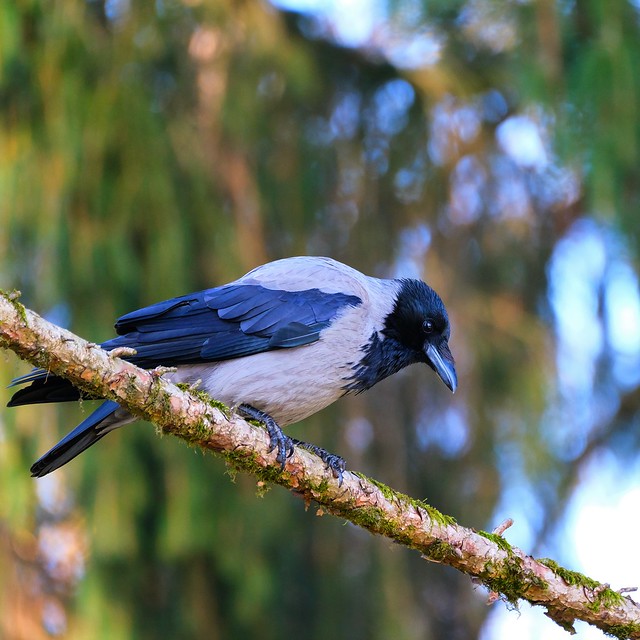
They have crows, of course, everyone does, but the type I most commonly saw were these “hooded crows“.

Hooded crow

And they have red squirrels, but theirs have quite a distinctive tuft on their ears.

Red squirrel

Oh, before I forget, I’ll be back in time to be showing pictures at the Friends of Estabrook Park Annual Meeting on Wednesday, January 22, starting at 7pm in the Blatz Pavilion at Lincoln Park, and “all members (current and prospective – bring your friends) are welcome,” so maybe I’ll see you there.

A pretty day after the storm…

It was colder than yesterday in Estabrook Park this morning, with temps in the mid-teens, but the breeze was much lighter, and the clouds were high, thin, and sparce, so the sun was able to take the edge off a bit. Plus, it wasn’t snowing.

The hermit thrush was back, but about 150 yards south of its spot yesterday, and I hear that they can range pretty far in their search for berries, so that tracks.

DSCF6694

At the north end, one pleasant surprise was finding this quintet of common merganser hens, and perhaps they felt some safety in numbers because they were less skittish than the singles or pairs I’ve been seeing so far this winter.

DSCF6744

The big surprise, however, was our first pair of common goldeneyes. Woo hoo! I’ve been waiting for weeks, and they are finally here.

DSCF6717

After that, I drifted on cloud nine all the way to the pond. There were dozens of house sparrows and house finches, seemingly all chirping at once, but as I searched in vain for a tree, white-throated, or fox sparrow, there was a sudden ruckus on the island, and most of the little birds bolted. The cause was this Cooper’s hawk, who came up empty, and retired to this perch over the near shore. As with the red-tailed hawks on Saturday, you can see, from its dark red eye and lushly barred orange breast, that it’s a mature bird, and I don’t doubt that it will find its breakfast soon enough.

DSCF6765

As I made my way back home along the river, I found the gray catbird just about where I left it yesterday. I can’t tell if it forgot to go south last fall or decided to come north early to get a jump on spring, but either way, I’m glad to see that it’s able to make things work, at least so far, and I sure hope its gamble pays off.

DSCF6778

Finally, as I approached the far south end, I was quite surprised to find a beaver up on the ice in this weather. As with the muskrat on Sunday, I thought they waited until a thaw to come out of their burrows to forage for fresh vegetables. At least they’d get fewer icicles on their whiskers that way.

DSCF6798

After finishing with that little stick in its paws, it must have had a hankerin’ for something more substantial, and here’s a fun video showing it standing up on its haunches to grab a nice big hunk of bark from that log over its right shoulder.

Here’s a still image, which shows how far it can reach, in case you’re not into video.

DSCF6805

Tomorrow, Anne and I head to the Balkans for a little sightseeing. I’ve had some luck there in the past, as you may remember from our trip to Slovenia, so I’ll try to post as I go, but I can’t make any promises.

Plenty to see, despite the snow…

It was warmer than the past few mornings in Estabrook Park today, with temps in the mid to high 20s, but the wind was really blowing at times, and bands of light snow kept drifting through, so I was thrilled when four intrepid nature enthusiasts joined me for our weekly wildlife walk.

Besides many of the regulars, we spotted a couple of tree sparrows and a white-throated sparrow at the pond and a common merganser hen at the river. When we got back to the parking lot, a couple of crows alerted us to a red-tailed hawk perched high and north of the pond, and I thought that would be a wrap, but three of the four wanted to keep going, so we headed south and toward the river again. That’s when the magic started.

I mentioned to the group that previous groups and I had seen a song sparrow in the grass beside the river from time to time, and this turned out to be one of those times. Even better, the elusive little cutie perched in the open right in front of us, and stayed there long enough for everyone to get a good look. “Thanks, sweetie!”

DSCF6597

We looked around a bit more in hopes of spotting a winter wren or the hermit thrush I’ve seen there, but didn’t have any luck, so we headed through the woods back up to the pond. On our way, I saw someone flash overhead and thought, from my brief glimpse, that it might be a woodpecker or a robin, but our luck held, and it parked just beyond the path to pick berries. There I could finally see that it was a hermit thrush instead, whom I haven’t seen since last year. “Welcome back, Cutie!”

DSCF6623

That brought our bird count up to 22 species, and by then everyone was ready to go home. Amazingly enough, the red-tailed hawk and the two crows that were trying to convince it to move on were right where we left them, so I headed towards them to see if I could get a picture. Well, four’s a crowd, I guess, and the hawk bugged out with two crows in tow, but it gave them the slip somehow. They continued south, and it came right back to the pond to pose for this picture. The dark red eyes and solid red tail feathers make me think it might be the one we’ve seen at the south end before.

DSCF6629

As I walked around the pond in hopes of an even better look, I stopped to enjoy the sight of this hairy woodpecker, who had eluded us earlier. Compare his formidable beak to the relatively diminutive one on the downy woodpecker I showed you yesterday. If I’m trying to decide if a bird I’m looking at is one or the other, I find comparing the beak to the head it is on to be a much better guide than simply trying to decide if I’m looking at the bigger bird or the smaller bird.

DSCF6641

By the time I was done with Hairy, the hawk had moved on, so I headed back to the river to make my way home. As I looked around to see if there was anyone else to see, look who I found peeking out of a tree and possibly wondering, “how many dang times is this guy gonna walk by today?!?”

DSCF6650

Finally, look who I found lurking in the bushes between the path and the river, our first grey catbird of the new year. “Hello, Darling!” We’ve seen them here in the winter a couple of times before, including just last year on almost the same day, but they’re supposed to be wintering someplace warmer for now, and the folks at ebird consider this a “rare” sighting. Yee haw!

DSCF6679

I’ll be away on Monday, the 13th, but I hope some of you’ll come out to see some of these amazing critters without me, and I’ll be back for Monday, the 20th. See you then!