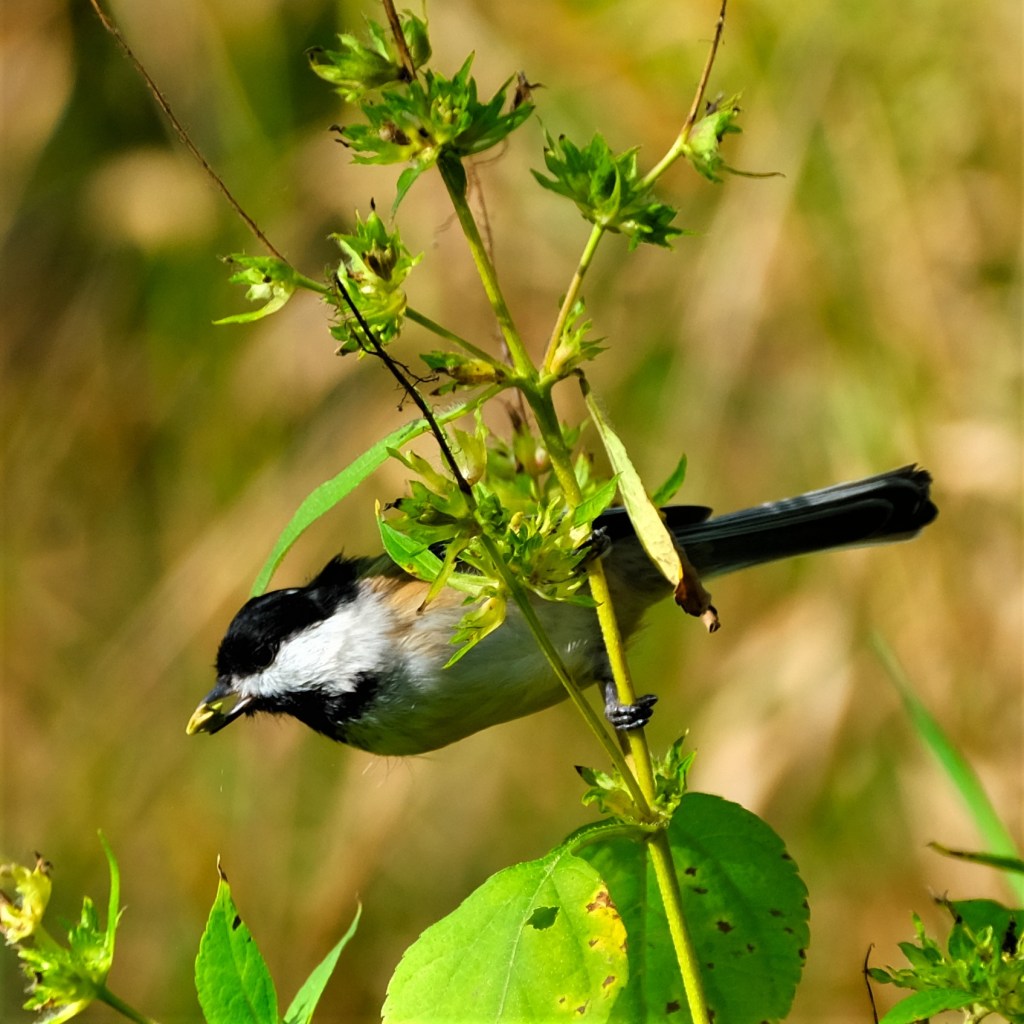
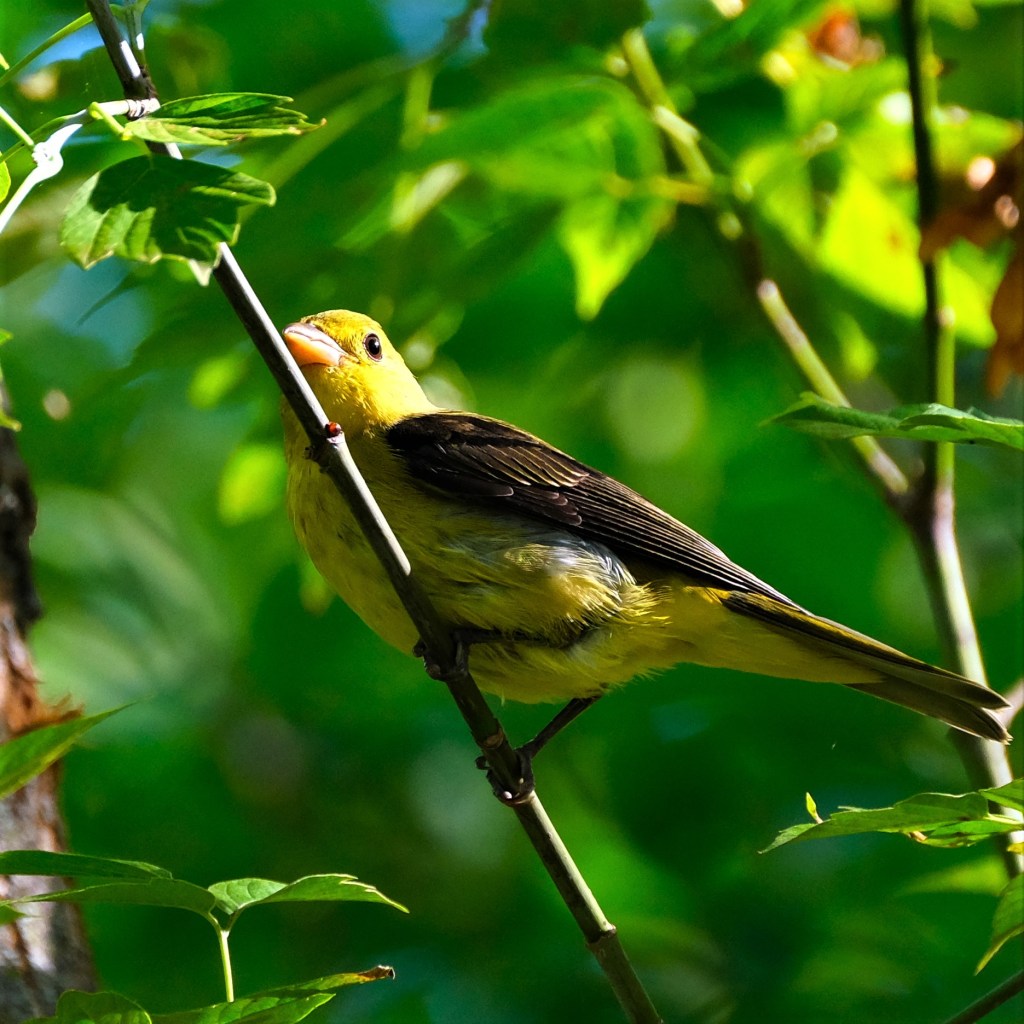
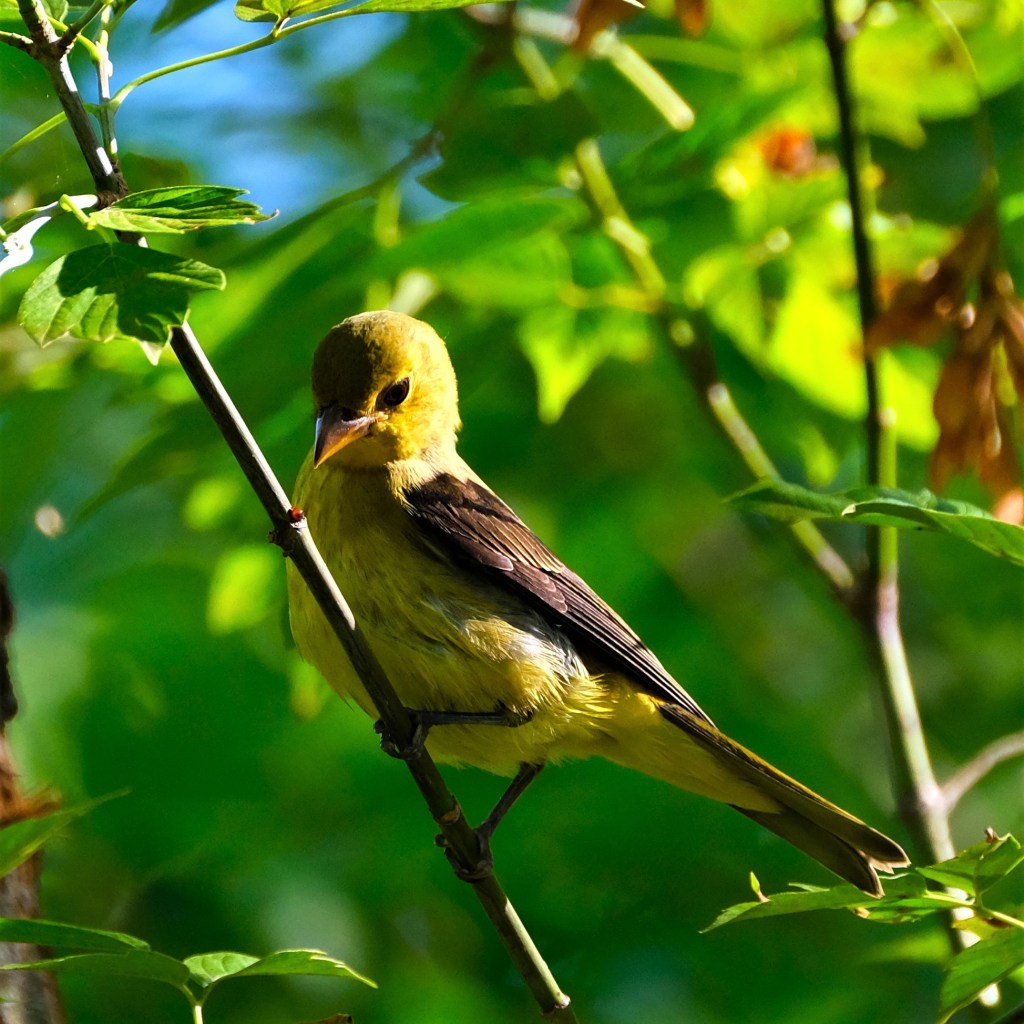
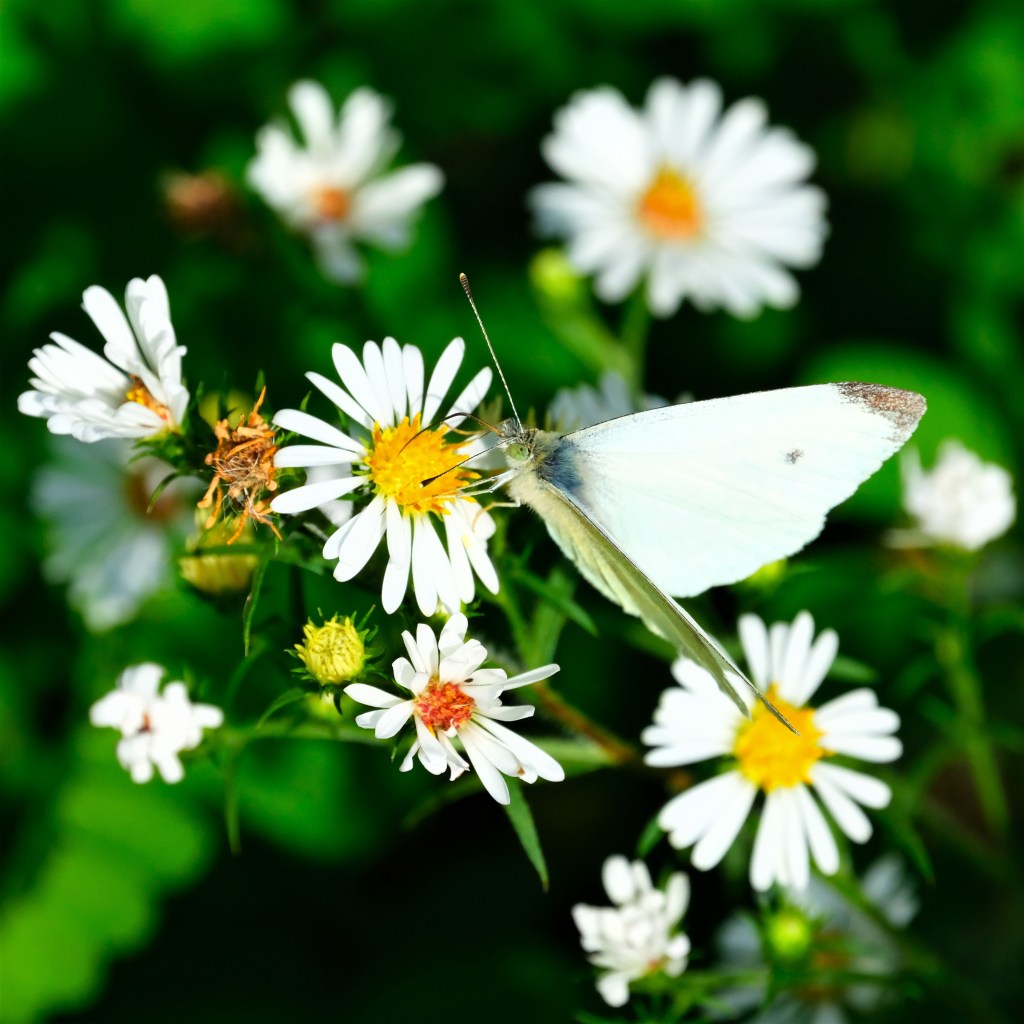
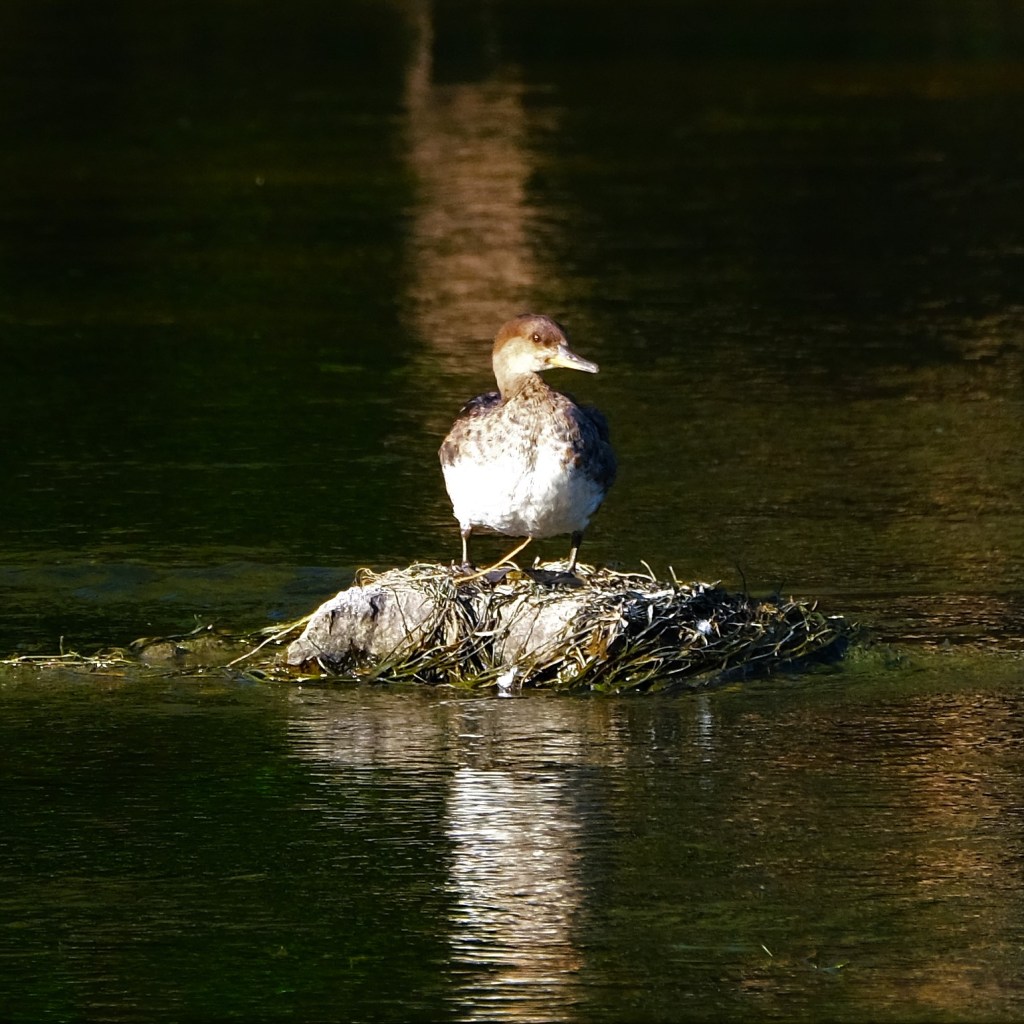
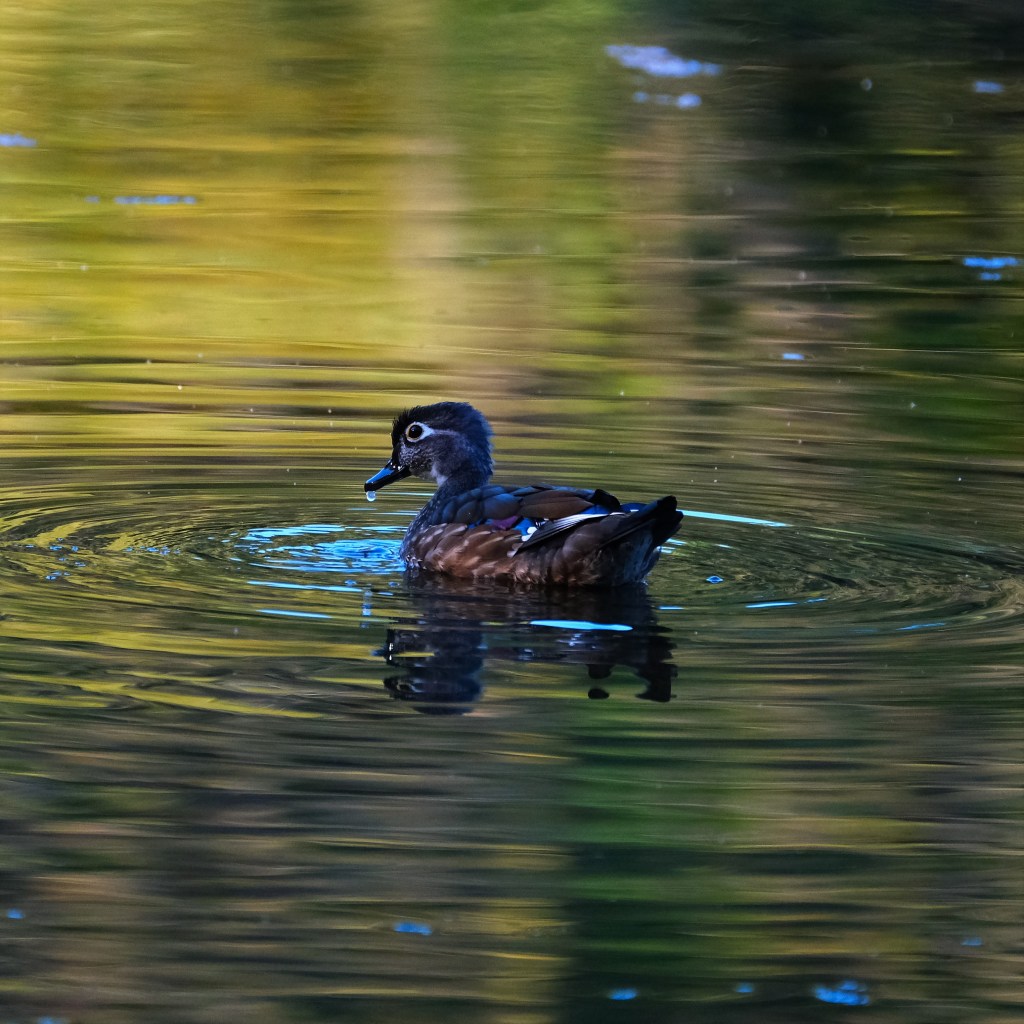
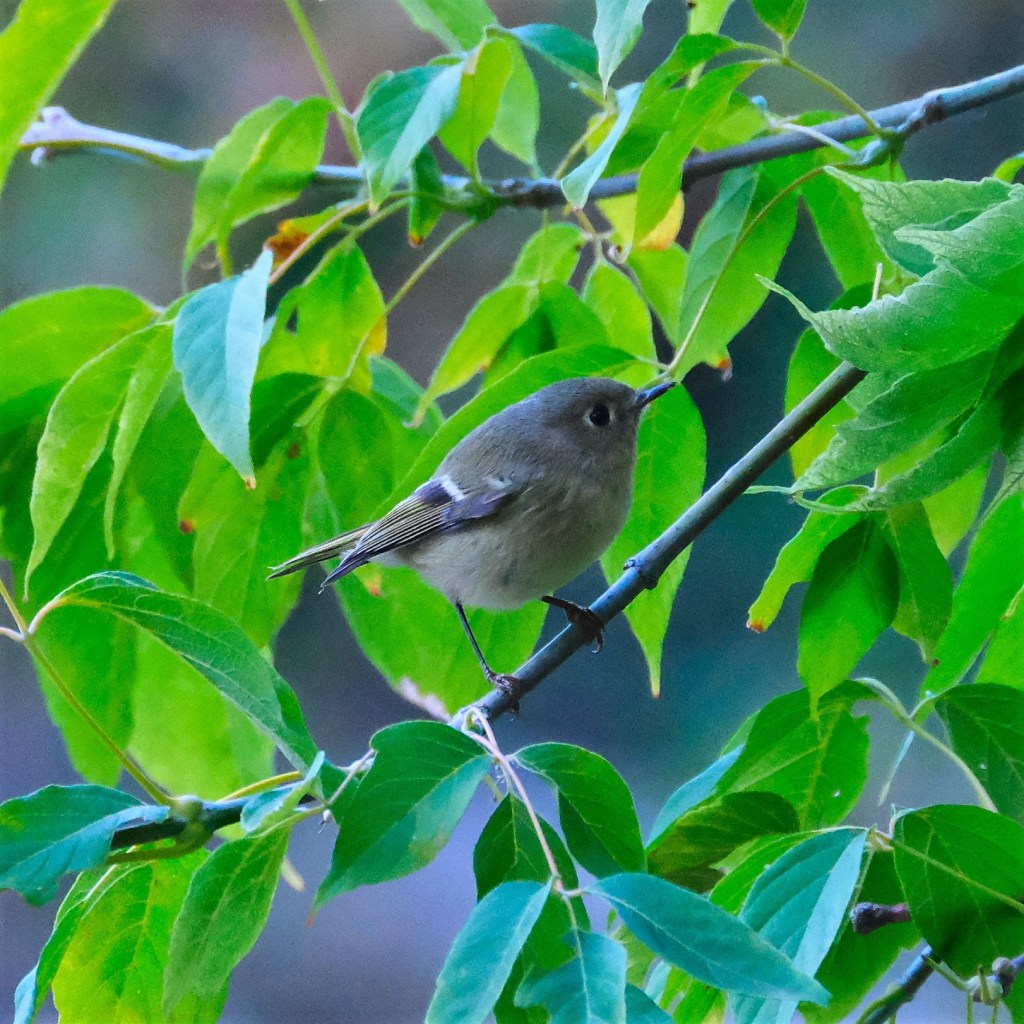
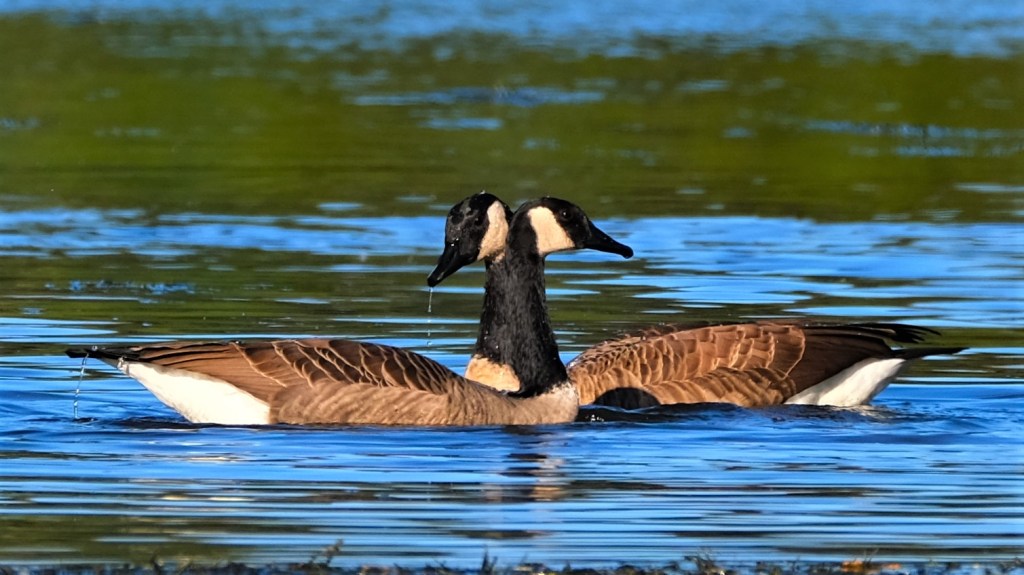
Everything but the kitchen sink…

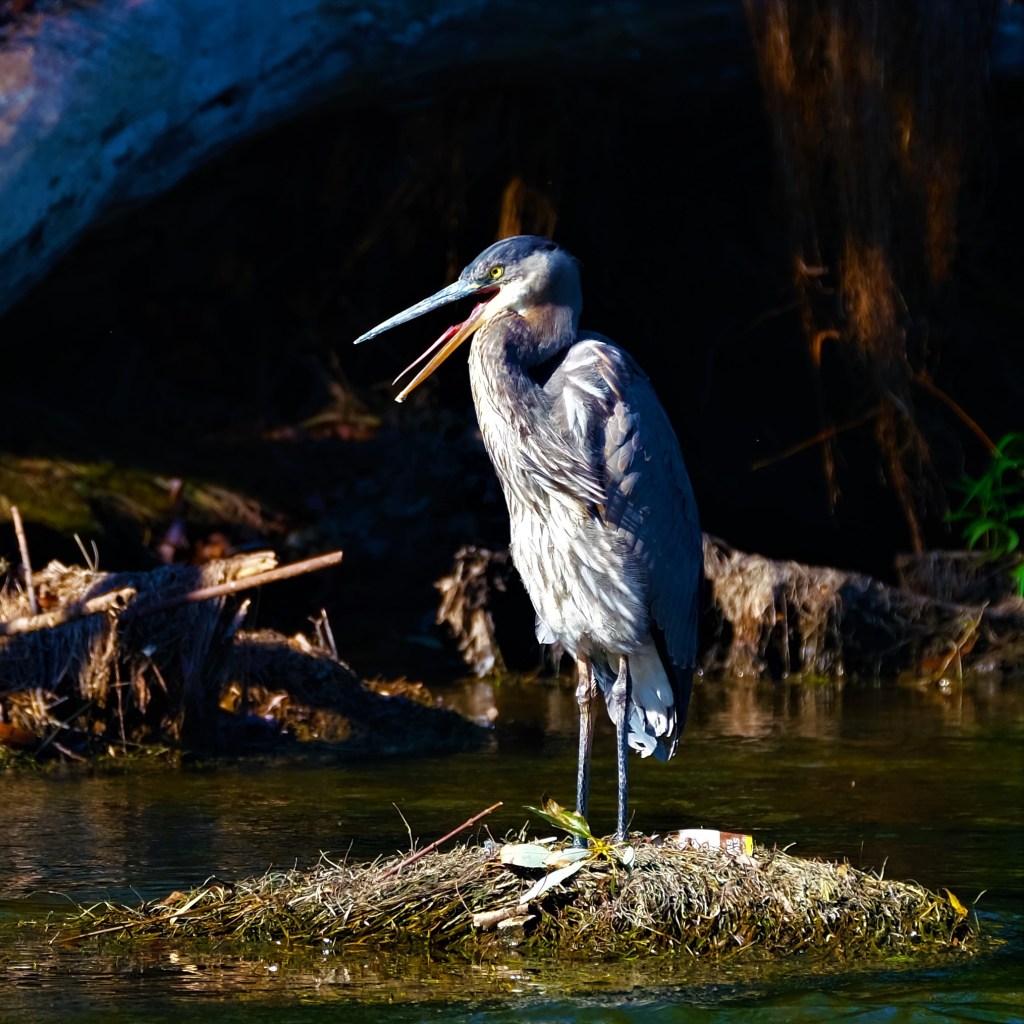
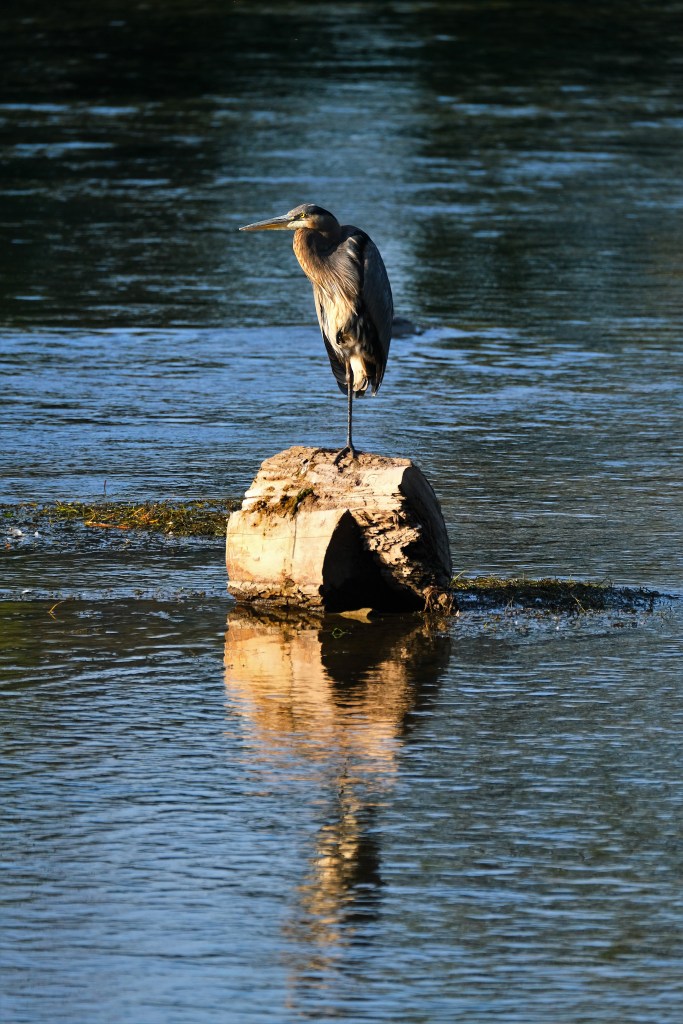
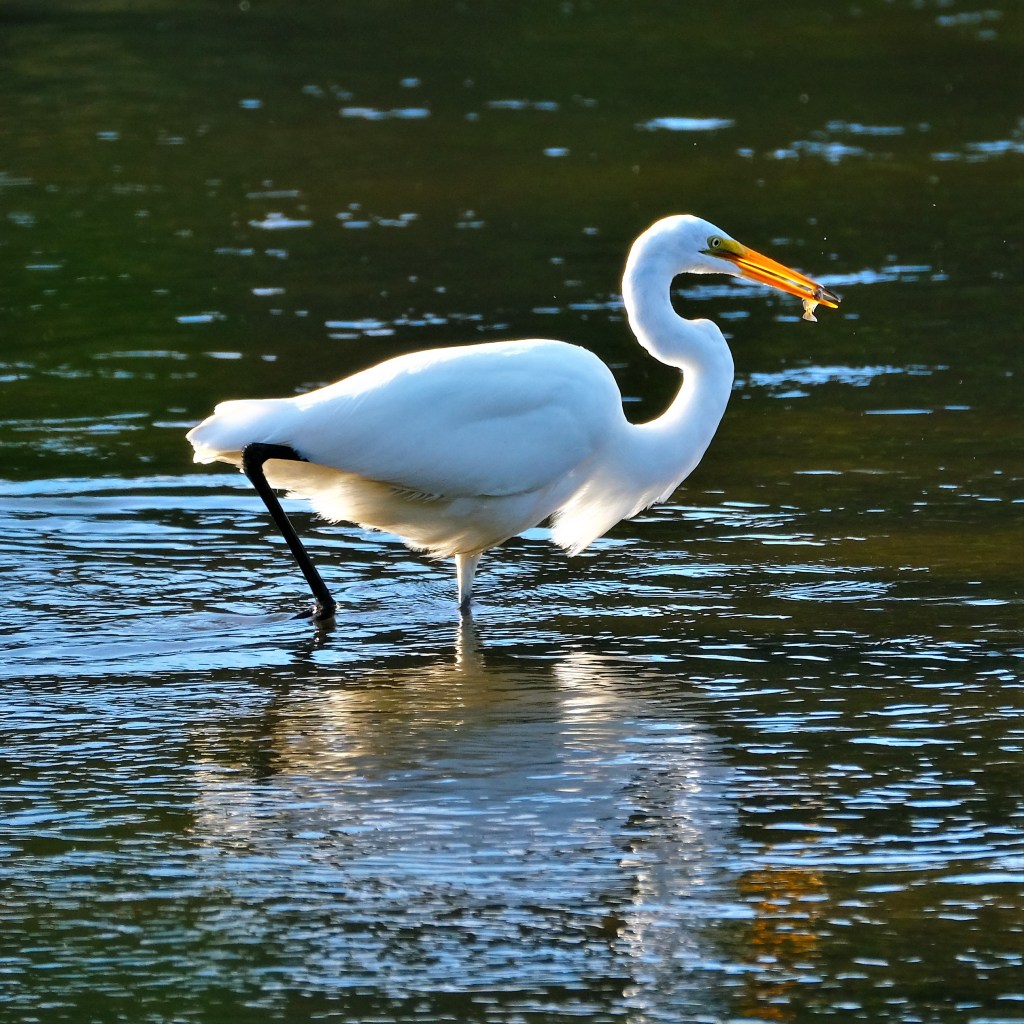
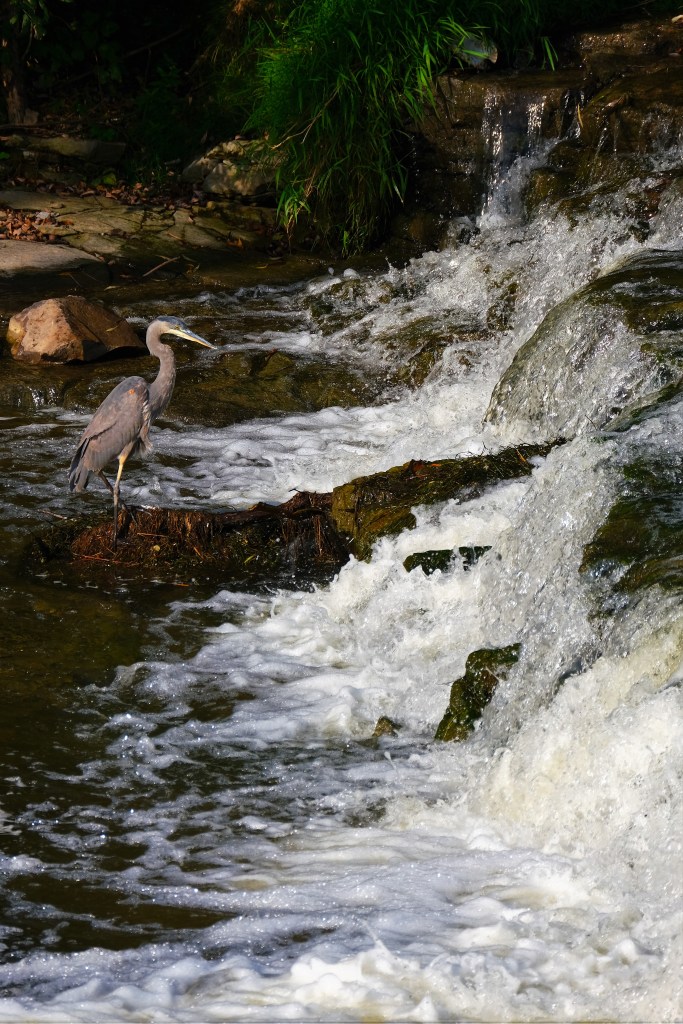
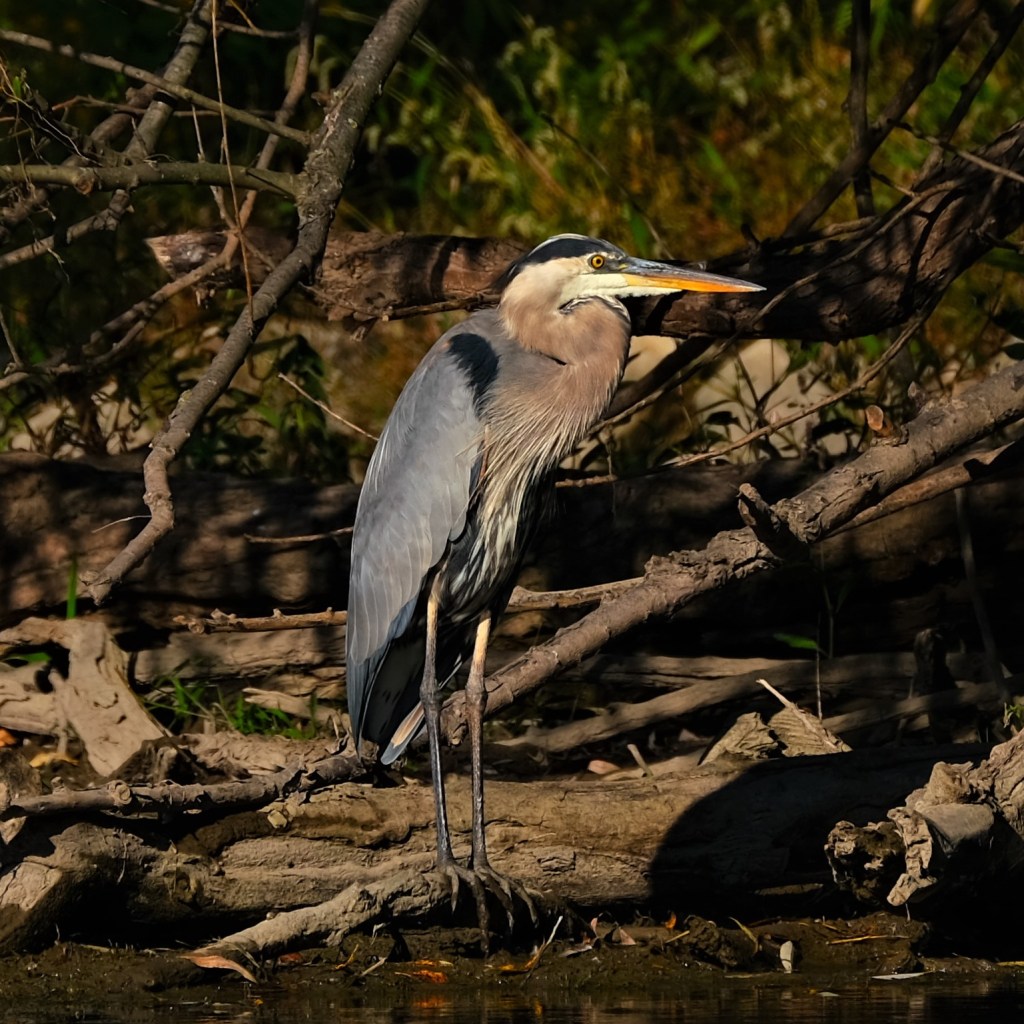
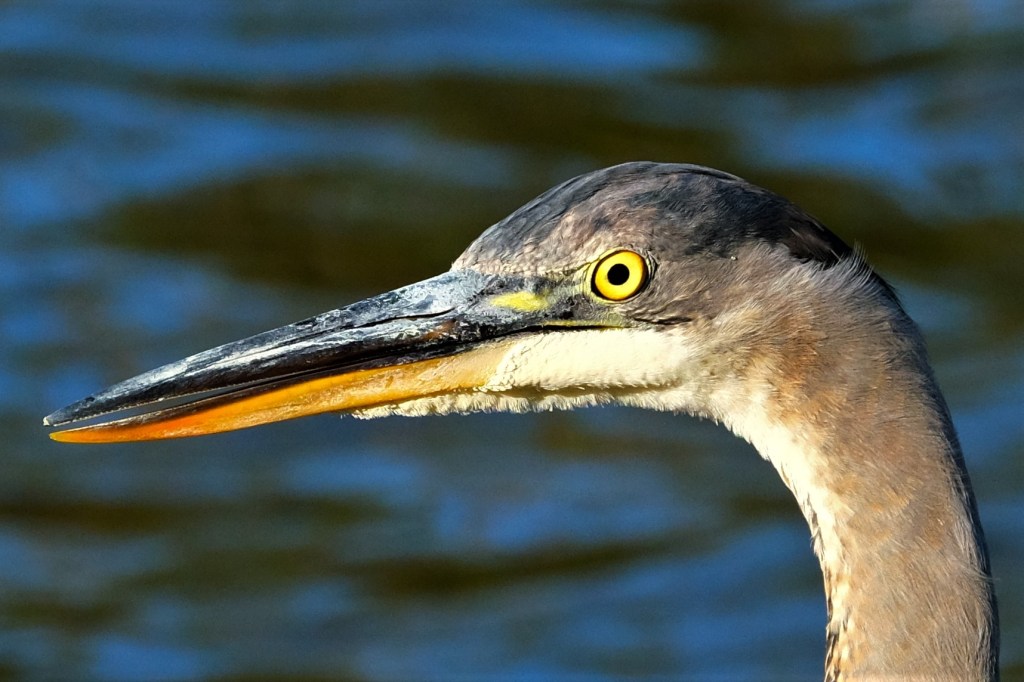
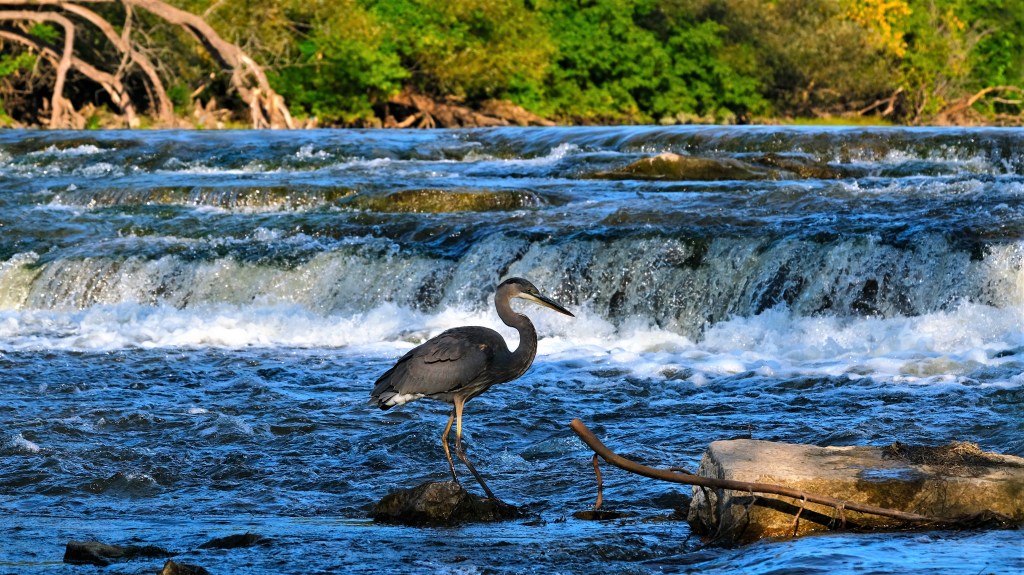
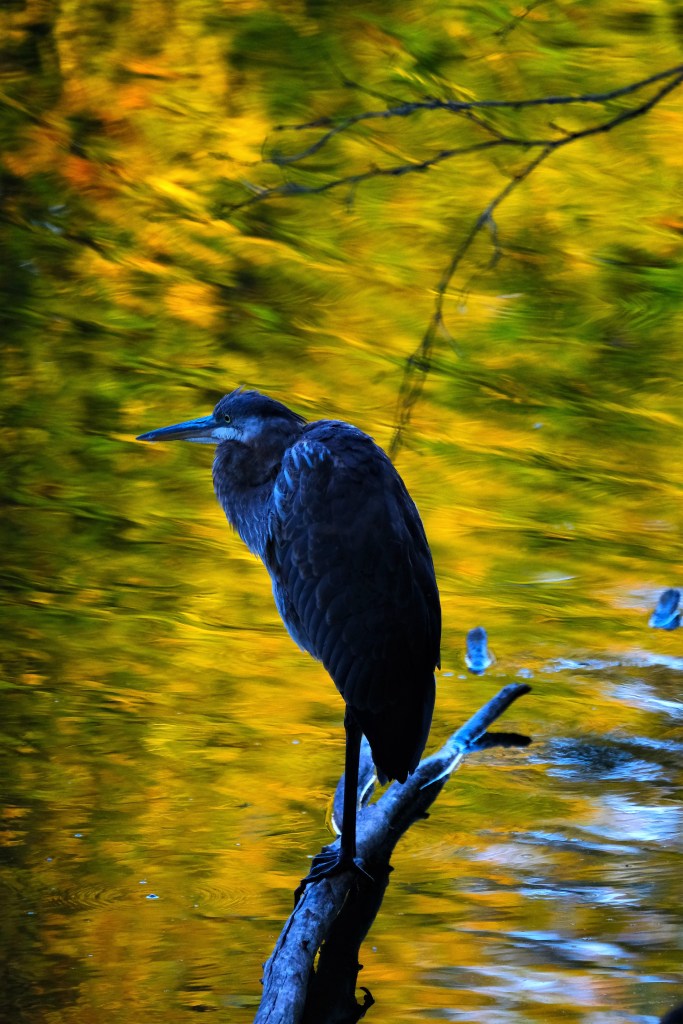
The stunningly beautiful morning got off to a picturesque start when this great blue heron on the pond paused in front of a rose bush on the island, probably the same multiflora rose (Rosa multiflora) that we saw last week, instead of behind a bunch of dead and gray sticks.

I didn’t see it catch a fish, though, and as I progress around to the north side to check on the wood ducks, this little sweetheart seemed about as surprised as I was that we would bump into each other on that path.

The deer took off, and I found the wood duck hen snuggling with her ducklings. It was a pretty chilly morning compared to the last few days, and I wished I had worn more than shorts and a t-shirt. In any case, I didn’t get to count the ducklings today, but not a bad visit to the pond, eh?
As seems to by my routine these days, I headed to the river next, found no one at the mud flats, and our new bestie suggested I try just a bit north on the path again.

Sure enough! Here’s the first batch of wood duck ducklings I believe I’ve ever seen on the river, and I’m quite sure the ones we just saw on the pond are still there, so that makes two for the season. Woo Hoo! Go wood ducks! Right? Who could possibly not want to see more?
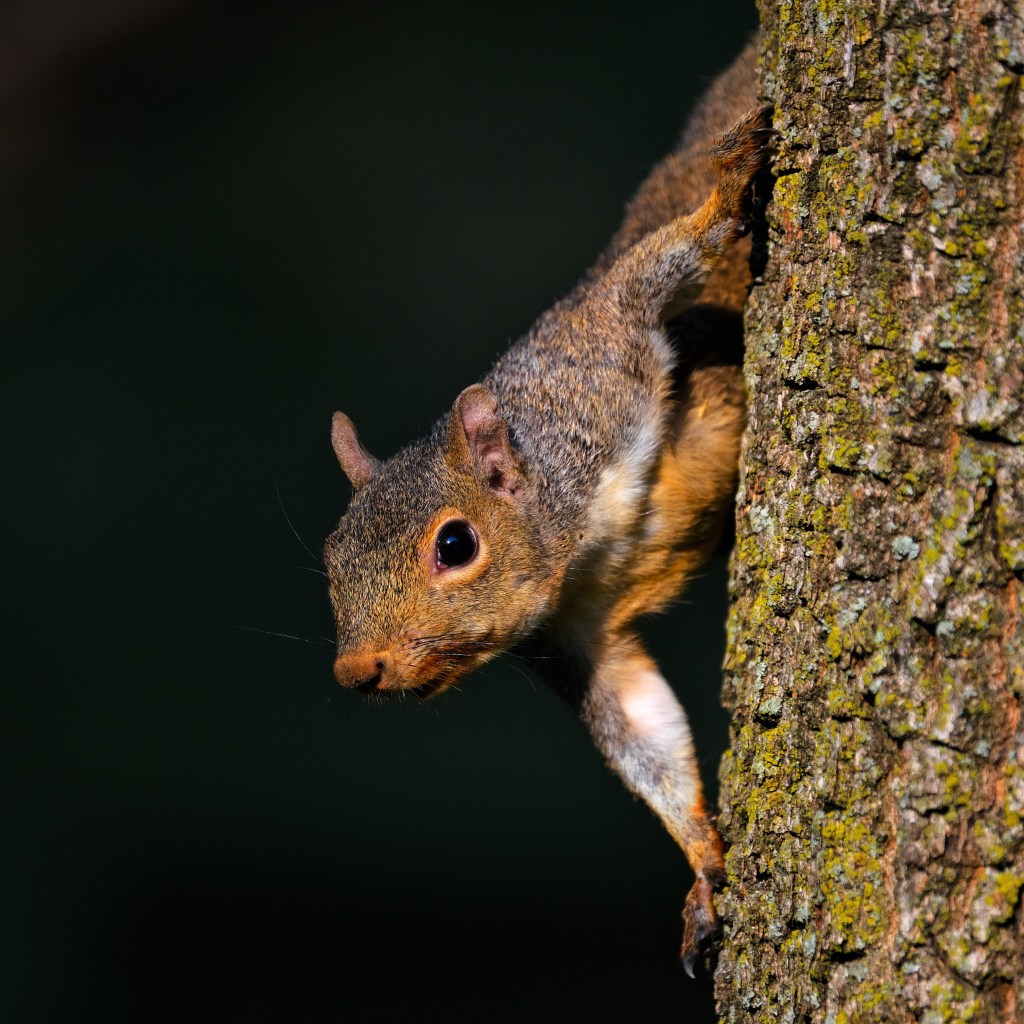
Even this squirrel seems to be asking if I just got a load of that.

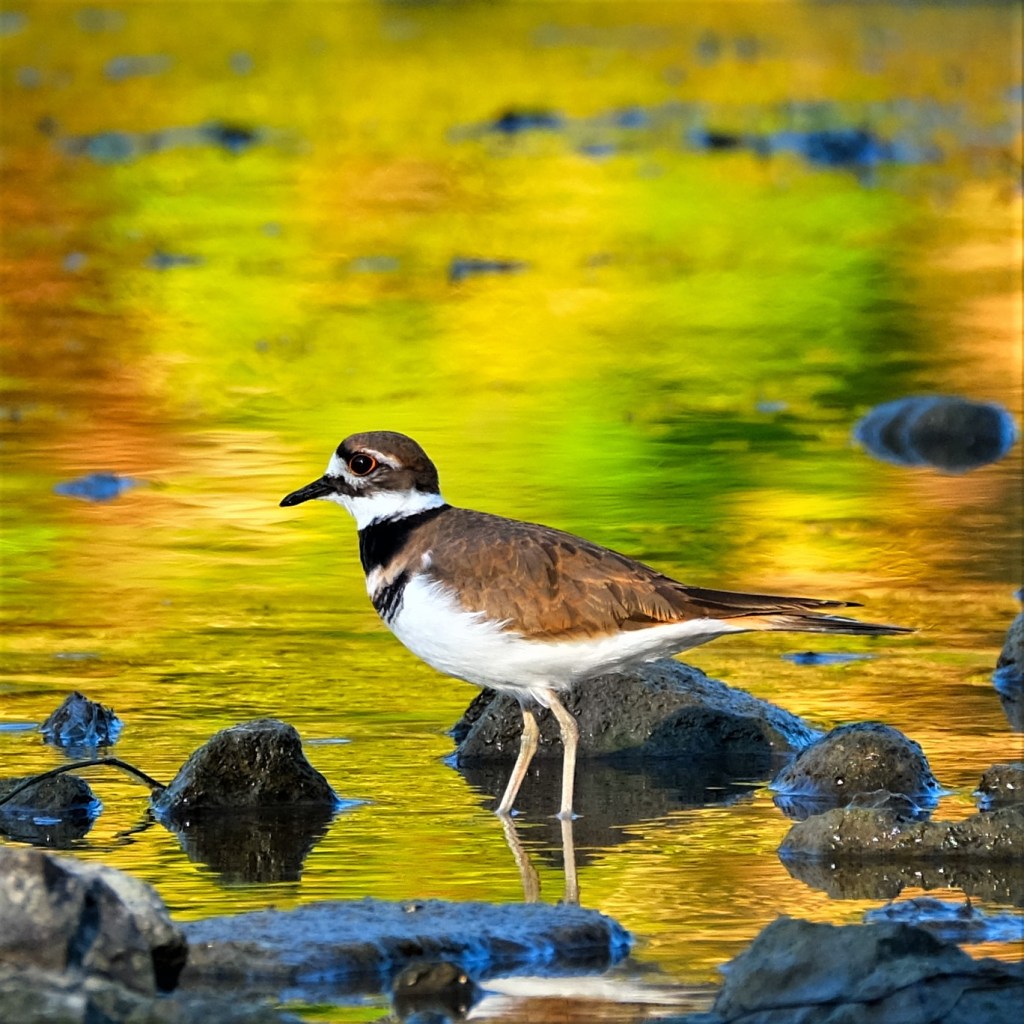
At the far north end, the killdeer were out again, but nobody wanted to put on a show this morning.

And it appears that we have yet another batch of mallard ducklings. I count 6 in this one. Mom was leading them past that rock and they all just scrambled ashore and make like they were getting ready to stay out of the water. Anyone who has taken swimming lessons in a pond on a cool morning can relate to that. After a brief standoff, she did eventually induce them to hop back in and continue to follow her. Moms can be tough.

In my way back south, right at the base of the stairway to the beer garden, I finally spotted something I looked for all last summer, after spotting the pretty yellow flowers, but could never find, a yellow salsify (Tragopogon dubius) gone to seed. It looks like a dandelion, but huge, at almost 3 inches in diameter. I read that it also goes by yellow goatsbeard, came from Eurasia, is “in the daisy family (Asteraceae),” and was “apparently introduced as garden plants in the early 1900s.”

Further south, this toad waited very patiently for me to pass so it could take care of that dang ant.

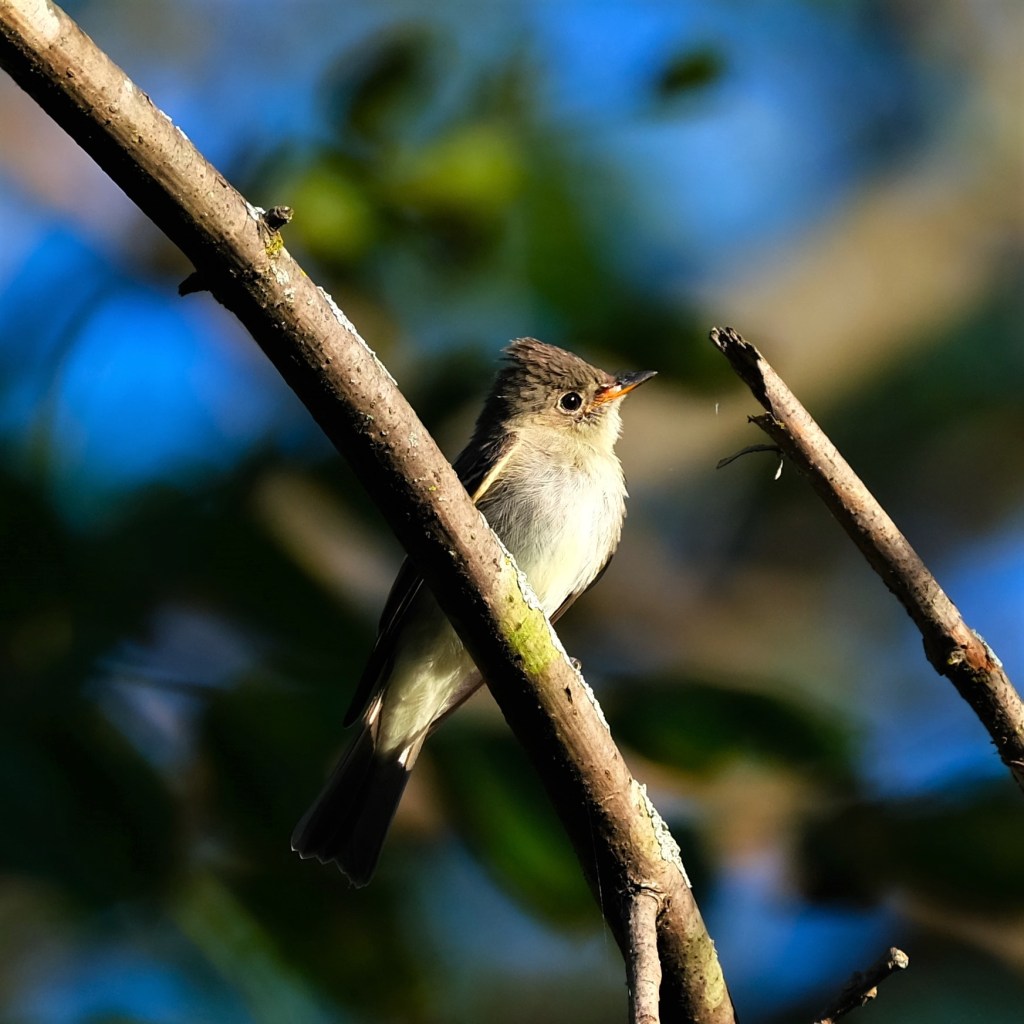
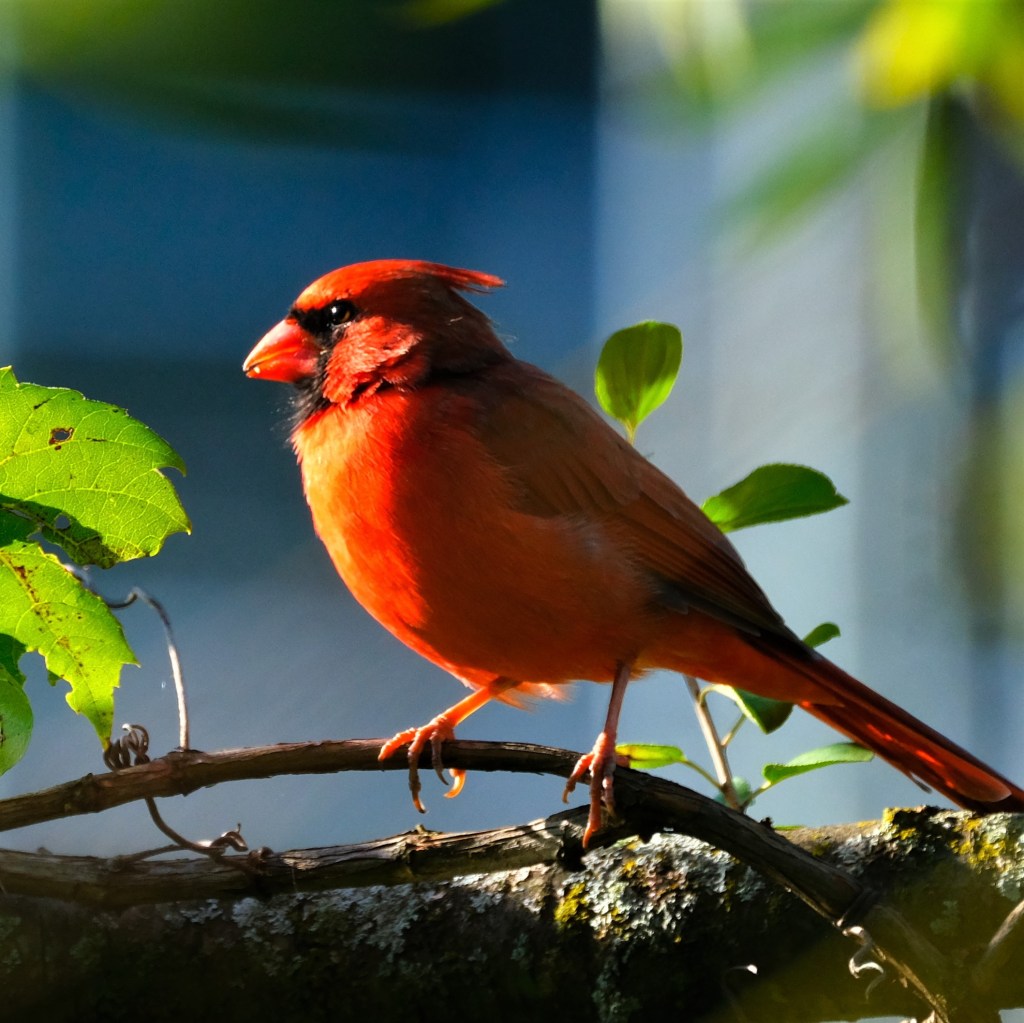
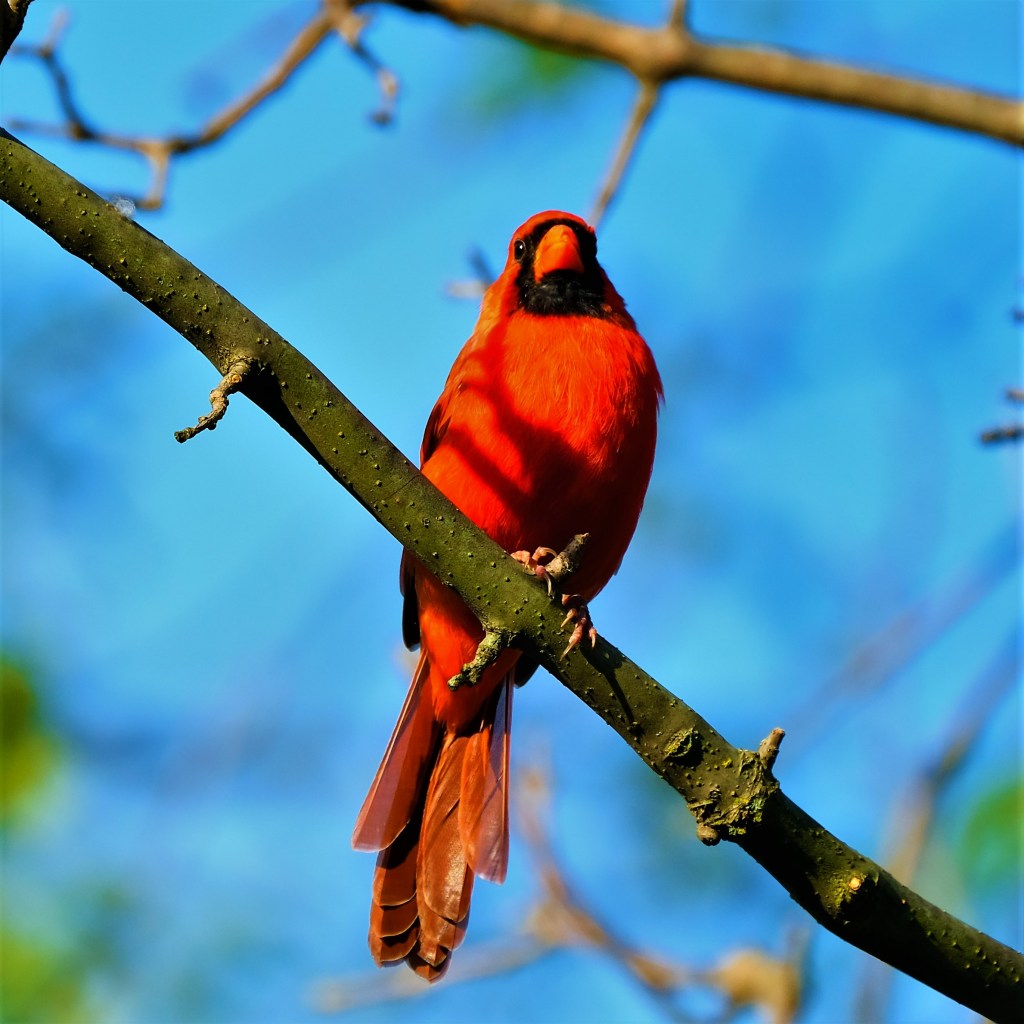
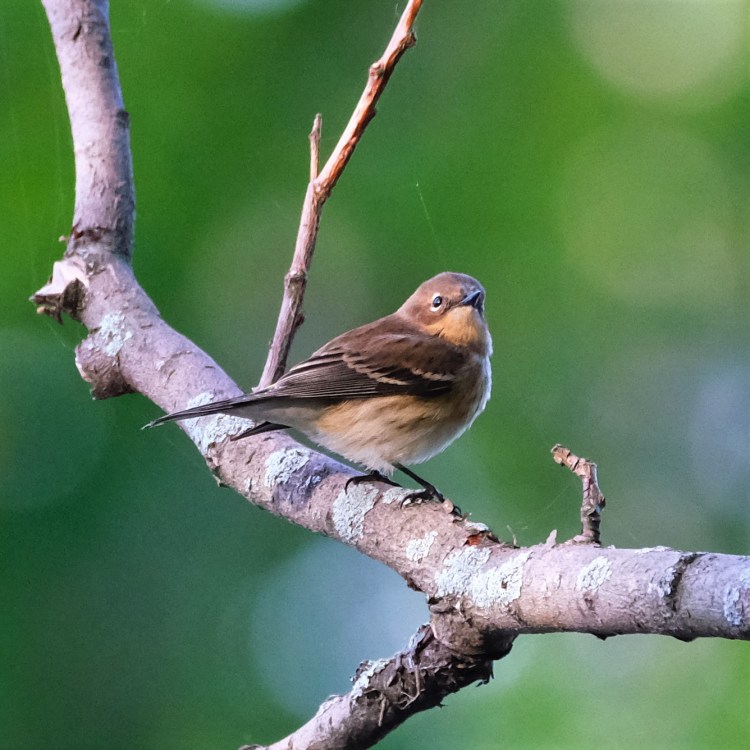
This northern cardinal called down to me as if to say “You’re not gonna leave without a single passerine picture, are you? With this sky? Come on, man! This weather won’t last forever, you know.”

Finally, at the southern soccer fields, I finally found a “Lord of June dragonfly”, a common green darner (Anax junius) that is, ready to sit for its portrait. Thank goodness for cool mornings! I have nowhere near the Photoshop skills necessary to make that thing up.

Lastly, the bull thistle blossom from yesterday continues to make progress and is starting to attract pollinators. Sweet.

Critters on the move…

The Shorewood Farmers Market season premiere in Estabrook Park is this morning, and man, oh man, did they dial in the weather. Just outstanding.

I got to the park a little earlier than usual, and when I visited the pond, there appeared to be nobody home. Oh sure, I could here the frogs and see the fish nibbling on bugs at the surface of the water, but there was no heron, the muskrat stayed hidden, and I couldn’t find the wood ducks. I figured maybe it was just their time to head down to the river like the geese and goslings just over three weeks ago, and so I joined them.

There was nobody at the mudflats either, but this little cutie suggested I try going north.

I did, and I didn’t have to go too far to find my reward.

Yup, it appears that our new pall, the snapping turtle, was on the move again and about to surprise the dickens out of aa grey squirrel. Well, the squirrel headed for the trees…

And left Ol’ Snappy to me.

He or she had gotten themselves into a real pickle this time, with a rock ledge on one side, a steep bank to the beer garden on the other side, and a soon-to-be-busy path in front and behind. So once again I found myself making like Captain Kirk, to whom I don’t mean to compare myself even though I obviously just did, and violating the prime directive. I’m not sure exactly where the turtle is trying to go, but it will have a much better chance starting a bit downriver. Best of luck, sweetie.

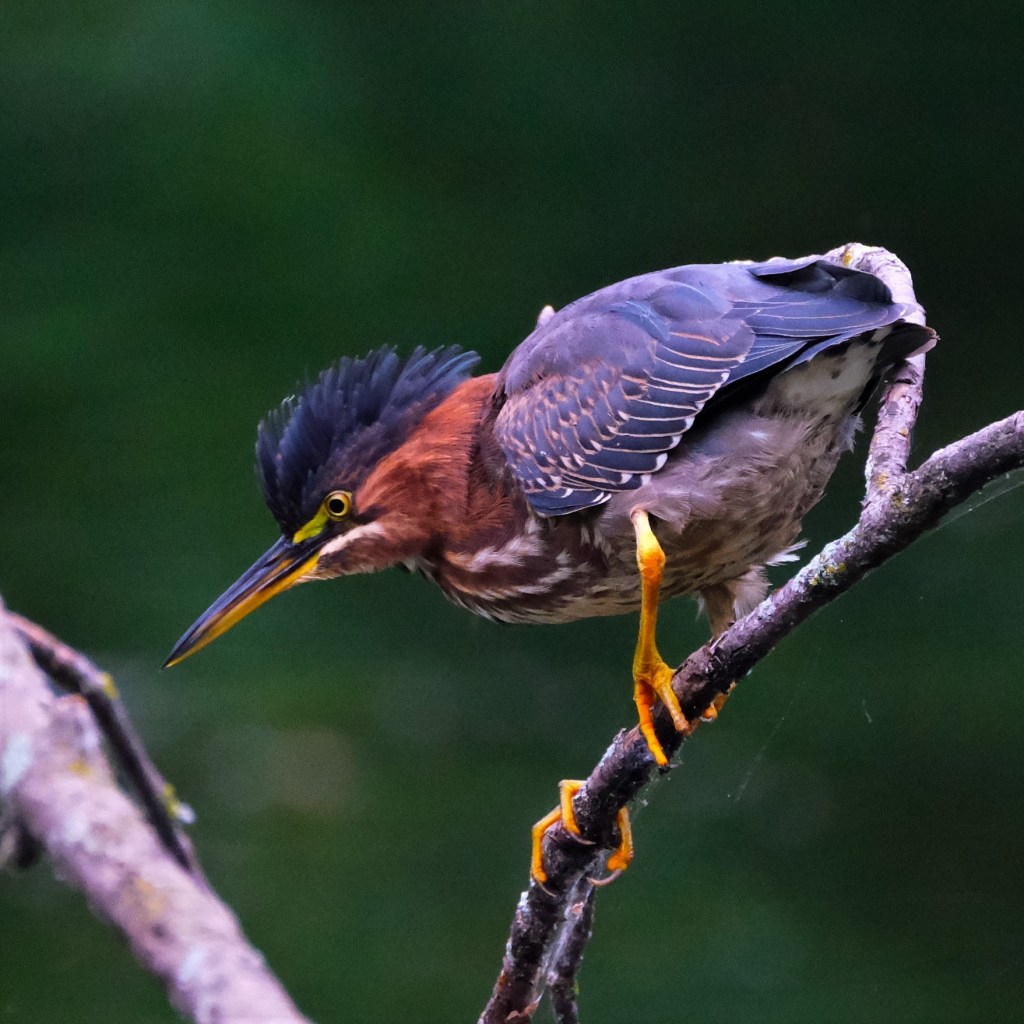
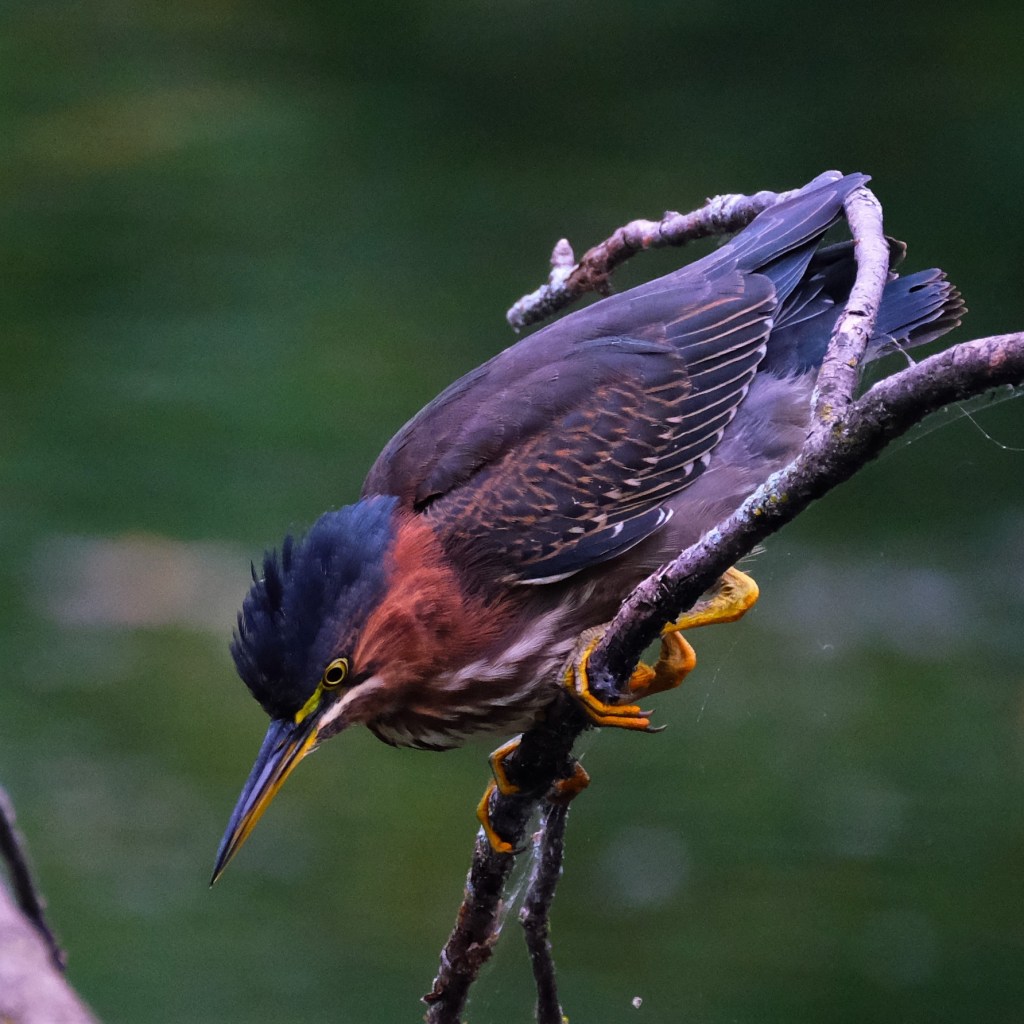
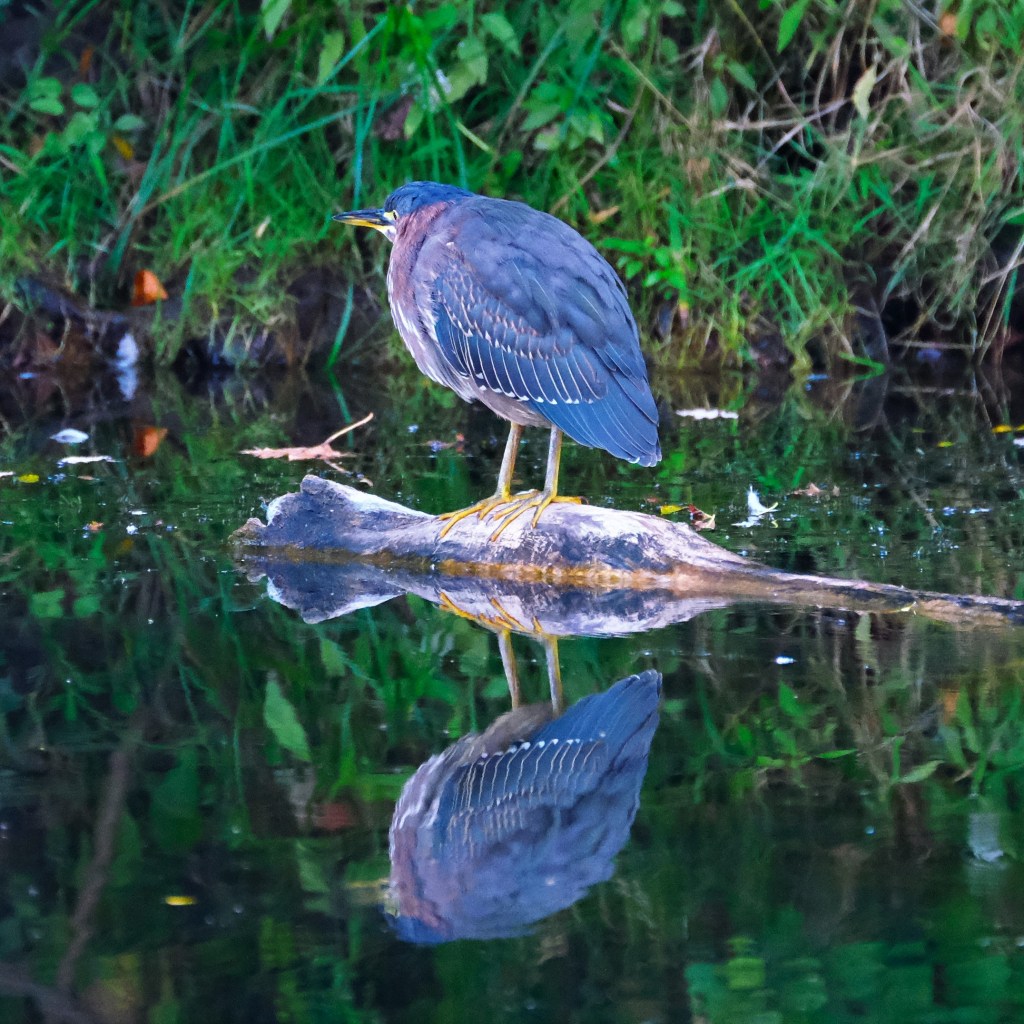
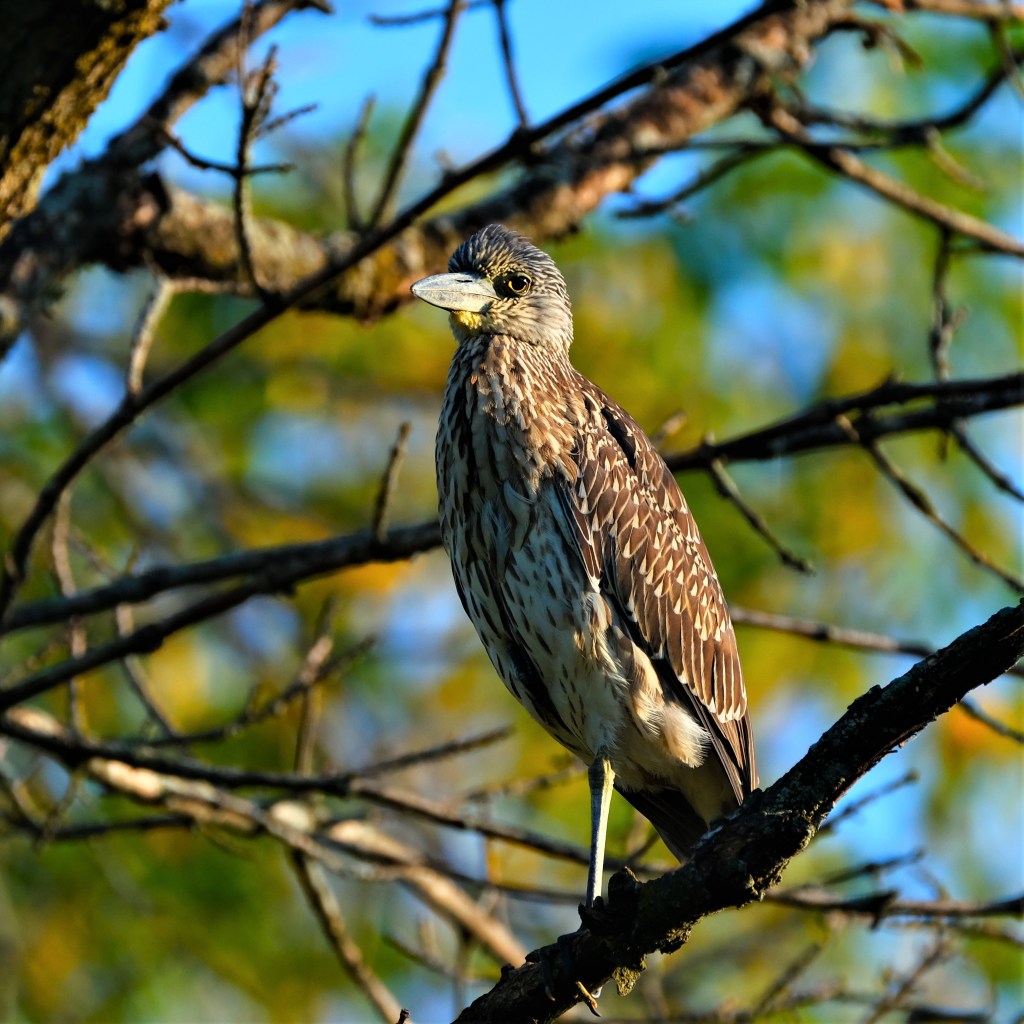
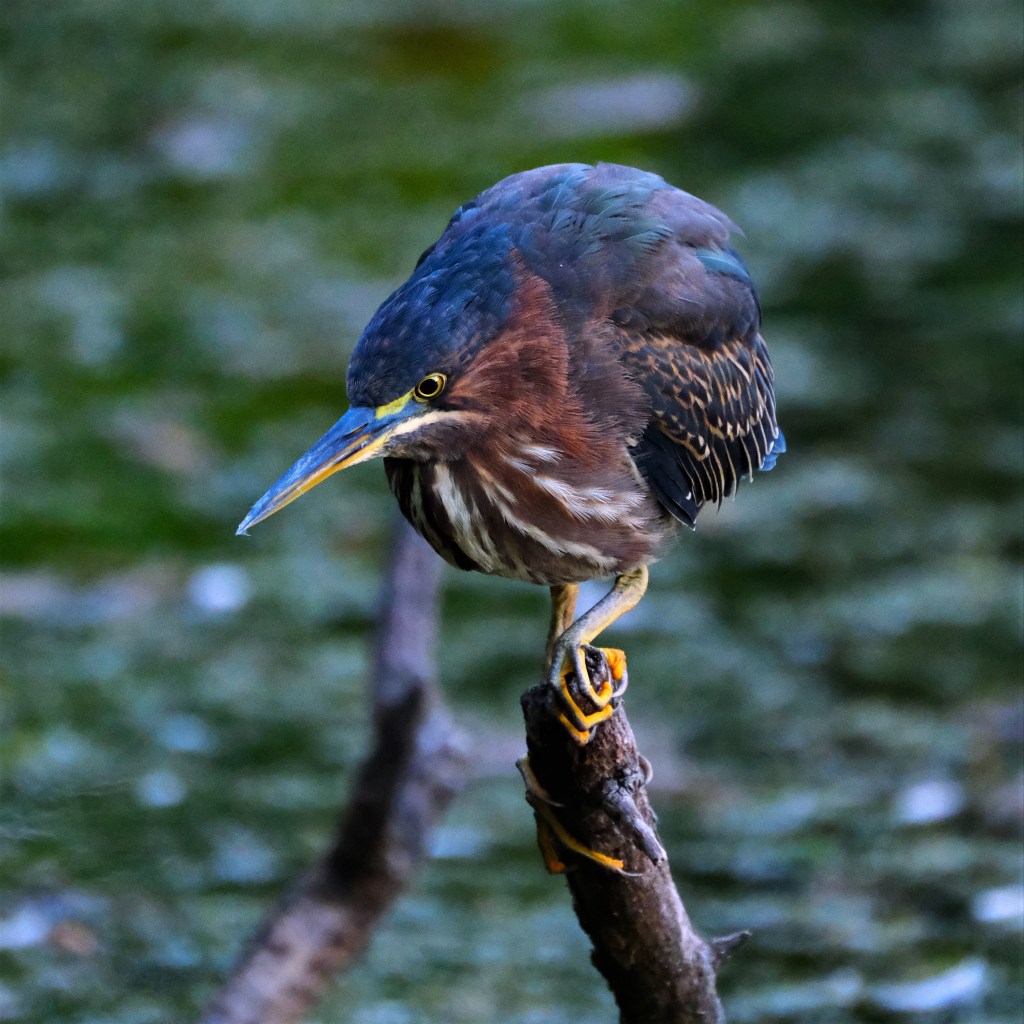
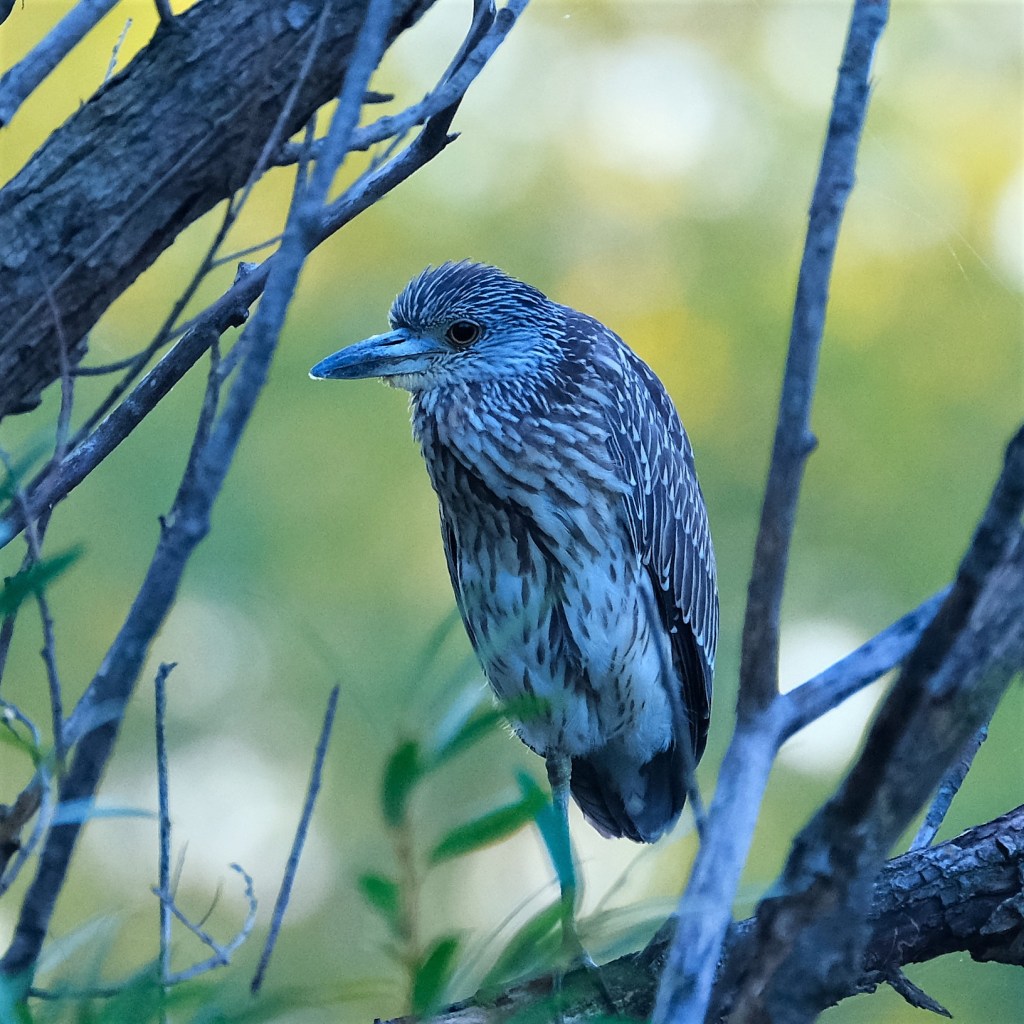
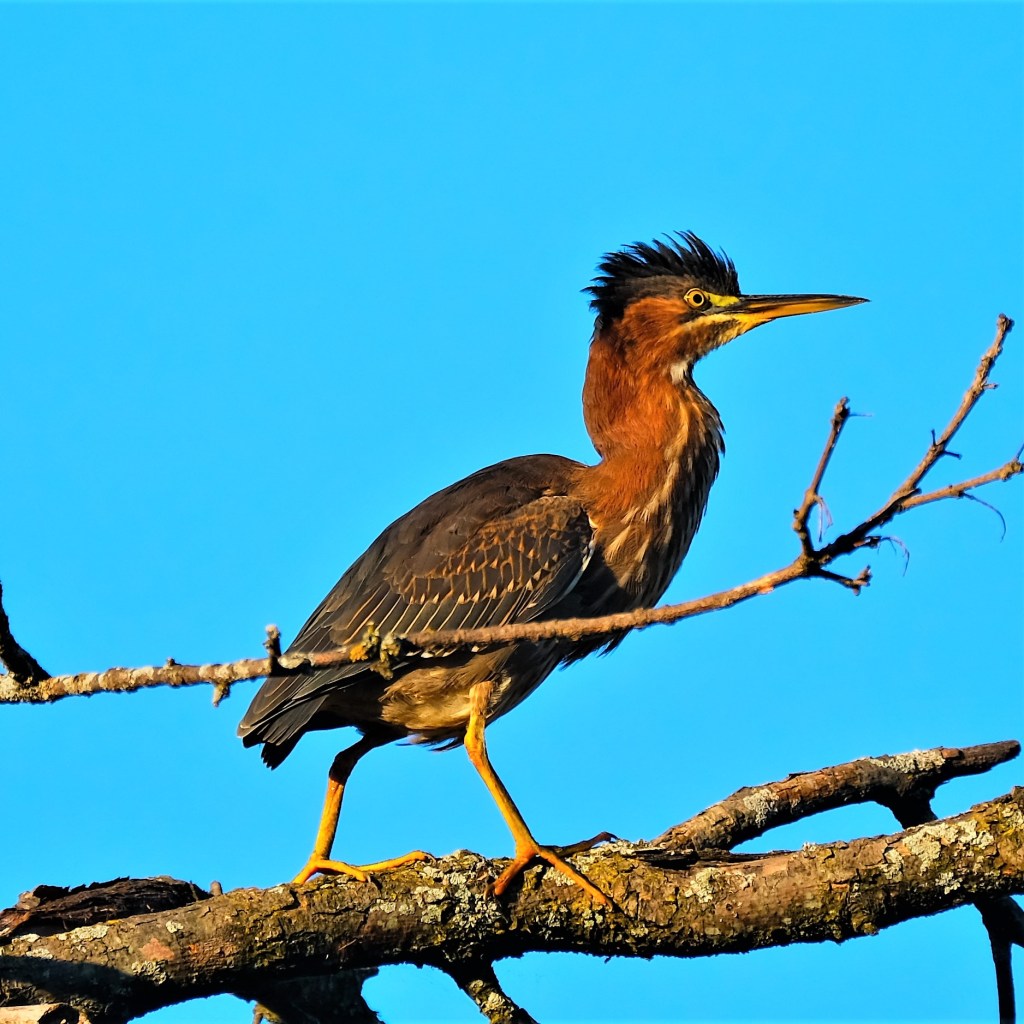
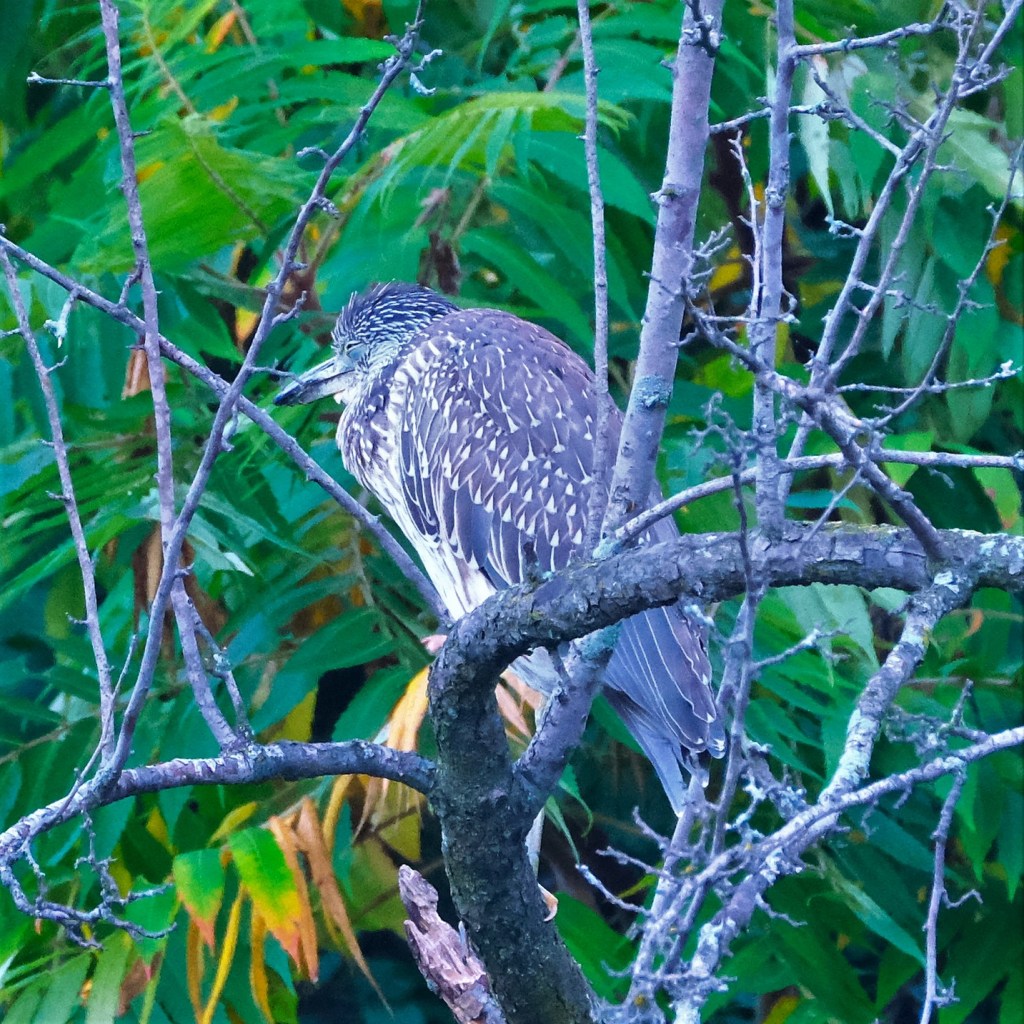
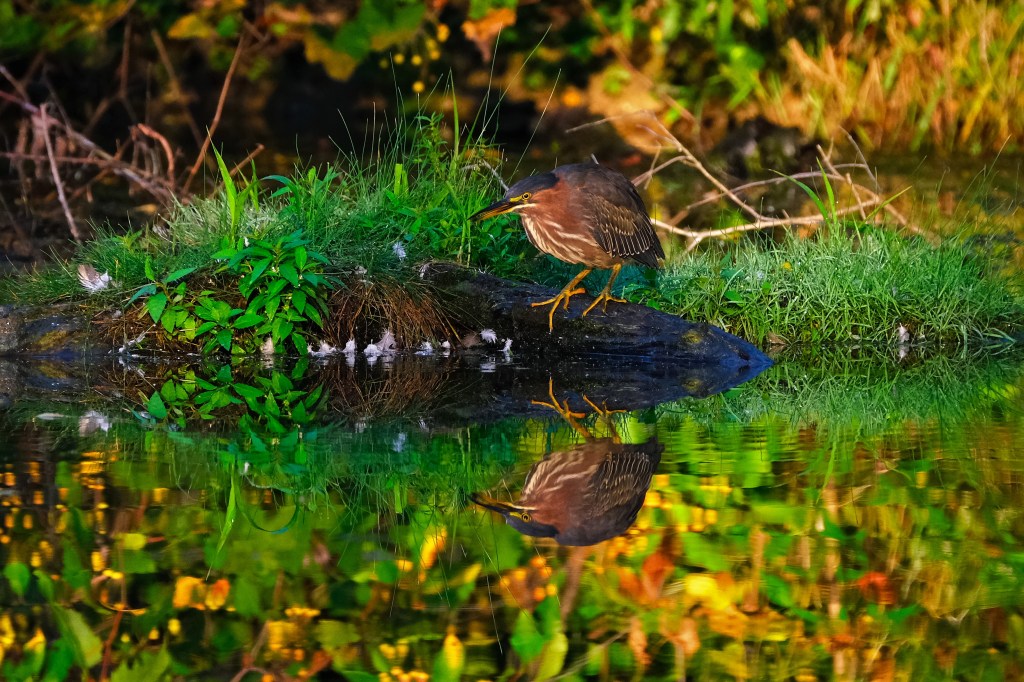
Meanwhile, a green heron observed our shenanigans from the safety of a tree across the river.

At the north end, another star from yesterday was up and casually striding across the river.

She popped in to check on the island.

And then continue on to the west side.

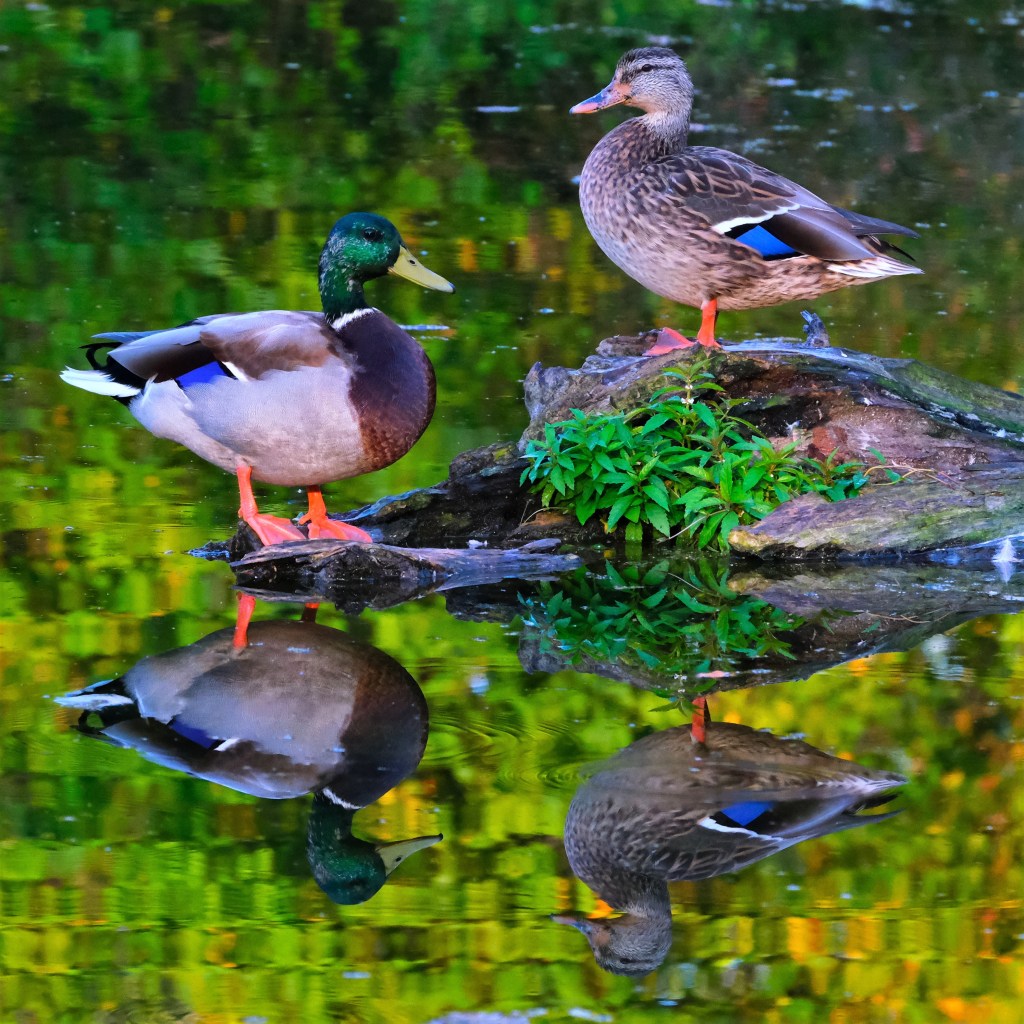
I hope she finds what she’s looking for, and these mallards at least seemed content to stay put for the moment.

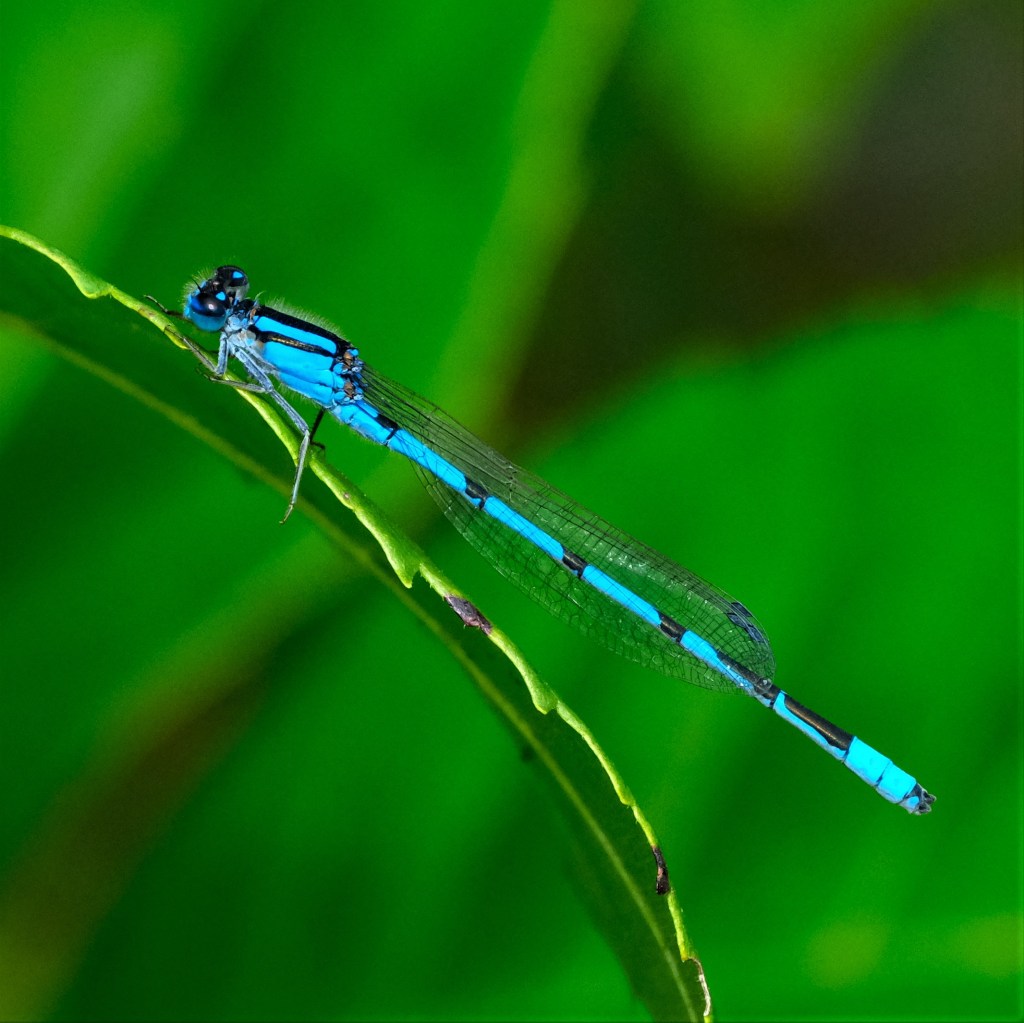
On shore, I found the damselfly basking in the sun. If I had to guess, I’d go with (Enallagma cyathigerum) know variously as common blue, common bluet, or northern bluet.

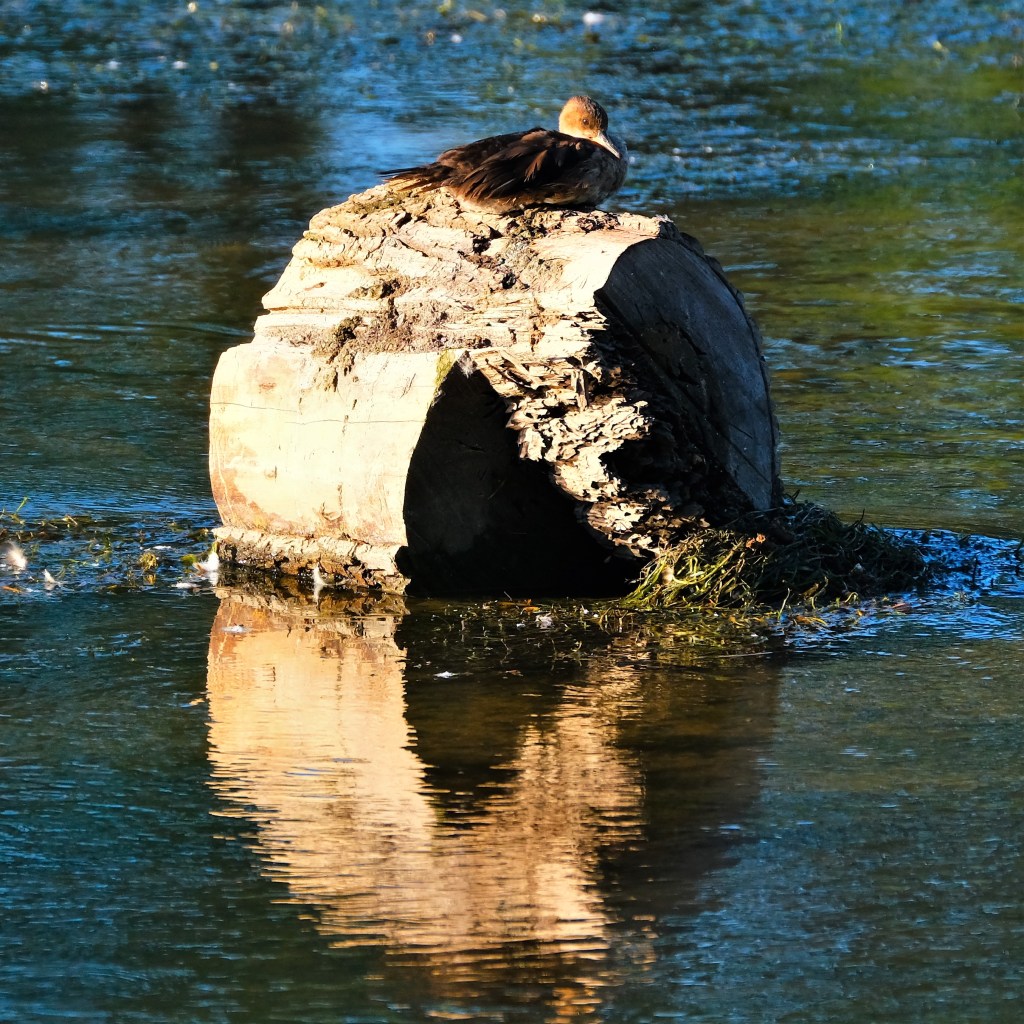
It was still plenty early and the park shouldn’t be full of market goers yet, so I swung by the pond again just in case, and this time, the ducklings convince Mom to join them for a break on that log.

I could only counted 6 ducklings this morning, and @waterbonds replied to my instagram picture of Mrs. Raccoon yesterday that “@jimmyfk and I saw a raccoon on the pond island and two kits on the trees on the island tonight,” so maybe some ducklings are now enjoying a nice little pond upstate. Or maybe they were just farther a field than I could see. Maybe we’ll find out tomorrow.

On my way home, at the soccer fields, I found a blue jay less shy than usual, or just too intent on the hunt to worry about li’l ol’ me.

Another female eastern black swallowtail was warming herself in the sun.

And some bull thistle (Cirsium vulgare) appear to be just about to open.

Finally, the chicory (Cichorium intybus) is also starting to open in a few places.

Inching towards peak summer

It was a spectacular morning in Estabrook and the only critters we seem to be waiting on now are the cicadas. No, not the brood X that that fancy folks get, and everyone’s talking about. Just our humble, yearly, summer singers.

Meanwhile, most of the other regulars were out this morning, though this first one we seldom get to see. It looks like Mrs. Raccoon hasn’t yet stumbled home from her Friday night revelry, but I guess that’s not a charitable characterization of the situation. Instead, they’re simply nocturnal critters, and shame on use for leaving such a mess for her to get into. That faint “x” marking in the foreground is the maintenance yard chain-link fence.

Just a bit north of there, this catbird posed so sweetly, I just couldn’t resist. Who could?

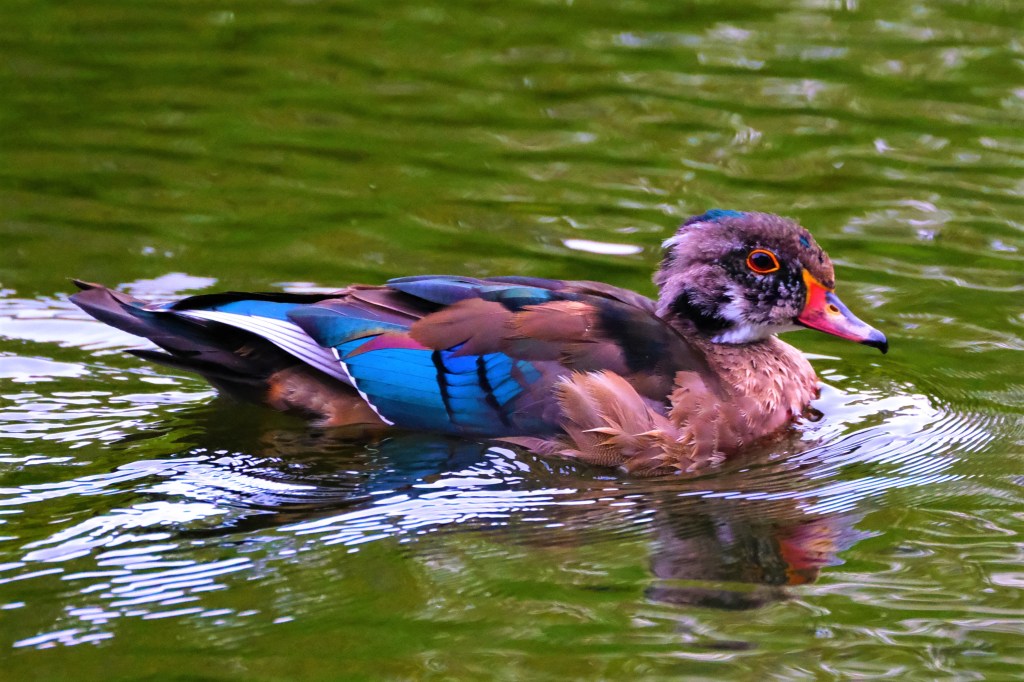
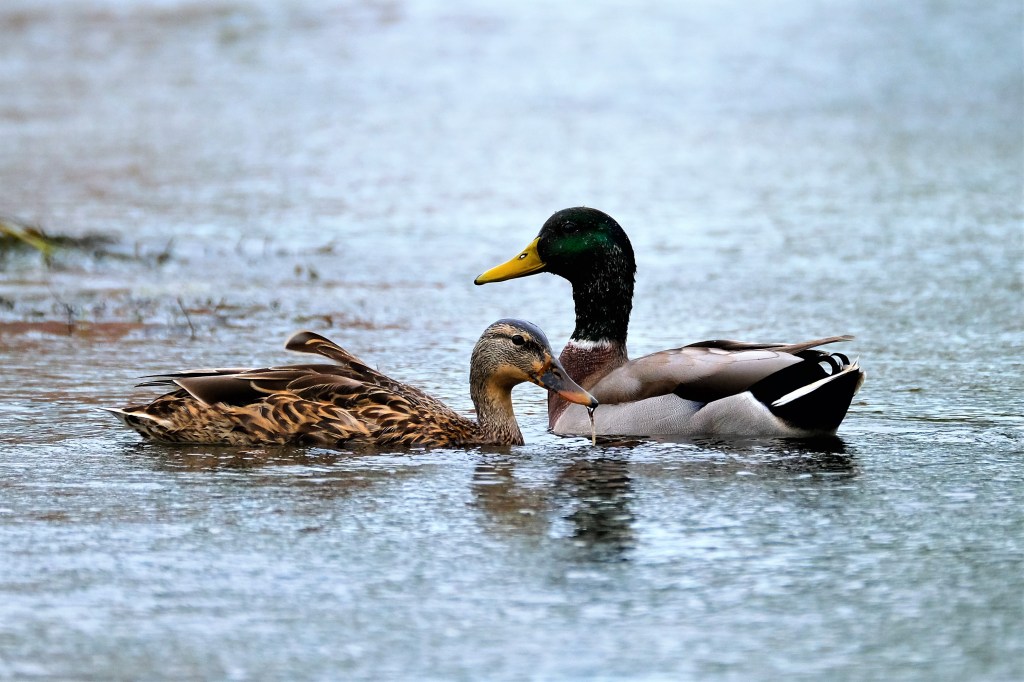
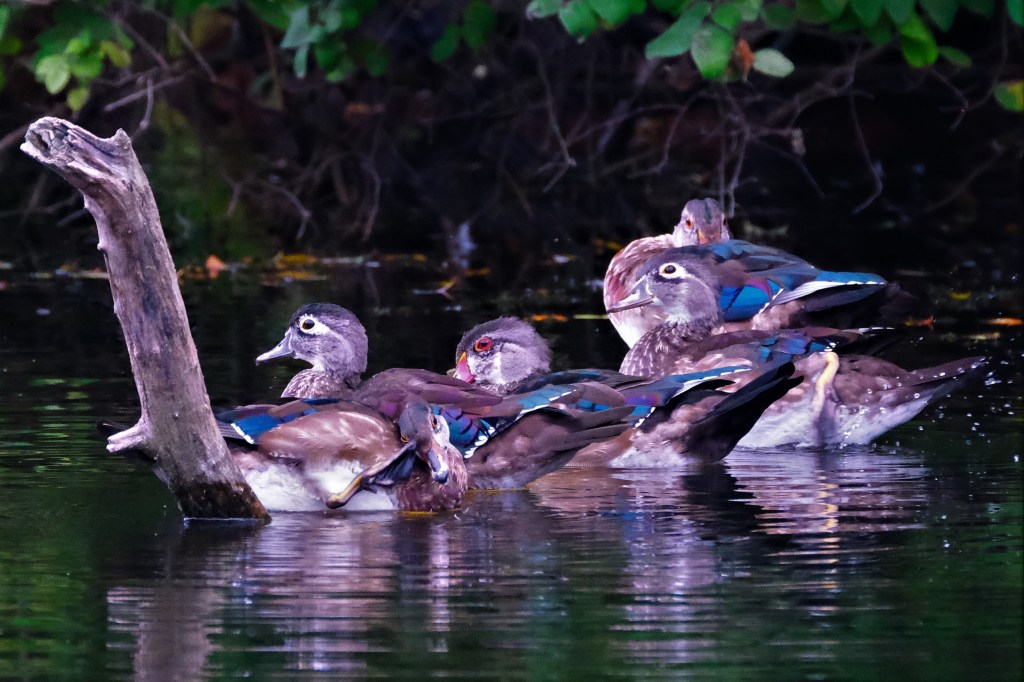
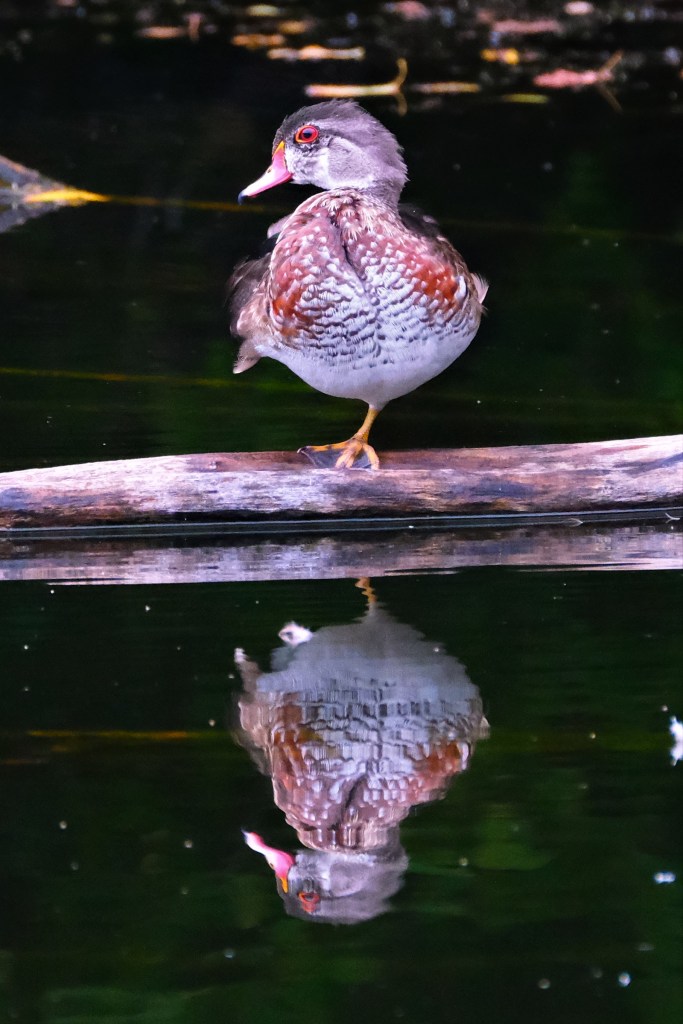
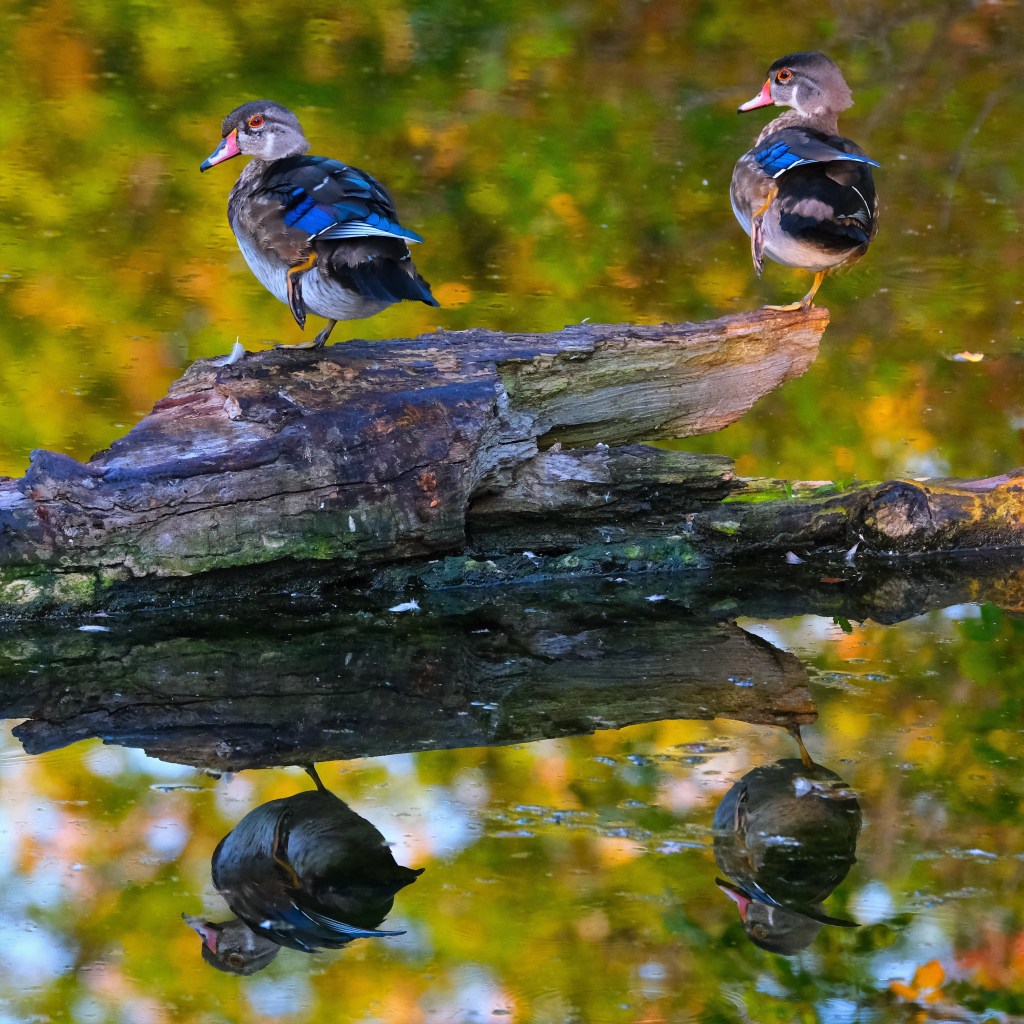
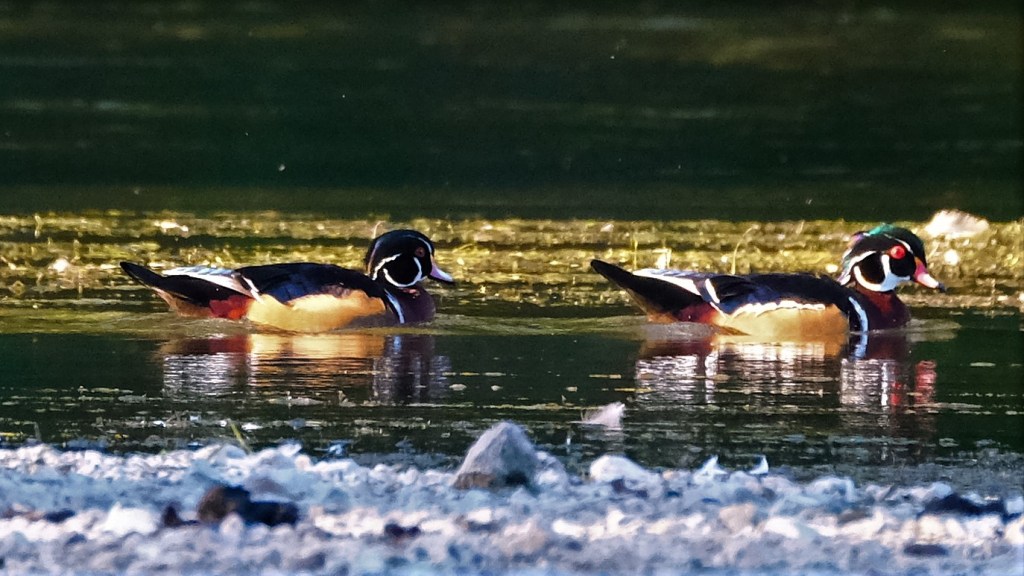
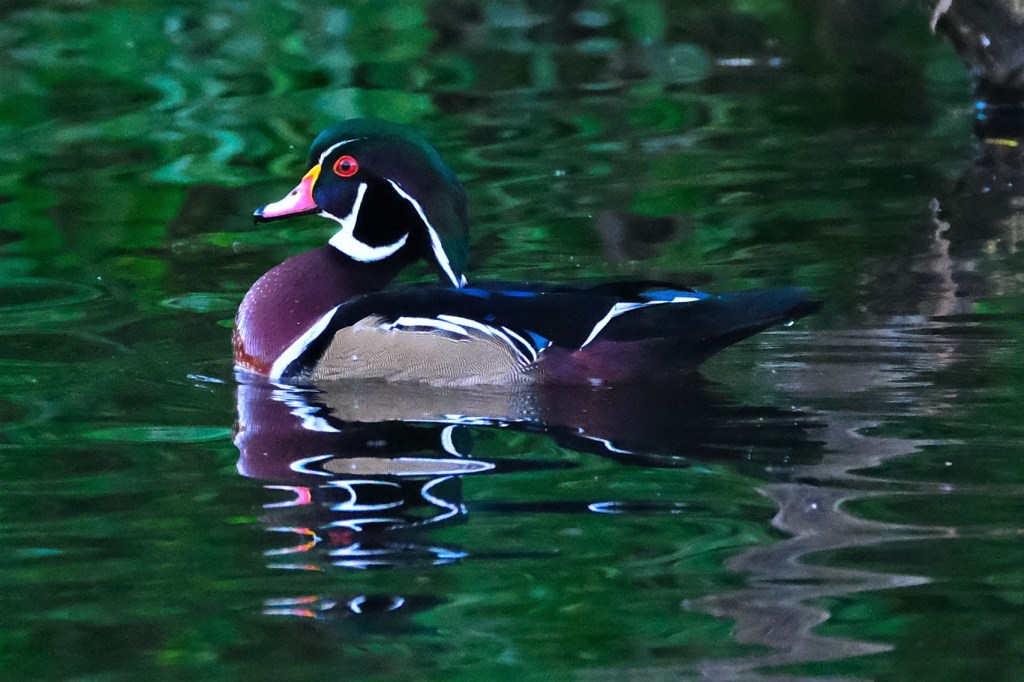
The wood duck hen and her ducklings are still at the pond, where she was taking a break on shore, and her brood were foraging hither and yon. We only got to see one wood duck duckling last year, and only for a couple of days, so I am fascinated by how differently they behave from mallard ducklings, who pretty much stick together and stick with Mom.

Eventually someone walked by, and Mom finally opted to get her feet wet.

Also on the pond this morning was this young grackle, who had been pleading to an adult on that same branch for something to eat, and was left to fend for itself by the time I managed to snap a picture.

At the river, the snow along the path is getting pretty deep.

That’s not snow, of course, but cottonwood tree seeds, and it didn’t seem to bother this common snapping turtle, who looked to be about the same size as the one we saw not even a week ago. I’m not getting any closer to confirm, so we’ll just have to suppose.

Above the falls, I came across a sight we haven’t seen before. Here’s a serene-looking whitetail doe lounging on the bank of the southern island in the beautiful morning light and contentedly chewing her cud.

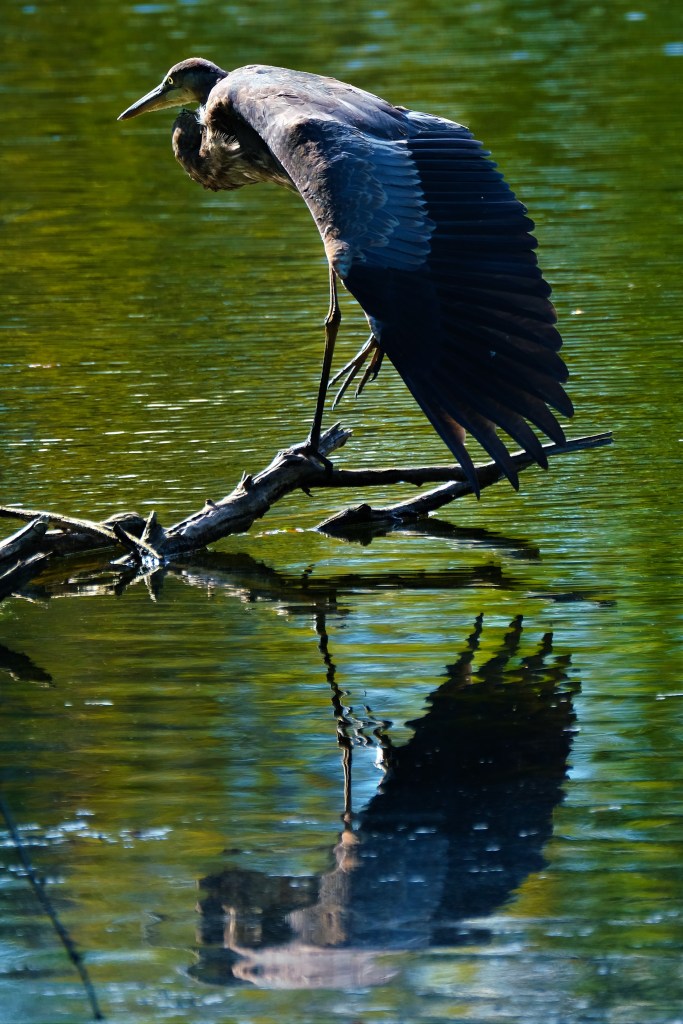
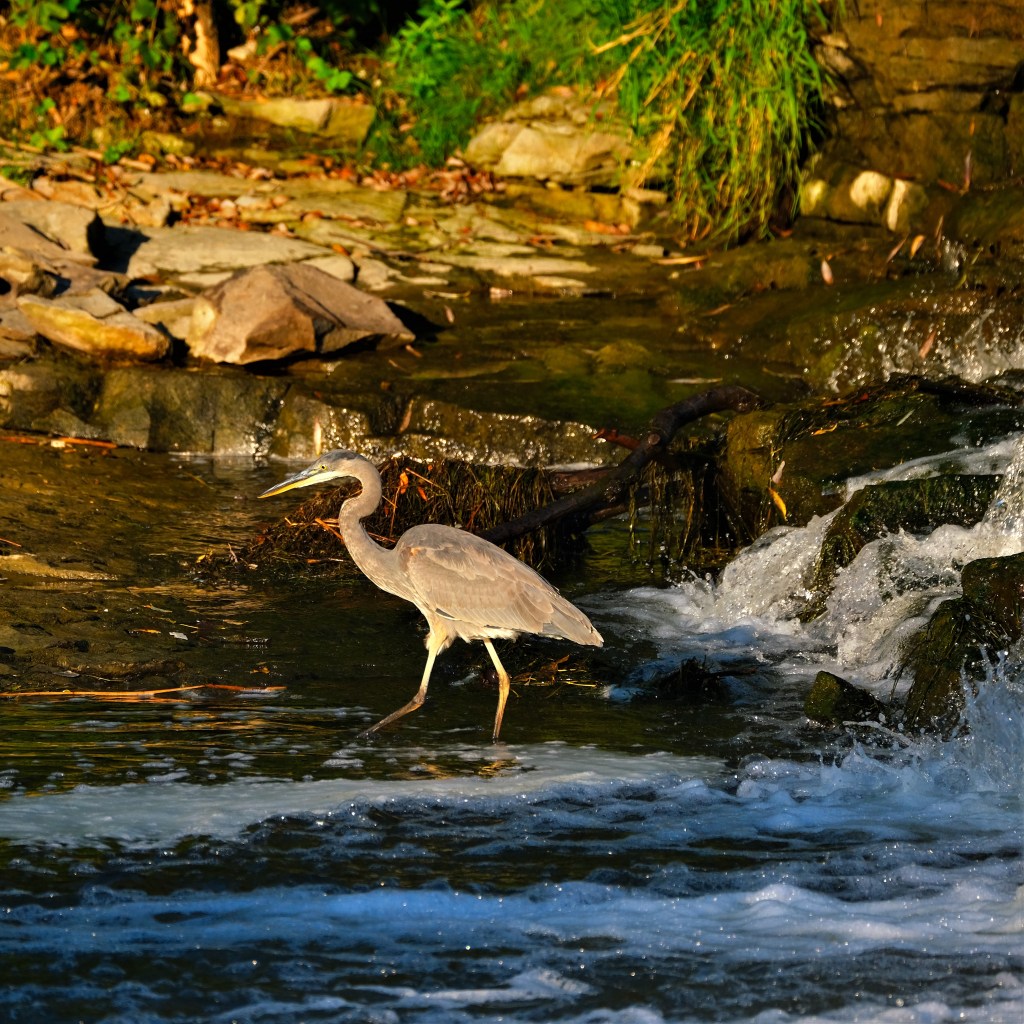
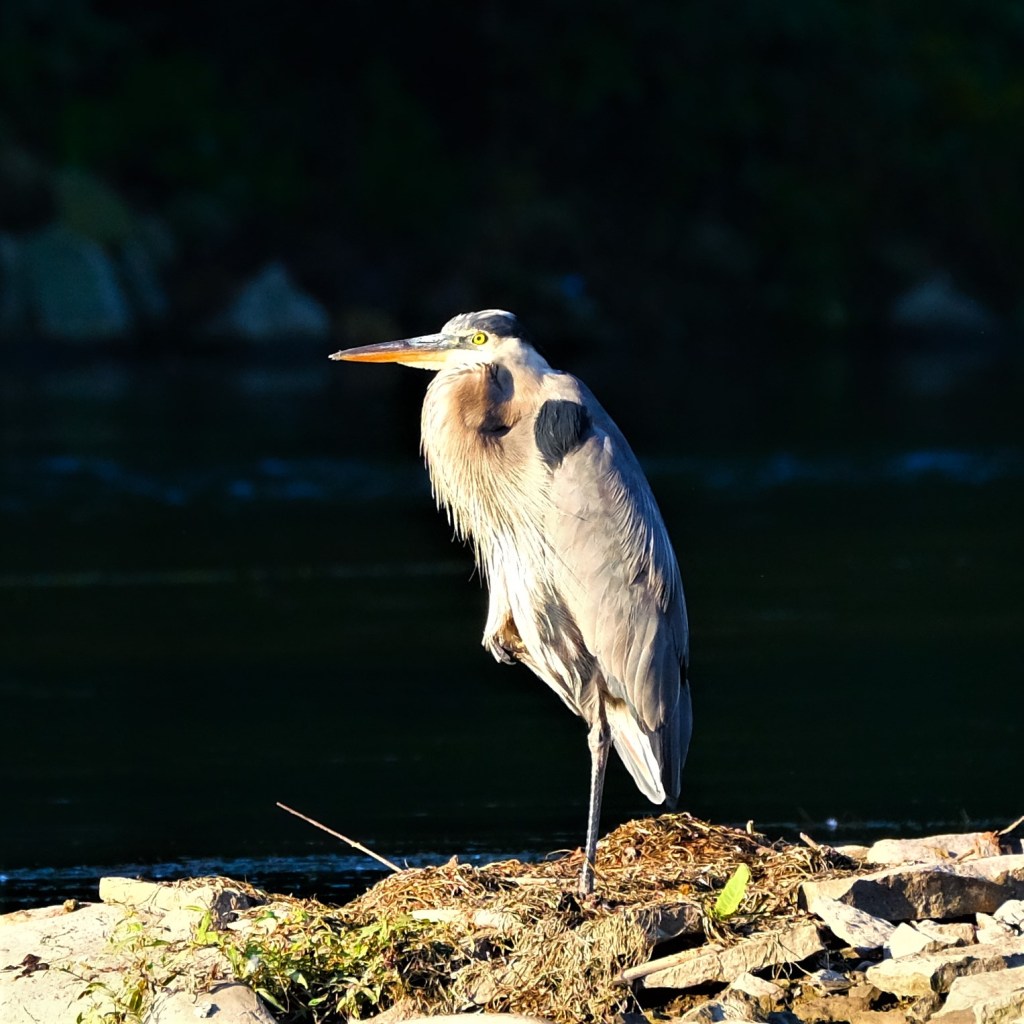
When I finally reached the north end, just about everyone was there. A great blue heron was fishing silently in the middle of the river.

These killdeer were having a boisterous discussion, and they seem to have only one setting: 11.

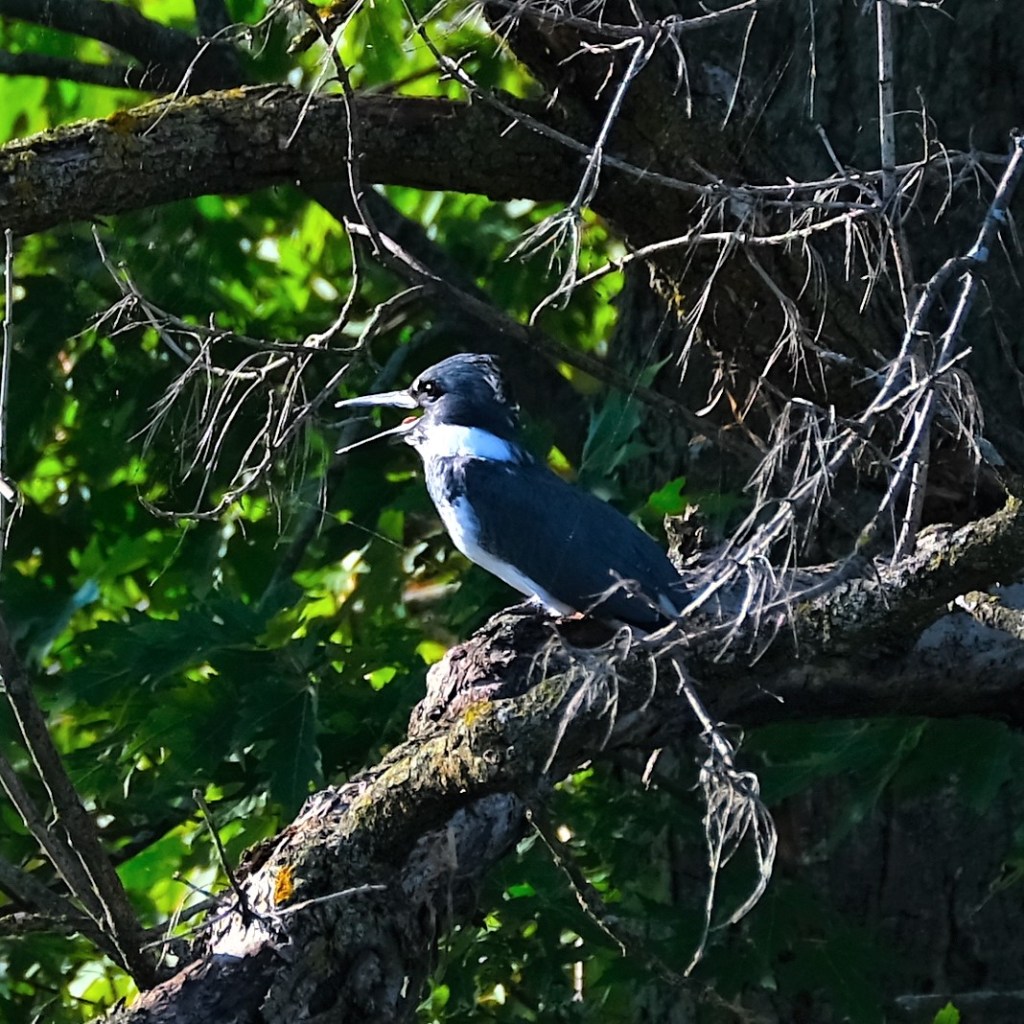
Even a belted kingfisher, whom we haven’t seen nor heard in weeks, was out fishing.

There were young mallard ducklings.

And nearly full-grown mallard ducklings. It’s even hard to tell which one is Mom, but my money is on the one front and center holder her head up high and keeping her eye on me.

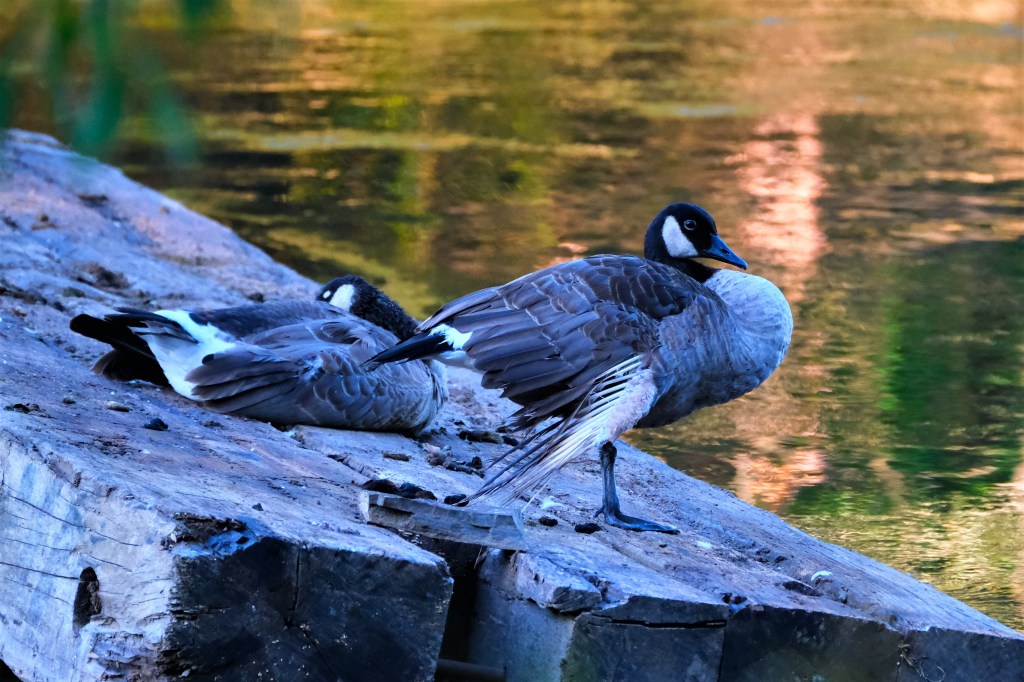
There are still plenty of goslings about, and here are the four accompanied by only one adult that I believe we’ve seen several times before.

Lastly, at the far south end, in the weeds growing on the west side of the soccer fields, I found another eastern black swallowtail (Papilio polyxenes asterius) soaking up the morning sun and a bit less shy than the one we saw back in May.

I hope you get to enjoy the recent break in the weather while it lasts.

Plenty of action this morning…

I bumped into Lisa, a long-time reader, in the mowed remains of the wildflower meadow at the north end yesterday. I was shooting the monarch and silver-spotted skipper butterflies, and she was looking for the indigo bunting we could both hear singing his brains out. She spotted him and also saw a hummingbird on the same branch for extra credit. I should have tagged along with her and left the butterflies for later, eh? Next time.

Anyway, she asked where I had seen the “great blues” the day before, and I pointed out the tree, but we didn’t see any yesterday, there or elsewhere, as you know. Well, Lisa, I found one of the great blues at the pond this morning, and it was doing its darnedest to keep its greatness out of sight.

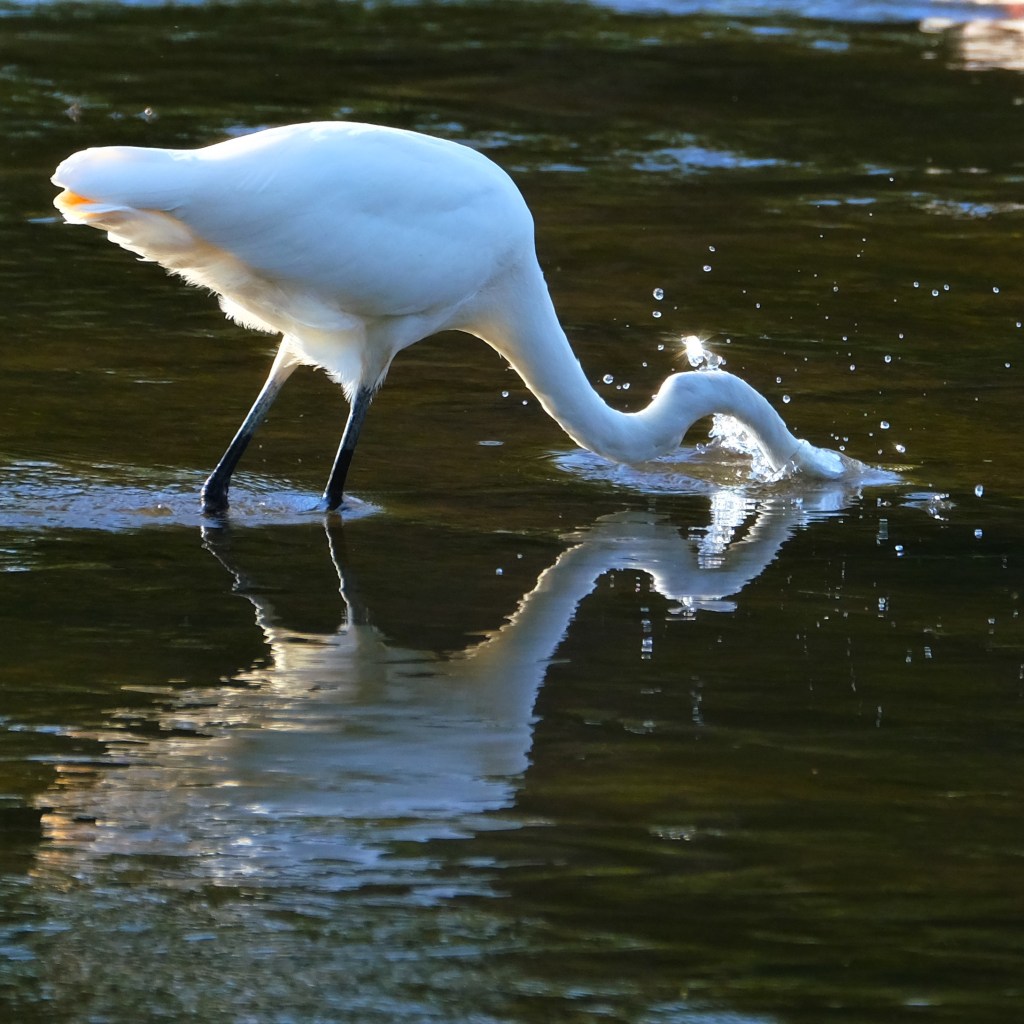
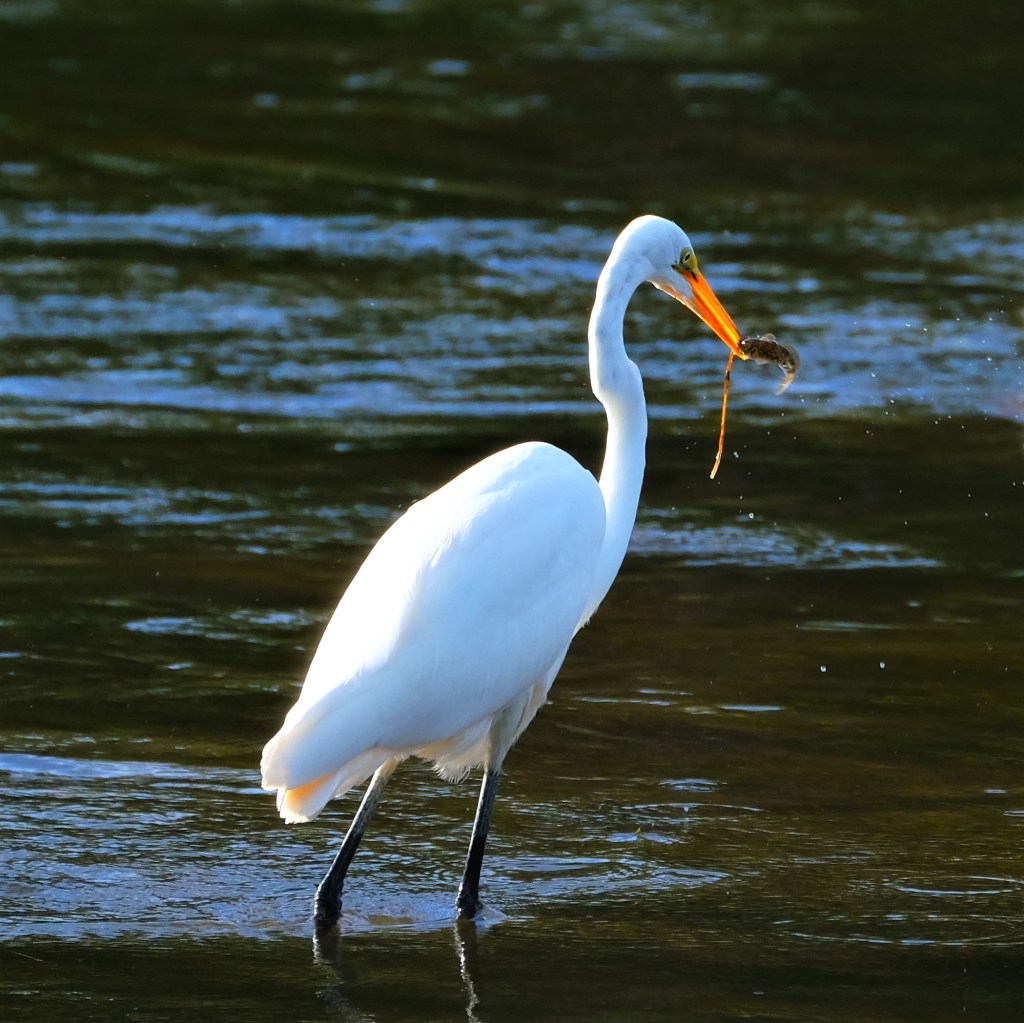
Here he or she is finding a nice spot to fish while simultaneously throwing off my autofocus. I think you can still make out what’s going on, nevertheless.

The coolest part, for me at least, was watching the fish wriggle down its neck, though I can’t say for sure who was doing more wriggling, the fish or the bird’s neck muscles. I read that “they eat the bones because there is no way for them to fillet their fish!” Duh, and “the calcium and other nutrients in whole prey items are great nutrition for the birds.

I also saw the wood duck hen and her ducklings on the pond, but couldn’t get a good shot, so I headed down to the river to see who was around. There was nobody at the mudflats this morning, but at the north end I was treated to this spectacle. It seems a killdeer really wanted me to look its way. It deliberately made that display several times, but I don’t believe I saw it do anything that looked like feigning broken wing.

There were several killdeer on the rocks exposed around the northern island by the low river water, as seems to be the norm these days, and it sounded like they were all shouting murderous imperatives about cervids, but I couldn’t tell from which one(s) I was supposed to avert my gaze. Maybe there was a recent fledgling in the mix. If so, then good for them.

On my way back south, I came across one of the several mallard hens with ducklings, who paused to asses my intentions.

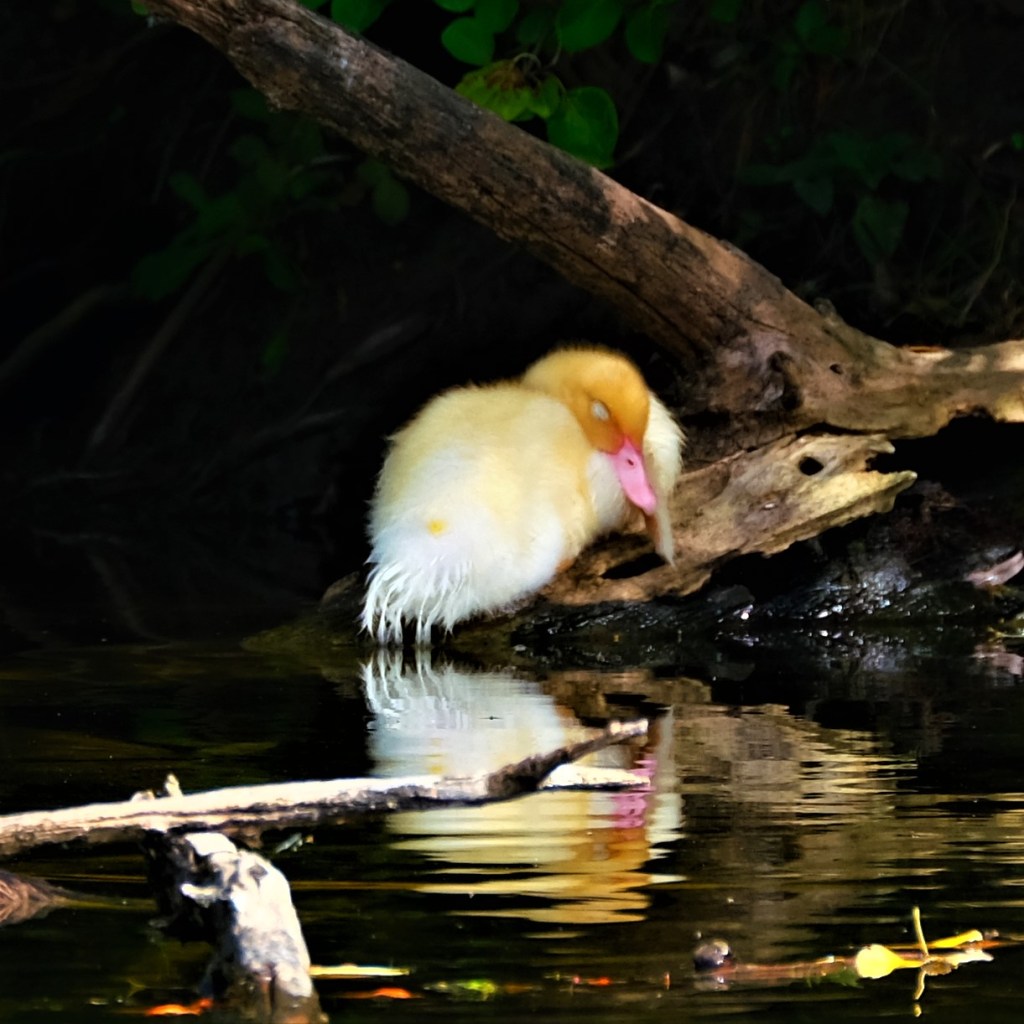
Then I swung by the pond again in hopes for a better wood duck image, and the little scamps obliged this time. I thought I’d find Mom with them, but she was nowhere in sight, though not too far away, I’m sure.

Finally, as I strolled home this morning, I spotted this female cardinal finding something that seemed worth hauling away on a Friends of Estabrook Park bench beside the middle parking lot. I wasn’t prepared for the action shot, so it’s a little blurry, but I think you get the idea.

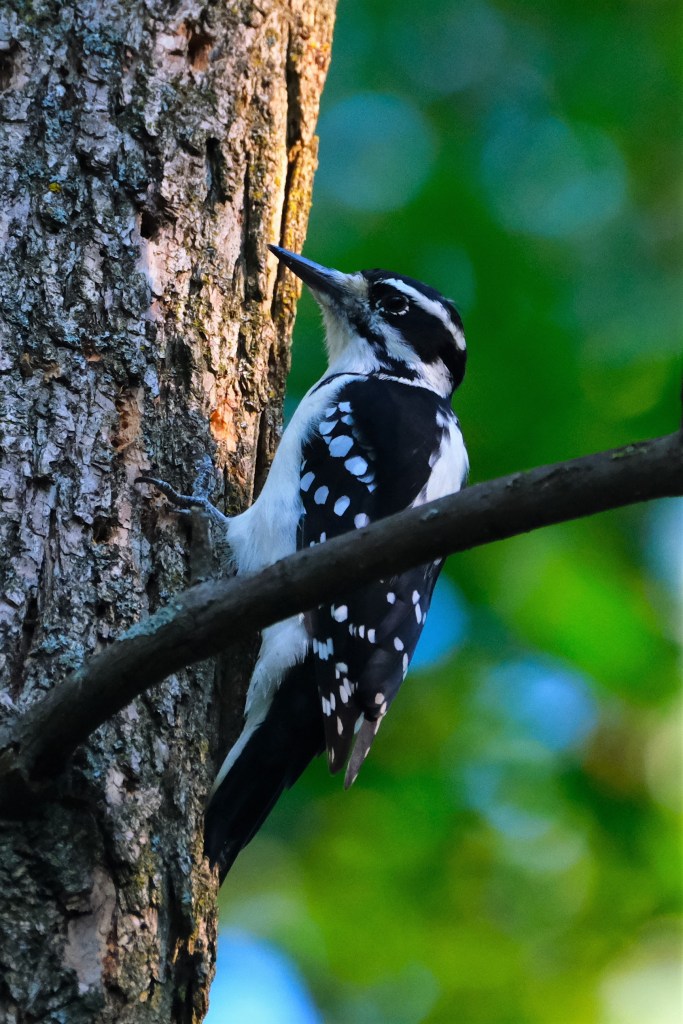
Lastly, it was so beautiful out yesterday evening that I went out for a second visit to the pond, and beside the now-closed road, just as the sun was setting, I came across this hairy or downy woodpecker (I can’t quite tell which in this image, but I’m leaning toward downy) being surprisingly bold as it chirped loudly and pretended to forage on this little tree.

I took a couple of pictures, thanked him for he opportunity, and started to continue north when a Cooper’s hawk shot out of a low tree not 10 feet in front of me. It turns out the woodpecker was trying to warn me all along, and I just didn’t get the message. Sorry, little Dude. I’ll try to remember for next time.

At the pond, a wood duck hen was up on the lawn looking for scraps that anyone might have left, though I think the signs someone put up are doing their job. I figured she was solo, not the one with the ducklings, and just sat on the bench to enjoy the sight anyway in light too low for my camera.

Well, after a bit of searching, she hopped back down into the water, and her 9 ducklings who had remained out of sight at the water’s edge, all swam out to follower her. Ha! When will I ever learn.

Back to the basics. No exotics today.

It was cloudy, foggy, and dim this morning, plus I had to wait for a delivery, so I got a late start in Estabrook. By the time I arrived, the mammals were mostly laying low, the birds were pretty much done with their morning routine, and kids were playing in the pond. Thank goodness for blossoms, butterflies, birds, and babies, eh?

Let’s start with our first sighting for the season of a silver-spotted skipper (Epargyreus clarus), sipping from one of the few red clover Parks hasn’t yet mowed in what I used to call the wild flower meadow at the north end.

A new blossom I spotted just a bit south of there is this handsome butterweed (Packera glabella), an Aster which the Pedia of Wik reports “is toxic when eaten by humans,” so you can touch it, but best it’s probably best to leave it out of your salad.

The river was still loaded with Canada geese and mallards, and here’s a mallard hen keeping watch while her ducklings are supposed to be taking their morning nap.

Here’s a cabbage white on a nice, bright yellow bird’s-foot trefoil (Lotus corniculatus) blossom beside the river. There was another cabbage white in the vicinity, and things looked they were going to heat up for a second, but I had my shutter speed set too slow to capture the action, and the second one went its separate way again before I could adjust. Dang.

Here’s a pretty sweet William (Dianthus barbatus) that appears to have escaped from somebodies garden and is now growing out of the slope below the beer garden.

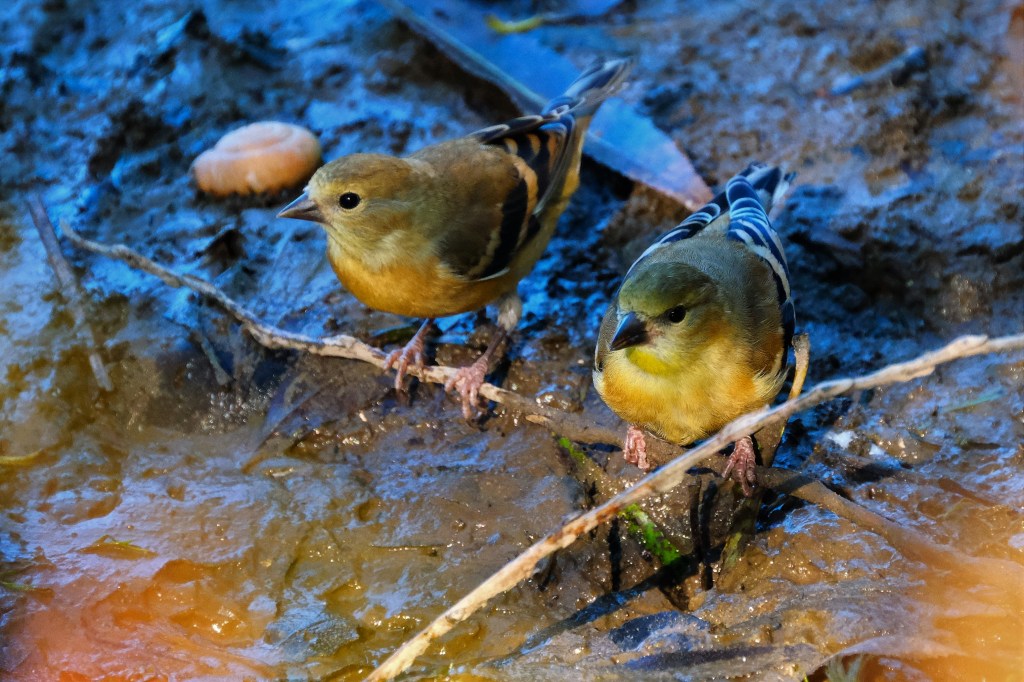
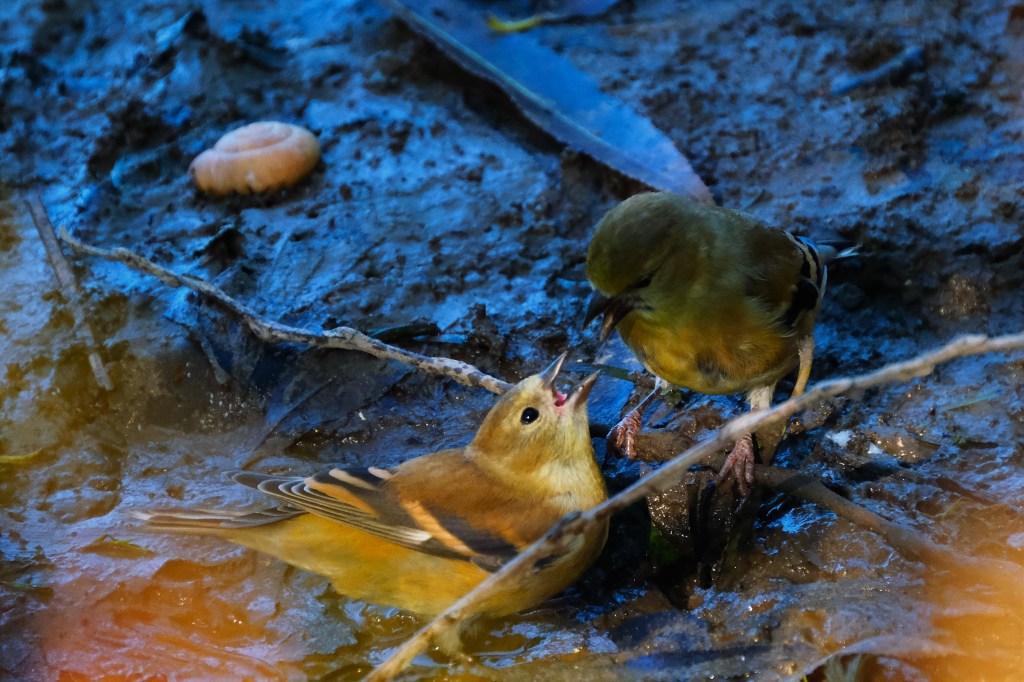
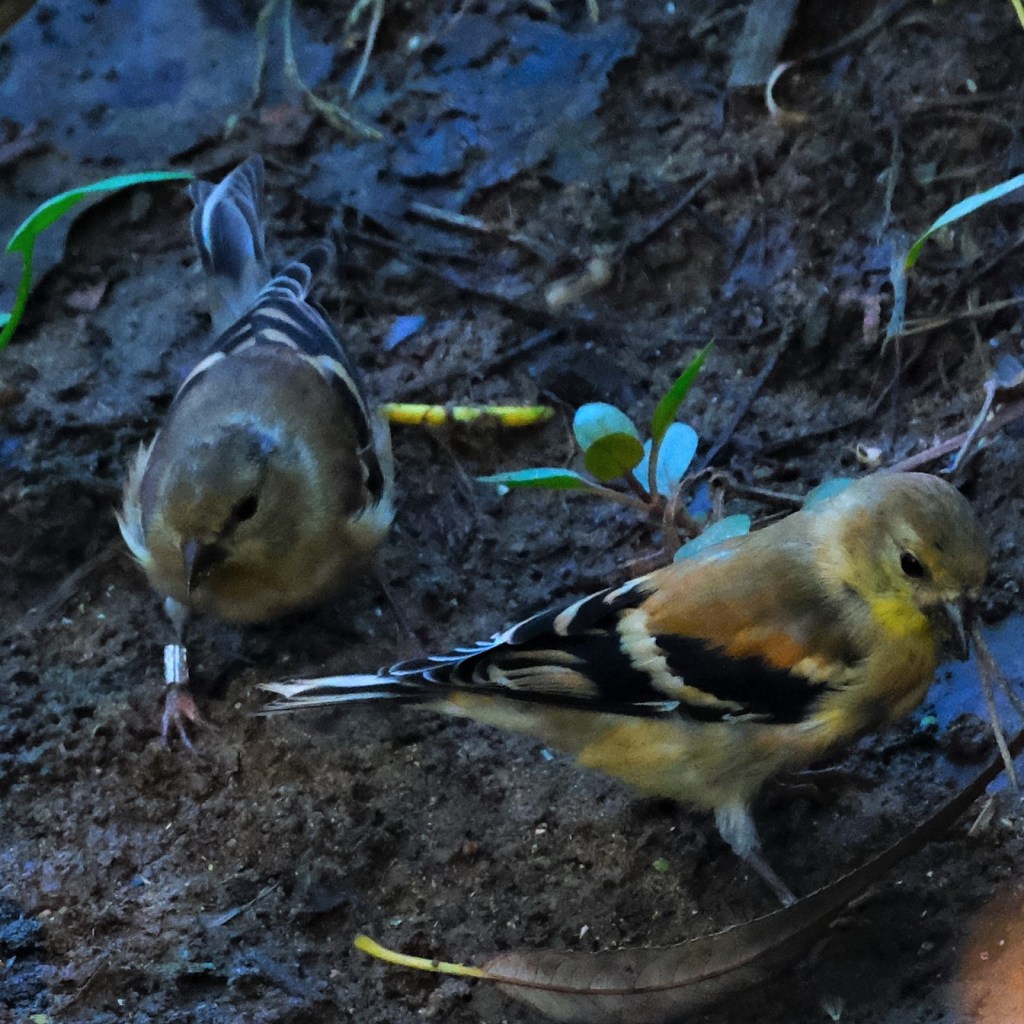
Here’s a sweet female goldfinch that was flitting around with her flashy boyfriend, but he was too shy to pose for the camera.

The monarchs are becoming easier to find, and soon they’ll be ubiquitous, we can hope. I haven’t shown you one since Sunday, so here you go.

Finally, the American white water-lily (Nymphaea odorata) blossoms on the river have just opened.

Let’s hope for better weather tomorrow and that I get to the park before the kids start swimming in the pond.

Lots of little ones

It was a picture-perfect morning in Estabrook with blue skies, calm winds, and cooler temperatures, and the little wood duck rapscallions were as energetic as ever on the pond.

I didn’t see the muskrat this morning, but a beaver swam by when I got to the river.

Further north, just about where the owl drama unfolded yesterday, I spotted at least 3 and maybe 4 great blue herons high up in a tree on the island, and here’s my best shot of 2 of them.

At the far north end, the shallow waters and sand bars round the northern island were littered with geese and mallards this morning, like we haven’t seen in weeks.

Here’s a pile of goslings snoozing in the sun:

Here’s a pair of mallards with young ducklings, perhaps the ones who fended of the owl yesterday.

And here’s a mallard hen watching over 7 very grown-up-looking ducklings, plus a pair of geese and one gosling in the background, for good measure. I don’t know about cygnets, we haven’t seen them in the park yet, but that one gosling sure makes for an ugly duckling.

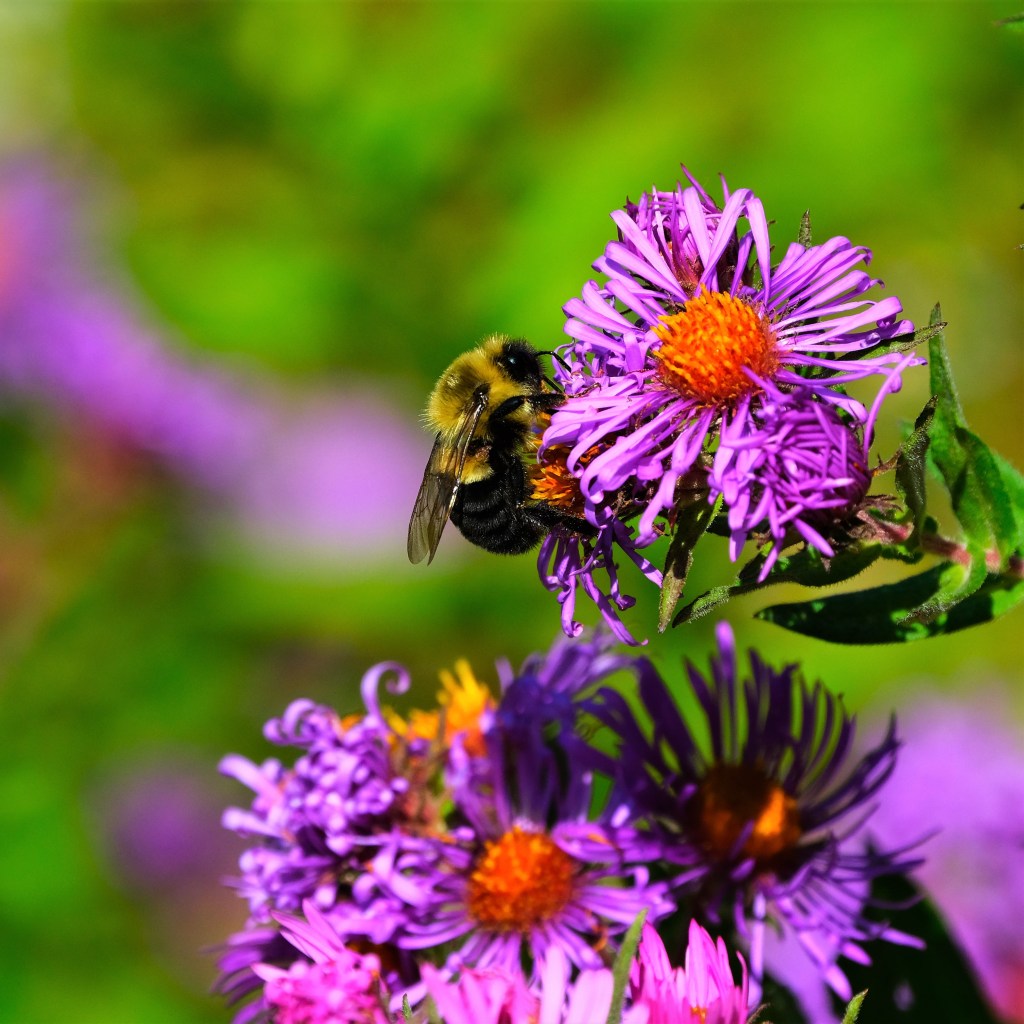
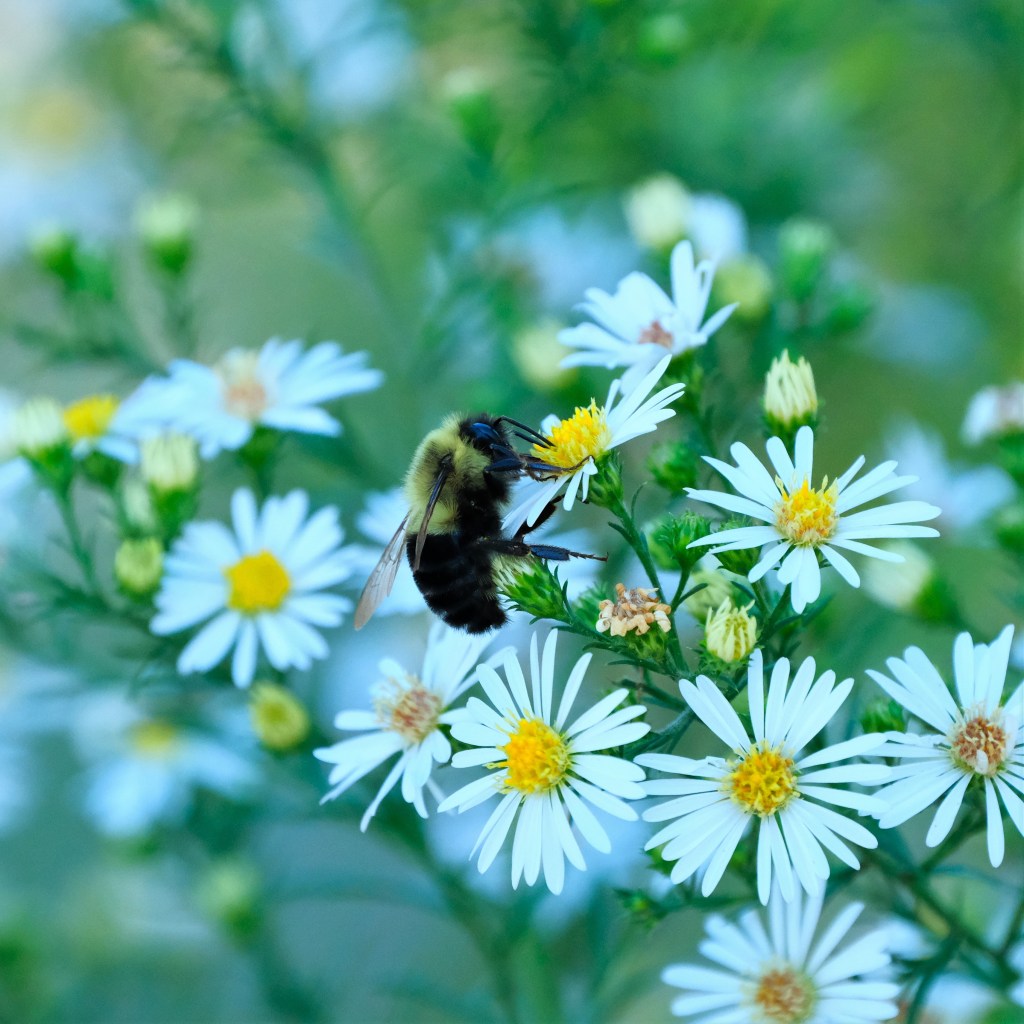
Meanwhile, back on shore, I spotted the largest bumblebee I recall ever seeing going to town on several blossoms. Just look at the tongue it has!

I read that “there are 21 species of bumble bees in the eastern United States,” and several have that black spot on their back, so I don’t have much hope of identifying which one this is.

Speaking of venomous critters, check out this spider! Sadly, I’m having no luck identifying it any further. Tough crowd this morning.

Happily, there are a few new blossoms in the park, which I have been able to find.

Here’s Browneyed Susan (Rudbeckia triloba), with 79% confidence, just starting to appear on the slope down from the beer garden.

Here’s meadow garlic (Allium canadense), with 93% confidence, opening throughout the park.

And here’s multiflora rose (Rosa multiflora), with 80% confidence, by the river at the north end, and which the bumble was enjoying.

Lastly, I’m starting to see land snails like this little guy on the mud flats, which are as dry now as I’ve ever seen them.

Some sights are worth the wait…

This morning got off to a pretty inauspicious start with grey skies and hardly a sight to see for the whole length of the river. Near the north end, at least, I did see the mallard ducklings again, but they high-tailed it for the far shore.

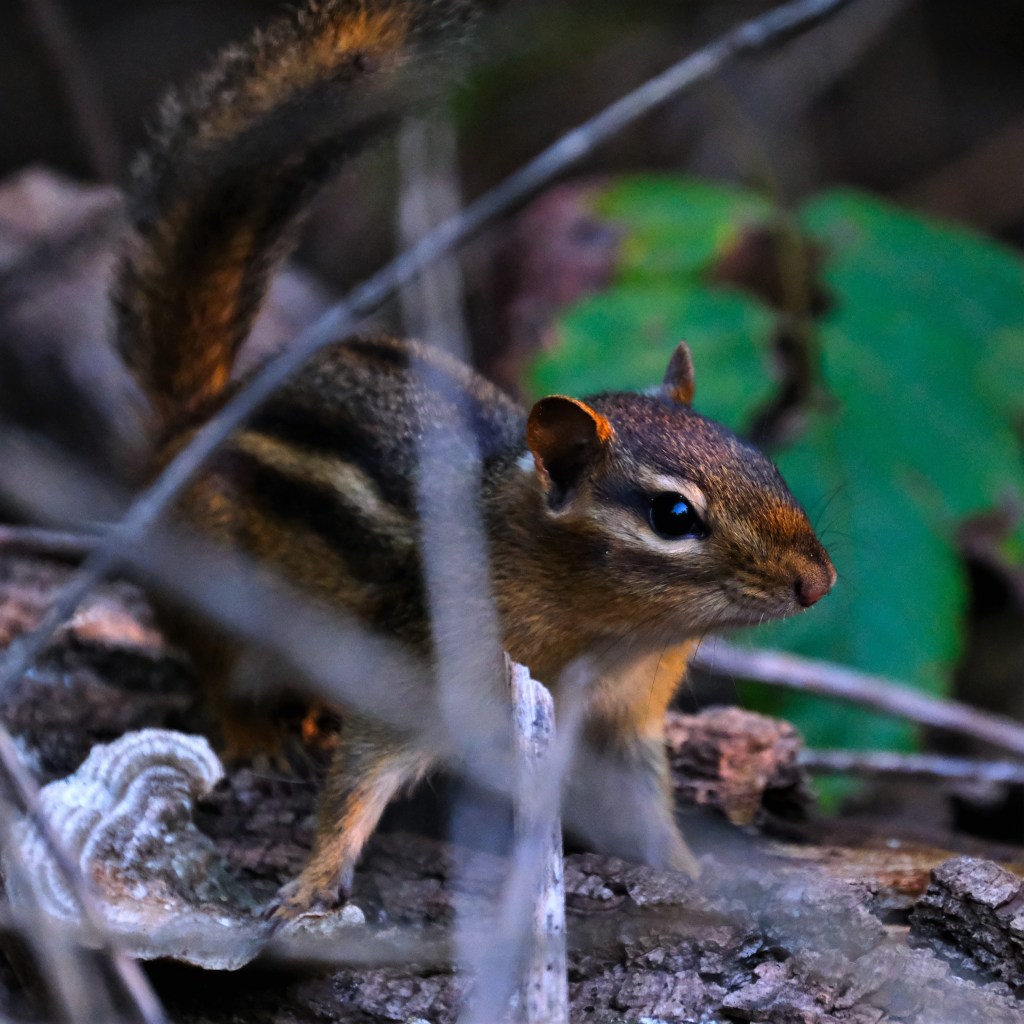
When I got to the downy and red-bellied woodpecker chicks in their nests, I tried to improve upon previous pictures, but without much luck. Instead, this cute little chipmunk must have taken pity on me and came out to put on a show for us.

And that’s when I heard some loud mallard honking, so I looked back south to see if I could see what all the fuss was about, and you wouldn’t believe who was back and looking like he’s ready for some breakfast: our old pall, the great horned owl.

But the mallards were not giving up so easily and really circled the wagons. At one point I counted 3 hens and a drake all protecting the 5 ducklings and each other.

The owl hopped down the log a bit, and the mallards held their ground (held their water?)

mallards on the left and great horned owl on the right

Then the owl surprised all of us and hopped into the water himself, but to the side, not toward the mallards.

He waded around a bit, and got a little closer to the mallards, who oddly did not just swim away, as they do with me.

But he never really made a move, and maybe all he ever wanted was a sip of that sweet, sweet Milwaukee River water and a bath.

He soaked for a bit…

Hopped back up on his log…

Then he flew up into a big tree across the river, a sight which I failed to capture, and the mallards went right back to going about their business. Crisis averted for now.

After all that excitement, I didn’t even bother to continue all the way to the north end, and headed straight for home instead. As I passed the pond, I thought to myself, what the heck, I might as well check in. I’m right here anyway. Well, I could hardly believe my eyes.

That’s right, a wood duck hen appears to be taking her nine (9!) ducklings on their maiden voyage this morning.

The little rascals were quite rambunctious and would not clump together as photogenically as the mallards do. The best I can do for a portrait is crop out a few.

Finally, after all that, as if the morning was really trying to drive the lesson home that I just need a little patience, even a muskrat came out to say hi.

And with that, I drifted home on a cloud for the umpteenth time this year.

A report with so much variety, I couldn’t think of a title before I pressed “publish”.

The mourning warbler was in the same tree this morning, by the soccer fields, sending out his call in hopes of finding someone to share Estabrook Park with, and I sure hope he succeeds, don’t you?

Under the bright overcast, I think you can see his colors a little better than yesterday. He is a tiny bird, and thank goodness he likes that dead oak tree because in the birch tree right beside it, which is only half leafed out and looks like it is barely hanging on, I can never find him, despite his bright yellow belly.

Along the river, I stopped by the downy woodpecker nest again just in time to catch this quick transfer.

But while I was there keeping my distance and waiting for another shot, I could here both a red-bellied woodpecker calling and another little incessant chirping. Sure enough, almost right above where I thought would be a nice safe distance from the downy nest, it seems I was too close for comfort to a red-bellied nest, so I snapped this pic of a young red-bellied woodpecker looking for Mom or Dad or both to deliver its breakfast. Then I made like a tree and leaved.

And, as if all those woodpeckers weren’t enough action, here’s a bold little red squirrel sneaking a maple tree seed from under the noses of a passel of its big grey cousins.

That’s become quite a busy spot in the woods.

Meanwhile, out on the water, I spotted a few mallards, without ducklings today, a couple of sandpipers, and this family of geese. I actually bumped into the geese on my way north and again on my way south, and I’m pretty sure there are just 4 goslings and only 1 adult. They must have run into some serious trouble and still appear to be making the best of things. A buddy of mine from high school, Rick, had an aunt who used to say, “When you have no choice, nothing is hard,” and that seems to apply here.

I also ran into another dear friend from last summer, this stunningly beautiful giant ichneumon wasp (Megarhyssa atrata) with an ovipositor that looks like a cardiac needle, and now that we’re old friends, I didn’t need to pick myself up off of the ground before snapping this shot. She continued north searching for hardwoods in which horntail wasps have laid their eggs, and I continued south.

Finally, thanks to a tip from Kate B., a fellow birder and frequent park visitor, I knew to look for this magnificent creature, a common snapping turtle (Chelydra serpentina) of good size, who appeared to be making his or her way to the river. I’ve seen how far they can reach with their razor sharp beaks, and I didn’t have a snow shovel handy, which I used to keep in the trunk of my car all summer for just such purposes in upstate NY, so I did not offer to help with the journey as I could with the red-eared slider last summer.

By sheer coincidence, he or she was almost directly below the mourning warbler, who was in the same tree as two hours before, and I enjoyed his smooth jazz stylings as I took these pictures.

Lastly, long-time reader and frequent commenter, Karen W., reports that the monarch butterfly I showed you yesterday and guessed was a female, instead “looks like a male monarch. You can make out a faint spot in the closed wing photo. I’ve raised monarchs for 2 decades and have gotten good at telling male/female even with closed wings.”

I’m not going to argue with 2 decades of experience.

I know I already wrote “finally” and “lastly”, but Karen’s correction reminds me that I also goofed up on the three-toed woodpecker identification from out west last week. What I thought was an American three-toed woodpecker in Glacier National Park was actually a black-backed woodpecker.

Instead, I found the American three-toed woodpecker, with a patch of white on its back, in Yellowstone just a few days later.

Thanks to the keen eye of instagram follower magszpot, who reports “I only knew because I recently completed a painting project at work where I painted the different woodpecker species in Wisconsin. The black-backed can be found in northern Wisconsin, although I have never seen one myself.”

Talk about luck, eh?

It’s good to be back…

Aaaah. We had an amazing trip, and I’m thrilled to have had the opportunity to experience such wonderful places, but it also feels really good to be back in Estabrook. I like what you’ve done with the place while I was gone.

Frogs are signing on the pond and on the river.

The ebony jewelwings are back.

One of the beaver swam by to say hi.

A fresh batch of mallard ducklings are exploring the river in Mom’s wake.

The downy woodpeckers from a couple of weeks ago are still raising their chicks.

A rabbit was out munching on the clover in the sun before it got hot.

A pair of killdeer were especially noisy on the river at the north end.

A monarch was out and looking for just the right perch, and it took her several tries before she opted for the fresh red clover (Trifolium pratense) this morning. (If he’s a he, not that it really matters I guess, he’s did a good job of hiding his identifying spot on his hind wings.)

Speaking of clover, there are a few new blossoms open in the park. Here’s some fleabane, which has been up for a couple of weeks, but not very photogenic until now.

Daisies.

Tickseed.

Wild rose, maybe prickly wild rose (Rosa acicularis), prairie rose (Rosa arkansana), Virginia rose (Rosa virginiana), or Wood’s rose (Rosa woodsii), growing right at the end of the board walk below the beer garden.

Foxglove beard-tongue (Penstemon digitalis) on the side of the bluff.

Finally, a new warbler to us, a mourning warbler (Geothlypis philadelphia), was serenading the soccer fields this morning with all his might.

We’re in his breeding range, so maybe he’ll stick around for the summer. We can hope, right?

Field Trip Report, Day 7.

It was a great day for mammals in Yellowstone. There were plenty of bison, of course, blocking traffic in several cases, and a few elk about, but the big find, at least for me, was this wily coyote looking for something good to eat along the banks for a stream. Here you can see him noticing me standing on the opposite bank taking his picture.

Here you can see him showing how much he cares that I’m there.

We had come to the park early in hopes of spotting a moose, but today was not our day for moose. Instead, the mammals we saw, which were new to us, were much smaller, including this Uinta ground squirrel (Urocitellus armatus) munching on a dandelion blossom.

And this least chipmunk (Neotamias minimus), getting in on some of that dandelion action.

The early start also introduced us to a few more of the birds of Yellowstone, the biggest of which was this sandhill crane (Antigone canadensis).

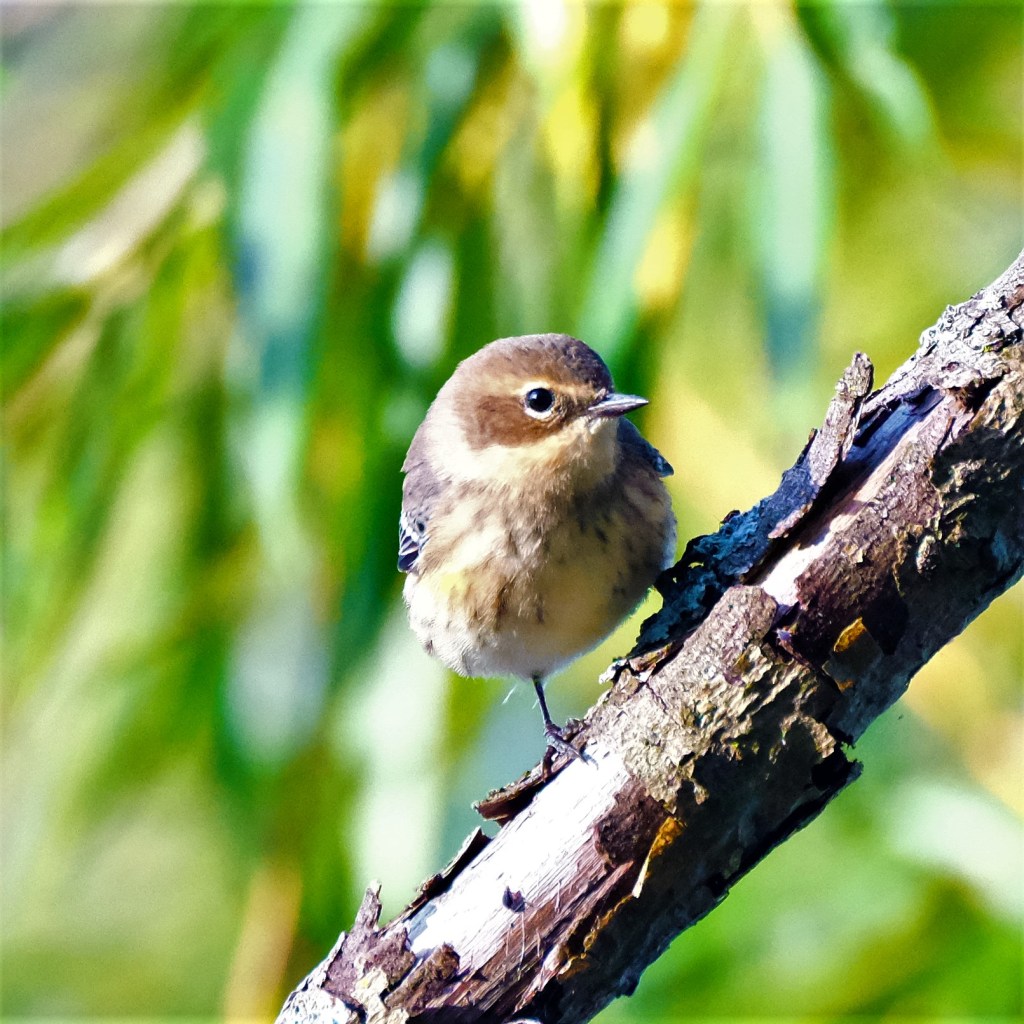
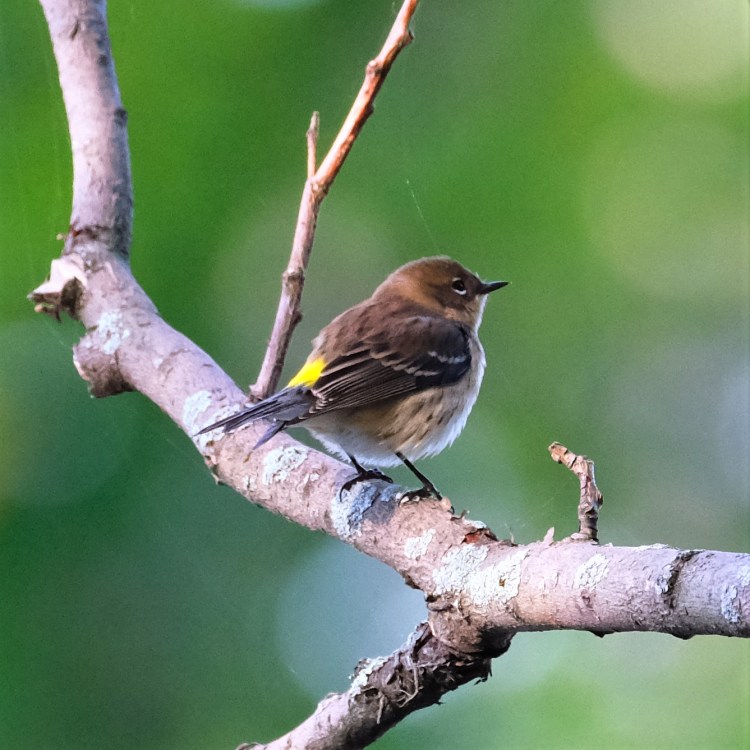
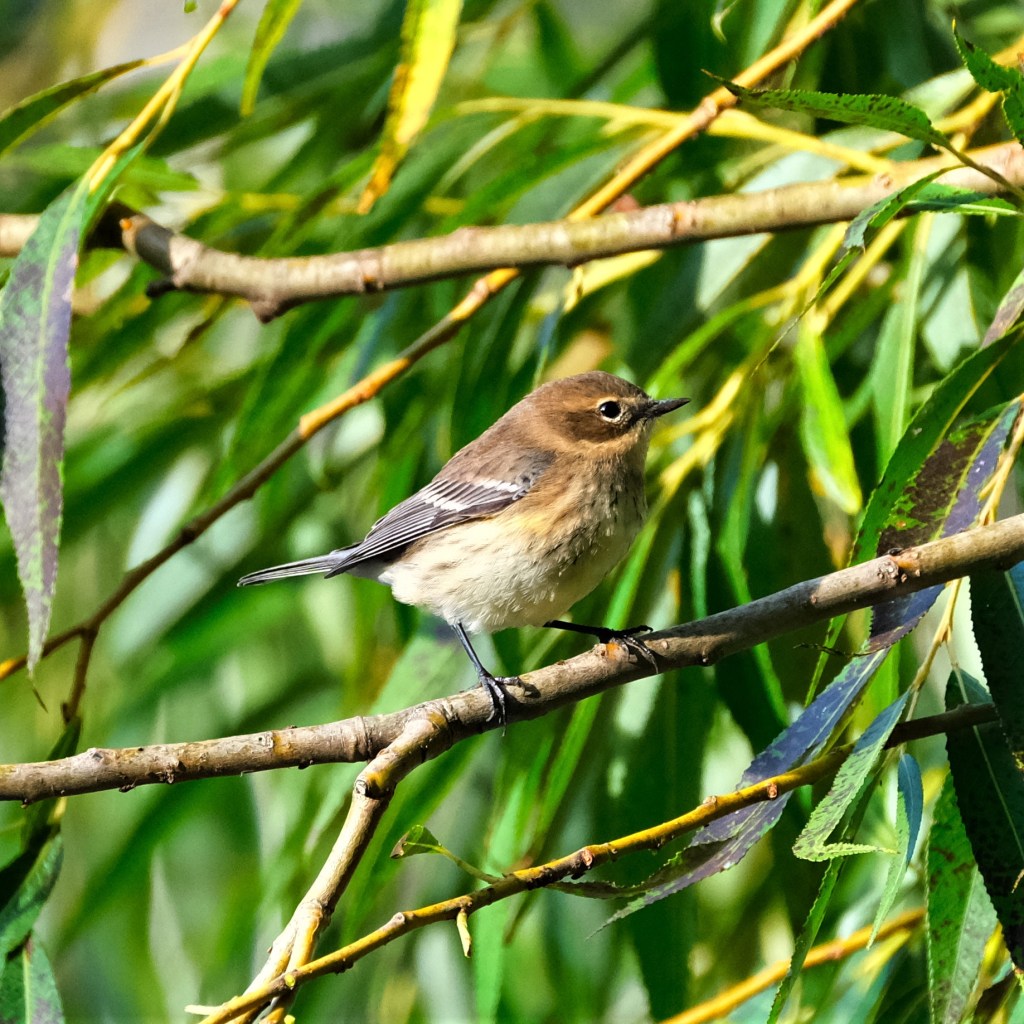
And the smallest was either this female yellow warbler (Setophaga petechia)

Or this male Wilson’s warbler (Cardellina pusilla)

Or even this little masked bandit, who is a male MacGillivray’s warbler (Geothlypis tolmiei) and completely inside his range, not the male mourning warbler (Geothlypis philadelphia), who would be quit a bit out of his range and which I had mistakenly thought at first but spotted in Estabrook only two days later.

In between, there was this Canada jay (Perisoreus canadensis) causing a ruckus among the other birds in this pine tree.

Closer to the ground, I spotted a pair of these amazing fire-rim tortoiseshell or Milbert’s tortoiseshell (Aglais milberti) butterflies.

And Anne spotted for us this equally stunning variegated fritillary (Euptoieta claudia).

Finally, there are plenty of pretty flowers in bloom, such as this shooting star, known variously as Bonneville, desert, or slimpod (Dodecatheon conjugens).

And this lily, known variously as yellow avalanche, glacier, or dogtooth fawn (Erythronium grandiflorum), and which looks quite similar to the yellow trout lilies in Estabrook, eh?

Welp, it’s time for dinner, and tomorrow is another travel day, so that’s probably it till Sunday. See you then.