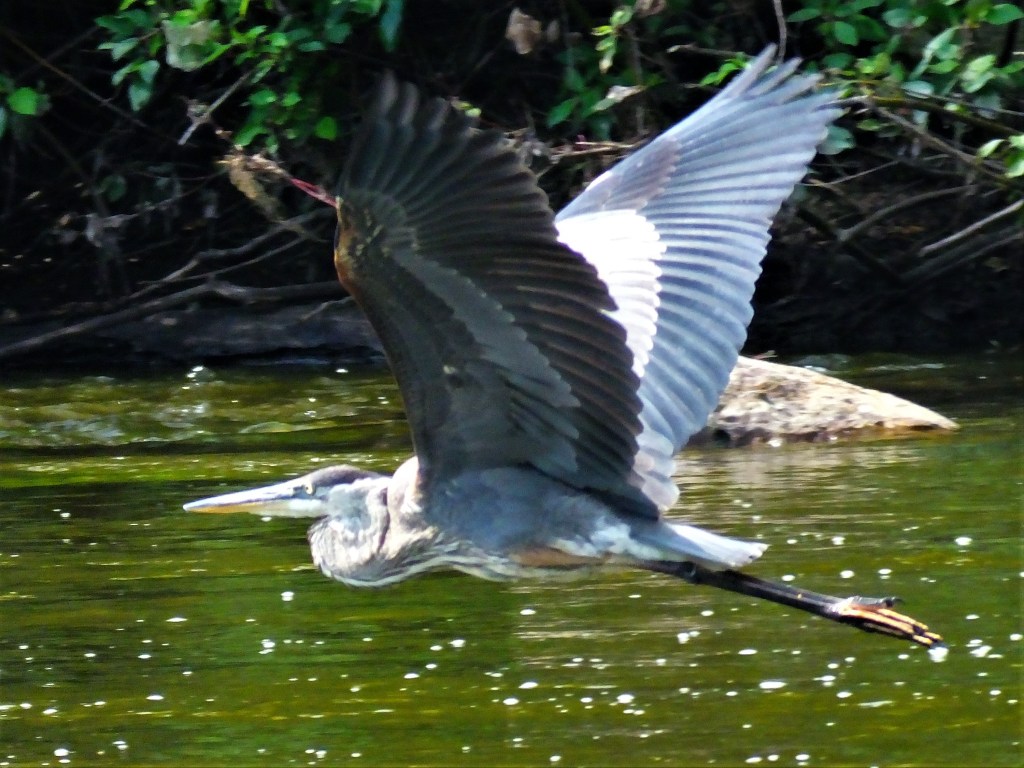
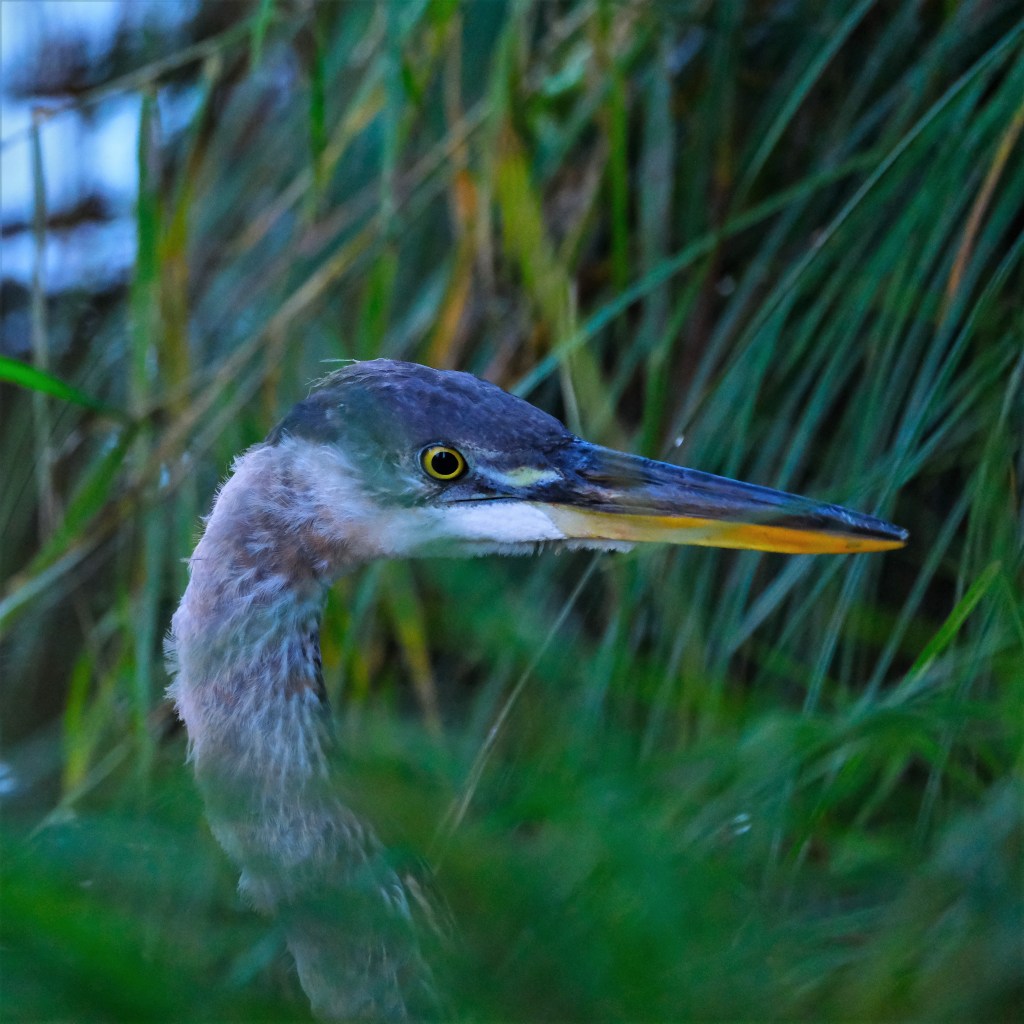
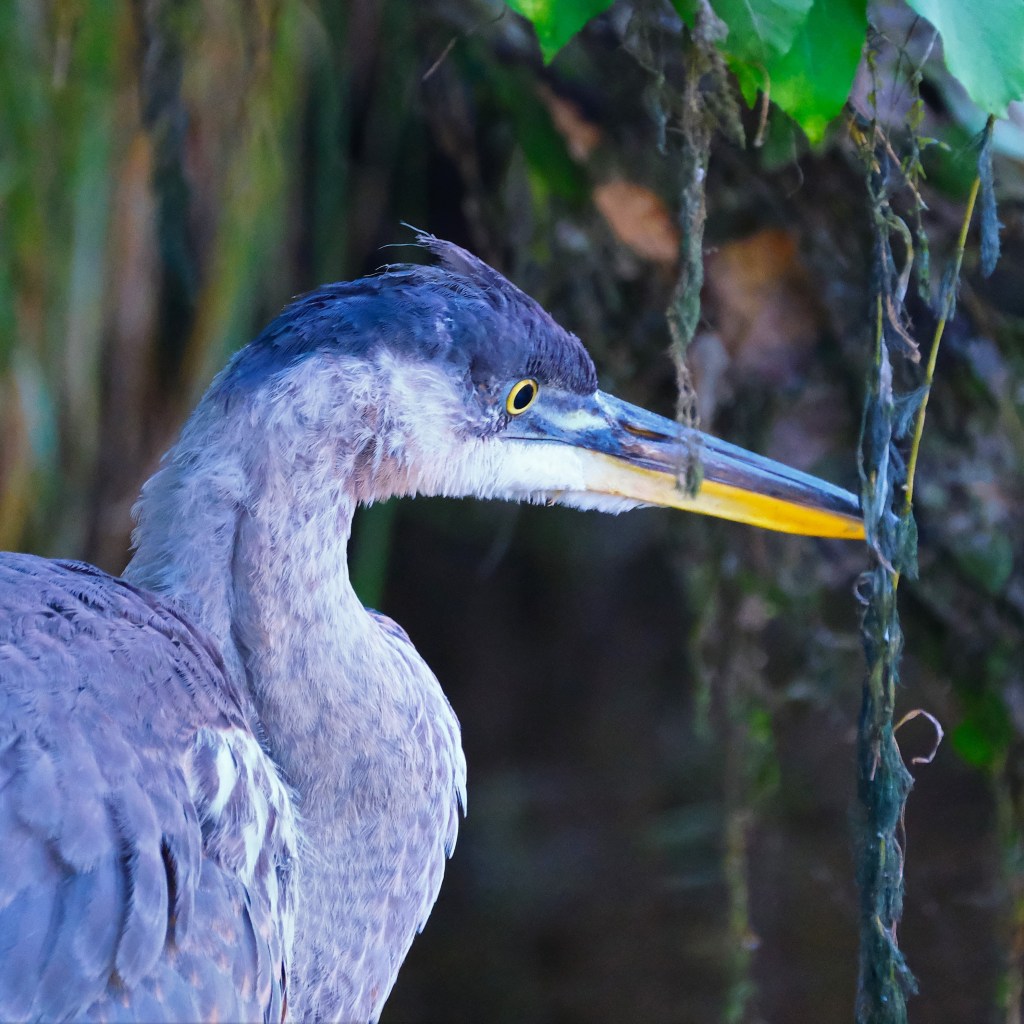
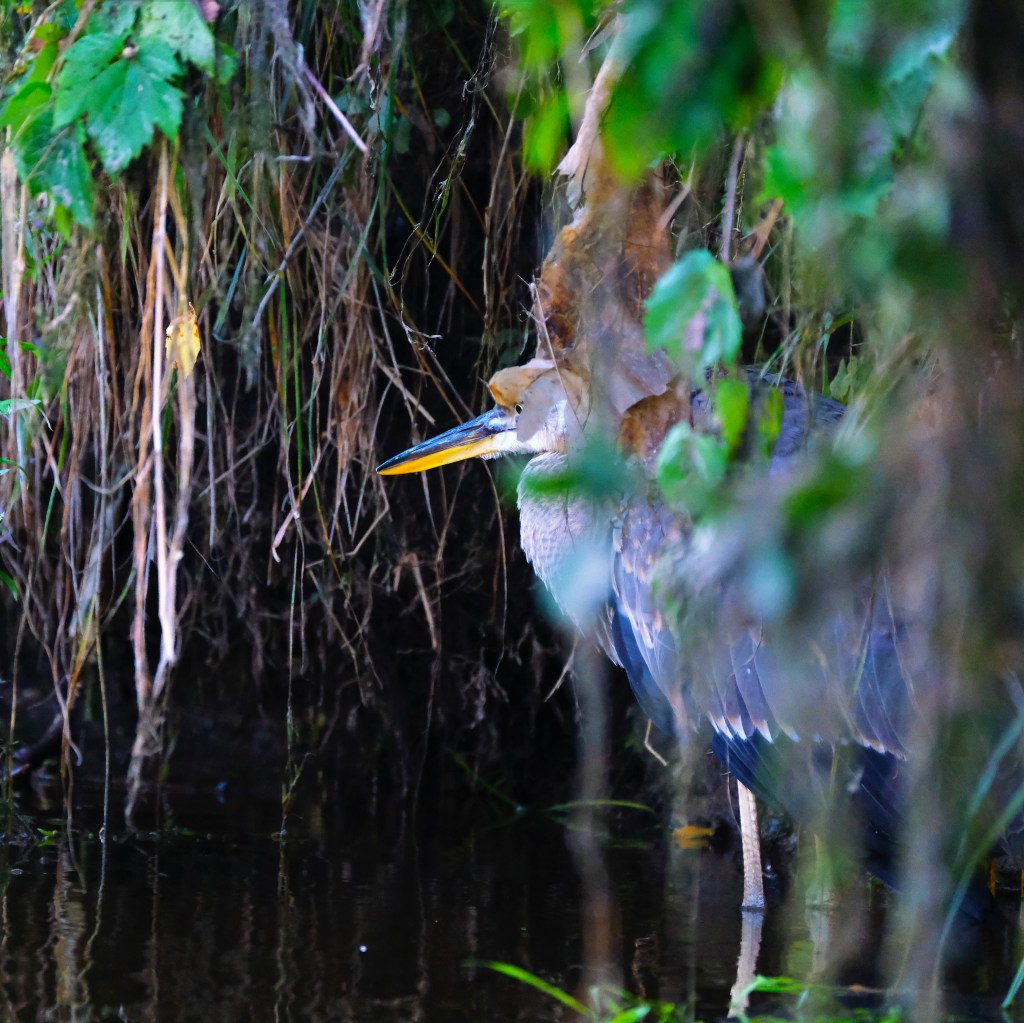
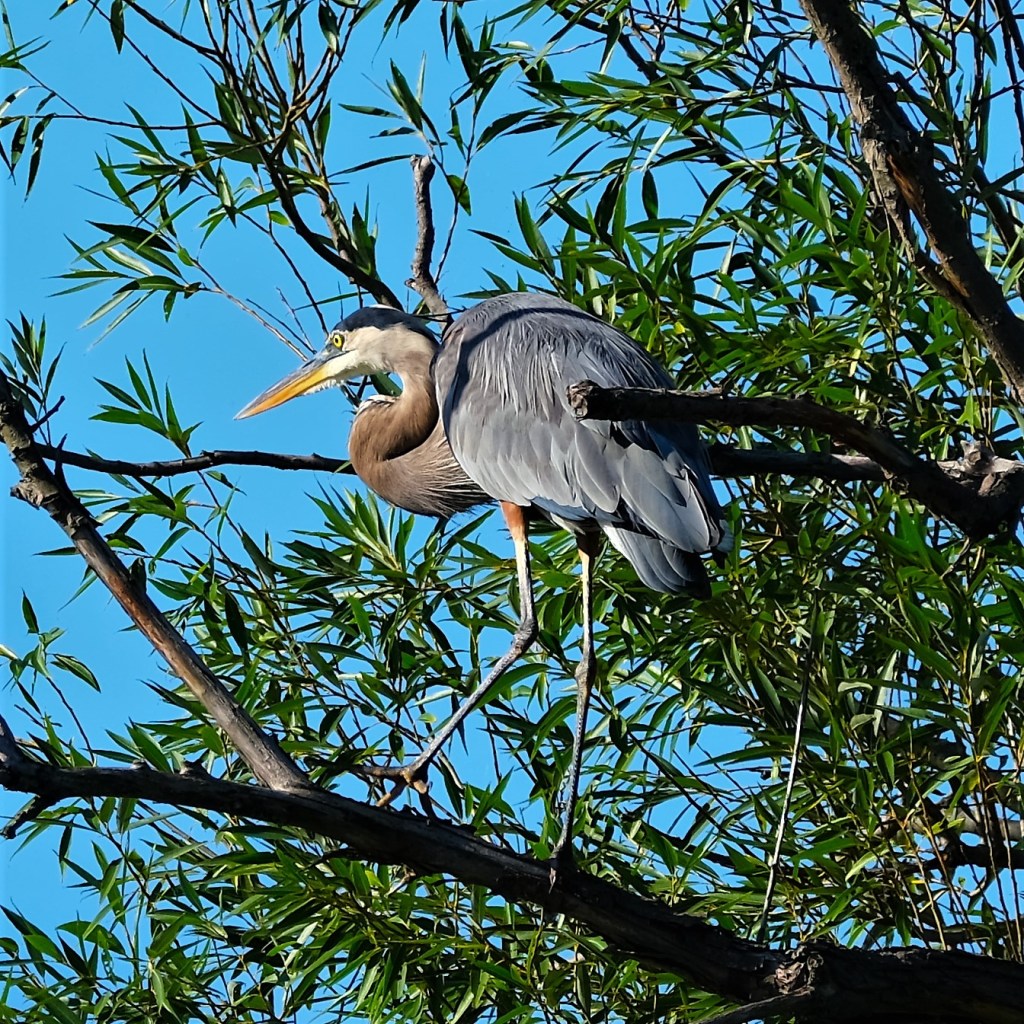
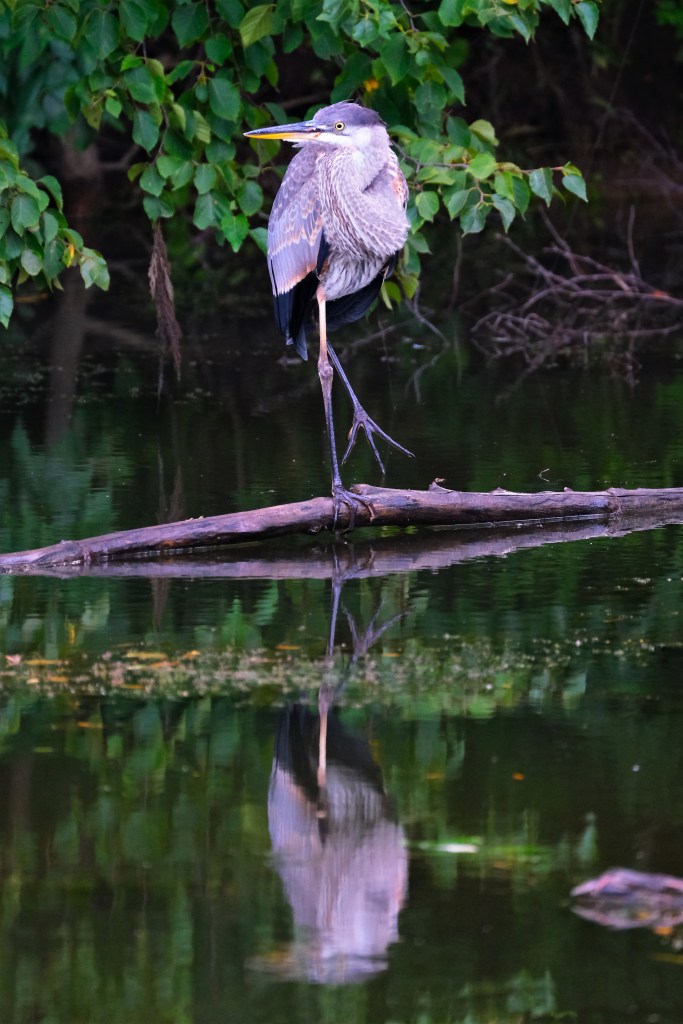
I did bring my old camera with me and got just a couple of images. First is a slightly blurry image of a great blue heron who did not wish to be fishing so close to our cleanup operation.
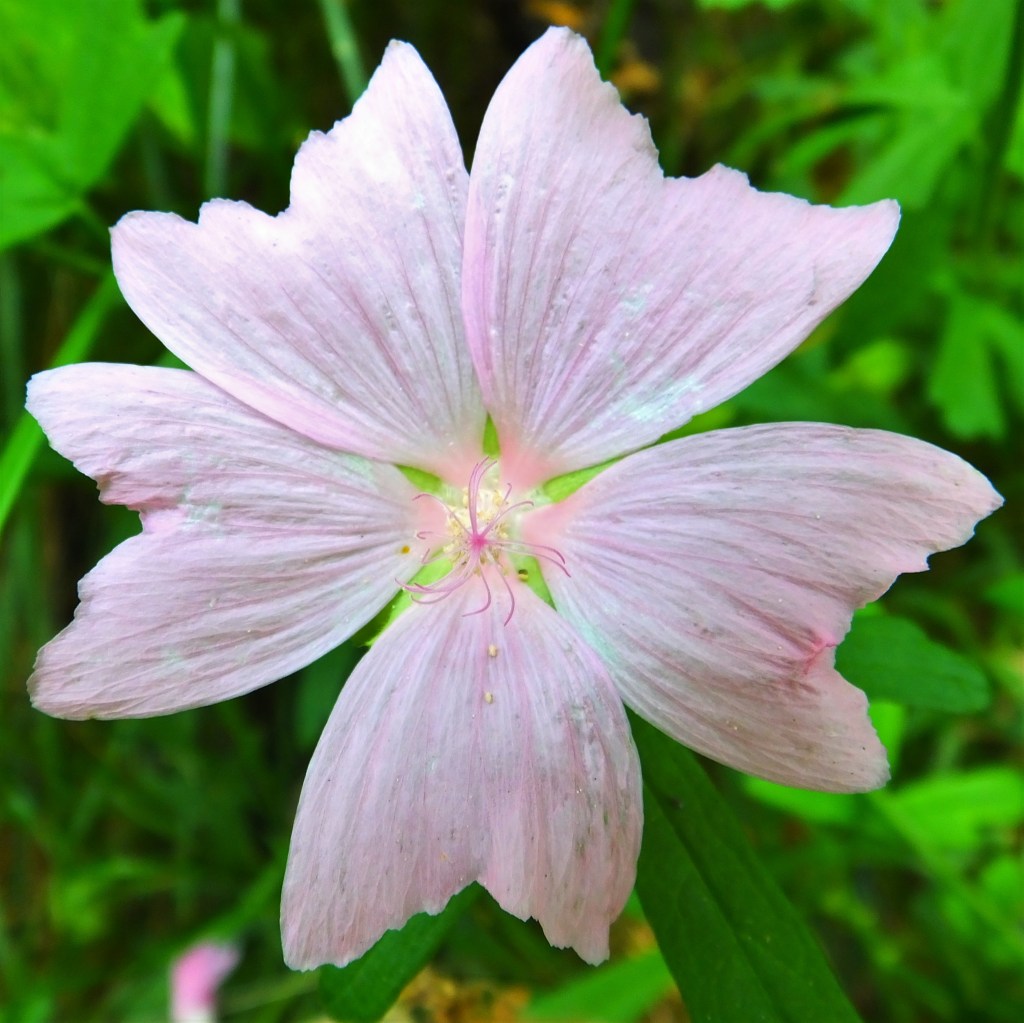
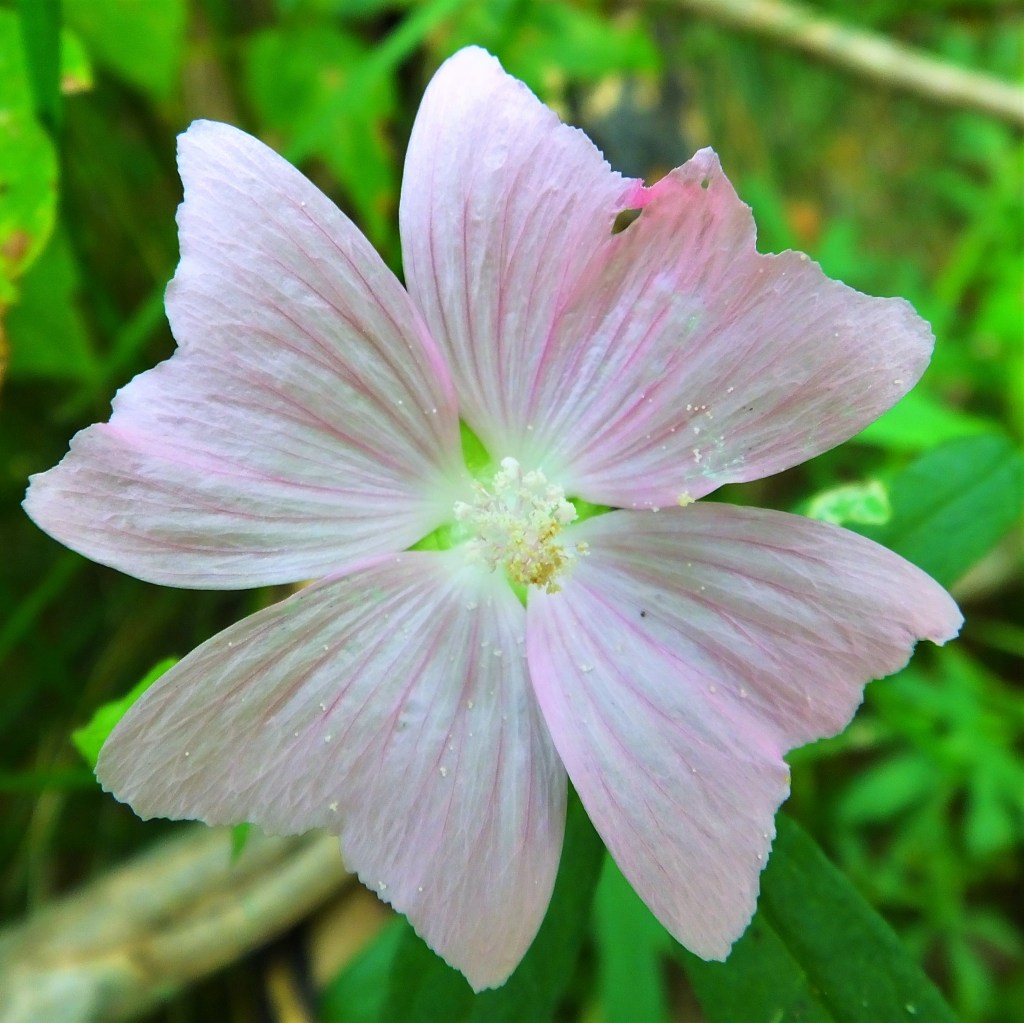
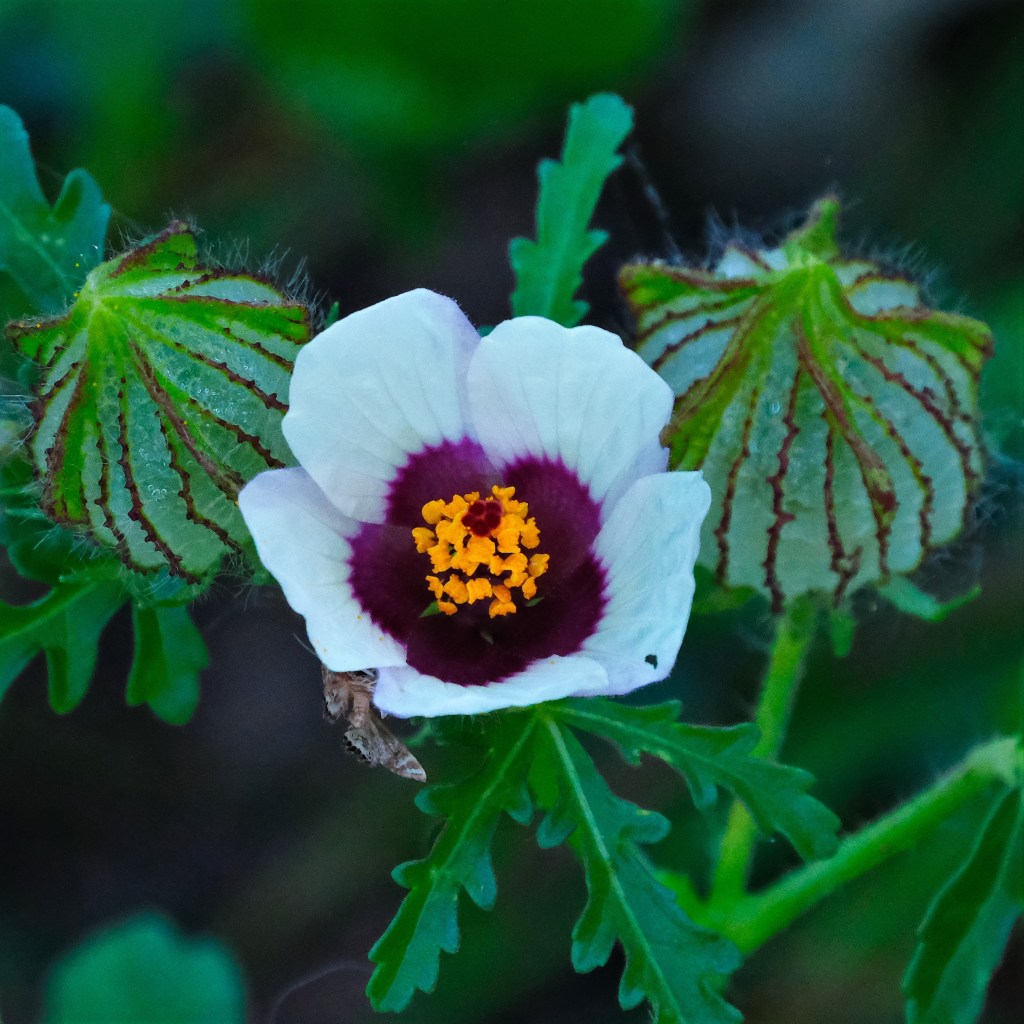
And the second subject is of a pretty blossom that I don’t believe I’ve seen before. It looks like the wild geraniums from earlier in the summer, but bigger. Instead, it is mallow, probably Malva alcea, which goes by pink mallow, vervain mallow, greater musk-mallow, and several other names, but possibly Malva moschata, which goes by musk mallow.
Yesterday morning was so foggy that I decided to wait until this morning, and guess what. Today was just as foggy as yesterday, so I waited for the sun to burn off the fog and finally headed to the park.
When I got to the pond, there were a couple of green herons chasing each other around and a few ducks, but no great pictures, so I headed to the river, and look who I found there.
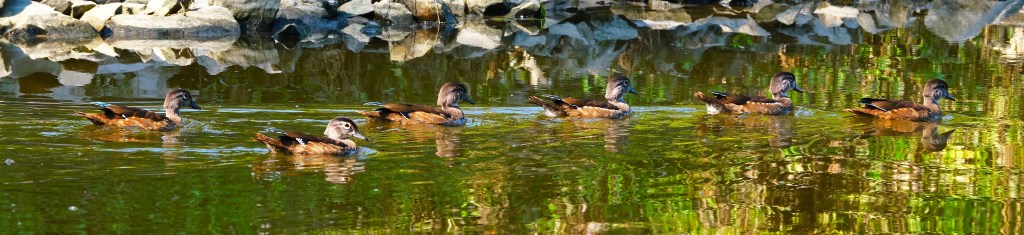
It looks as though our family of wood ducks, the five nearly-grown-up ducklings and their mom, all flew down to the check out the river. Good for them, and no wonder the pond seemed a bit empty this morning!
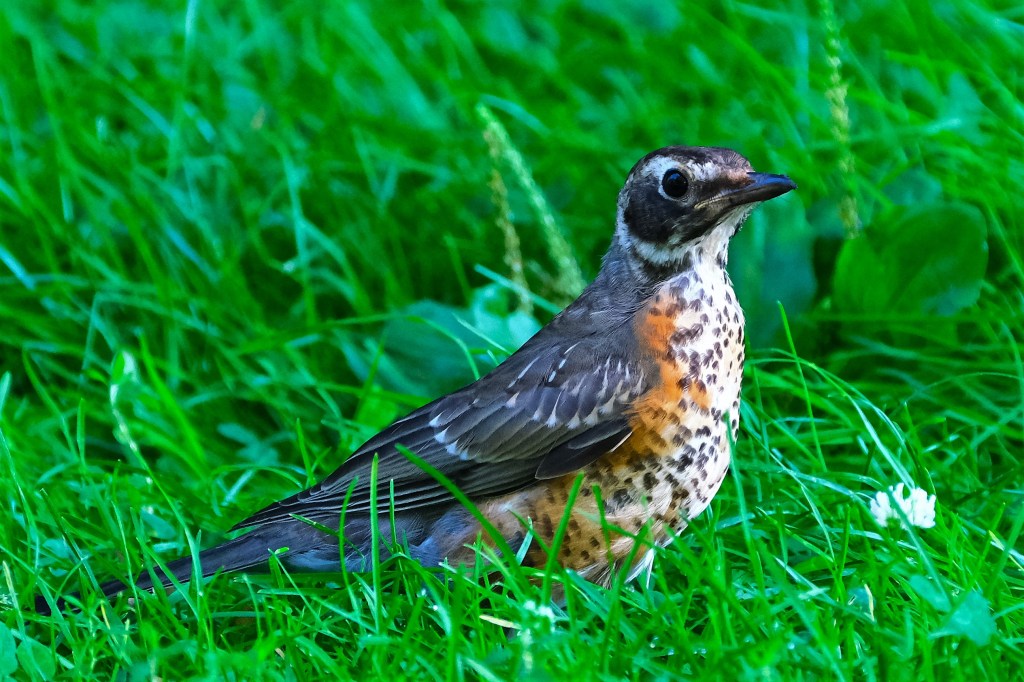
I also saw a bunch of mallards, at least one goose, and a blue heron fishing on the river, but too far out for good pictures, so I headed back to the pond, and look who I spotted along the way. Another fledgling, still in its spots, out looking for breakfast in the grass with the rest of the robins.
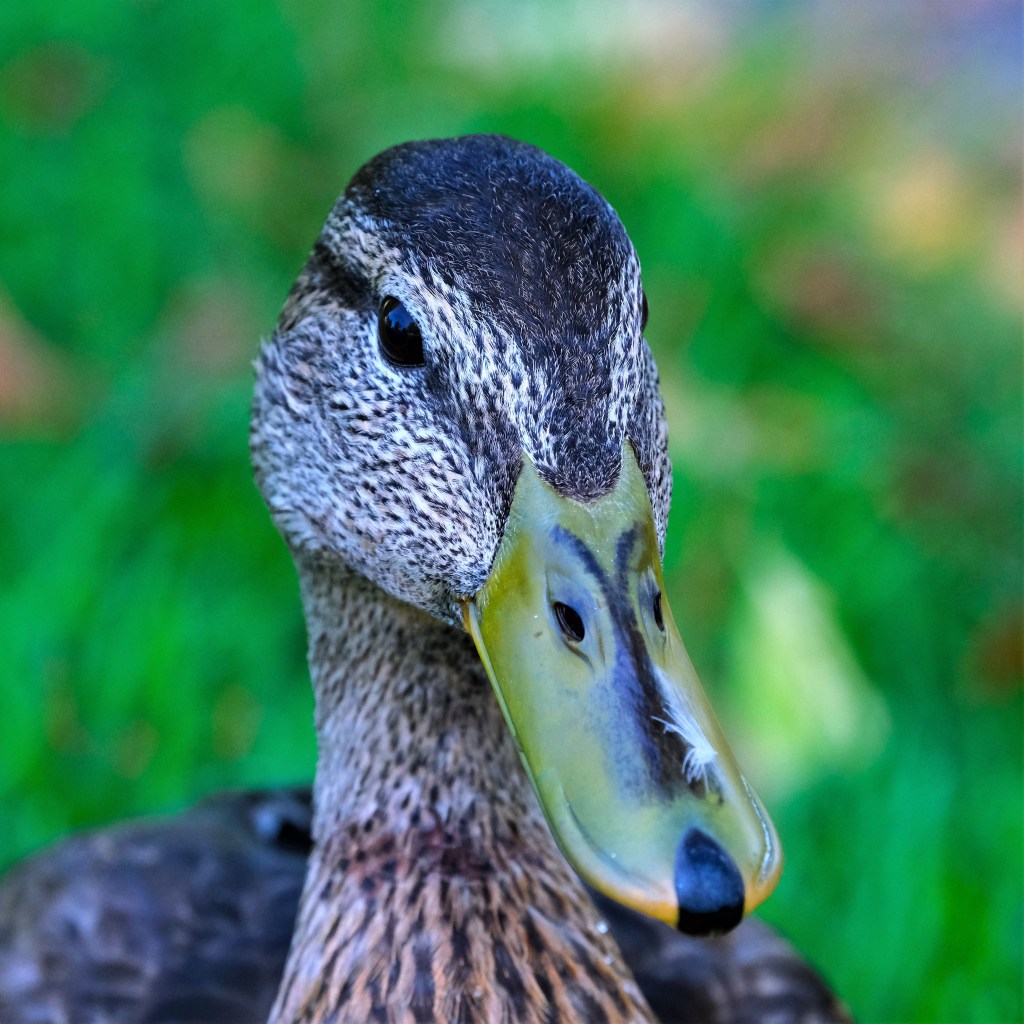
At the pond, there were a couple of mallards relaxing in the shade up on the west lawn so I stayed back a bit as I surveyed the scene, and look who walked across the path and right over to me, probably to see if I had anything good to eat.
Meanwhile, the two green herons were still there, and I headed south to see if I could get close again to the one fishing there. I did get one picture, but as I inched closer, it soon objected quite noisily, and that session was over.
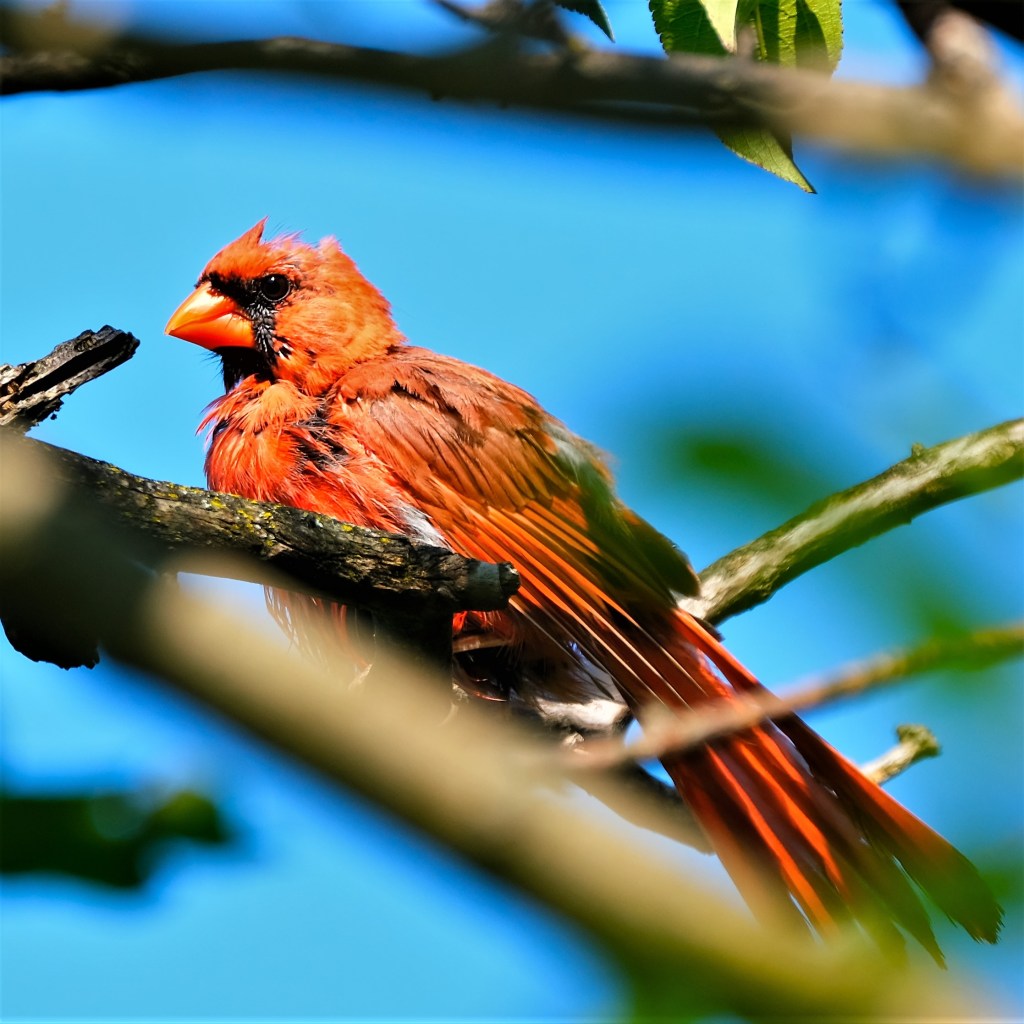
So I headed north along the east side to see if the one in the northeast bay would be more tolerant, and look who I saw along the way. It looks like another cardinal with feather issues, but I can’t tell if they are still coming out or already growing back in.
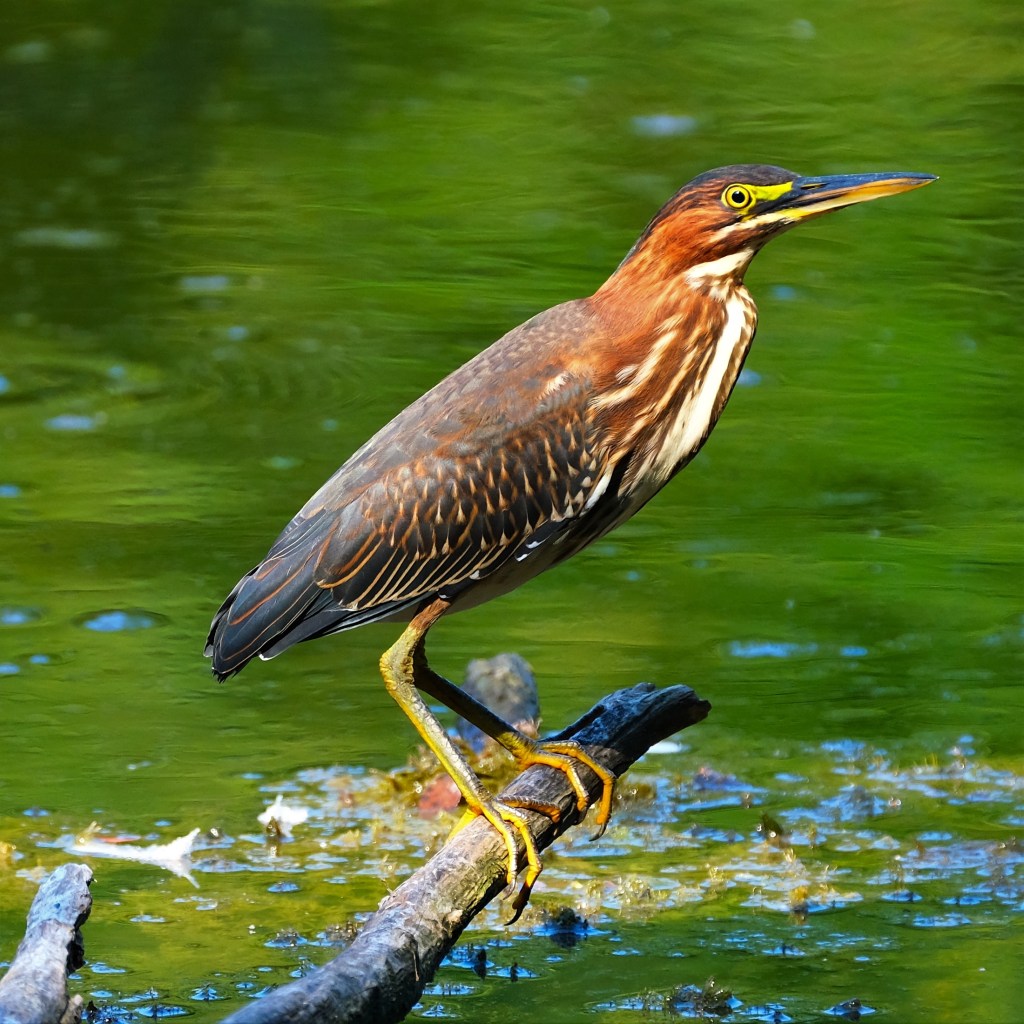
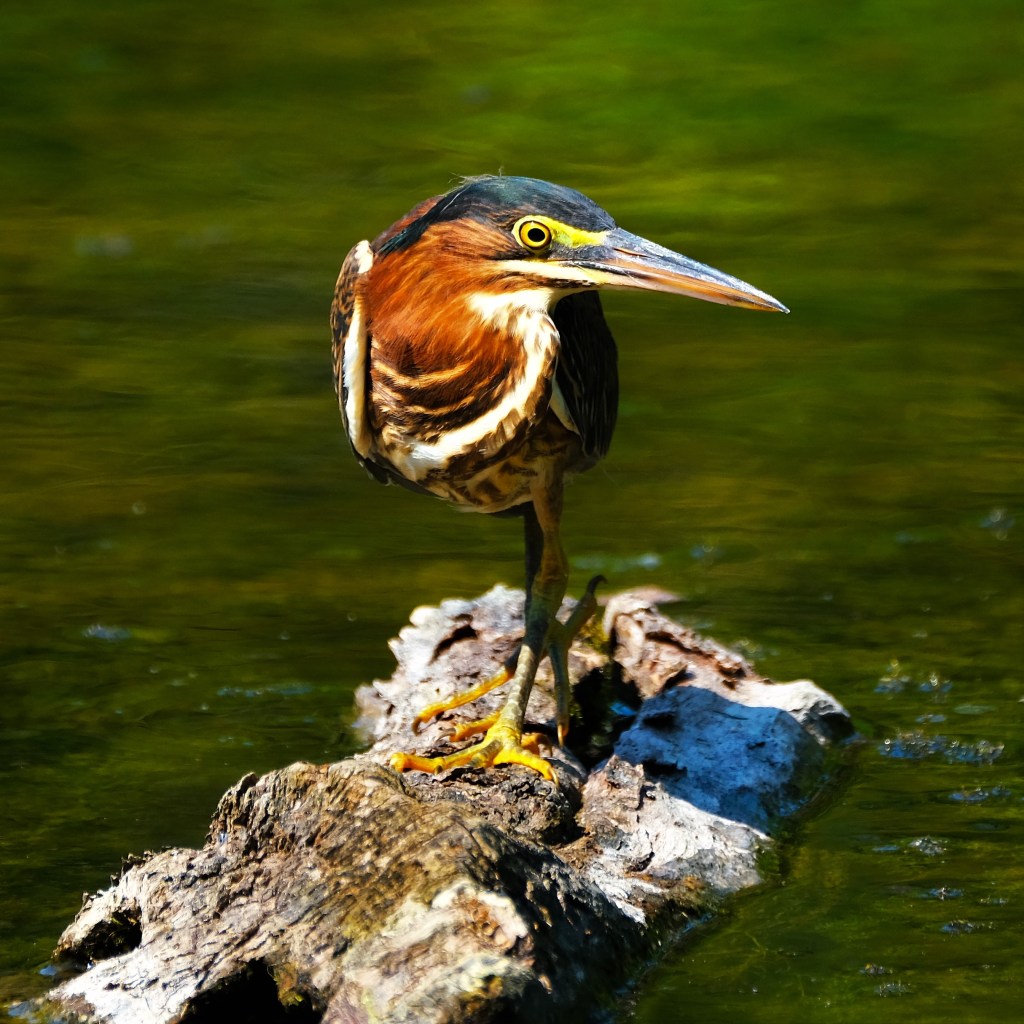
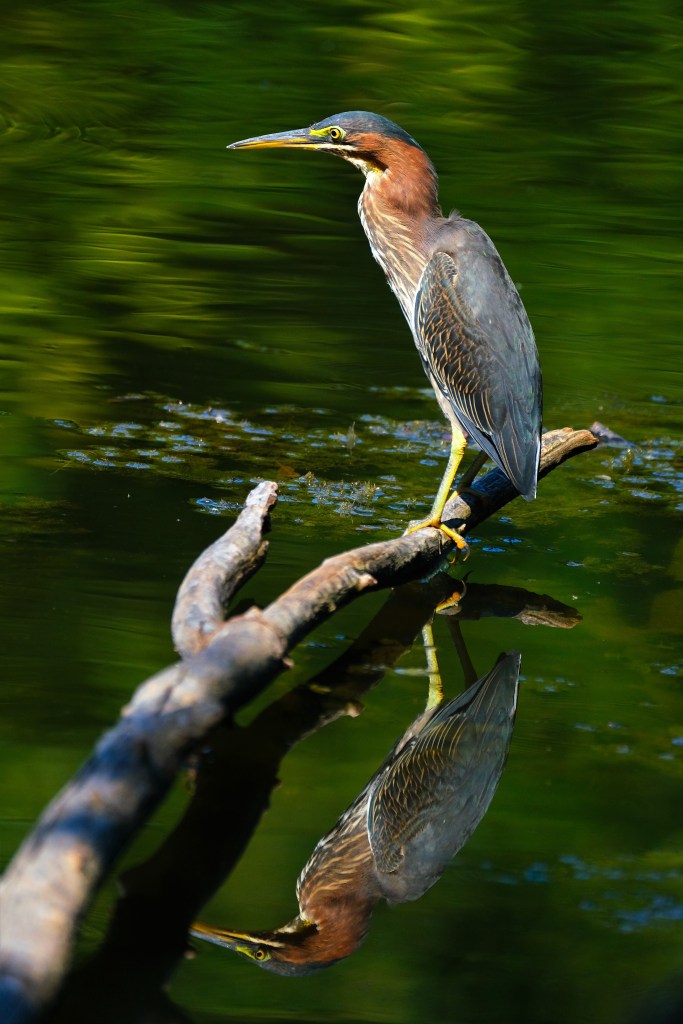
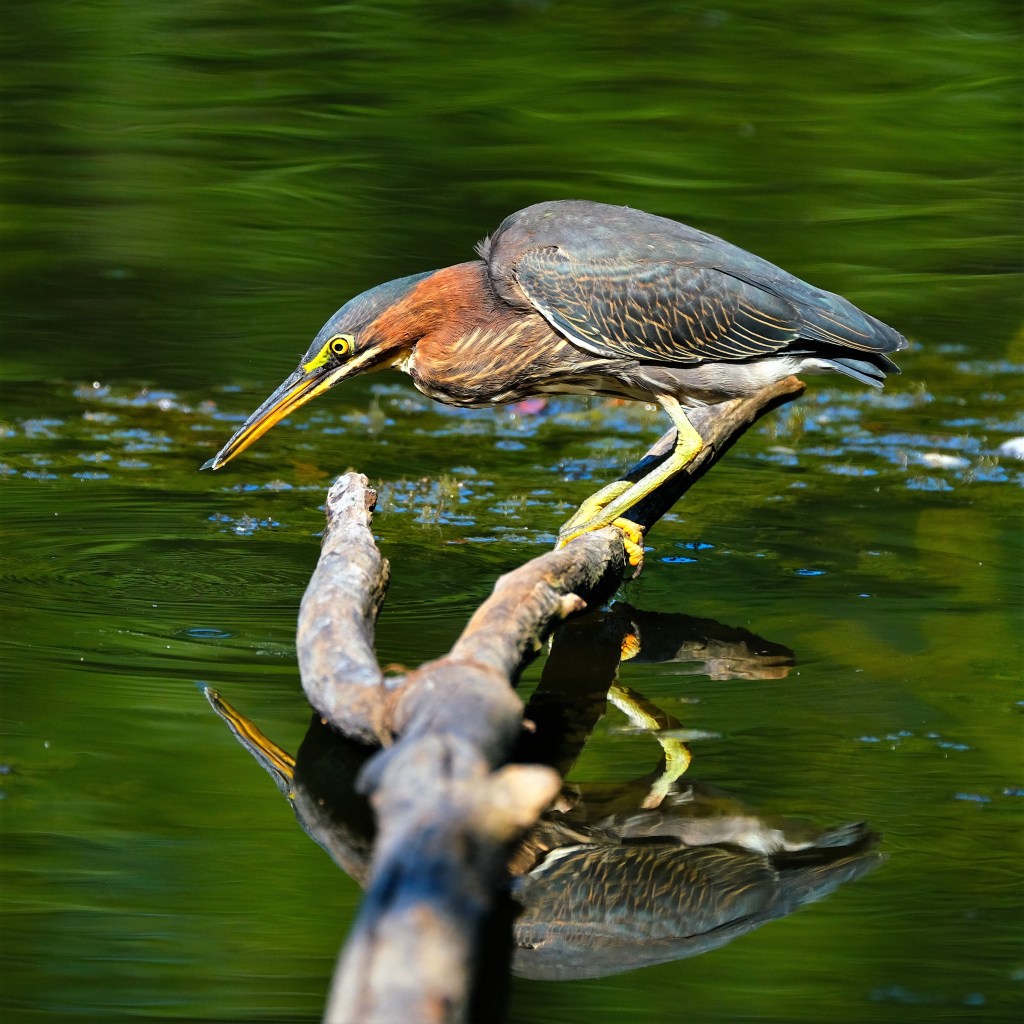
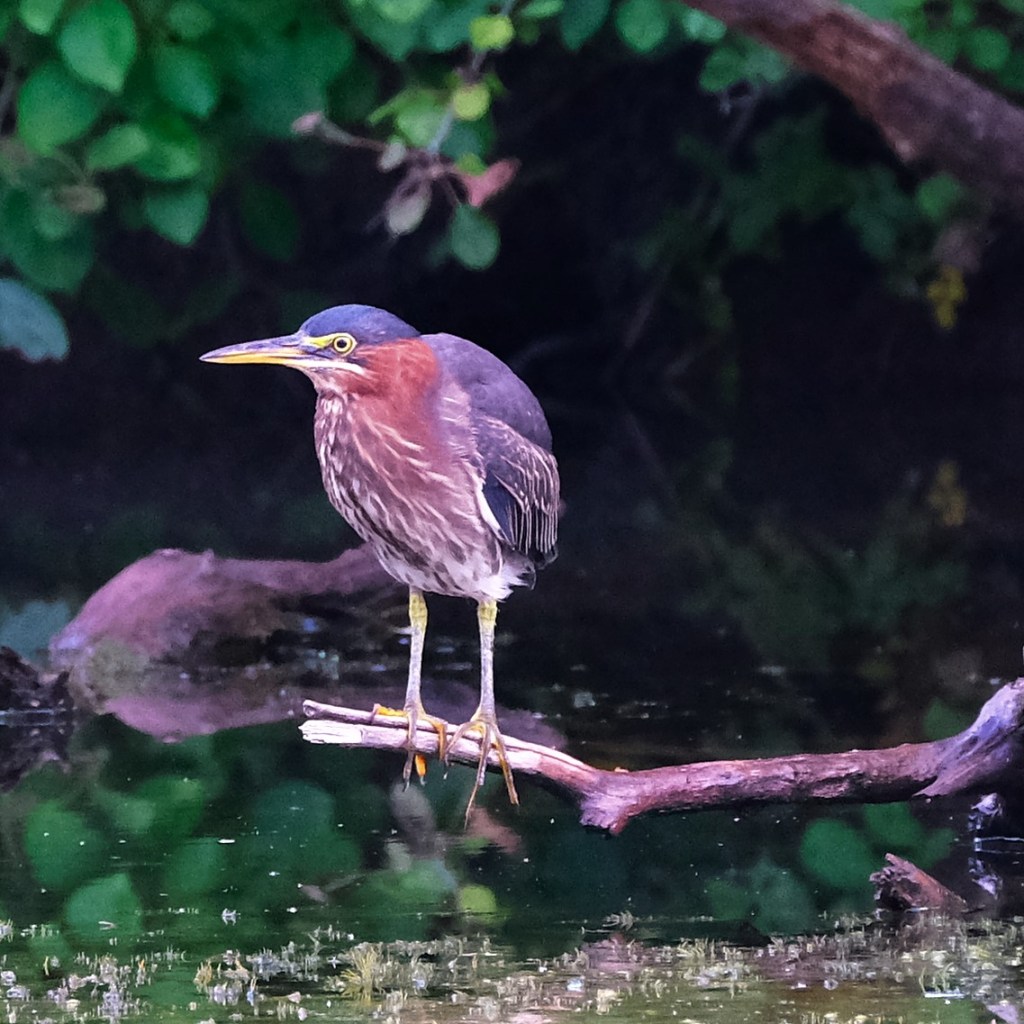
Anyway, the green heron in the northeast bay was very accommodating, perhaps the same bird as on Sunday, and we got right to work with the sun at my back.
Lastly, just as promised, here’s the first aster of the season, most likely bigleaf aster (Eurybia macrophylla), growing beside the parkway.
It was still a pretty nice morning, although temps and humidity are creeping back up, but summer is really starting to wind down. The cacophony of bird chatter is pretty much gone, and all that is left is the quiet chirp of crickets and an occasional crow, jay, or oriole call.
I spotted one green heron on the pond, along with nine wood ducks and six mallards but no night heron today.
I spotted one blue heron on the river and a slew of mallards but no geese or beaver today.
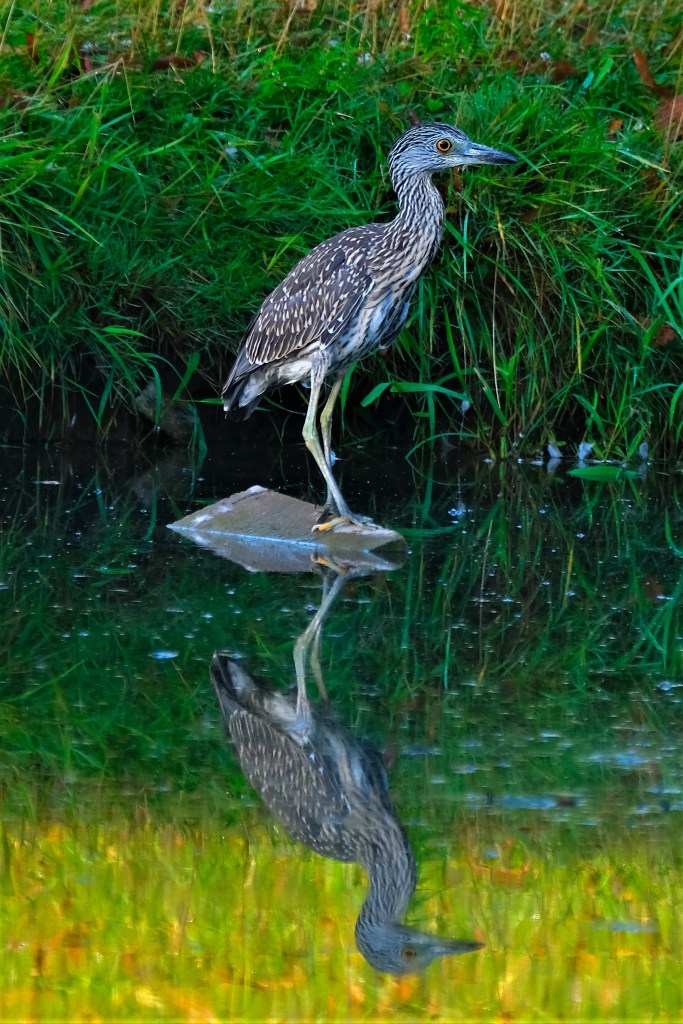
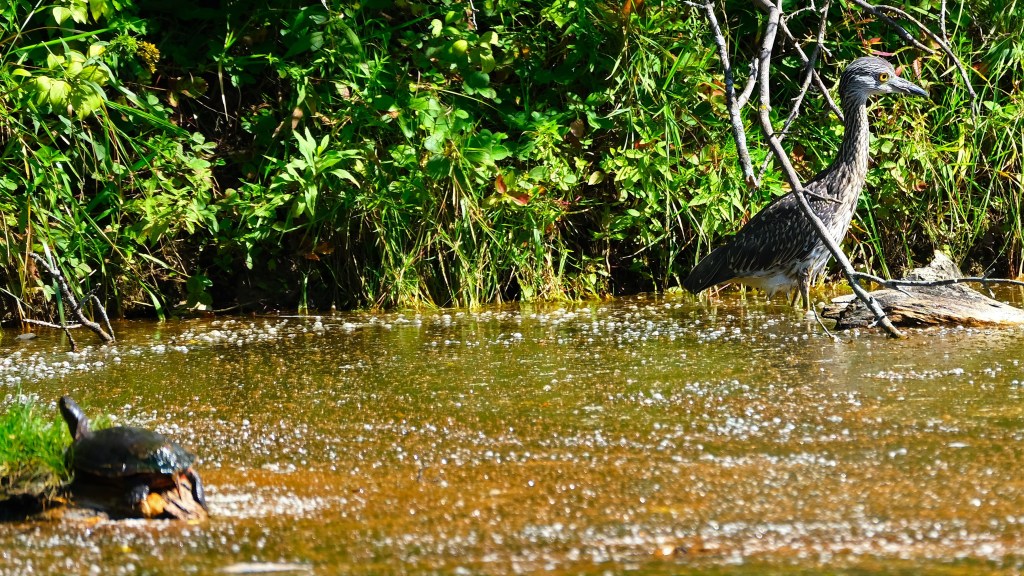
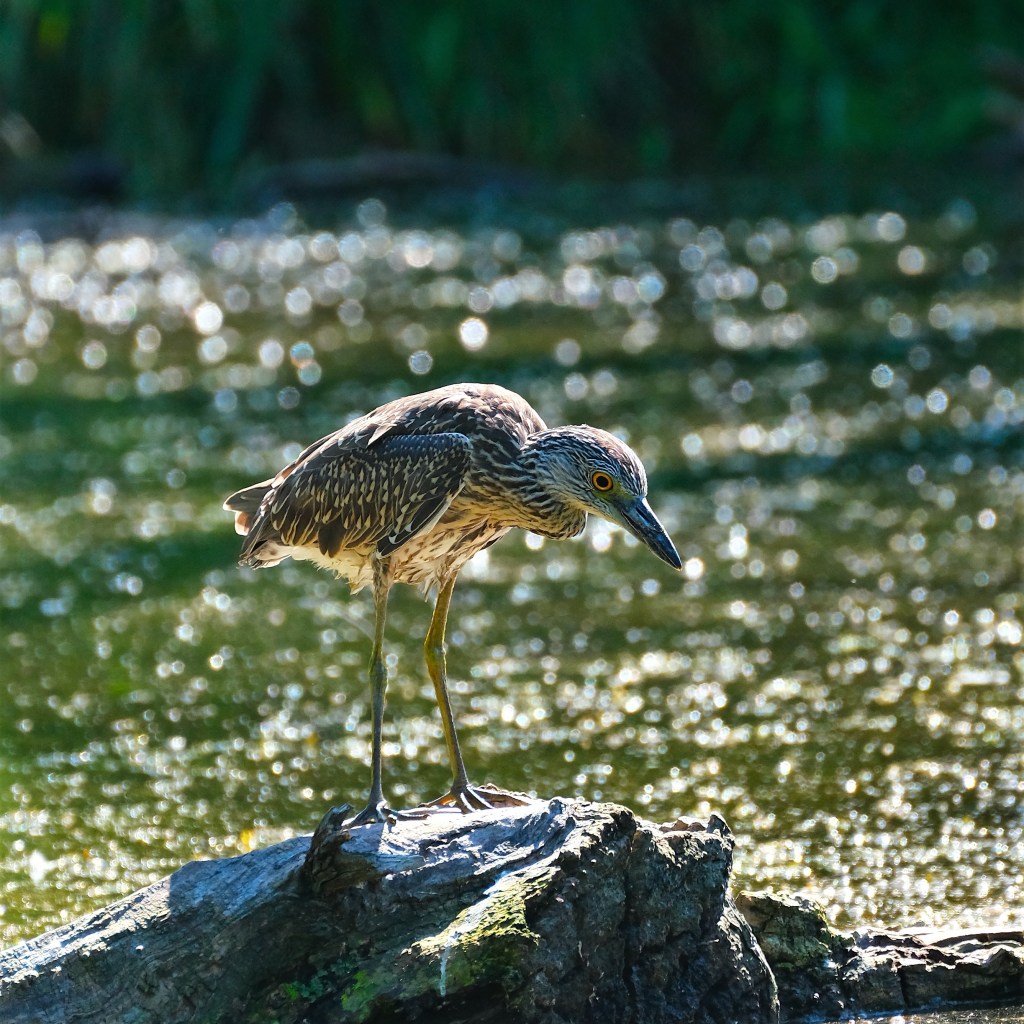
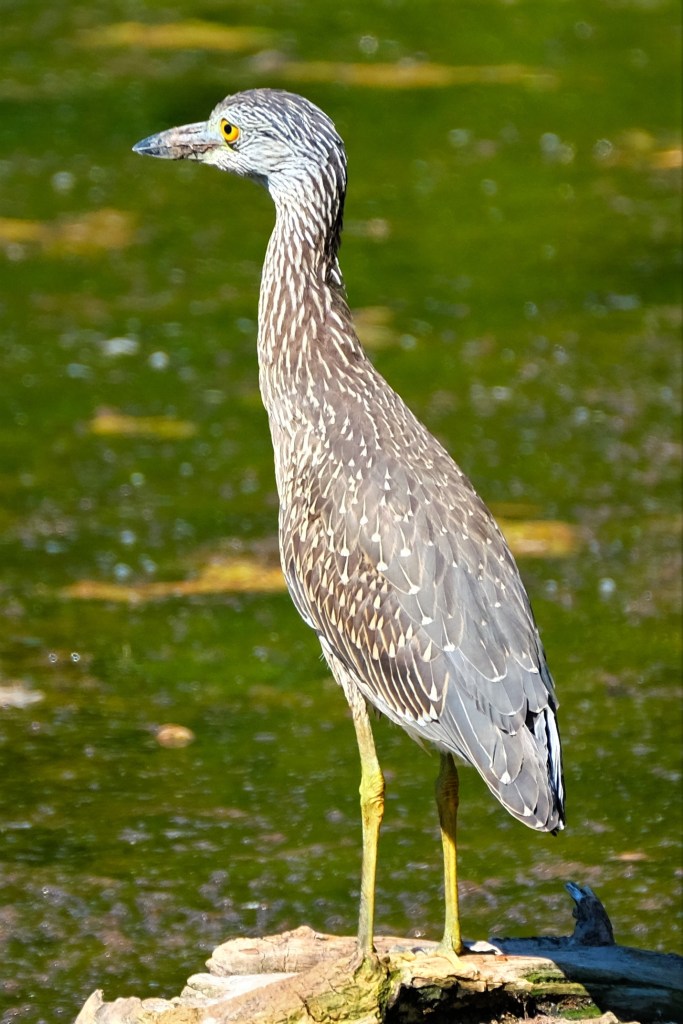
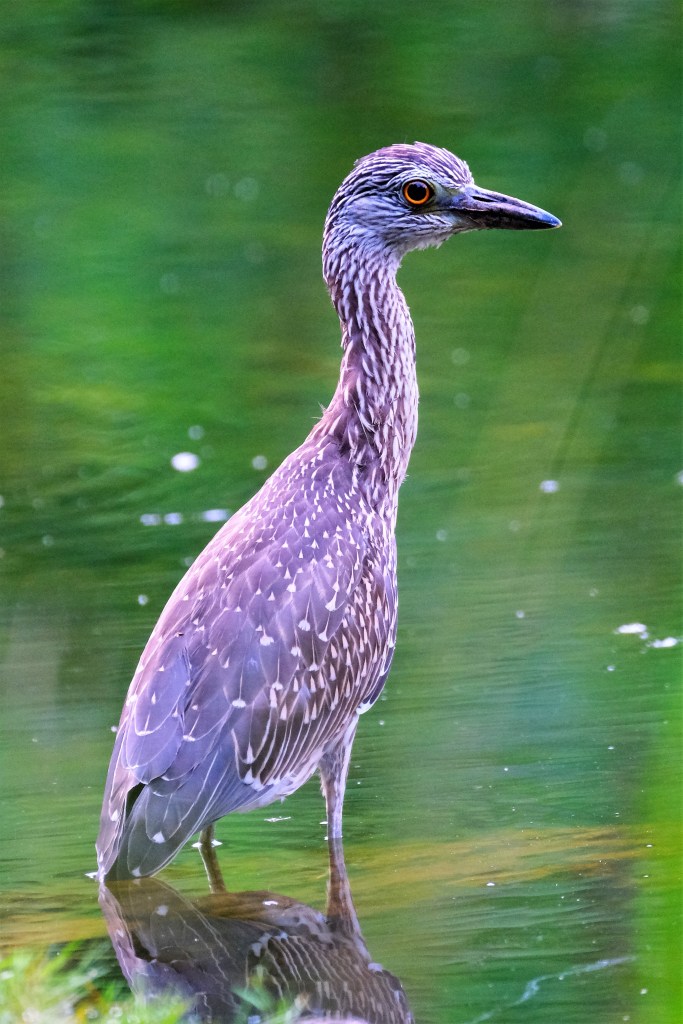
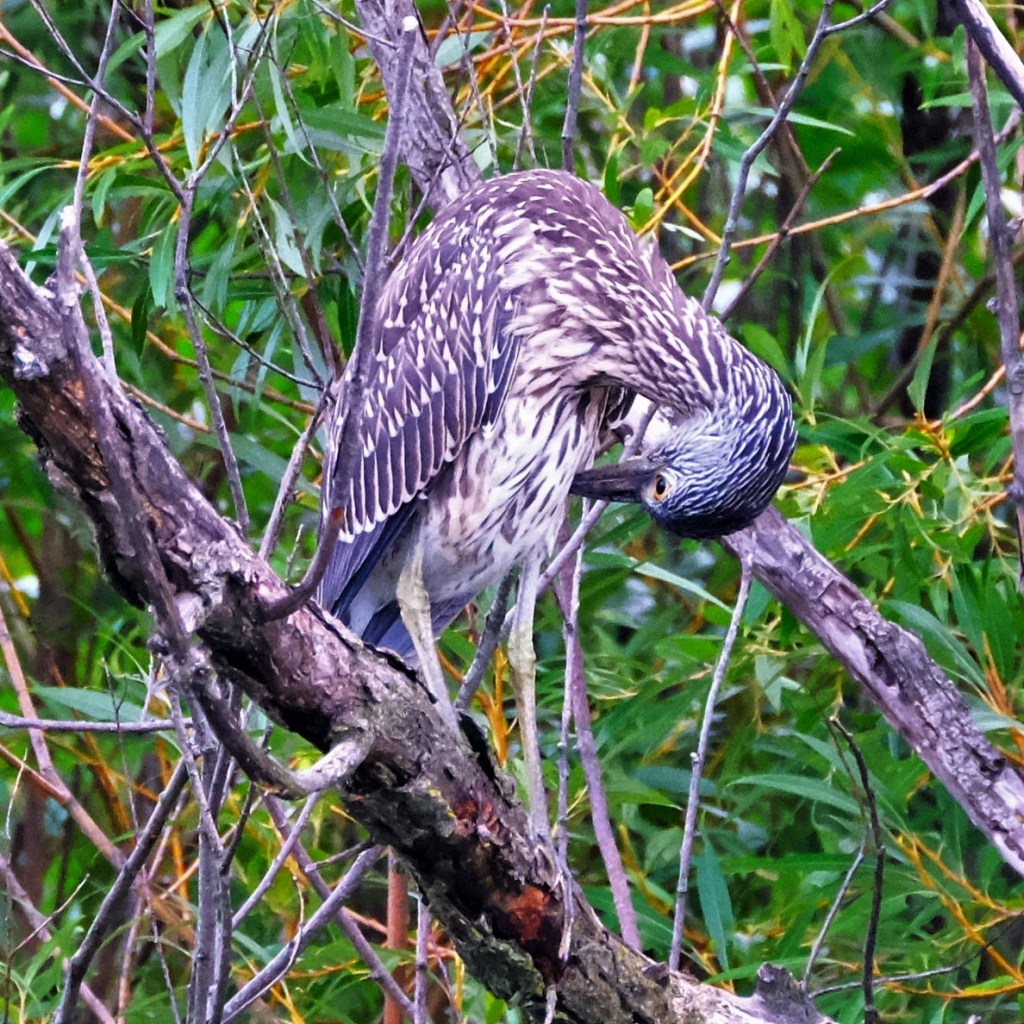
We got one more beautiful morning out of the recent streak, which was a nice treat. Better still, our young night heron was back on the pond so we can have one more look at the little cutie. Here it is on the west side of the island.
And here it is just off the west lawn, just shy of the morning sun, which would have been the cherry on top. Next time.
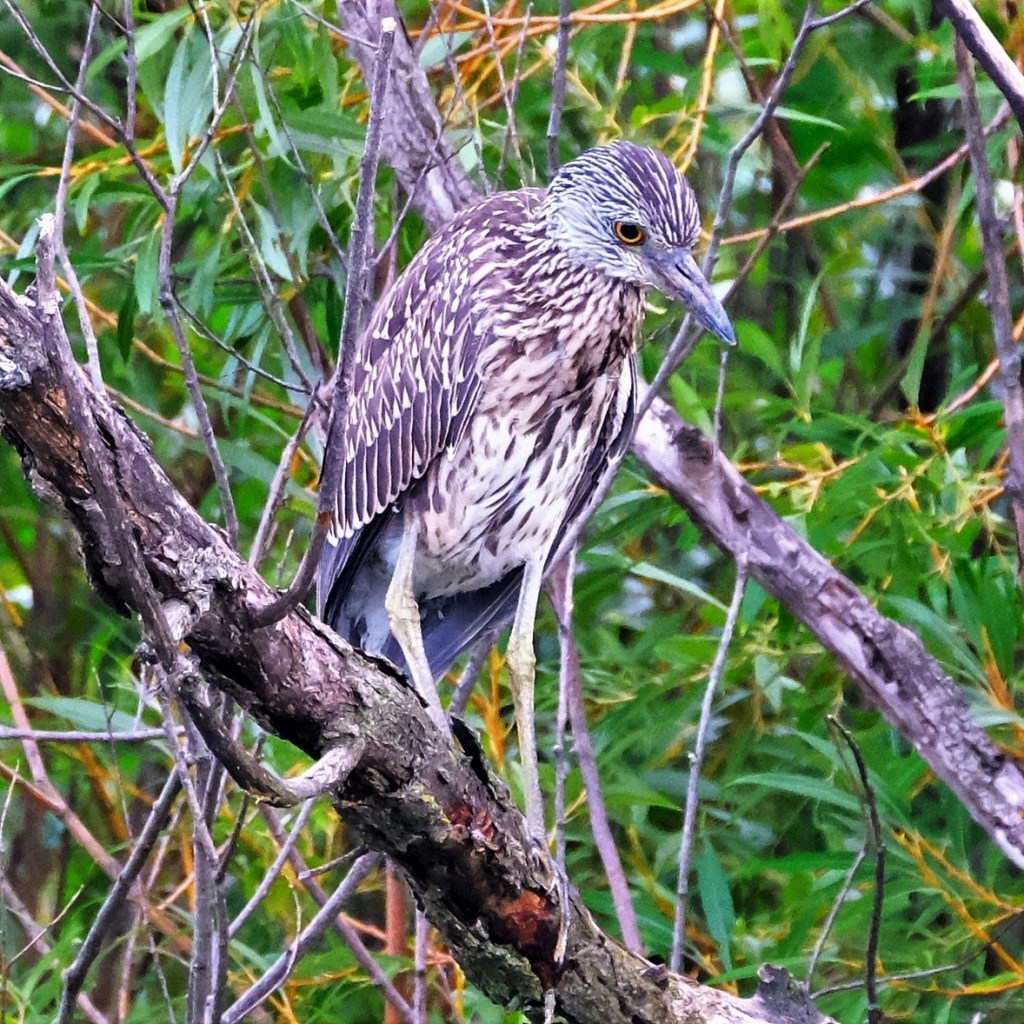
Only three other folks have weighed in on whether it is a young yellow-crowned or a young black-crowned, and among the four of us, three agree on yellow-crowned, and so I’m gonna count it as the fifth heron species we’ve seen on the pond. Crazy, right?
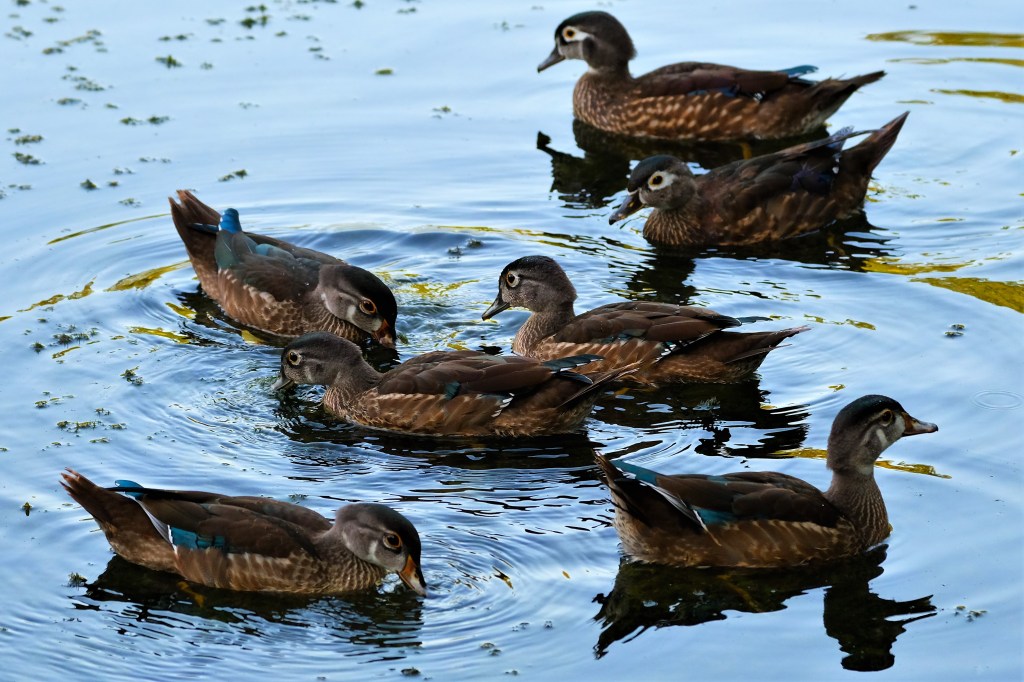
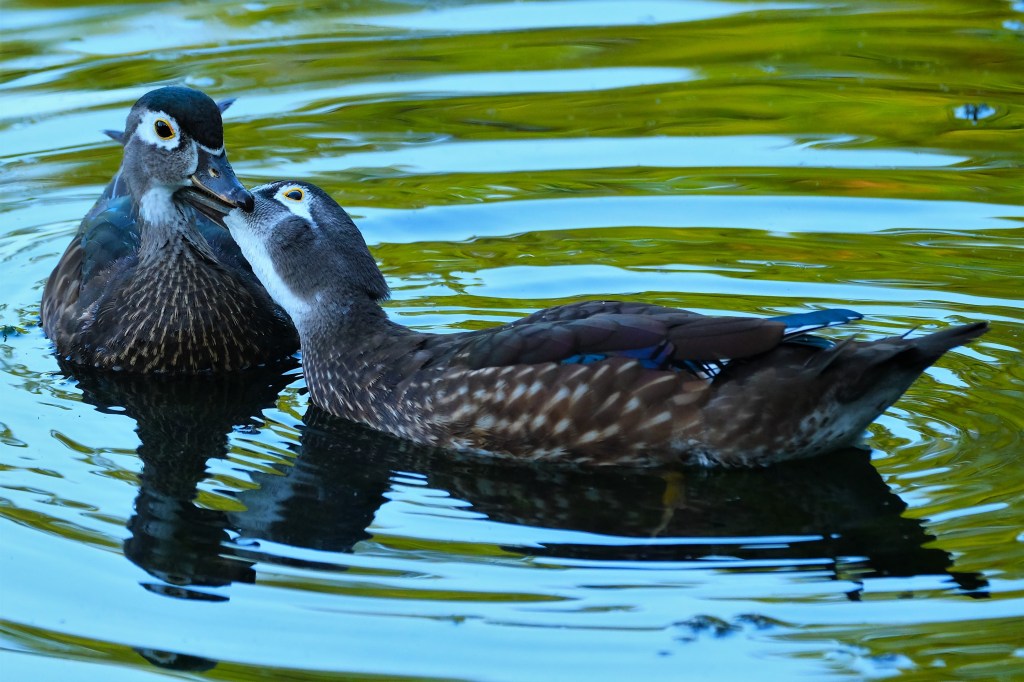
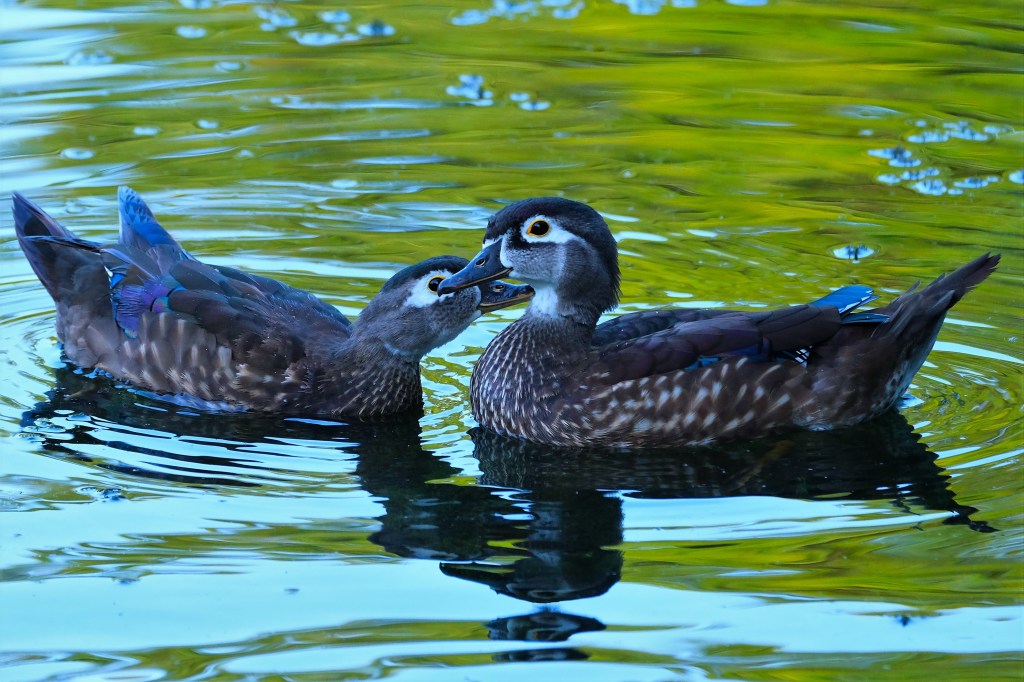
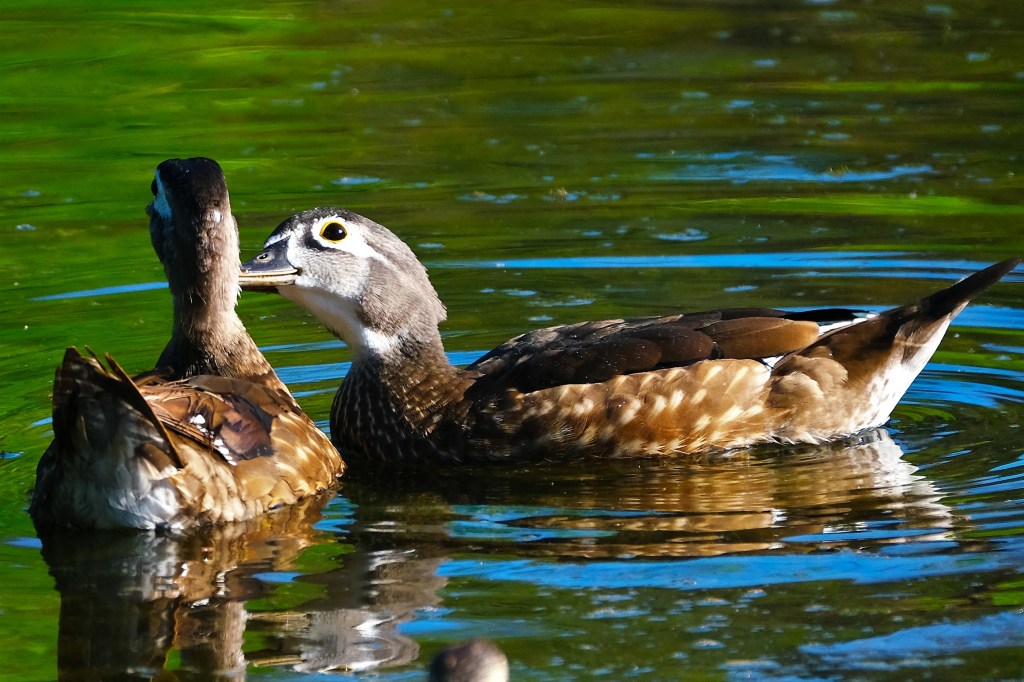
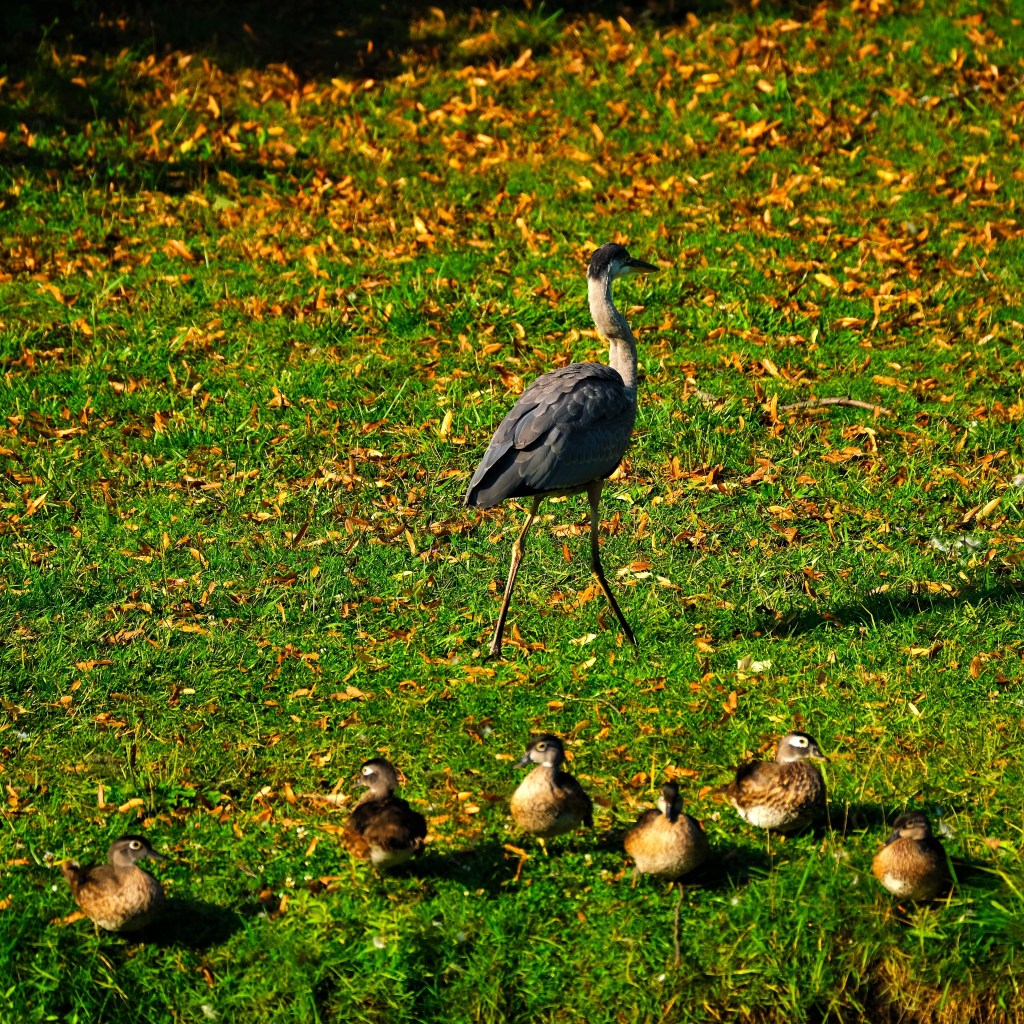
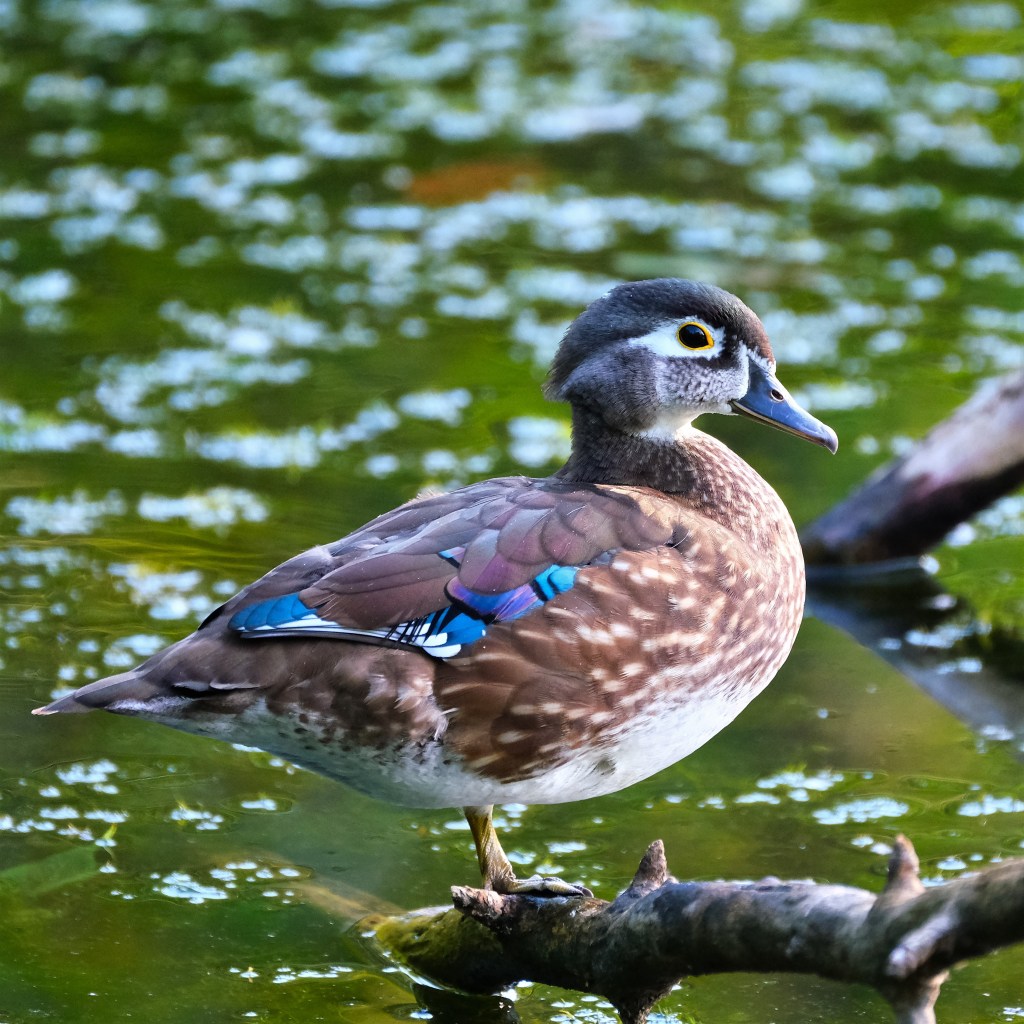
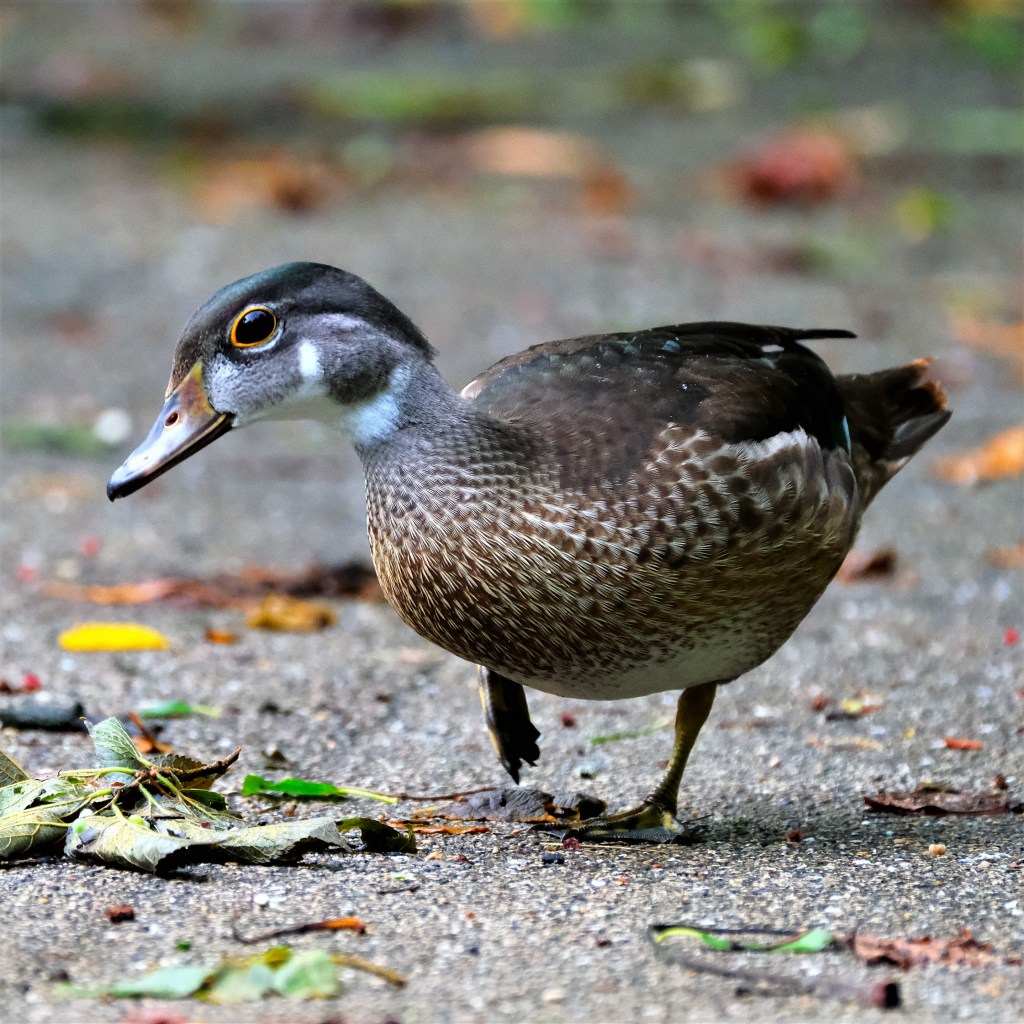
Meanwhile, the wood duck population is back down to the original five now-almost-grown ducklings, their mom, and her special friend. Perhaps the others just found it too crowded and headed back down to the river. Anyway, for reasons that remain a mystery, the remaining seven all came over to say hi as I was trying to take the picture of the heron above. We might not have seen them all together like this since they all used to hop up on the big log in the northeast bay to preen after breakfast.
They all seem like quite the contented little family now. Mom and her special friend were even back to their mutual preening.
Sweet, eh?
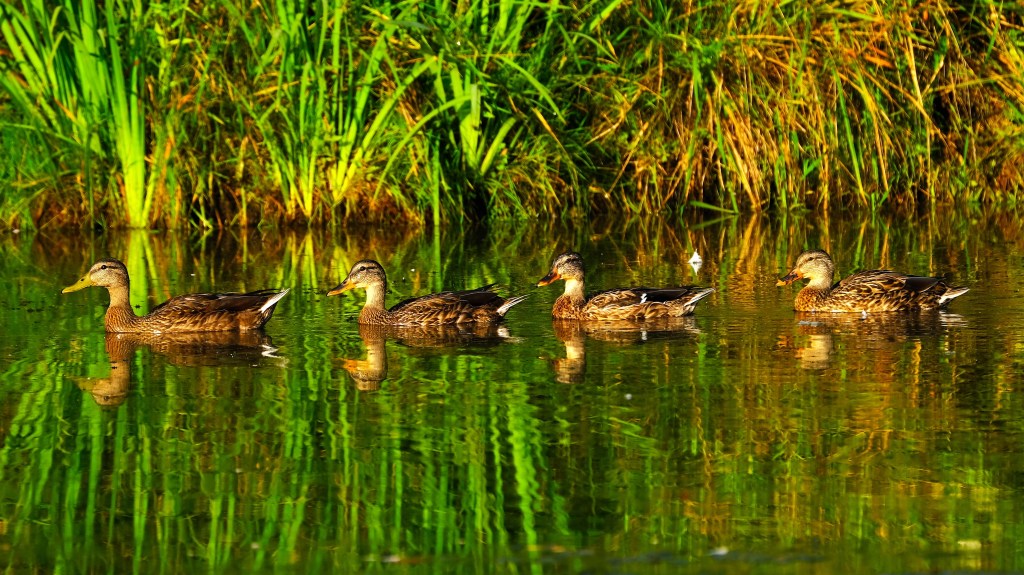
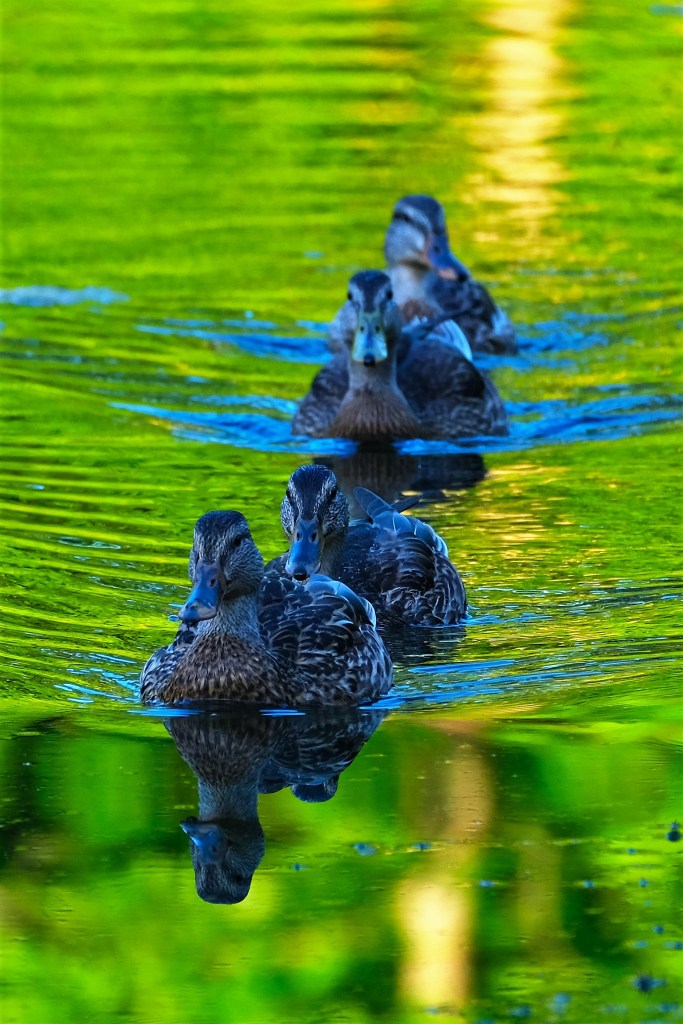
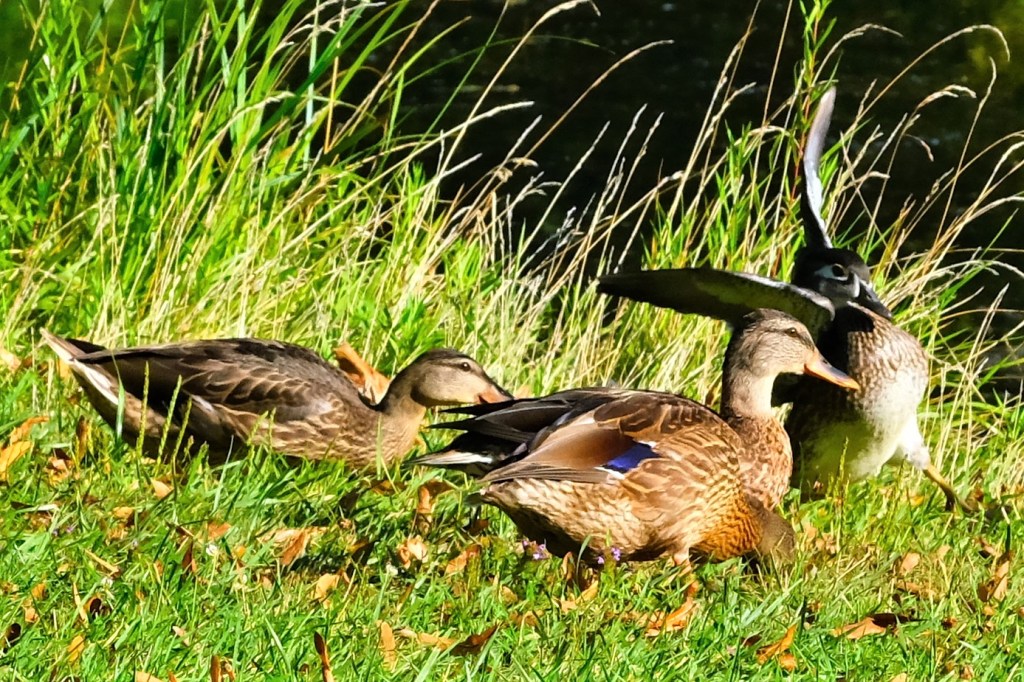
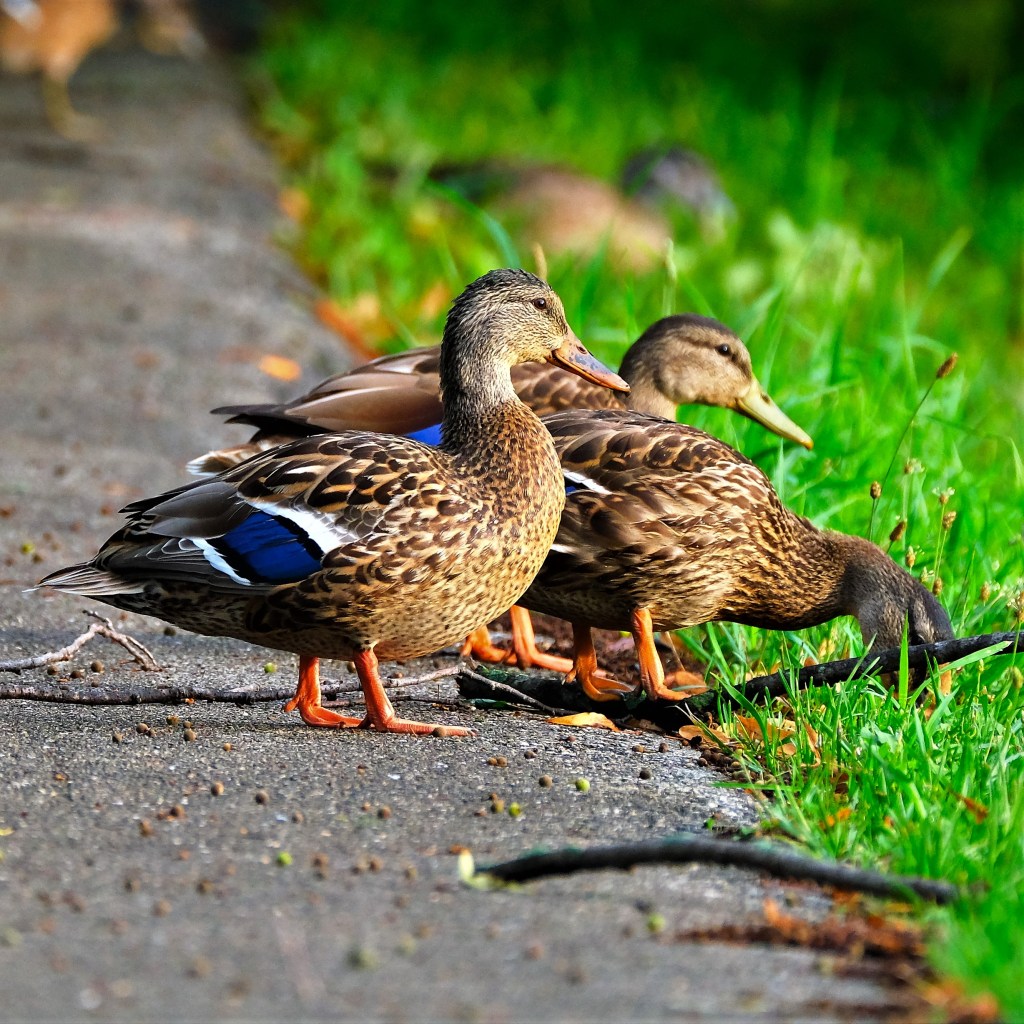
Finally, the mallards are down to a nice even foursome who did manage to line themselves up nicely the morning sun.
Then they most have noticed the wood duck convention and all steamed over to see what was going on.
And those are all the pictures fit to print today. I did stop by the river but didn’t see a thing. Same goes for the soccer fields. One monarch was sunning itself in the grass, but I let it be and came home before it got hot out.
I was just walking along beside the river, as is often the case, and had just reached the north edge of the big, old, abandoned bridge abutment, when there was a youngish great blue heron, maybe not even eight feet away from me, fishing from the little bit of rock jutting north right at the water level.
Now, I’ve startled herons before, by accident of course, when I don’t see them first, both on the pond and on the river, and they have always immediately taken off, but not this one. As has happened before a few times with other critters, such as red squirrels or nut hatches, I suspect they are just so stunned to have let me get that close somehow that they don’t even know how to react, and they often pretend I’m not even there and continue to go about their business.
We both immediately froze, and after just enjoying the moment for a bit, I softly explained that I was going to put down my trash bag and take out my camera. The bird wasn’t exactly thrilled, but it still didn’t take off and instead slowly tried to wade north along the riverbank, although the water was probably a little deeper than it preferred.
When I had gotten all the pictures that I thought I could, I also continued north and took the right at the fork to avoid getting too close. At my next opportunity to check on it again, now from upstream looking south, it was still there, and I even got some more pictures by leaning on a cottonwood tree that was conveniently growing out over the water.
Once again, I took all the pictures I could, but from that vantage point, I could also see a big yellow plastic bag, which originally held rock salt, and now was wedged between a pair of sticks by the recent flooding. So, I took that with me when I left and managed to fill it up with yet more plastic by the time I reached the stairs up to the beer garden.
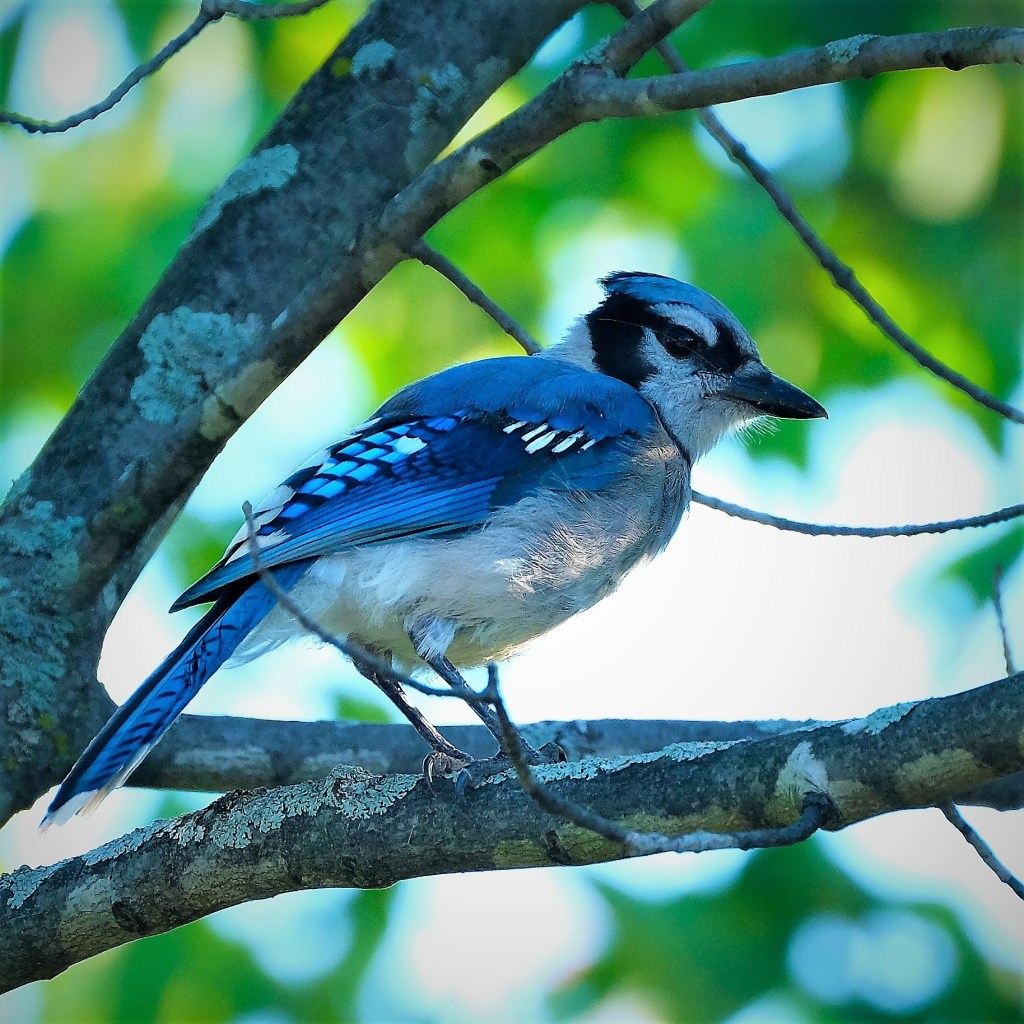
After dropping off the bag in the bin at the top of the stairs, I washed my hands, and enjoyed watching a blue jay fly with a big red crabapple in its beak from a tree at the crest of the bluff to a maple tree over the beer garden. Sadly for us, the jay made quick work of the crabapple, and it was all gone already by the time I was able to squeeze off this shot.
From there, I swung back by the pond where I saw plenty of ducks but no herons nor turtles. Oh well. I suppose it’s good practice to enjoy the pictures we got and not worry about the ones we didn’t, eh?
Holy Moly! What a gorgeous morning. I can hardly believe we got two of these days in a row. I hope you get to enjoy it while it lasts.
When I got to the pond, Ol’ Snappy was making ripples in the surface and the ducks were jumpy. I’m not sure, however, if Ol’ Snappy was making them jumpy, or if it was just the sheer number of ducks. I counted 14 wood ducks and 5 mallards so 19 in all, which might be a record.
Anyway, here’s a young wood duck avoiding a nip from a mallard.
And here’s a wood duck trying to give another wood duck a nip.
It wasn’t all antagonistic, however, and here’s a pair of wood ducks nuzzling.
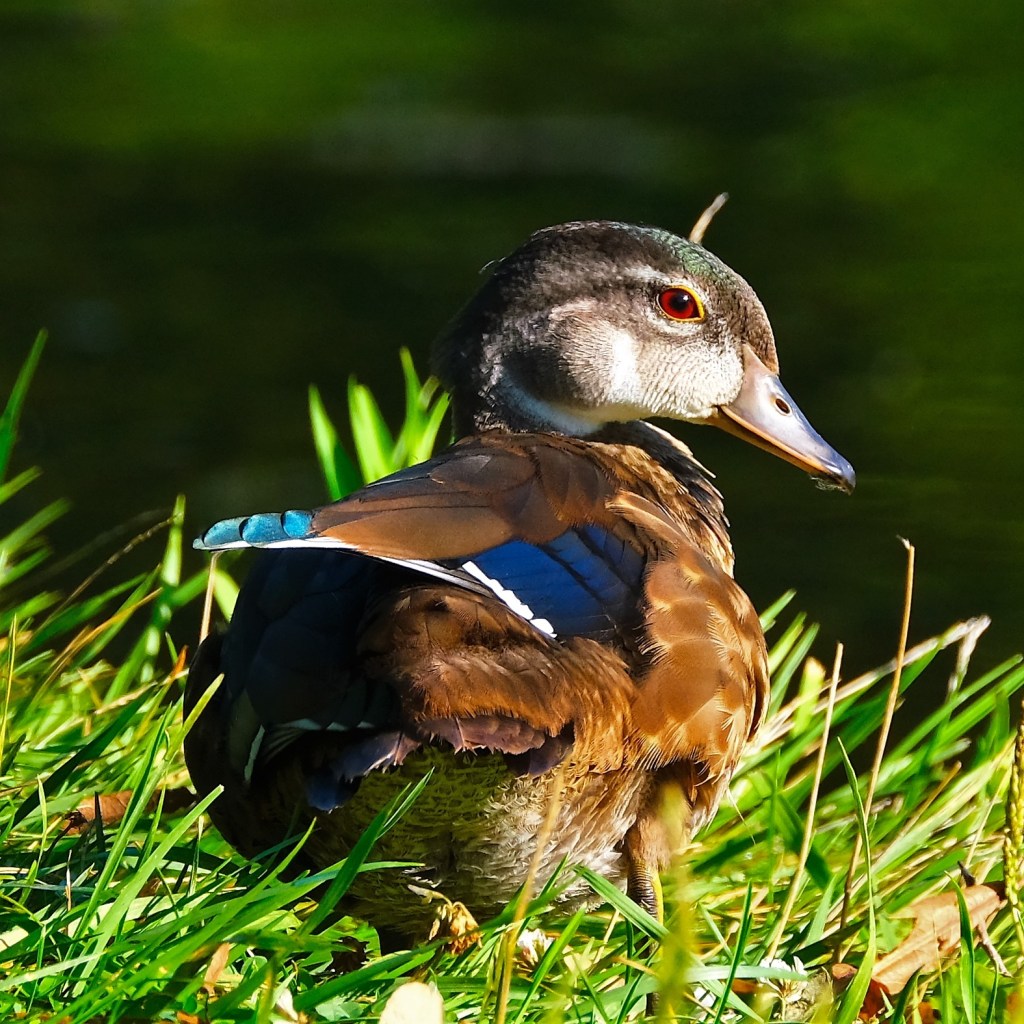
And here’s a wood duck just enjoying the beautiful weather, perhaps, and showing off its pretty new adult flight feathers. They haven’t been chowing down on frogs and crayfish all summer for nothing.
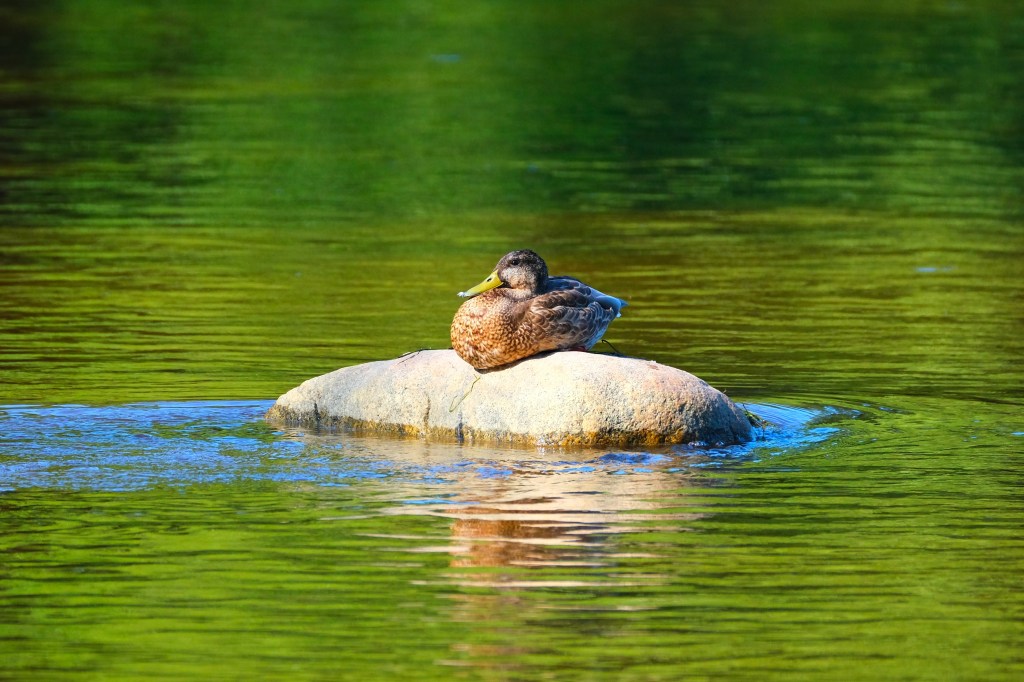
There were no herons today, and I failed to get a picture of Ol’ Snappy, so I headed to the river where I found another mallard relaxing in the morning sun.
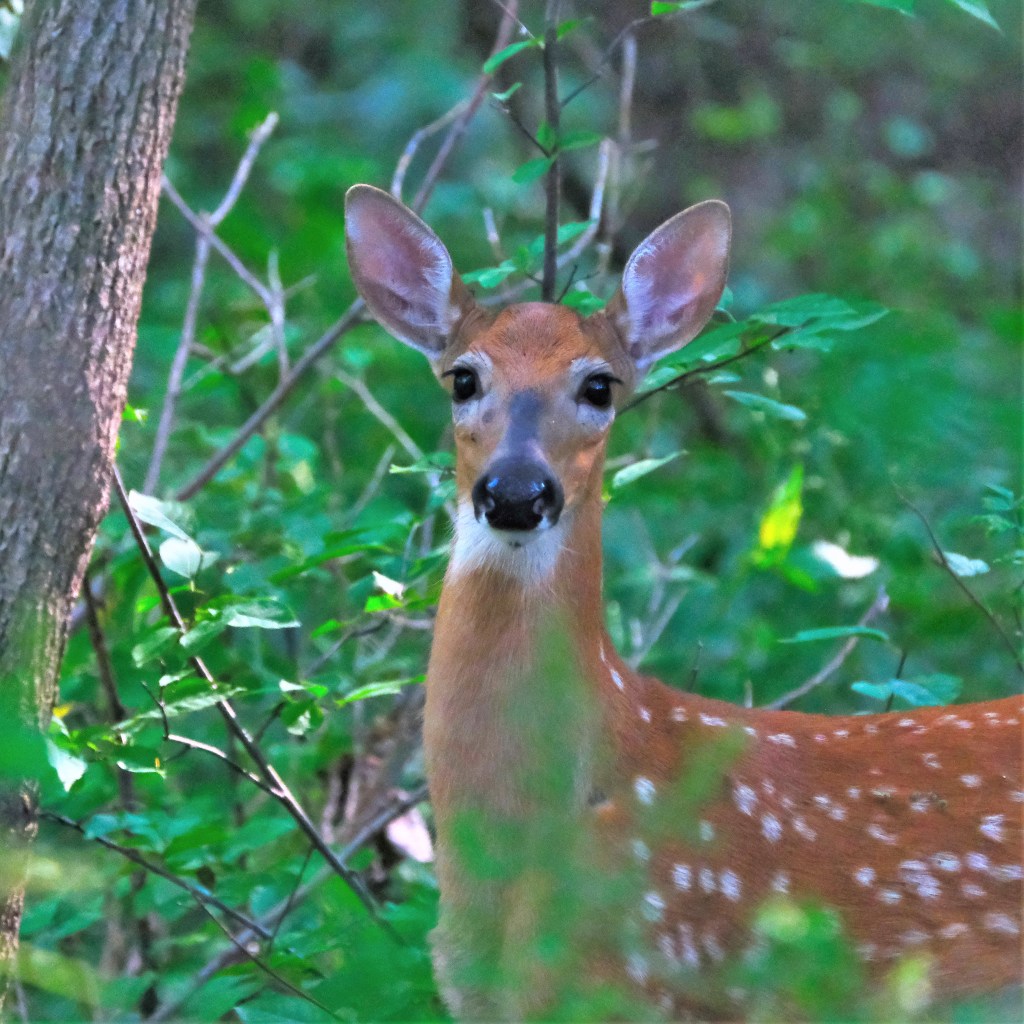
The big surprise from the river, however, was a pair of deer. I spooked the mom, by accident, and managed to catch a glimpse of the fawn, and then I left them alone.
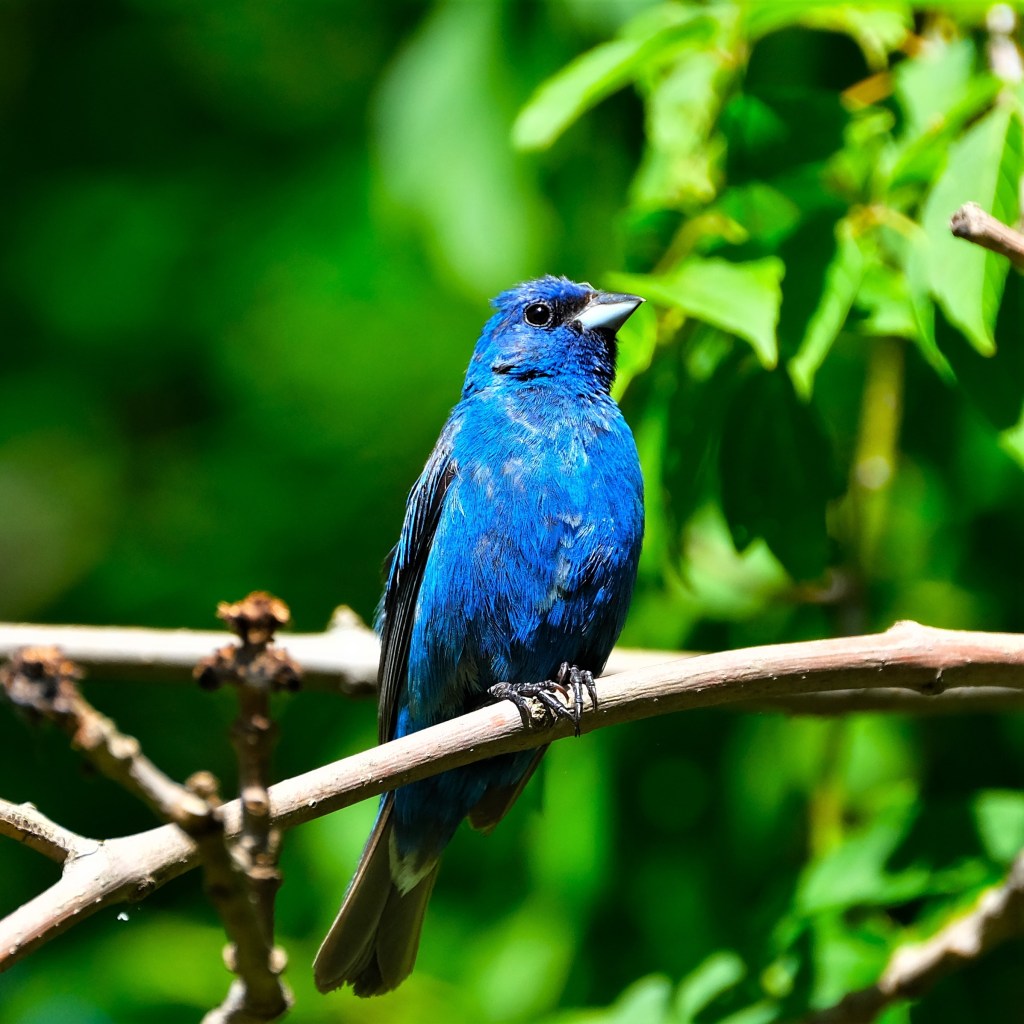
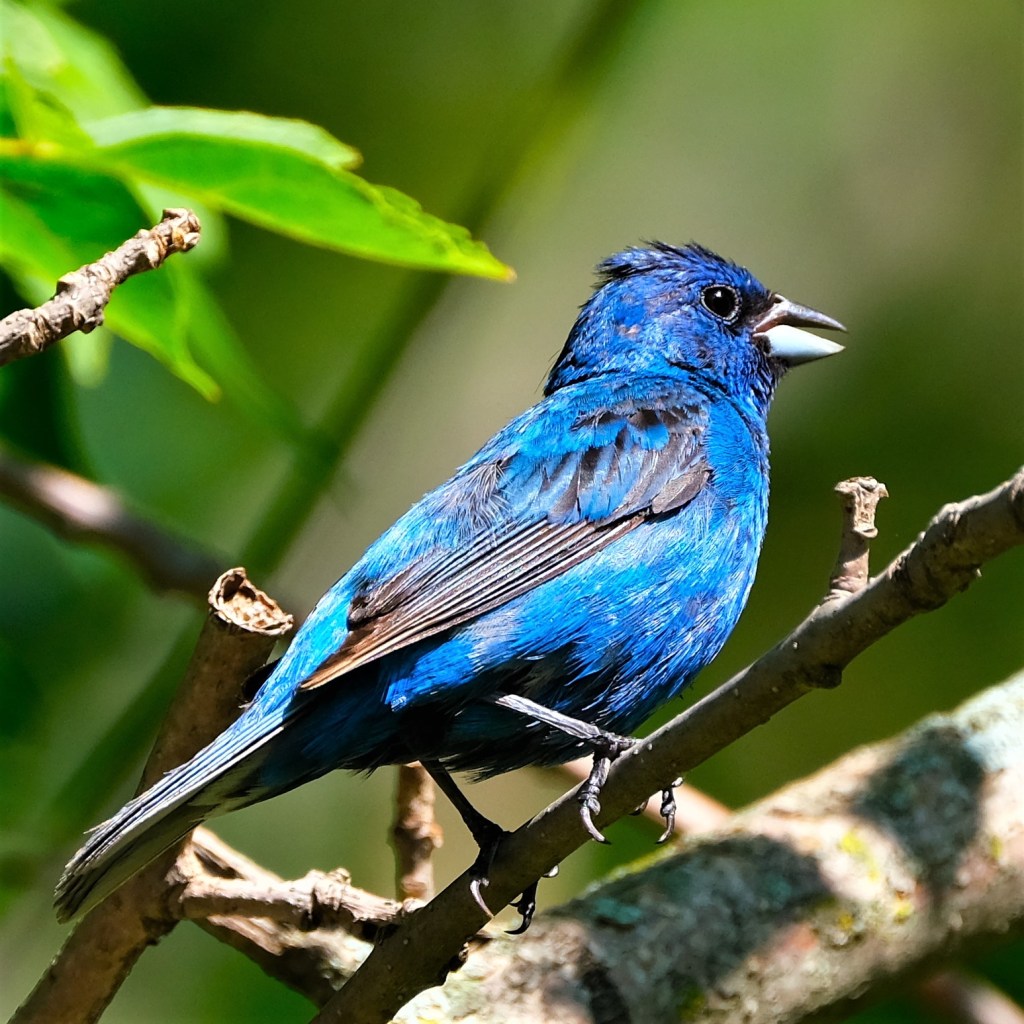
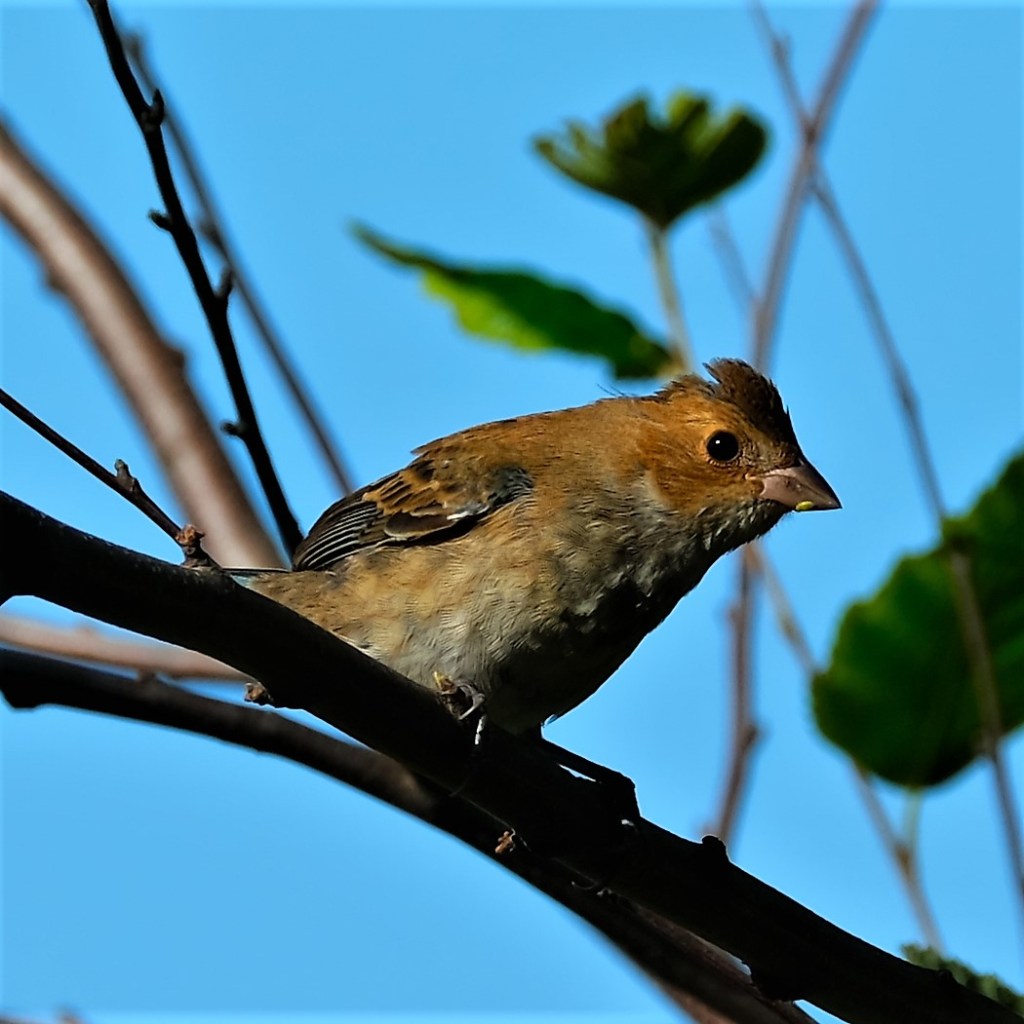
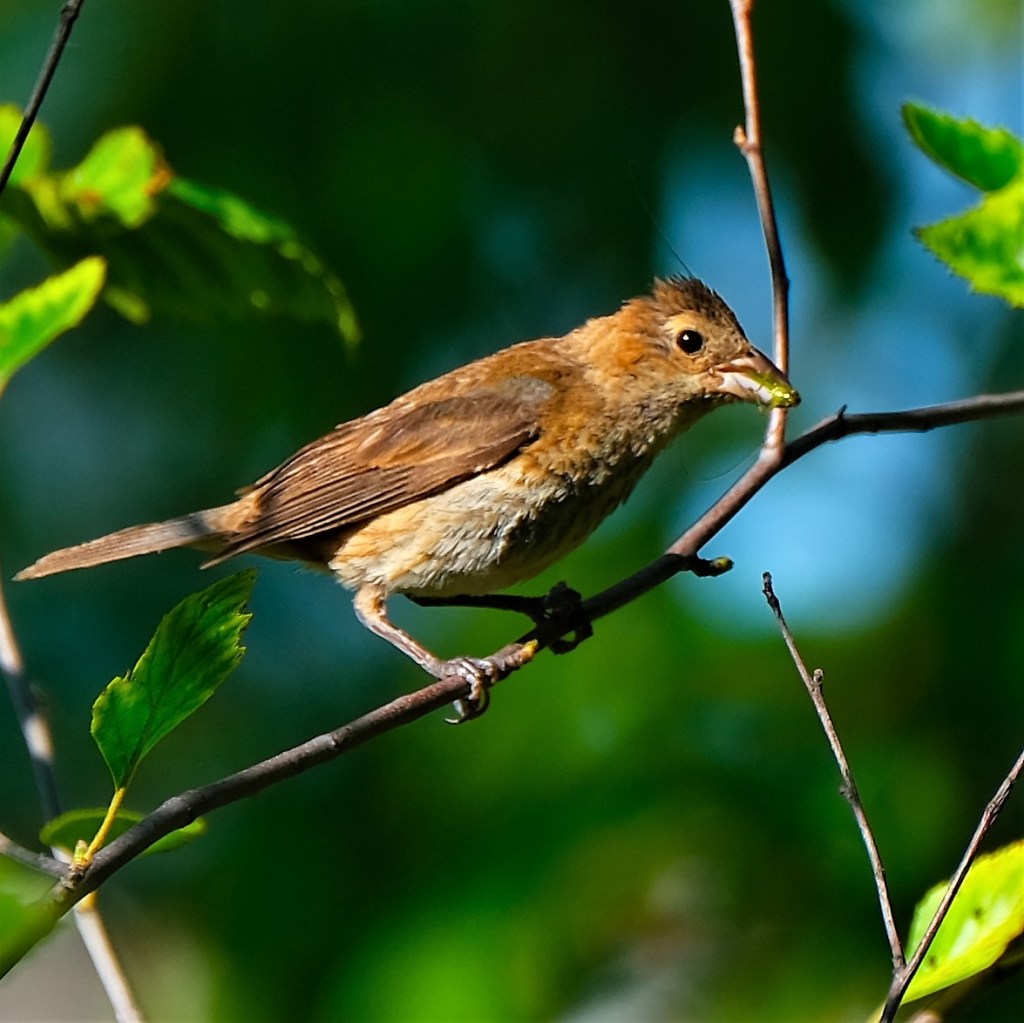
At the north end, where I used to see indigo buntings regularly last summer, but from where they’ve been missing for most of this summer, one finally stopped in to say hi.
It was surprisingly unfazed by me, and just went about its chirping and preening as I inched closer and closer.
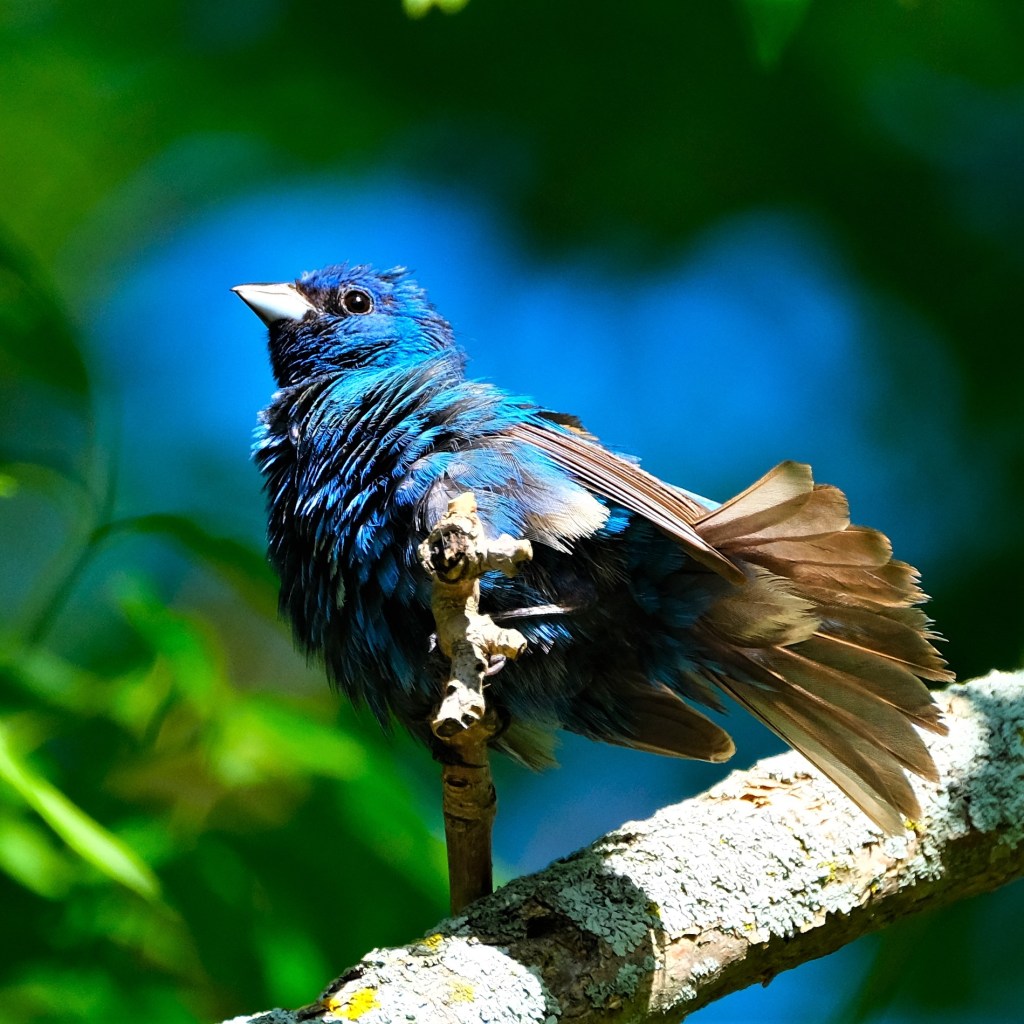
Eventually, it even started to air out its feathers in the morning sun.
I didn’t want to use up all my film on just one bird, so I took a couple of sunbathing pictures and headed back south.
I wasn’t planning to visit the pond again, but by the time I got to the boardwalk below the beer garden, I had accumulated a bag full of plastic, left behind by the recent high water, so I headed up the stairs to deposit it in the bin there. At that point, staying up on the bluff was the path of least resistance, so off to the pond I went.
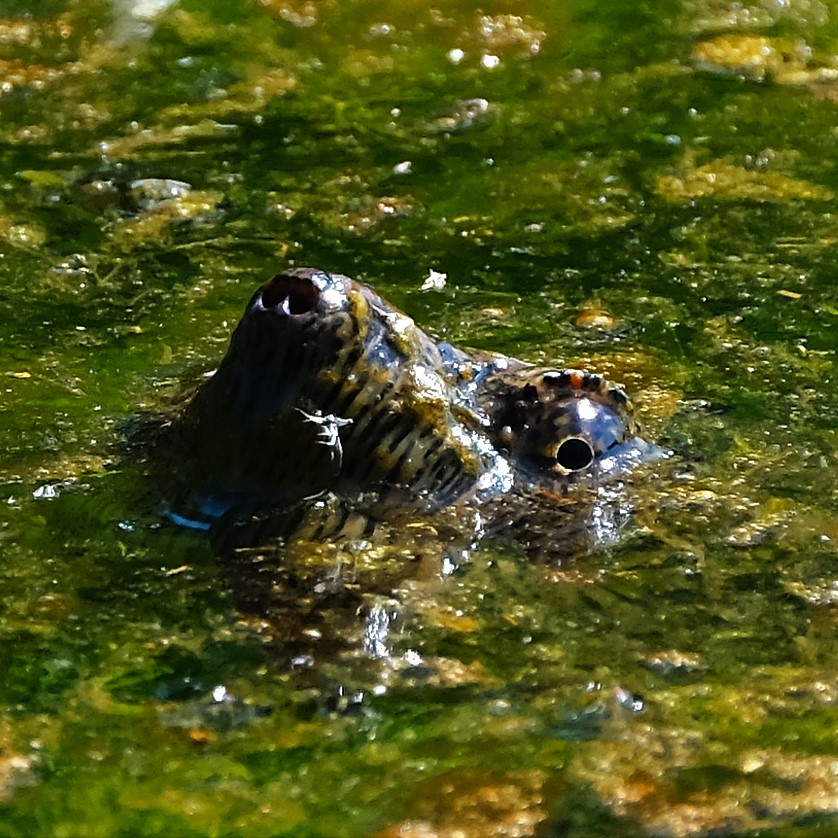
There, Ol’ Snappy made it worth my while and gave me a second chance.
Then I scanned the rest of the pond, and spotted another turtle, but as I tried to get a picture of it, look who was lurking in the background. Ha! It’s the young night heron again.
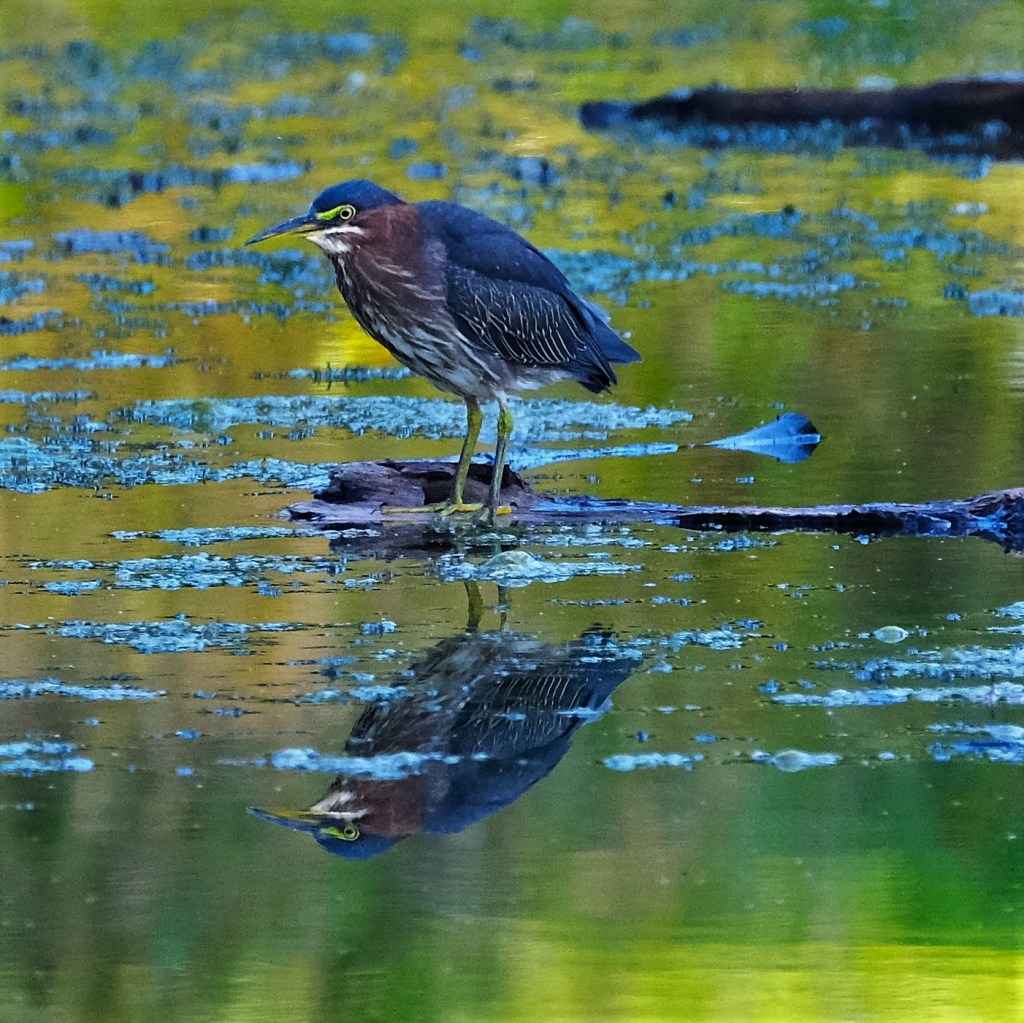
Finally, as I continued south, I spotted a green heron fishing in the southeast corner of the pond. I took a couple of shots from the west side, but the sun was still in the east so the light was bad, and I know there’s a little path down to the water in that corner, so I walked around to see if this heron would let me get that close.
Well, today was my lucky day, because yet again, a normally shy bird was way less shy than usual. Check out what good light makes possible.
It even pretended not to notice when I snuck back up the path from the water to finally go home. By that time, however, the Farmers Market was in full swing, and I didn’t need to be walking through that in the full Ranger Rick costume I had on because it was just 59° out when I left the house this morning, so I made a beeline down the Oak Leaf instead to see if any of my pictures came out. Happily, it seems some have.
At the pond, there were no herons for a change, just ducks today, so I left them along and headed for the river, which continues to subside, and there I did spot what appears to be an adult blue heron in full plumage up in a willow tree on the northern island. I had heard it squawk a couple of times on my way north, and before I spotted it, I saw a couple of guys in yellow shirts and hard hats in a boat on the river, which must have displeased it. Hopefully they will find that the river has managed to survive the spate of storms we have.
On my way back south along the river, I managed to catch a pair of belted kingfishers, perhaps a parent trying to teach a young one how to avoid having its picture taken.
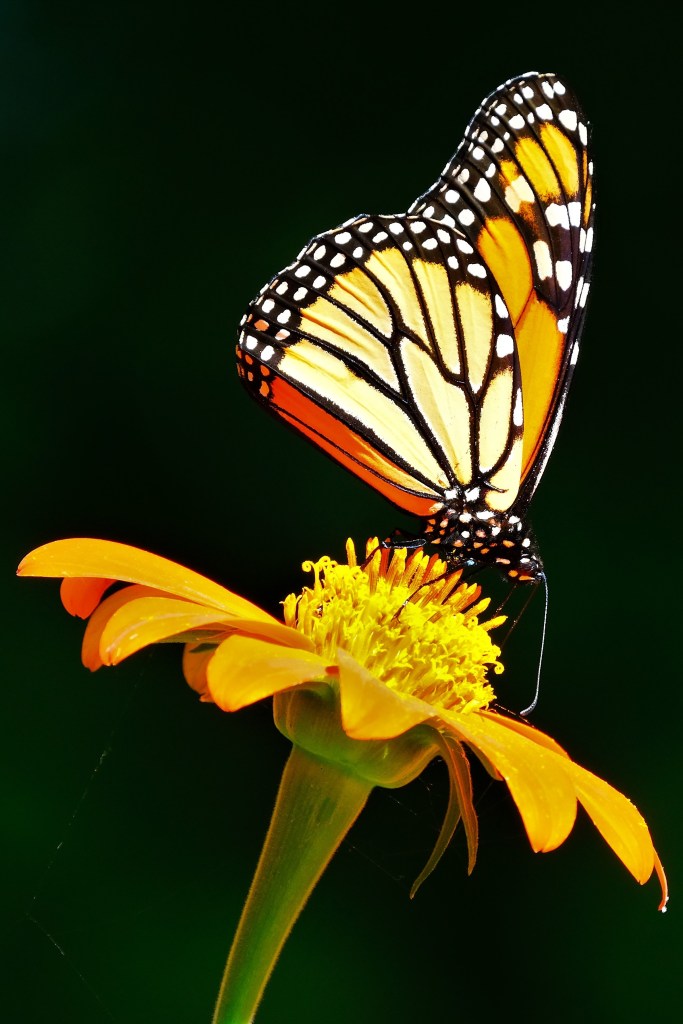
South of the pond, at the new pollinator garden Friends of Estabrook are trying to plant, I finally found a pollinator enjoying the Mexican sunflower (Tithonia rotundifolia) they have planted.
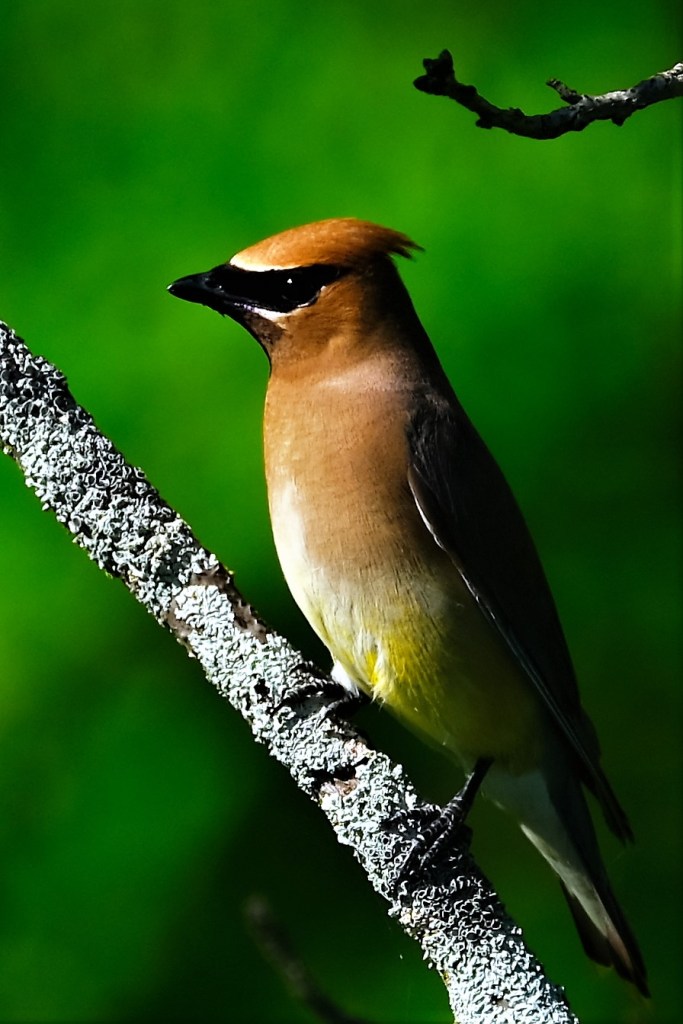
At the south end, by the soccer fields, a cedar waxwing posed for this rare portrait.
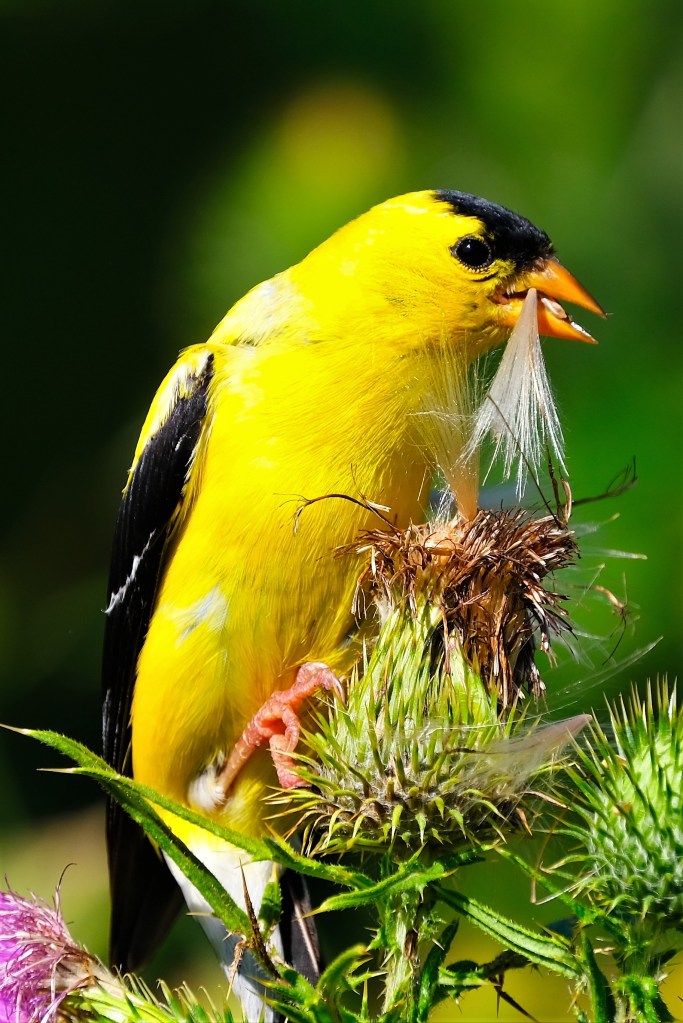
While a goldfinch was gorging itself on thistle seeds, as usual.
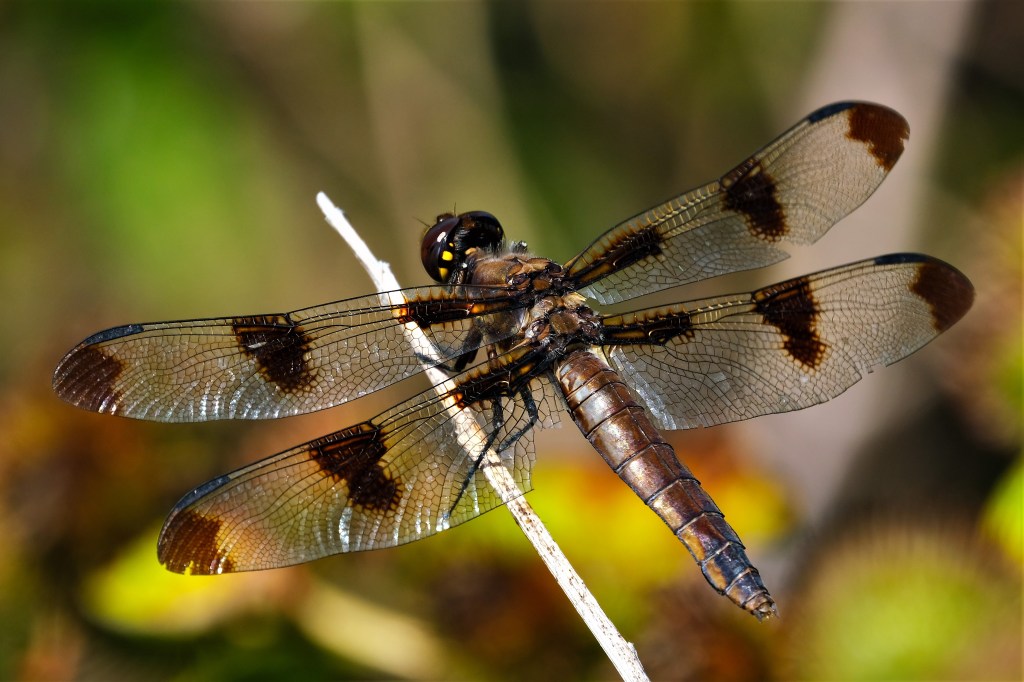
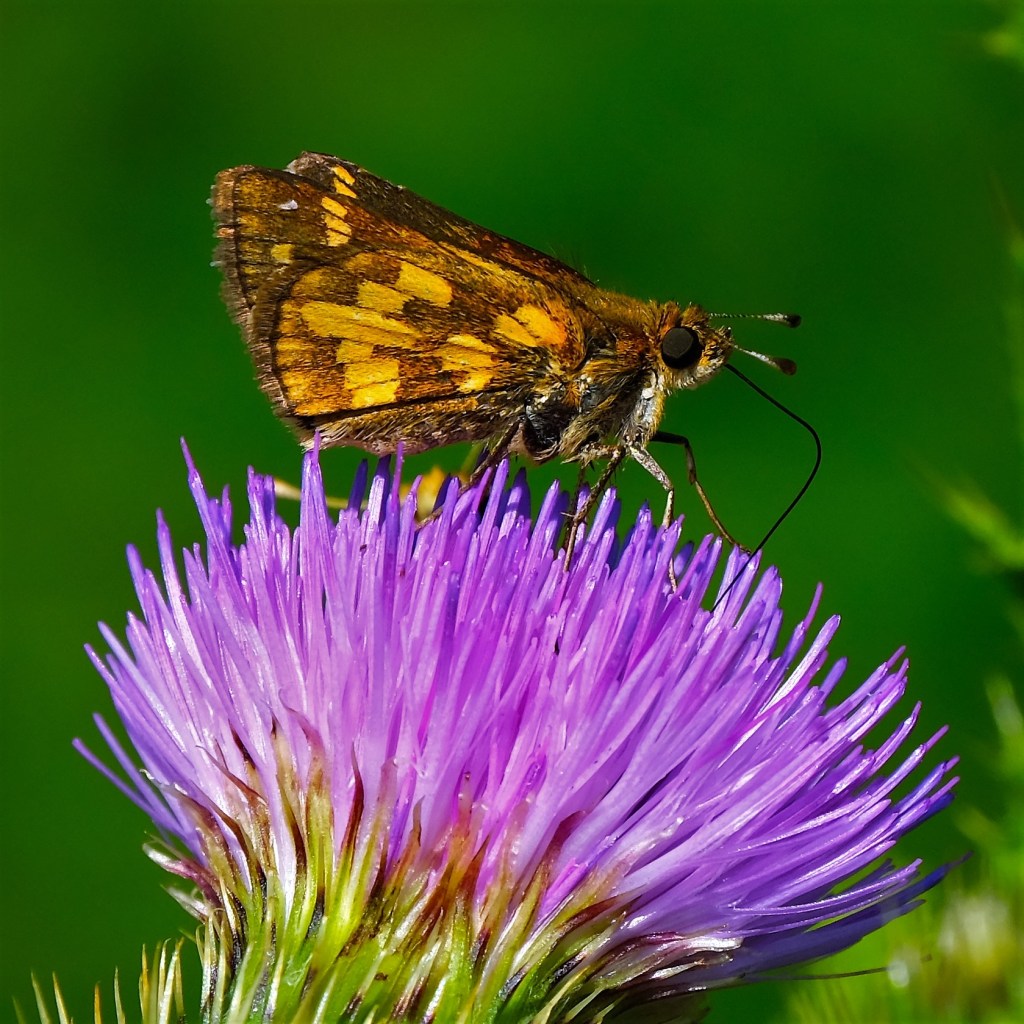
There was another monarch and some Peck’s skippers, but we saw them just yesterday. Instead, here’s a dragonfly, which I believe to be a female twelve-spotted skimmer (Libellula pulchella) with faded stripes along the side of its abdomen.
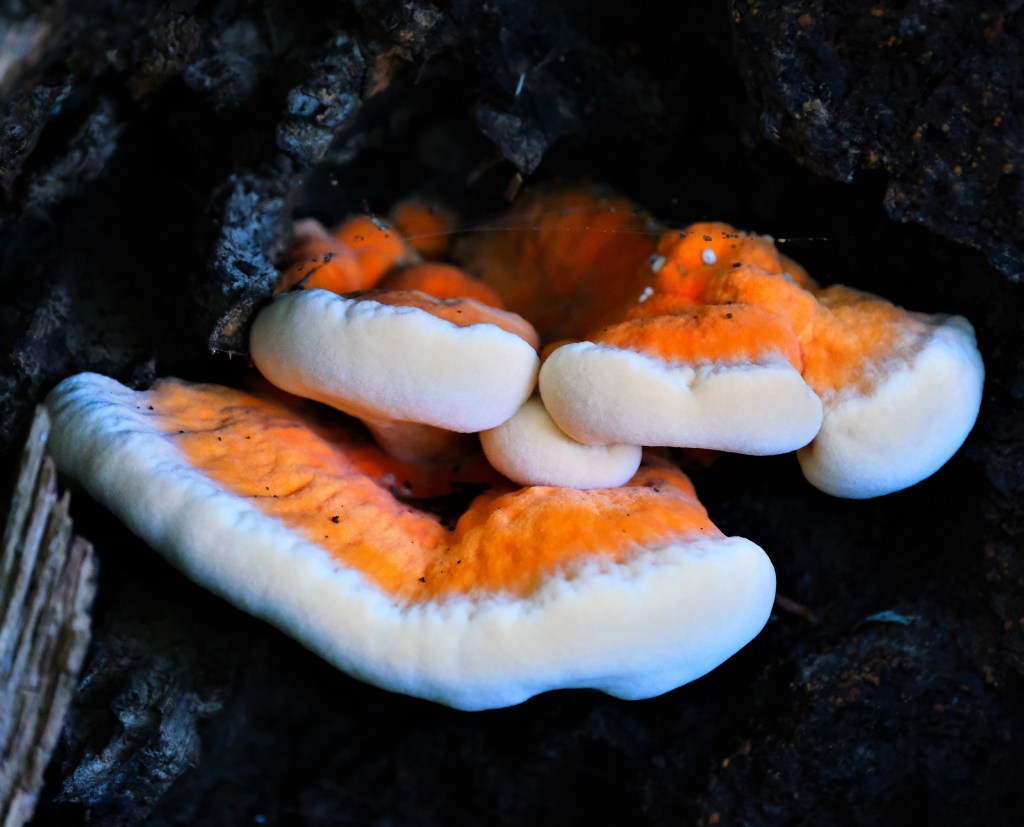
Finally, the rain has brought out some mushrooms, but I can’t find a match for this one anywhere. Can you? It is about five inches across and maybe a half inch thick at this point and growing on the trunk of a downed cottonwood. The bright orange and crisp white make for a nice contrast.
I was hoping to see again this morning our surprise new guest at the pond, the young night-heron, since I’ve gotten a little pushback on my identification, and maybe a better picture would cement it one way or the other, but I’m sad to say that it was nowhere to be found. Oh well.
Happily, the young blue heron was there, and it did not seem to be favoring a foot today, so that’s good news.
In fact, at one point, it flew over to the west lawn, perhaps to see what the ducks are always finding up there and took a little walk with no limp that I could see.
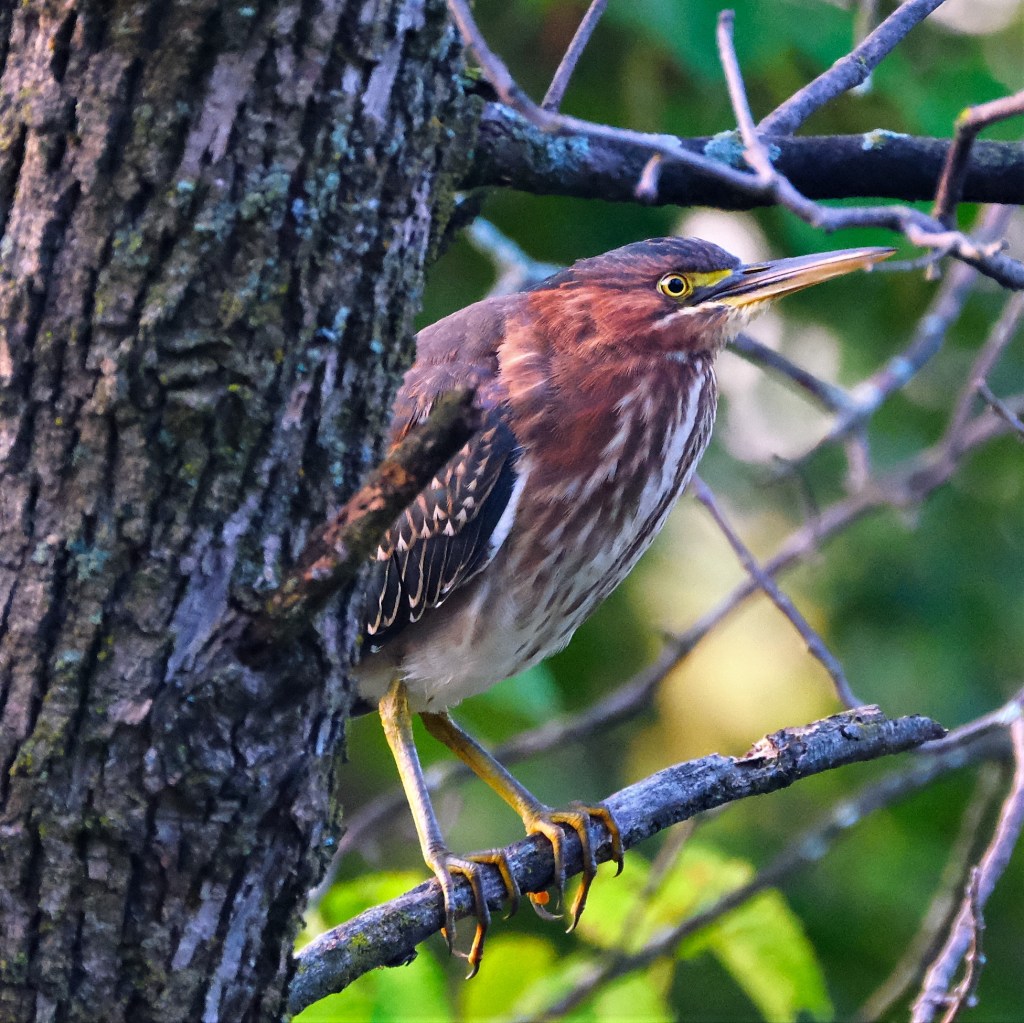
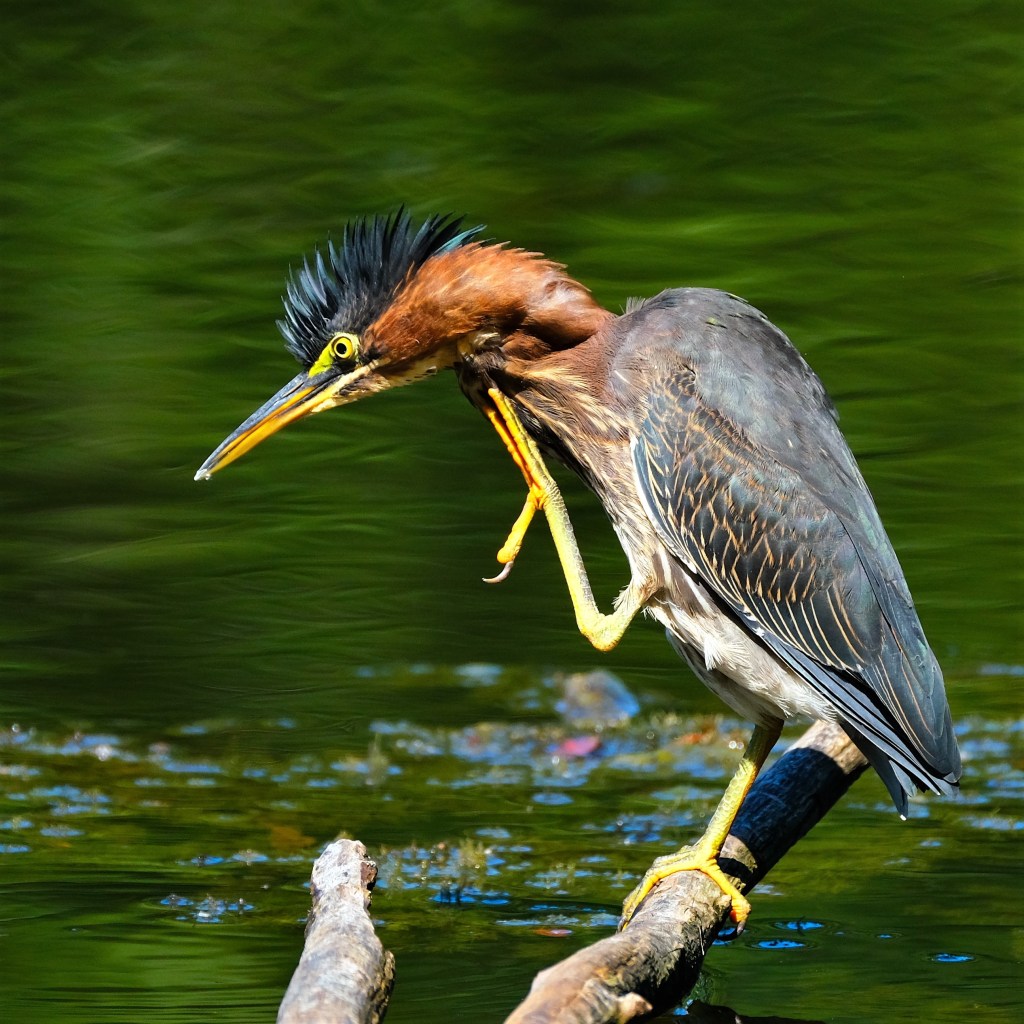
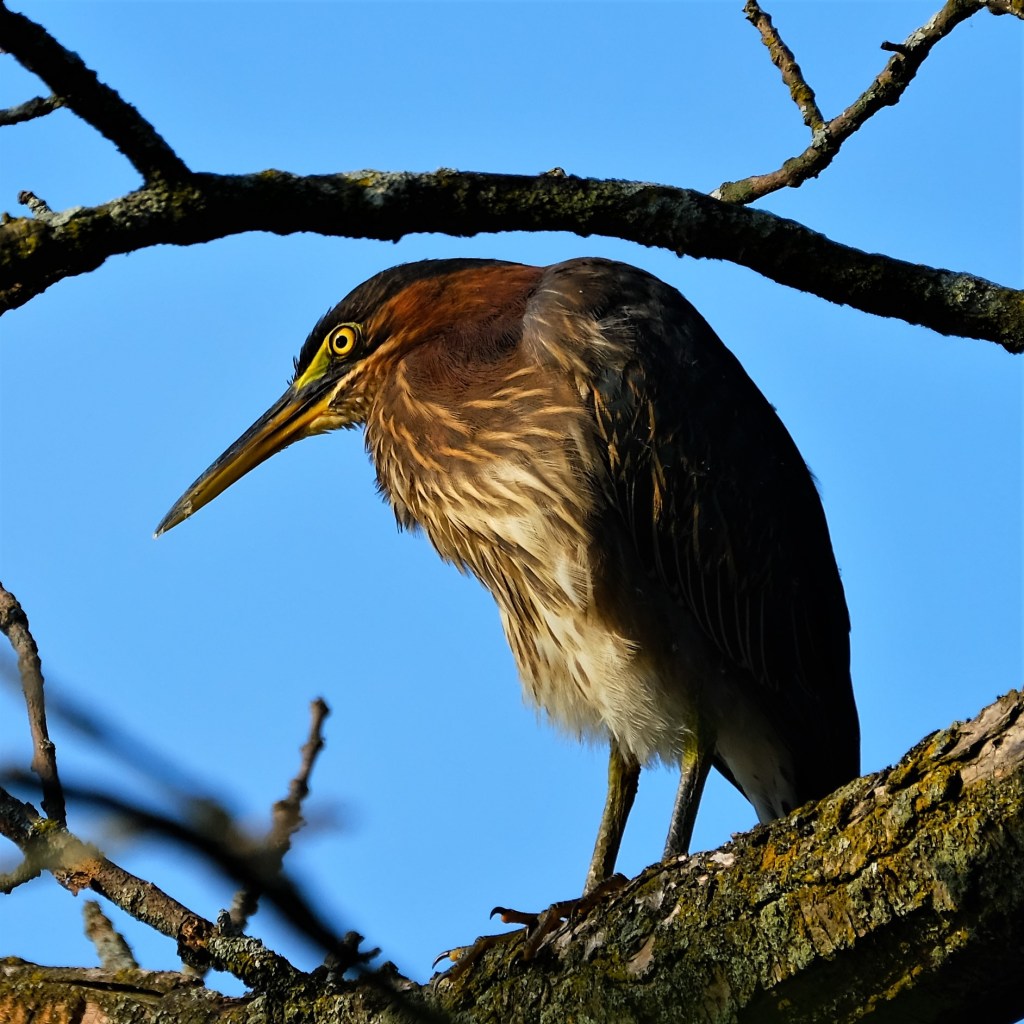
There were also at least two green herons about. Here’s one up in a tree over the little bridge in the path around the pond.
And here’s one fishing for some breakfast.
The ducks seemed to have lost their interest in storm debris, and here’s one just resting on a stick instead.
I did catch a glimpse of the big snapping turtle in the pond when it poked its head out of the water for a moment.
It was a beautiful morning, so I ventured down to the river for a change. Man-oh-man, the water had been high recently. There were little bits of plastic and expanded polystyrene farther on shore than I’ve seen them since last summer.
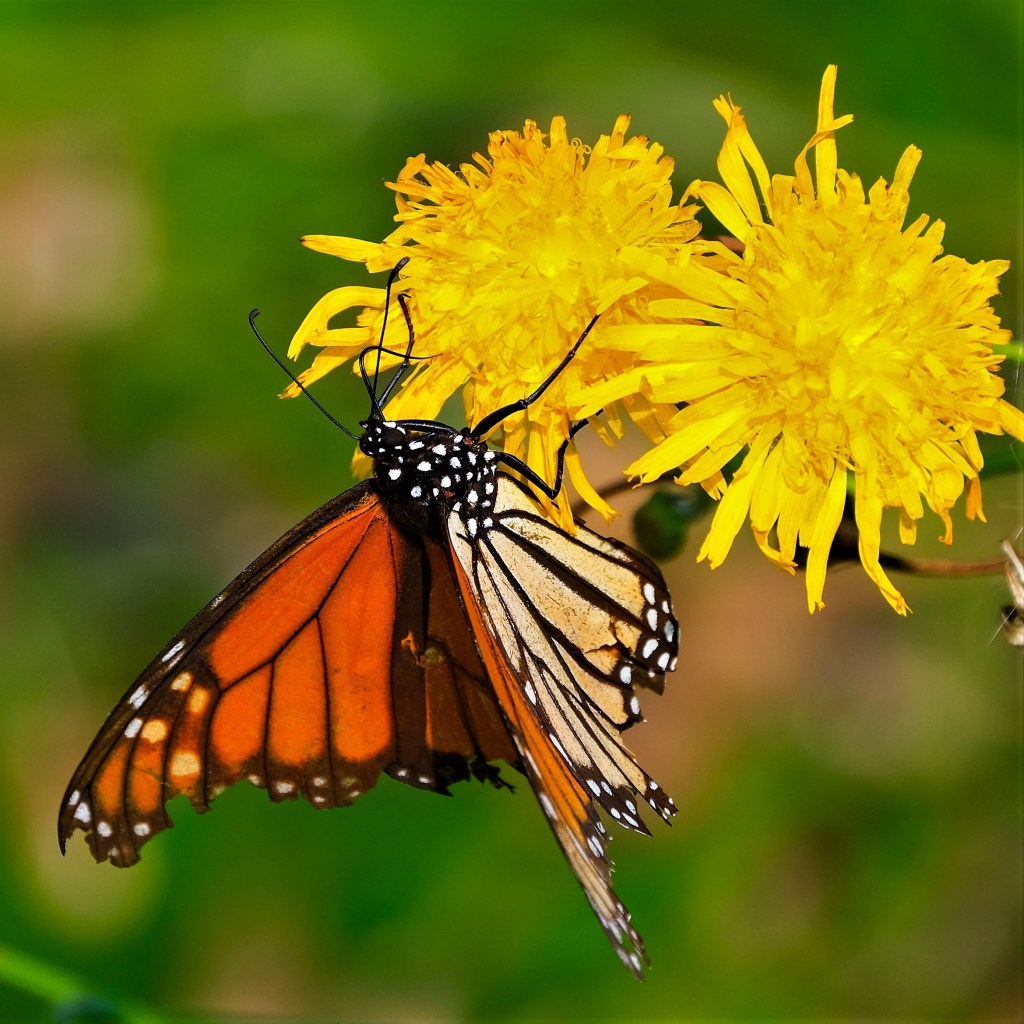
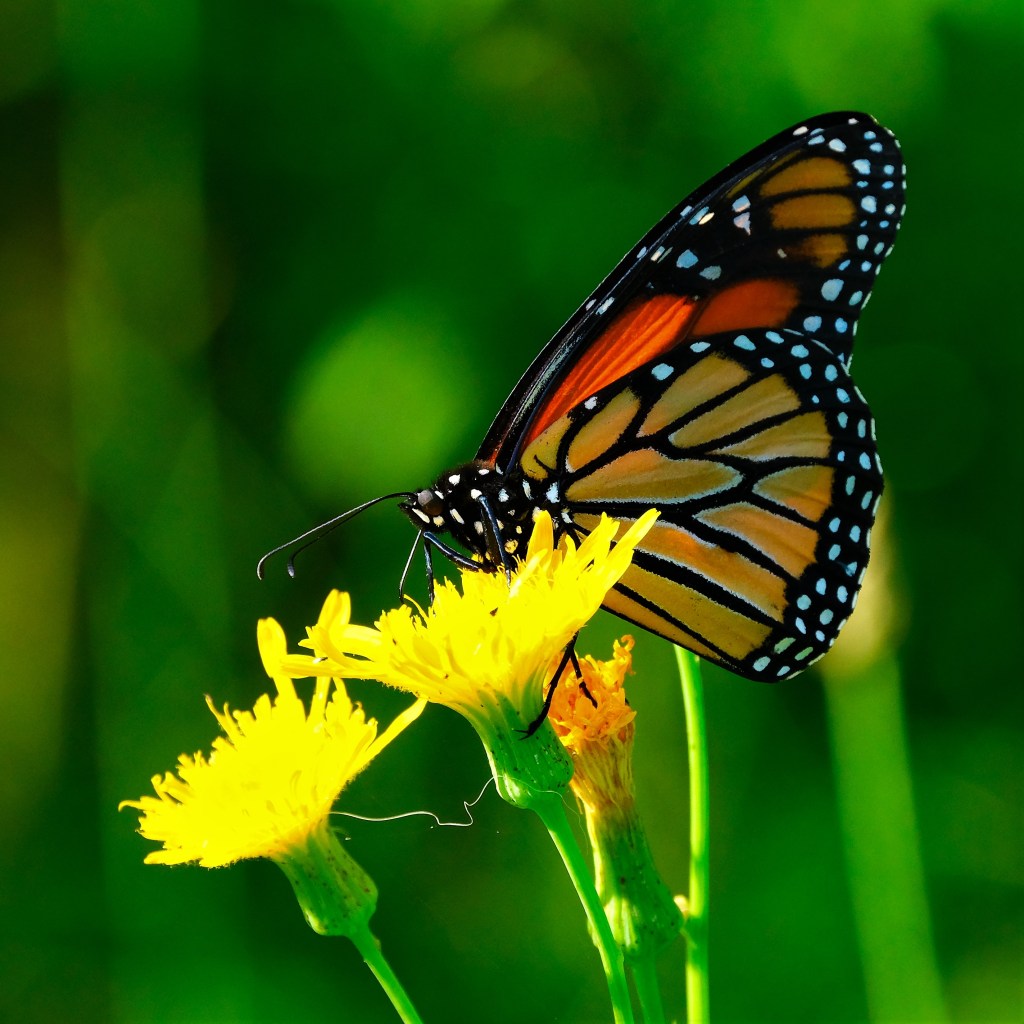
Anyway, I did startle a couple of blue herons, sorry guys, and failed to get their picture. Instead, I did manage to capture this monarch on a sow thistle blossom.
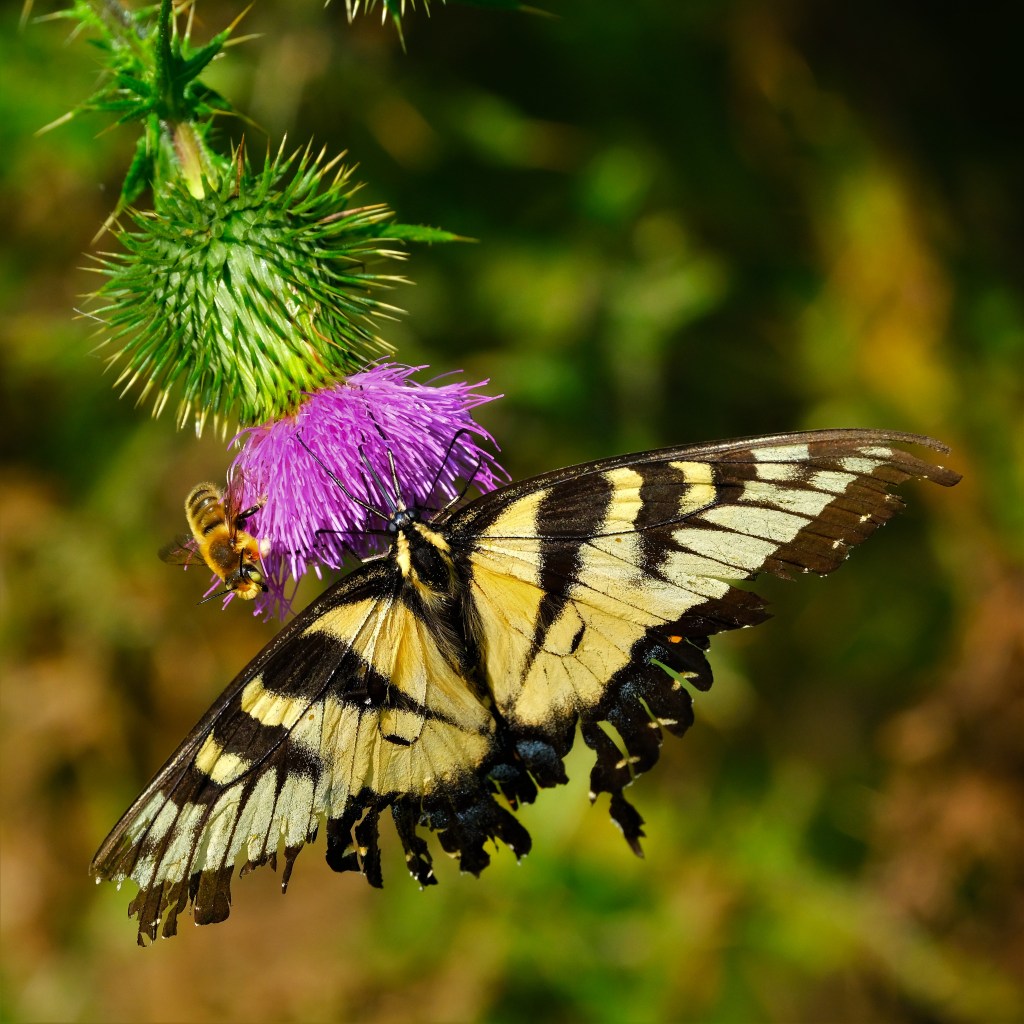
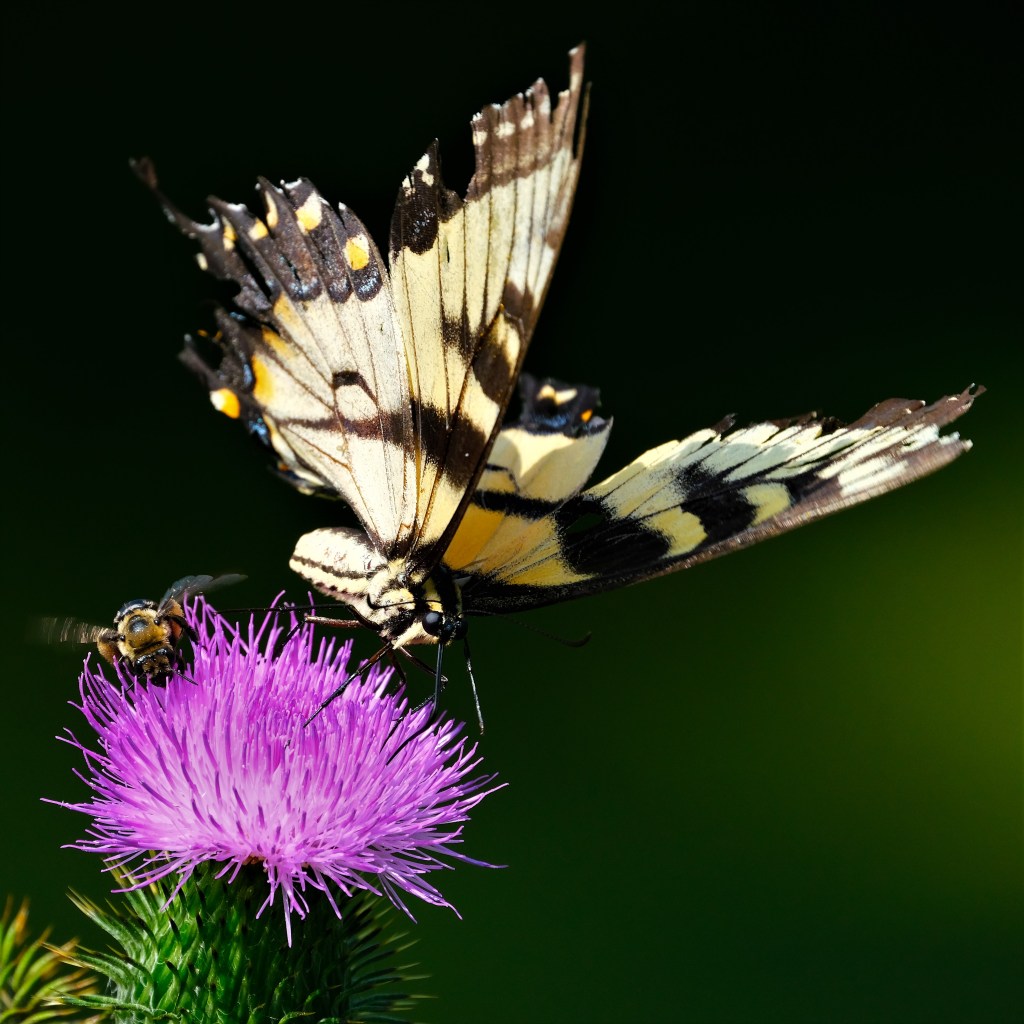
Then I had to head back home, but on the way, I checked the weeds beside the soccer fields, and hit the jackpot! First, I saw my first tiger swallowtail in the park for this summer, and the poor thing looks like it just survived a hurricane.
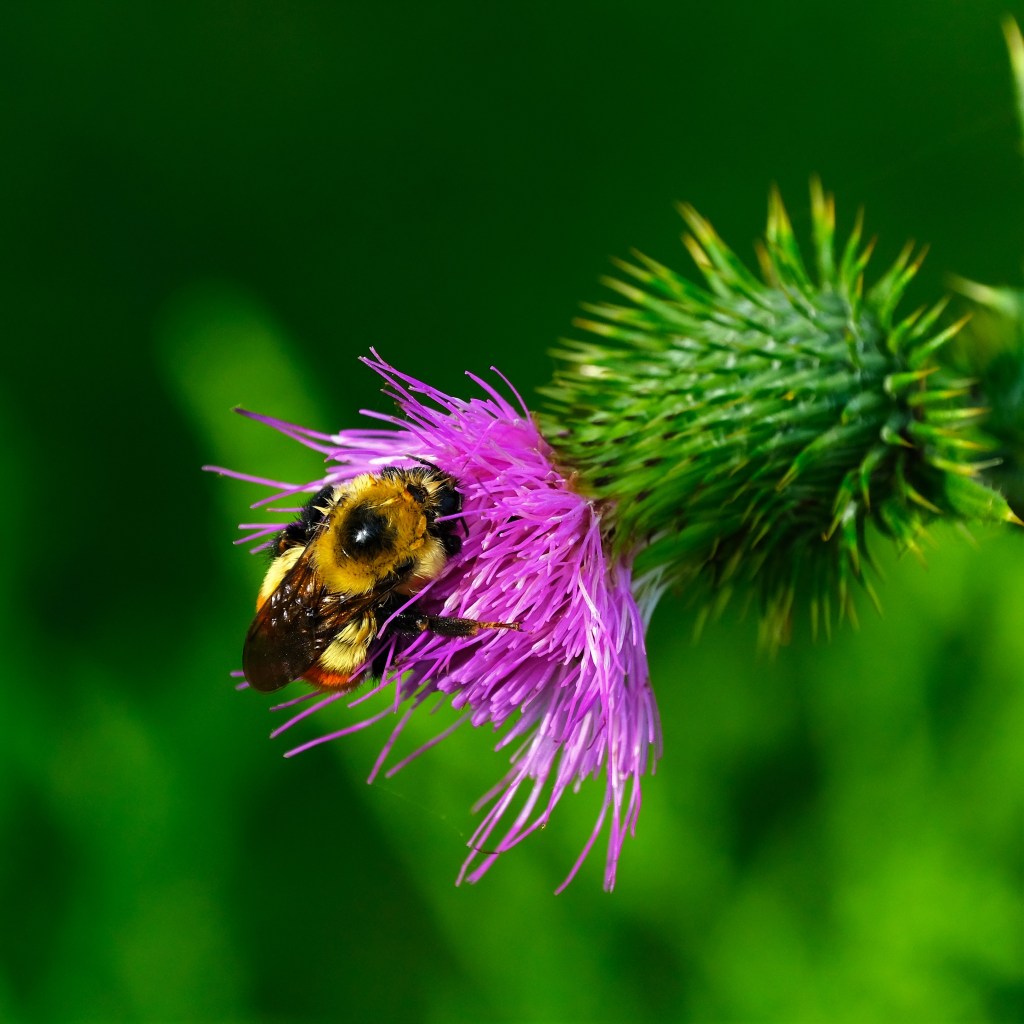
Plus, there were so many bees, that the swallowtail couldn’t seem to get a blossom to itself.
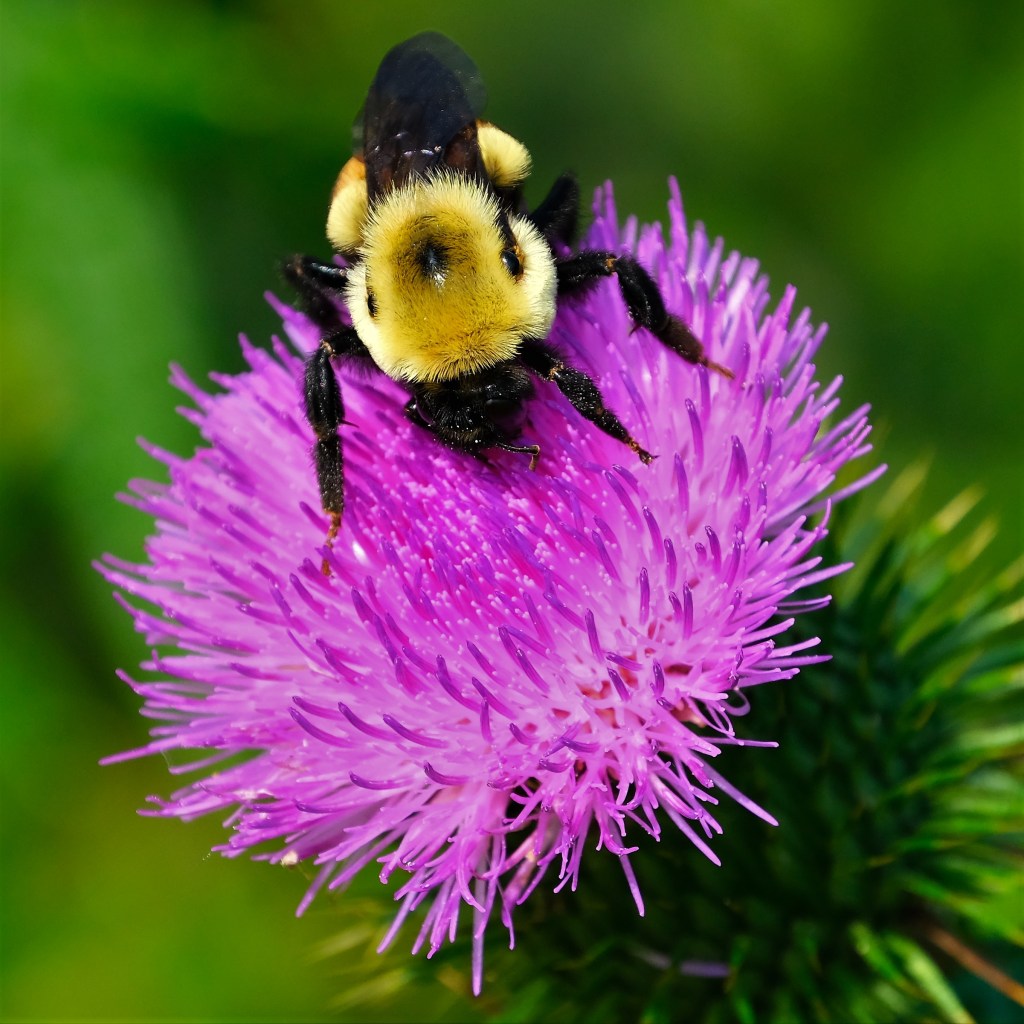
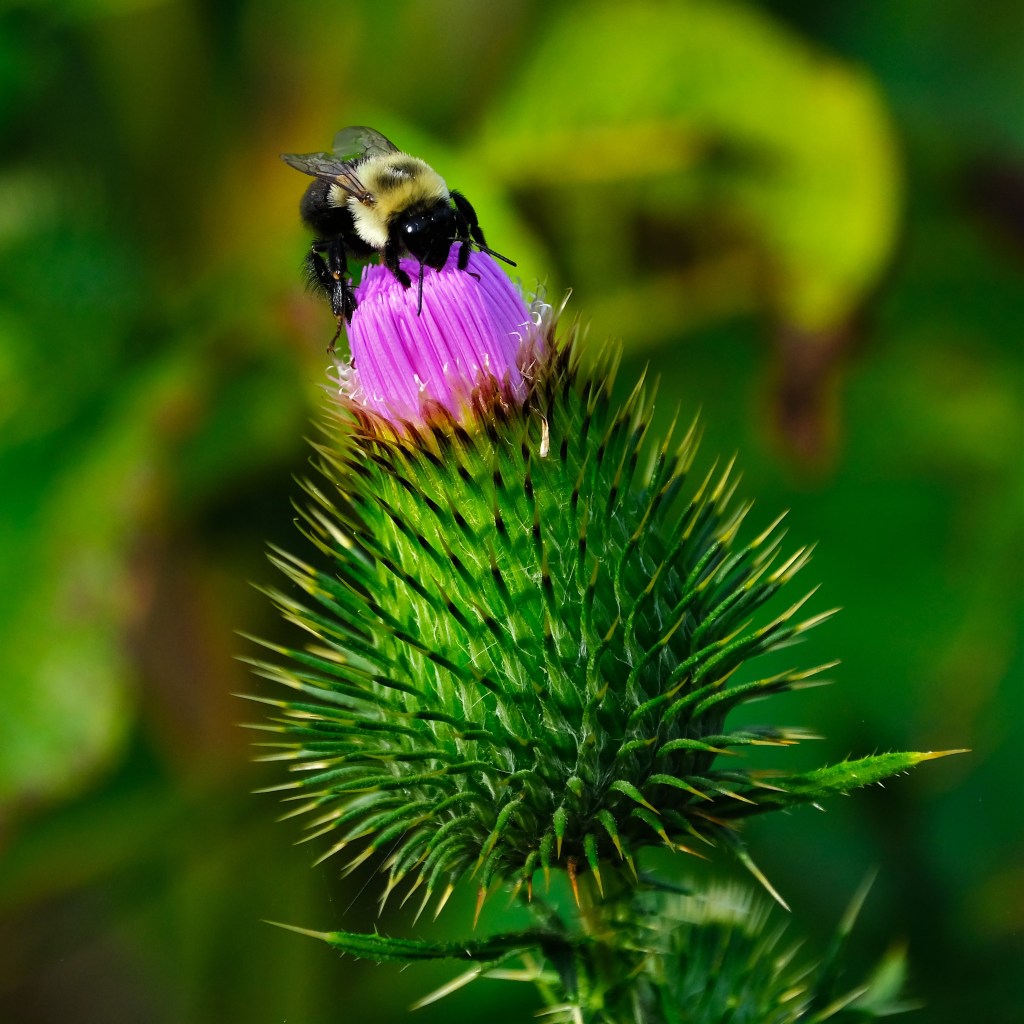
There were a lot more bees than butterflies, so it was easy enough to catch one of them on their own.
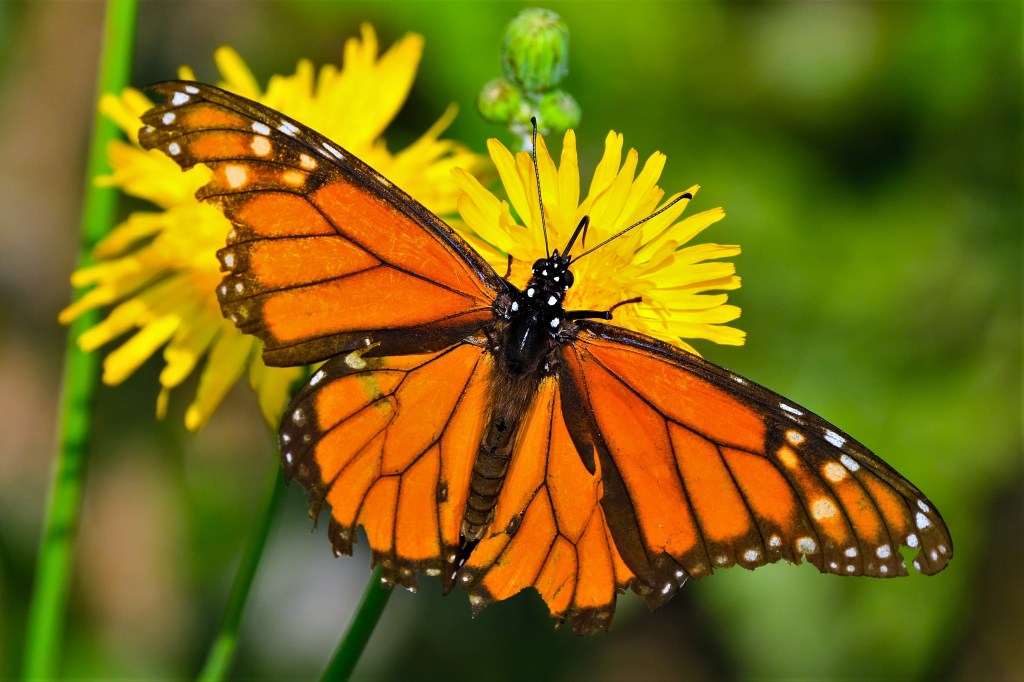
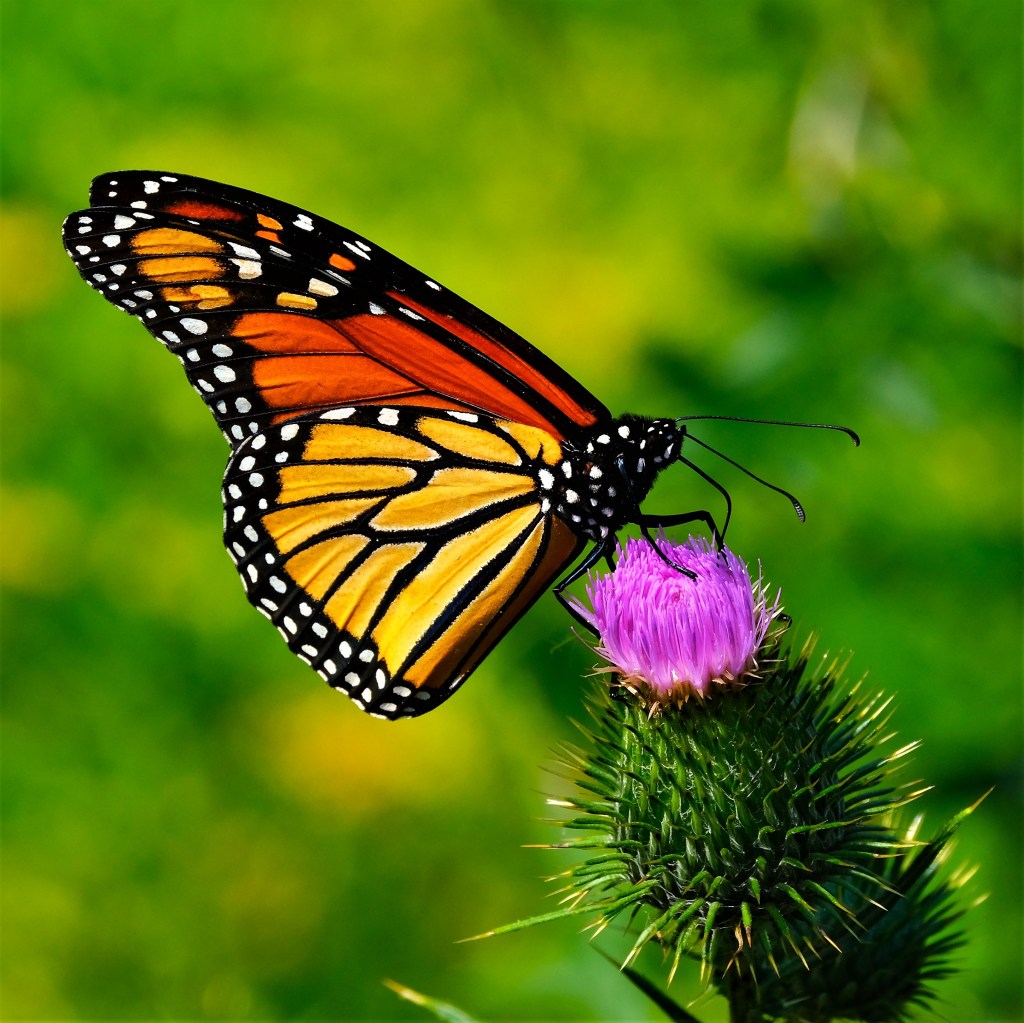
There was another monarch, and it even photobombed the swallowtail, but that one came out blurry, so here’s a prettier picture.
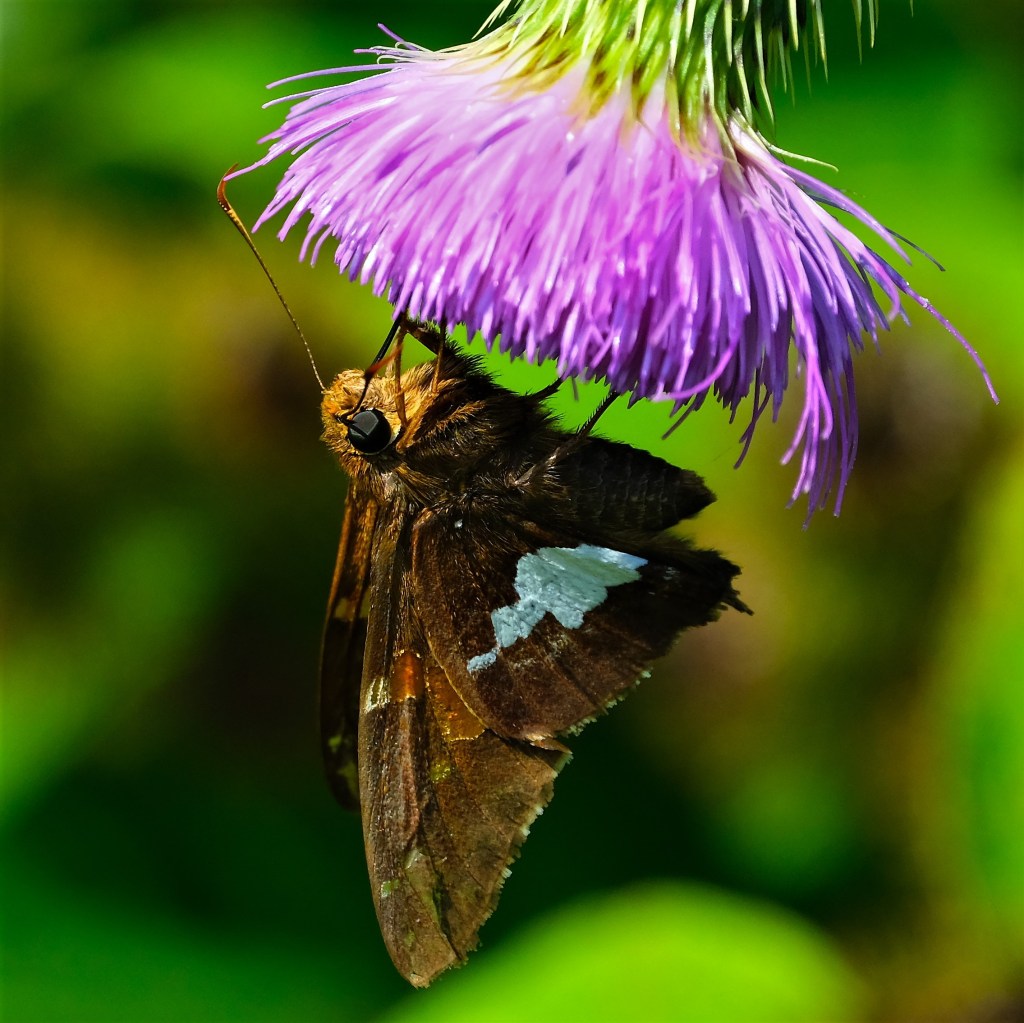
But that’s not all! Here’s a silver-spotted skipper.
I had a great visit back east, although I hardly took any pictures, and now it’s great to be back in Estabrook, where it looks like you’ve had some rain lately. In my rough estimation, there are about a year’s worth of branches and trees down in the park. Yikes!
Happily, I didn’t see any new trees down in the pond, and it sure needed the water, so the pond was looking good this morning. The mallards and wood ducks, of whom I counted over a dozen combined, were busy sampling whatever the storm knocked out of the oak tree over the path or from the bushes below it.
A blue heron and at least one green heron were also in attendance, but the blue heron looked like it was also going easy on its left foot or leg, and I sure hope that heals up soon.
This one even seems to be a little impatient with the young blossom it is on.
Lastly, Connecticut wasn’t a complete bust, picture wise, and here’s what I got.
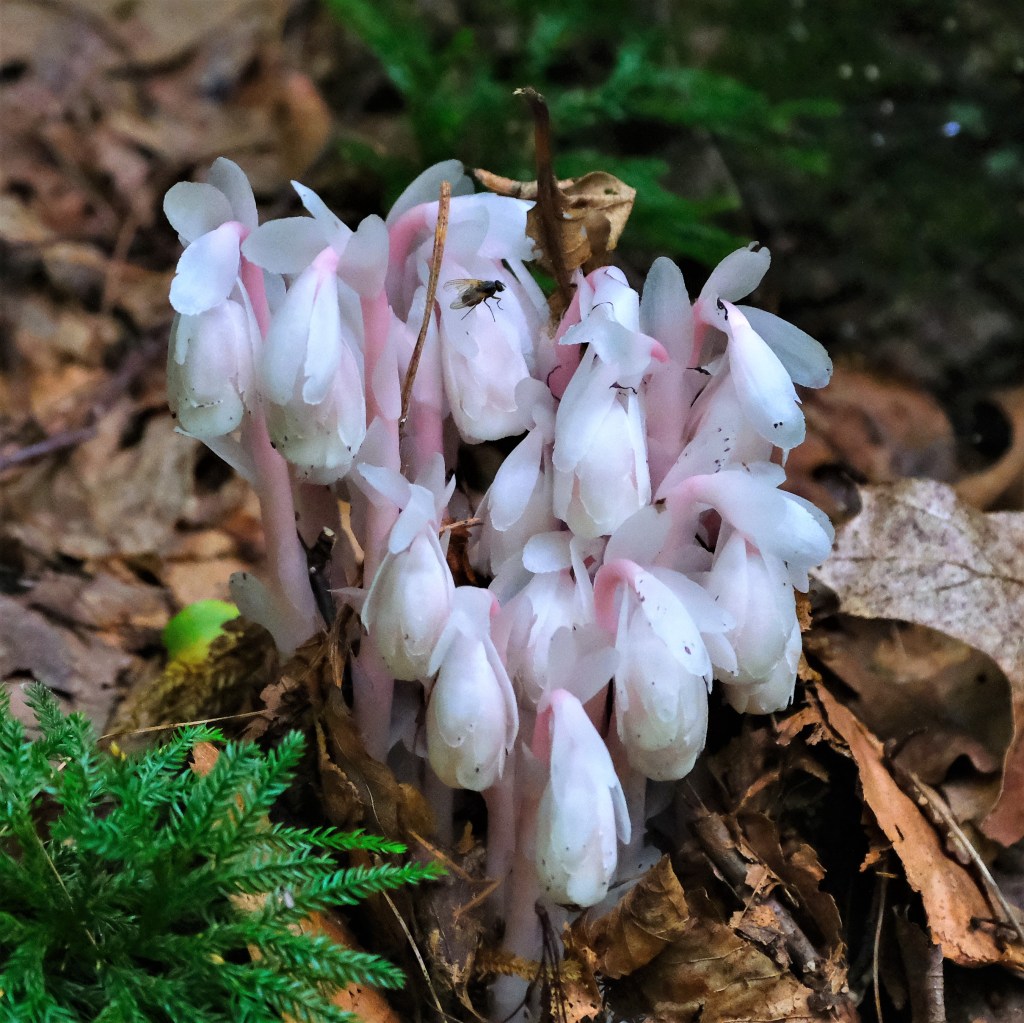
A cute catbird from a walk with my dad.An eastern tiger swallowtail on some butterfly bush in my brother’s yard.A black swallowtail on a marigold in my brother’s yard .Some Indian pipe from a walk with my brother and his dogs.
Oddly, the tiger swallowtails were nearly as plentiful there as the monarchs have been here, and the monarchs were about as rare there as the tiger swallowtails have been here this summer.
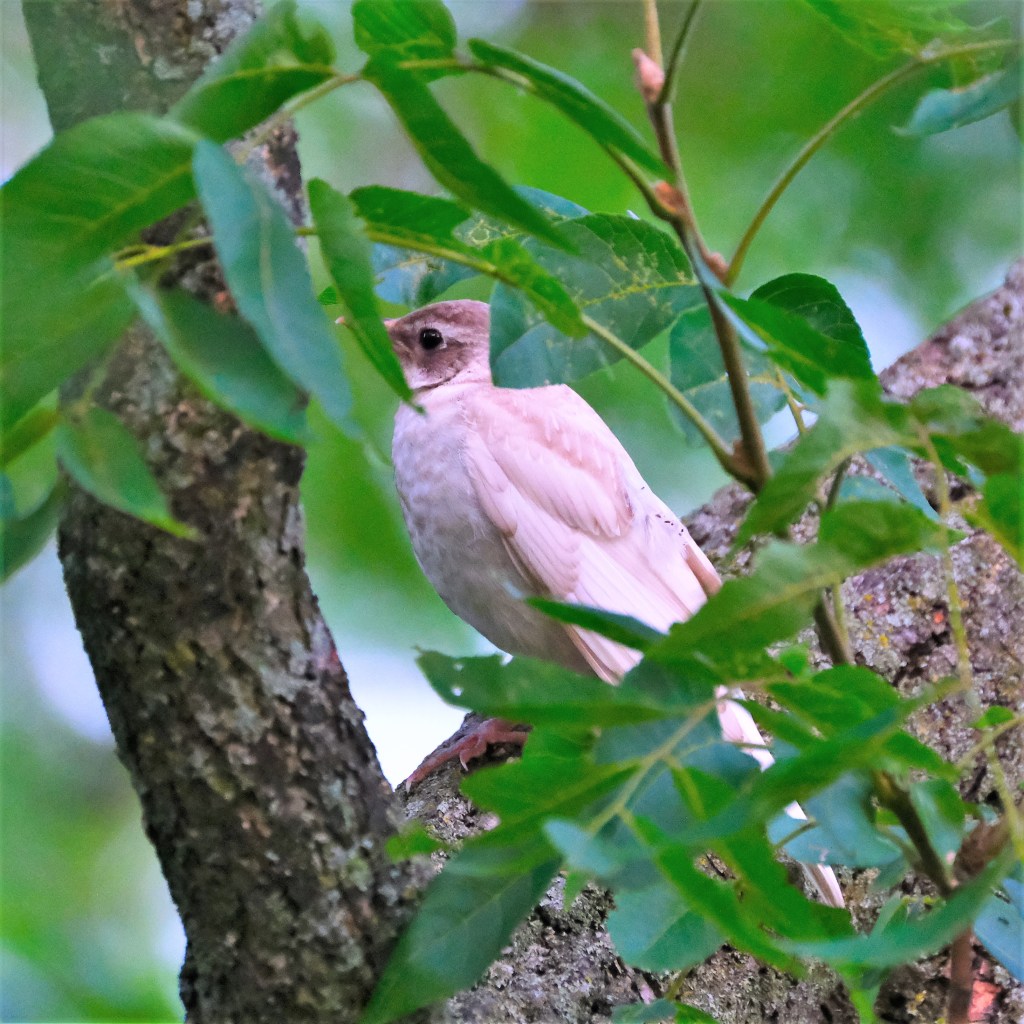
It’s a short one today. There was some kind of moisture in the air between us and the morning sun, so it stayed pretty dark well past sunrise. When I first entered the park, I checked for deer or anything else interesting, as usual, and since I didn’t see anything, I then checked the parking lot for items park patrons might have accidentally left behind, a soda can, a $20 bill, a blow-up doll, you name it. I try to plan a route that let’s me get everything with the fewest steps, which is a little silly since I’m in the park to get steps, but anyway. There was a biggish white thing in the grass near the path, and I figured I’d hit that first before continuing north, but by the time I returned my attention to the white thing it was gone! It turns out that it was a bird, not a napkin, and probably a robin with leucism. Its eyes aren’t pink, so it’s not technically an albino.
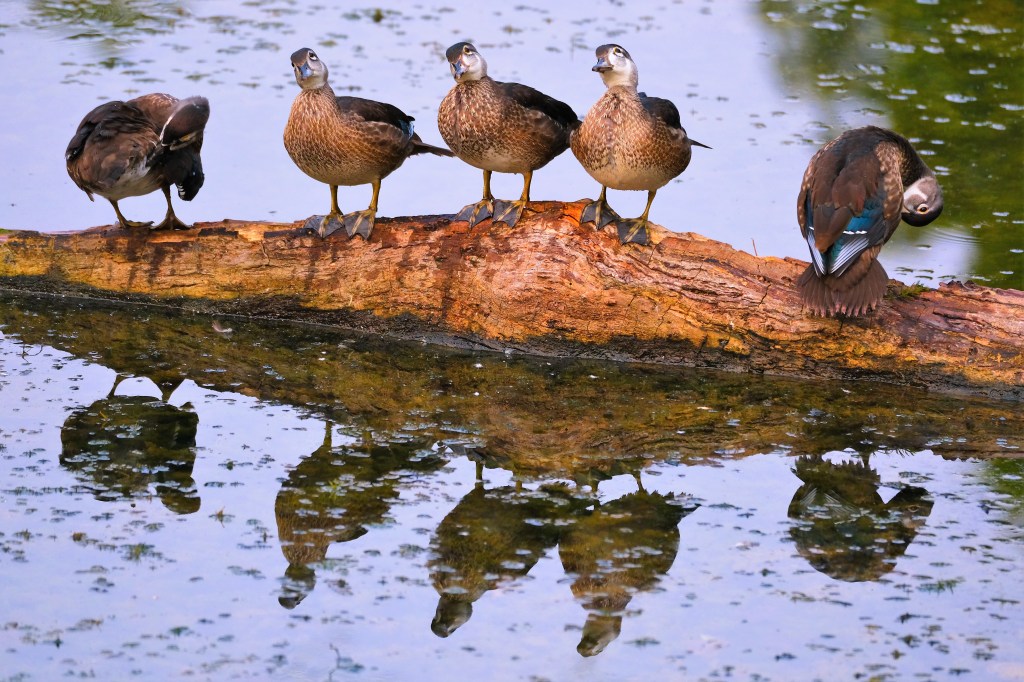
After that amazing start, there was not much else to report. I did spot a blue heron on the pond but failed to get its picture. Instead, check out this cast of wood duck characters keeping their eyes on a squirrel or two making a racket rustling nuts out of a tree at the north end of the pond.
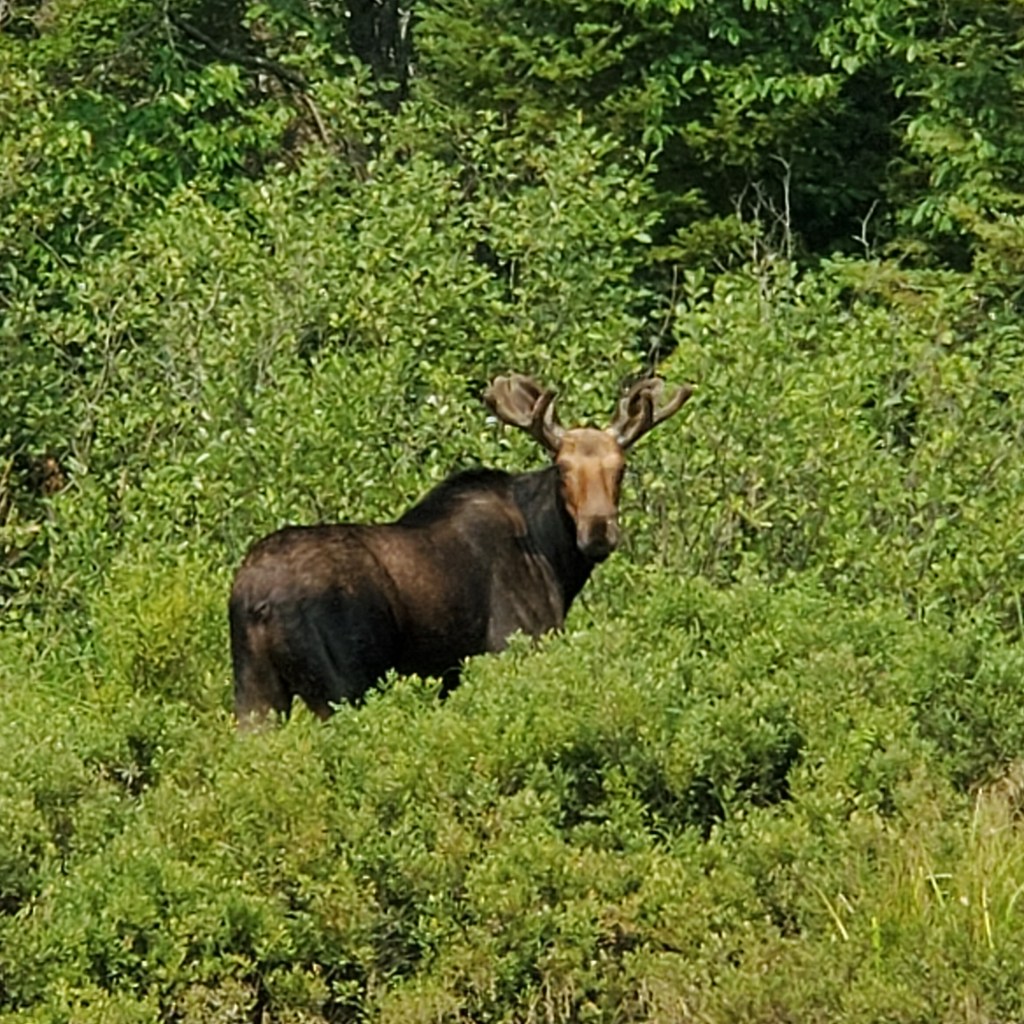
And that’s all I’ve got for Estabrook. Happily, Anne’s nephew, David, sent in this picture of an amazing creature he spotted on his way home from the family campout we were all at last week.
Here is his commentary: “Highlight of the trip – was looking for moose tracks on the road to show to Lucas, [is son,] and ended up coming across this bull moose minutes later.”


















 Signs of Life in Estabrook Park