A report with so much variety, I couldn’t think of a title before I pressed “publish”.

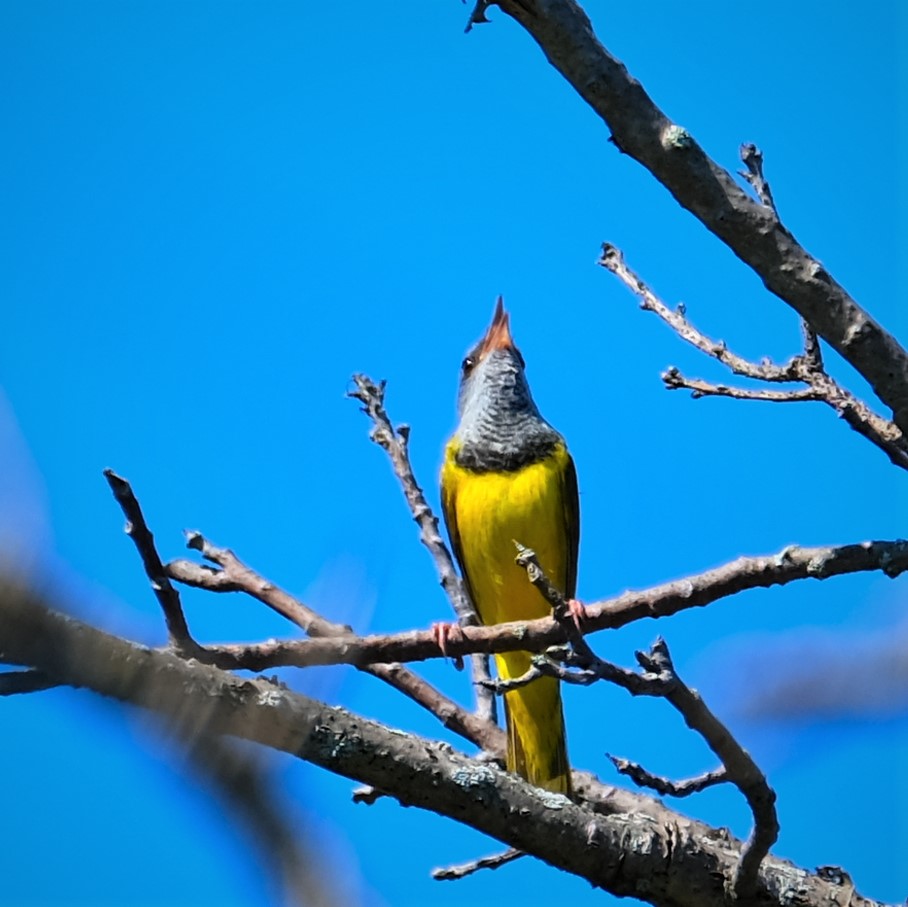
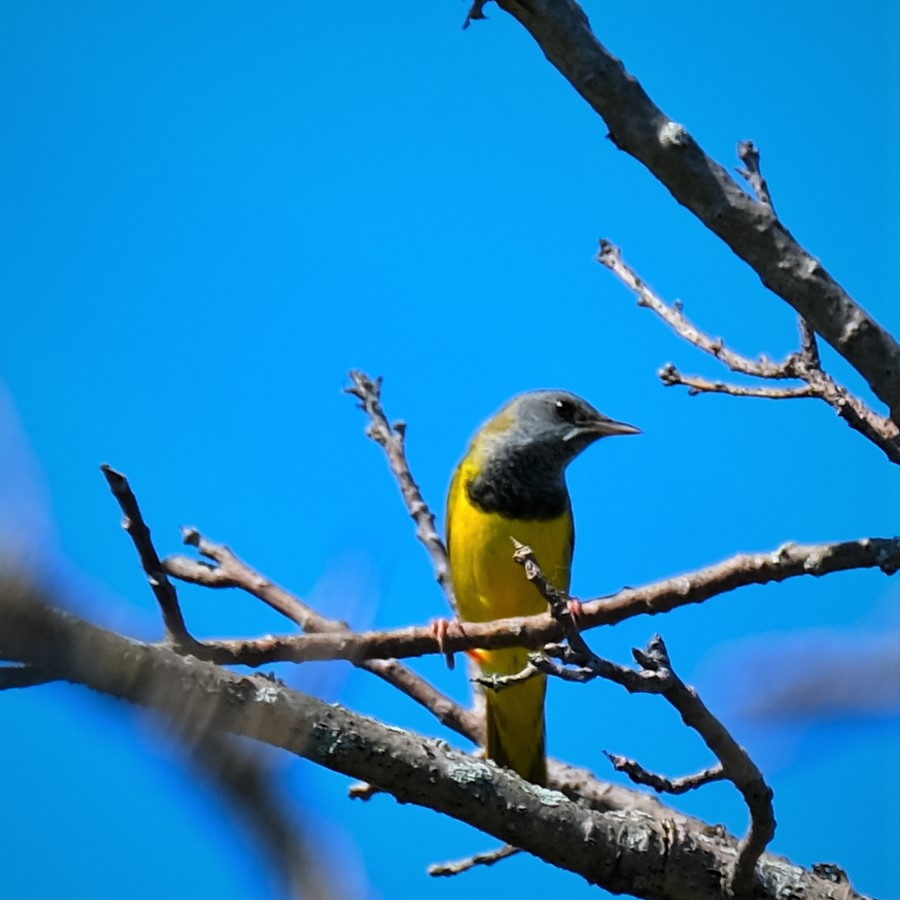
The mourning warbler was in the same tree this morning, by the soccer fields, sending out his call in hopes of finding someone to share Estabrook Park with, and I sure hope he succeeds, don’t you?

Under the bright overcast, I think you can see his colors a little better than yesterday. He is a tiny bird, and thank goodness he likes that dead oak tree because in the birch tree right beside it, which is only half leafed out and looks like it is barely hanging on, I can never find him, despite his bright yellow belly.

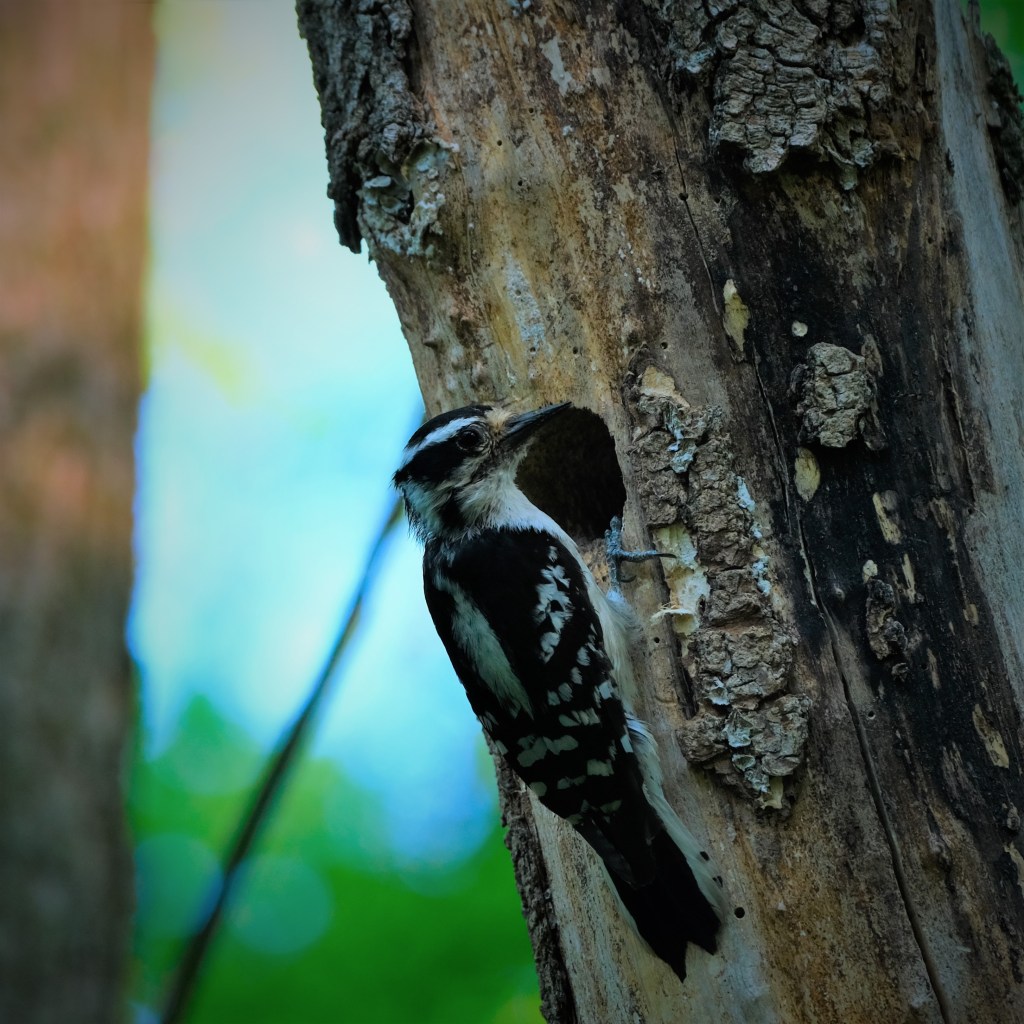
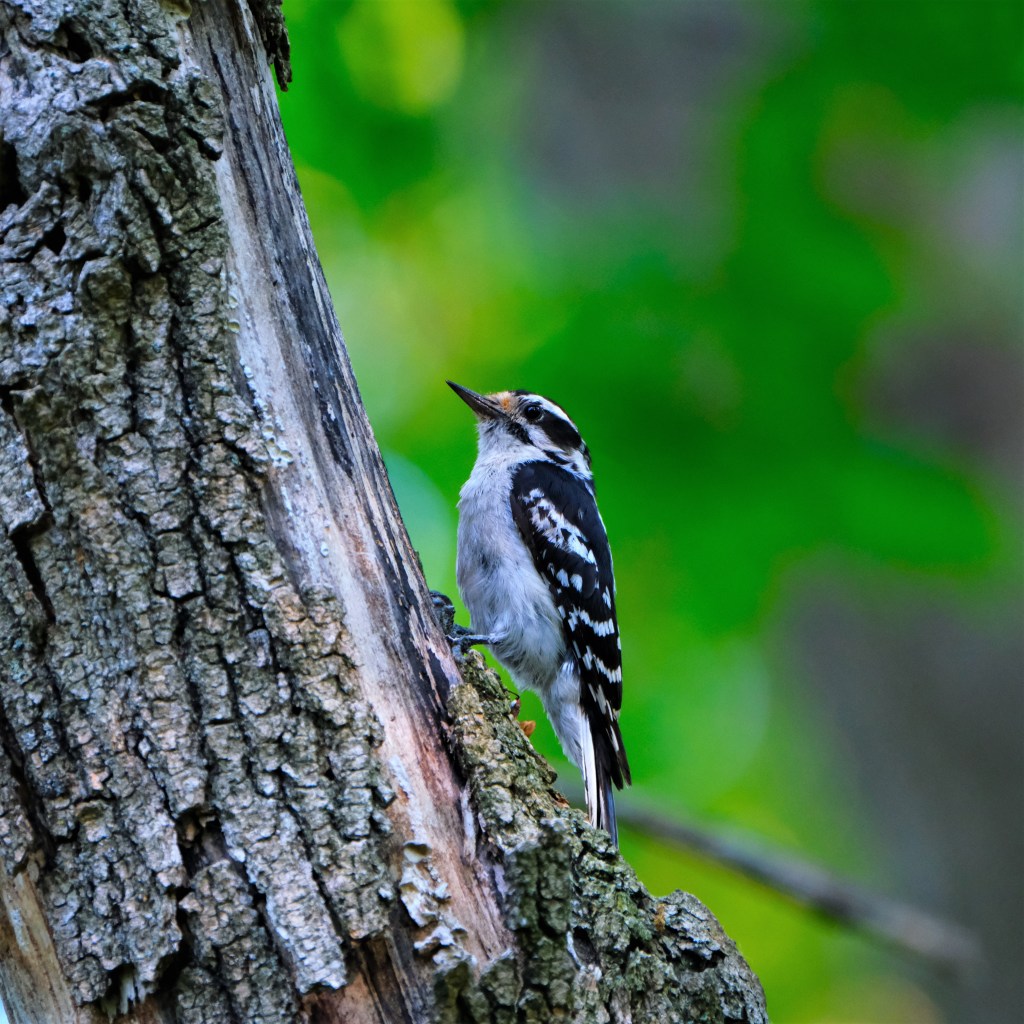
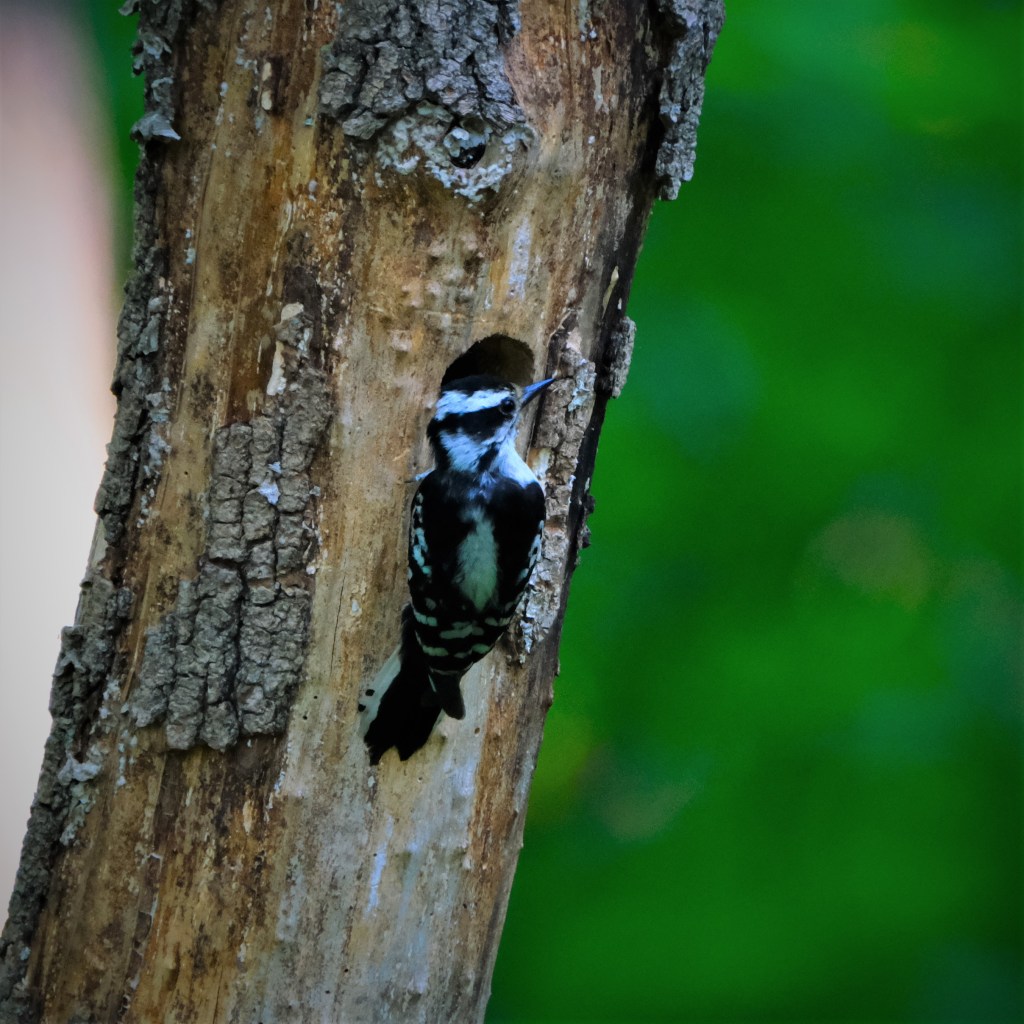
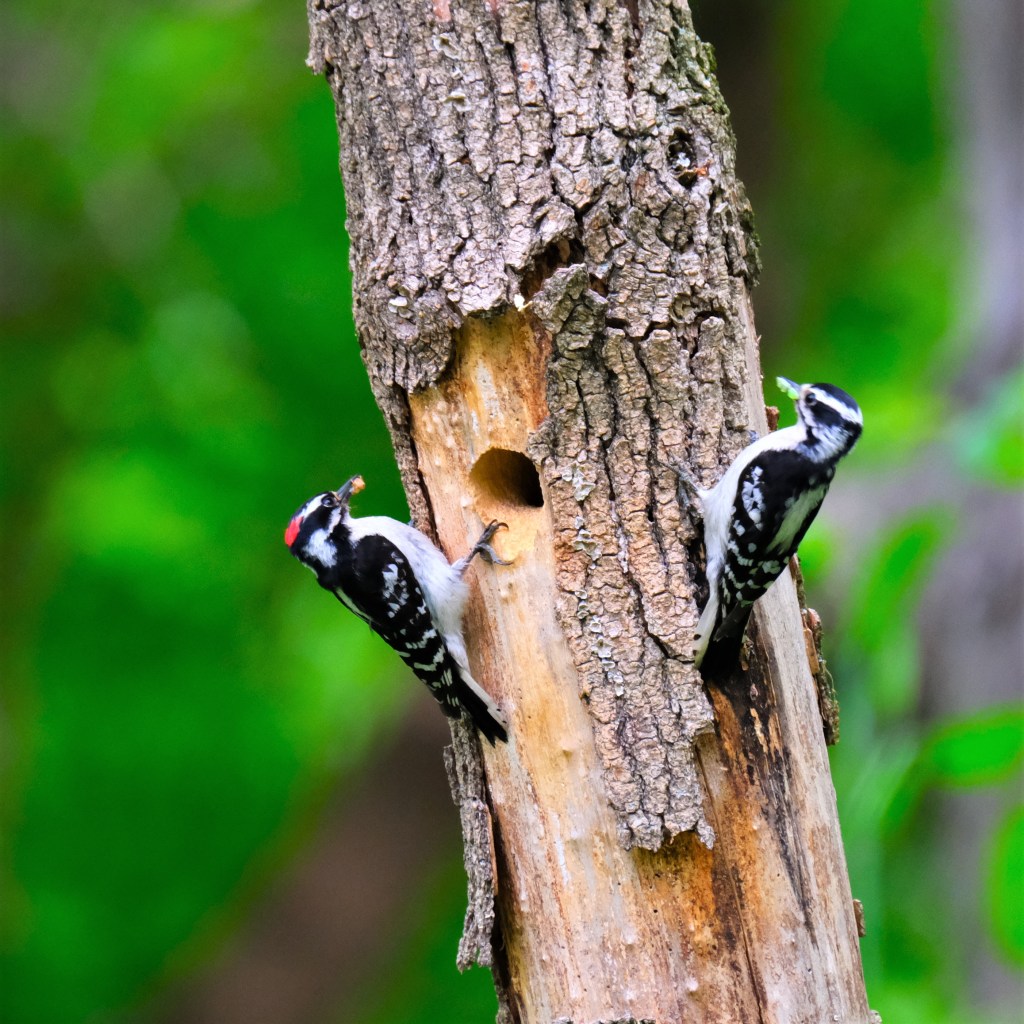
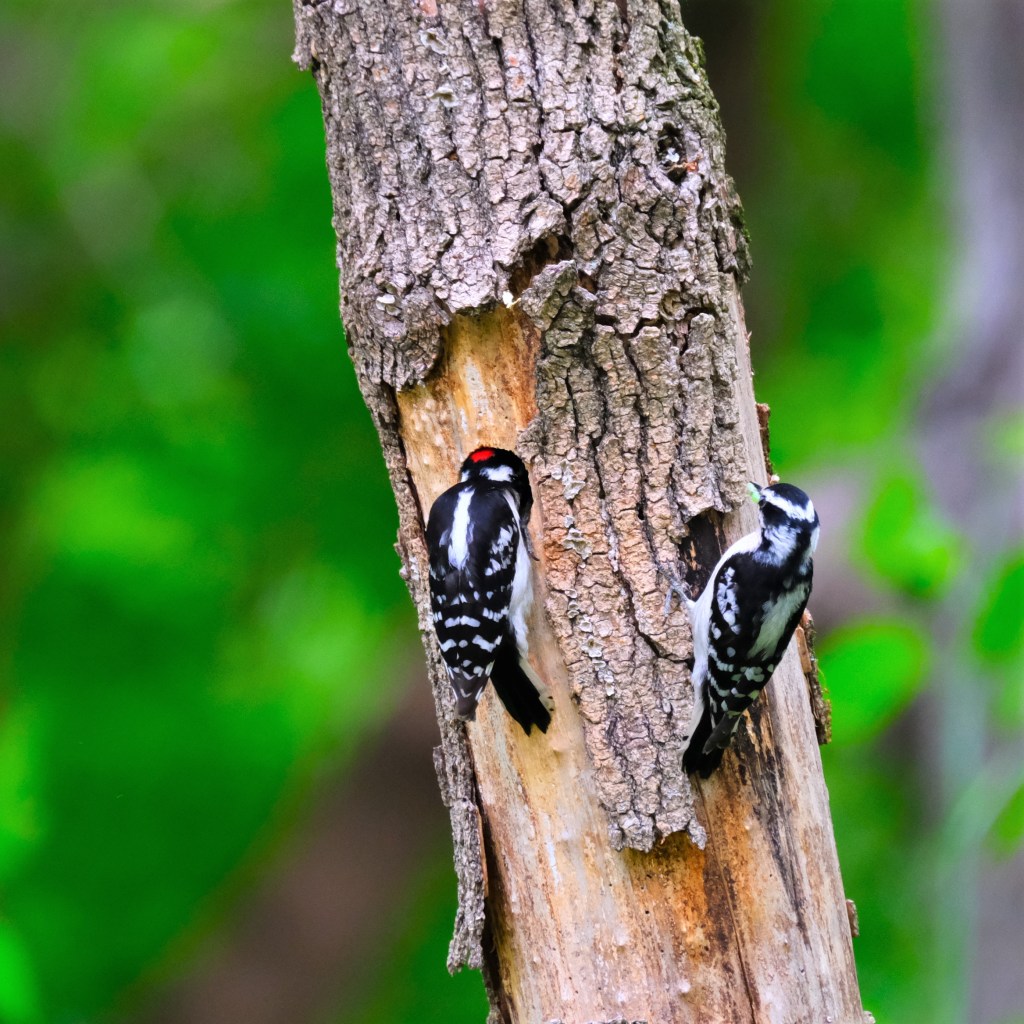
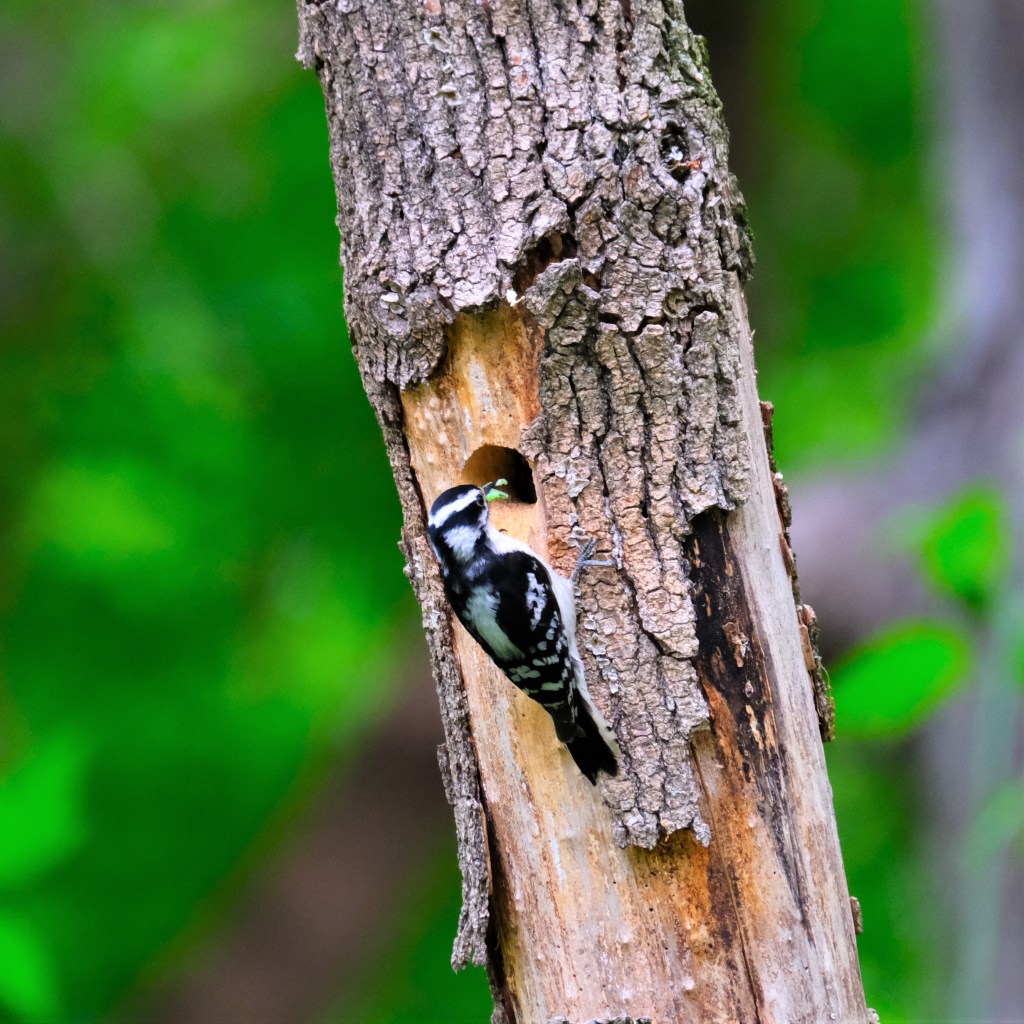
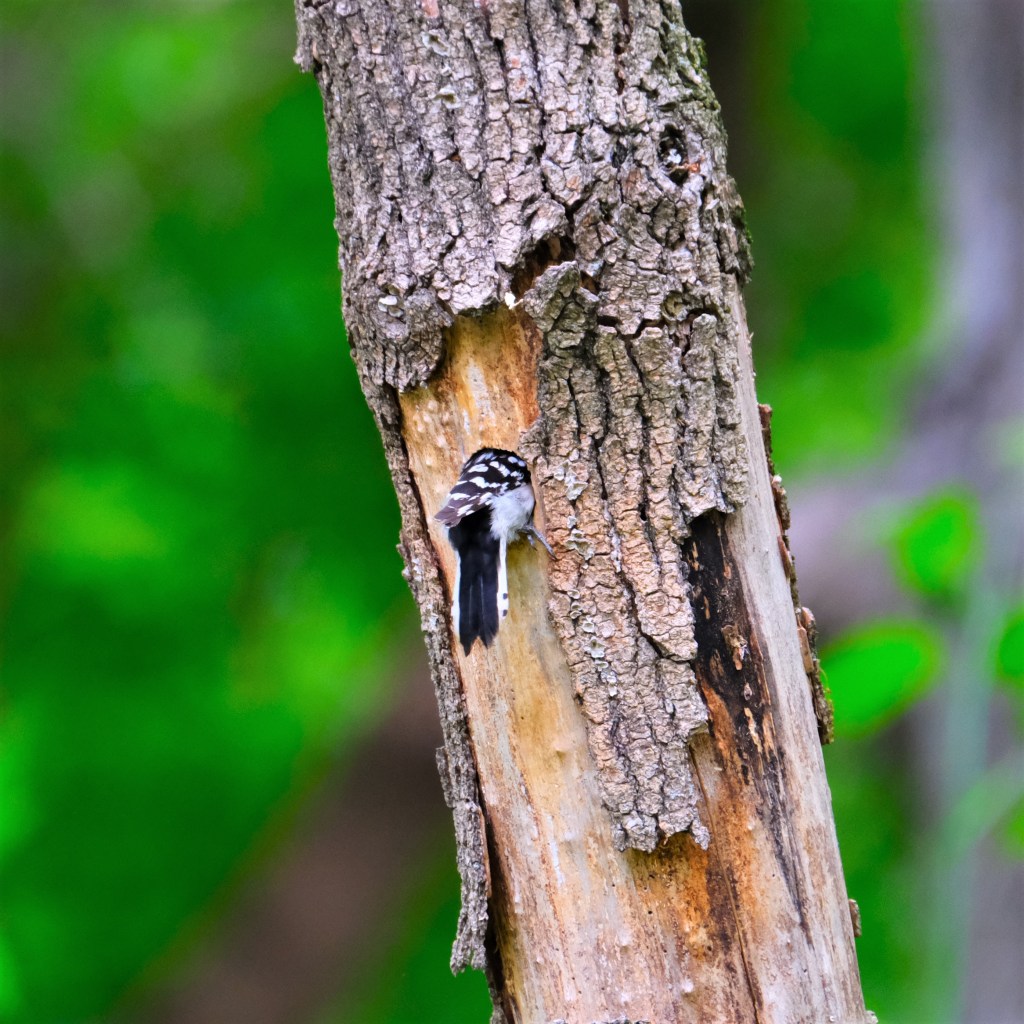
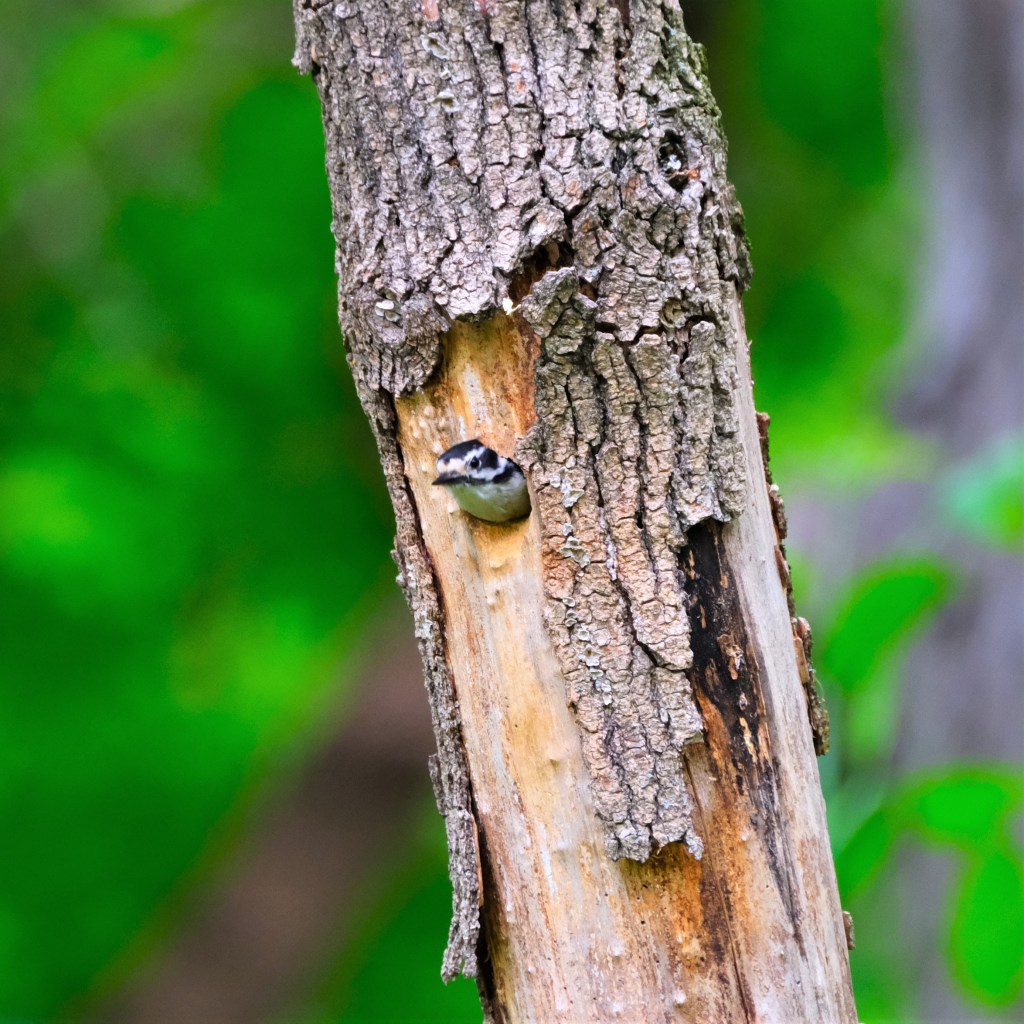
Along the river, I stopped by the downy woodpecker nest again just in time to catch this quick transfer.

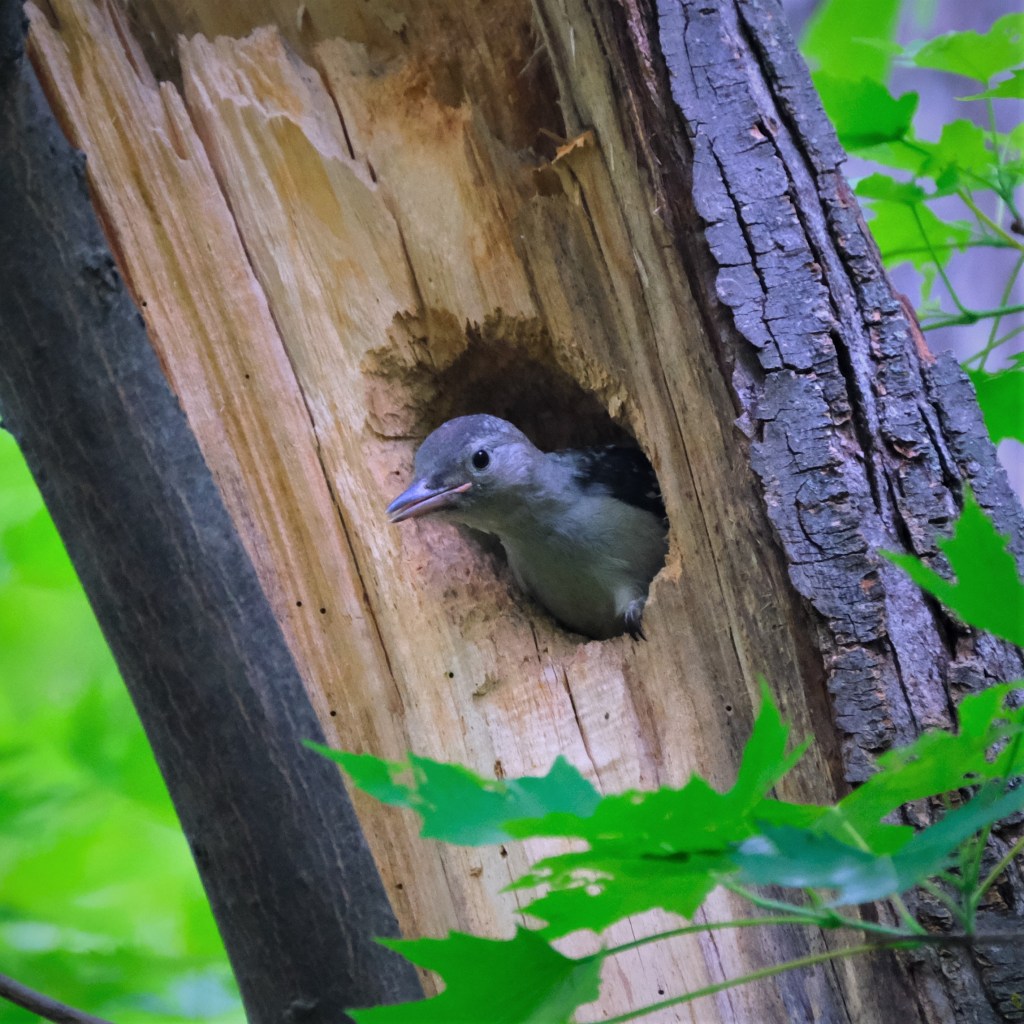
But while I was there keeping my distance and waiting for another shot, I could here both a red-bellied woodpecker calling and another little incessant chirping. Sure enough, almost right above where I thought would be a nice safe distance from the downy nest, it seems I was too close for comfort to a red-bellied nest, so I snapped this pic of a young red-bellied woodpecker looking for Mom or Dad or both to deliver its breakfast. Then I made like a tree and leaved.
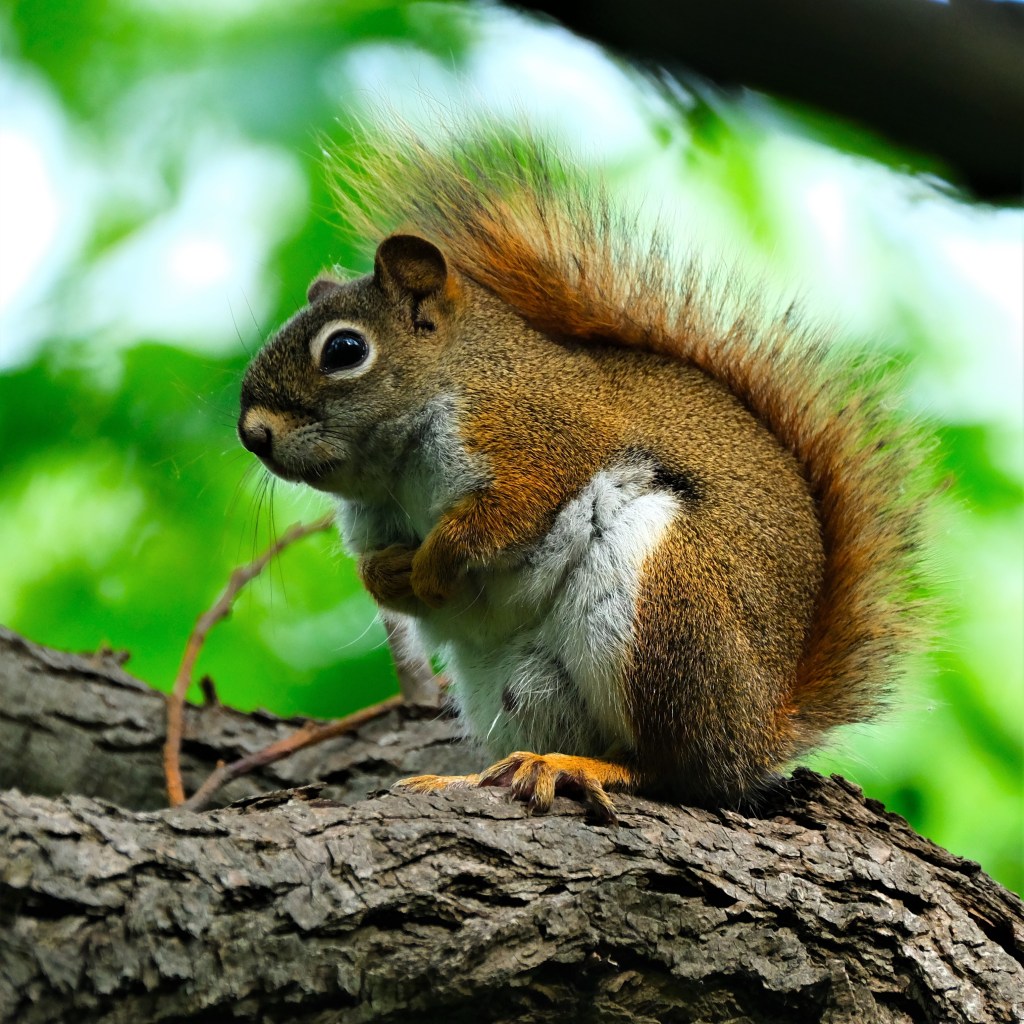
And, as if all those woodpeckers weren’t enough action, here’s a bold little red squirrel sneaking a maple tree seed from under the noses of a passel of its big grey cousins.
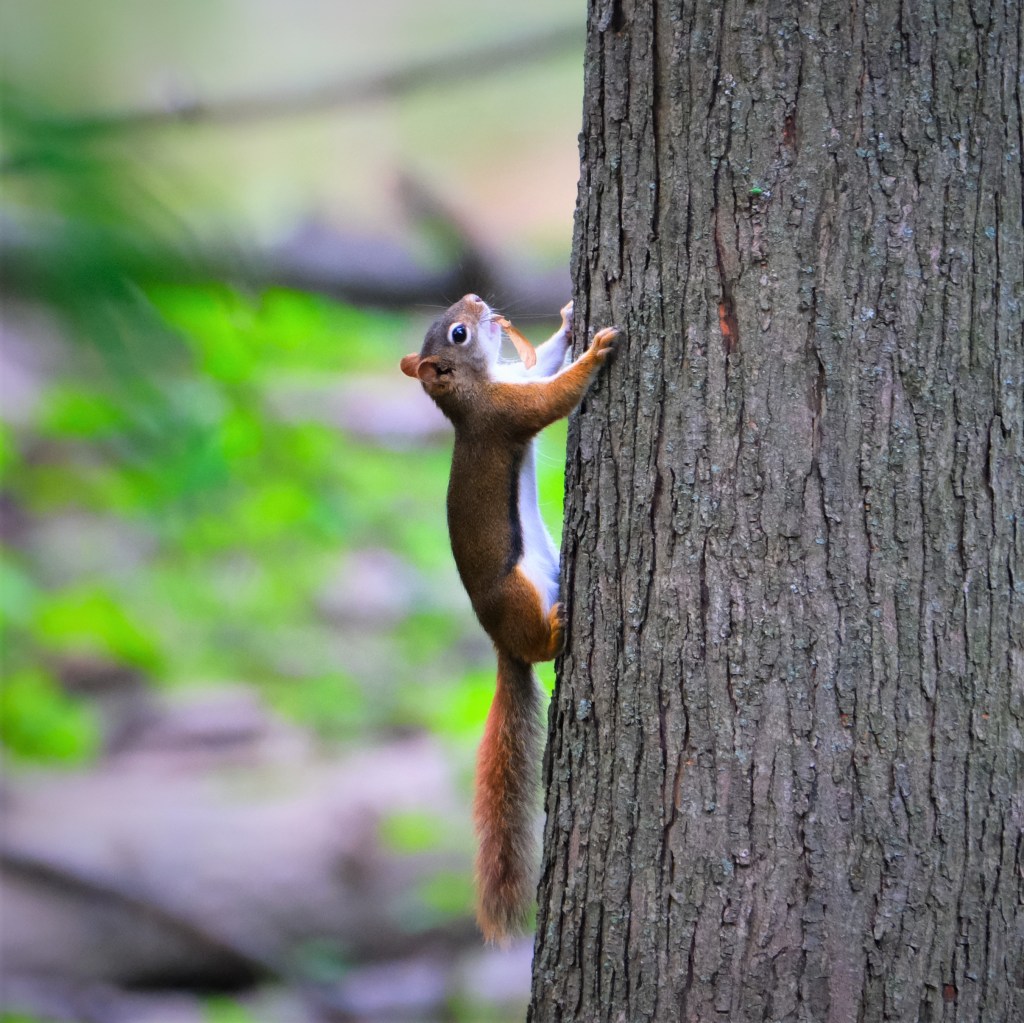
That’s become quite a busy spot in the woods.

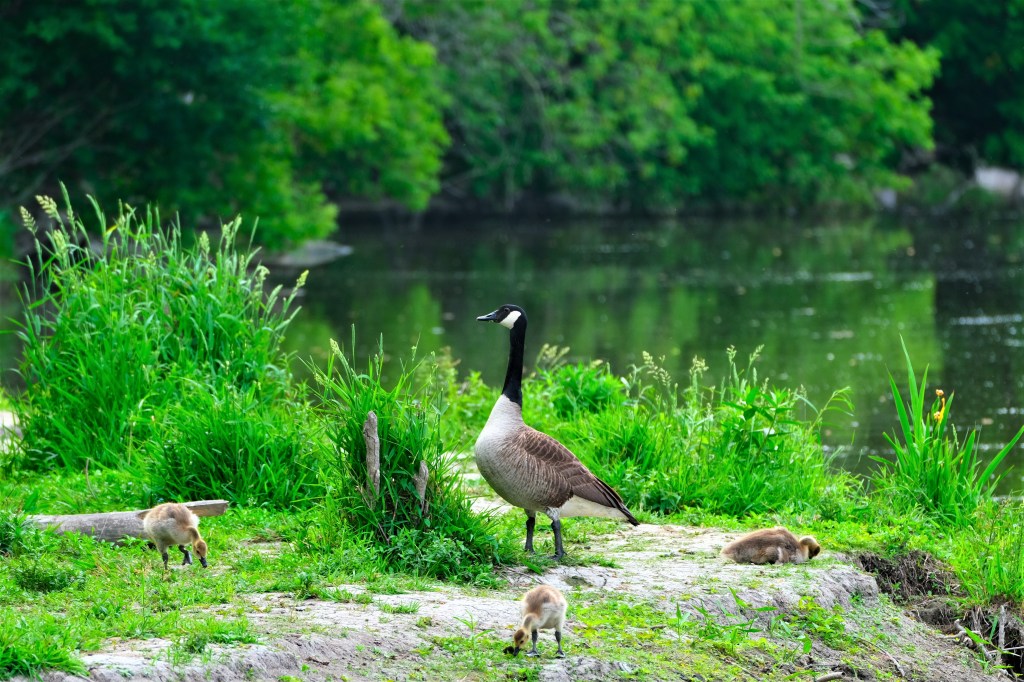
Meanwhile, out on the water, I spotted a few mallards, without ducklings today, a couple of sandpipers, and this family of geese. I actually bumped into the geese on my way north and again on my way south, and I’m pretty sure there are just 4 goslings and only 1 adult. They must have run into some serious trouble and still appear to be making the best of things. A buddy of mine from high school, Rick, had an aunt who used to say, “When you have no choice, nothing is hard,” and that seems to apply here.
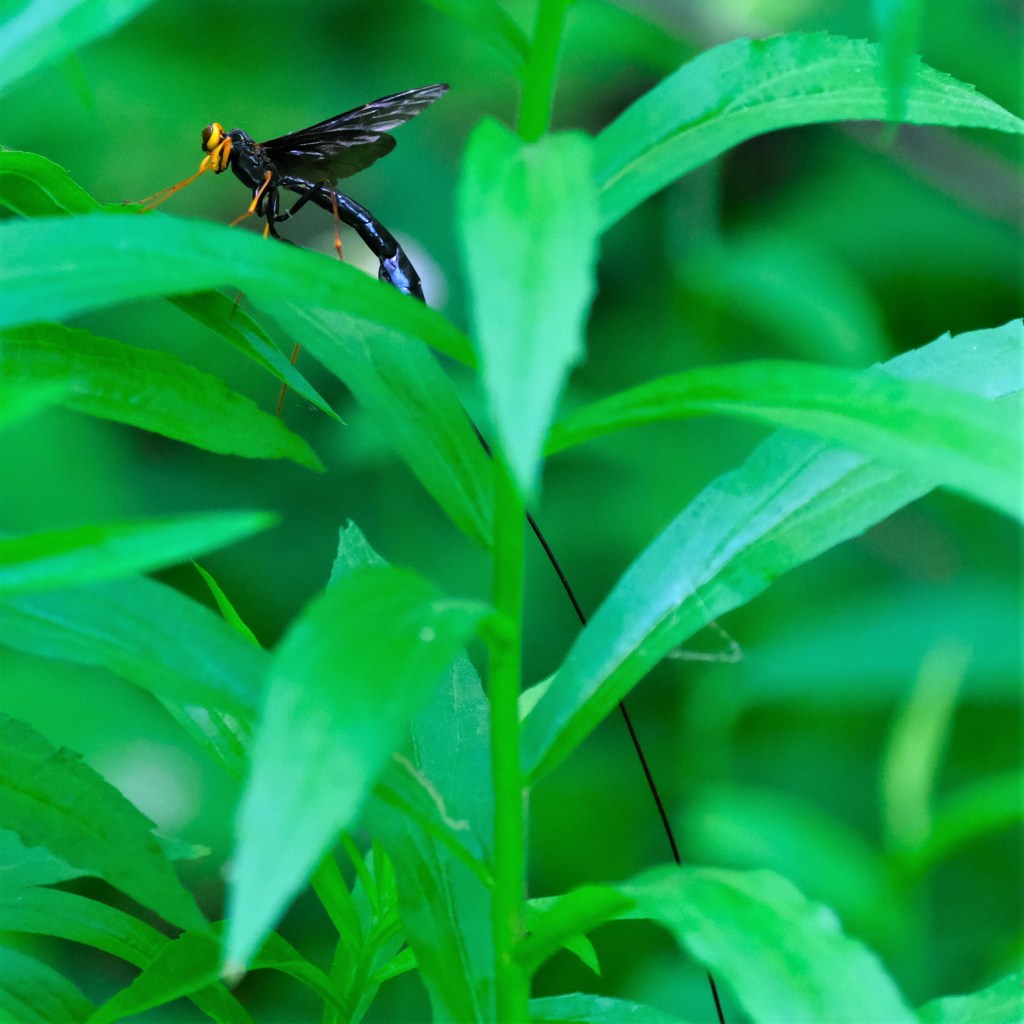
I also ran into another dear friend from last summer, this stunningly beautiful giant ichneumon wasp (Megarhyssa atrata) with an ovipositor that looks like a cardiac needle, and now that we’re old friends, I didn’t need to pick myself up off of the ground before snapping this shot. She continued north searching for hardwoods in which horntail wasps have laid their eggs, and I continued south.
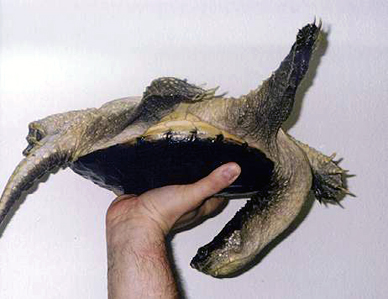
Finally, thanks to a tip from Kate B., a fellow birder and frequent park visitor, I knew to look for this magnificent creature, a common snapping turtle (Chelydra serpentina) of good size, who appeared to be making his or her way to the river. I’ve seen how far they can reach with their razor sharp beaks, and I didn’t have a snow shovel handy, which I used to keep in the trunk of my car all summer for just such purposes in upstate NY, so I did not offer to help with the journey as I could with the red-eared slider last summer.

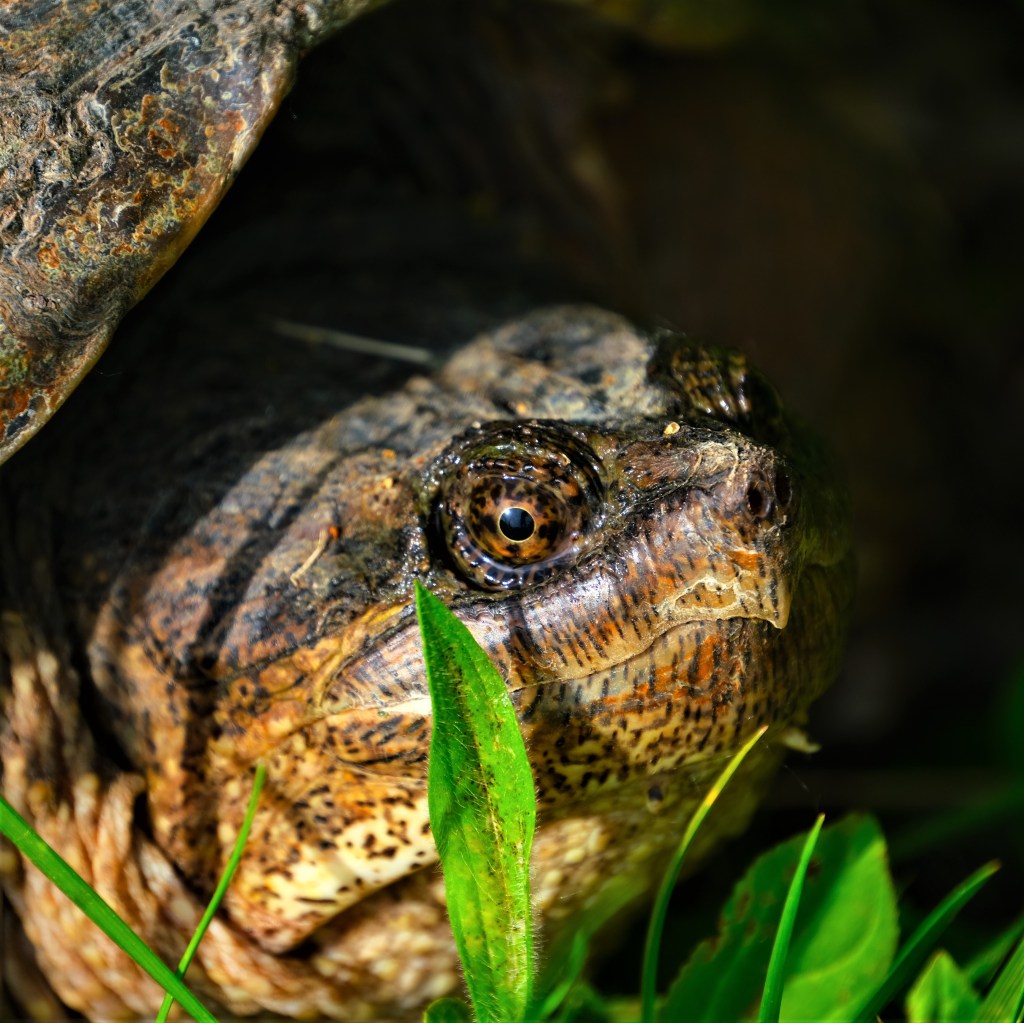
By sheer coincidence, he or she was almost directly below the mourning warbler, who was in the same tree as two hours before, and I enjoyed his smooth jazz stylings as I took these pictures.

Lastly, long-time reader and frequent commenter, Karen W., reports that the monarch butterfly I showed you yesterday and guessed was a female, instead “looks like a male monarch. You can make out a faint spot in the closed wing photo. I’ve raised monarchs for 2 decades and have gotten good at telling male/female even with closed wings.”

I’m not going to argue with 2 decades of experience.

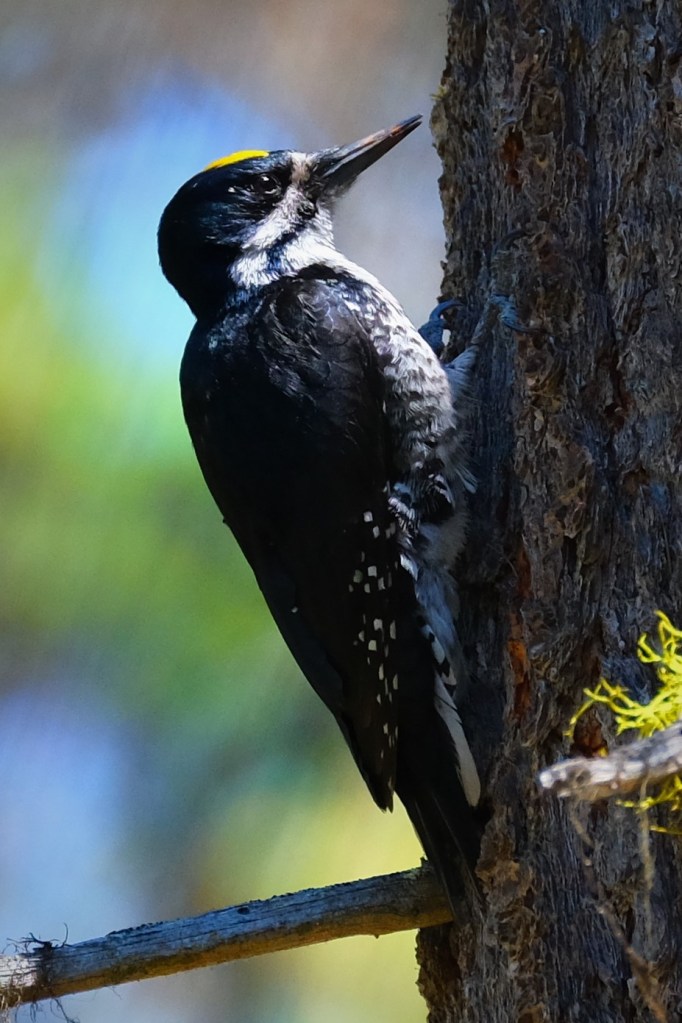
I know I already wrote “finally” and “lastly”, but Karen’s correction reminds me that I also goofed up on the three-toed woodpecker identification from out west last week. What I thought was an American three-toed woodpecker in Glacier National Park was actually a black-backed woodpecker.
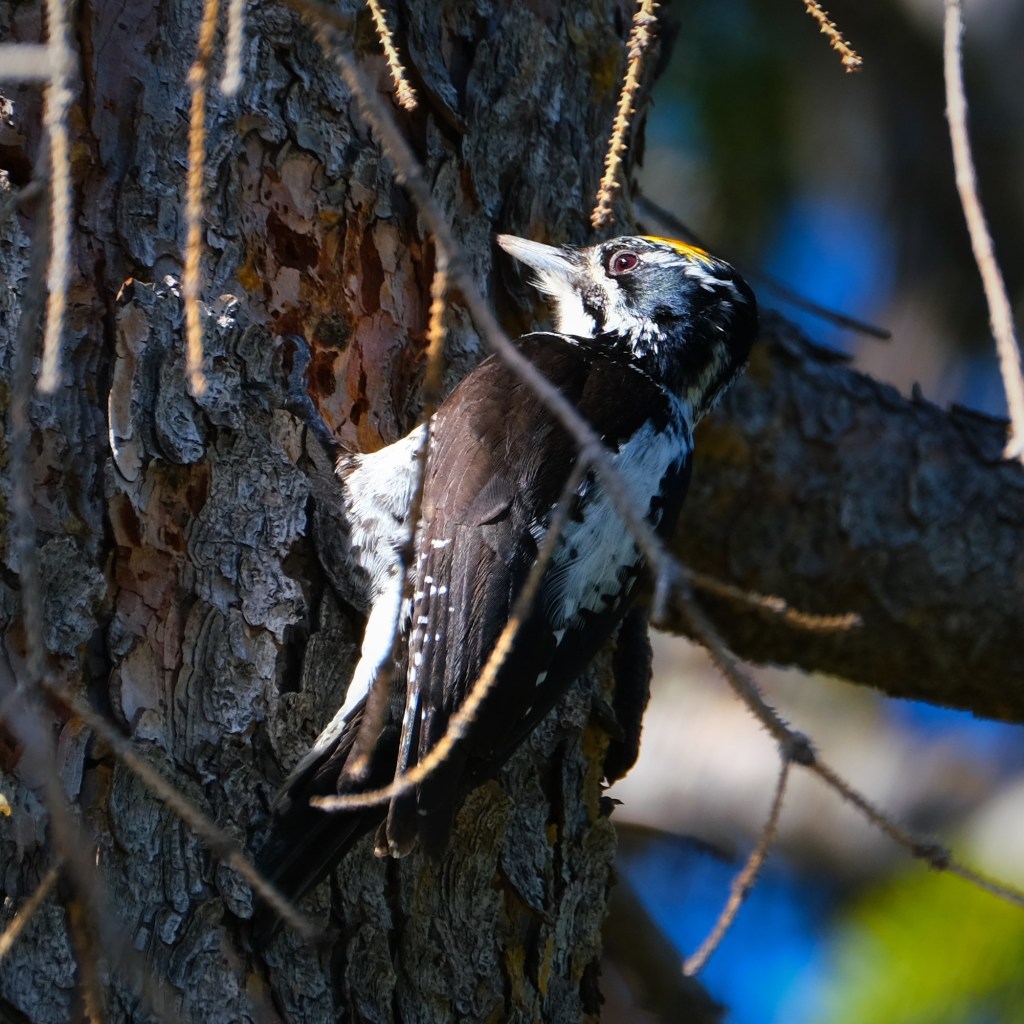
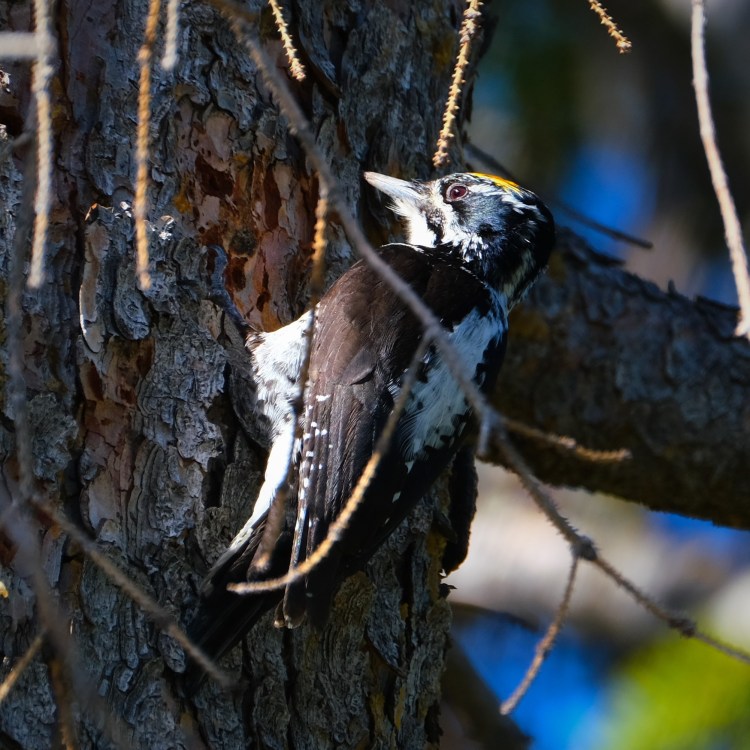
Instead, I found the American three-toed woodpecker, with a patch of white on its back, in Yellowstone just a few days later.
Thanks to the keen eye of instagram follower magszpot, who reports “I only knew because I recently completed a painting project at work where I painted the different woodpecker species in Wisconsin. The black-backed can be found in northern Wisconsin, although I have never seen one myself.”

Talk about luck, eh?
It’s good to be back…

Aaaah. We had an amazing trip, and I’m thrilled to have had the opportunity to experience such wonderful places, but it also feels really good to be back in Estabrook. I like what you’ve done with the place while I was gone.

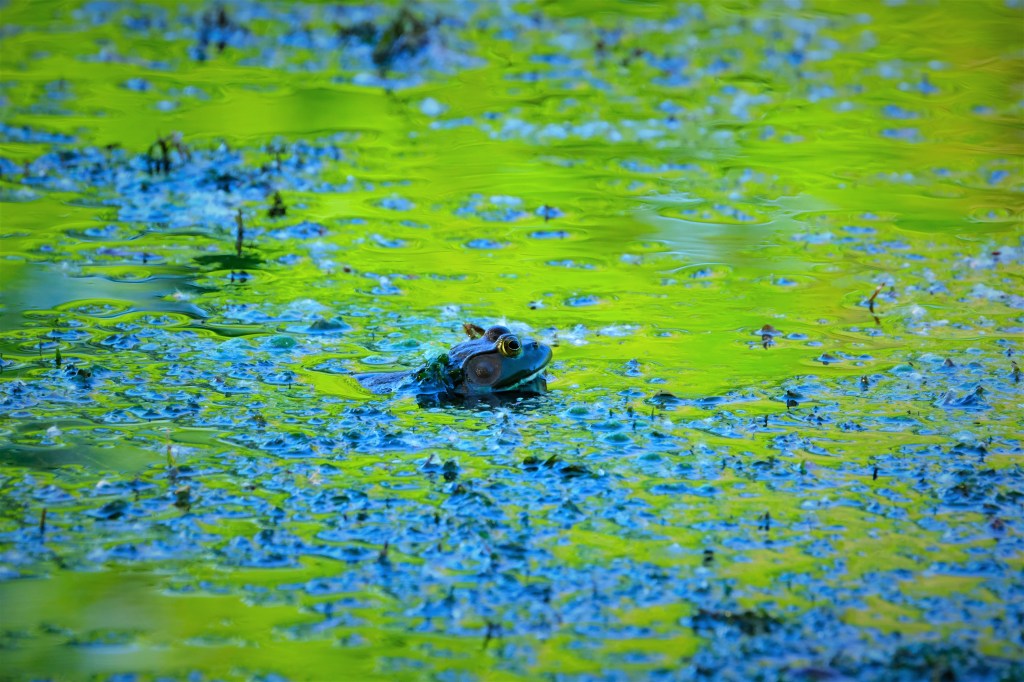
Frogs are signing on the pond and on the river.

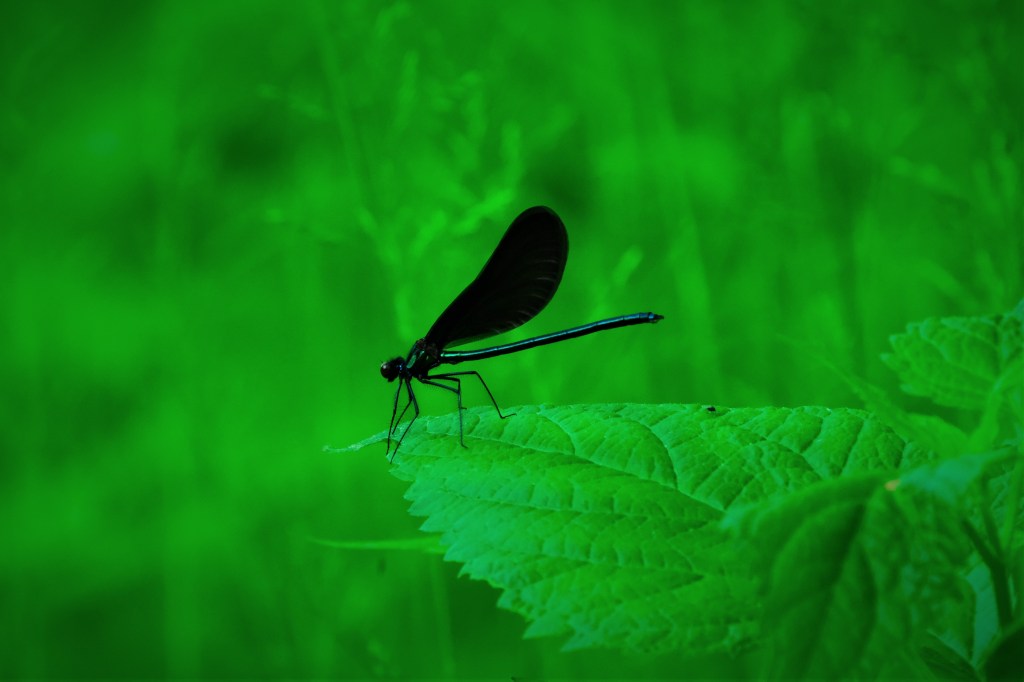
The ebony jewelwings are back.

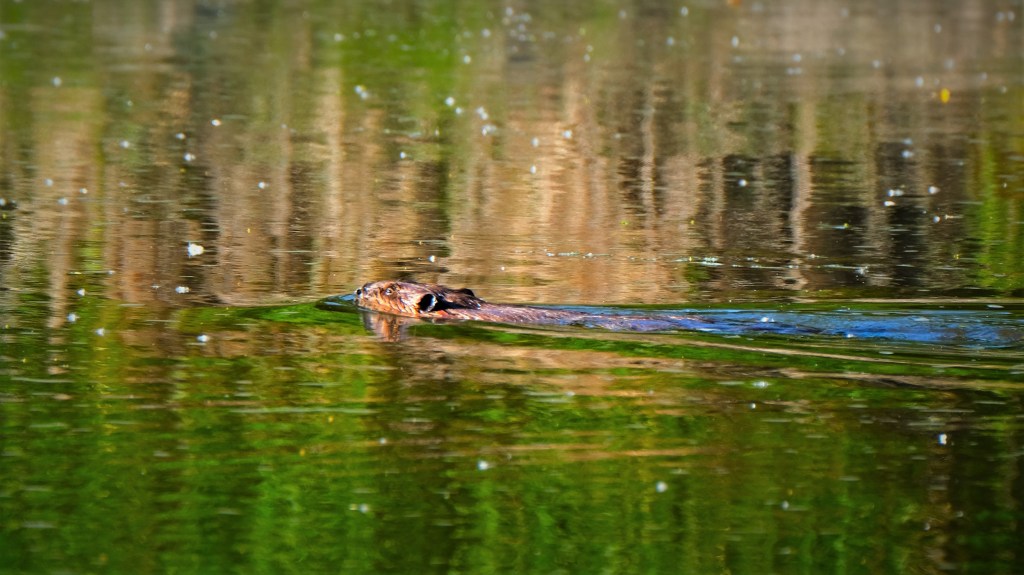
One of the beaver swam by to say hi.

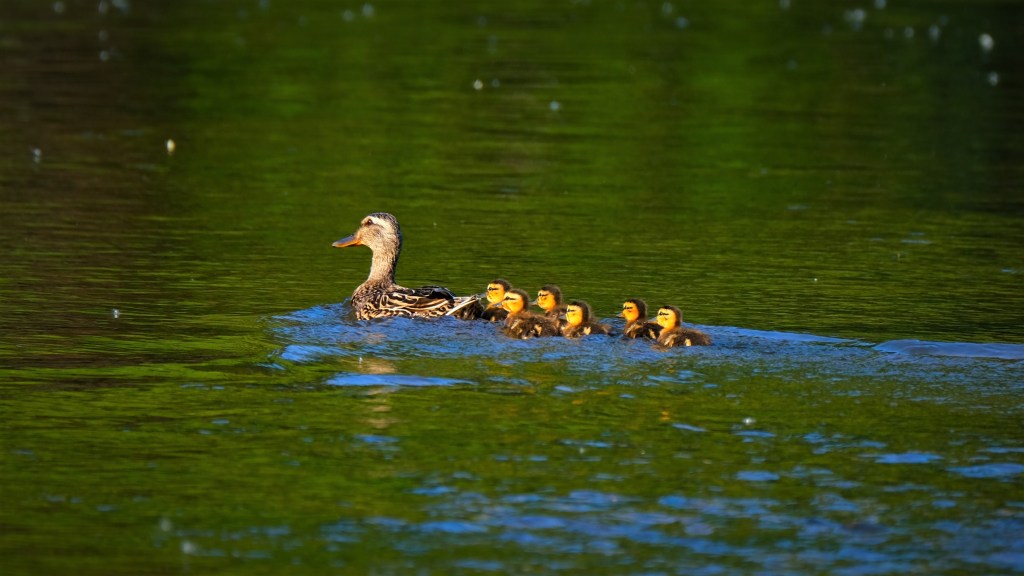
A fresh batch of mallard ducklings are exploring the river in Mom’s wake.

The downy woodpeckers from a couple of weeks ago are still raising their chicks.

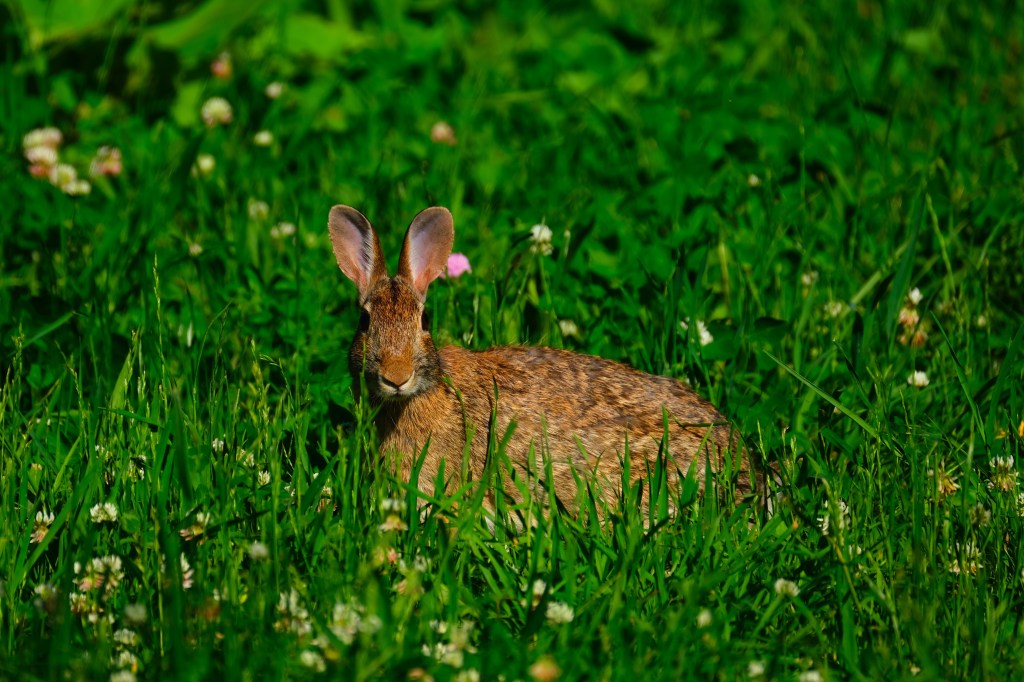
A rabbit was out munching on the clover in the sun before it got hot.

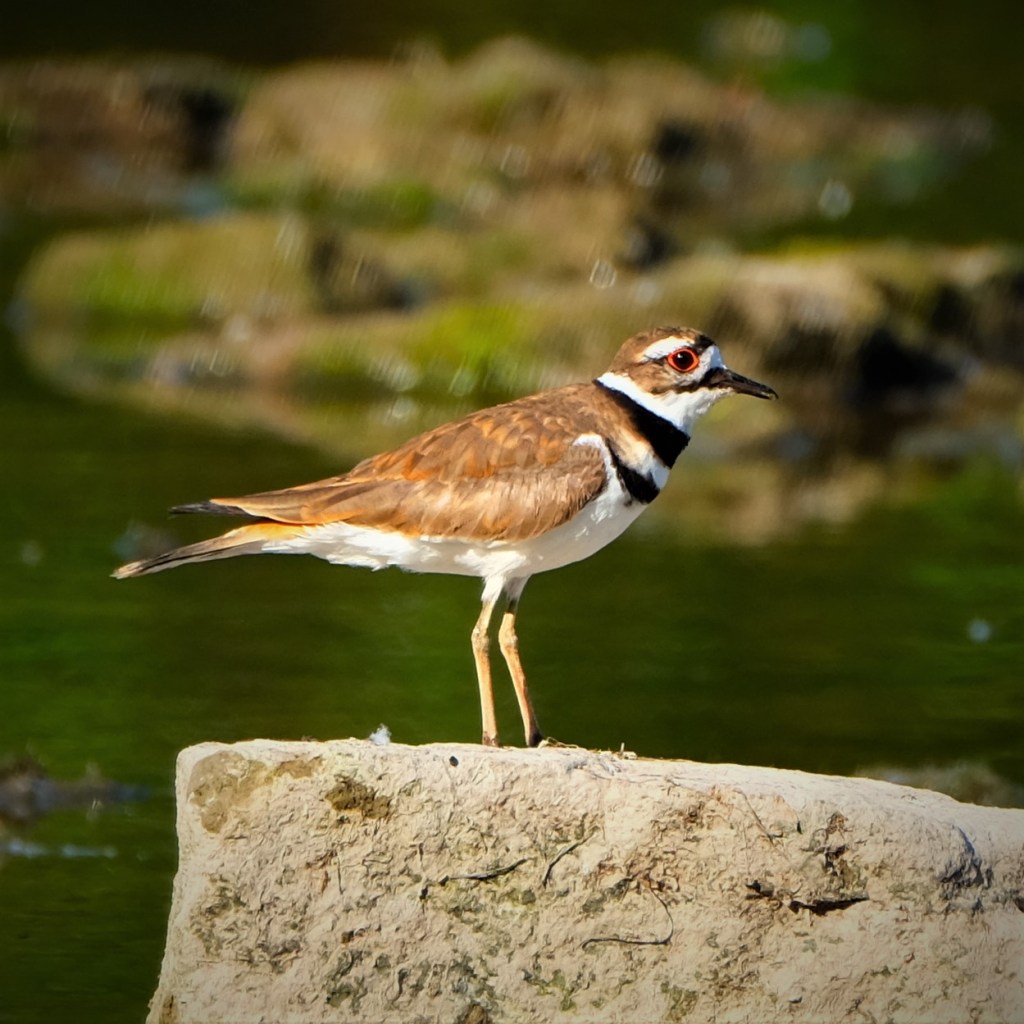
A pair of killdeer were especially noisy on the river at the north end.

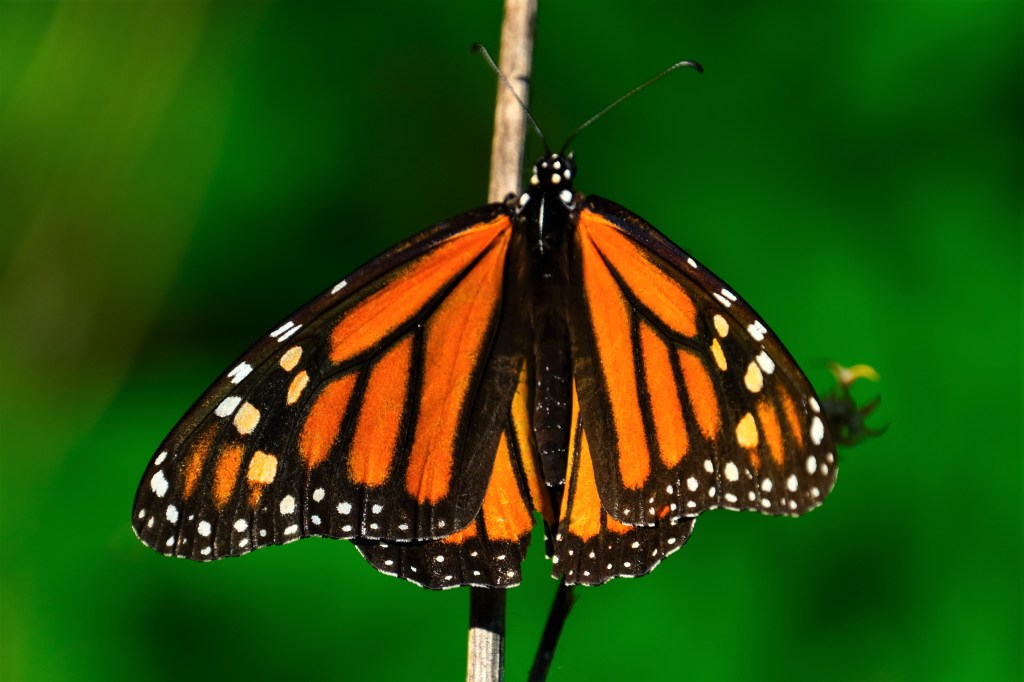
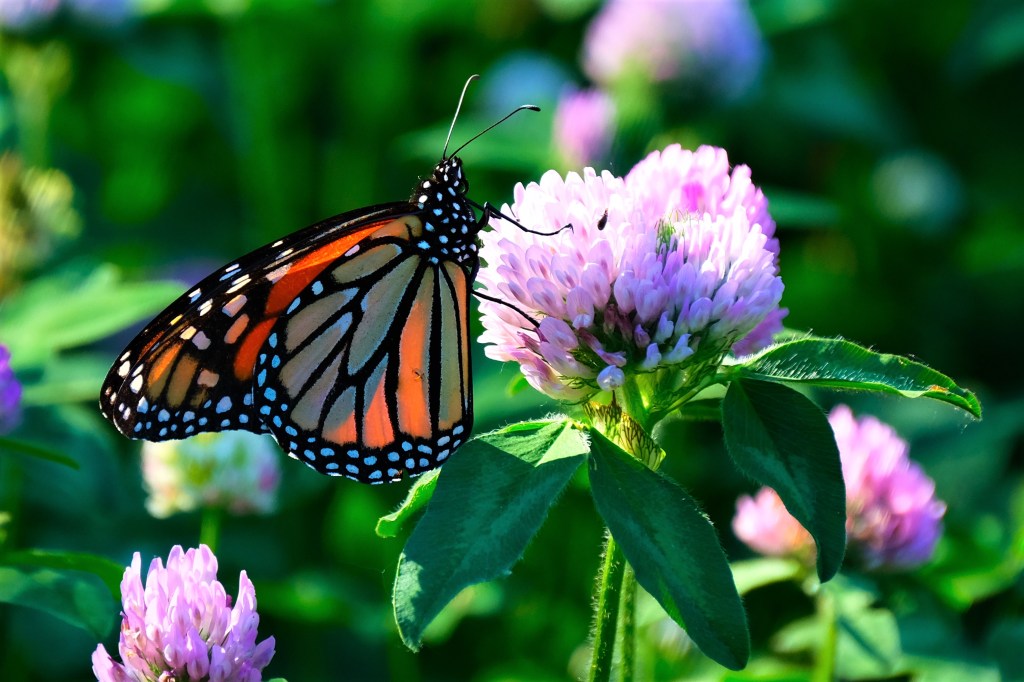
A monarch was out and looking for just the right perch, and it took her several tries before she opted for the fresh red clover (Trifolium pratense) this morning. (If he’s a he, not that it really matters I guess, he’s did a good job of hiding his identifying spot on his hind wings.)

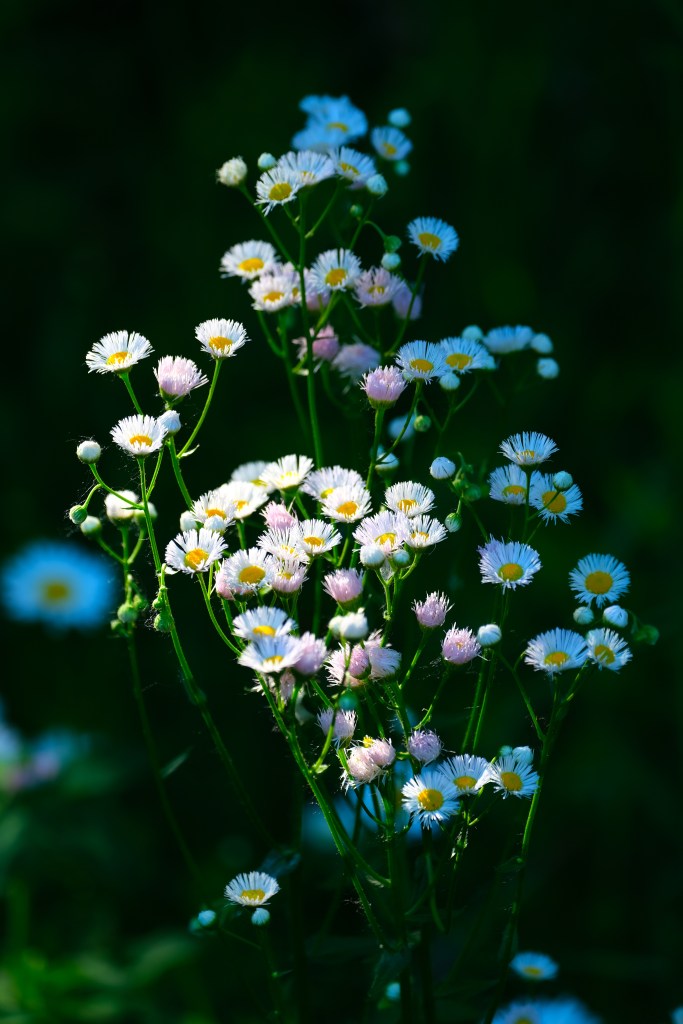
Speaking of clover, there are a few new blossoms open in the park. Here’s some fleabane, which has been up for a couple of weeks, but not very photogenic until now.

Daisies.

Tickseed.

Wild rose, maybe prickly wild rose (Rosa acicularis), prairie rose (Rosa arkansana), Virginia rose (Rosa virginiana), or Wood’s rose (Rosa woodsii), growing right at the end of the board walk below the beer garden.

Foxglove beard-tongue (Penstemon digitalis) on the side of the bluff.

Finally, a new warbler to us, a mourning warbler (Geothlypis philadelphia), was serenading the soccer fields this morning with all his might.

We’re in his breeding range, so maybe he’ll stick around for the summer. We can hope, right?

Field Trip Report, Day 7.

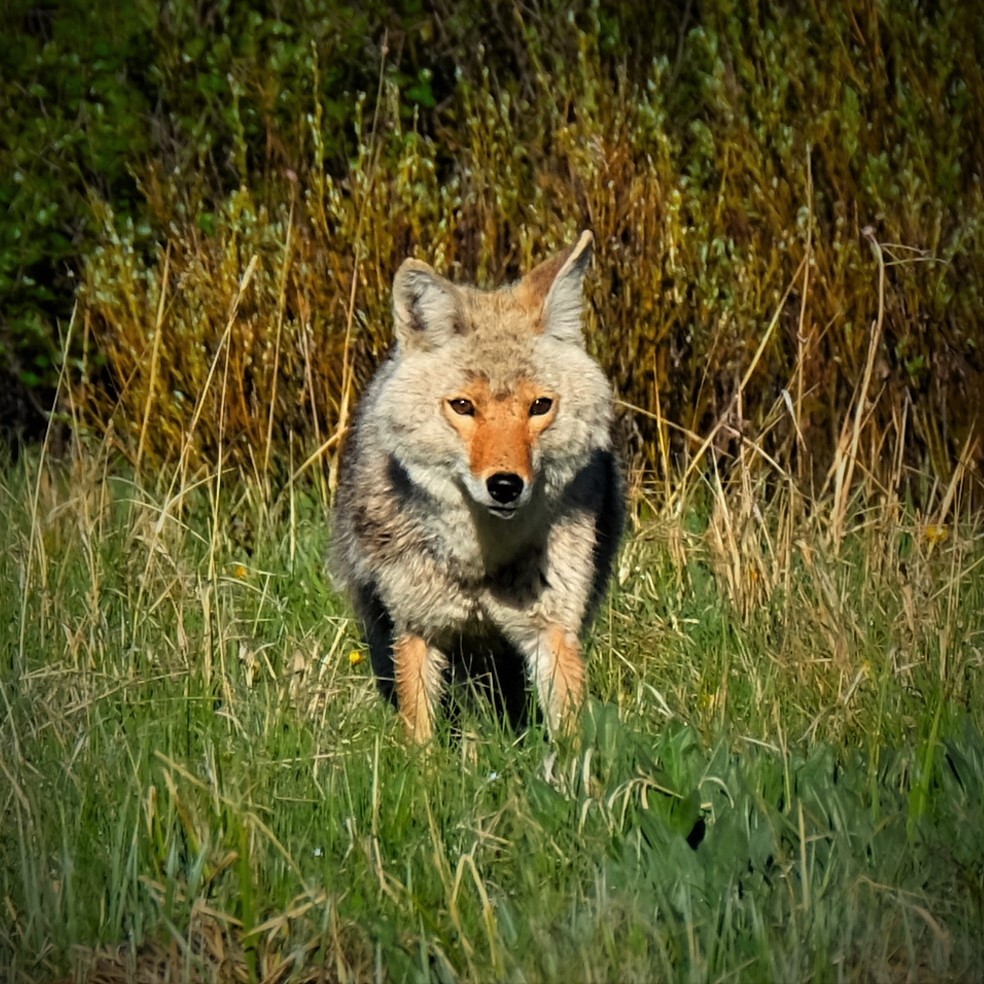
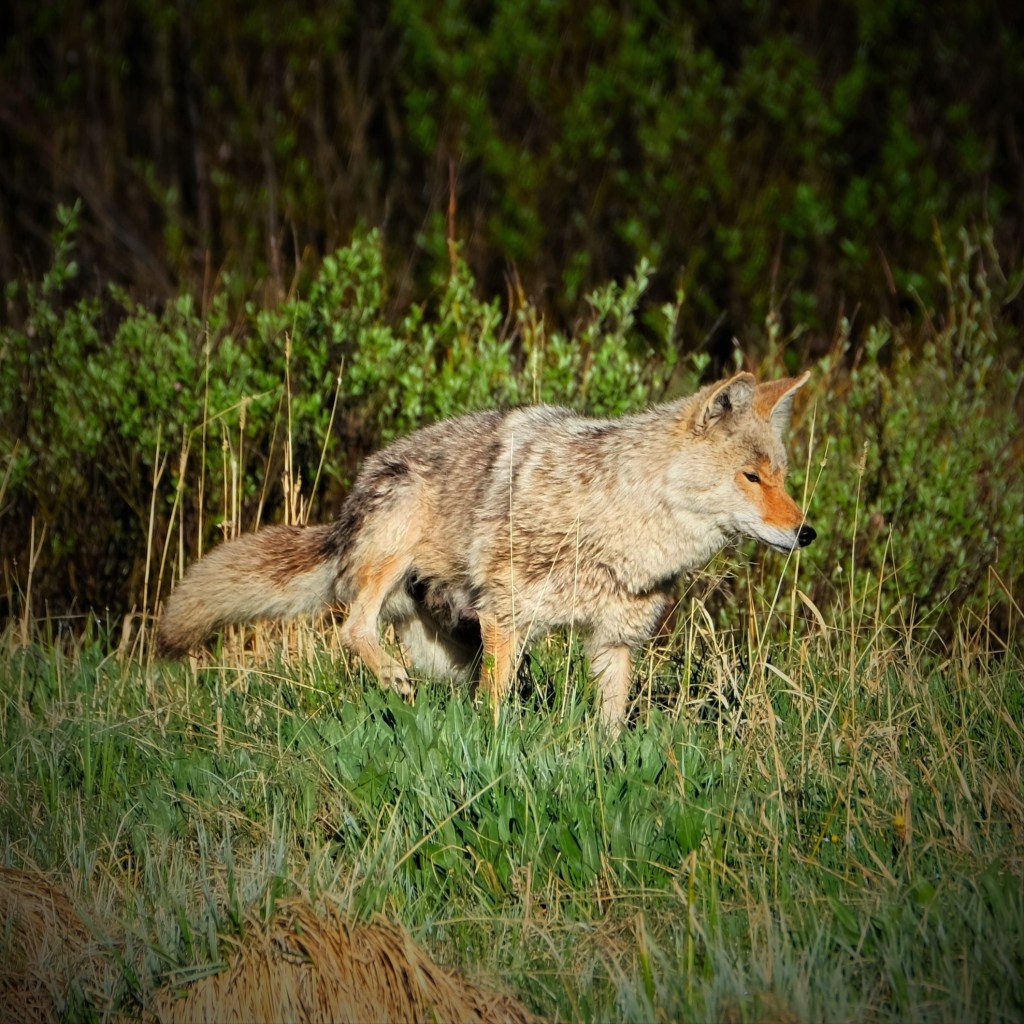
It was a great day for mammals in Yellowstone. There were plenty of bison, of course, blocking traffic in several cases, and a few elk about, but the big find, at least for me, was this wily coyote looking for something good to eat along the banks for a stream. Here you can see him noticing me standing on the opposite bank taking his picture.

Here you can see him showing how much he cares that I’m there.

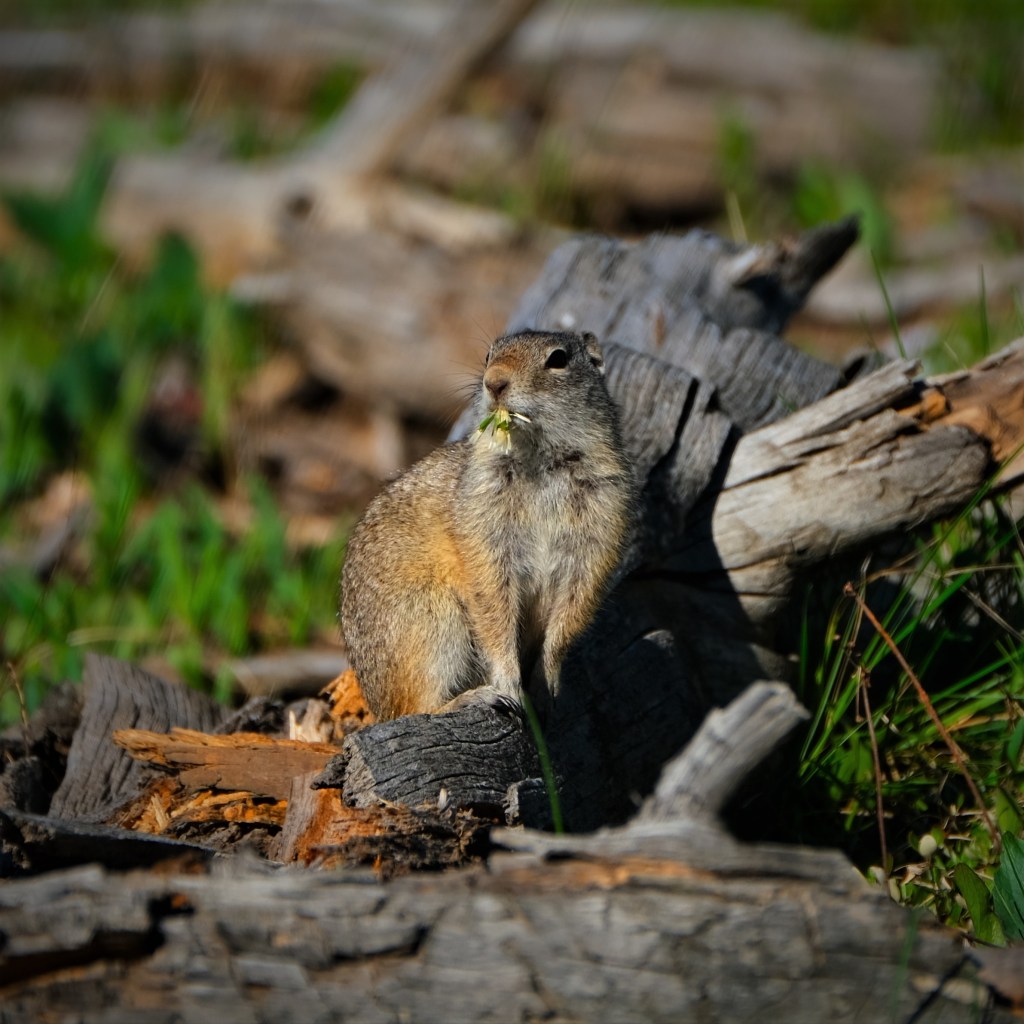
We had come to the park early in hopes of spotting a moose, but today was not our day for moose. Instead, the mammals we saw, which were new to us, were much smaller, including this Uinta ground squirrel (Urocitellus armatus) munching on a dandelion blossom.

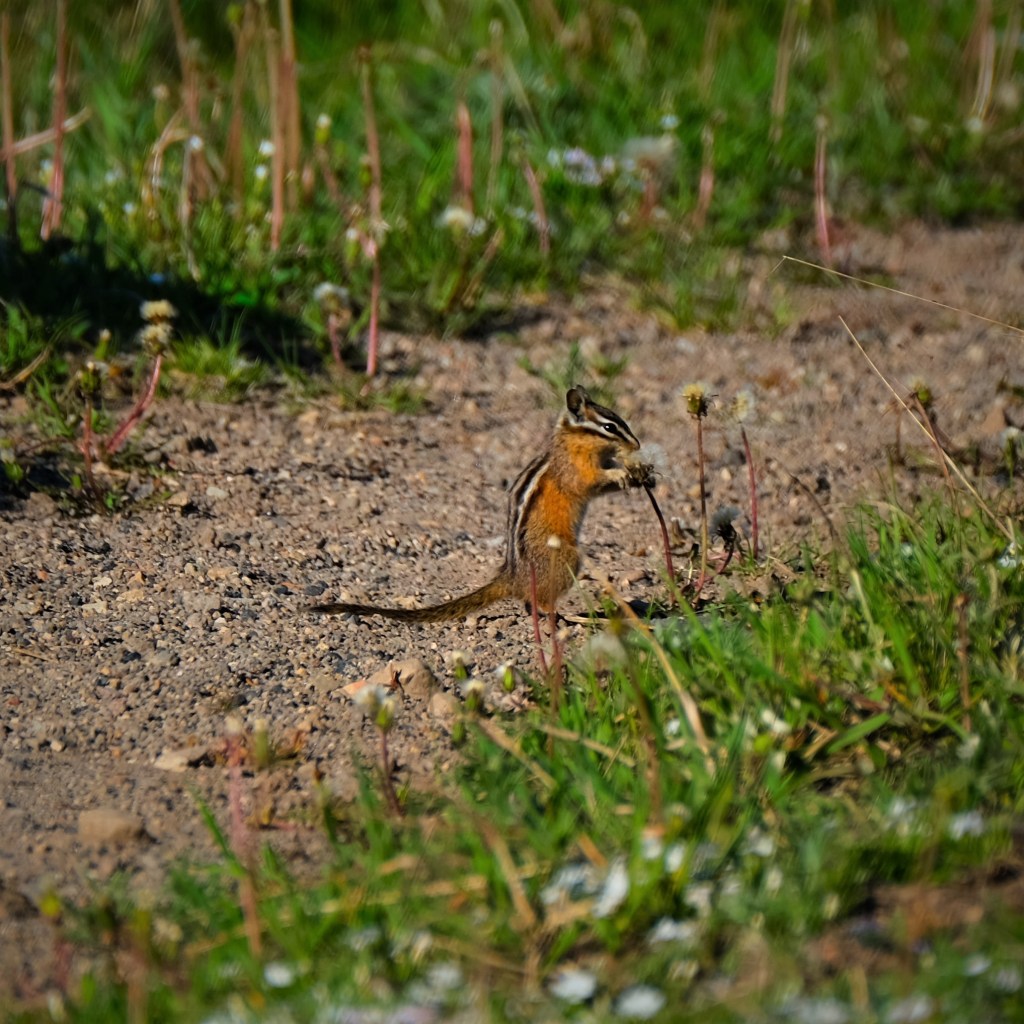
And this least chipmunk (Neotamias minimus), getting in on some of that dandelion action.

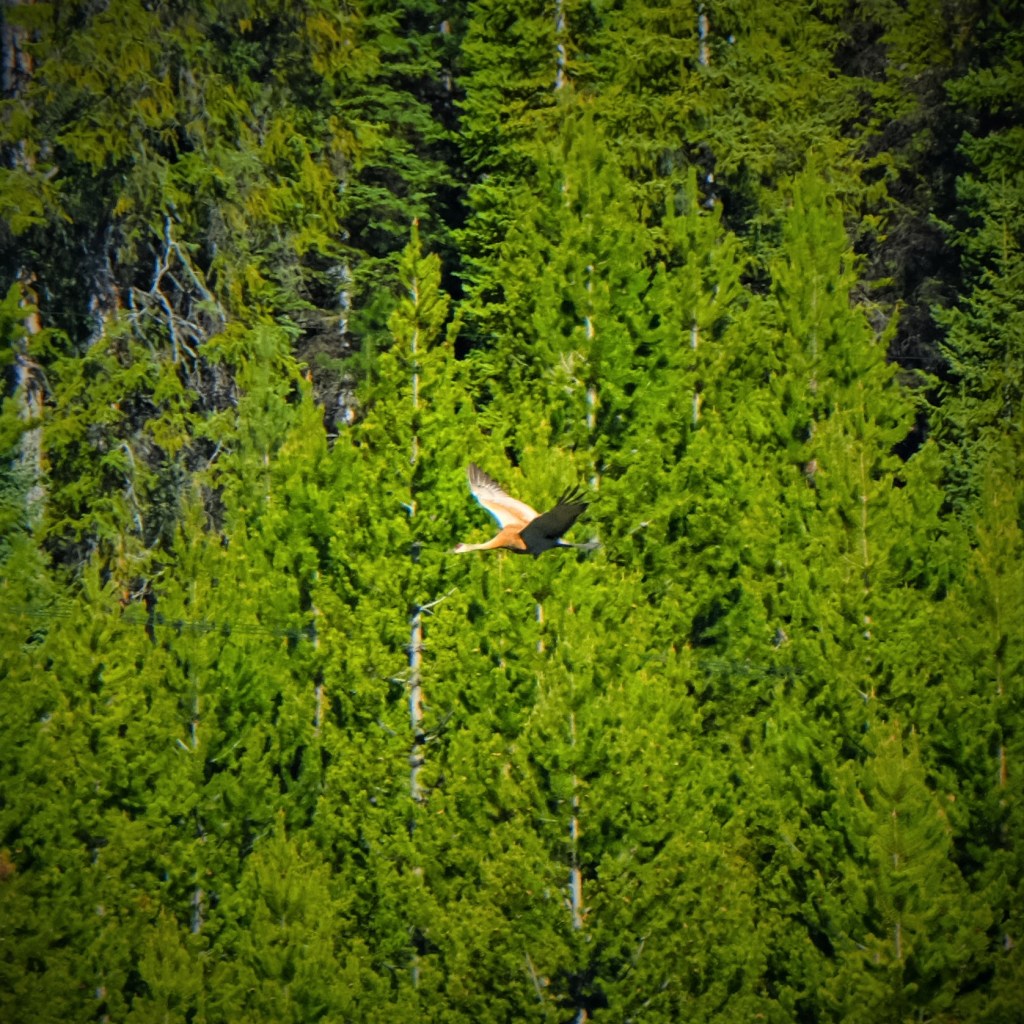
The early start also introduced us to a few more of the birds of Yellowstone, the biggest of which was this sandhill crane (Antigone canadensis).

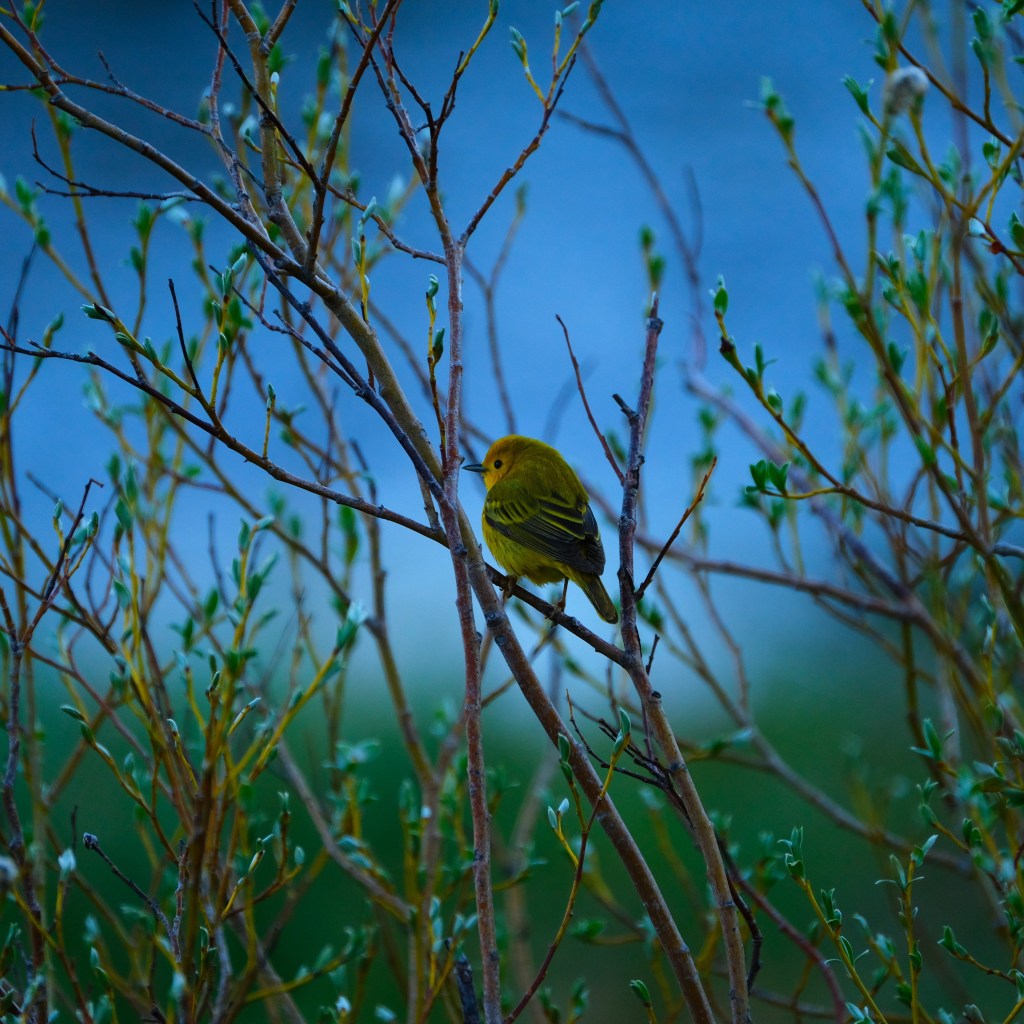
And the smallest was either this female yellow warbler (Setophaga petechia)

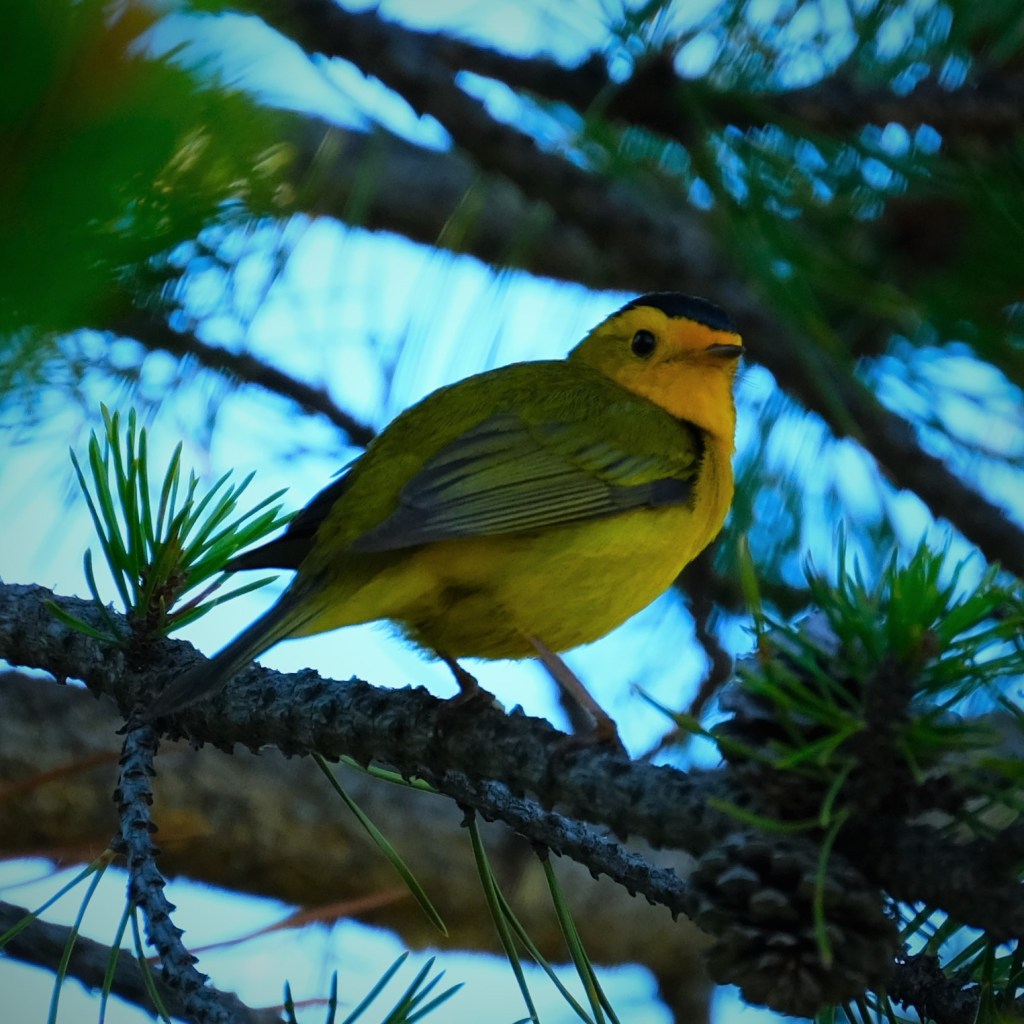
Or this male Wilson’s warbler (Cardellina pusilla)

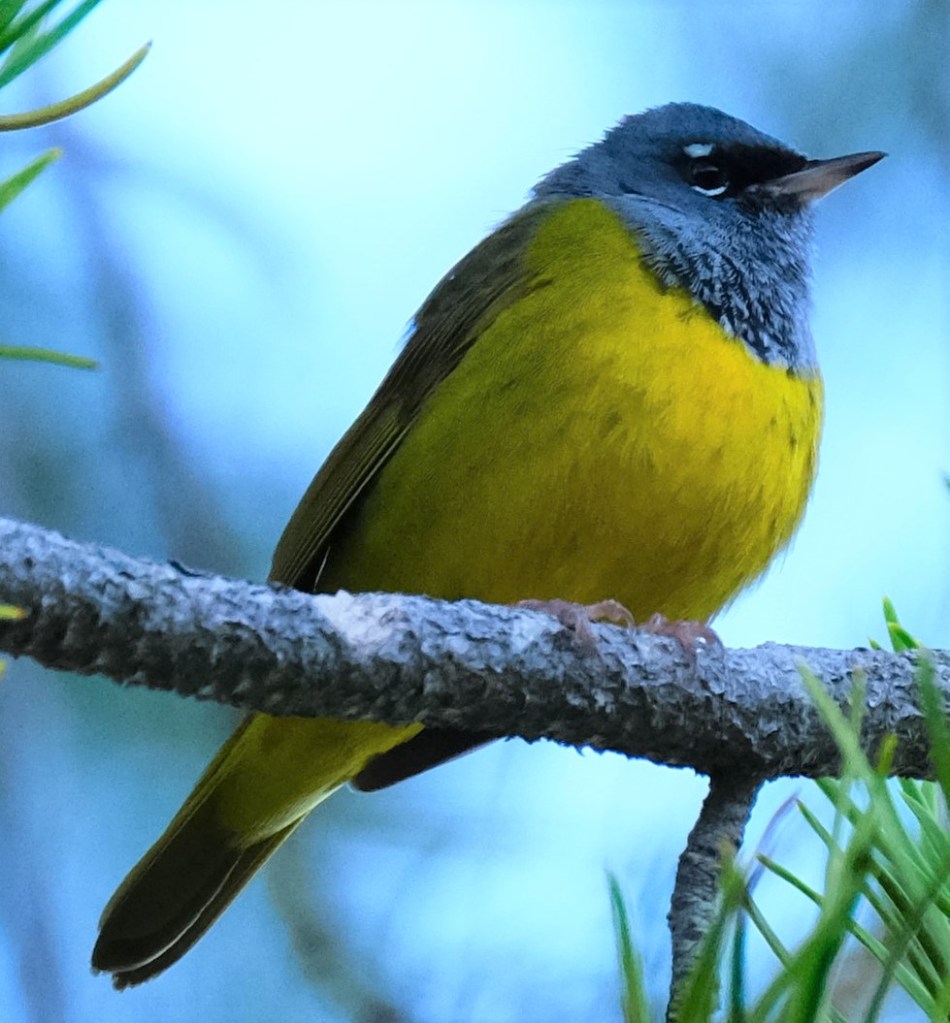
Or even this little masked bandit, who is a male MacGillivray’s warbler (Geothlypis tolmiei) and completely inside his range, not the male mourning warbler (Geothlypis philadelphia), who would be quit a bit out of his range and which I had mistakenly thought at first but spotted in Estabrook only two days later.

In between, there was this Canada jay (Perisoreus canadensis) causing a ruckus among the other birds in this pine tree.

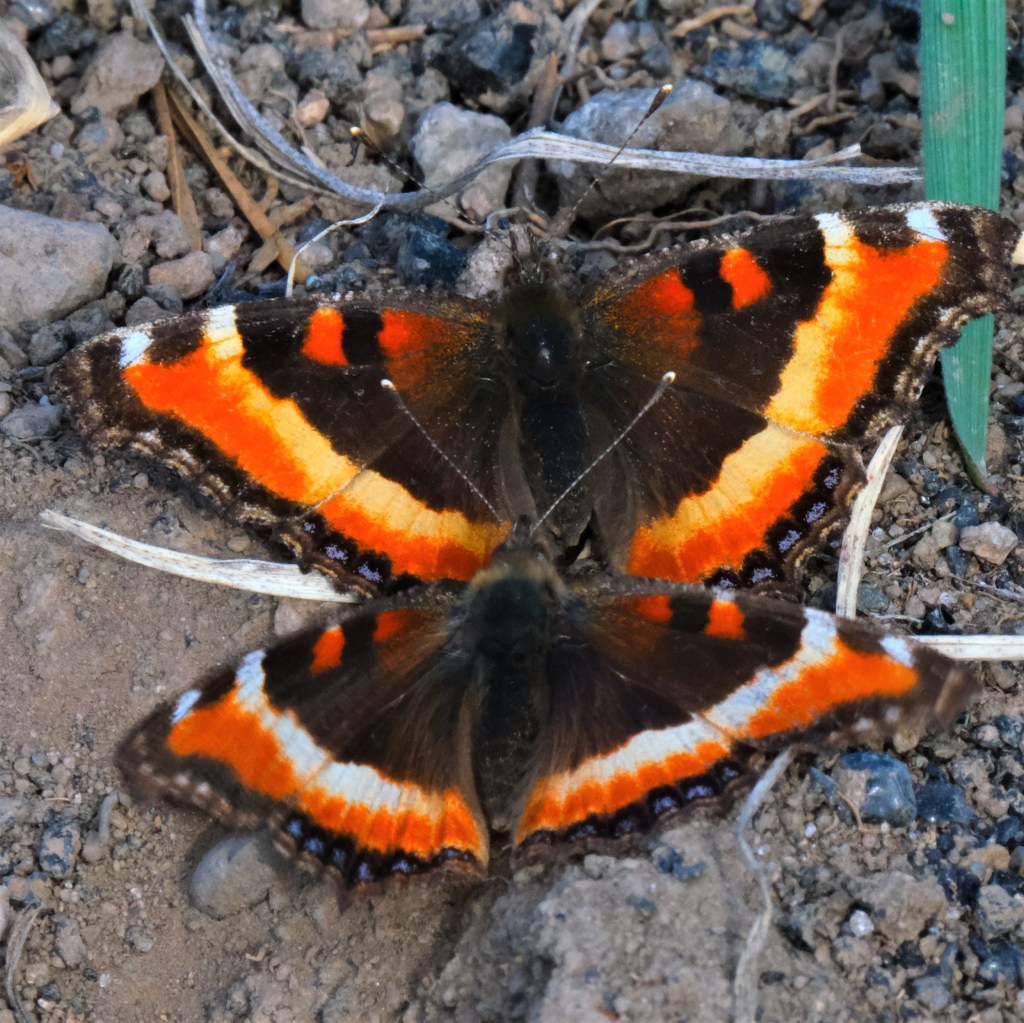
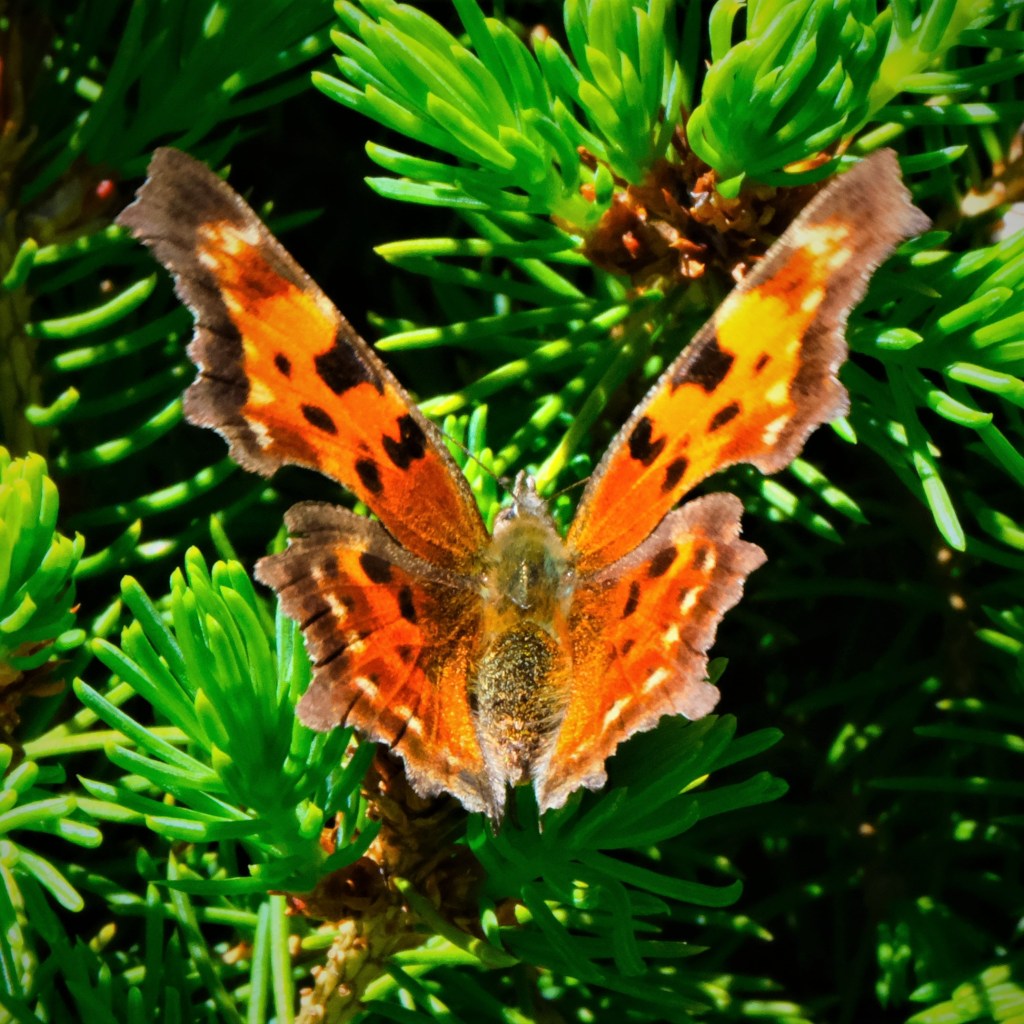
Closer to the ground, I spotted a pair of these amazing fire-rim tortoiseshell or Milbert’s tortoiseshell (Aglais milberti) butterflies.

And Anne spotted for us this equally stunning variegated fritillary (Euptoieta claudia).

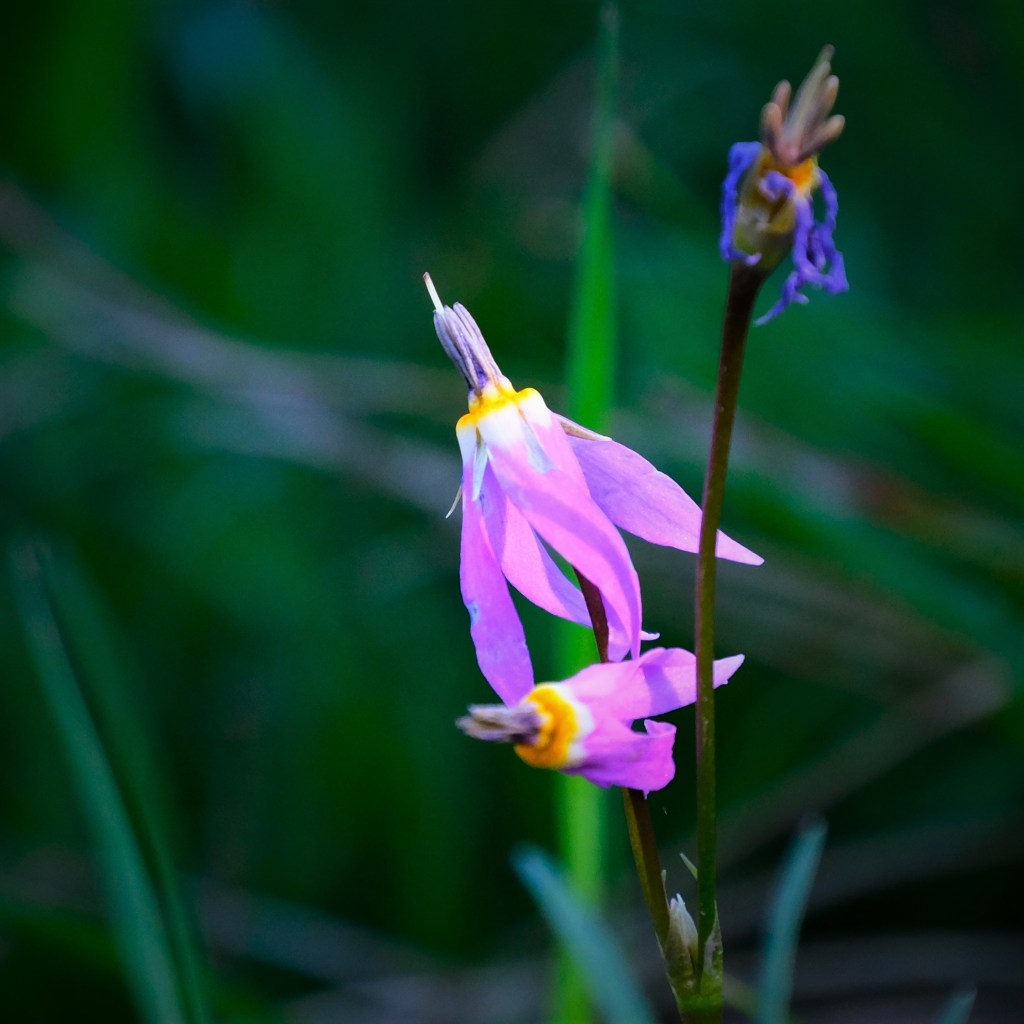
Finally, there are plenty of pretty flowers in bloom, such as this shooting star, known variously as Bonneville, desert, or slimpod (Dodecatheon conjugens).

And this lily, known variously as yellow avalanche, glacier, or dogtooth fawn (Erythronium grandiflorum), and which looks quite similar to the yellow trout lilies in Estabrook, eh?
Welp, it’s time for dinner, and tomorrow is another travel day, so that’s probably it till Sunday. See you then.

Field Trip Report, Day 6.

We had another great day in Yellowstone, but the plan is to get up early for tomorrow, and I’m beat tonight, so here are a few more pictures from Craters of the Moon to tide you over.

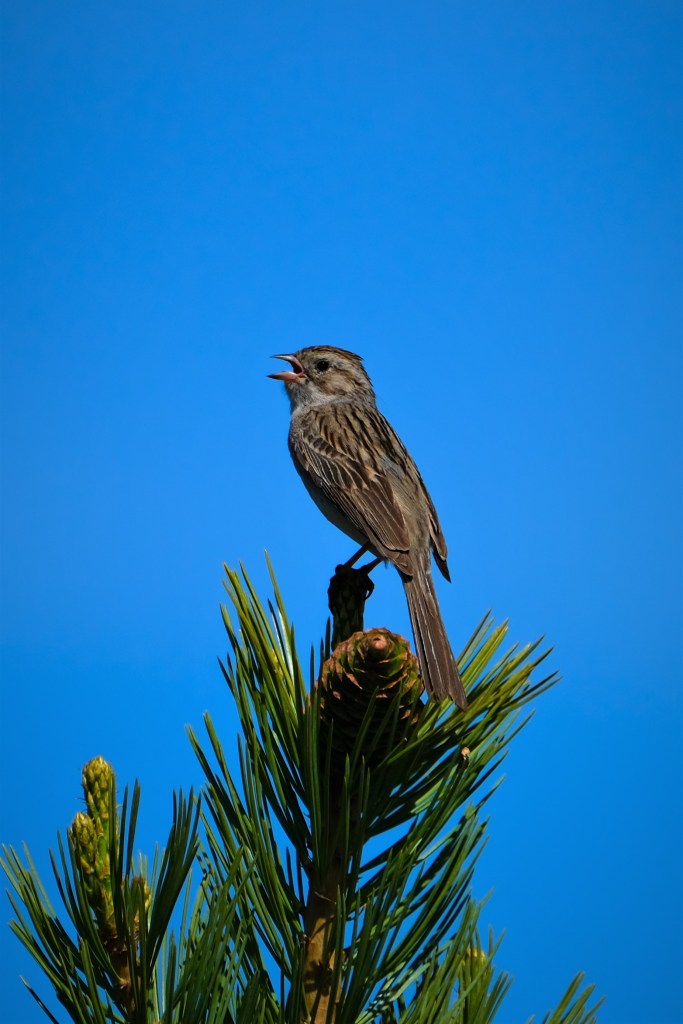
First is that non-descript looking little Brewer’s sparrow (Spizella breweri) at Craters of the Moon who regaled us with an amazing song that went on a lot longer than this sample.

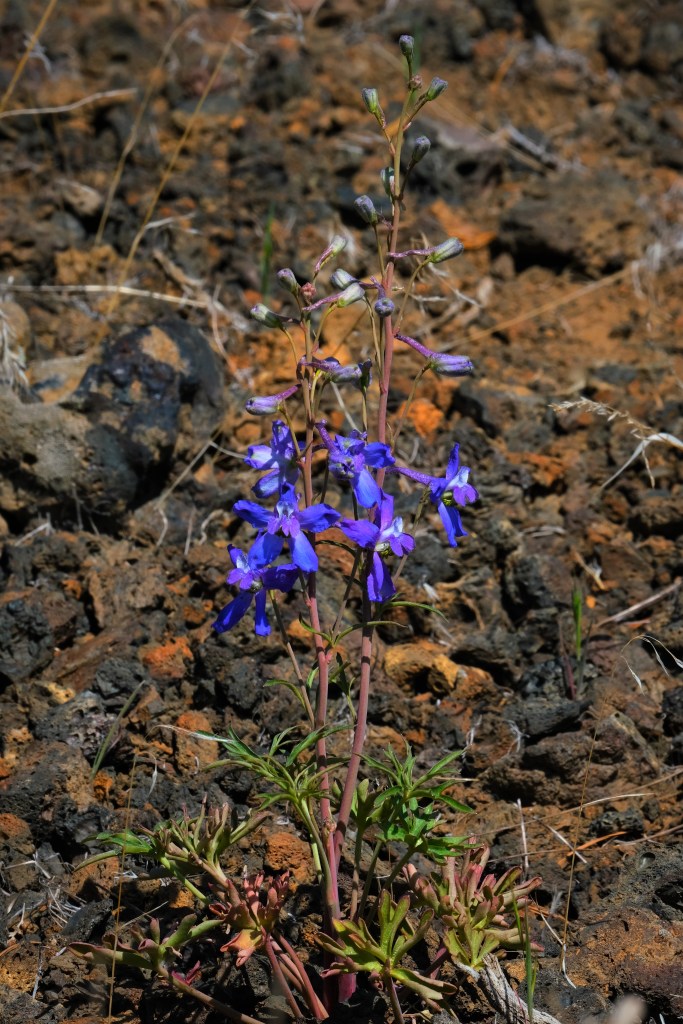
These Anderson’s larkspurs (Delphinium andersonii) were plentiful and growing right out of the volcanic cinders.

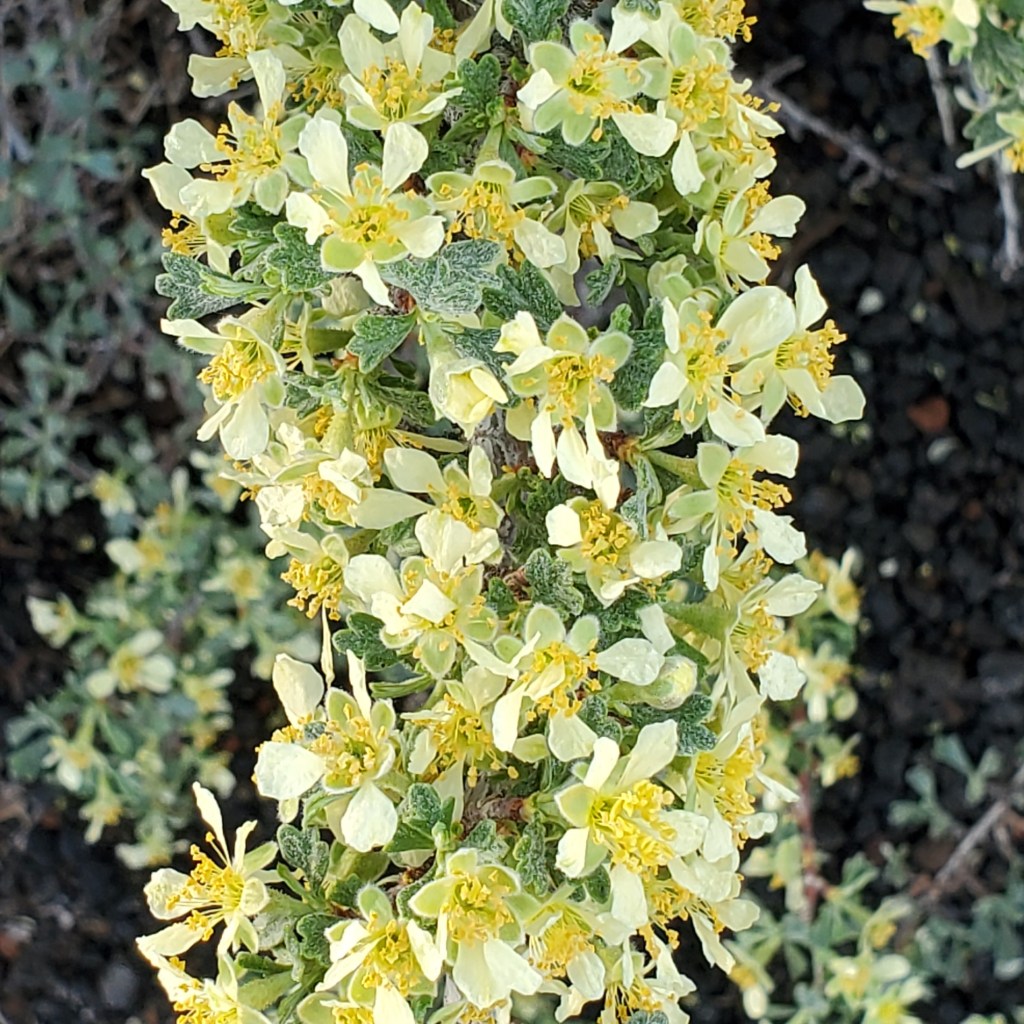
Antelope bitterbrush (Purshia tridentata), in the rose family, was everywhere, very aromatic, and reminded me of lilacs. The wind would carry their scent just as with lilacs at home.

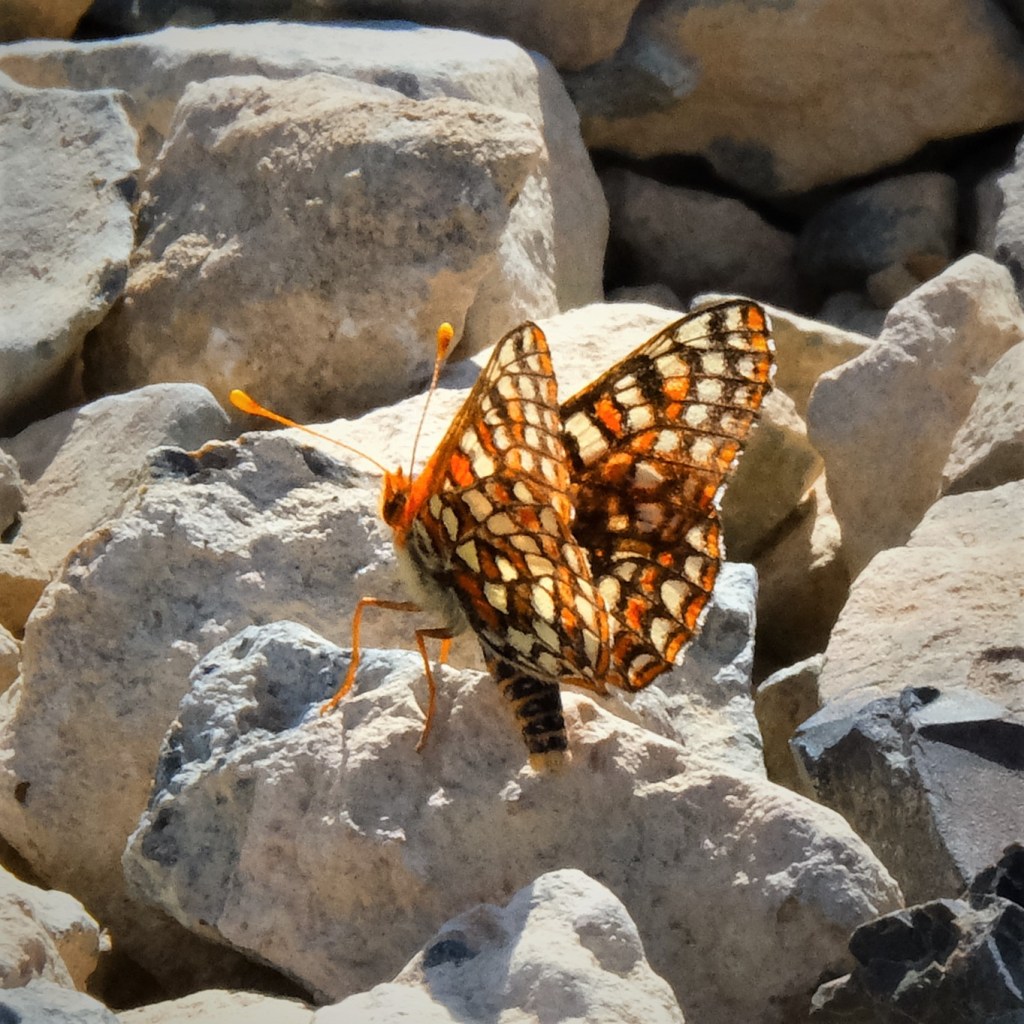
Here’s a variable checkerspot (Euphydryas chalcedona) on the hill north of Arco, the little town in which we stayed.

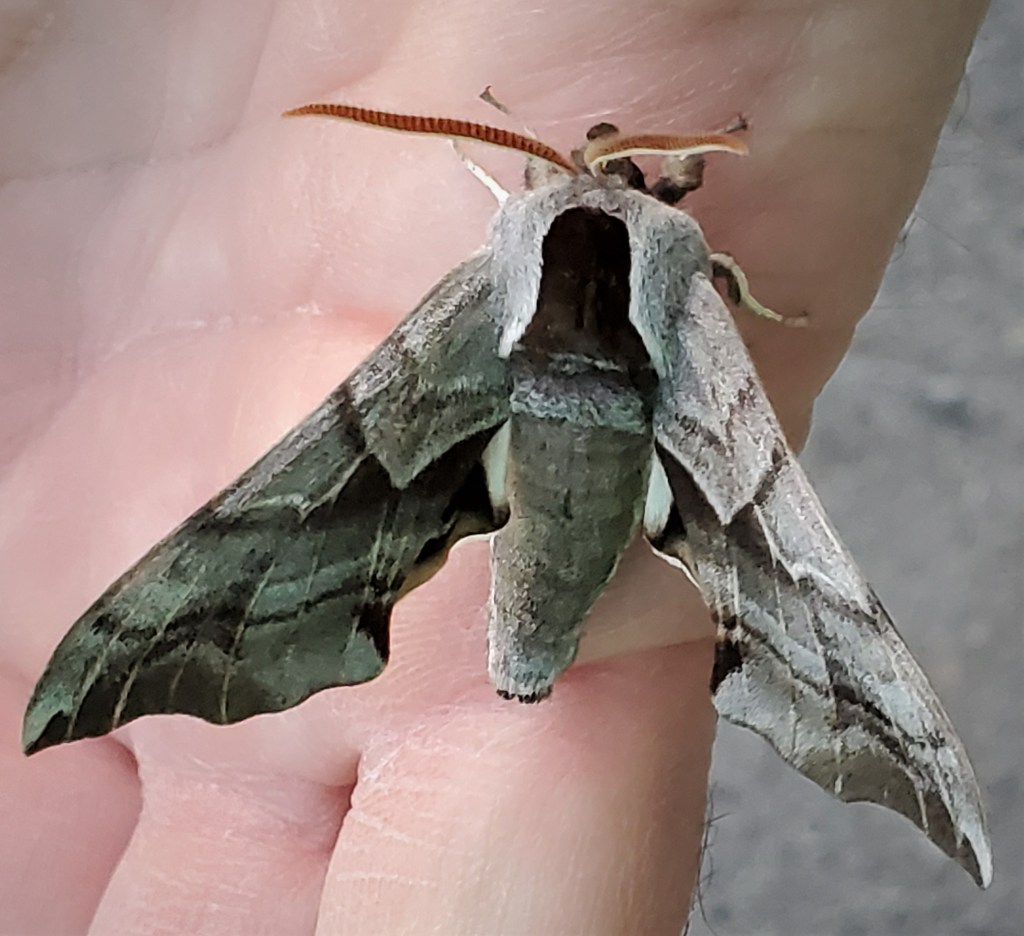
And finally, here’s a one-eyed sphinx moth (Smerinthus cerisyi), in downtown Arco, whom I couldn’t convince to show its one eye when I had my phone out, and here’s what it would have looked like if it did.

More to come soon.

PS. I did spot an honest-to-goodness American three-toed woodpecker (Picoides dorsalis) with a barred black-and-white patch on his back in Yellowstone, as opposed to the black-backed woodpecker (Picoides arcticus) with no white patch on his back whom we saw in Glacier a few days before.

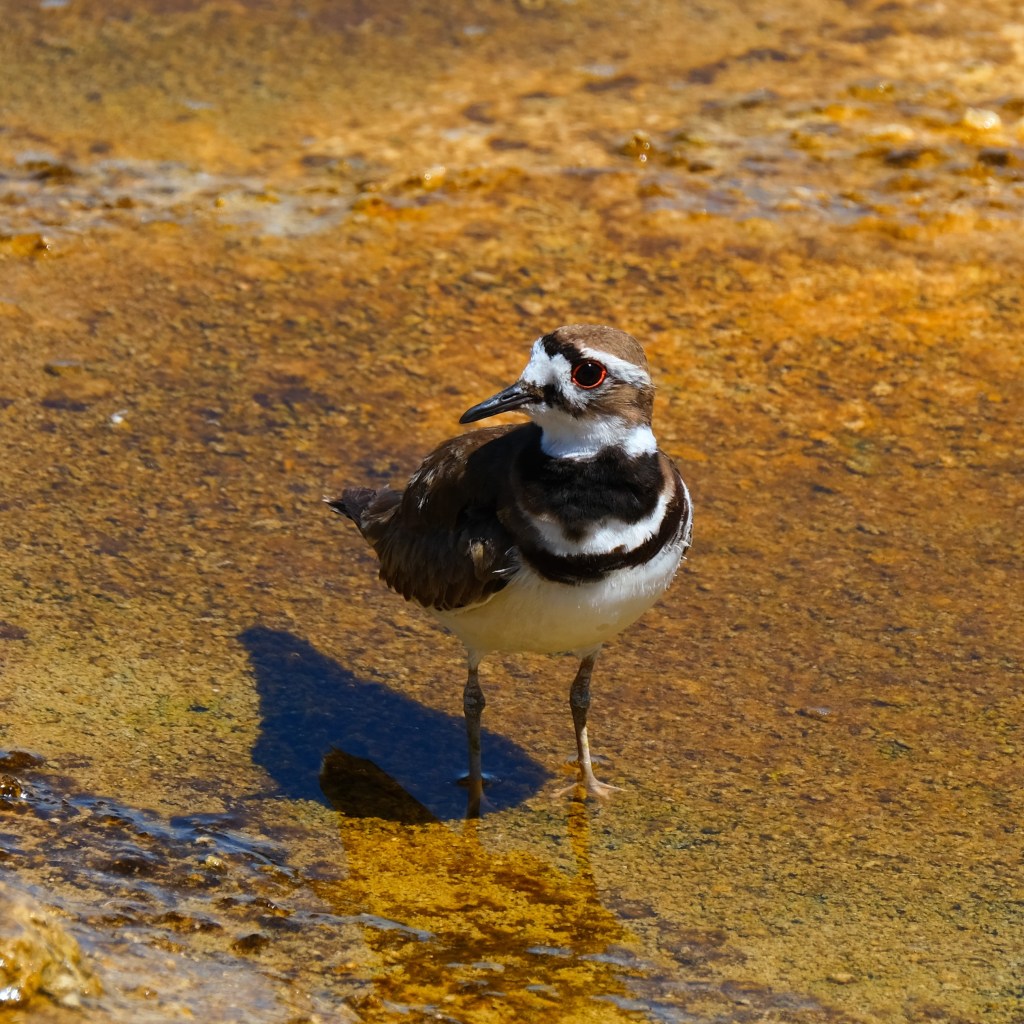
Also, the killdeer in Yellowstone really seem to like the water and/or are much less shy than the killdeer in Estabrook. Here’s one in one of the pools at Mammoth hot springs.

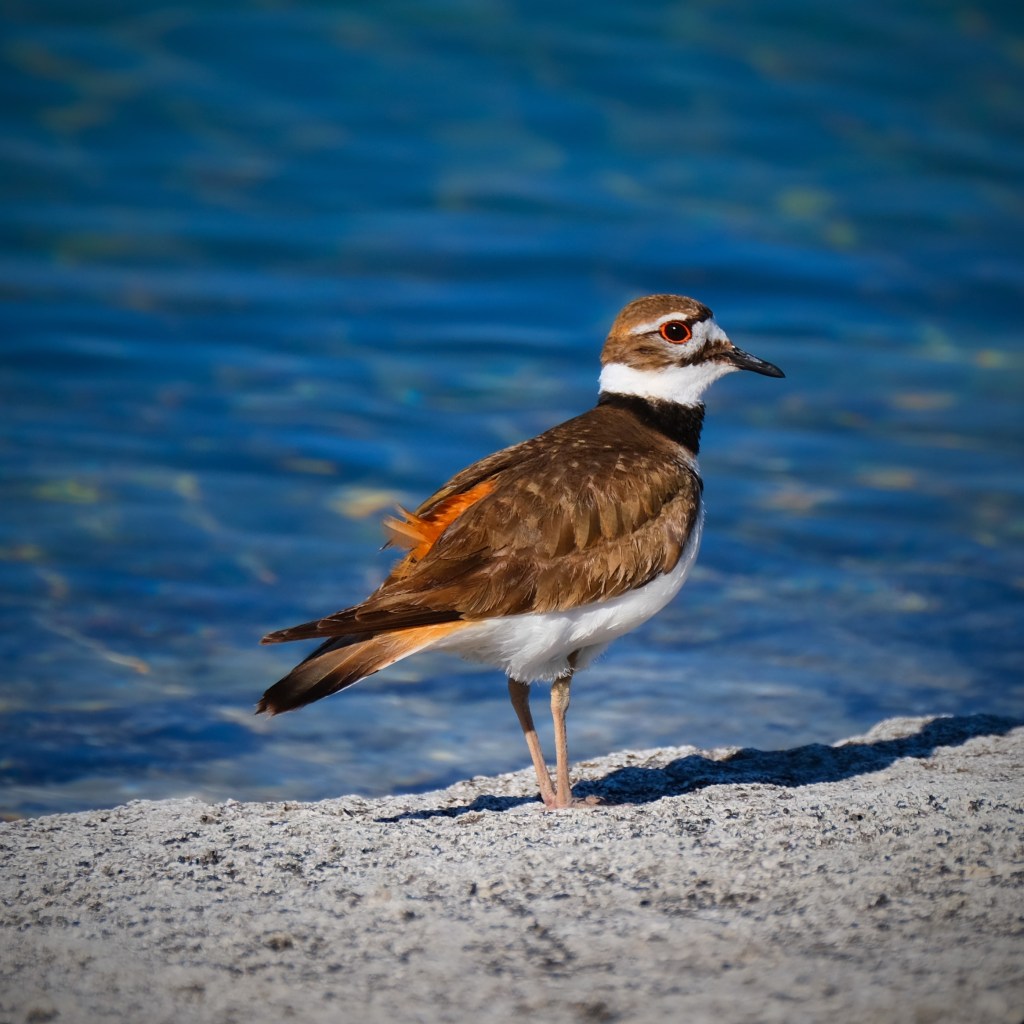
And another on the shore of Jackson Lake near West Thumb.

Curious.

Field Trip Report, Day 5.

We checked out of Arco early this morning, the first community in the world ever to be lit by electricity generated solely by nuclear power and where we had stayed as we visited the Craters of the Moon, and headed east. The first stop was Grand Teton National Park, where I only managed one presentable picture of somebody new, a surprisingly talkative and “rosy red” pine grosbeak (Pinicola enucleator) serenading the parking lot at the Colter Bay visitors center.

There was also a pair of common mergansers, that we’ve seen a zillion times in Estabrook, and a couple of other birds that defied my attempts to capture their likeness. After a short hike along the shores of Jackson Lake and a bite to eat, we continued north into Yellowstone National Park.

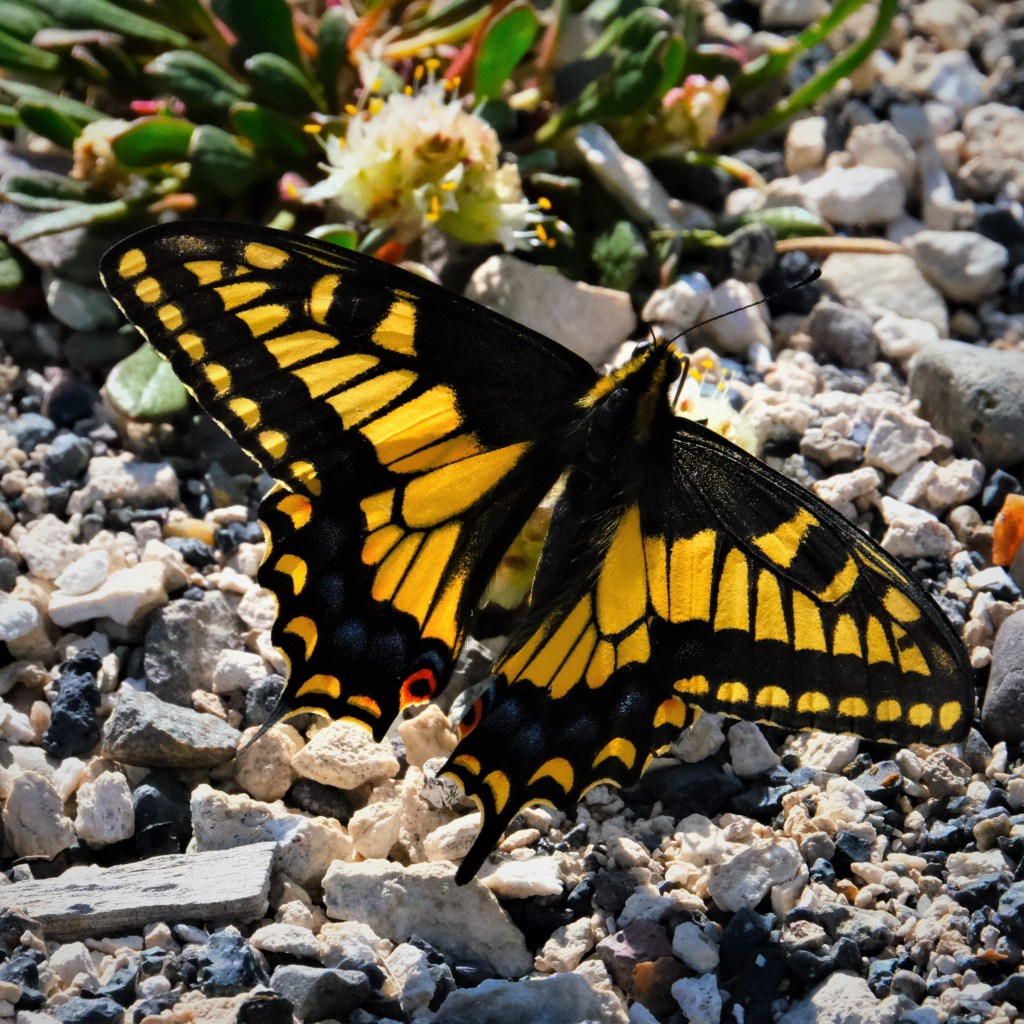
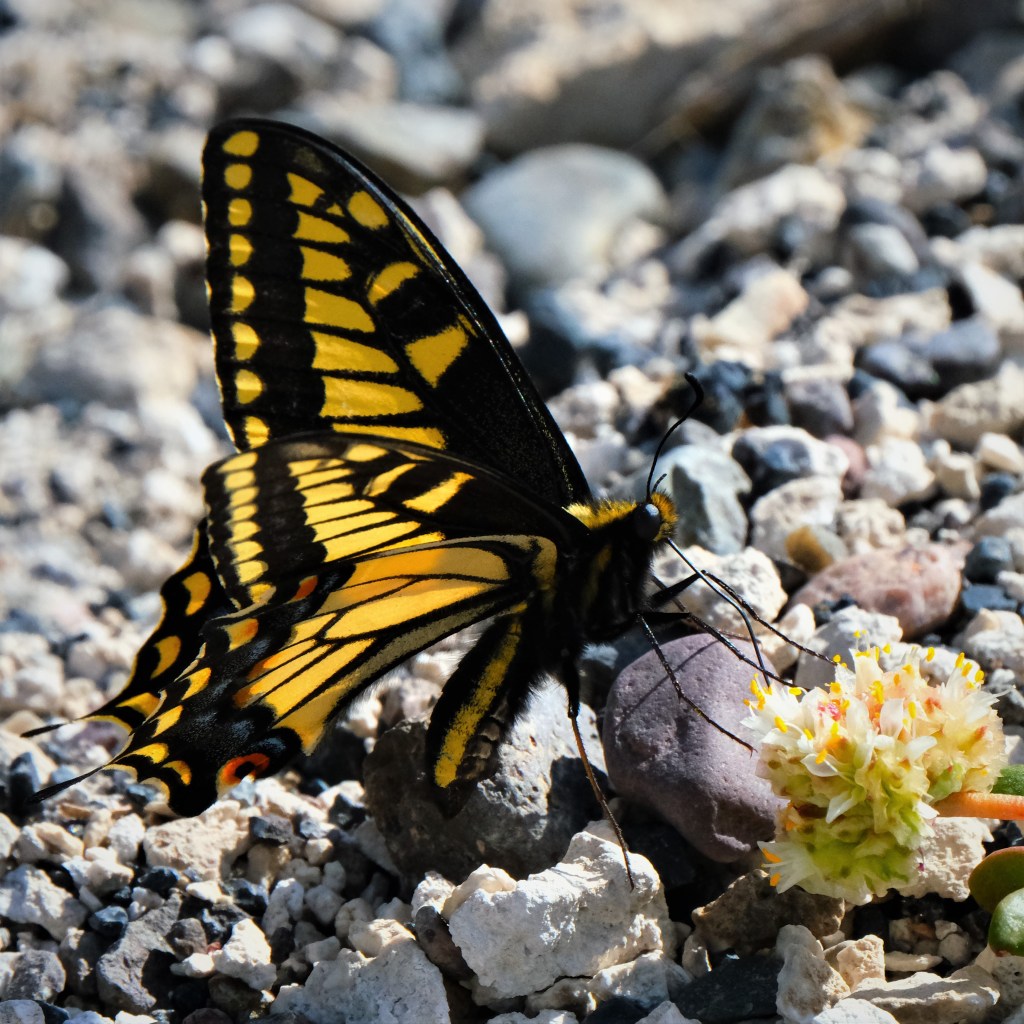
We stopped to see a geyser erupt and Anne spotted this stunning anise swallowtail (Papilio zelicaon), cousin of the eastern tiger swallowtail we often see at home, sipping from a blossom similar to the dwarf buckwheat we saw at Craters.

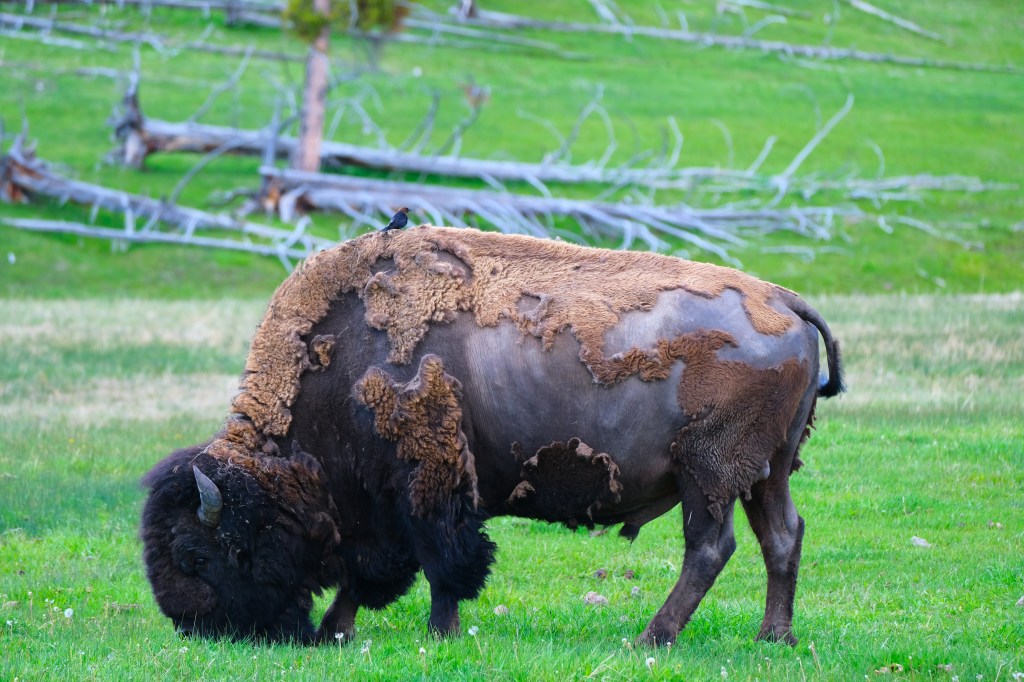
Then we headed north through the park towards our next motel, and along the way we came across a couple groups of American bison (Bison bison) grazing in picturesque valleys.

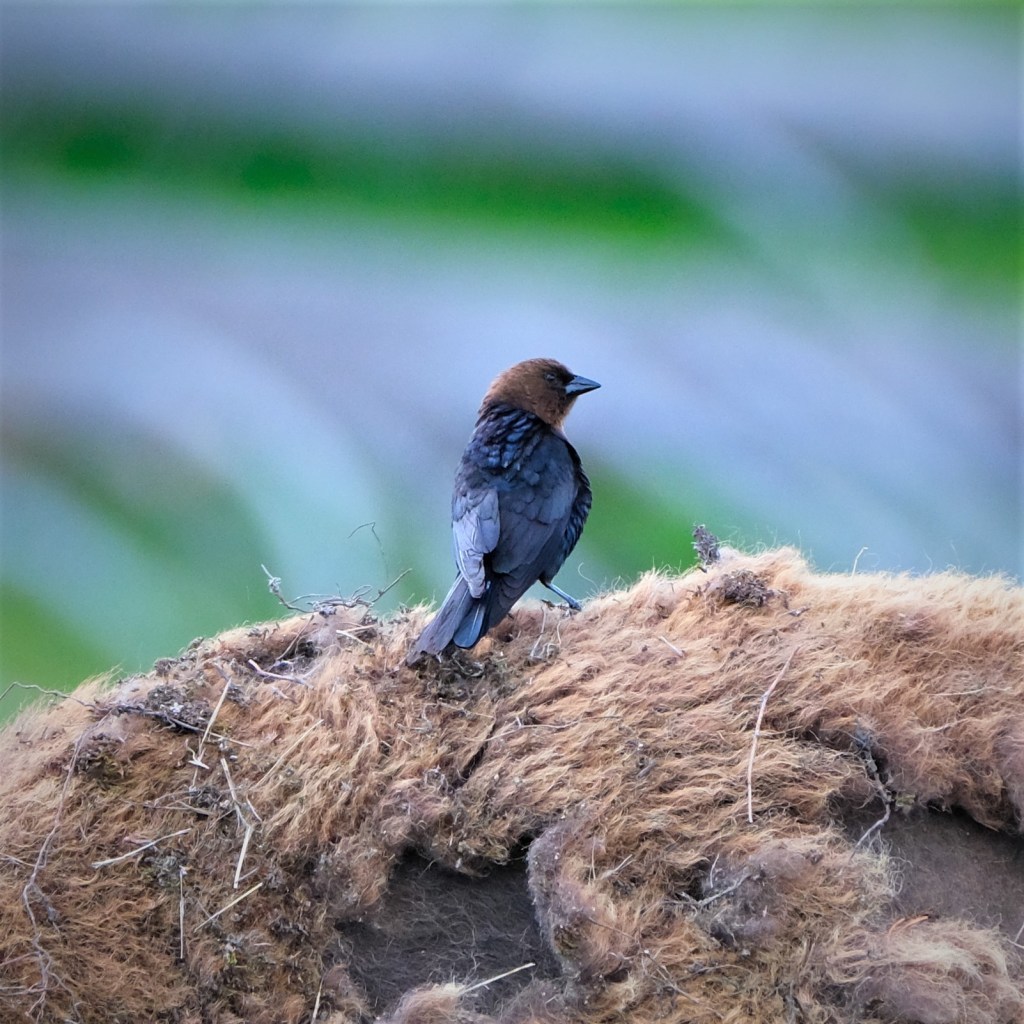
I saw at least two hosting brown-headed cowbirds, just like the ones we have in Estabrook, and I am stunned to read just now that they “followed bison herds across the prairies … before European settlement.” How cool is it to see them in their traditional habitat, eh?
There were also several calves in the herd, and here’s one nursing while Mom tries to graze.

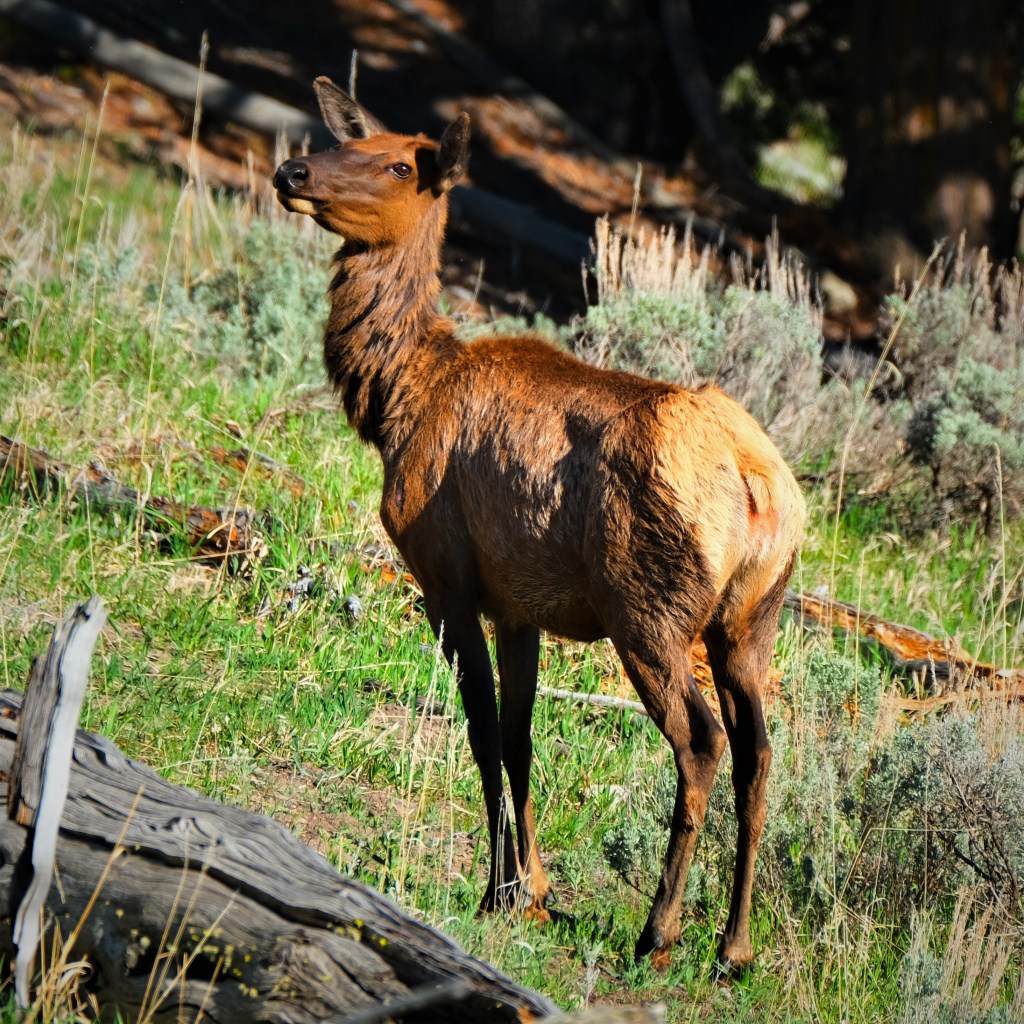
Finally, we also spotted a couple of elk (Cervus canadensis) cows, and this one was kind enough to pose for this picture.

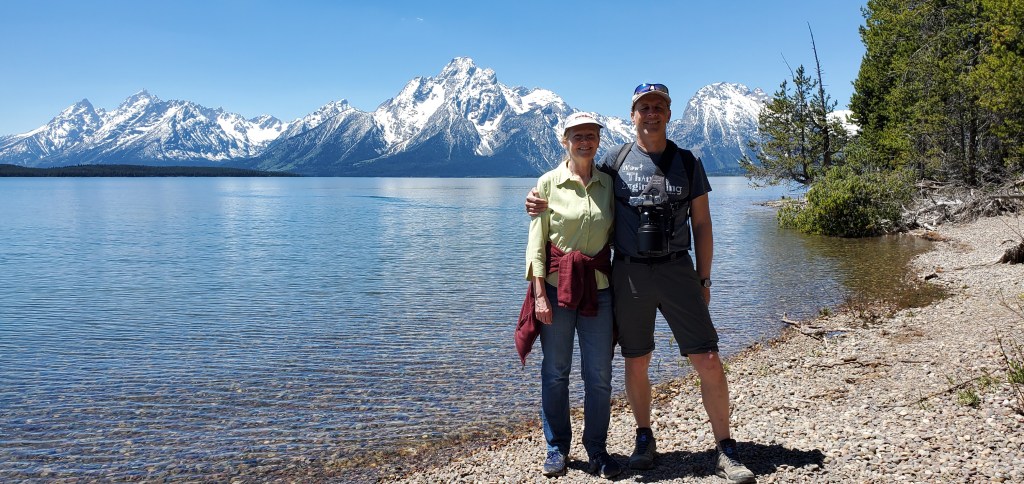
PS. Anne says I should include at least one “scenery shot”, since the scenery has been pretty nice, so here’s one of the Teton Range from across lake Jackson.

Field Trip Report, Day 4.

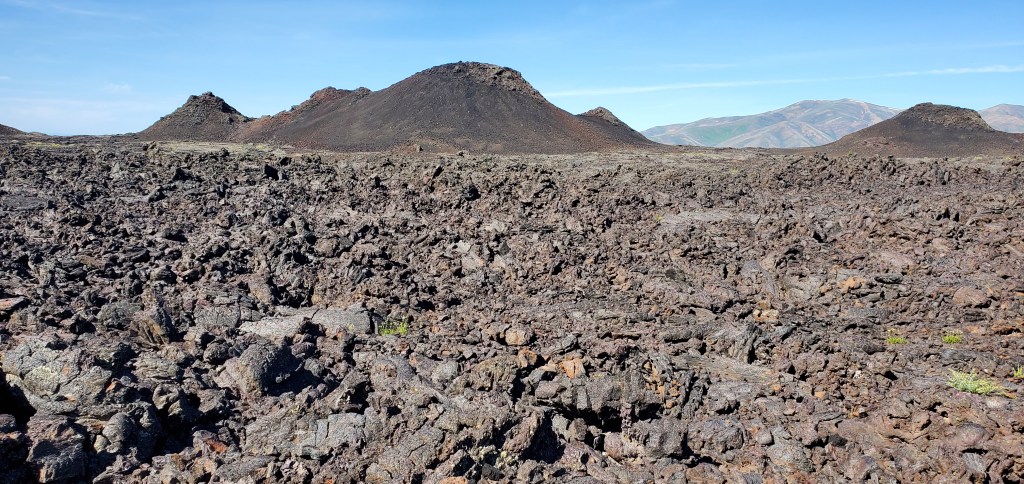
Gotta be quick because it’s late and we’re getting up early, but here are just a couple of the amazing sights we saw today at the Craters of the Moon National Monument and Preserve in south central Idaho.

Besides the cinder cones, splatter cones, and huge lava fields, there were plenty of birds, blossoms, and butterflies.

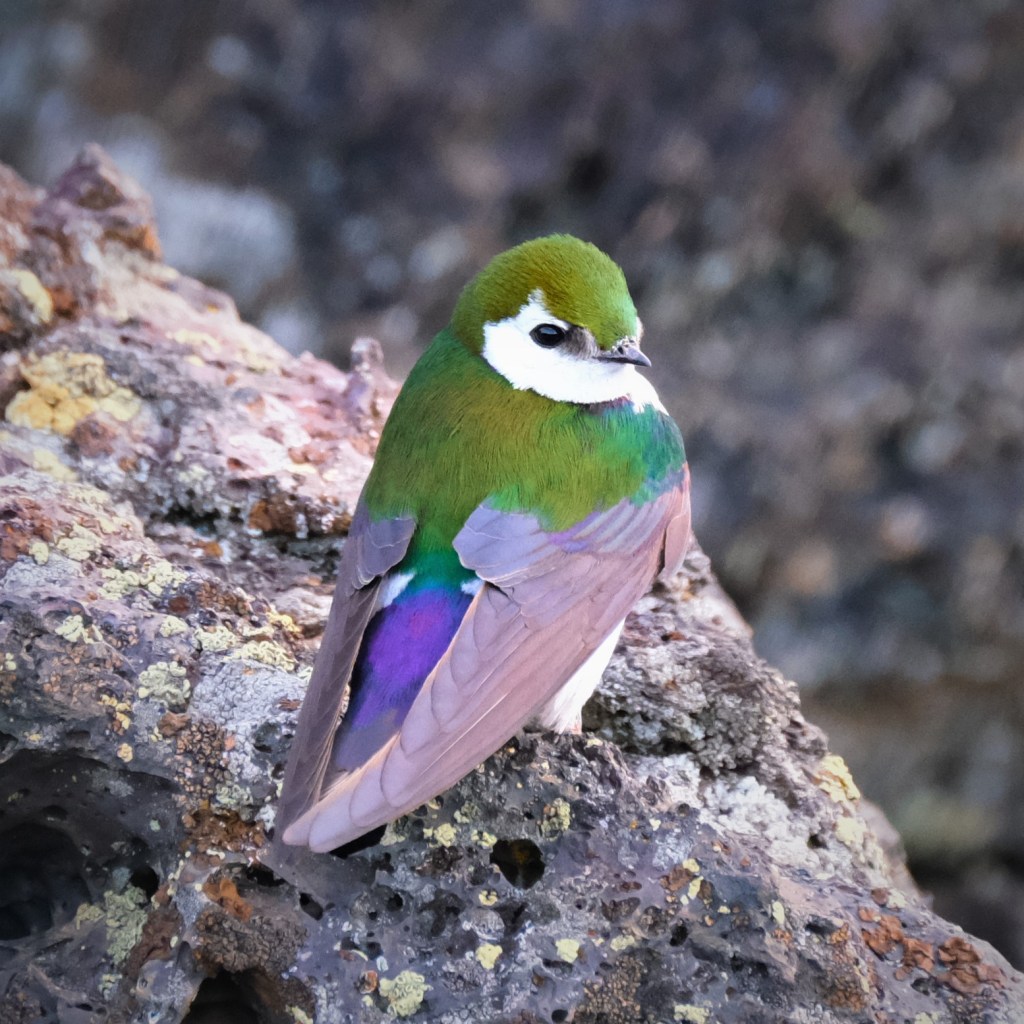
Here’s a stunning violet-green swallow (Tachycineta thalassina) resting near its nesting sight at the edge of a lave cave.

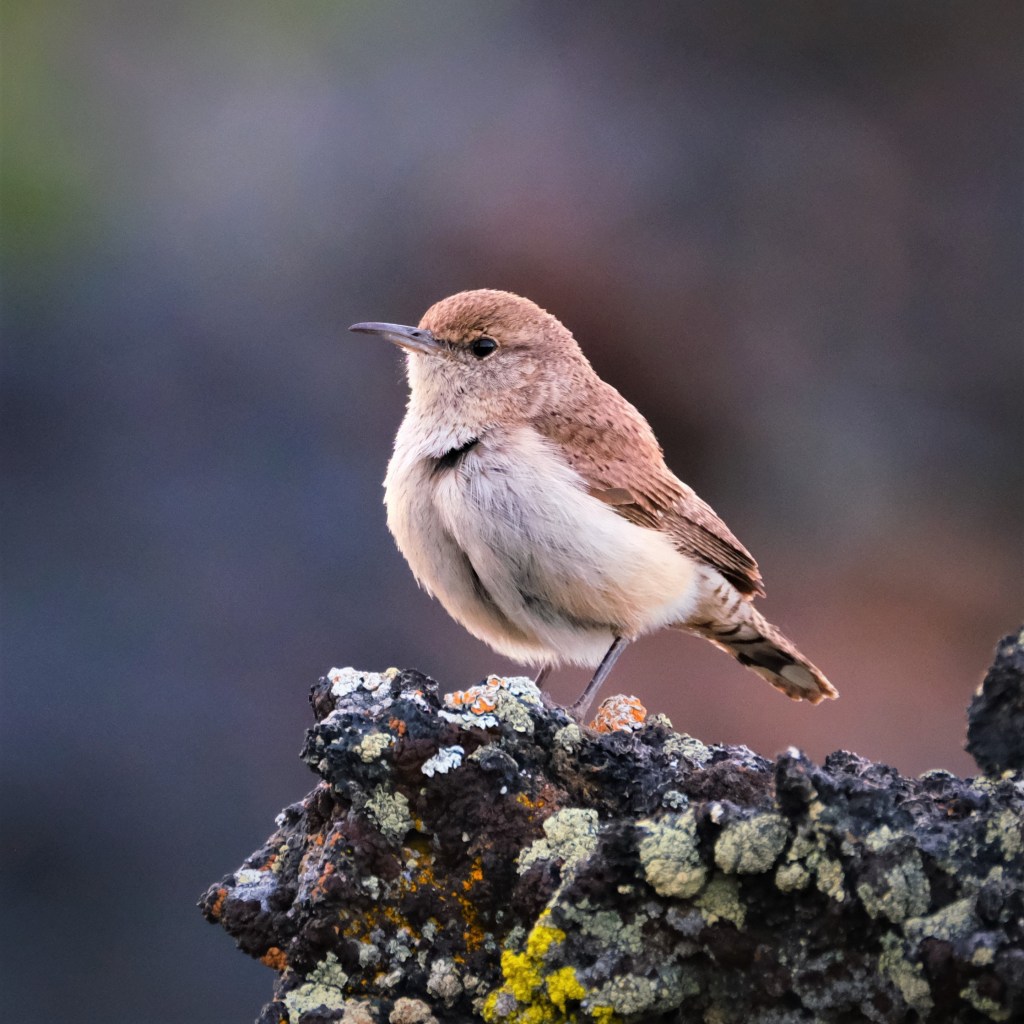
And here’s a rock wren (Salpinctes obsoletus) on a lichen covered clump of lava.

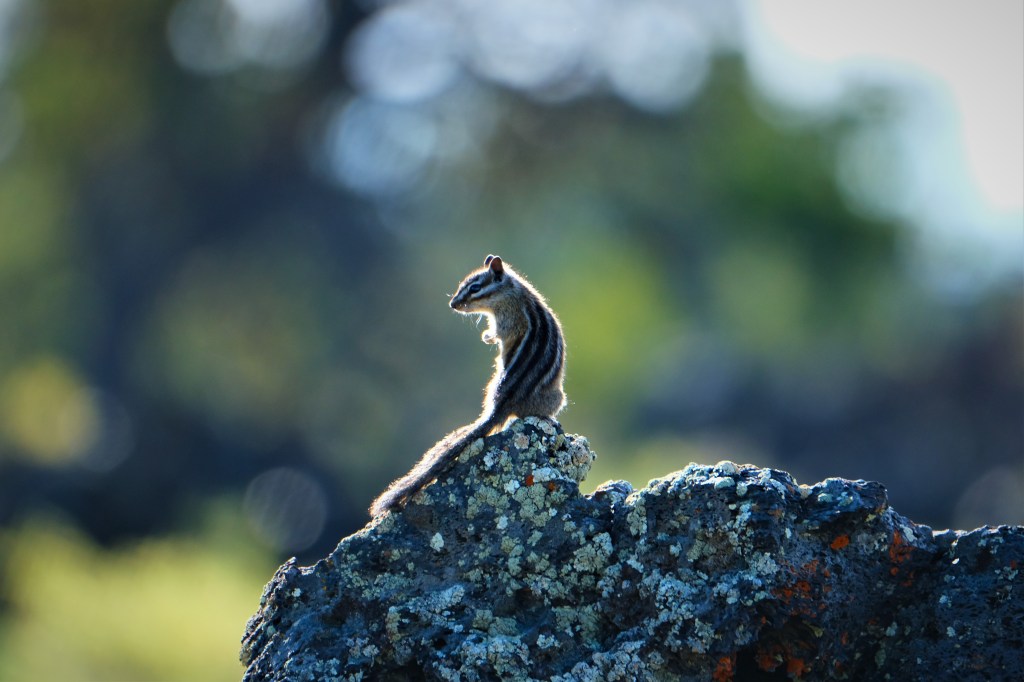
Here’s one of several yellow-pine chipmunks (Neotamias amoenus) we saw on the lava.

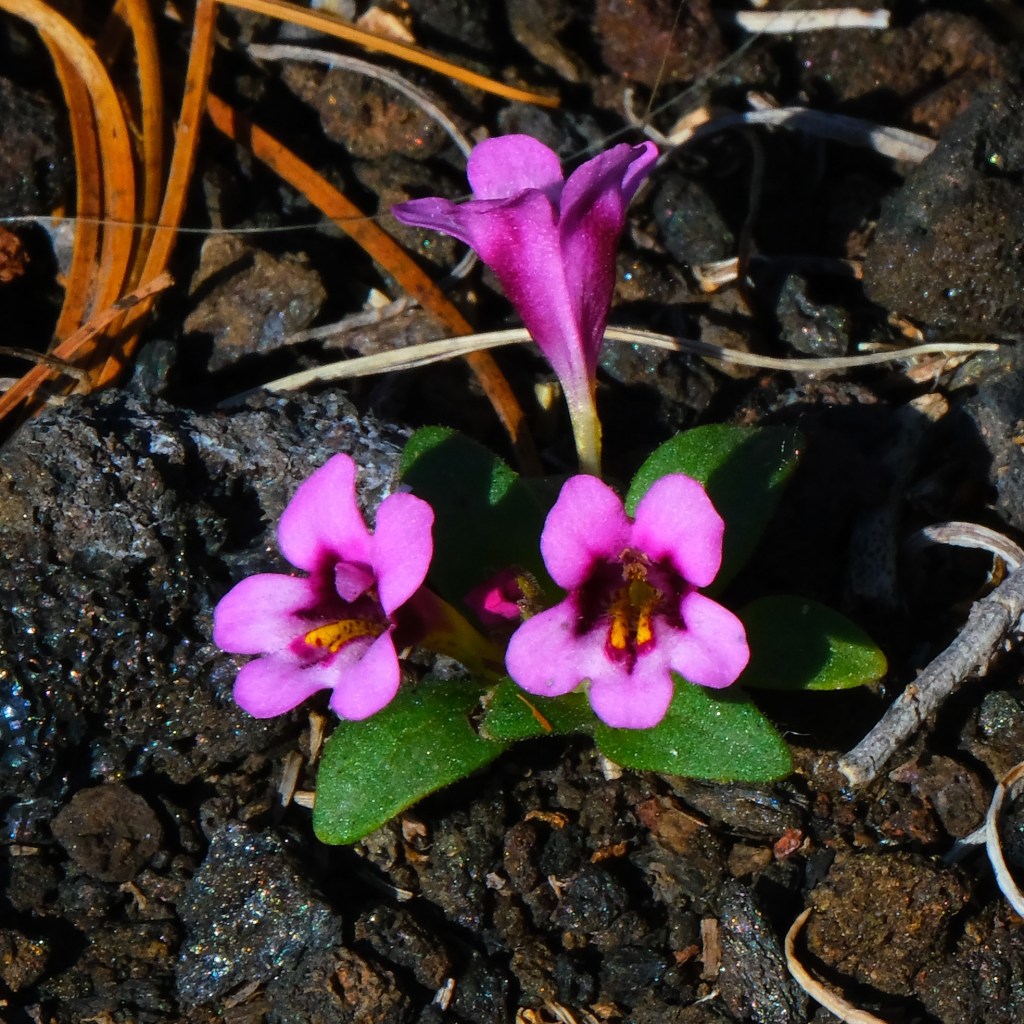
Here’s some dwarf monkeyflower (Diplacus nanus) growing right out of the volcanic ash.

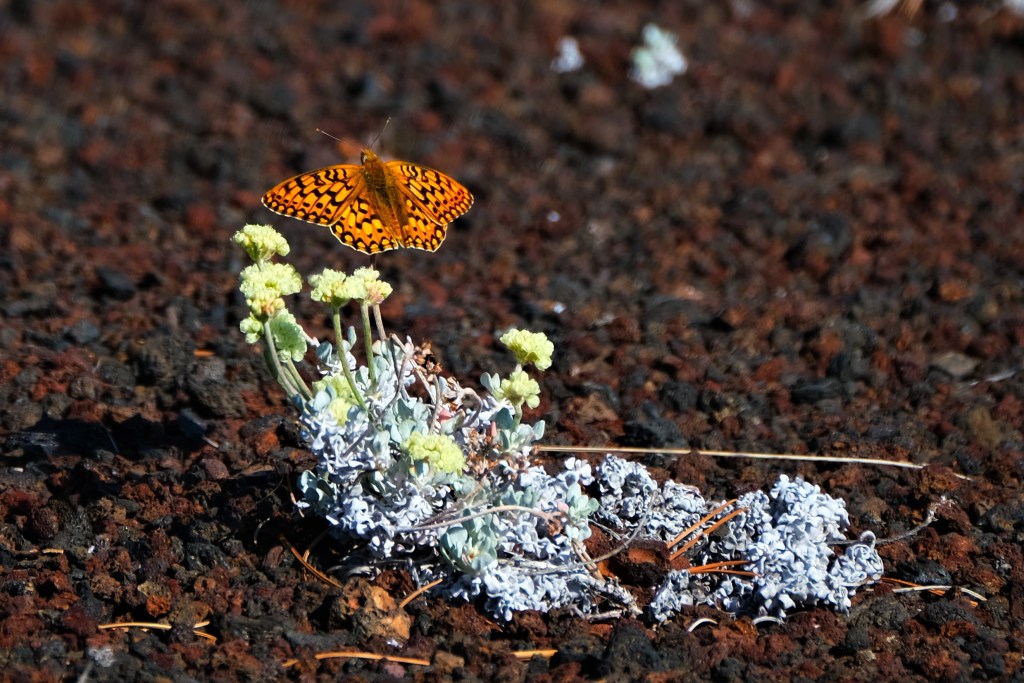
Finally, here’s a silver-bordered fritillary (Boloria selene) on a dwarf buckwheat (Eriogonum ovalifolium var. depressum) blossom. The butterflies were plentiful and seemed attracted to Anne’s white shirt. Most realized she was not the flower they were looking for before they landed, but not all.

I’ve gotta hit the sack now, but if you ever have the opportunity to visit this place, I hope you jump at the chance.

Field Trip Report, Day 2.

We hit a different trail today for another stellar day in Glacier National Park. This time, we ascended Snyder Lake Trail and found many fewer fellow hikers. We didn’t reach Snyder Lake, so didn’t see any water birds, but there were open areas from the Sprague Fire in 2017, which attracts different critters than the deep forest did along the Avalanche trail of yesterday.

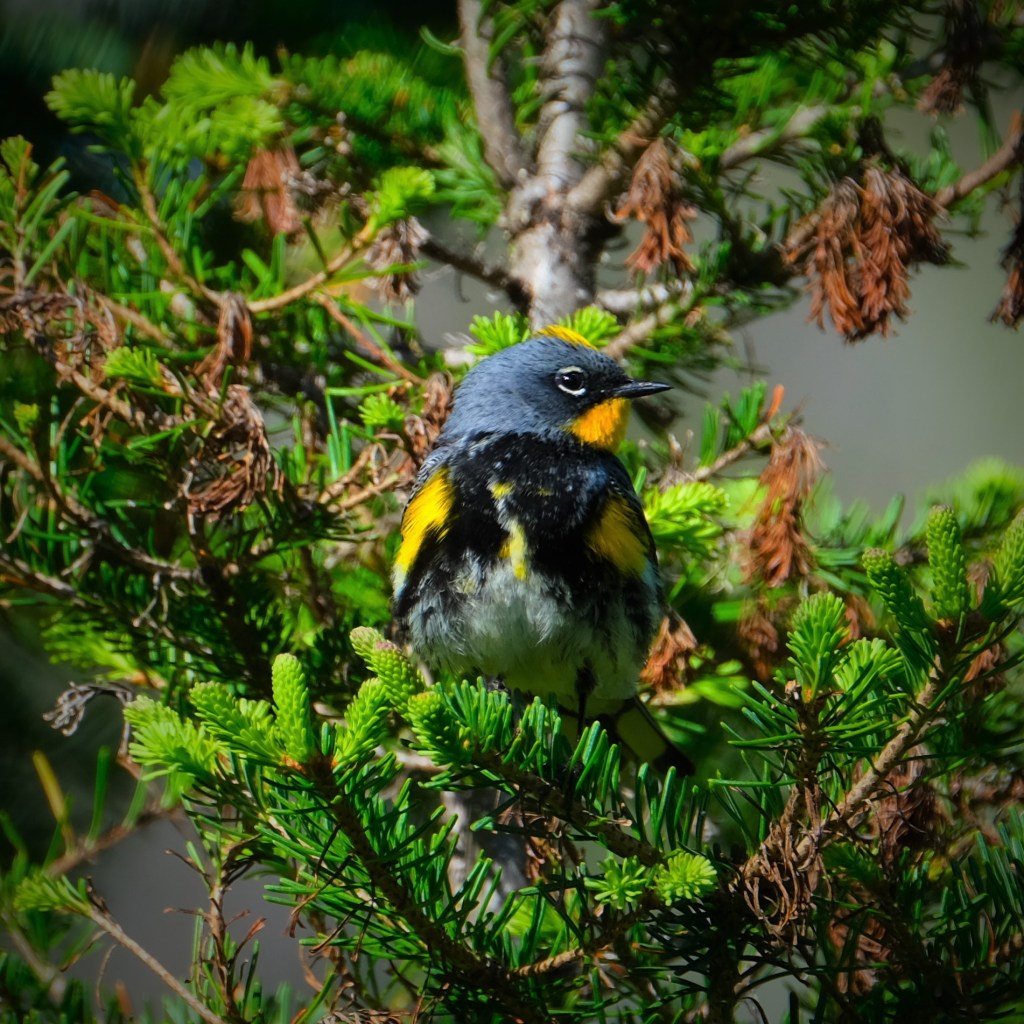
Before we even got to the trail, though, I found this little cutie serenading us at the visitors’ center. He’s an Audubon’s warbler (Setophaga auduboni), the “western counterpart” of the myrtle warbler (Setophaga coronata coronata), which I’ve identified in Estabrook as a yellow-rumped warbler (Setophaga coronata), but which actually “combines four closely related forms.” Ach du lieber! Right?

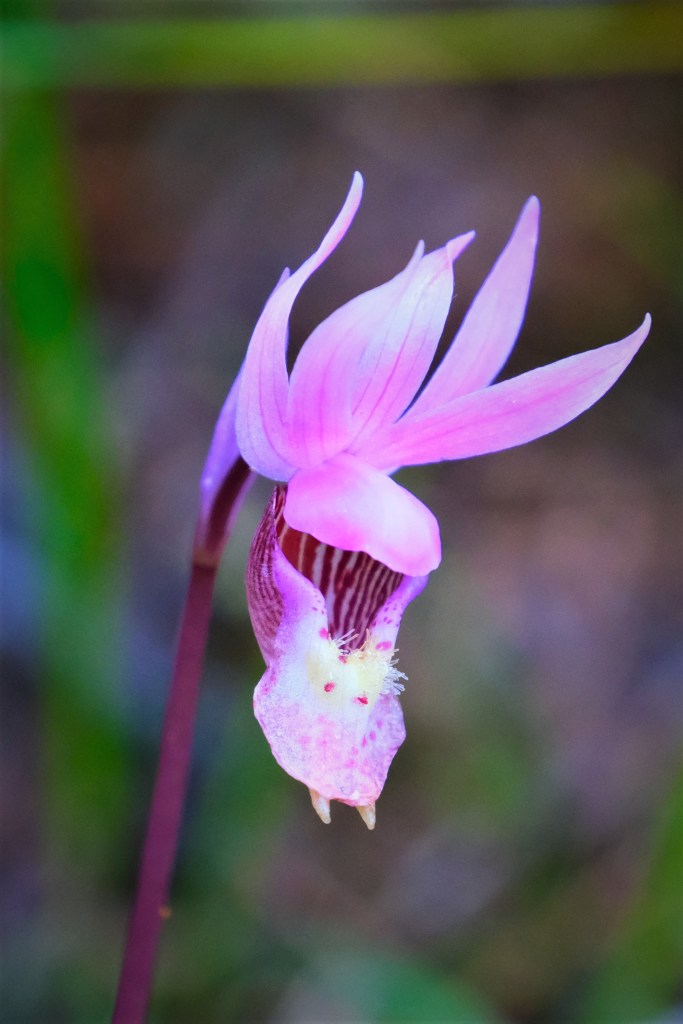
Once we finally got going on the trial, the first amazing sight we came upon is this dazzling fairy slipper orchid (Calypso bulbosa), distant cousin of the pink lady’s slipper that my grandmother used to show me in the woods by her house.

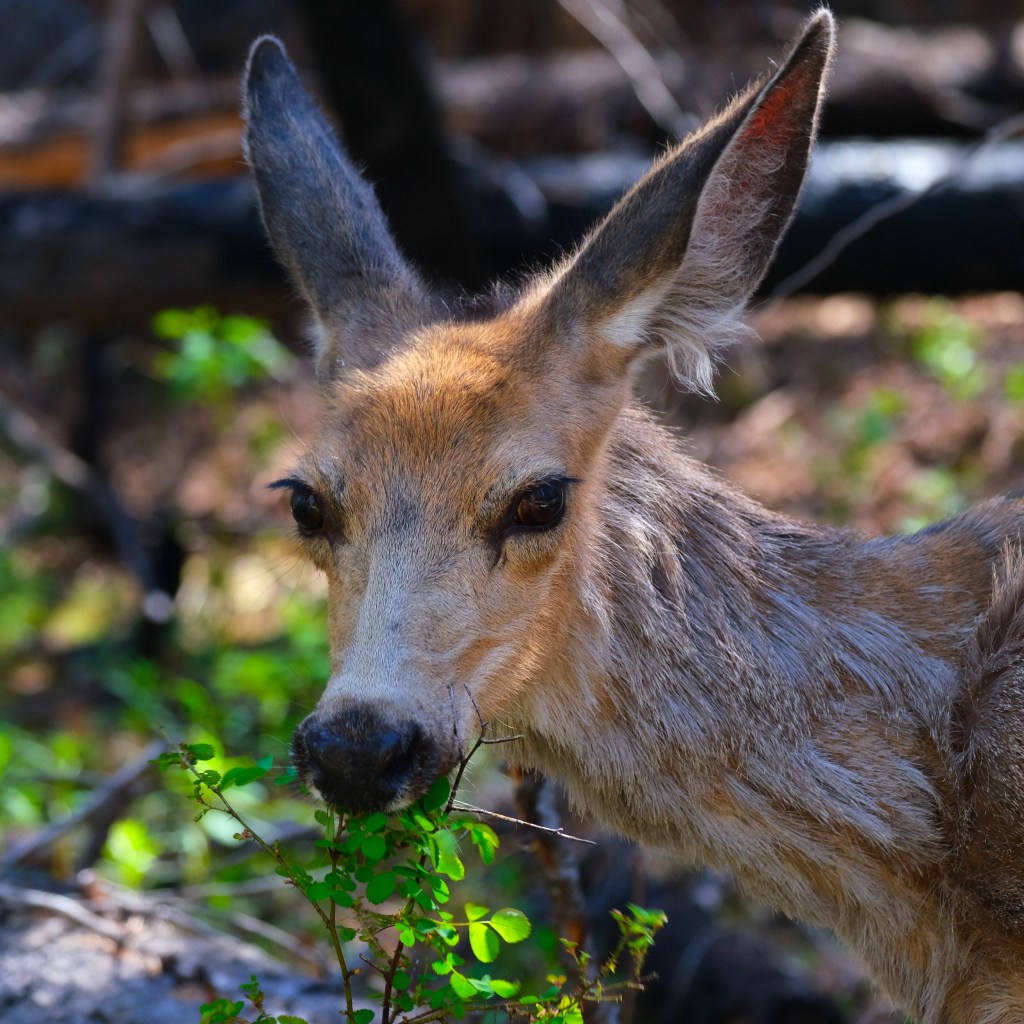
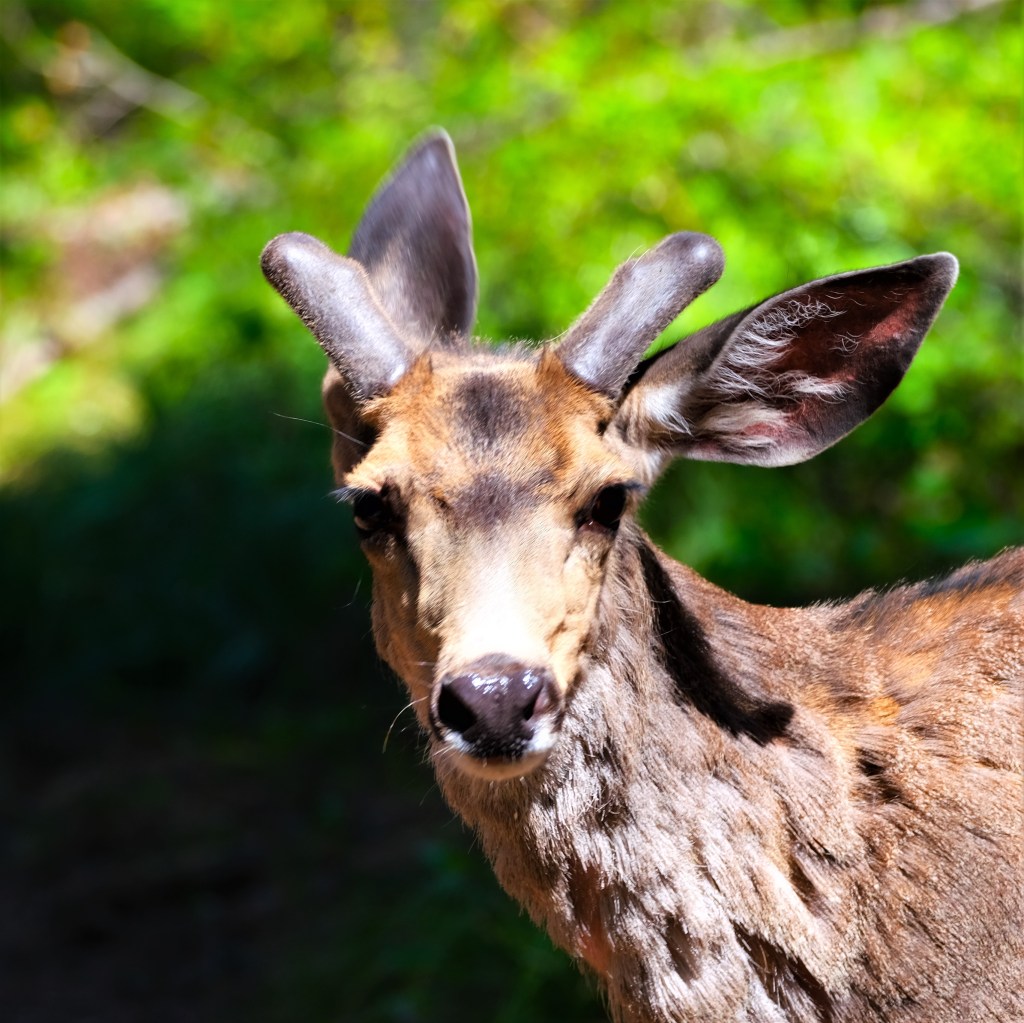
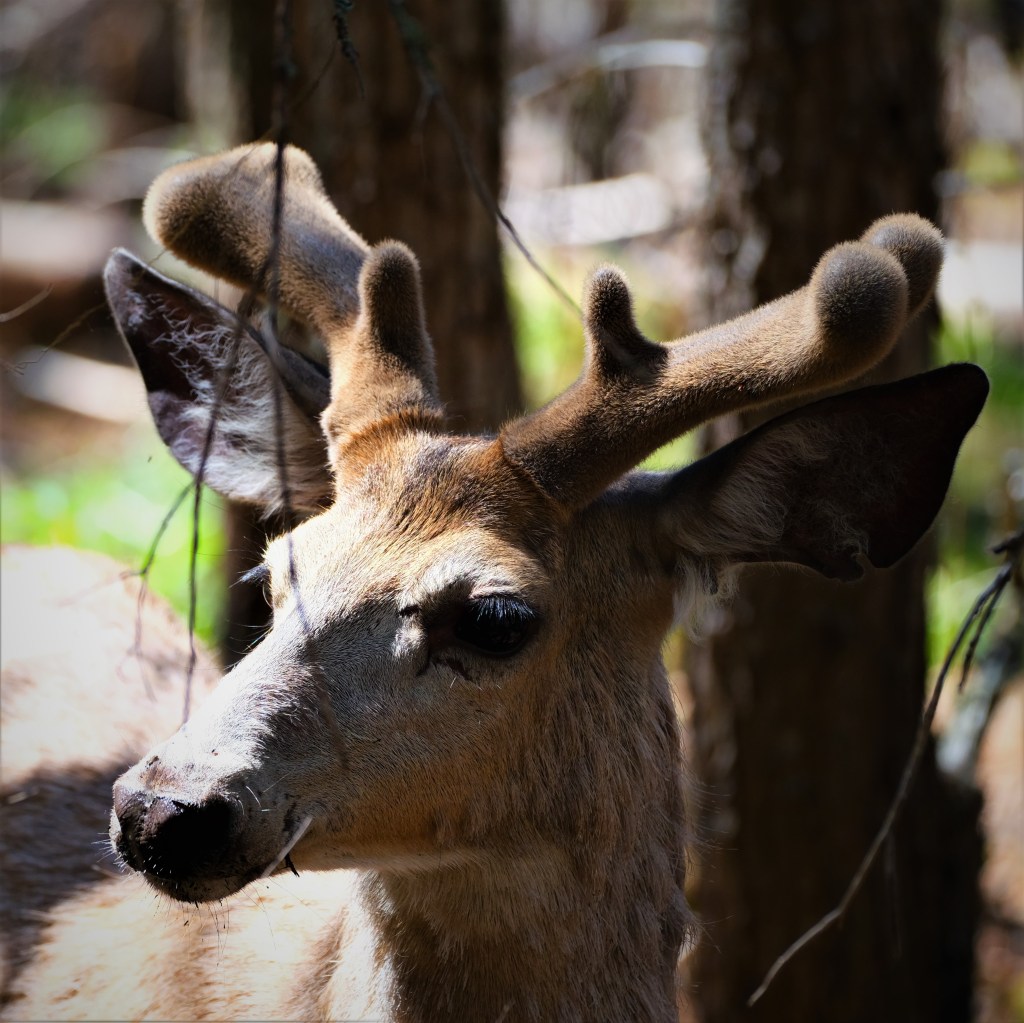
Another difference from yesterday’s hike was the prevalence of mule deer (Odocoileus hemionus) They were everywhere, bucks and does, and not intimidated by us hikers in the least.

As we approached our turn-around-point, the trees were sparse and several small streams crossed the path, which brought the butterflies out like crazy.

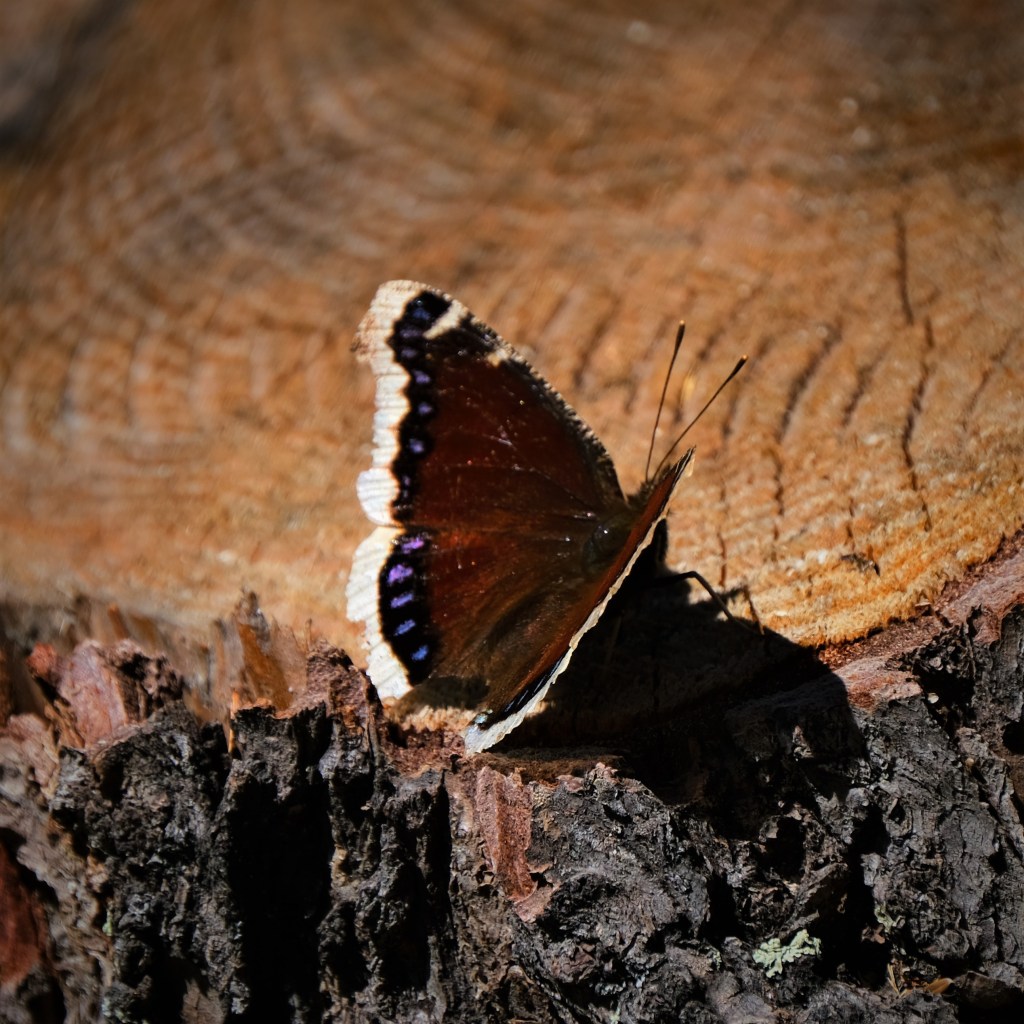
Here’s a mourning cloak (Nymphalis antiopa), just like the ones we’ve seen in Estabrook.

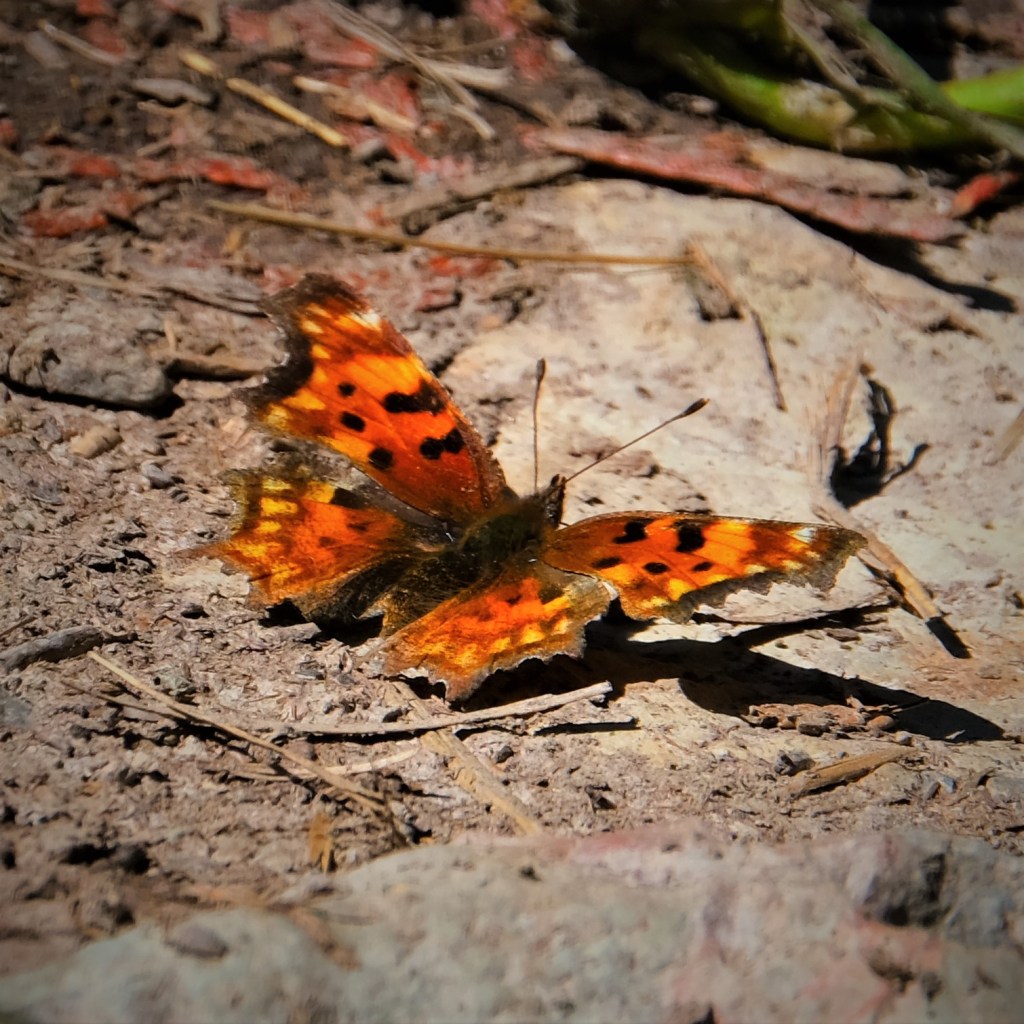
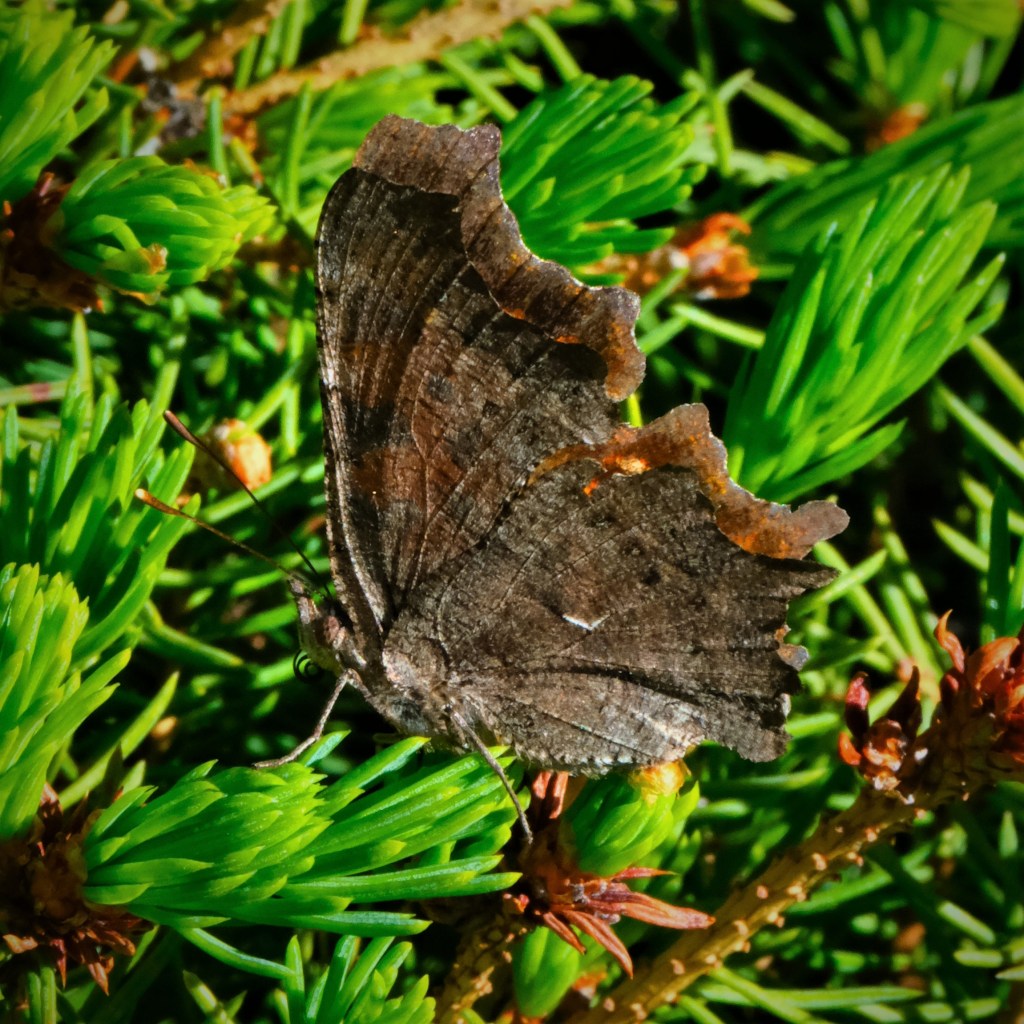
This next one looks to be a hoary comma (Polygonia gracilis), but if you look here, you’ll see that there a slew of look-a-likes, so I could easily be mistaken.

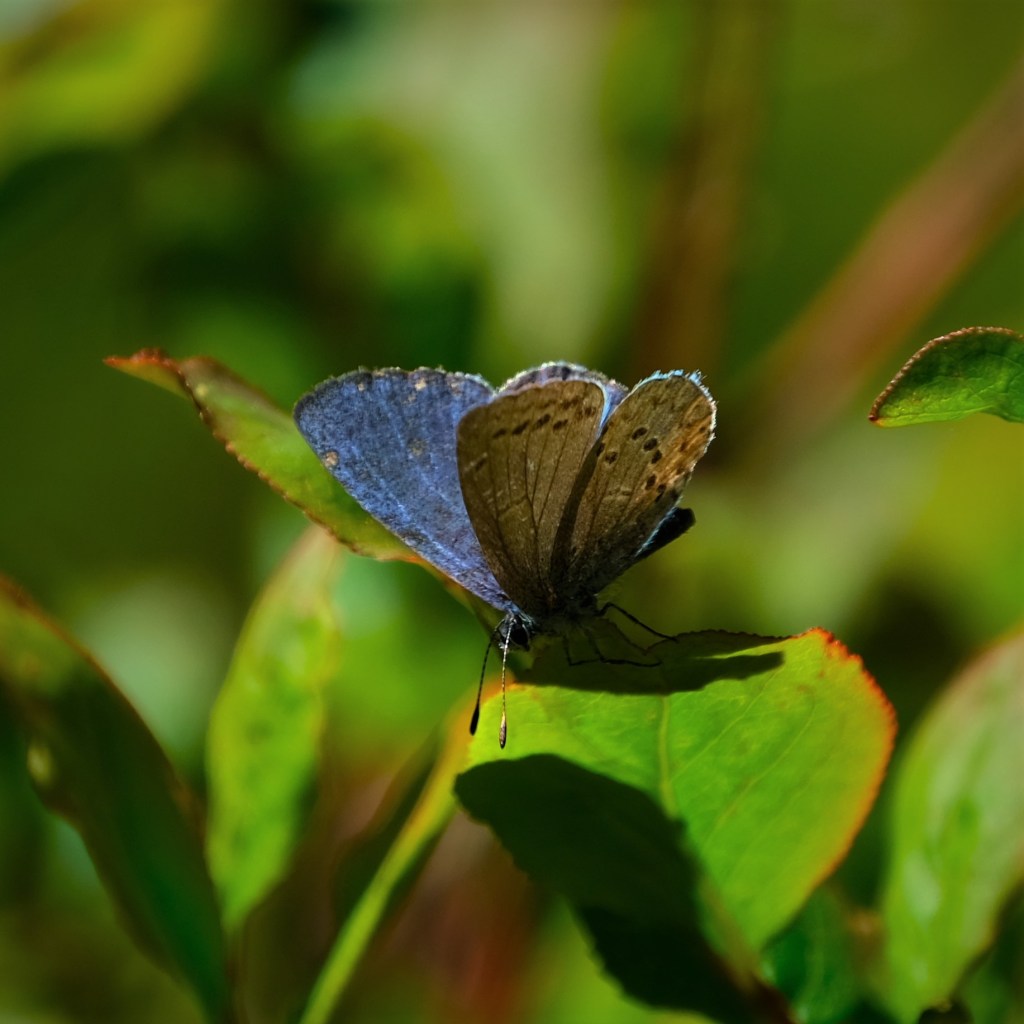
Here’s one of the “blues“, maybe a northern azure (Celastrina lucia)

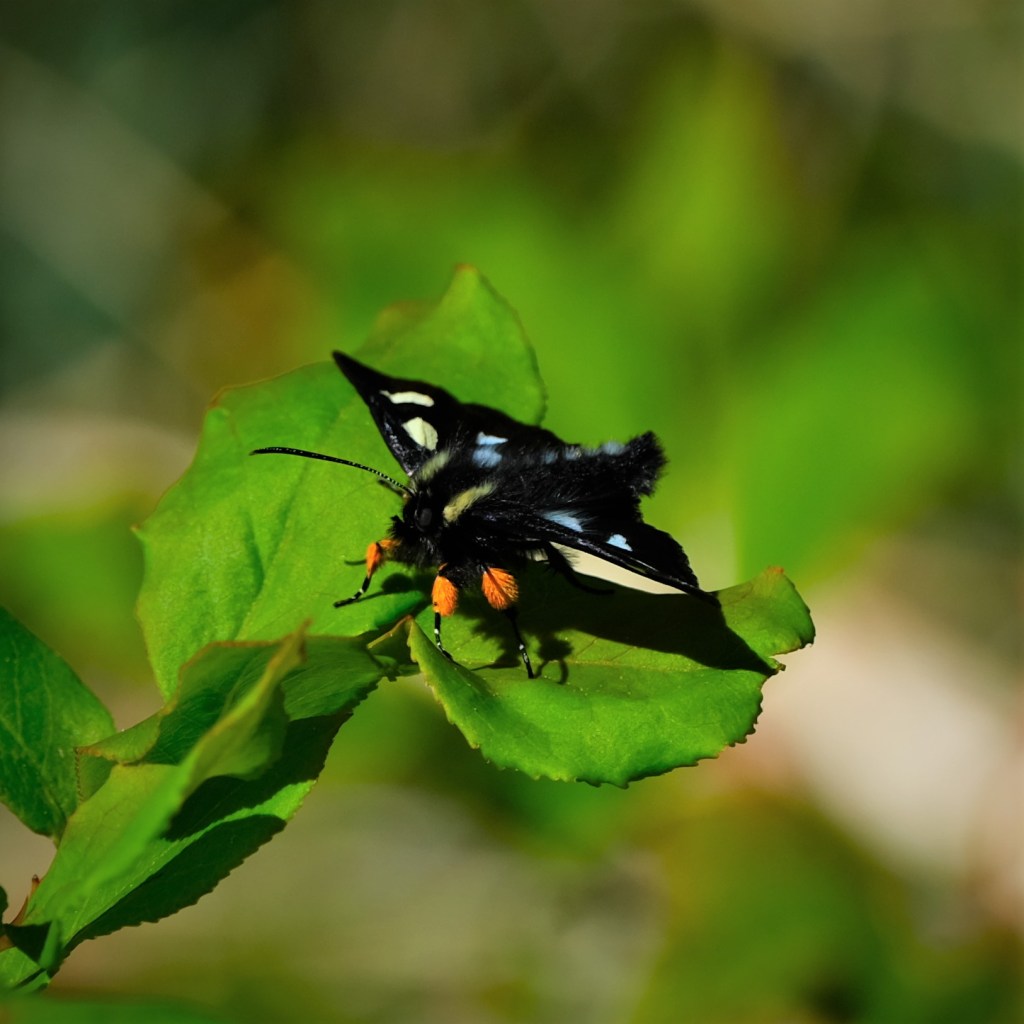
Even moths joined in the fray, and here’s an eight-spotted forester (Alypia octomaculata) sporting bright orange leggings.

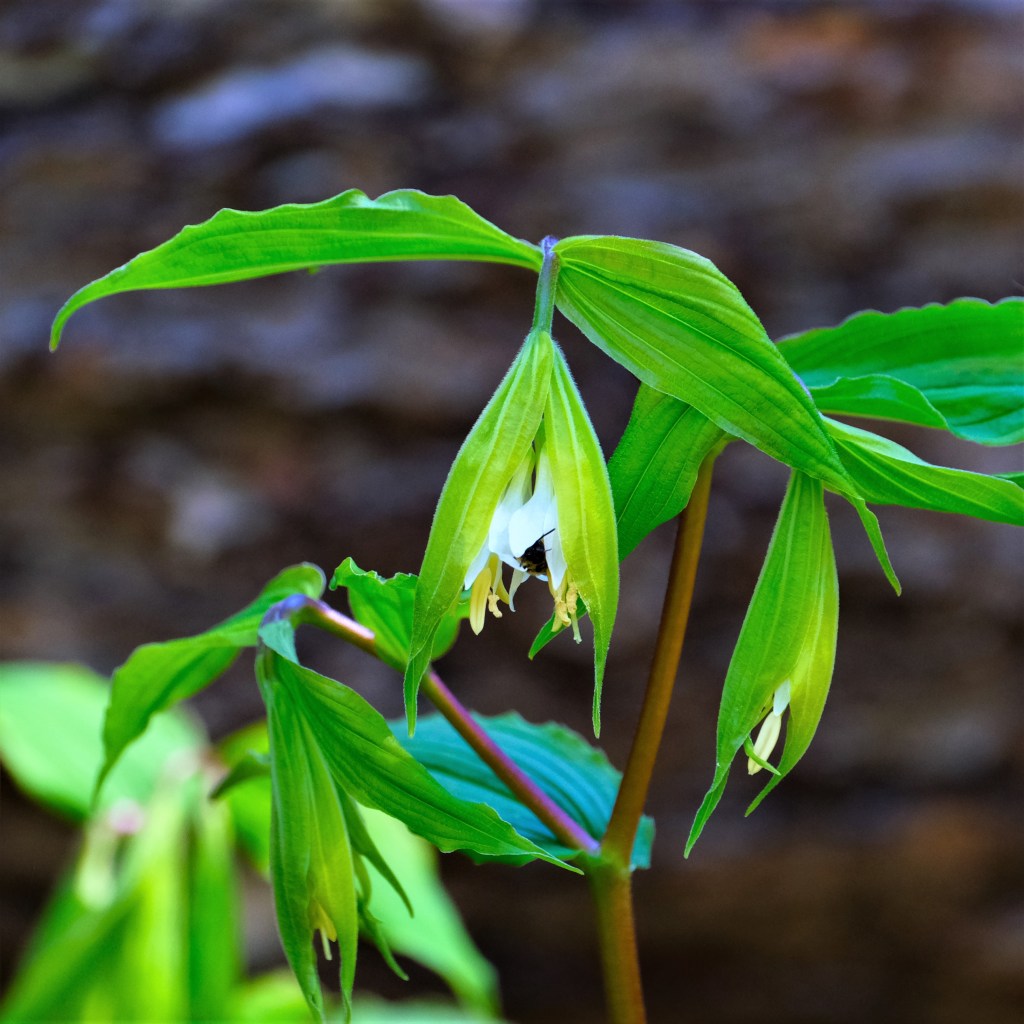
A flower that also liked the water and sunlight is this note-quite-yet-opened rough-fruited fairybells (Prosartes trachycarpa)

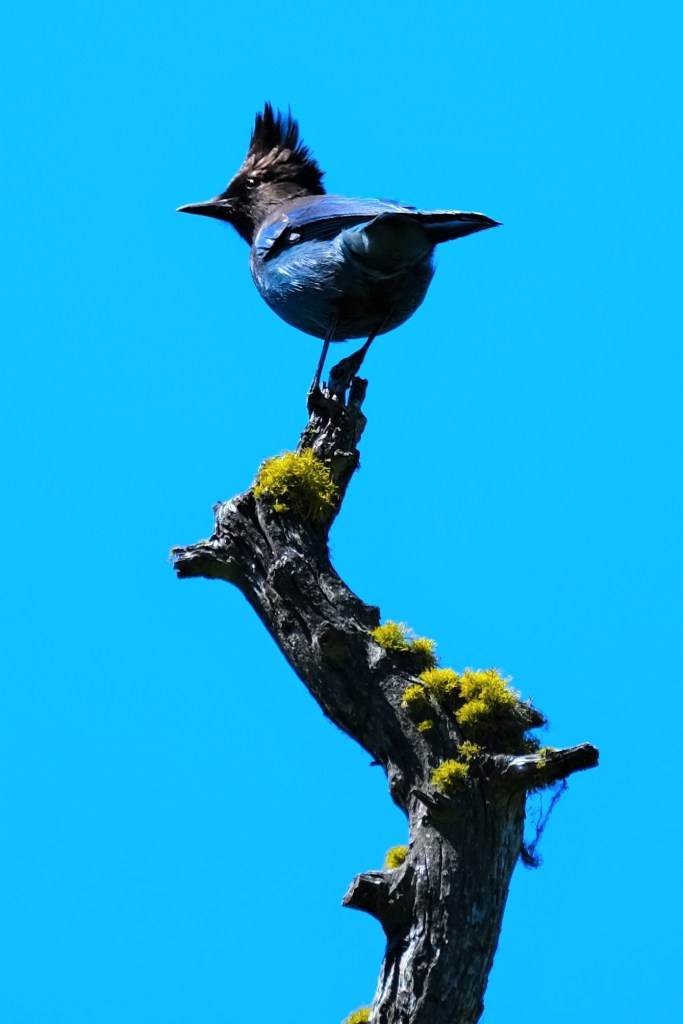
On our way back, we really started finding the birds, and here’s a Steller’s Jay (Cyanocitta stelleri) that led me on a wild goose chase before finally finding the perfect perch.

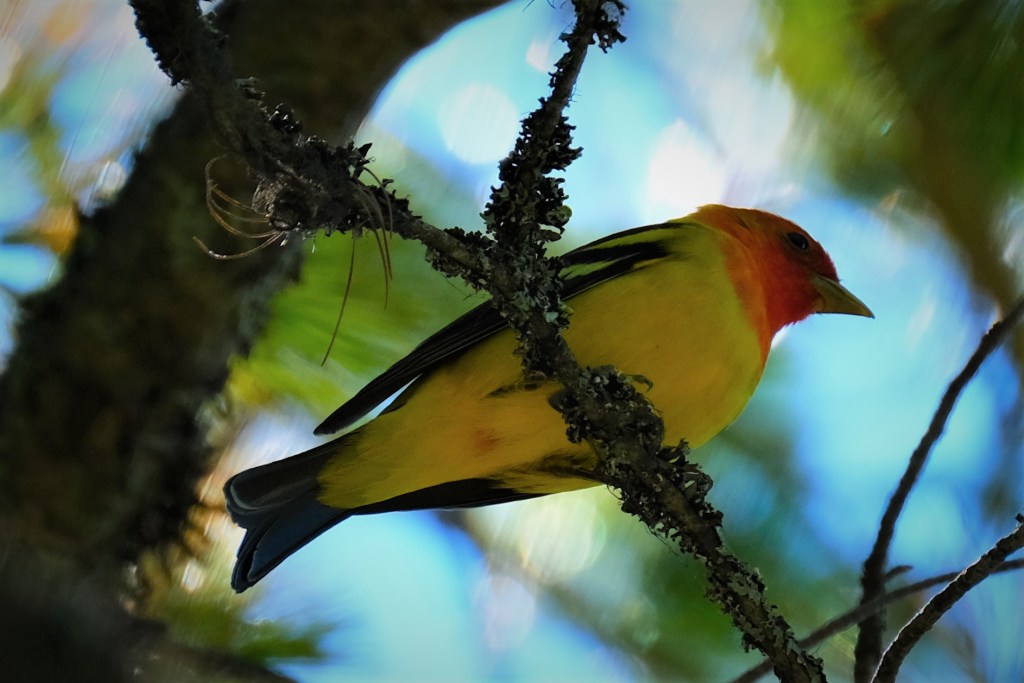
There were a few western tanagers (Piranga ludoviciana) making quite a racket, but only this one showed itself.

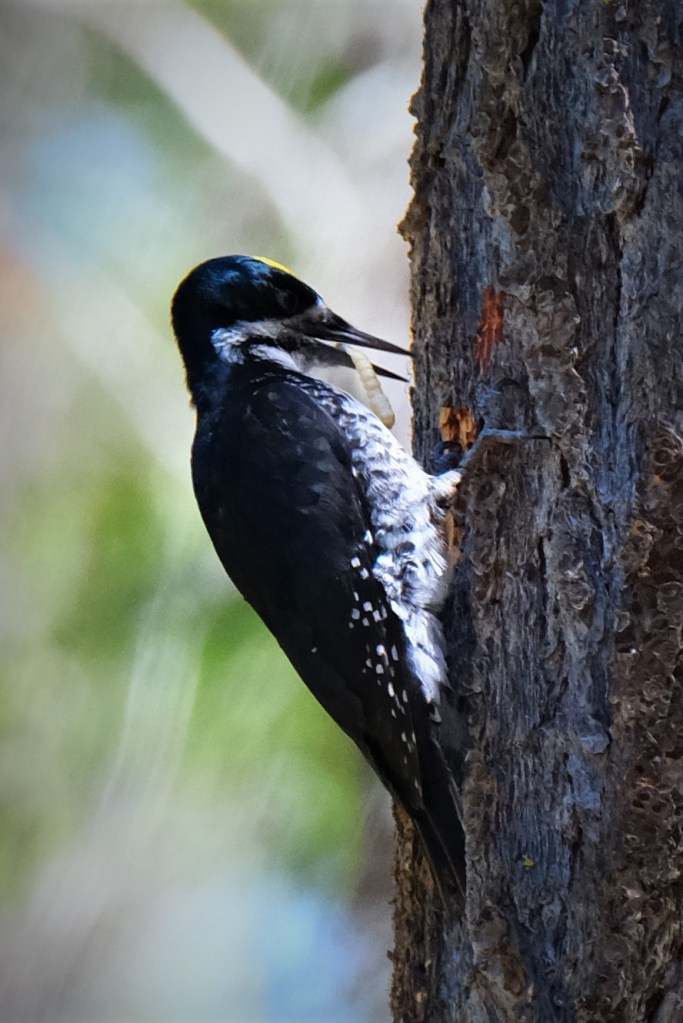
The easiest one to find, because he nearly buzzed us on the way to the trunk of a nearby tree, is this handsome black-backed woodpecker (Picoides arcticus) in his tiny bright-yellow cap, not the not the American three-toed woodpecker (Picoides dorsalis) that I originally thought he was and whom I spotted a few days later in Yellowstone.

He’s also quite a successful hunter, at least today, and I watched him dig out two of these tasty-looking morsels before I left to catch back up to Anne.

It is postulated that “with only three toes, these species may be able to lean farther away from the tree and thereby hit the tree harder than other woodpeckers, all of which have four toes.”

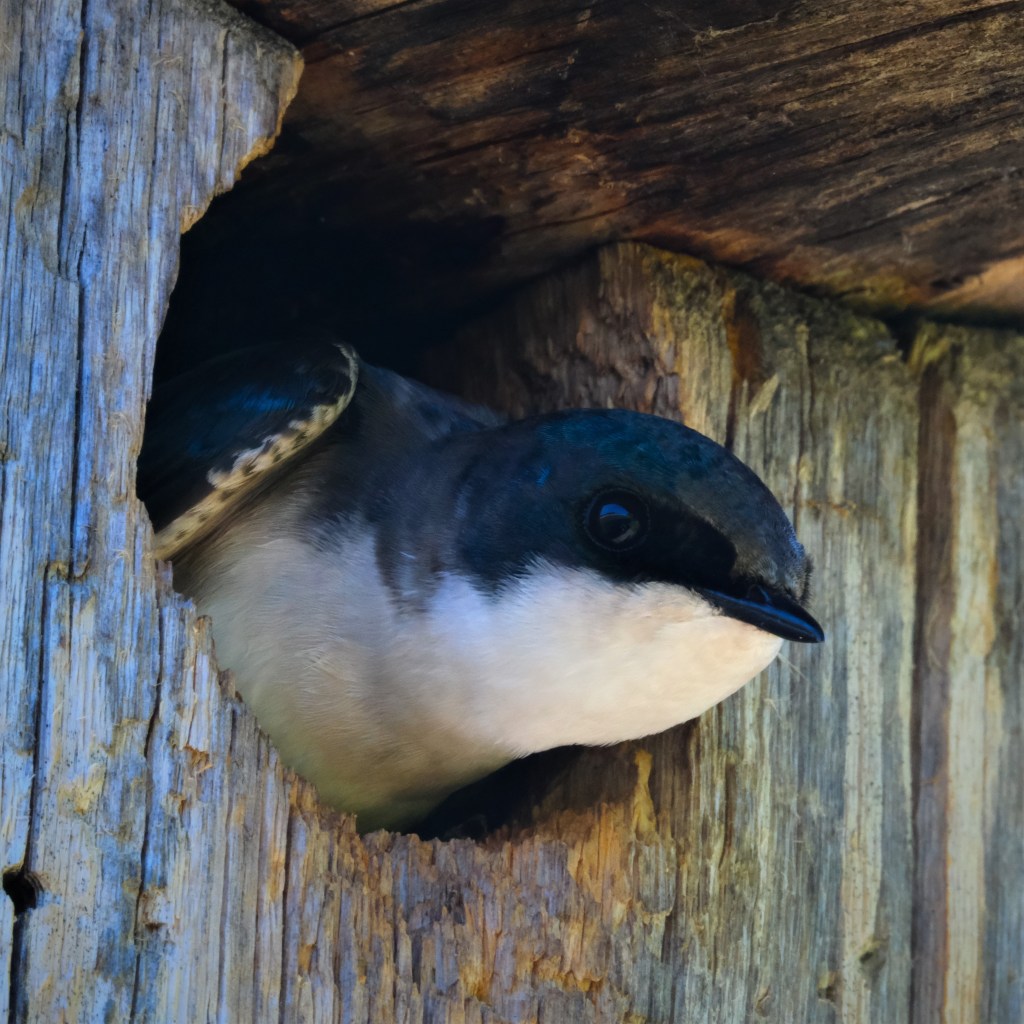
Finally, in the parking lot, this tree swallow (Tachycineta bicolor), whom we’ve already seen from afar in Estabrook, was nesting in a post nearly at eye level. The second I blinked, it shot out of the hole like a rocket.

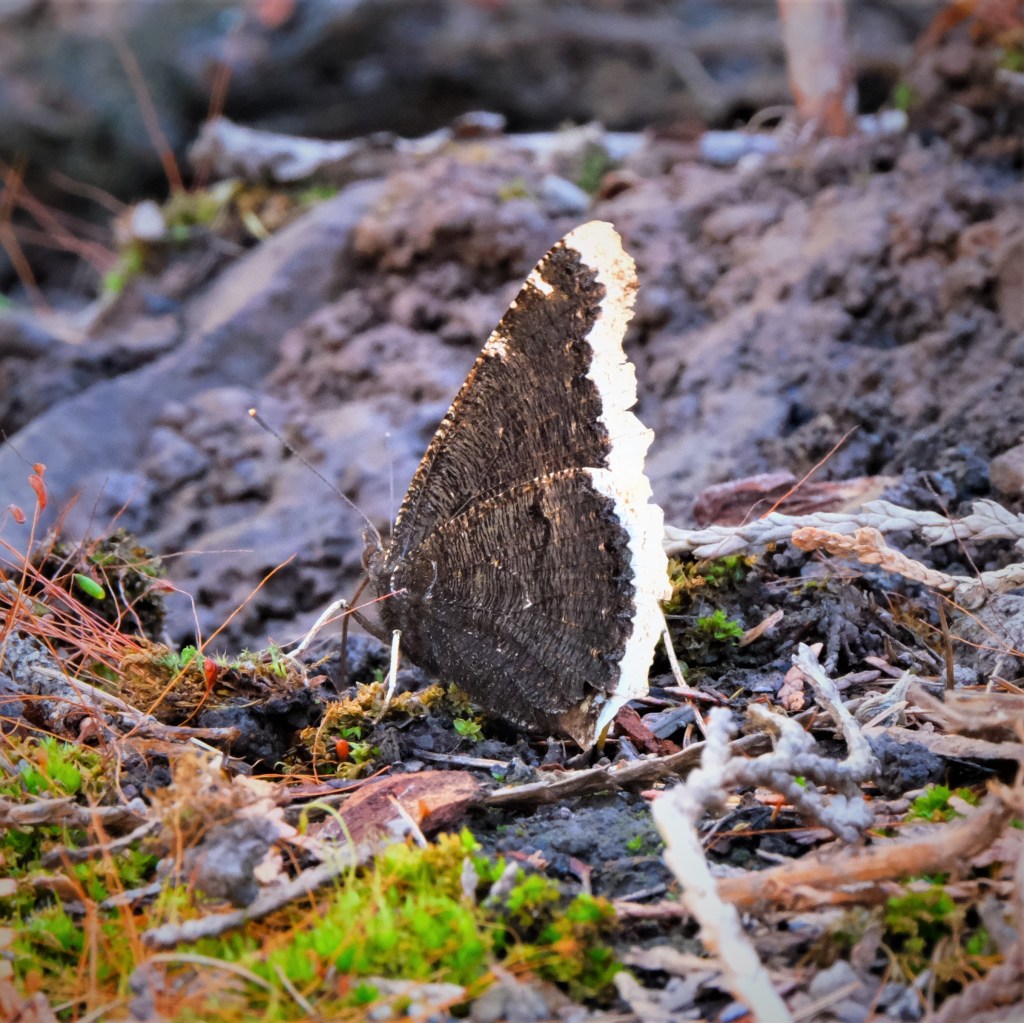
And there was another hoary comma (Polygonia gracilis) in the shrubbery at the Lake McDonald Lodge willing to show off both sides of its wings.

Can’t judge that book by its cover, eh? Well, tomorrow is a travel day, so probably no new post until Tuesday. See you then.
Field Trip Report, Day 1.

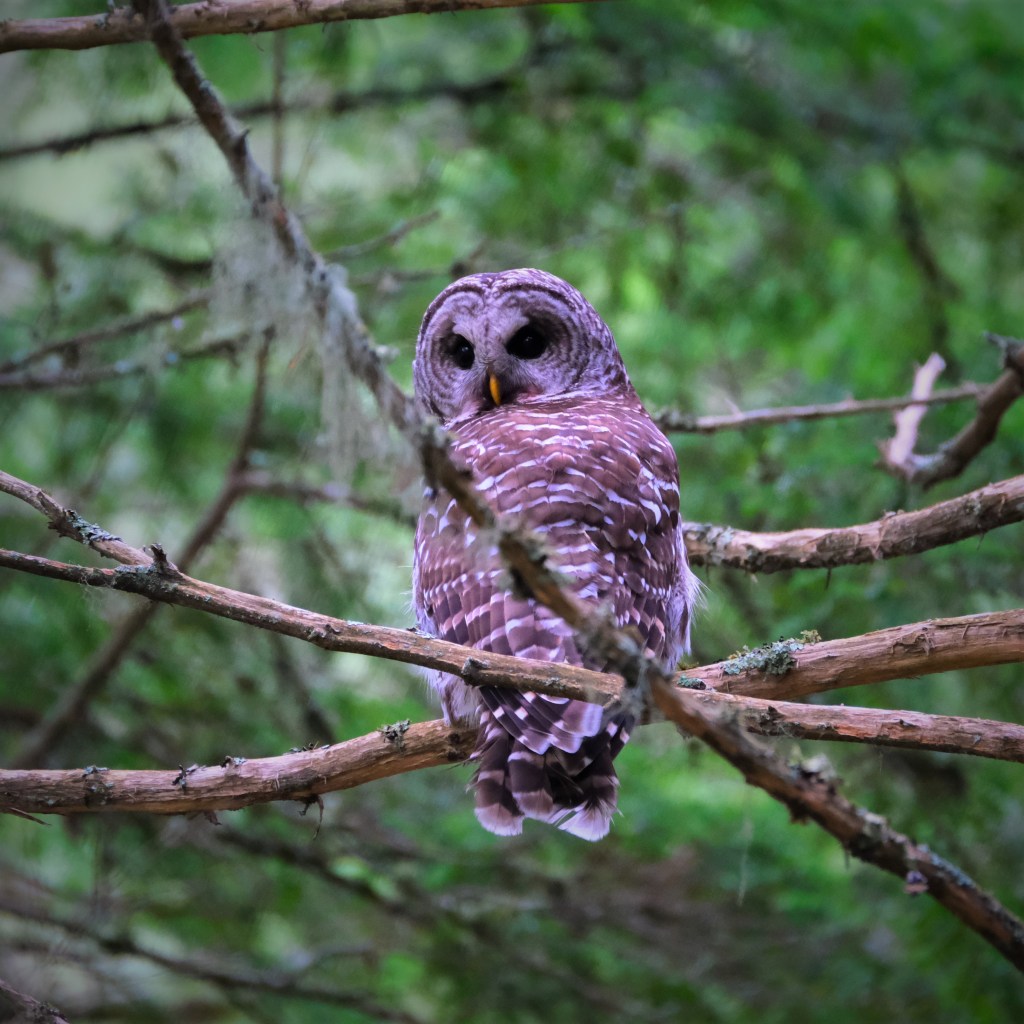
Gotta make this quick ’cause the wifi is sketchy here, but after a 29-hour Amtrak® train ride, we arrived at Glacier National Park yesterday and hiked to Avalanche Lake today. It was a pretty short hike, just 5 easy miles roundtrip, but boy-oh-boy, what a hike it was. Right off the bat, a barred owl (Strix varia) flew in, saw all us hikers, realized it’s Memorial Day weekend, cursed under it’s breath, and took right back off again. Outstanding start!

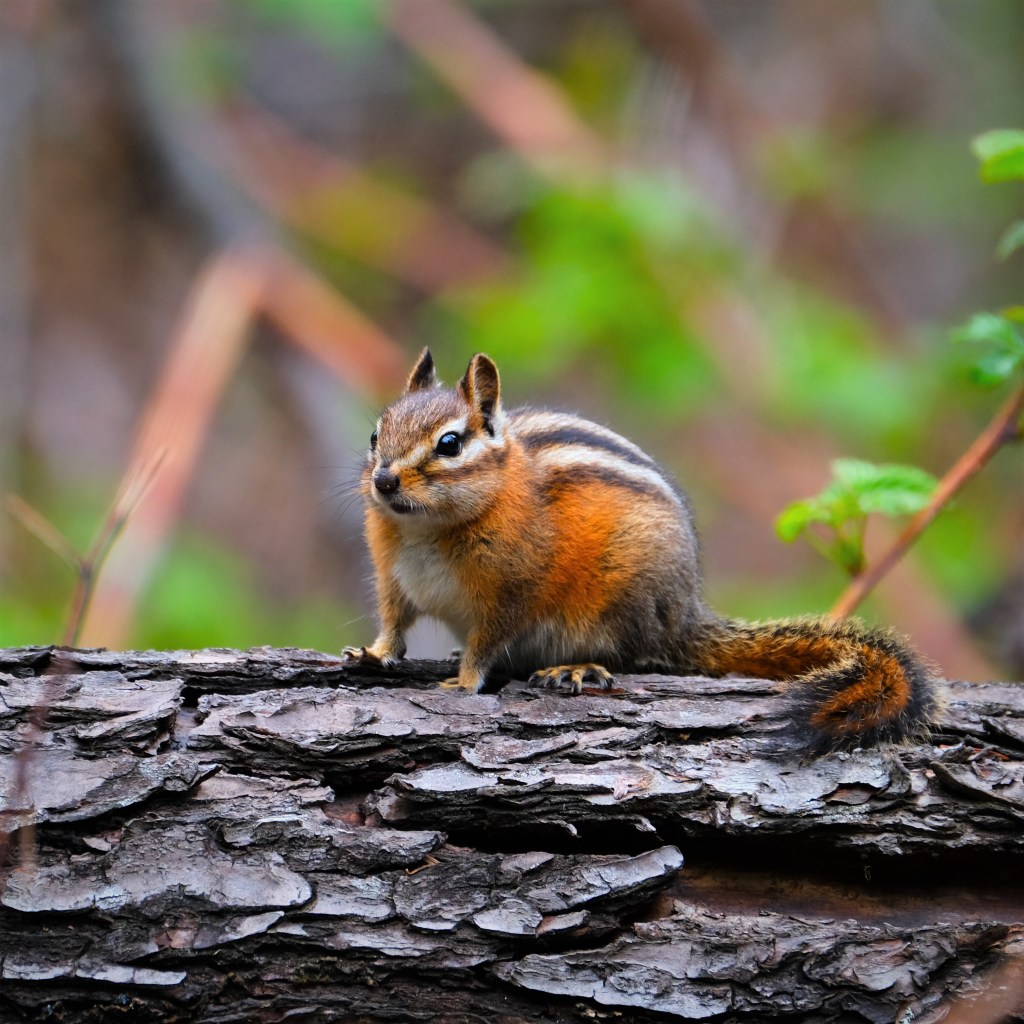
A bit further up the trail, we came across this plump-looking least chipmunk (Neotamias minimus).

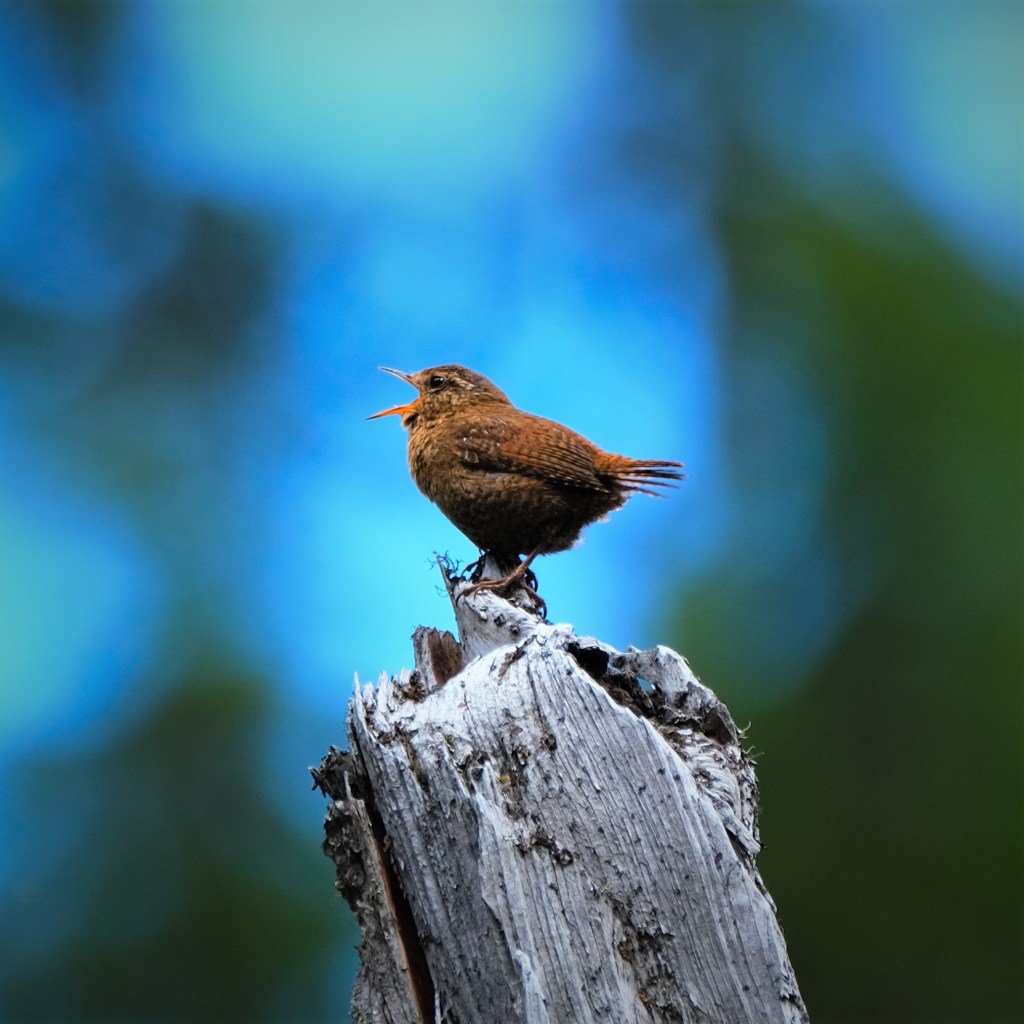
Just above the chipmunk, this diminutive pacific wren (Troglodytes pacificus) was singing his brains out from a perfect perch.

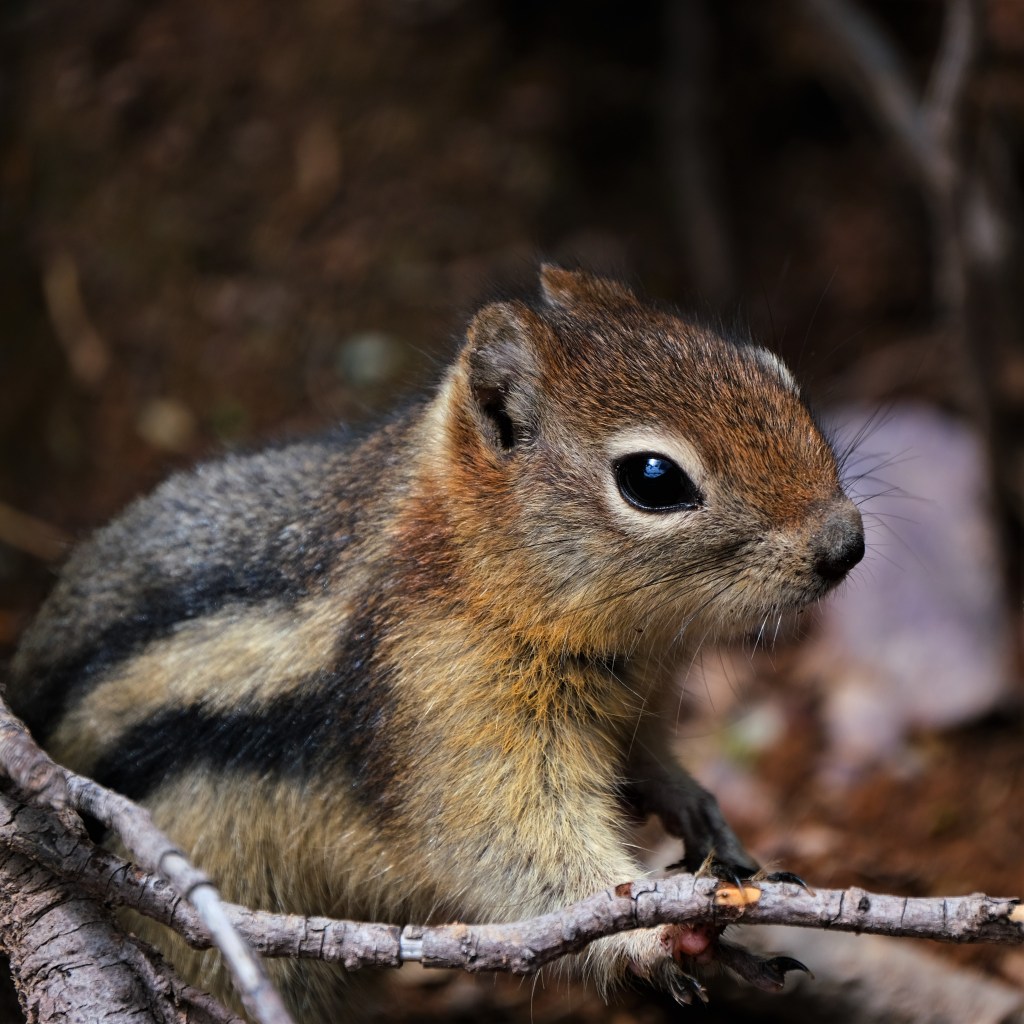
At the lake, I thought I saw another chipmunk, but it turns out to have been a golden-mantled ground squirrel (Callospermophilus lateralis) with the stripes of a chipmunk, but bigger, and with the steely gaze of a squirrel.

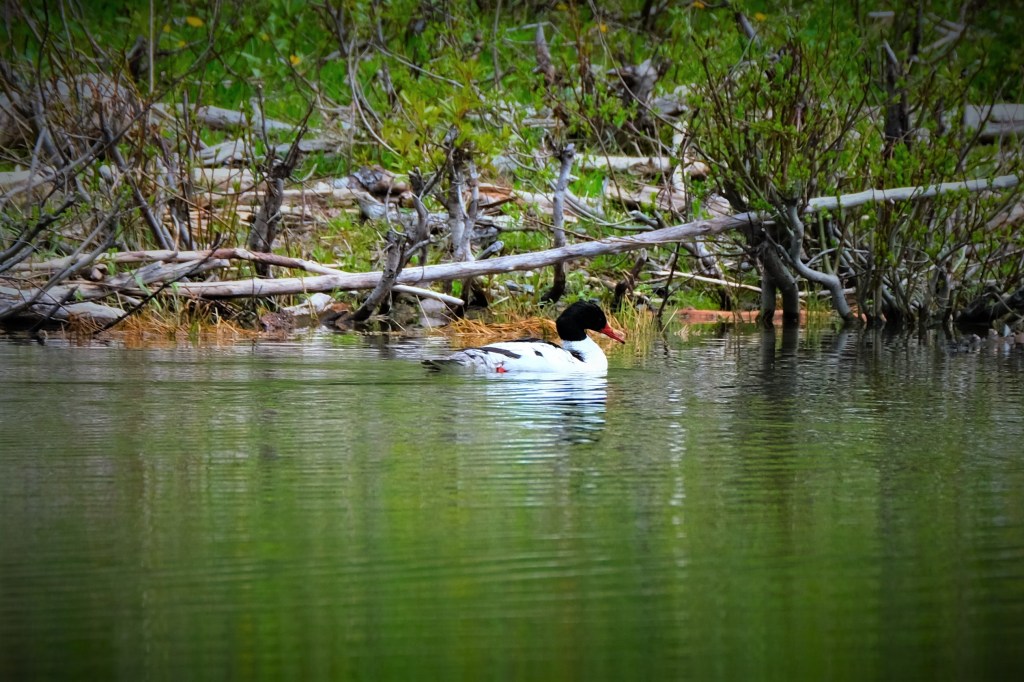
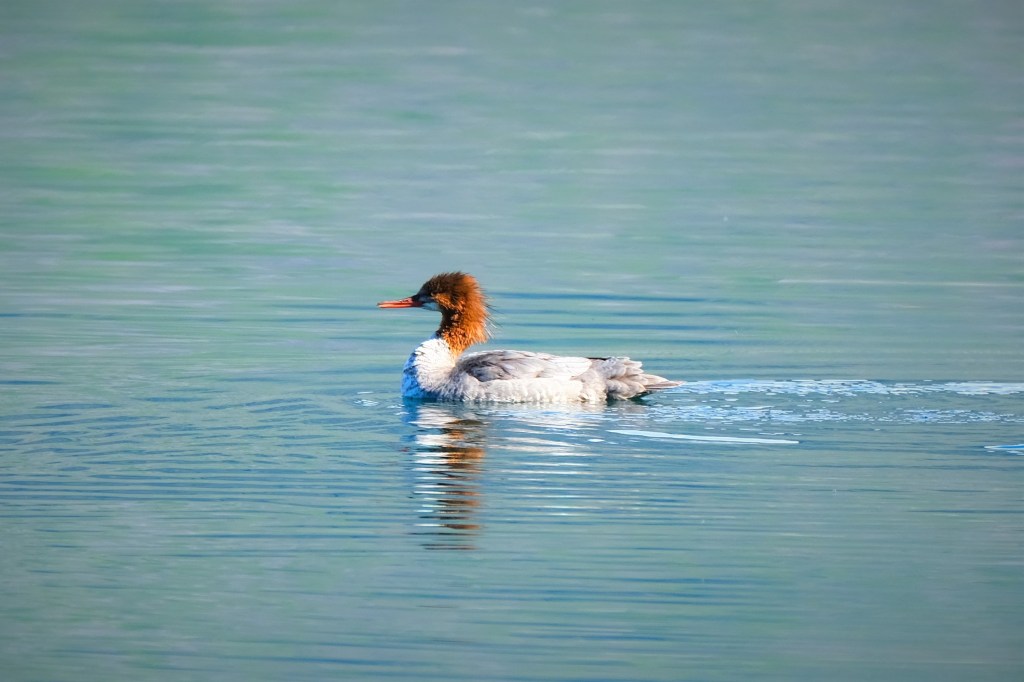
On the water was a pair of common mergansers (Mergus merganser), whom we haven’t seen in Estabrook in weeks.

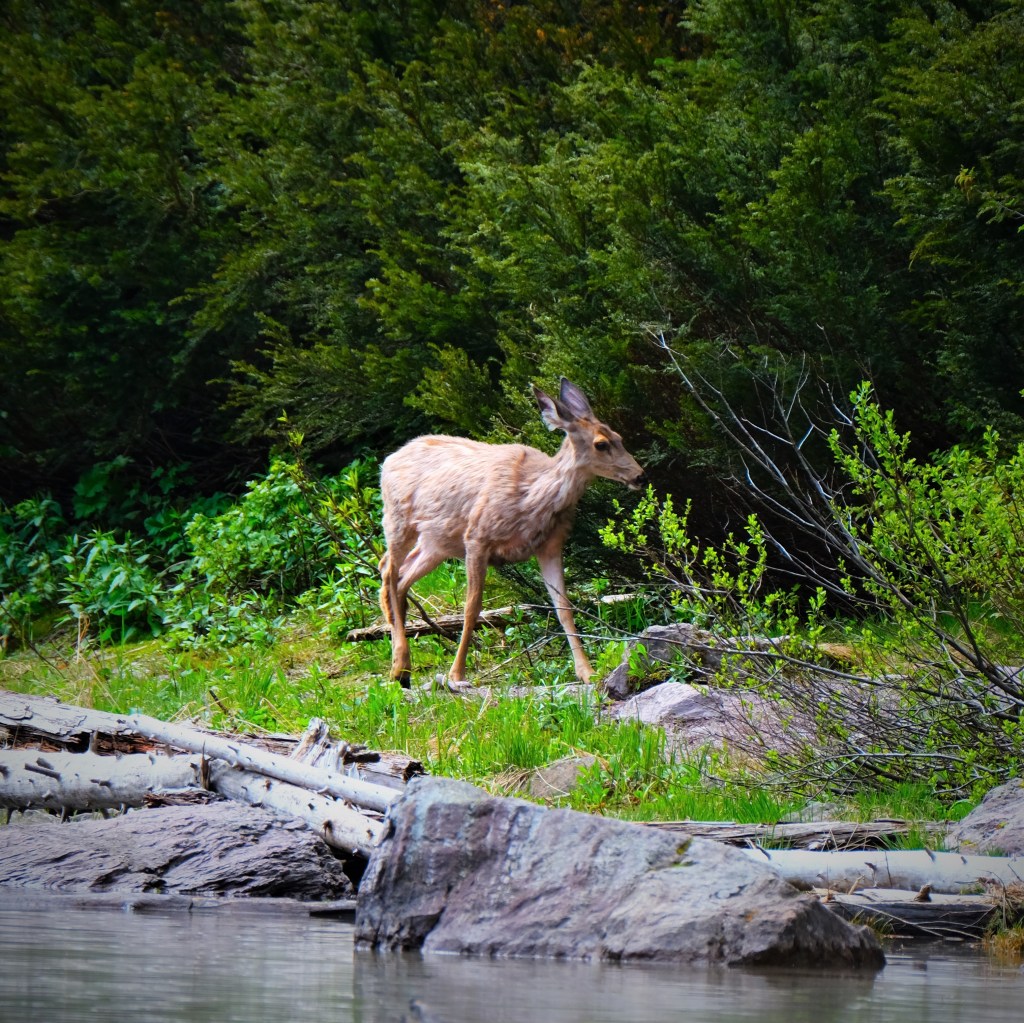
On the far shore was a mule deer (Odocoileus hemionus). We’ve seen them everywhere, even from the train, but this was the first time I had my camera handy.

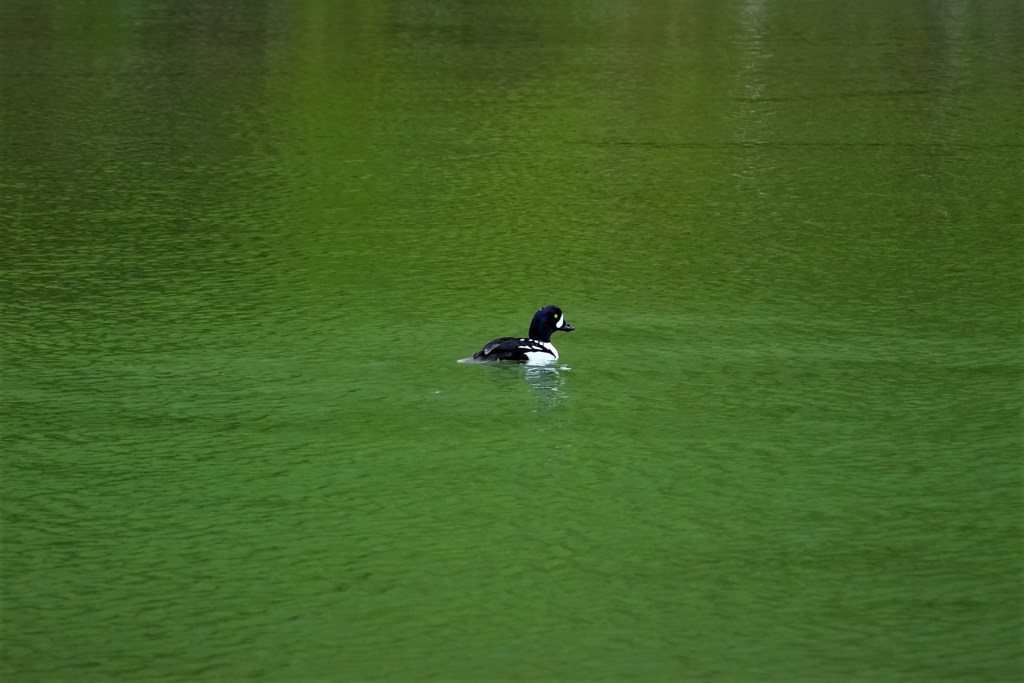
There were also a bunch of common goldeneyes (Bucephala clangula) fishing and flying about.

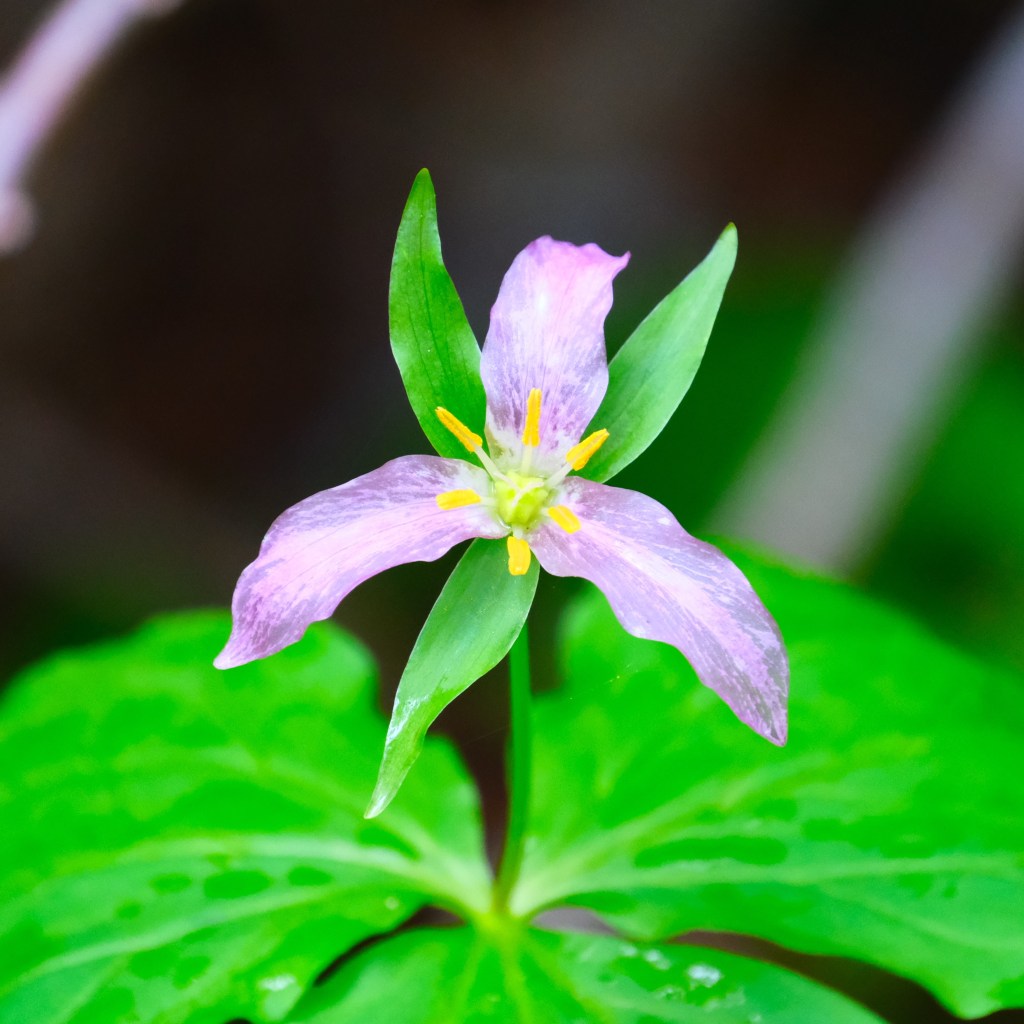
Finally, for you trillium fans, here’s one of the few Pacific trilliums (Trillium ovatum) we saw.

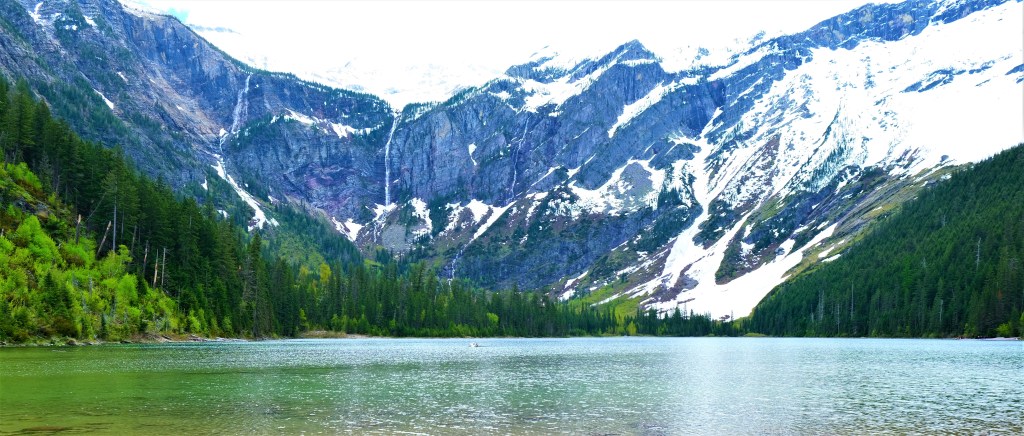
Oh, the scenery was pretty spectacular, too, if you’re into that kind of thing.

Episode 300!

Thanks for coming along for the ride, and check out all the old friends who stopped by in Estabrook this morning to say hi. The parkway is still closed off between the middle and southern parking lot, and that tranquility is still glorious, so enjoy it while it lasts!

Our first guest in a very shy cooper’s hawk who sat for this image none-the-less in one of the little trees by the middle parking lot, and we appreciate it!

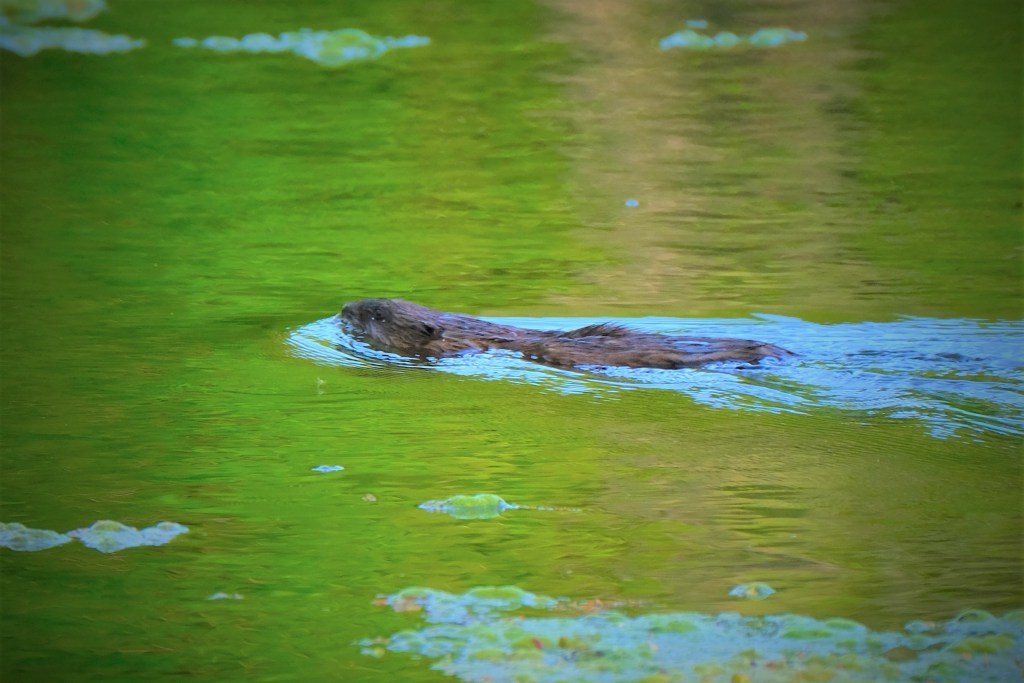
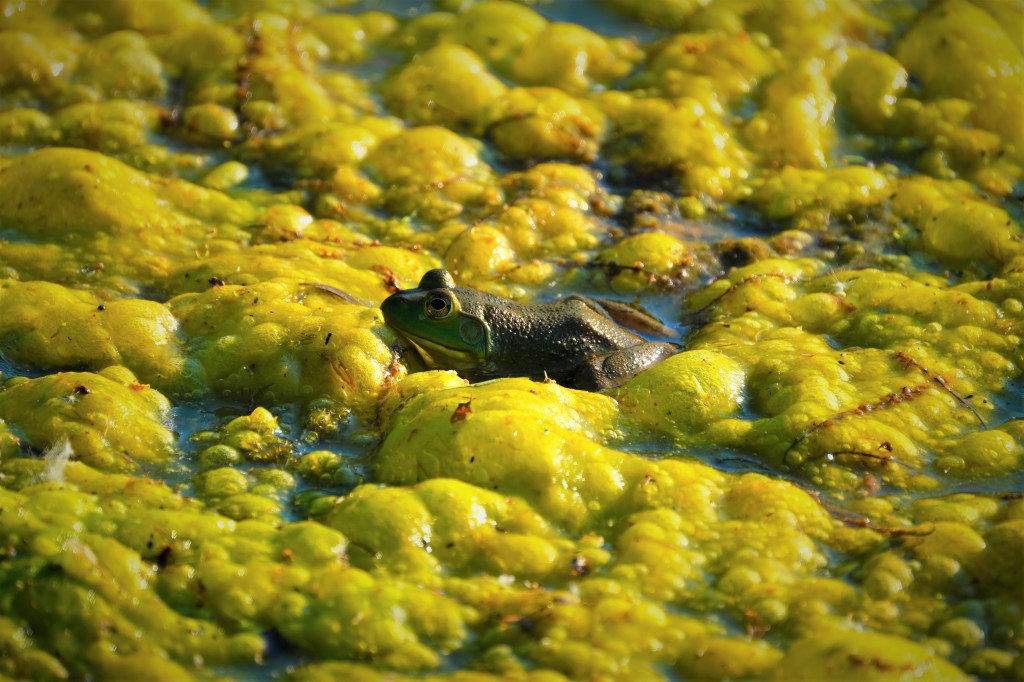
At the pond, a muskrat, whom we haven’t seen there since last summer and haven’t seen at all in weeks, took a swim between the algal mats. Let’s see the beavers do that, eh?
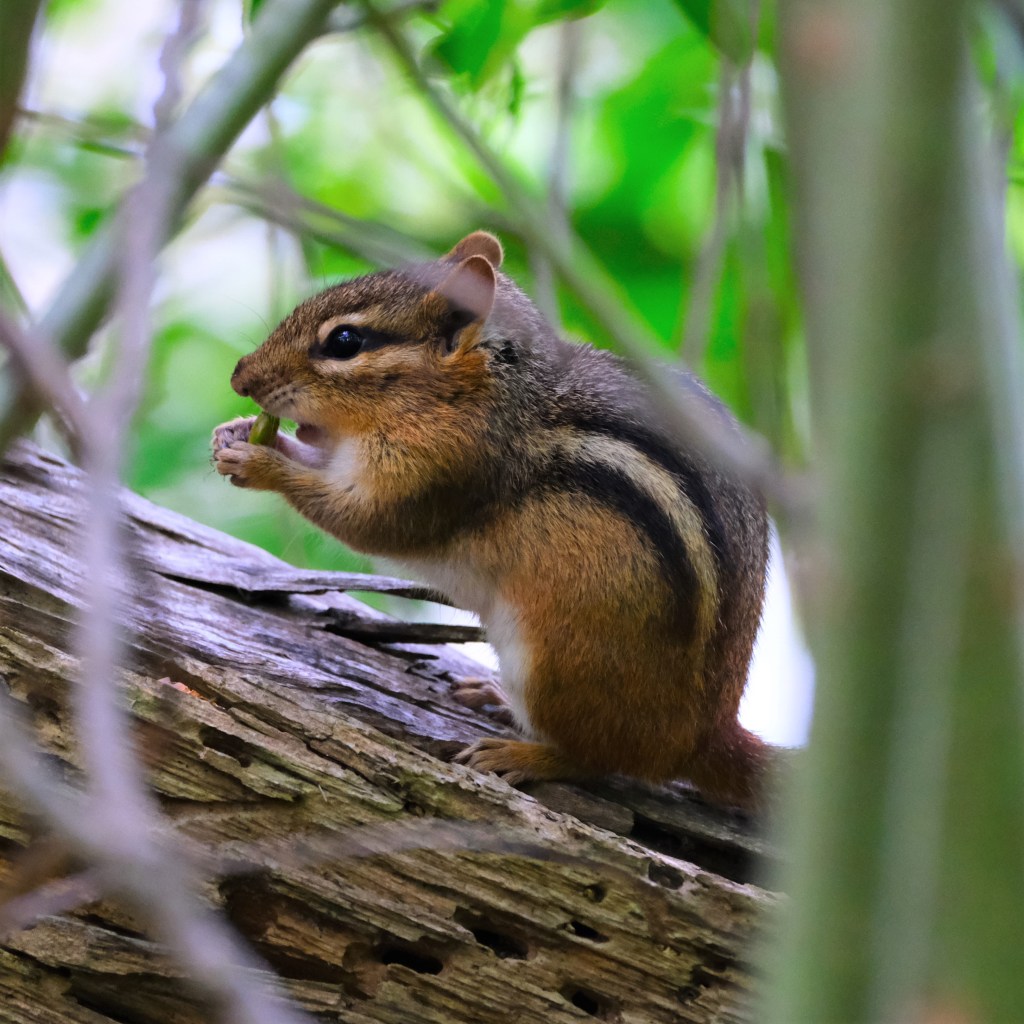
At the river, this little chipmunk must have been too busy munching to worry about me.

On my way to the north end, I walked past that tree in which we saw only tail feathers at the start of May, and look who was there today! Mr. and Mrs. Downy Woodpecker were busy taking turns stuffing it full of grub. It was a much quieter operation than what the Hairys’ run.

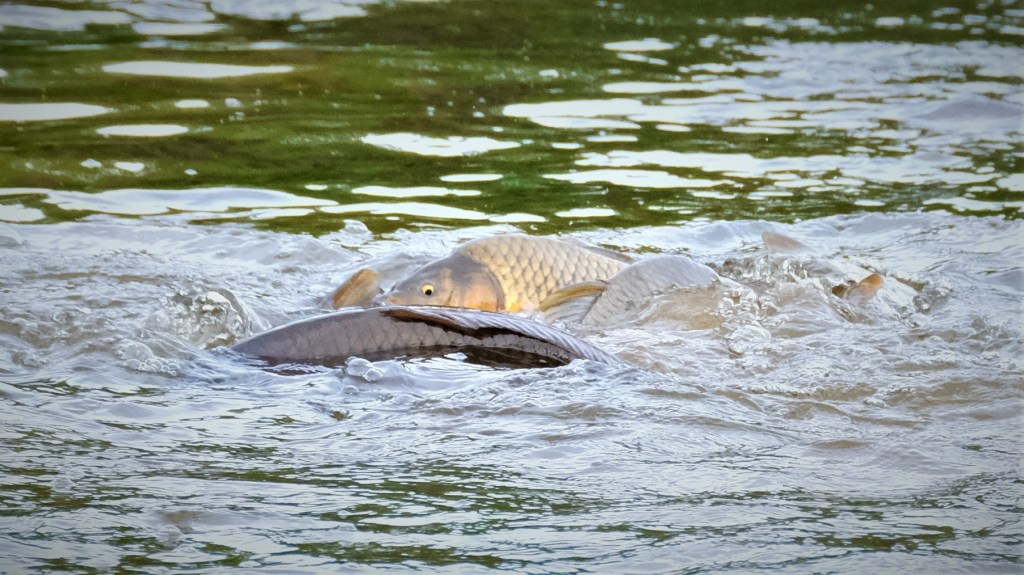
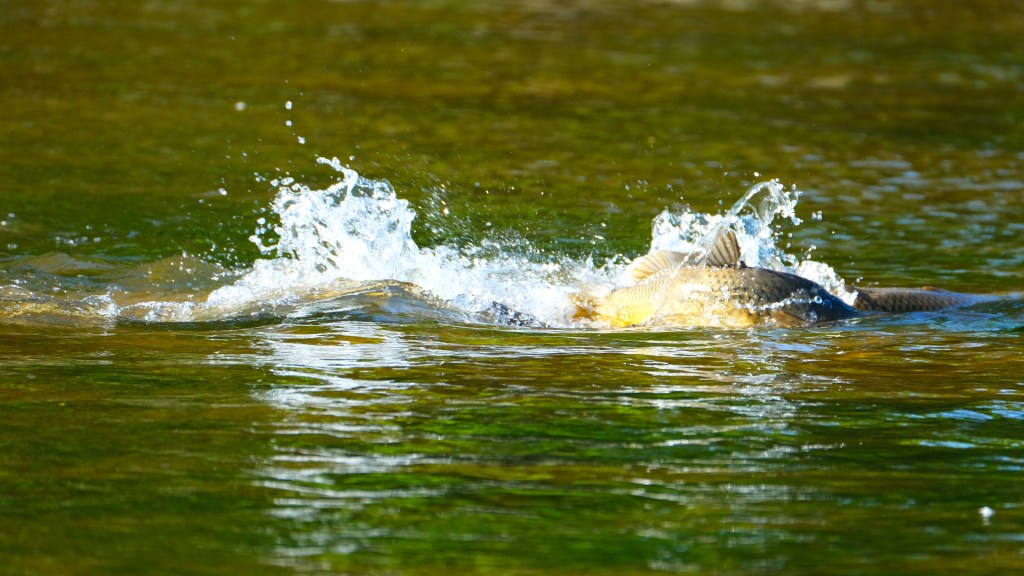
At the north end, the fish were at it again, and two pretty reliable readers pointed out that they are probably carp, not smallmouth bass as I had mistakenly presumed yesterday. Sorry about that, and thanks to those two alert fisher dudes! Anyway, I think you can see their big carpy scales better in today’s picture.

And look who stopped by as I was trying to capture the perfect carp picture! Our ol’ buddy the friendly coot. I had no idea he or she was even still around.

On my way back south, another red squirrel seems to have been disappointed in yesterday’s red squirrel picture, and let me take my time to get it right.

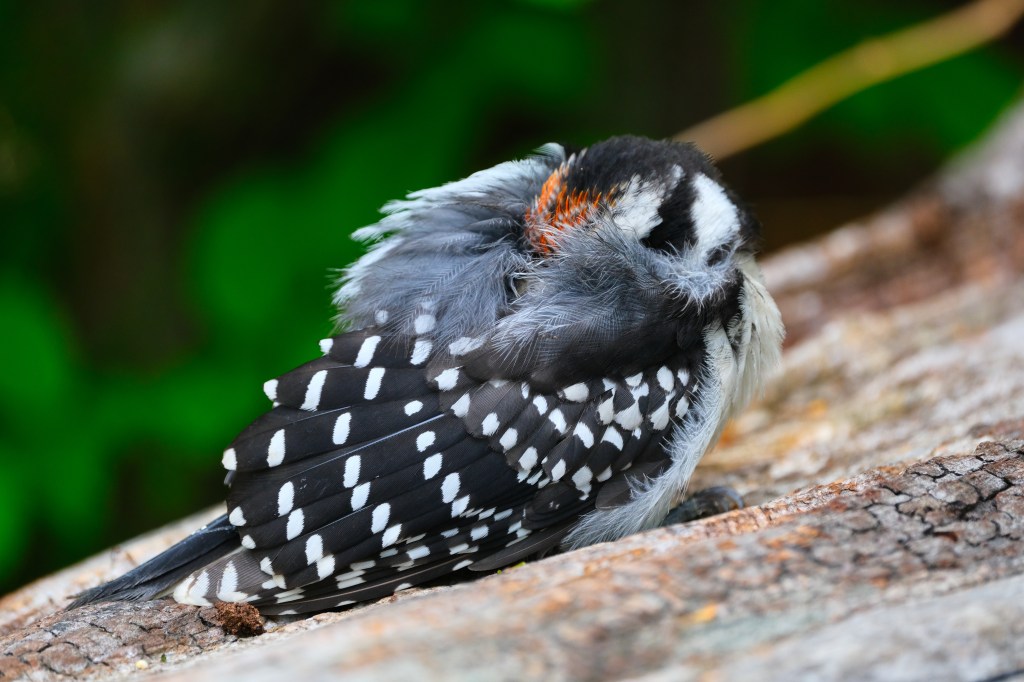
Not far past there, I found another fledgling, this one looking like maybe a male downy or hairy woodpecker, catching some zzzs on a log, and I left him to it. I hope Mom or Dad are keeping tabs on him.

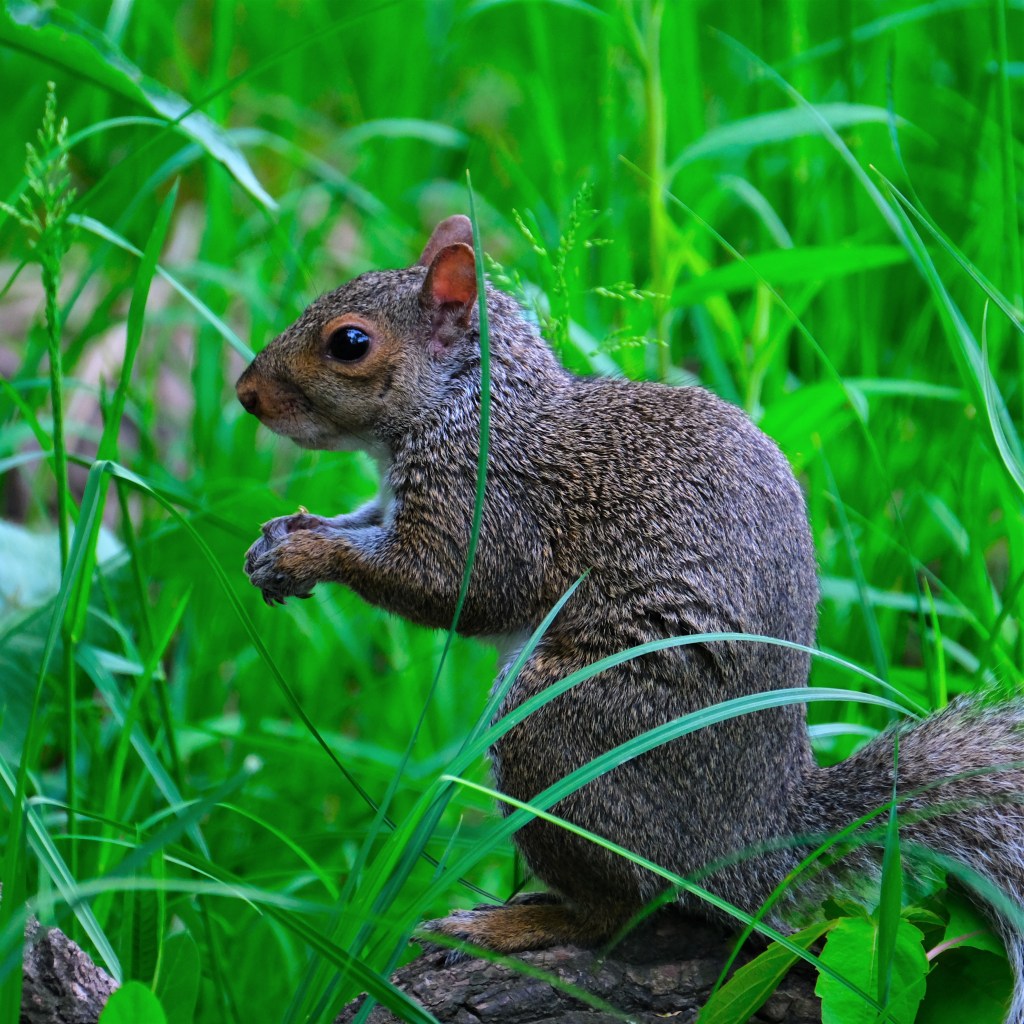
It wasn’t long before I found a grey squirrel wondering what’s up with all the red squirrel picture lately.

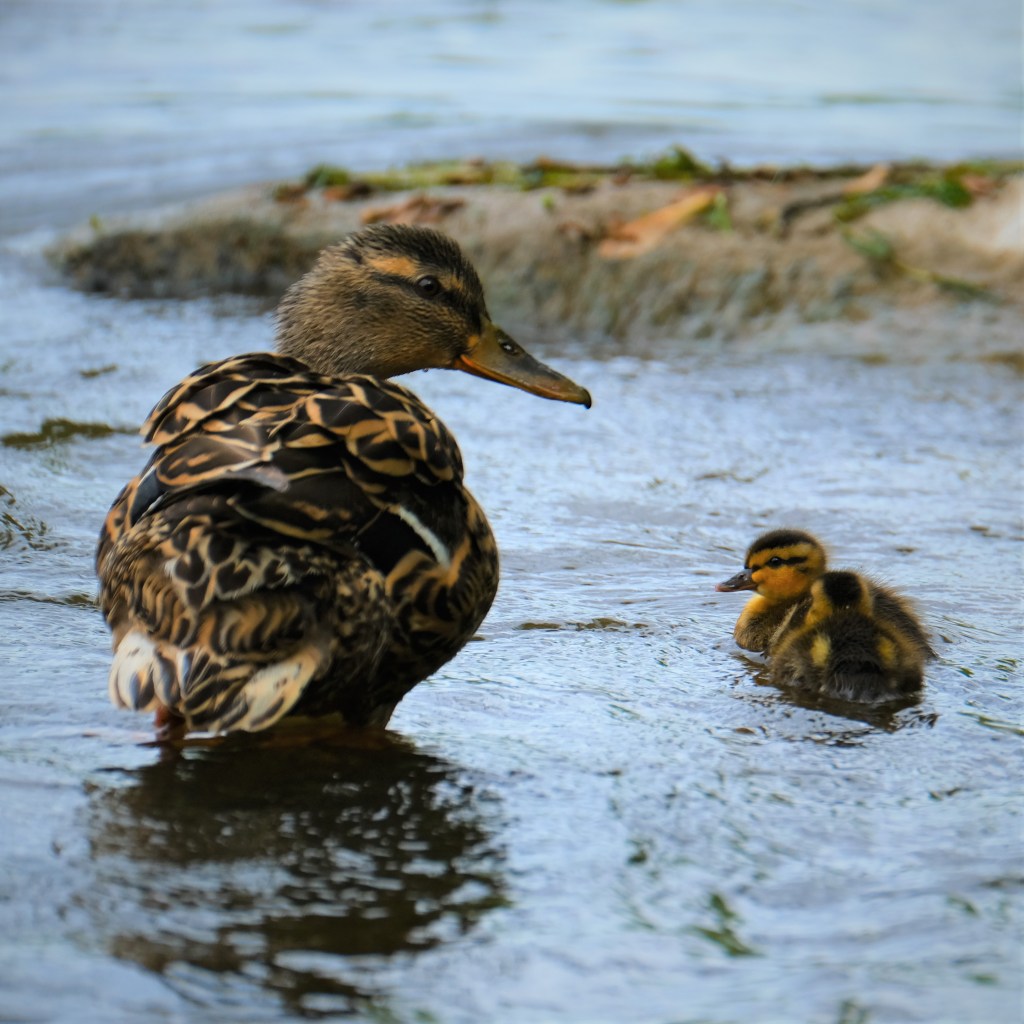
Lastly, almost at the south end, I finally found more mallard ducklings. Just two this time, but we’ll take ’em!

There are some new flowers and mushrooms up, but I think that’s enough for today. Oh, and we should call it our season finale, too, ’cause I’m going on a little vacation. Anne’s been working her fingers to the bone through this pandemic, so once we got vaccinated, she planned a little trip out west, and I’m thrilled to report that she asked me to come along.

Don’t worry. This isn’t a case of the burn-outs like last fall. I’ll be back in a few days, and I’m bringing my camera along anyway. Maybe I’ll find something worth reporting from the field, so watch this space and keep an eye on the place for me while I’m gone.

All kinds of critters about today…

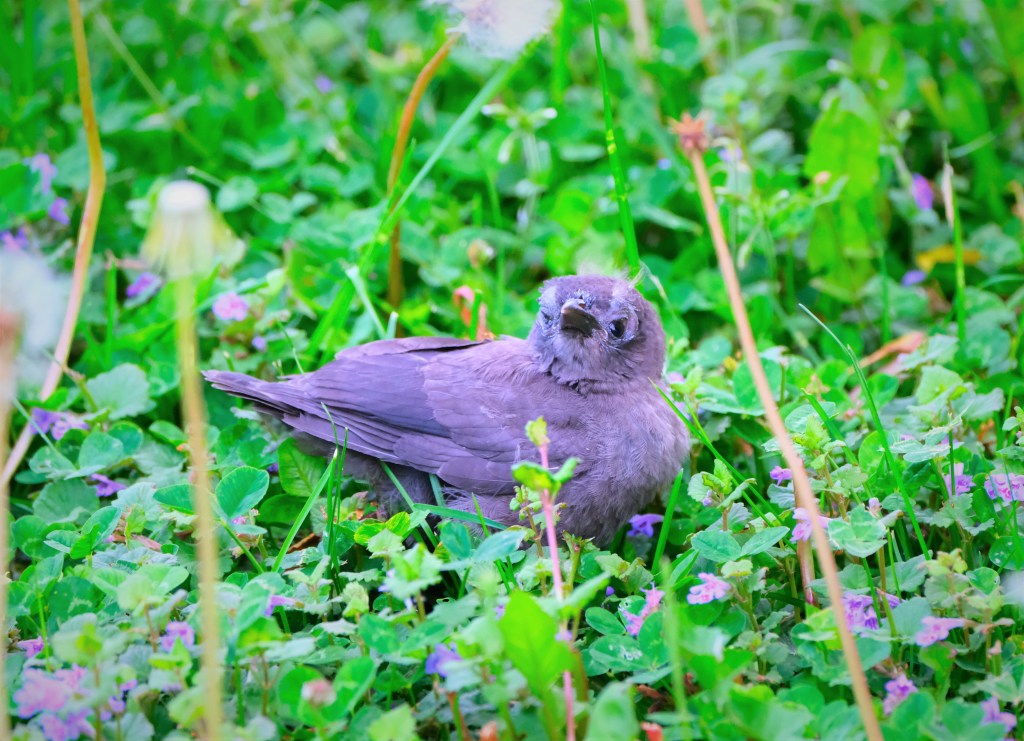
The big news in Estabrook today is that the Parks Department has closed the parkway to through traffic for the summer again as part of the Milwaukee County Active Streets Program, and it is glorious! I walked the length and just enjoyed listening to the birds. As I approached the north end of the closure, I spotted this little guy in the grass beside one of the old fruit trees there. The shades of grey on its head make me think it might be a young grey catbird.

I took that picture, and as I turned to leave it in peace, it flew up and tried to land in or on my camera case! Happily, it was content to perch on my finger instead, and I was able to return it to a branch up in the tree. Best of luck, little buddy.

I didn’t linger, in hopes that Mom would come by, and continued on to the pond, where I bumped into long-time reader, Sheila B, who wondered how I find all this stuff. I head a green heron overhead and spotted three on the wing, but they kept going and so did I.

At the river, as I bent down to pick up a Styrofoam™ cup, I got close enough to the water to notice this spectacle. The shallow water was teeming with tadpoles, and given the date of Toad-a-palooza this year and that toad eggs “can hatch in 2–14 days“, plus their “skinny tails in relation to the size of their black bodies“, I’m gonna guess they are American toad tadpoles. Fantastic!

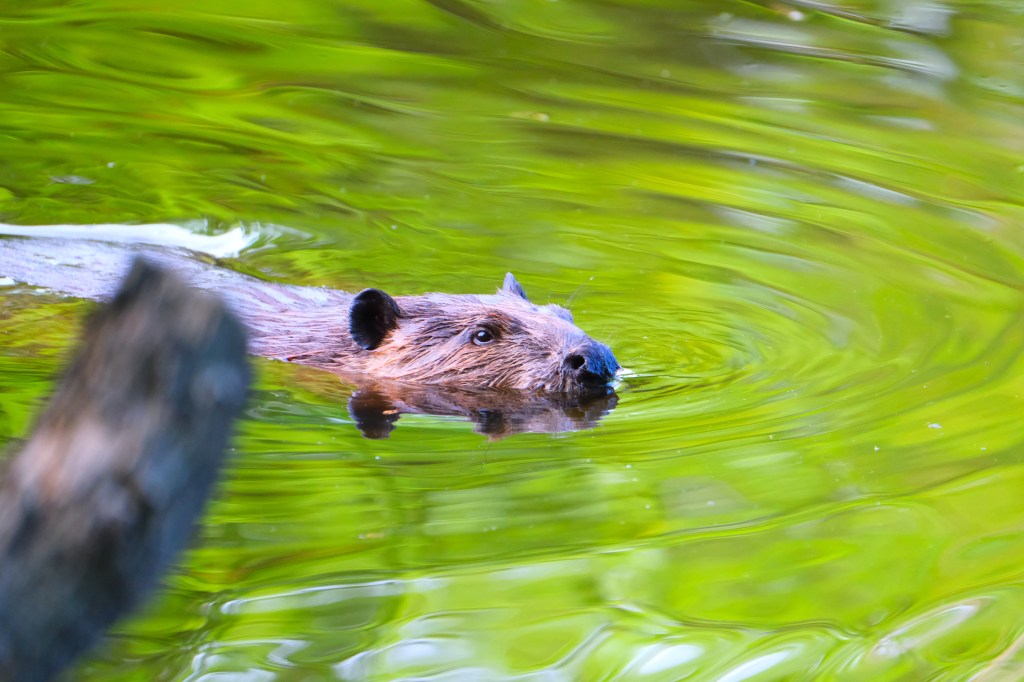
Just a bit north of there, I stepped off the path and bent down to retrieve a Lunchables® wrapper and spotted this guy just floating in the water right by the shore. He or she did swim around just a bit, and slapped the water with their tail once, but they didn’t swim away, and after a few pictures, I backed away and continued my journey.

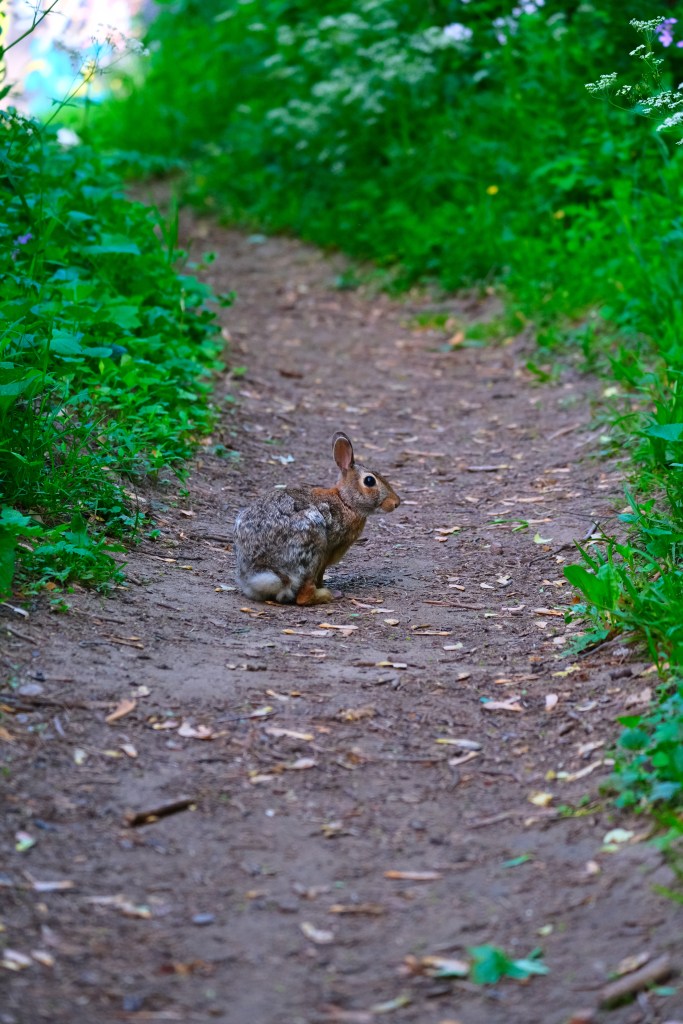
I’d barely taken 10 steps before I saw this little rascal, who didn’t seen to know what to make of me. It slow-hopped up the path a bit and then turned around and came back even closer that it was at the start. It finally ambled onto a side path and let me pass.

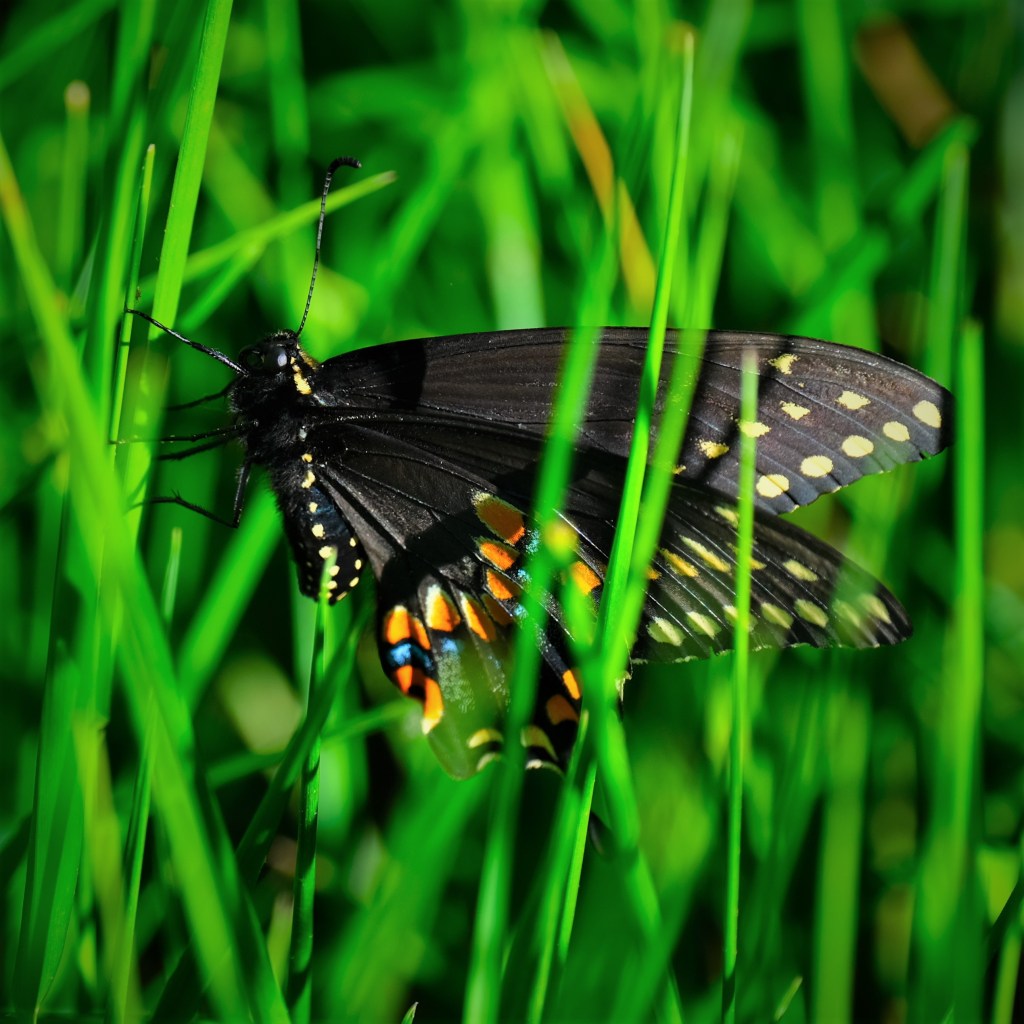
At the far north end, I didn’t see our ducklings, but I did spot our fifth butterfly of the season, this time a beautiful eastern black swallowtail (Papilio polyxenes asterius), fresh out of its overwintering chrysalis and soaking up some morning sun.

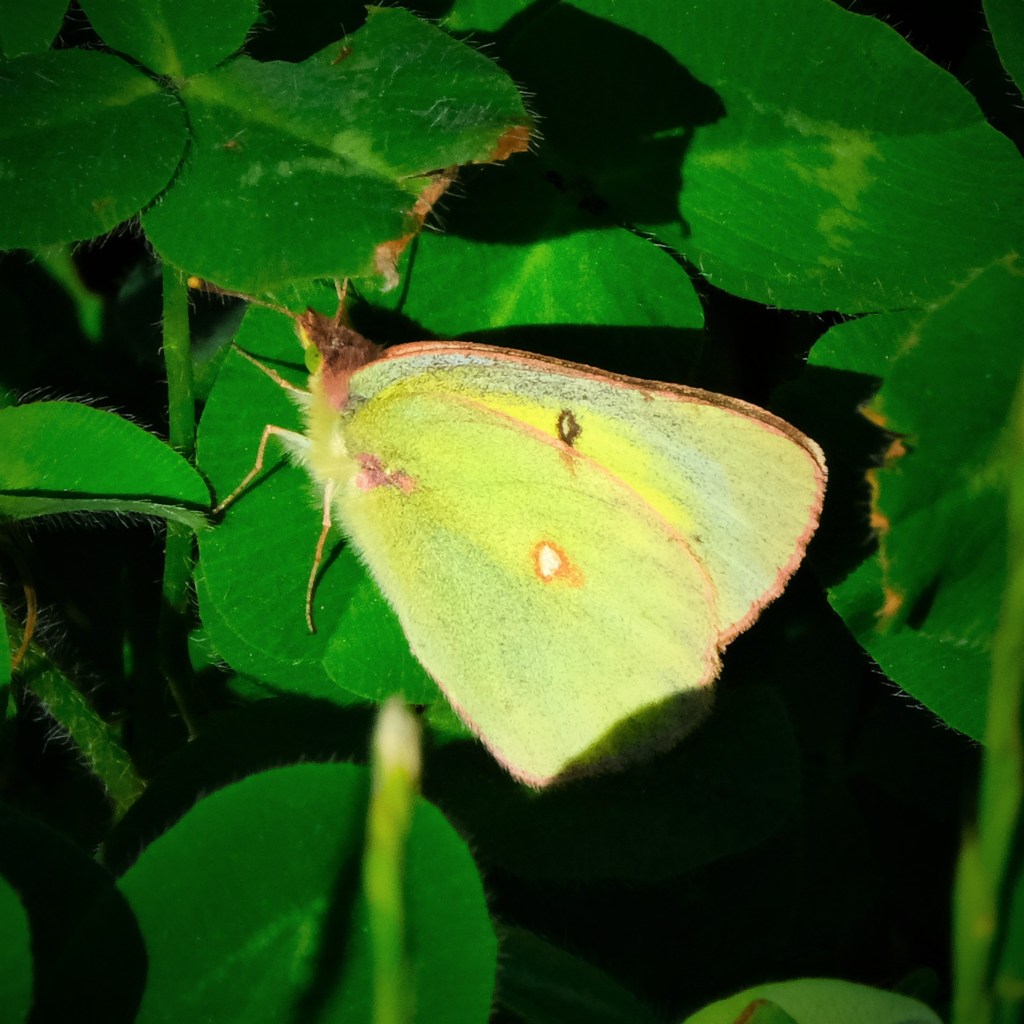
On the clover nearby was this little sulfur, who does have a pretty clear pink edge, so I’m gonna go with pink-edged sulphur (Colias interior).

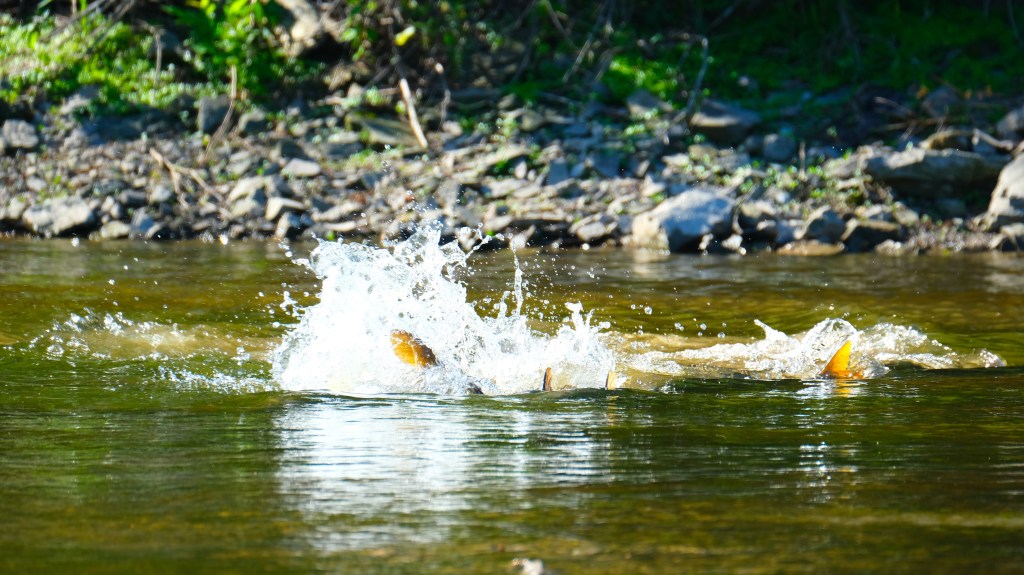
While there, I glanced at the river and was greeted by yet another spectacle in the shallow water between the east shore and the northern island. It went on for a while and even chased away a pair of geese!

If I had to guess, I’d go with “fish spawning in the shallows”, and if you really pressed me, I’d go with smallmouth bass (Micropterus dolomieu), based on this fishing report I found online, but don’t quote me.

On my walk home, a cute little red squirrel posed for this slightly blurry picture through the sticks…

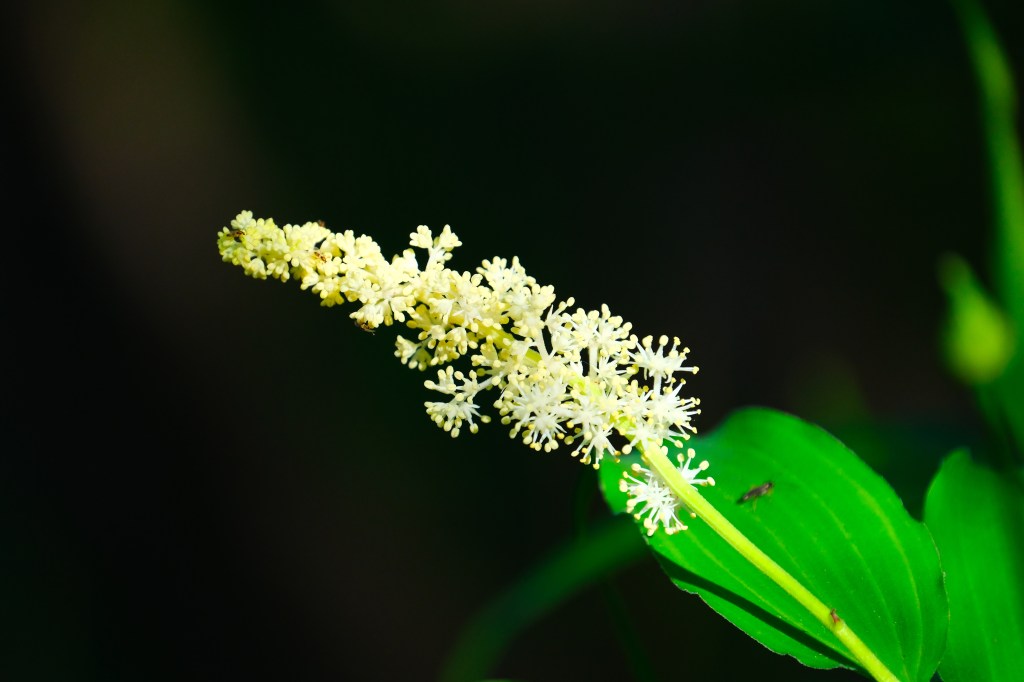
I noticed that the false Solomon’s seal (Maianthemum racemosum) is starting to open…

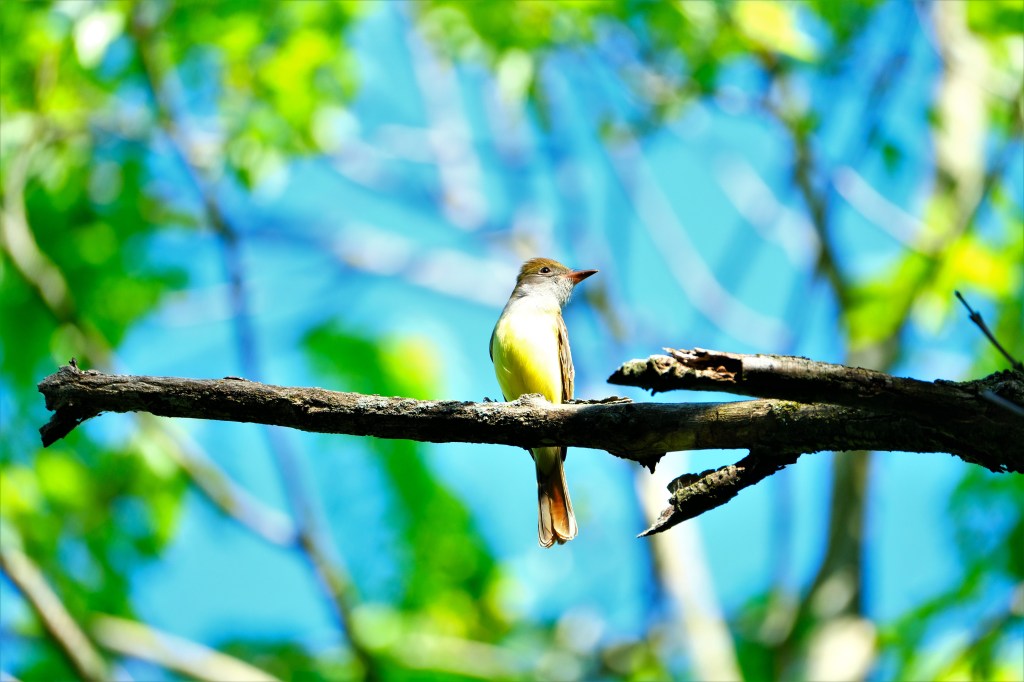
And, finally, this little great crested flycatcher struck a pose that I just couldn’t ignore.