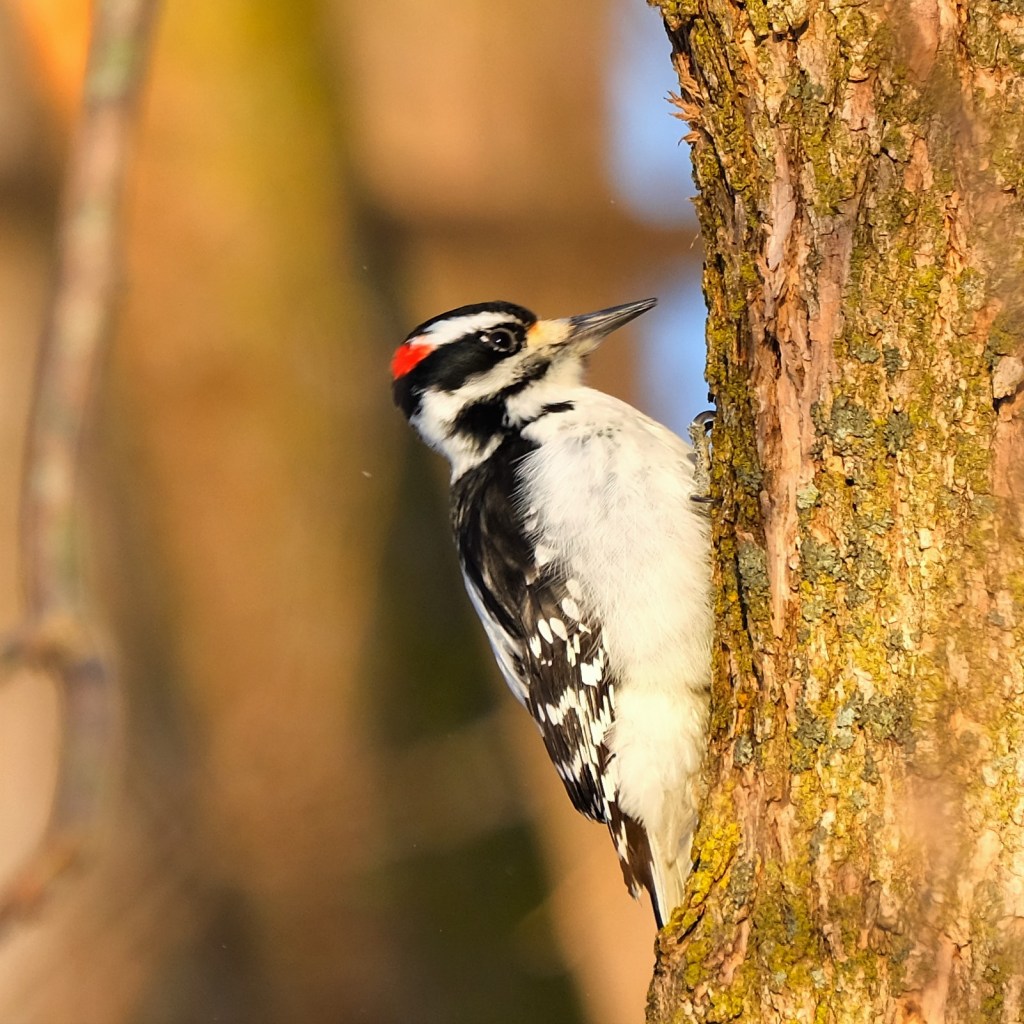
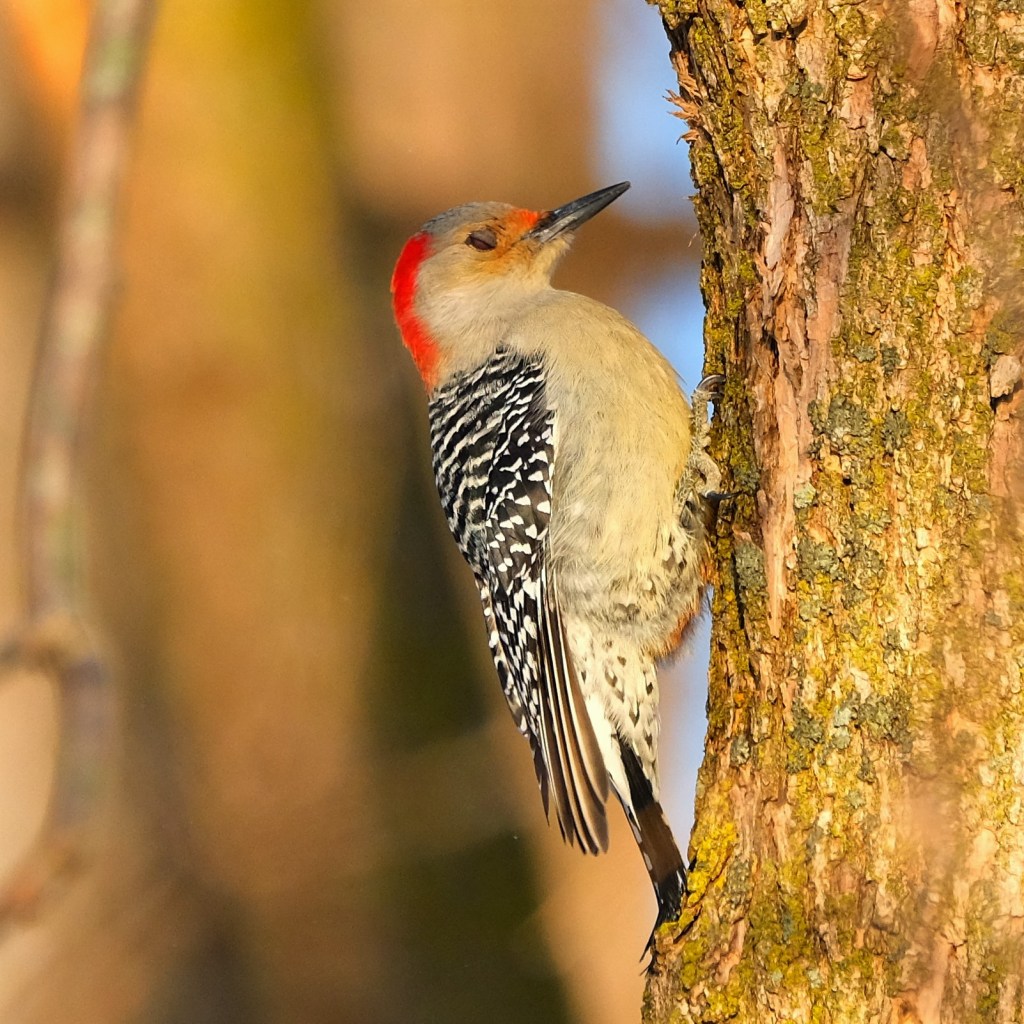
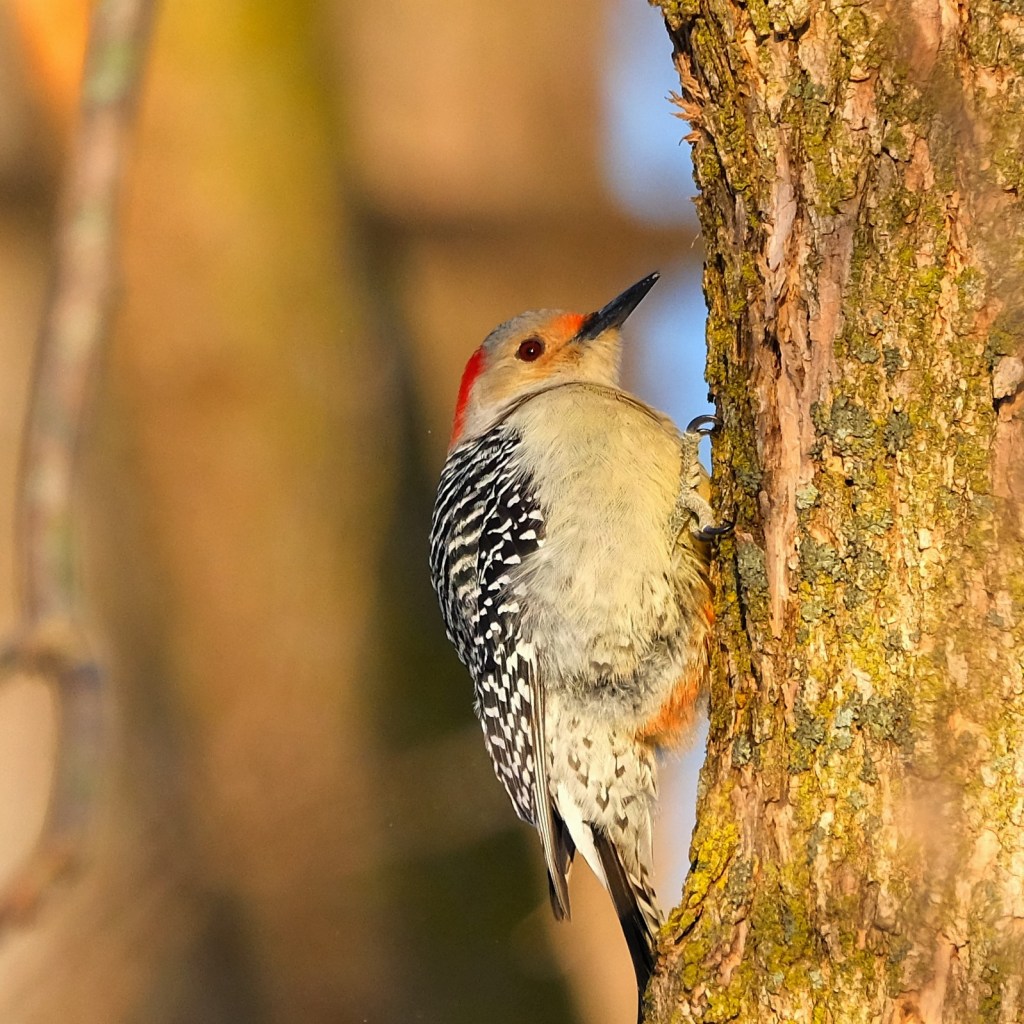
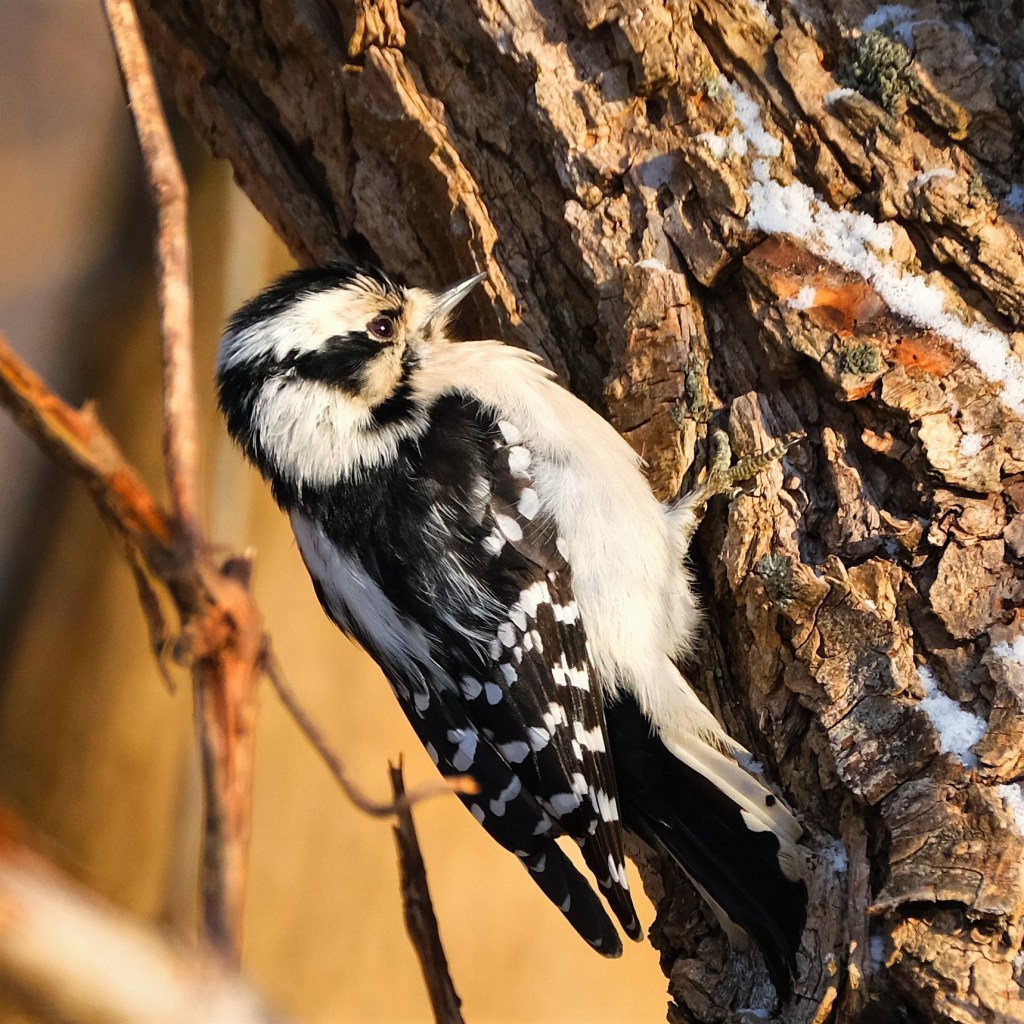
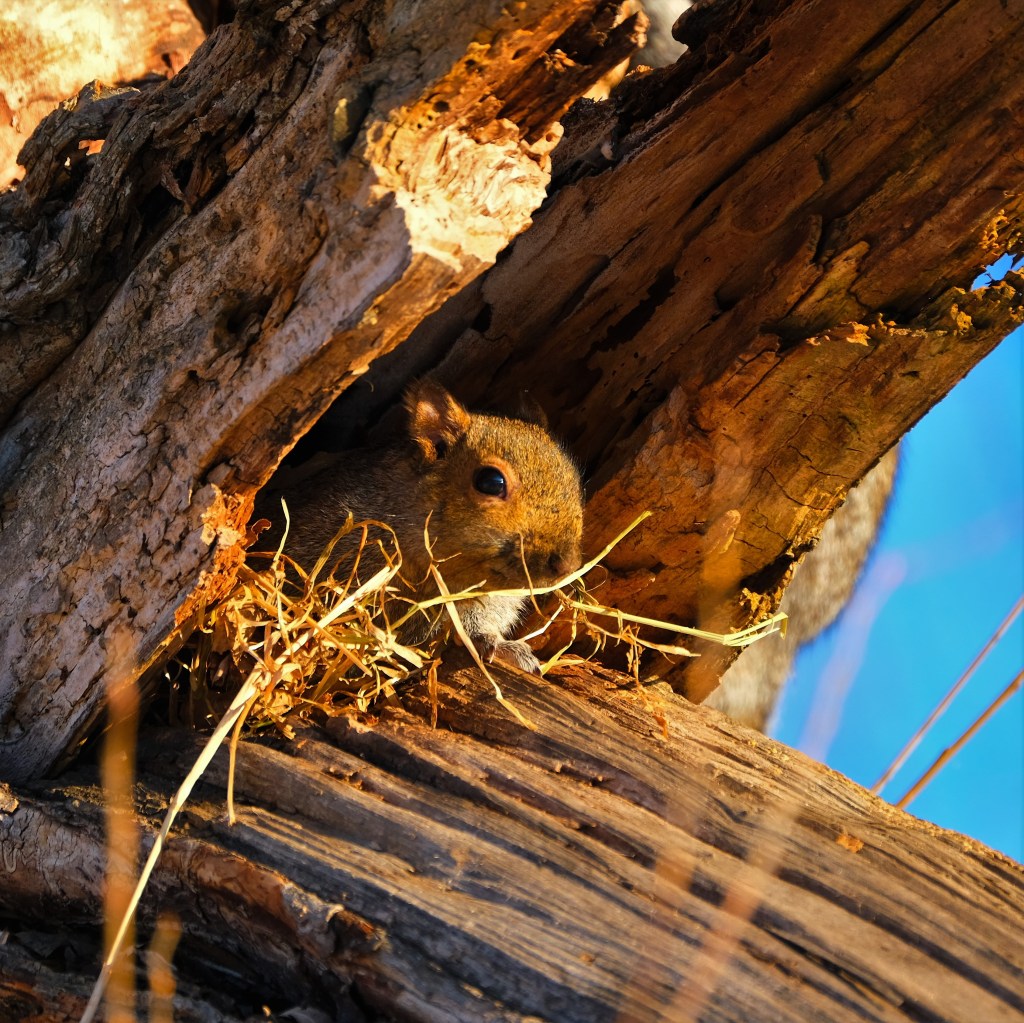
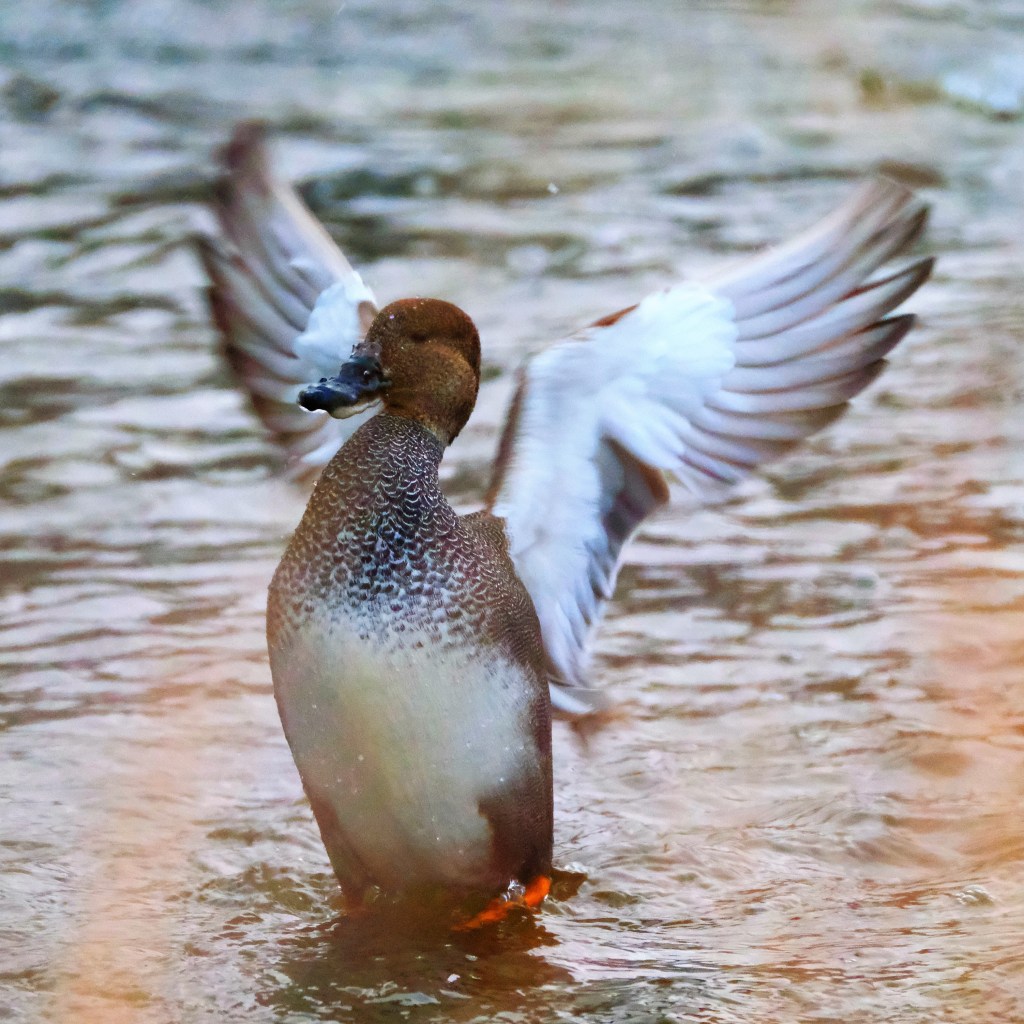
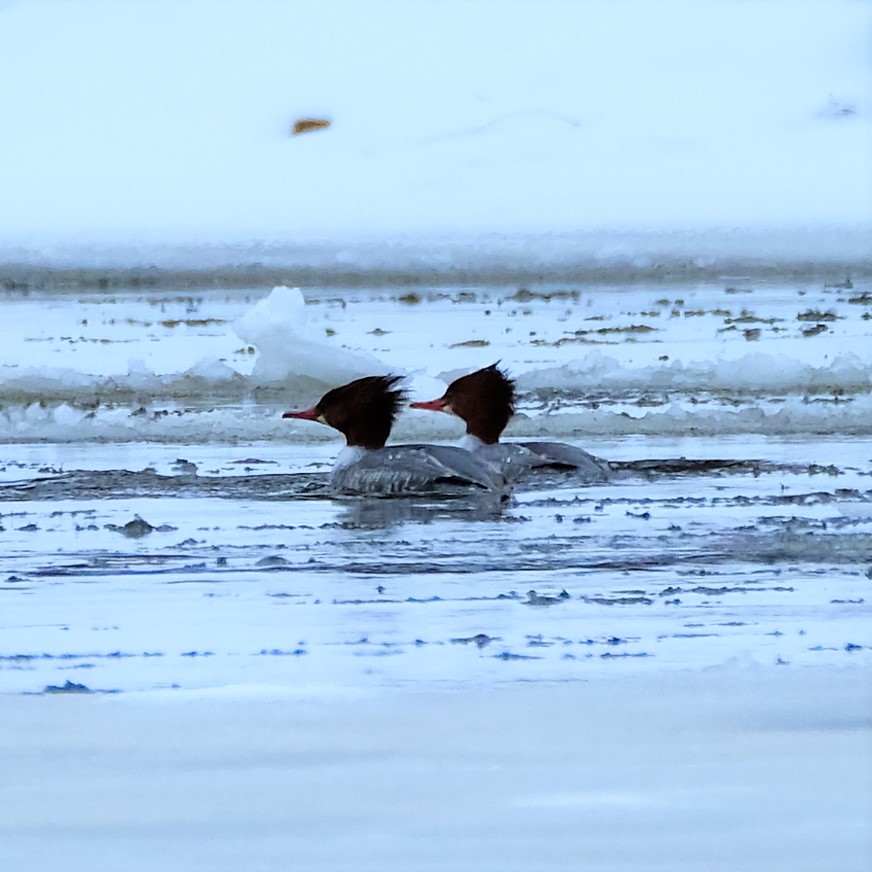
Almost too dark to see.

The park was cool, dark, and full of runners this morning, so there was not a lot to see, but the young night-heron was snoozing again on its favorite branch over the pond.

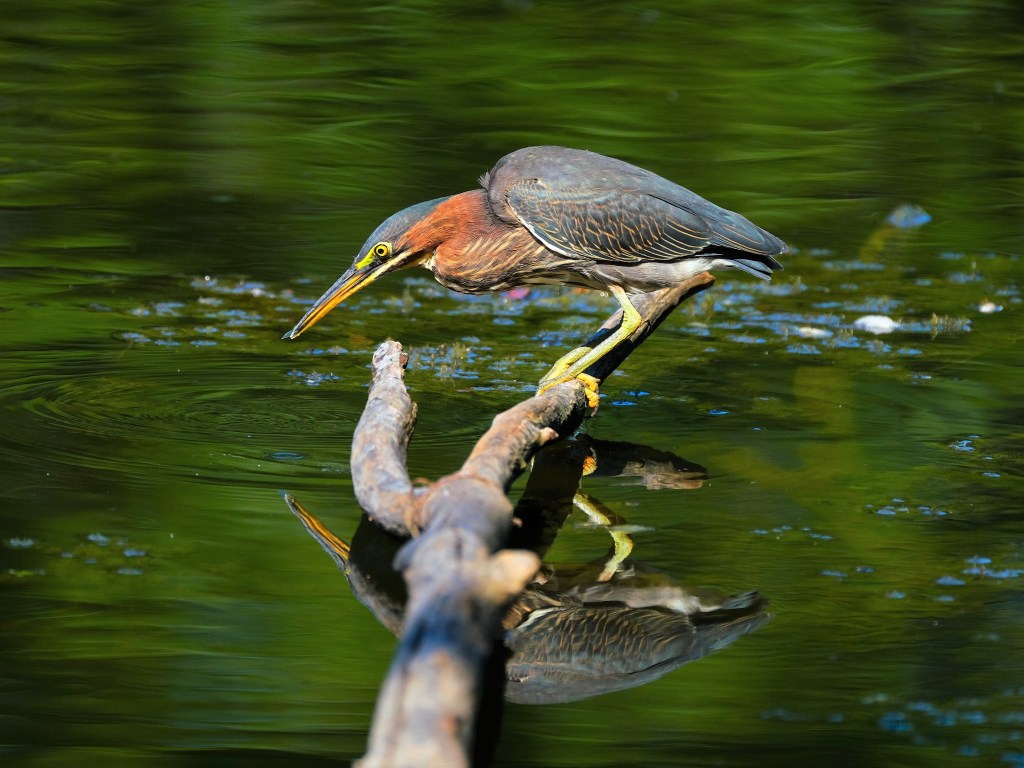
A green heron was trying to fish, but maybe it was having as much trouble with the low-light as I was.

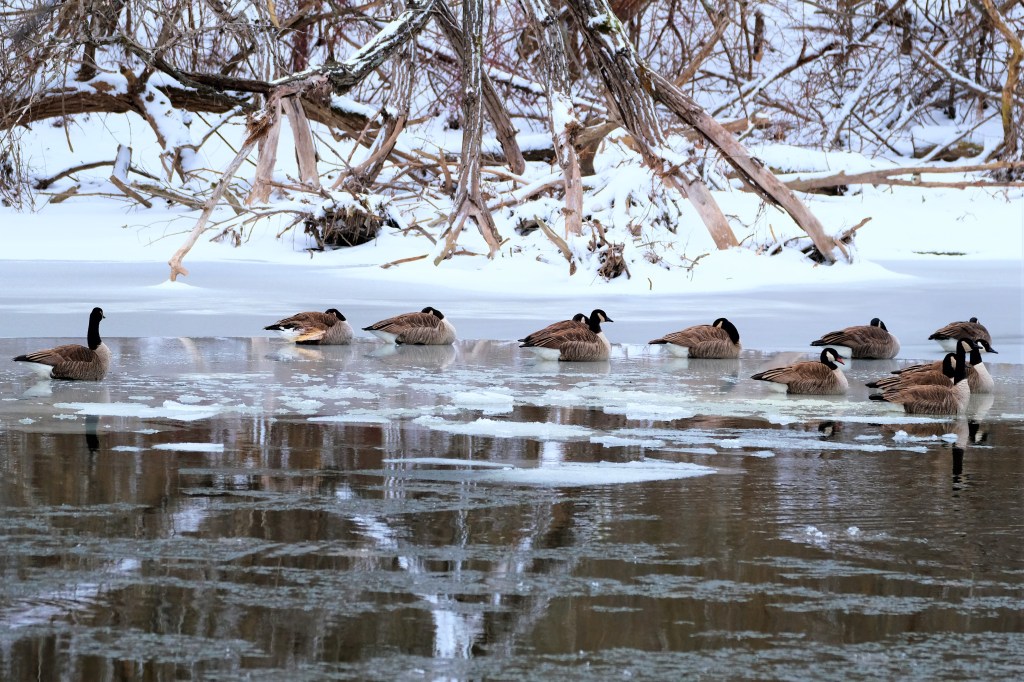
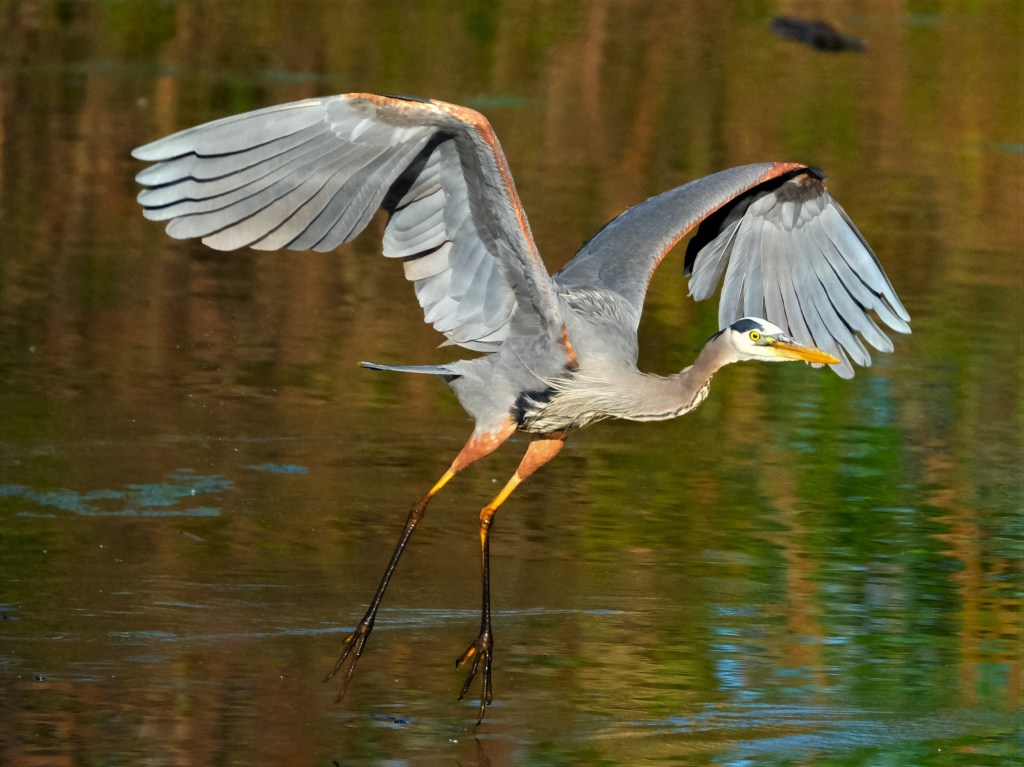
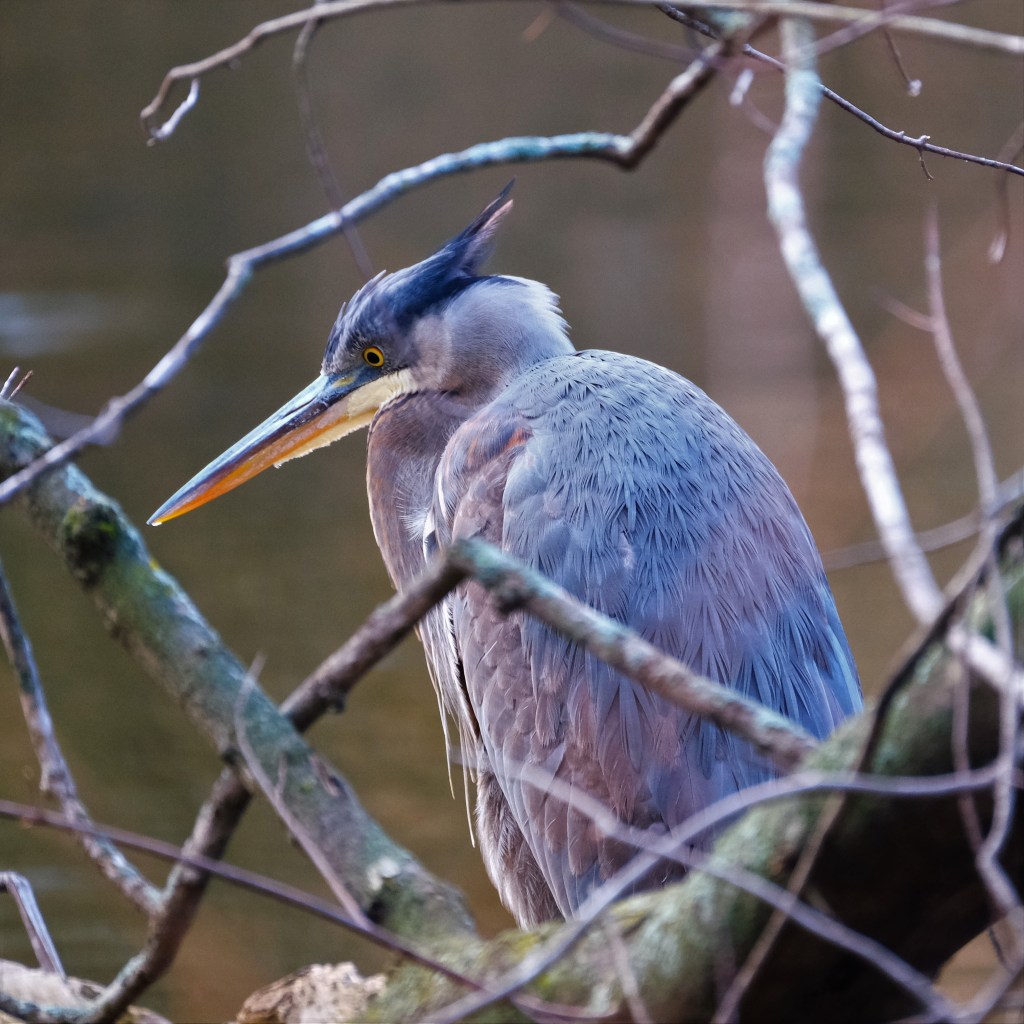
A blue heron was visiting with a bunch of Canada geese on the river.

And that’s about it for the critters, so let’s check out some of the new blossoms in the park. Here are some pretty yellow ones that look like hairy false goldenaster (Heterotheca villosa) growing on the slope from the beer garden down to the river.

Here’s some little light-blue asters also growing along the river, which look like common blue wood aster (Symphyotrichum cordifolium)

Here’s a giant puffball mushroom (Calvatia gigantea) from a week or so ago that never made the cut until today.

And here’s a handsome crop of mushrooms I spotted this morning that looks like turkey tail (Trametes versicolor).

The forecast is for clear skies tomorrow morning, so keep your fingers crossed!

Plenty of regulars and more migrants just passing through.

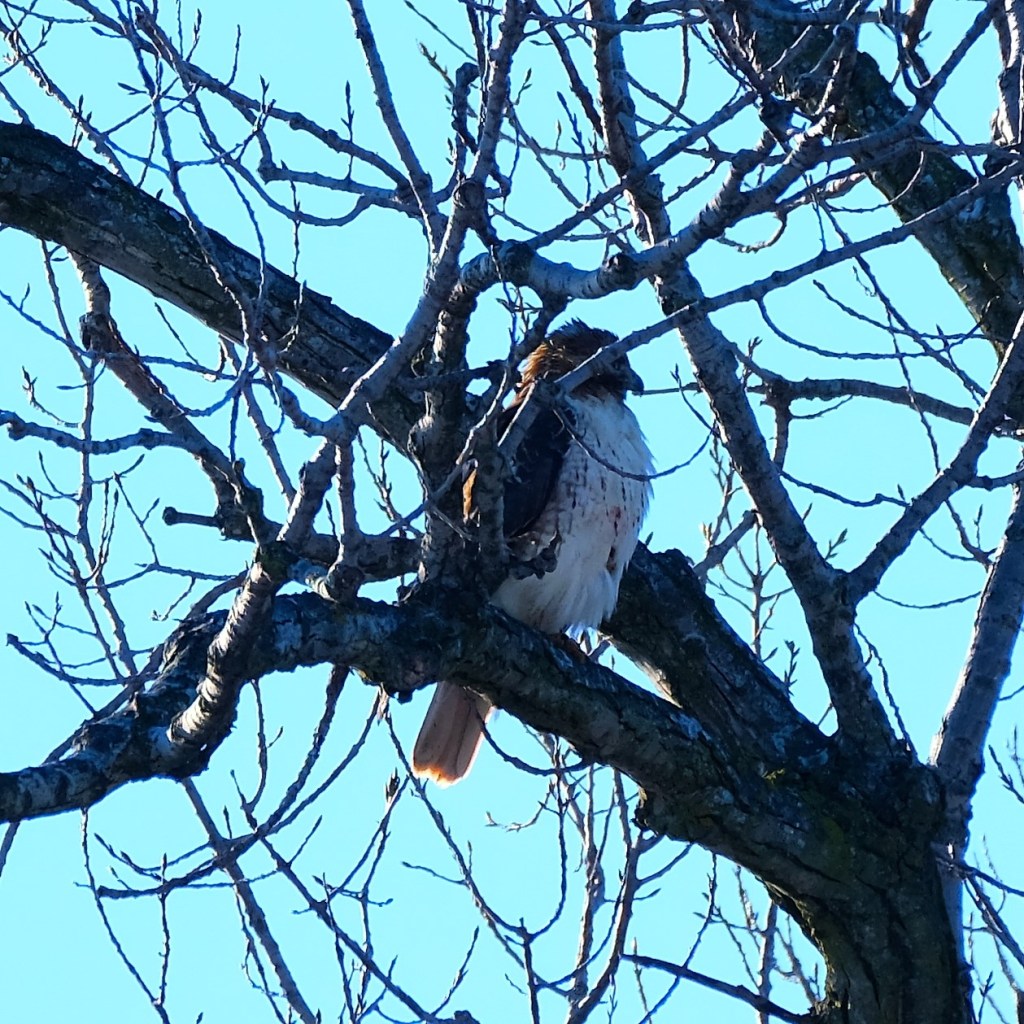
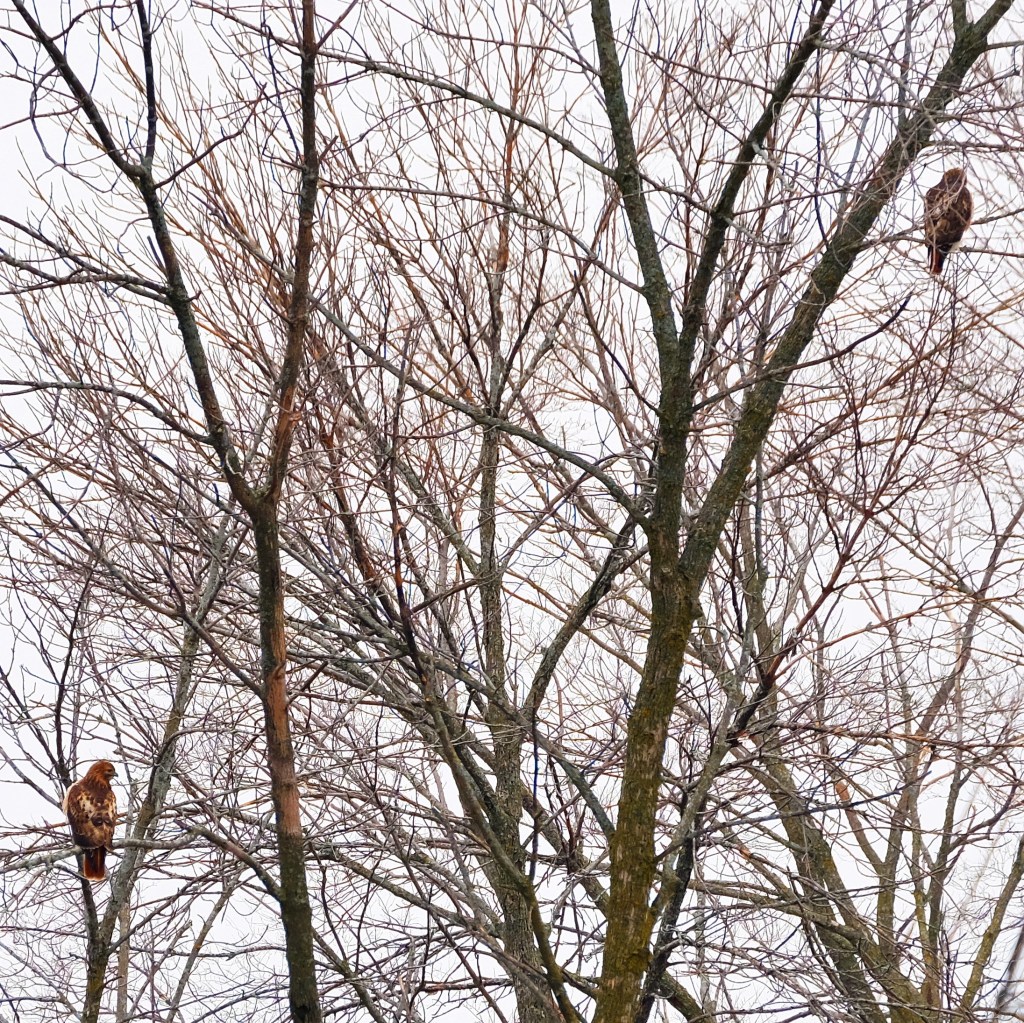
This morning got off to a great start in Estabrook when this red-tailed hawk, a fierce-looking beauty, flew across the soccer fields and perched on a light pole right over the southern parking lot. It stayed for a bit and then when back to hunting.

At the pond, I was happy to see that our young night-heron was back again and looking as sleepy as ever.

As I was standing on the west lawn trying to get a decent picture of the night-heron across the pond, this mallard walked right up to me, probably to see if I had anything to eat. I said, “sorry, Sweetie, I’ve got nothing for you, but can I take your picture?” She said, “sure but make it quick.” Then she waddled back to the water, hopped back in, and resumed foraging.

As I continued around the north end of the pond, I spotted this green heron enjoying a bit of luck.

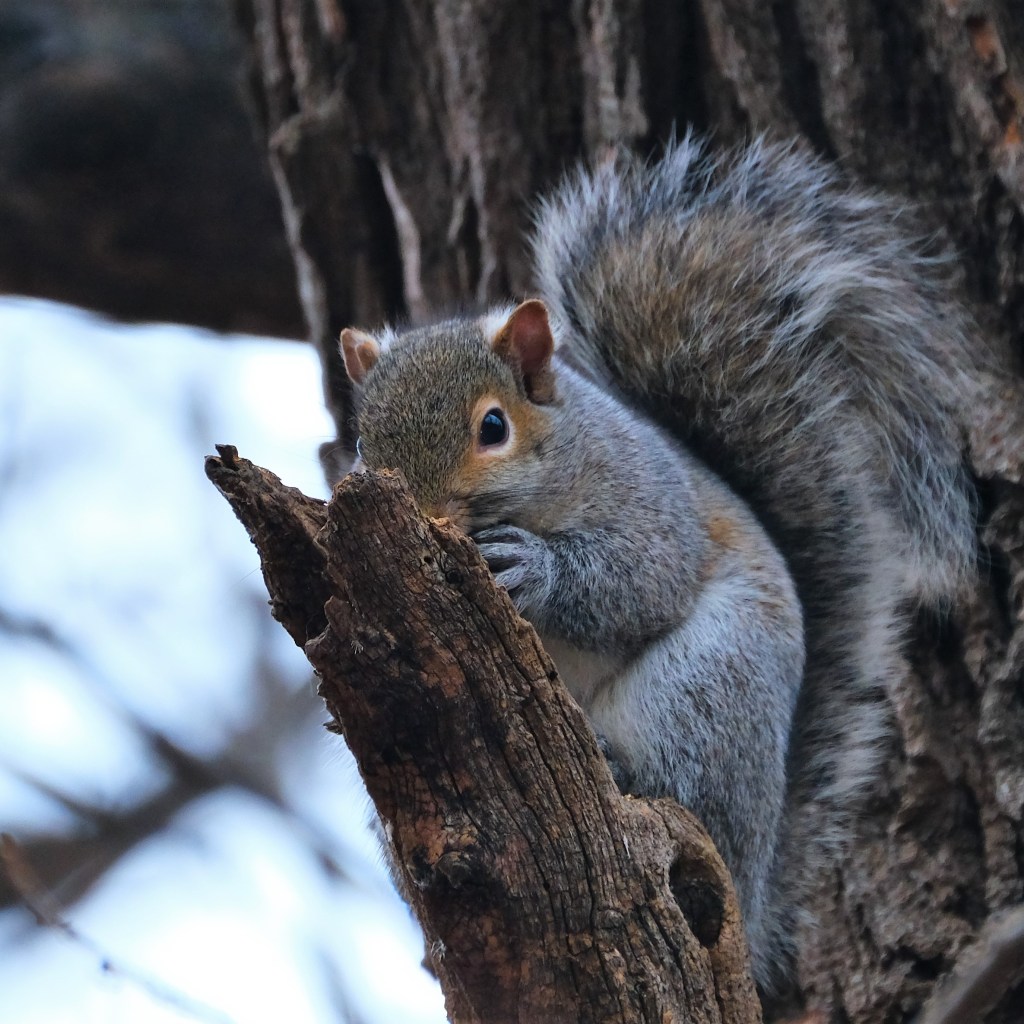
Just beyond the heron, this squirrel was back to munching on nuts on a branch above the little bridge in the path.

The Pedia of Wik reports that “squirrels sometimes use deceptive behavior to prevent other animals from retrieving cached food. They will pretend to bury the object if they feel that they are being watched. They do this by preparing the spot as usual, for instance, digging a hole or widening a crack, miming the placement of the food, while actually concealing it in their mouths, and then covering up the “cache” as if they had deposited the object. They also hide behind vegetation while burying food or hide it high up in trees (if their rival is not arboreal). Such a complex repertoire suggests that the behaviors are not innate and imply theory of mind thinking.” They sound as crafty as they look cute. Who knew?

Anyway, besides three wood ducks, that’s all I saw at the pond, so I headed for the river, and on the way I spotted this dashing little devil sporting a prominent “vest” on its chest, which makes it an olive-sided flycatcher (Contopus cooperi) instead of the similarly colored eastern wood-pewee, which does not “have as strong of a vested look” and which I believe we saw last fall. Anyway, we’re just south of its summer breeding grounds, so this one is probably on its way back to South America for the winter. Safe travels, little buddy!

As I was trying to get a shot of the flycatcher, look who else was busily hopping around in that same tree. As best as I can tell, she’s a female American redstart (Setophaga ruticilla), but I’m not positive. If anyone has a better suggestion, please be sure to let me know! We’re solidly in her breeding grounds, but she winters over in Central America and points south, so if she really is a redstart, she’s got a ways to go, too.

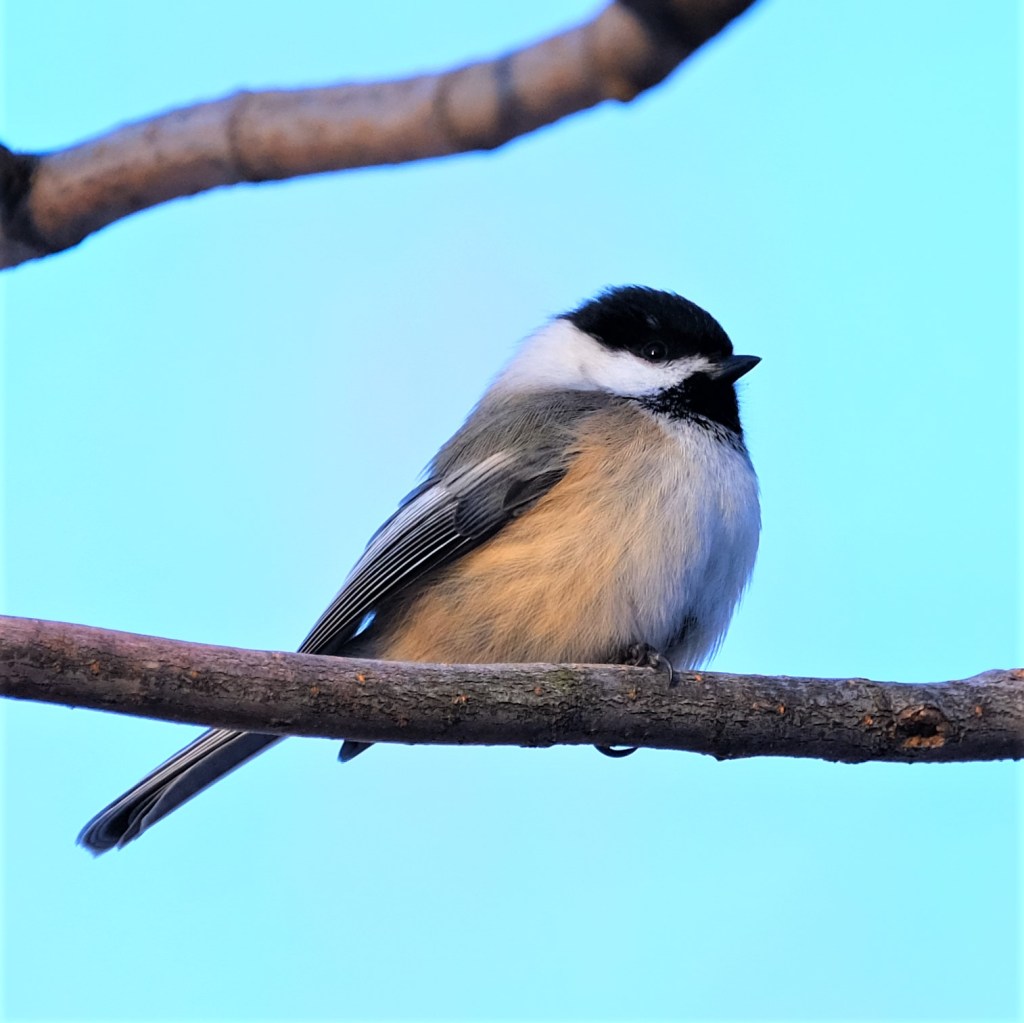
When I finally reached the river, I didn’t find anything new to show you, so I headed back south, and along the way I encountered a little troupe of chickadees practicing their acrobatics on some cutleaf coneflower (Rudbeckia laciniata), which is yet another aster.

Finally, at the soccer fields, I found a monarch with a taste for goldenrod at last.

Welcome to September!

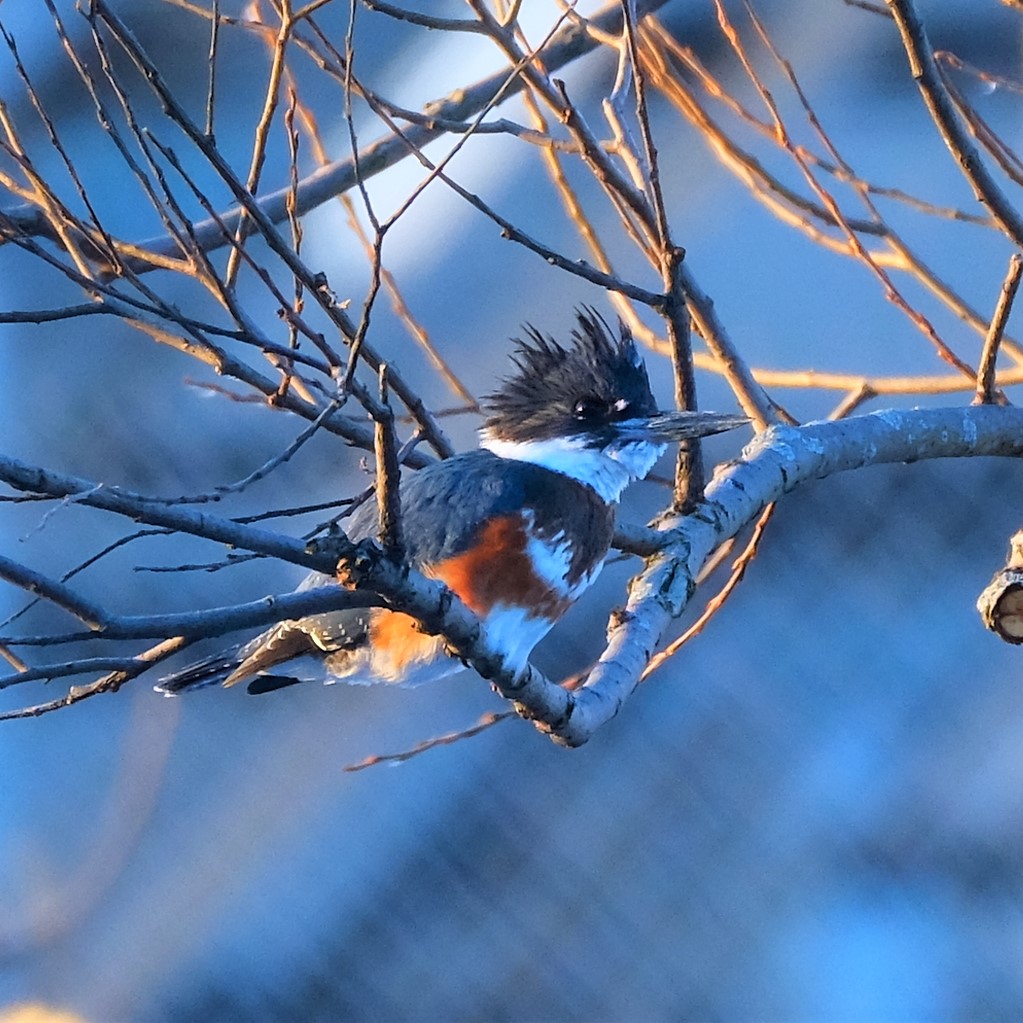
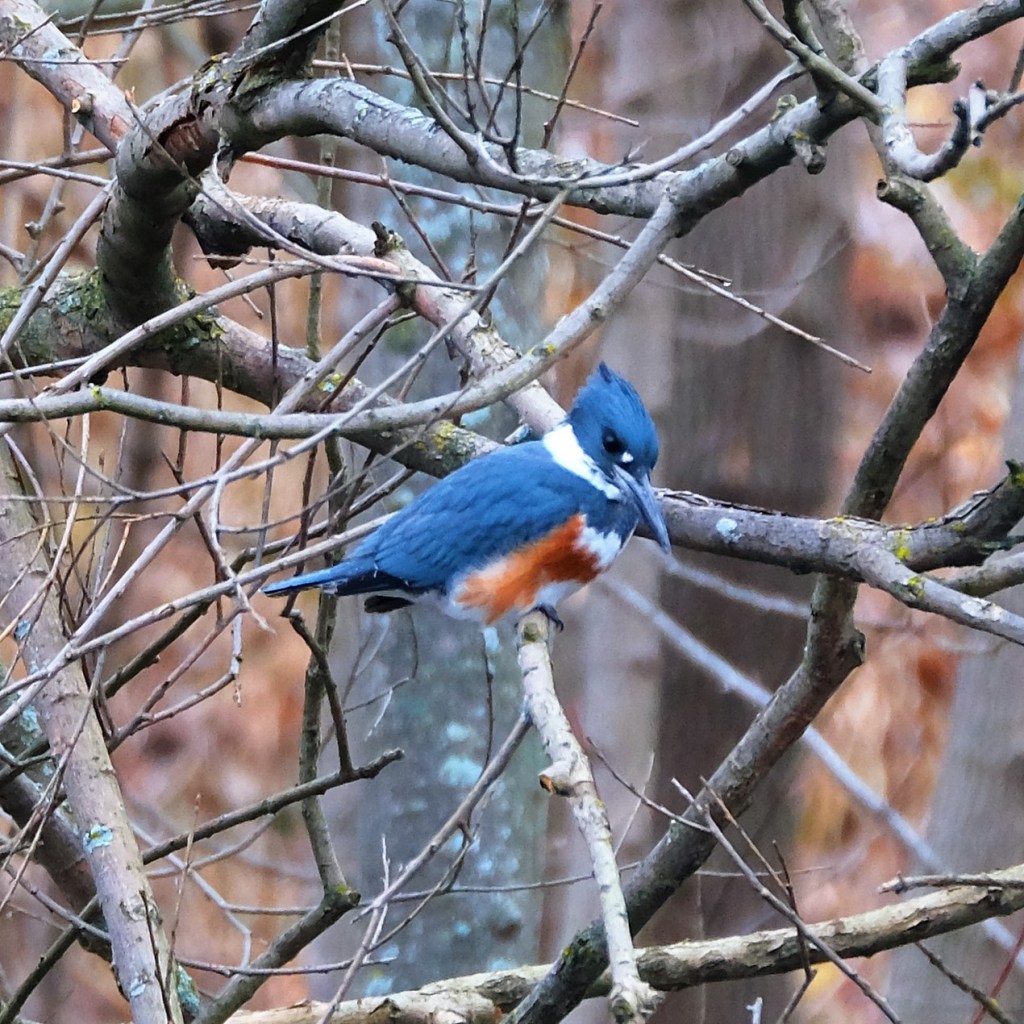
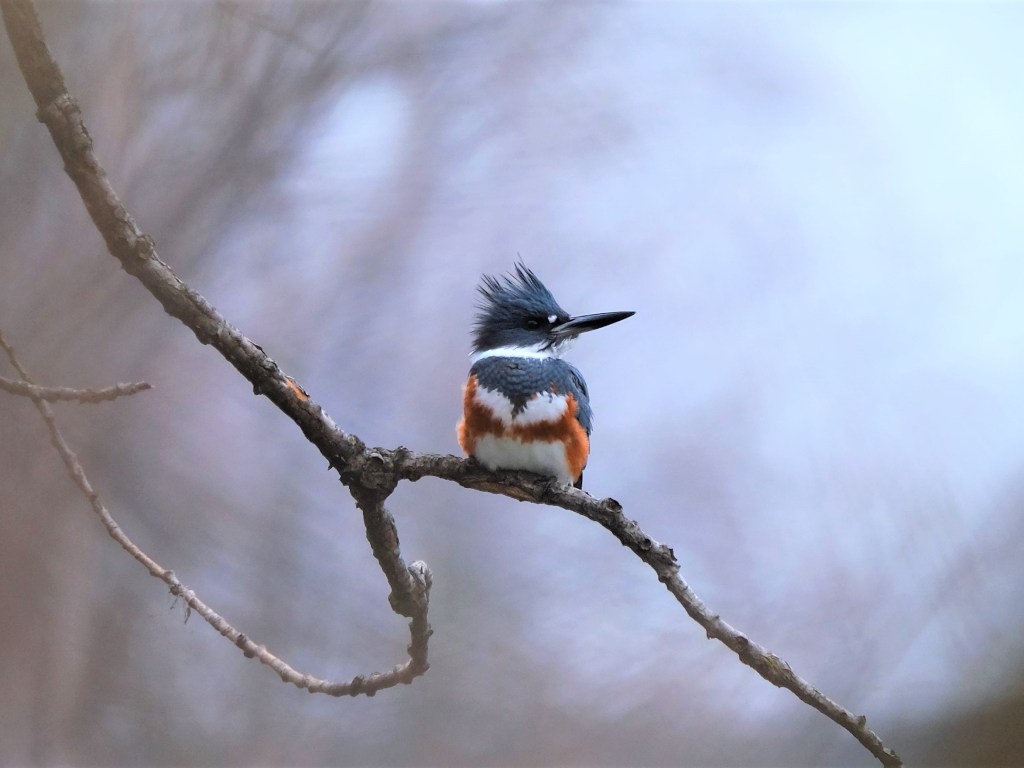
September opened this morning with nice cool air and patches of blue sky in Estabrook. Things were quiet on the pond, as has been the norm these days, with a few mallards, wood ducks, and just one green heron who wished not to be photographed this time. There was no sign of the young night heron that I could see, but a belted kingfisher did stop for a second on a branch where I could see her for a change.

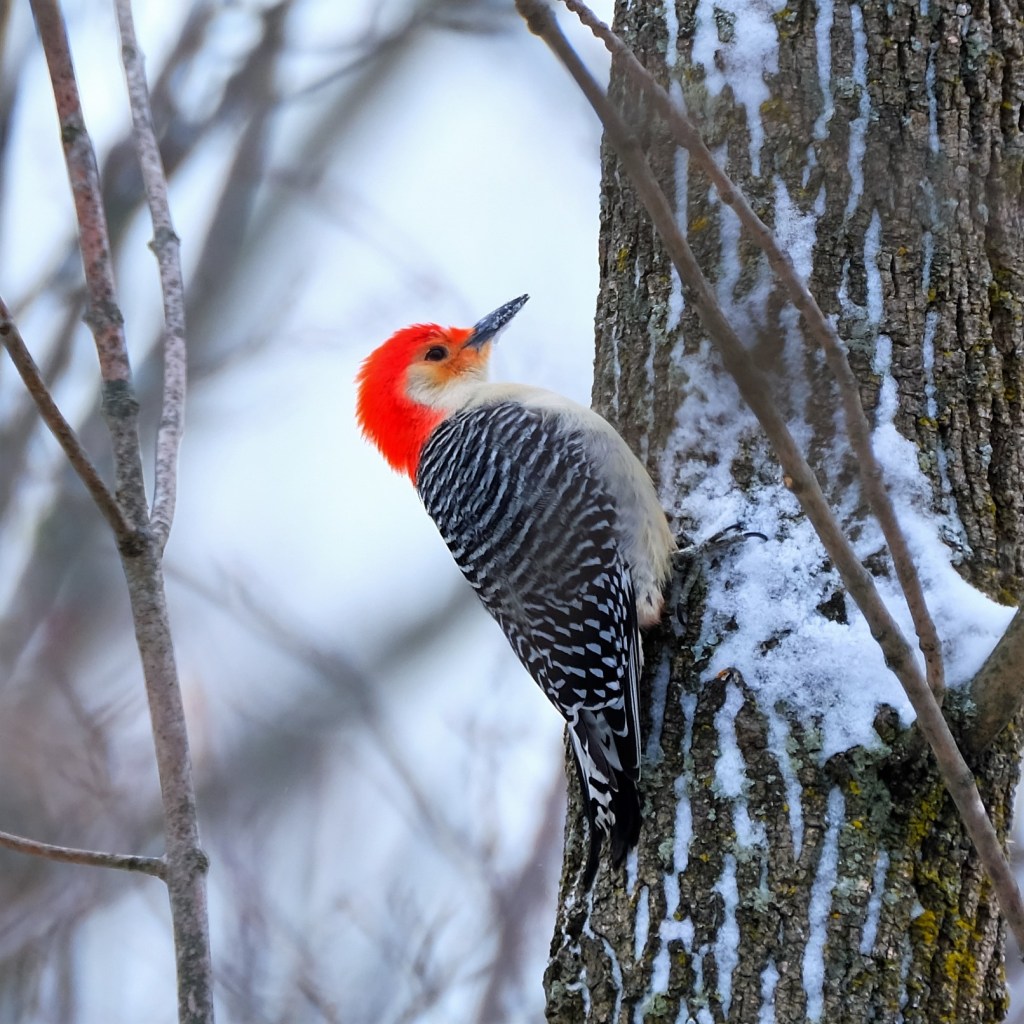
Someone whom we haven’t seen much of lately, a red-bellied woodpecker, stopped on a lamp post and called to get my attention.

And with that, I headed to the river, and on the way, I caught this fresh-looking monarch in the morning sun against some of that bright blue sky,

and this chipmunk who appears to have its cheeks full.

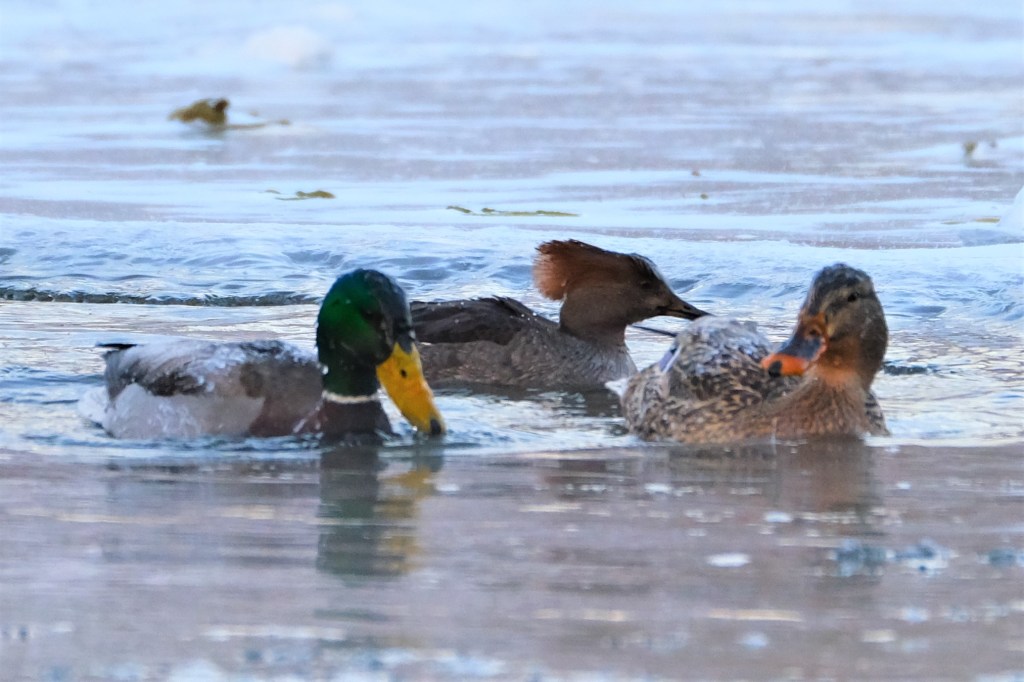
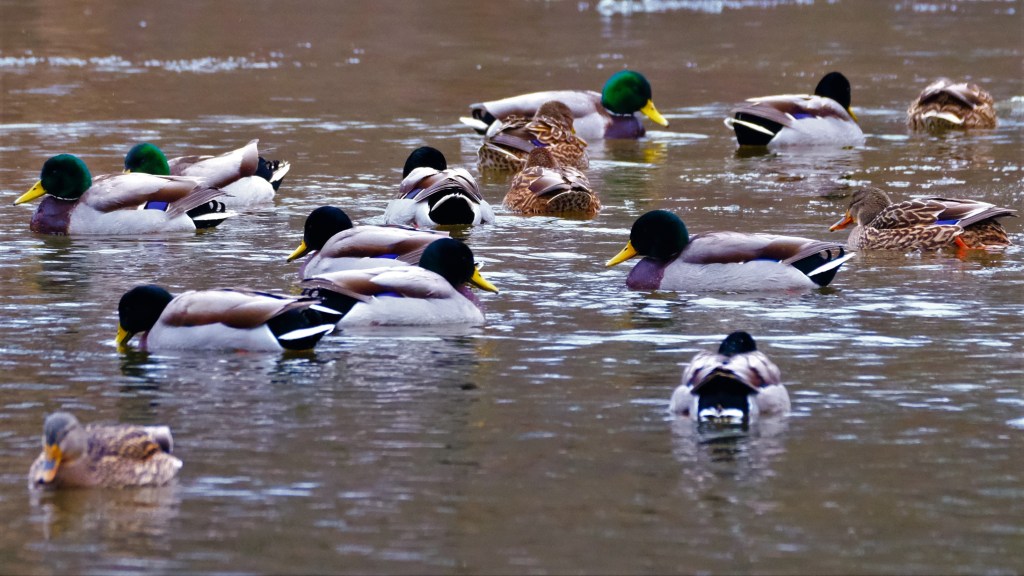
The river was full of mallards, and here’s a pair enjoying some of that morning sun. The male, on the left, has lost his fancy mating plumage for the season and is said to be “in eclipse.” I know how that feels.

There was also one blue heron in adult plumage off the southern tip of the northern island and who might be our expert fisher from earlier in the week.

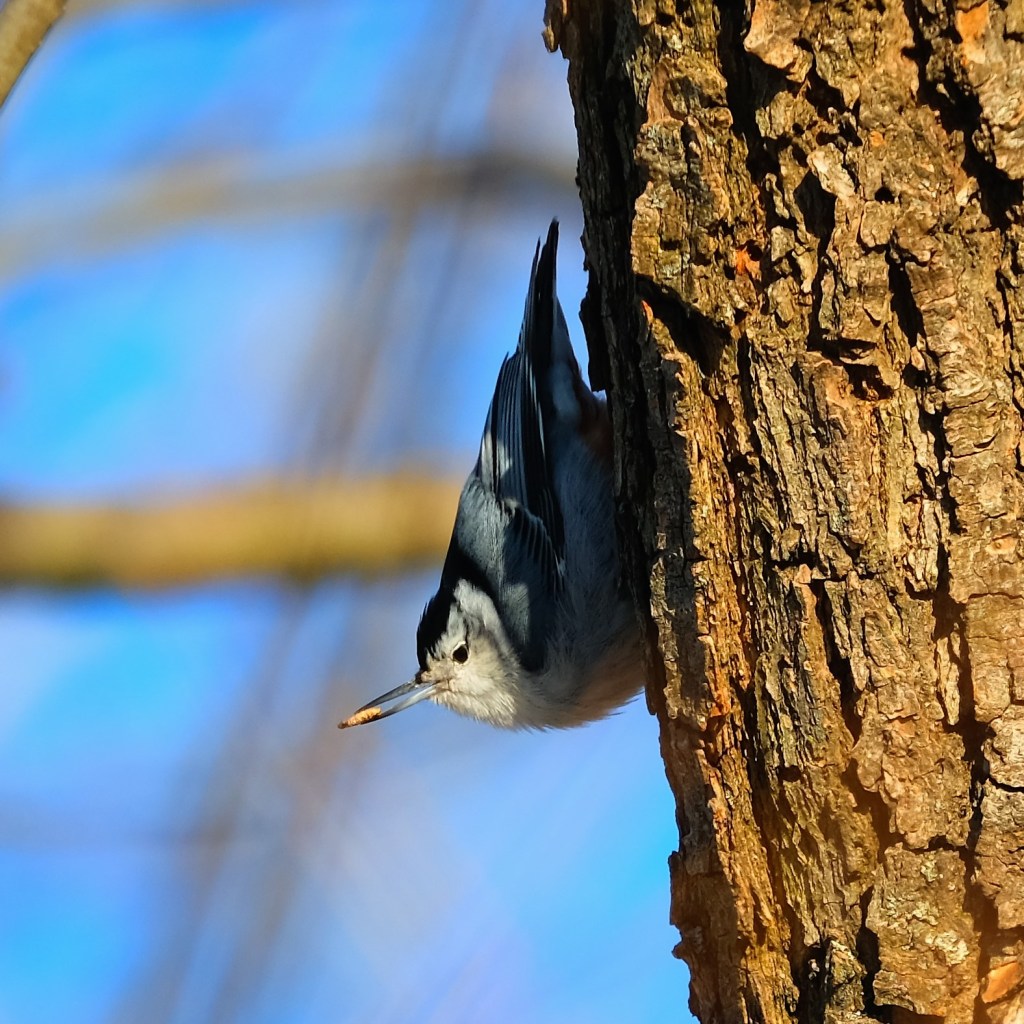
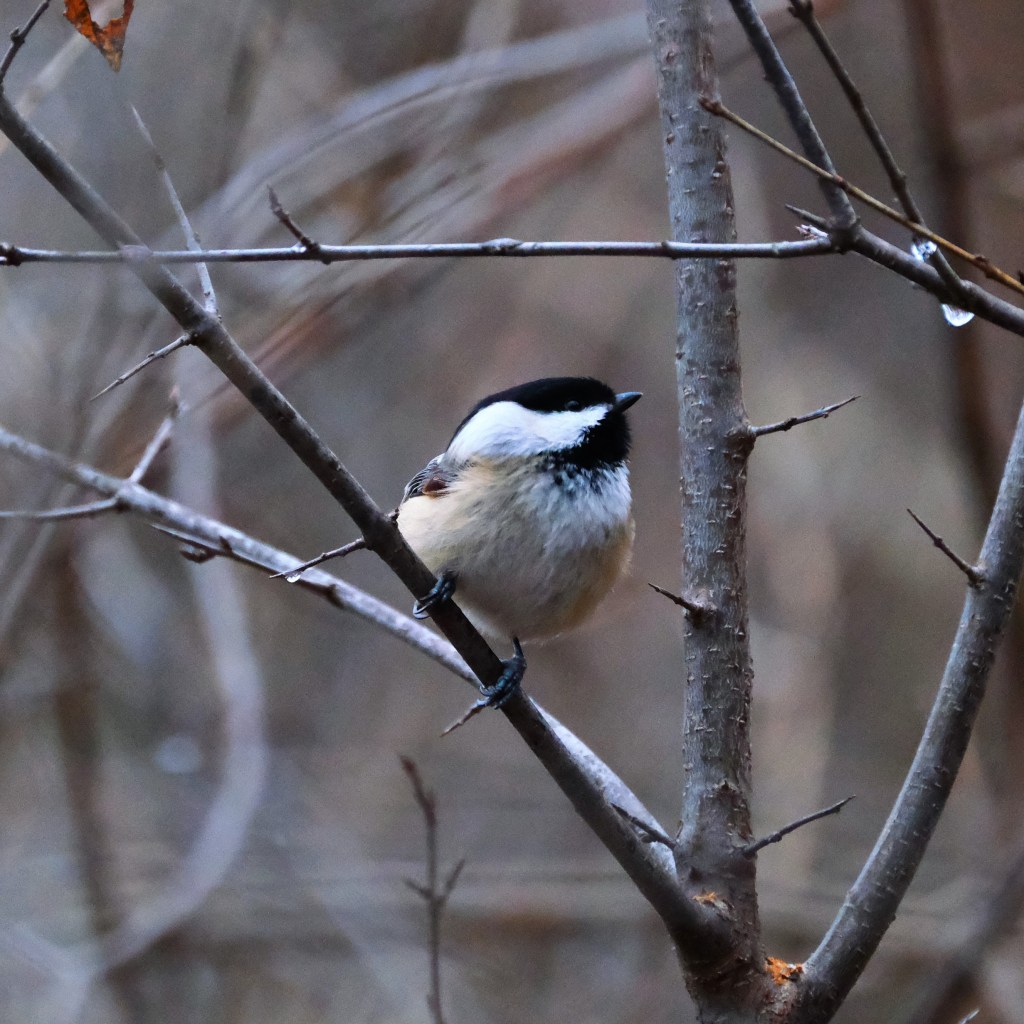
After heading south along the river, I spotted this chickadee foraging on a tree right by the falls. I hoped it would forage higher to catch a little of that sun, but it would not oblige.

Another bunch of asters is starting to bloom, with a little more purple in them and in front of goldenrod this time, but still without a butterfly, yet.

Finally, as I neared the southern end of the river trail and was not expecting to see anyone else, this young blue heron reminded me to always keep my eyes open.

Lastly, on a logistical note, school starts at UWM tomorrow, in-person for now, and I’ve got a 9am lecture to give, so I probably won’t have a report for you, but I expect to be back on Friday.

Grey skies return

The blue sky is gone, but the cool temps remain, so not the worst day to visit the park. I was greeted at the pond by this languid cedar waxwing lolling at the top of one of the crab apple trees along the west shore. They have been much more shy than this all summer, but here it is glancing my way.

And here it is returning its gaze to the western horizon.

No back-to-school worries for this one, it seems.

Meanwhile, our young night heron was closer to the water than usual, as if it might actually be fishing for a change. I looked it up, and they “forage both during the day and at night.” “Their diet leans heavily on crabs and crayfish” “along the crustacean-rich southern Atlantic coast.” And they “can also breed inland by feeding on crayfish in streams.” It sure would be great to catch this one with a crayfish, eh?

This green heron, who we have seen make a catch several times before, was done with fishing for the moment.

The wood ducks still on the pond were down to just these three.

There was also an elusive kingfisher and two friendly mallards who couldn’t find a pretty background to pose in front of.

At the river, a mature blue heron was in the water again, maybe the same one we saw yesterday, but it wasn’t having as much luck this time. It’s just as well because the light was no good.

There were also plenty of mallards, wood ducks, and even a few geese, but the surprise on the river was this young yellow-crowned night-heron, which looks just like the one we saw on the pond minutes ago. Could there be two? Maybe they’re siblings.

Speaking of bad light, here’s a wood thrush, whom we haven’t seen much of in months, helpfully posing in the shade against a bright white sky. Come on, Buddy. Help a guy out.

Luckily for us, there is a new splash of color coming to the park, and it appears to be New England Aster (Symphyotrichum novae-angliae) on the slope from the beer garden down to the river. Yay! It is even helpfully blooming right in front of some black-eyed Susans, which makes for a pretty contrast in the background. I just wish there was a bee or butterfly on it, but sometimes we have to take what we can get, right?

And that’s the way it is as August comes to a close. See you in September!

The nice weather brings some activity with it.

We got a little bit of a reprieve from the heat and humidity overnight, and the sun came up on a cloudless sky, so it was a great morning in Estabrook.

I saw a blue heron on the pond, and maybe it’s the same one Bonnie and I saw yesterday afternoon, but it doesn’t look like it’s had its coffee yet.

We didn’t see the night heron yesterday, but it was back in its usual spot this morning, and its eyelid looks a little droopy too. Must have been a heck of a night.

Not everyone was sleepy this morning, however. Here’s Ol’ Snappy on the move just off the island.

And here’s a squirrel chowing down on a big nut on a branch over the path that circles the pond.

On the river, there was another blue heron, and this one was quite the fishing maven. Here goes fish number one, a nice big one.

And not five minutes later, here goes fish number two, a bit smaller, but I hear they pack just as much flavor.

Lastly, look who I found hanging out with the mallards and wood ducks on a pile of driftwood.

Yup, that’s a cormorant, and here it is from a better angle. I wonder if that’s the same one that visited the pond last week. It’s wearing that same self-satisfied expression on its face, so maybe, eh?

Some regulars, a fun little return, and something new for a change.

The heat and humidity persist, and even the mosquitoes seem to be getting tired of it. “No, no, seriously, we couldn’t drink another drop!” But maybe that was more due to my imagination or the slight breeze this morning.

Anyway, a blue heron was on the pond when I arrived, and Lisa said there were two when she first approached. Here’s the one that stuck around.

In the branches right above it was our new little friend, the young night-heron, who appears to be dozing off at the moment.
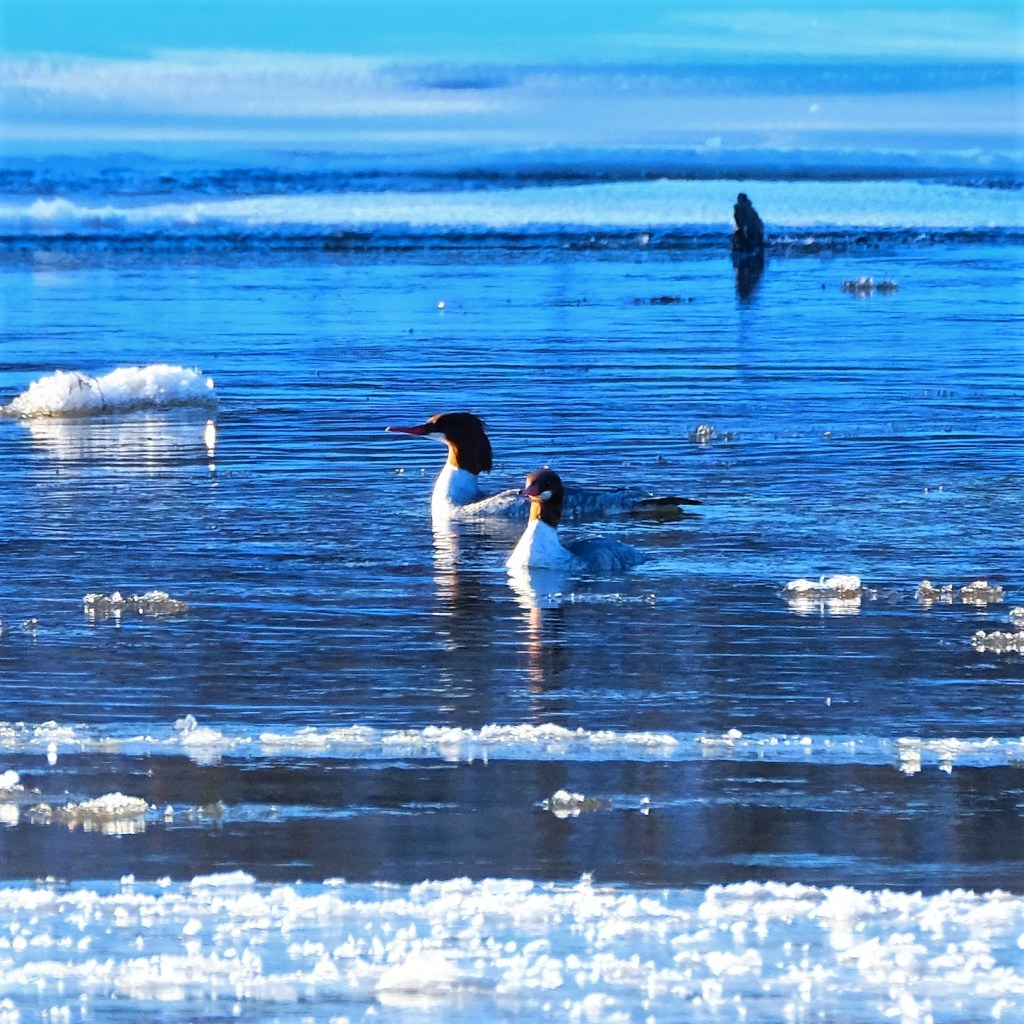
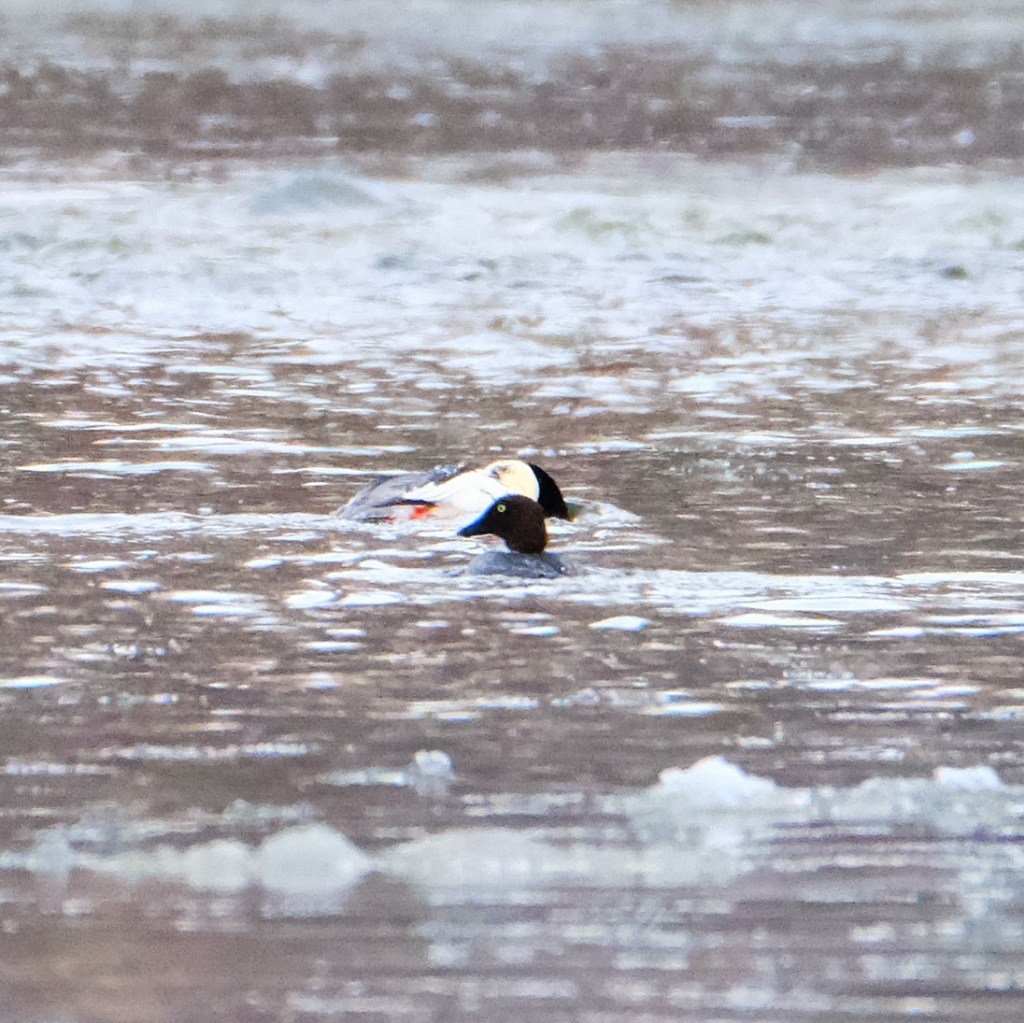
I counted seven wood ducks and three mallards today, and here is one of the pretty little female wood ducks drifting by the island.
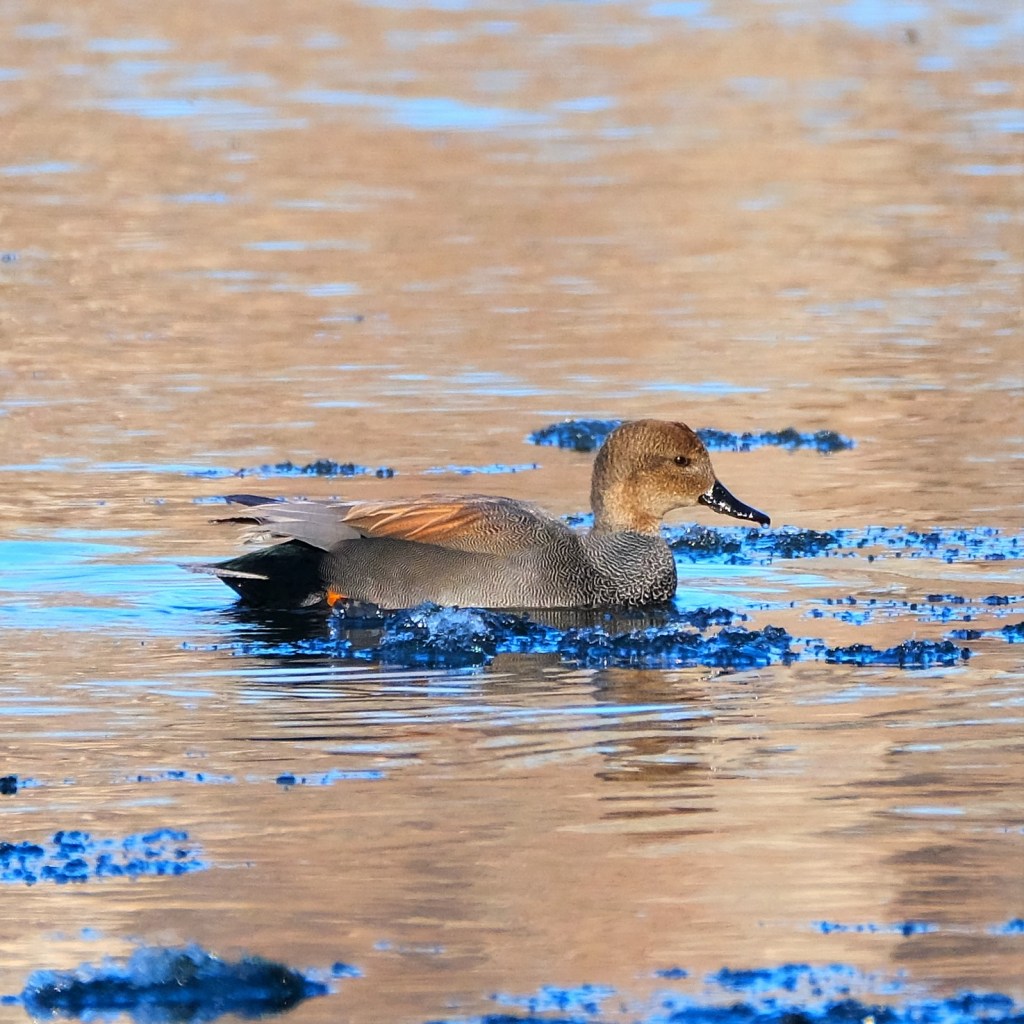
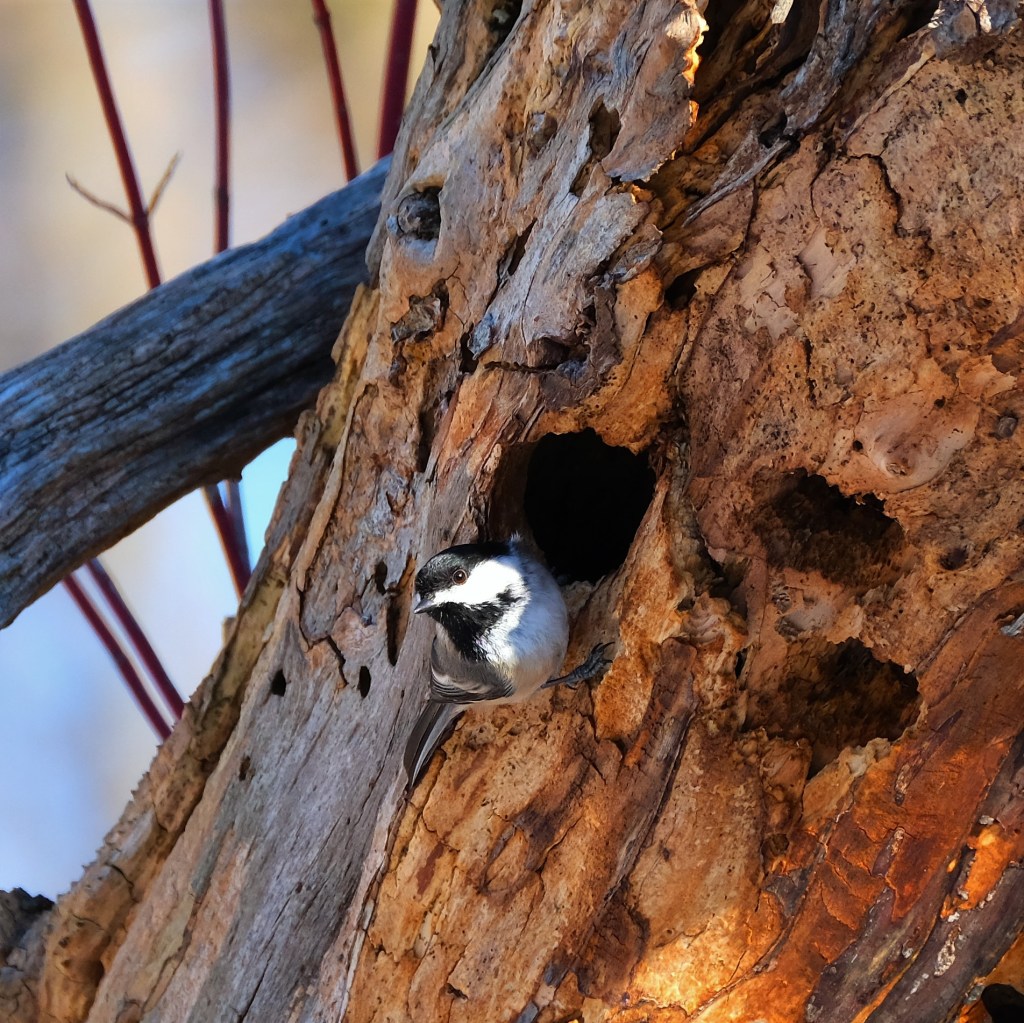
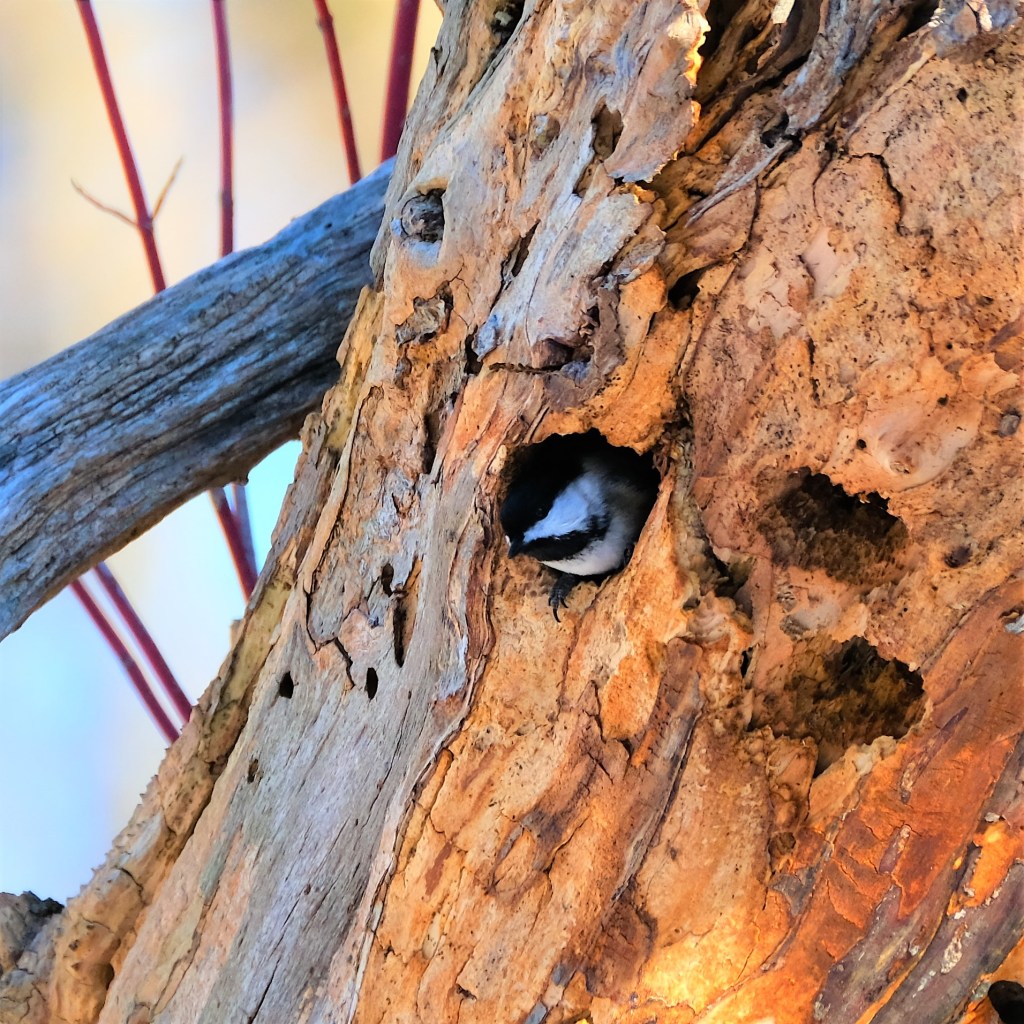
I had a hope for another little parade of songbirds, as we saw yesterday, but that was not to be. Instead, there was quite a hubbub among the chickadees in the big tree right over the bench on the west lawn, and as I got closer, I could see several individuals hopping from branch to branch near the middle of the tree as they chirped, but it took me a moment to finally spot the cause of all their excitement.

This little half-pint was sitting as still as it could in a shallow hole in the trunk, about ten feet off the ground, and it appeared to be all by itself. I took a couple of shots, it seemed to never move, the chickadees cleared out, and then I headed to the river.

As seems to be the new normal these days, the river was very quiet today, so I soon reached the soccer fields, but the goldenrod was not as bustling with bees as yesterday. There were, however, several wasps and/or hornets giving us one more sign of the passing of summer. There are no more larvae in their nests to convert insects they are fed into sugar on which the adults can feed, so the adults are forced to forage for their sugar from other sources, especially your soda can, but it appears that goldenrod nectar will do.

I thought I had caught a nice example of that situation for you in the images below, but it turns out that this is a potter wasp instead, specifically Eumenes fraternus, and while the female does build “a miniature pot out of mud in which it lays an egg and places a live caterpillar” for the developing larva to feed upon, “the adult wasp feeds primarily on nectar,” as this one was contentedly doing.

Oh well, maybe next time. It is a pretty striking creature in any case, eh?

They’re back, Baby!

The heat and humidity continue, and some poor running club had one of their long runs in the park this morning, so I was surprised to find a critter about at all, but find some I did.

The pond was pretty quiet again, with just five wood ducks, three mallards, and one green heron, and I’m sure you all know what the later looks like, but here’s a picture for good measure.

As I was walking back towards the bridge at the north end, I spotted a pair of catbirds, and they looked like an adult and a youngster hoping to be fed. As I tried to get their picture, the adult took off and left the young one looking like the proverbial deer in the headlights. You’re gonna have to be faster than that, kiddo, to stay out of the funny pages.

Meanwhile, just around the corning, here’s another catbird getting its sun bath in.

Just beyond that, in a seemingly continuous parade of birds, if only for a few minutes, this appears to be our first southbound warbler of the season, and that grey hood and yellow body suggest that it is a female or immature mourning warbler (Geothlypis philadelphia) female or immature Nashville warbler (Leiothlypis ruficapilla). Thanks to Greg O. for pointing out that Nashville warblers have dark legs and dainty beaks compared to mourning warblers. Either way, the warblers are back, Baby!

The birds weren’t the only ones “enjoying” the sun this morning, and here’s a bullfrog perhaps getting the best of both worlds.

I didn’t have time for the river this morning, but I did swing by the soccer fields on my way back home, and look who was hittin’ the thistle again.

Finally, the goldenrod is in full bloom throughout the park, and I almost caught a monarch on one, but its heart wasn’t in it, so I got this bee instead.

Here’s hoping we’ll see more warblers soon, eh?

Review Day. Yay!

Ugh. Cloudy, hazy, 75°, 92% humidity, and I’m running low on bug spray. Plus, I’ve heard through the grapevine that some readers haven’t quite got the knack yet of telling all the herons apart. So, we’re going to take a break from new content today and just review a bit ’cause I’m in charge, and I can do what I want. Ha!

Here’s a mature great blue heron with the stringy feathers they grow for decoration. They are bluish in color with a bright yellow bill, and they can stretch that neck out to stand 45–54 inches tall. This particular one was standing in the river, but we’ve also seen them often on the pond.

When resting, they squinch their neck up so it looks like their head is right on their shoulders, but you can still see the neck. Here’s another adult resting up in a tree beside the river.

Here’s a green heron, which hardly looks green at all, but that’s what they’re called. The fine contributors to the Pedia of Wik describe them as having “a glossy, greenish-black cap, a greenish back and wings that are grey-black grading into green or blue, a chestnut neck with a white line down the front, grey underparts and short yellow legs.” They are only 16.1-18.1 inches long, so much smaller.

There feathers do a much better job of hiding their neck when they squinch it up, so it appears that they have no neck at all.

But they can stretch it out pretty far when they want to, and they can make the feathers on their head lay flat or stand straight up.

Those are the main two, which we see almost every day over the summer, and sometimes more than one individual, both on the pond and at the river. In contrast, here are the rarities of which I believe we’ve only even seen one individual each.

The juvenile yellow-crowned night-heron (with an all-black bill) that we’ve seen on the pond for the past couple of weeks. It is not much bigger than the green heron, has a relatively stubby bill and a reddish tint in its eyes. Folks are surprised to see it here because we are about 300 miles north of its usual range.

Here’s the juvenile black-crowned night-heron (with yellow in its bill) that we saw for a few days on the pond last August. It is also small like the green heron. I hear that a breeding colony has been seen from time to time on the lagoon in Veterans Park downtown.

Plus, it’s bill looks less stubby than that of the yellow-crowned.

Finally, here’s the great egret that we saw on the pond for just one special day only back in May 2020.

They are big and look just like “great white” herons, which are “currently considered a form of great blue heron” but are “restricted to peninsular Florida and is rare north of there.” Oh, and “egrets” are simply  “herons that have white or buff plumage, developing fine plumes (usually milky white) during the breeding season. Egrets are not a biologically distinct group from herons and have the same build.

Finally, just for completeness, here’s a pair of sand-hill cranes, which are tall, sandy-colored birds with long necks and long bills, but are not herons at all, and which we’ve only seen flying over Estabrook or when I visit Kohler-Andrae State Park.

And that’s all five herons plus one crane that we’ve seen so far. Now get a good night’s sleep and come to the exam tomorrow with a clear head, a number 2 pencil, and a positive attitude!

A quick visit before the fog rolled in.

The day started off pretty nice in Estabrook, with plenty of humidity, but not much heat yet, and even a bit of sun. The pond was pretty quiet when I arrived, but there were still a couple of ducks on the water, and I soon found both the night-heron and a green heron in the northwest corner, which gave me a hope of getting some close-ups

We first saw the night-heron on August 12th, which makes this day 14, and it looks as healthy as when it arrived, so it must be finding enough to eat despite the fact that I have yet to spot it fishing. The blue and green herons, on the other hand, seem to be constantly fishing. Different styles, I guess.

Then, as I started to make my way around the north end of the pond to check on the east side, all heck broke loose. The herons took off, a wood duck quietly slipped off a log into the water, and a kingfisher started circling the island sounding its distinctive alarm. Luckily, the instigator of all this agitation wasn’t me for a change. Instead, it was a Cooper’s hawk swooping over the pond, and it stopped in one of the tall ash trees at the south end so I could make this record of the event.

I tried to get a bit closer, but by the time I could see into that tree again, it had already moved on.

By then, it looked as though a fog bank was rolling in off the lake, so I thanked my lucky stars that I got to see anything at all and headed home.

Here’s one more portrait of the night heron while it’s still here.

A slow hump day in August.

It seemed as though everyone was taking this morning off, or maybe the humidity is starting to get to them, because there was hardly anyone about, except for the robins, which were everywhere.

I did eventually find seven wood ducks, a couple of mallards, one green heron, and our one night heron on the pond, but we’ve seen a lot of them lately, and the cormorant appears to have moved on after just a short visit this year.

The situation was similar on the river with plenty of mallards, but no geese, herons, or anyone new.

Luckily, I did spot one interesting thing along the parkway on my way to the pond: a whole family of waxwings.

Here’s a youngster who does have the characteristic black mask across the eyes but not yet those creamy yellow belly feathers.

Here’s another one, on a neighboring branch and giving something a taste test.

And here’s a third, all in the same tree, who’s found a little stick with which to amuse itself.

Meanwhile, here’s an adult just starting to catch some of the morning sun with a creamy yellow belly but no yellow tips on its tail feathers.

And here’s another adult with yellow tips on its tail feathers.

There were as many as eight of them in the group, and they were all just hanging out, sometimes hopping to another branch close by, and seemingly all waiting for the day to get started.