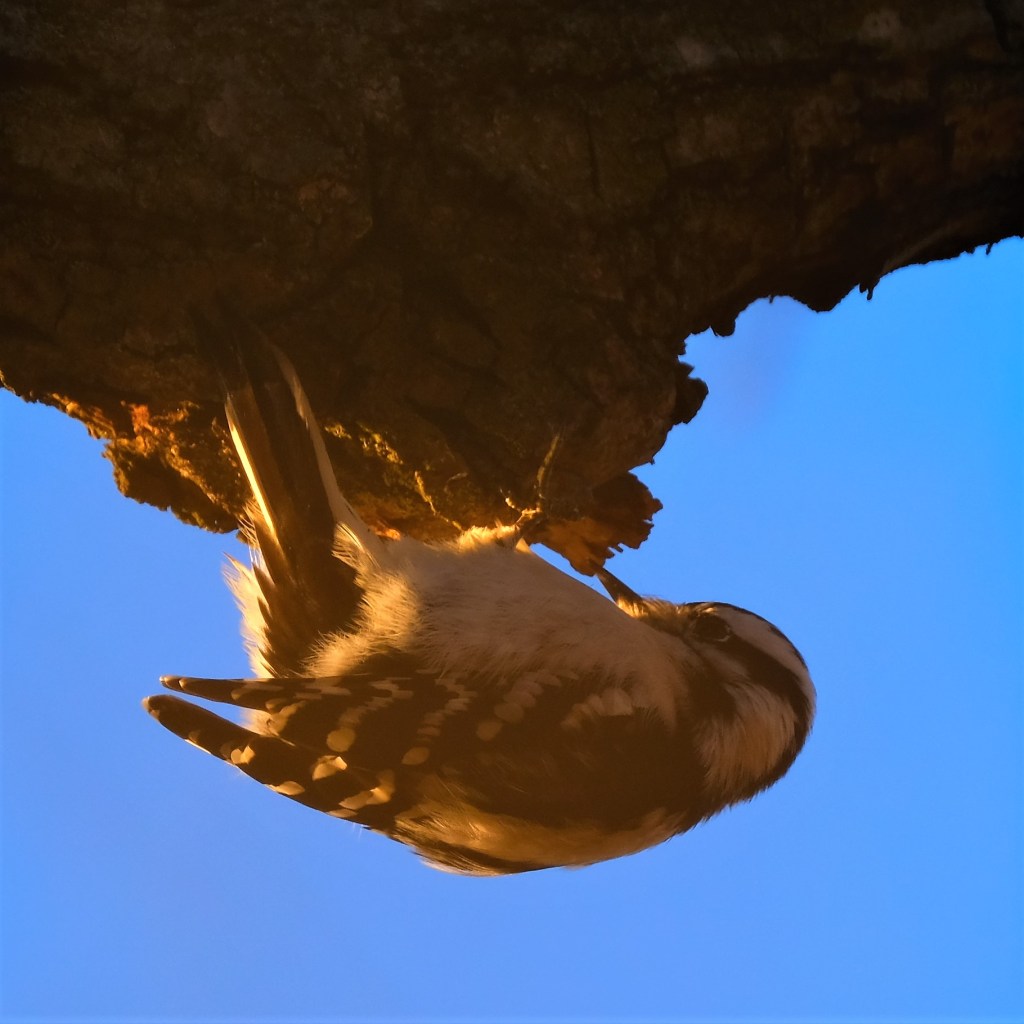
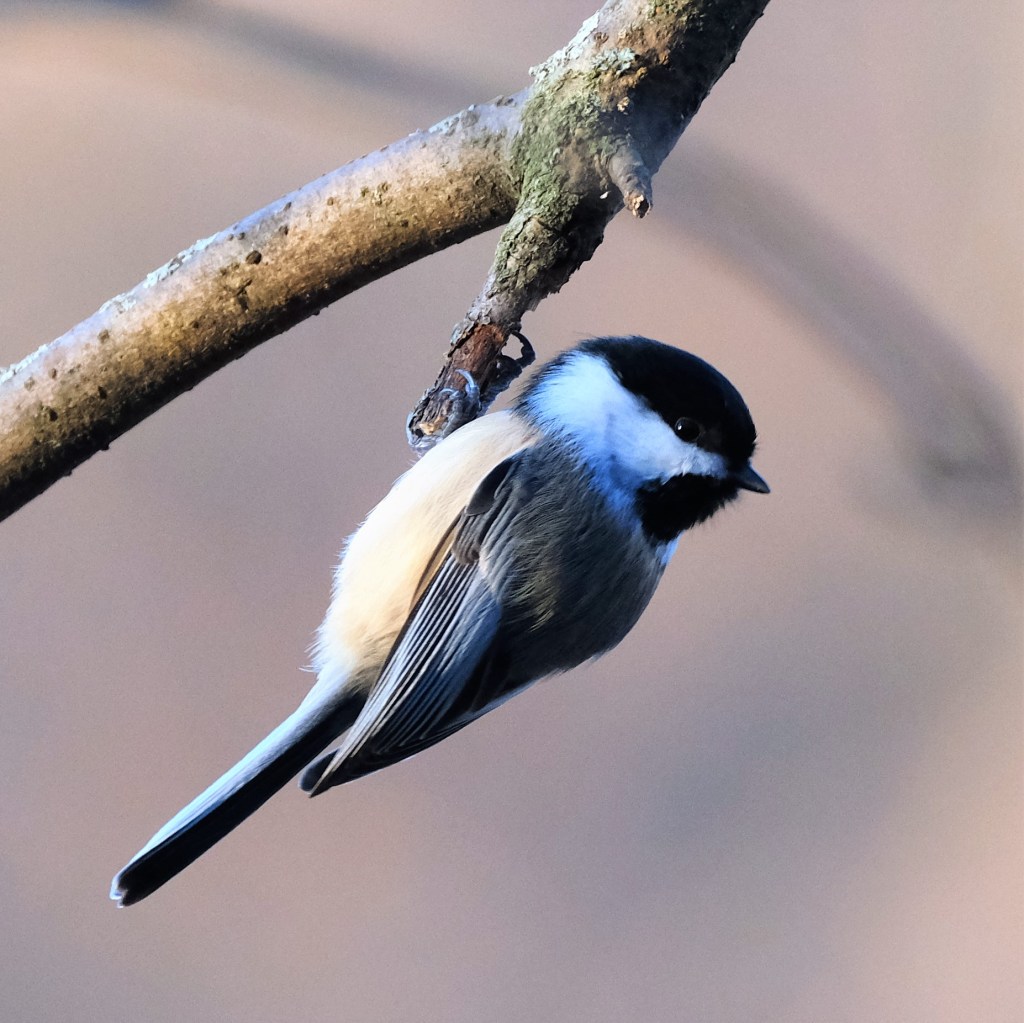
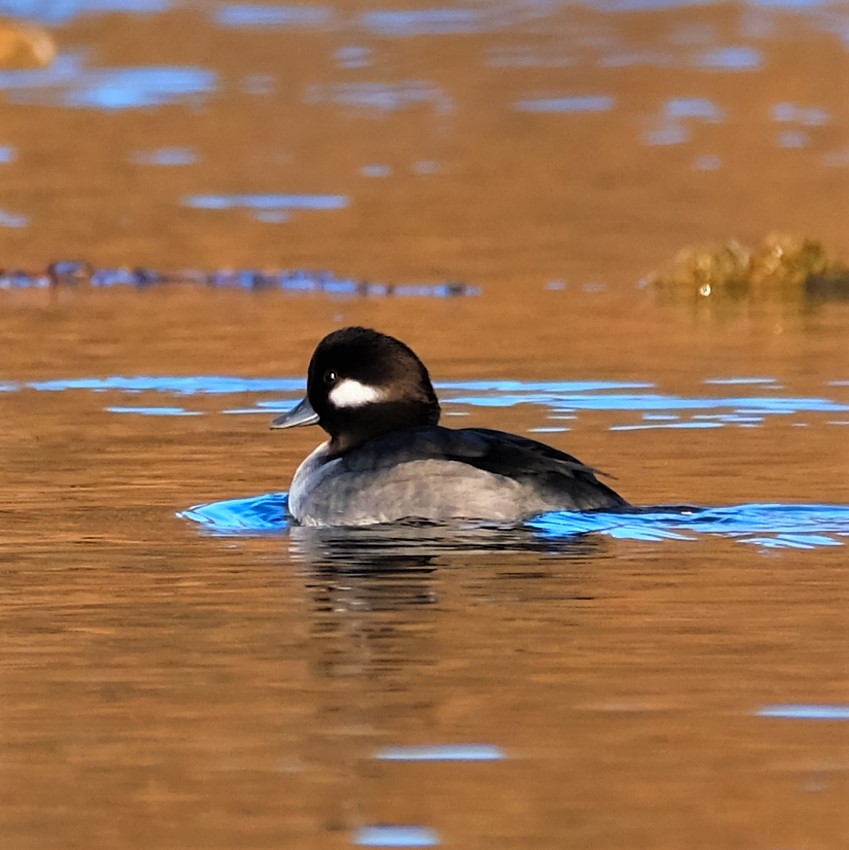
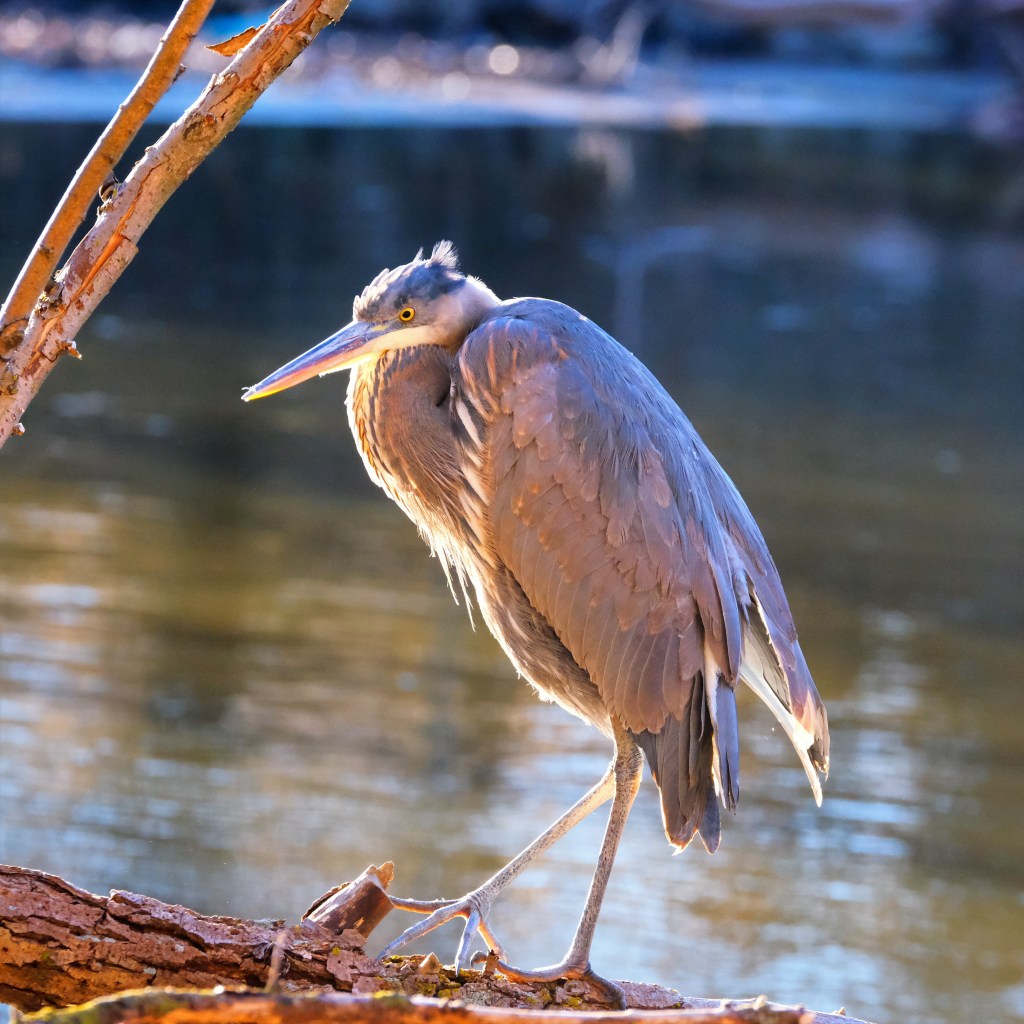
Some birds, a few blossoms, Ol’ Snappy, and a lot of bees and butterflies.

I was hoping to see again this morning our surprise new guest at the pond, the young night-heron, since I’ve gotten a little pushback on my identification, and maybe a better picture would cement it one way or the other, but I’m sad to say that it was nowhere to be found. Oh well.

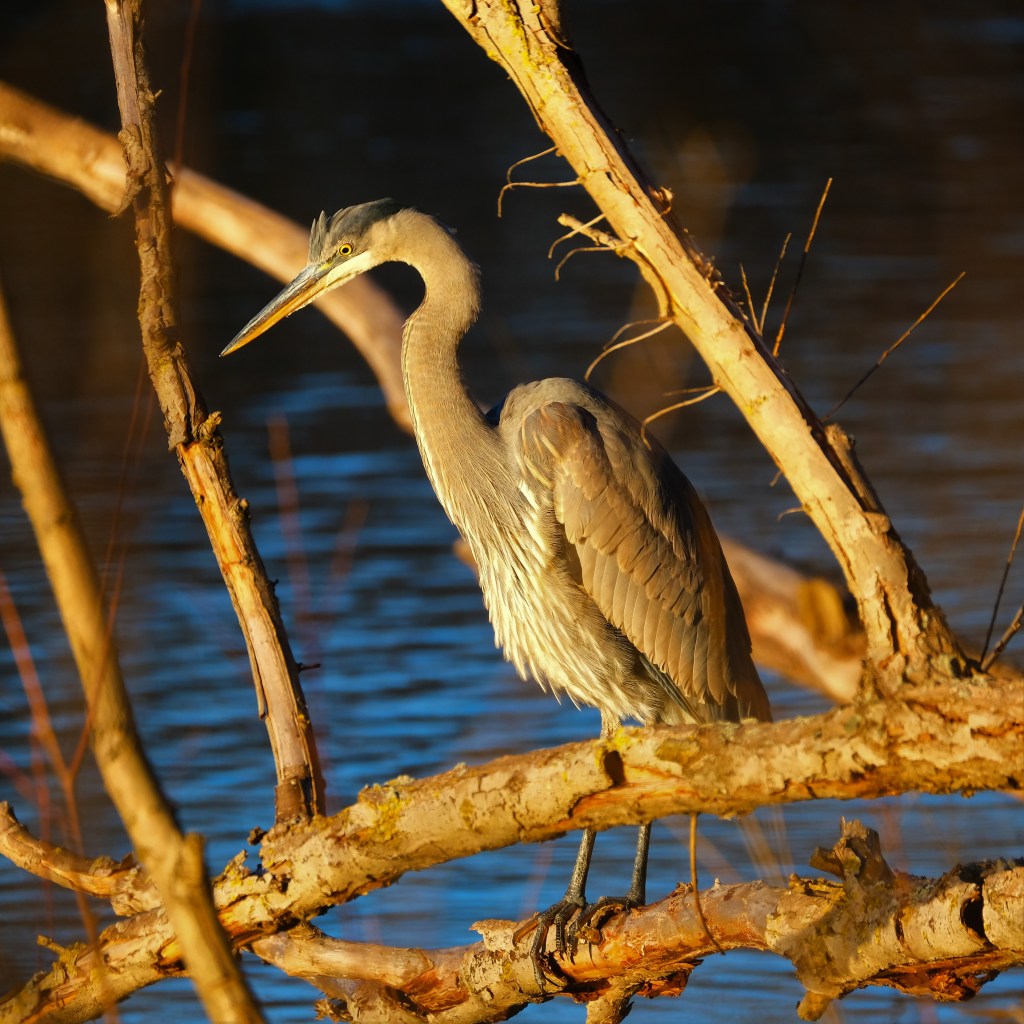
Happily, the young blue heron was there, and it did not seem to be favoring a foot today, so that’s good news.

In fact, at one point, it flew over to the west lawn, perhaps to see what the ducks are always finding up there and took a little walk with no limp that I could see.

There were also at least two green herons about. Here’s one up in a tree over the little bridge in the path around the pond.

And here’s one fishing for some breakfast.

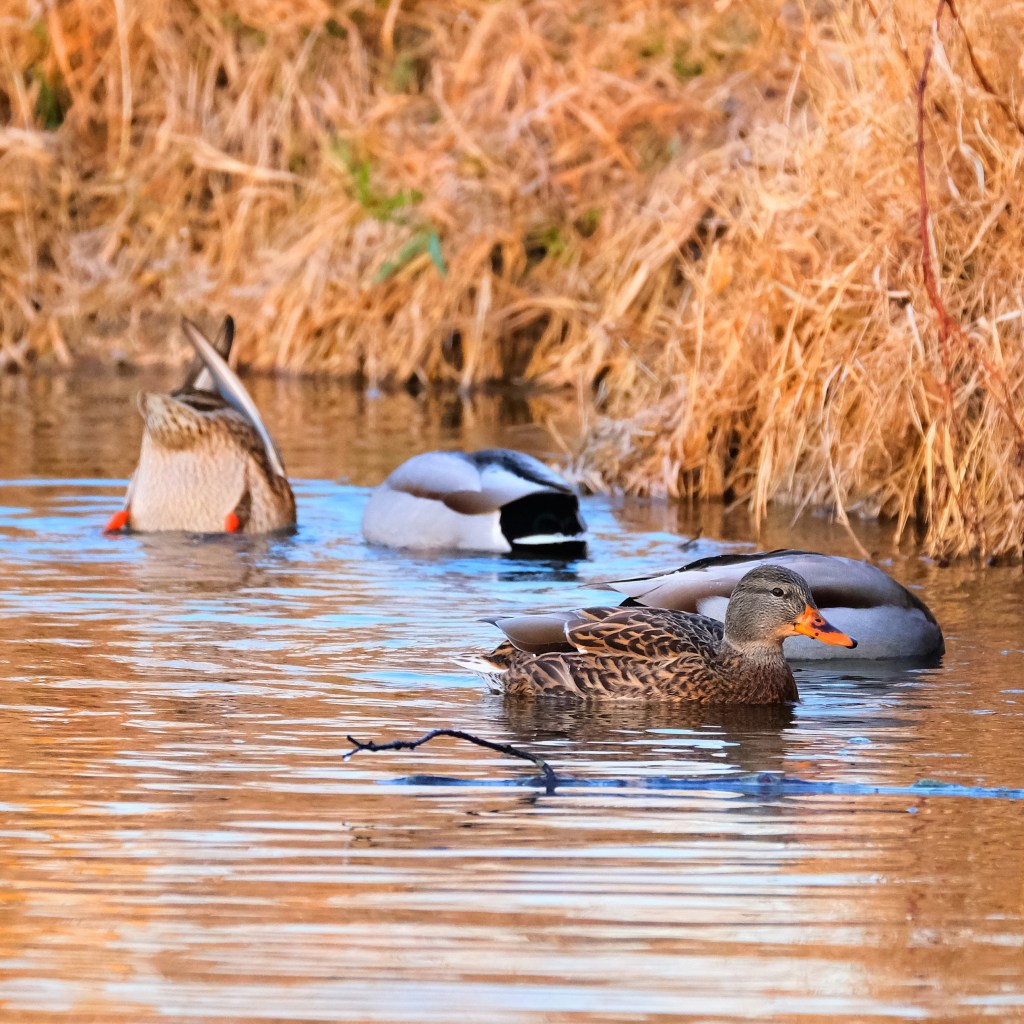
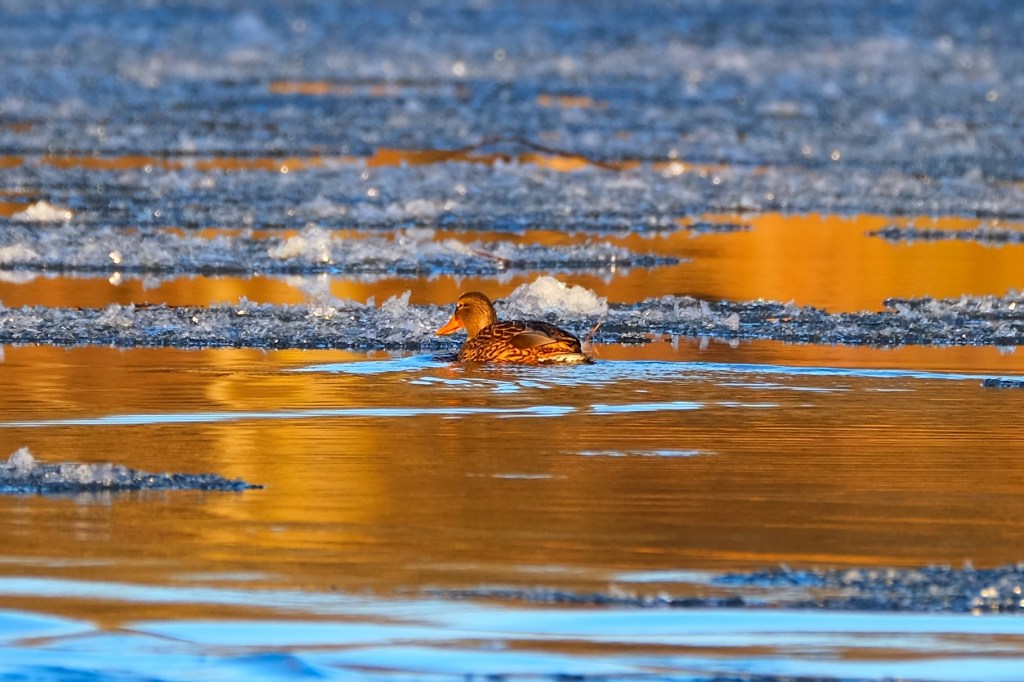
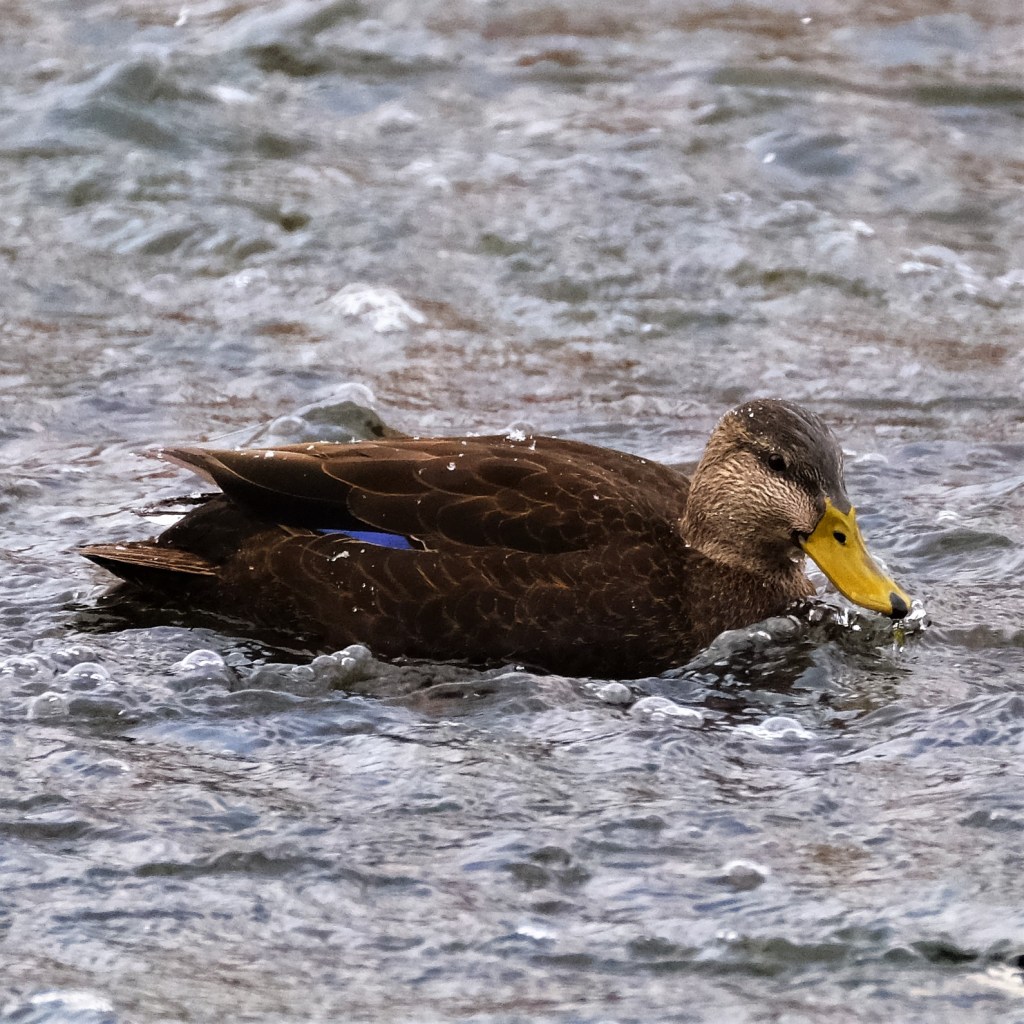
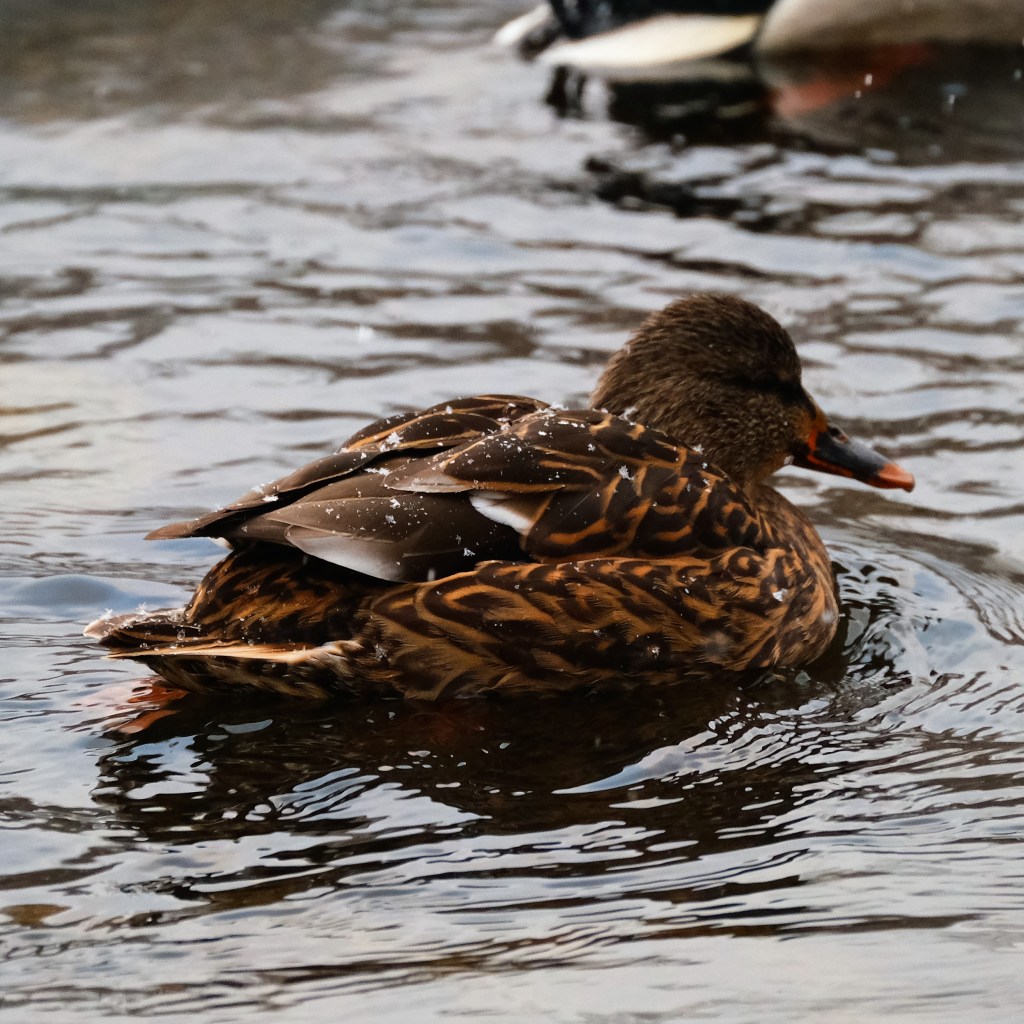
The ducks seemed to have lost their interest in storm debris, and here’s one just resting on a stick instead.

I did catch a glimpse of the big snapping turtle in the pond when it poked its head out of the water for a moment.

It was a beautiful morning, so I ventured down to the river for a change. Man-oh-man, the water had been high recently. There were little bits of plastic and expanded polystyrene farther on shore than I’ve seen them since last summer.

Anyway, I did startle a couple of blue herons, sorry guys, and failed to get their picture. Instead, I did manage to capture this monarch on a sow thistle blossom.

Then I had to head back home, but on the way, I checked the weeds beside the soccer fields, and hit the jackpot! First, I saw my first tiger swallowtail in the park for this summer, and the poor thing looks like it just survived a hurricane.

Plus, there were so many bees, that the swallowtail couldn’t seem to get a blossom to itself.

There were a lot more bees than butterflies, so it was easy enough to catch one of them on their own.

There was another monarch, and it even photobombed the swallowtail, but that one came out blurry, so here’s a prettier picture.

But that’s not all! Here’s a silver-spotted skipper.

And even a Peck’s skipper. The whole gang was there.

Lastly, because I’ve been looking for that swallowtail for so long, here’s just one more image, with one more bee, of course.

And those are all the pictures fit to print today. See ya next time.

An exciting new guest at the pond…

I had a great visit back east, although I hardly took any pictures, and now it’s great to be back in Estabrook, where it looks like you’ve had some rain lately. In my rough estimation, there are about a year’s worth of branches and trees down in the park. Yikes!

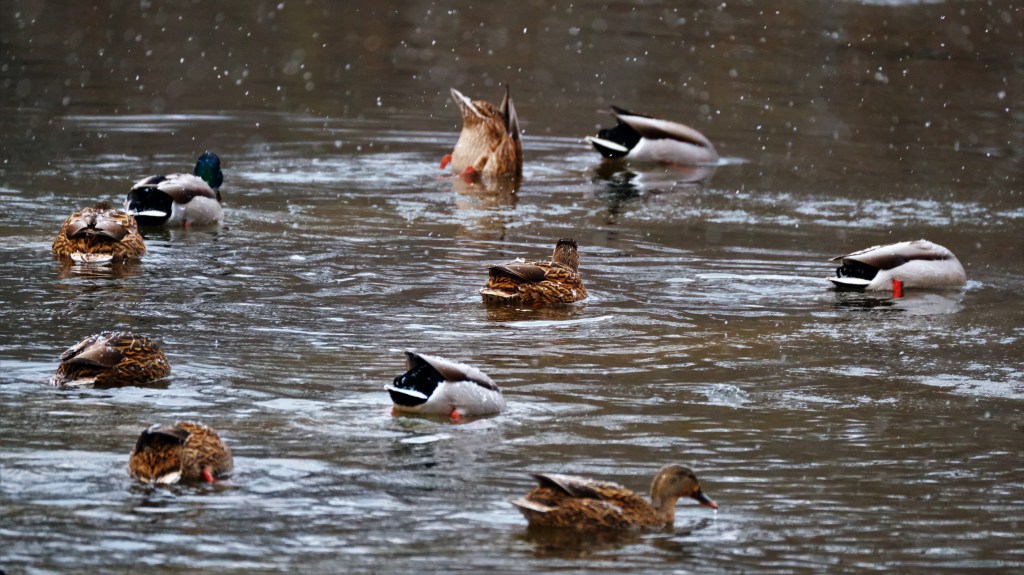
Happily, I didn’t see any new trees down in the pond, and it sure needed the water, so the pond was looking good this morning. The mallards and wood ducks, of whom I counted over a dozen combined, were busy sampling whatever the storm knocked out of the oak tree over the path or from the bushes below it.

The wood duck with the limp that we spotted last week was still there, but hung back a bit, as you might imagine, so didn’t make the best picture.

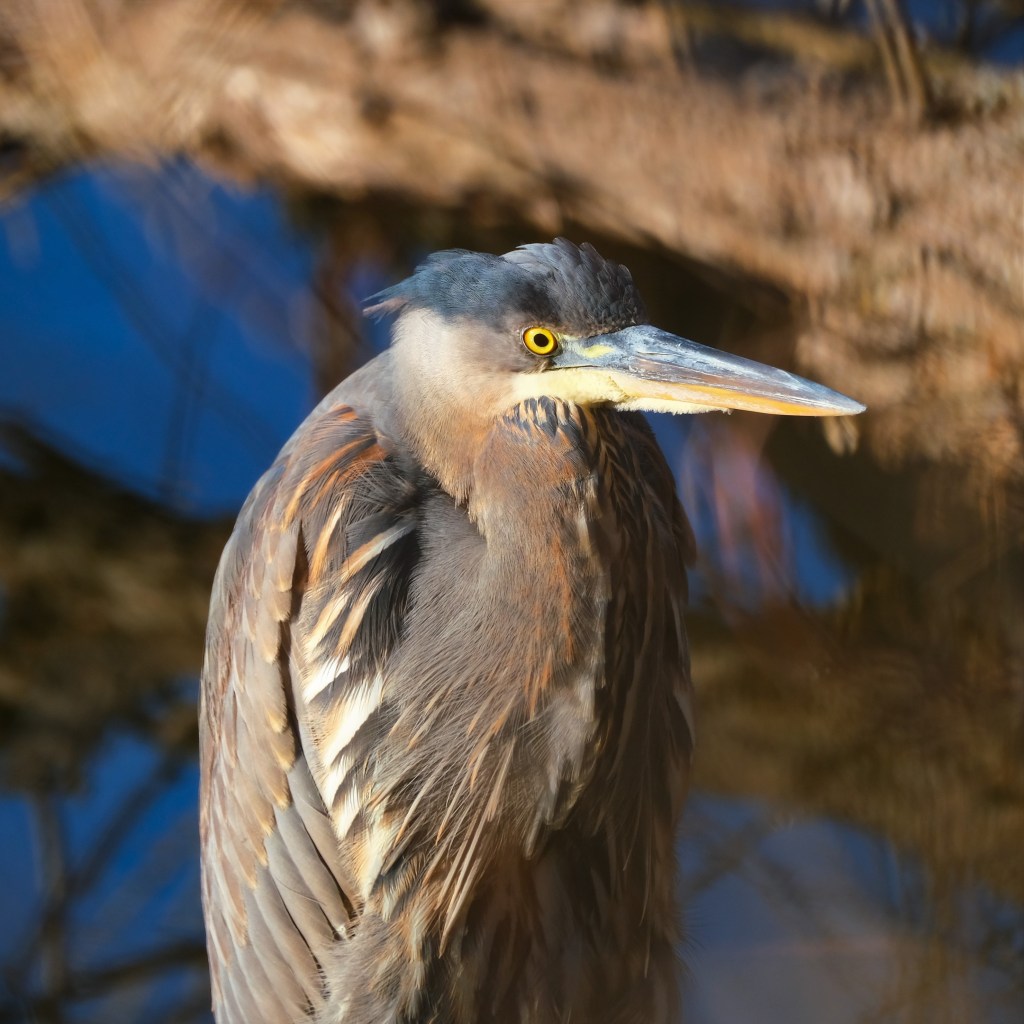
A blue heron and at least one green heron were also in attendance, but the blue heron looked like it was also going easy on its left foot or leg, and I sure hope that heals up soon.

The big surprise on the pond is a new heron, which I don’t believe I’ve seen before, and that appears to be a young yellow-crowned night heron (Nyctanassa violacea), although their breeding range only extends north into southern Illinois and southern Indiana, so it’s a long way from home.

Note specifically the reddish iris, dark skin in front of the eye, and short black bill compared to the yellow iris, yellow skin, and longer bill with pale yellow in it that the young black-crowned night heron has, which we saw on the pond last summer.

Here are some more pictures of our exciting new guest.

How’s that for a welcome-home surprise, eh?
Finally, there is yet another thistle in bloom, and this one might be tall thistle (Cirsium altissimum), a native for a change, but I’ve gotta confirm some additional identifying details before I can assert so. In any case, the bumblebees were making the best of the situation.

This one even seems to be a little impatient with the young blossom it is on.

Lastly, Connecticut wasn’t a complete bust, picture wise, and here’s what I got.

A cute catbird from a walk with my dad.
An eastern tiger swallowtail on some butterfly bush in my brother’s yard.
A black swallowtail on a marigold in my brother’s yard .
Some Indian pipe from a walk with my brother and his dogs.

Oddly, the tiger swallowtails were nearly as plentiful there as the monarchs have been here, and the monarchs were about as rare there as the tiger swallowtails have been here this summer.

An odd little mix.

It’s a short one today. There was some kind of moisture in the air between us and the morning sun, so it stayed pretty dark well past sunrise. When I first entered the park, I checked for deer or anything else interesting, as usual, and since I didn’t see anything, I then checked the parking lot for items park patrons might have accidentally left behind, a soda can, a $20 bill, a blow-up doll, you name it. I try to plan a route that let’s me get everything with the fewest steps, which is a little silly since I’m in the park to get steps, but anyway. There was a biggish white thing in the grass near the path, and I figured I’d hit that first before continuing north, but by the time I returned my attention to the white thing it was gone! It turns out that it was a bird, not a napkin, and probably a robin with leucism. Its eyes aren’t pink, so it’s not technically an albino.

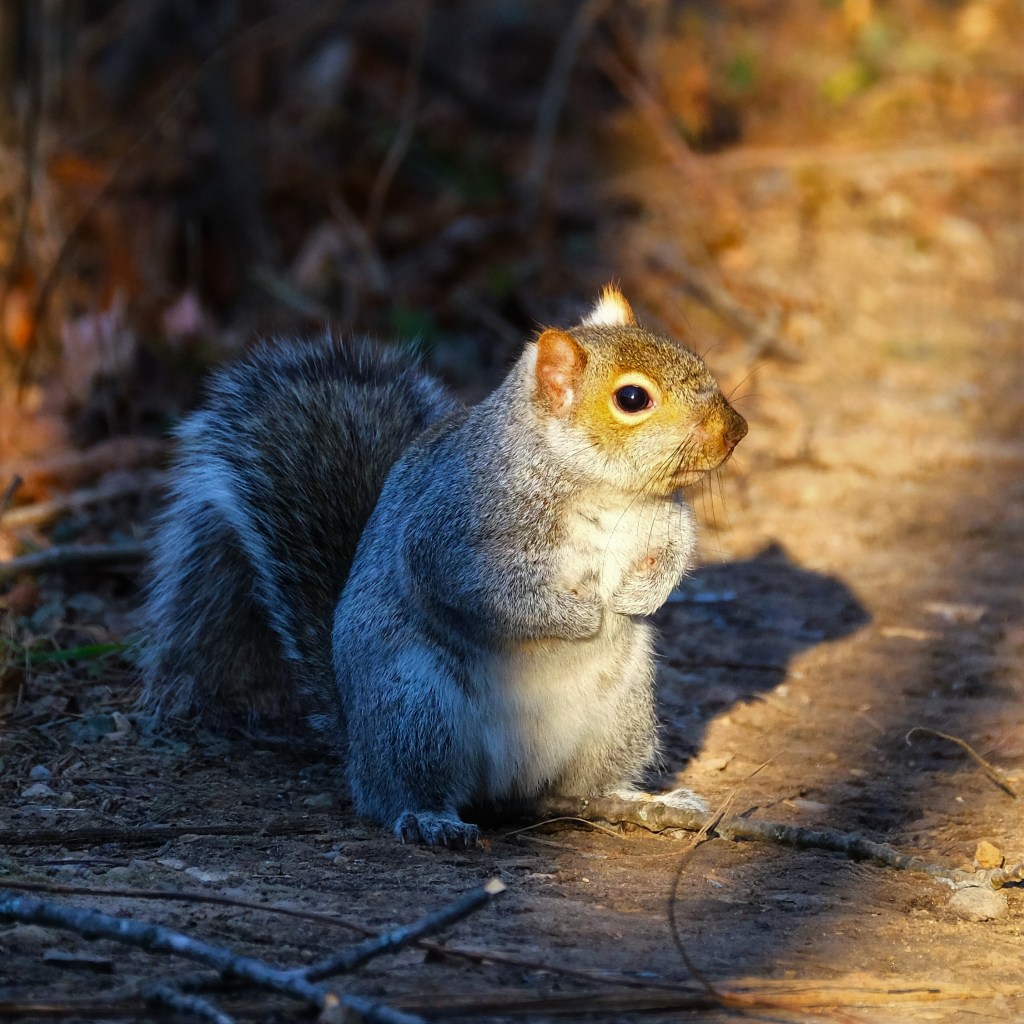
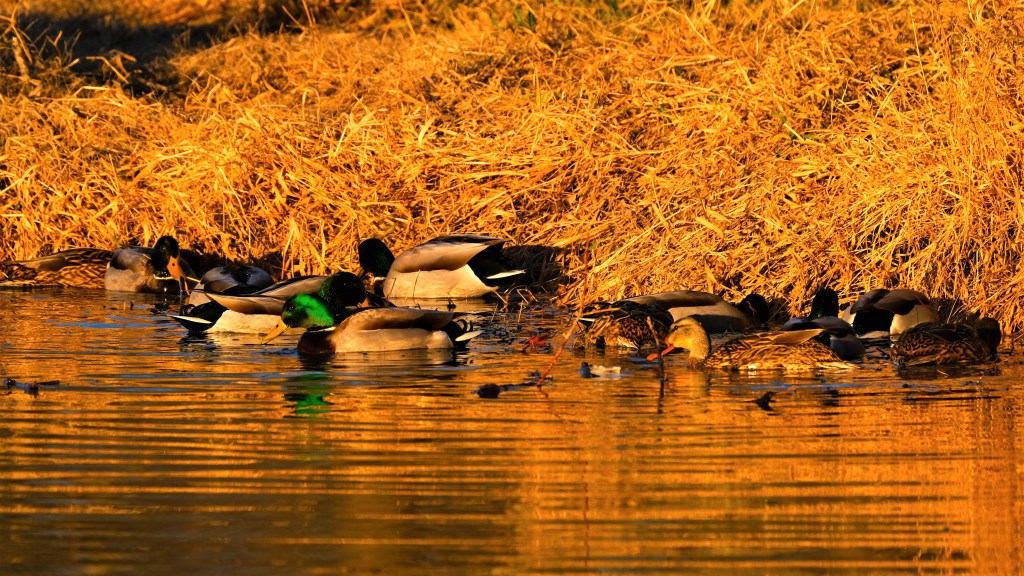
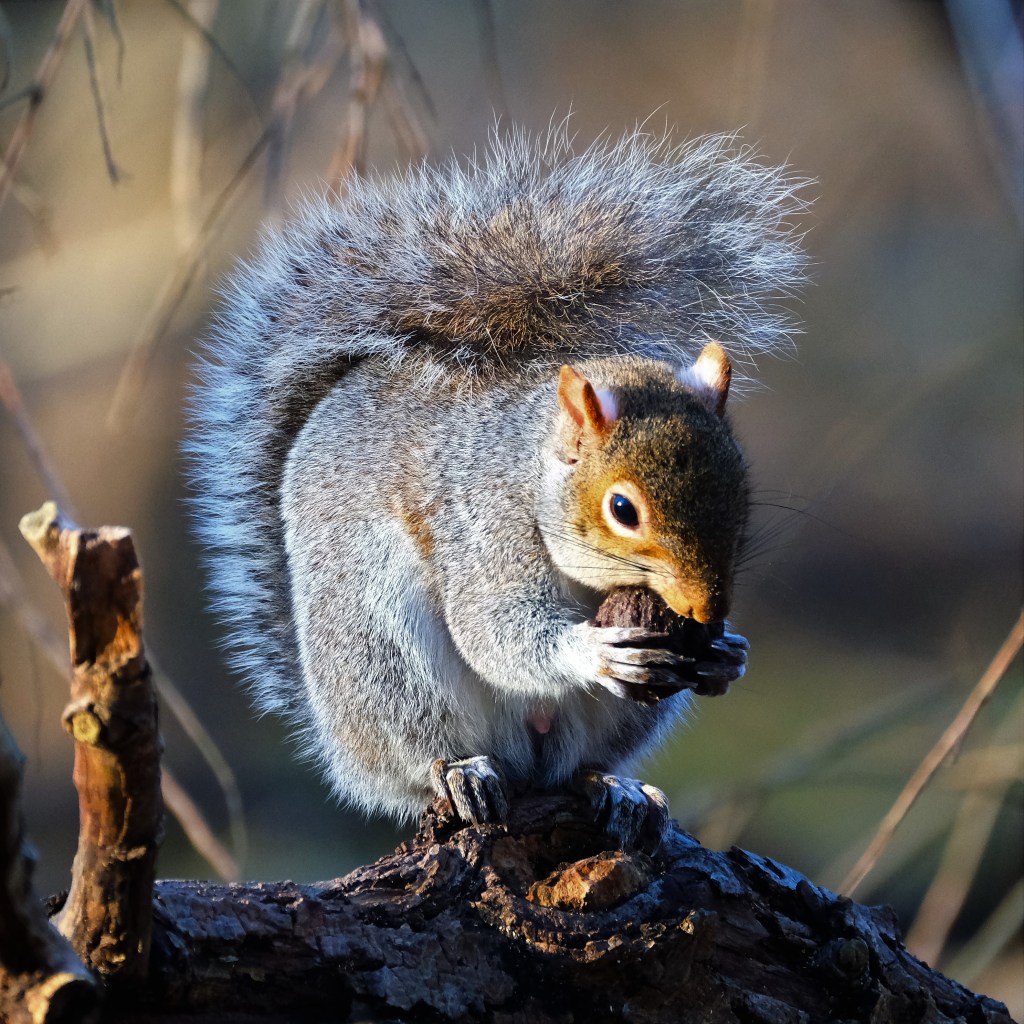
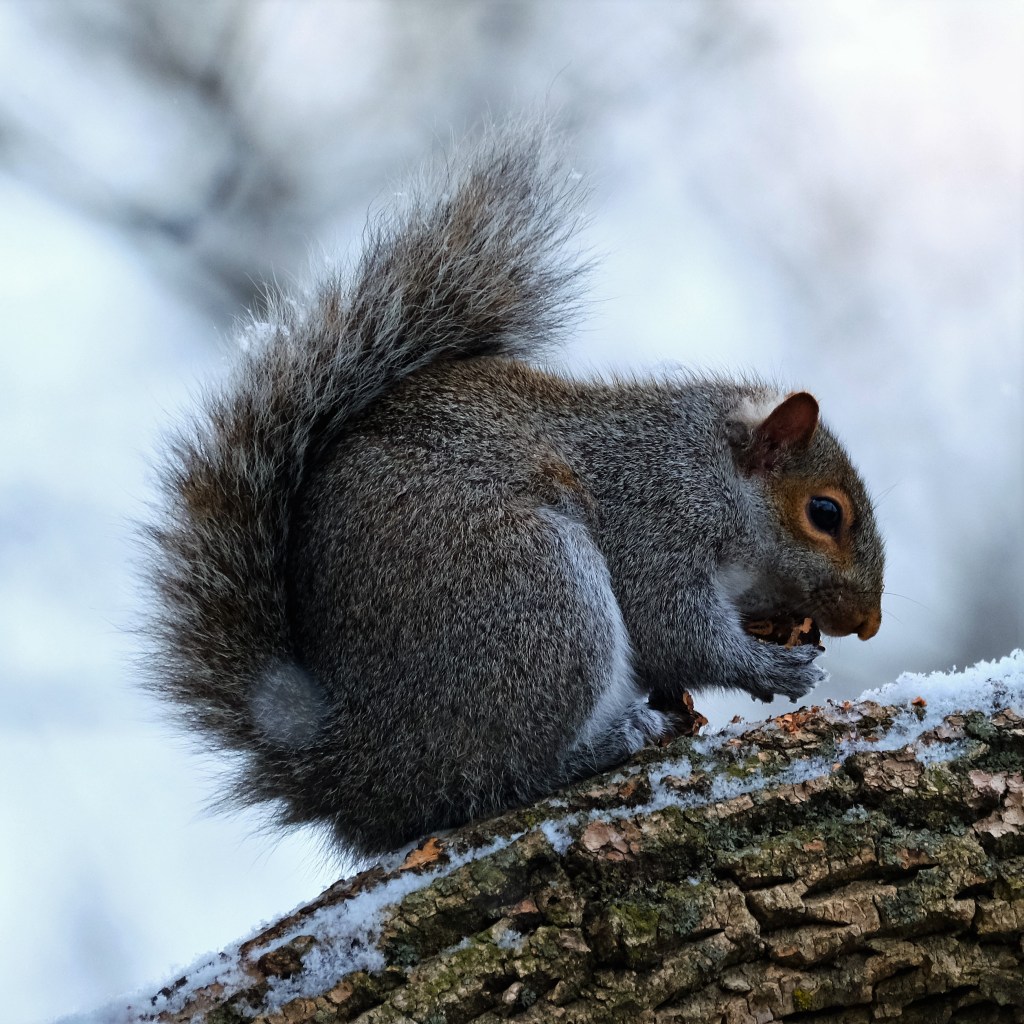
After that amazing start, there was not much else to report. I did spot a blue heron on the pond but failed to get its picture. Instead, check out this cast of wood duck characters keeping their eyes on a squirrel or two making a racket rustling nuts out of a tree at the north end of the pond.

And that’s all I’ve got for Estabrook. Happily, Anne’s nephew, David, sent in this picture of an amazing creature he spotted on his way home from the family campout we were all at last week.

Here is his commentary: “Highlight of the trip – was looking for moose tracks on the road to show to Lucas, [is son,] and ended up coming across this bull moose minutes later.”

Talk about the power of wishful thinking, eh?
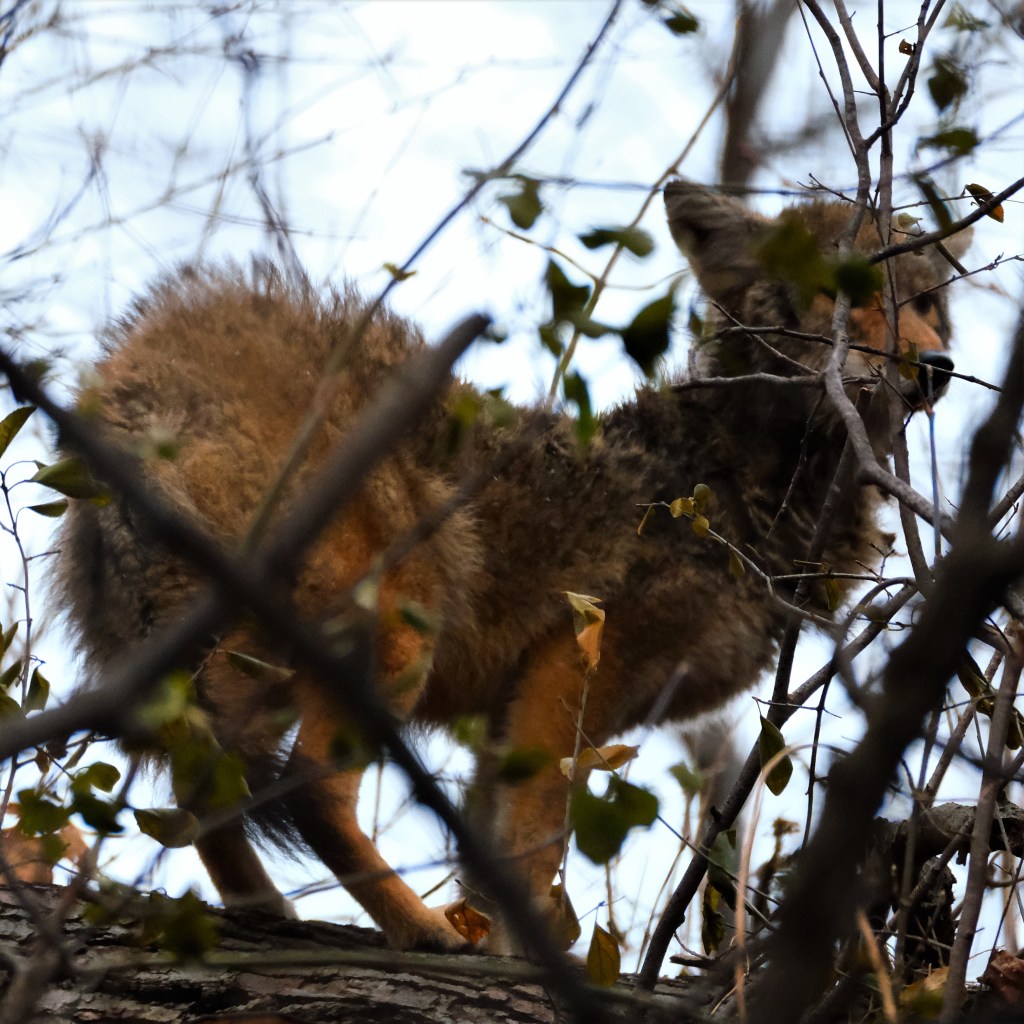
Look who’s back!

Anne and I are back home, and we both have a ton to get done before our next trip later this week, but she went for a bike ride this morning, so I figured I could afford a swing through Estabrook, and I sure am glad I did.

As I approached the pond from the south, it looked empty, and my first thought was that the wood ducks have finally fledged or hiked down to the river. I did spot a green heron quietly fishing from a stick at the south end, but it was still pretty dark, and we’ve seen a lot of them lately, so I left it alone.

The big surprise came when I could finally see the west lawn. Ha! The geese are back! It appeared to be a family of two adults and four goslings, and my bet is that the goslings have fledged, and they all flew up from the river for some of that sweet, sweet Kentucky bluegrass.

What are the odds that they’re one of the families that hatched on the pond? They seemed quite comfortable with me and even let me sit on the park bench, but I can never remember their names, so I can’t be sure.

As if that were not enough there were eight wood ducks also up on the lawn: the five ducklings, their mom, her special friend, and a new one who appears to have quite a limp but was not slowed down.

One of the ducklings even snagged a frog for breakfast!

After just sitting on the bench and enjoying the antics of the crowd on the lawn for a while, I continued around the island to see who else might be there, and look who was in the northeast bay. Man, it was like they threw me a welcome home party, and everyone came!

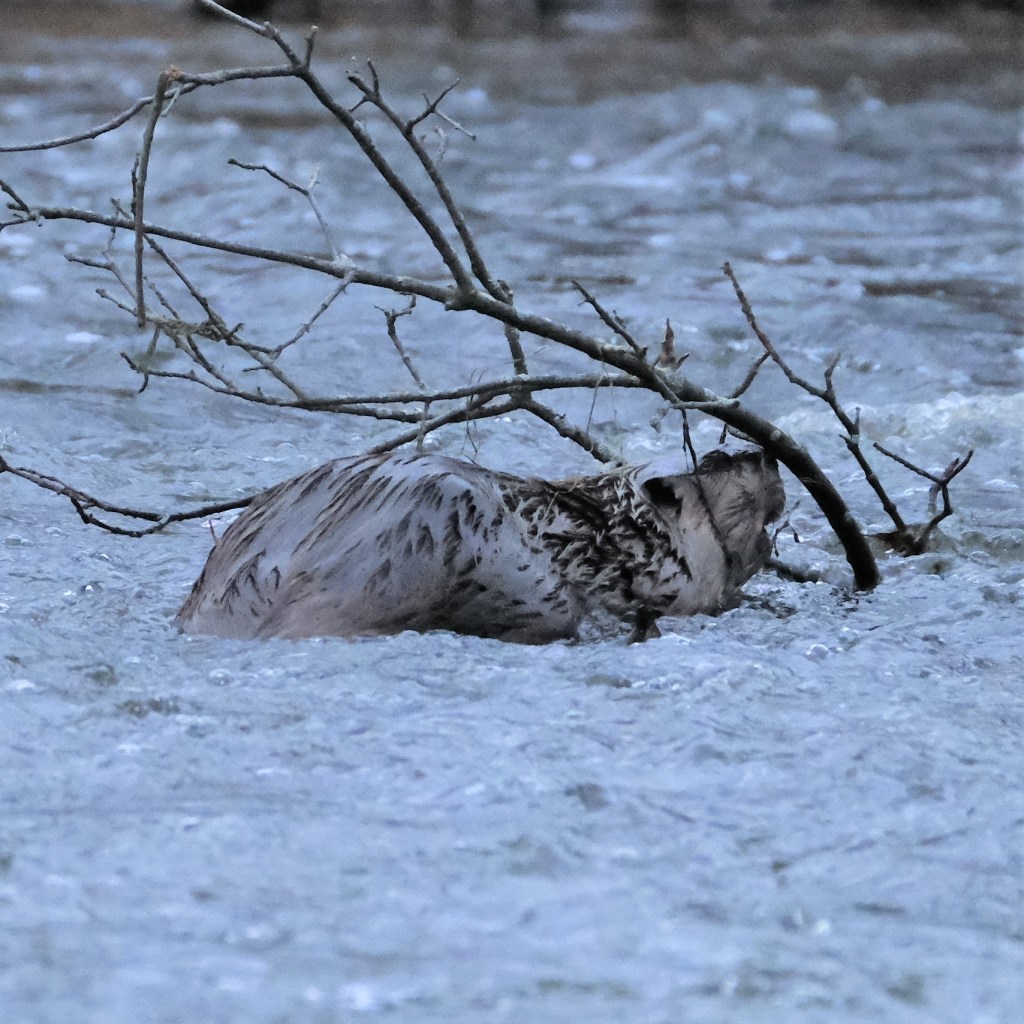
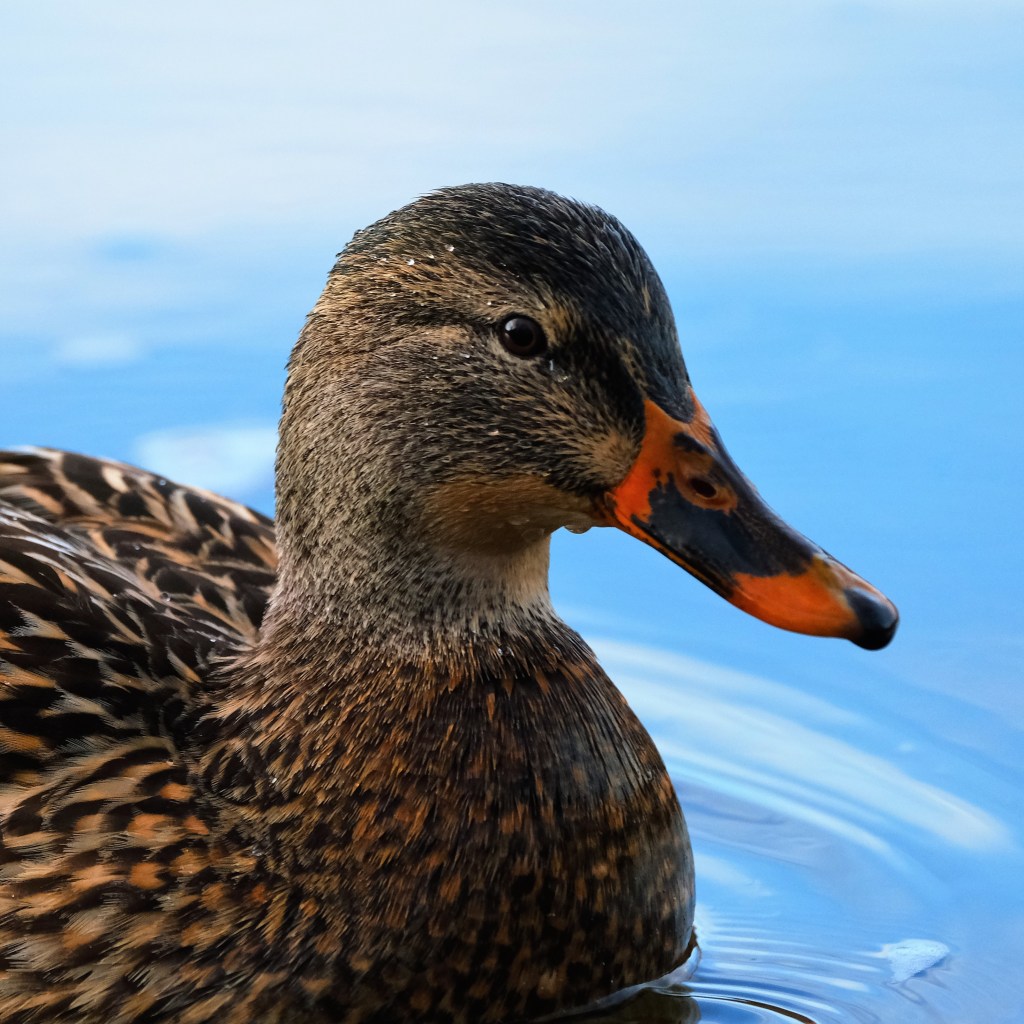
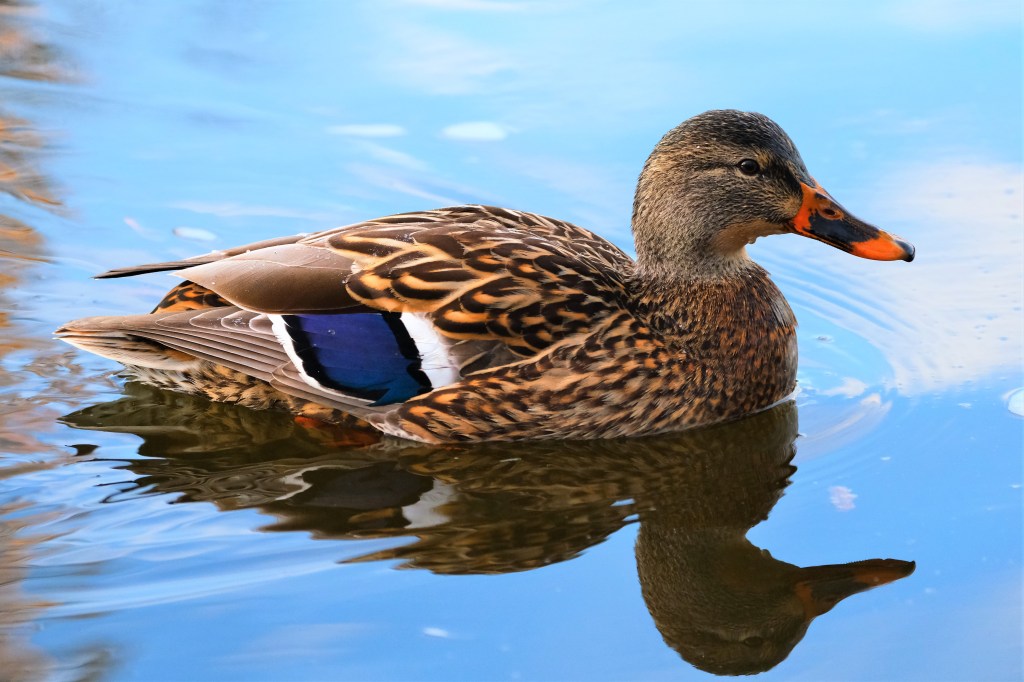
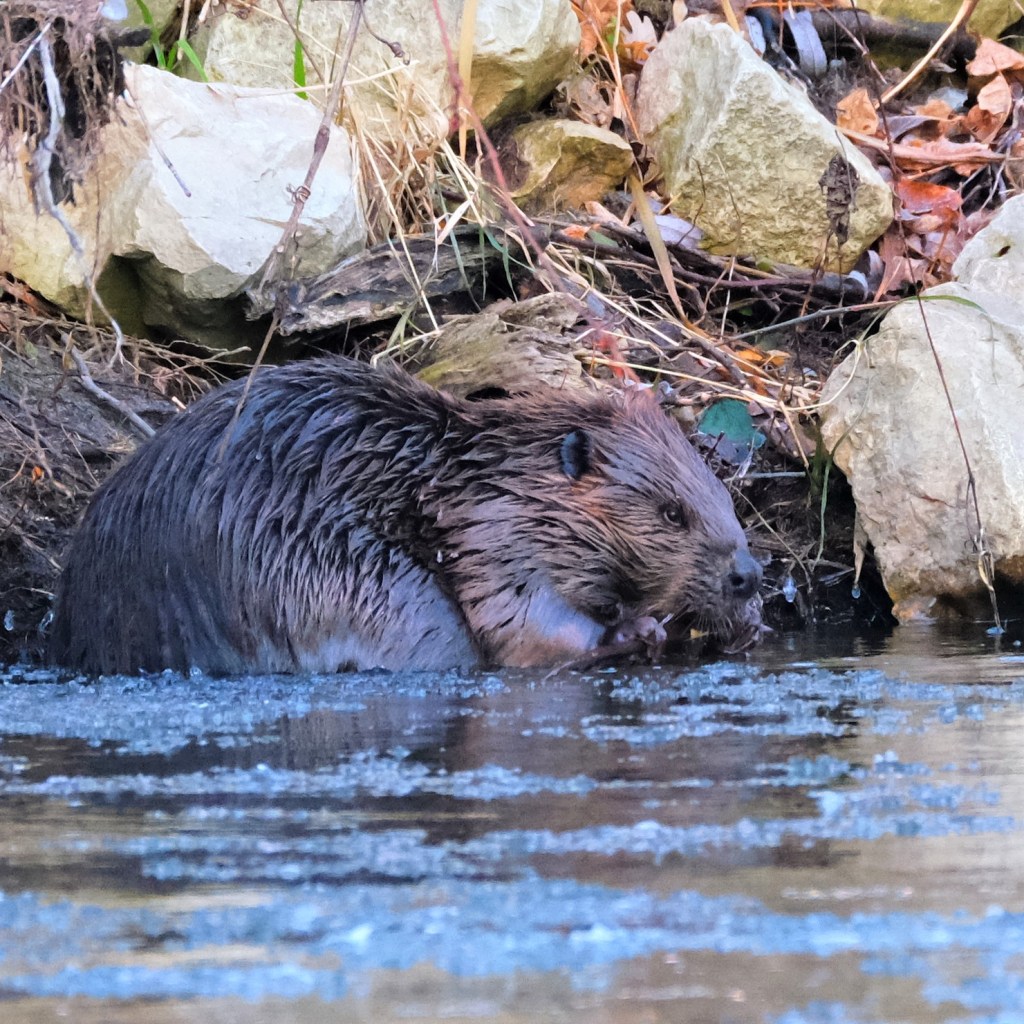
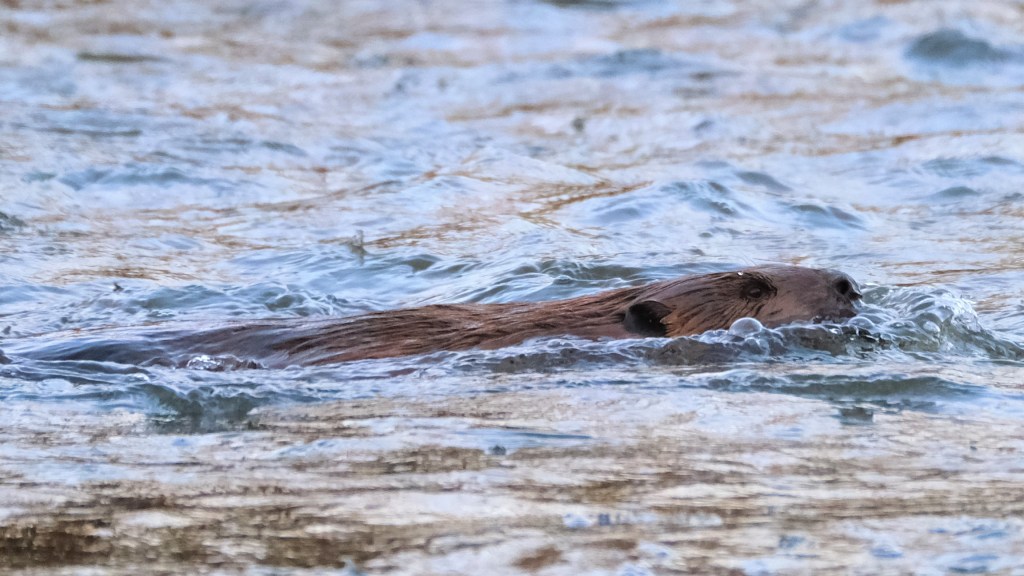
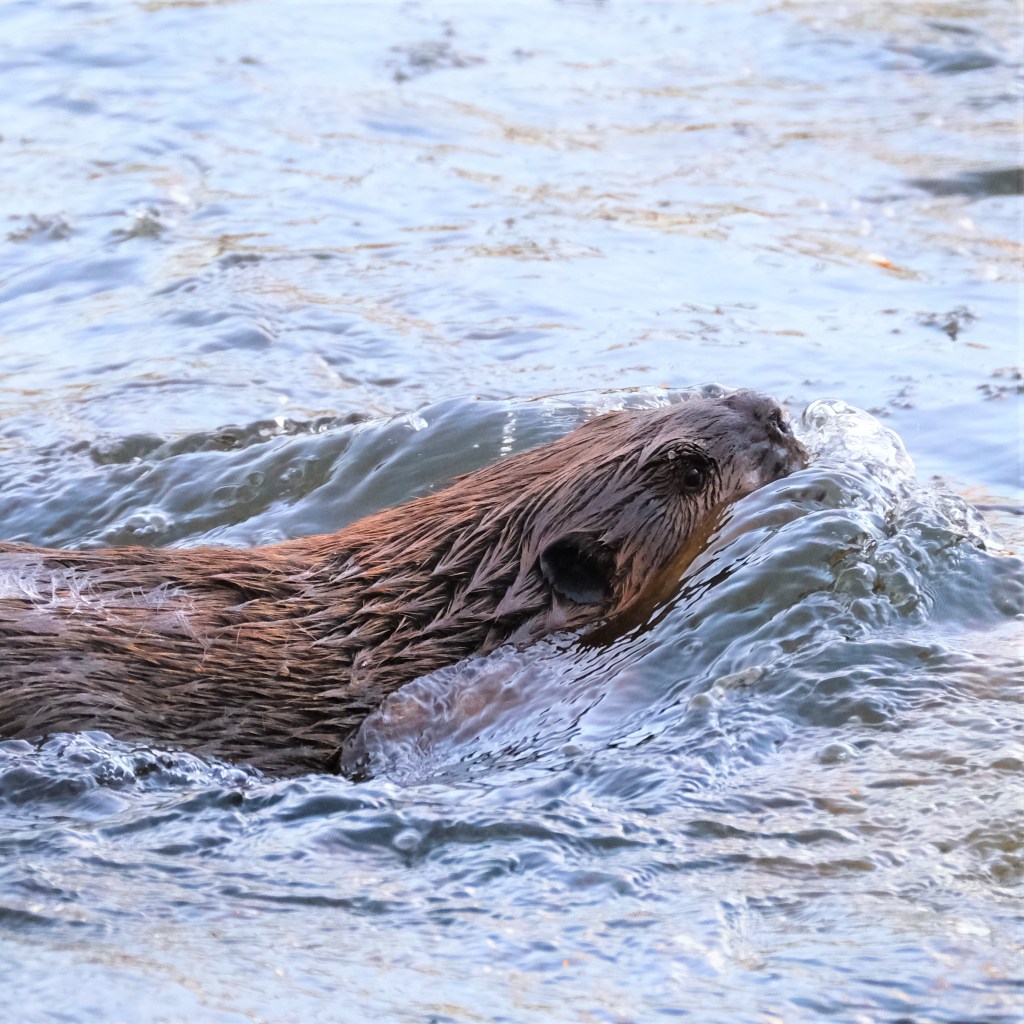
There was even a mallard hen to round it up to 5 bird species on the pond this morning. It did occur to me to check back on the green heron for a picture, but it had already moved on, with a full belly we hope, so I headed down to the river where yet another old friend swam by to say hi.

After the beaver was out of sight, I briefly glimpsed what I’m pretty sure was a hawk moth doing its best hummingbird imitation, but it bolted as soon as I moved, and my heart had a chance to slow back down.

Anyway, I couldn’t stay forever and so headed south along the river. As I kept my eyes open for hawk moths, I spotted a bit of wasp paper, which I’ve seen plenty of times before, but this bit happened to come with a whole bald-faced hornets‘ nest that had recently fallen to the ground and was still full of bald-faced hornets! Yikes!

Fortunately, they were pretty subdued in the cool and dark morning air, so I stiffened my spine and tried to get a better shot. As I leaned in, however, somebody buzzed my ear, and I had to bolt down the trail after my skin, which had leapt clean off my body. I eventually caught it and got it back on, but on the strict condition that I don’t go back and try again.

So, if you’re hiking the upper river trail, south of the southern-most stairway, keep your eyes peeled for a downed hornets nest just off the east side of the trail and don’t dawdle. Sure, I could have tried to do you a solid and move it further down the bank, but if I literally had a ten-foot pole, I don’t think I would be physically capable of doing that job.

Kohler-Andae Field Trip Report No. 3.

After coming back to Milwaukee to get some work done at UWM during the week, I returned to Kohler-Andrae for the weekend, and the American white pelicans were still there. Yay! Plus, with those huge wings, they fly nice and slow, which makes them about the easiest birds to photograph in flight I’ve ever had the pleasure of aiming at. Here are three separate birds, not the triple exposure of just one bird that it appears to be, on final approach to the Black River. You can even see their landing gear coming down.

Meanwhile, new critters, at least for me at this park, continue to make their appearances. First is a painted turtle sticking just its head through the duckweed to reconnoiter the situation.

And here’s a bullfrog playing a little less coy.

A special treat was this young blue heron fishing in a little clearing in the reeds beside the Black River and tolerating me closer than any of his cousins in Estabrook ever have.

It struggled a bit with the depth of the water, perhaps just a tad deeper than it prefers.

There was also something going on with its head feathers that I don’t believe I seen before. Maybe just too much product that day.

By the fishing pond, where I had spotted the bluebird last weekend, I noticed a little path, the so-called “Ancient Shores Trail”, which the signage claims follows a bit of the Nipissing Great Lakes shore from 7,500 years ago, and so I gave it a try. It was nice enough, and at the far end of the loop, in a small grove of pine trees, I could hear a chorus of calls. One was coming from a family of raptors, with at least three and maybe four members, and a second set of calls was coming from either squirrels or chipmunks in the neighboring trees.

I never did see the rodents, perhaps by design, but one raptor was kind enough to offer us these views, from which I conclude it to be an immature Cooper’s hawk.

Back to the pond, I was pleasantly surprised to spot a nice little yellow warbler, a female based on her lack of stripes, soaking up the morning sun.

On the walk back to the campground from the pond, I spotted our first eastern phoebe of the season, pausing on a guardrail and nicely backlit by the morning sun.

At the same spot, where the road crosses over the Black River, a green heron was also enjoying the morning sun. I guess it had been a cold night.

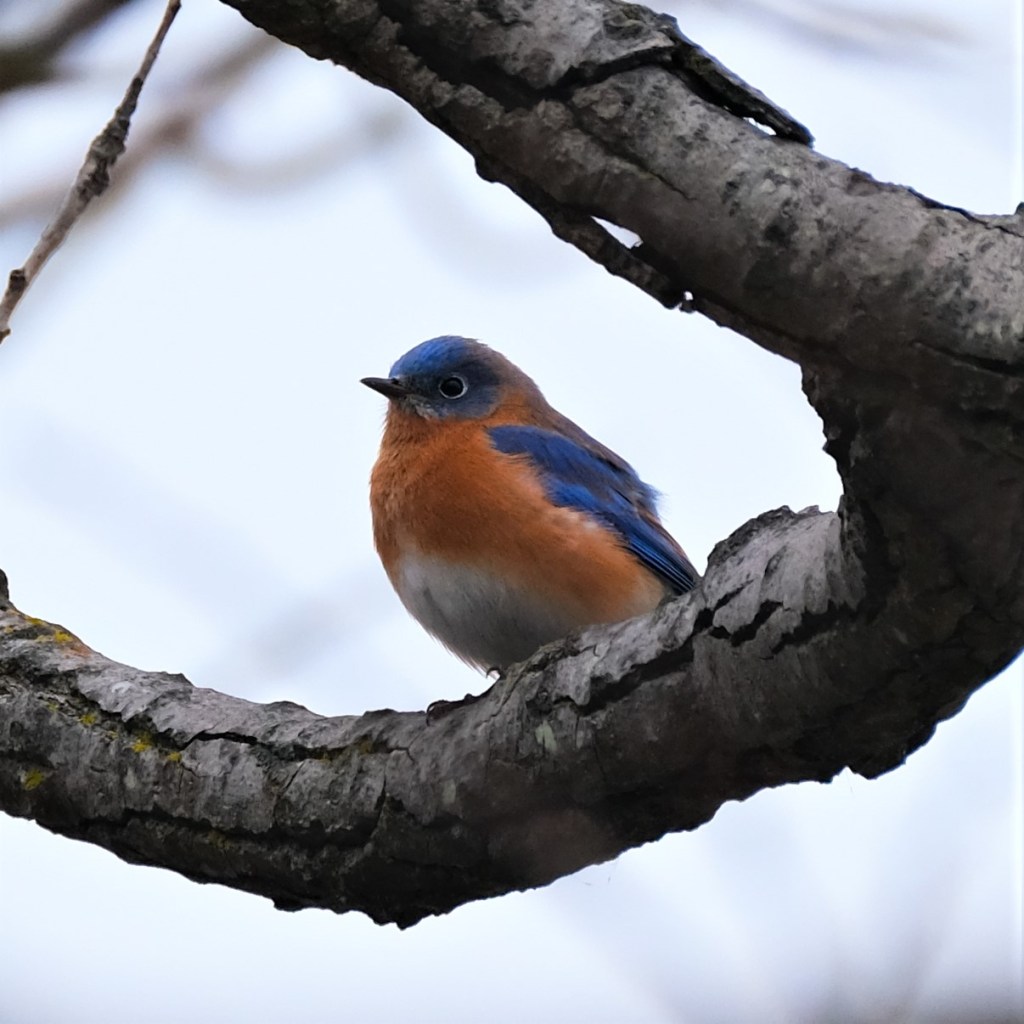
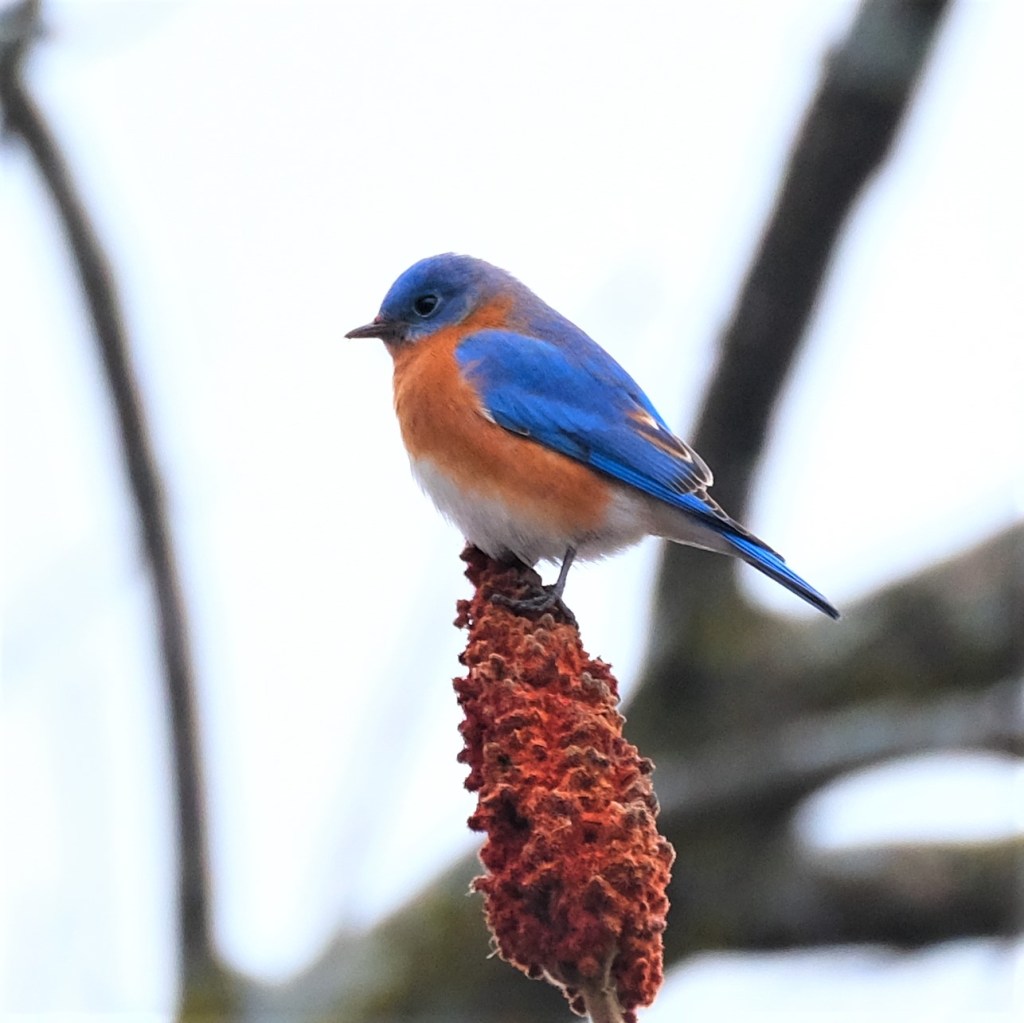
That spot is so popular, even a bluebird paused to give us one more look.

Just a bit up that road, I couldn’t help but take another picture of a marsh wren doing what marsh wrens do.

Closer to the campground, a hungry crow was too busy picking berries to remember that we’re usually not allowed to have such a nice close look at them.

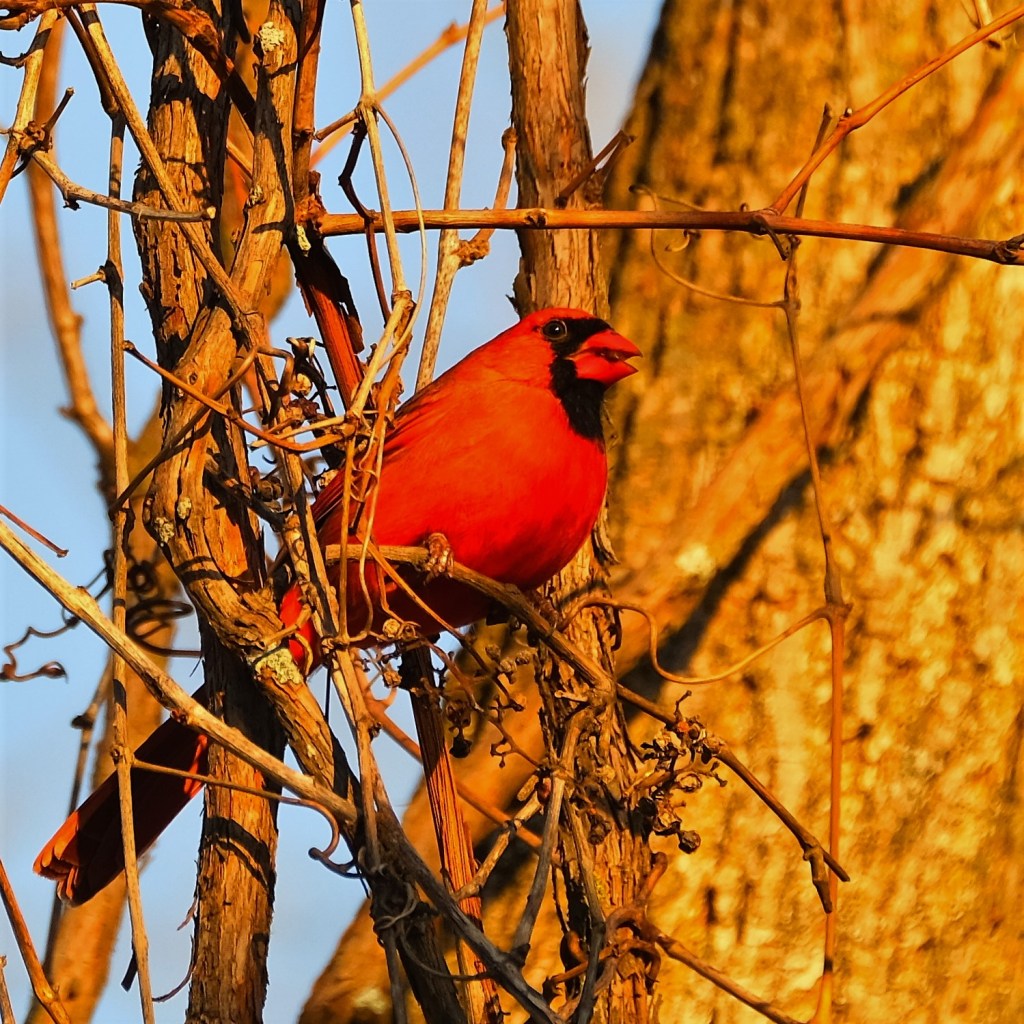
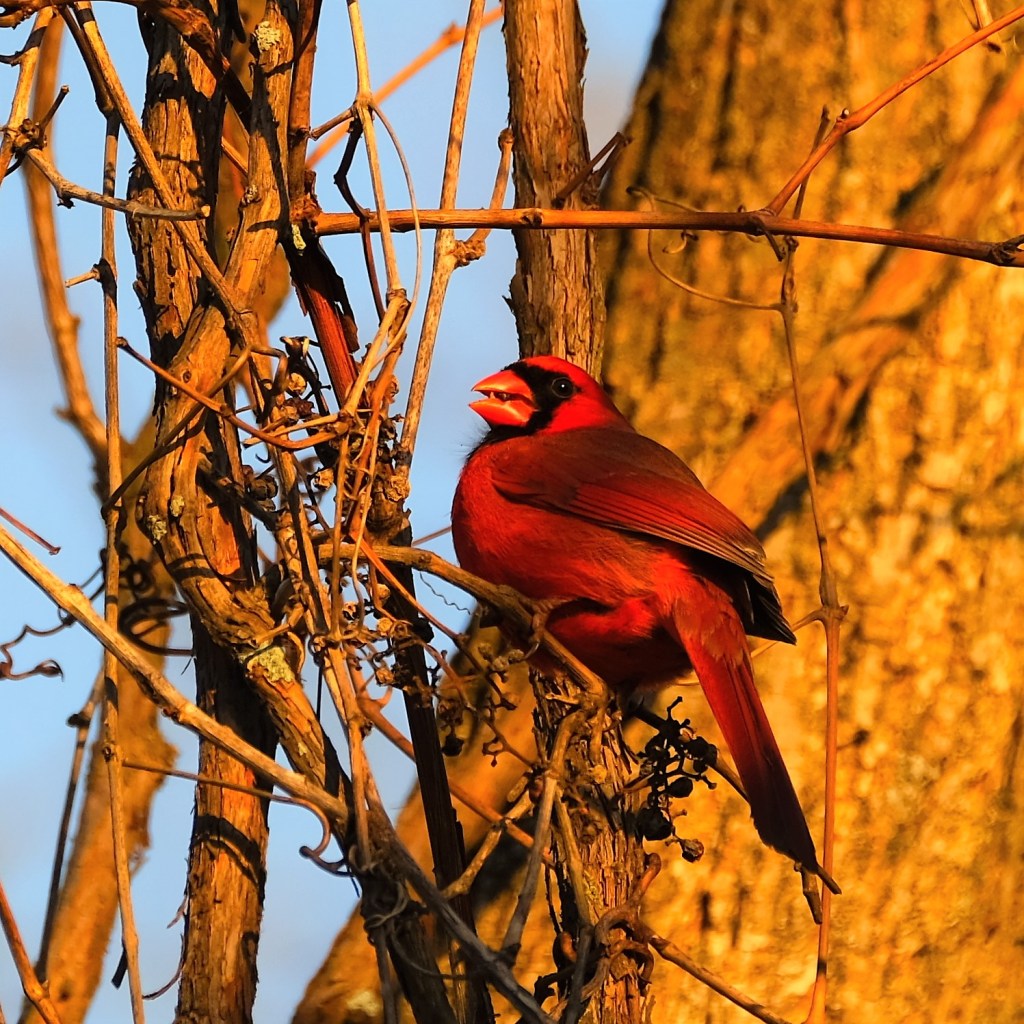
Right by the crow was this unfortunate-looking northern cardinal appearing to suffer from male pattern baldness, which could be due either to an unusual molt or feather mites. It didn’t affect his singing, however, and I read that the good news is that “in most cases new head feathers grow in within a few weeks.” It sure accentuates that big ol’ beak, though, doesn’t it?

And that’s finally it for the birds. For the mammals, we swap out one of the largest, the white-tailed deer from last weekend, for one of the smallest, this very shy and very small rodent, either a cinereus shrew, masked shrew, or just common shrew (Sorex cinereus) or an American pygmy shrew (Sorex hoyi). They weigh in at just 5 or 4.5 grams, respectively, vs a relatively whopping 23 grams for the eastern meadow vole (Microtus pennsylvanicus), sometimes called the field mouse or meadow mouse.

Finally, on our way home, Anne wanted to show me the “Black River Trails” at the north end of the park, which features a huge wildflower meadow, and that’s where I finally found our first eastern tiger swallowtail of this season. At last!

I had hoped to wrap up with a monarch on one of these pretty knapweed blossoms, probably spotted knapweed (Centaurea stoebe), but I goofed up that picture, and we’re stuck with this hard-working bumblebee instead.

And that concludes our field trip to Kohler-Andrae State Park for this season. It’s back to Estabrook for us until next summer.

Kohler-Andae Field Trip Report No. 2.

Long-time readers may recall my trip to Kohler-Andrae State Park last summer, when I was thrilled to show you a couple of sandhill cranes and a colt. Well, the critters up there must have heard about all the sightings we’ve been having since then here in Estabrook because they sure have come out in droves this summer!

On my first excursion, Sunday afternoon, I finally managed to capture a portrait of several marsh wrens (Cistothorus palustris), whom I don’t believe we have in Estabrook, and who had completely evaded me last summer.

They even obliged me with a couple of their classic reed and cattail poses. Sweet.

The next morning, I got out before sunrise and ended up losing track of all the deer I encountered, but here’s one handsome buck and two different does with their fawns.

If you are questioning how I can assert that they are different does, I’ll just say, “look a little closer” and leave it at that. If you just like pretty pictures, maybe don’t look too close.

At one point on my walk, I came across an actual wildlife traffic jam as a pair of deer crossed the frame between a turkey in the foreground and a pair of cranes in the background. It was crazy!

The other huge sighting came this morning when I finally managed to capture a few images of some of the many American white pelicans (Pelecanus erythrorhynchos), whom we’d seen flying overhead, and who are on the extreme eastern edge of the migratory range. For perspective, the Cornell Lab of Ornithology reports that they are “one of our largest flying birds: considerably larger than a Bald Eagle; smaller than a California Condor.” They weigh from 10 to 20 lb and have wingspans of 8 to 9.5 ft!

We’d seen them fly over several times, but I don’t tend to carry my camera with me all day, so it sure was great when the birds and my camera got their acts together.

This morning, as I checked the boardwalk through the marsh from the campground to the Black River, I could hear a bunch of splish-splashing through the reeds but couldn’t see anything.

When I finally stood on top of a bench, I could just see them busily fishing with their huge bills in the lily pads on the river, but only through the thick reeds. That’s when I had the potentially-problematic idea to run back to camp to borrow my father-in-law’s folding ladder.

Good thing it was just 6 am because I bet that sight would have raised some eyebrows. Anyway, with Anne helping hold it steady, I could finally see over the reeds from the top rung, and I didn’t even fall off the ladder into the marsh, so here we are. What a treat to see, eh? And thanks to Don and Anne for their help!
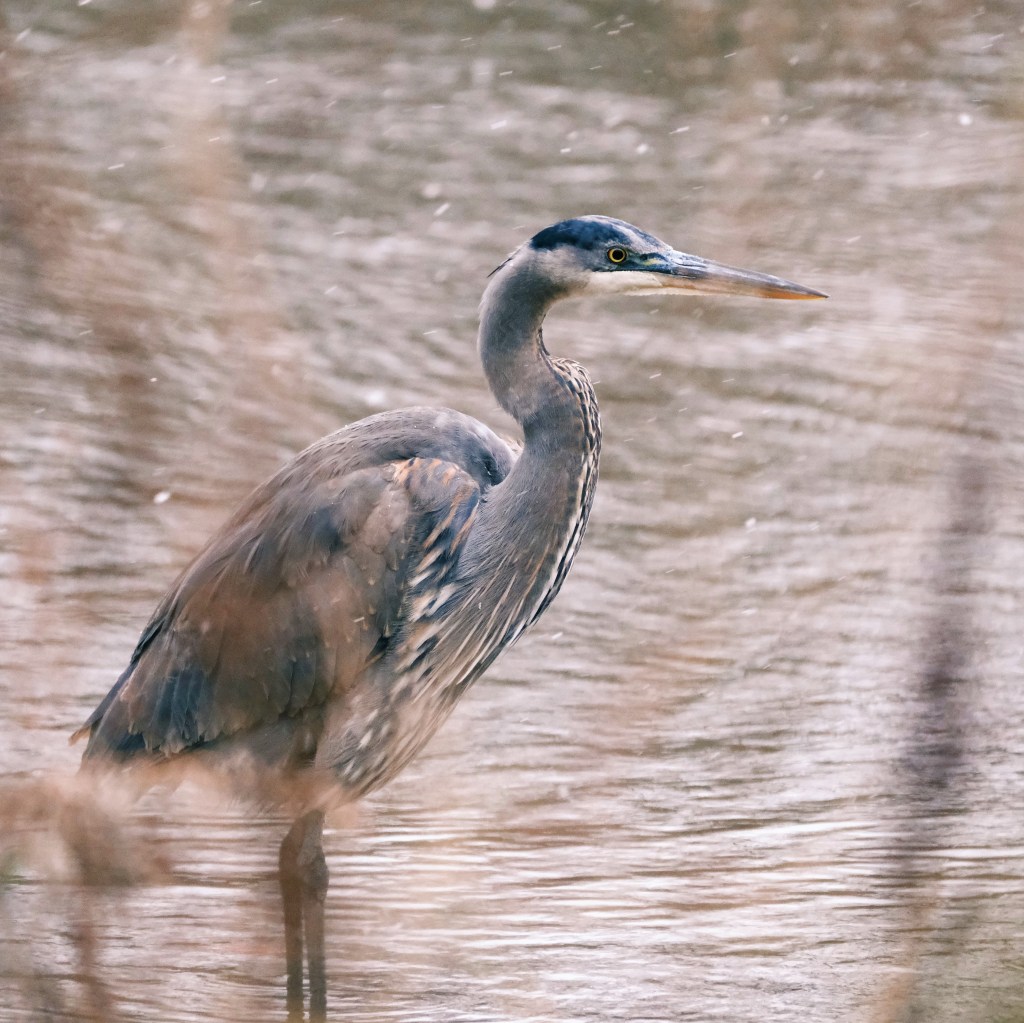
There were also plenty of song sparrows, red-winged blackbirds, goldfinch, cedar waxwings, eastern kingbirds, blue jays, green herons, crows, and monarch butterflies, all of whom we’ve already seen plenty in Estabrook, so I’ll spare you from those images this time.

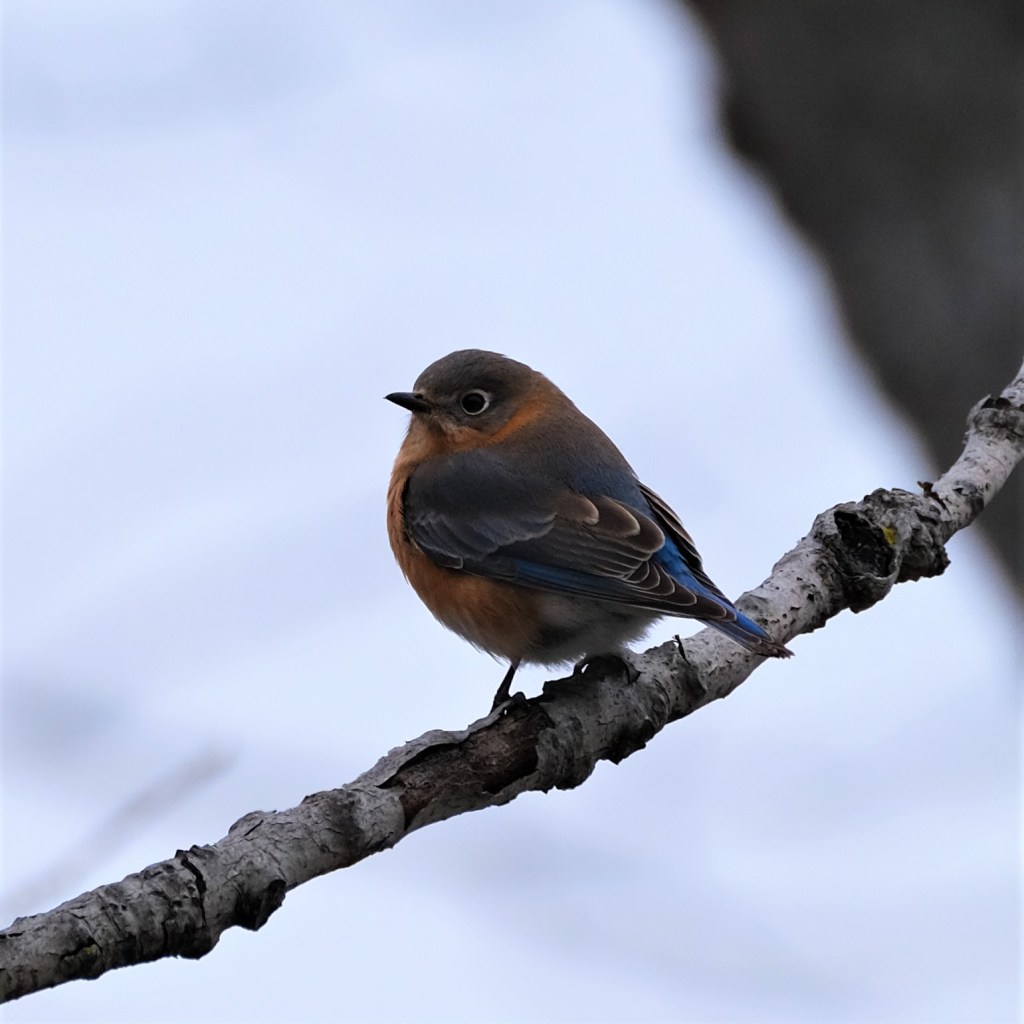
Instead, I am thrilled to finally show you pictures of an eastern bluebird, whom we did see last summer in Estabrook, but who seem to be missing this summer. I’m just happy to see them wherever they want to be.

Finally, I believe I’ve spotted my first American redstart at long last, but see my comment above about cameras, so that’ll give me something to work on when I go back later this week. Wish me luck!

Some nice peak-summer scenes…

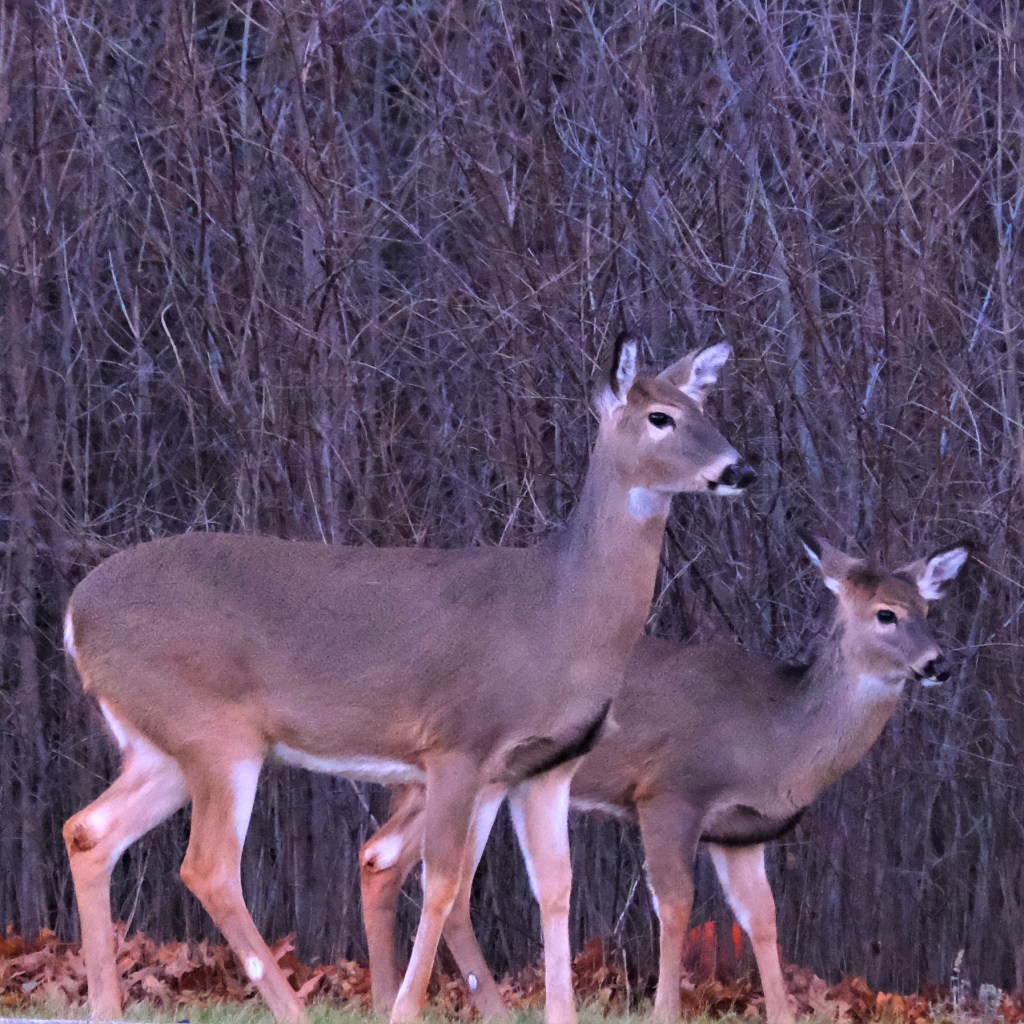
It appears that we get a bit of a reprieve from the hazy, hot, and humid weather, at least for today. Oh, it will still be plenty warm, but there was some nice blue sky this morning, and I was greeted by this fawn and its mom on the lawn of the Benjamin Church House.

After a bit, they ambled across the road and the soccer fields toward the woods, but the fawn didn’t want to give up playing in the open field right away.

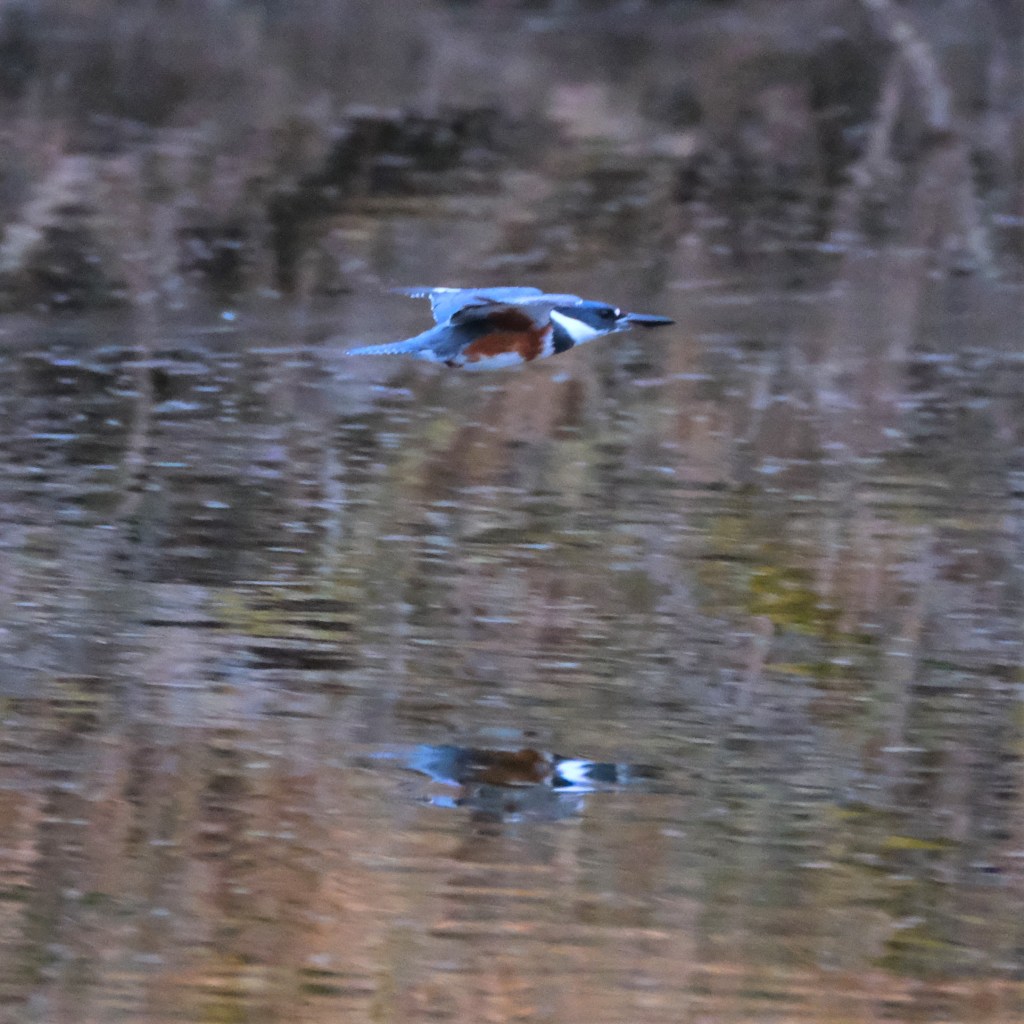
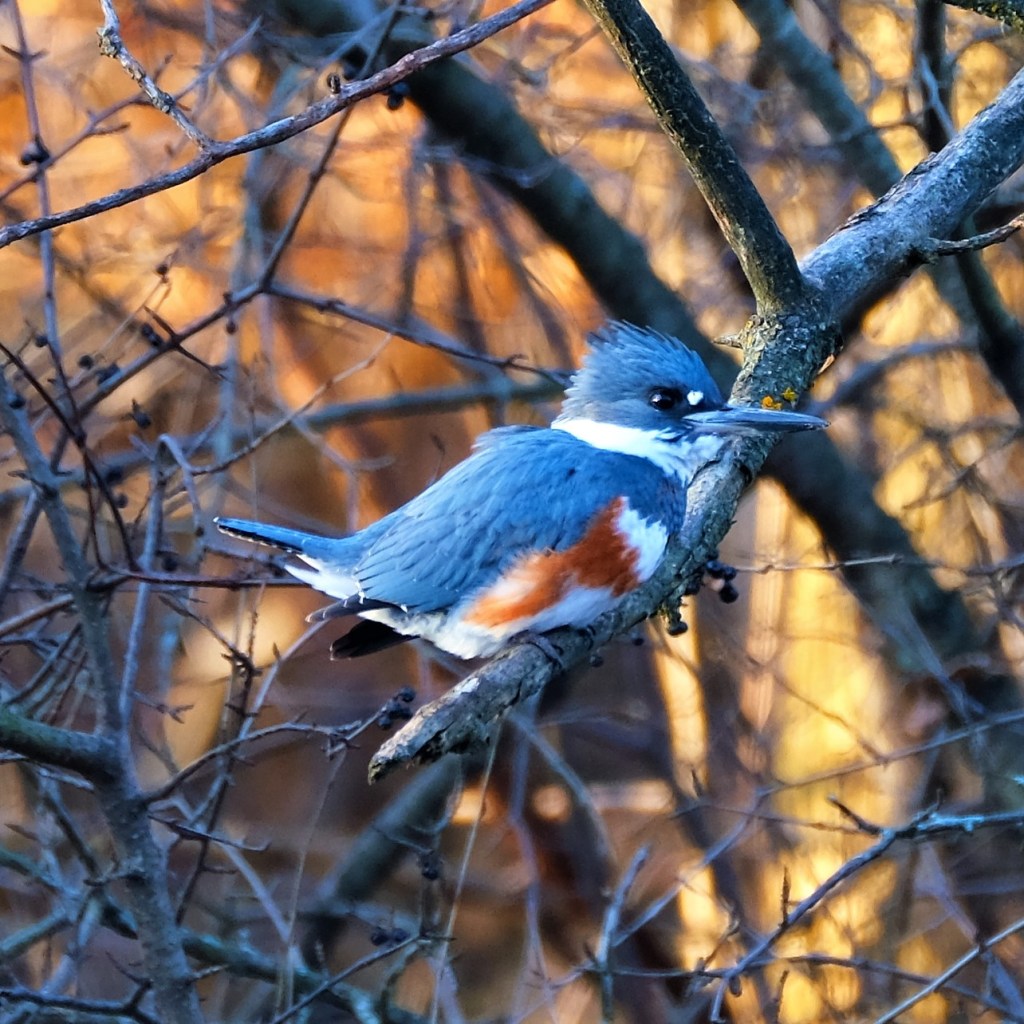
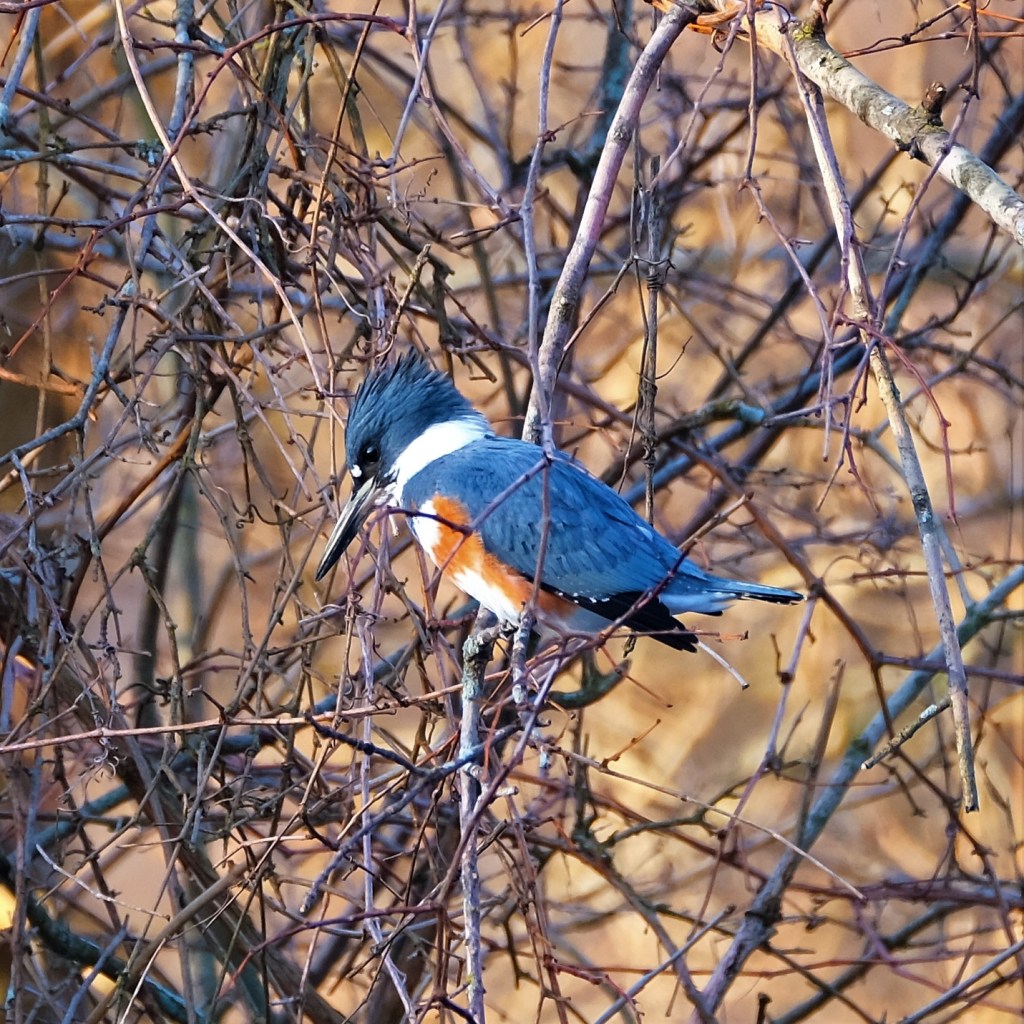
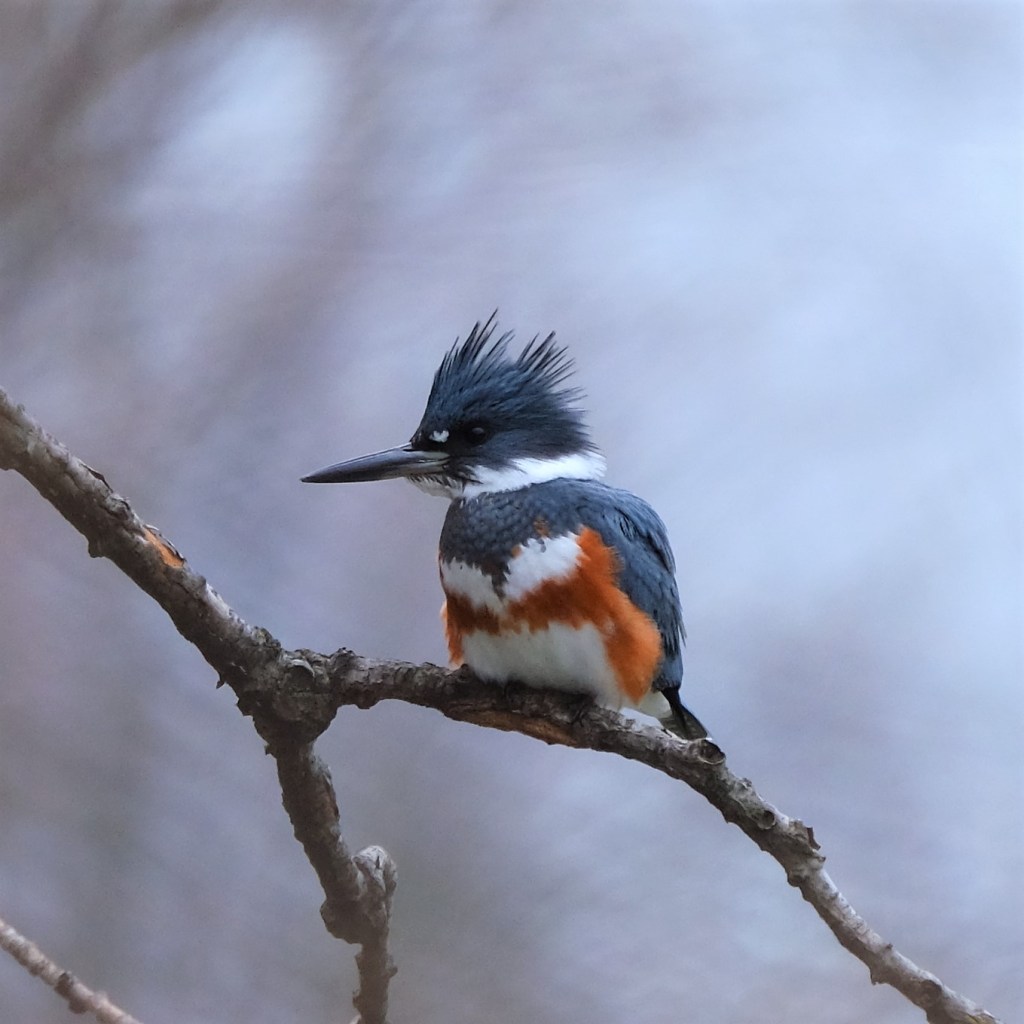
At the pond, the ducks are herons are still there, but the star of this morning is this belted kingfisher who was distracted for a moment after catching what appears to be a dragonfly nymph, and provided me my best opportunity yet to take her portrait, even if backlit by the morning sun.

I also managed to get out yesterday, but never had the chance to post these pictures. One more weed is blossoming on the west edge of the soccer fields, burdock this time, and the monarchs are taking advantage of the new food source.

The house wren is still there and still singing from his nesting cavity. There were actually two of them this morning chasing each other, and the sky was blue, but the pictures from yesterday came out better anyway.

Finally, this little bunny was enjoying its greens so much yesterday morning that I was able to capture this little series.

Lastly, I’m gonna be taking a break for a while, first for some family camping, and then for a trip to see my folks, so I won’t be seeing much of Estabrook Park for a couple of weeks. As before, I’ll try to show you anything interesting that I see, but I probably won’t be able to do that daily. Then it will be time for the fall semester to get rolling, and there’s been some recent turmoil with my teaching schedule, so we’ll just have to see how things go.

One hot heron.

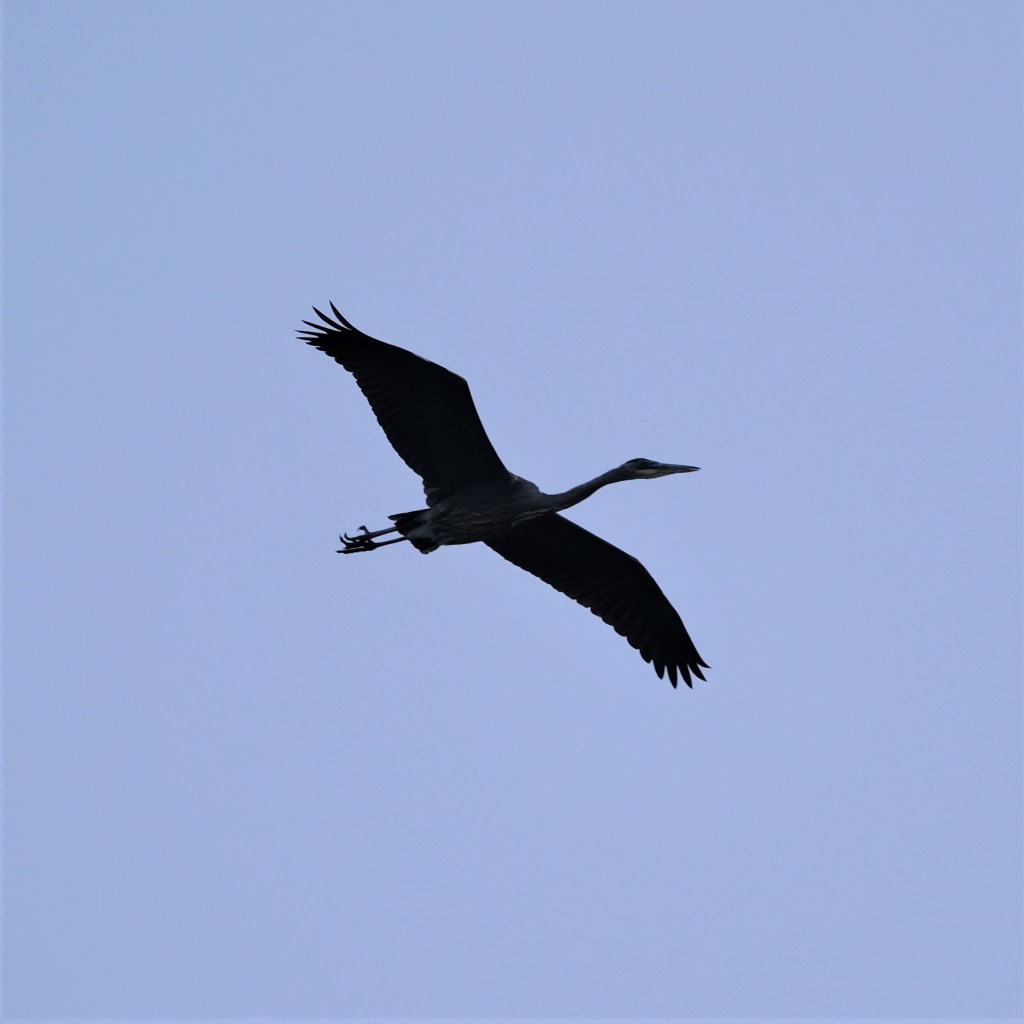
Oof! It is seriously hazy, hot, and humid out there, and it appears that even this blue heron on the river was feeling it.

Meanwhile, this spotted sandpiper seemed unperturbed.

A pair of red-tailed hawks circled over the north end for a while, and I even got one presentable image out of it.

And a green heron on the pond was up to its usual tricks.

Besides all the birds, there appears to be a new, little, brown butterfly in the park, and I saw them fluttering about nearly everywhere, but never could spot one taking a break. Maybe next time.

Some interesting behaviors.

Thanks to everyone who came out to the Estabrook Beer Garden for the festivities yesterday afternoon. The weather was beautiful, and the event appeared to be a huge success. I didn’t post yesterday, by the way, to avoid stealing any of the limelight the Bucks deserve. I did get some pictures yesterday and this morning, however, so here we go.

First off is this fascinating view of one of the wood duck ducklings on the pond resurfacing after dabbling for a snack. The wide eye is a cool effect, if you can pull it off.

Here they are in a much more relaxed pose.

Meanwhile, this painted turtle was up to something, and I’m not sure what. The sun was not out, and the air was not very warm at the time, so it sure wasn’t sunning itself.

It is easy to tell, however, what this young robin was up to in the mulberry tree.

There are a few blossoms opening that we haven’t seen since last summer, and along the path from the beer garden to the skateboard park, there is a nice patch of Culver’s root or tall speedwell (Veronicastrum virginicum).

The Pedia of Wik explains that “The name “Culver’s root” derives from a certain Dr. Culver who was a pioneer physician of the 18th century and used its bitter roots for purgative purposes,” although a citation appears to be needed to confirm that detail.

On the slope down to the river is one small but striking clump of royal catchfly (Silene regia).

Finally, along the boardwalk are a few hyssops, and one of them has some nice color to it, which might make it blue giant hyssop (Agastache foeniculum).

Lastly, just as I was crossing the Oak Leaf Trail, I spotted this little beauty, a ‘summer’ spring azure (Celastrina ladon neglecta) feeding on a crown vetch (Securigera varia) blossom.

P.S. The robin was on her nest, so no egg picture today. Maybe tomorrow.

A big breakfast in a little bird.

I could see a blue heron in the bushes at the north end of the pond when I arrived this morning, and as I tried to make my way around to a better viewing angle, I was treated to the spectacle of this little omnivorous wood duck duckling, almost all grown up, scarfing down a pretty good-sized frog it had managed to catch.

After quite a bit of thrashing, down it went.

That’s gotta provide quite the full-belly feeling, eh? Even makes me want to take a nap.
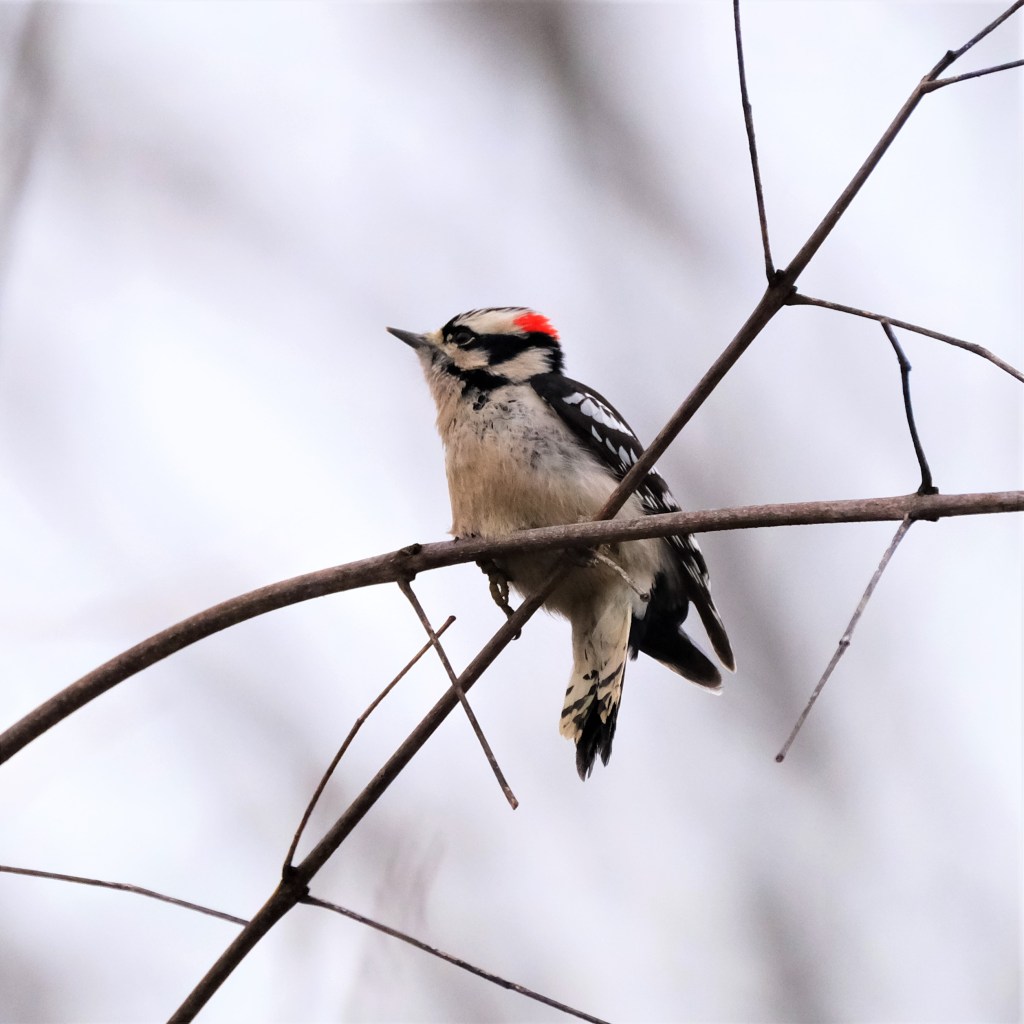
I never did get a good shot of the blue heron, but this green heron did it’s best to fill the gap.

I didn’t see a thing on the river today other than one goose and maybe a couple dozen mallards.

Back at the pond, the blue heron was out of the bushes, and checking out what the ducks are always finding up on the west lawn.

And finding no fish, frogs, or crayfish, it continued south to the reeds on the west side, where it did find what appears to be, based on the tail, at least one little fish.

Meanwhile, Mrs. Wood Duck and her special friend were keeping an eye on me, and after the frog and mink episodes, I have new respect for their abilities.

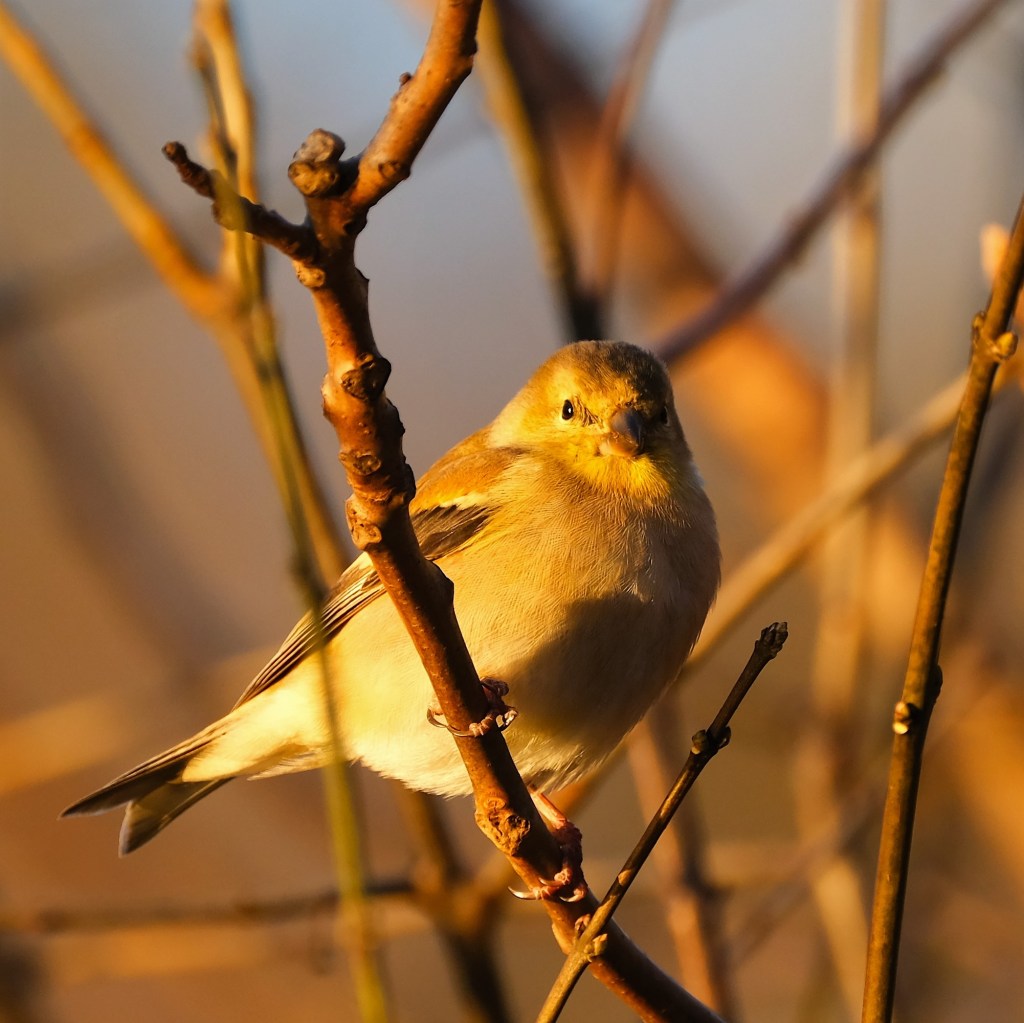
Finally, by the soccer fields, I found no butterflies today, but the goldfinch were back on the bull thistle and being quite photogenic about it.

Lastly, on day 3 of Clutch-Watch, we’ve still got 3 robin eggs. Yay!

PS. The forecast is looking perfect for tomorrow’s event at the Estabrook Park Beer Garden. At 5pm it is supposed to be 70° with 57% humidity, a light breeze, and 1% chance of precipitation, so you don’t have to worry about melting from either the sun or the rain. It would be great if you could support Friends of Estabrook Park, but it’s a public space, and I’ll be happy to see you either way.

Oh, and Go Bucks!