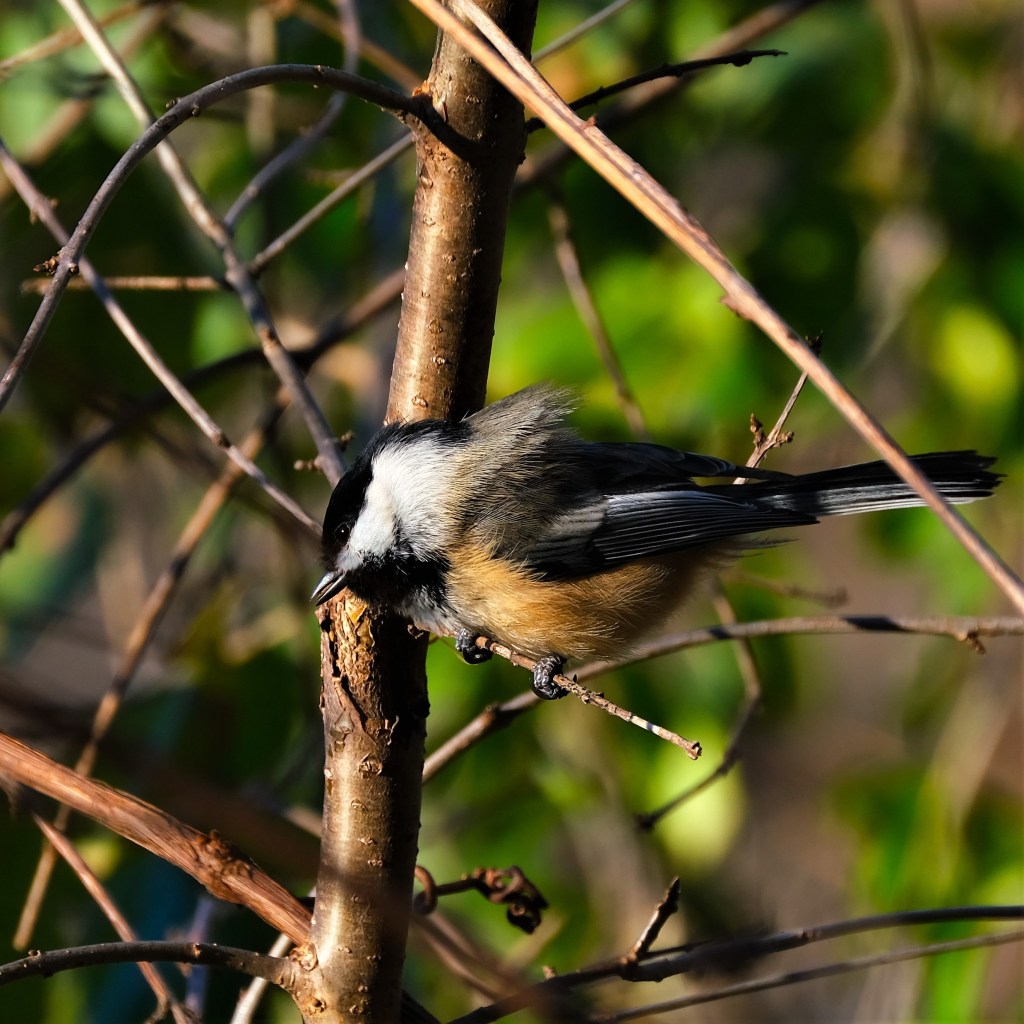
Monday gets off to a slow start

I had such good luck with the late start yesterday, that I tried it again today, but that lightning appears not ready to strike twice just yet. Nevertheless, I did get to see a blue heron on the pond.

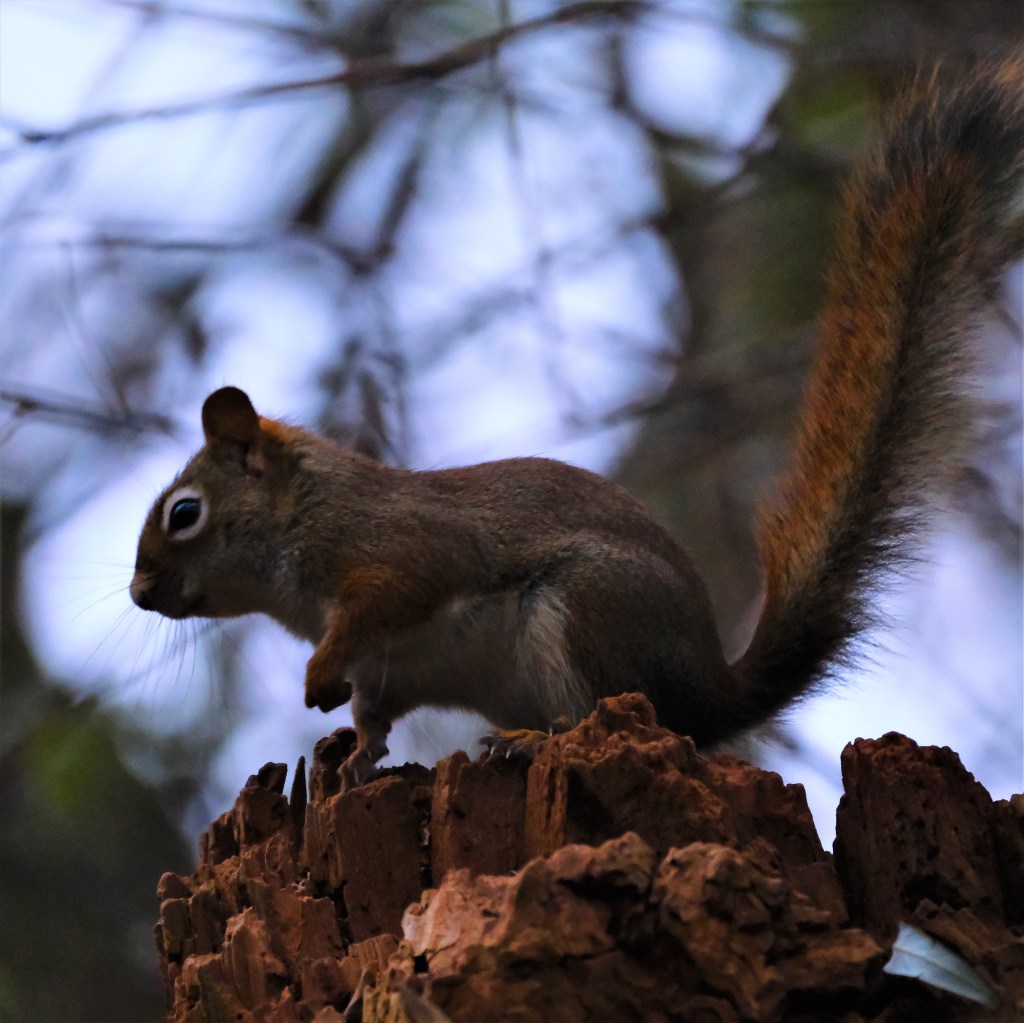
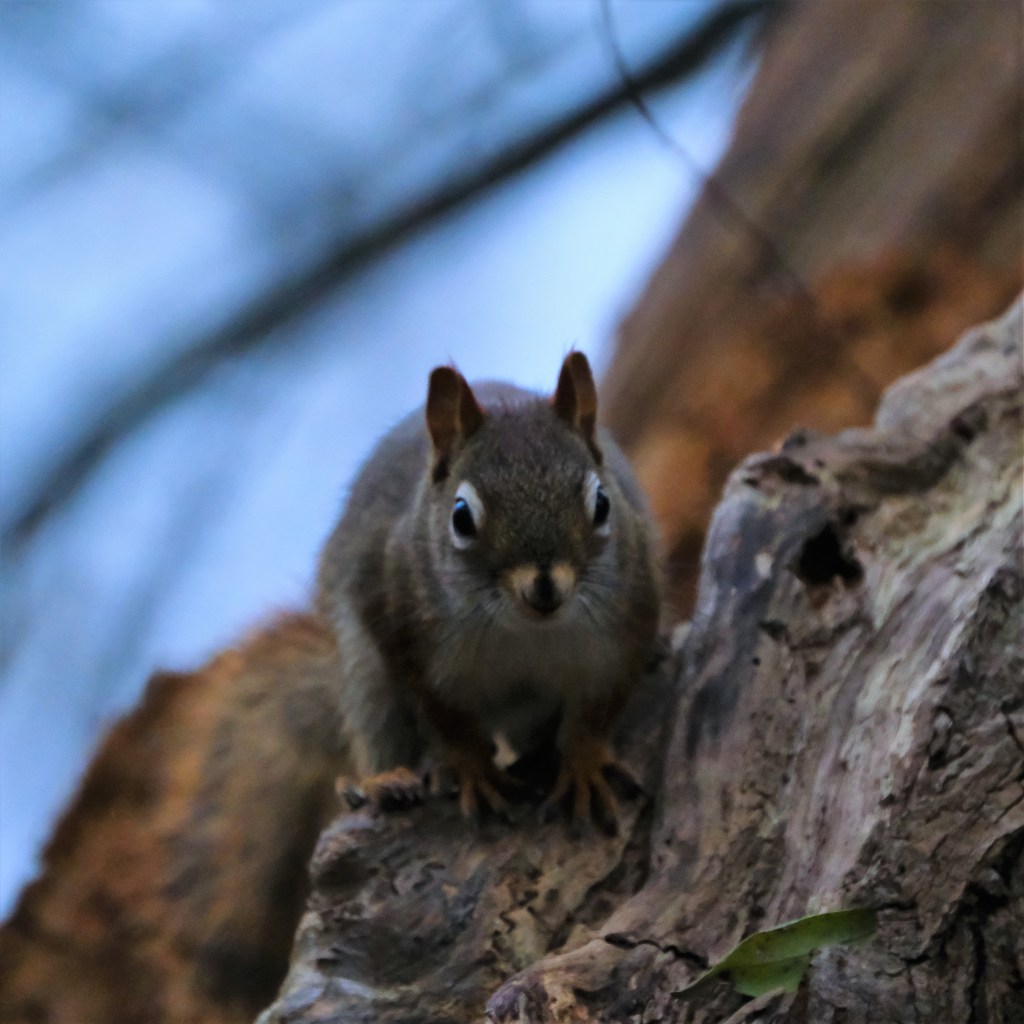
A grey squirrel checked me out along the river.

And then back to the pond again already, where a young or female Baltimore oriole was checking on the fruit situation,

And the wood ducks were lounging on their log as Mom gave out free face preenings,

Which some ducklings seemed really to enjoy,

And some less so.

As I approached the soccer fields, I encountered yet another small white moth, which could be a large lace-border (Scopula limboundata) with the “lace” worn off the boarder and the pattern faded a bit.

This butterfly, possibly a similarly worn pink-edged sulphur (Colias interior), was feeding on dandelion in the field.

And this monarch found one of the sow thistle blossoms starting to open throughout the park.

Finally, the robin still has three eggs in her nest.

Lastly, the forecast (partly cloudy with 6% chance of rain and a high of 74°) is looking great for the Estabrook Park 105th Anniversary Celebration on Wednesday at the beer garden. I’ve copied their latest flyer below with all the details. It would be great if you were willing and able to chip in, but you certainly don’t have to, and I’ll be happy to see you in either case.

Several new sights to see.

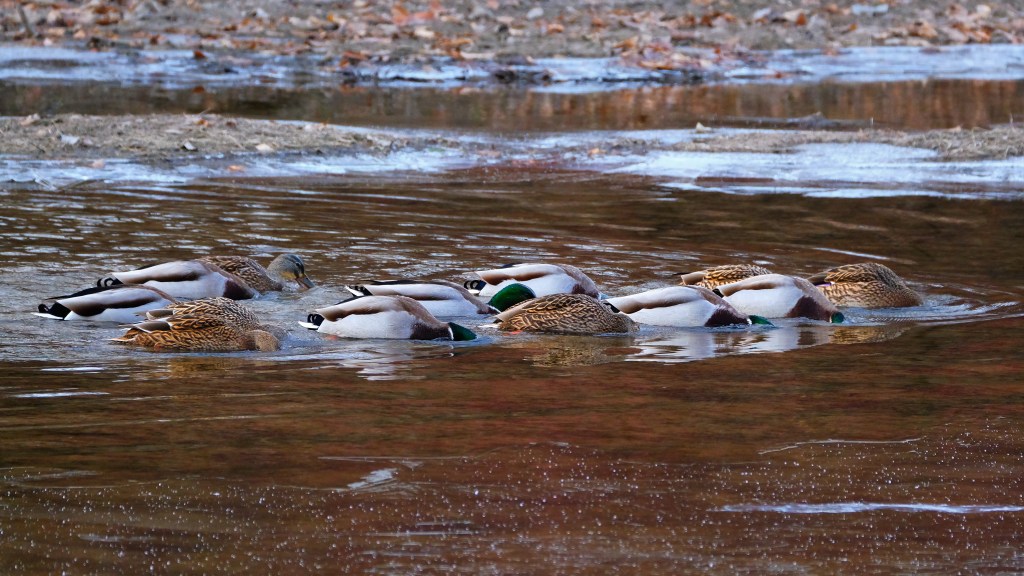
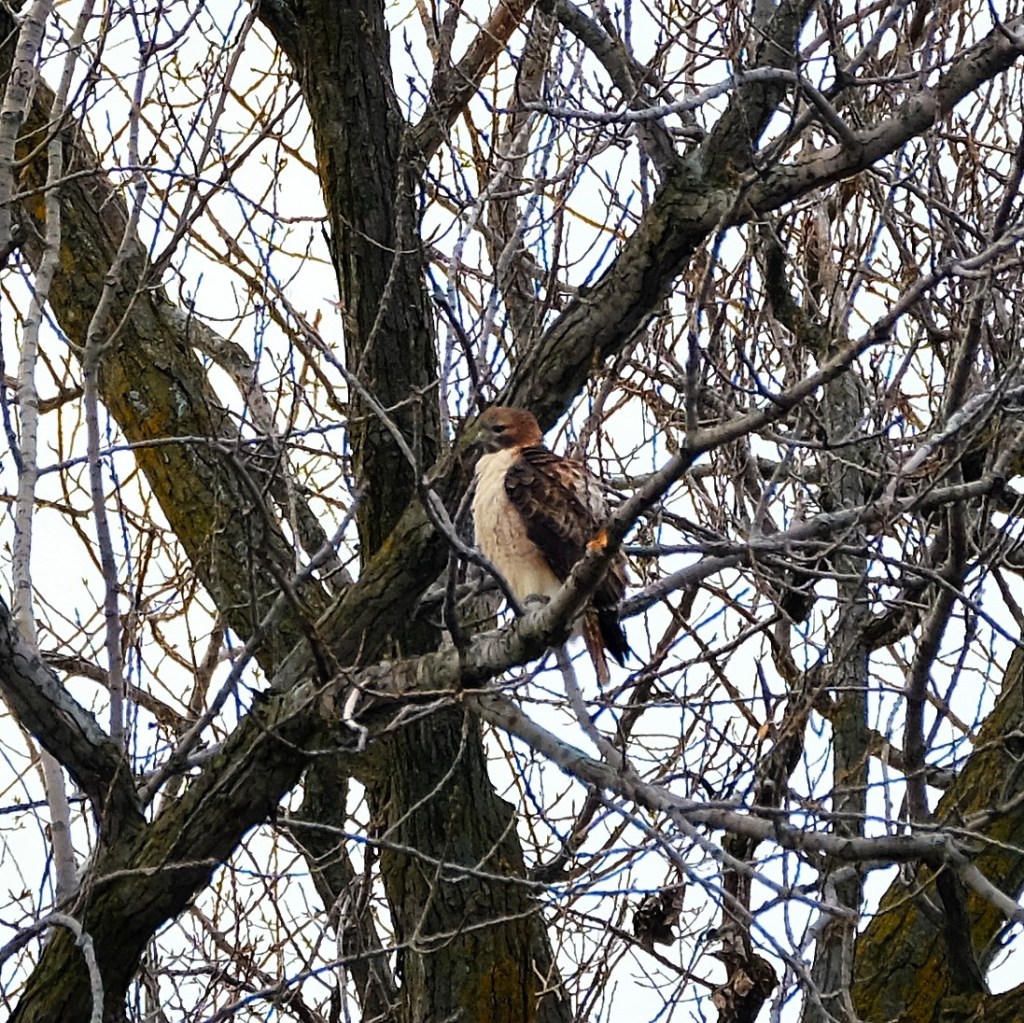
We slept in a bit this morning, and I didn’t get to the park until 7, but wait till you see what that timing did for us. When I got to the pond, I found all the ducks huddled together near the island, and the first thing I thought was “hawk”, so I immediately began searching all the nearby trees.

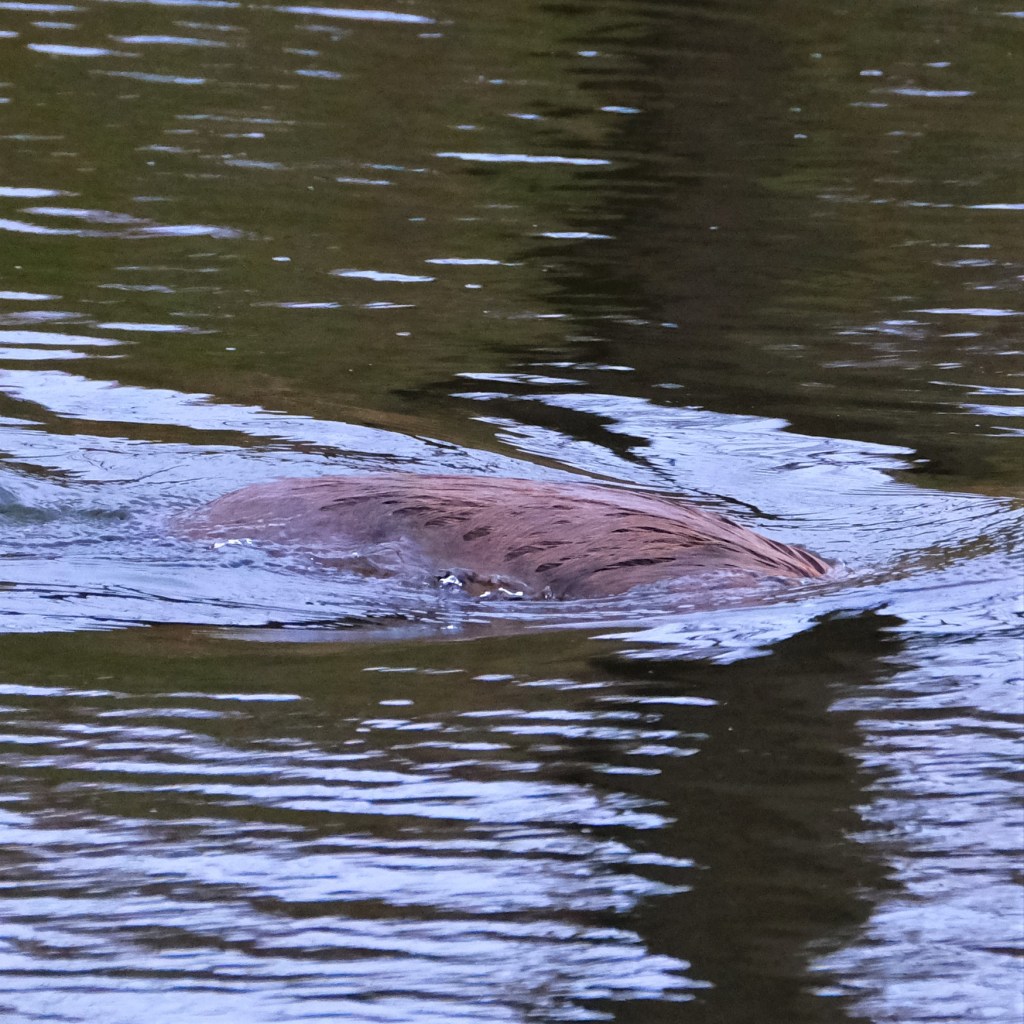
As I searched the trees in vain, suddenly there was a commotion on the water and look who swam right in front of me from the island to the east shore.

Nope, that’s not a hawk, nor a muskrat, beaver, otter, or even raccoon. Instead, this critter was long and skinny with a pointy nose we haven’t seen before, and thus I believe it is an American mink (Neogale vison)! At last!

The surprising thing for me was that the ducks immediately followed it and spent a long time huddled near the shore where it exited the water as if to say, “and don’t come back!”

I waited around a bit, and it didn’t come back, so off to the river I went. Along the way, I spotted this intricately marked moth, who turns out to be a promiscuous angle moth (Macaria promiscuata). I knew angles could be obtuse or acute, but I never knew they could also be promiscuous. Ha!

Also at the river, I spotted the smallest mushrooms I believe I’ve ever seen. That stick they are growing out of is about the size of a pencil, they appear to be called horsehair parachute (Gymnopus androsaceus), and I can’t believe I was able to find them online.

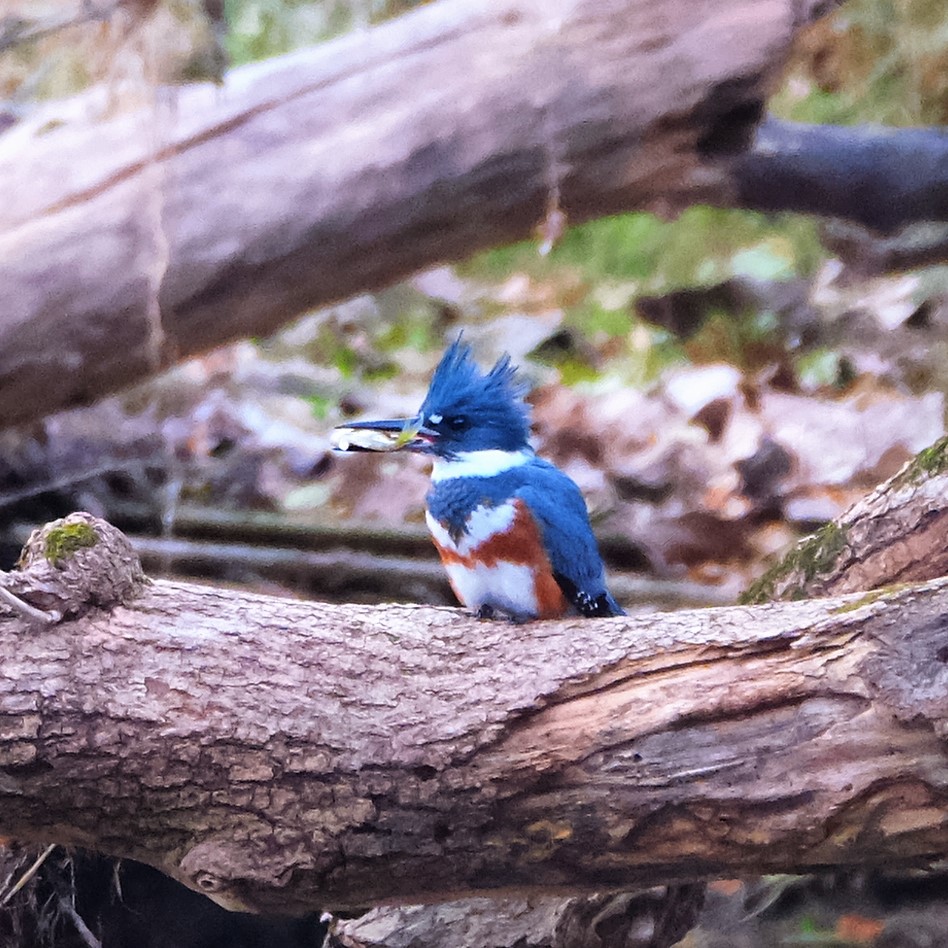
On the island in the river at the north end, a female belted kingfisher uncharacteristically posed for this portrait.

And after I painstakingly worked on that for about 15 minutes, look who was right above her, observing my labors, and looking none to happy about it.

While, on the water, these mallard ducklings were too busy foraging and let Mom keep an eye on me.

Meanwhile, in the meadow, a silver-spotted skipper appeared to sunbathe in this young Queen Anne’s lace blossom.

Since yesterday afternoon had been so gorgeous, I popped out again to see who I could find in the meadow, and this cedar waxwing obliged, if only for a moment.

As did this slightly-roughed-up monarch on a purple cone flower at last.

Back to this morning, on my way south along the river, I spotted the bullfrog, chillin’ picturesquely on a rock in a little side backwater.

And an ebony jewelwing played coy, but not too coy.

Finally, as I made my way out to Wilson Drive, I remember to check on our new nesting robin, and she wasn’t home at the moment so I tried to sneak this shot as quickly as I could with my phone. Woo hoo! Three more eggs to hatch.

Nothing really comes to mind

Beautiful weather has returned to Estabrook, and it sure was nice to see a little sunshine and not feel as if I’m walking through a sauna for a change. I briefly glimpsed 3 raccoons and 1 beaver but failed to capture an image.

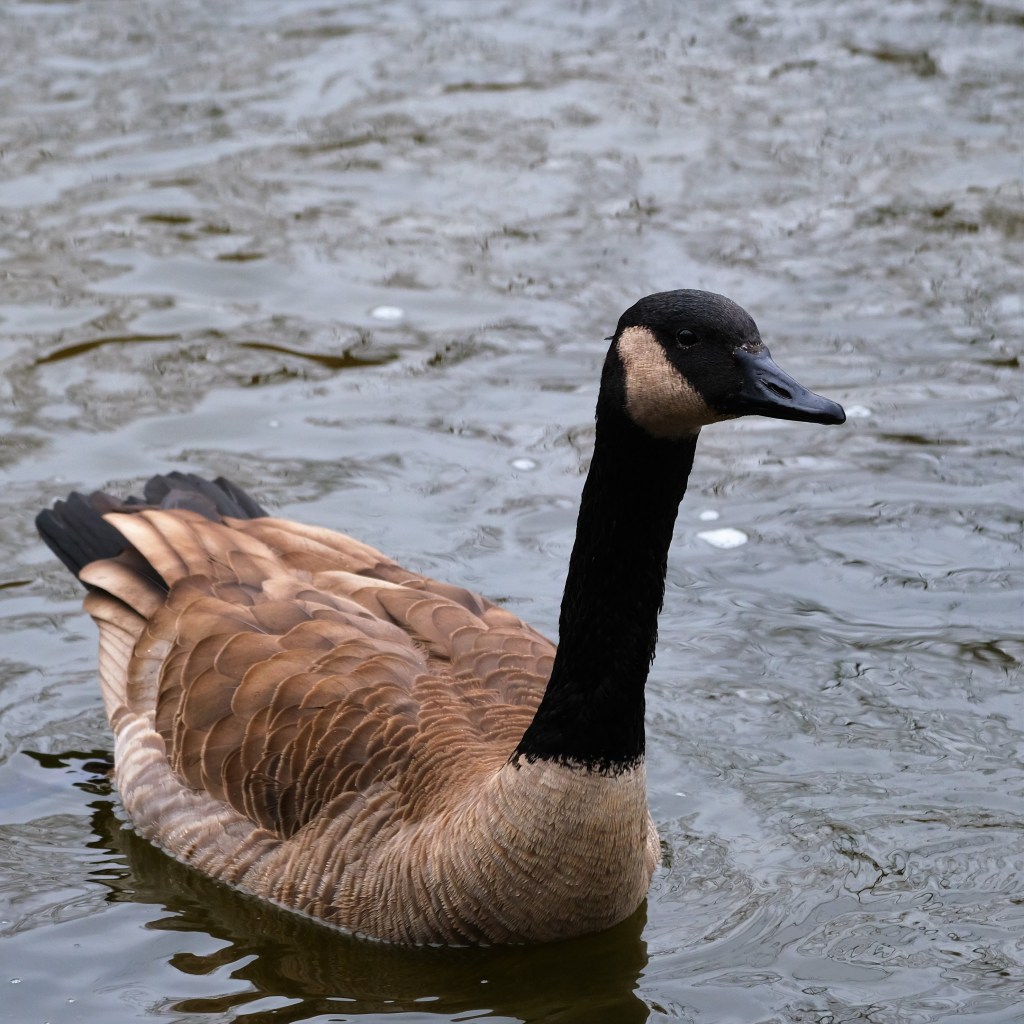
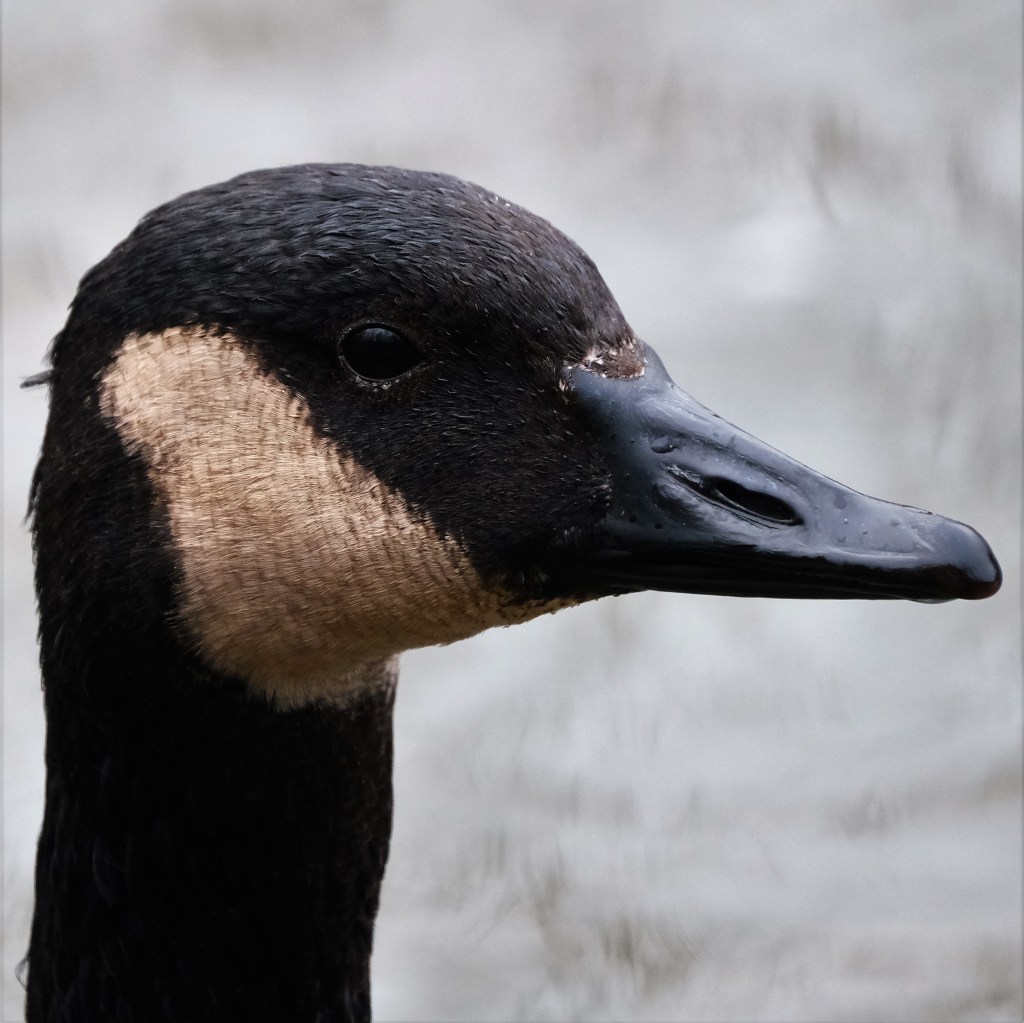
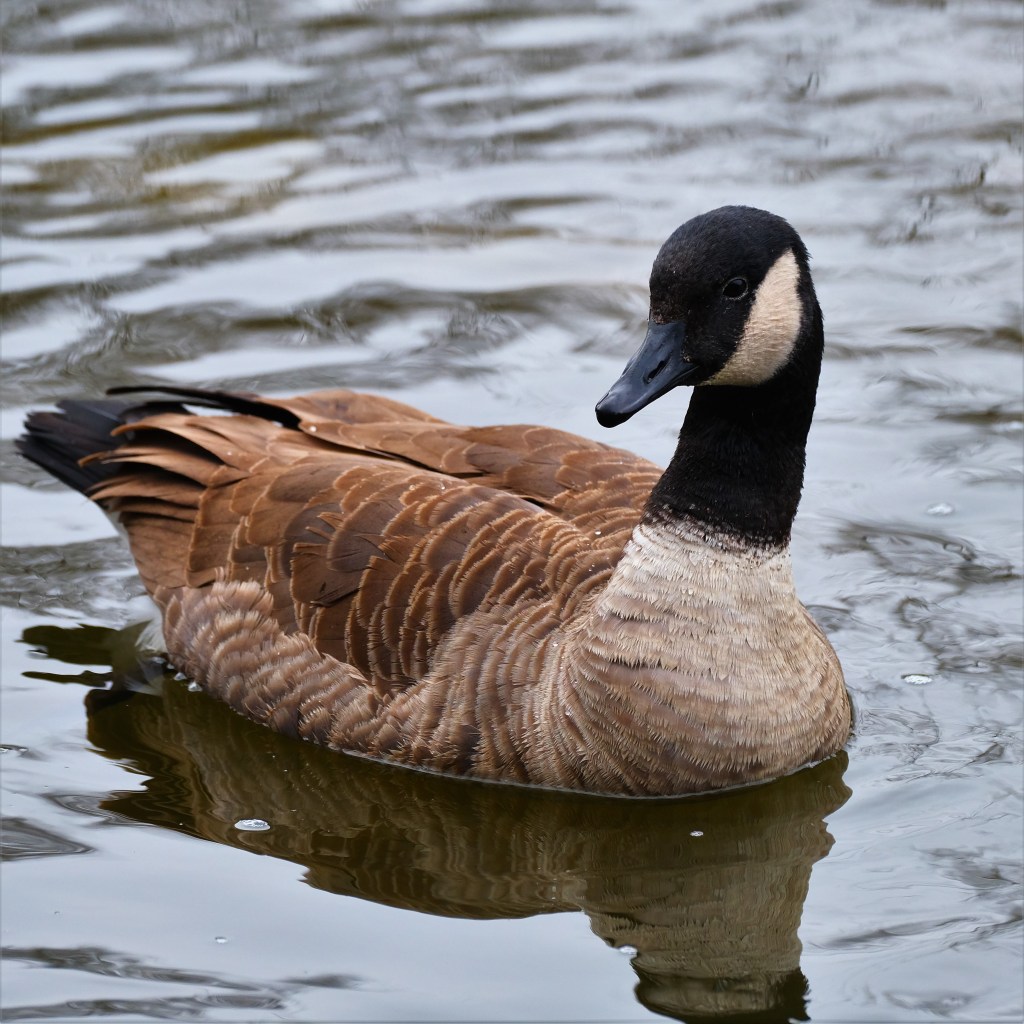
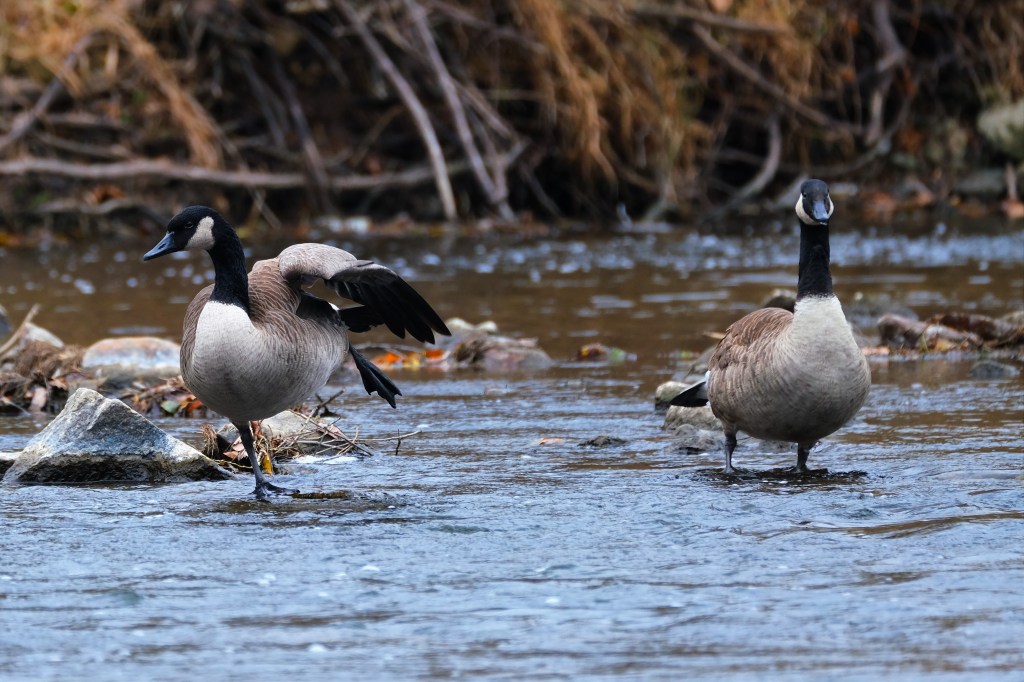
I didn’t see any sandpipers today, at the falls or elsewhere, but I was fascinated to watch a large gaggle of geese negotiate a group decision to go over them. First, they all approached, then most of them headed back up river, and then finally, the yeas carried the day.

This one was quite gung-ho about the idea and pioneered a route.

And these ones held back to see how that was going to work out.

I didn’t see any green herons today, but here’s a blue heron looking all fancy on the river.

And another one on the pond hiding behind some brown muck on a stick.

I did spot a couple of mallard ducklings on the river really starting to look like there mom,

And the quintet of wood duck ducklings on the pond continue to grow up under their mom’s watchful eye.

I can hear juvenile jays begging to be fed and exasperated-sounding adults suggesting perhaps that it’s time for them to start taking care of themselves. The good news for me, though, is that they are both distracted enough to ignore me for a moment.

With the sun out, I thought I’d catch a pretty butterfly on a pretty blossom to show you, but I was disappointed until right at the southern exit to Wilson Drive. There, tucked down low and in the back of the big stand of Canada thistle that grow there, I found this beauty sunning itself while it sipped nectar. Long-time readers may recognize this as a red admiral (Vanessa atalanta), which we saw several times last summer, but not yet this summer until right now.

The Pedia of Wik explains that “most of North America must be recolonized each spring by southern migrants,” so that likely explains the delay and perhaps also why it looks so roughed up.

While I was working on getting that shot, I was standing in the shade of a little oak tree that the village planted near the end of the Wilson Drive reconstruction and whose branches might not yet spread to 12 inches from tip to tip. Then, when I finally walked away, a robin shot from a nearby bush right into that little tree. It turns out that she has a nest in there, about 6 feet off the ground, and was probably waiting for me to wrap things up so she could get back to it. I’ll have to keep an eye out for when she’s not there so I can use my phone camera to peak into the nest. Here’s the best I could do while not disturbing her from it. Those are her tail feathers sticking straight up out of the nest.

Dance of the Sandpipers

I was treated to that rare and delightful phenomenon this morning when a pair of critters are so interested in each other that they mostly ignore me. This time, it was a pair of spotted sandpipers on the rocks in the river just below the falls, and I was up on the boardwalk partially concealed by the railing.

I can’t tell if it was part of a courtship or just a youngster still hoping to be fed, but one relentlessly followed the other as it foraged, and once in a while the chasee would relent to produce these scenes.

Either way, they sure are adorable creatures, aren’t they?

Further north, between the two islands, I spotted another tender moment when a wood duck hen nuzzled her duckling.

Then they continued their foraging with another hen.
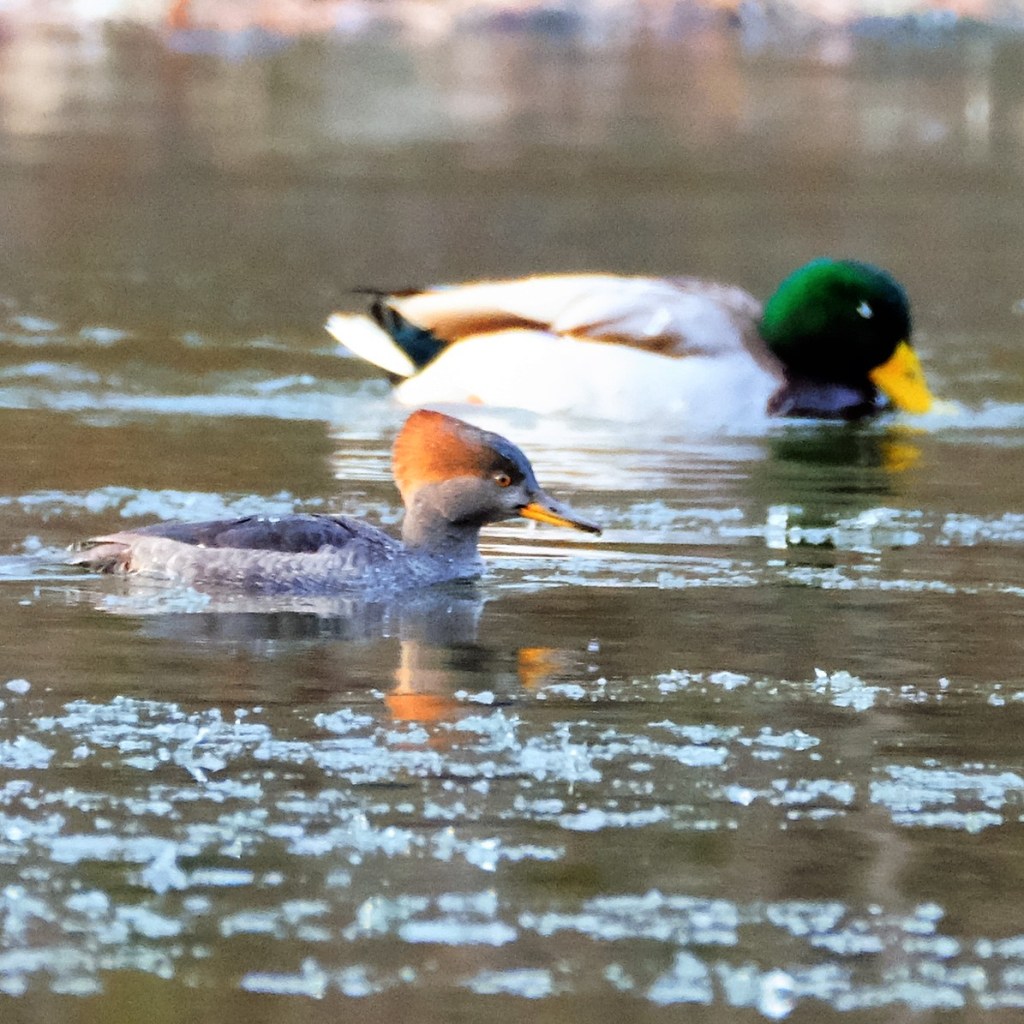
Meanwhile, the geese are back, bigly!

And a mallard hen is still watching over her two ducklings.

On my way to the pond, I stumbled upon this amazing blossom, which plantnet.org believes, with 68.57% confidence, is Papaver rhoeas and known commonly as Corn poppy, Common Poppy, Corn Rose, Field Poppy, Red Poppy, Shirley poppy, or Flanders poppy. Take your pick.

And another blossom called Saponaria officinalis (96.96% confidence) and commonly known as Bouncing Bet, Latherwort, Soapwort, Common soapwort, or Sweet Betty.

The Pedia of Wik helpfully explains:

“As its common name implies, it can be used as a very gentle soap, usually in dilute solution. It has historically been used to clean delicate or unique textiles, especially woollen [sic] fabrics;[9] it has been hypothesized that the plant was used to treat the Shroud of Turin.[10]

A lathery liquid that has the ability to dissolve fats or grease can be procured by boiling the leaves or roots in water. Leaves are chopped, boiled, and strained; the liquid can then be used as soap.[11]

In the Romanian village of Șieu-Odorhei, natives call the plant săpunele. It is traditionally used by the villagers as a soap replacement for dry skin.”

Furthermore:

“An overdose can cause nauseadiarrhea, and vomiting.[citation needed][12]

Despite its toxic potential, Saponaria officinalis finds culinary use as an emulsifier in the commercial preparation of tahini[13] and in brewing to create beer with a good head. In the Middle East, the root is often used as an additive in the process of making halva. The plant is used to stabilize the oils in the mixture and to create the distinctive texture of halvah.”

When I finally reached the pond, just about everyone was there.

The wood ducks:

A couple of green herons busy hunting:

Then this one jumped into the water, which I missed, and immediately returned to the branch with a little fish.

Plus:

And a damp blue heron who took a break up in a tree, which gave me an opportunity to get closer than they usually permit.

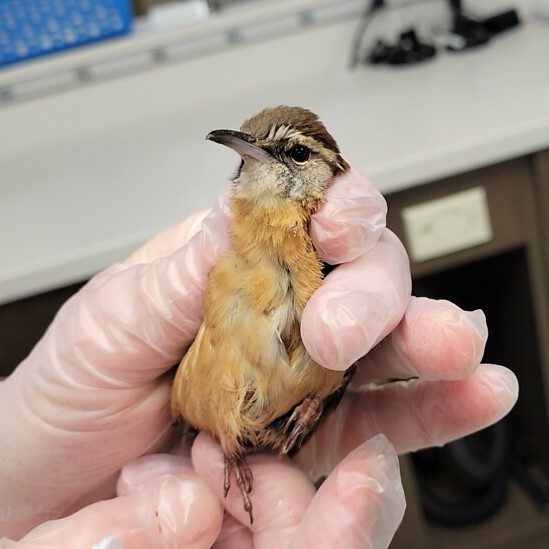
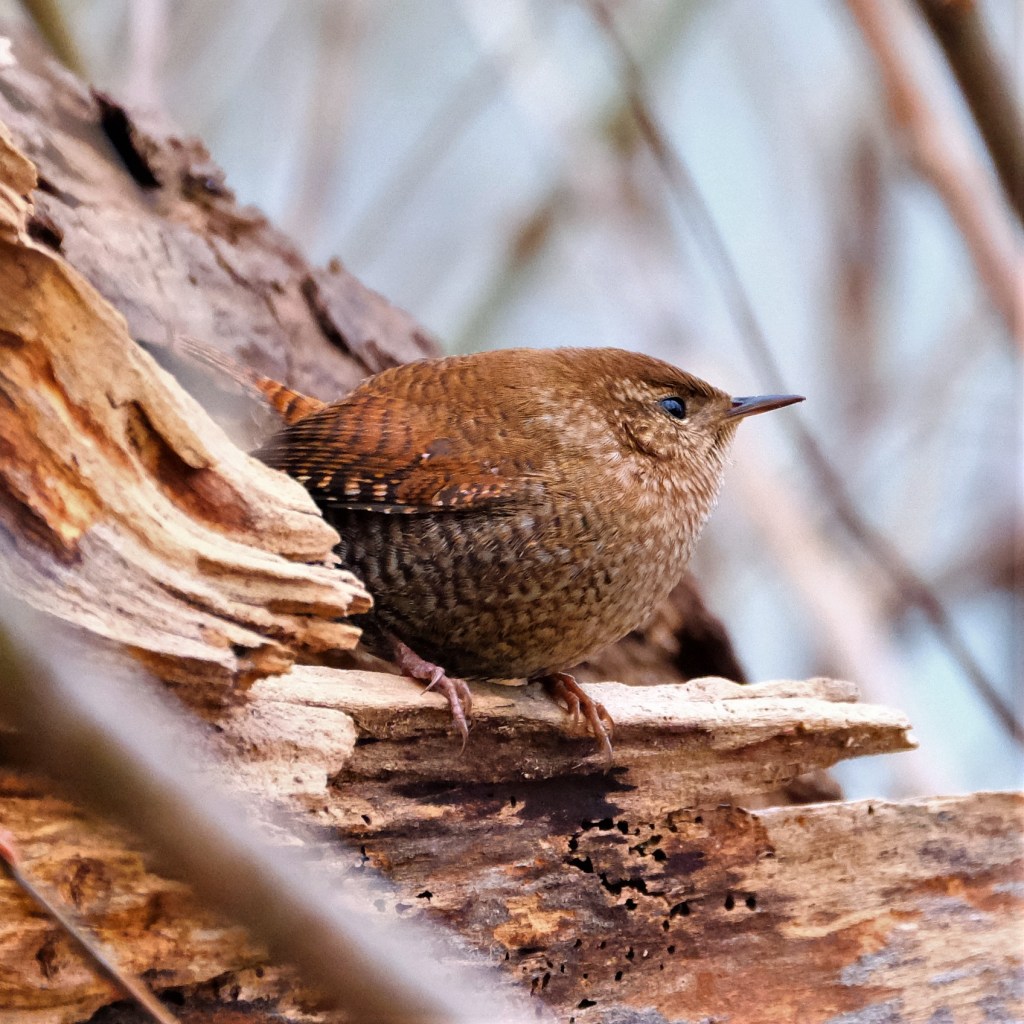
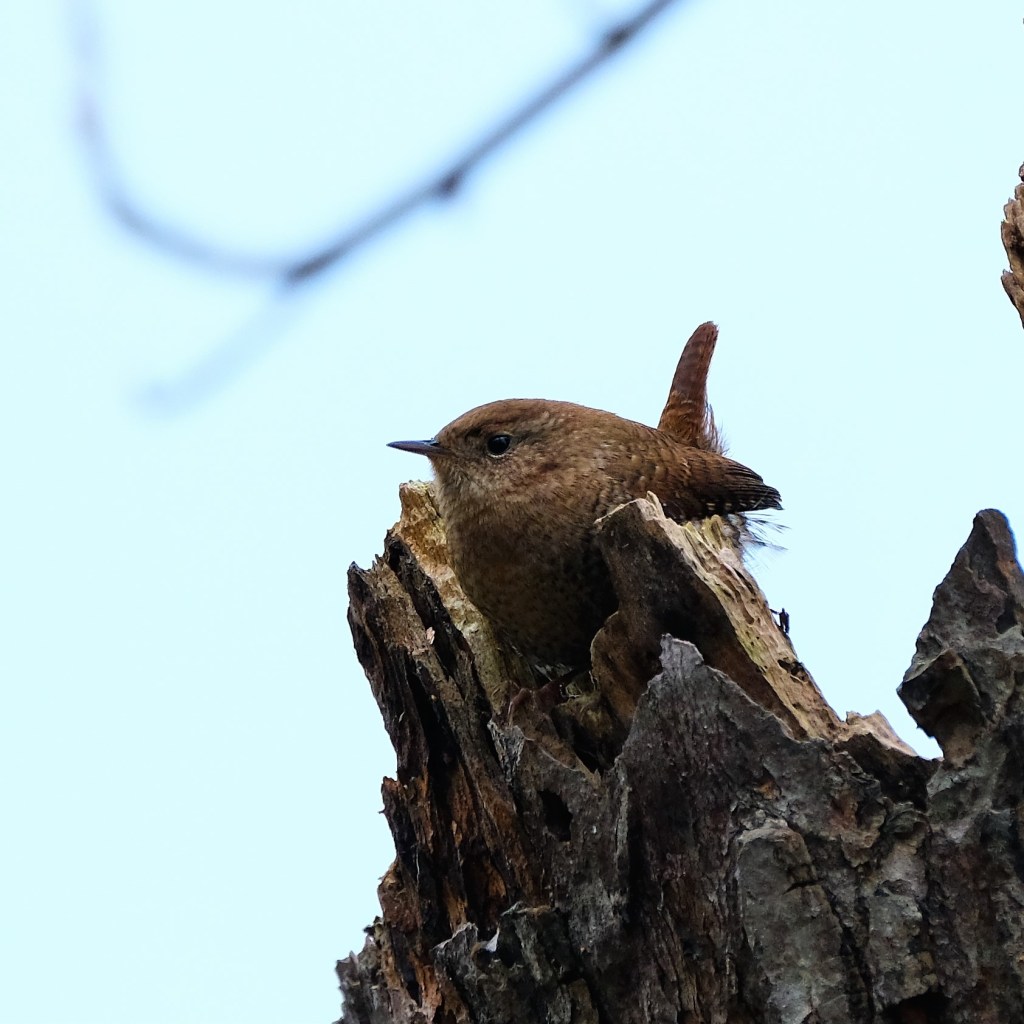
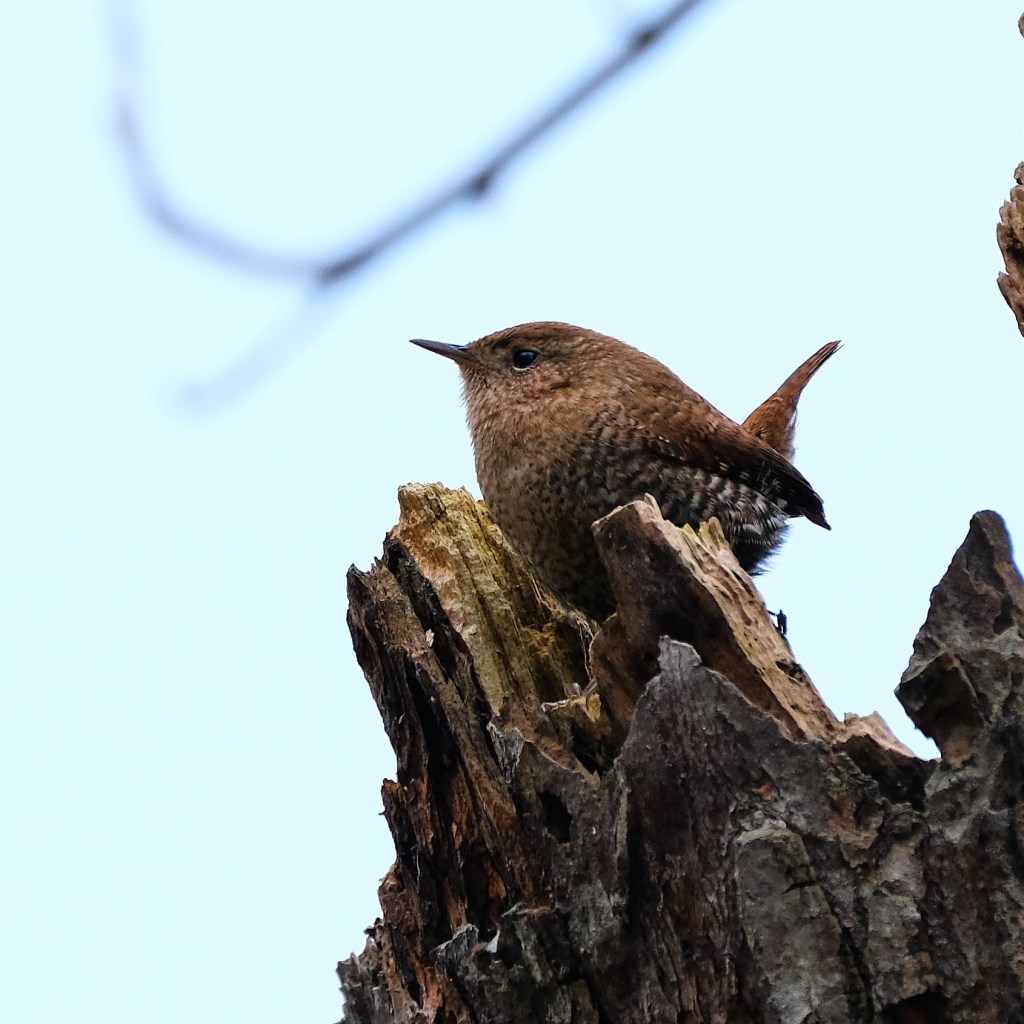
Finally, at the soccer fields, our wren friend appears to have eliminated a step and now just sings from the lip of its cavity.

And a black swallowtail tried to dry out without the sun to help.

Herons are a hoppin’ at the pond.

It was one of those mornings that remind me that “10% chance of rain” often means “steady rain, but just at 10% intensity.” The good news is that the continuous spritzing didn’t slow down the critters in the park, and there were at least three herons ont the pond, one blue and two green.
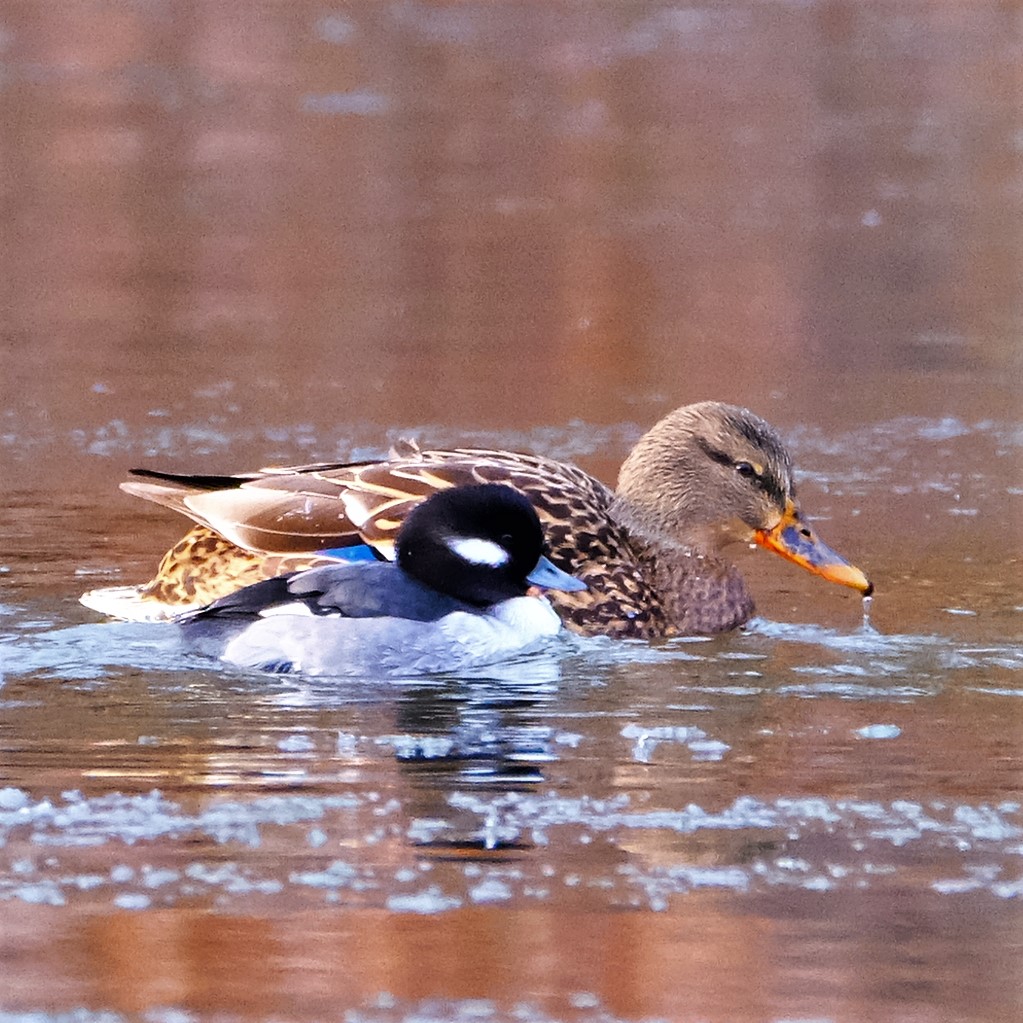
Here’s the blue:

And here’s one of the greens hard at work:

And here they are together in a reflective moment:

Here’s a bullfrog just hoping to stay out of the action.
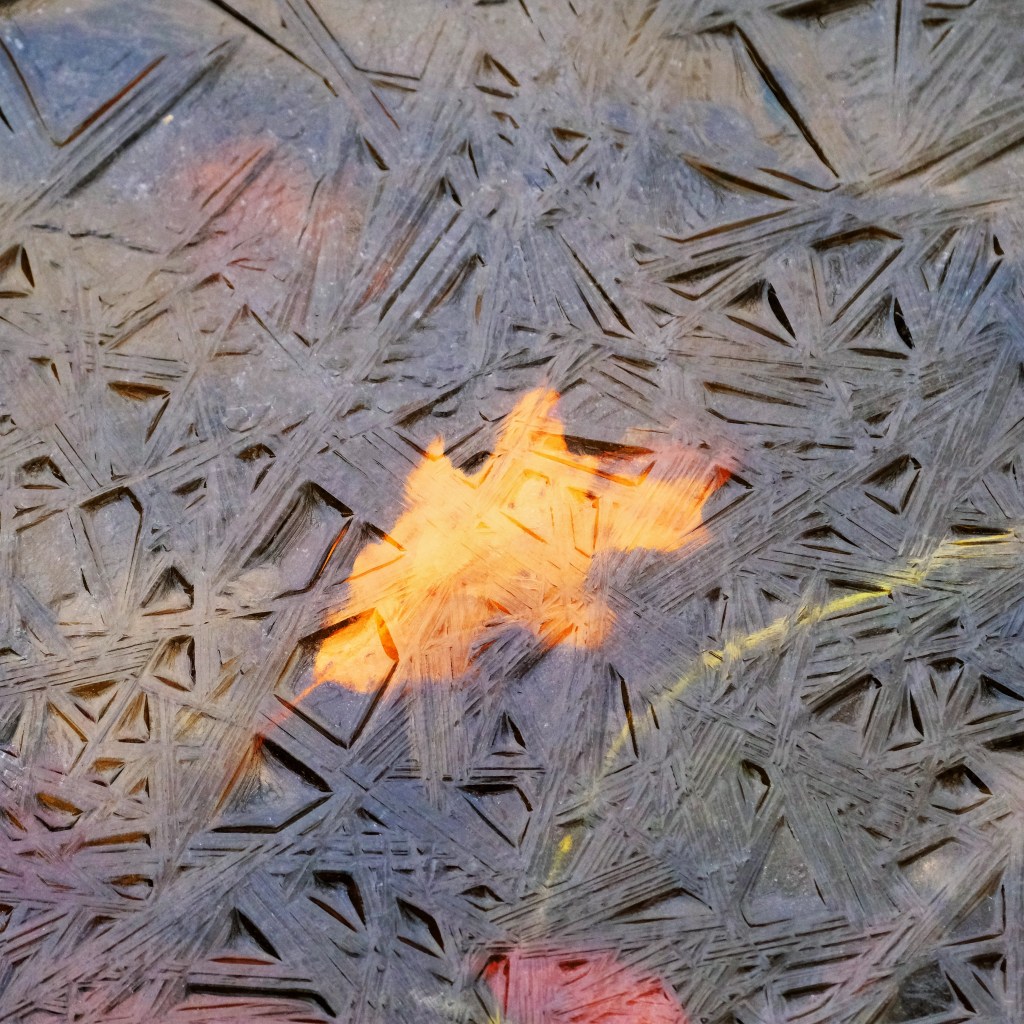
The wood duck hens and ducklings, the black duck hen, and a couple of mallard hens were also about, but not as photogenic as the herons this morning. The situation was similar at the river.
The one other bright spot, however, is that the bee balm was finally getting some traffic.

Meanwhile, in related news, Friends of Estabrook Park is planning its annual picnic at the Estabrook Park Biergarten on Wednesday, July 21 at 5pm, the Biergarten is also celebrating the 105th Anniversary of Estabrook Park on the same day, there is no Bucks playoff game scheduled for that day, so I’m planning to go, and I hope to see you there.

Two reports for the price of one.

With the dark skies yesterday morning and then a trip to campus, I didn’t get to the park until late in the day, but it was a nice change of pace. I saw this little cutie crossing the trail up ahead and thought I’d missed my chance, but he or she waited patiently in the woods for me to get there and take this portrait. Thanks, honey, and I wonder if we saw you crossing the river with your mom just about a month ago.

In the weeds beside the soccer fields, yet another goldfinch was feasting on the gone-by bull thistle blossoms in the golden afternoon sun and against the nice blue sky that finally came out. Isn’t he a handsome devil?

In the big oak tree at the south end of the weeds, a nuthatch was foraging on the top side of a branch for a change.

Finally, as I was checking the bee balm, which seems to be in bloom throughout the park, for at least one critter to accept its sweet offer, I spotted this stunning eastern comma (Polygonia comma) who was not on the bee balm, but a lot less shy than the one I glimpsed last summer.

Although it wasn’t sampling the bee balm, it did land on my finger three times before it decided it had tasted enough bug repellent.

Before I could send you those pictures, it was morning again and time to go back to the park, and I was thrilled to find the crystal blue skies had stuck around, at least for a little while.

I spotted three blue herons in the river, and two of them were fishing in pretty surroundings.

At the pond, the status quo seems to have returned with the two wood duck hens and five ducklings, one black duck hen, and two mallard hen friends. The only notable development I saw was that the ducklings, who are just about five-and-a-half weeks old, are already starting to sport blue wing feathers, just like their mom. They grow up so fast.

Back at the soccer fields, the wren in the birch tree was doing a little house cleaning.

In between verses of his song.

Did I already mention the blue sky?

Anyway, if you haven’t been to the park in a few days, you wouldn’t believe how thick the monarchs have become. We appear to be having a bumper crop this year, and it sure is wonderful to see. Add the golden light from the morning sun and the bright pink of a bull thistle blossom, and that’s a combination I just can’t resist.

Finally, you may remember last summer when we spotted a turtle laying eggs on the island in the pond. Well, long-time reader, Carolyn, and her trusty side-kick, George, spotted her appearing to be trying again but right on the path through the woods to the pond this time. Oh, sweetie, I sure hope you know what you’re doing.

A slow midsummer morning in Estabrook

Now that we’re solidly in the Dog Days of Summer, things are starting to slow down in the park, and it’s gonna be a short report today. The weather was pleasant enough, I got to the pond nice and early, a mallard is back to keep the black duck company, but I didn’t see the muskrat. There was a blue heron, but no green herons. The five wood duck ducklings were keeping to their routine, but the mallard ducklings have definitely moved on.

At the river, I did spot a beaver briefly, and a blue heron was fishing by the abandoned bridge abutment, but the big surprise is that the geese seem to have cleared out. Instead of the several dozen that were there as recently as yesterday, I only spotted 3 individuals today.

I didn’t take a picture until I found this mallard hen and her two ducklings just off the boat launch at the north end.

Next is of the five wood duck ducklings lounging in their usual spot on the log in the pond.

And finally, the blue heron was still at the pond for my second visit, it was on the west side by the tall reads for a change, and the sun was making a valiant effort, so that made for a prettier picture than usual

Then the sun lost its battle with the clouds, and I couldn’t find another willing portrait subject. Better luck next time, eh?

Lots of comings and goings this morning.

If you have been wondering when and if the mosquitoes would follow the rain we’ve had lately, well, wonder no more because they sure as heck are here now. Zoinks! I had no idea how haphazard my insect repellent application had become during the drought until this morning when the little stinkers let me know of every patch of skin I missed.

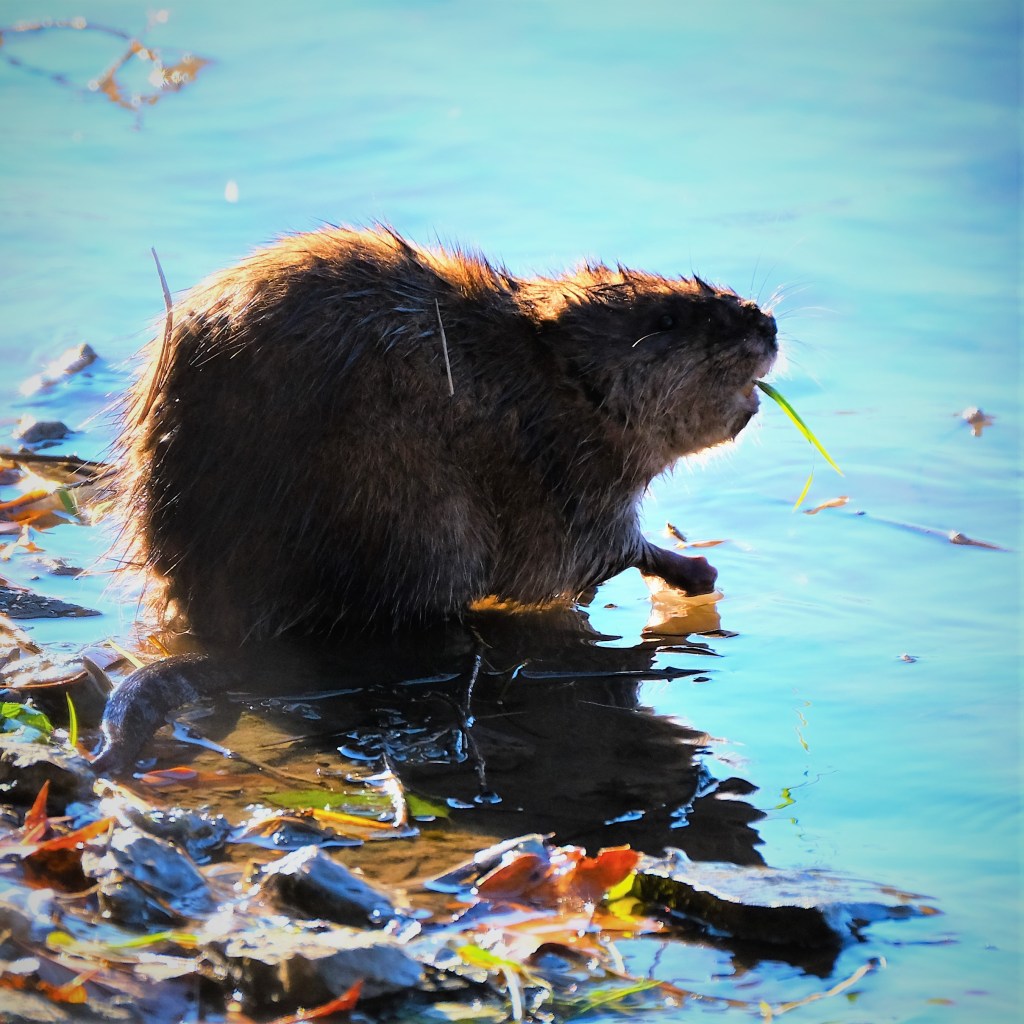
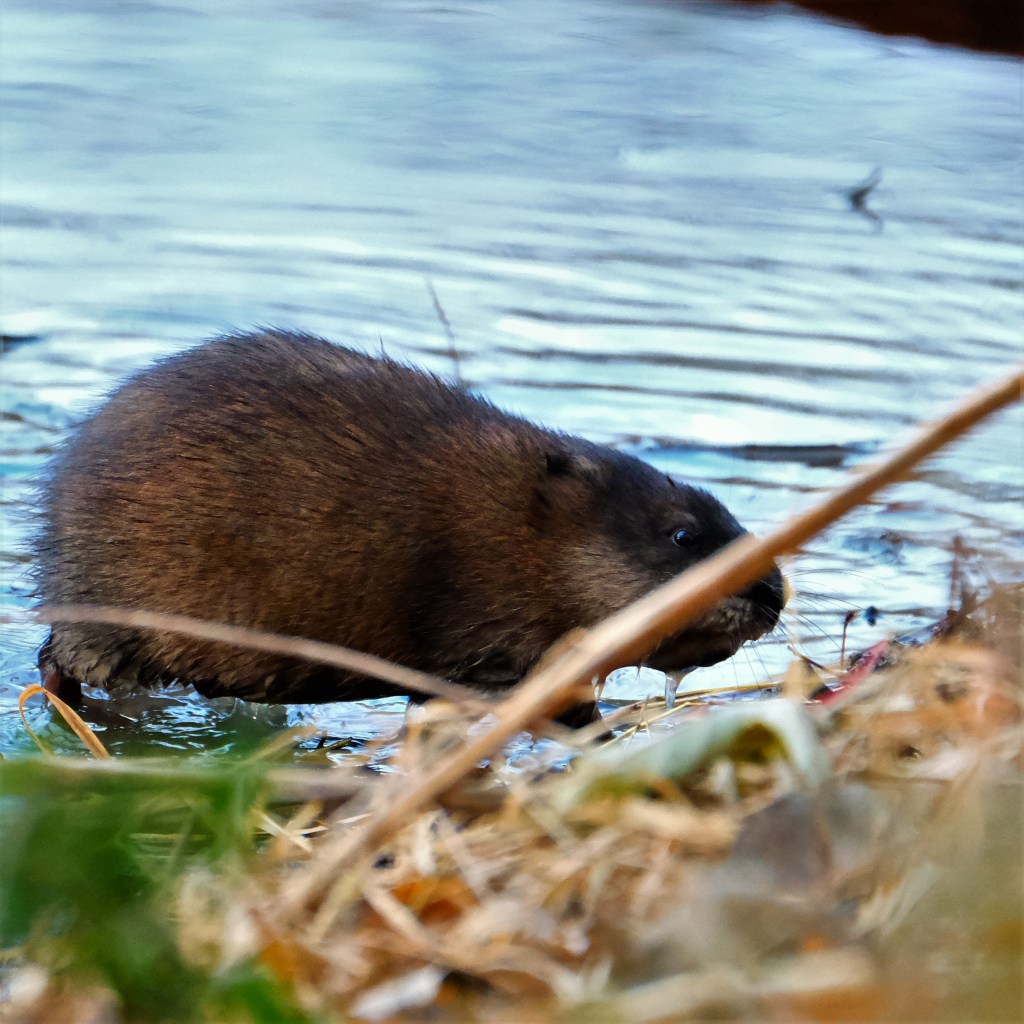
Luckily for us, the bigger critters are better prepared or just don’t care and were out in their usual numbers anyway. First up is one we haven’t seen in over a month, the muskrat in the pond, and this morning it appeared to be contentedly munching on something I can’t quite see out in the water.

Yup. That’s its big ol’ black tail sticking out of the water behind it.

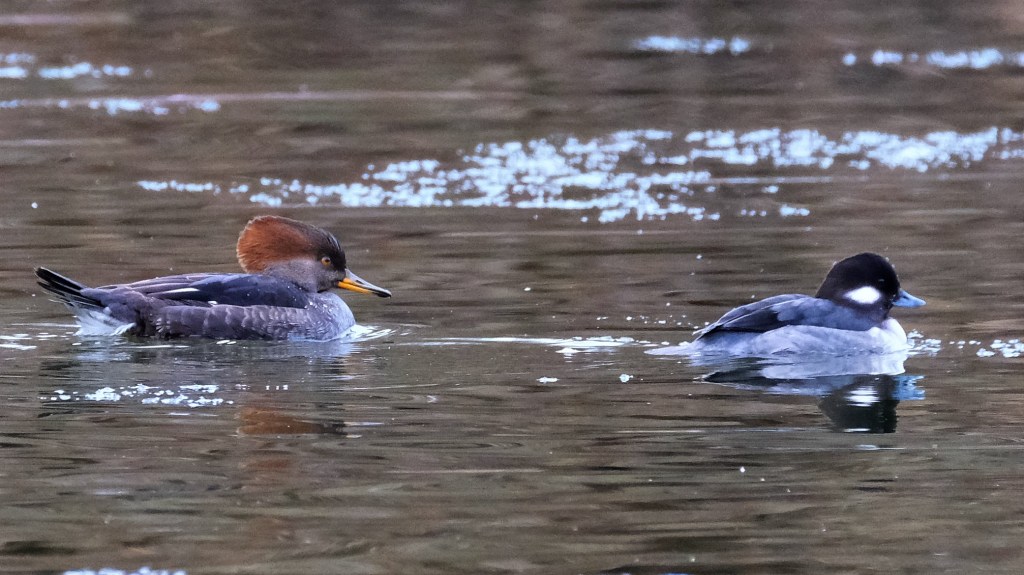
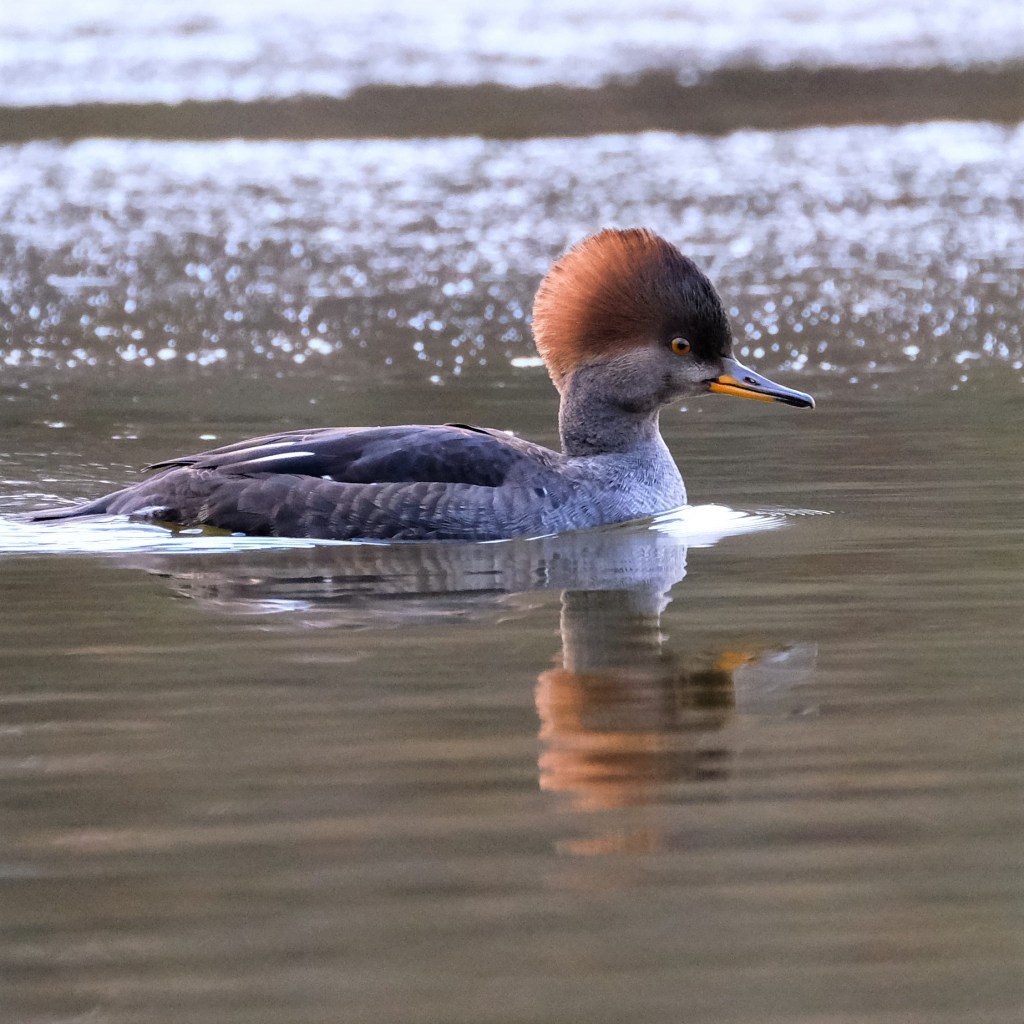
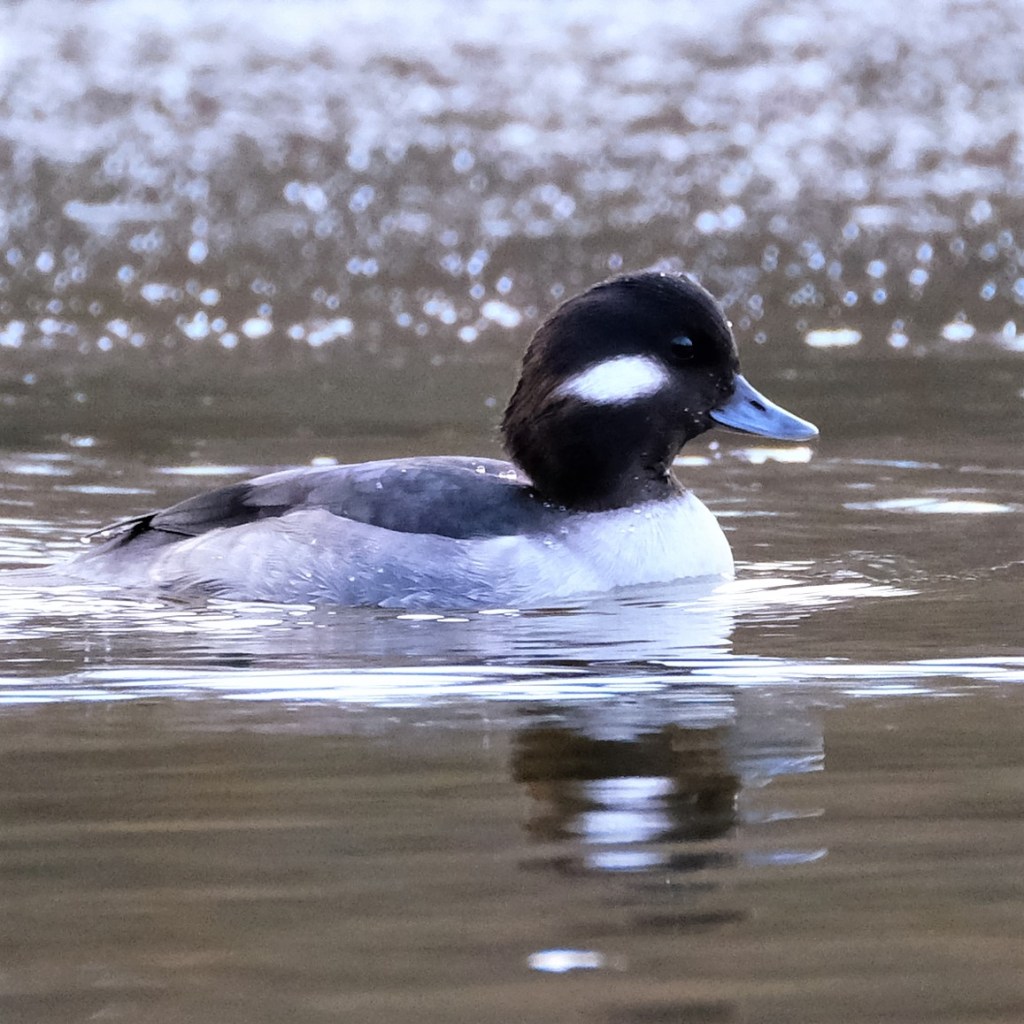
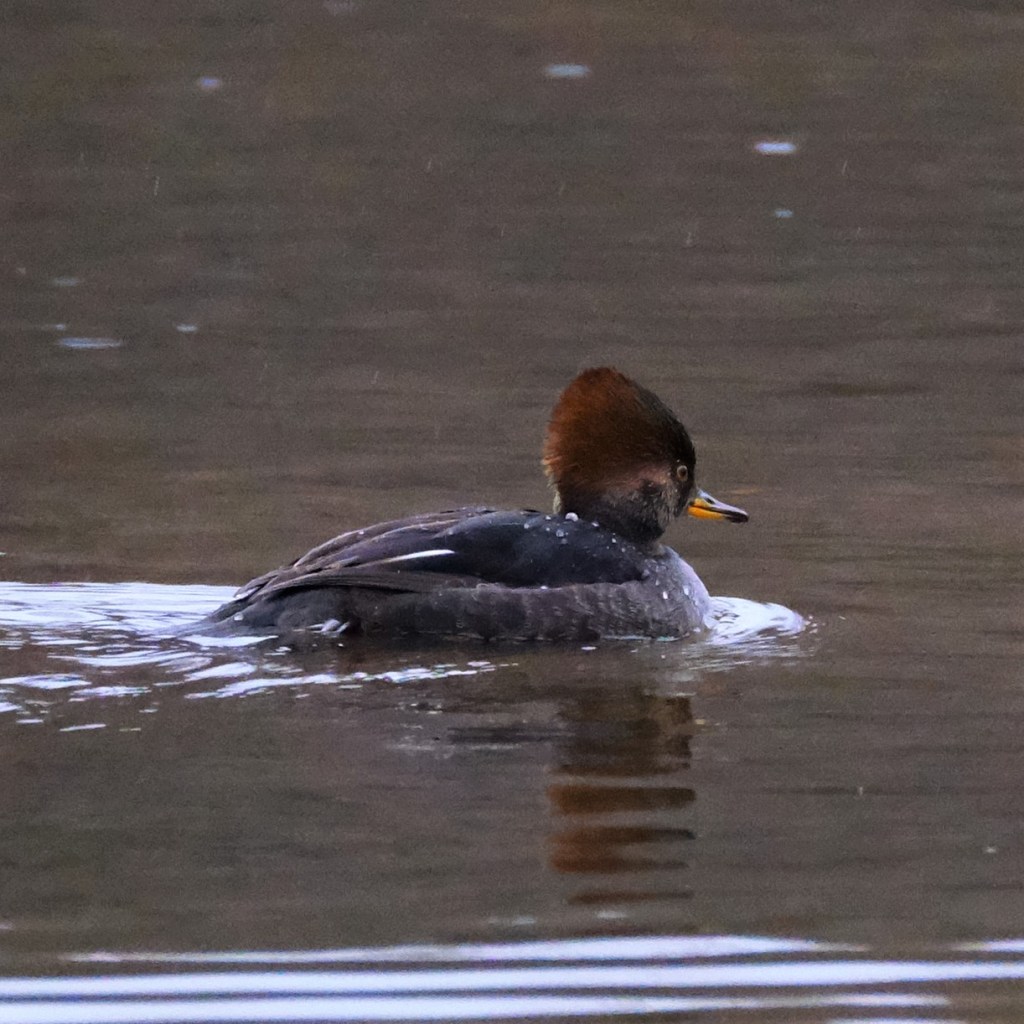
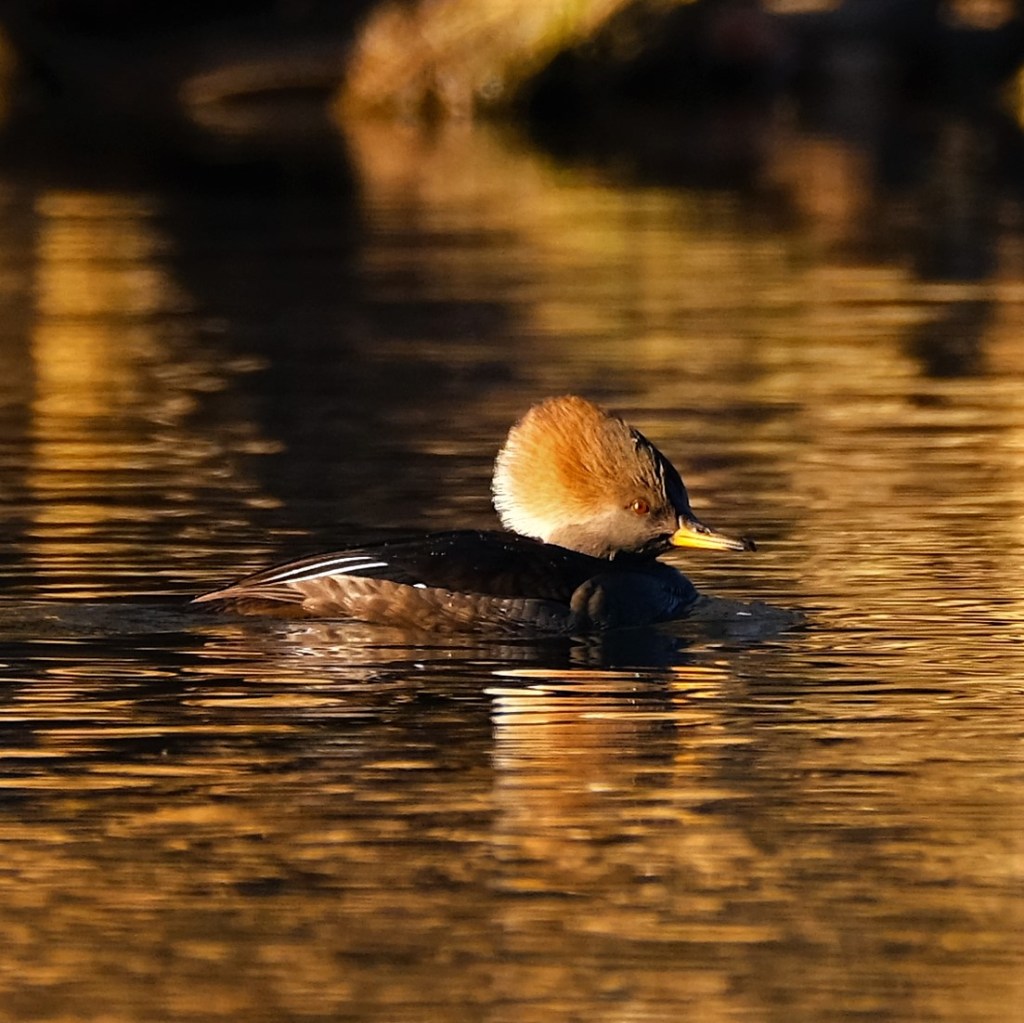
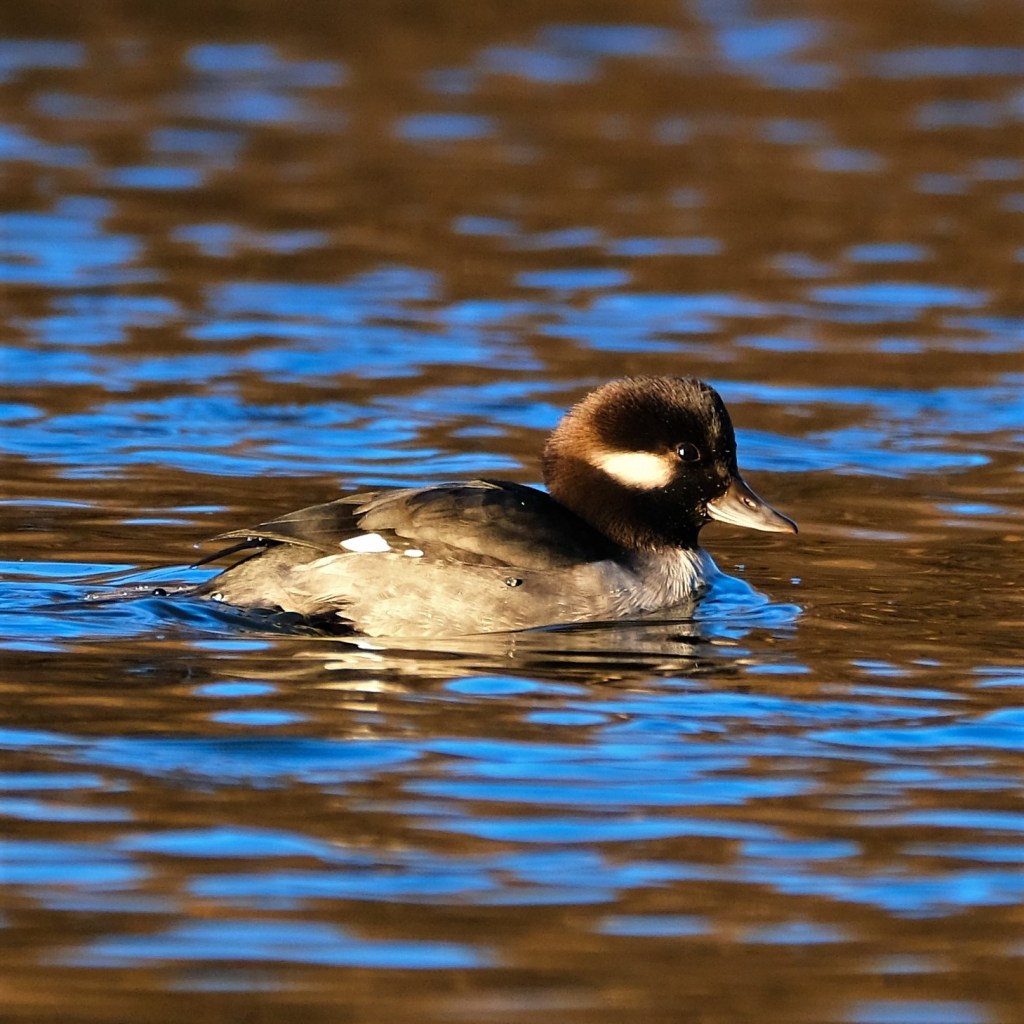
I didn’t see much else and thought maybe the sun might peek out later so I headed to the river, but I really couldn’t dawdle today, as I could in the past, so I found myself at the north end pretty soon, and the most interesting sight was this trio of mergansers. They were pretty far out on the water, and the light was still pretty low, so it’s not the best image, but I suspect they are female hooded mergansers just like the solo hen we saw earlier this week.

Back at the pond, a blue heron was fishing in the east bay as the wood duck hen and her ducklings lounged on their usual log.

There was a slight breeze to keep the skeeters down so I made myself comfortable on the bench and waited patiently to see if the heron would do anything interesting. After a bit, someone walked by and flushed out a green heron that I hadn’t spotted. Happily, I didn’t need to move so it ignored me and got right back to fishing. First it grabbed a frog.

Then it moved to a new spot and quickly followed up the frog with a nice little fish.

Meanwhile, the blue heron was having little success, and it appears that all the mallards checked out overnight, even the ducklings. All I could see was the solo black duck hen and the wood ducks. So it goes, eh?

Some old friends return

The nice cool temps and calm winds remain, but there wasn’t much sun this morning. A single young deer was calmly grazing on the soccer fields, and I couldn’t even get it to look my way when I called to it, so this is what we’re left with.

At the pond, it was a blue heron this time trying to balance on a wiggly stick, and when it finally had to resort to flying to keep from getting soaked, it spooked a second heron that I hadn’t seen. One of them flew off, and I decided to leave the one who stayed to fish in peace.

At the river, a young-looking beaver is really getting the hang of making me work for a shot.

At the falls, there were 4 mallard hens preening, and this one had the best spot.

Up river, I spotted another young northern flicker, and this one might not be fledged yet. There was a commotion when Mom or Dad stopped by, which is how I noticed them, but then the youngster was left on his own, and he just kept tucking in and then peeking out to see if his next serving of breakfast had arrived yet.

There were a couple of blue herons at the north end, along with plenty of geese, a few mallards, and even a sandpiper or two, but I let them all be and headed back to the pond.

As I approached, just about where I spotted the flickers yesterday, a chipmunk, of whom we haven’t seen much lately, really seemed to want to make up for lost time.

The chipmunk eventually let me pass, and I saw the wood duck ducklings up on their log in the east bay, but as I made my way around to get a nice shot, look who stopped me in my tracks.

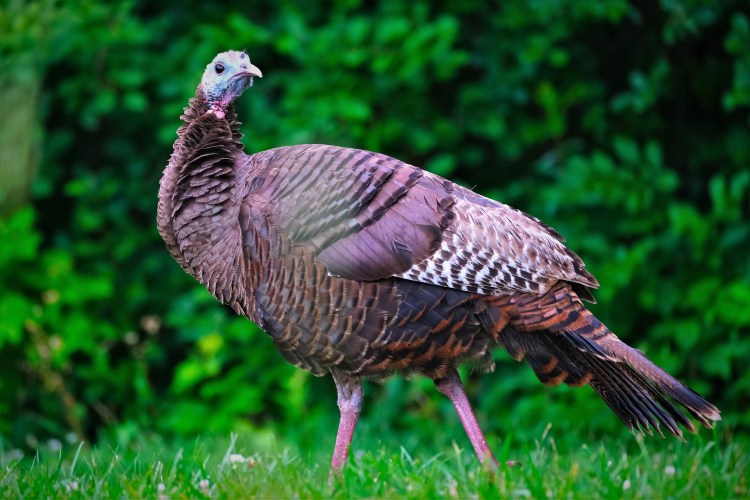
Yay! Our turkey is back, or still hanging around, and we slowly danced around each other as I took pictures, but by the time I reached the right spot for the ducklings, they had already moved on.

Instead, the mallard hen and her ducklings had positioned themselves nicely again in what little sun we did have and so, ta da!

The sun returns and so do a few characters.

The forecast was for clear skies, for a change, and so I hit the park nice and early even though it was a bit chilly. I could see a blue heron and both sets of ducklings on the pond, but there just wasn’t enough light yet for my equipment, so I let them enjoy their breakfast in peace and headed to the river, were there was at least one beaver about and playing very coy with me.

There were also three more blue herons on the river, down from the four from the previous two mornings, so perhaps there is an ideal temperature for them: not 55°, not 68°, but 63°. Now that’s science, right there! Anyway, I think we’ve seen enough herons lately, so I let them be and headed back to the pond for some nice morning sun action.

Before I could get there, however, I came across this freshly-fledged northern flicker, looking sharp in his almost-adult feathers and acting way less shy than his folks have been lately.

Here he is getting a morning morsel from Dad, who was much more elusive.

And here he is waiting pretty patiently for the next one, which wasn’t long in coming.

Once I did arrive at the pond, the sun did not disappoint. The wood duck ducklings were lounging in the shade on the east side, but the trees and bushes behind them were alit and reflecting beautifully off the water.

And our newest arrivals, the mallard ducklings, were basking in the full golden glow across the water.

Since the sun was out and things were warming up, I stopped by the weeds beside the soccer fields to see who was around, and the place was hoppin’!

Here’s a female twelve-spotted skimmer (Libellula pulchella), whom we haven’t seen since last summer, and who closely resembles the female common whitetail we just saw on the 4th.

Here’s another Halloween pennant, whom we saw for the very first time on the 3rd.

And here are a couple of shots of a monarch, of which there were several I am thrilled to report, gettin’ juiced up on a bull thistle blossom.

Finally, as I headed home, I spotted a long string of Canada geese heading south, perhaps on a training flight. I read conflicting reports on when exactly they molt their flight feathers and so cannot fly, so I can’t tell if this might be the last flight before being grounded or the first flight after being grounded, but it was a nice sight to see either way.