Rare sightings…

Hi All! I was traveling this weekend and so only got out into the countryside briefly on Saturday morning, and then I haven’t had a chance to show you what I found until now. Despite a short visit, I did manage to capture a couple of interesting and pretty sights on film.

This first one is actually from work during the week. I can see the clock face on the side of the Electrical Engineering building from my office, and one day I noticed a bird flying up to it. Well, it turns out to be a popular hangout for a peregrine falcon, which you can see perched in the six o’clock position.

DSCF7168

The building is 22 floors (90 m / 295 ft) tall, the clock face is naturally near the top, and the closest I can get is the 4th floor of the nearby 3ME building in which I work, so I’m at least 200 yards away, but here’s my best close-up. It’s at least good enough for a positive ID. Perhaps it is one of the falcons I on the Architecture building back in July.

DSCF7173

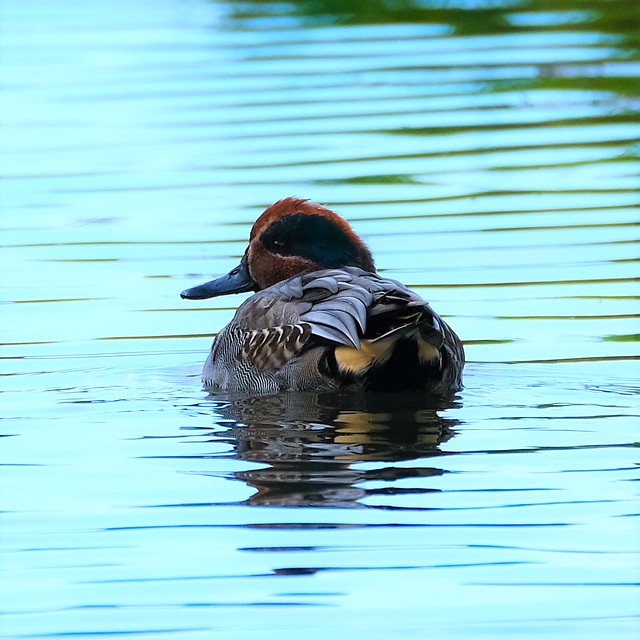
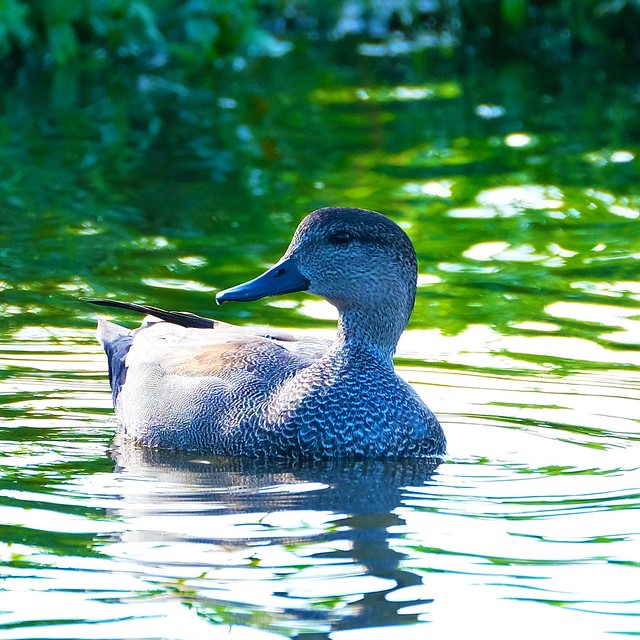
Anyway, out to the countryside, where I enjoyed the rare treat of a green-winged teal drake standing for a portrait and even giving us our first glimpse of his namesake green wing.

DSCF7177

As seems to be often the case, the feathers are iridescent and so the color we perceive can vary with the light available and the viewing angle, so here he is again with the feathers at a different angle and looking much more blue.

DSCF7175

And, lest you suspect this is just some trickery with image processing, which is exactly what I immediately feared when I saw the images myself, you can see the green version on Oiseaux-Birds, and the blue version on the Pedia of Wik. Finally, for some idea of how often they show off either color at all, simply google images of “Eurasian teal”. A rare treat indeed!

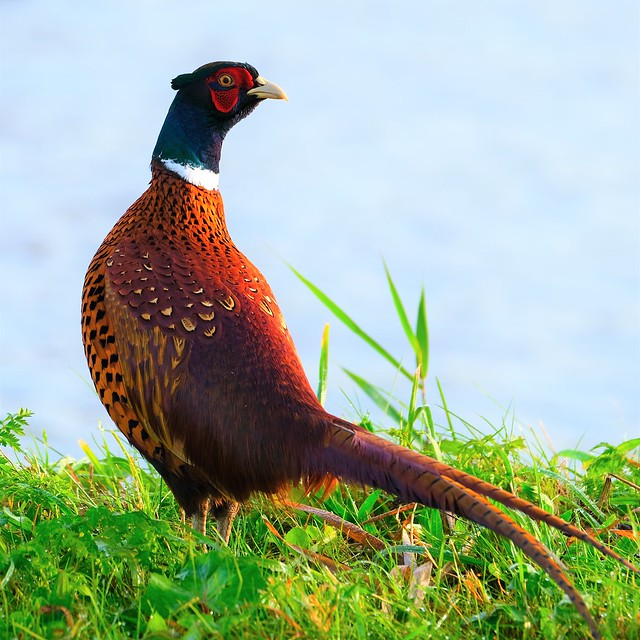
Lastly, on my way home, I was surprised to find this ring-necked pheasant foraging out in broad daylight beside the River Schie.
DSCF7191

I had no idea it was going to be “show-off” day!

Some like the muck, some don’t…

As you may have surmised, I have a couple of pictures left over from the weekend.

Here’s the little green-winged teal drake really getting into the duckweed.

DSCF7018

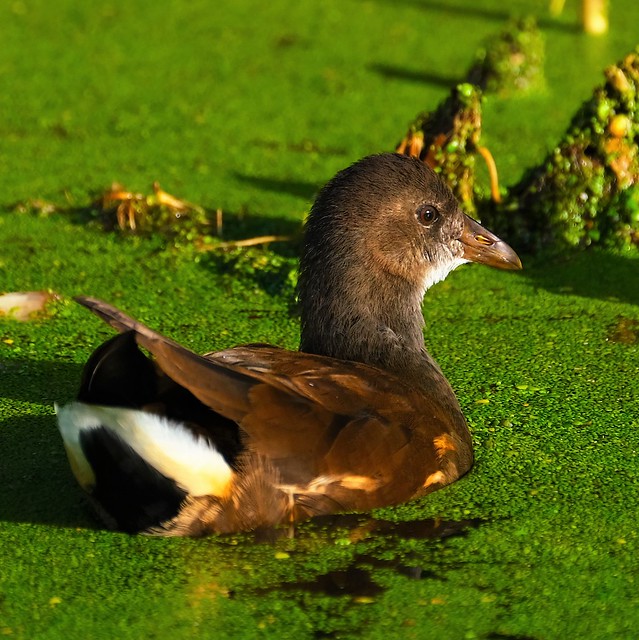
And young moorhen doing the same after the sun came out on Saturday.

DSCF7066

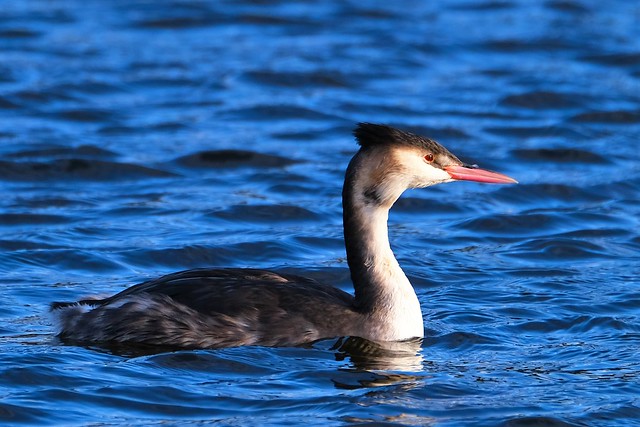
While this great horned grebe enjoys the nice clear water on the Schie river.

DSCF7060

On Sunday a rose-ringed parakeet uncharacteristically perched out in the open.

DSCF7156

And here’s one more look at that little Eurasian robin in the woods.

DSCF7146

Holy Robins, Batman!

The tiny European robins I see here are so shy that I probably average only one sighting per month, and I show you every picture of them that I manage to take. This morning, however, something had changed. Perhaps it was the dark and gloomy weather, they really seem to shun the sun, or perhaps it’s just that time of year, but today they were bold has heck.

It actually started right in front of my apartment building, while it was still quite dark out. There was a little bird hopping around on the ground, and I needed my binoculars to get enough light on my retinas to register the red color. I hear them out there nearly every morning, but they rarely ever let me see them.

Anyway, the next encounter was out in the countryside at the top of a tree in front of a farmhouse. This little cutie let me walk right up, and then he put on a show!

DSCF7124

Arlene, I wish you could have been there to see it with me.

DSCF7125
DSCF7126

I couldn’t believe my eyes and only tore myself away when the farmer’s dog started to get a little too excited.

Happily, there were plenty of other pretty sights to see this morning, and here’s a handsome European wigeon drake looking quite sharp in his breeding plumage.

DSCF7104

Here’s a white stork still putting off that flight to Africa for the winter.

DSCF7130

Back in the forest, this buzzard uncharacteristically let us close enough to see its pretty brown eyes.

DSCF7143

Then, as if to prove the point, another robin came out to sing his tune, and he was nice enough to stay at eye level so his background was not just white sky.

DSCF7147
DSCF7148

Then it started to sprinkle, quite unlike the pretty blue sky that came out yesterday morning, and so I packed up my gear and headed home. On my way, the rain let up a bit, so I took a slight detour just to see if there was anyone else around and look who I found!

This stunner is a redwing (Turdus iliacus), just in from its breeding grounds in Scandinavia, and just like the fieldfare yesterday, a close cousin to the American robin.

DSCF7163

Welcome to South Holland, little buddy, and I hope you had a nice flight.

Field Fare…

The morning started out dark and damp, but the temperature was mild, and the sun eventually came out, so it was not a bad start to the weekend.

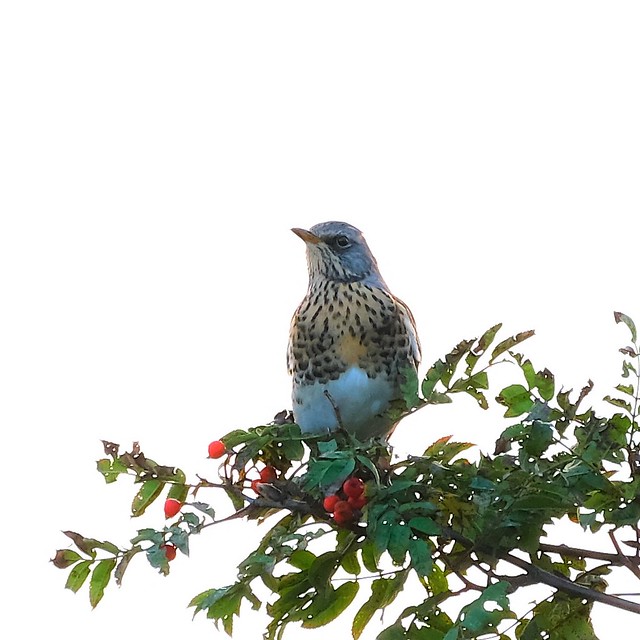
Best of all, I spotted another new bird for us in a tree with small red berries at the edge of a field. This “rather large, subtly attractive thrush with blue-gray head, dark chestnut-brown back, gray rump, and variable peachy-buff wash on spotted breast” is called a fieldfare (Turdus pilaris), and as you may already be able to tell from its pose, it’s a close cousin of both the European blackbird and the American robin

DSCF6994

The green-winged teals are still around, I counted 8 today, and this handsome little devil was finally in the mood for pictures, at least for a moment.

DSCF7026

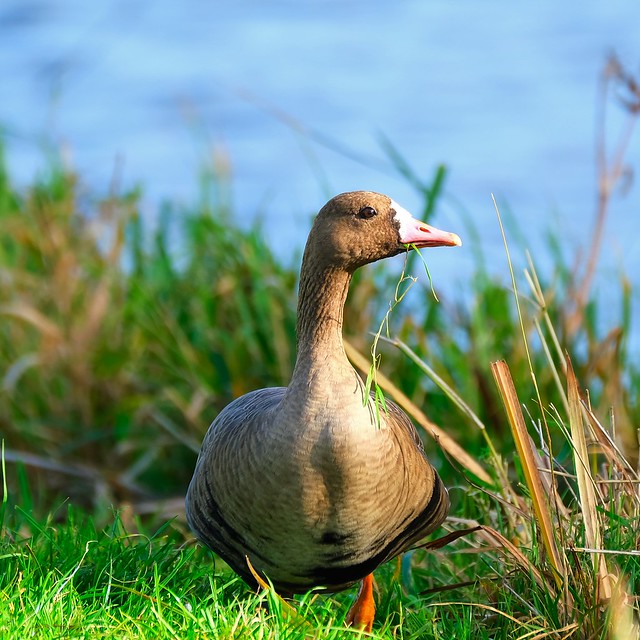
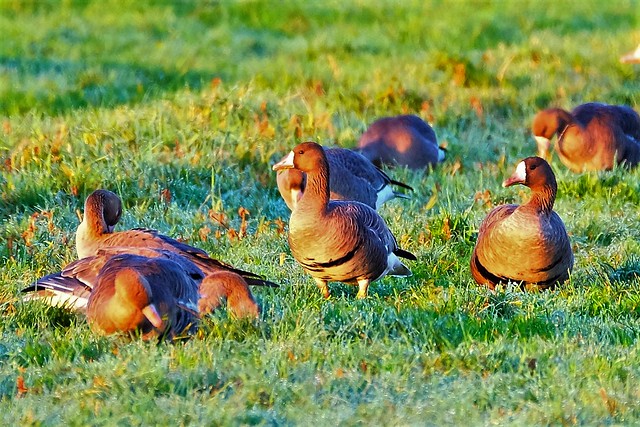
The white-fronted geese are also still here, and this one posed long enough for the sun to come out from behind a cloud.

DSCF7085

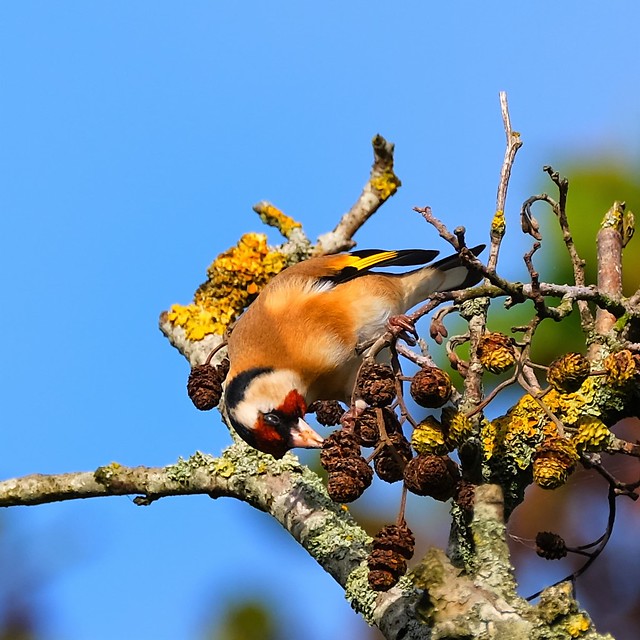
Finally, the goldfinches are still raiding the alder trees.

DSCF7097

Oh yeah…

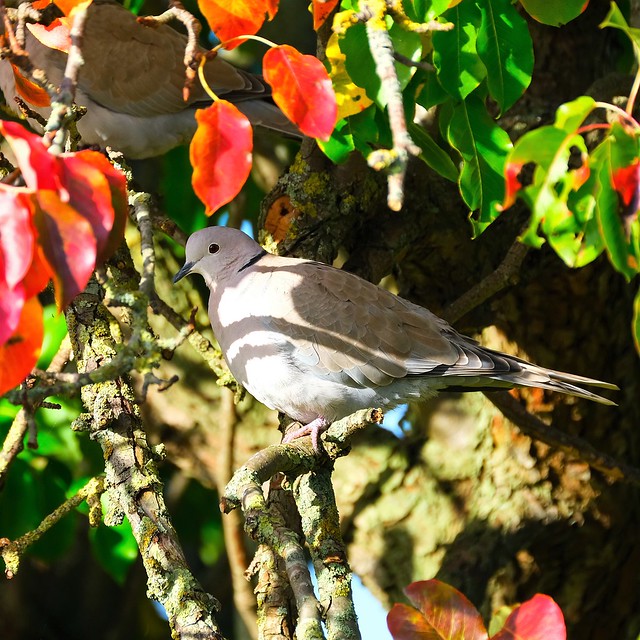
At some point, perhaps over the summer, I read or heard the name “collard-dove”, but that’s all I had, just the name. Then, on Sunday, as I rode by a farmhouse on the way from one open field to another, I spotted a few birds that I figured were wood pigeons or even rock pigeons, but something clicked in my head. “Oh! I bet that’s what a ‘collard dove’ would look like.” And just like that, we’ve got a new bird, the Eurasian collared-dove (Streptopelia decaocto)

DSCF6929

Despite the similarity, they are not super close cousins to the mourning doves we see regularly in Estabrook Park, but only in the same subfamily Columbinae. Although they have been introduced to North America, their range appears to stop just short of the Milwaukee area, and no one on Ebird has reported spotting one in Estabrook Park, yet, so it might be a new bird for you, too.

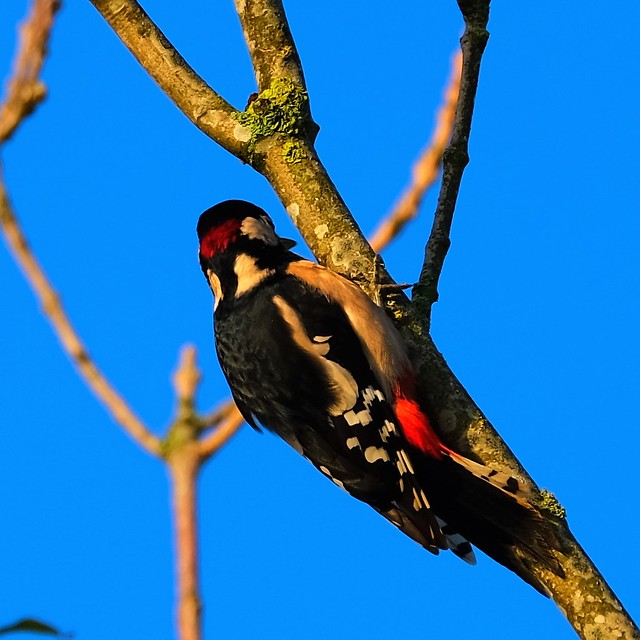
Anyway, here’s another great spotted woodpecker, who I simply could not catch looking our way, even though the sun was lighting it up so nice and the sky was such a perfect blue. Oh well.

DSCF6903

Finally, this speckled wood could be our last butterfly spotting of the season!

DSCF6966

Something new, something old, and something cra-cra…

After the rain blew through yesterday morning, the sun came out, and the wind kept right on blowing. Oddly enough, I saw more little birds in the air than I think I’ve ever seen here, and maybe it was in spite of the wind instead of because of it. They got places to be!

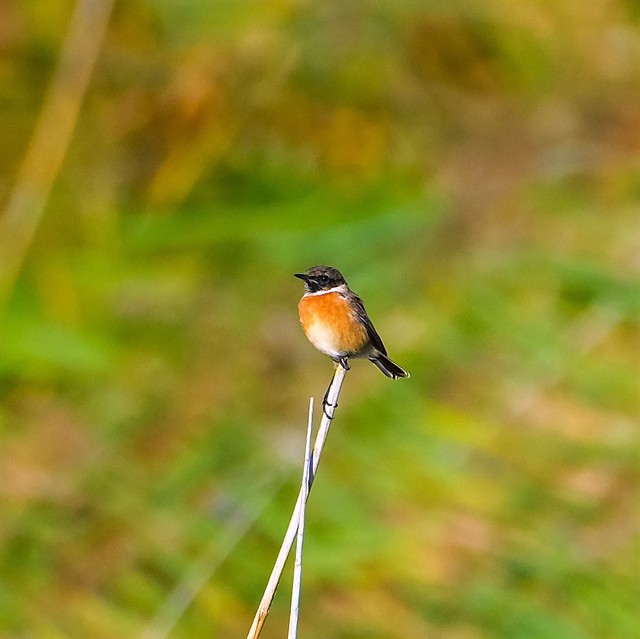
In any case, only one opted to park where I could clearly see it, though that reed was waving in the breeze quite a bit, and I couldn’t believe my eyes when I finally got a good look at it. This is a “chat” or “stonechat” in the genus Saxicola and probably the superspecies Saxicola torquatus, the common stonechats. Beyond that, my best guess, based largely on location, is that this is a European stonechat (Saxicola rubicola), although I’m a little nervous about the white neck ring extending all the way under its chin. This is the first one I’ve ever seen.

DSCF6913

Meanwhile, the great spotted woodpeckers continue to do their thing.

DSCF6837

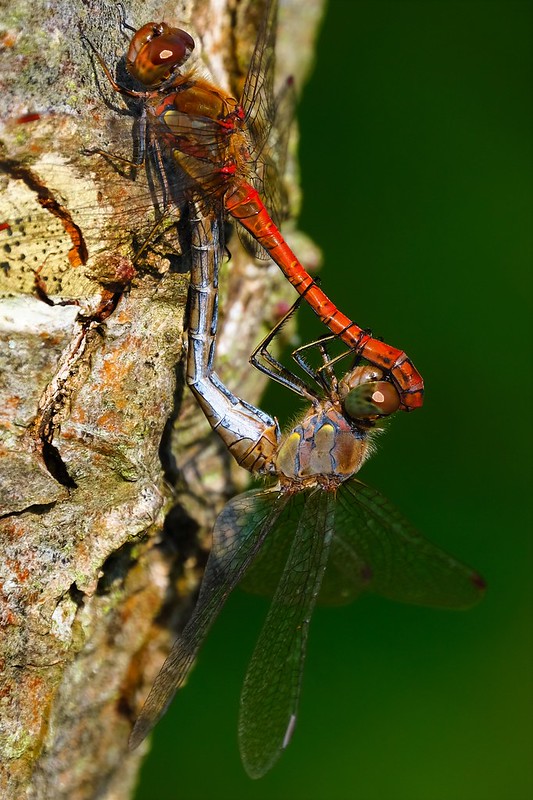
And I was stunned to find a pair of dragonflies, ruddy darters, based on his slightly “waisted” abdomen and her blueish legs, still doing their thing.

DSCF6964

Wonders never cease, eh?

Ducks and more ducks…

I don’t have any good words for you this weekend, but I did go out into the countryside for the therapeutic effect anyway, and now I’ve got these pictures burning a hole in my pocket, so here you go.

In addition to the hybridized mallards I already showed you earlier this month, the so-called “Mallard (Domestic type)”, I am starting to see more pure-bred-looking mallards, perhaps newly arrived from their breeding grounds in northern Scandinavia and Iceland for a milder winter.

DSCF6897

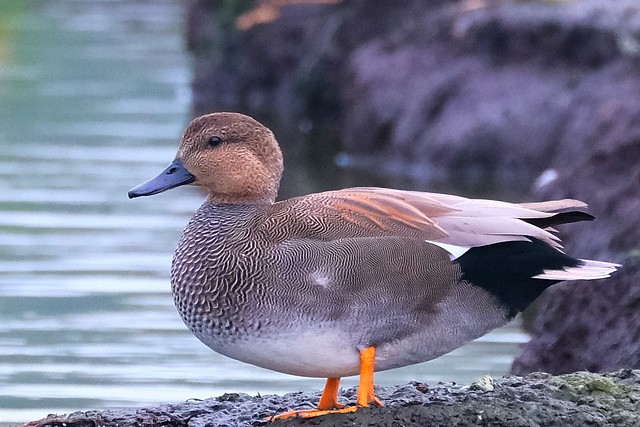
There are still many gadwalls around, and this drake was kind enough to show off his surprisingly-clean undercarriage, given the muck he’s standing on.

DSCF6851

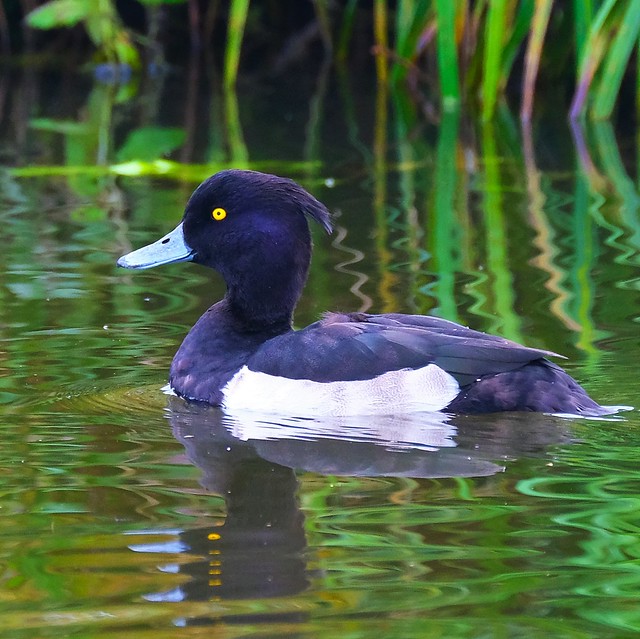
The number of tufted ducks seems to be growing, and I counted an even dozen this morning.

DSCF6885

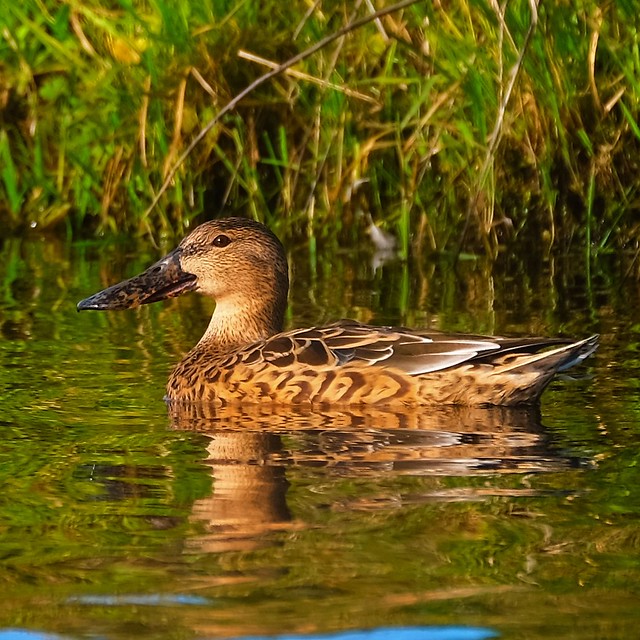
I saw a hand-full of shoveler hens, but no drakes, yet.

DSCF6936
DSCF6892

I was thrilled to get another chance to capture a decent green-winged teal portrait, though there is still room for improvement. They are nearly as shy as they are striking.

DSCF6938

Finally, I’m starting to see some wigeon drakes sporting their full faux mohawks. I don’t know if they are growing back in, or haven’t been lost to the Autumn molt yet, but that’s a sharp-looking bird either way.

DSCF6860

I’ve got some more, but I suspect you know the drill by now…

A few last stragglers…

On Saturday, I spotted this ghostly bird out on the polder, just chillin’ amid the geese and the cows, and I was all excited that I had spotted someone new, maybe a gyrfalcon. Welp, it might be a new individual to the area, but it is merely a “pale morph” of the common buzzard, and we’ve seen plenty of its darker siblings over the summer. Nevertheless, it sure is pretty, eh?

DSCF6725

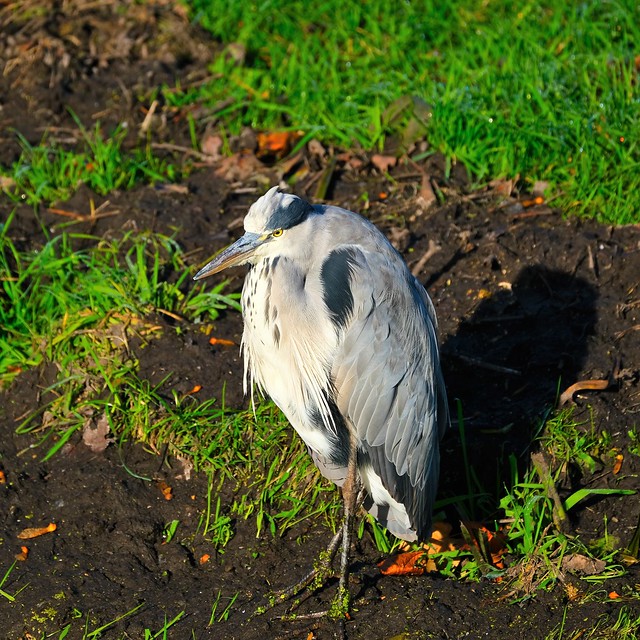
Workers have been dredging a lot of the little canals that run through the fields lately, and the piles of canal gunk attract many birds, including grey herons, storks, and egrets. Here’s a grey heron, standing on said gunk, taking a break from hunting in the warm morning sun, perhaps because it now has a bellyful in need of digestion.

DSCF6753

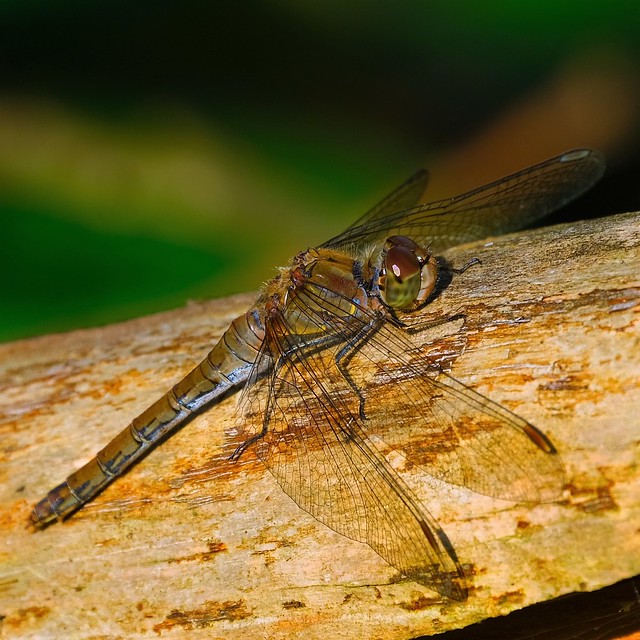
I only butterflies I saw this weekend were a few small whites, but the couple of dragonflies I saw looked more interesting, and this one appears to be a common darter.

DSCF6666

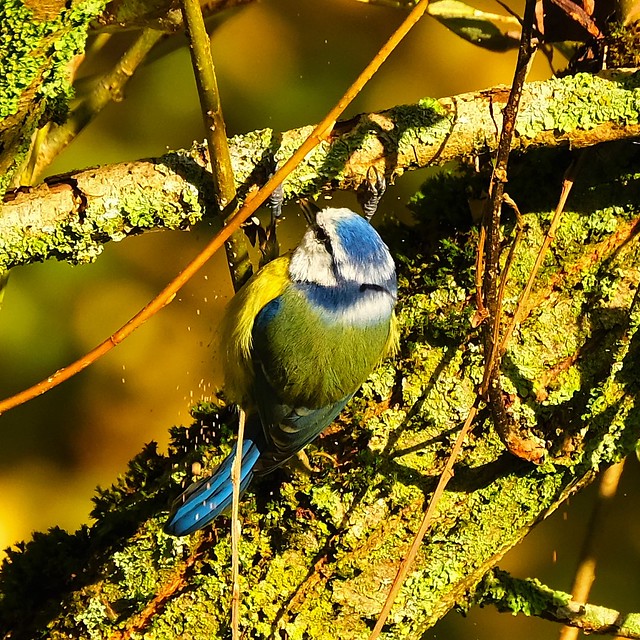
Finally, there are still plenty of blue tits around, and this one was foraging furiously. It appears that they will stay with us through the winter, as their North American cousins, the chickadees, do, so that’s something to which we can look forward.

DSCF6708

This one was even kind enough to take a second to pose for a portrait. Thinks, little buddy!
DSCF6713

More change in the air…

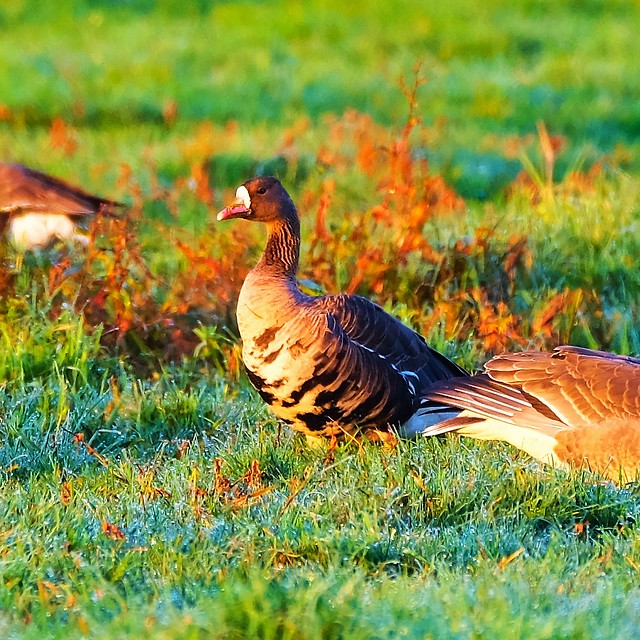
It was 46°F at sunrise yesterday morning, a new low for South Holland this season, I believe, and I read that temperature change is one of the many signals birds use to know when to head south. Thus, I’m sure that you won’t be surprised to hear that ducks are not the only critters on the move around here. Besides the flocks of Canada and graylag geese noisily taking to the skies these days, we’ve got a new arrival in town, fresh from its breeding grounds above the Russian Arctic Circle! Give a warm welcome to this greater white-fronted goose (Anser albifrons).

DSCF6700

Plus, as with many of the mergansers, golden eyes, and buffleheads in Estabrook Park, this is their final destination. This is their Miami Beach, and I’ll try to remember that as I’m trudging to campus through freezing drizzle in January. Anyway, here’s a few who were kind enough to pose together as they sampled the fresh buffet of nice green polder grass succulently coated with heavy fresh dew.

DSCF6695

Meanwhile, the starlings are starting to congregate, and here are two of the characters making their odd radio noises together as they warm up in the morning sun. I still have a hope of seeing a murmuration or two, but I haven’t seen any groups that big yet.

DSCF6740

I did see another huge flock of cormorants flying over towards the coast this weekend, but the new sight was this flock of jackdaws amusing themselves in the updraft at the edge of a building.

DSCF6816

Finally, I heard this group of goldfinches long before I saw them, as they noisily foraged for seeds on an alder tree and blended in with its valiant attempt at autumn coloration. It appears that we are in their “all year” range, so perhaps they are not planning to go anywhere and are just enjoying each other’s company on a beautiful fall day.

DSCF6810

More ducks!

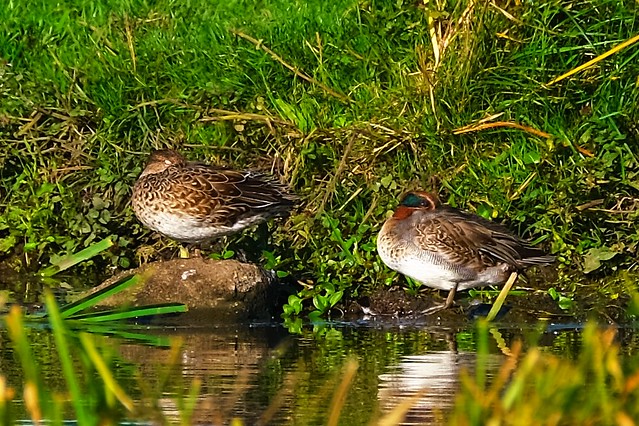
I guess I am getting to see a fall migration after all, because here is yet another new duck trying to catch some zzzzs beside the water. I couldn’t get very close, so the images aren’t too great, but the dark, wide, horizontal band around the eye marks the one on the right as a male Eurasian green-winged teal (Anas crecca) in winter (eclipse) plumage. Despite the name, it is not a very close cousin to the blue-winged teals (Spatula discors) we see in Estabrook Park. They are both in the subfamily Anatinae, the dabbling ducks.

DSCF6776

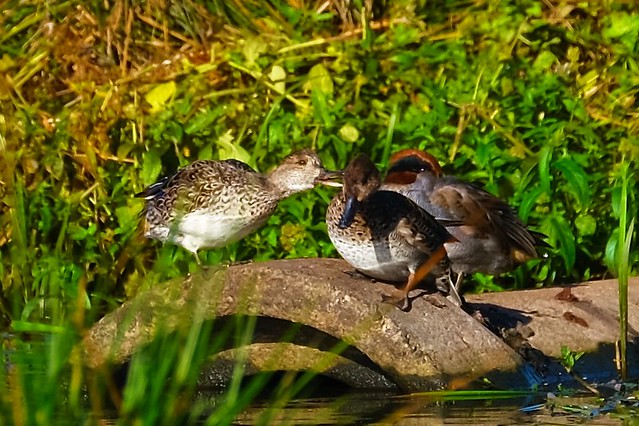
The Pedia of Wik claims, without evidence I might add, that “the bird gives its name to the blue-green colour [sic] teal,” instead of the other way around, if you can believe it. Anyway, here’s another scene, slightly down stream, with a little more action.

DSCF6781

Meanwhile, the Eurasian widgeon was back, and he brought a lot of buddies with him.

DSCF6642

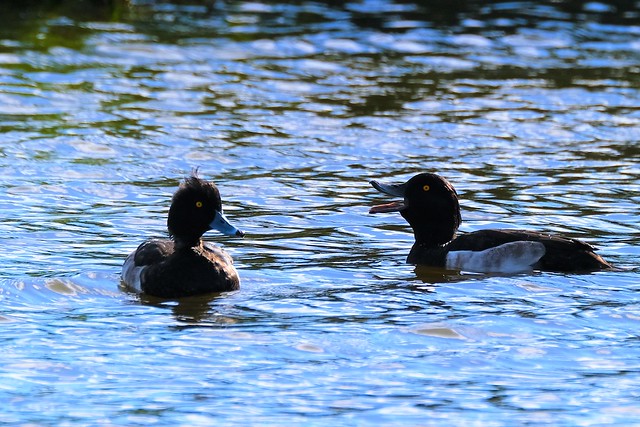
Plus, here are a couple of tufted ducks, which we haven’t see for a while. Whatever the one on the right is shouting is making the one on the left’s head feathers stand up.

DSCF6669

Finally, there are still plenty of gadwalls hanging around.

DSCF6686
DSCF6692
DSCF6832

It will be fun to see which ones stay for the winter, and which ones are just passing through.