A few last stragglers…

On Saturday, I spotted this ghostly bird out on the polder, just chillin’ amid the geese and the cows, and I was all excited that I had spotted someone new, maybe a gyrfalcon. Welp, it might be a new individual to the area, but it is merely a “pale morph” of the common buzzard, and we’ve seen plenty of its darker siblings over the summer. Nevertheless, it sure is pretty, eh?

DSCF6725

Workers have been dredging a lot of the little canals that run through the fields lately, and the piles of canal gunk attract many birds, including grey herons, storks, and egrets. Here’s a grey heron, standing on said gunk, taking a break from hunting in the warm morning sun, perhaps because it now has a bellyful in need of digestion.

DSCF6753

I only butterflies I saw this weekend were a few small whites, but the couple of dragonflies I saw looked more interesting, and this one appears to be a common darter.

DSCF6666

Finally, there are still plenty of blue tits around, and this one was foraging furiously. It appears that they will stay with us through the winter, as their North American cousins, the chickadees, do, so that’s something to which we can look forward.

DSCF6708

This one was even kind enough to take a second to pose for a portrait. Thinks, little buddy!

DSCF6713

More change in the air…

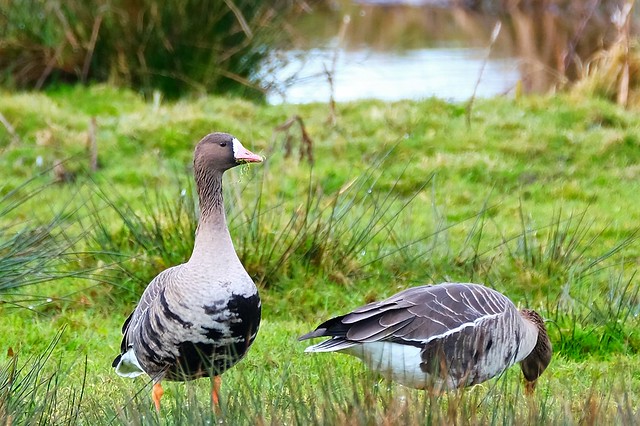
It was 46°F at sunrise yesterday morning, a new low for South Holland this season, I believe, and I read that temperature change is one of the many signals birds use to know when to head south. Thus, I’m sure that you won’t be surprised to hear that ducks are not the only critters on the move around here. Besides the flocks of Canada and graylag geese noisily taking to the skies these days, we’ve got a new arrival in town, fresh from its breeding grounds above the Russian Arctic Circle! Give a warm welcome to this greater white-fronted goose (Anser albifrons).

DSCF6700

Plus, as with many of the mergansers, golden eyes, and buffleheads in Estabrook Park, this is their final destination. This is their Miami Beach, and I’ll try to remember that as I’m trudging to campus through freezing drizzle in January. Anyway, here’s a few who were kind enough to pose together as they sampled the fresh buffet of nice green polder grass succulently coated with heavy fresh dew.

DSCF6695

Meanwhile, the starlings are starting to congregate, and here are two of the characters making their odd radio noises together as they warm up in the morning sun. I still have a hope of seeing a murmuration or two, but I haven’t seen any groups that big yet.

DSCF6740

I did see another huge flock of cormorants flying over towards the coast this weekend, but the new sight was this flock of jackdaws amusing themselves in the updraft at the edge of a building.

DSCF6816

Finally, I heard this group of goldfinches long before I saw them, as they noisily foraged for seeds on an alder tree and blended in with its valiant attempt at autumn coloration. It appears that we are in their “all year” range, so perhaps they are not planning to go anywhere and are just enjoying each other’s company on a beautiful fall day.

DSCF6810

More ducks!

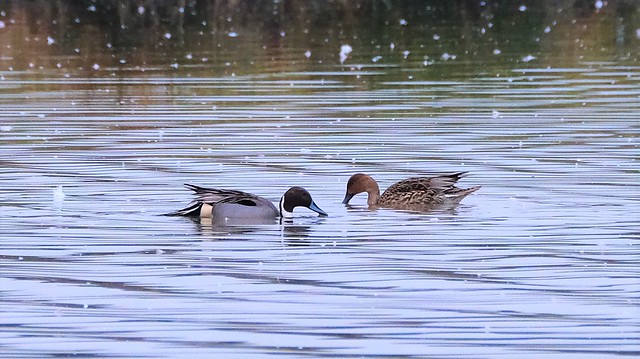
I guess I am getting to see a fall migration after all, because here is yet another new duck trying to catch some zzzzs beside the water. I couldn’t get very close, so the images aren’t too great, but the dark, wide, horizontal band around the eye marks the one on the right as a male Eurasian green-winged teal (Anas crecca) in winter (eclipse) plumage. Despite the name, it is not a very close cousin to the blue-winged teals (Spatula discors) we see in Estabrook Park. They are both in the subfamily Anatinae, the dabbling ducks.

DSCF6776

The Pedia of Wik claims, without evidence I might add, that “the bird gives its name to the blue-green colour [sic] teal,” instead of the other way around, if you can believe it. Anyway, here’s another scene, slightly down stream, with a little more action.

DSCF6781

Meanwhile, the Eurasian widgeon was back, and he brought a lot of buddies with him.

DSCF6642

Plus, here are a couple of tufted ducks, which we haven’t see for a while. Whatever the one on the right is shouting is making the one on the left’s head feathers stand up.

DSCF6669

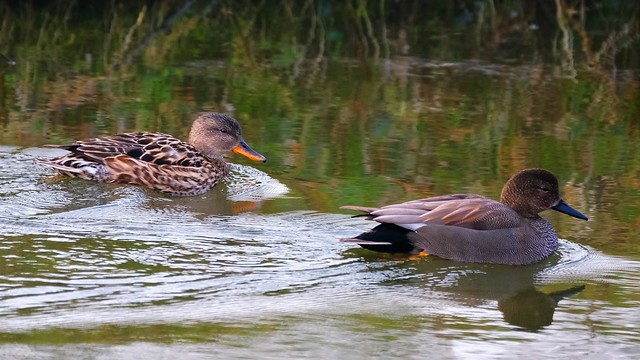
Finally, there are still plenty of gadwalls hanging around.

DSCF6686
DSCF6692
DSCF6832

It will be fun to see which ones stay for the winter, and which ones are just passing through.

Still something new…

The sun didn’t rise until nearly 8 o’clock this morning, and the temps didn’t even break into the 60s today, but the skies were clear, the breeze wasn’t too strong, and the birds were out, so I was finally able to sneak up on one of the several great spotted woodpeckers searching for a soul mate. You may recall that I first noticed this new behavior last weekend.

DSCF6627

I also caught a blue tit in the nice bright morning sunlight. You can tell it’s starting to get cold out when the little birds start looking so plump.

DSCF6636

As luck would have it, a great tit stopped by with some especially fine plumage, which sure helps us distinguish between these two similar birds.

DSCF6658

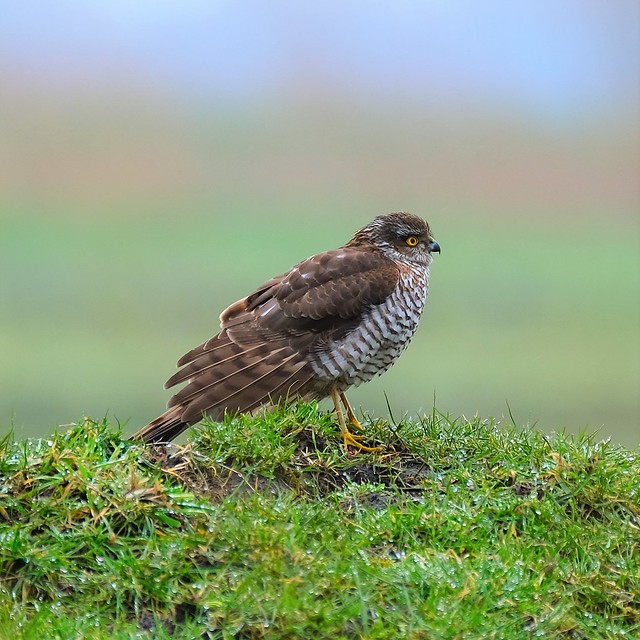
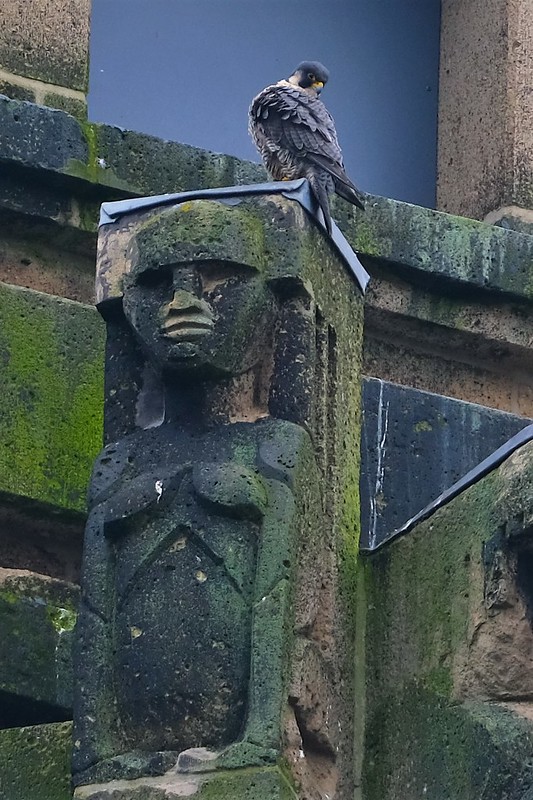
I don’t believe I saw the kestrel today, and I initially thought this might be one, but I now believe that it’s a Eurasian sparrowhawk (Accipiter nisus), instead. Notice how the wings appear to have dark stripes instead of just a light and dark pattern, the feathers at the wing tips extend behind the trailing edge of the rest of the wing, and the leading edge is a little more lumpy, compared to the kestrel.

DSCF6657

It sure isn’t a buzzard, which have a lot more dark on their undersides, and peregrine falcons resemble kestrels, so that make it a brand-new bird for us. Woo hoo!

Birds on the move…

As I walked to work along the east side of the TU Delft campus, yesterday morning, I came across the largest flock of gadwalls I’ve ever seen. I don’t know if the body of water right beside the road would be considered a pond or just a widened canal, but I counted at least 50 ducks feasting on the mat of duckweed growing on the surface. I didn’t have my camera with me at the time, so this scene from farther out into the countryside on Sunday will have to suffice, but it gives you a sense of the density. It appears that the gadwalls are on the move, and there sure are a lot of them.

DSCF6538

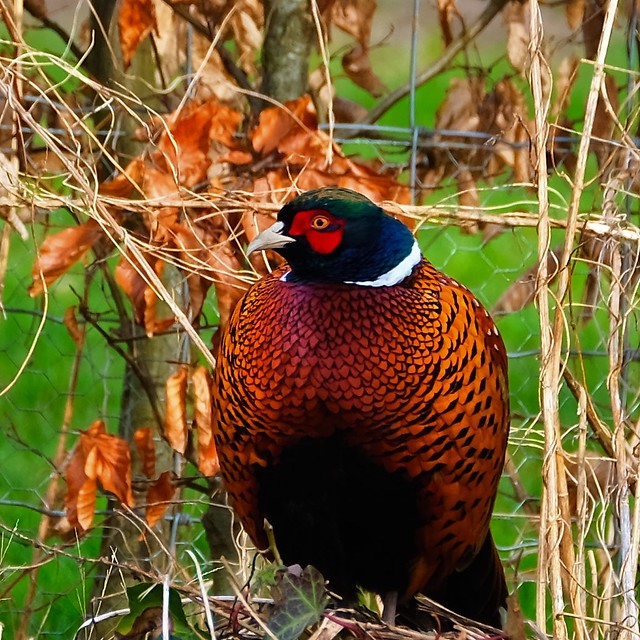
Similarly, the pheasants were plentiful this past weekend, although I don’t believe they’re heading anywhere, and here’s a rooster (or a cock, according to the FDA) rustling up some breakfast in the dim morning light.

DSCF6436

I still hear a lot of wrens, too, but now that the chicks have all fledged, they’ve made themselves a lot harder to spot. This one, however, gave me a second to capture this image before it headed for cover.

DSCF6431

On Sunday, this kestrel, who was hunting over the same field from which we saw our star catch a rodent on Saturday, took a break from hunting on this powerline tower. It could very well be the same bird, but I can’t be sure.

DSCF6549

Finally, even though they really love the low light, and I don’t believe I’ve ever seen one in broad daylight, here’s another robin for Arlene.

DSCF6443

And that, finally, is the end of the pictures I managed to accumulate over the weekend. Here’s hoping I have as much luck next weekend, eh?

Oh, and while I have your attention, let me plug a recent article in the New York Times by Margaret Renkl (which I realize may be behind a paywall for some of you, so I copied the key paragraphs below) that urges us all to help make migration a little less dangerous for the millions of birds on the move right now.

“A 2021 study by Field Museum scientists analyzed 20 years of data collected at Chicago’s McCormick Place convention center. The researchers found that merely darkening the windows resulted in a roughly 60 percent reduction in bird mortality.”

Homeowners can do their part, too. If you can’t turn off all your lights, identify the ones that are truly necessary and reduce the wattage or reorient them in a way that is safer for wildlife. Lights triggered by motion detectors are far less dangerous for birds than continuously burning lights, for example. The same is true for hooded lights that direct the illumination downward rather than into the sky. Indoors, draw the curtains and close the blinds after dark. Turn off lights in empty rooms. Use lamps instead of overhead lights in the room you’re in.”

“Migration seasons don’t last very long, so it isn’t strictly necessary to make these changes permanently, but it would be better for wildlife, and better for the climate, if we did.”

Thanks!

Birds of a certain size…

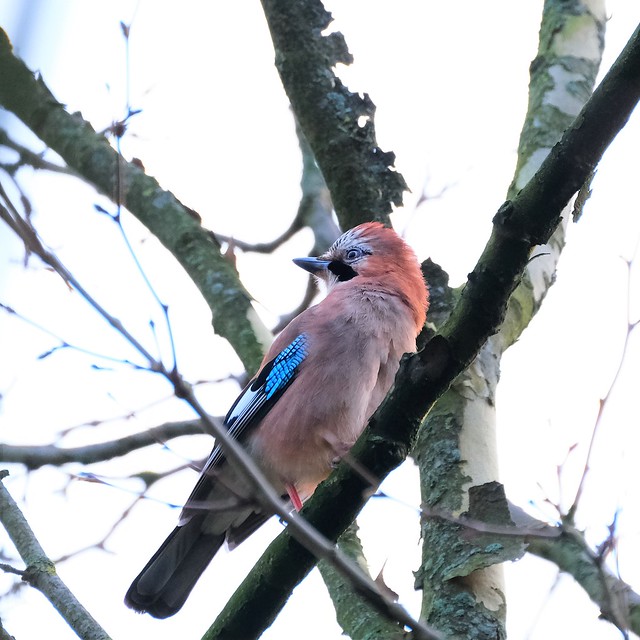
As is often the case, once I notice a new creature for the first time, I start to see them everywhere, and the Eurasian jay is a perfect example. They really are shy birds, quite similar to the blue jays in Estabrook, but now that I know where to look, I’m getting closer to making a decent portrait anyway. This one is even looking our way! Yay! It’s a beauty, ain’t it?

DSCF6428

Speaking of Corvids, they are more plentiful now than ever, and here’s a magpie foraging on the back of one of the many sheep drying out in the morning sun. Yeah, besides horses and cows, we’ve got a lot of sheep here, too. I read that we also have a lot of pigs, and Anne reports seeing a few, but I don’t know yet where they are all kept.

DSCF6474

While we’re enjoying birds of a certain size, I was surprised to see and hear more great spotted woodpeckers this weekend than I believe I’ve seen for the entire rest of the summer combined. On at least three occasions, I first heard an individual calling incessantly, and could quickly spot it in the top of a distant dead tree. I have failed to get close enough for a picture, however, and hoped that this would be one when I saw it. Instead, it turns out to be another pretty song thrush, which I’ve only seen once before, so that’s fun anyway.

DSCF6589

Finally, here’s a ubiquitous bird, in fact “the most widely distributed wild bird” in the world, that I knew must be here but haven’t manage to capture on film until now. You guessed it, that’s a pair of house sparrows, just like we see in Estabrook Park or your back yard.

DSCF6606

Not so fast…

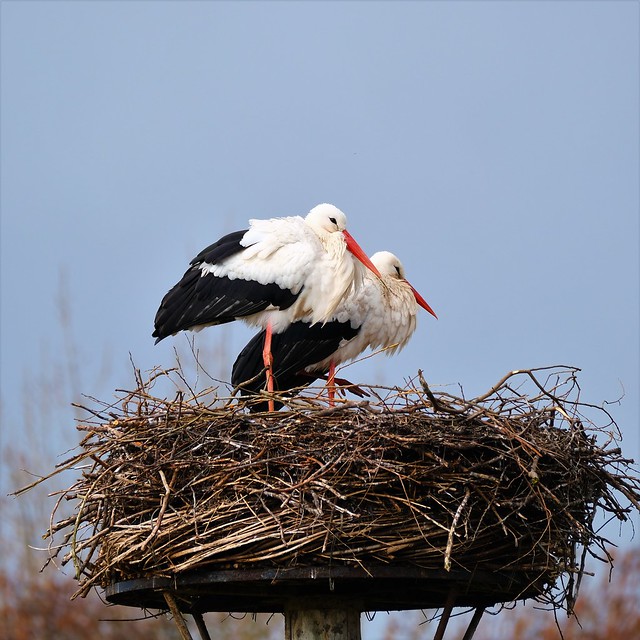
It felt as if this morning set out specifically to show me that one data point does not make a trend. Thus, not even 24 hours after I announced that “the storks have flown south for the season“, look who I found posing pretty as a picture. While it may be true that some storks have indeed flown south already, this seems to be pretty conclusive evidence that not all have yet, right?

DSCF6571

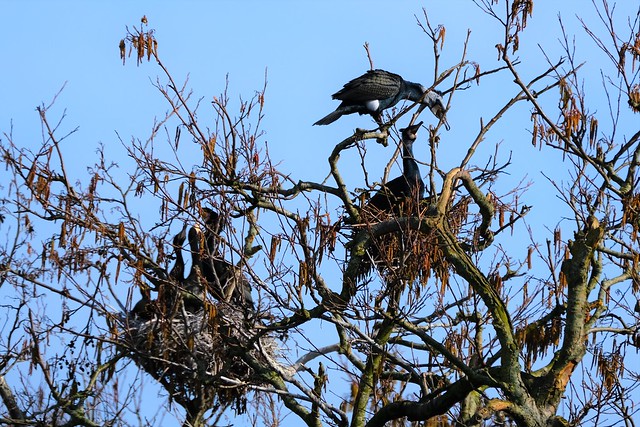
Plus, there were a lot more geese around today, and as this formation approached from the horizon, I thought I was going to be able to show you a shot of a nice, big v-formation of geese actually heading south. Once they got overhead, however, I could see that these are not geese at all. Instead, they’re cormorants, on their way to catch fish in warmer waters. Ha! I doubt this picture even captured a third of the total.

DSCF6594

Another big surprise was that I got to see a kestrel hunting again.

DSCF6491

And this time, it drifted toward me, instead of away, when it repositioned itself.

DSCF6492

Then it suddenly dropped out of the sky like a rock, and I lost sight of it in the tall grass. I thank my lucky stars that I somehow managed to keep my camera pointed in the right direction, because when it reemerged, look what it had found! Ta da! Some hapless little rodent is on its way to becoming a very nutritious breakfast.

DSCF6498

Meanwhile, a great egret was hoping for similar luck along a nearby canal.

DSCF6600

Finally, on my way back home, along the Delftse Schie, I spotted this great crested grebe chick, on the left, still in its zebra stripes, and still begging its parent, on the right, for something to eat. Hey, Kiddo, it’s October already, winter’s coming, and you’d better grow up fast!

DSCF6610

Dutch Autumn

Happy October, everybody! My assignment in Delft is officially half over, and I’m sorry about the recent radio silence, but I had some family events to which I wanted to give my full attention.

Anyway, the weather’s been pretty cool and wet around here for the past couple of weeks, and the forecast wasn’t great for today, so I wasn’t even sure I was going to go out this morning, but Anne gave me a nudge, so out I went. Well, I sure am glad I did, ’cause otherwise I would have missed this handsome little fella. He appears to be a Eurasian wigeon (Mareca penelope) male in eclipse plumage. Thanks, Honey!

DSCF6485

I’ve never seen one before, as far as I know, in any plumage, but I did record seeing it’s cousin, an American Widgeon, in Estabrook Park, back on November 1, 2021.

Speaking of ducks in Estabrook, I don’t see quite as many mallards here, and they often appear to be hybridized, but this couple appeared especially nice this morning when the sun poked through the clouds. Note how much thicker his white neck band is, compared to his North American cousins, and that she has a white neck band at all.

DSCF6452

Keeping with the duck theme, for a moment, here’s a pair of gadwalls sleeping the morning away.

DSCF6457

Going bigger, most of the geese have bugged out, and I only saw a few stragglers instead of the big flocks foraging in the fields that I’ve seen all summer. The swans, however, are still here, especially the cygnets, who might not have even fledged yet, and may still be sporting grey feathers.

DSCF6530

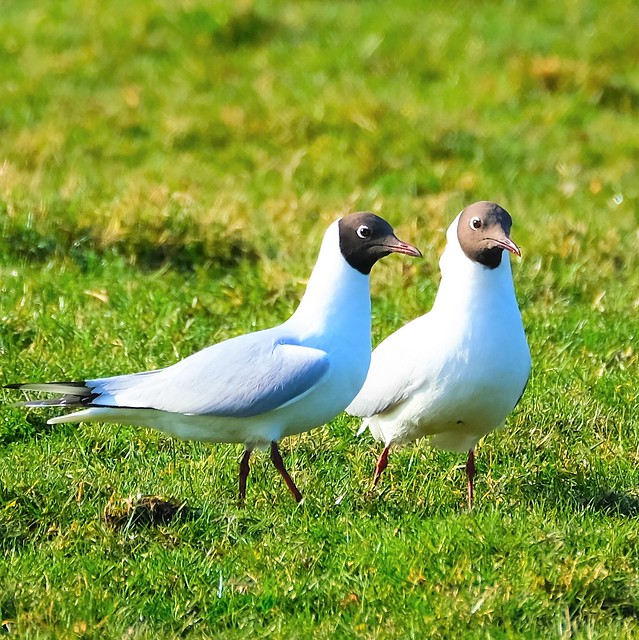
Also missing today, and probably gone until spring, are most of the shore birds, the curlews, godwits, redshanks, sandpipers, and lapwings. Instead, all I could find today was a little flock of black-headed gulls in their winter plumage.

DSCF6527

The storks are also gone, but the grey herons are still plentiful, and if they’re anything like the great blue herons they resemble, I might get to see them all winter.

DSCF6479

Finally, I did see one butterfly this morning, a speckled wood trying to bask in a brief moment of sunshine.

DSCF6511

There’s more, but I’d better save some incase tomorrow is a washout.

More little ones…

I didn’t see the goslings this morning, but that could simply mean that they were down in a canal paddling around when I tried to look from across the field. You may be surprised to learn, however, that they are not even the only late-summer youngsters out on the polder. Here’s one of a clutch of pint-sized pheasants I also saw yesterday.
DSCF6274

And here’s their mom keeping an eye on me.

DSCF6270

I don’t know if it was just a coincidence, but there were also more buzzards in the air than I’ve seen before, and here are three.

DSCF6298
DSCF6307
DSCF6309

The biggest surprise of today, however, was this good-sized, mud-covered crawfish crossing the bike path. We’ve seen smaller ones in Estabrook, and I knew they have them here as well, but I didn’t know they got this big. This one was moving pretty quickly, too, as though it were on a mission, and I tried to slow it down enough for a picture. It refused to grab a stick I placed in its claws, so I mistakenly thought they were just for show. When I tried to tug on its tail a bit with my fingers, it really let me have it, and the pincer tips were quite sharp. I hope I won’t be making that mistake again!

DSCF6401

Finally, the sun eventually burned off all the morning fog and warmed things up enough for the butterflies to come out, so I stopped by the flower patch on my way home and found this red admiral tanking up on nectar.

DSCF6406

Late arrivals…

Earlier this week, I came across an article in the newspaper that featured a nice bird picture, and as I prepared to send it to Anne, I realized it was of a Eurasian blue tit (Cyanistes caeruleus), which I have not yet seen, and not of one if its cousins, the great tit (Parus major), which I’ve managed to photograph here. That got me to wondering if and when I might see a blue tit, and as luck would have it, I didn’t have to wait very long at all.

DSCF6342

This little beauty was even kind enough to pose out in the open against a nice blue sky, although it’s a shame the warm morning sun was blocked by clouds at the moment.

DSCF6333

It looks quite similar to the great tit, with the same yellow belly black eye stripe, and little beak, but its tail, wings, and cap are blue, and there’s a band of white between its eye stripe and its cap. Here’s a great tit from this morning for comparison.

DSCF6261

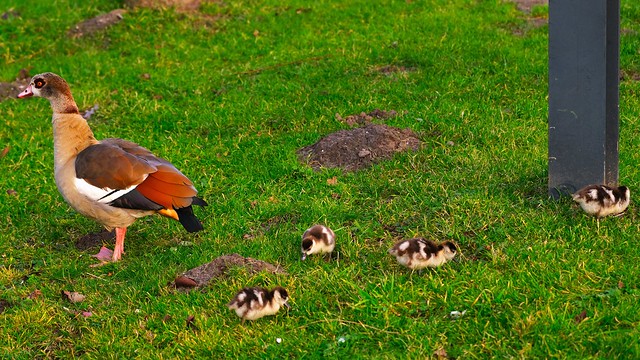
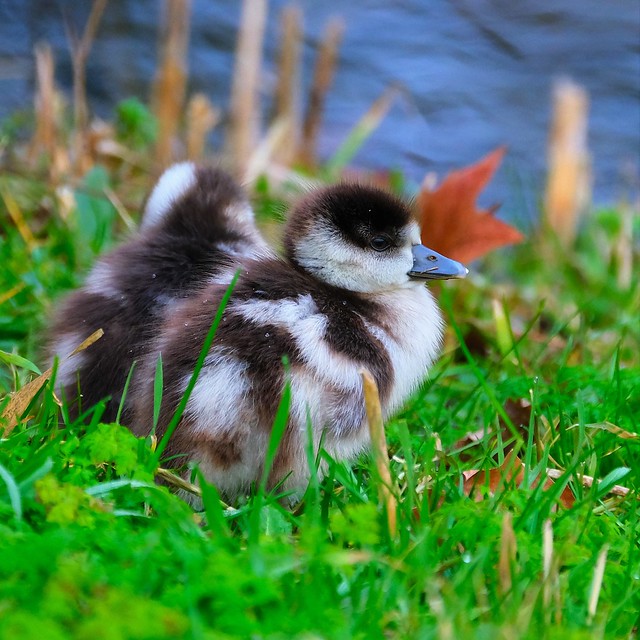
Another big surprise this morning was this very fresh-looking batch of five Egyptian goose goslings being carefully shepherded by their parents amongst the Canada geese. I’m no ornithologist, but mid-September seems kinda late in the season at 53° north latitude. I thought those coots back in August were pushing it. I wonder who is more surprised: the goose, the gander, or the goslings? The Canada geese are probably thinking “what the heck are these Egyptians up to now?” Perhaps this is just what happens with a species that is “native to Africa south of the Sahara and the Nile Valley.”

DSCF6352

The rest of the avian world appears just as stunned as I am. Here’s a slack-jawed grey heron.

DSCF6285

A mallard hen doing a double take.

DSCF6313

A young blackbird just staring wide-eyed.

DSCF6295

A European robin doing the same.

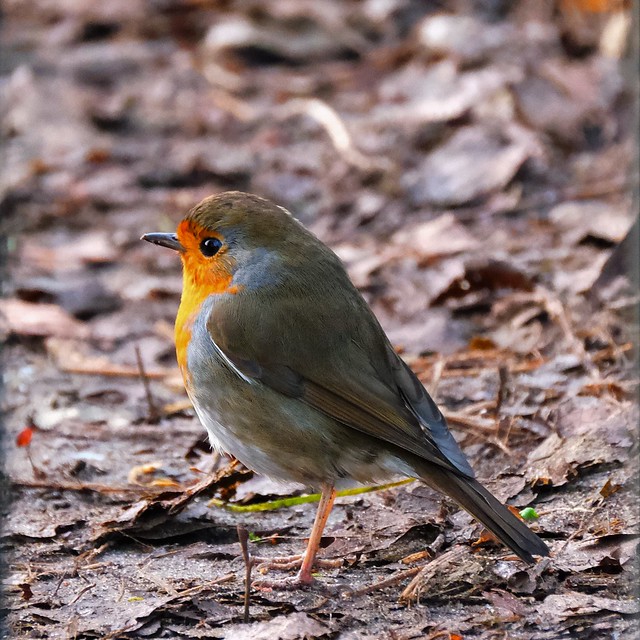
DSCF6293

This crow, however, looks more concerned than surprised. Maybe it’s already seen a thing or two.

DSCF6286

Anyway, the goslings were pretty far out into a big field, so I couldn’t get very close, but I’ll keep an eye out for them and let you know if there’s any news to report.