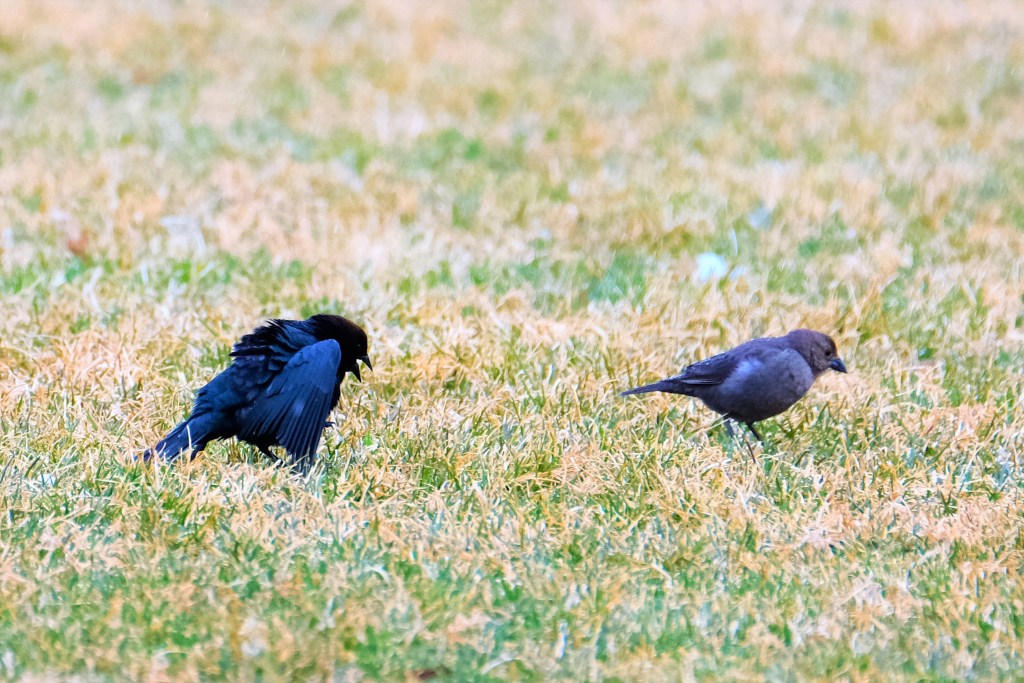
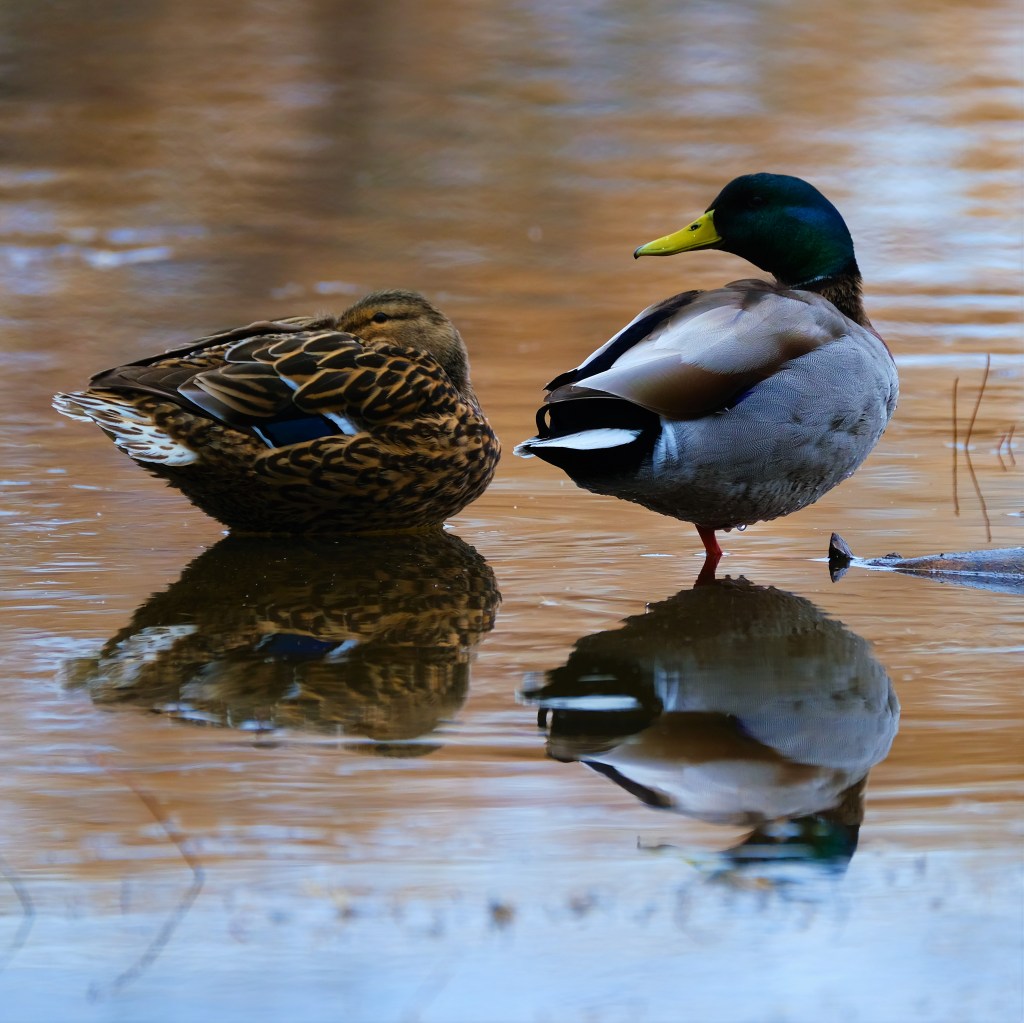
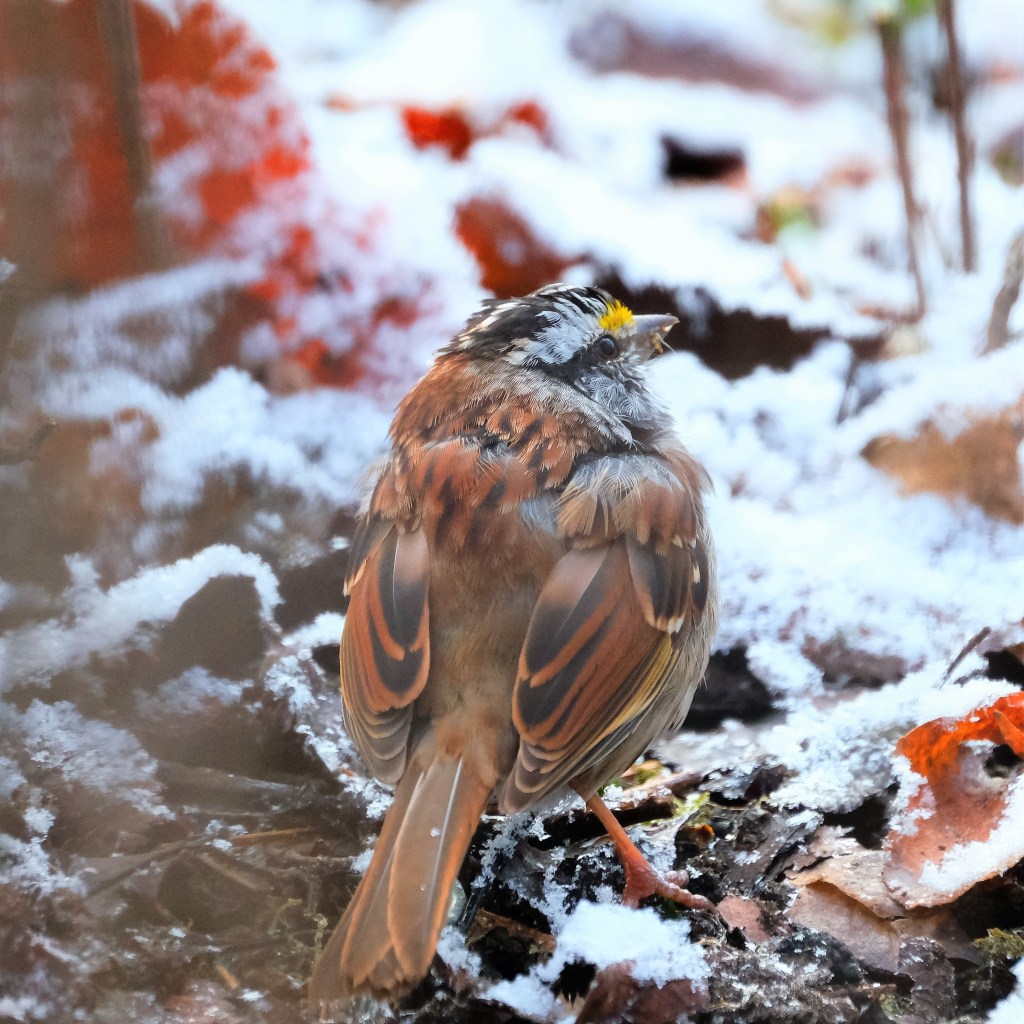
Our streak of nice weather continued this morning with nicely frozen trails and clear skies.
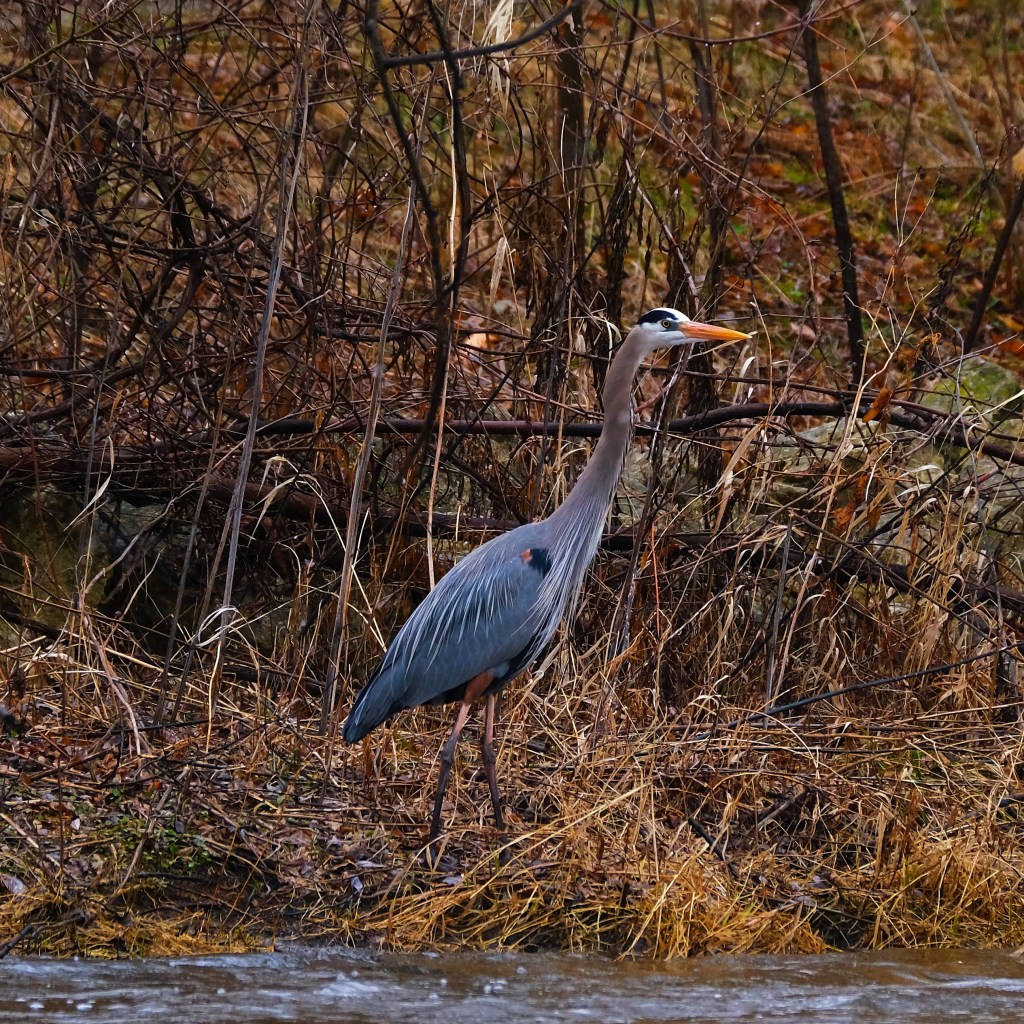
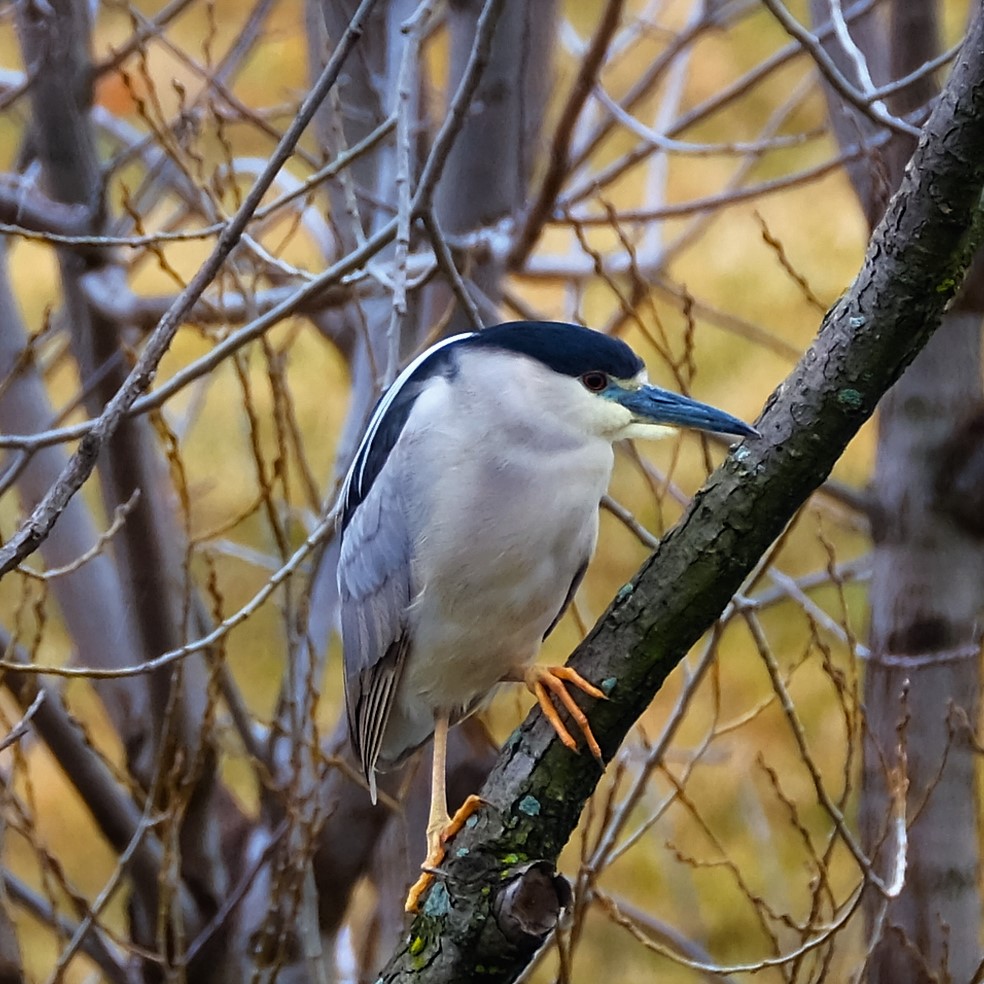
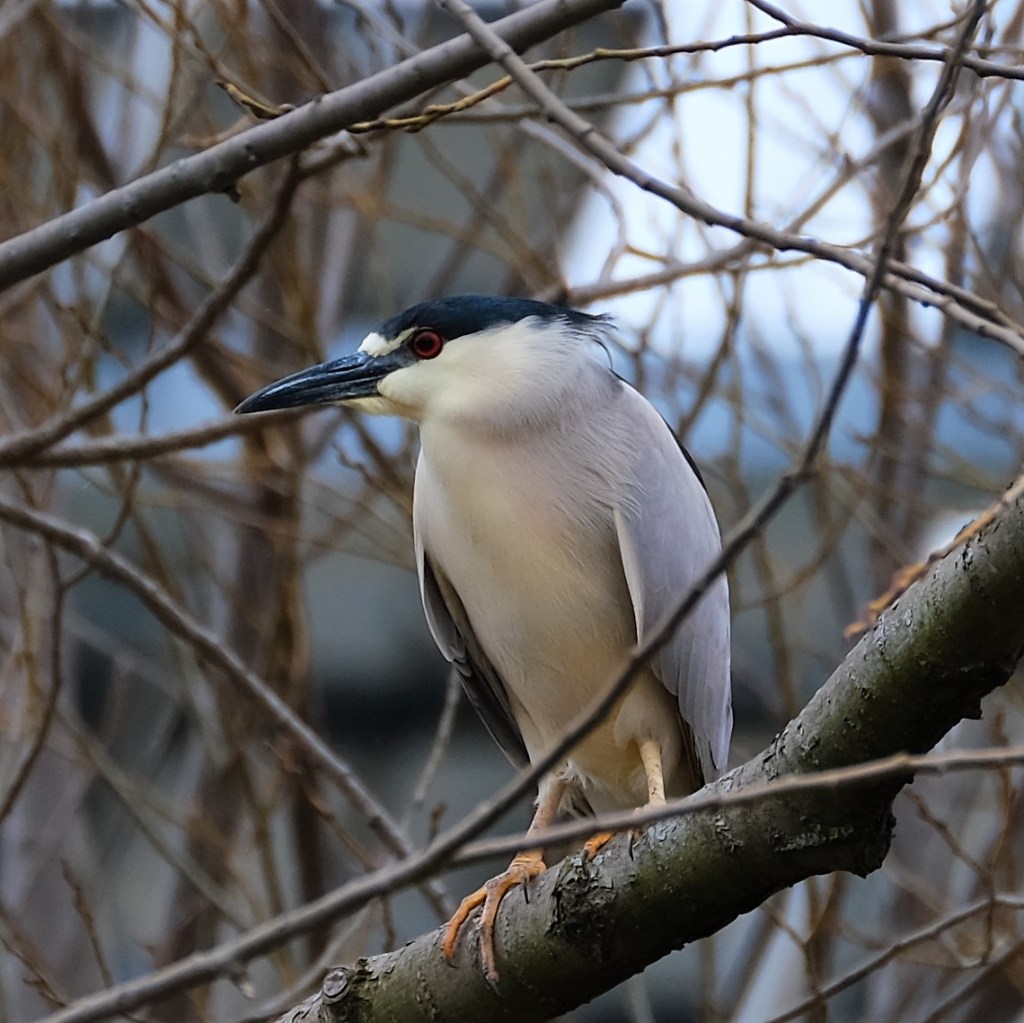
The great blue heron was up early and had found itself a nice sunny spot on the far shore.
Northern cardinals were singing to the heavens from seemingly every available perch.
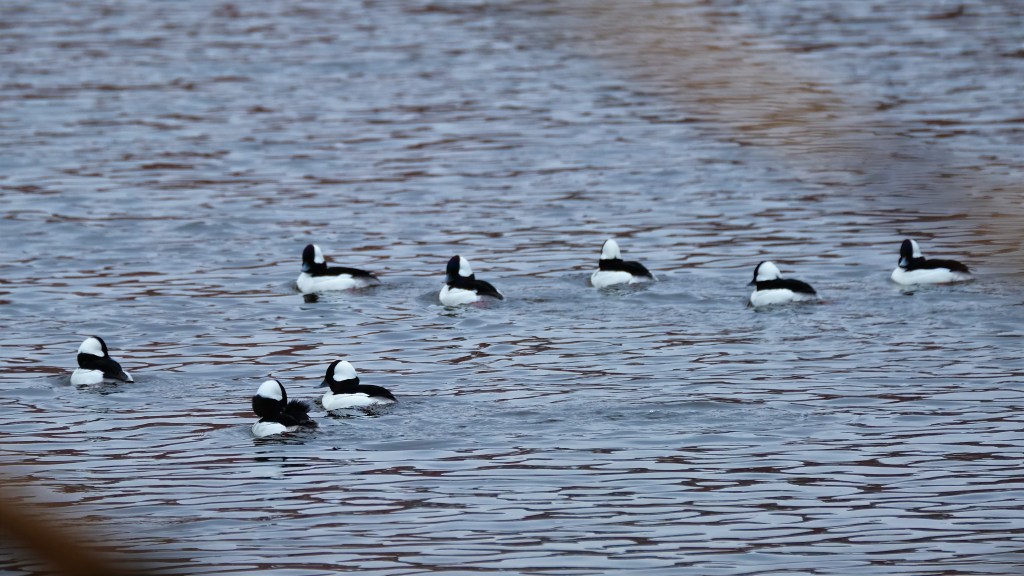
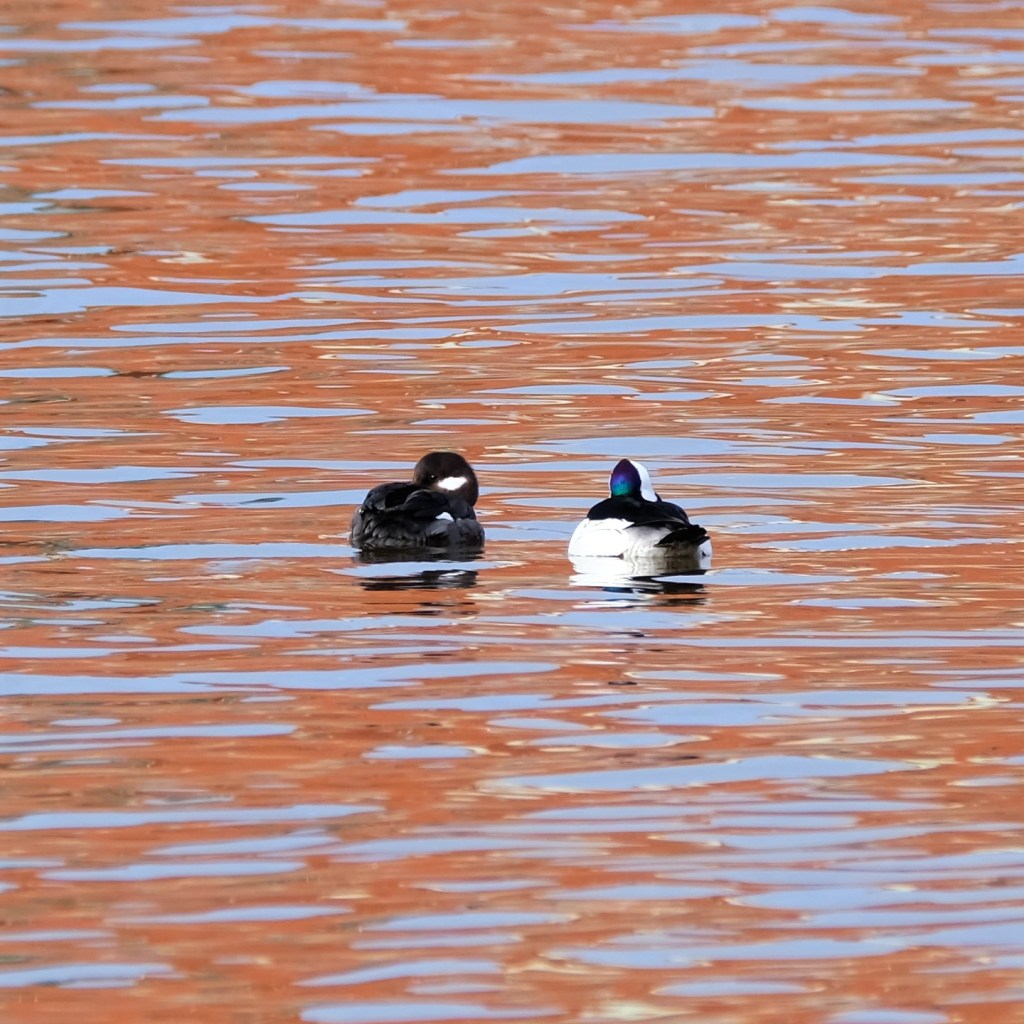
Above the falls, one pair of buffleheads had extricated itself from their little pack.
Between the islands, I counted 10 common mergansers, more than I think I’ve ever seen, and here are the 5 closest together that I could capture.
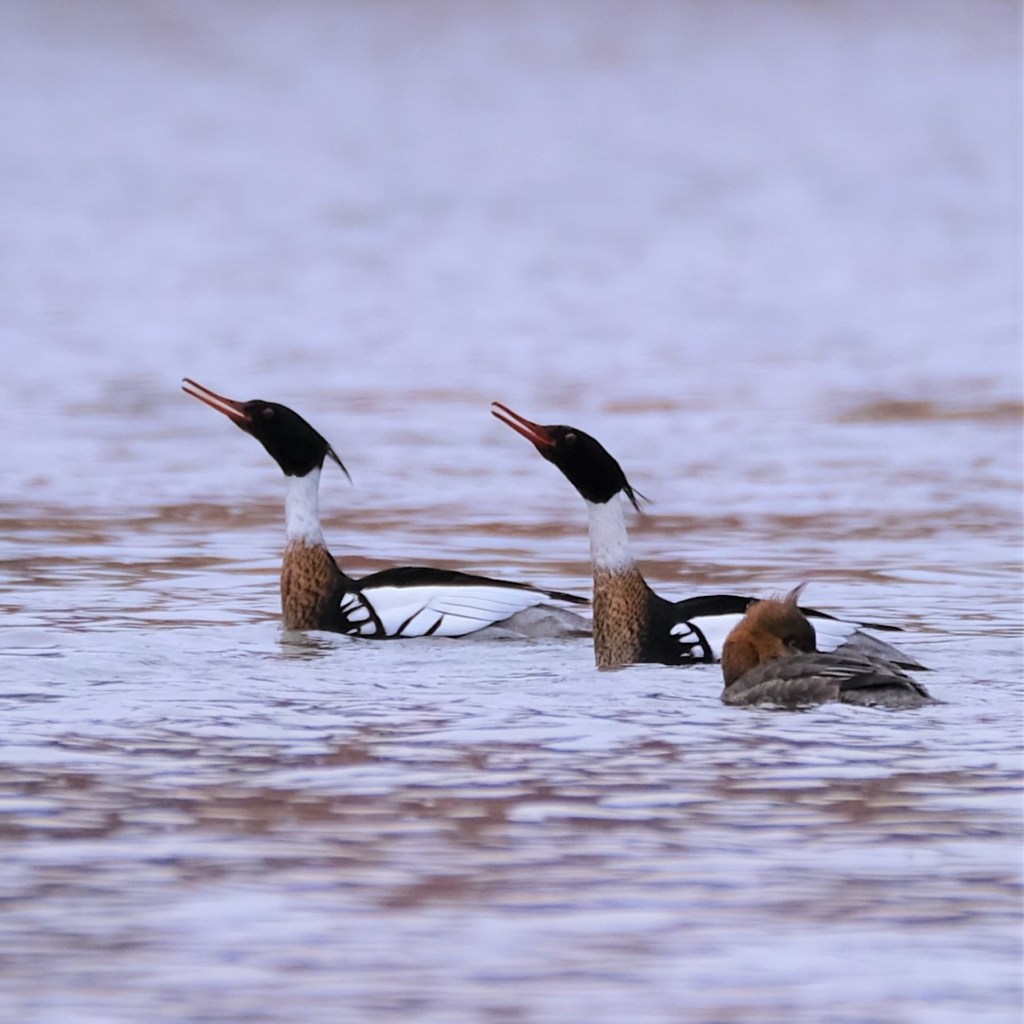
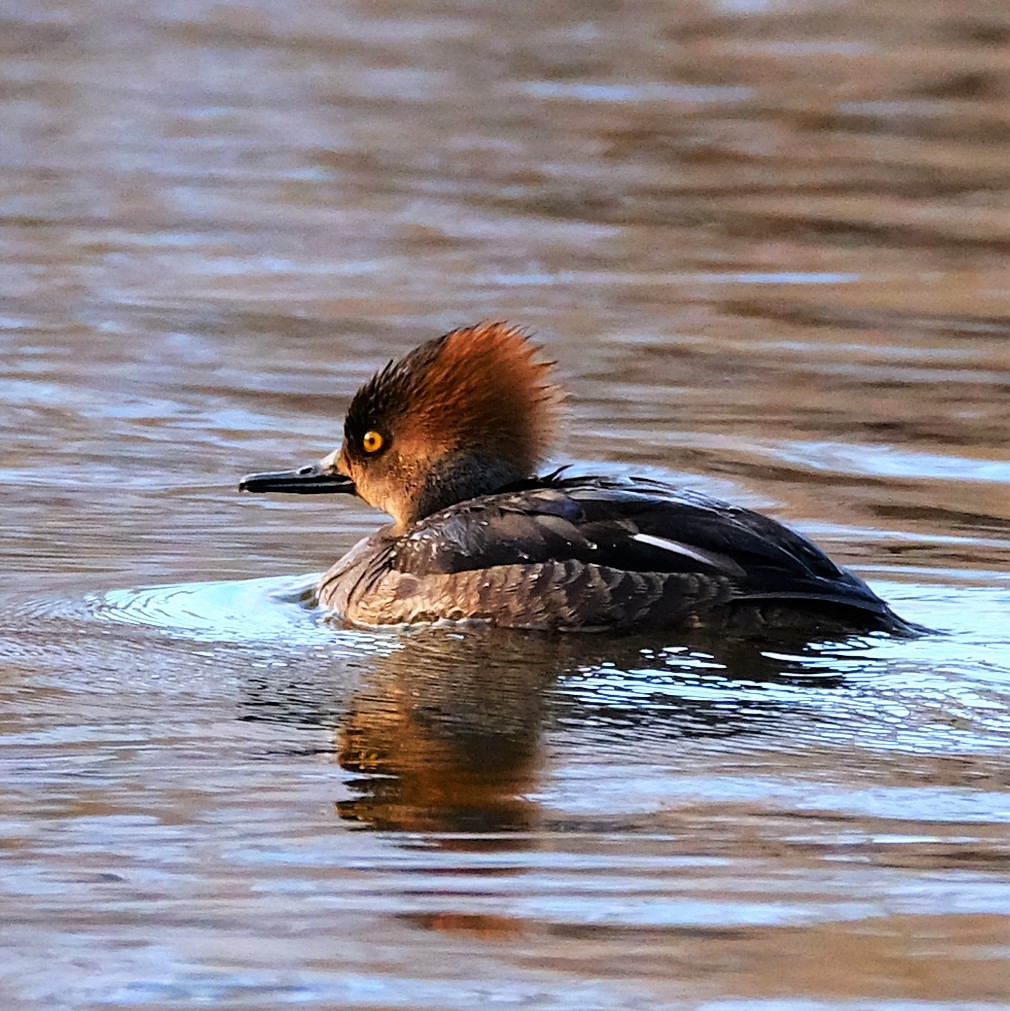
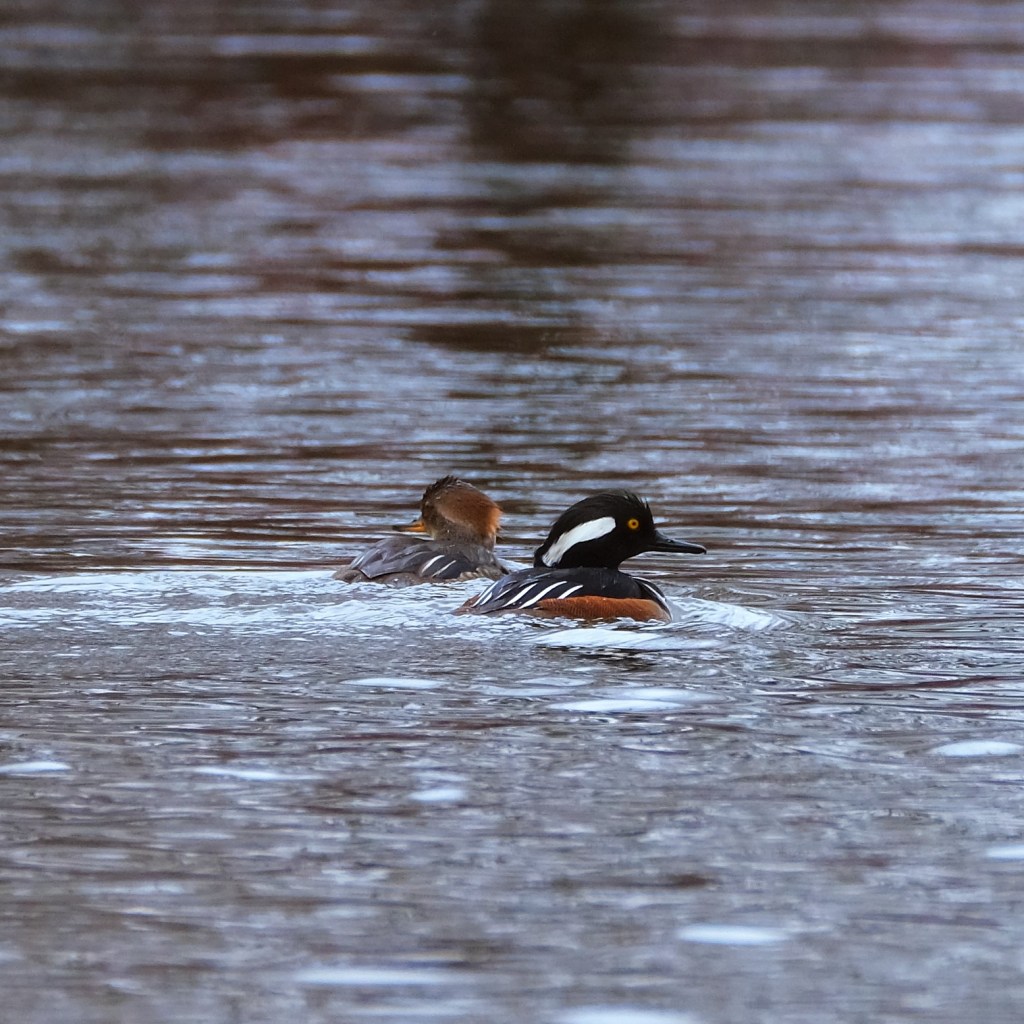
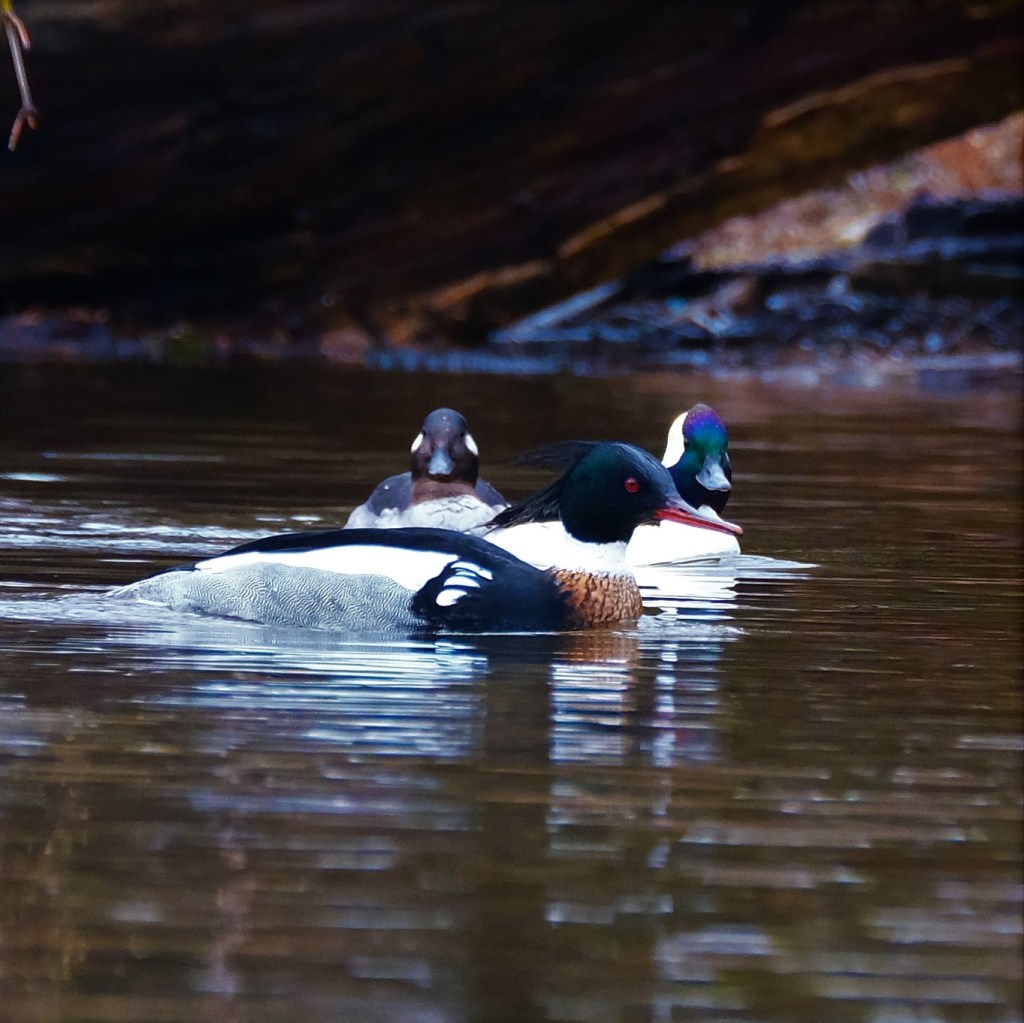
The most interesting spectacle of the morning, however, were these three hooded merganser drakes vying for the attention of one hen. It appears that an important judging criterion is the size and fullness of the hood, which I guess isn’t very surprising given the fact that they have “hoods” at all.
It’s getting light enough early enough for me to squeeze in a quick trip to Estabrook before I go to school, so that’s what I did this morning. The thermometer said 20°F, but the breeze was supposed to make it feel like 7°F, and the cloud cover was pretty thick, so it sure felt like winter.
As I’ve already mentioned, now that the river is clear of ice around the islands at the north end, the lower river is pretty quiet. Instead, I expected most of the action to be at the north end, and I didn’t have time to dawdle, so I stayed on the path as it skirts around the low grassy area down the bluff from the southern playground, where I had seen coyotes a few times back in January.
Well, wouldn’t you know it, this was the morning that one decided to reappear! Ha!
I spotted it out on the ice, and it appeared to be trying to cross to the other side, but a lot of the ice now is merely frozen foam that floats down from the falls and piles up into a thick mat. It turns out, however, that such a mat of frozen foam won’t even hold up a coyote, because this one fell right through. I was shooting through about 100 yards of trees and branches, so I couldn’t line up a gap until it had just fished itself back out, but you can still see the water draining out of its fur. Brrrrr! What a way to start the morning, right?
Here it is again, back safely on shore and already starting to look pretty puffy. Phew! I hope it dries out soon, and I wonder if and when it will try to cross again. It clearly knew I was there, so I gave it the friendliest wave I knew how. I stopped short of a thumbs-up, though.
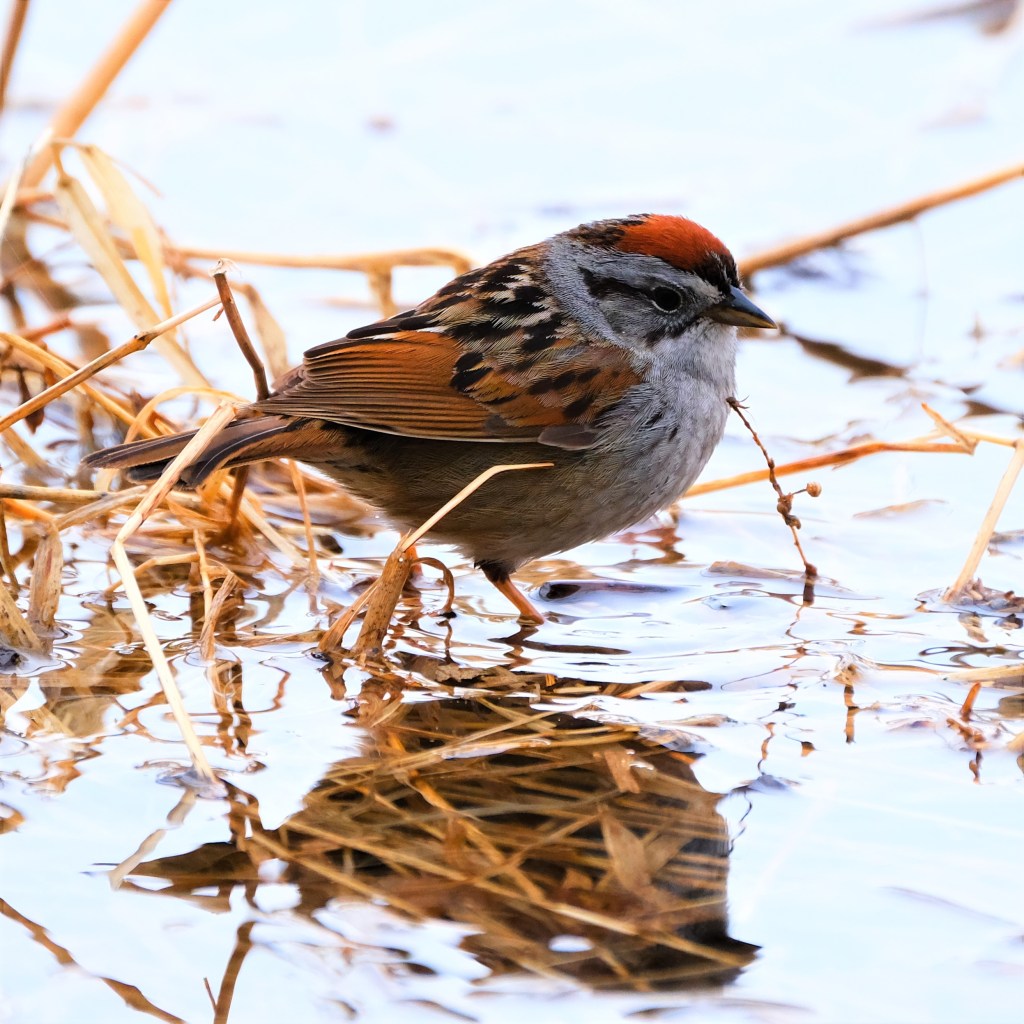
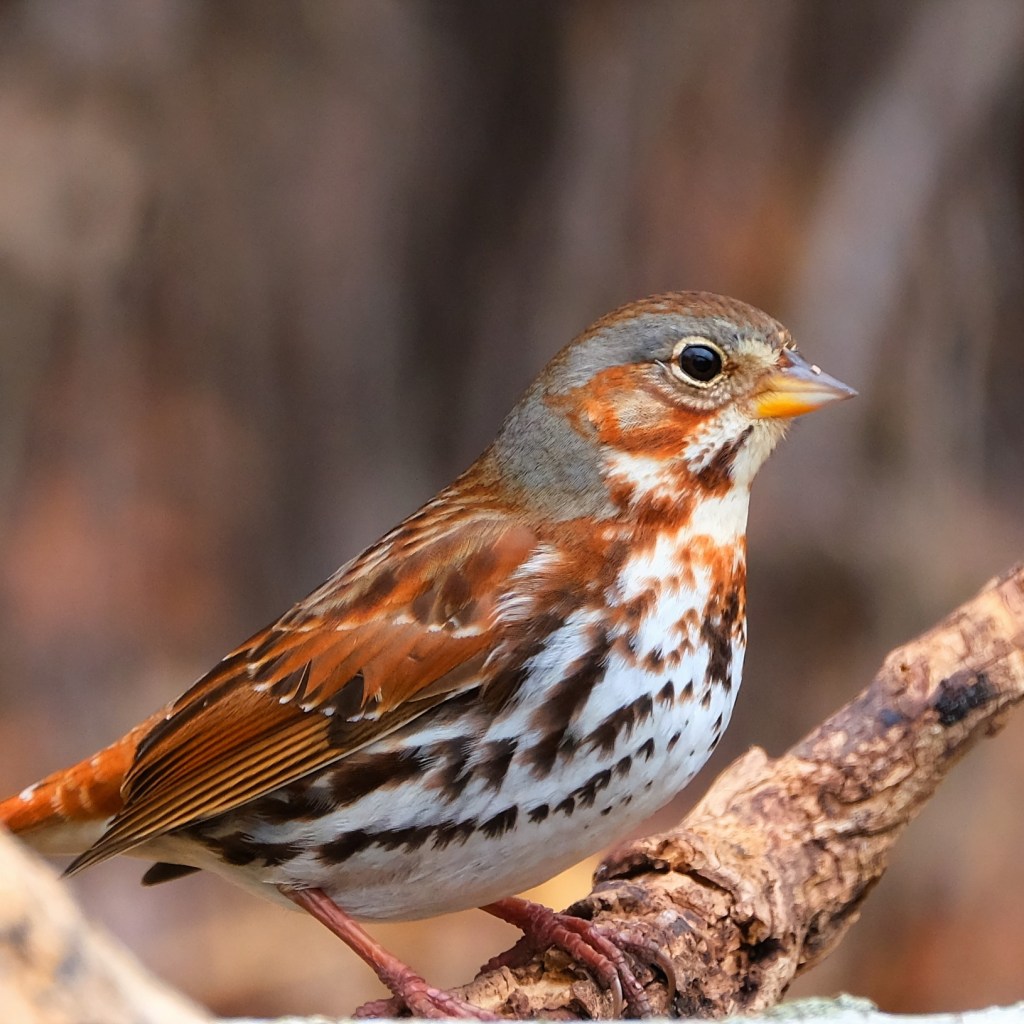
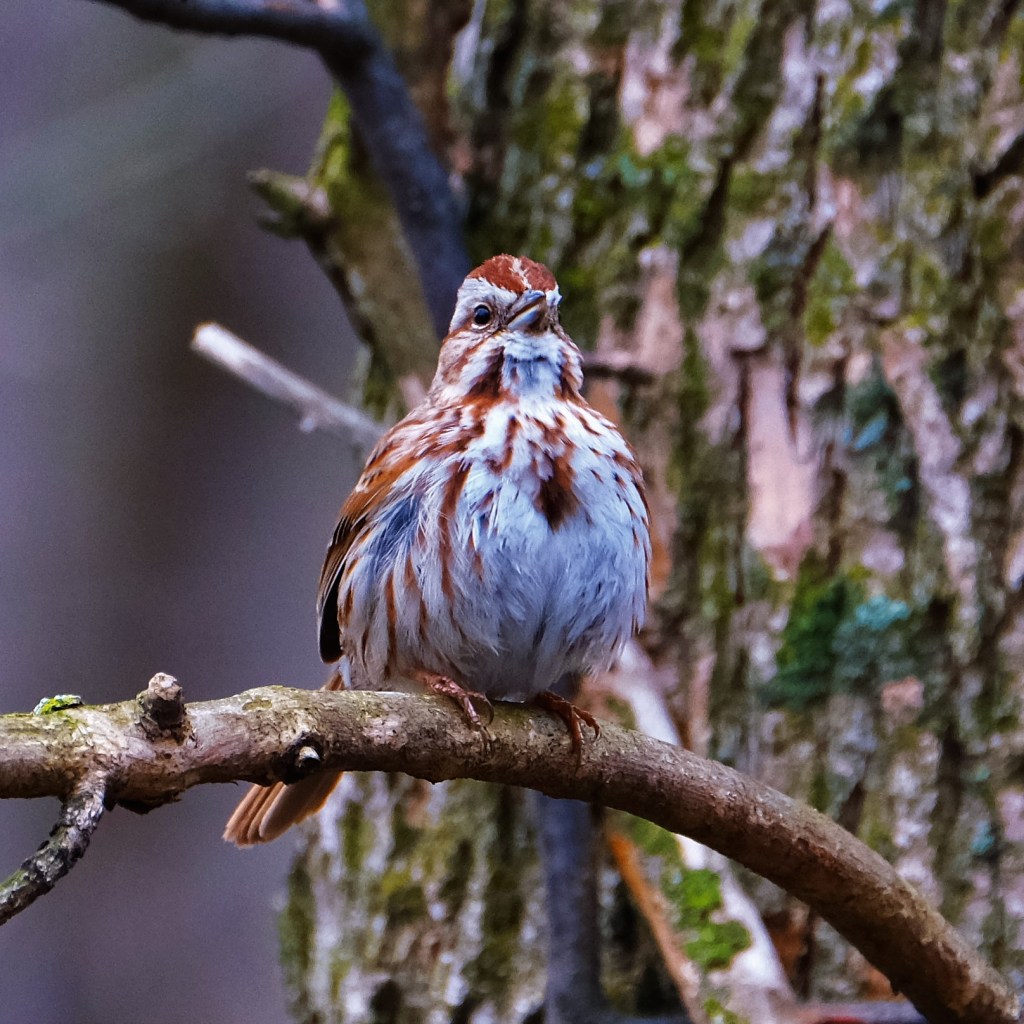
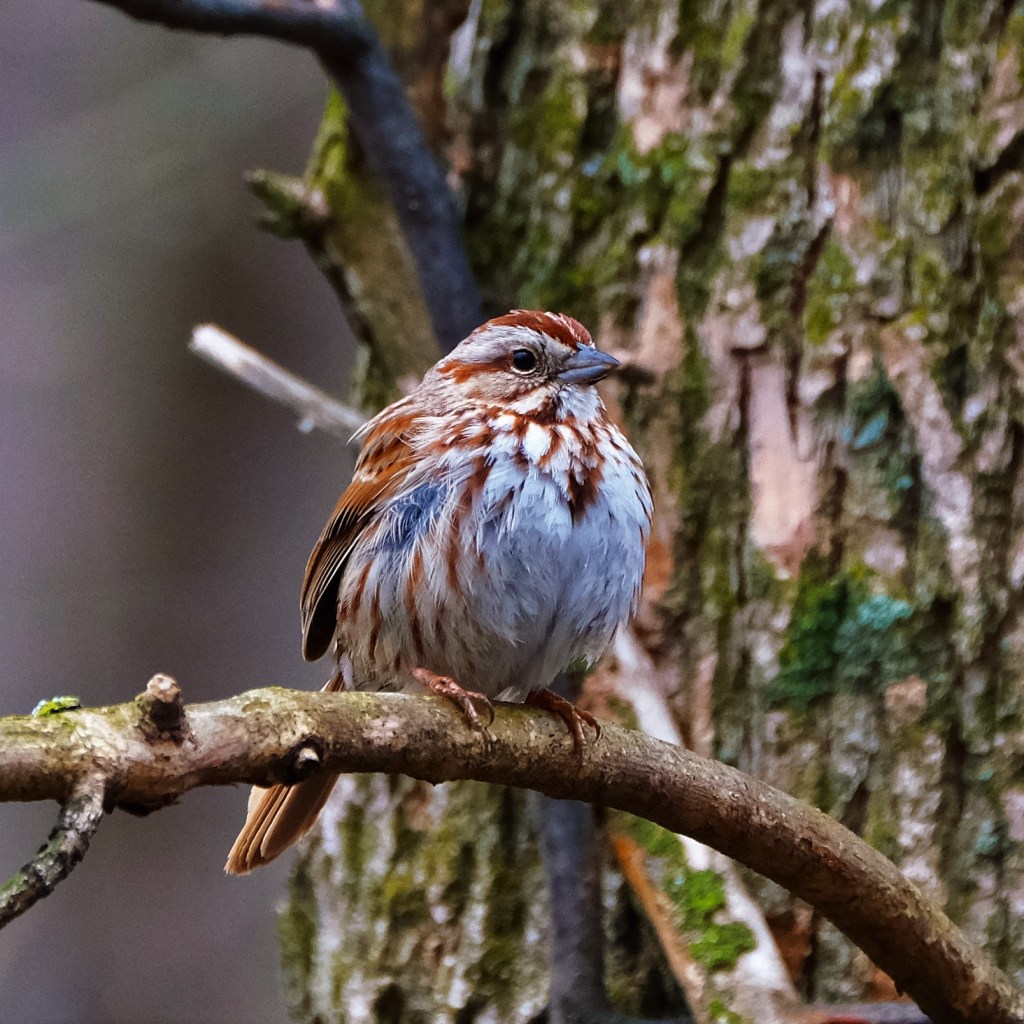
Anyway, once the coyote was out of sight, I went down the bluff and onto the grassy lowland to check out some little birds I had spotted while watching the coyote. There were several song sparrows busily foraging away.
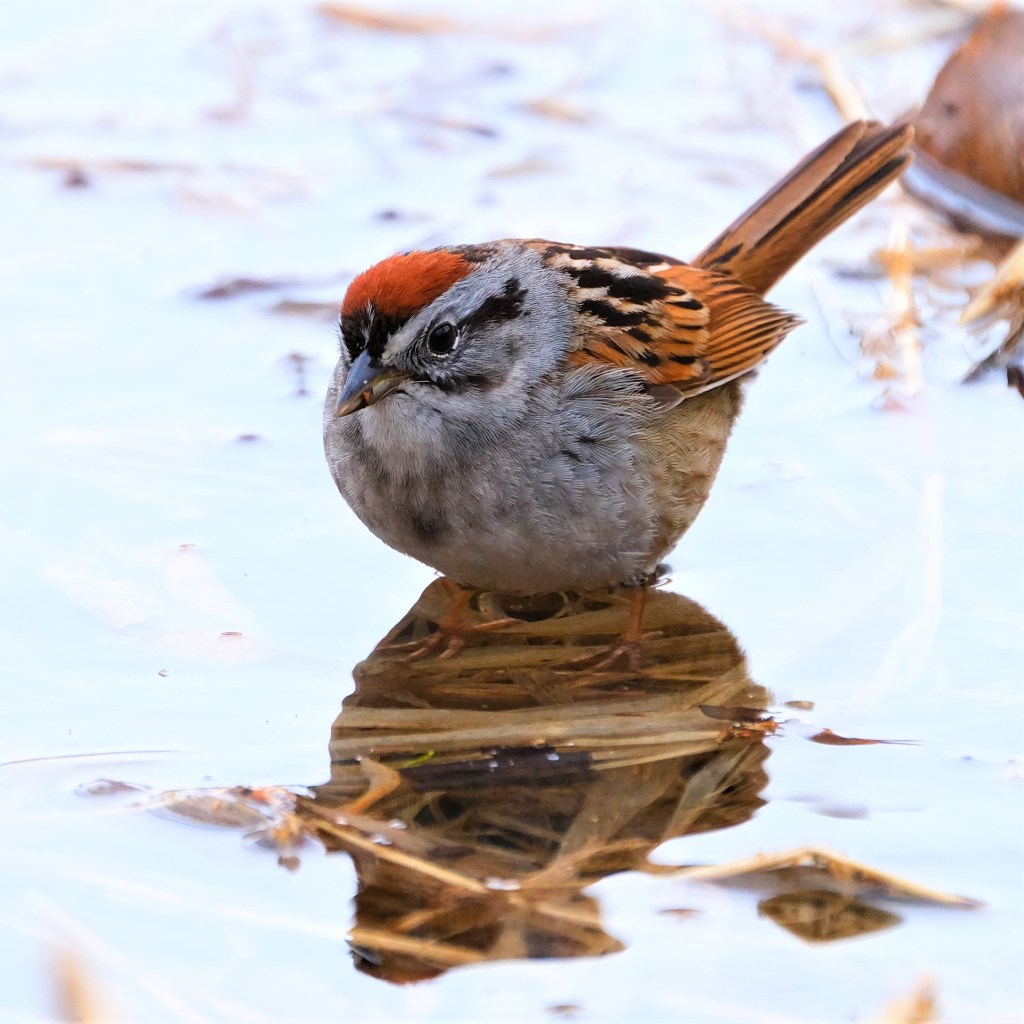
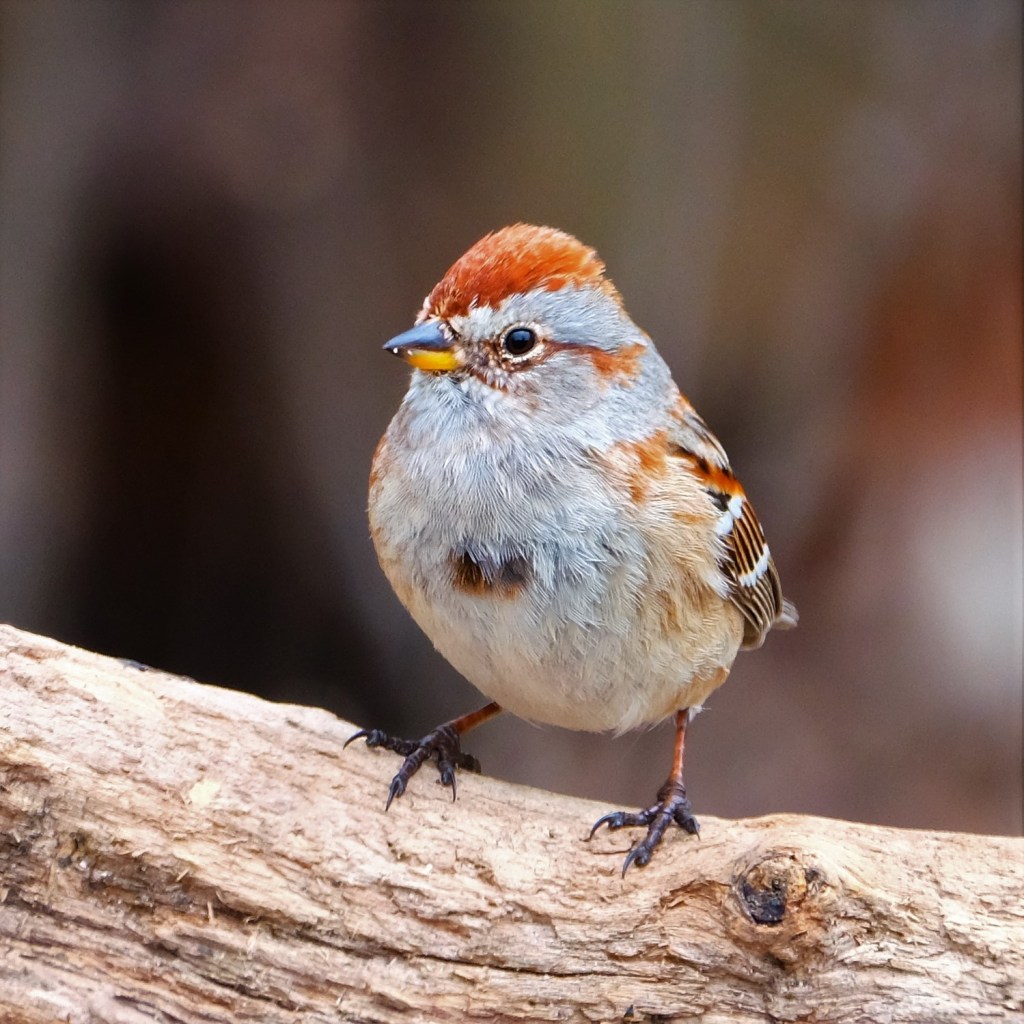
And at least one American tree sparrow mixed into the bunch.
After watching the coyote come south along the river, I didn’t expect to find anything bigger than a sparrow for a while, so I forged north and immediately startled the great blue heron standing on the shore. Dang! Sorry about that!
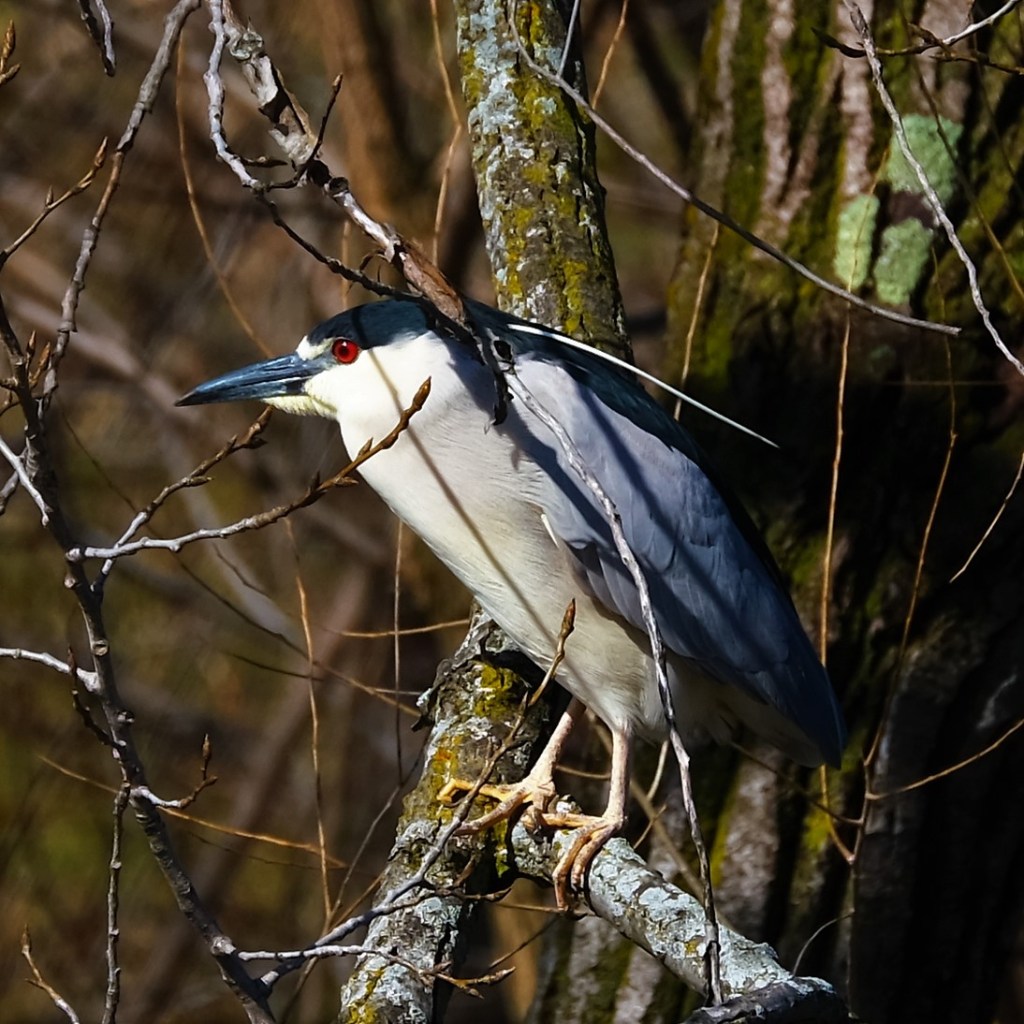
Luckily for us, it was really hungry, the fishing was really good, or there was just the right combination of the two, because it only moved a couple hundred yards upstream. This time, I knew to be stealthy, and it let me capture this image in return. That fresh mating season plumage sure is pretty, isn’t it?
Anyway, I did eventually make it to the north end where I counted at least 4 dozen geese, maybe 3 dozen mallards, 8 goldeneyes, 7 common mergansers, 6 hooded mergansers, 5 buffleheads, 2 greater scaup drakes, a couple of herring gulls, and one red-bellied merganser drake. I didn’t see any shots that were better than yesterday’s, and by then my time was up, so I hustled home, hopped on my bike, and rode to campus.
The forecast for tomorrow morning is a little warmer and a little sunnier, so I can’t wait to find out who we see next.
It was another picture-perfect morning in Estabrook with cool, still air, blue skies, and a nice warm sun. The lower river is pretty quiet, now that most of the ice has cleared out, with just a few geese, a few mallards, and only one goldeneye hen and one common merganser hen this morning.
I did see the heron again, as I made my way north, but the pictures didn’t come out very well, so I’ll spare you.
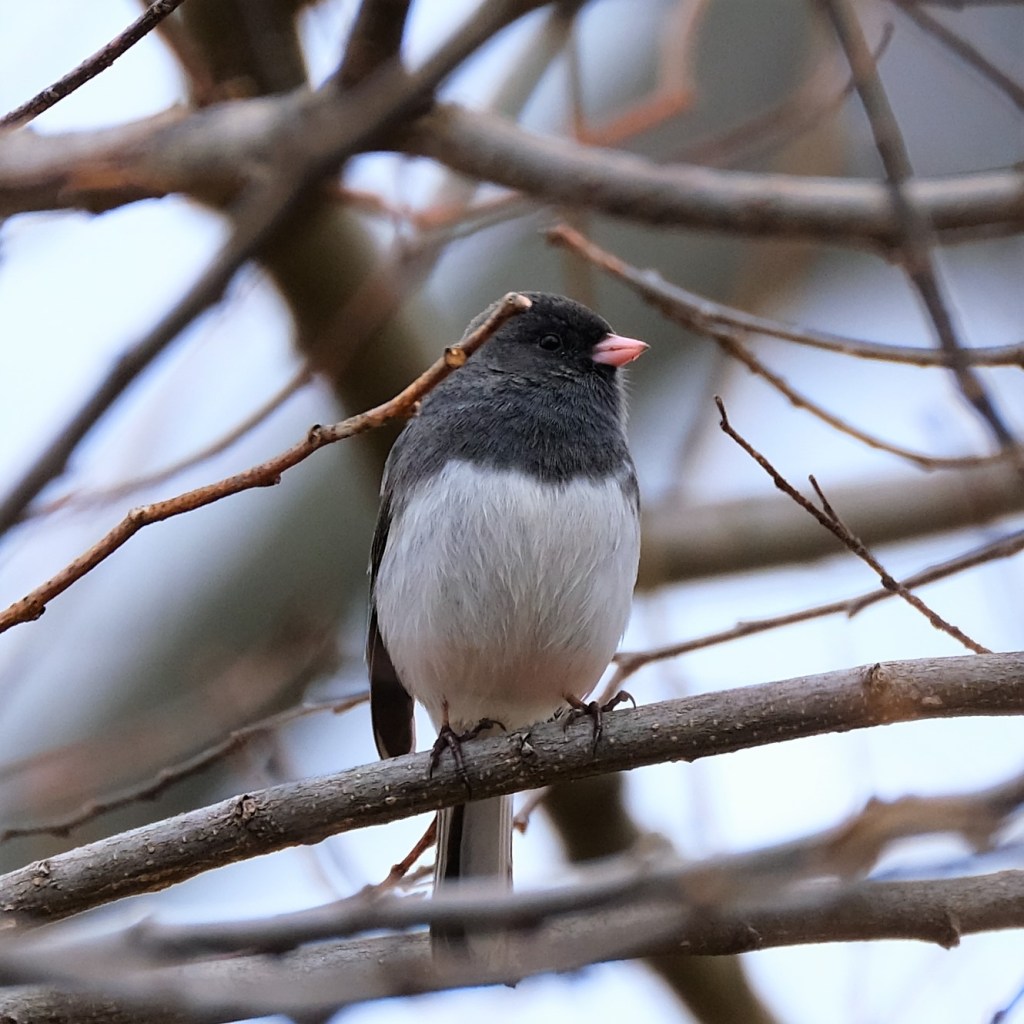
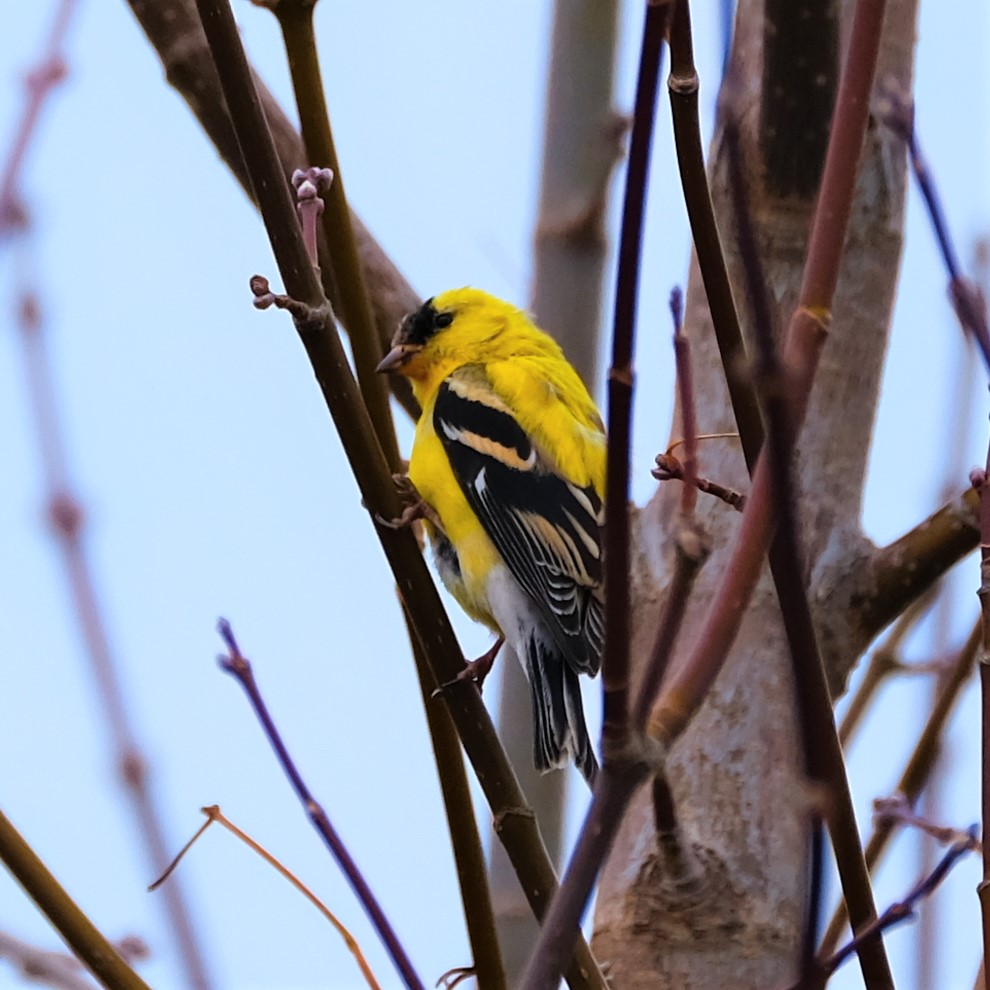
Meanwhile, the air is now full of songs by cardinals, robins, chickadees, red-winged blackbirds, red-bellied woodpeckers, white-breasted nuthatches, dark-eyed juncos, goldfinches, and more. It really is quite the spectacle, and I hope you get a chance to see and hear it while it lasts.
The forecast for this morning was just too good to pass up, with temps in the 20s, to firm up all the mud, crystal blue skies, and light winds, so I squeezed in a trip to Estabrook before school, and the 6:15am sunrise sure helped.
Right off the bat, at the far south end, I was surprised to find the blue heron again so soon. The look on its face suggests that it was not as thrilled to be there this morning as I was.
Farther north, by the abandoned bridge abutment, and once the sun started reaching down into the valley, a group of grackles were soaking it up, and these three kindly perched close enough together to make a single presentable image.
Above the falls, the water was as crowded as yesterday, if not more, and here are three drakes in a row: a common merganser, a greater scaup, and a hooded merganser, from left to right.
Here’s a closeup of the scaup on that pretty water.
Here’s a common goldeneye pair that might as well be on golden pond!
And here’s a common merganser hen who caught herself a nice little fish, her girlfriend who just wants to help, and a pair of mallards looking on in bemusement.
Between the islands, there were even more birds, if you can believe it, and this panorama is chock full ‘o goldeneyes, common mergansers, and hooded mergansers.
Here are a bunch of goldeneye drakes trying to impress a hen.
And here’s a little train of bufflehead drakes following one hen while a second hen looks on.
And that’s not even counting the dozens of Canada geese, mallards, and even a pair of crows cawing from the northern island. The place really had a carnival atmosphere this morning.
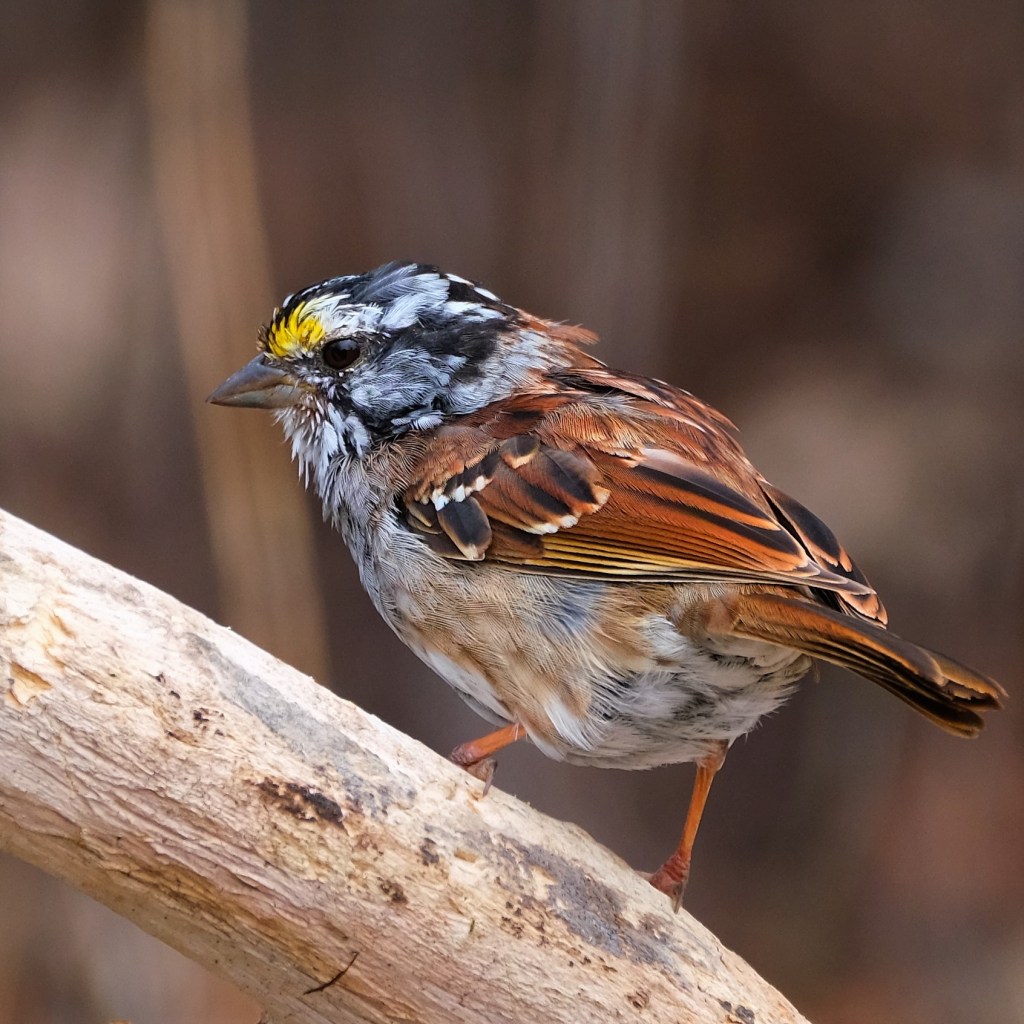
Meanwhile, over by the pond, a trio of white throated sparrows stopped by, and this one was a tad too slow to completely evade my camera.
I waited for the snow to subside before heading out this morning, in hopes of keeping my lens clean, and I was glad to find there were still plenty of pretty sights to see so late in the day.
Another new sight for the season was the pair of geese at the pond taking another step towards nesting on the island. Here’s one checking out the little strip of open water off the southern tip.
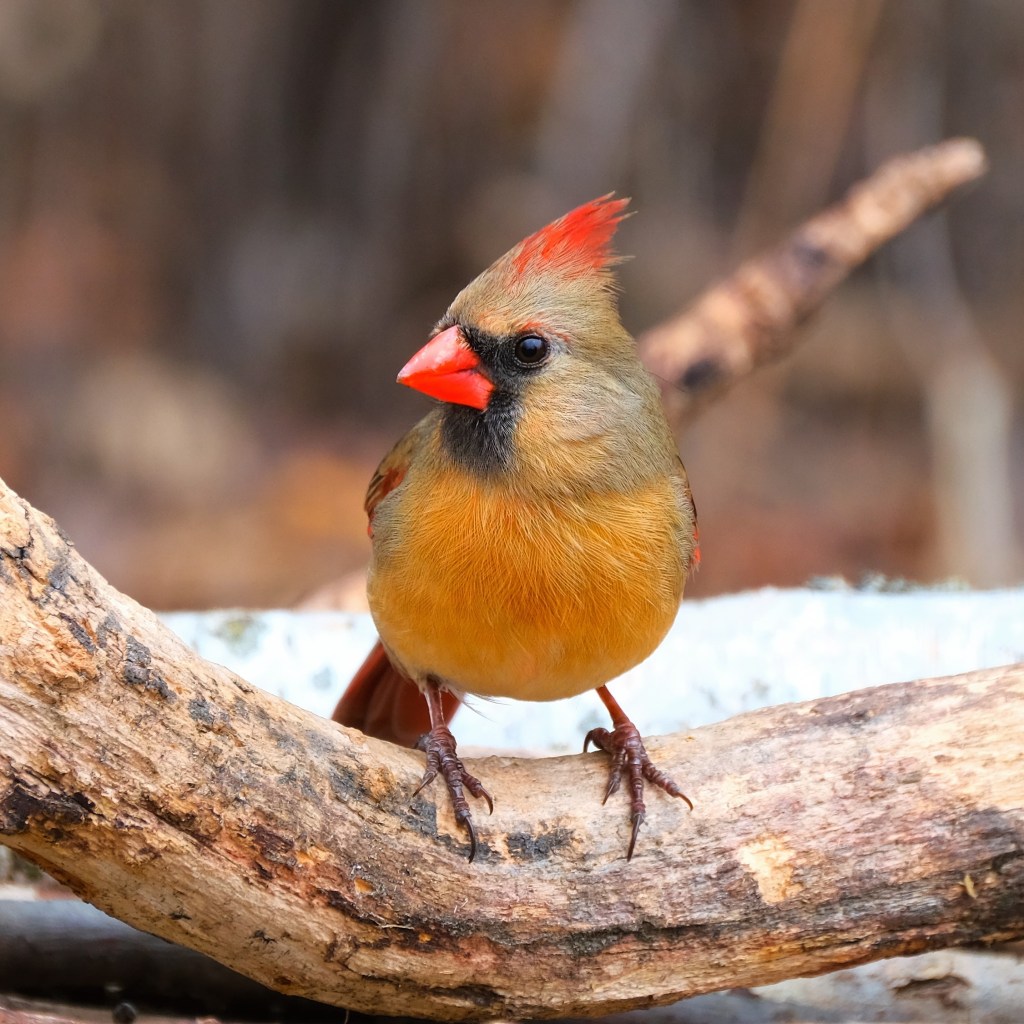
This gorgeous female cardinal was also at the pond and looking for something good to eat.
On my way back south, after I thought I had seen everything there was to see, look who else I found on the water above the falls. A little horde of hooded mergansers! There were 4 drakes and 2 hens, but I have no idea if the hen who stuck with us on the lower river through the deep freeze was among them. We sure can hope that she finally found her clan, right?
Here’s a closer look at one of the drakes. Who wouldn’t wait two months on a frozen river for a piece of that?
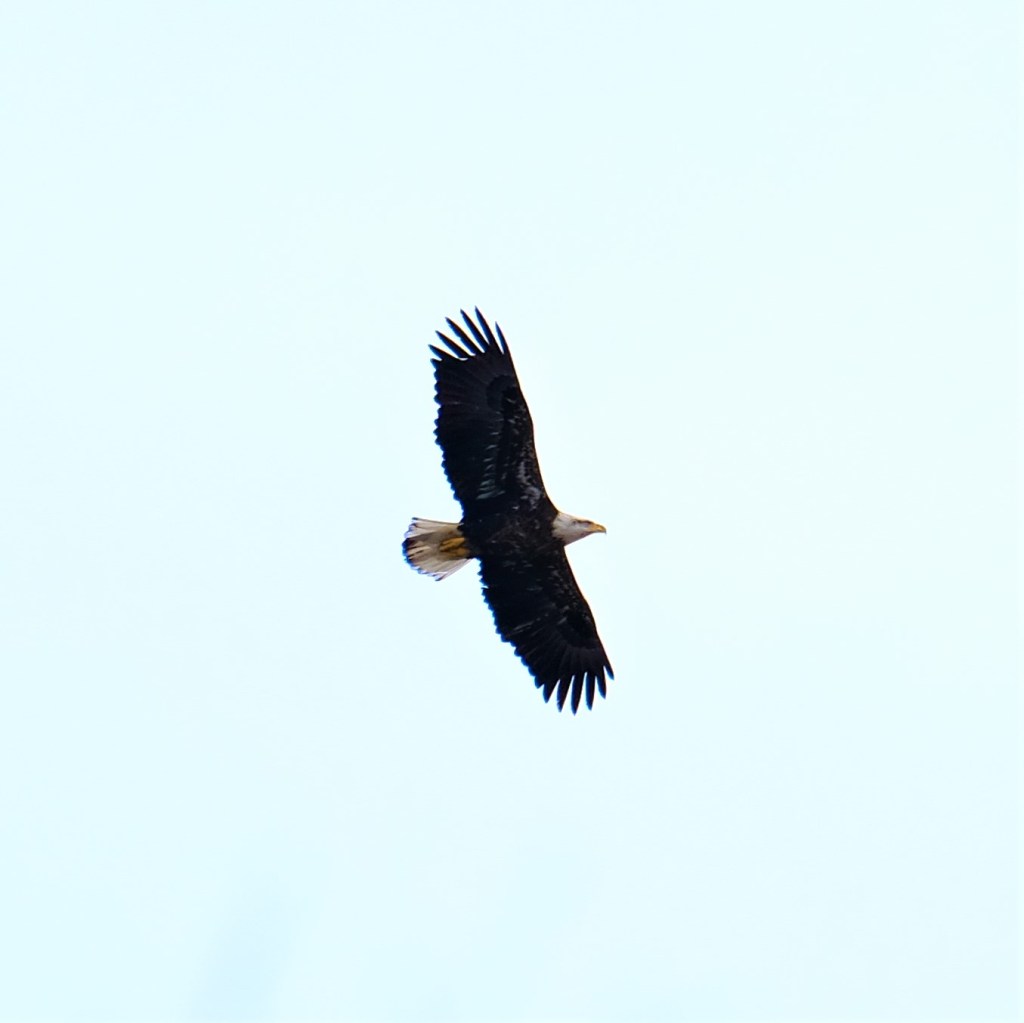
Meanwhile, I saw a mature bald eagle twice today, but it might have been the same bird. The first one was flying north over the river and escorted by two noisy herring gulls. The second one was about 2 hours later and also flying north, but over the bluff without an escort. There is some excitement that the frequency at which we are seeing two adults and that one time I caught one with a branch might mean a pair is looking to nest in the vicinity. If that came to pass, Milwaukee County would finally join the other 71 counties in the state with active bald eagle nests.
Given the rain last night, including thunder and lightning, and the howling winds, I didn’t have great expectations for my visit to Estabrook this morning. The most noticeable effect of the recent weather was the huge loss of river ice.
I am happy to report, however, that all that newly open water hasn’t gone to waste, and here’s another greater scaup who dropped in to take advantage of some above the falls.
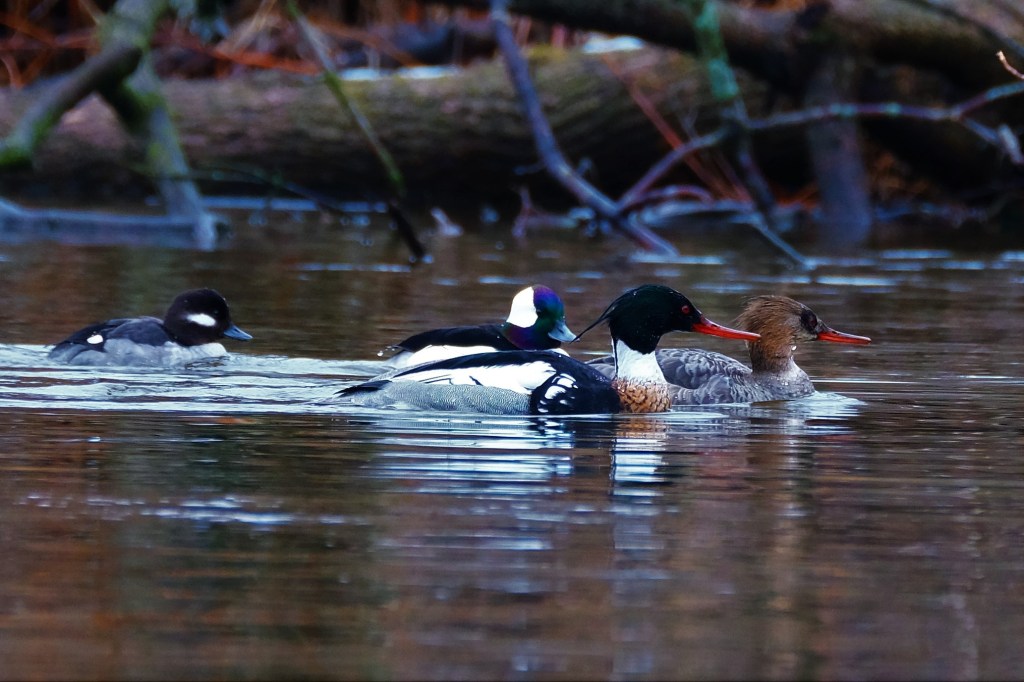
Between the islands, there are still dozens of geese and mallards, plus this odd little grouping of a common merganser hen and drake, a common goldeneye hen and drake, and a bufflehead drake.
The northern island was overrun with geese, and here’s another scaup, a hen this time, relaxing on the water off its northern tip.
I’m pretty sure I spotted four bufflehead drakes and one hen, and here’s one of the drakes preparing to chase away two others as the hen preens herself and a goldeneye drake wonders how he got himself mixed up in this little love quadrangle, and yes, I could really have used a polarizing filter for this picture.
Finally, on my way back south, I spotted this handsome song sparrow busily chirping and foraging on the riverbank.
The air felt surprisingly cold for 36°F, and the trail mud was surprisingly firm for 36°F, so they sort-of cancelled each other out, and it was not a bad morning to visit Estabrook Park.
There were a few mallards and goldeneyes on the lower river, but way fewer than just a week ago, and nothing especially photogenic, so I continued on to the upper river. Our buffleheads have been hanging out on the west side of the southern island recently, so not very easy to see, and I was happy to catch them just off the tip and in some pretty morning light today.
As I continued north to see if anyone else was on the open water south of the bridges, the gulls, geese, ducks, and even crows all started shouting at once, and it didn’t take long for this beauty to glide into sight.
I thought maybe this eagle had a fish again, but when I got home and could zoom in, I now see that it’s hauling a short stick instead. I wonder what the heck that’s about. It sure would be amazing if it were trying to build a nest here, but that stick looks way too small for that, right?
Anyway, it perched in a tree over the far shore and looked around for a bit before moving on.
The dramatic change at the pond persists, and I could hear a red-winged blackbird, but I could barely find a single pair of house sparrows and no house finches. There were now two pair of geese, and they were grazing on the lawn beside the middle parking lot while they waited for the ice to melt.
Finally, when I got to the path leading up the bluff at the south end that I usually take, I thought I’d take just a glimpse down river, now that the water is open, just to see if anyone was there, and look who was.
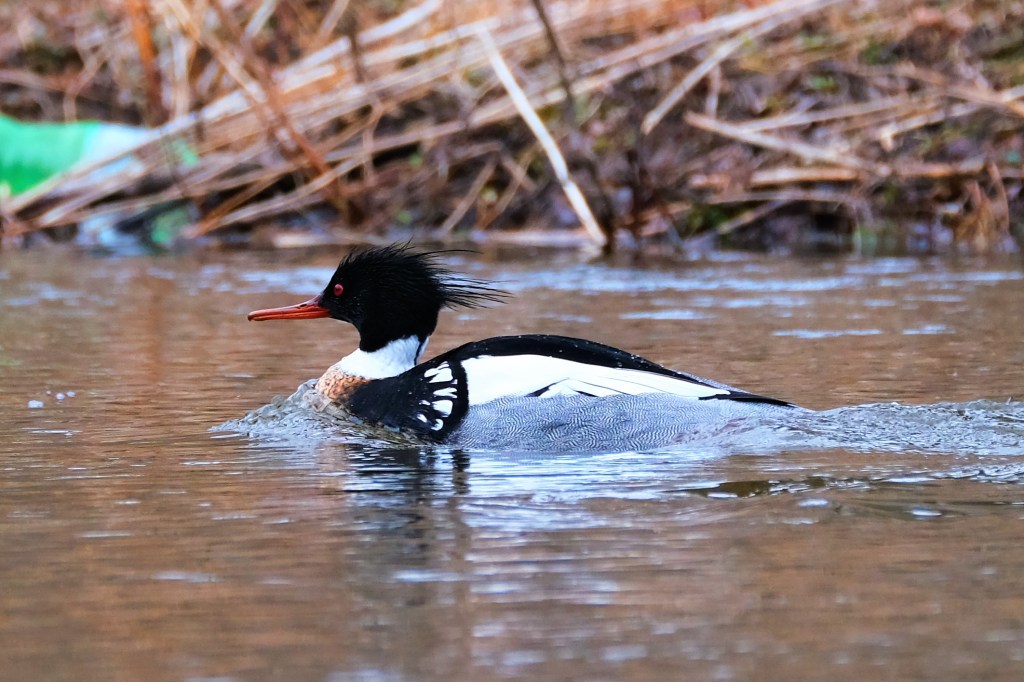
Our first red-breasted merganser since last spring. This is the drake, and there was a hen with him, but they were pretty shy, and this is the best picture I managed to capture so far.
I see we’re forecast to reach the mid-50s overnight and wake up to howling winds, so who knows what I’ll be able to find tomorrow. Tune in again to find out.
Things are getting pretty noisy in Estabrook. The singing cardinals, chickadees, and red-bellied woodpeckers have been joined by several red-winged blackbirds along the river and now a huge gaggle of geese. There were as many as 100 birds on the river at the north end, and they all appeared to be jockeying for about a dozen or two viable nesting sites on the two islands. Thus, there was a whole lot of honking going on this morning.
Here’s a closeup of one pair.
The geese were joined by nearly as many mallards, about a dozen goldeneyes, a half dozen common mergansers, and one pair of buffleheads.
Meanwhile, things are quieter at the pond, for now. One pair of geese has arrived, and they seemed quite used to folks walking by, so perhaps they are one of the pairs who nested on the island last year. “Welcome back, you two!”
Back at the river, three or four robins were taking turns getting sips of river water from the edge of the rapidly receding ice.
Finally, back up on the bluff at the south end, this male downy woodpecker paused for a second in the morning sun before resuming his hunt for calories. “Keep up the good work, little buddy!”
It was a pretty nice early-March morning, but I had to go to school today, so Estabrook had to wait. The good news, however, is that our two favorite sleepy-heads in Cambridge Woods were both sawing wood again this morning. Plus, they were way more visible than last time, and there was even a bit of sun to light up the scene for us.
I did eventually make it to the park after lunch, and this guy at the pond looked like he might be sleeping, too, because he sure was quiet for a cardinal at this time of year, but now I can see he has at least one eye open. Maybe he’s just giving his pipes a rest.
Finally, I was thrilled to see a pair of bald eagles soaring over the park, because who knows when we’ll see them for the last time until next winter. One appears to be not quite mature yet, and maybe it’s the one we saw a few weeks ago.
The second one looks fully mature, and best of all, it has a fish in its talons! That sure is a first for me. They were drifting east, so maybe they’re going to the lakefront for a picnic.
Those are the interesting or pretty pictures for today, and the forecast looks good for tomorrow morning, so wish me luck!
The overcast was heavy, but the trail mud was frozen nice and firm, and the forecast precipitation didn’t materialize, so it was a fine morning to visit Estabrook.
Besides several dozen mallards, I was happy to see a pair of common mergansers still on the lower river, and here’s the hen airing out her wings.
All along the river, there are cardinals, chickadees, robins, and even blue jays all singing their songs. As I approached the north end, I could also hear Canada geese sorting out who got there first, and who gets which nesting spot on which island. I got out my binoculars to try to count them all, and look who I spotted hiding amongst them!
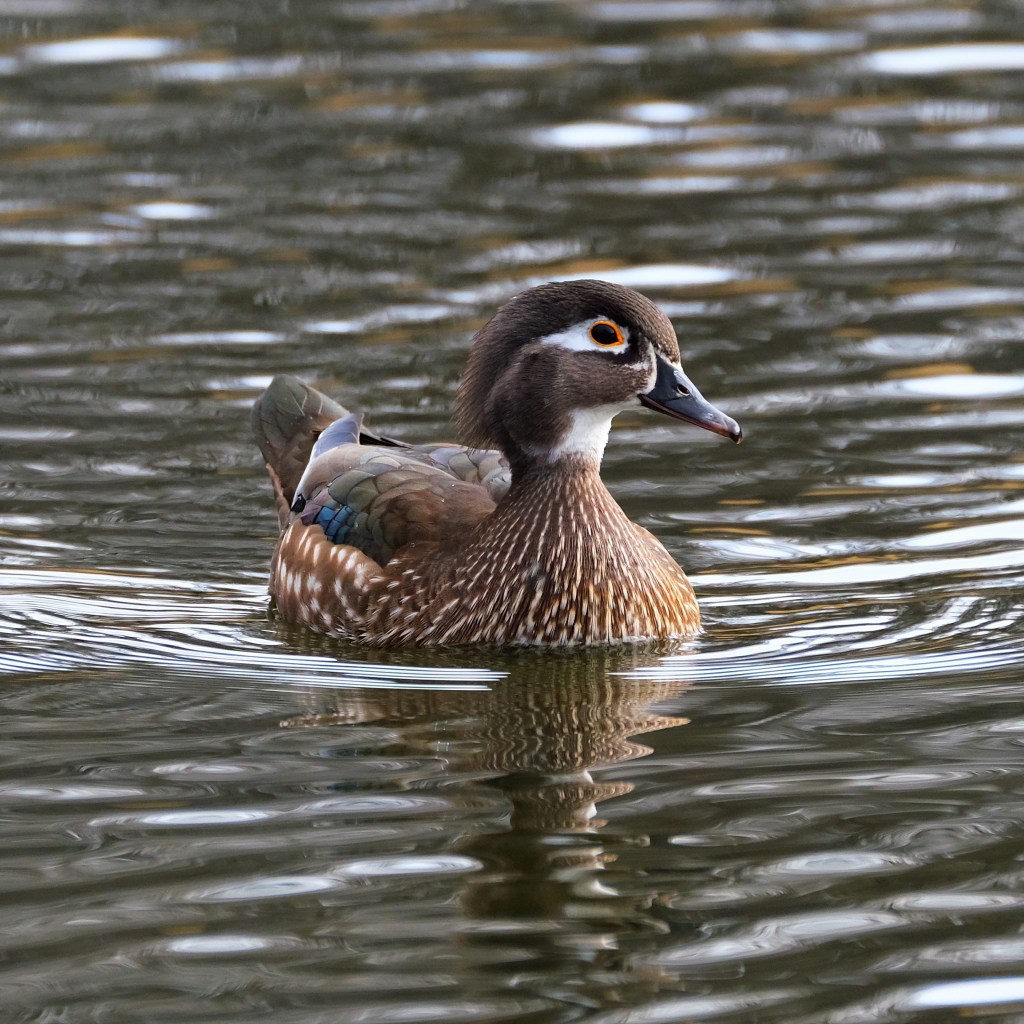
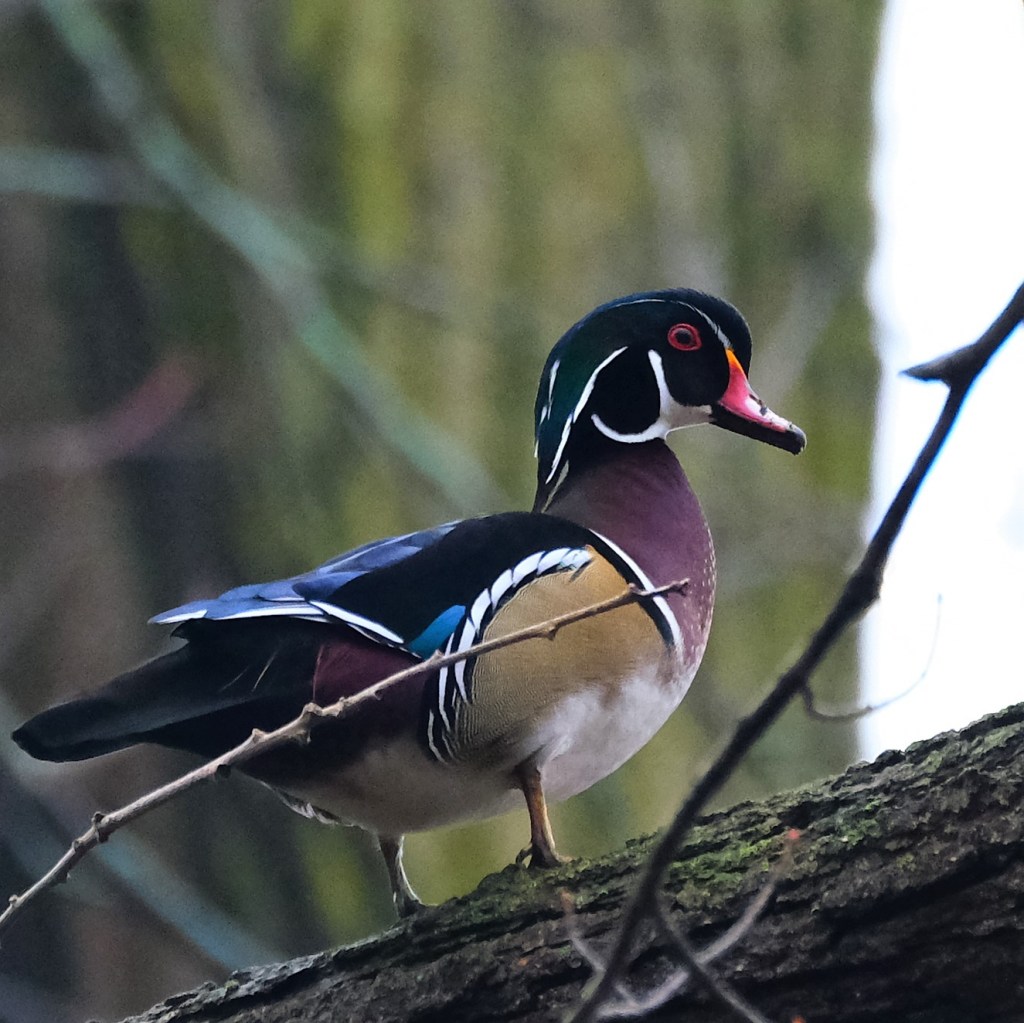
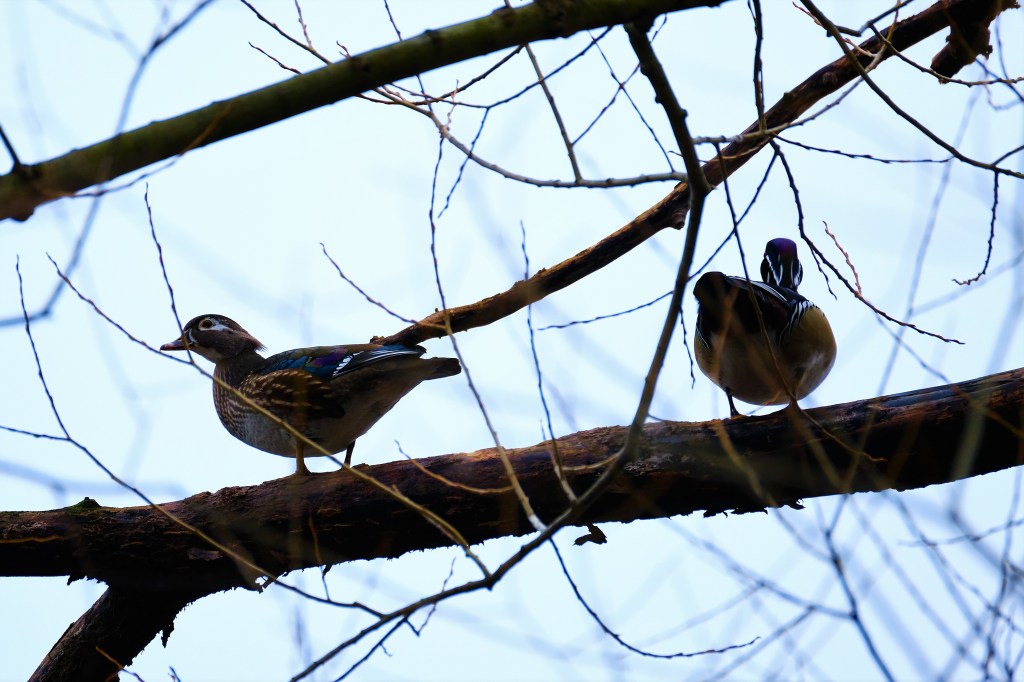
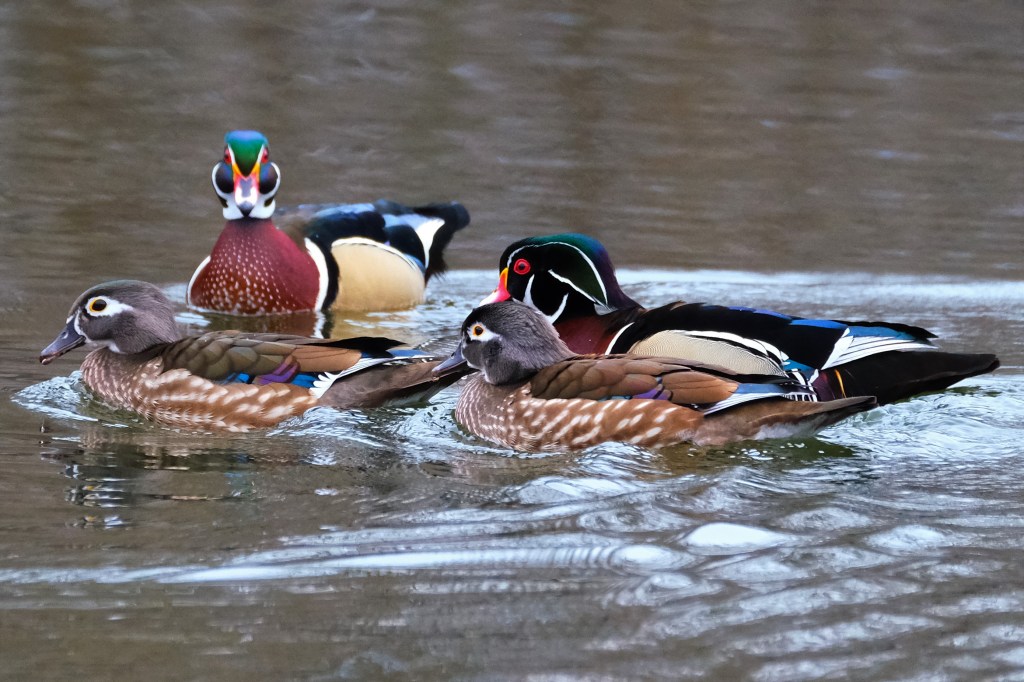
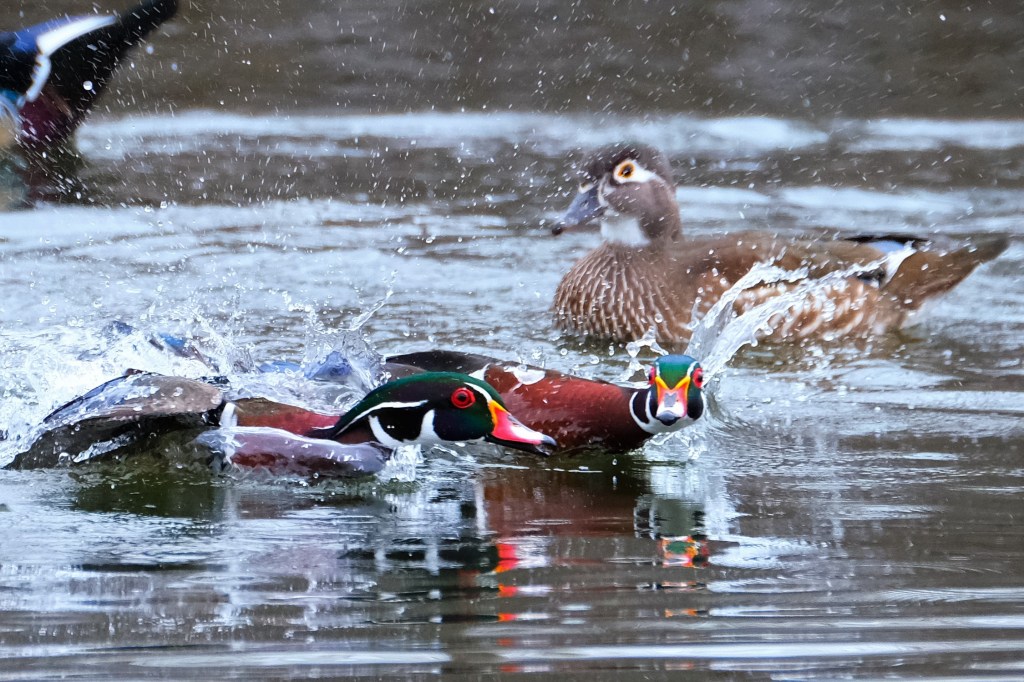
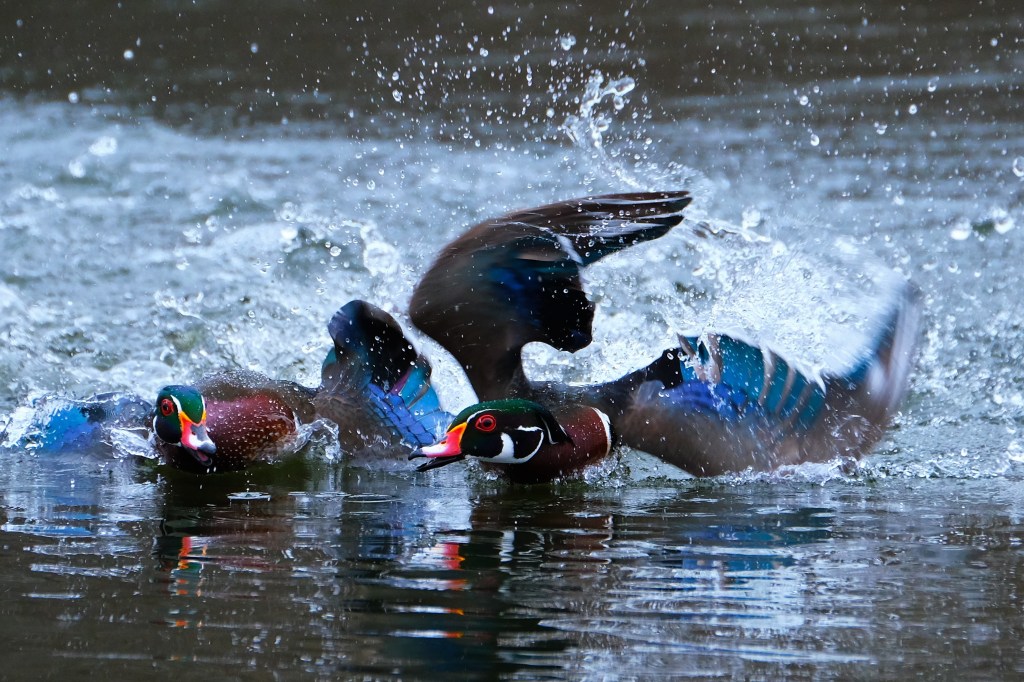
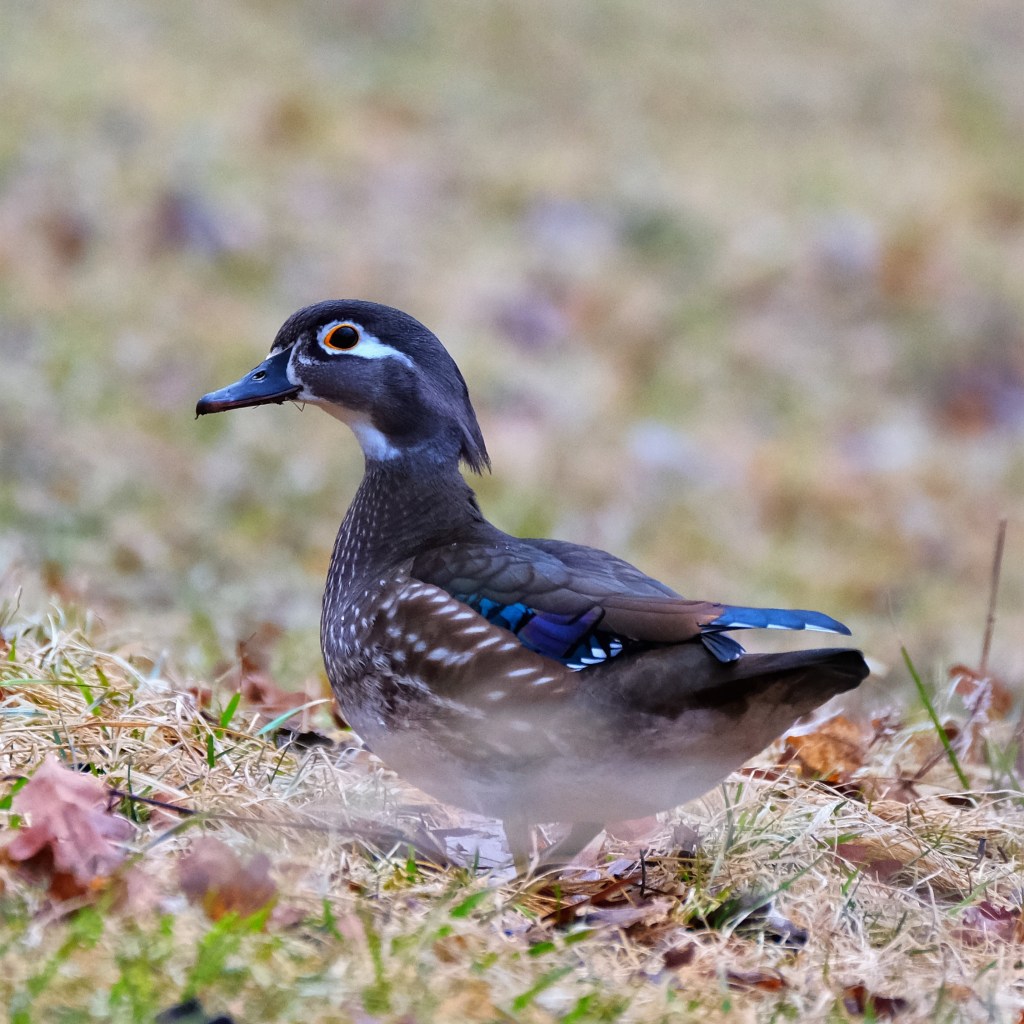
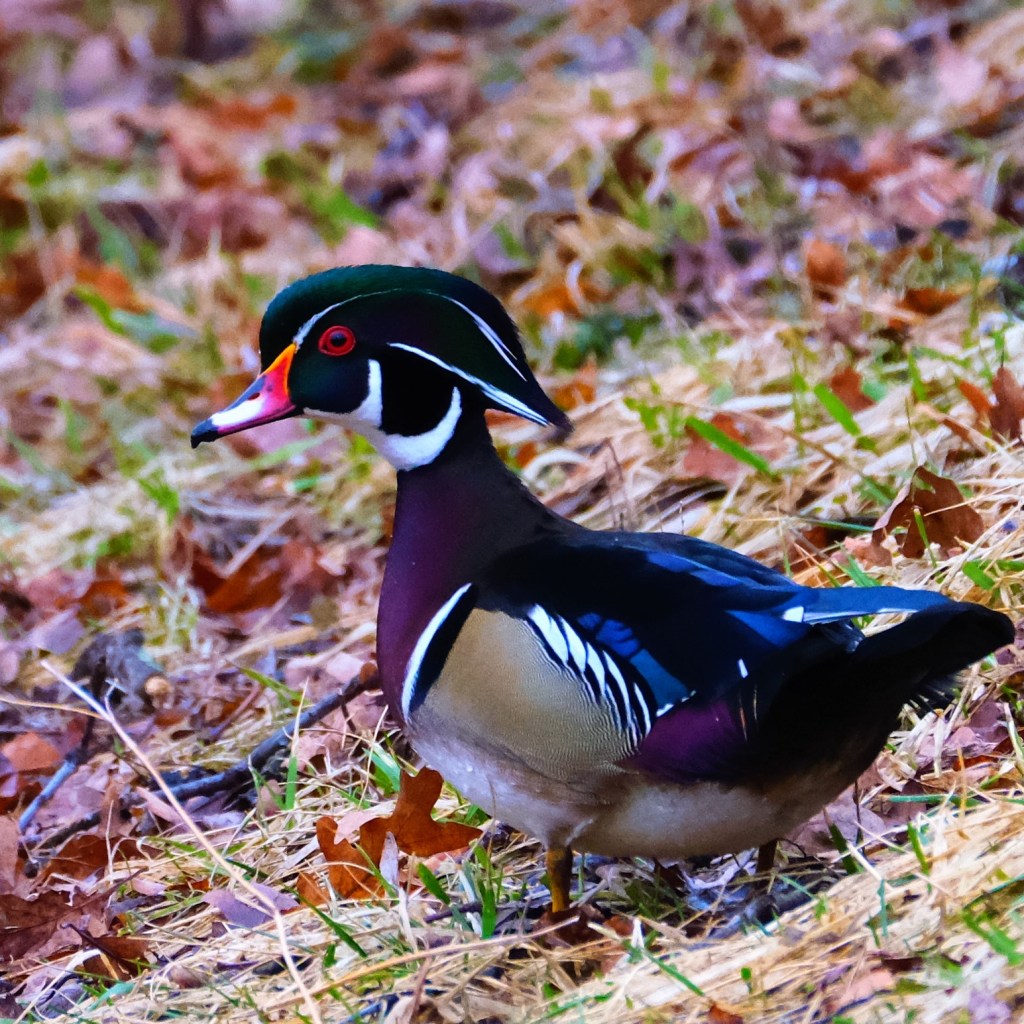
Sure enough, that’s a couple of wood duck drakes in all their splendor, and here’s a little bit of a closer look at those handsome devils. I didn’t see them last spring until March 19.
Oh, spring can’t be far off now. There was also another couple of common mergansers and three goldeneye drakes on the water, but they were on the far west side so not worth the silver oxide.
Next, I stopped by the pond and was treated to a tune I haven’t heard in months: the familiar, and soon to be ubiquitous, call of a male red-winged blackbird. At first, I could hear him but couldn’t find him, and then he helped me out by perching in the most conspicuous spot at the pond: right atop the dead birch tree in the middle of the island. “Thanks, Buddy!” I didn’t see my first one of them until March 5 last spring.
Oddly, as if someone had flipped a switch, the crowds of house finches and house sparrows, who have been making a ruckus there all winter, seemed to have vanished, and I had to search to find just one or two specimens of each species. I wonder if that’s a coincidence.
Anyway, I headed back to the river and found the first pair of common mergansers up on the ice together.
Here’s a closer look at the “teeth” she’s got. I wonder if she’s baring them at him or at me. I sure am gonna miss these beauties when they eventually fly north for the summer.
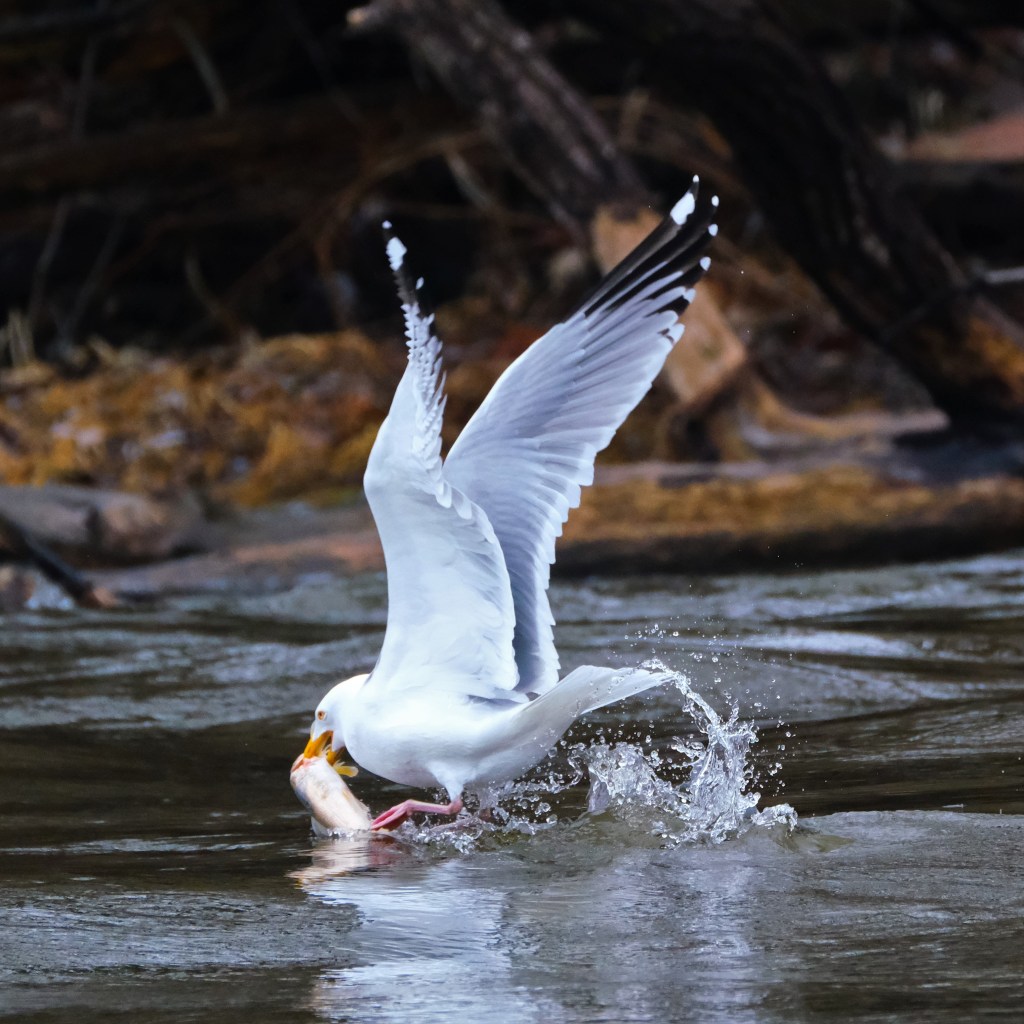
Lastly, as I continued south, a came upon one of the incredibly rare, super elusive, and nearly mythical, two-headed herring gulls.