Couldn’t think of a good title…

Imagine a broken record, but with the break perfectly placed so that your favorite line of your favorite song repeats just as if the artist had recorded it that way. That’s what the weather has been like lately. Holy Moly! Why would anyone ever leave Wisconsin, right?

Oh yeah. I almost forgot.

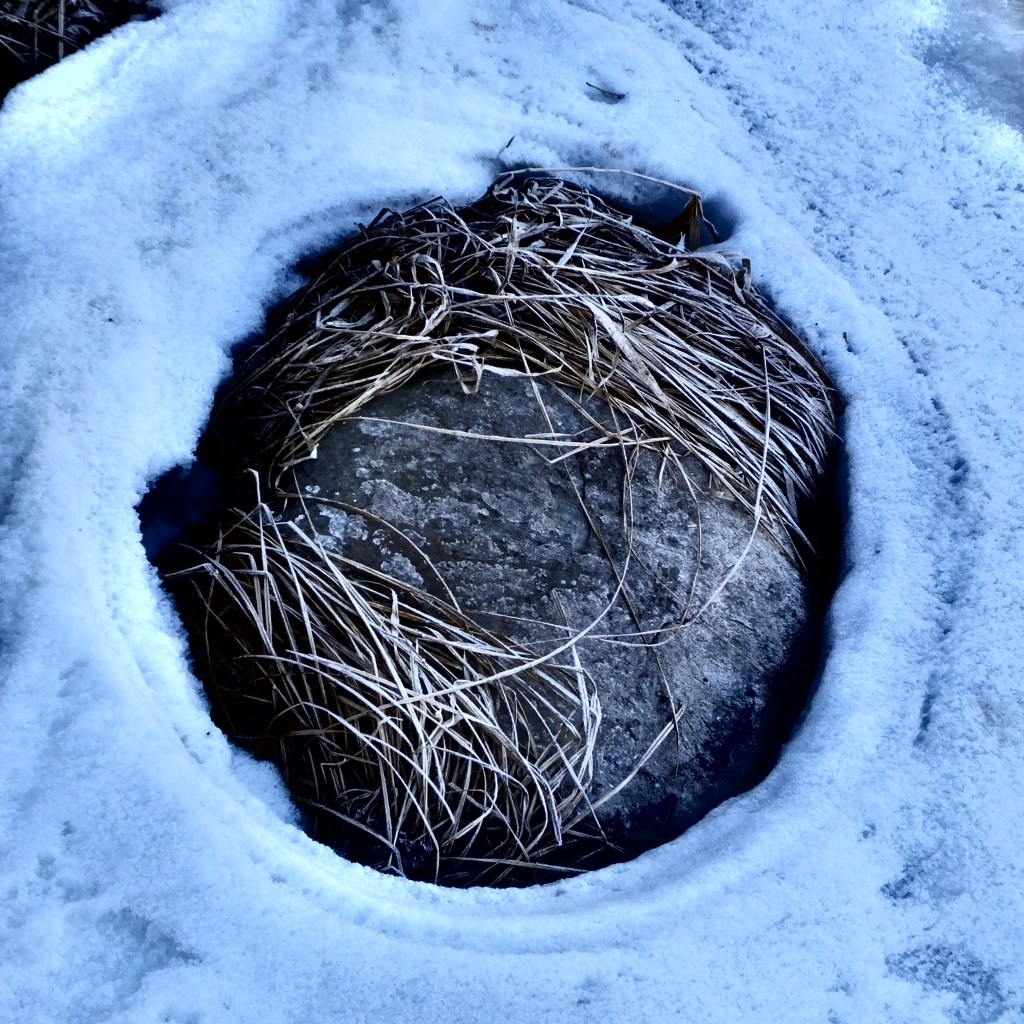
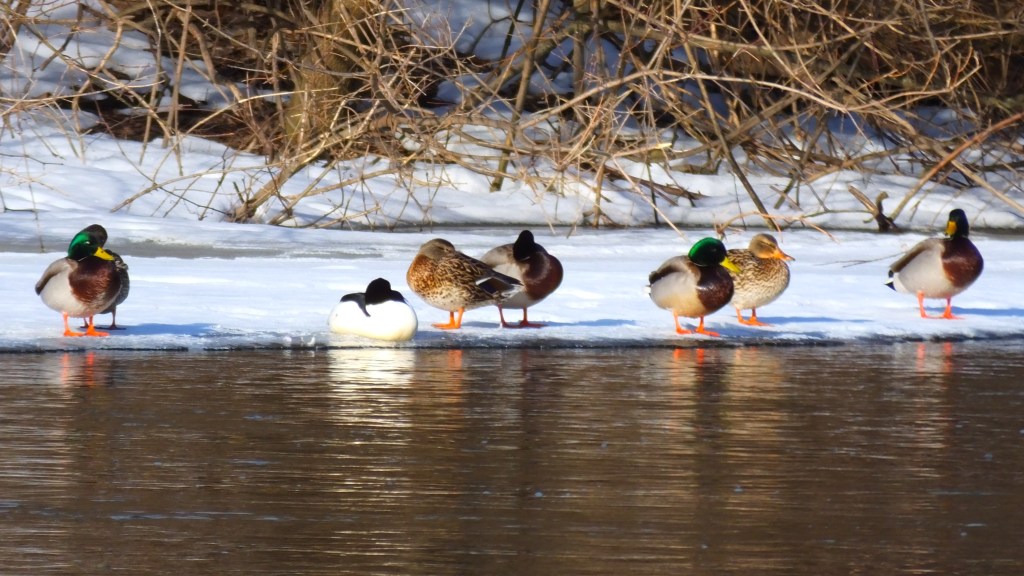
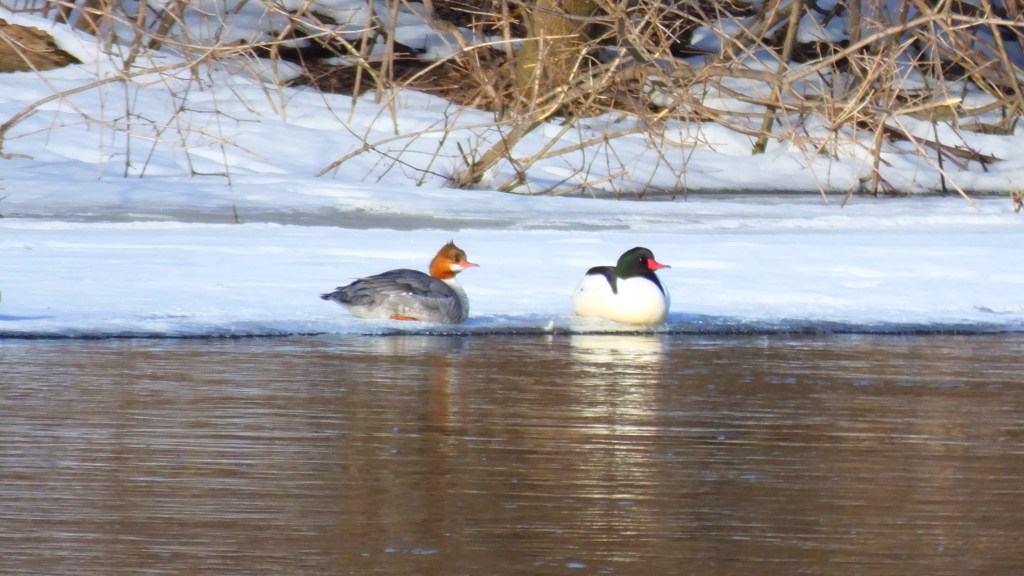
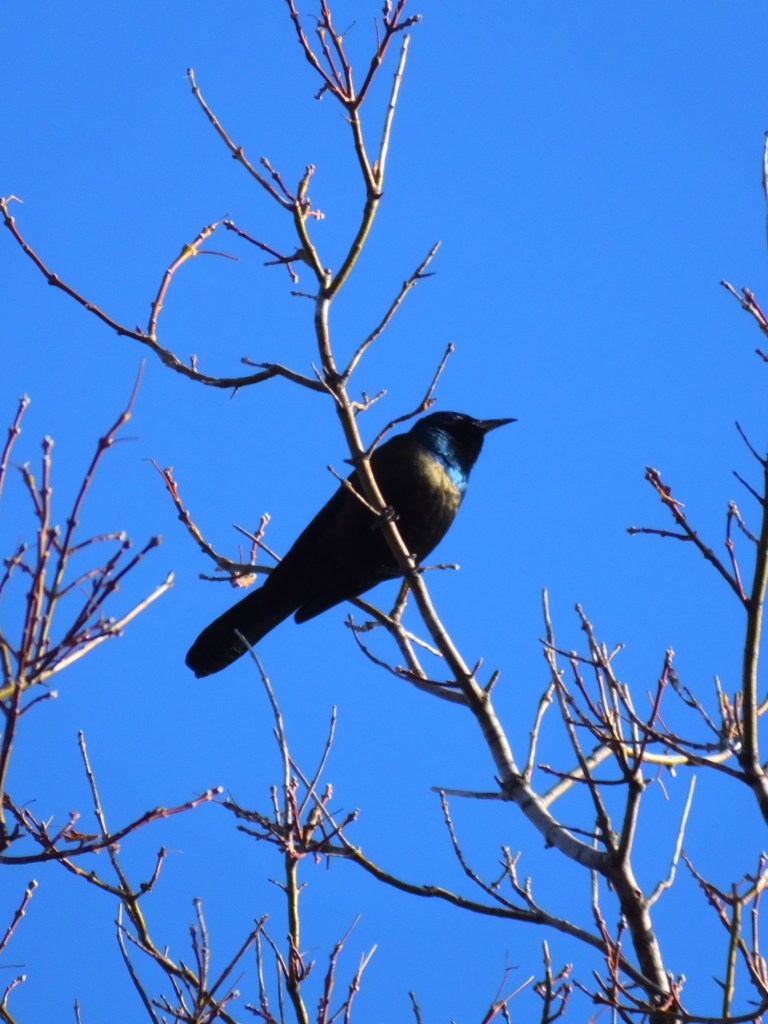
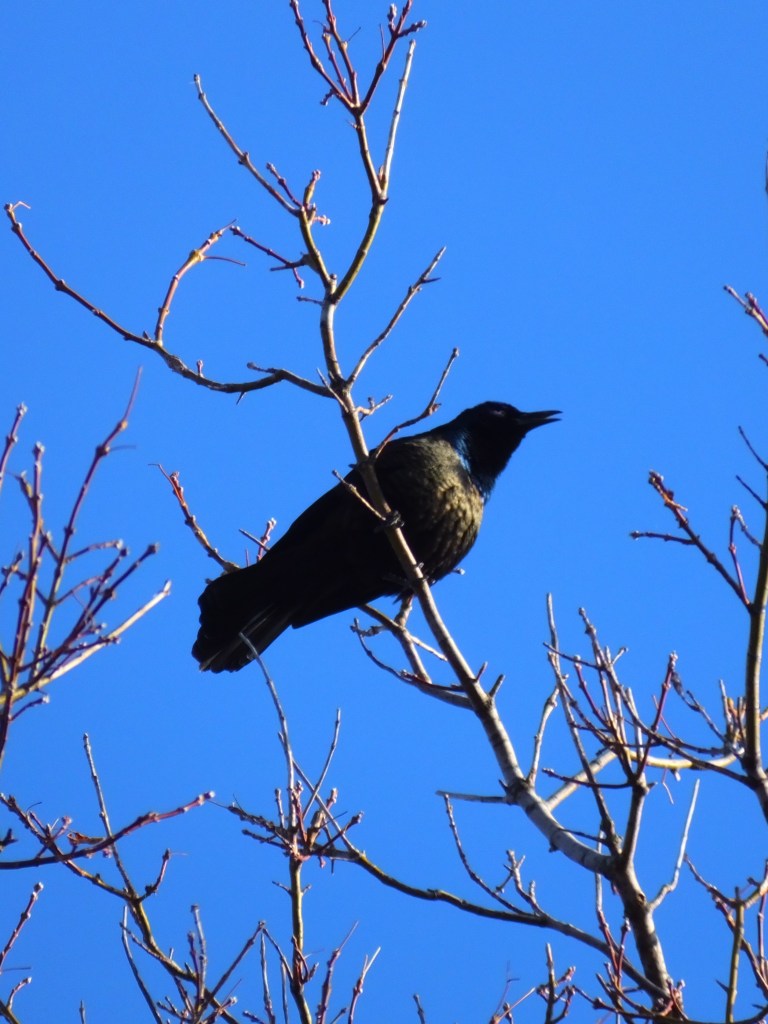
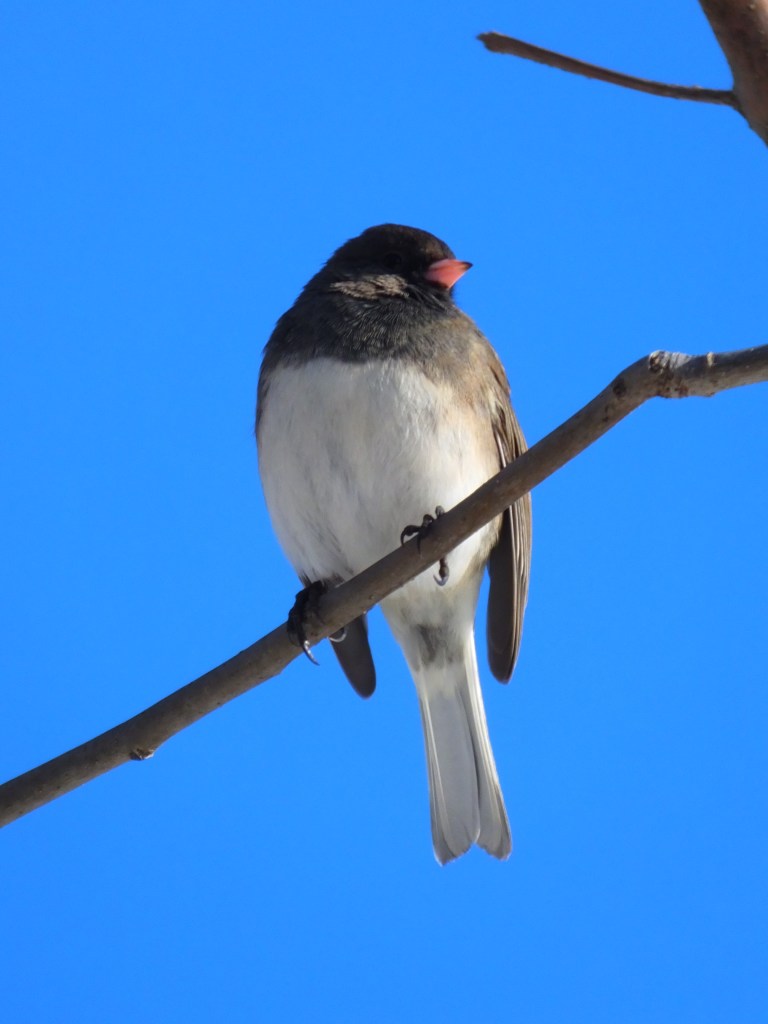
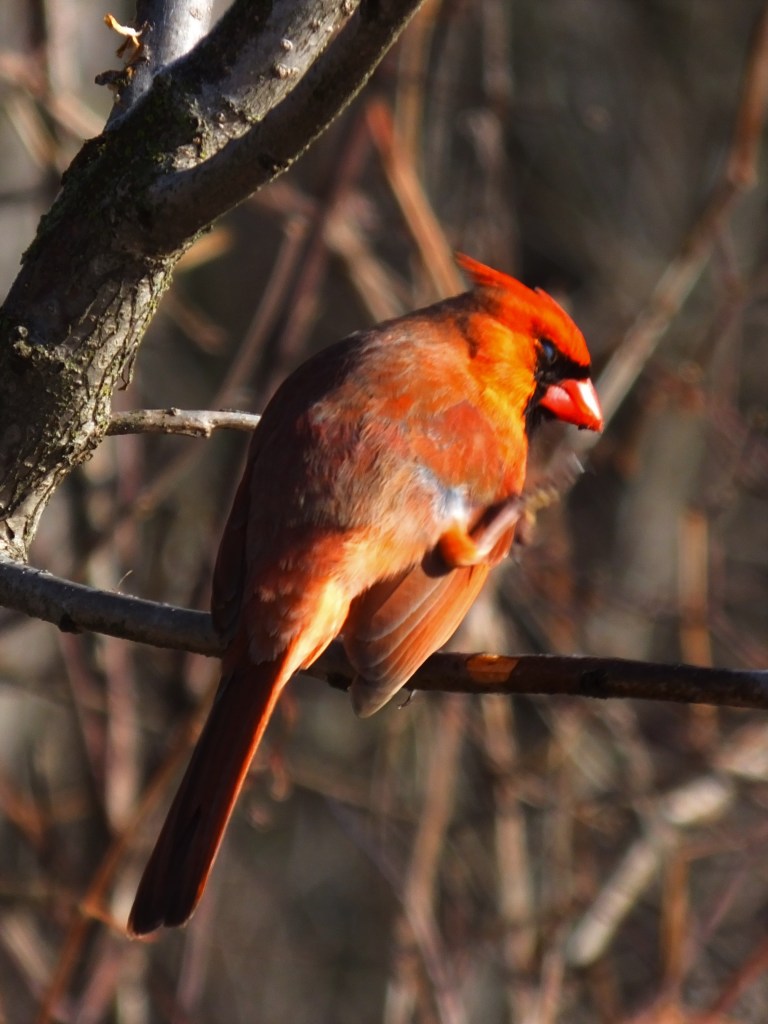
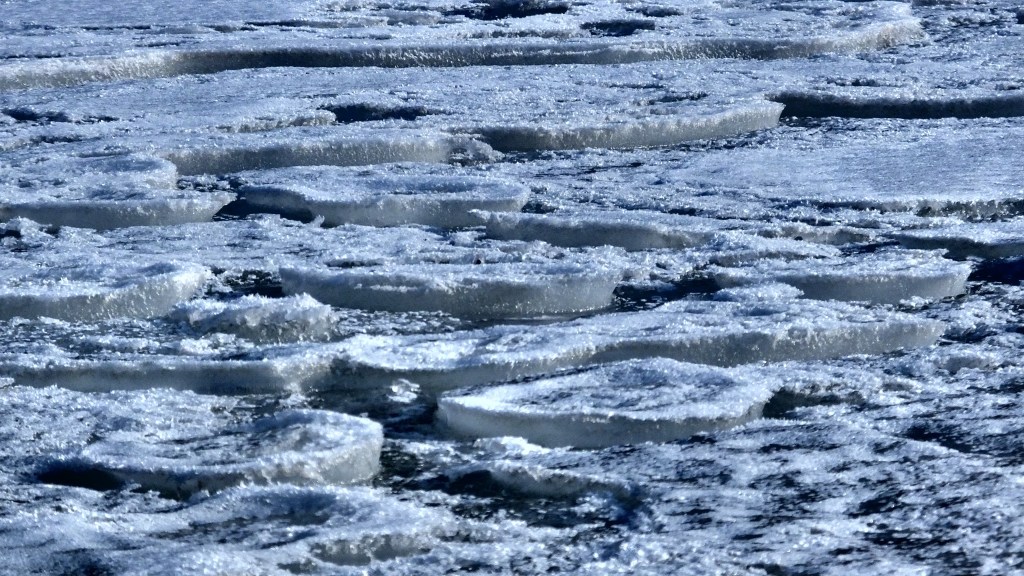
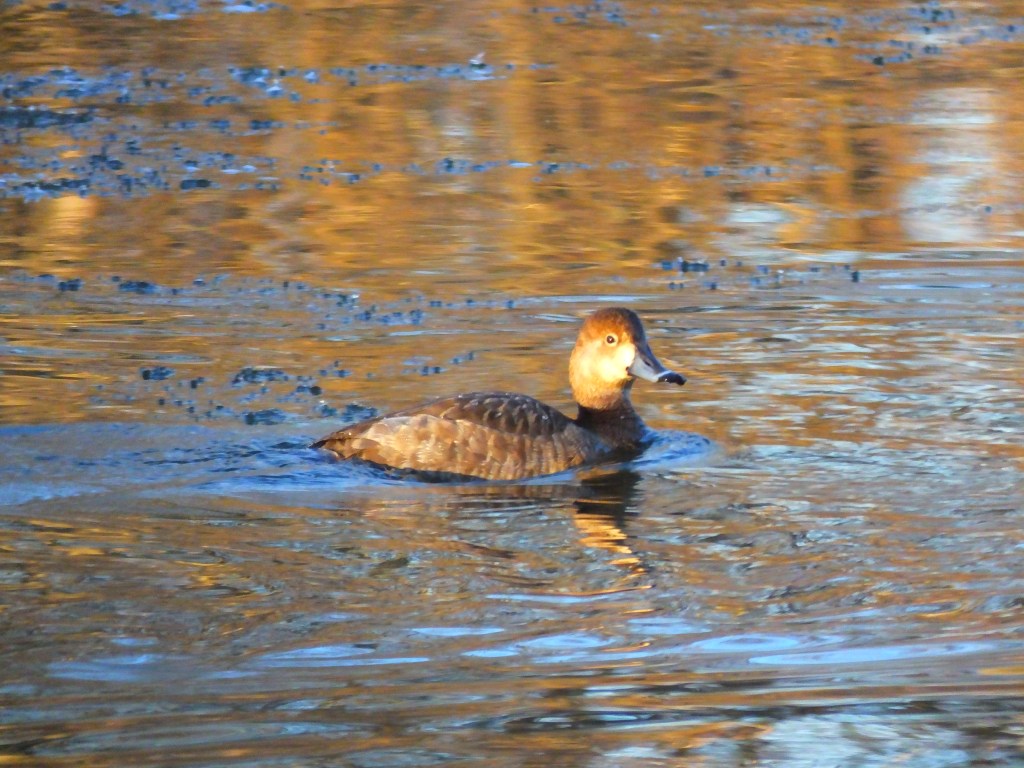
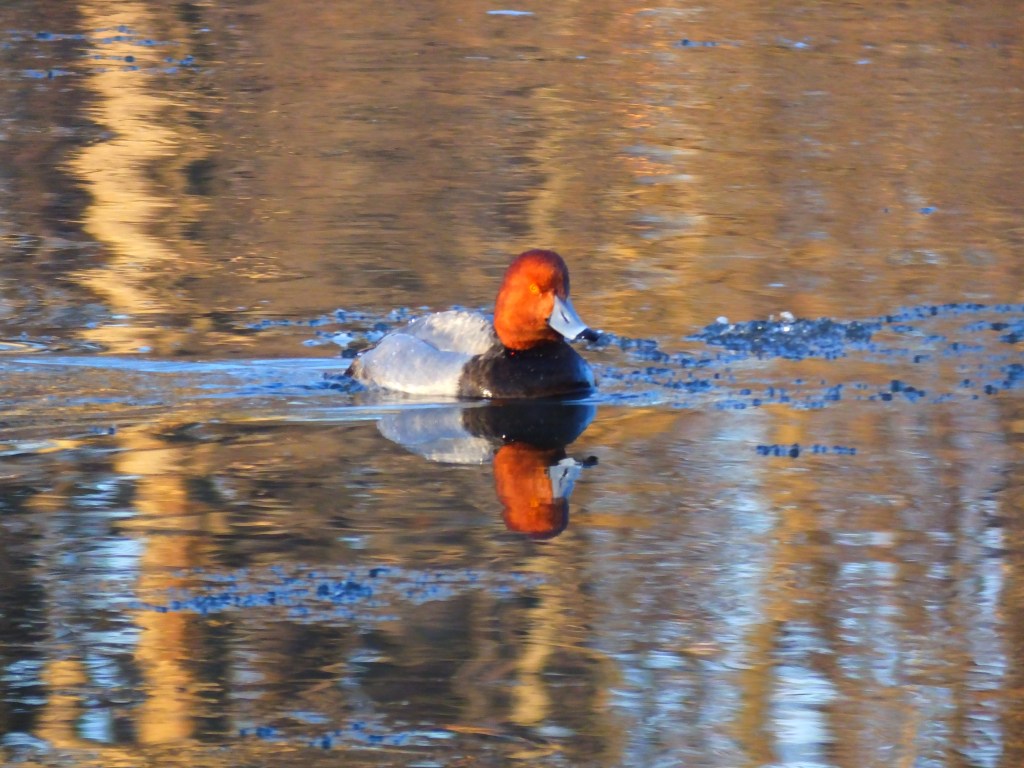
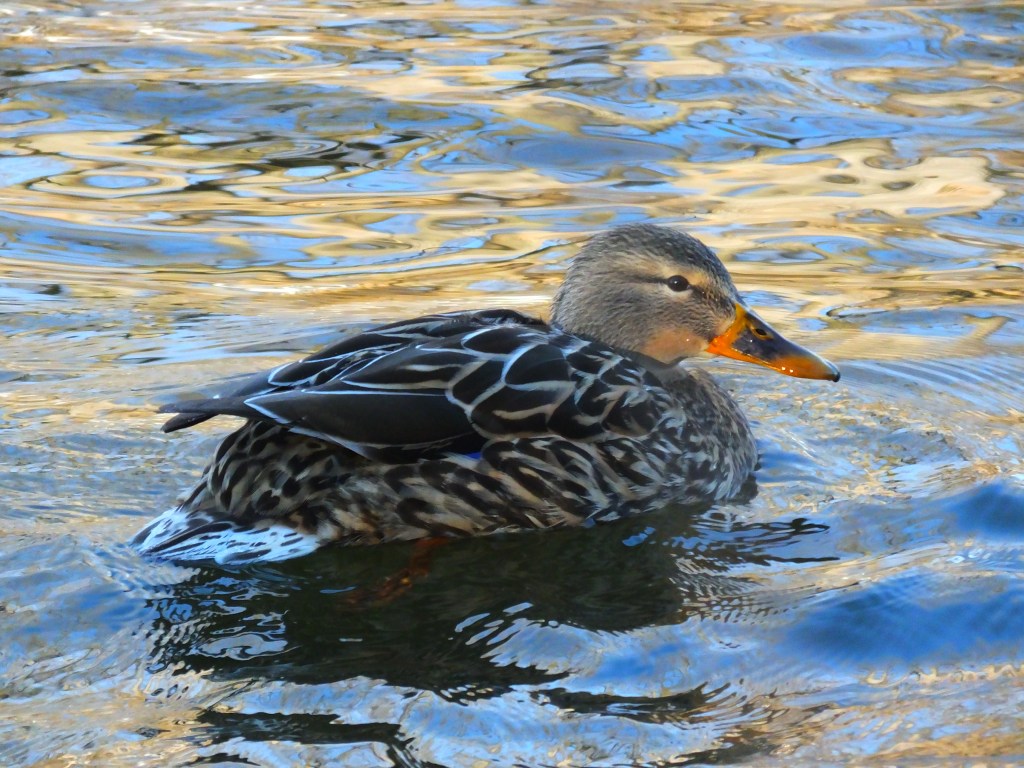
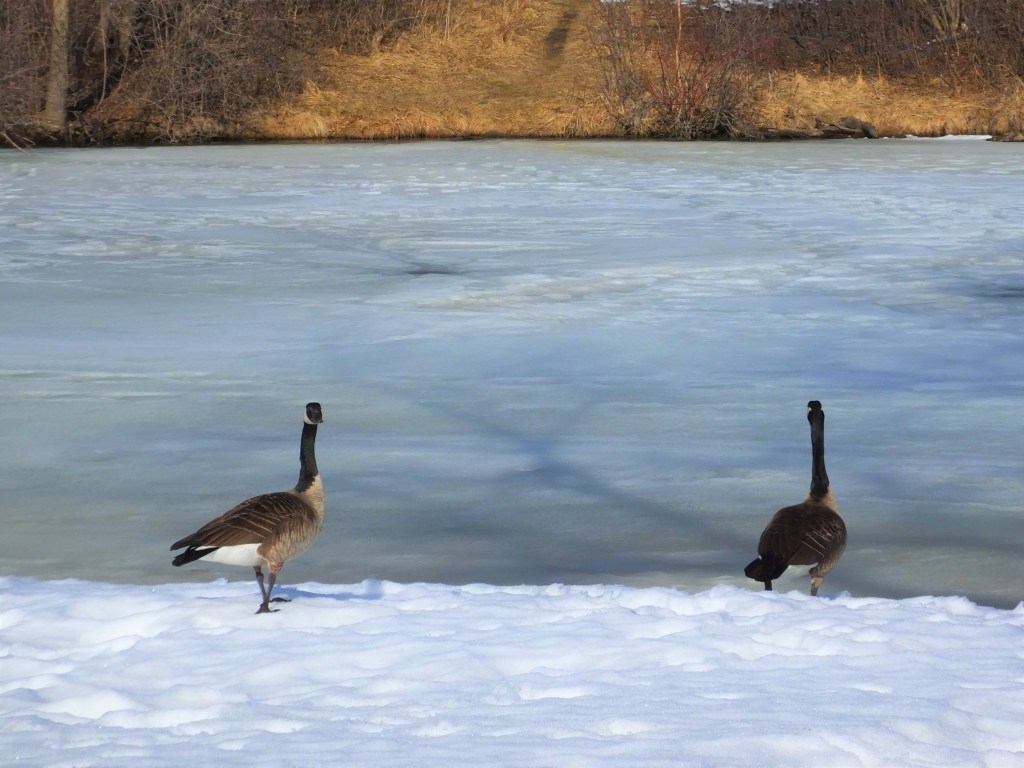
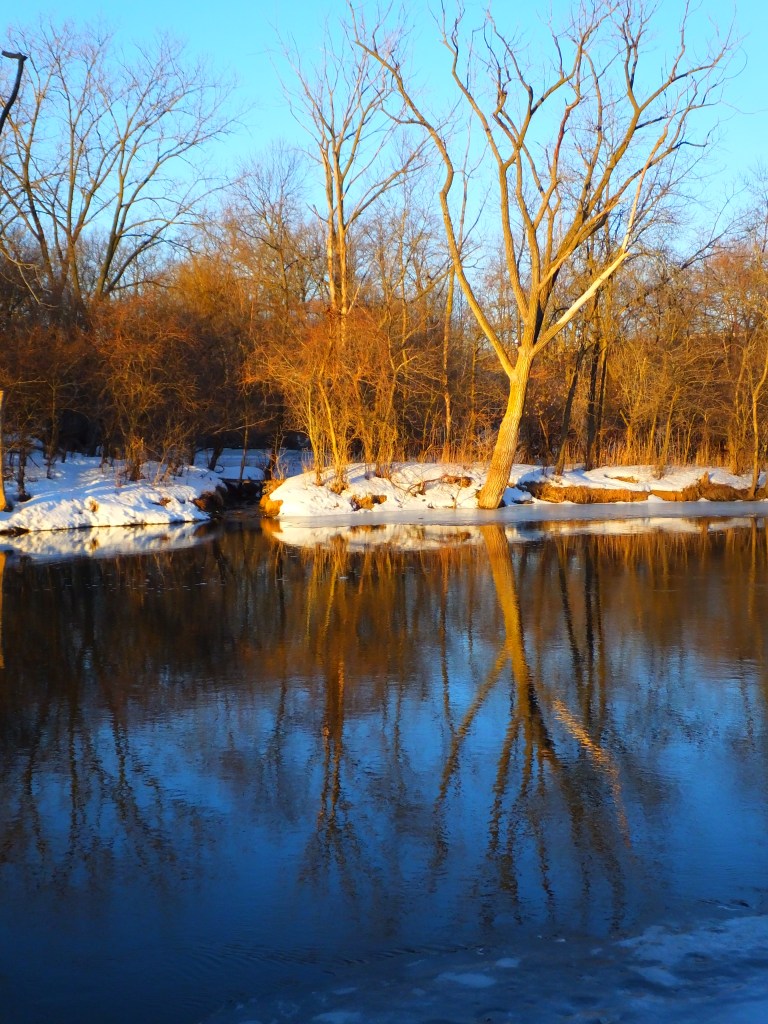
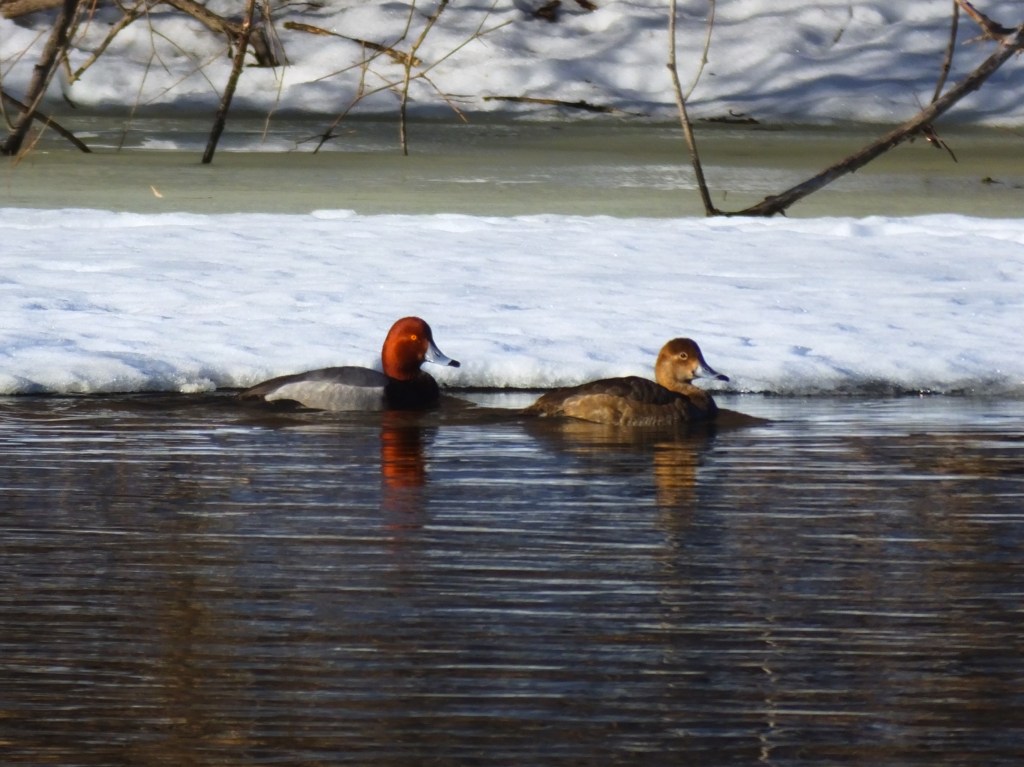
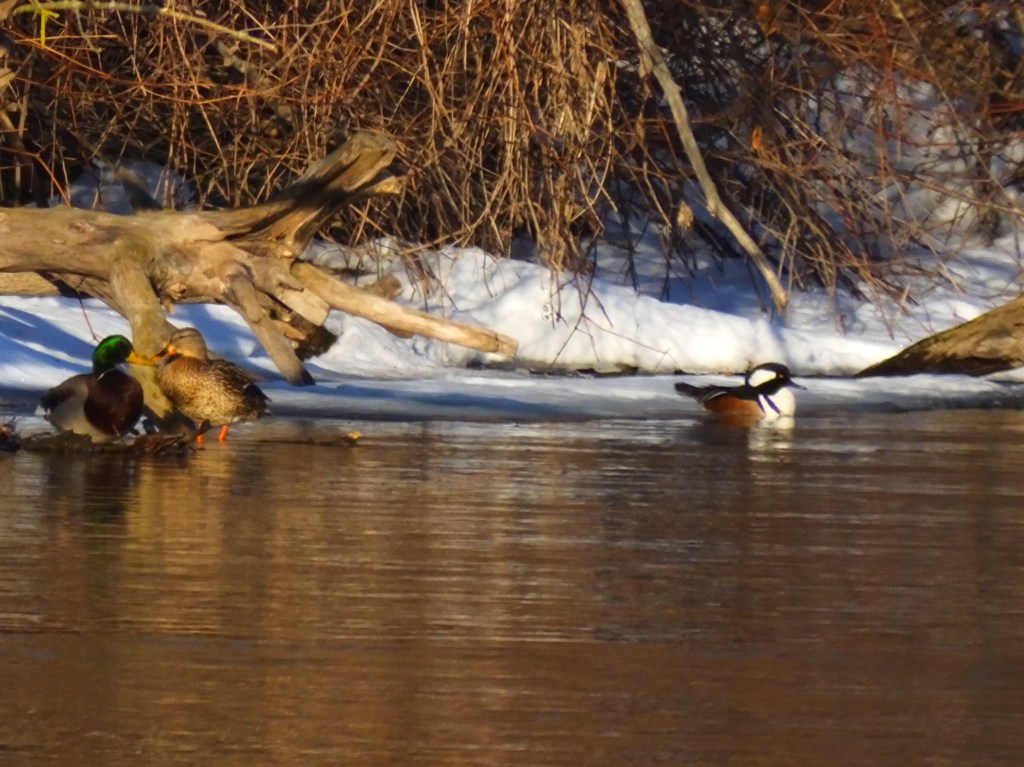
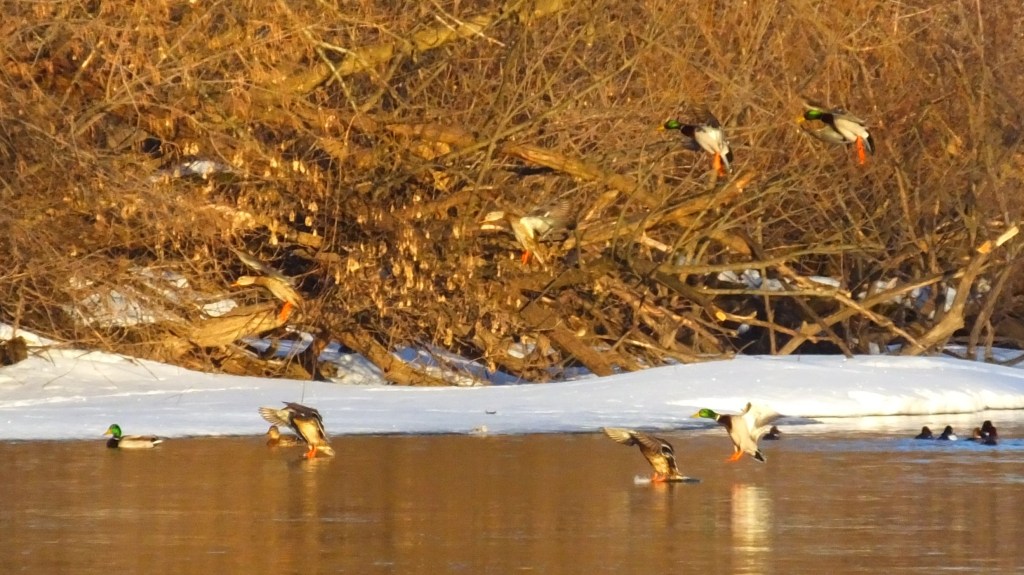
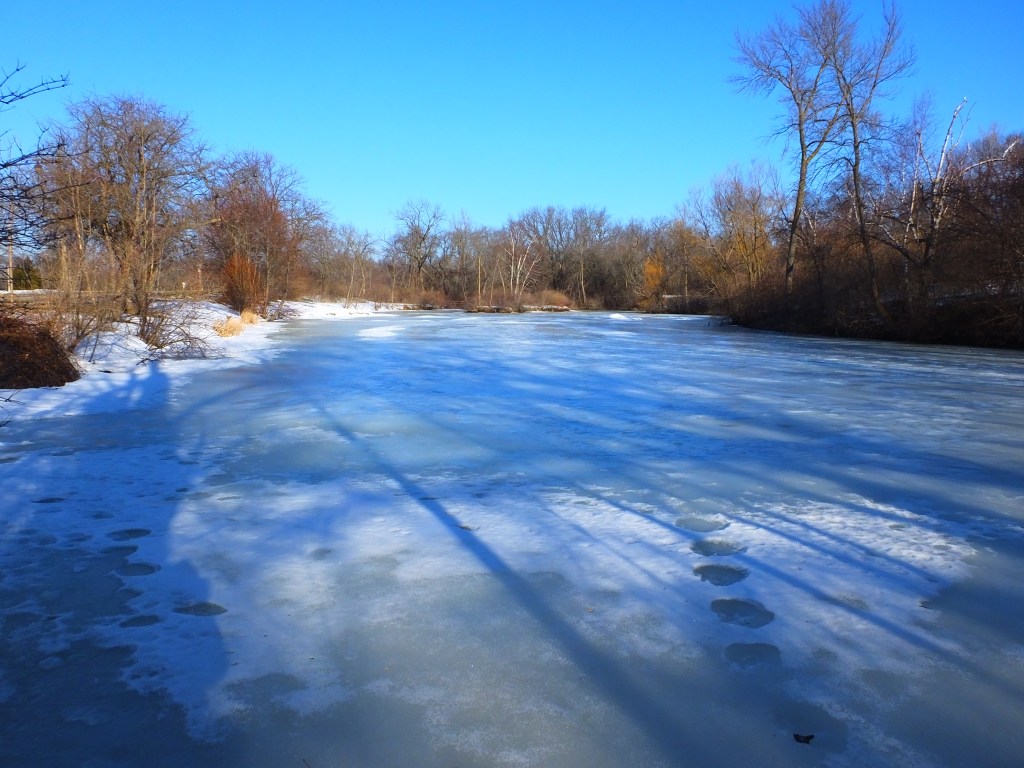
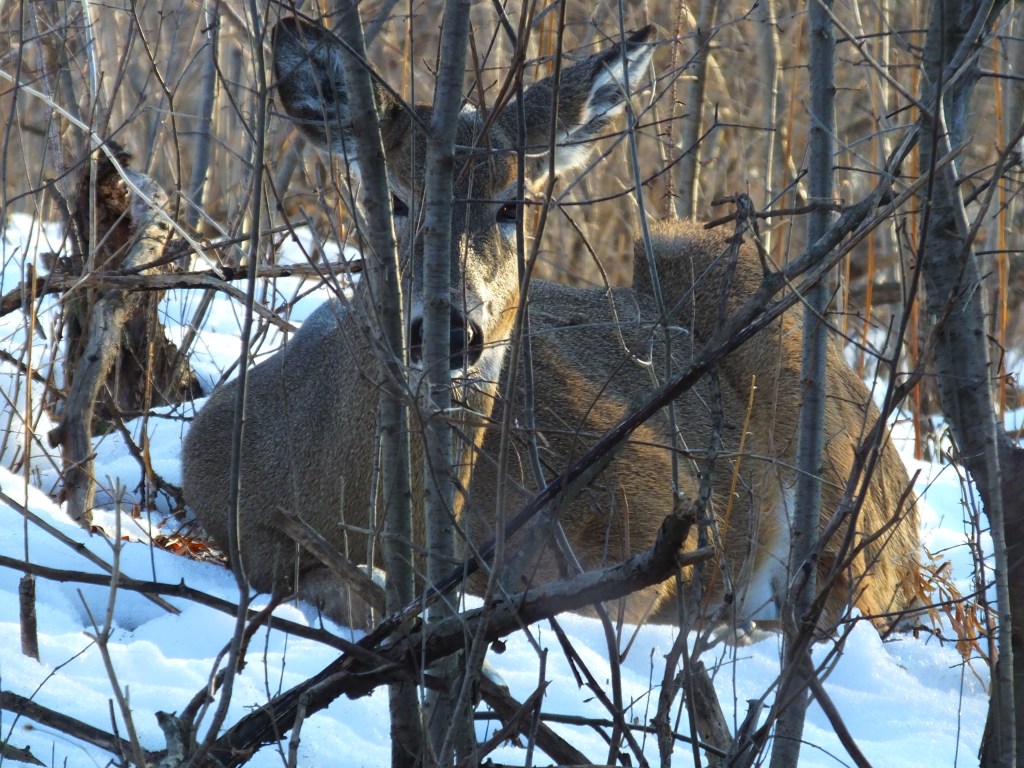
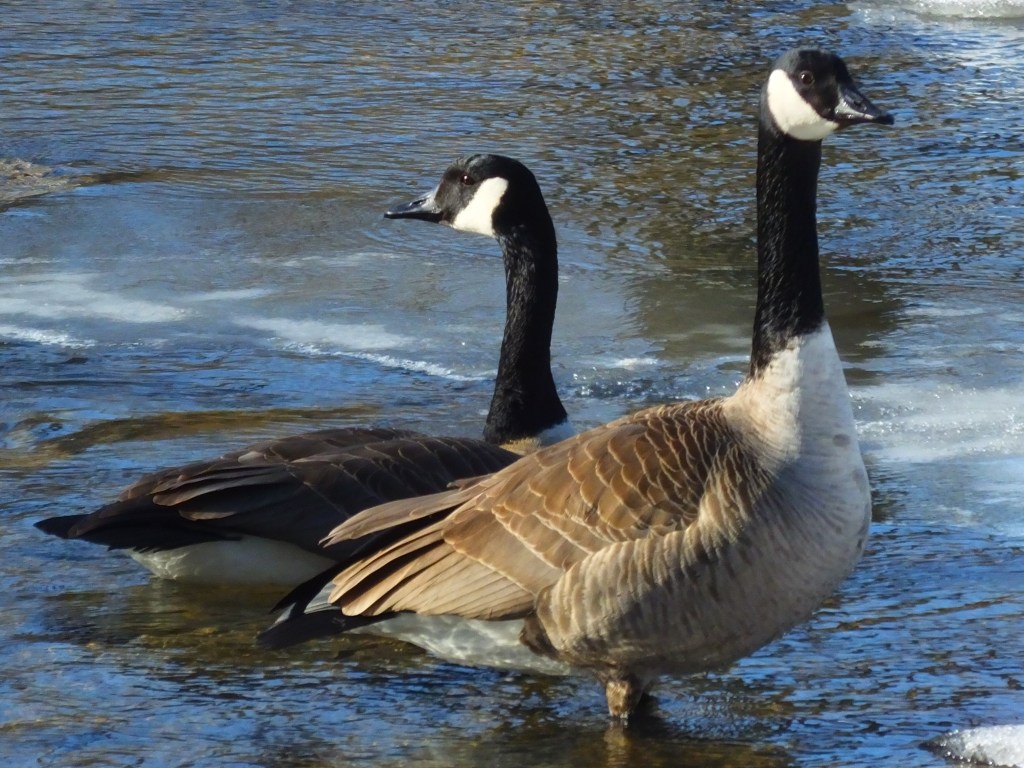
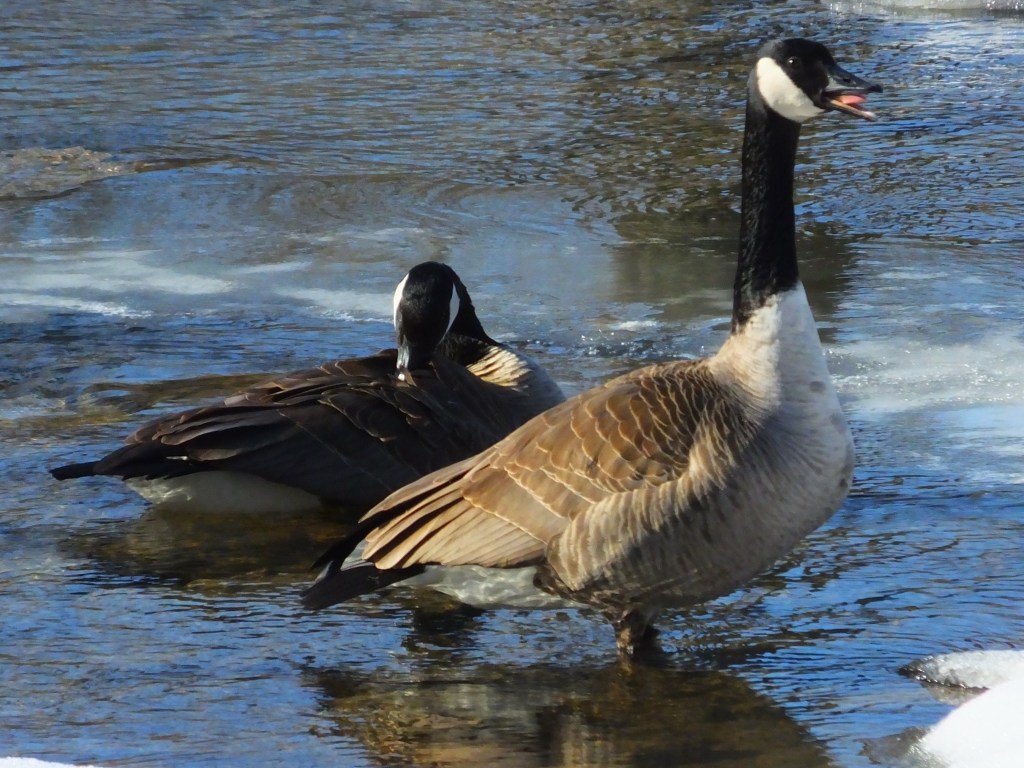
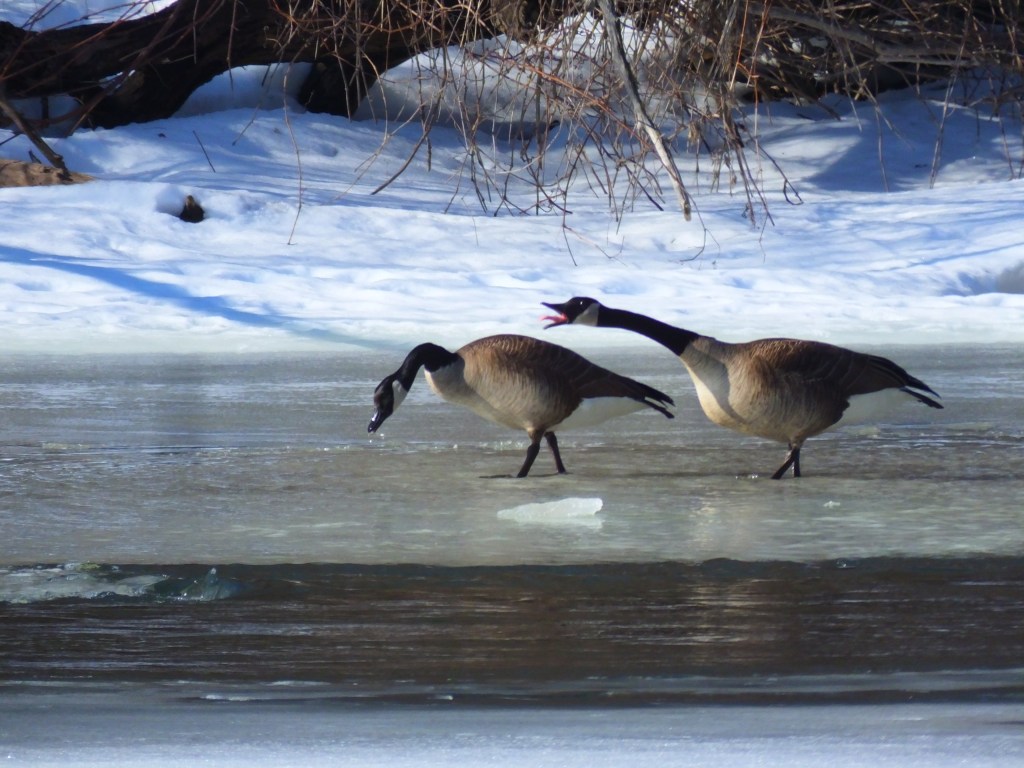
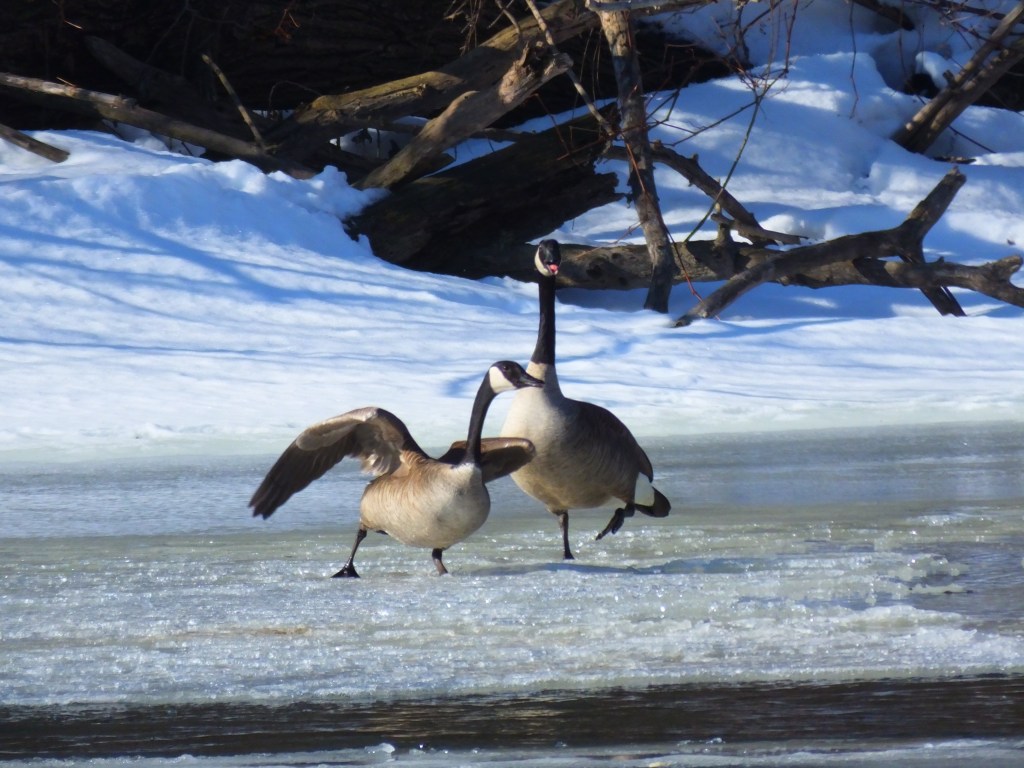
Technically, these images aren’t from in Estabrook Park, and I don’t have any good winter pictures from there yet. Instead, they’re from a block east on Glendale Avenue. Just something to look forward to, eh? Actually, I like the winter here, and I expect that I will have some nice winter pictures from the park soon enough for you. (Shout out to Maren for helping with the shoveling and for posing for the picture!)

Anyway, back to the gorgeous here and now. My one new sighting in Estabrook for today is this pretty, native, late-summer wildflower, the blue cardinal flower, aka great blue lobelia (Lobelia siphilitica) growing in the shade along the now-closed road from the parkway down to the meadow and boat launch.

The river was pretty as well this morning, with a nice mist rising from the falls, but the beaver were nowhere that I could find. Maybe they’ll be back tomorrow. Fingers crossed!

One pretty little wood duck was still dabbling through the lily pads by the mudflats.

On the pond, the cormorant still reigns as the current apex predator, well except maybe for the snapping turtle, but I’ve seen no indications that the snapper is anywhere near as active. This morning the cormorant was willing to model a behavior I haven’t managed to photograph until now. This appears for all the world to be a great big yawn, perhaps instigate by my arrival with my camera yet again. It sure looks like this could be the call of the wild, but our hero has been quiet as a ghost so far.

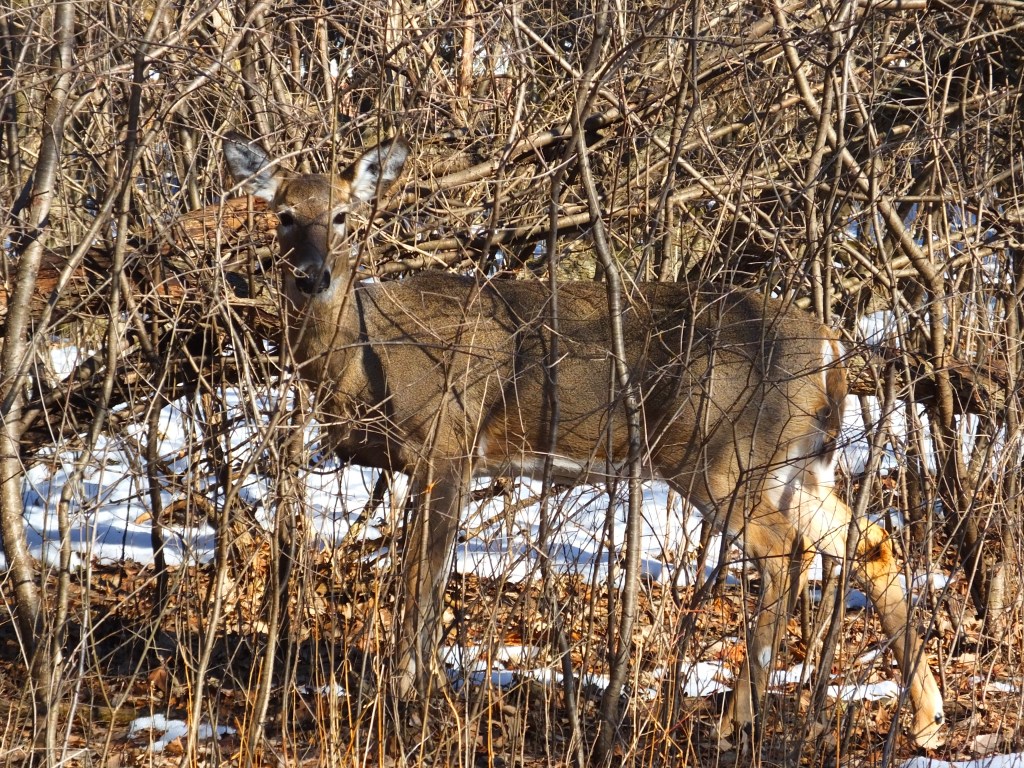
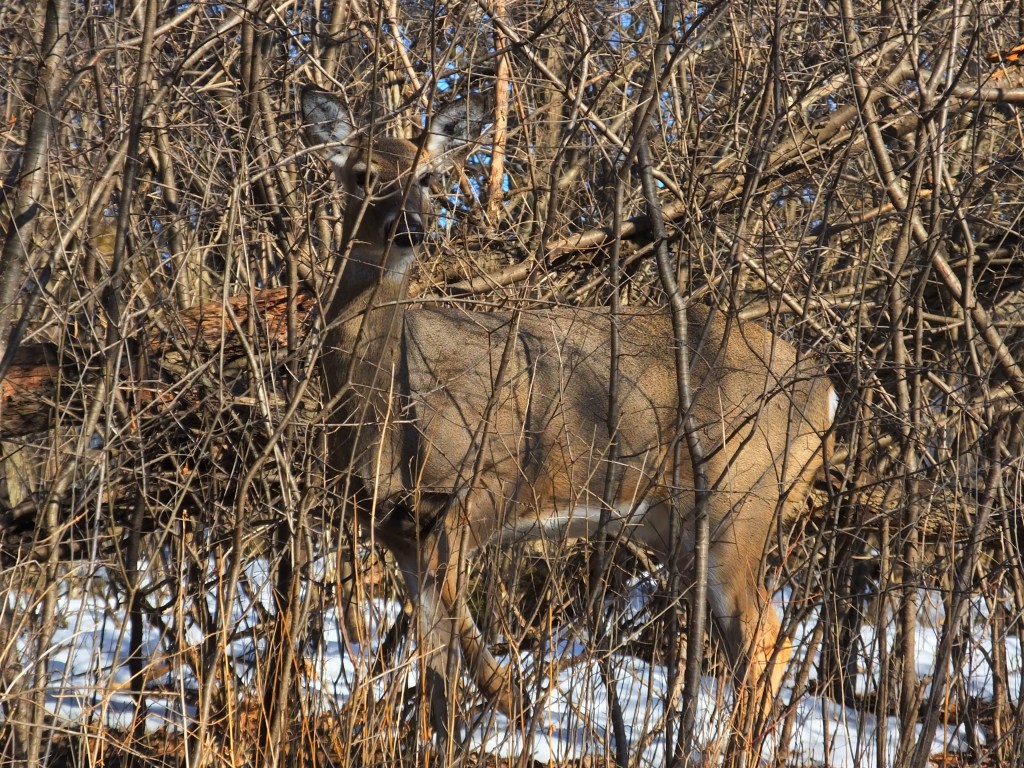
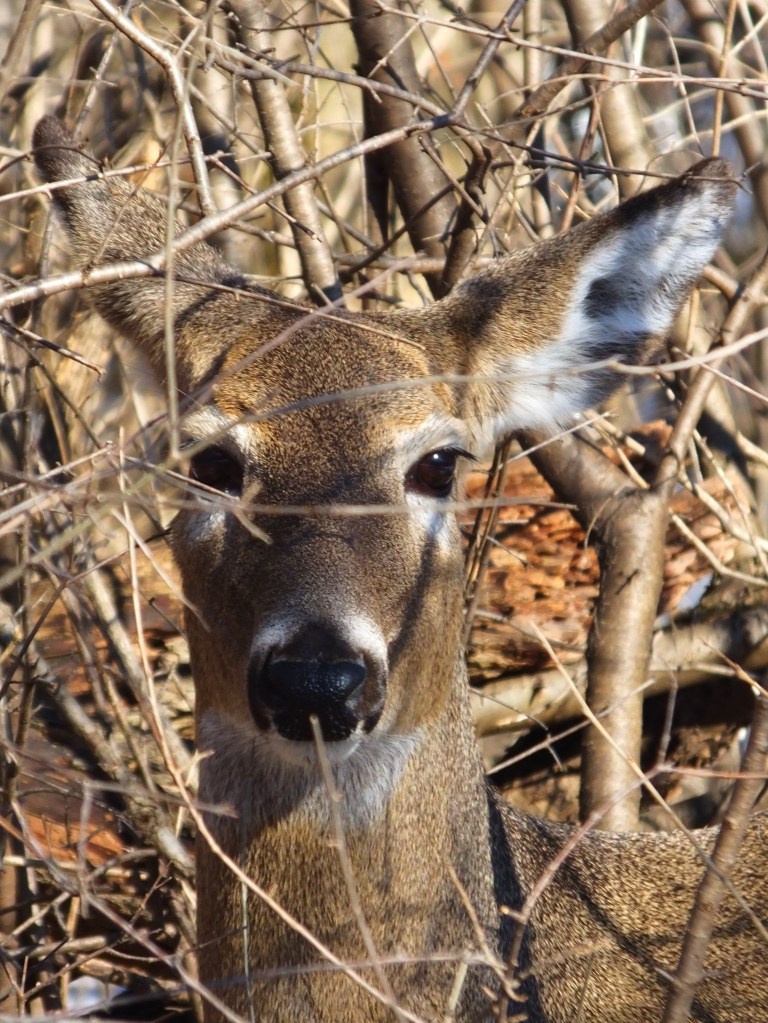
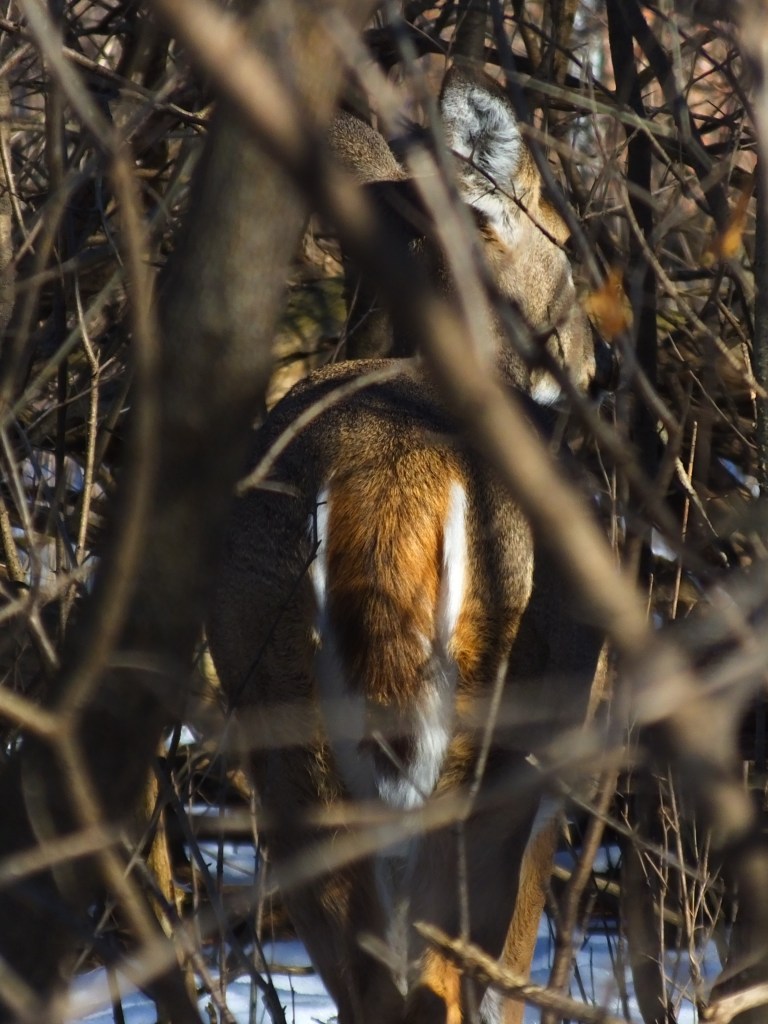
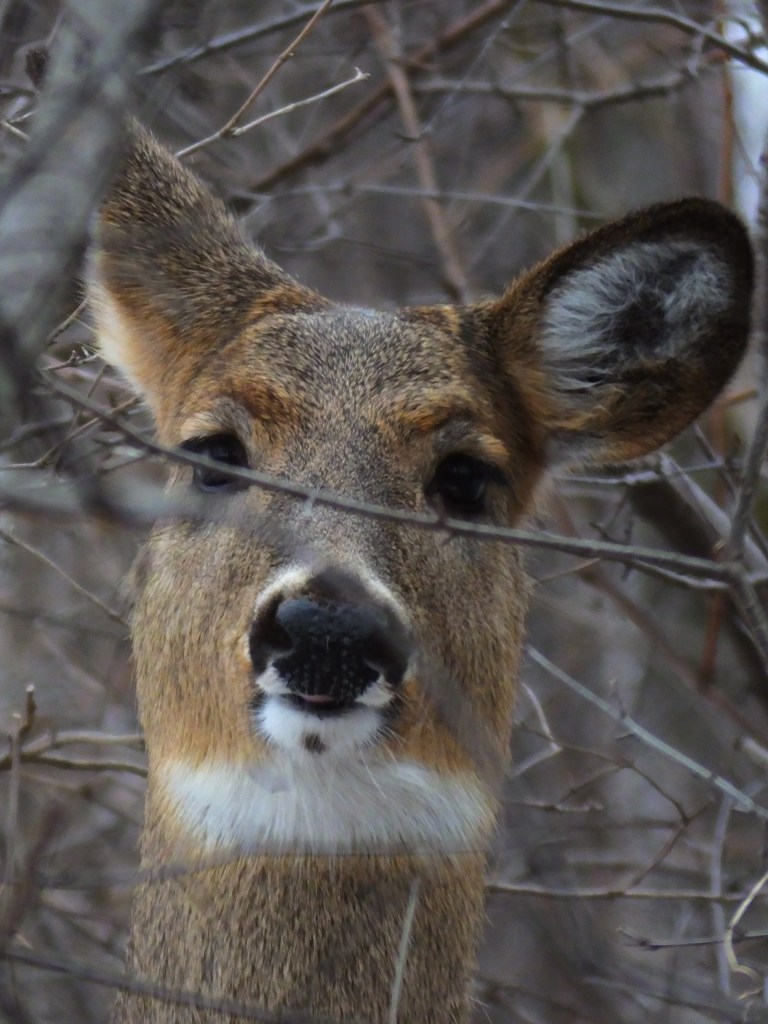
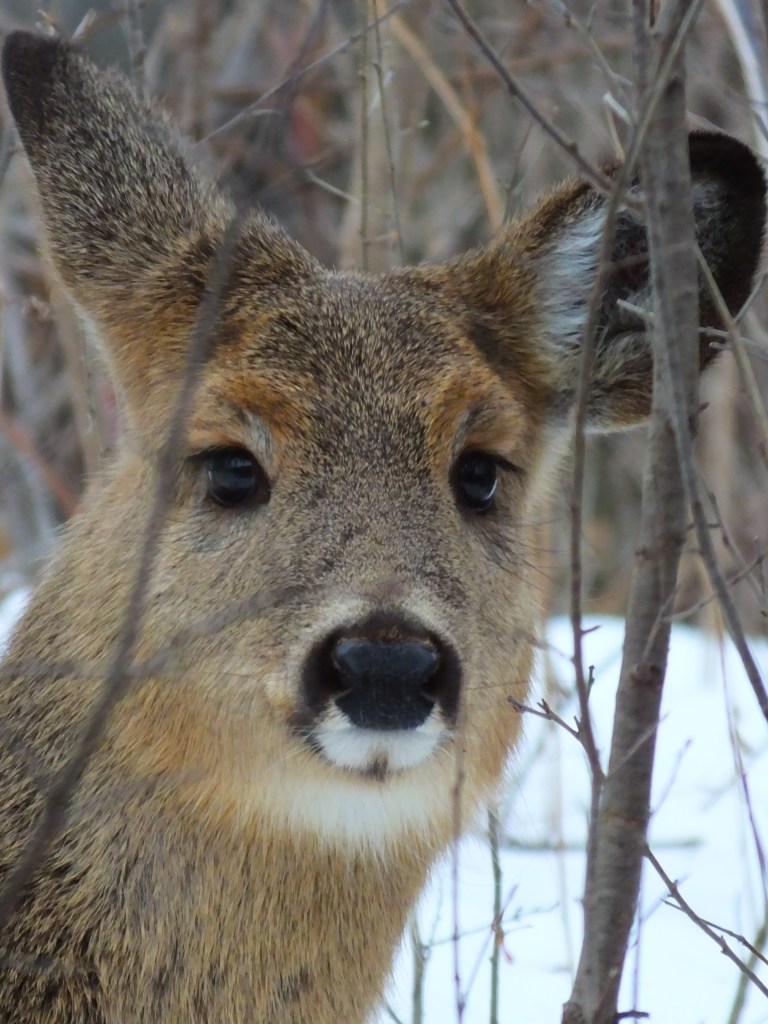
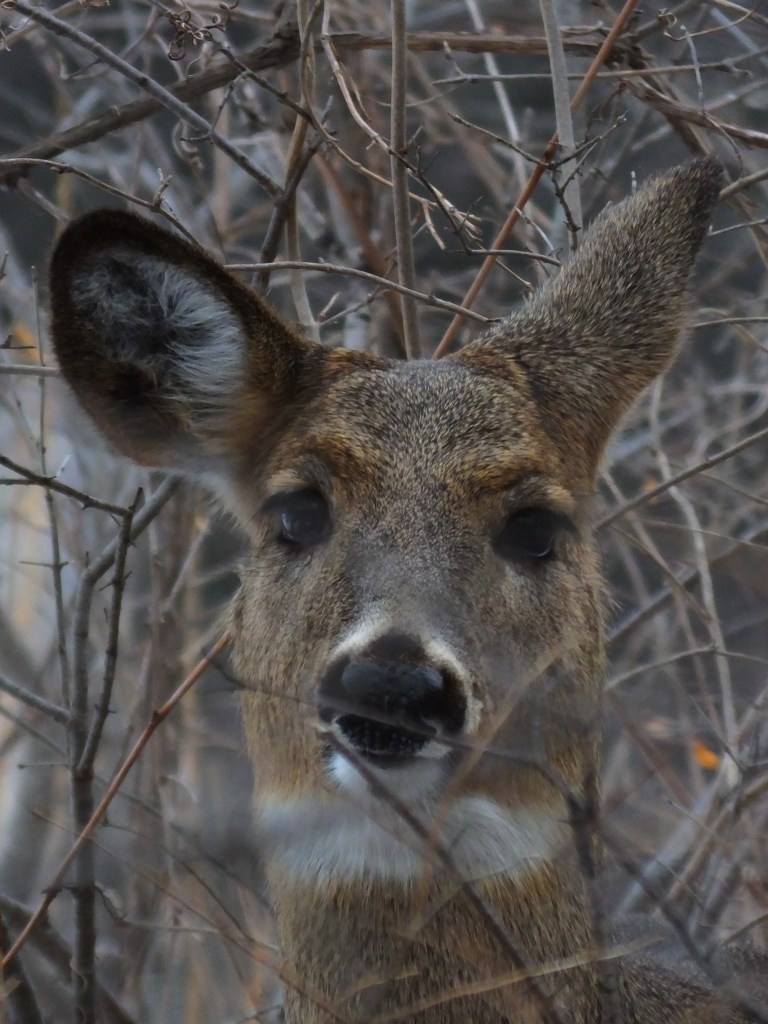
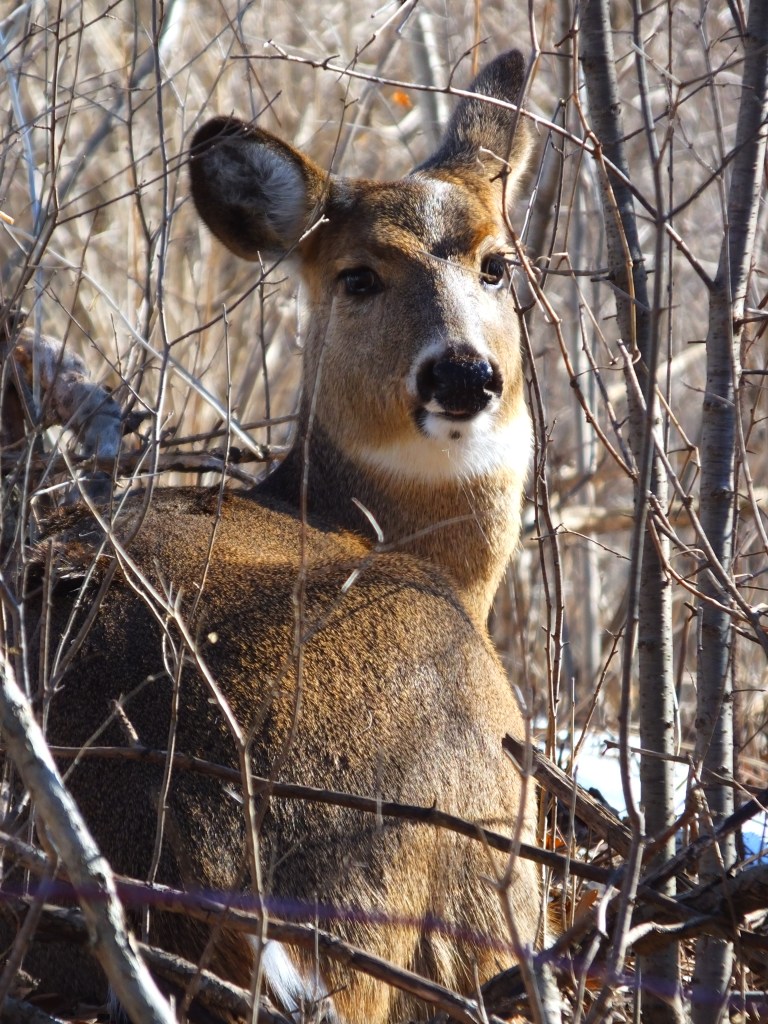
I did see one deer on the soccer fields at the south end this morning, but none in the meadow at the north end. I did take a few pictures, but the light was pretty low, and the deer was pretty far away, so the images aren’t worth posting. Sorry about that. We’ve seen plenty of deer pictures anyway.

That’s it for today, and I hope you get a chance to enjoy this weather while it lasts!

The mammals stage a comeback…

Man, we are in some kind of beautiful weather pattern lately, and it’s just been one gorgeous day after another. The cormorant was fishing in the pond, and a wood duck was dabbling on the river.

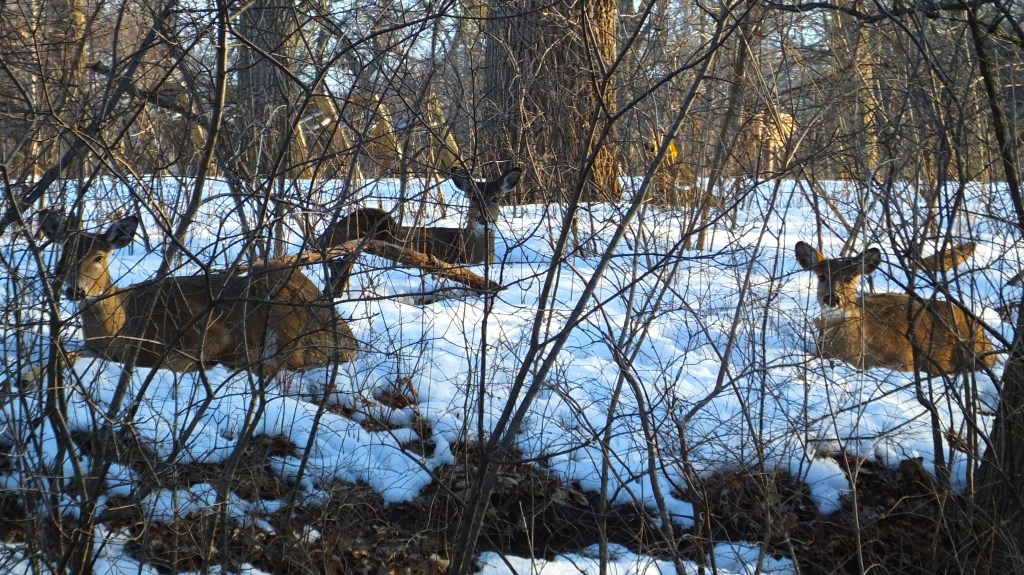
The surprise in the park this morning was not a new critter but critters in a new spot. The doe and her two fawns, which we’ve often seen on the soccer fields at the south end, were visiting the north end, perhaps to sample the vegetables in the wildflower meadow, were we saw the buck back in July.

A beaver, but just one this time, was back at the same downed cottonwood as yesterday munching on bark again. It would dive under the water, the branch would jiggle a little bit, and then it would come back up with a new piece of bark to work on.

A chipmunk was making quite a racket in a tree right beside the stairs from the beer garden to the falls, and I know I’ve shown you a few pictures of them before, but this one was trying so hard to get my attention and then posing so nicely that I just couldn’t resist.

I don’t have good data on the fluctuations in nectar production by the various flowers in the park from day to day or week to week, but it has been dry lately, and perhaps we’re in a little bit of a low spot because this looks like some serious competition on a bull thistle blossom. The female dark morph eastern tiger swallowtail (Papilio glaucus) didn’t stick around long after the bumblebee showed up.

This monarch was just sitting it out for now on what look to be sow thistle blossoms that have long gone by.

Finally, I spotted yet another fish in the river that is new to me. Can you help me identify it? I’d say it was about 3 inches long. Maybe a young bass?

Cottonwood bark anyone? Anyone?

It was yet another gorgeous morning in Estabrook Park; cool, still, and pretty dry; and I saw several of the regulars during my usual rounds. A deer was grazing at the edge of the soccer field, the cormorant was fishing in the pond, and a pair of wood ducks were dabbling on the river.

The big news, however, is that I finally managed to spot another good-sized mammal, of which I’ve been seeing signs all summer, but never an actual glimpse until now. Ladies and gentlemen, boys and girls, friends and countrymen, children of all ages, give a warm Wisconsin welcome to our very own North American beaver (Castor canadensis), right here on the Milwaukee River and contentedly munching on a strip of cottonwood (probably Populus deltoides) bark that it had just peeled off that branch you can see in the background.

When I first came around the corner, it was pulling on the strip of bark, and in the dim light, the first interpretation that popped into my head of the image I was seeing was of a duck tangled in fishing line, and my heart sank into my shoes. Happily for us, however, also the beaver, and even the duck I had imagined, my initial impression turned out not to be the case. Instead, it was a honest-to-goodness beaver, it got about a foot-long section of bark loose, and you can see it begin to munch on it in the picture above. It seemed quite undisturbed by me, and I took about 50 pictures as it proceeded to ingest the entire strip. Here’s a close up showing its nearly unbearably cute little paws clasping the bark.

After a while, it slowly swam away while it finished off the strip of bark, and a second beaver swam up. That’s right, a second one! In all the excitement, I failed to capture an image showing both of them at the same time, so you’ll just have to take my word on that. The second beaver calmly pulled off its own bark strip and started to munch on it in exactly the same way as the first one. Here’s a picture of that.

I think you can clearly see that they are two completely different individuals, right? Anyway, I thought I felt a mosquito on my leg, I waved at it, this second beaver took exception to that, and it took off with a big splash of its tail. The show was over, but what a show it was, eh?

Let me leave you with a not-too-bad and nicely-soothing picture of the wood duck pair amongst the lily pads on the river.

A reprieve…

It is another perfect summer morning in the park, cooler and drier than recent days, and despite, or perhaps because of, my announcement yesterday, I’ve got a photogenic new critter to show you today.

This pretty little butterfly, posing on some knotweed blossoms growing on the mudflats by the river, appears to be a female northern crescent (Phyciodes selenis), a true brushfoot, in the subfamily Nymphalinae, as are the American lady, red admiral, and common buckeye we’ve already seen in Estabrook.

While I was on the mudflats, I also spotted this little, maybe 2-3 inches long, painted turtle, small enough to walk on a water lily leaf floating on the river.

Meanwhile, back in the pond, I spotted this frog with a pretty good-sized tail, or maybe its a tadpole with four legs. I read that “the tadpole uses the nutrients stored in its tail as food, so until its tail is completely gone, it doesn’t need anything else to eat,” and this little critter appears to be right on the cusp.

Finally, here’s some big squash or maybe pumpkin blooming on the bank of an island in the river. Unfortunately, I can’t get any closer for better identification clues, but if any of you want to weigh in on what member of Cucurbita this is, please let us know.

And there you have it. I guess we’re not done yet, eh?

And then there were none…

Welp, we all knew this day would come, but we just didn’t know when. I’ve probably composed this message in my head once a week for the past 3 months, and today is the day I finally need to write it down. After 138 straight days, since March 30, I didn’t see a single thing in Estabrook Park this morning that I thought camera-worthy.

Oh sure, it was a nice morning, the cormorant and a wood duck hen were on the pond, plenty of flowers are in blossom, a few birds were singing, and I even walked past a pretty nonchalant bunny, but there was nothing that we haven’t seen plenty of times before.

Luckily for us, David Boehlke, long-time reader, Anne’s nephew, and forester who lives outside Marquette Michigan, sent in these astounding images, which he managed to capture through the layer of vaseline he keeps on his phone, of a white deer. As with Al, the white sparrow, we’d have to see if the eyes are red to assert it is a true albino.

There are actually a couple of new blossoms in the park, which I photographed yesterday but opted not to include in yesterday’s report for various complex reasons, and the first one is another aster, this time bigleaf aster (Eurybia macrophylla), also looking a little like it’s been through the washing machine.

I’m sure you’ll be thrilled about this next one. Yup, as some of you may have already sensed, the giant ragweed (Ambrosia trifida) is starting to bloom, mostly along the river, and I probably don’t have to tell most of you that “its pollen is a significant human allergen.”

Finally, here’s weird one. It turns out, according to Friends of the Wild Flower Garden, that “late goldenrod (Solidago altissima with two subspecies) and giant goldenrod (S. gigantea) are subject to three different types of stem galls caused by tiny insects that lay their eggs on the plants. The larva from the hatched egg then eats its way into the stem.” And, “in the case of the rosette gall, the plant creates a dense growth of what looks like small leaves at the top of the plant after a larva hatches at the top of the stem. This rosette is caused by the plant stopping stem growth without stopping leaf production,” and here’s what that looks like.

Okay, back to the big story for today, lack of compelling new content. The good news is that this should give me some time to sort out the calendar details at last. If you haven’t yet voted on your favorite pictures or chimed in on how many calendars you might want, if any, now is the time. Just head over the the calendar page for all the particulars. No pressure whatsoever.

This doesn’t mean I’ll be quitting, or anything like that. Lord knows I still need the long walks for exercise. It just means that posts will probably not be quite so chock full of new discoveries, or we’ll slow the pace down a little from once-a-day. That should also give me time to teach the two civil engineering classes I’m on the hook for at UWM, I have a hope.

Well, let’s go out with something colorful, eh? Who can resist one more image of a monarch butterfly on swamp milkweed? Not me.

And then there was one…

There were some low clouds and fog this morning that let the crickets sing until 8am. Then the sun burned through, the crickets quit, and the cicadas took over. Aah, August.

Only the young cormorant was on the pond this morning. The night-heron has probably moved on, and the great blue heron might have been there earlier, but either ate its fill or got spooked before I arrived.

In any case, I am contractually obligated to come up with a headline every single day, and they can’t all be winners.

I didn’t see anything really camera-worthy until the wildflower meadow by the boat launch when this striking female eastern tiger swallowtail (Papilio glaucus), not of the dark morph this time, floated by and enticed me into taking a couple of shots. How could I not, right?

I followed it first to the chicory and then to the bull thistle before it took off for good, and once it was gone, something else on the bull thistle caught my eye. The plant was crawling with crickets. Well, actually, they were all just sitting there motionless, not even crawling, and they appear to be differential grasshoppers (Melanoplus differentialis), not even crickets, but yikes, it was weird.

Also in the meadow, I noticed this striking little wildflower, the partridge pea (Chamaecrista fasciculata), about which I read “the seed is one of the major food items of northern bobwhite and other quail species because it remains in sound condition throughout the winter and early spring.” That’s exciting, because we haven’t seen a bobwhite yet. Maybe later this fall, eh?

Heading south along the river trail, I spotted what might be our first aster of the season, perhaps a roughed up New England aster (Symphyotrichum novae-angliae). Woo hoo!

Further south along the river trail, I came across what looks like yet another tussock moth caterpillar, this time white hickory (Lophocampa caryae), which I read we are advised not to touch because “the hairs of the Hickory Tussock caterpillar, which has black tufts on its back and black spikes, can cause an allergic reaction or rash for some people who make contact with the insect. The caterpillars have microscopically barbed setae, which can cause inflammation.” Good to know.

Finally, I stopped at the tunnel under the parkway to check for moths, and as I inspected the lannon stone blocks that line the west entrance, look what I finally noticed. That’s right, yet another fossil. This time it’s a trilobite that has been coated with a layer of flowstone, a form of Speleothem, that occurs “on manmade structures as a result of calcium hydroxide being leached from concrete, lime or mortar.”

And that’s everything I’ve got for today. Remember, we go to press with the pictures we have, not with the pictures we wish we had.

Two out of three ain’t bad…

It was a nice morning in the park today; the air was cool and still. The doe and her two fawns were across the southern foggy soccer fields again, and two of the three big fishing birds we’ve seen a lot of recently were on the pond.

The young cormorant was in its usual spot in the southeast corner, where I had also spotted it yesterday afternoon and noticed that it seemed to be doing something odd with its throat so that it looked a little like a pelican.

I couldn’t believe my luck when my very first google search returned this helpful tidbit from Dan Tallman’s Bird Blog. “By opening their bills, and vibrating their upper throat muscles and bones, herons (and a few other bird families) are able to increase the passage of air across the mucus membranes of their throats. This behavior, called gular fluttering, increases heat loss on hot days.  Because of its permanent down coat and lack of sweat glands, the ability to lose excess heat is important to a bird.”

Meanwhile, the young great blue heron was fishing intently in the northeast corner.

A solitary wood duck hen was on the pond, as well, but she was in no mood for pictures, and I’ve only ever seen the one catching and eating frogs when she was with her duckling.

We’ve also got some new blossoms in the park. Here is what I believe to be brown-eyed susan (Rudbeckia triloba), which I read “usually has smaller flowerheads, more flowerheads per plant, and fewer ray flowers per flowerhead than” the black-eyed susan (Rudbeckia hirta) we’ve already seen.

Here is yet another mint, this time corn mint, field mint, or wild mint (Mentha arvensis) with its interesting choice of blossom locations along its stem. I found it growing in the tall grass on the mudflats along the river south of the falls.
Also on the mudflats is this fairly understated plant, which I believe is known as pale smartweed, curlytop knotweed, willow weed, or pale persicaria (Persicaria lapathifolia syn. Polygonum lapathifolium), and which I read is actually “a species complex made up of a great many varying forms, sometimes considered varieties. The environment also has a strong influence on the morphology of an individual plant.”
Finally, monarchs continue to abound, and look who photobombed the shot as I was trying to photograph this photogenic example who must have been cool enough and/or hungry enough to let me get nice and close as it sampled some ever-striking swamp milkweed.
That’s it for today and tune in tomorrow to find out who’s fishing on the pond, who’s blooming along the river, and whatever else I can find that might be interesting.

Branching out…

Man, if the mornings continue to be this nice, I might not want summer to end. I went out earlier than usual, in search of a mammal I haven’t seen in the park yet this year but rumored to be there lately, and Venus was especially brilliant in the clear eastern sky.

I had no luck with the mammal today, but I did see our young cormorant out for an early swim in the pond and then drying out on its usual perch in the southeast corner.

Neither heron were around this morning, but I did see a flock of Canada geese checking out the baseball diamond across the parkway from the pond. You can just make out the nice little layer of fog over the grass in the background.

Long-time reader and avid birder, Donna, invited me down to the lagoon in Veterans Park yesterday afternoon to look for a black-crowned night-heron rookery, which is said to be there, but I am sad to report that they were nowhere to be found when we arrived. Instead, we were treated to a green heron (Butorides virescens) on a ambulatory hunt, the likes of which I have never seen on the pond. Check out that neck!

Here it is again, in case you missed it the first time. It’s almost easier to believe that they are two different birds, right? The frogs just don’t stand a chance against technology like that. A good explanation with pictures is online here.

Also, growing beside the lagoon is a pretty flower that I haven’t yet seen in Estabrook Park.

The interwebs are having a little trouble positively identifying this one and suggest that it may be either longroot smartweed, water knotweed, water smartweed, and amphibious bistort (Persicaria amphibia), which is “native to much of North America;” or lady’s thumb, spotted lady’s thumb, Jesusplant, and redshank (Persicaria maculosa), which is “an introduced and invasive species in North America.” I’m afraid sorting that out might be above my paygrade.

Meanwhile, back in Estabrook, the recent rains have refilled the little stream that runs from the pond down to the river, which had run completely dry recently, and the tiny fish were back already! I read that there are a variety of techniques fish have evolved to enable them to survive in such an environment, and I don’t know which of those these little characters are using, but hats off to them!

I have previously reported that these might be creek chub, but the tail in this picture doesn’t look quite right, and the same goes for minnows. My best guess now is that these are some kind of darter, but Lord knows which one. There are over 200 species to choose from. In any case, a hearty welcome back to them, right?

Update. I’ve since uploaded this picture to iNaturalist, and the consensus there is that this is a largemouth bass (Micropterus nigricans). Wow, right?

Finally, I don’t think I’ve shown you a monarch butterfly on a pink coneflower since July, so here you go.

Lastly, the forecast is for clear skies again this evening, and the moon doesn’t rise till midnight, so don’t forget to look for the Perseids in the northeast, if you get the chance. Anne and I tried last evening, but we only spotted two, so we might try again.

A big bird morning…

Wow! It was a gorgeous morning out there in Estabrook, and all three recent big birds were on the pond.

This makes 5 straight days for the cormorant, and he or she is really starting to look comfortable there, facing the audience to dry out in yesterday’s midday sun and pausing to scratch behind an ear this morning.

The young black-crowned night-heron was back and decided to take a little nap while I was trying to take its picture.

Lastly, biggest and most skittish of the three, was the youngish-looking great blue heron.

I continued on and arrived at the boat launch on the river a bit before 8, and everyone was still sleeping, but by the time I left, just after 8, the indigo buntings and the cicadas had both finally woken up and started singing. There were a few mallard hens on the water, but they were far enough out that I decided to save my film. On my way south along the river, I came across another pretty obedient plant starting to bloom that definitely does look film worthy, right?

At the mud flats, I spotted a couple of wood ducks looking to be just waking up, but they did not want to stick around for me to try to find a shot with better lighting, and just took care of that themselves.

I swung back by the pond, in hopes of finding a flower-of-the-hour blooming more than yesterday morning, but had no luck again, and this shot from yesterday afternoon isn’t much better. I guess I gotta be quicker or luckier to catch one of these beauties open, eh?

Finally, the night-heron was up from its nap on the pond and looking like it was fixin’ to rustle up some second breakfast.

The kid sticks around…

The cormorant really seems to be making itself comfortable on the pond, which I am sure glad to see. This morning, he or she was on the usual branch in the southeast corner but facing west for a change so we can see the nice pale neck and chest plumage and one big webbed foot. Soon after I took this photo, it was back to fishing.

Two readers already asked what fish it caught yesterday, and my best guess is a big ol’ goldfish. The pond is big enough, and they are hardy enough to survive the winter there. When the lighting is right, you can see schools of them feeding near the surface of the pond, although they are a little more skittish than the bluegills, so my pictures aren’t so great.

The cormorant wasn’t even the only bird fishing on the pond this morning. Perhaps this is the same young great blue heron we’ve also been seeing recently. It was at the north end and took off while I was still focusing on the cormorant at the south end.

Speaking of tasty critters in the pond, you may be as surprised as I was to still see tadpoles this morning. I first saw one back in April, showed you a picture on June 4, and another picture of one with legs on June 23. That’s quite a breeding season they have, eh?

Right across the parkway from the pond, I spotted this new blossom on a low plant, perhaps waiting for the sun before fully opening. It it known by a variety of names including flower-of-an-hour, flower-of-the-hour, bladder hibiscus, bladder ketmia, bladder weed, modesty, puarangi, shoofly, venice mallow. The ancient Latins called it Hibiscus trionum, and the names mentioning an “hour” are due to the blossom only staying open for a few hours.

The Pedia of Wik reports that “the flowers of the Hibiscus trionum can set seed via both outcrossing and self-pollination. During the first few hours after anthesis, the style and stigma are erect and receptive to receive pollen from other plants. In the absence of pollen donation, the style bends and makes contact with the anthers of the same flower, inducing self-pollination.” That sounds handy, and as soon as I post this, I’m going to head back out to see if I can capture an image of it open.

Finally, let me leave you with this nice picture of a monarch butterfly on some burdock blossoms that I took a day or two ago but didn’t have room for until now. Sometimes I get lucky, eh?