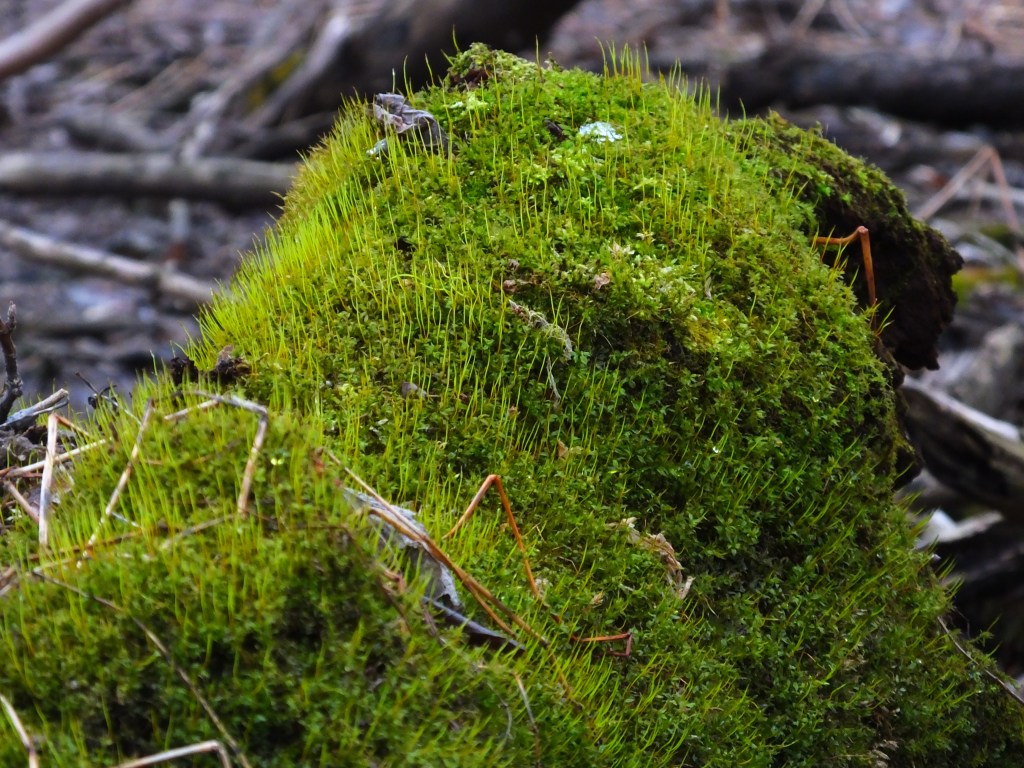
The greening of Estabrook continues, perhaps slowed by the grey skies but undaunted.
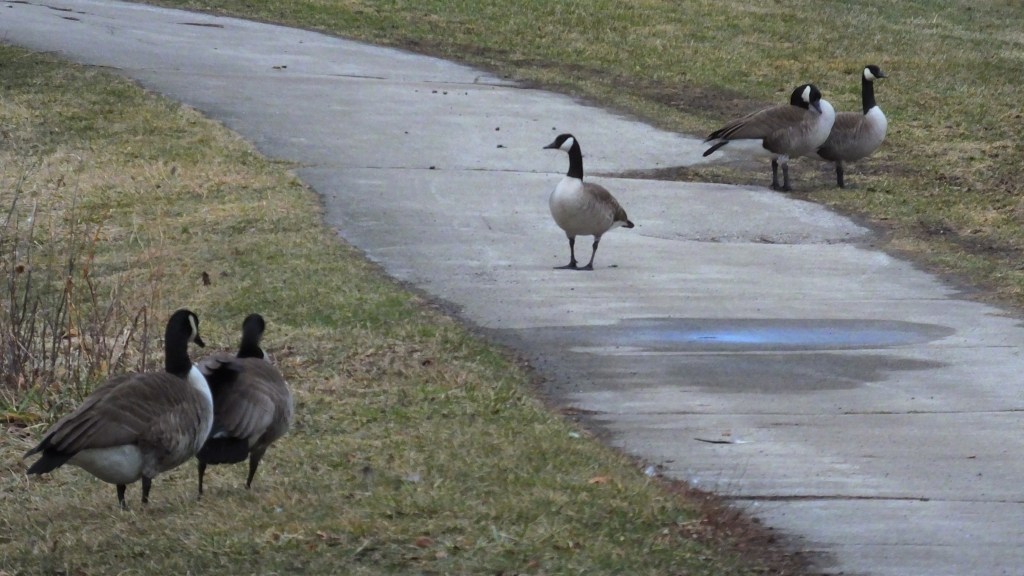
The geese at the pond have picked up a fifth wheel whom nobody seems to like.
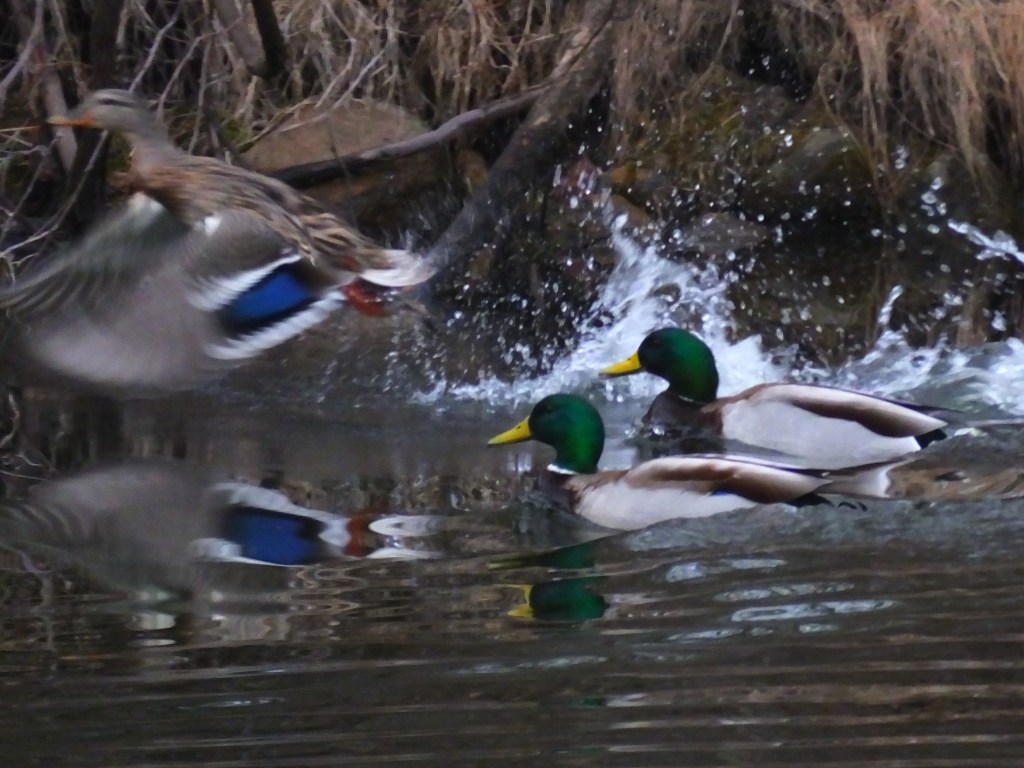
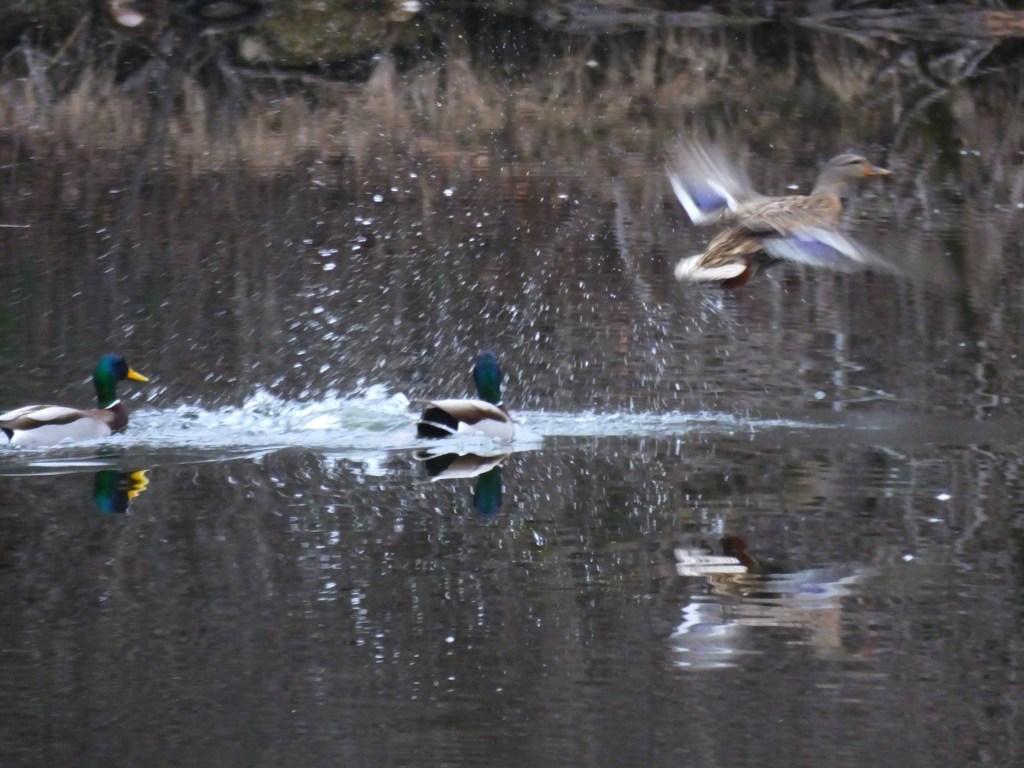
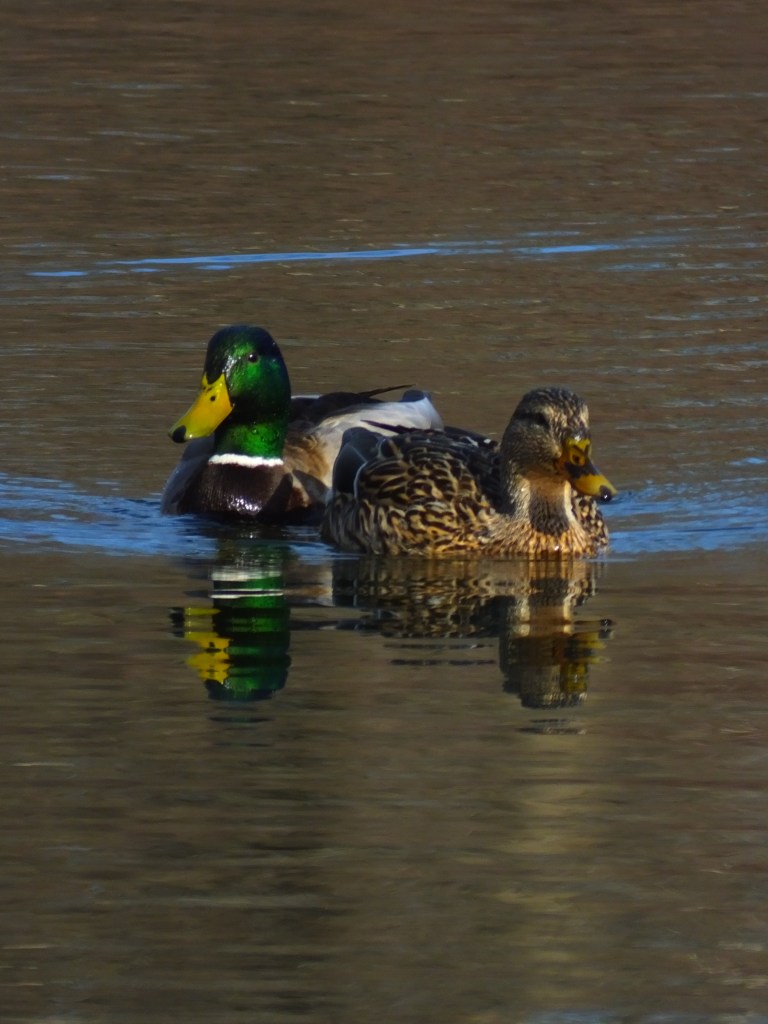
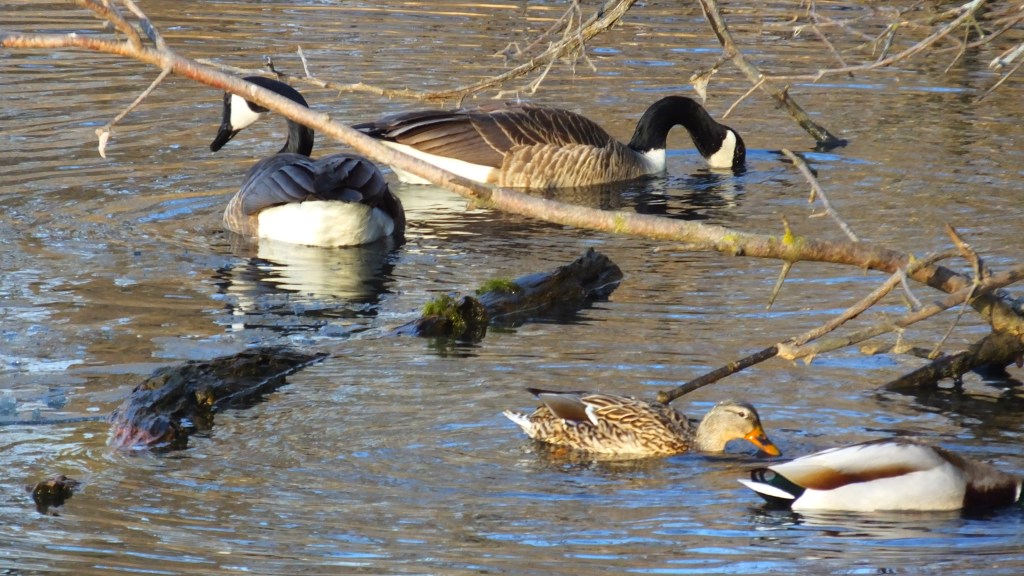
There were three mallard drakes and one hen, and she rebuffed advances more than once.
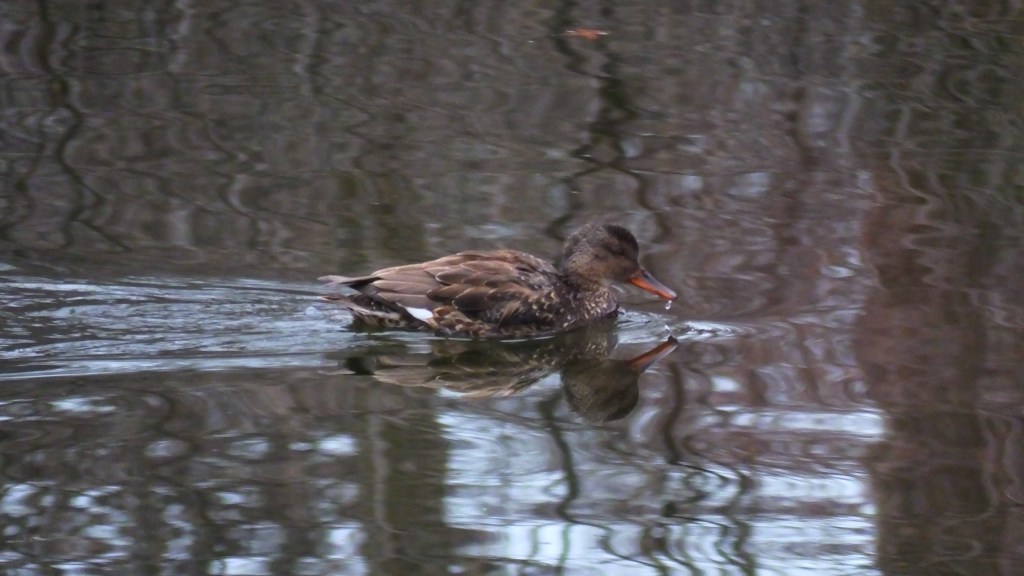
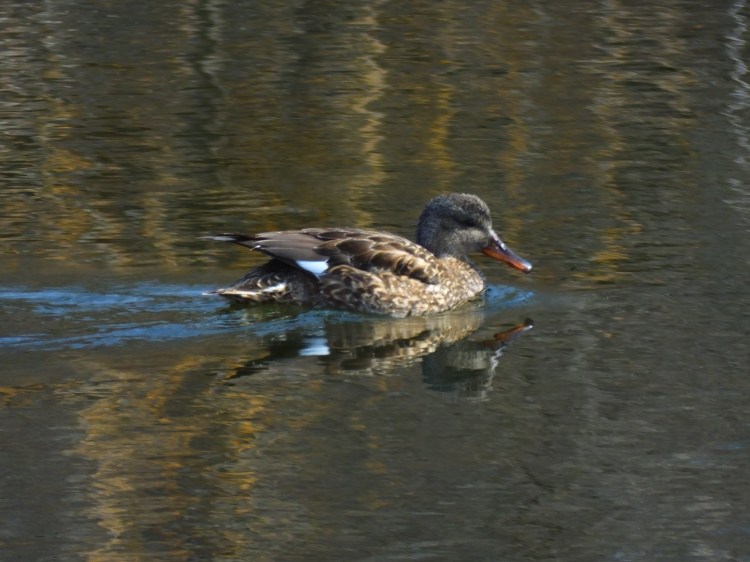
And the solo gadwall hen is still there doing her thing, mostly feeding and doing her best to blend into the background.
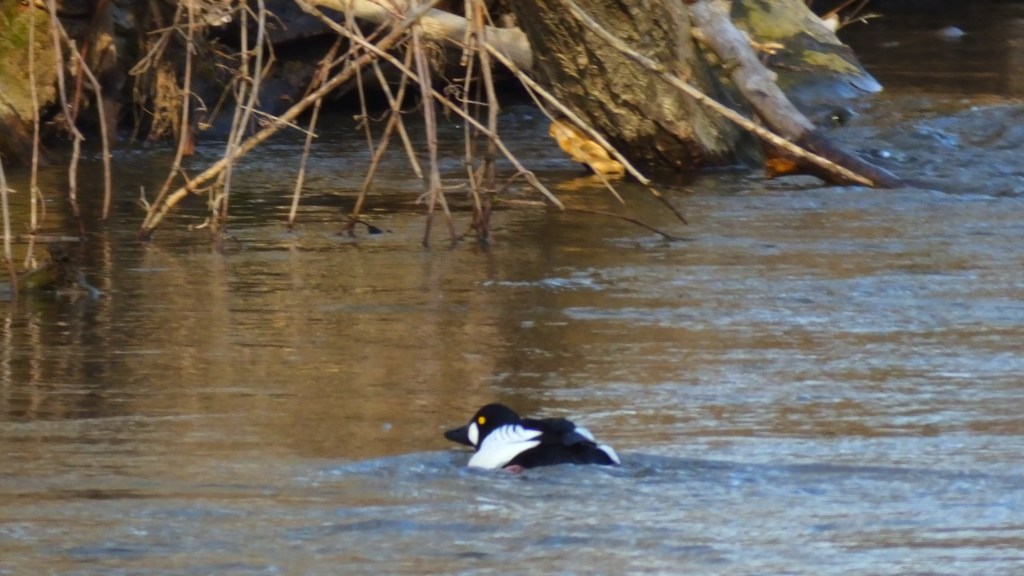
Not much to report from the river. I spotted one male common mergansers, one male goldeneye and a few females amongst all the mallards and geese. That is all.
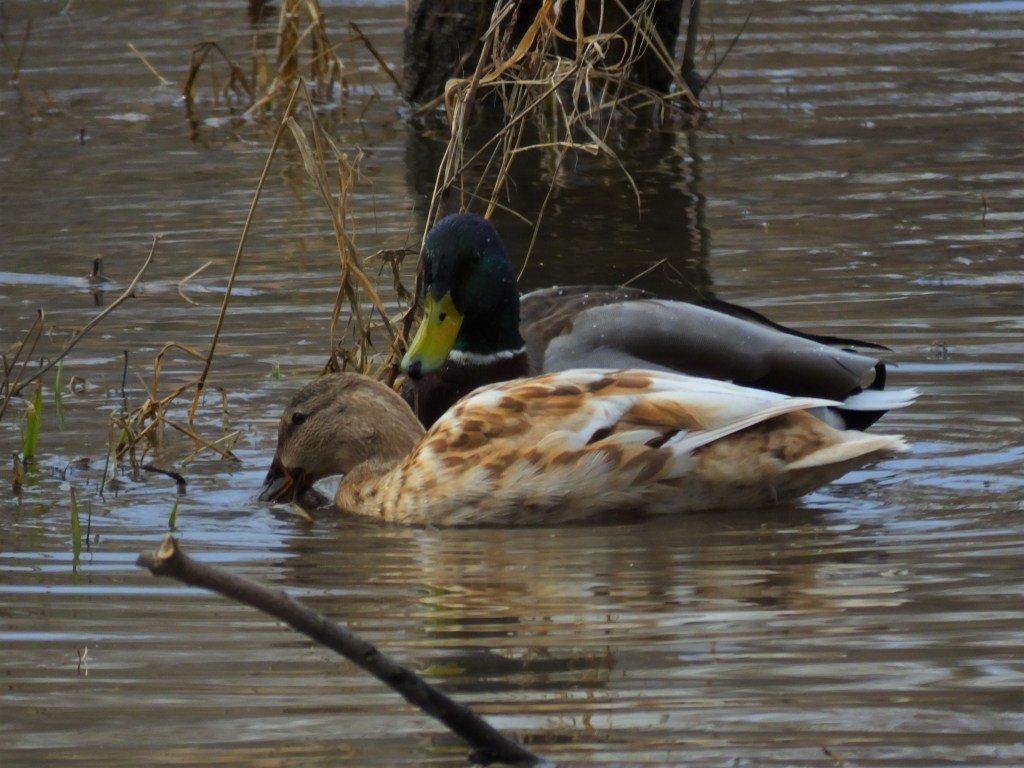
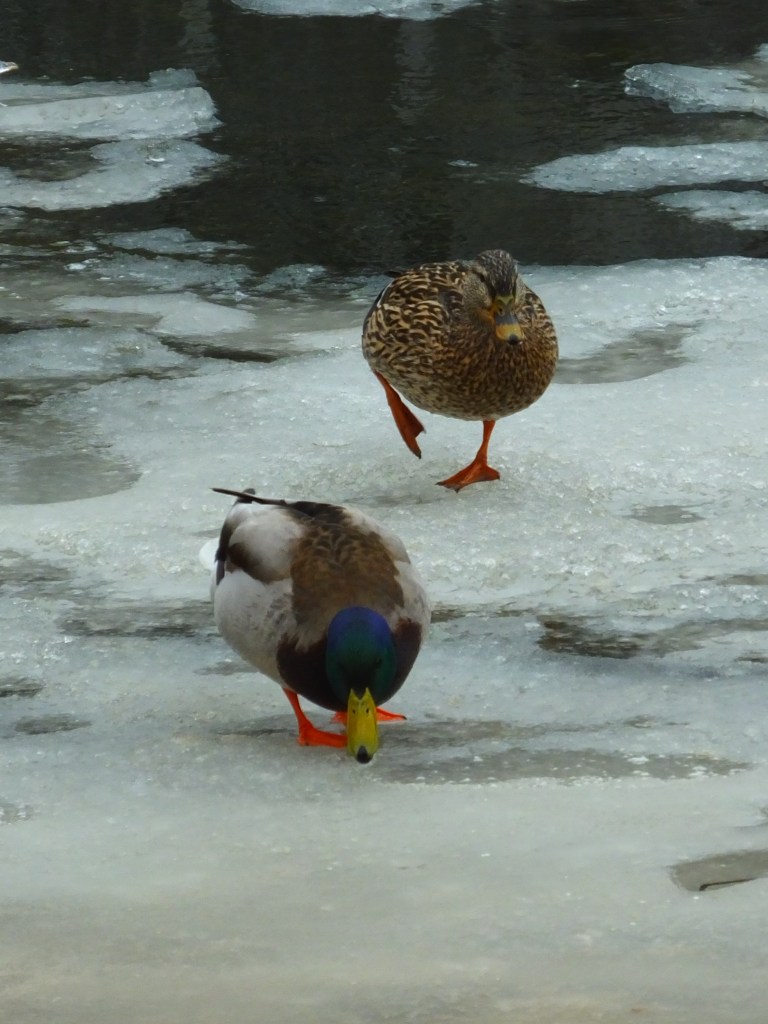
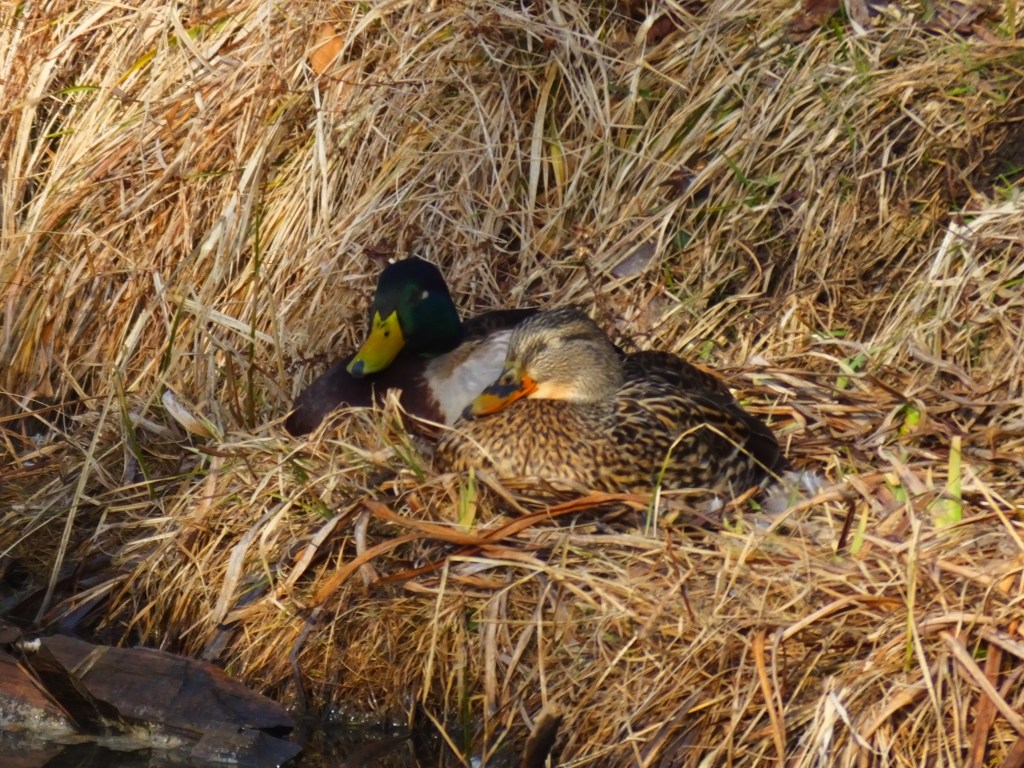
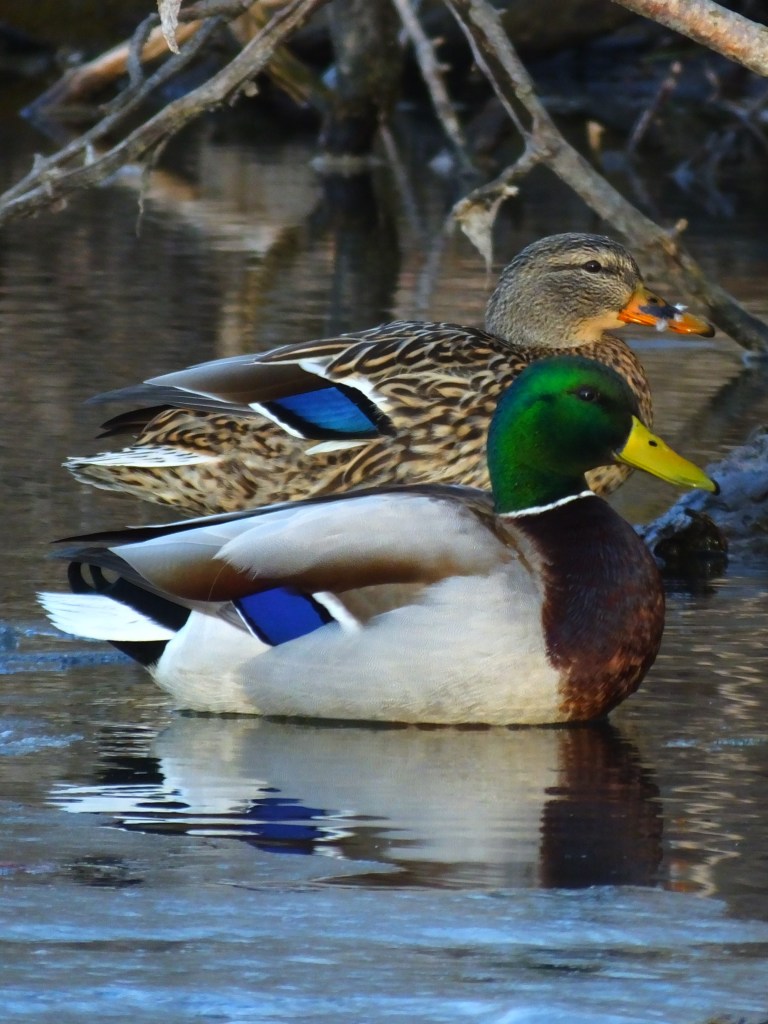
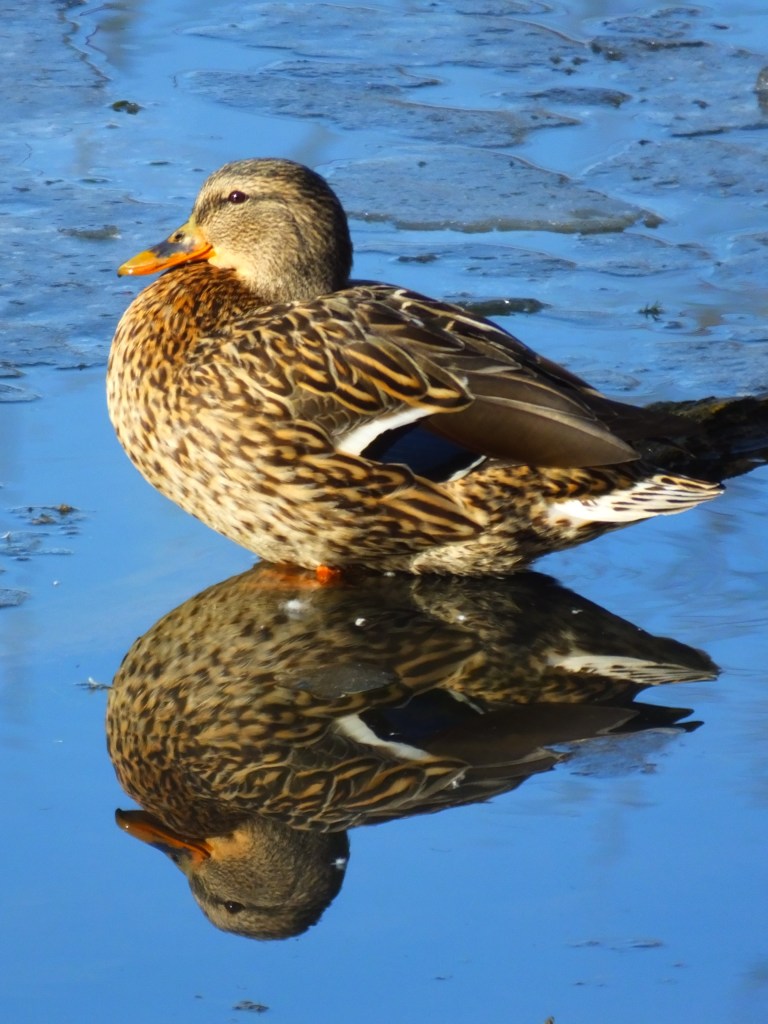
I didn’t get to the park until this afternoon and it was quiet, super quiet. The wind was calm, the sky was dark grey, hardly anyone was around, and many of the critters were taking a nap, like these two mallards beside the pond.
We’ve seen them there before, and I wonder how long they’ll keep it up as visitor traffic increases with nicer weather.
Not everyone was napping, though. There was a second swan couple on the pond, which I was very surprised to see, and even after a skirmish, neither pair seemed willing to budge. I can’t wait to see how this turns out.
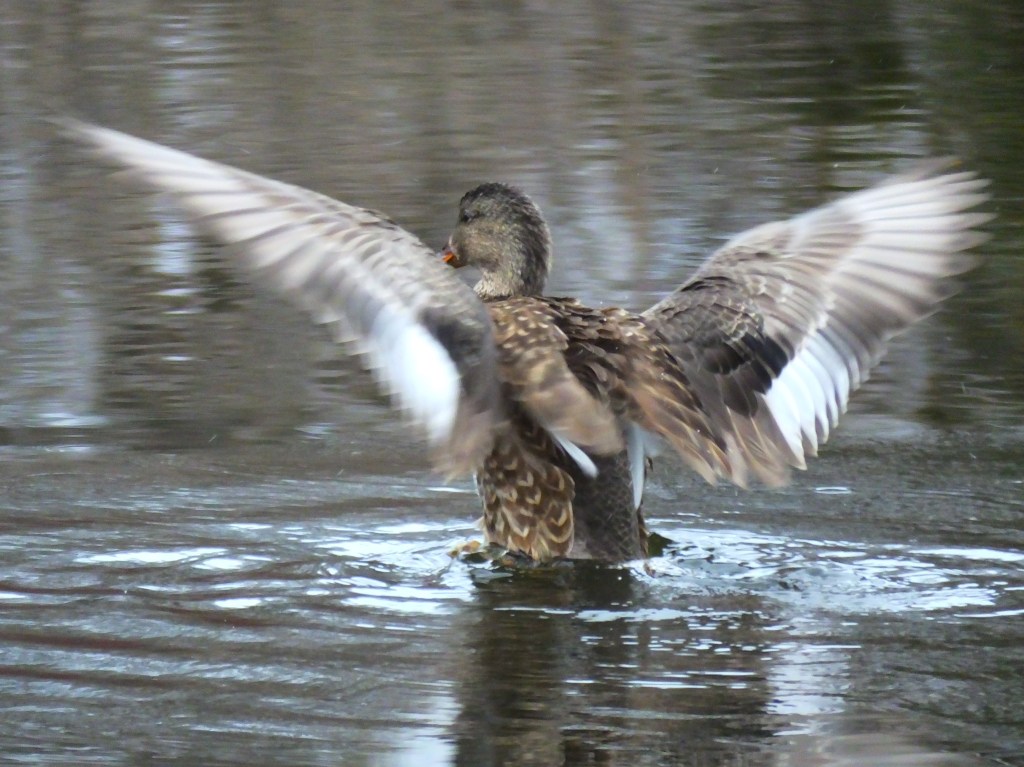
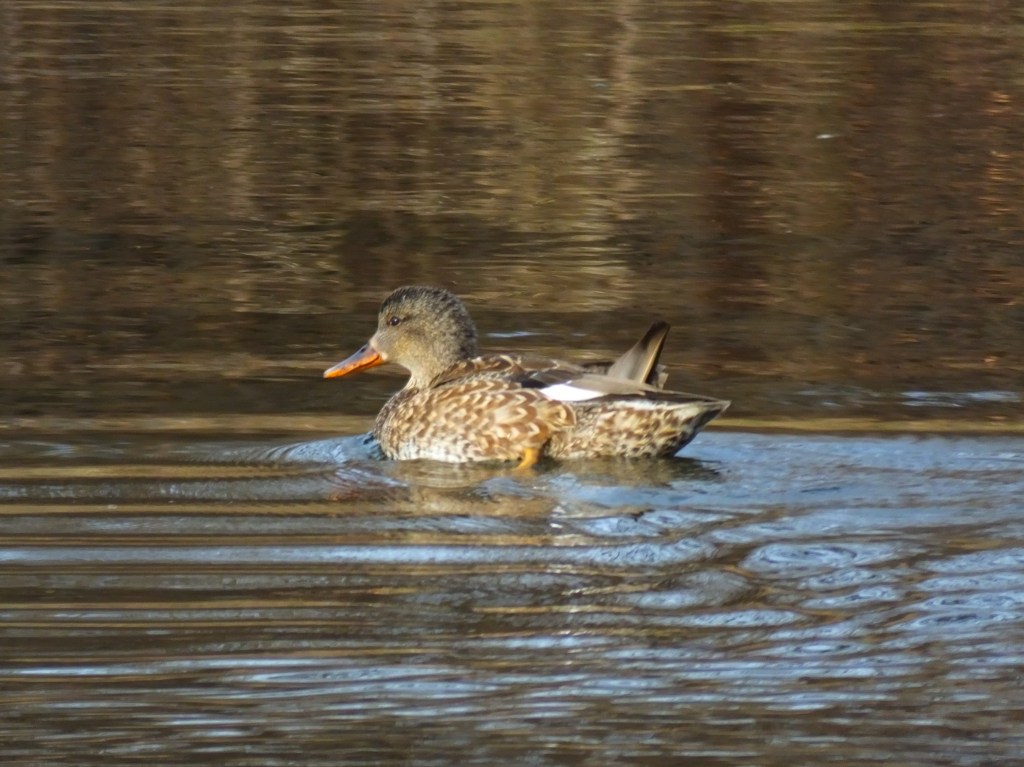
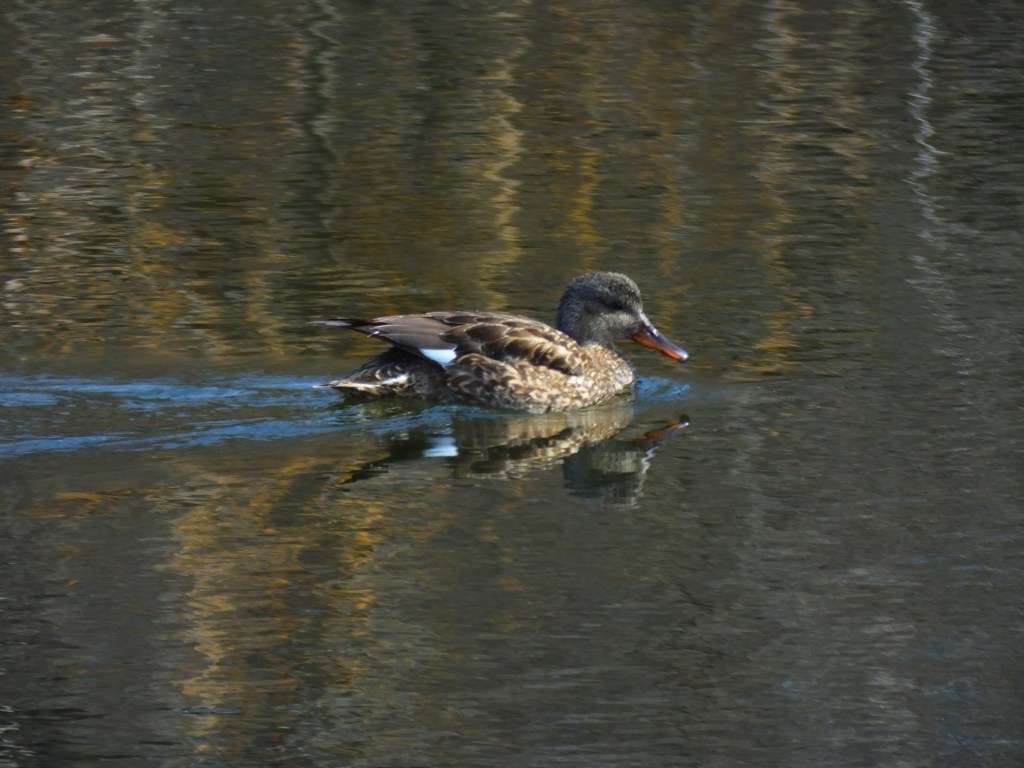
Our gadwall hen was also still there, and she even seems to be getting more comfortable. Here she is showing off her white speculum feathers.
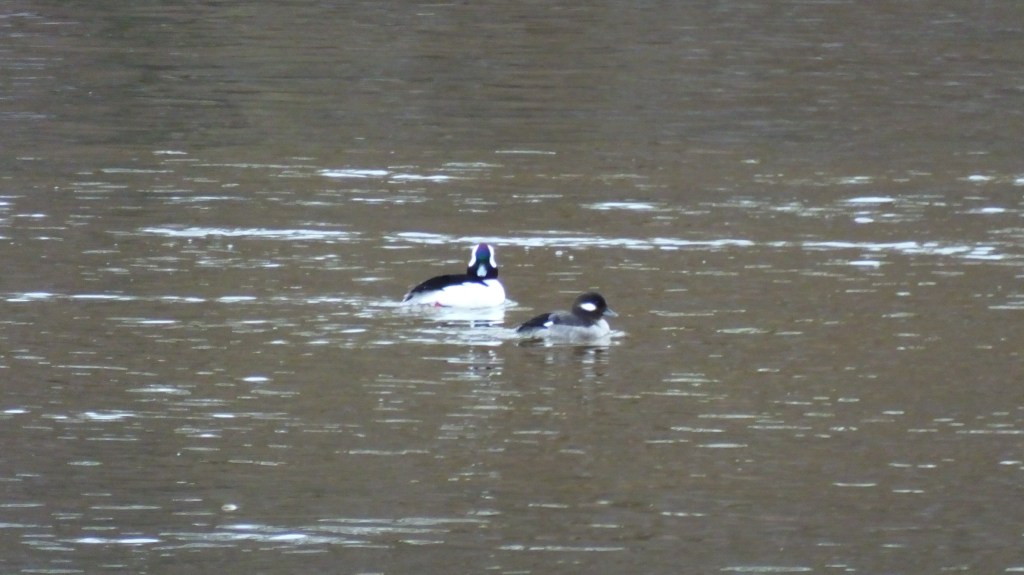
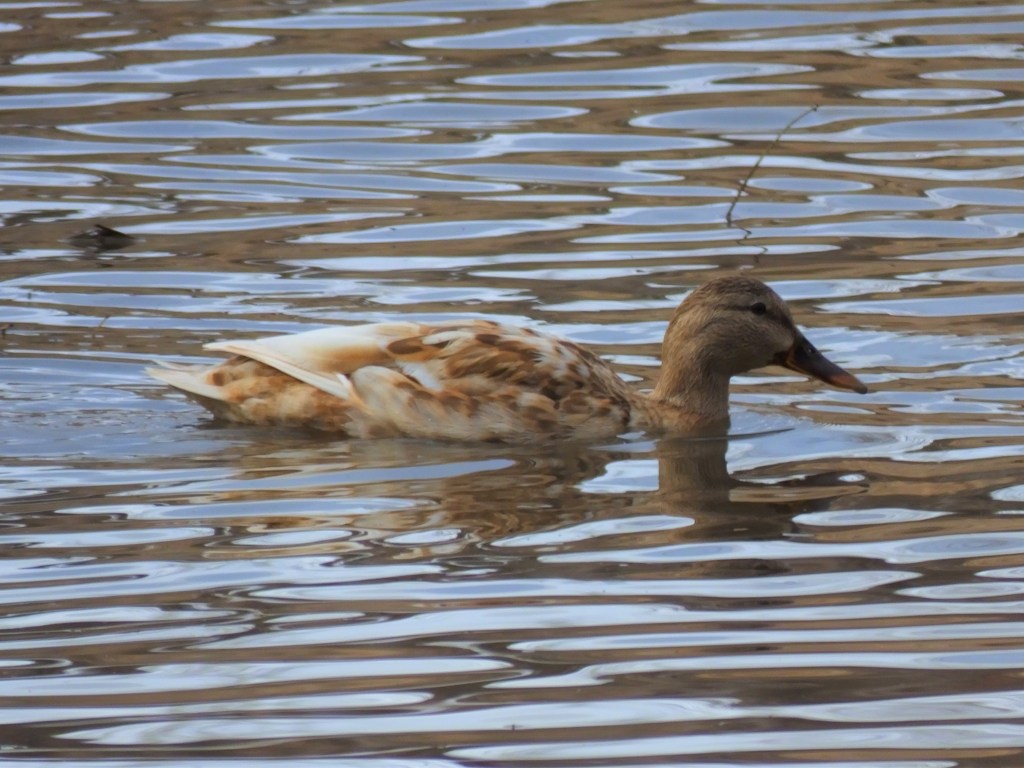
The situation was similar on the river. There are a lot of Canada geese jockeying for prime nesting sites and a bunch of mallards feeding along the shore. I didn’t see our new yellow mallard hen again today, and there were no mergansers, goldeneyes, or scaups, but I was pleasantly surprised to see the bufflehead couple again.
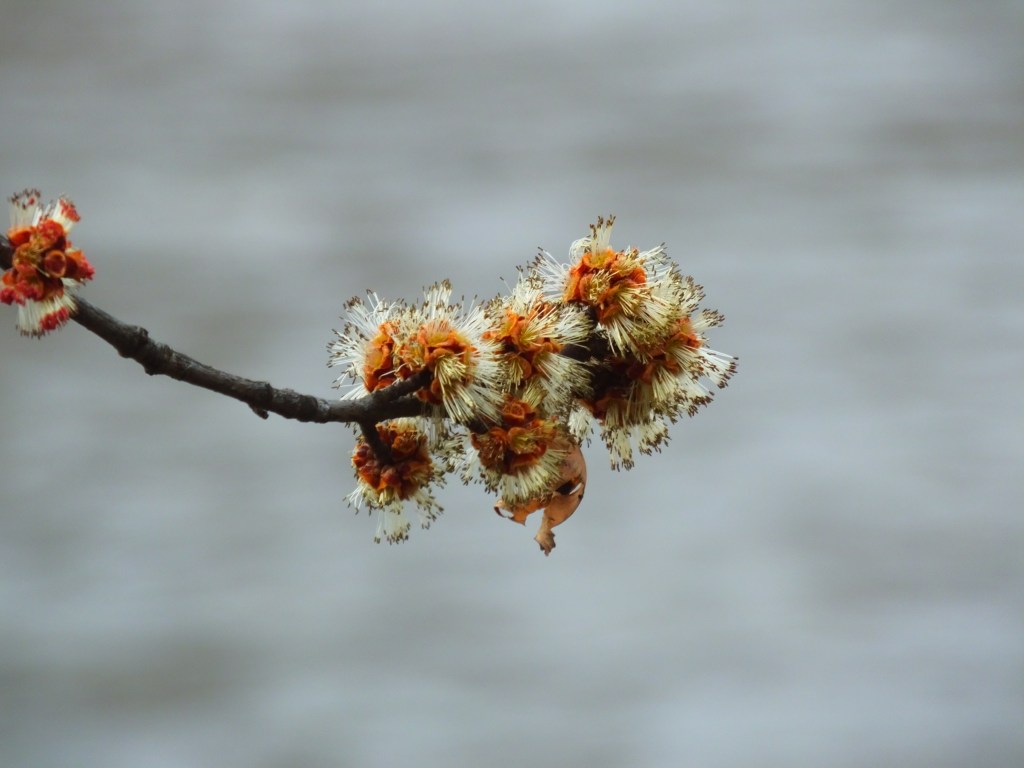
The wind was brisk out of the ESE this morning, so right off of Lake Michigan, and it felt like it. The cold snap was not slowing down this maple tree, however.
The 5 recent regulars were on the pond, the goose couple, the mallard couple, and the solo gadwall hen, but there was nobody new, so I let them be and headed over to the river, which is starting to recede a little bit, and so is not quite as brown and furious as it was last week.
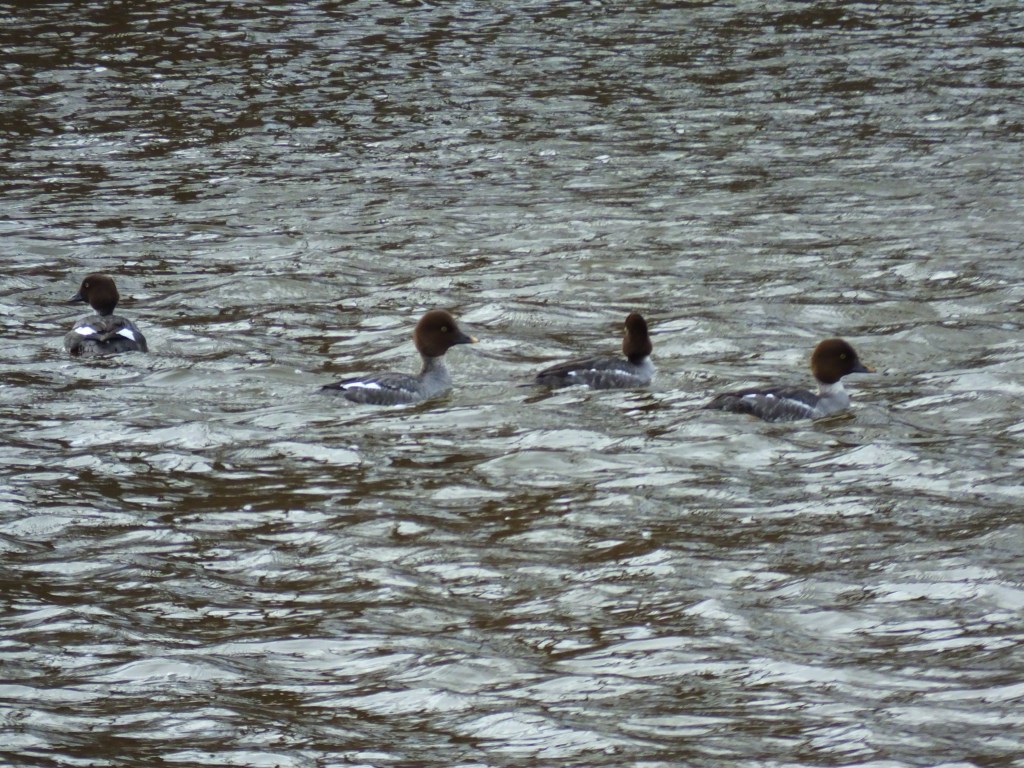
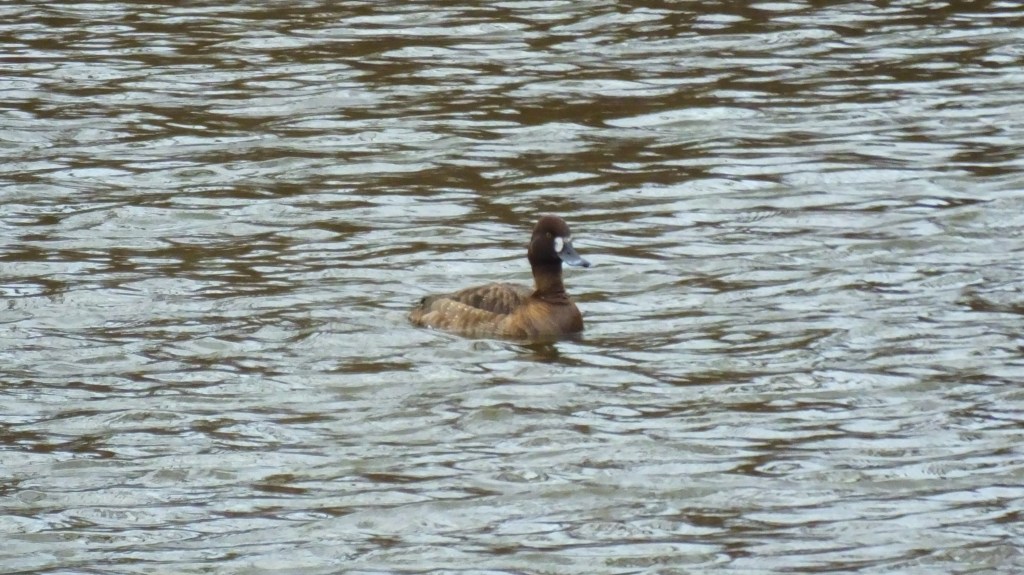
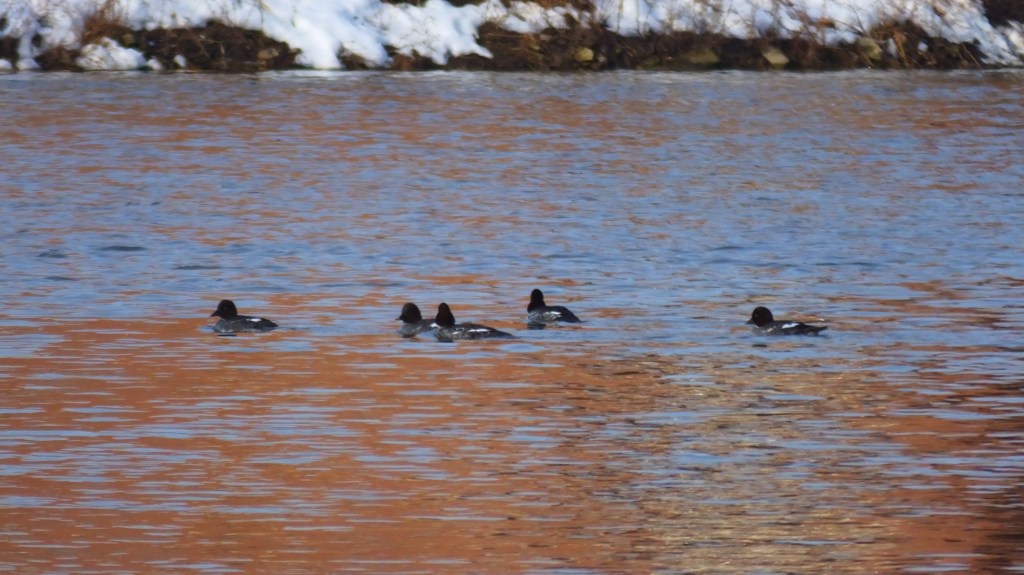
Most of the ducks we’ve been seeing there in recent weeks appear to have moved on, and those left are mostly Canada geese and mallards now. I did spot a few outliers, and got all excited, but it turns out they are just a quartet of goldeneye hens and one greater scaup hen. None were diving, so that threw me off.
First things first, I gotta apologize for misidentifying yesterdays newcomer to the pond.
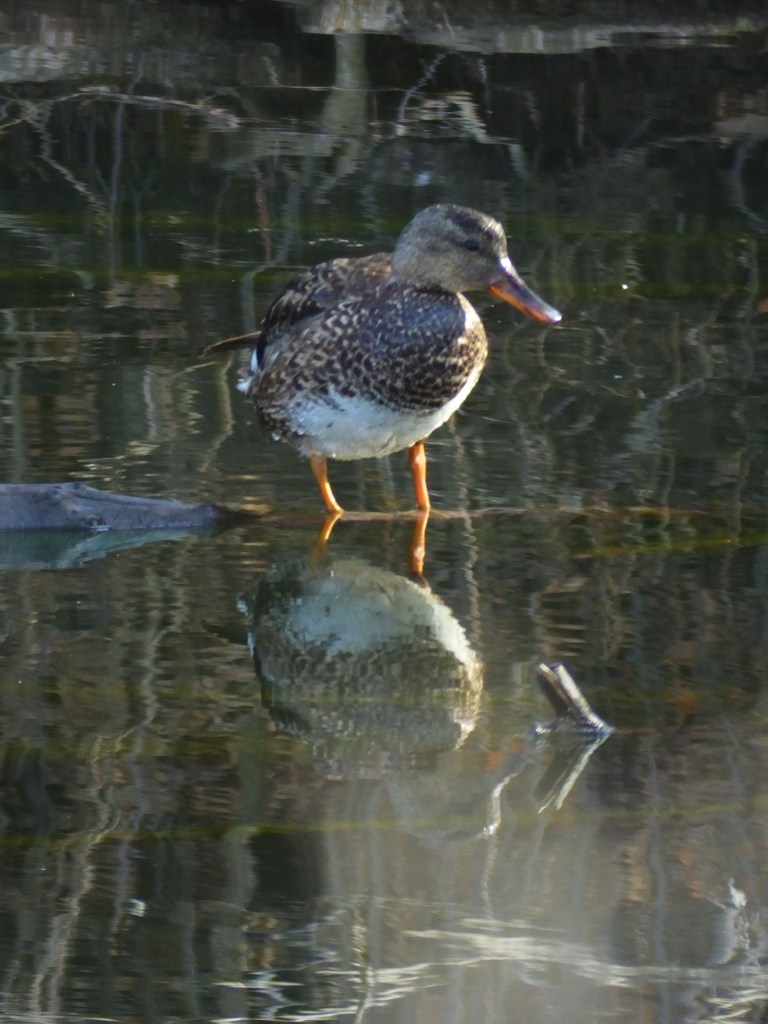
After I gave it what I thought was my best shot and pressed the “publish” button, the decision still gnawed at me, and I dug even deeper, which led me to a nice page published by “The Wildlife Trusts” on “How to Identify Dabbling Ducks“. That’s where I found a match for the missing detail of “the small white speculum on the wing”, which makes her a female gadwall (Mareca strepera), not a female American black duck, which I now read has a purple speculum. Live and learn, we hope, right?
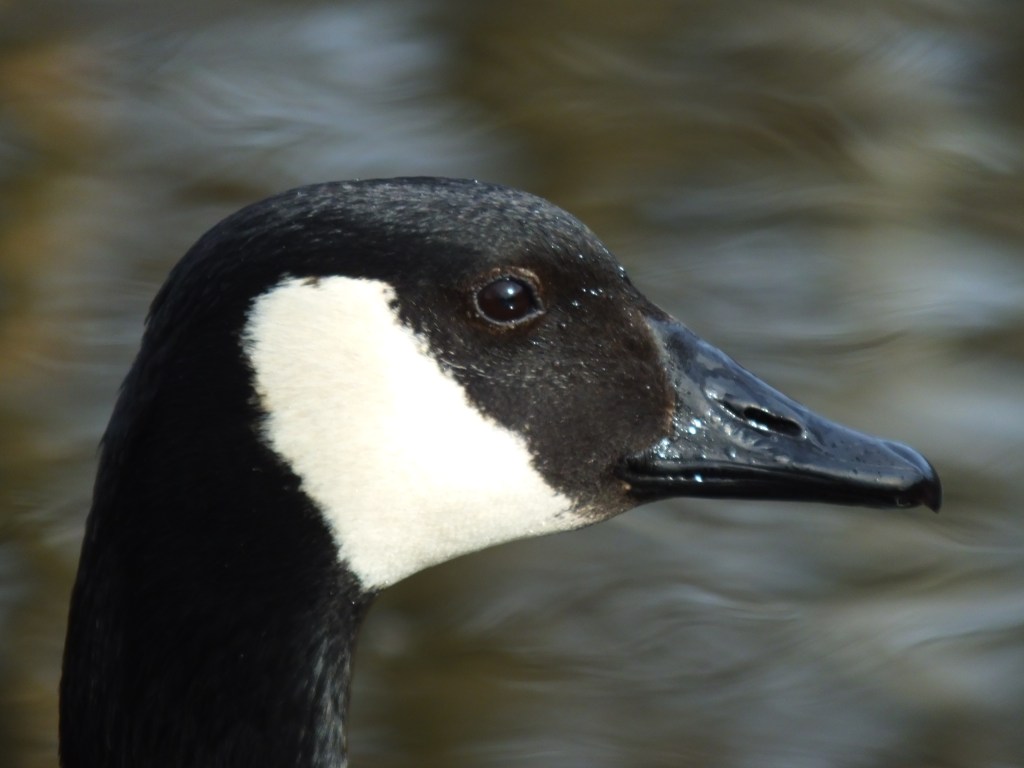
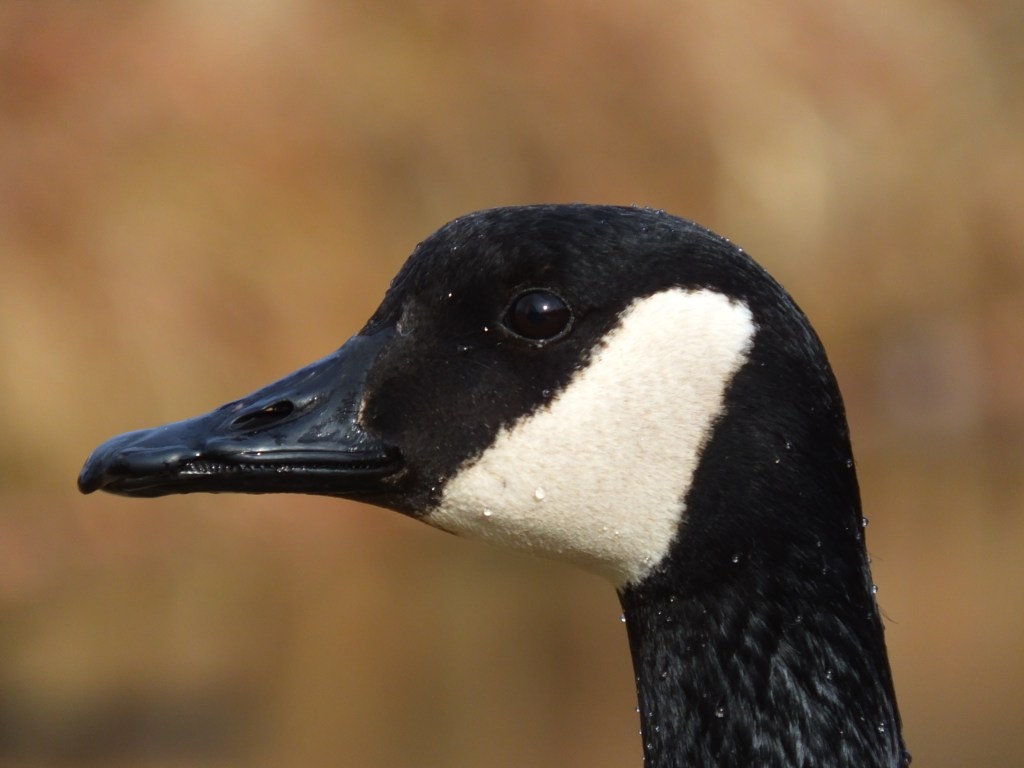
While I was trying so hard to get a better picture of our elusive little guest, the Canada geese came over, perhaps to see if I had anything to eat.
I read that we should not feed the waterfowl because it is bad for them, but I see signs from time-to-time of folks who just can help themselves, and I think the geese have been conditioned to expect a treat when someone approaches the shore with a bag in their hand.
There was nothing new on the river that I could see. I spotted the grebe again, but my picture was even worse than last time, so I’ll spare you.
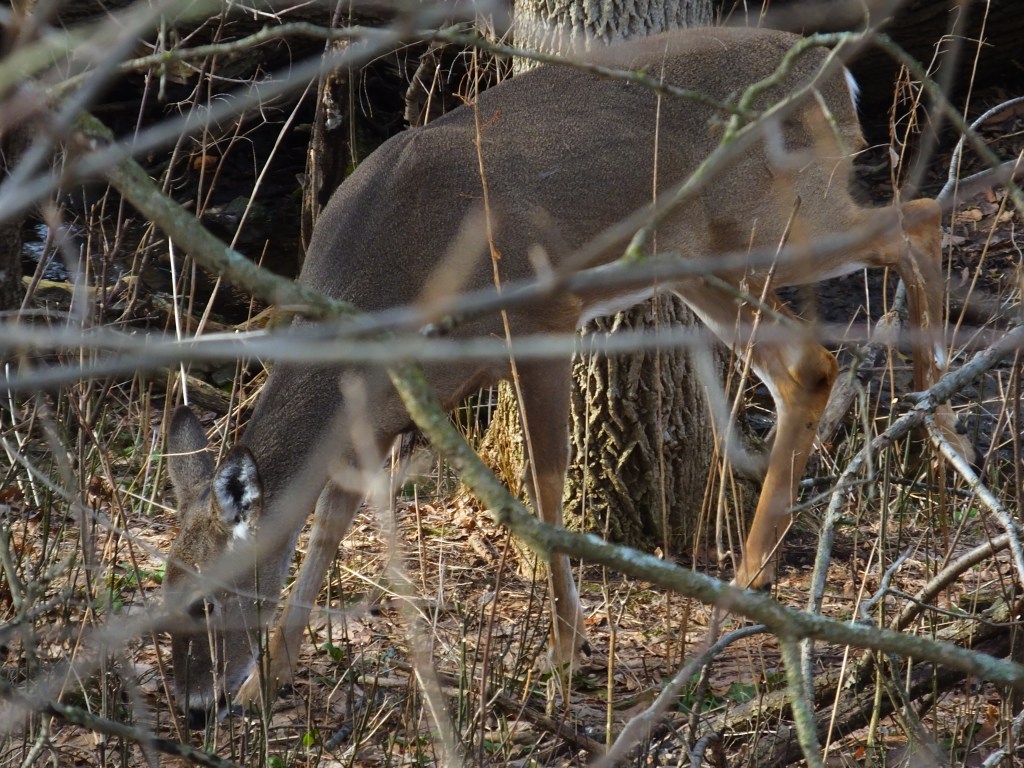
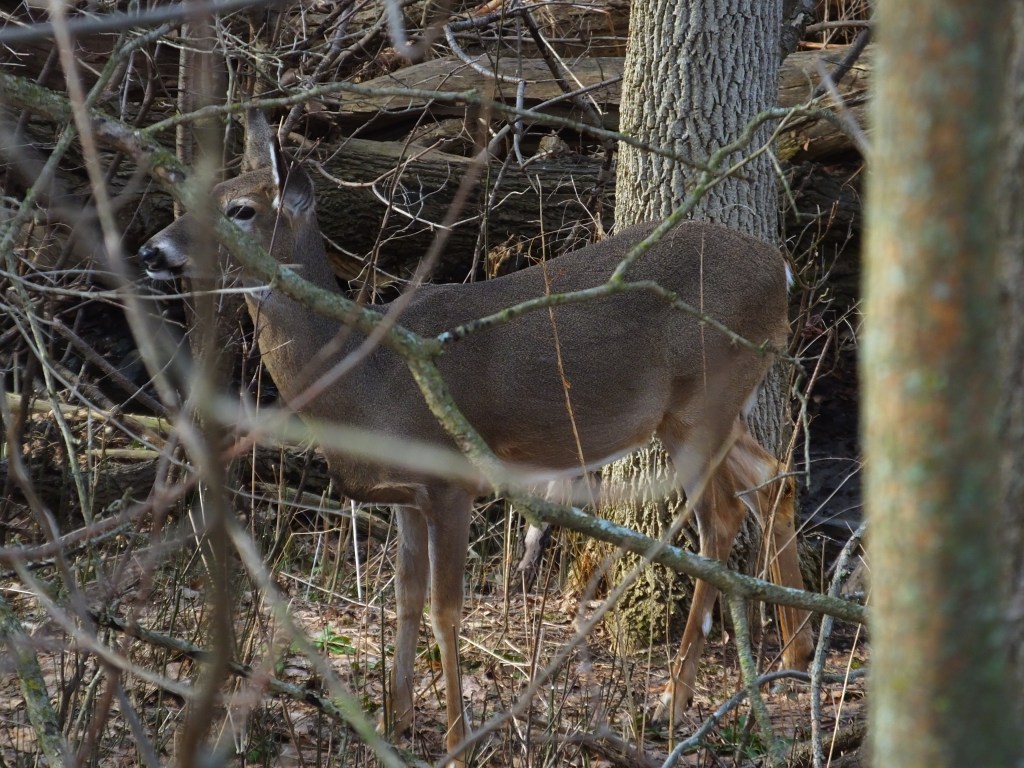
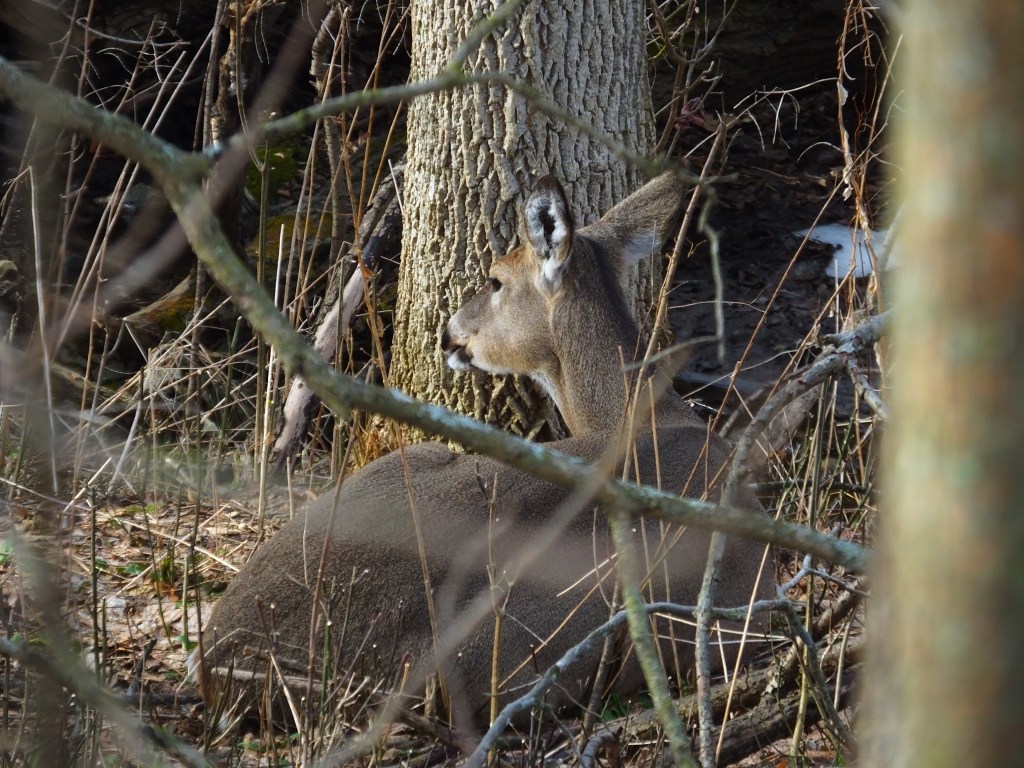
On my way back up the bluff, I spotted our deer quartet, whom we haven’t seen in weeks, in the very spot where I first stumbled upon park deer almost a year ago. They were pretty deep in the brush, so I only have presentable images of one of them, who clearly found me so threatening, that she had to lie down.
The fun continues on this fine spring day in Estabrook with new birds on the pond, new birds in the river, and new flowers up out of the ground.
First, the new bird on the pond looks like a female mallard or a female American black duck. You may recall we saw a male on the river back in January. Well, this morning there was duck who looked like a female mallard, but she was much shyer, and I had a heck of a time getting a decent picture of her even on our little pond.
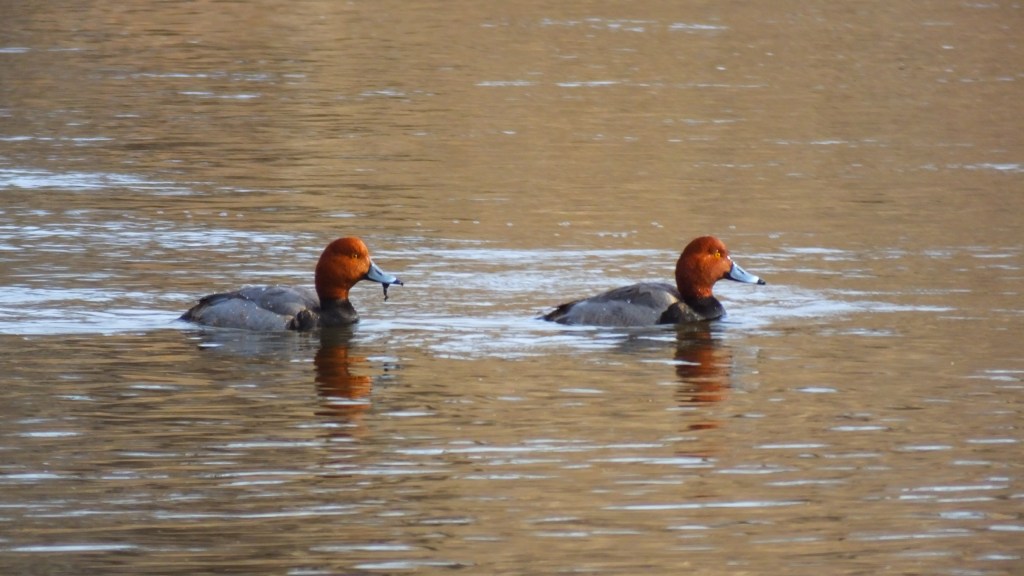
I spotted our redheads also on the river yesterday afternoon foraging off the mudflats.
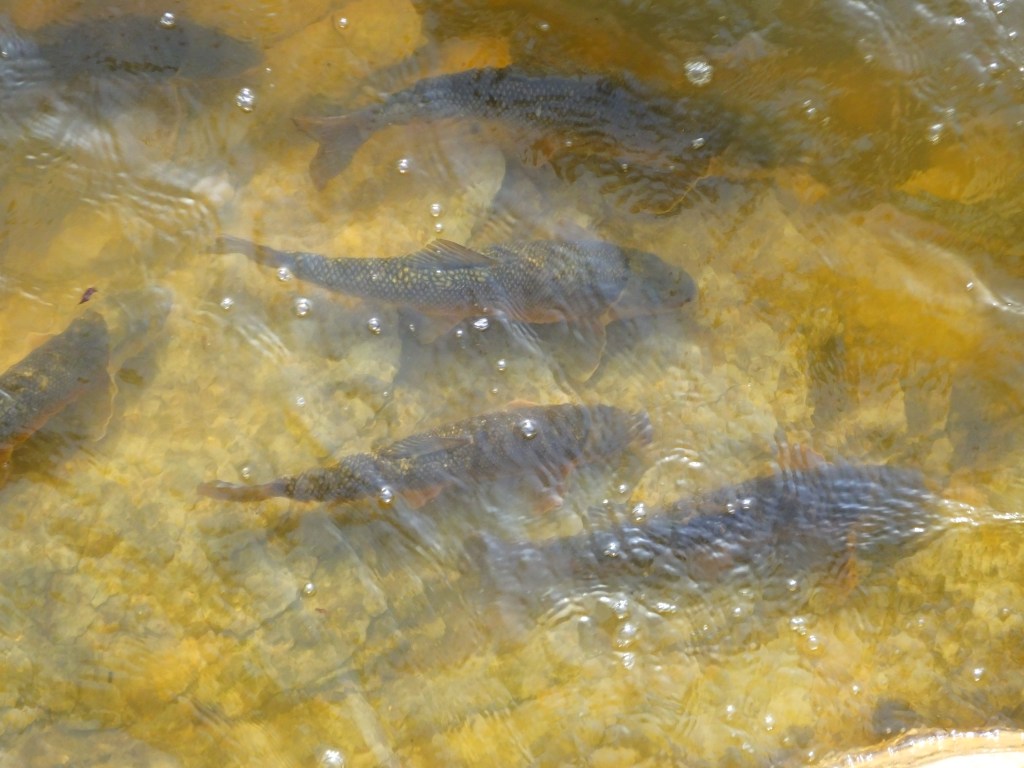
Lastly, on the river in the warm sun yesterday afternoon, these large fish, 18-24 inches long, almost seemed to be sunning themselves in the shallow water over the rocks where fishermen usually stand just below the falls.
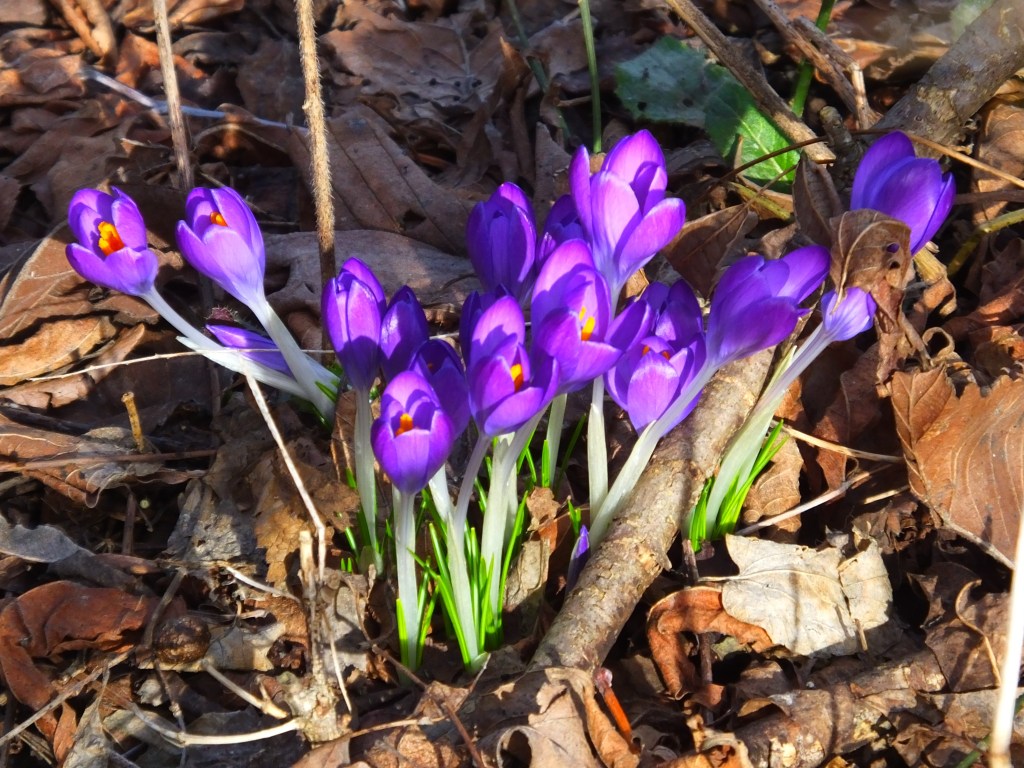
Finally, here’s another batch of flowers, crocuses, already in bloom along the Oak Leaf Trail.
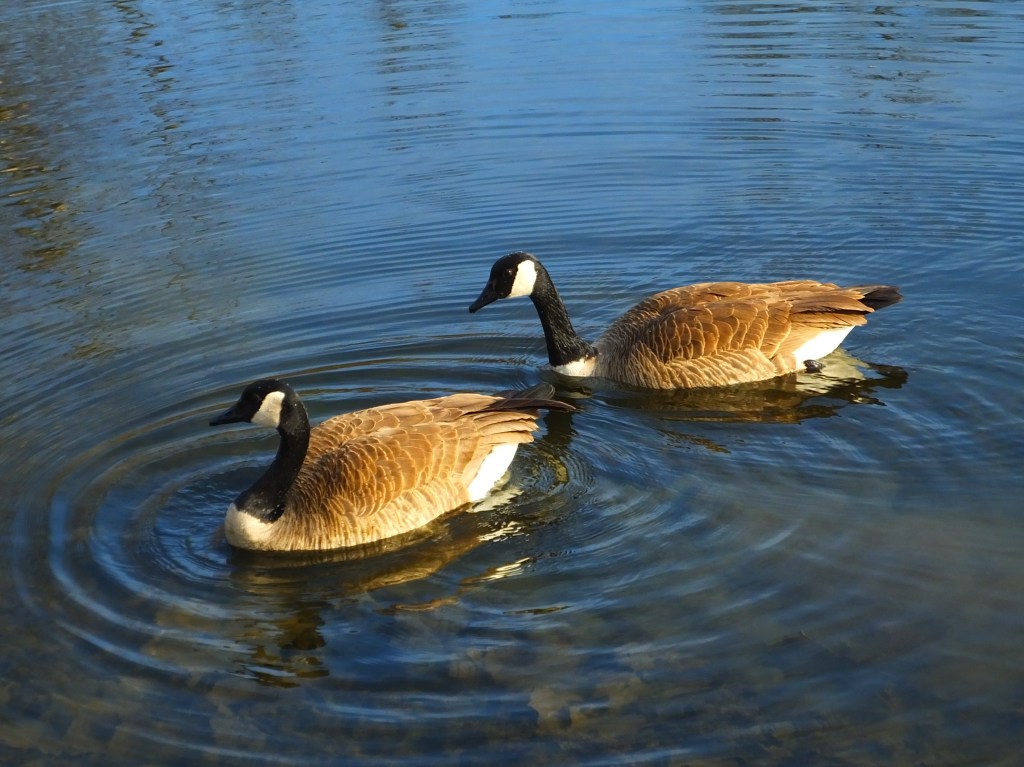
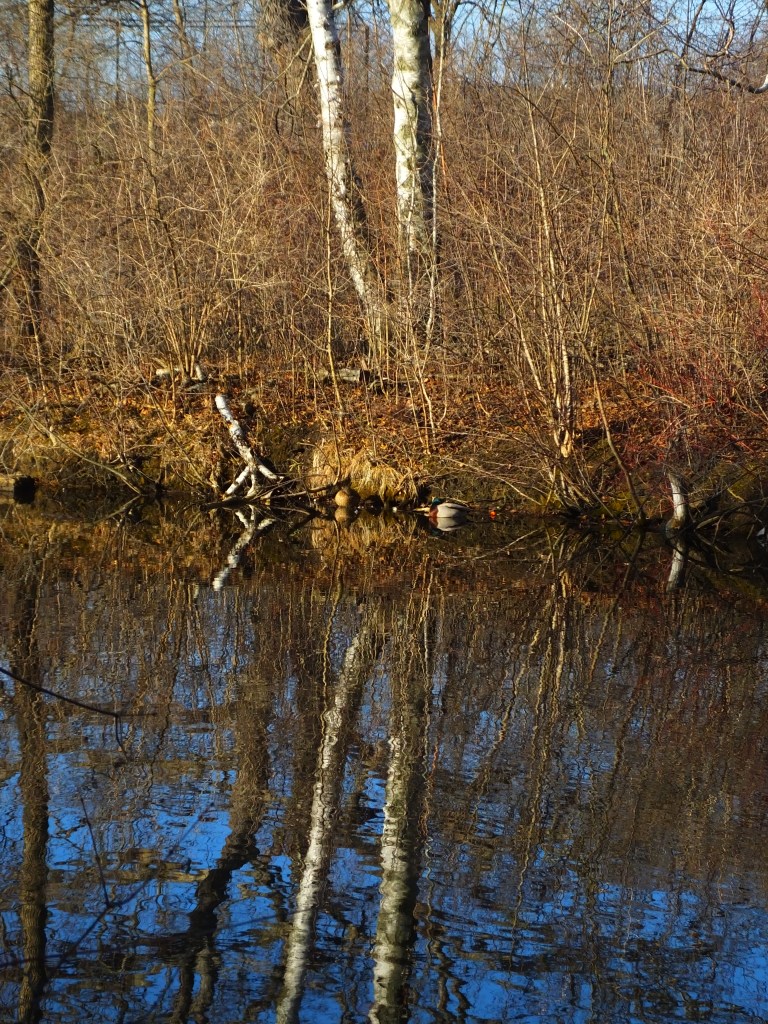
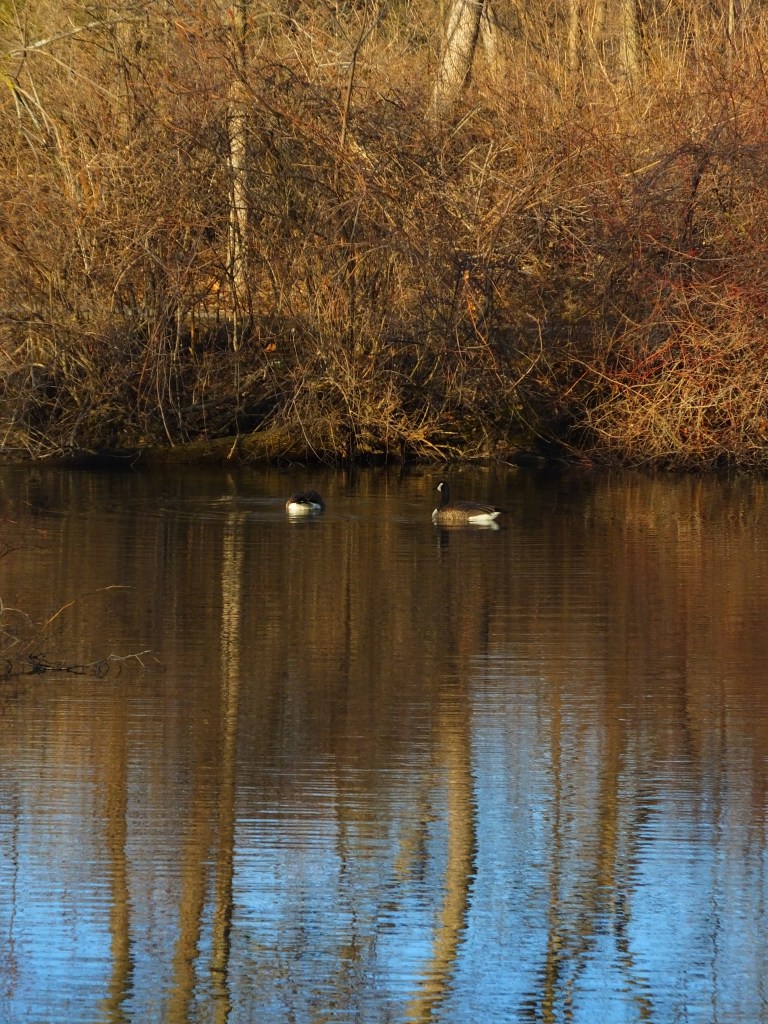
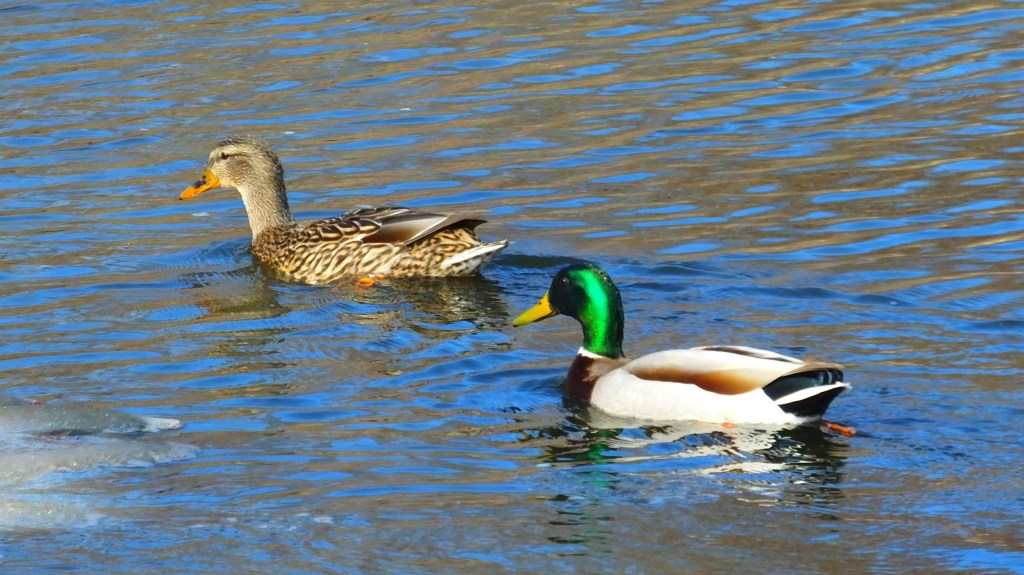
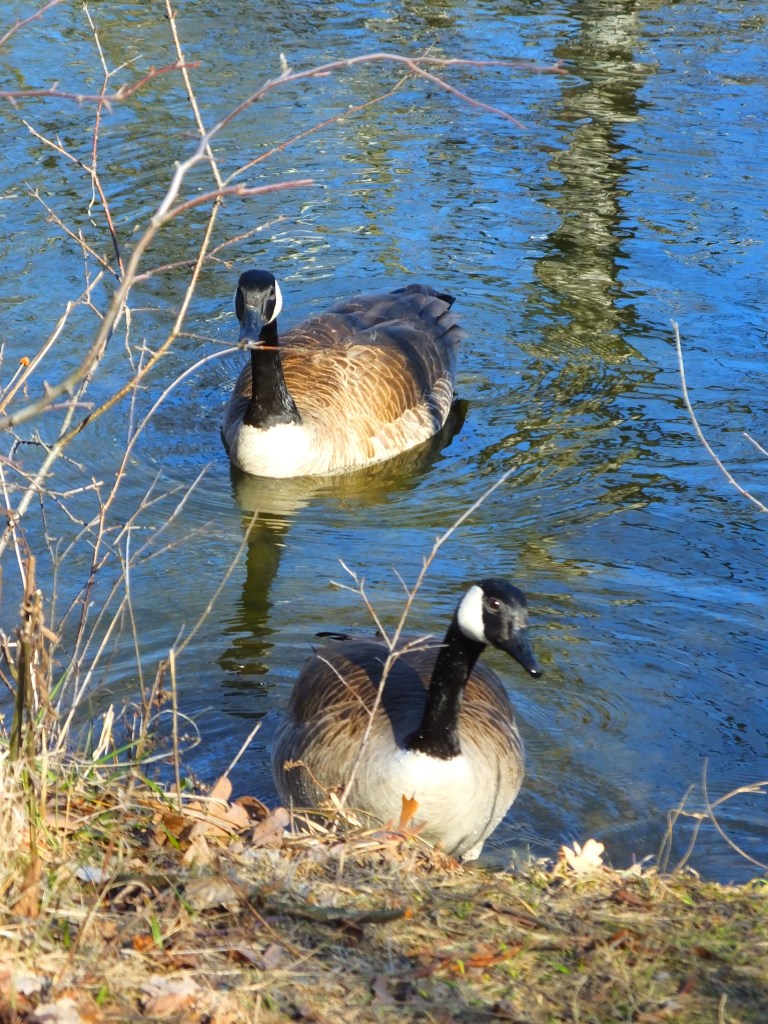
It was a very nice morning in the park, with calendar appropriate temperatures for a change. At the pond, the ice is almost all gone, the pair of mallards were napping in the morning sun, and the pair of Canada geese were feeding.
Two mallards napping …… and two geese a-feeding.
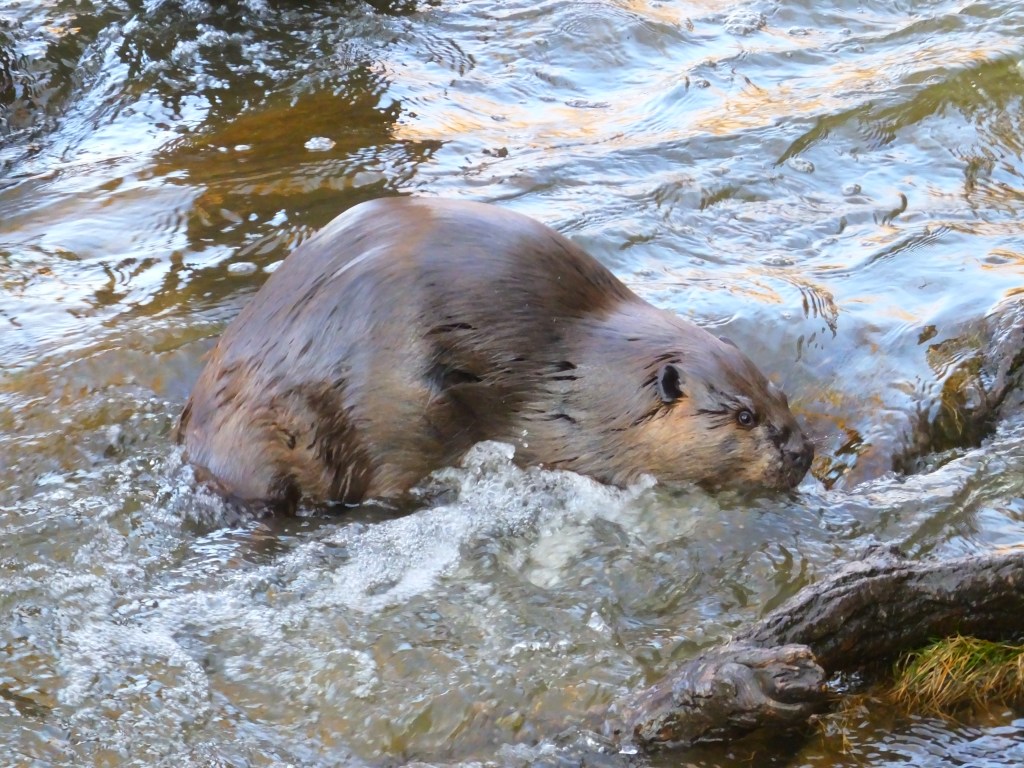
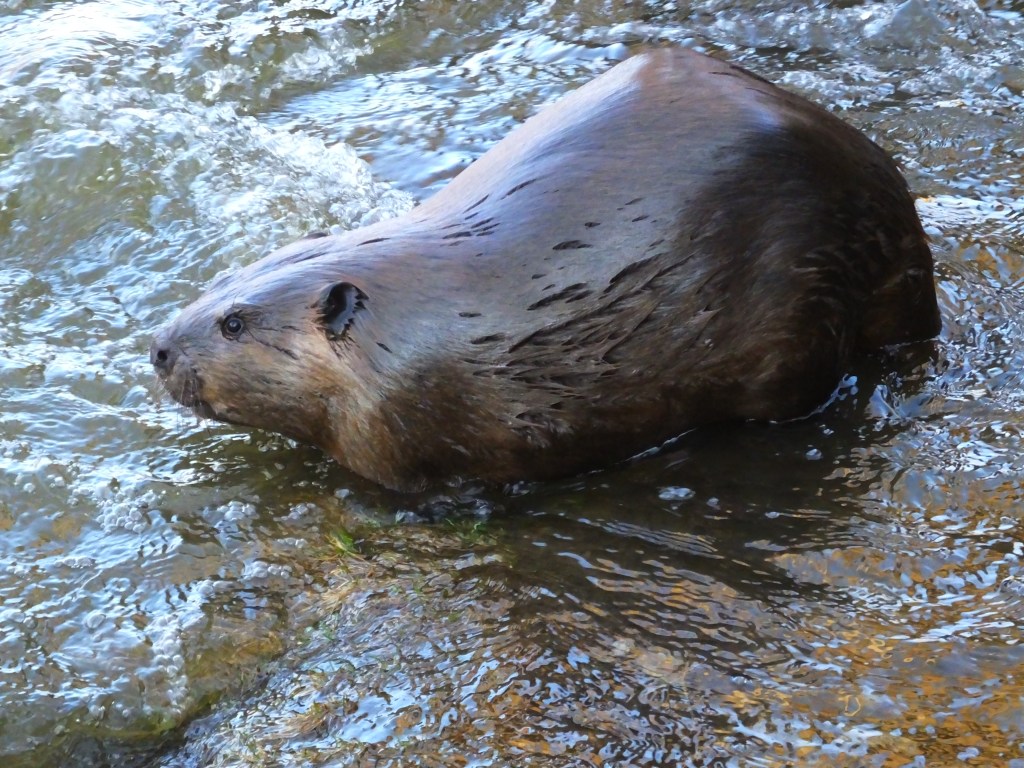
The river is still high, but the parts of the trail that are not actually submerged are really drying out, so I took a stroll, and you wouldn’t believe who I saw. That’s right, one of our beaver was trying to get over the falls, and it appears to have thought better of the idea after two attempts. The river really is moving these days, and it popped out of the water not 5 feet in front of me, twice, so I had a chance to pick up my jaw and get out my camera. I guess it really is true that they don’t have the greatest eyesight.
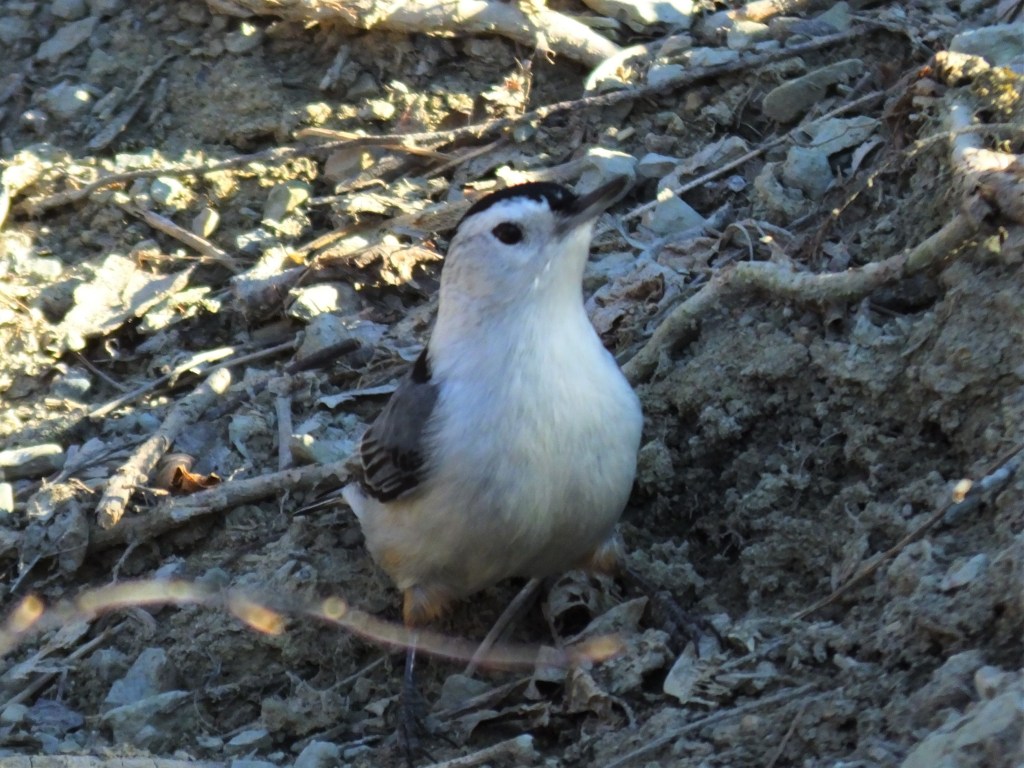
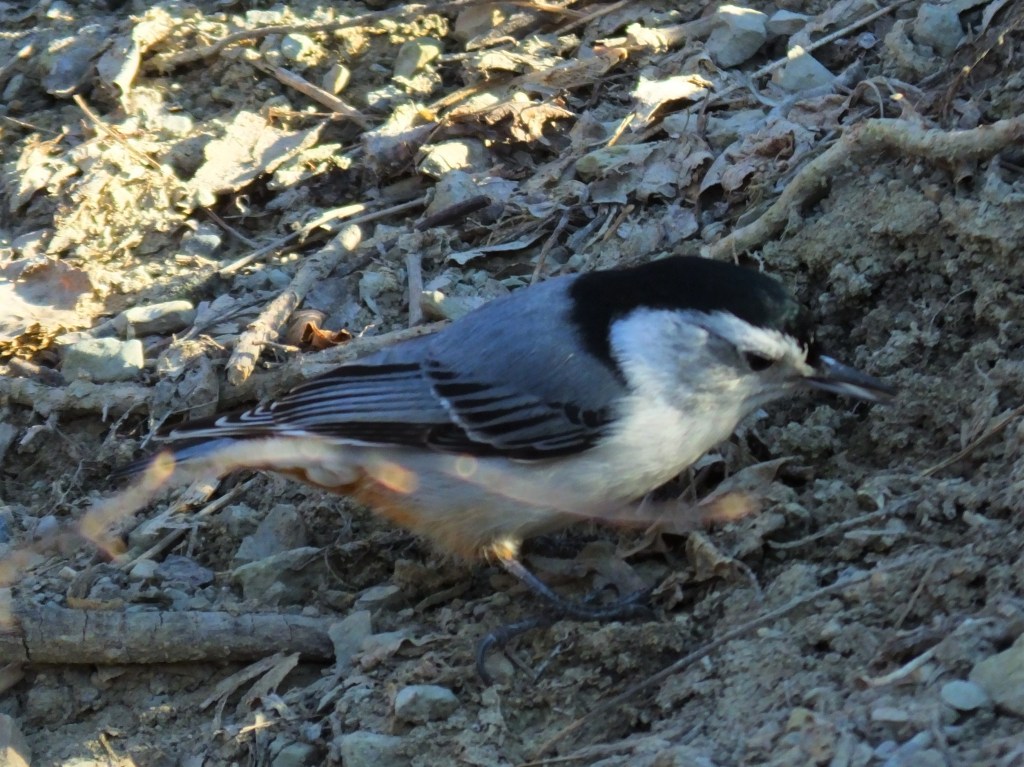
After all that excitement, I opted to see what else the trail had to offer, and just a bit south of there, I spotted this little nuthatch uncharacteristically foraging on the ground.
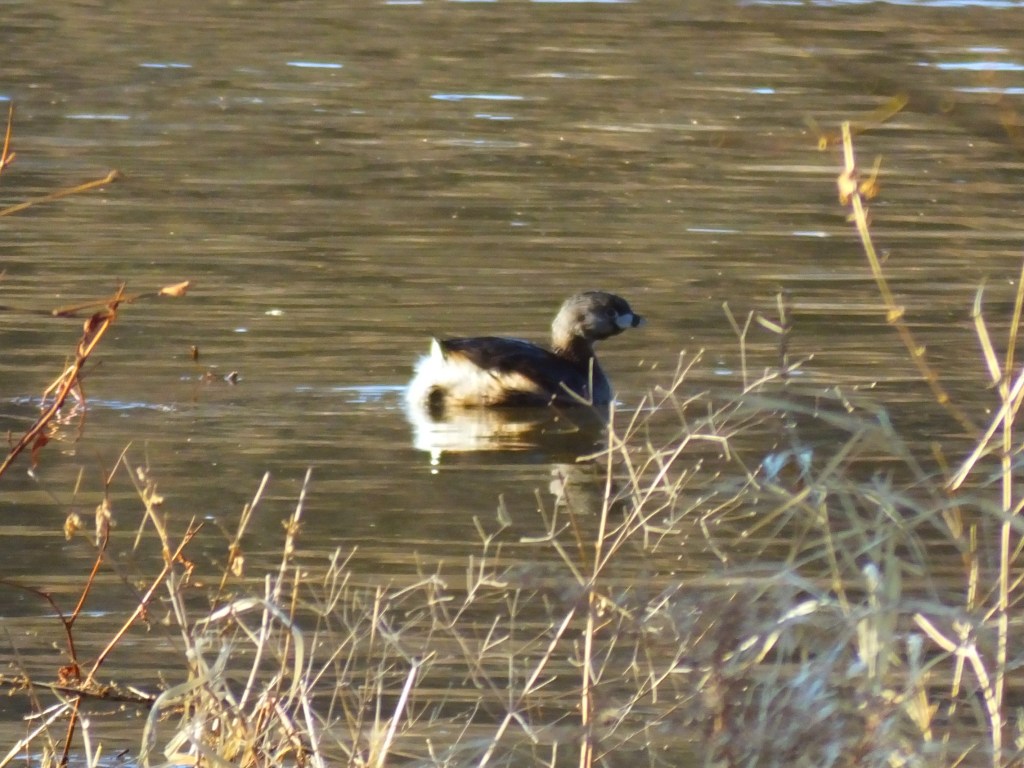
Soon after that, I watched in awe as the first king fisher I’ve seen this season sped by about a foot off the water, and then I spotted what I thought might be our first grebe of the season by the mudflats, now mostly submerged. As I made my way around the east side, in hopes of a better view, I spooked the first great blue heron I’ve seen this season out of a tree. Holy Smokes! Birds are a-poppin’! Well, at least I got a picture of one of them.
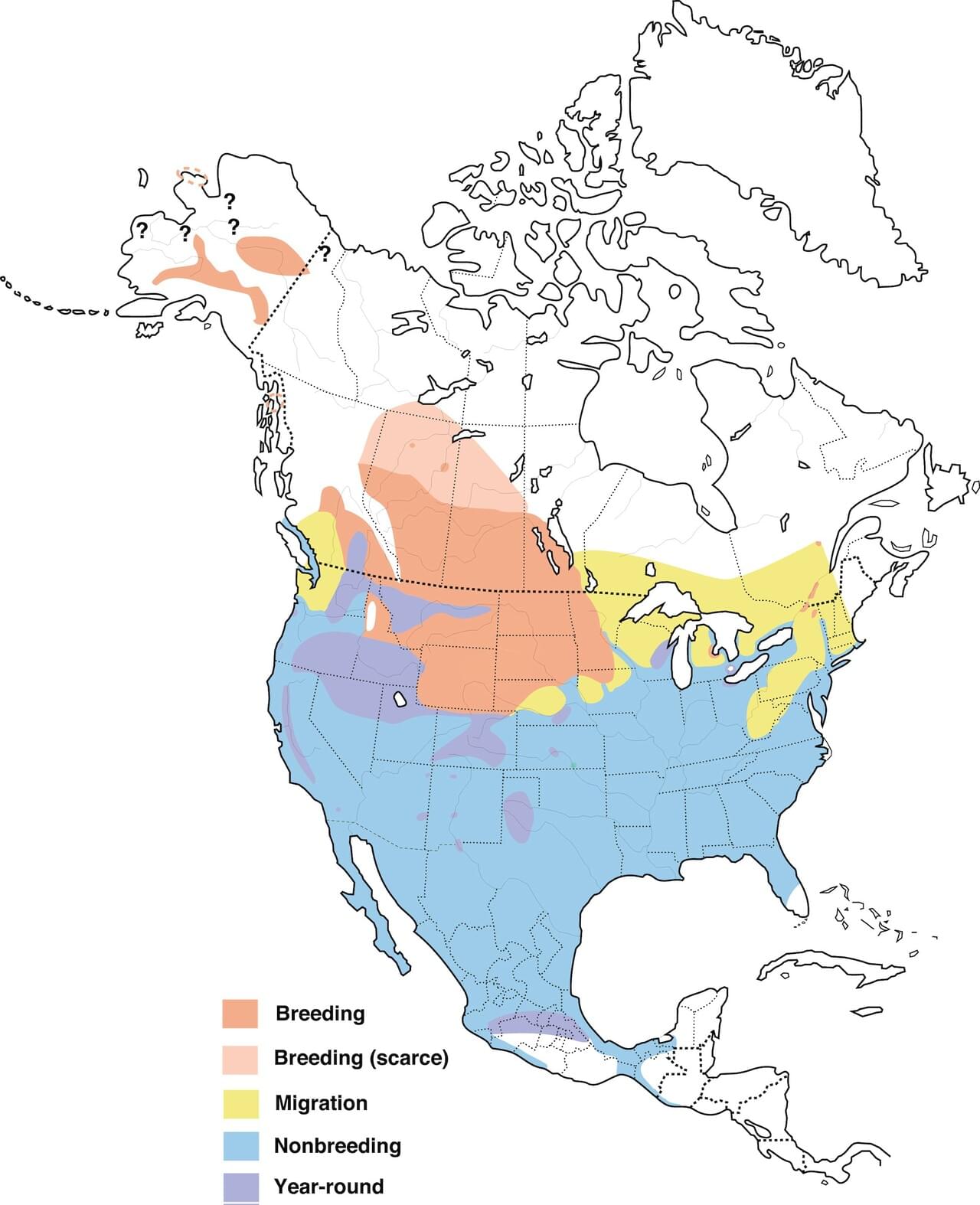
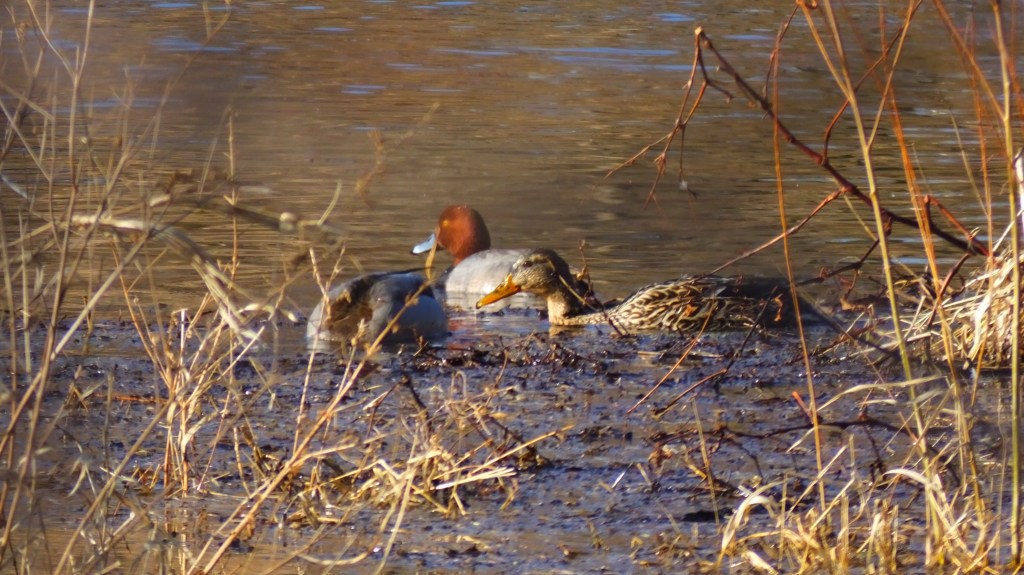
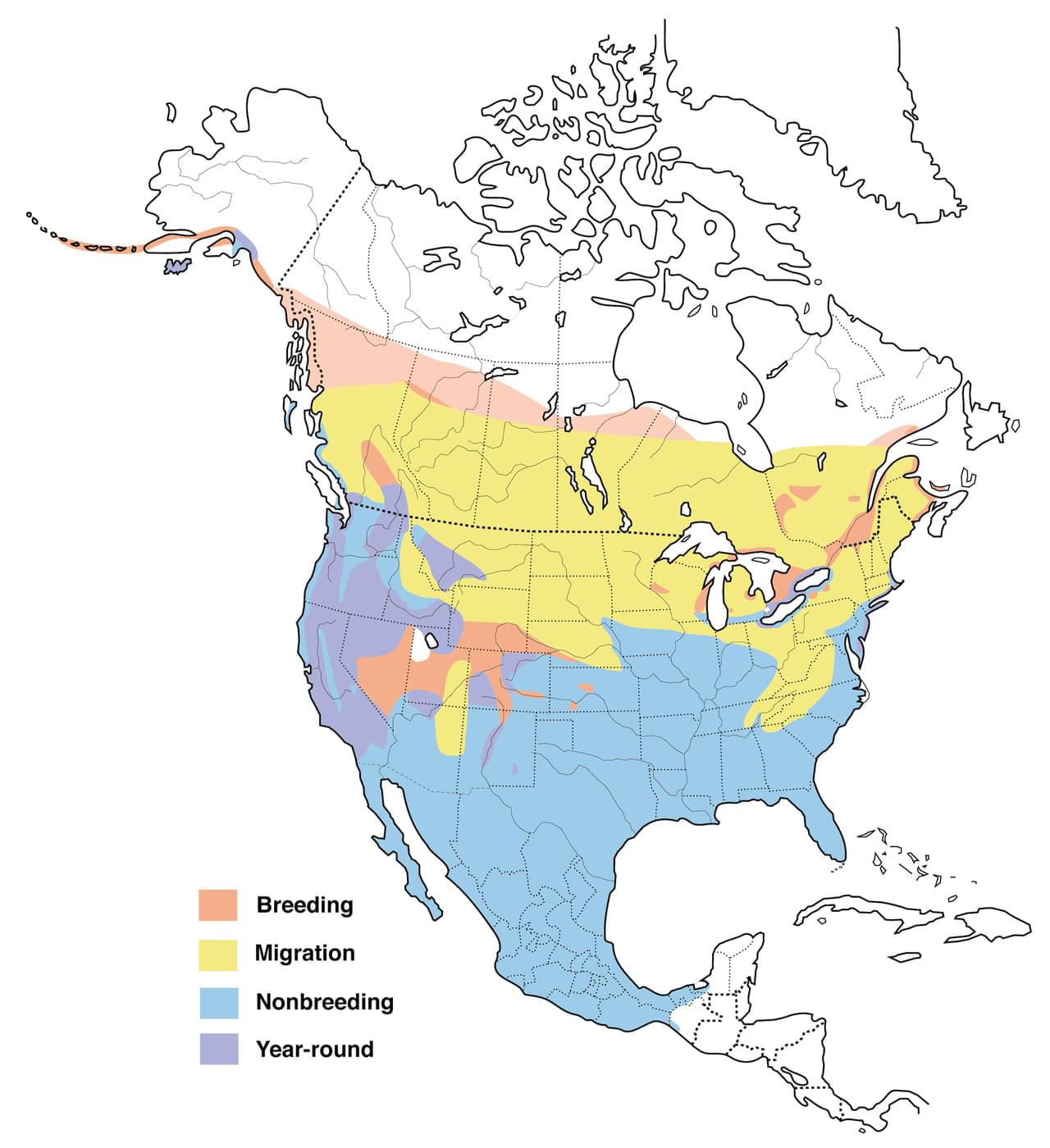
Plus, one of our redheads was there too, dabbling with a pair of mallards. I thought they might have bugged out by now. Depending on the map you consult, we are either in their “migration” or “non-breeding” zone, although we are near a “year-round” zone in the latter map. Maybe this guy is pushing the envelope.
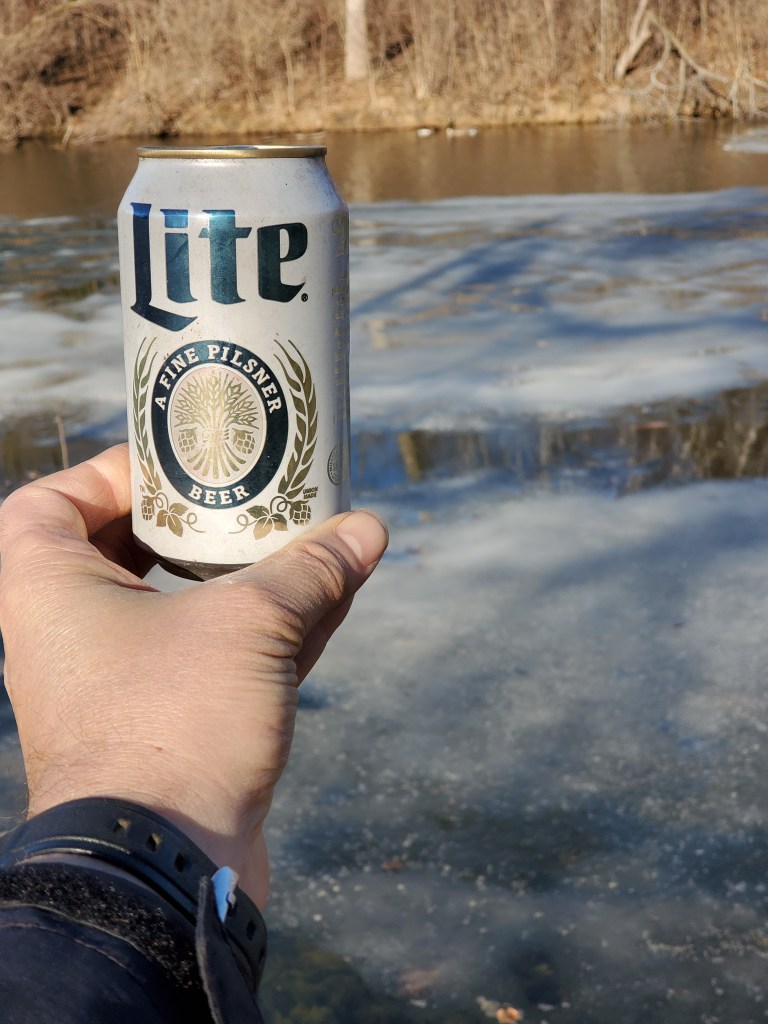
Finally, I forgot to mention yesterday that I found my second park beer. Woo hoo!
Long-time readers may recall the first one last August, which was quite tasty. Well, the new one is chillin’ in the fridge now, and I look forward to cracking it open later today. At least after lunch.
Finally, the daffodils are starting to come up in the woods throughout the park, so please be careful where you step if you go off-trail.
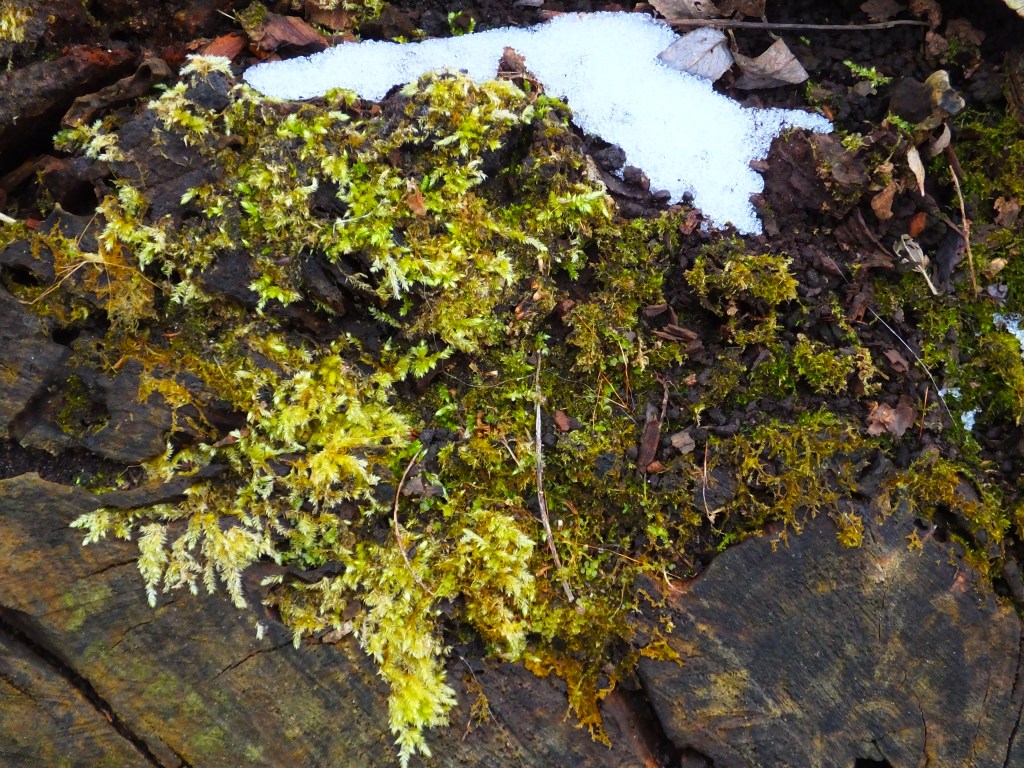
I didn’t get to the park until the afternoon, almost all the snow is gone now, and more than half of the pond ice is gone as well. The mallards and the Canada geese were getting comfortable with all the newly exposed water …
… and the grass.
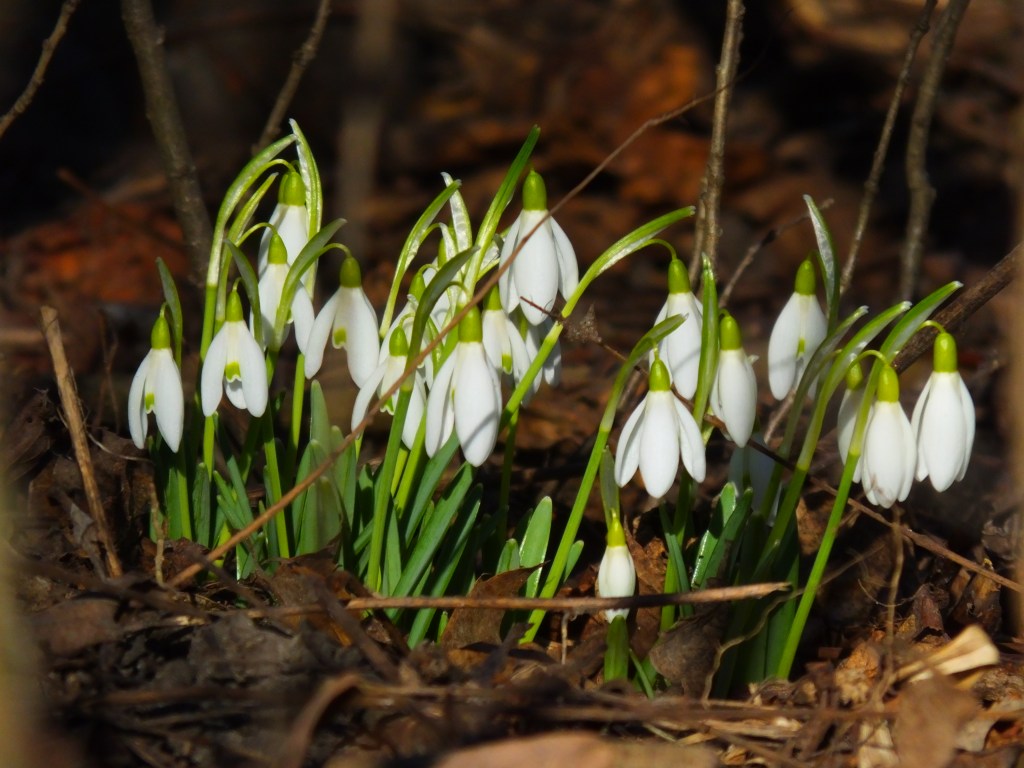
The big new arrival, however, are these pretty little snowdrops, who I can’t believe are up already.
Not much new to report today, and we seem to be in bit of a holding pattern while waiting for the pond ice to hurry up and melt already.
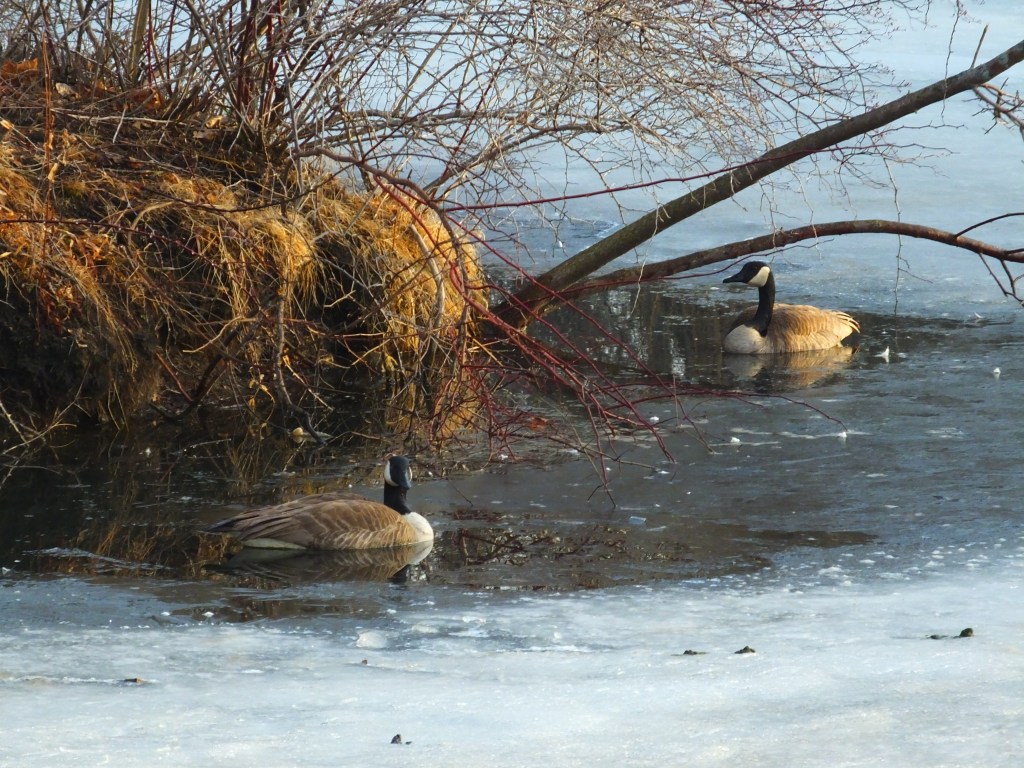
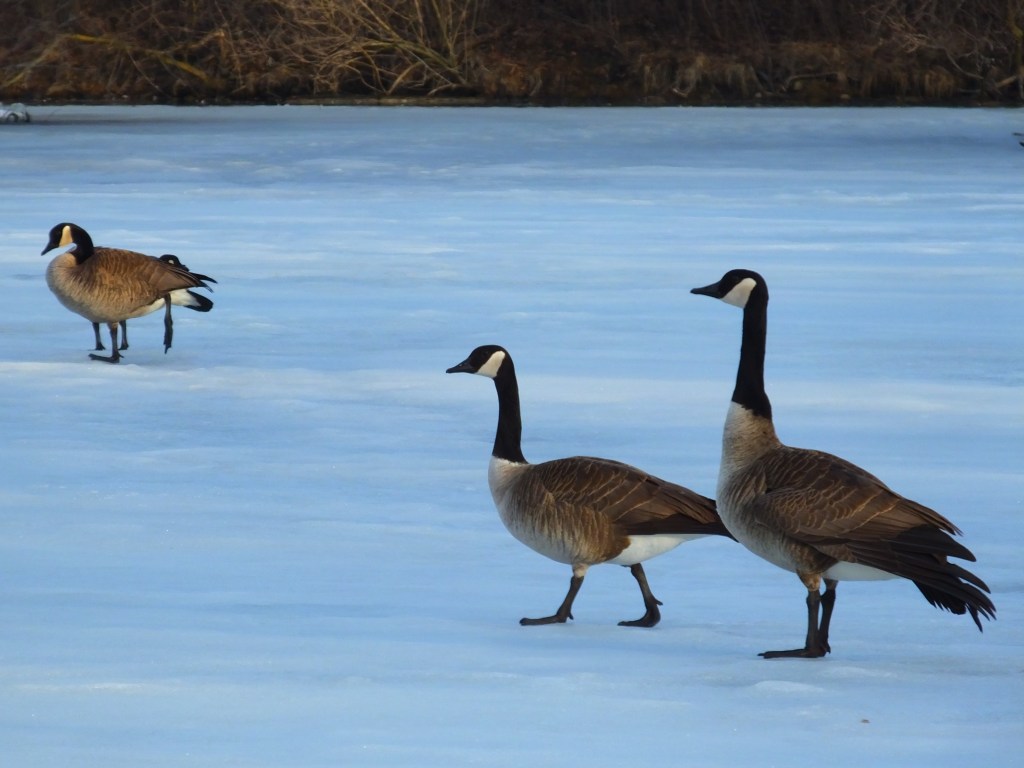
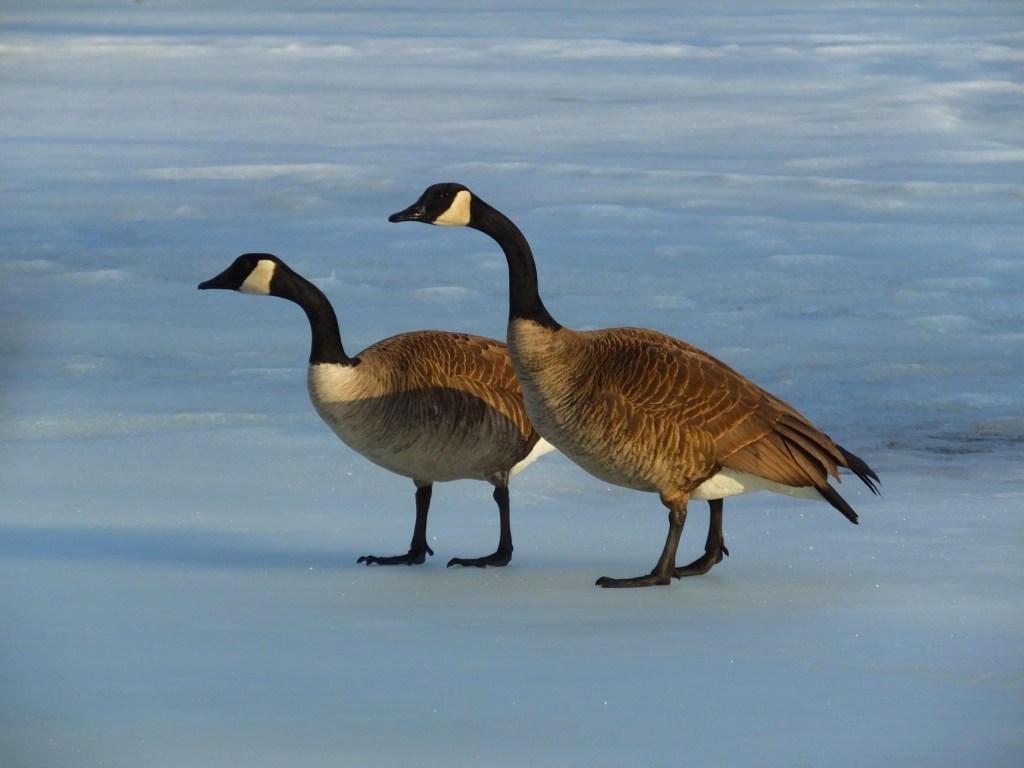
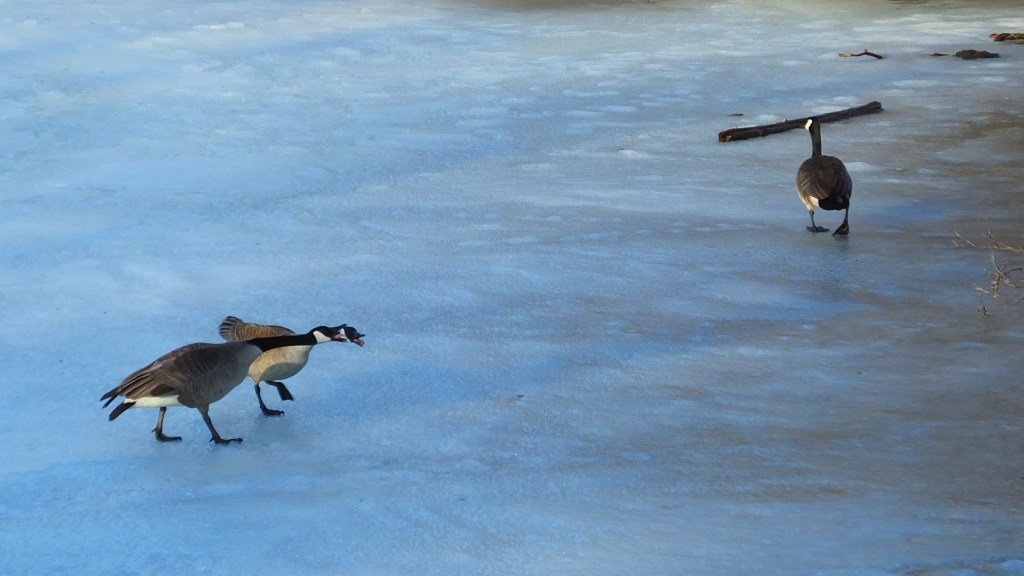
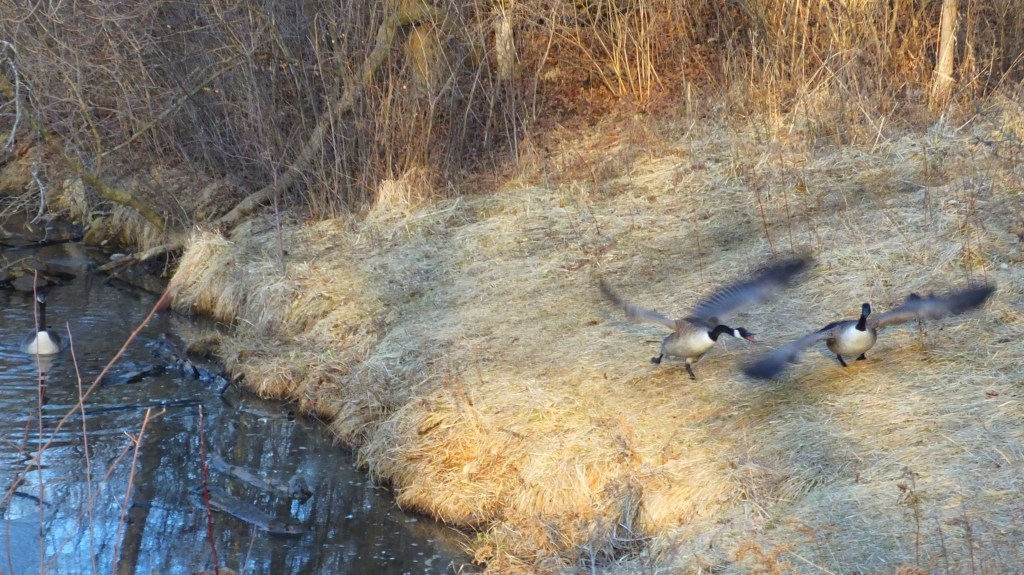
The pair of geese were in the tiny patch of now-open water on the south end of the island when I arrived at the pond, and as I tried to capture a representative and attractive image of the scene, another pair flew in. This lead, of course, to a confrontation in fits and starts. First our heroes hopped up on the ice, but then there was grooming to do.
Eventually, there was an exciting moment, which I failed to anticipate and so did not capture on film, and the vanquished were forced to walk across the road, while the victors called after them. I hope they were gracious in their victory, but I couldn’t make out what they were saying.
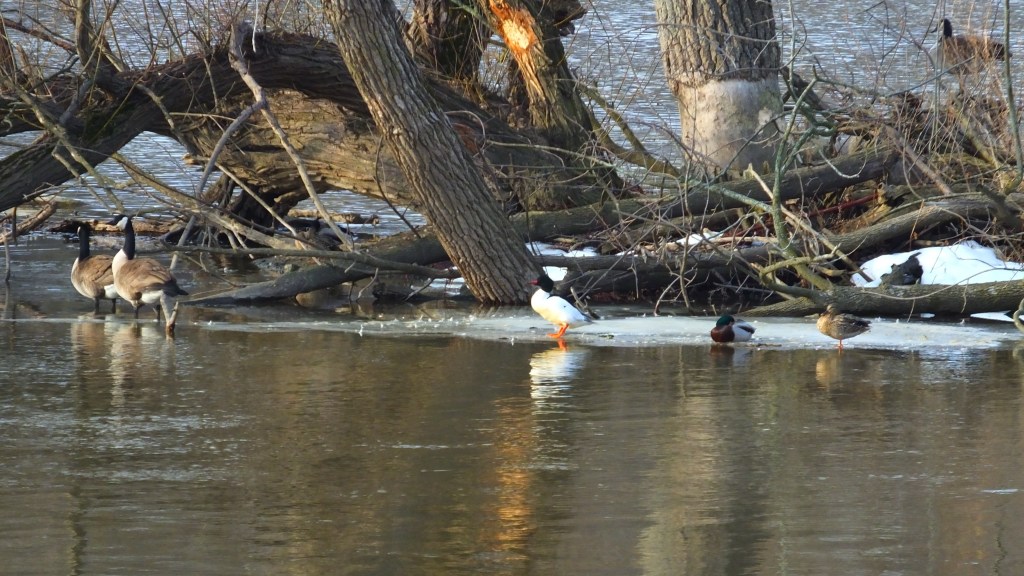
Then I headed over to the river, which is up at least a foot from last week and also running quite brown now, so not very photogenic. I did see a couple common mergansers, about a dozen goldeneye, and more and more Canada geese, who are still actively sorting out which nesting site is whose, it seems.
Back at the pond, it appeared to be nap time.
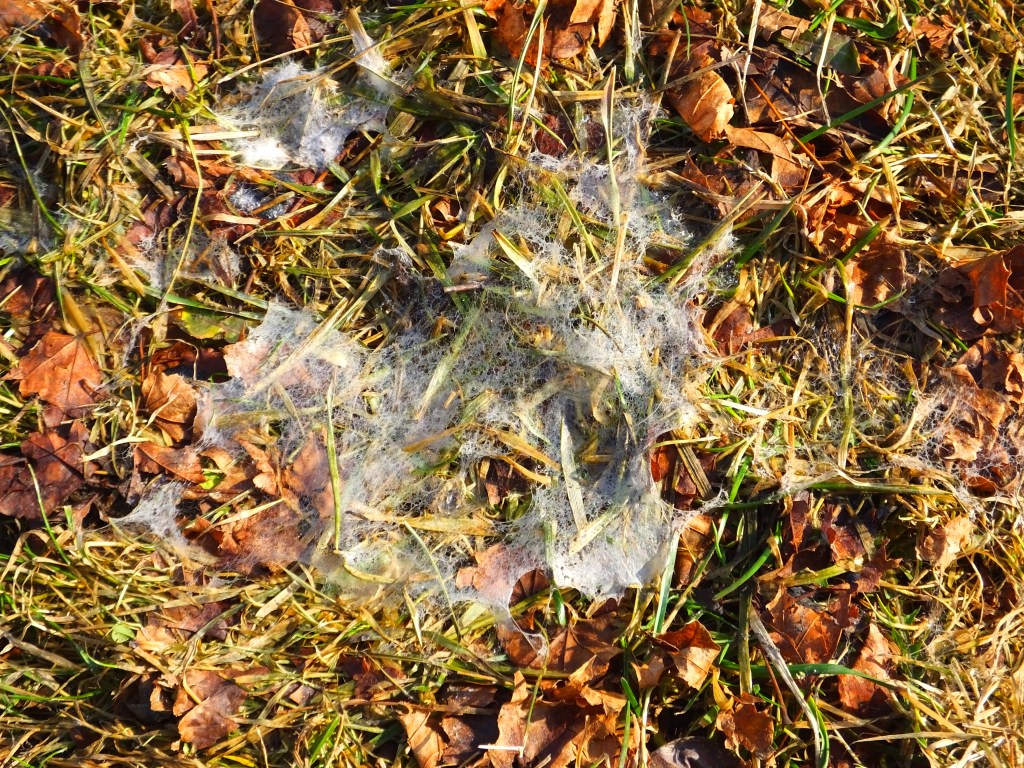
On my walk home, I spotted patches of this white stuff on the grass, where piles of snow had recently melted, which look like those spider webs we see on lawns in the summer, especially in the morning when dew makes them stand out.
I’m sure you will be as stunned to learn as I was that these are not spider webs at all! Instead they are likely patches of grey snow mold (Typhula incarnata) or (T. ishikariensis). Apparently “snow molds are caused by cold tolerant fungi that require snow cover or prolonged periods of cold, wet conditions.” Cool, eh? So long as it’s not damaging your lawn, I guess.
Finally, as I reached the end of my walk, this little feller sung me out. Thanks, Buddy!
Well, it was just three, and the couple concertedly chased of the bachelor who appeared to going stag. Maybe he was just trying to stake a claim before she got there, as a surprise, but the couple were not having it.
Then the two couples took a quick dip together to sample some of that finely-aged, pond-bottom muck that they haven’t tasted since last fall.
After all that excitement, I headed over to the river, where I didn’t expect to see much because the river trail is just mud now. Right off the bat, however, I spotted some gulls chasing of a small raptor of some kind, maybe our Cooper’s hawk, but didn’t get a picture.
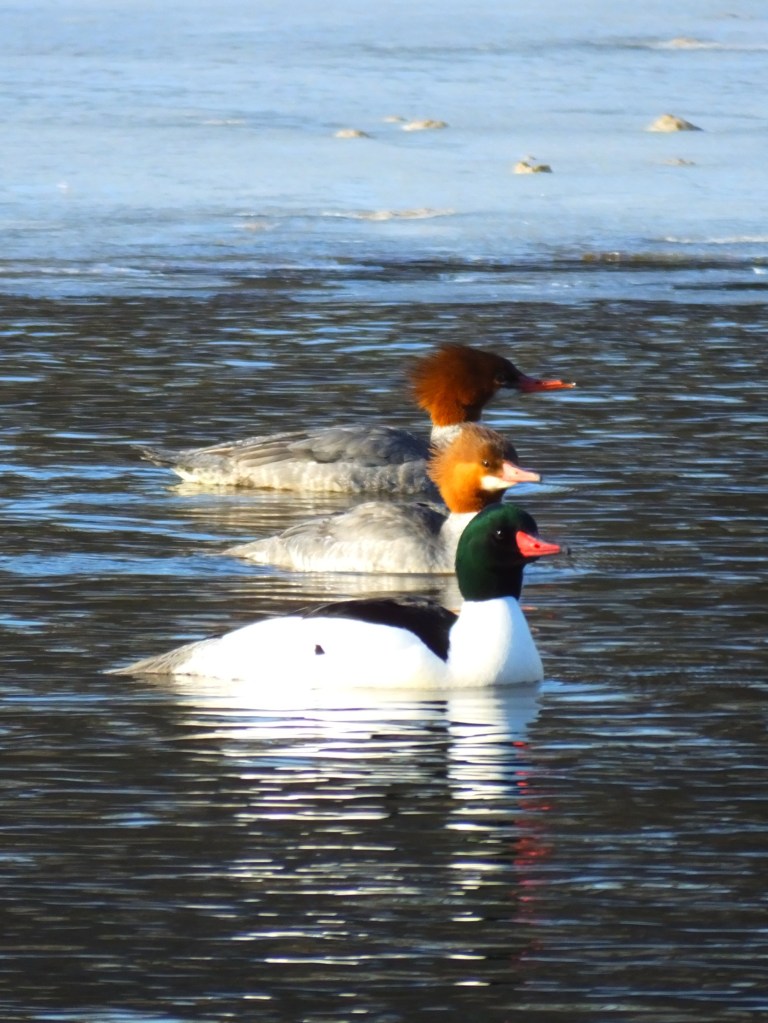
Once I got to the water, I was thrilled to see that, between the two islands, it is still full of mallards, goldeneyes, and mergansers, including this dashing trio of commons…
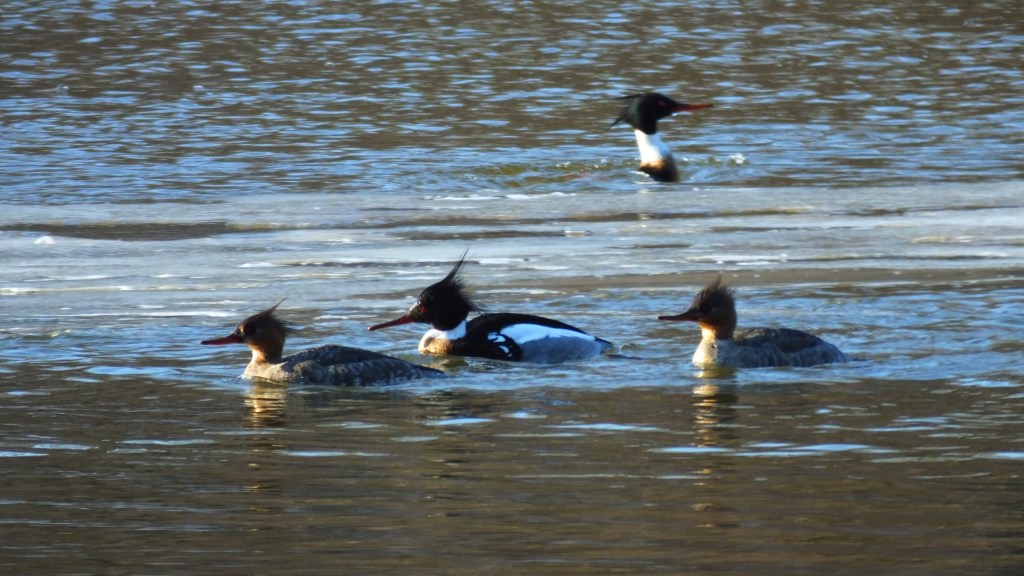
… and more red-breasted mergansers than I believe I’ve ever seen in one place before, including this debonair quartet.
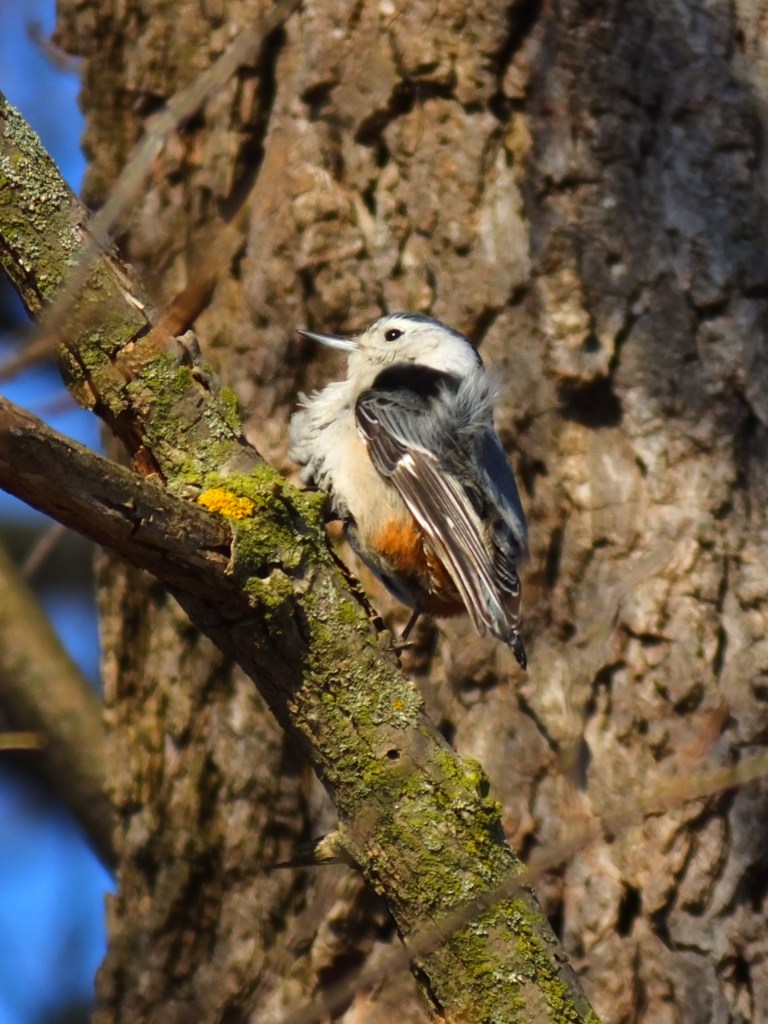
On the way back from the river, I happened upon this cute little nuthatch who had a lot of grooming to do. A second one appeared for an instant, which would have been an amazing shot, and then they were off.
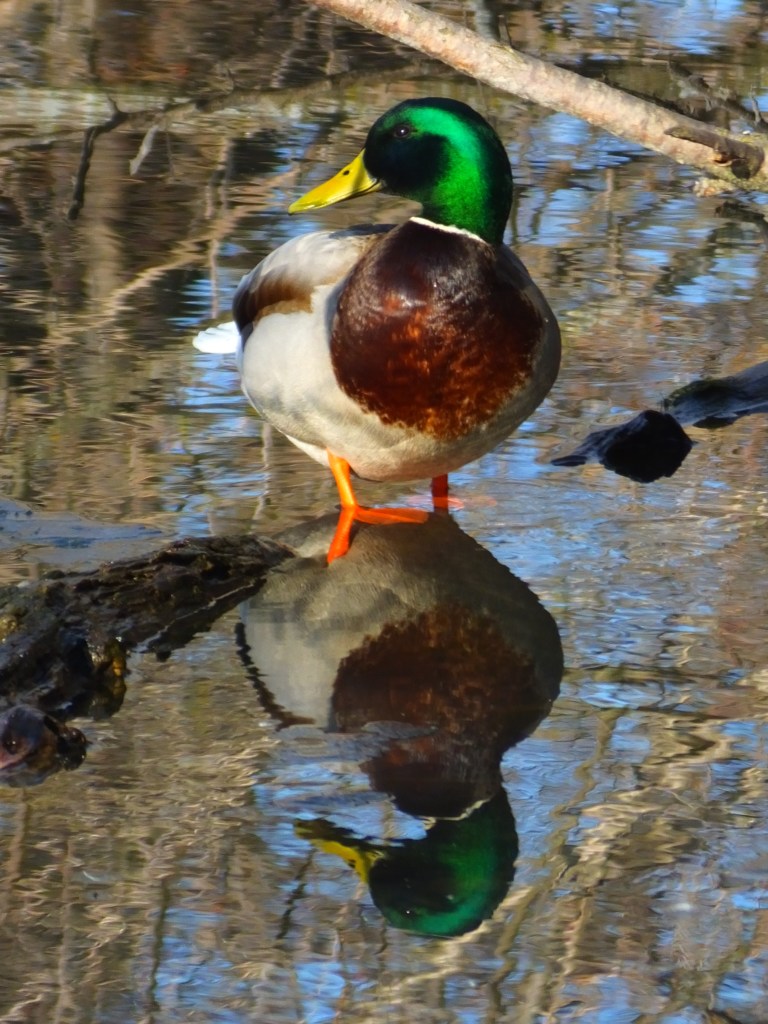
Back at the pond, the geese were gone again already, but the mallards were enjoying an after breakfast preen in the warm morning sun, …
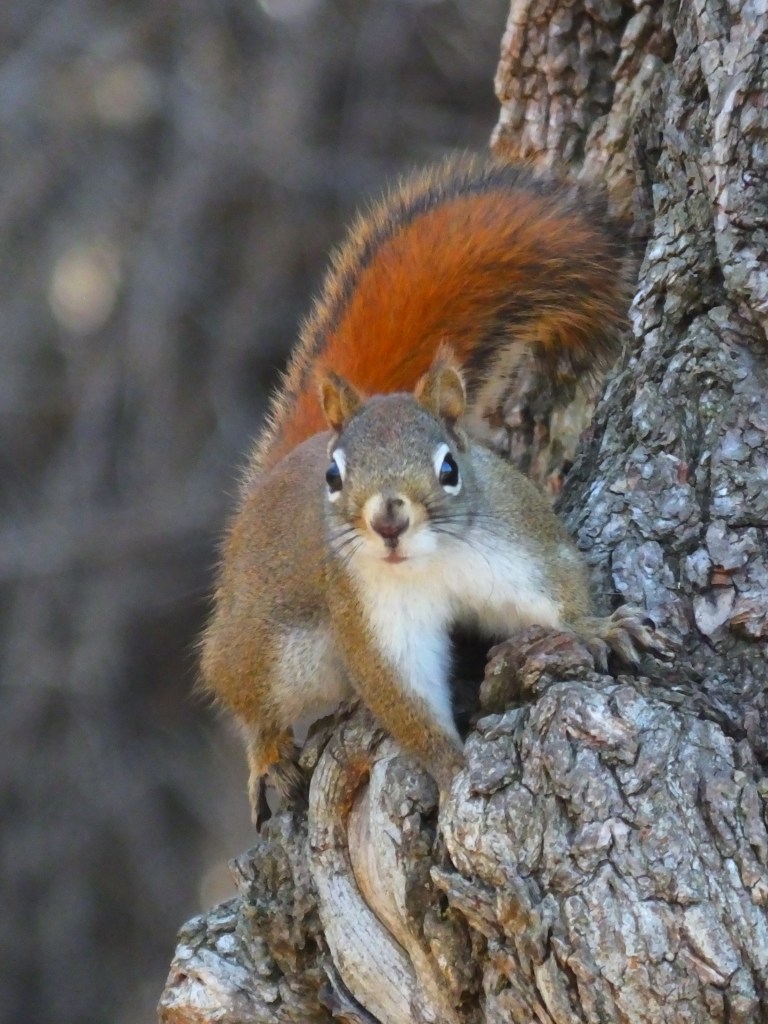
… and our little buddy, the red squirrel was looking hale and hearty after the cold winter.














 Signs of Life in Estabrook Park
#/media/File:Aythya_americana_map.svg)